We build and rank every list first. Booking links come after, and only where
a partner sells a ticket, tour or stay for that exact place, so a place with
nothing to book is listed exactly as prominently as one you can book.
So how do we earn? Some links on this page go to booking
partners, and if you book tickets, tours or a stay through
one, we may earn a commission. It costs you nothing extra.
That commission never decides which places make the list, the order they
appear in, or what we write about them. No entry is sponsored or a paid
placement.
12 Best Things to Do in Chesapeake, Virginia (2026)
By the City Viking editorial teamPublished 12 places · 13 min read
Fact-checked Checked before launchOct 10, 202612 sources6 publishers8 government & parks4 venues & other sitesPublished · Oct 10, 2026Researched and checked before it went liveClick for every source and the full change log.
Short answer
Chesapeake is known for its green mix of farmland, forest and wetland, the Intracoastal Waterway and the 1775 Battle of Great Bridge. Start with the Great Dismal Swamp National Wildlife Refuge and the paved Dismal Swamp Canal Trail, then head to Great Bridge Lock Park to watch boats lock through. One full day covers the swamp and canal corridor, and a half-day covers Great Bridge, with its lock, battlefield museum and the Chesapeake Arboretum.
Chesapeake is the green, water-laced side of southeastern Virginia: farmland, forest and wetland where the Great Dismal Swamp spills over the city line and the Intracoastal Waterway threads through two working locks. It is also where militia turned back the British at Great Bridge in 1775.
This guide covers the 12 best things to do in Chesapeake, from swamp boardwalks and a canal-side trail to a Revolutionary War battlefield, a volunteer-built playground and a farm creamery. Allow one full day for the swamp and canal corridor and a half-day around Great Bridge, then keep exploring Virginia's small towns.
Chesapeake is a young city with old roots — it was created in 1963 when voters merged the city of South Norfolk with what remained of Norfolk County, which dated to 1691.
It is the second-largest city by land area in Virginia, with many square miles of protected farmland, forest and wetland inside the city limits.
Lake Drummond, in the heart of the Great Dismal Swamp, is one of only two natural freshwater lakes in Virginia — and it is no more than about six feet deep.
The Battle of Great Bridge on December 9, 1775, ended with Virginia militia repulsing a British assault, and it led to the departure of the royal governor, Lord Dunmore, from the colony.
George Washington first visited the Great Dismal Swamp in 1763 and suggested digging a canal through it; the Dismal Swamp Canal opened in 1805 and is described as the oldest continually operating man-made canal in the United States.
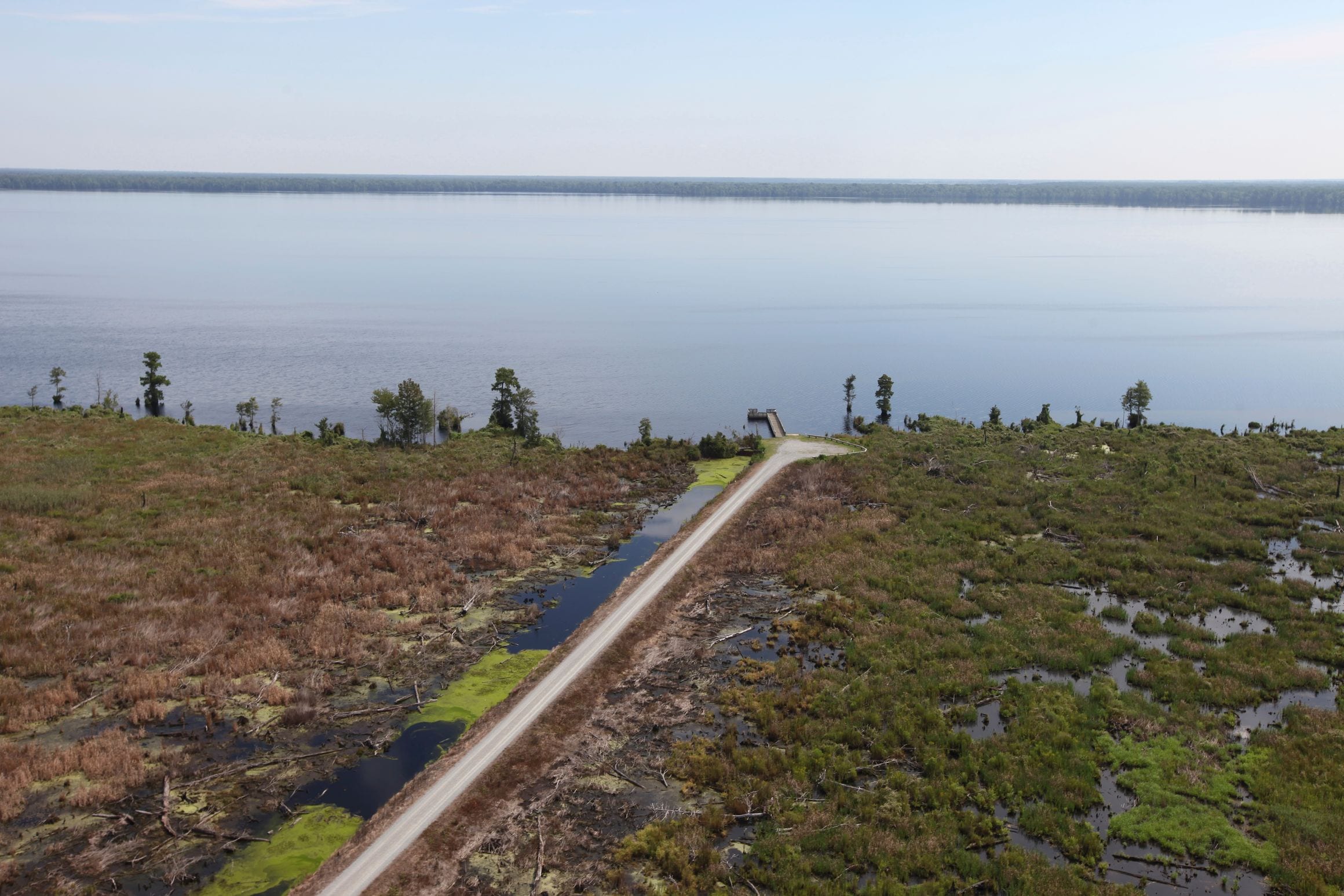
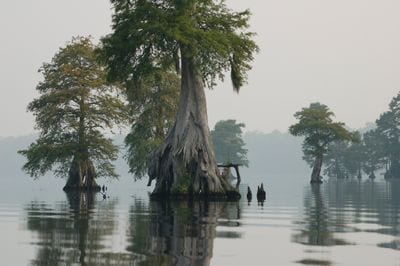
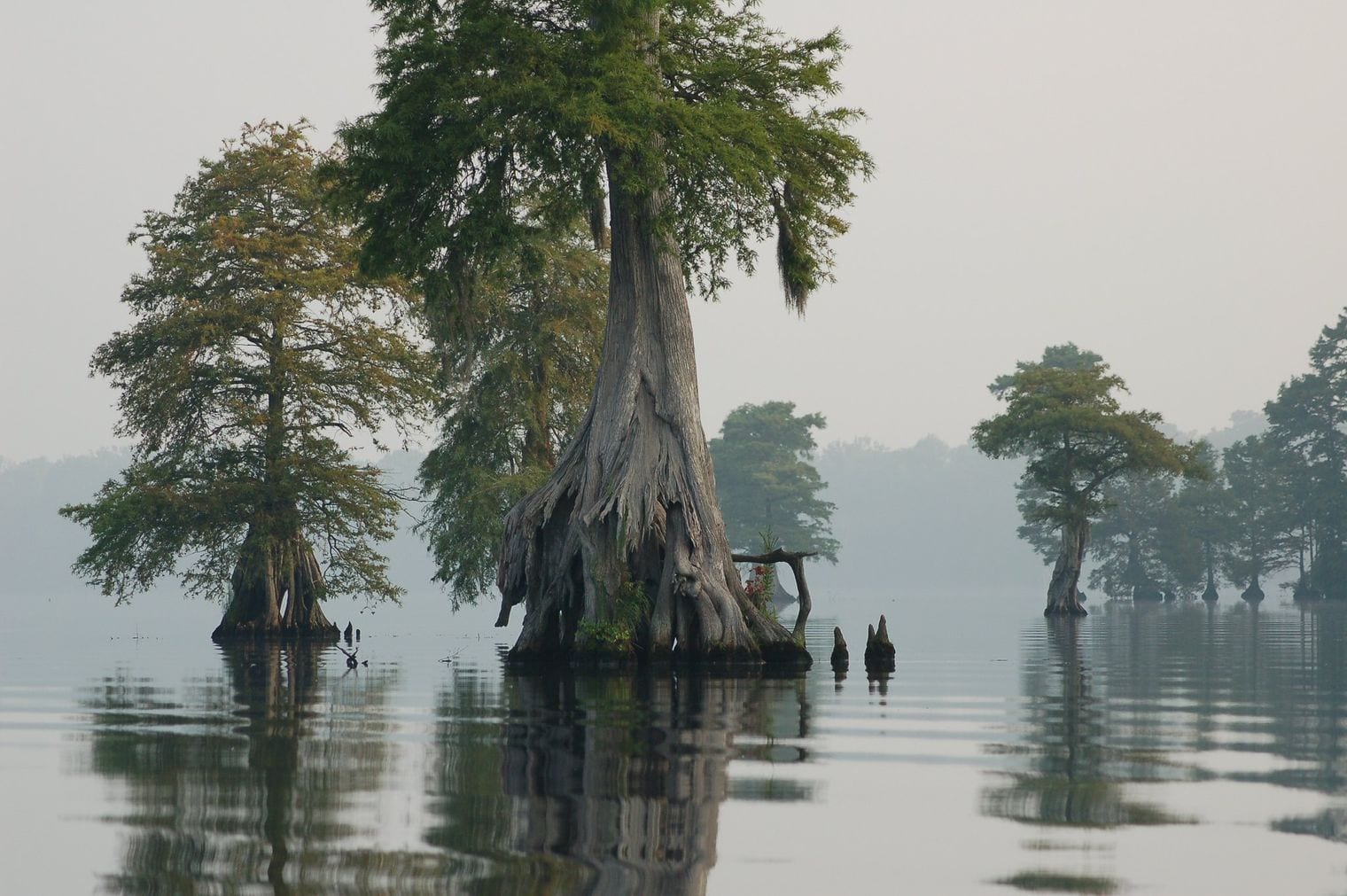
The Great Dismal Swamp National Wildlife Refuge protects the largest intact remnant of a swamp that once covered more than a million acres, and it straddles the line between Chesapeake and Suffolk before running south into North Carolina. Its heart is Lake Drummond, one of only two natural freshwater lakes in Virginia, a round, dark-watered lake ringed by cypress and reached along old ditch roads that walkers and cyclists share with the occasional black bear.
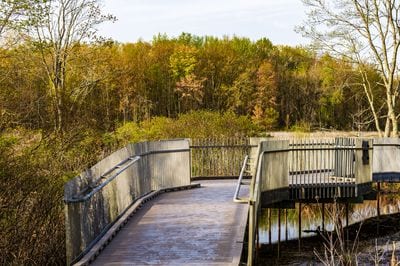
The main visitor entrances sit on the Suffolk side, where the Washington Ditch boardwalk loops through dense swamp forest and gives the easiest taste of the place. Bring binoculars: the refuge counts around 200 bird species, and spring migration is a highlight. The swamp also carries a weightier history as a hiding place for self-emancipated people, the Great Dismal Swamp maroons, who built communities deep in its interior.
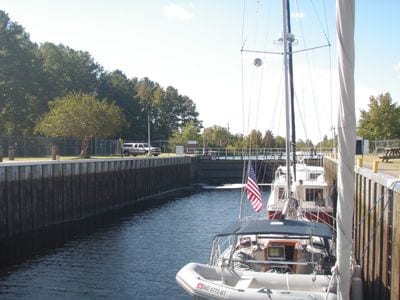
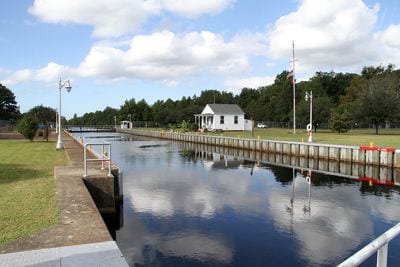
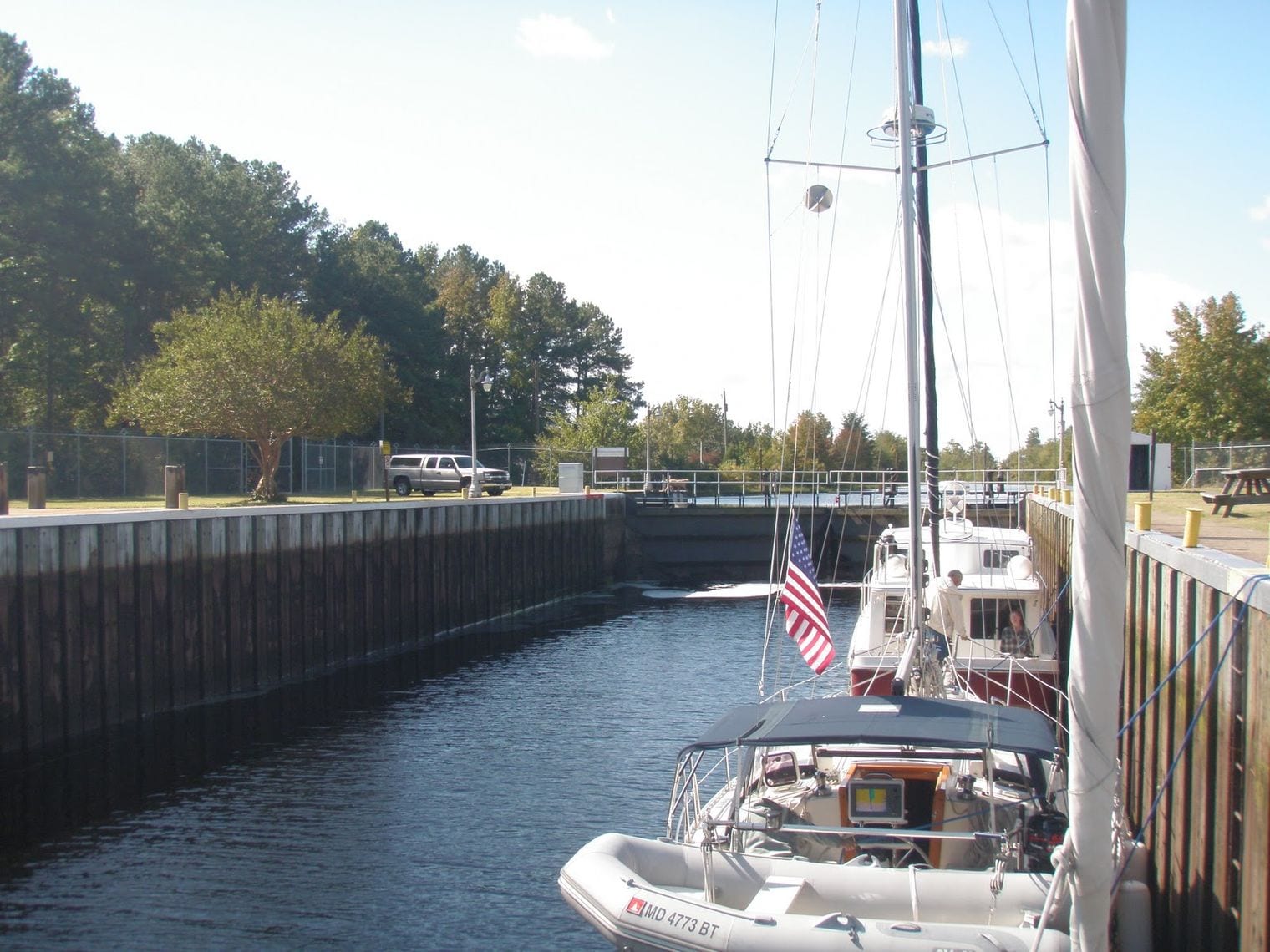
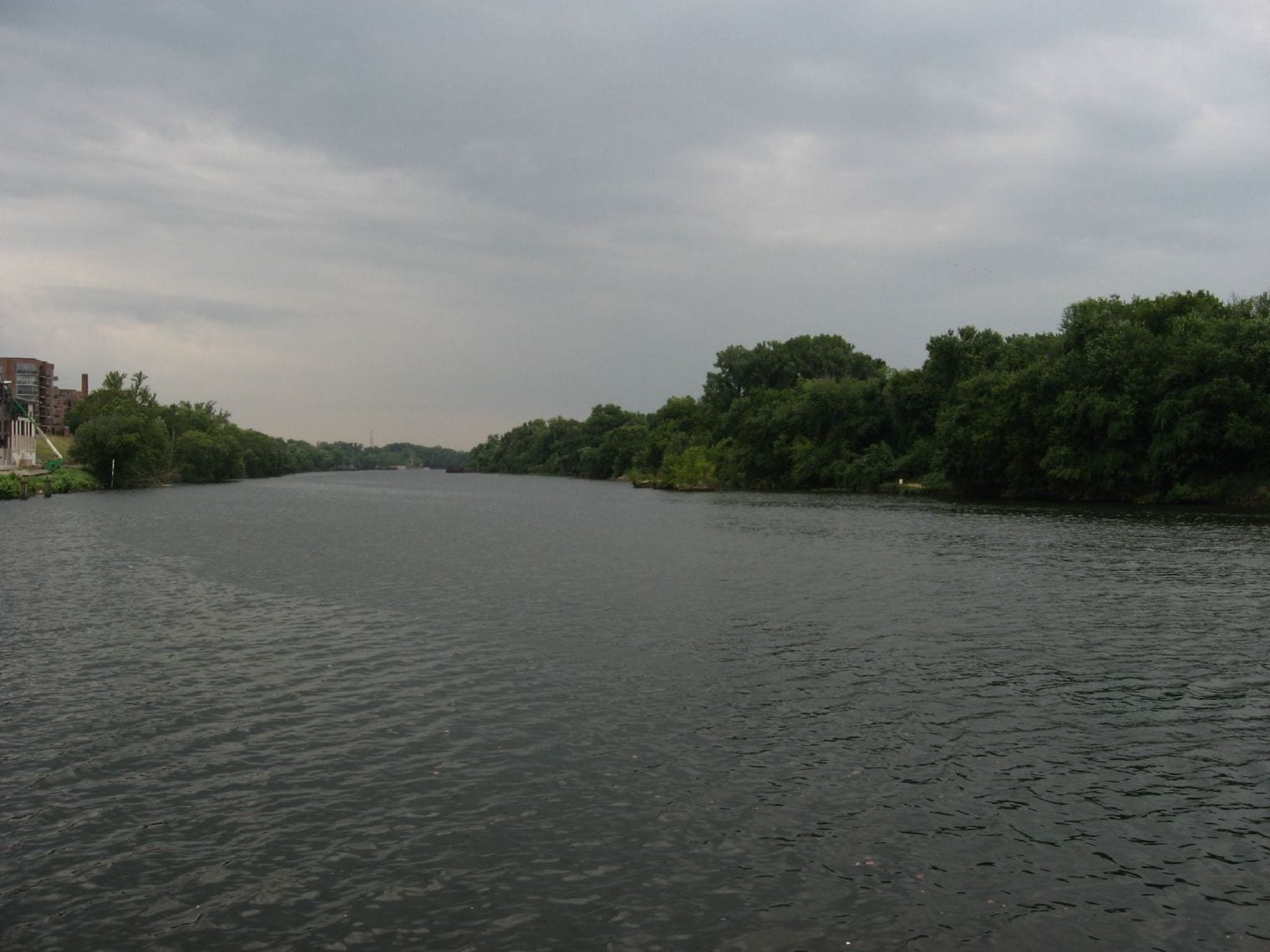
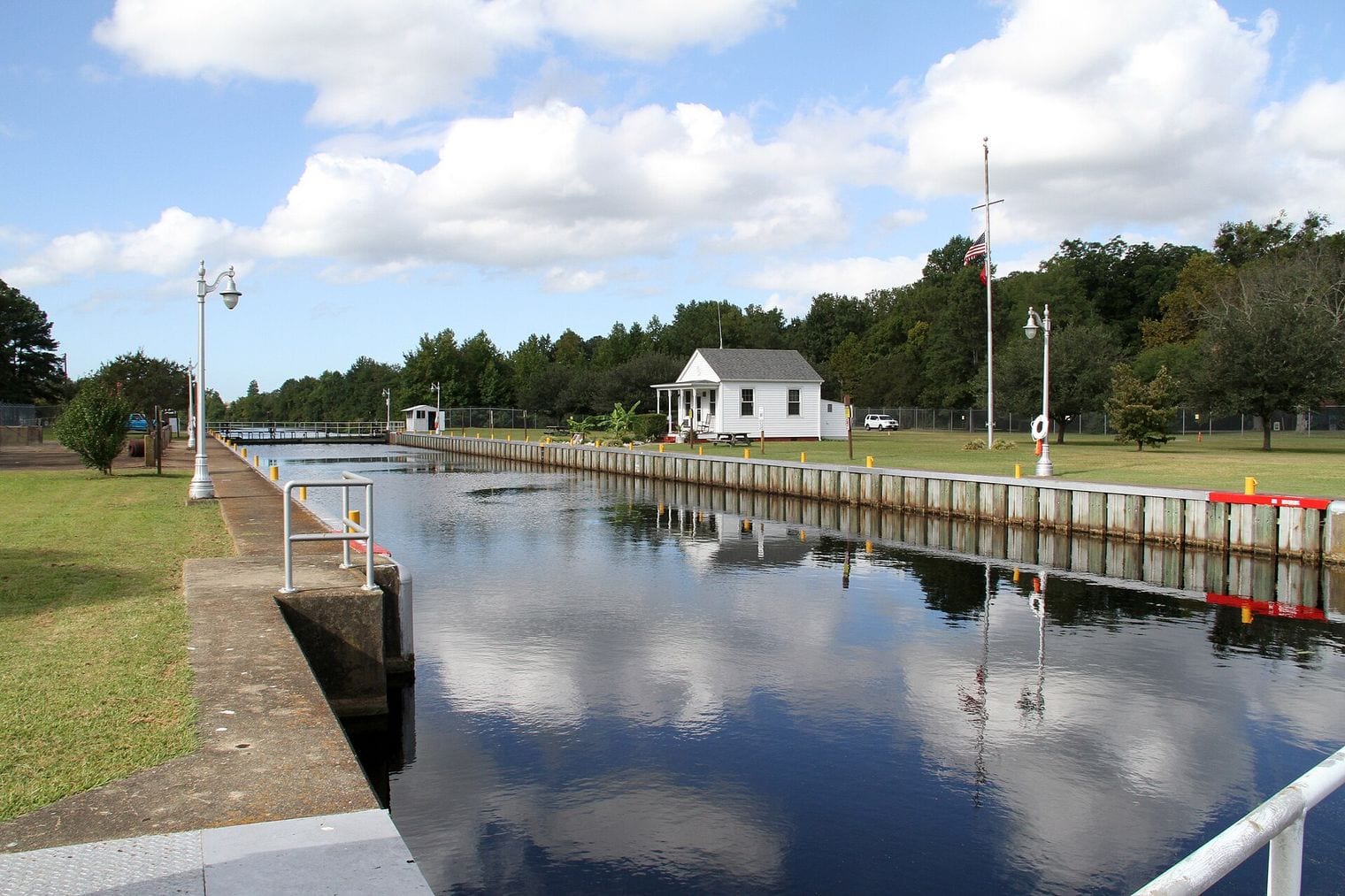
Great Bridge Lock Park sits on a peninsula where the Albemarle and Chesapeake Canal meets the Southern Branch of the Elizabeth River, and its centerpiece is the Army Corps of Engineers lock that separates the river's salt water from the canal's fresh water. This is the Atlantic Intracoastal Waterway, so the parade through the chamber can include cruising sailboats, sportfishing boats, tugs and barges.
Find a spot by the lock walls and watch the gates swing and the water level shift, then walk the park's short trails or try the fishing and crabbing areas. With a boat ramp, a kayak and canoe launch, picnic shelters and a playground, it is an easy place to spend an unhurried hour or a whole afternoon.
The Chesapeake Arboretum is a 51-acre forest garden on Oak Grove Road, where trails wander through mature hardwood forest and cross a small stream on footbridges. At its center stands the Caleb Williamson farmhouse, whose oldest section dates to the 1800s, surrounded by theme and demonstration gardens.
Come in late winter and early spring for the blooms in Camellia Cove, one of the few Virginia sites on the American Camellia Trail, or in fall when the hardwoods turn. The grounds are open daily without charge and the trails are gentle enough for families, so it fits easily into a half-day around Great Bridge.
Northwest River Park spreads across 763 acres of woods and water in the rural southeast of the city, close to the North Carolina line. Hiking trails thread through the forest, there are horse trails and a seasonal campground with cabins, and the Northwest River itself draws anglers and paddlers year-round.
Downstream, the river runs past the Northwest River Natural Area Preserve, a state-protected tract of swamp and marsh with no visitor facilities of its own, so a kayak or canoe is the way to see it. Back on dry land, disc golf and miniature golf keep restless kids busy between picnics.
Chesapeake City Park is the city's civic backyard and one of its busiest green spaces. Families head straight for Fun Forest, a sprawling playground first built by community volunteers and rebuilt the same way after a fire, while the park's September 11 memorial holds a steel beam from the World Trade Center, limestone from the Pentagon and a stone from the Shanksville crash site inside a Pentagon-shaped fence.
Each spring the park hosts the Chesapeake Jubilee, the city's long-running festival of rides, music, food and fireworks, and on warm weekends its open lawns fill with picnics. For families with small children, it is the easiest stop on this list.
Free printable checklist of all 12 places
Tick them off as you go. Confirm your email to download it, plus one email every Thursday with new guides for the places you tick.
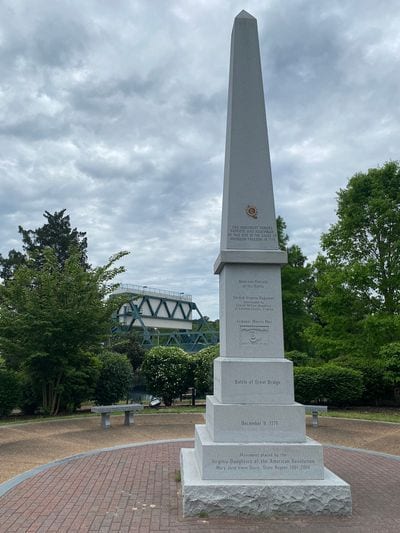
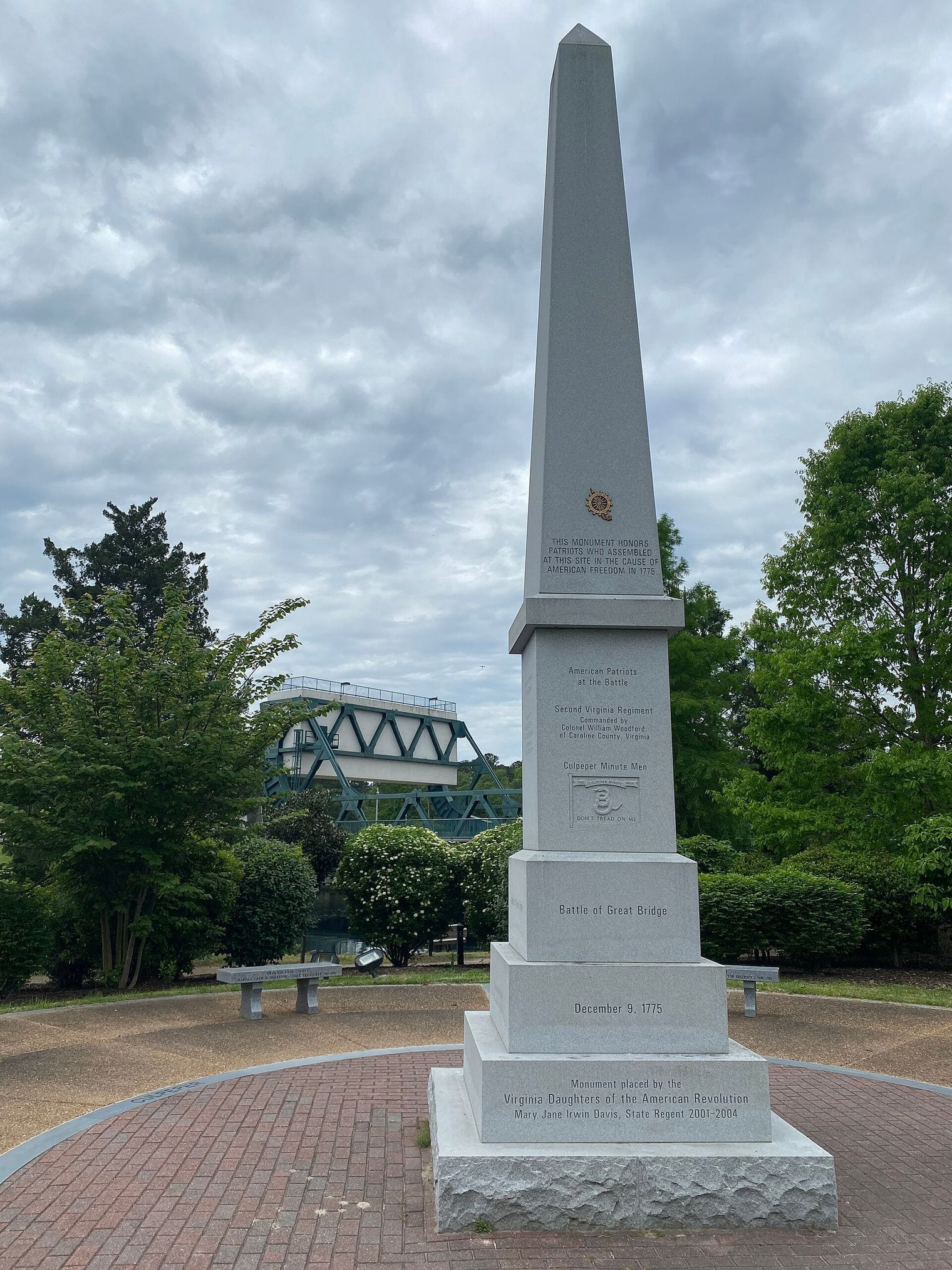
On December 9, 1775, Virginia militia turned back a British attack across the causeway at Great Bridge, a defeat that led to the departure of the colony's royal governor, Lord Dunmore. The Great Bridge Battlefield and Waterways Museum tells that story on the ground where it happened, with a re-created stretch of the 1775 causeway, battlefield trails and an obelisk monument.
Inside, exhibits bring back daily life in 18th-century Virginia and trace how rivers, canals and the swamp shaped the area. Look for the story of William Flora, a free Black man who, the museum recounts, ran back under musket fire to pull up a plank of the bridge and slow the British advance.
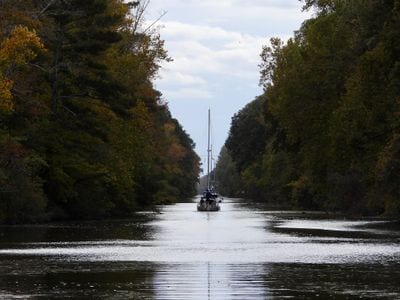
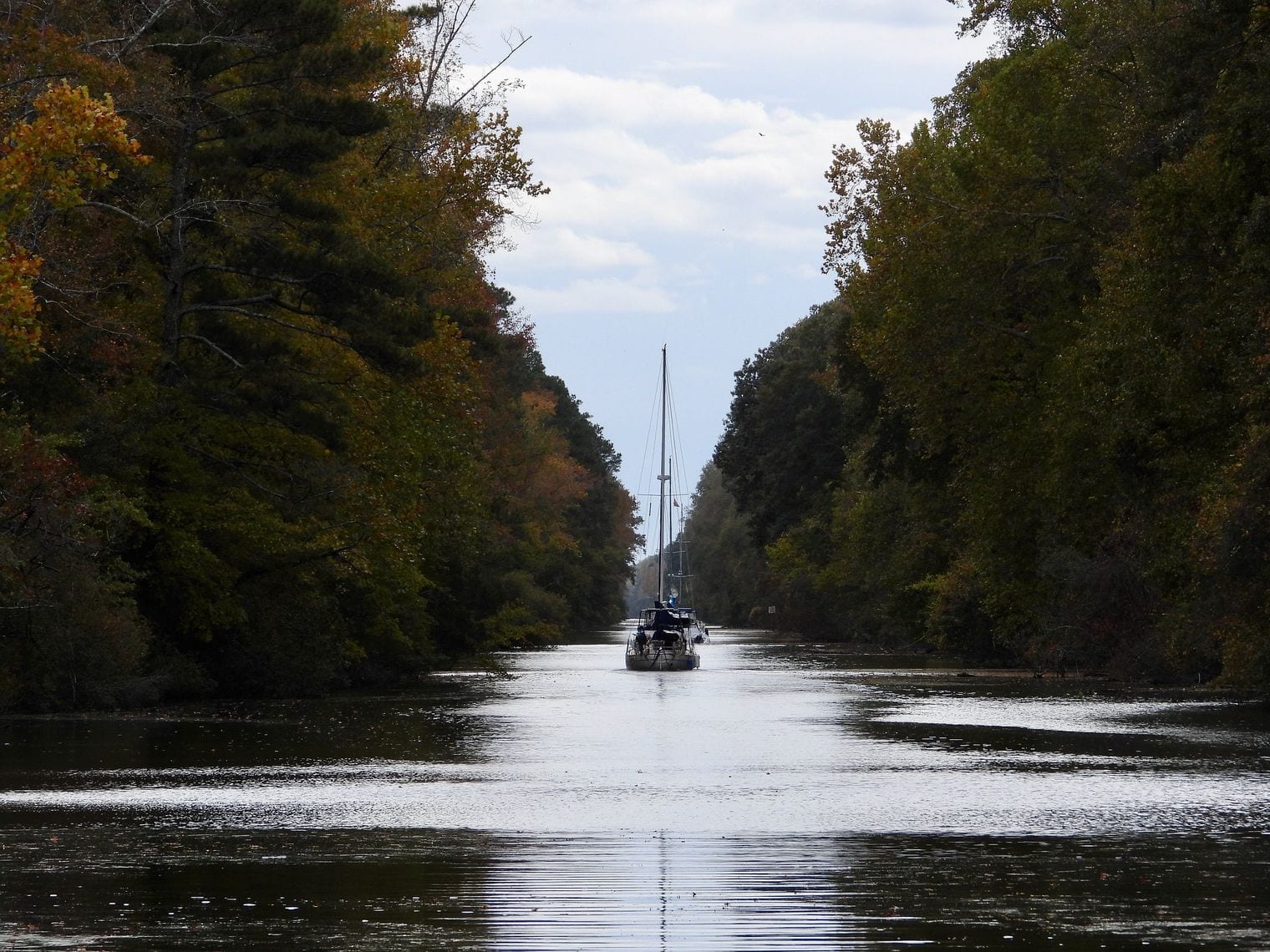
The Dismal Swamp Canal Trail is Chesapeake's own gateway to the swamp: a paved path of about 8.5 miles laid on a retired stretch of old Route 17, running straight beside the Dismal Swamp Canal along the refuge's eastern edge. The canal opened in 1805 and is described as the oldest continually operating man-made canal in the United States, still part of the Intracoastal Waterway.
Because it was built as a road, the trail is flat and smooth, which makes it a favorite with cyclists, runners and families with strollers. Watch the swamp side for songbirds, butterflies and dragonflies, and keep an eye out for black bears, bobcats and otters, which all frequent the area. About five miles in, the trail passes the Historical Village at the Dismal Swamp.
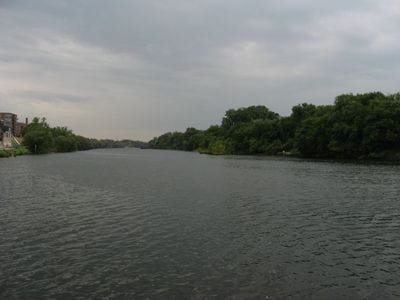
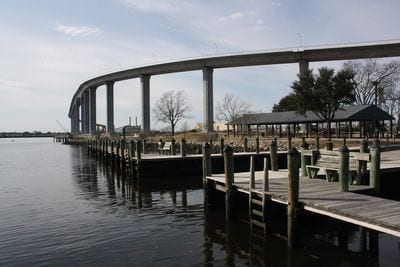
Elizabeth River Park sits on the Southern Branch of the Elizabeth River, right beside the South Norfolk Jordan Bridge, and it is the city's go-to waterfront for anglers and boaters. Its free public boat ramp is one of the most active in Hampton Roads, and a fishing and crabbing pier reaches out over the river.
A paved, accessible path loops the park past a playground, fitness stations, a gazebo and a dog park, so it suits a gentle stroll as well as a day on the water. Pair it with a walk over the bridge next door for the best views of the working river.
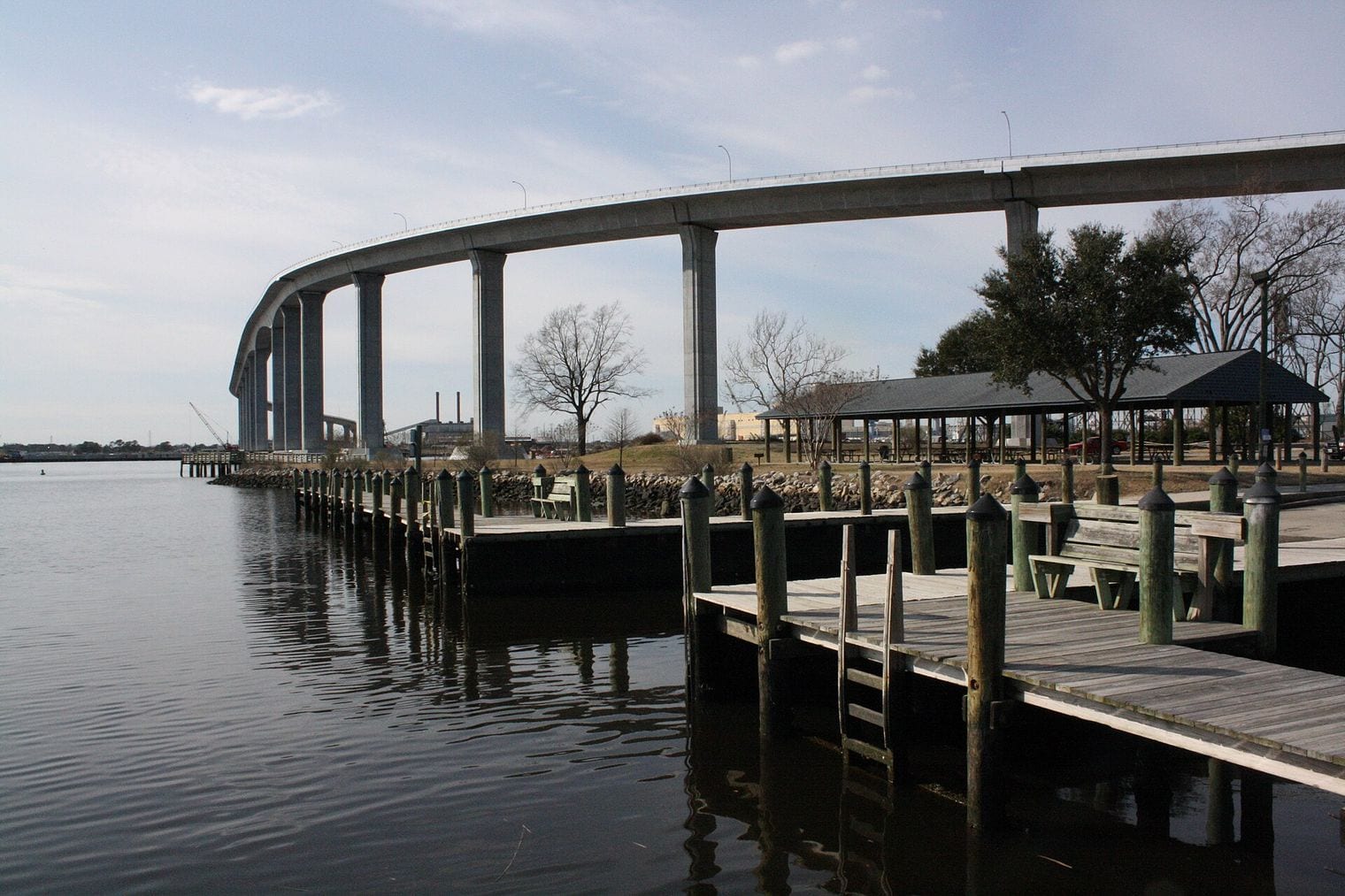
The South Norfolk Jordan Bridge carries traffic high over the Southern Branch of the Elizabeth River between Chesapeake and Portsmouth, replacing a 1928 span that was once Virginia's oldest drawbridge. The tolls are for cars; walkers and cyclists cross free, on a wide sidewalk separated from traffic by a concrete barrier.
The walkway is the reason to come. From the top of the span the views open up over the river's working waterfront, with tugs, barges and large ships passing below, and the climb makes a good workout. It is for daytime use only and can close in high winds or ice, so save it for a calm, clear day.
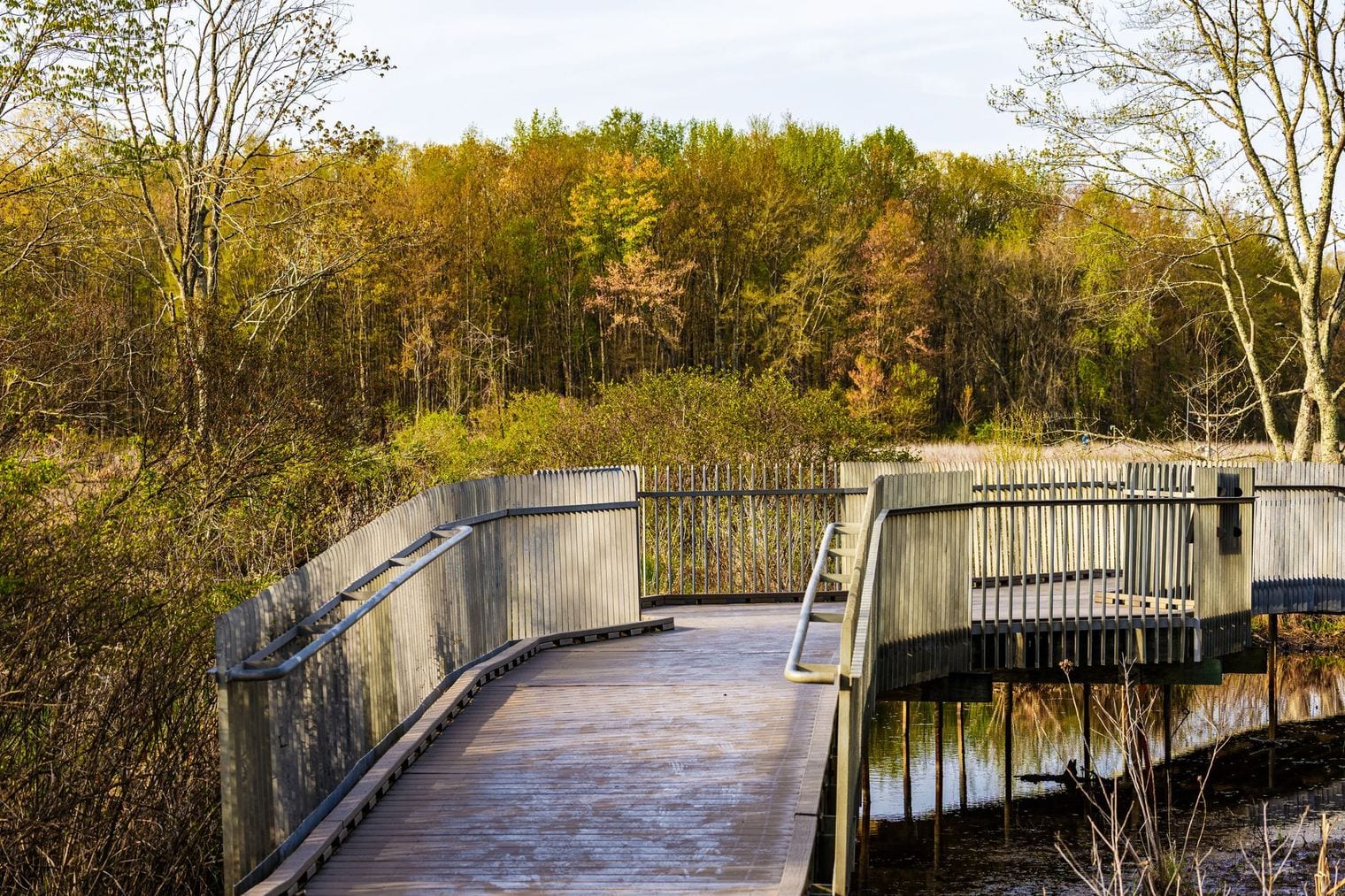
Deep Creek Lock Park sits at the northern end of the historic Dismal Swamp Canal, where an Army Corps of Engineers lock separates the salt water of Deep Creek from the canal's fresh water. Two observation towers look over the lock and the waterway, and an elevated walkway and footbridge carry you across a tidal inlet and marsh.
The park's 25 wooded acres also hold foot trails, picnic shelters, a playground and a canoe put-in, making it a calm launch point for a paddle along the canal. It is a short drive from the northern trailhead of the canal trail, so the two pair naturally in one morning.
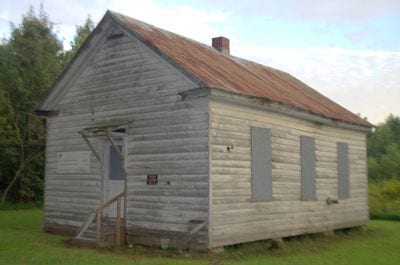
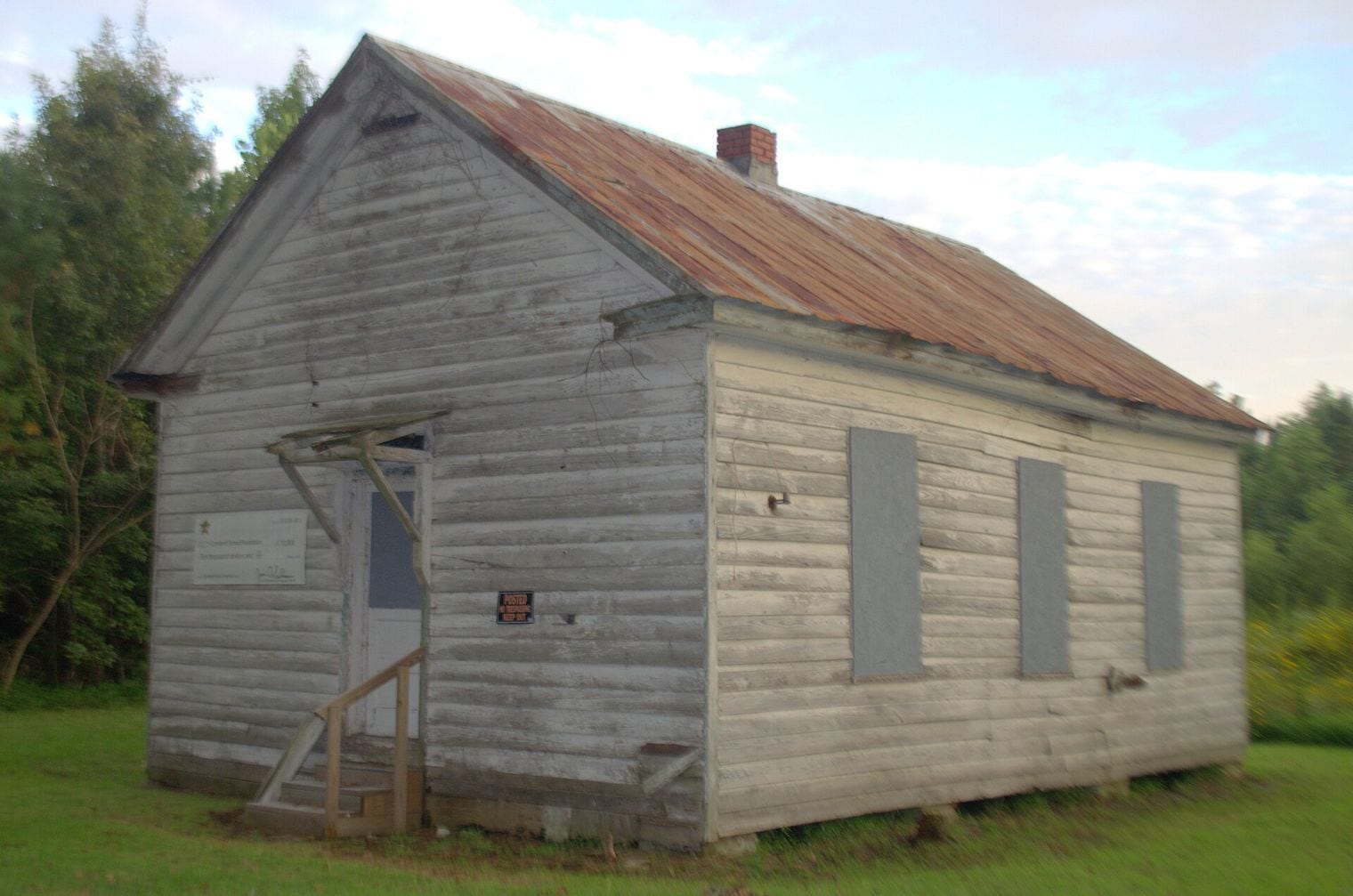
Historic Cornland School is a one-room schoolhouse built in the early 1900s for African American children, who studied there until 1952. Listed on the National Register of Historic Places, it is believed to be the oldest pre-Rosenwald school still standing in Tidewater Virginia, and former students and the Cornland School Foundation led the long effort to save it.
The restored school now stands in the Historical Village at the Dismal Swamp, near the five-mile mark of the Dismal Swamp Canal Trail, where a visitor center and exhibits also tell the stories of Indigenous peoples, the swamp's maroon communities and the Underground Railroad. Check opening days before you plan a visit around it.
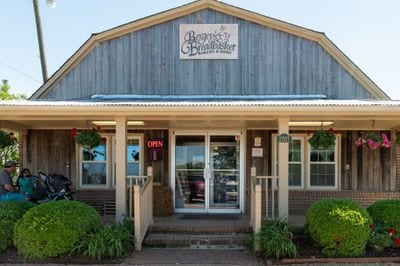
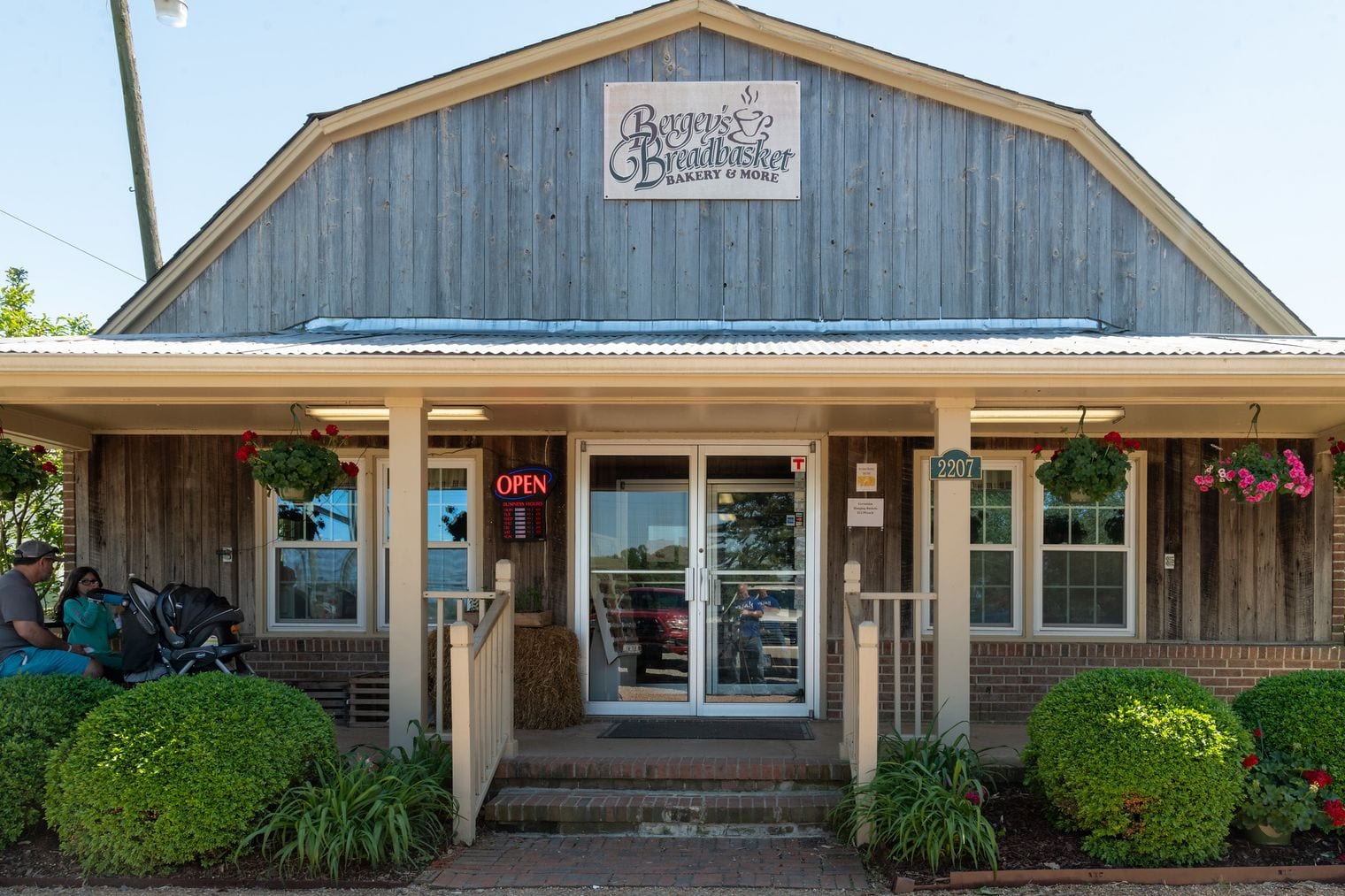
Bergey's Dairy Farm is a family farm in rural southeast Chesapeake, worked by the Bergey family since the early 20th century and best known today for Bergey's Breadbasket, its bakery and creamery. Expect cinnamon rolls, pies, fresh breads and scoops of homemade ice cream, some of it made to recipes the family has used for decades.
Behind the shop, Bergey's Barnyard lets children get close to farm animals, from piglets and bunnies to goats and friendly barn cats. It is a laid-back last stop after a morning at Northwest River Park or on the canal trail, and an easy sell for kids.
Plan your trip
Best Time to Visit Chesapeake
Spring and fall are the sweet spots. From April into May the swamp and the canal trail fill with migrating songbirds, the hardwoods leaf out at the arboretum, and City Park hosts the Chesapeake Jubilee. October and early November bring cooler air, fewer insects and changing color across the swamp forest, which is the most comfortable time for long walks and bike rides.
Summer is hot and humid, and the swamp's biting insects are at their worst, so plan outdoor time for early mornings and carry repellent; it is the best season for paddling and fishing, though. Winters are generally mild, and bare trees make wildlife easier to spot along the canal and in the refuge.
Getting to Chesapeake
Chesapeake sits in the South Hampton Roads region of southeastern Virginia, laced together by Interstates 64, 464 and 664 and by US Route 17 and Route 168, which runs south toward the North Carolina Outer Banks. Most visitors arrive by car.
Norfolk International Airport is the closest airport, roughly 20 to 30 minutes' drive from the city's main districts, and Richmond's airport is a longer option about two hours away. Amtrak trains serve Norfolk, a short drive from Chesapeake's northern neighborhoods.
Getting Around Chesapeake
Chesapeake is spread out over a large area with no single walkable downtown, so a car is close to essential: the swamp, the canal corridor, Great Bridge and the farms of the rural south are many miles apart. The parks and trailheads all have their own parking lots.
Regional buses connect parts of the city with Norfolk and Portsmouth but do not reach the outlying sights. Once you arrive, the Dismal Swamp Canal Trail and the bridge walkway are best explored on foot or by bike.
Where to Stay in Chesapeake
Greenbrier, along I-64, has the city's biggest cluster of hotels, shopping and restaurants and puts you within quick reach of Norfolk and Virginia Beach. Great Bridge, the city's historic heart, is the better base for the locks, the battlefield, the arboretum and the drive south to the swamp.
Travelers who want a beach or a livelier downtown can stay in neighboring Virginia Beach or Norfolk and drive in; most of Chesapeake's sights are a 20- to 40-minute trip from either.
Where to Eat in Chesapeake
The busiest dining districts are Greenbrier and Great Bridge, with smaller clusters in Western Branch and the older streets of South Norfolk. Seafood is the regional signature: blue crabs and crab cakes from the Chesapeake Bay, local oysters and fried fish, alongside Southern barbecue.
The rural south of the city is farm country, where roadside stands sell local produce through the warm months, and a stop for homemade ice cream at Bergey's Dairy Farm is a local tradition.
Day Trips from Chesapeake
Norfolk and Virginia Beach are next door, 20 to 30 minutes north and east, for museums, the waterfront and the Atlantic beaches. About 30 minutes south on US 17, Dismal Swamp State Park in South Mills, North Carolina, offers more boardwalks and trails on the far side of the swamp, and Colonial Williamsburg and Jamestown are roughly an hour northwest.
For a full day at the beach, drive about an hour and a half southeast to Corolla on the northern Outer Banks, home to wild horses and a historic lighthouse. With more time, Charlottesville is about three hours west for Monticello and the Blue Ridge foothills.
One Day in Chesapeake
Morning
Start at Deep Creek Lock Park to watch the lock at the top of the old canal, then drive the few minutes to the northern trailhead and bike or walk the Dismal Swamp Canal Trail. Turn around at the five-mile mark, where Historic Cornland School stands in the Historical Village at the Dismal Swamp.
Chesapeake is best known for its outdoors: the Great Dismal Swamp National Wildlife Refuge and Lake Drummond, the Intracoastal Waterway locks at Great Bridge Lock Park, the trails of the Chesapeake Arboretum, the 763-acre Northwest River Park and the busy lawns of Chesapeake City Park. It is also the site of the 1775 Battle of Great Bridge.
How many days do you need in Chesapeake?
One full day covers the swamp and canal corridor, from Deep Creek Lock Park along the Dismal Swamp Canal Trail to Historic Cornland School, and a half-day covers Great Bridge, with its lock, battlefield museum and arboretum. Add a day if you want to explore the refuge and Lake Drummond properly or paddle the Northwest River.
What can you do in Chesapeake for free?
Plenty. Watching boats lock through at Great Bridge Lock Park and Deep Creek Lock Park is free, as are the Chesapeake Arboretum's trails, the Dismal Swamp Canal Trail, Chesapeake City Park with its Fun Forest playground and 9/11 memorial, Elizabeth River Park, and the walkway over the South Norfolk Jordan Bridge.
Is Chesapeake worth visiting?
Yes, especially if you like the outdoors. Chesapeake has no tourist downtown, but it offers remarkably easy access to wild swamp scenery, two working Intracoastal Waterway locks, a Revolutionary War battlefield and easy family stops, all within a short drive of Norfolk and Virginia Beach.
Is the Great Dismal Swamp in Chesapeake?
Partly. The Great Dismal Swamp National Wildlife Refuge straddles the cities of Chesapeake and Suffolk and continues into northeastern North Carolina. Its main visitor entrances, including the Washington Ditch boardwalk, are on the Suffolk side, while the Dismal Swamp Canal Trail is Chesapeake's own route along the refuge's eastern edge.
Can you walk across the South Norfolk Jordan Bridge?
Yes. The South Norfolk Jordan Bridge has a wide sidewalk, separated from traffic by a concrete barrier, that walkers and cyclists use free of charge; only vehicles pay the toll. The walkway is for daytime use and can close in high winds or icy weather, so a calm, clear day gives the best river views.
When is the best time to visit Chesapeake?
Spring and fall are best. April and May bring migrating songbirds to the swamp and the Chesapeake Jubilee to City Park, while October and early November offer cooler air, fewer biting insects and fall color in the swamp forest. Summer suits paddling but is hot, humid and buggy.
Sources & updates
How this guide was checked
Checked before launch
Sources cited
12
Publishers
6
Every place on this list was confirmed open and pinned on the map before publication, and what we say about each one was checked against its own website or an official source.
A PDF with a box to tick for every place. Confirm your email to download it, and get one email every Thursday with our newest guides for the places you tick.
Free Chesapeake printable checklist
All 12 places in one PDF
Tick them off as you go. Confirm your email to download it, plus one email every Thursday with new guides for the places you tick.
We use cookies to analyse site traffic and improve your experience.
You can accept or reject analytics cookies. See our
May we use analytics cookies? See ourCookie Policy.