We build and rank every list first. Booking links come after, and only where
a partner sells a ticket, tour or stay for that exact place, so a place with
nothing to book is listed exactly as prominently as one you can book.
So how do we earn? Some links on this page go to booking
partners, and if you book tickets, tours or a stay through
one, we may earn a commission. It costs you nothing extra.
That commission never decides which places make the list, the order they
appear in, or what we write about them. No entry is sponsored or a paid
placement.
30 Best Things to Do in Spokane, Washington (2026)
By the City Viking editorial teamPublished 30 places · 21 min read
Fact-checked Checked before launchOct 16, 202630 sources18 publishers1 government & parks11 encyclopedias & research18 venues & other sitesPublished · Oct 16, 2026Researched and checked before it went liveClick for every source and the full change log.
Short answer
Spokane is known for its role as hub of the Inland Northwest, the first Father's Day and Hoopfest, the world's largest 3-on-3 basketball tournament. Start with Riverfront Park and the Spokane Falls downtown, then Manito Park on the South Hill and the Northwest Museum of Arts & Culture. One full day covers the downtown highlights, two days adds the gardens, museums and an evening show, and a third suits Riverside State Park or a day trip.
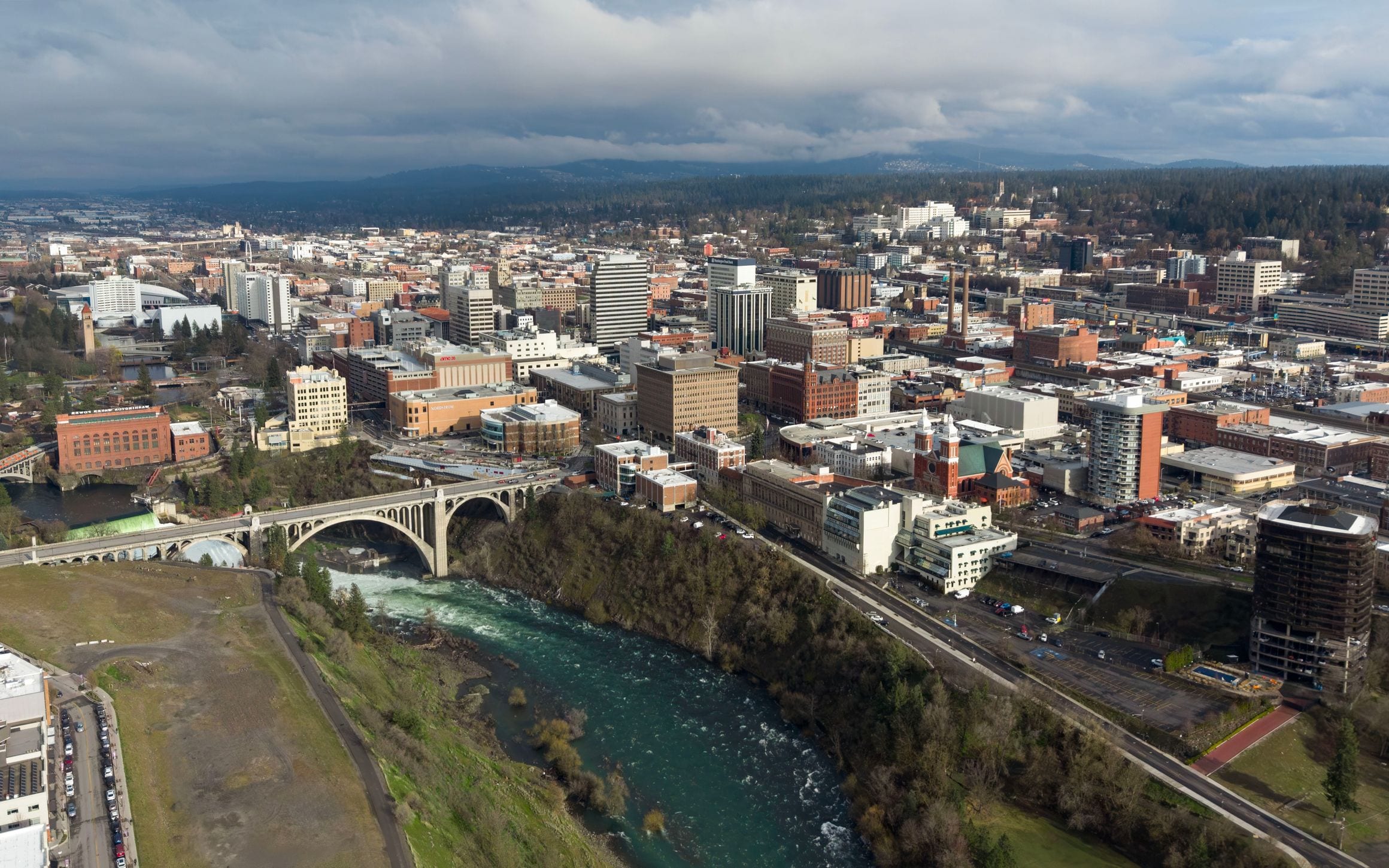
Spokane grew up around a waterfall, and the Spokane River still crashes through the middle of downtown. The hub of the Inland Northwest and the biggest city in eastern Washington pairs a walkable riverfront with Gilded Age mansions, Art Deco theaters and pine-covered canyons a few minutes from the center.
This guide ranks the 30 best things to do in Spokane, from the Expo '74 grounds of Riverfront Park to the gardens of the South Hill, with trip-planning tips and day trips at the end. Two days covers the highlights; give it three to add the trails and parks on the city's edge.
Spokane is the second-largest city in Washington after Seattle, edging out Tacoma at the 2020 census with just under 229,000 residents.
It is the birthplace of Father's Day: Sonora Smart Dodd, raised by her father alone, persuaded Spokane's ministers to hold the first one in 1910.
The city was first incorporated as Spokane Falls in 1881, after the waterfall it grew around, and re-incorporated under its shorter name ten years later.
The Great Fire of 1889 destroyed virtually all of downtown in a single August day, yet only one person was killed; much of today's historic core was built in the rebuilding boom that followed.
Spokane hosted a world's fair, Expo '74, themed on the environment; the fairgrounds on the river islands became Riverfront Park.
Hoopfest, held downtown each June, is the world's largest 3-on-3 basketball tournament, filling city streets with hundreds of courts, which is why Spokane calls itself Hooptown USA.
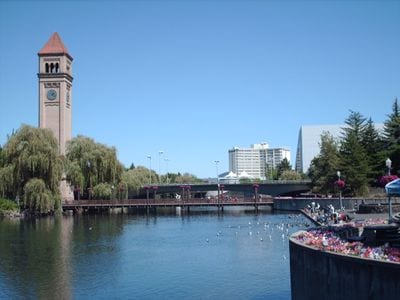
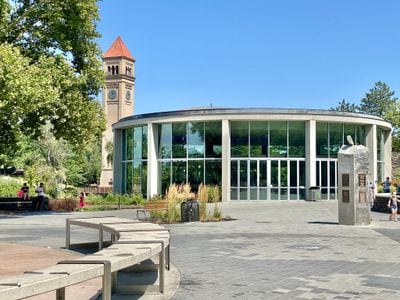
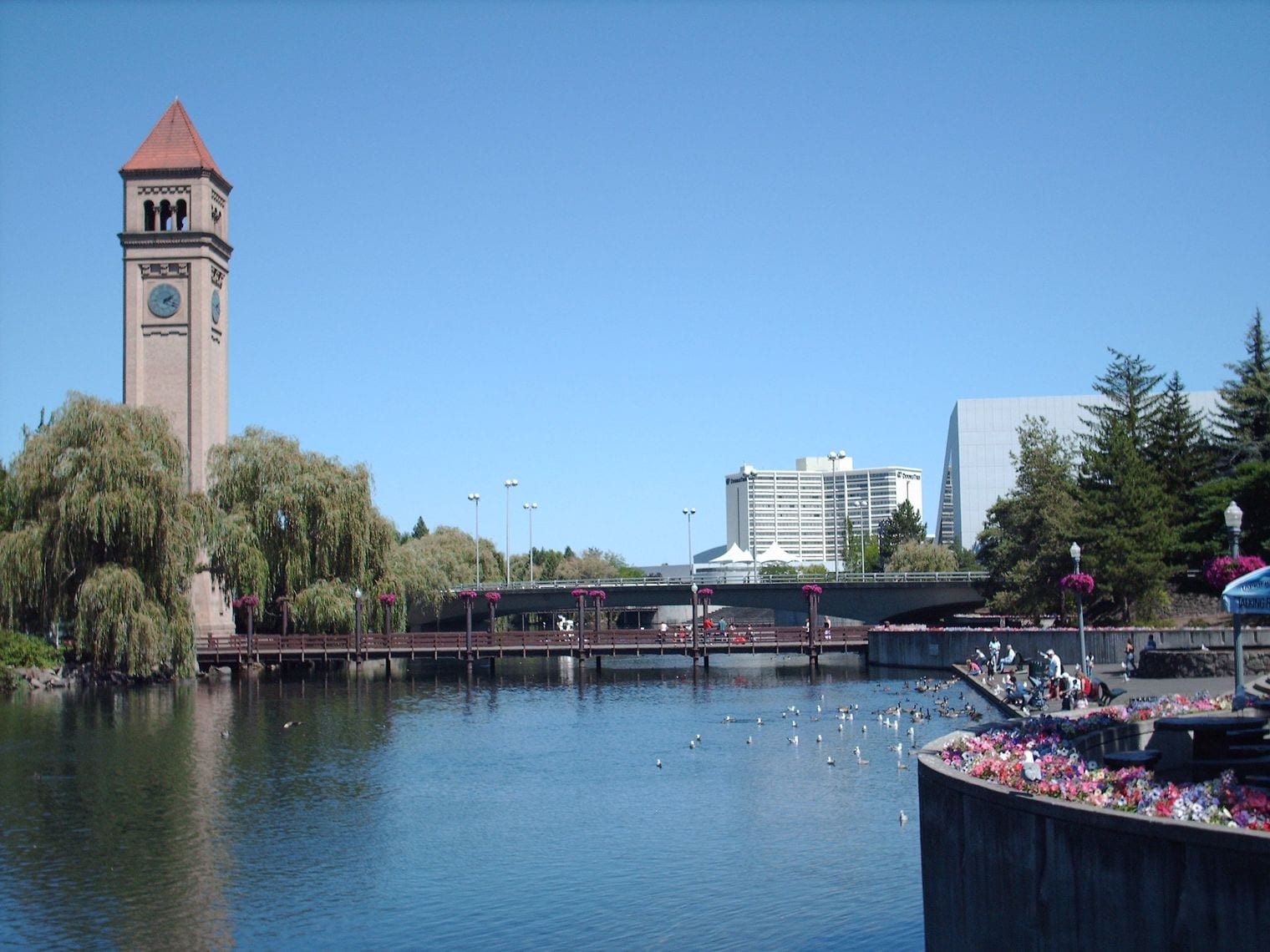
Riverfront Park is the reason most visitors fall for Spokane. The 100-acre park was carved out of old rail yards to host Expo '74, the environmentally themed world's fair, and it wraps around the river islands right in the heart of downtown, with the Upper Falls thundering along its western end.
Wander past the Great Northern Clocktower, a survivor of the railroad era, then under the steel-cable canopy of the Pavilion, the former US Pavilion from the fair. Kids head for the giant Red Wagon slide and the trash-eating Garbage Goat sculpture, the Rotary Fountain splashes in summer, and in winter the Numerica Skate Ribbon loops through the trees as an ice-skating path.
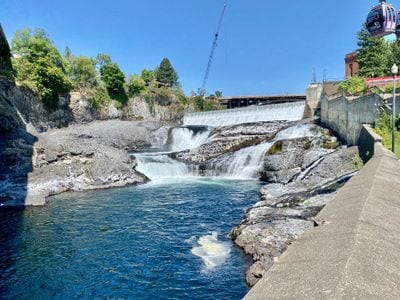
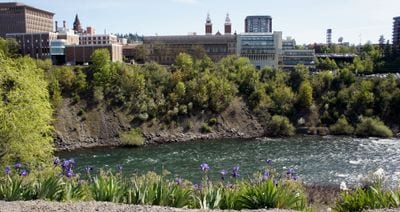
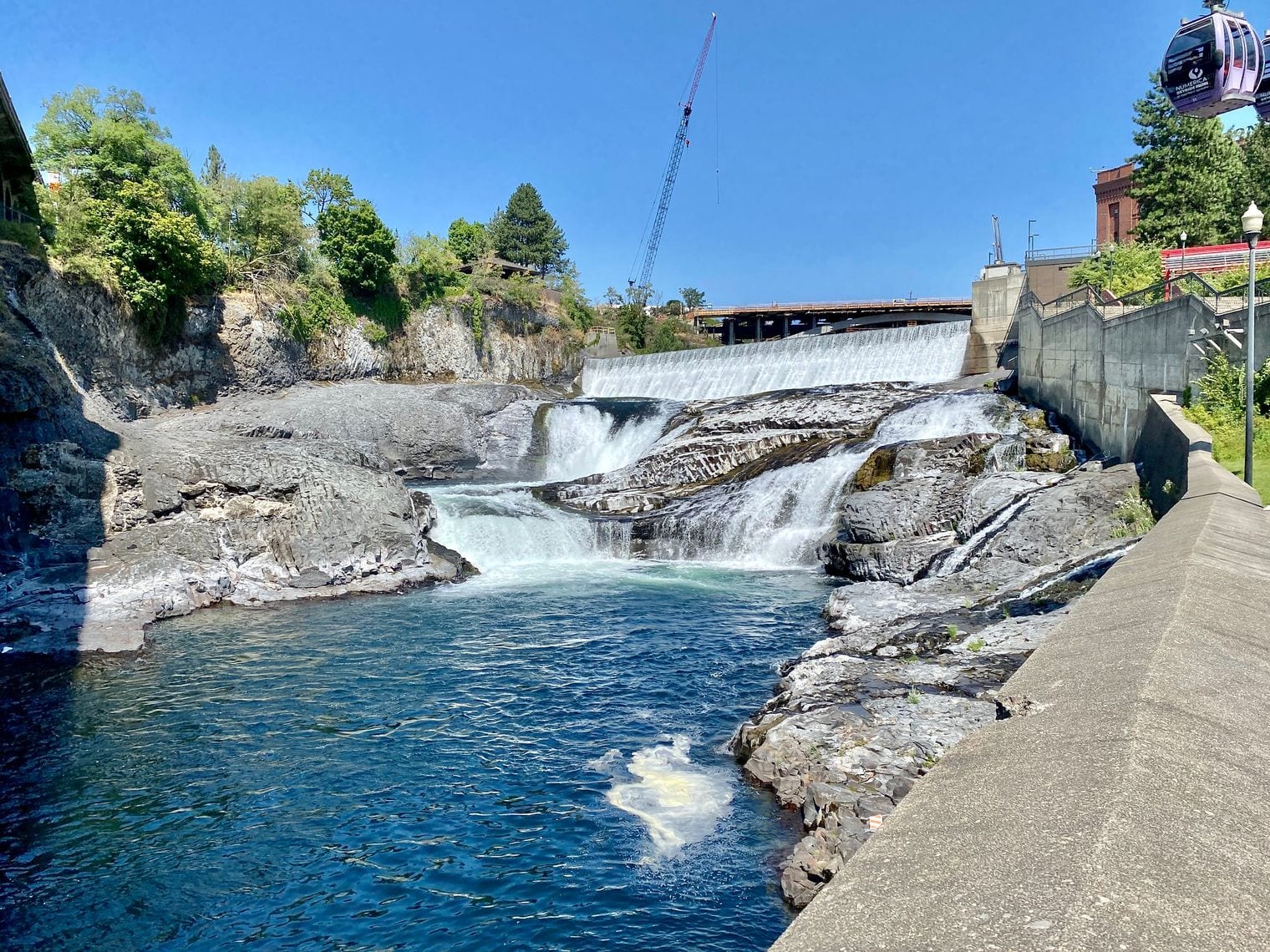
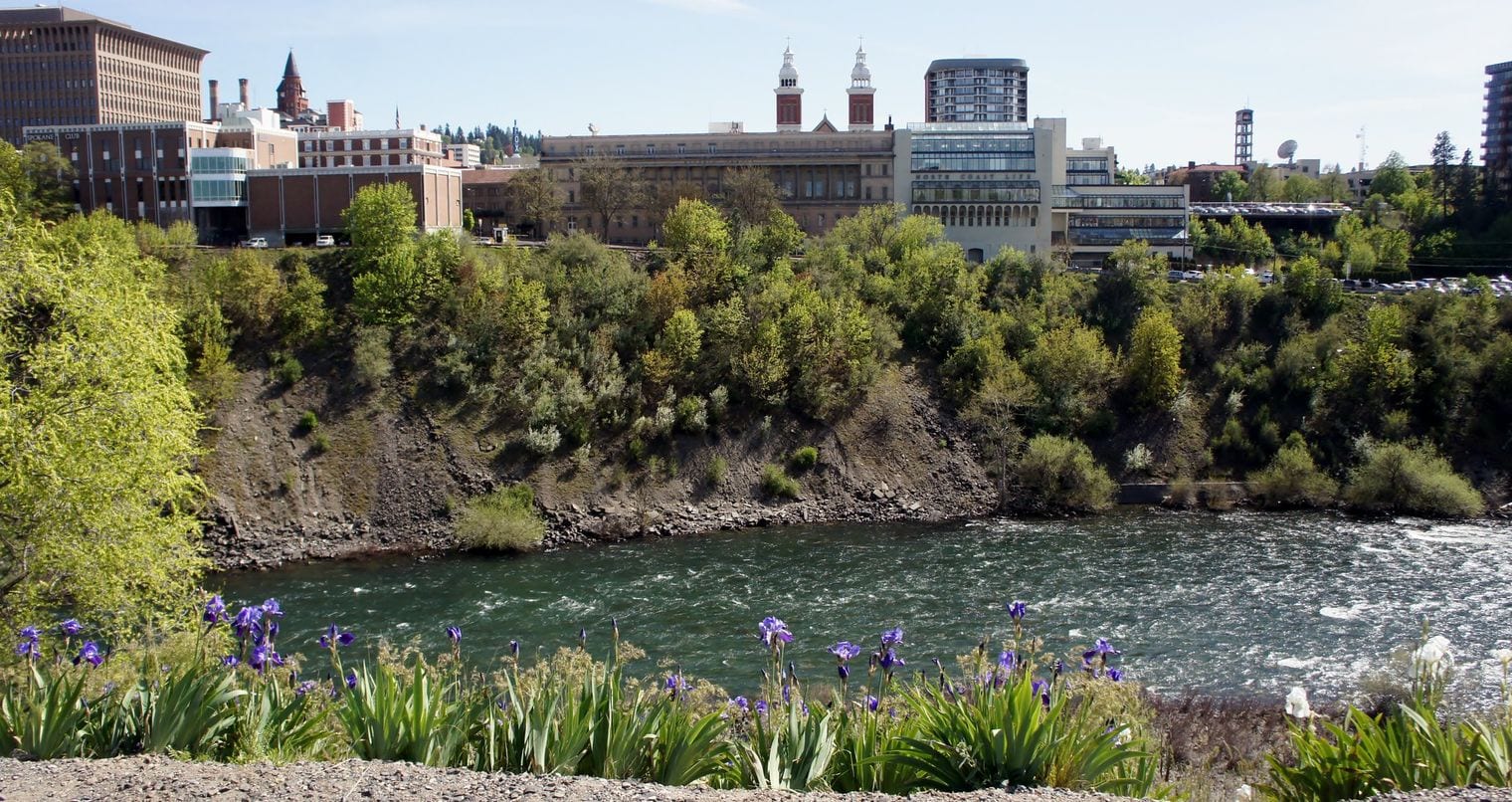
The Spokane Falls are the city's founding sight; the town was even incorporated as Spokane Falls before it dropped the second word. The river splits around a cluster of islands and tumbles over the Upper Falls and then the Lower Falls in a basalt gorge, all within a few blocks of downtown's office towers.
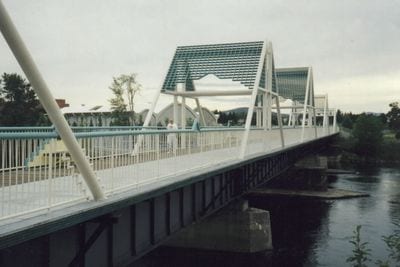
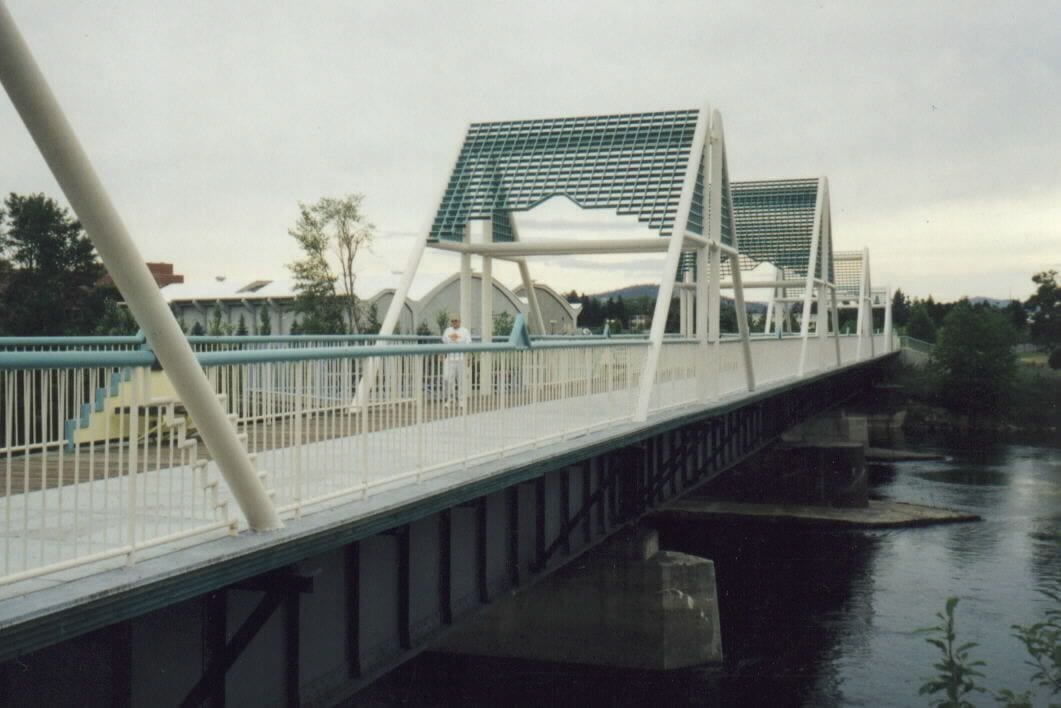
The falls run hardest with the spring snowmelt, when the spray drifts over the footbridges. Cross the pedestrian suspension bridges over the Upper Falls inside Riverfront Park, then walk down to Huntington Park, a terraced plaza beside City Hall with stairways and viewpoints right at the foot of the Lower Falls.
Manito Park is the South Hill's green showpiece: a 90-acre park and botanical garden that is free to enter and has been the city's favorite community park for more than a century. The Olmsted Brothers firm included it in its 1913 plans for Spokane's parks, and it was added to the National Register of Historic Places in 2015.
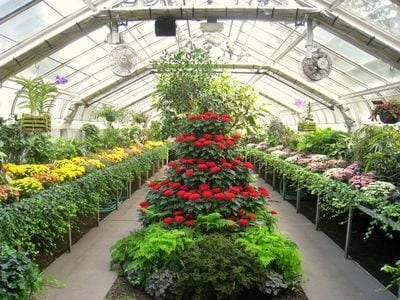
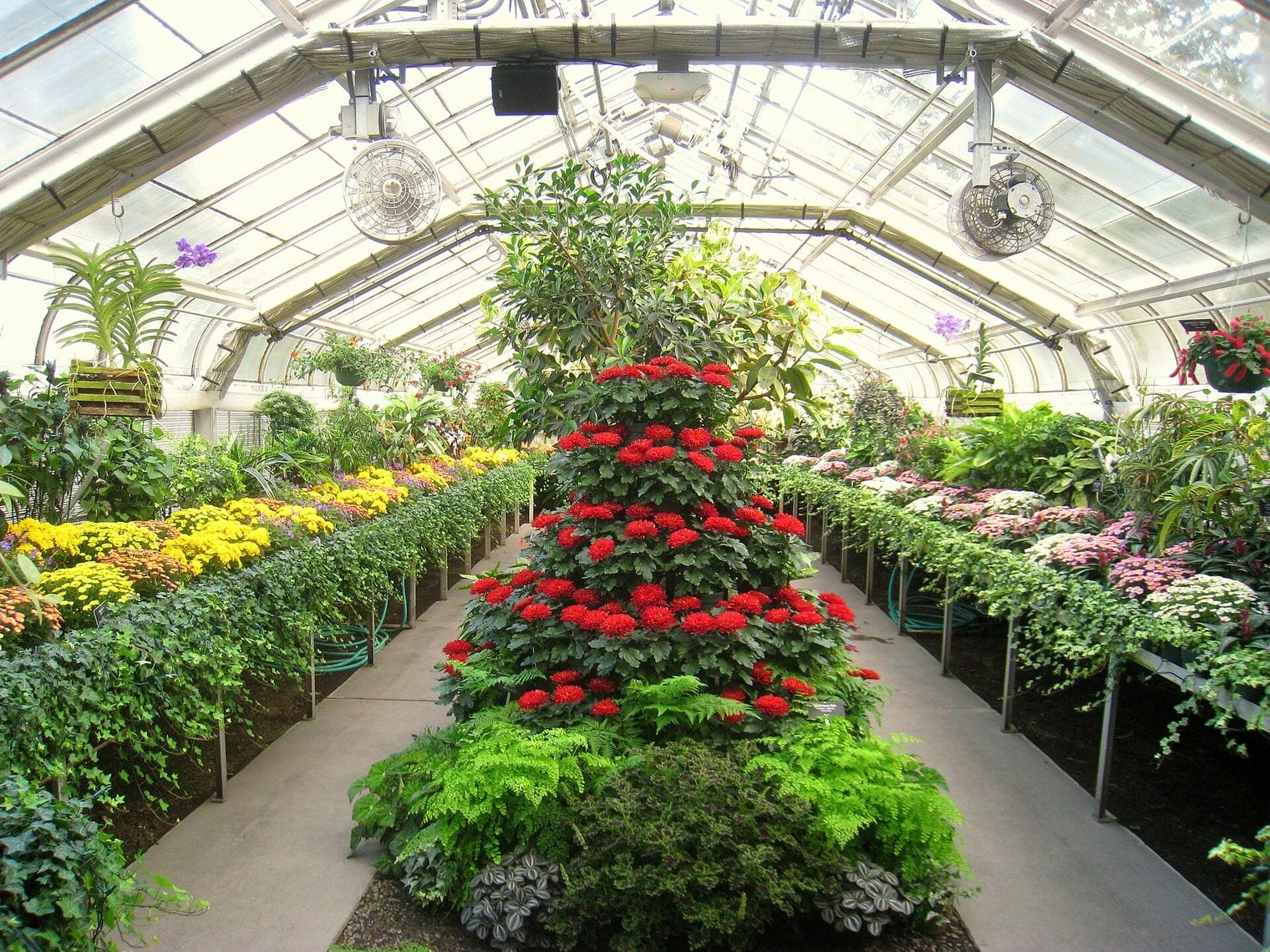
The formal, symmetrical Duncan Garden blazes with annual bedding in summer, overlooked by the glass Gaiser Conservatory and its tropical plants. Beyond them you'll find rose and lilac gardens, a perennial garden, the Japanese garden, a duck pond at Mirror Pond and shaded lawns made for a picnic.
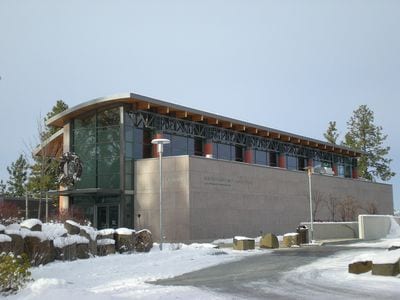
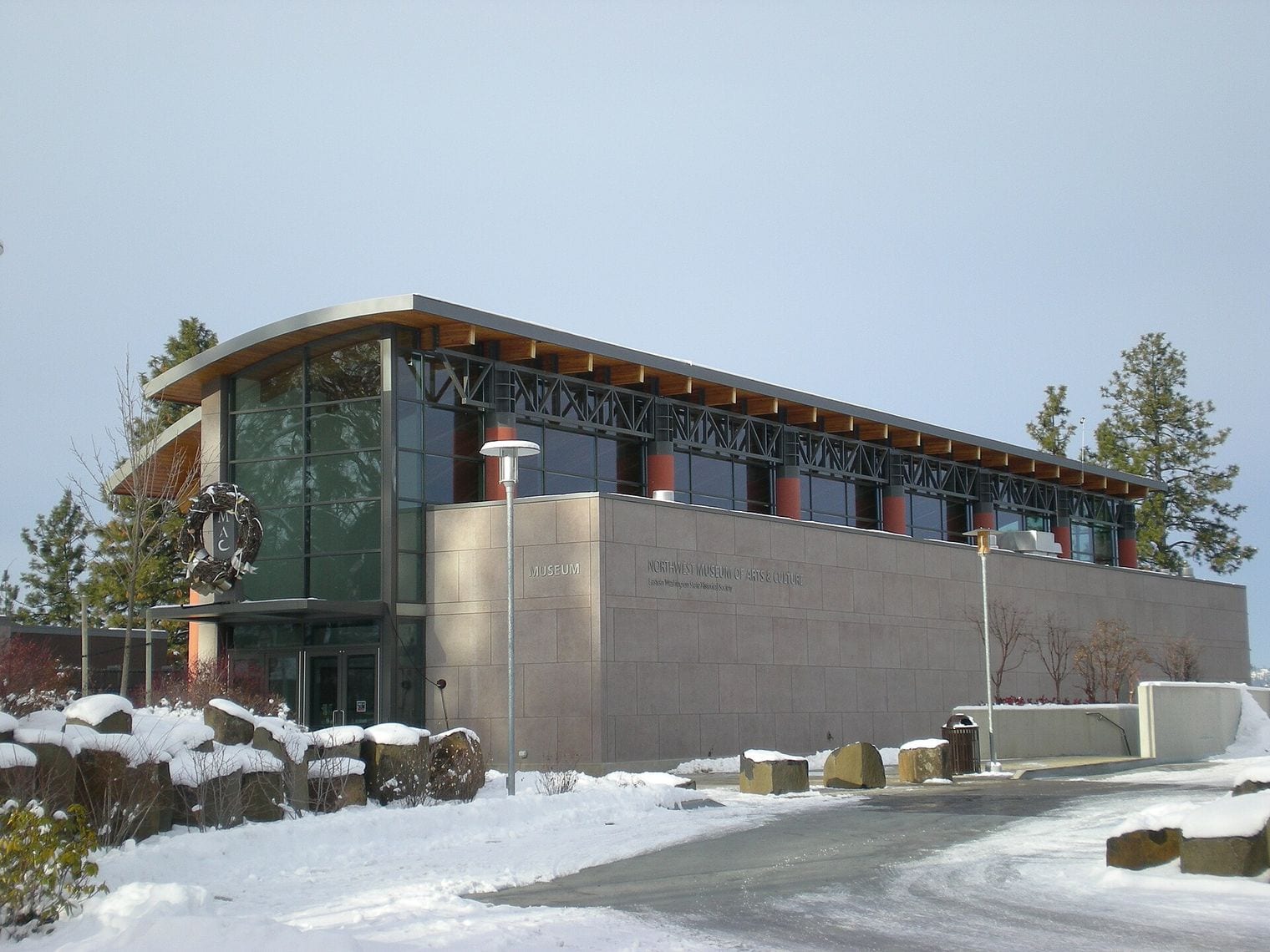
The Northwest Museum of Arts & Culture, known locally as the MAC, is the region's flagship museum and a Smithsonian affiliate, set on a bluff in the historic Browne's Addition neighborhood. Its galleries rotate between fine art, regional history and touring exhibitions.
The standout is its American Indian collection, with beadwork, basketry and textiles from the Plateau peoples of the Columbia River basin. The 1898 Campbell House mansion next door is part of the same campus, so a visit easily combines modern galleries with a walk through Spokane's mining-boom past.
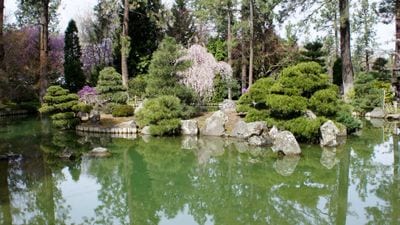
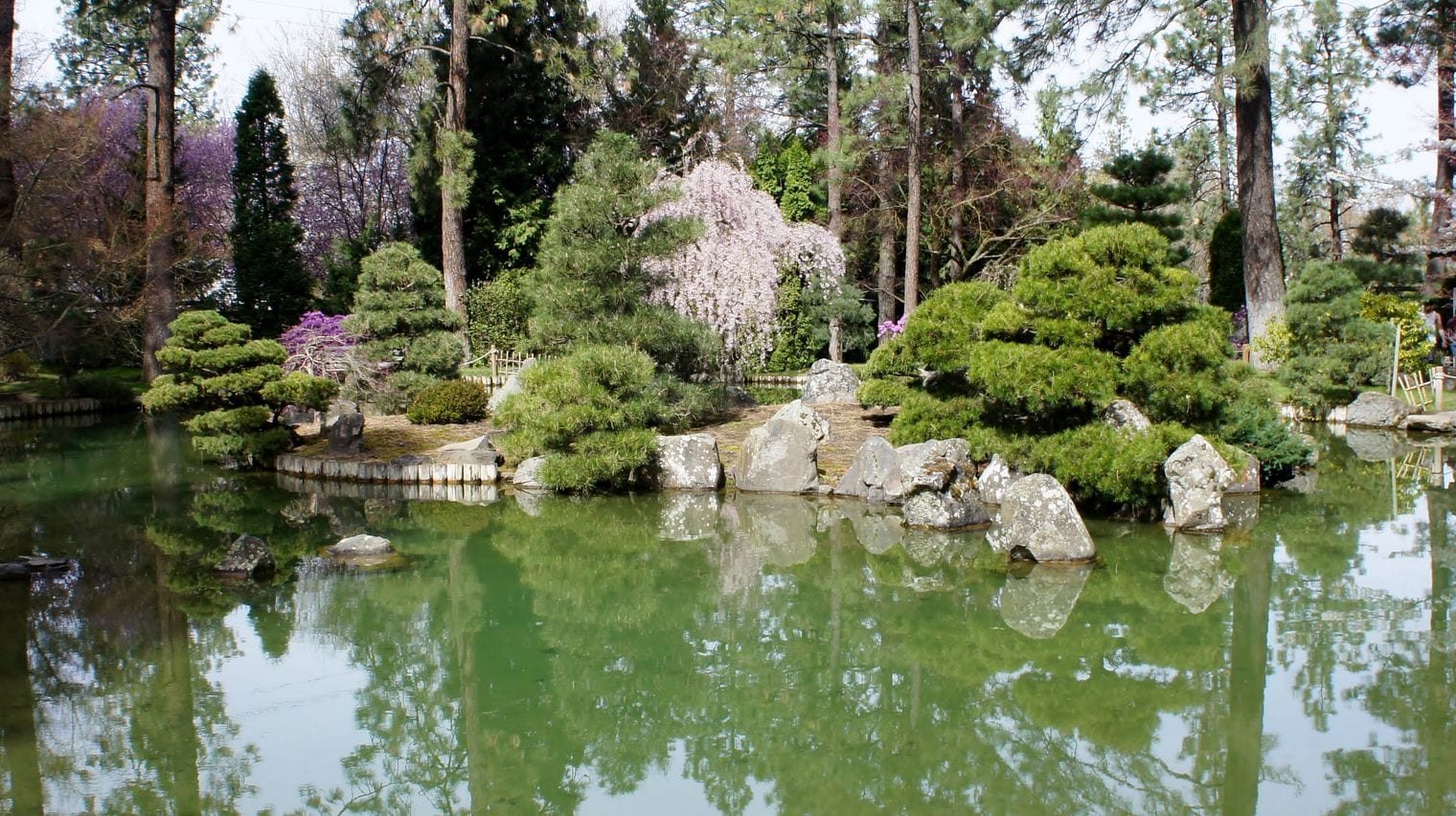
Tucked inside Manito Park, the Nishinomiya Tsutakawa Japanese Garden marks Spokane's sister-city friendship with Nishinomiya, Japan. It was designed by Nagao Sakurai, who had worked on the gardens of the Imperial Palace in Tokyo, and completed in 1974; it takes its name from Ed Tsutakawa, the local leader who built the sister-city tie.
Inside the gate the pace slows: a pond spanned by bridges, stone lanterns, a small waterfall and carefully pruned trees. The garden opens seasonally, from spring into fall, and closes over the winter, and is at its best when the leaves turn in October.
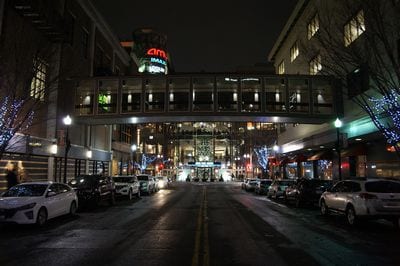
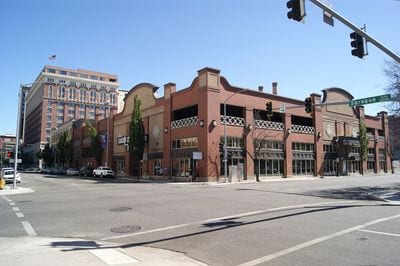
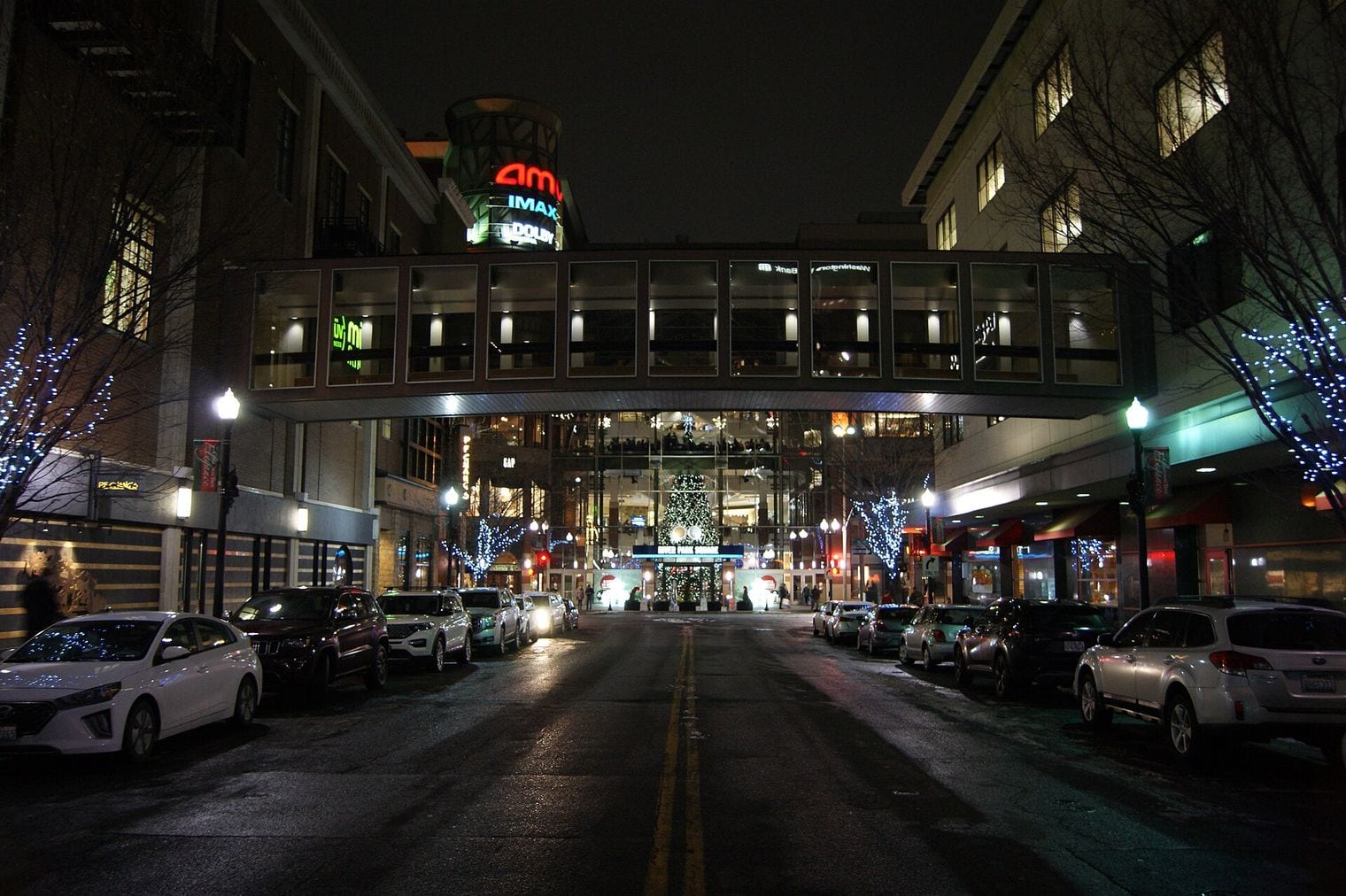
River Park Square is downtown Spokane's main indoor shopping center, first opened in 1974 and rebuilt in 1999 as part of the effort to bring the city center back to life. It sits a block from Riverfront Park, so it's an easy add-on to a day by the falls.
Nordstrom anchors the mall, and an AMC multiplex fills the upper level, making it the go-to spot for a rainy afternoon or a winter movie. Skywalks link it to neighboring blocks, so you can shop and eat your way across downtown without stepping out into the cold.
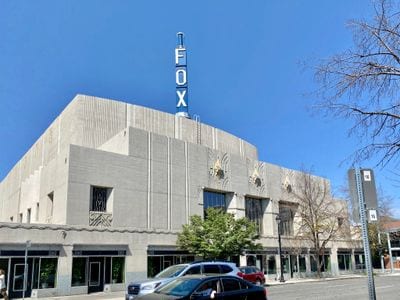
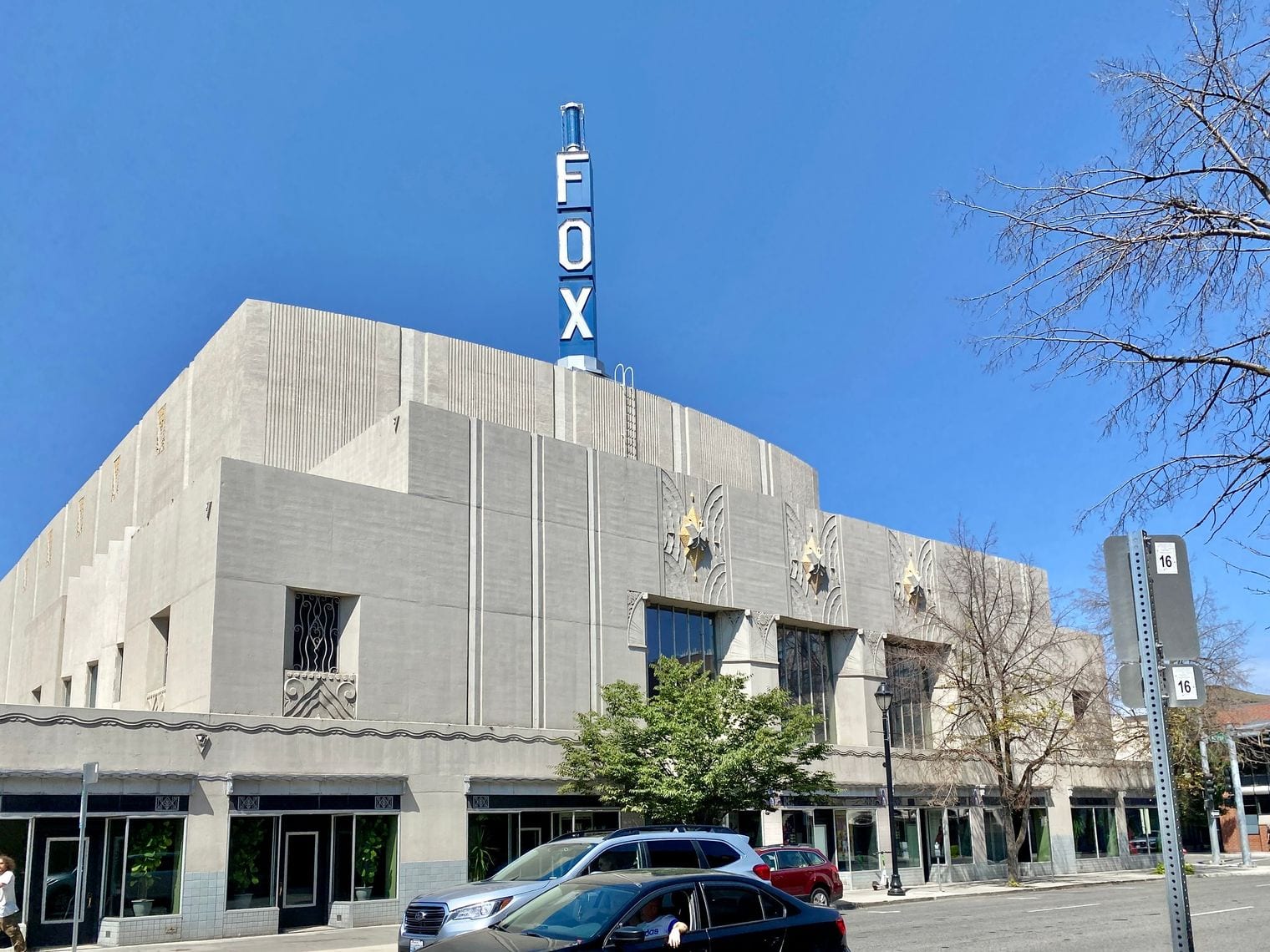
The Fox Theater, now formally the Martin Woldson Theater at The Fox, is a 1931 Art Deco movie palace designed by Robert Reamer, the architect of Yellowstone's Old Faithful Inn. It screened films until 2000, was bought and restored, and is now home to the Spokane Symphony.
Even if you only come for the building, the lobby and auditorium are full of ornate Art Deco detail. Catch a symphony concert, a touring comedian or a classic film night to see the hall lit up as it was meant to be.
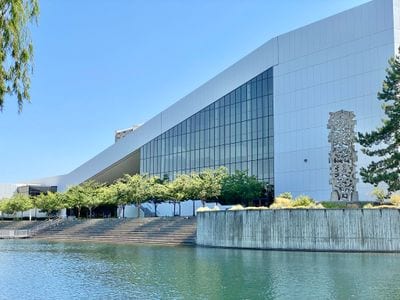
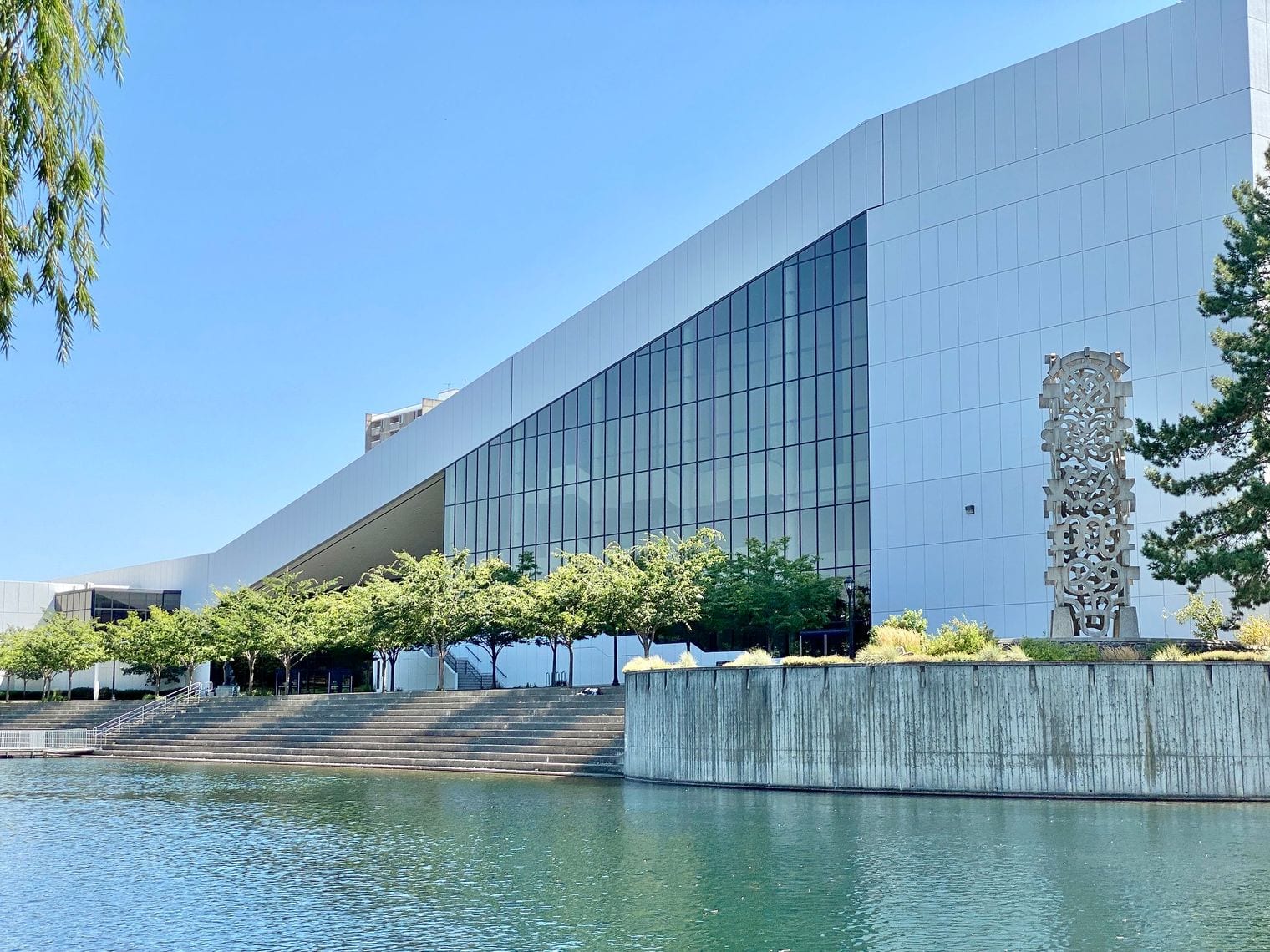
The First Interstate Center for the Arts is Spokane's biggest stage: a roughly 2,600-seat theater on the south bank of the river, built as the Opera House for Expo '74 and run by the Spokane Public Facilities District. It sits next to the convention center at the east end of Riverfront Park.
This is where the touring Broadway shows land, alongside big-name concerts, comedians and family productions. Pair an evening show with a sunset stroll along the river path just outside the doors.
The Spokane River Centennial Trail is a paved path of nearly 40 miles that follows the river from Nine Mile Falls northwest of the city, through downtown and Spokane Valley, all the way to the Idaho state line. It is managed as Centennial Trail State Park and links many of the sights on this list.
The downtown stretch is the one to start with: rent a bike or walk from Riverfront Park west past Kendall Yards, with views back over the falls and gorge. Keen cyclists can push on toward Riverside State Park or east toward Idaho, where it continues as the North Idaho Centennial Trail.
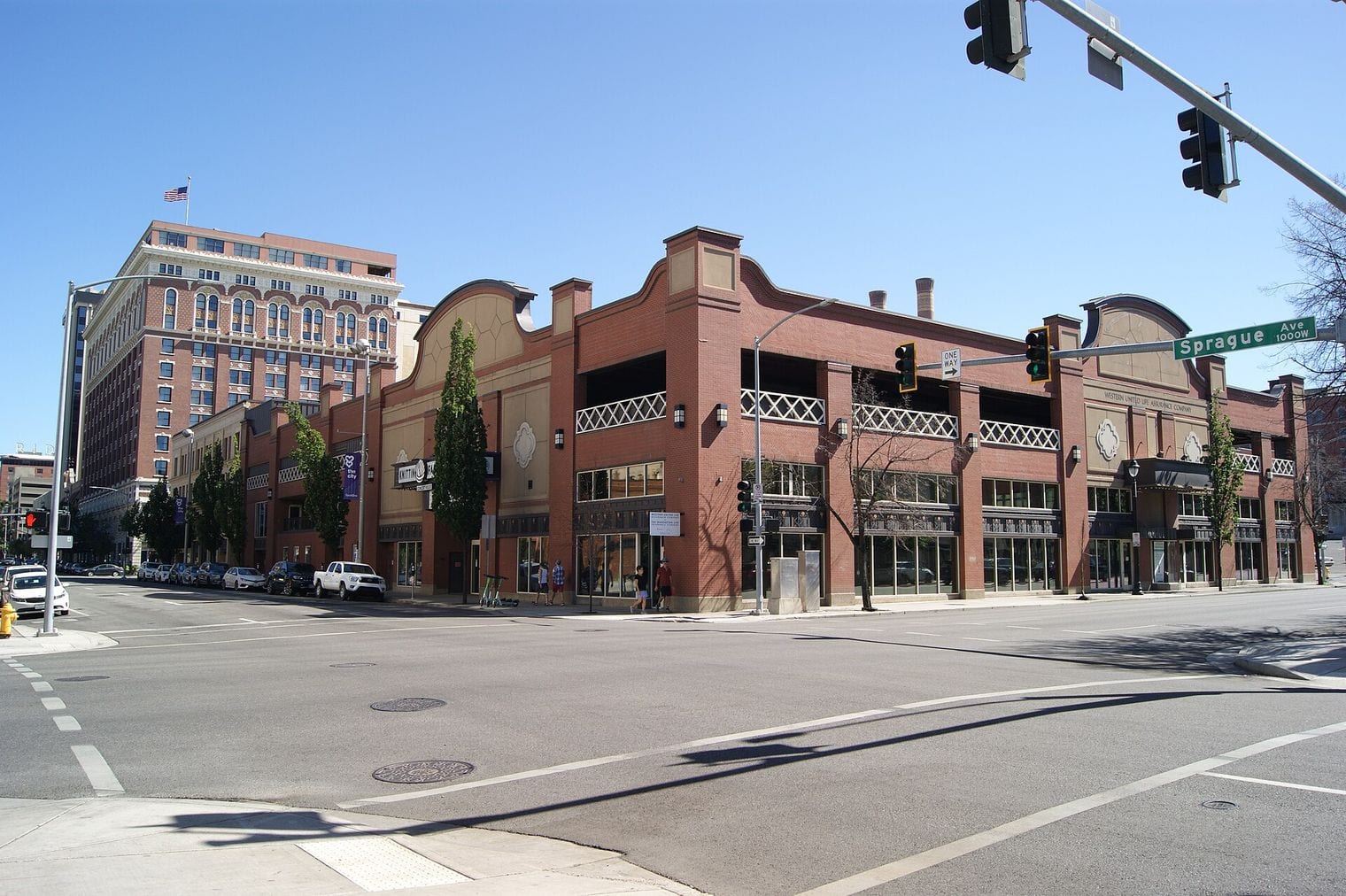
The Knitting Factory is downtown Spokane's main room for touring bands, a mid-sized concert hall on West Sprague Avenue. Rock, metal, indie, hip-hop and pop acts on the road between Seattle and the Rockies routinely stop here.
The intimate size means you're never far from the stage, and a connected bar keeps the night going before and after the set. Check the calendar when you plan a trip; a gig here is one of the easiest ways to see Spokane's nightlife at full volume.
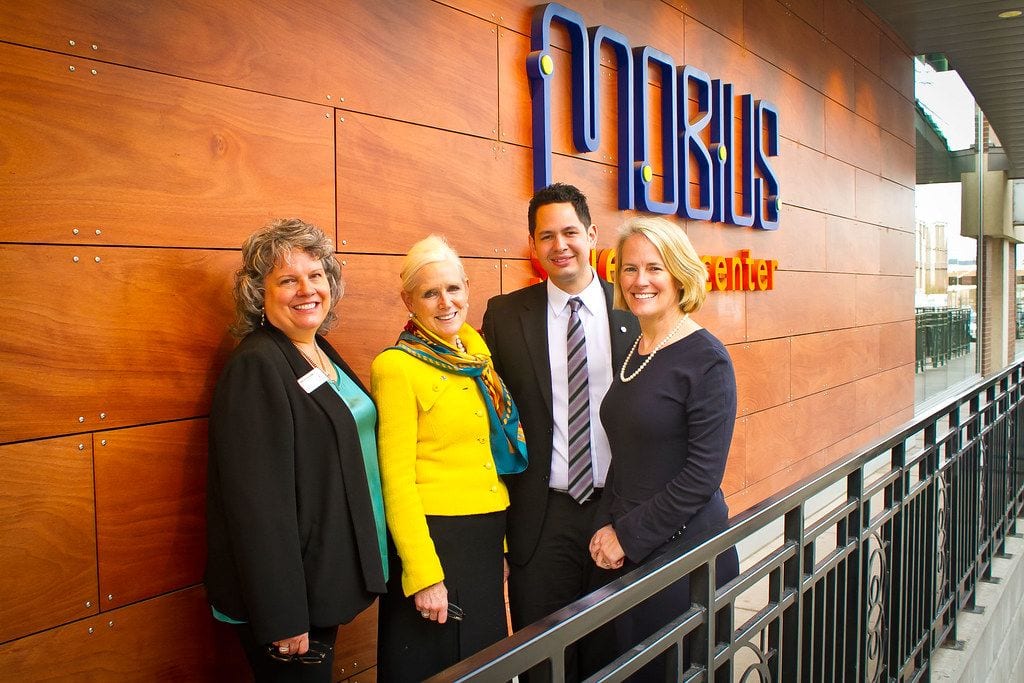
Mobius Discovery Center is Spokane's hands-on museum for kids, combining what used to be two separate attractions, a children's museum and a science center, under one roof in 2020. It sits on North Post Street beside City Hall, a short walk from Riverfront Park.
Younger children get play-based zones for building and pretending, while older kids tackle science and STEAM exhibits that invite them to test, tinker and experiment. It's a reliable rainy-day or winter plan for families, and easy to pair with the Looff Carrousel down the street.
Auntie's Bookstore is Spokane's beloved independent bookshop, a big, rambling store in the 1908 Liberty Building on West Main Avenue. It started life in 1978 in the Flour Mill as the Book and Game Company and moved here in 1994, taking its current name.
Shelves of new and used books run deep, alongside cards, gifts and Spokane-themed souvenirs. The store hosts readings, signings and story times, making it a cozy downtown stop between museum visits.
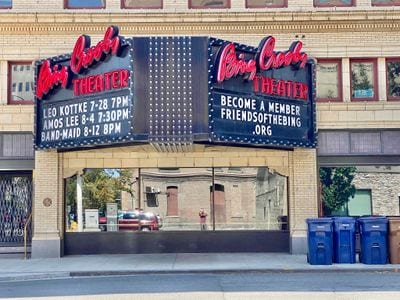
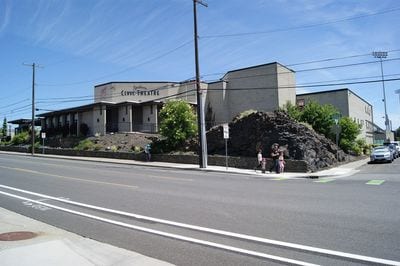
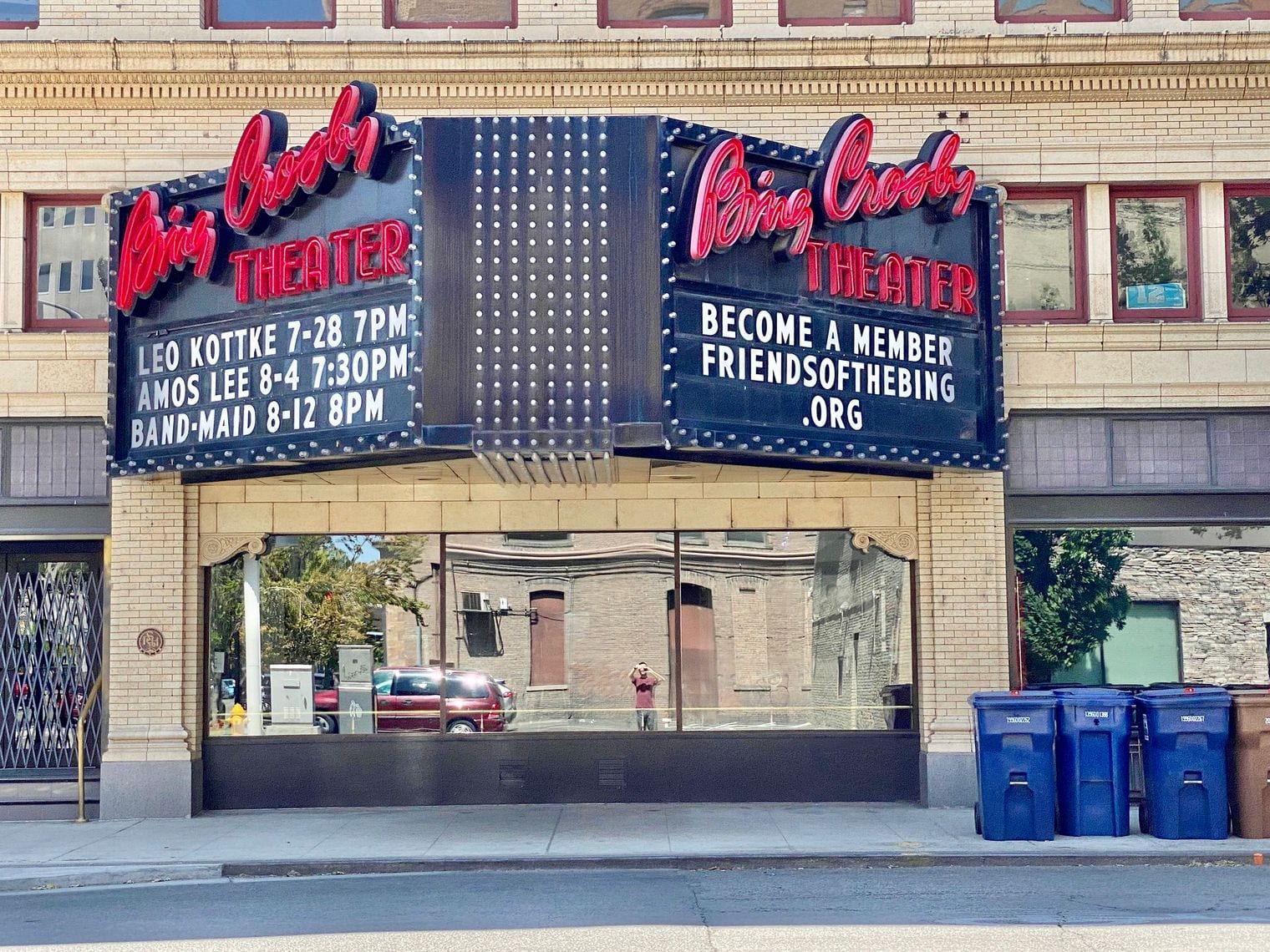
The Bing Crosby Theater opened in 1914 as the Clemmer, an 800-seat movie house designed by theater architect Edwin Houghton. Spokane's most famous son, Bing Crosby, performed here as a young local singer in 1925, and the theater was renamed in his honor in 2006.
Listed on the National Register of Historic Places, the restored hall now hosts concerts, film screenings, lectures and smaller touring shows. Its modest size makes it a fine place to hear acoustic acts in an elegant early-20th-century setting.
Free printable checklist of all 30 places
Tick them off as you go. Confirm your email to download it, plus one email every Thursday with new guides for the places you tick.
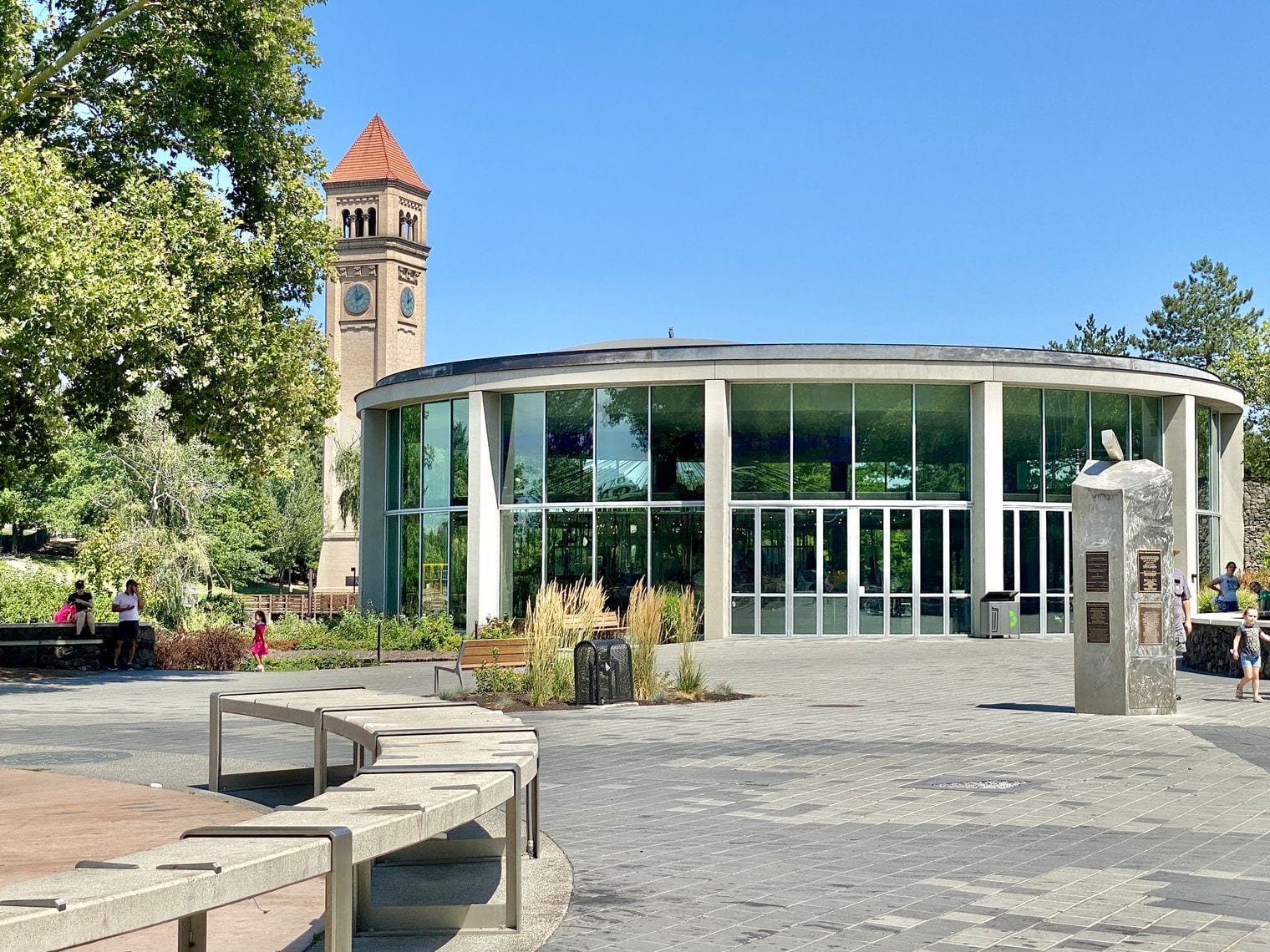
The Looff Carrousel is a hand-carved wooden carousel built by master carver Charles Looff in 1909, sent to Spokane as a wedding gift for his daughter and her husband, who ran the city's Natatorium Park. When that amusement park closed, the carousel was restored and moved to Riverfront Park, and it is listed on the National Register of Historic Places.
It now spins in its own building in the park, rebuilt during the park's recent renovation. Riders on the outer row can still reach for the brass ring as they pass the dispenser; grab one and you've won a free ride.
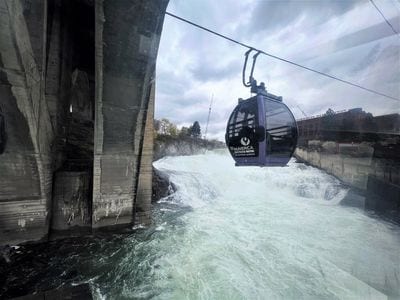
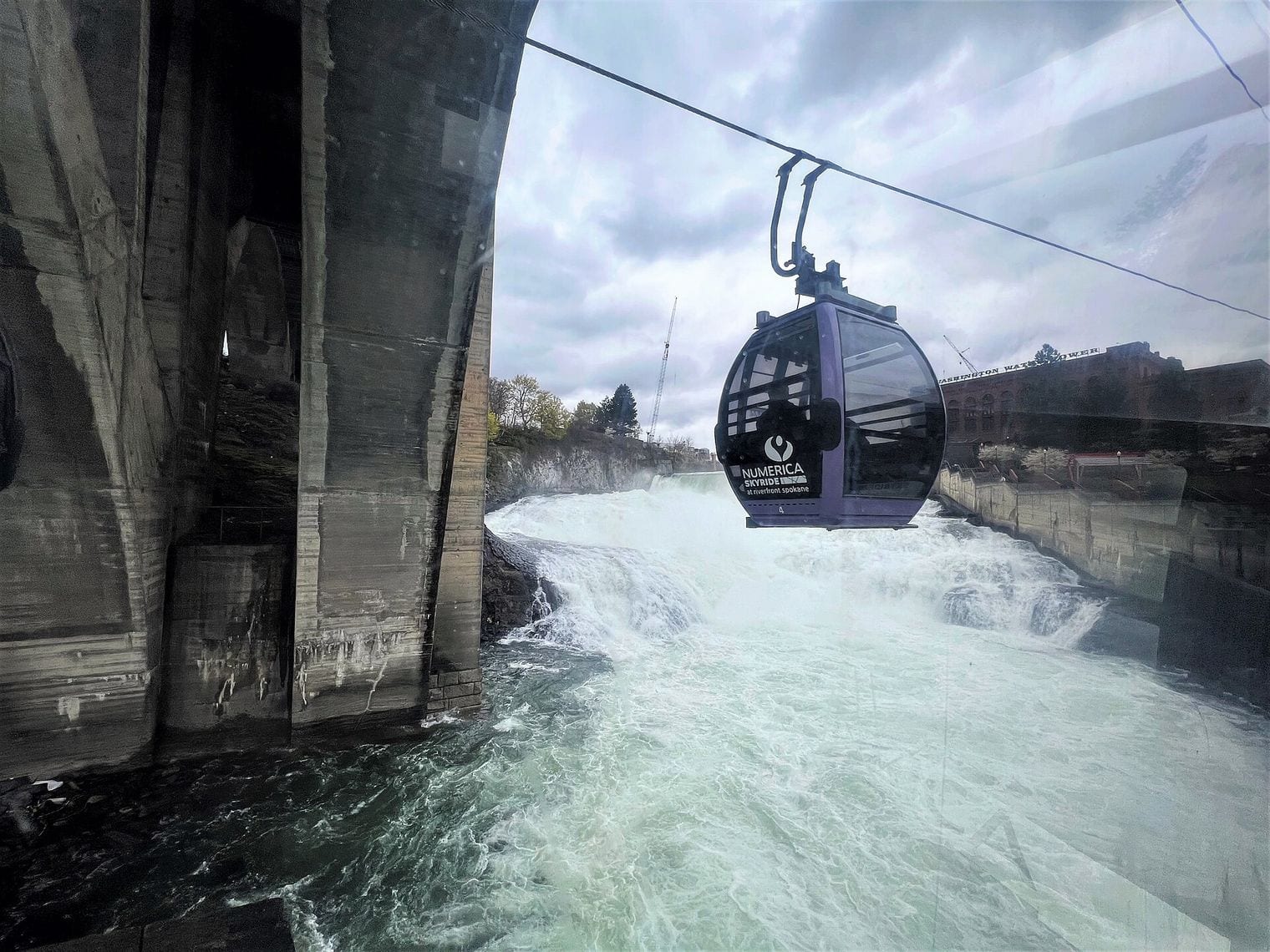
The Numerica SkyRide is a gondola that swoops out over the gorge below the Spokane Falls, giving you the most dramatic view of the river in the city. The first SkyRide was built for Expo '74, and the current lift with its enclosed cabins replaced it in 2005.
The cabins drop down toward the churning Lower Falls and then climb back out, with recorded narration on the history of the falls along the way. It runs seasonally and closes in winter, so plan it for spring through fall, when the snowmelt makes the falls most impressive.
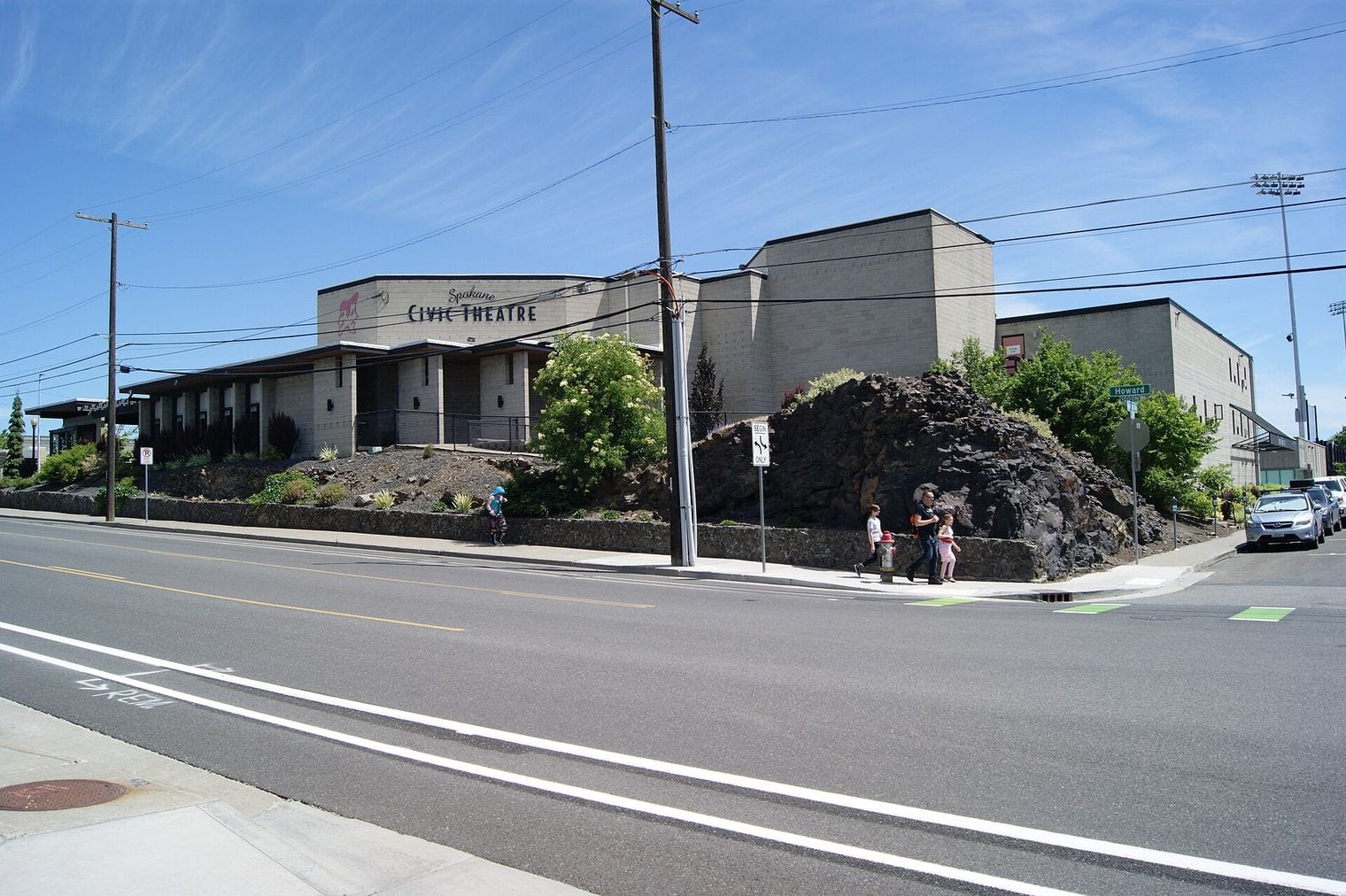
The Spokane Civic Theatre is one of the oldest community theaters in the country, incorporated in 1947 and still putting on a full season of plays and musicals. It's a short way north of downtown, near the arena.
The main stage handles big musicals and classics, while a smaller studio space takes on more intimate and offbeat productions. Local performers fill the casts, and the quality regularly surprises out-of-towners, making it a friendly night out.
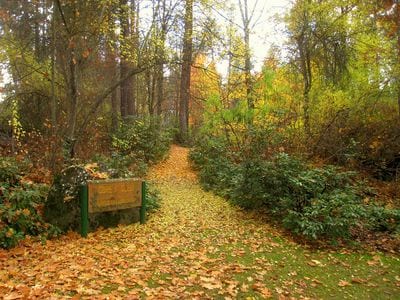
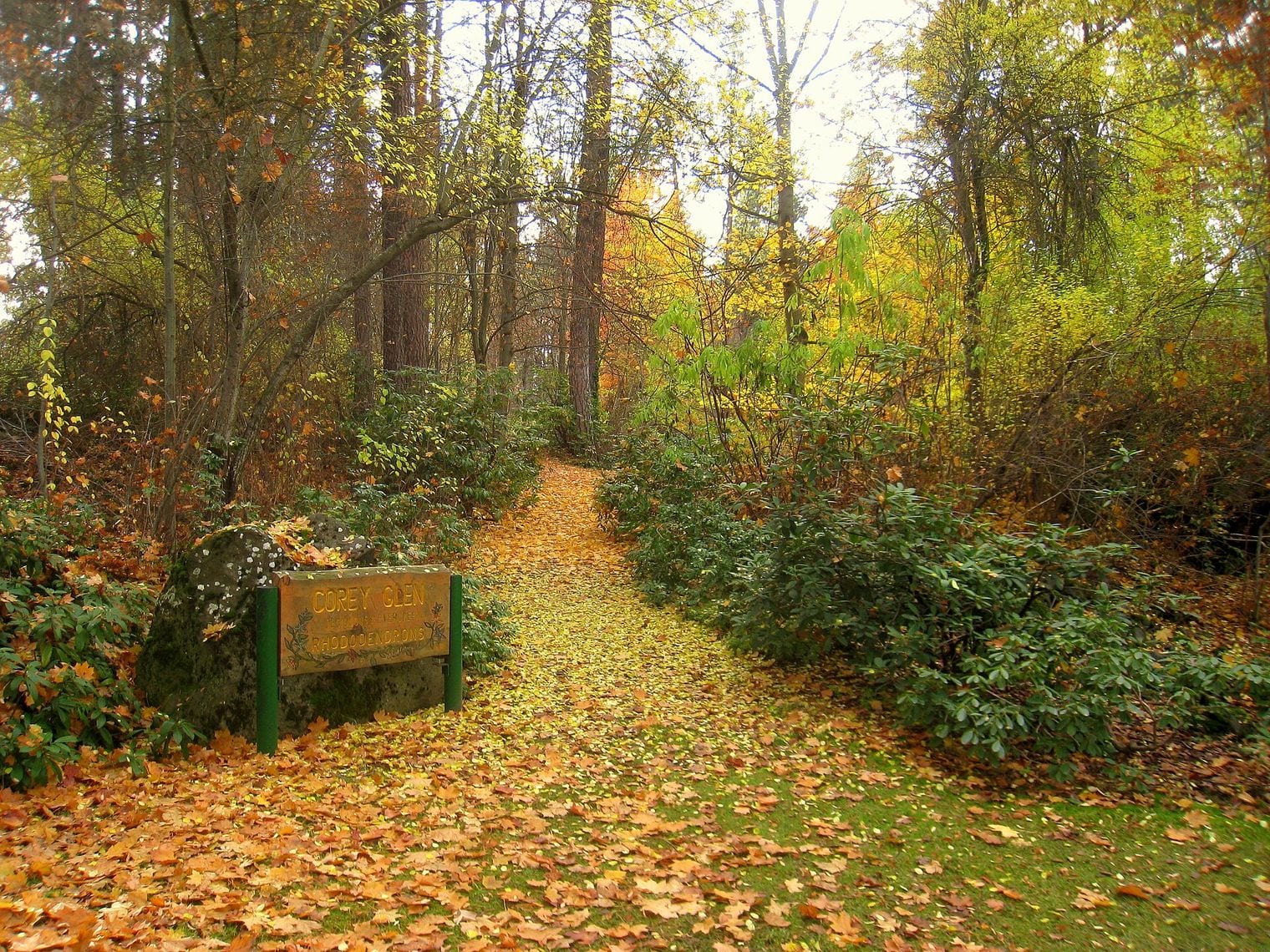
The John A. Finch Arboretum is a free, quiet valley of trees in the West Hills, established in 1949 with money from the estate of mining magnate John A. Finch. It follows Garden Springs Creek through a small valley on the way out to the airport.
Around 2,000 trees and shrubs fill its 57 acres, including dozens of lilac varieties, a rhododendron grove and collections of maples and conifers. Come in May for the lilacs, the flower Spokane takes its nickname from, or in October when the maples blaze.
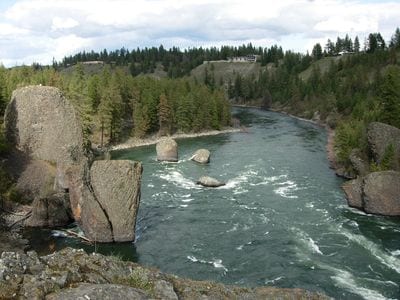
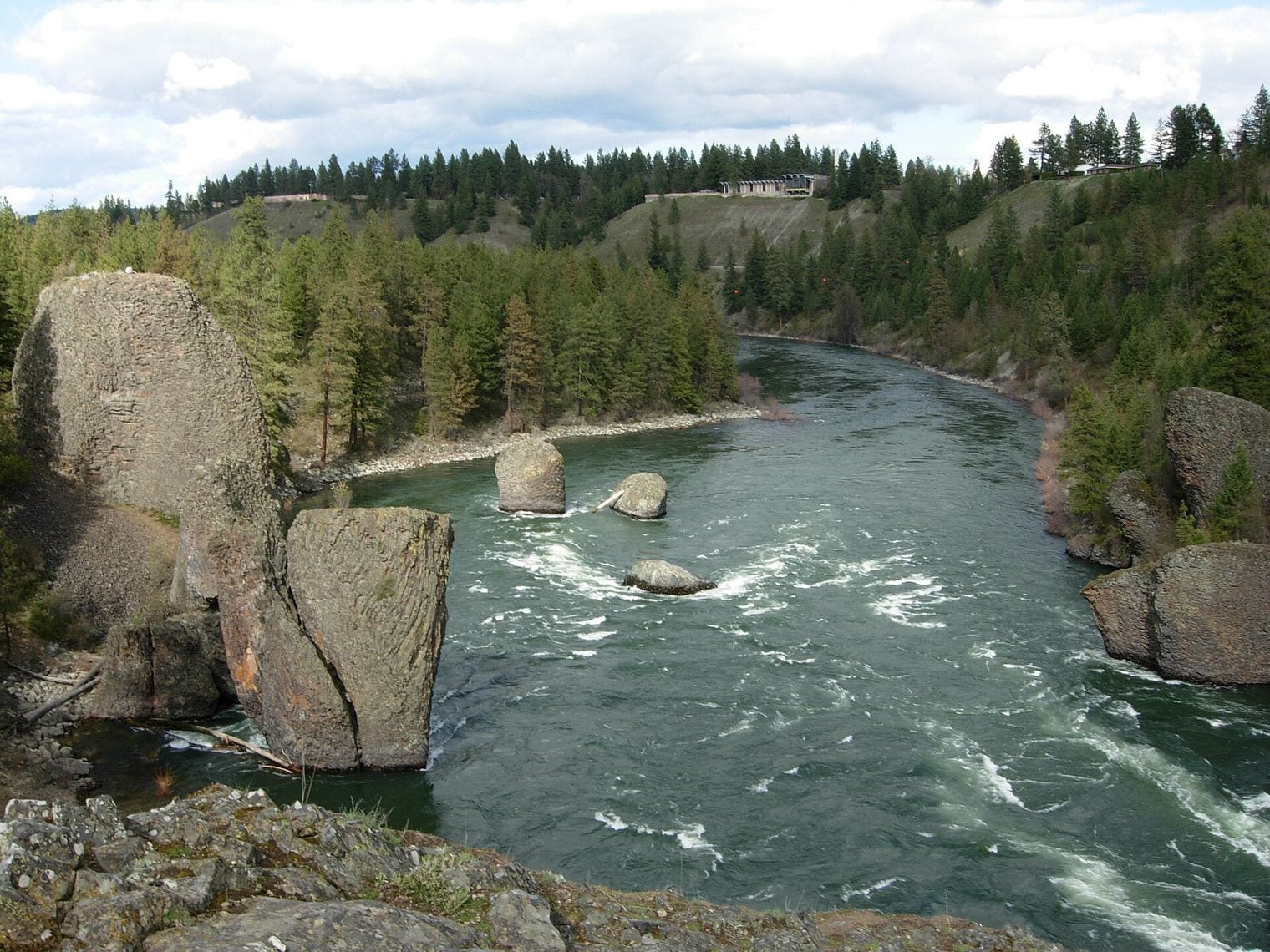
Riverside State Park is a huge swath of dry pine forest along the Spokane and Little Spokane rivers on the city's northwestern edge, one of the largest state parks in Washington. Its best-known corner is the Bowl and Pitcher, where the river squeezes between giant basalt boulders under a Civilian Conservation Corps-era suspension bridge.
The park also covers the Little Spokane River Natural Area, the Spokane House Interpretive Center on the fur-trading era and a long stretch of the Centennial Trail. Wildfires in August 2026 burned into the park: the Bowl and Pitcher area and its suspension bridge have reopened, but the trails across the bridge to the north remain closed while the forest recovers, so check Washington State Parks before you go.
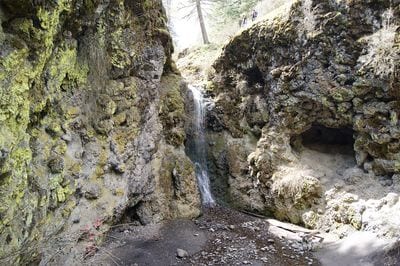
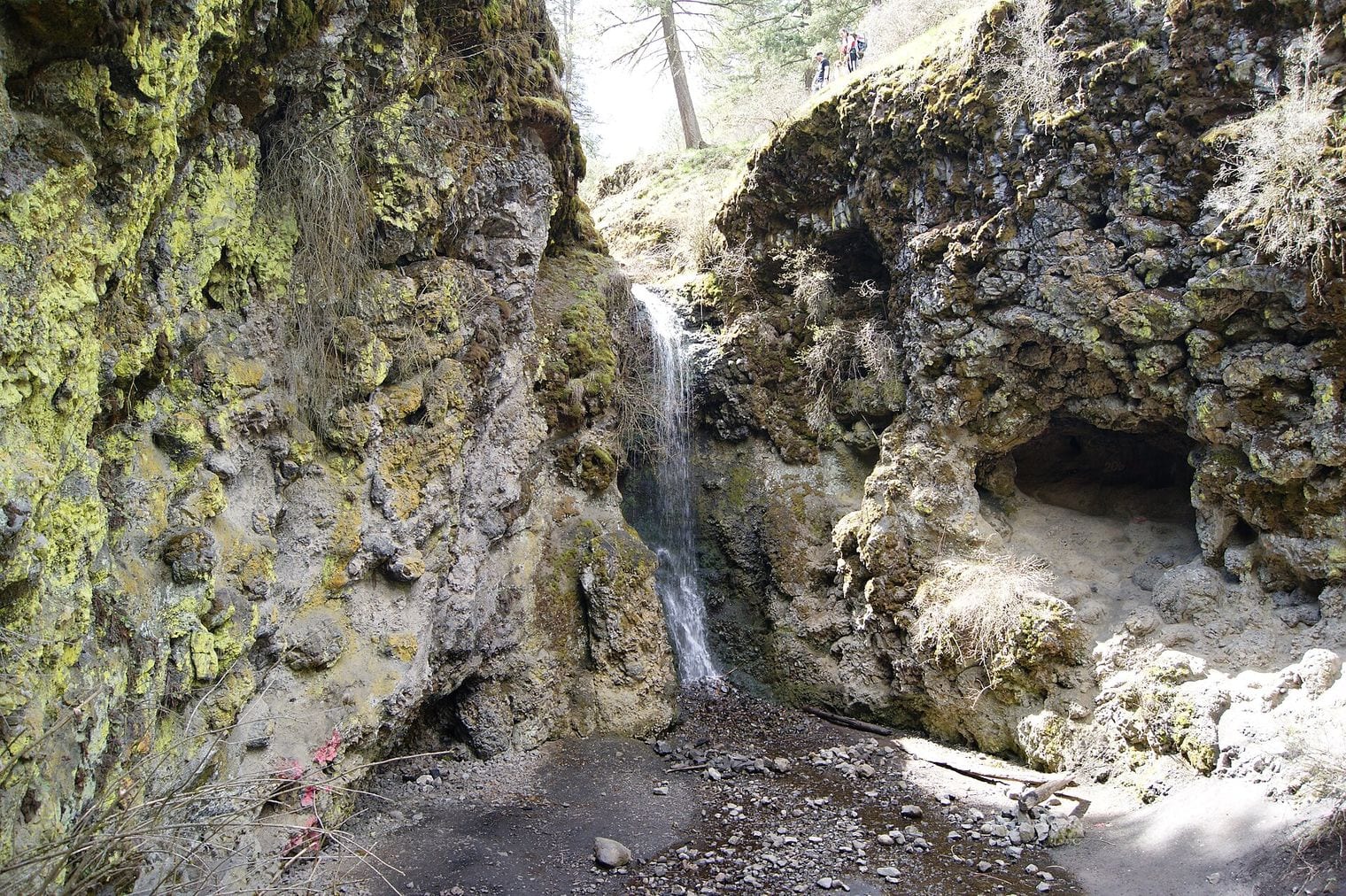
Indian Canyon Mystic Falls is a little hidden waterfall in Indian Canyon Park, a wooded ravine in the West Hills just a few miles from downtown. A short, shaded trail of about half a mile round trip drops down to the falls, where a creek tumbles in two tiers over basalt ledges.
You'll often hear the water before you see it, even in late summer when the flow eases. In winter the falls freeze solid, and the canyon's network of trails is popular with hikers and dog walkers looking for a quick nature fix without leaving the city.
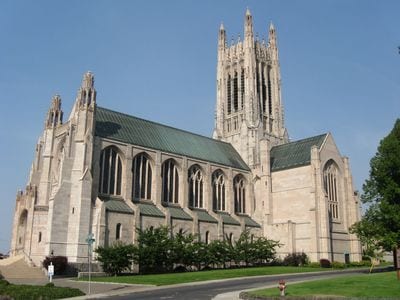
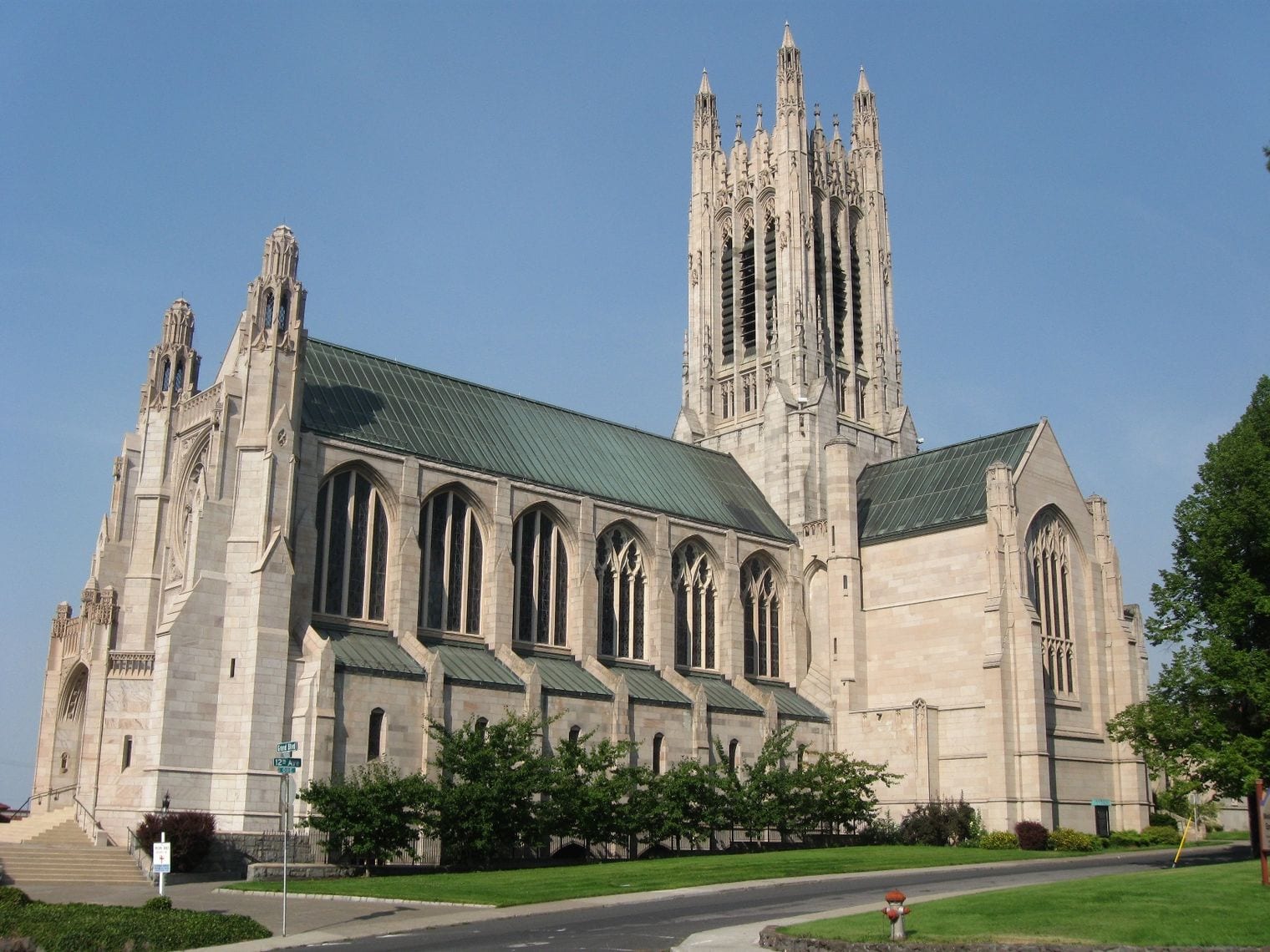
The Cathedral of St. John the Evangelist is the Episcopal cathedral of Spokane, a soaring stone church on the South Hill built in the English Gothic style. Work began in 1925 under architect Harold Whitehouse, and the main tower and transepts were finished in the 1950s.
Inside, look up at the stained-glass windows, carved stone and wood, and vaulted ceilings, then step outside to hear the 49-bell carillon, best heard from the cathedral grounds. Volunteer docents lead tours, and the hilltop setting gives a view back toward downtown.
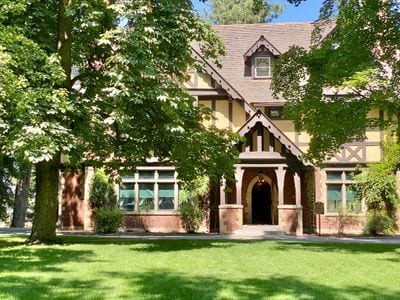
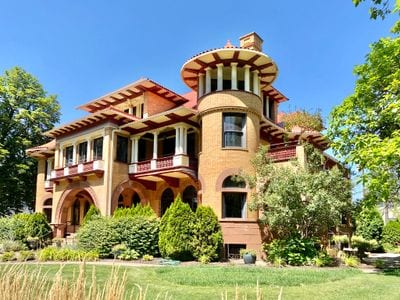
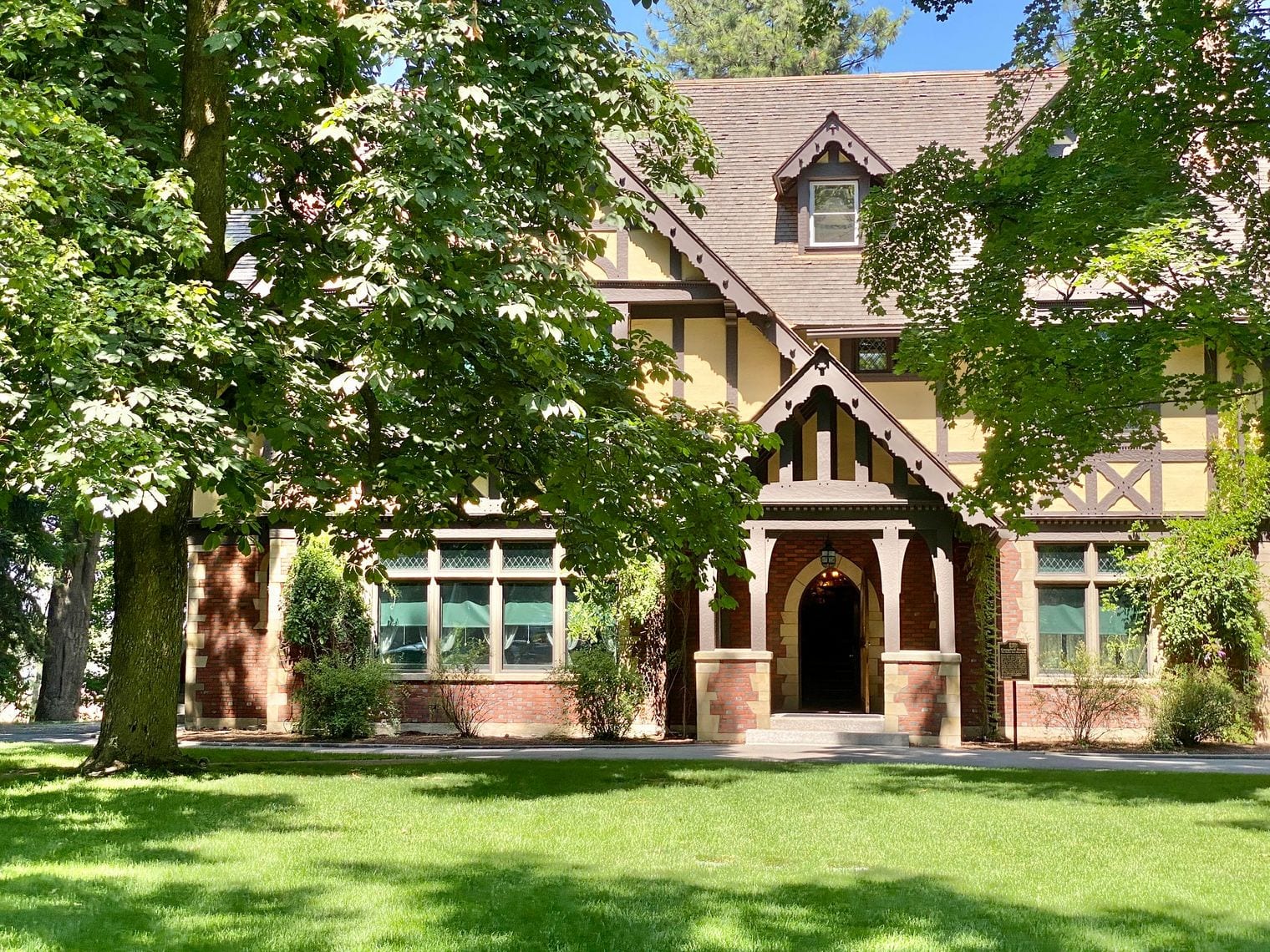
The Campbell House is a grand 1898 mansion in Browne's Addition, designed by Kirtland Cutter, Spokane's most fashionable architect of the day, for mining investor Amasa Campbell and his family. Their daughter Helen donated it in 1924 in memory of her mother, and it is now cared for by the Northwest Museum of Arts & Culture next door.
A long restoration returned the rooms to their turn-of-the-century look, from the formal reception rooms to the family's private quarters. It's the best place in the city to picture life during Spokane's mining-boom heyday.
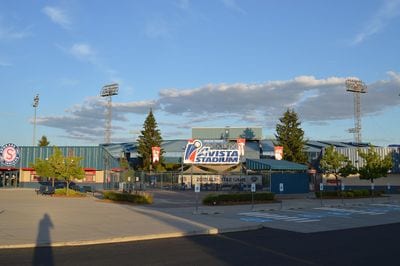
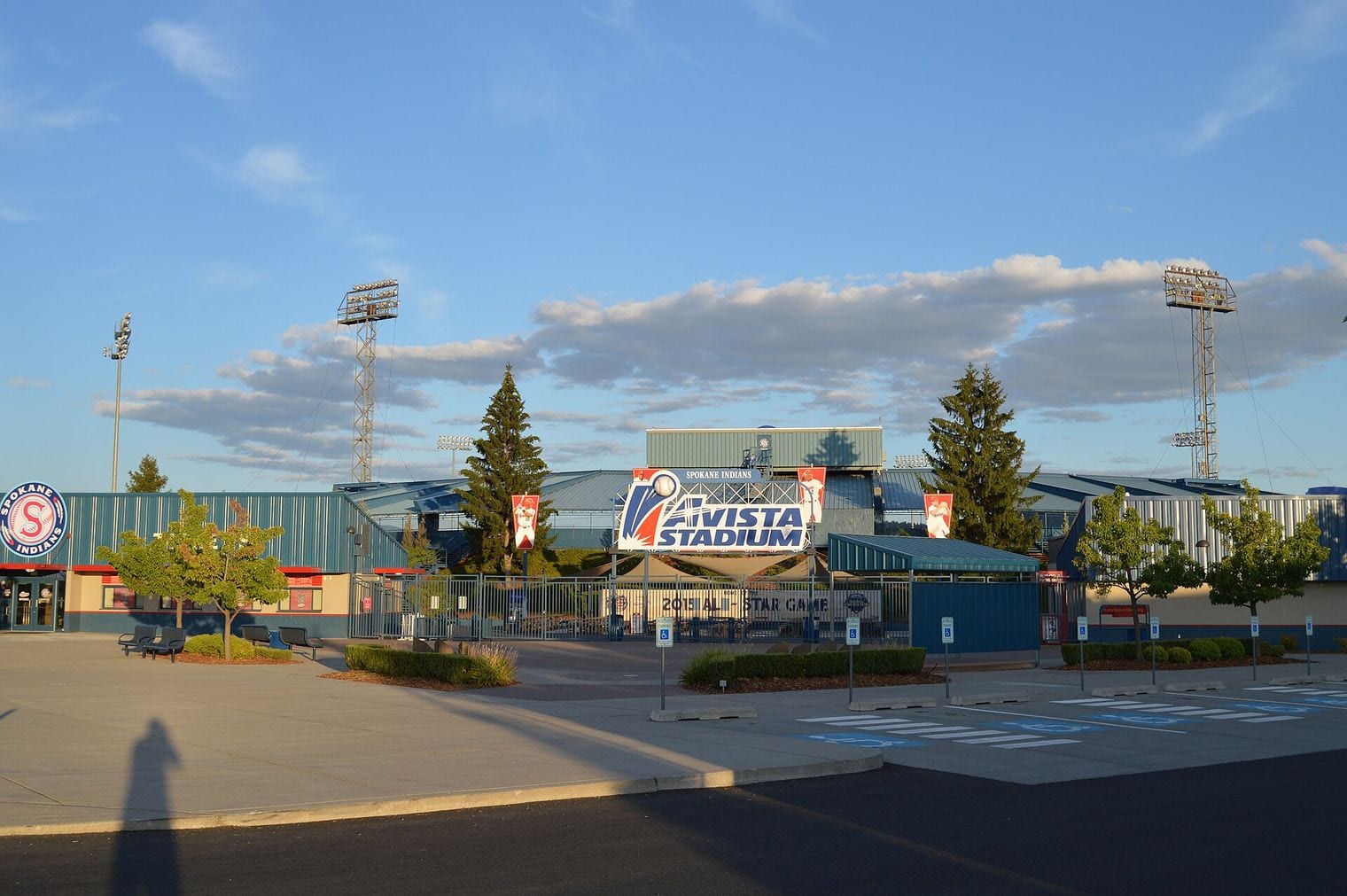
Avista Stadium is home of the Spokane Indians, a High-A minor league baseball team, at the Interstate Fairgrounds on the Spokane Valley side of Havana Street, a short drive east of downtown. The ballpark opened in 1958 and holds close to 7,000 fans, big for this level of baseball.
A summer evening at the park is a classic Spokane outing, with a relaxed, family-friendly crowd and the occasional fireworks night. The ballpark's long history adds to the fun: the Los Angeles Dodgers placed their top farm club here the year it opened.
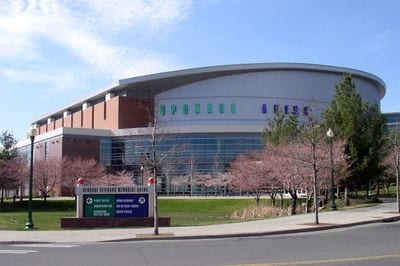
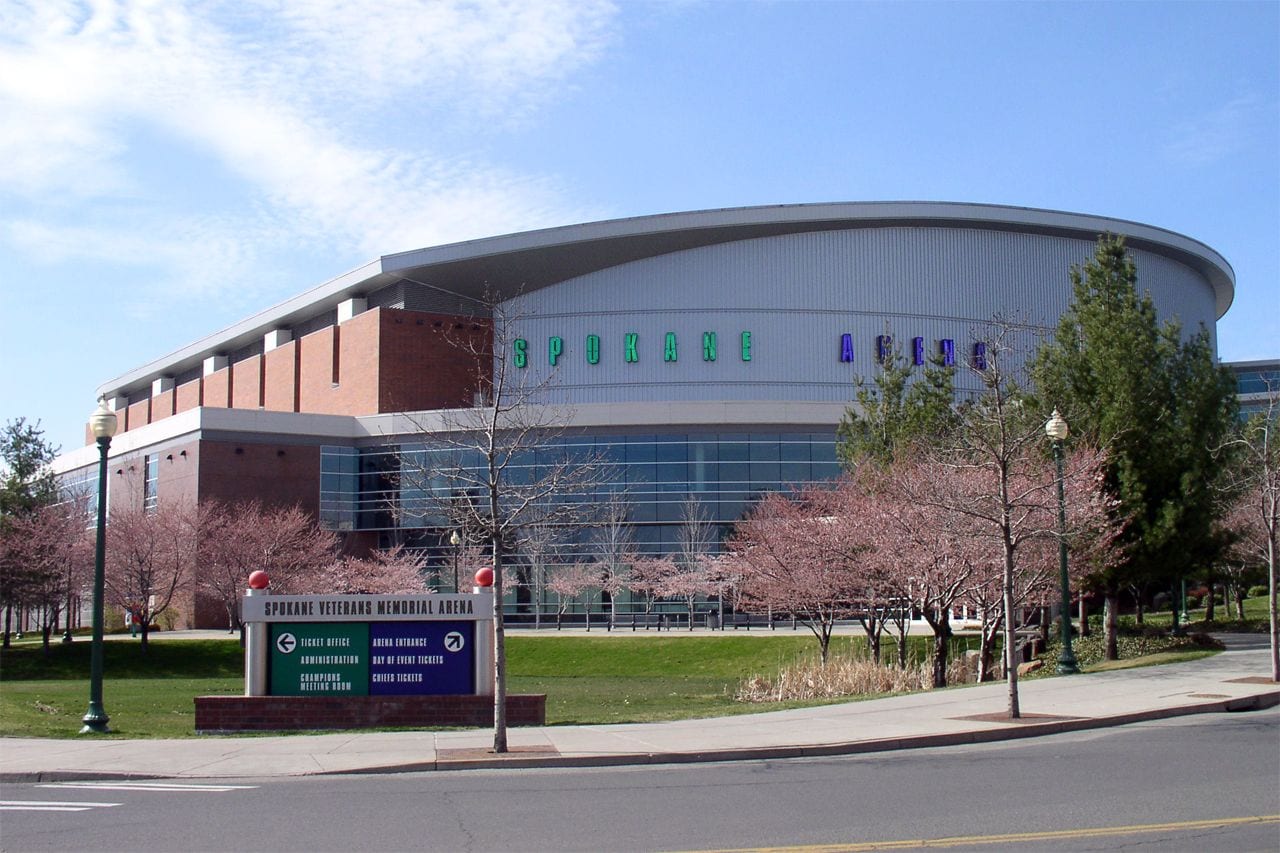
The Spokane Chiefs are the city's major junior ice hockey team, playing in the Western Hockey League at Numerica Veterans Arena, the downtown-adjacent arena renamed in 2025. The Chiefs are two-time Memorial Cup champions, winning junior hockey's top prize in 1991 and 2008.
Games run through the fall and winter, and the crowds are loud and loyal; the players are teenage prospects, some of whom go on to the NHL. The same arena also hosts big concerts and touring shows, so check its calendar if hockey isn't your thing.
The Kendall Yards Night Market takes over Summit Parkway in the Kendall Yards neighborhood on Wednesday evenings from late spring through summer. More than a hundred vendors set up stalls of local produce, crafts, food trucks and art, with live music filling the street.
Kendall Yards itself is worth a look any time: a former rail yard on the north rim of the river gorge that has become a walkable district of restaurants and homes. Pair the market with a walk on the Centennial Trail below it, looking across the gorge to the downtown skyline.
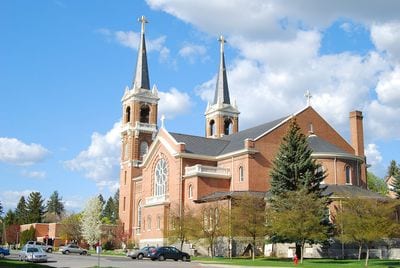
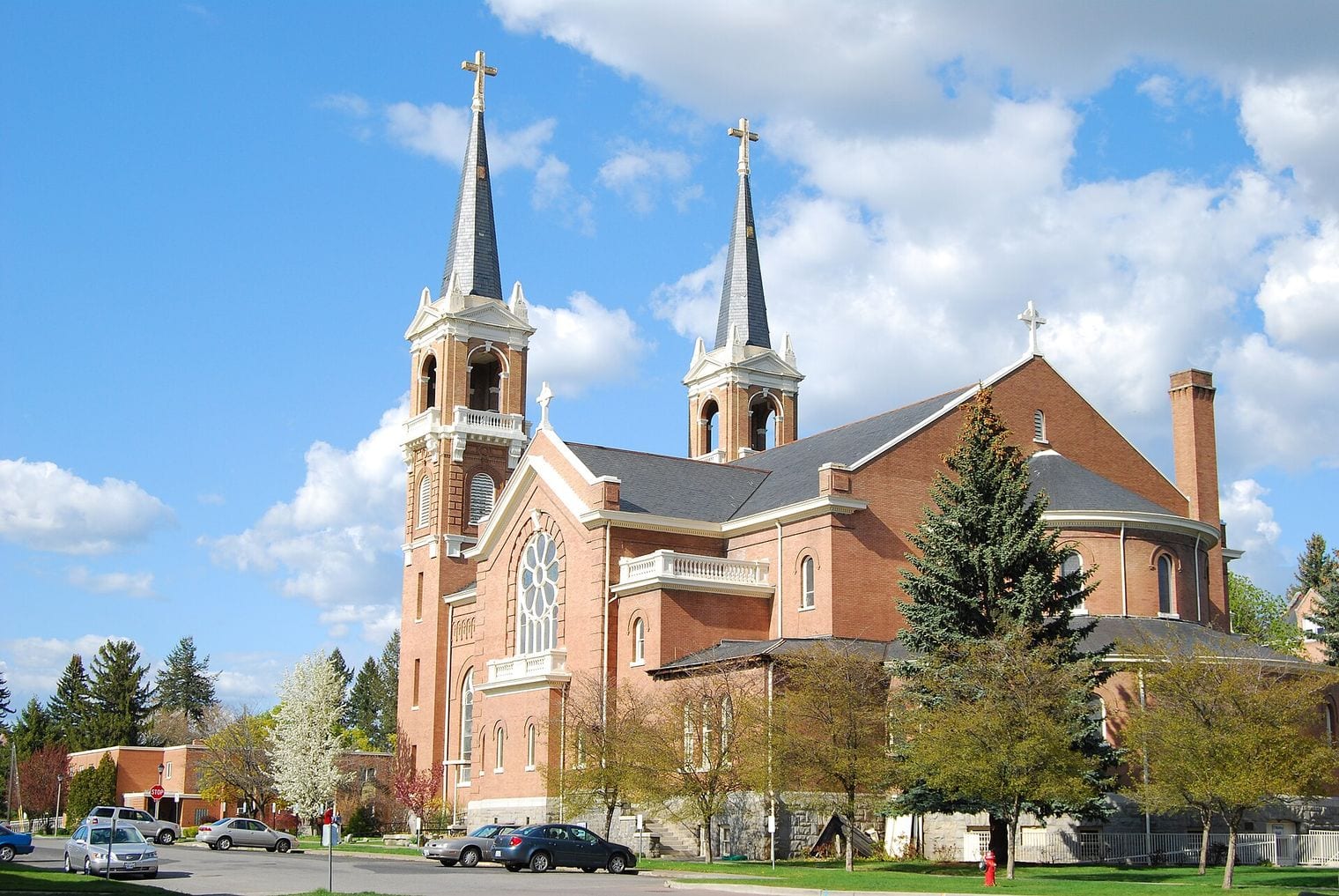
Gonzaga University is the Jesuit university founded in 1887, famous for its basketball program and for the twin spires of St. Aloysius Church that rise over its riverside campus just north of downtown. A walk through the grounds takes in brick halls, lawns and a statue of its best-known alumnus, Bing Crosby.
Two free stops make it a real attraction: the Bing Crosby House Museum, the singer's boyhood home filled with records and memorabilia, and the Jundt Art Museum, which shows rotating art exhibitions. Both keep limited, school-year hours, so check ahead.
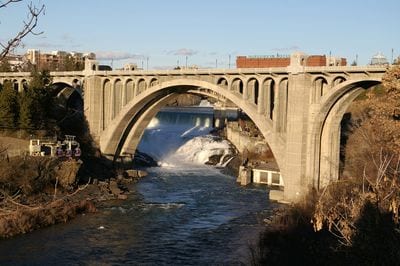
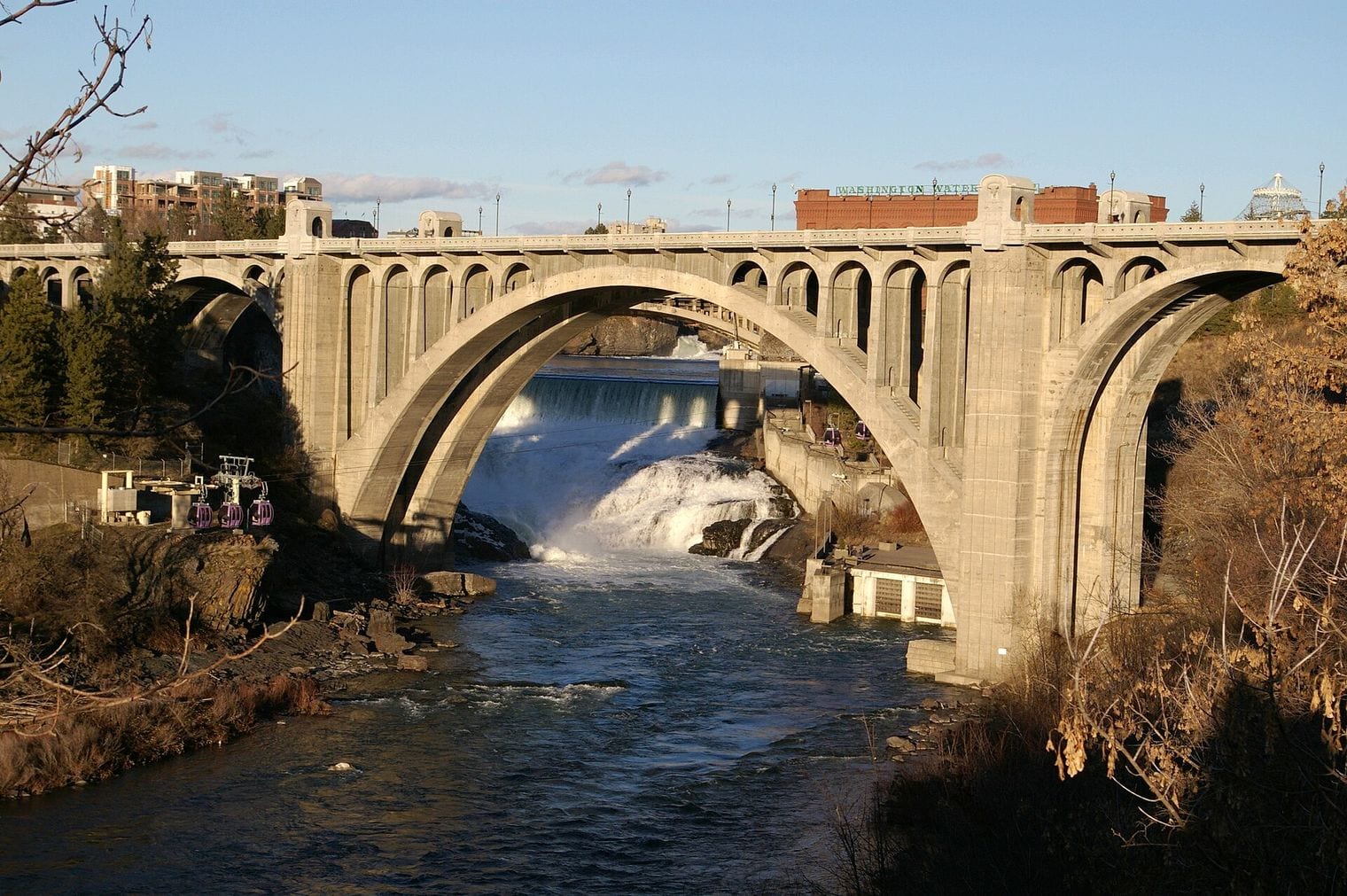
The Monroe Street Bridge is a graceful concrete arch over the Spokane River, built in 1911 and, at its completion, the largest concrete arch bridge in the United States. The city engineer John Chester Ralston designed it, with decorative details by the firm of architect Kirtland Cutter.
A full restoration between 2003 and 2005 brought it back to its original look. Walk across for the classic view of the Lower Falls and the gorge, then look down into Huntington Park and back toward the SkyRide cabins dangling over the water.
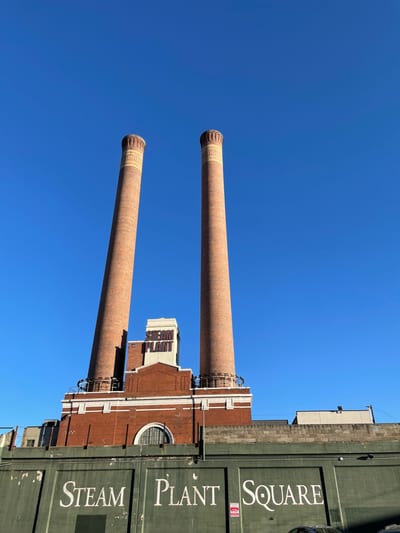
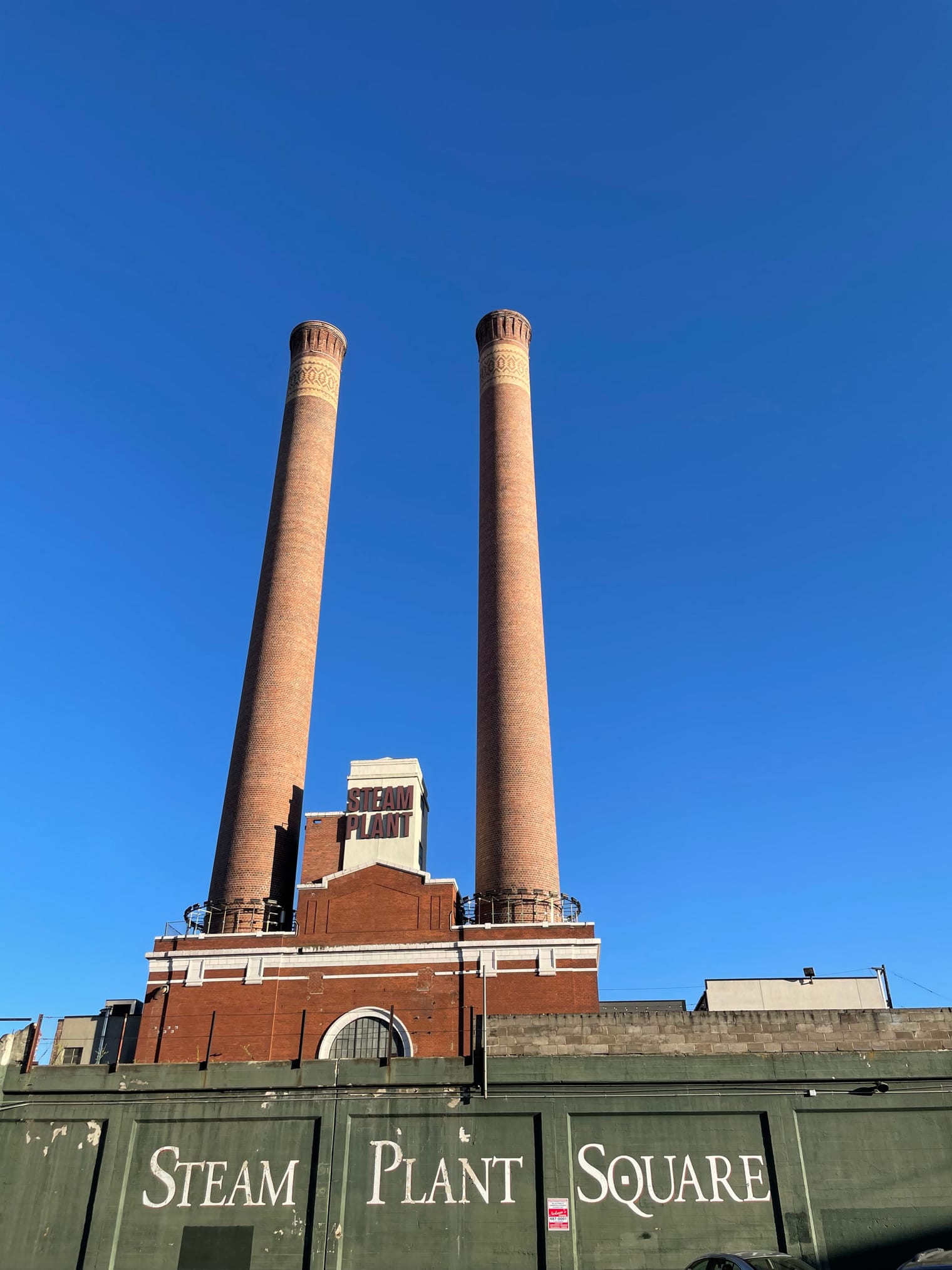
The Steam Plant is a former central heating plant whose twin 225-foot smokestacks, finished in 1916, are one of the defining sights of the downtown skyline. For decades it piped steam to heat hundreds of buildings in the city center, until it shut down in the 1980s.
In the 1990s it was converted into Steam Plant Square, keeping the boilers, catwalks and pipework as part of the decor. Wander through the industrial interior, have a meal among the machinery, and come back after dark, when the stacks are lit from below.
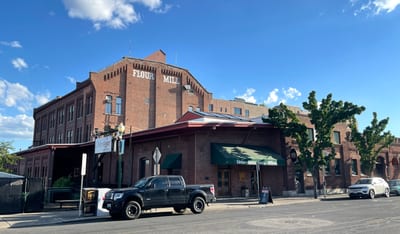
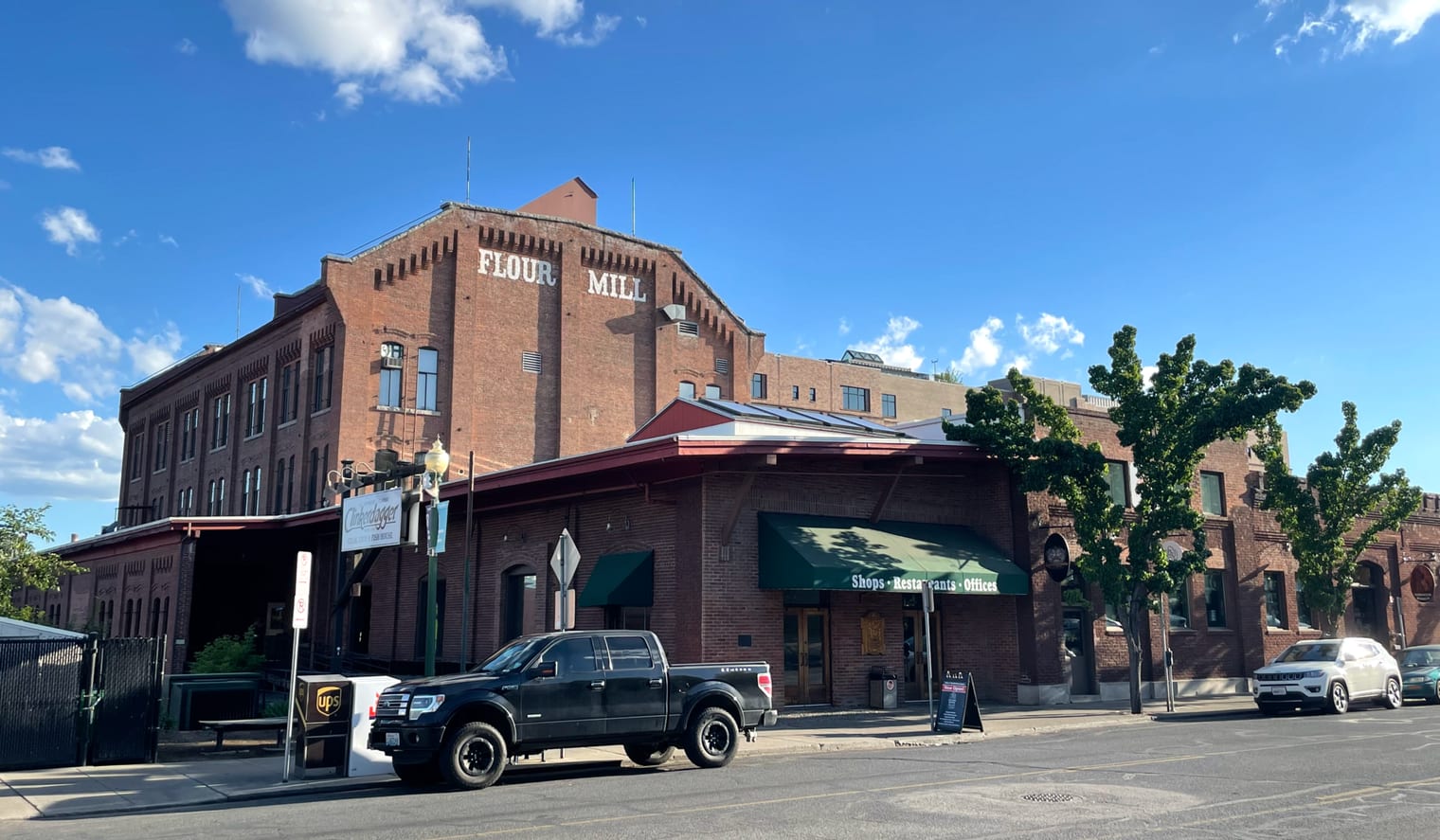
The Flour Mill is a sturdy 1895 brick mill on the north bank of the river, right beside the Spokane Falls. It ground flour from 1900 until 1972 and was converted into shops and offices in time for Expo '74.
Today it houses boutiques, restaurants and offices, and its windows look straight across the river toward Riverfront Park. Stop in on the way between the park and the Centennial Trail for a browse and a look at a building that tells the story of the river's industrial past.
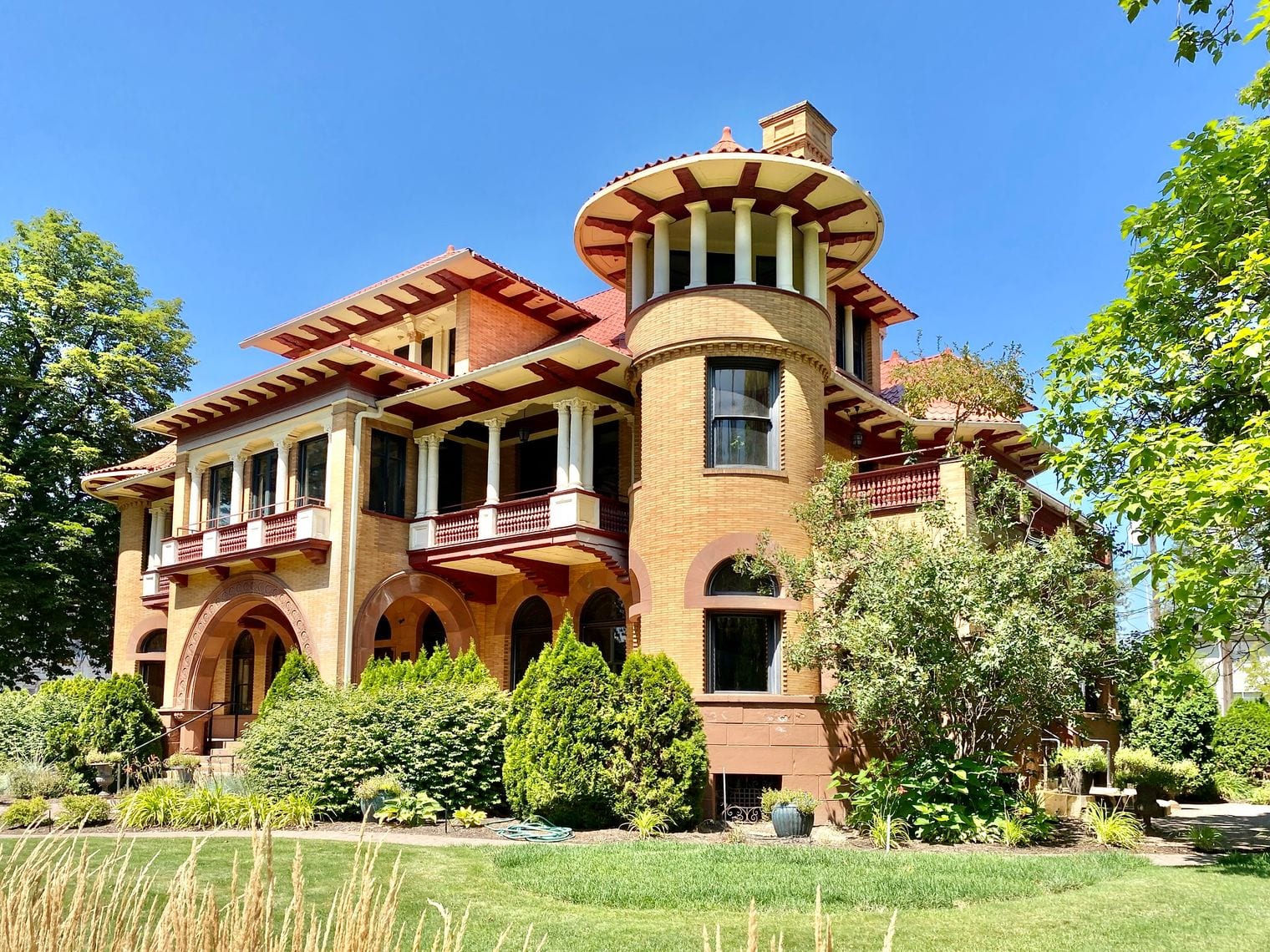
Browne's Addition is one of Spokane's oldest and most atmospheric neighborhoods, a leafy grid just west of downtown packed with mansions from the city's mining and railroad boom. Many have been split into apartments, but the streets still read like an open-air museum of Victorian and Arts and Crafts design.
Stroll past the Patsy Clark Mansion, designed by Kirtland Cutter in 1897 for a mining millionaire, and the Campbell House, then rest in Coeur d'Alene Park at the heart of the neighborhood. Local cafes and bars line the main streets, making it a good place to end a museum afternoon.
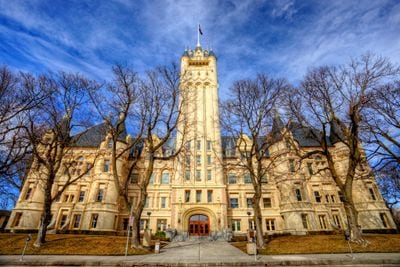
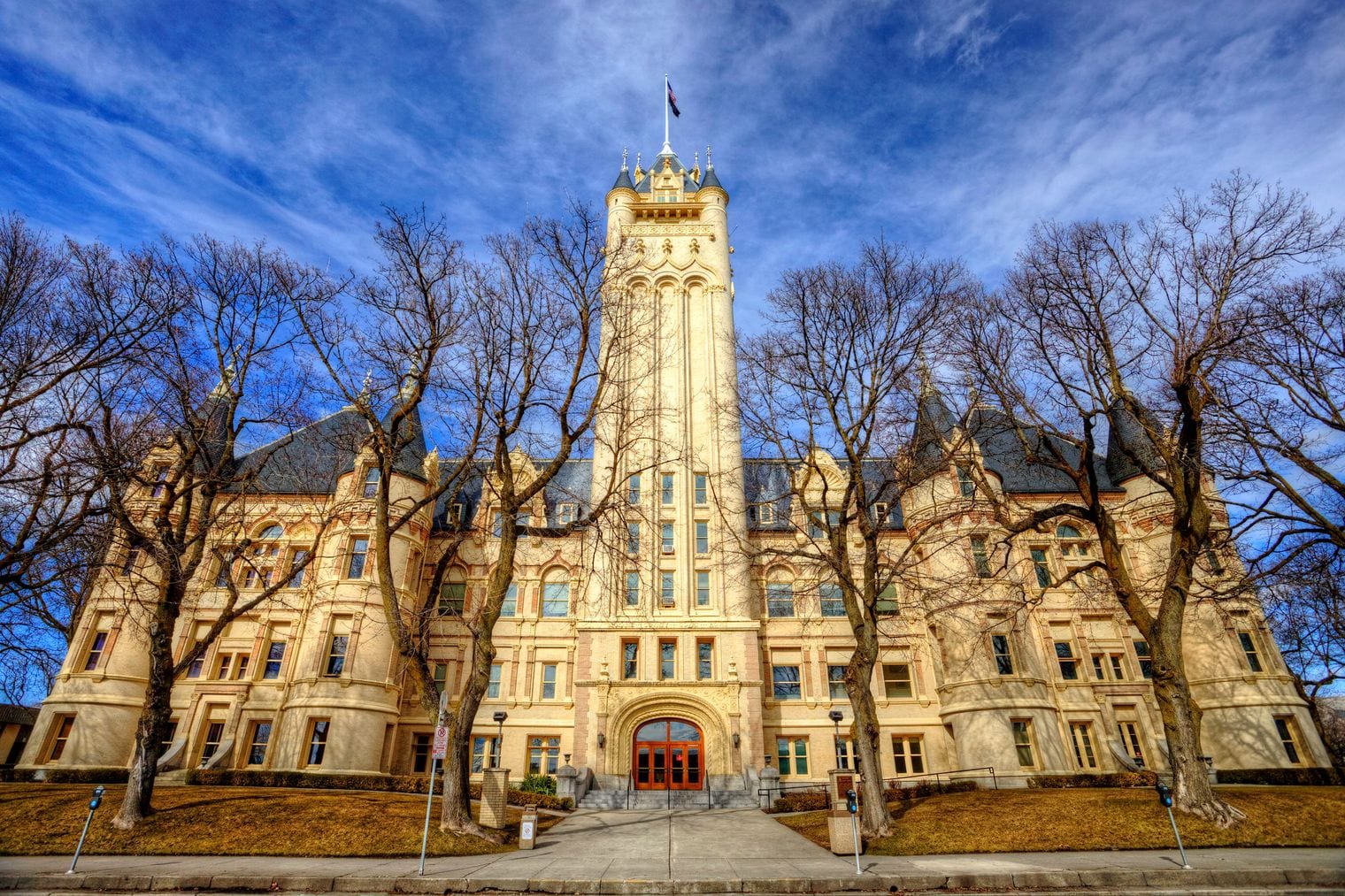
The Spokane County Courthouse is a fairytale of a public building, built in 1895 in the French Renaissance and Châteauesque styles to a design by Willis Ritchie, who won a contest for the commission. Its turreted central tower rises nearly nine stories over the north bank of the river.
It's still a working courthouse, so treat it as an exterior sight: the best views are from the lawn and from Broadway Avenue in front. Listed on the National Register of Historic Places, it's one of the most photographed buildings in the city.
Plan your trip
Best Time to Visit Spokane
Late spring and summer are the easiest seasons. The Spokane Falls run at their most powerful with the snowmelt in spring, the lilacs that give the city its nickname bloom in May, and the Lilac Bloomsday Run fills the streets in early May. Summer brings long, dry, sunny days, the Kendall Yards Night Market, Spokane Indians baseball and Hoopfest's street courts in June, though wildfire smoke can haze the sky in late summer.
Fall is a fine second choice, with crisp weather and blazing maples at Manito Park and the Finch Arboretum. Winter is cold and often snowy, but the Numerica Skate Ribbon opens in Riverfront Park, Spokane Chiefs hockey is in full swing, and the theaters run their busiest seasons; note that the SkyRide and the Japanese garden close for the winter.
Getting to Spokane
Spokane International Airport sits about 5 miles west of downtown, a short drive into the center, with nonstop flights from major hubs across the West. Interstate 90 is the main road in, linking Spokane with Seattle, about four and a half hours west over the Cascades, and with Coeur d'Alene and Montana to the east; US 395 and US 2 run north toward Canada and the Okanogan.
Amtrak's long-distance Empire Builder stops at the downtown Spokane Intermodal Center, which also handles intercity buses. If you're coming from western Washington, Tacoma and Olympia are full-day drives away, so treat Spokane as its own trip rather than an add-on.
Getting Around Spokane
Downtown Spokane is compact and easy to walk, with Riverfront Park, the falls, River Park Square, the theaters and Kendall Yards all within a short stroll, and a skywalk network linking many blocks for winter days. The Spokane River Centennial Trail is a pleasant way to cover the riverfront on foot or by bike.
A car is the simplest way to reach the South Hill, Riverside State Park, Indian Canyon and Avista Stadium, though the city bus network covers the main corridors and rideshares are easy to find. Parking downtown is mostly metered street spaces and garages, and it's generally easy outside big event nights.
Where to Stay in Spokane
Downtown is the best base for a first visit: you can walk to Riverfront Park, the falls, the theaters and most restaurants, and the historic hotels and newer towers cluster within a few blocks of the river. Kendall Yards, on the north rim of the gorge, adds a quieter, more residential feel with river views and an easy trail into downtown.
Browne's Addition and the South Hill suit travelers who prefer historic homes, inns and short-term rentals on leafy streets near the museums and Manito Park. Budget-minded drivers will find chain hotels near the airport and along the I-90 corridor east toward Spokane Valley.
Where to Eat in Spokane
Downtown and Kendall Yards hold the densest mix of restaurants, brewpubs and coffee shops, while Browne's Addition has a cluster of neighborhood cafes and bars, and the Perry District and Garland District on either side of downtown add a more local scene. The Steam Plant and the Flour Mill let you eat inside two of the city's landmark buildings.
Look for the flavors of the Inland Northwest: craft beer from the region's many breweries, wines from eastern Washington, huckleberries in everything from milkshakes to jam, and lentils and grains from the Palouse farm country to the south.
Day Trips from Spokane
Coeur d'Alene, Idaho, is the classic escape, about 40 minutes east on I-90, with its lakeside boardwalk and cruises on Lake Coeur d'Alene. Closer to home, Mount Spokane State Park rises about an hour northeast, with summer hiking and winter skiing, and the orchards and farm stands of Green Bluff are about half an hour northeast for fall apple and pumpkin picking.
Head south about an hour and a quarter for the rolling wheat fields of the Palouse, best seen from the summit of Steptoe Butte, or west for under two hours to the vast Grand Coulee Dam on the Columbia River. For a longer road trip, Washington's small towns make a rewarding loop west across the state.
Spokane is best known for the Spokane Falls roaring through downtown and for Riverfront Park, the former Expo '74 world's fair site wrapped around them. It's also known for Manito Park's gardens on the South Hill, the Northwest Museum of Arts & Culture, the Japanese garden in Manito, Gonzaga University basketball and the Hoopfest street tournament.
How many days do you need in Spokane?
One full day covers the downtown highlights: Riverfront Park, the falls, the SkyRide and an evening show. Two days lets you add Manito Park, the Northwest Museum of Arts & Culture and the mansions of Browne's Addition, and a third day suits Riverside State Park, Indian Canyon or a day trip to Coeur d'Alene.
Is Spokane worth visiting?
Yes. Spokane combines a genuine waterfall in the middle of downtown with a walkable riverfront park, historic theaters and mansions, a strong museum and easy access to forests, trails and lakes. It's smaller and calmer than Seattle, and it makes a good base for exploring eastern Washington and northern Idaho.
What can you do in Spokane for free?
Plenty: walk Riverfront Park and the Spokane Falls bridges, explore Manito Park and the John A. Finch Arboretum, hike to Indian Canyon Mystic Falls, ride or walk the Centennial Trail, cross the Monroe Street Bridge for the falls view, stroll the historic mansions of Browne's Addition and browse the Kendall Yards Night Market on summer Wednesdays.
When is the best time to visit Spokane?
Late spring and early summer are ideal, when snowmelt makes the Spokane Falls thunder, the lilacs bloom in May and the city hosts Bloomsday and Hoopfest. Summer is hot and dry, fall brings colorful maples, and winter adds ice skating in Riverfront Park, though the SkyRide and Japanese garden close seasonally.
Sources & updates
How this guide was checked
Checked before launch
Sources cited
30
Publishers
18
Every place on this list was confirmed open and pinned on the map before publication, and what we say about each one was checked against its own website or an official source.
A PDF with a box to tick for every place. Confirm your email to download it, and get one email every Thursday with our newest guides for the places you tick.
Free Spokane printable checklist
All 30 places in one PDF
Tick them off as you go. Confirm your email to download it, plus one email every Thursday with new guides for the places you tick.
We use cookies to analyse site traffic and improve your experience.
You can accept or reject analytics cookies. See our
May we use analytics cookies? See ourCookie Policy.