We may earn a commission if you book tickets, tours or a stay through a link on
this page, at no extra cost to you. It never affects which places we list or how
we rank them (how we make money).
The record
75,350,969 litres19,905,620 gallons
Chimelong Spaceship
China
The record
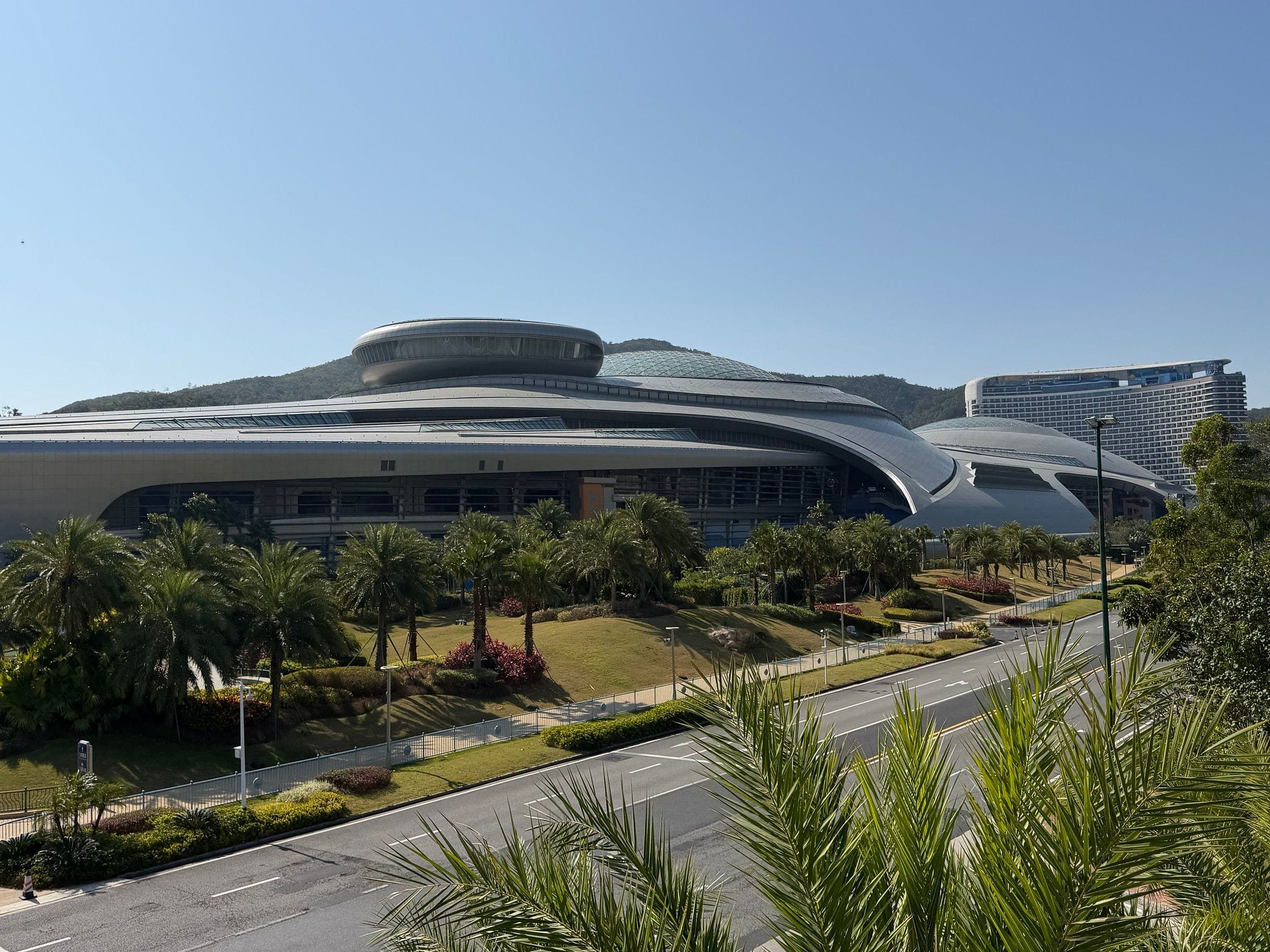
The biggest aquarium in the world is Chimelong Spaceship, in China — 75,350,969 litres (19,905,620 gallons), total display water volume.
Source: Guinness World Records. Verified .
The Georgia Aquarium held the world title for seven years and now ranks fifth; Moscow's Moskvarium, which almost every rival list puts in the top ten, does not appear here at all. This countdown ranks the fifteen biggest aquariums on Earth by a single number — the total volume of water in their public exhibits — from 75.4 million litres down to 10.8 million, across eleven countries.
Two rules decide the order. The first is what gets measured: display water only, which is why Moskvarium's widely quoted 25 million litres gives way to the 3,000 cubic metres its own operator counts as exposition, and why Shanghai Haichang's theme-park total is set aside for having no aquarium-only figure.
The second is that a venue must be open today — which is why Singapore appears here under a new name, the S.E.A. Aquarium having closed in April 2025 and reopened, three times the size, as the Singapore Oceanarium.
The two biggest aquariums on Earth are next-door neighbours — Chimelong Spaceship and Chimelong Ocean Kingdom stand side by side on Hengqin Island in Zhuhai, and between them hold more water than the third- and fourth-placed aquariums combined.
One tank outranks fourteen whole aquariums — the largest single tank at Chimelong Spaceship holds 56.4 million litres, more than the entire contents of any other aquarium on this list.
Chicago had the Atlantic delivered by train — to fill its saltwater exhibits in 1930, Shedd Aquarium sent twenty railroad tank cars on eight round trips to Key West for a million gallons of seawater.
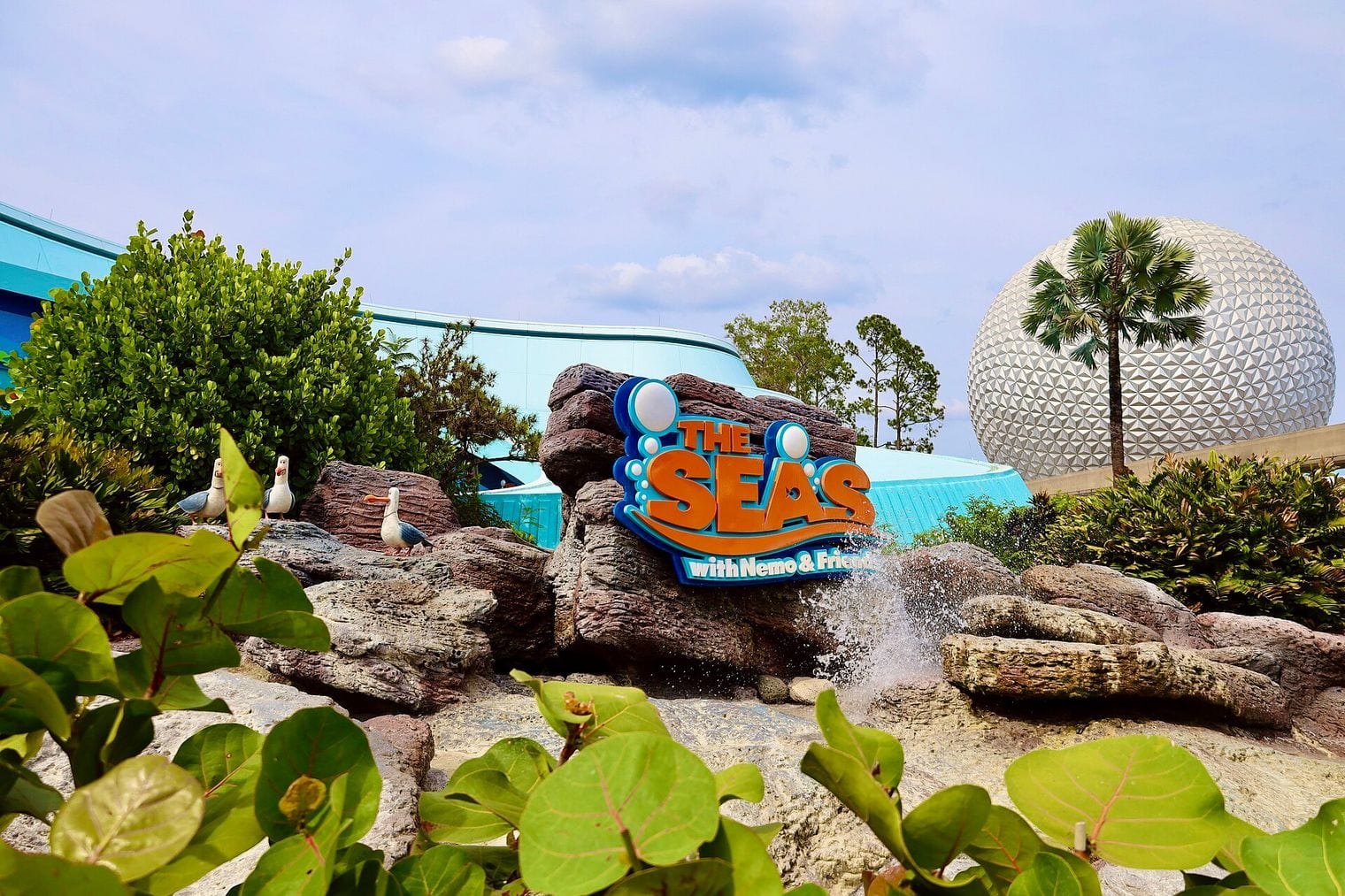
A theme-park pavilion held the record for nineteen years — The Seas with Nemo & Friends opened at EPCOT in 1986 with the largest saltwater tank in the world, and kept the title until Georgia Aquarium opened in 2005.
Africa and the southern hemisphere have exactly one entry between them — uShaka Sea World in Durban. South America and Oceania have none at all.
11. Chimelong Spaceship
Chimelong International Ocean Resort, Hengqin, Zhuhai, China
At 75,350,969 litres, Chimelong Spaceship holds more water than any other aquarium on the planet, and it is not a close race — it carries roughly half as much again as the runner-up standing next door. Guinness World Records certified the figure in September 2023, counting 38 separate tanks inside a building shaped, as the name promises, like a colossal grounded starship on Hengqin Island in Zhuhai.
The scale is easier to grasp one tank at a time. The largest single tank holds 56.4 million litres, a Guinness record in its own right and more water than any other complete aquarium in this countdown.
The building measures 645 metres end to end and its 397,065 square metres of floor took a second Guinness title as the largest indoor theme park — two of seven world records the site collected at once. Across fifteen themed zones, it reads less like a building with fish in it than a small indoor city.
22. Chimelong Ocean Kingdom
Chimelong International Ocean Resort, Hengqin, Zhuhai, China
At 48,750,000 litres, Chimelong Ocean Kingdom was the largest aquarium in the world for nine years, from its opening in March 2014 until its own neighbour took the record away in 2023. The two sit side by side inside the Chimelong International Ocean Resort on Hengqin Island — separate parks, separate tickets and separate Guinness certificates, which is why both appear on this list.
Ocean Kingdom collected five world records on opening day, among them the largest underwater viewing dome, and its biggest tank holds 22.7 million litres. Eight themed zones run from Polar Adventure to Walrus Mountain, mixing aquarium galleries with roller coasters and theatre shows — an arrangement that makes it a theme park by layout and a record-breaking aquarium by volume.
At 45,000,000 litres, the Singapore Oceanarium is the largest aquarium outside China, though this is the most cautious figure in the countdown. It is the last published total for the site, dating from the S.E.A. Aquarium that stood here until April 2025. The venue that replaced it in July of that year is around three times the size, and no updated volume has been released, so the real number is almost certainly higher.
The rebuild took the old ten zones to twenty-two, arranged as a walk through the ocean's past, present and future rather than a tour of tanks by region. It sits on Sentosa within Resorts World, and under its earlier name it held the world record itself between 2012 and 2014 — the two years between Georgia Aquarium's long run at the top and Chimelong's.
44. Oceanogràfic Valencia
Ciutat de les Arts i les Ciències, Valencia, Spain
At 42,000,000 litres, the Oceanogràfic is the largest aquarium in Europe by a wide margin, holding more than twice the volume of anything else on the continent. It anchors the southern end of Valencia's Ciutat de les Arts i les Ciències, where the entrance building's shell-like concrete roof is photographed about as often as anything swimming beneath it.
Rather than one show tank, the site is a series of separate buildings, each standing for a marine environment — Mediterranean, wetlands, temperate and tropical seas, Arctic, Antarctic — linked below ground by walk-through tunnels. Valencia's climate lets a good deal of it sit outdoors, which is why the Oceanogràfic reads more like a park you wander than a building you file through.
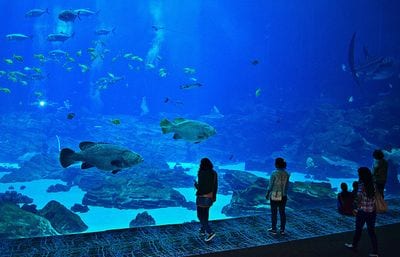
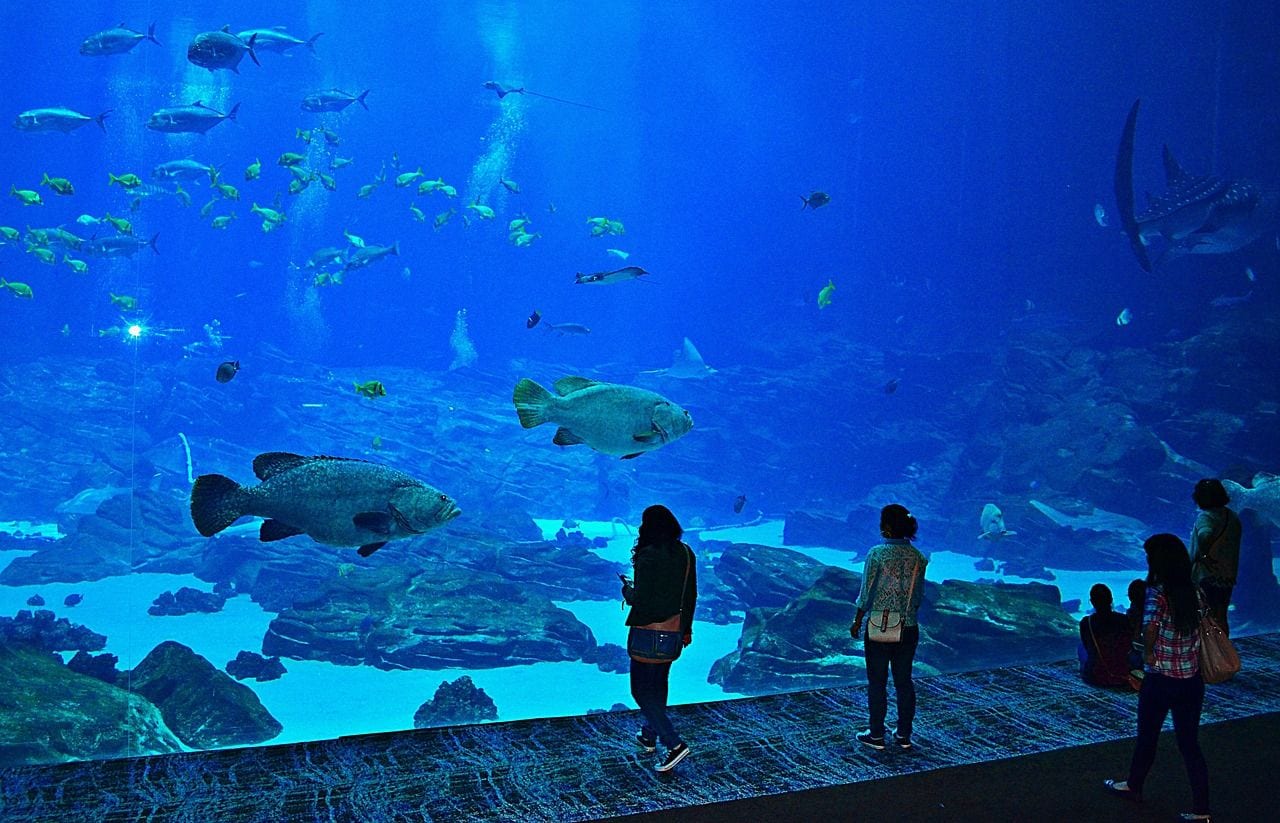
At more than 11 million US gallons — 41,640,000 litres — the Georgia Aquarium in Atlanta is the largest in the Western Hemisphere, and it held the world title from opening in 2005 until 2012. Less than one percent of volume separates it from the Oceanogràfic above, which is close enough that the order between the two turns on which published figure you trust.
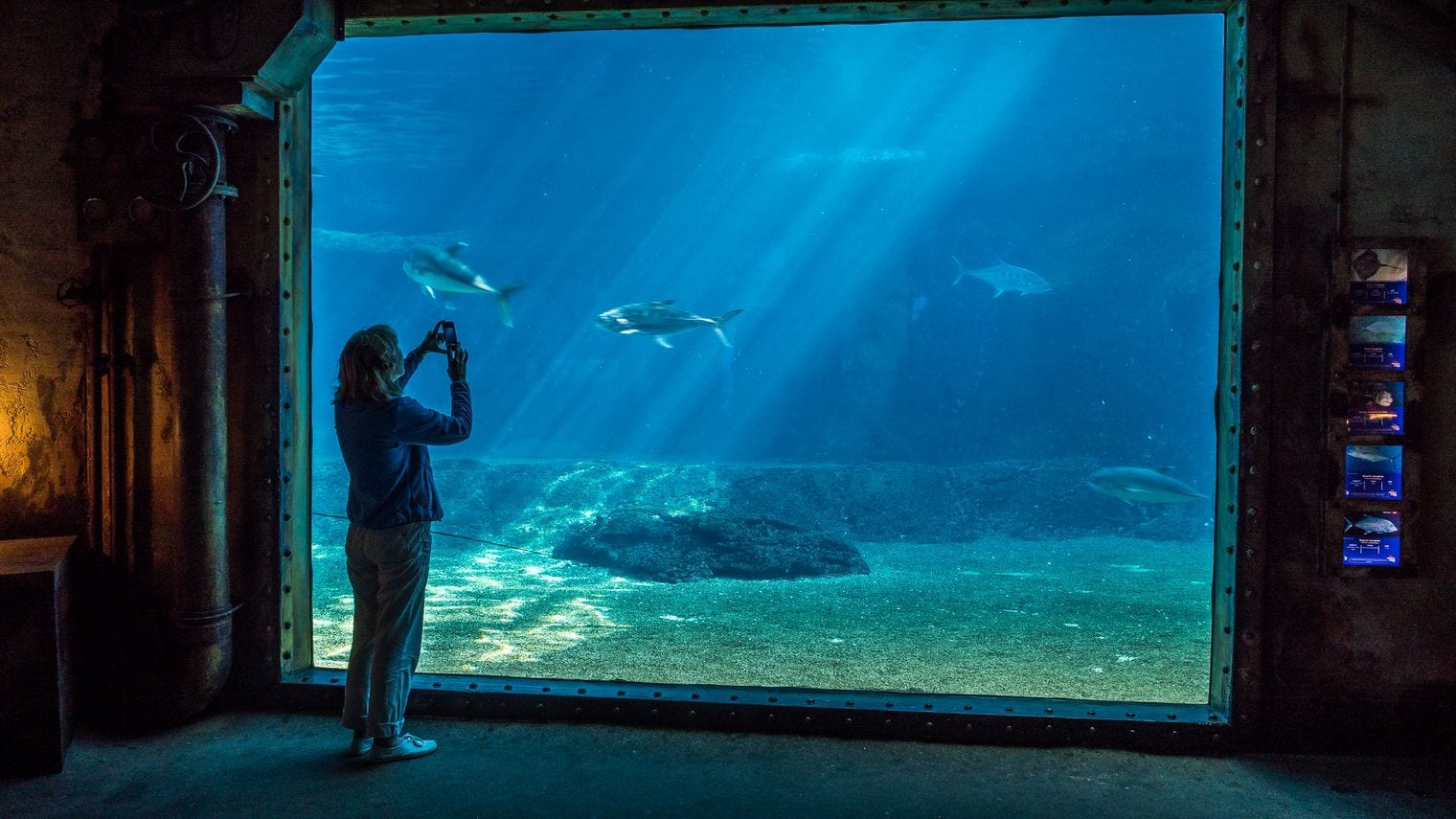
More than half of that water sits in a single habitat: Ocean Voyager holds 6.3 million gallons and was built around whale sharks, the only ones on display anywhere in the Western Hemisphere. The aquarium recycles almost 99 percent of its water, and its own FAQ gives a more conservative total of roughly 10 million gallons — a reminder that even a venue can disagree with itself about its own size.
At 27,000 m³ — 27 million litres — the Port of Nagoya Public Aquarium is the largest in Japan, and probably the biggest aquarium in this countdown that visitors outside Asia have never heard of. The figure is published by the Port of Nagoya Authority, which owns the place — one of the few entries here whose volume comes from a public body rather than a marketing department.
Its defining space is the main pool in the North Building: 60 metres wide, 12 metres deep and holding 13.4 million litres, built for orcas and beluga whales, and still the largest tank of its kind in Japan. The South Building takes a different tack, tracing a route from Japan's coastal waters south to Antarctica, with a deep-sea gallery and a long-running sea turtle breeding programme.
At 25,000,000 litres, the aquarium inside SeaWorld Abu Dhabi is the largest in the Middle East, and for roughly six months in 2023 it was billed as the largest in the world — until Chimelong Spaceship opened that September and settled the matter. The 58 million litre figure widely quoted for it covers every drop of water in the park, not the aquarium, and is set aside here.
The aquarium anchors one of eight realms on Yas Island and holds more than 68,000 animals, viewed through a centrepiece window some 20 metres tall that runs up through several floors of the building. The park around it did take a Guinness record of its own in 2024, as the largest indoor marine-life theme park — which is the title it actually holds.
88. The Seas with Nemo & Friends
EPCOT, Walt Disney World, Bay Lake, Florida, United States
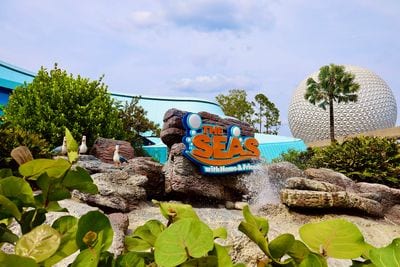
At 5.7 million US gallons — 21,580,000 litres — The Seas with Nemo & Friends is the second largest aquarium in the United States, and almost certainly the one whose visitors are least likely to have set out to see an aquarium at all. It occupies a pavilion at EPCOT, Walt Disney World, where the main tank measures 203 feet across and 26 feet deep.
It opened in January 1986 as The Living Seas, and at the time it held the largest saltwater tank in the world — a record it kept for nineteen years, until the Georgia Aquarium opened in 2005.
It was conceived as a simulated ocean environment rather than a display case, large enough to hold a working reef community with dolphins, sea turtles and several thousand fish. The Nemo overlay and its ride arrived much later; the water, and the scale of it, is original.
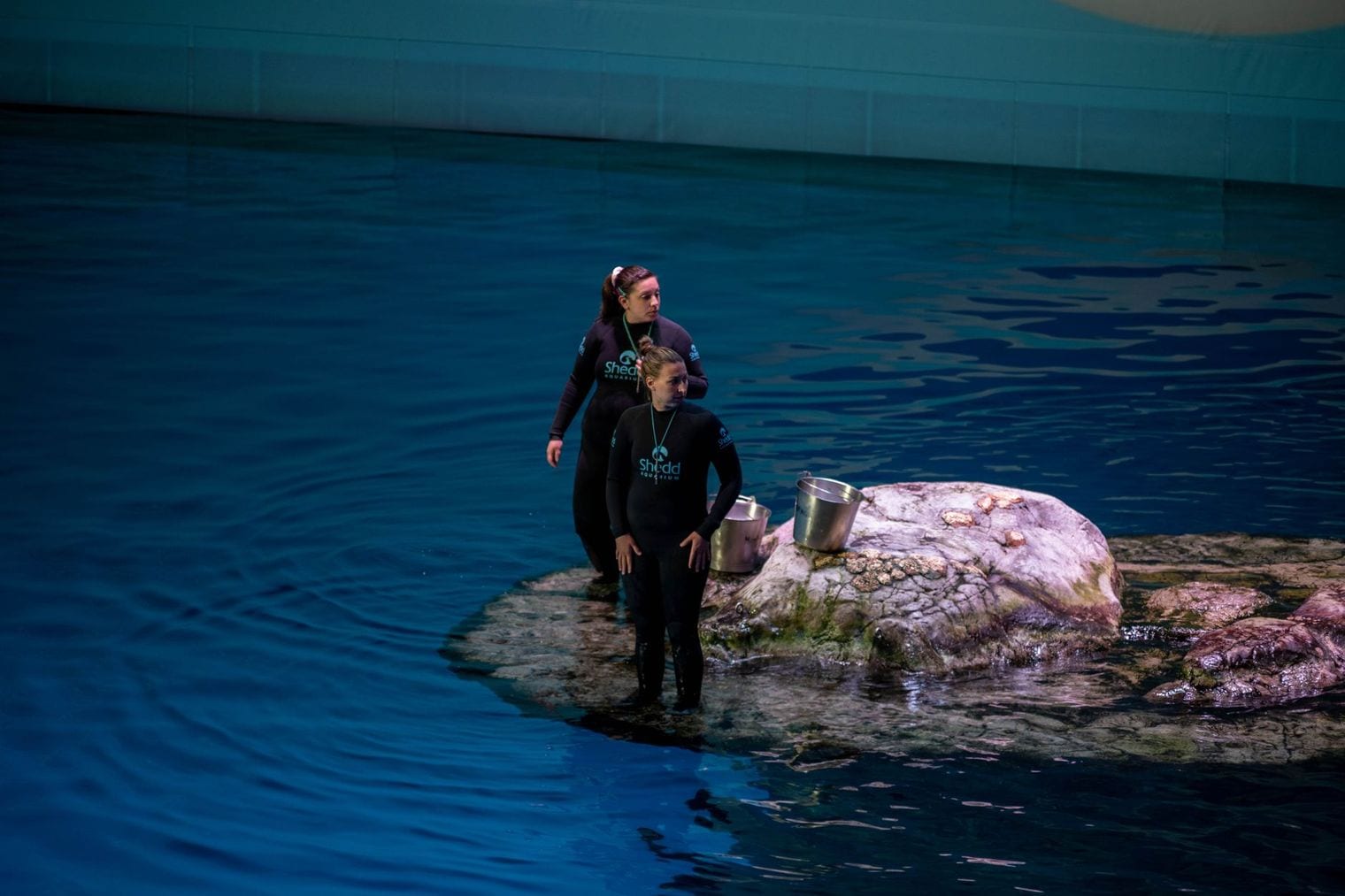
At about 5 million US gallons — 18,900,000 litres — Chicago’s Shedd Aquarium is the third largest in the United States, and for a time after it opened in 1930 it was the largest indoor aquarium in the world.
It was also the first inland aquarium anywhere to keep a permanent saltwater collection, which took some doing: twenty railroad tank cars made eight round trips to Key West to haul a million gallons of Atlantic seawater to a city on a freshwater lake.
Around 32,000 animals from some 1,500 species live here now, inside a marble building laid out around a central rotunda with galleries radiating from it like spokes. The Abbott Oceanarium, a wing added in 1991, lines its windows up with Lake Michigan so that the indoor pools appear to run straight out into the lake beyond — the trick that makes the Shedd one of the most photographed aquariums anywhere.
1010. uShaka Sea World
uShaka Marine World, Durban, KwaZulu-Natal, South Africa
At 17,500 m³ — 17.5 million litres across 32 tanks — uShaka Sea World in Durban is the largest aquarium in Africa and in the southern hemisphere. It is also the entry that most published rankings of the world's biggest aquariums leave out altogether, despite clearing the inclusion thresholds those same lists set for themselves.
The galleries are built into the hull of a mocked-up shipwreck on the Durban beachfront, so visitors descend through staircases and cargo holds rather than corridors. It shares a site with a water park, but the two are counted separately — the volume above is aquarium water only, which is the same rule applied to every entry here.
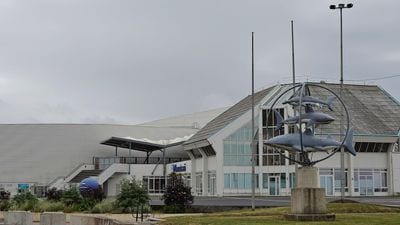
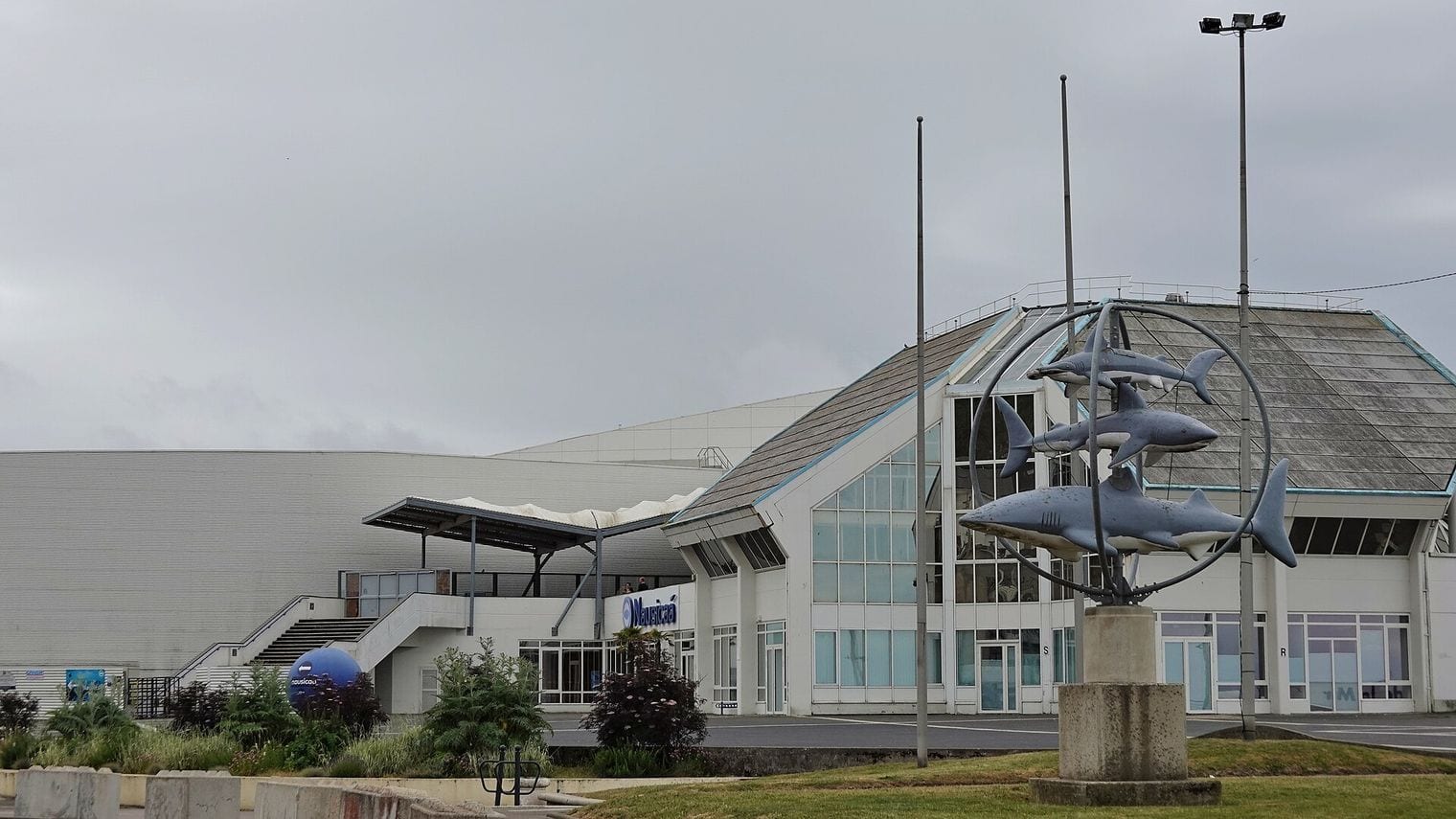
At 17,000,000 litres, Nausicaá in Boulogne-sur-Mer is the second largest aquarium in Europe, and it arrived there in a single jump. The expansion that opened in May 2018 added one tank of 10,000 cubic metres — 10 million litres, the largest in Europe — more than doubling the whole site overnight and turning a well-regarded regional aquarium into a continental heavyweight.
That tank, the High Seas, is modelled on the waters off Malpelo Island in the Colombian Pacific, and is housed in a building shaped like the manta rays that headline it. Visitors pass through an eighteen-metre transparent tunnel to reach it. Nausicaá calls itself a national sea centre rather than an aquarium, and the emphasis throughout is less on cataloguing species than on the relationship between people and the ocean.
1212. National Museum of Marine Biology and Aquarium
Checheng, Pingtung County, Hengchun Peninsula, Taiwan
At 15,530,000 litres of exhibit water, Taiwan's National Museum of Marine Biology and Aquarium is the largest on the island. Its site total is usually quoted as 24.14 million litres, but that figure folds in off-exhibit husbandry tanks and outdoor pools; the number used here is the water a visitor can actually stand in front of.
The museum sits on the Hengchun Peninsula at Taiwan's southern tip, beside Kenting National Park, and is organised as three halls: the waters of Taiwan, coral reefs, and a Waters of the World hall that reconstructs ancient seas. Its largest single tank, the main coral exhibit, holds 4.07 million litres.
1313. Primorsky Aquarium
Russky Island, Vladivostok, Primorsky Krai, Russia
At 15,000 m³ — 15 million litres held across 135 tanks in nine permanent exhibits — the Primorsky Aquarium is the largest in Russia. It opened in 2016 on Russky Island off Vladivostok, reached by a bridge whose cable-stayed span is the longest in the world.
The building is shaped like an opened seashell, and it operates as a scientific institute of the Russian Academy of Sciences as much as a public attraction. The exhibits are arranged as a history of life in water, running from the first oceans through to the Sea of Japan on its doorstep. Its largest tank holds 3,320 cubic metres.
At around 11,000 tonnes of water — 11,000,000 litres — Osaka Aquarium Kaiyukan spreads its volume across 27 tanks in 16 main exhibits, each standing for a region of the Pacific Rim. The route through it is unusual: visitors ride to the top of the building and spiral slowly down, passing the same central tank at one depth after another.
That central tank, the Pacific Ocean, is 9 metres deep, 34 metres across at its widest, holds 5,400 tonnes and was built for whale sharks. Because the walkway descends around it rather than stopping at a window, a single animal can be followed from the surface to the seabed over the course of a visit — which is the entire point of the spiral.
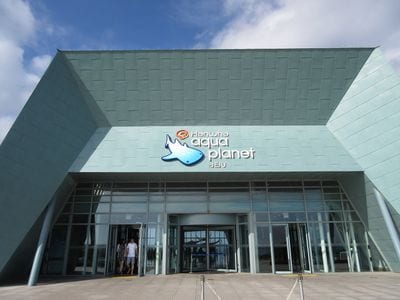
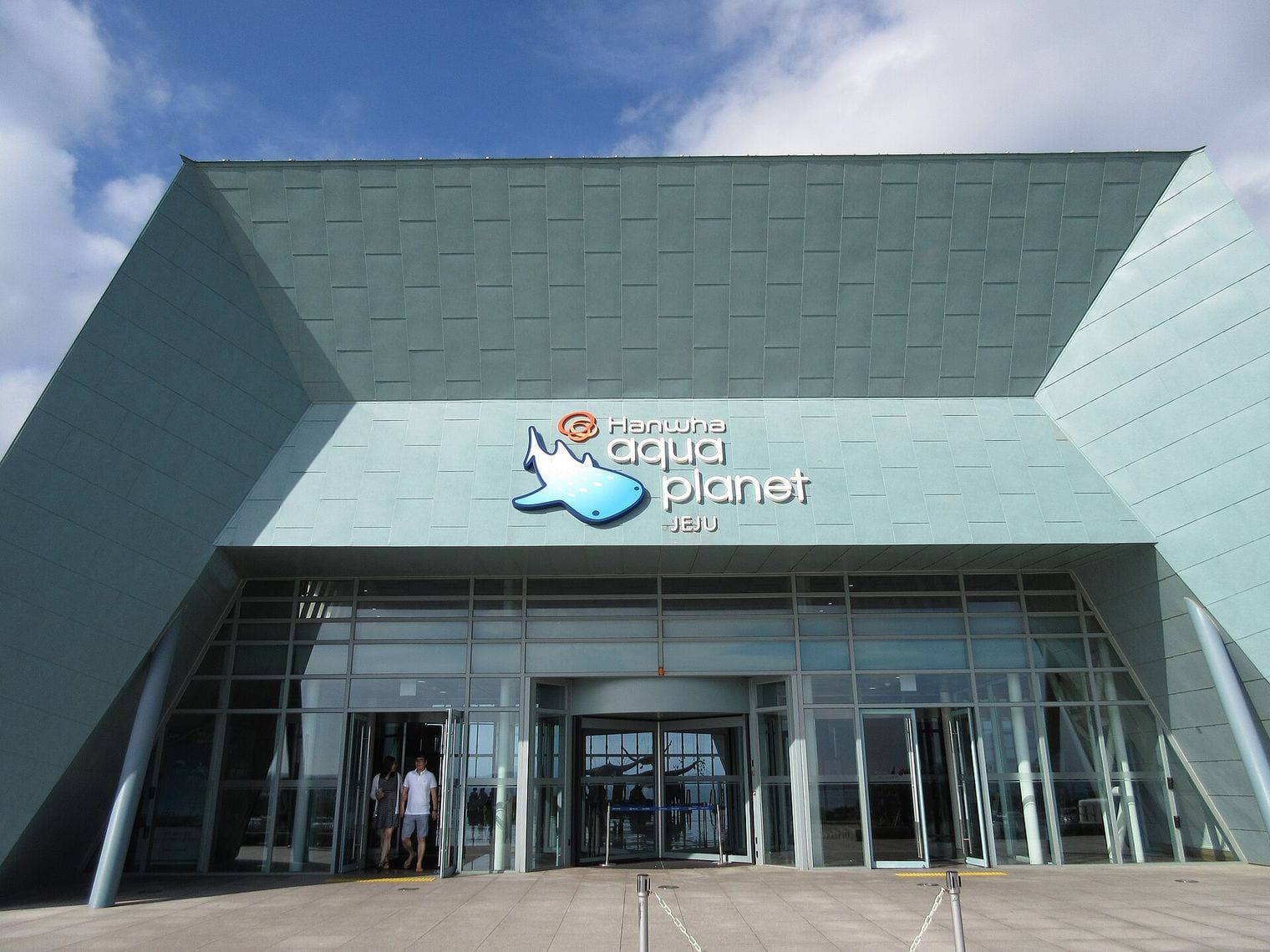
At 10,800,000 litres, Aqua Planet Jeju is the largest aquarium in South Korea and the smallest venue to make this countdown. It is also the most frequently misreported: several published rankings give it 20 million litres, a number that appears to come from sliding its real total into the largest-tank column and inventing a new one above it.
Its main tank, the Sea of Jeju, holds 5.3 million litres and is the biggest in the country. The aquarium stands on the east coast of Jeju Island near Seongsan Ilchulbong, and leans hard on the island’s own waters for its identity — including a daily demonstration by haenyeo, the women who have free-dived for shellfish off Jeju for generations, and an exhibition of work by the divers themselves.
FAQ: The Biggest Aquariums in the World
What is the biggest aquarium in the world?
Chimelong Spaceship in Zhuhai, China, holds 75,350,969 litres of water across 38 tanks, a figure Guinness World Records certified in September 2023. It took the title from Chimelong Ocean Kingdom, its own next-door neighbour on Hengqin Island, which had held the record since 2014.
How is the biggest aquarium measured?
By total display water volume: every litre in the exhibits a visitor can actually see, at a single facility. That leaves out back-of-house husbandry tanks, show and swimming pools, and the wider resort. It is why several venues rank lower here than on lists quoting whole-site totals.
What is the biggest aquarium in Europe?
The Oceanogràfic in Valencia, at 42 million litres, held across separate buildings for the Mediterranean, wetlands, temperate and tropical seas, and the two polar regions. Nausicaá in Boulogne-sur-Mer is second at 17 million litres, most of which arrived in one 10-million-litre tank in 2018.
What is the biggest aquarium in the United States?
The Georgia Aquarium in Atlanta, at more than 11 million US gallons, which also makes it the largest in the Western Hemisphere. The Seas with Nemo & Friends at EPCOT is second and Chicago's Shedd Aquarium third. Georgia is the only place in the hemisphere displaying whale sharks.
Is the S.E.A. Aquarium in Singapore still open?
No. It closed on 30 April 2025 and reopened on 24 July the same year as the Singapore Oceanarium, on the same Sentosa site and around three times the size. It appears on this list under the new name, since its published volume figure has not yet been revised.