We may earn a commission if you book tickets, tours or a stay through a link on
this page, at no extra cost to you. It never affects which places we list or how
we rank them (how we make money).
The record
181 million items
Library of Congress
United States
The record
The biggest library in the world is the Library of Congress, in the United States — 181 million items, collection size.
Source: Library of Congress. Verified .
Ask which library is the biggest and you will usually be told the British Library. It is not. The British Library's own shelves hold a shade over 170 million items; the Library of Congress holds around 181 million, and Guinness World Records recognises Washington's catalogue, not London's, as the largest on Earth.
The fifteen below run from 181 million items down to 24.08 million, across nine countries and three continents, and two rules decide the order. We count only what an institution itself holds, in every format — which is why Ankara's Nation's Library is absent despite a widely quoted 141.7 million, a total that folds in the Turkish state archives alongside its own five million printed works.
And we exclude web-archive captures, which is why the National Library of Australia and its 21 billion "items" do not appear. One honest caveat: no two libraries count quite the same way, so read the middle of this list as close rather than settled.
Together they hold about 910 million catalogued items.The Library of Congress and the British Library account for 351 million of that between them — well over a third of the total, from two buildings.
The ranking you usually see is wrong at the top. Most published lists put the British Library first on a figure of 200 million or more, but the library's own current statement is over 170 million, and Guinness World Records recognises the Library of Congress as the largest catalogue on Earth.
Europe holds eight of the fifteen. North America has four and Asia three, and Germany and Russia each place two institutions — Frankfurt and Munich, Moscow and Saint Petersburg.
Nearly half of Munich's collection is photographs. Of the Bavarian State Library's 40.54 million items, 19.9 million are pictures, a total that jumped when it took in the photographic archive of the magazine stern in 2019.
The oldest was founded 313 years before Germany existed. Duke Albrecht V started the Bavarian State Library in 1558; Spain's national library followed in 1712 and Russia's in 1795, all of them older than the states that now run them.
Only one is a university library.The University of Illinois at Urbana-Champaign is the sole campus collection large enough to make the cut, at 39 million items.
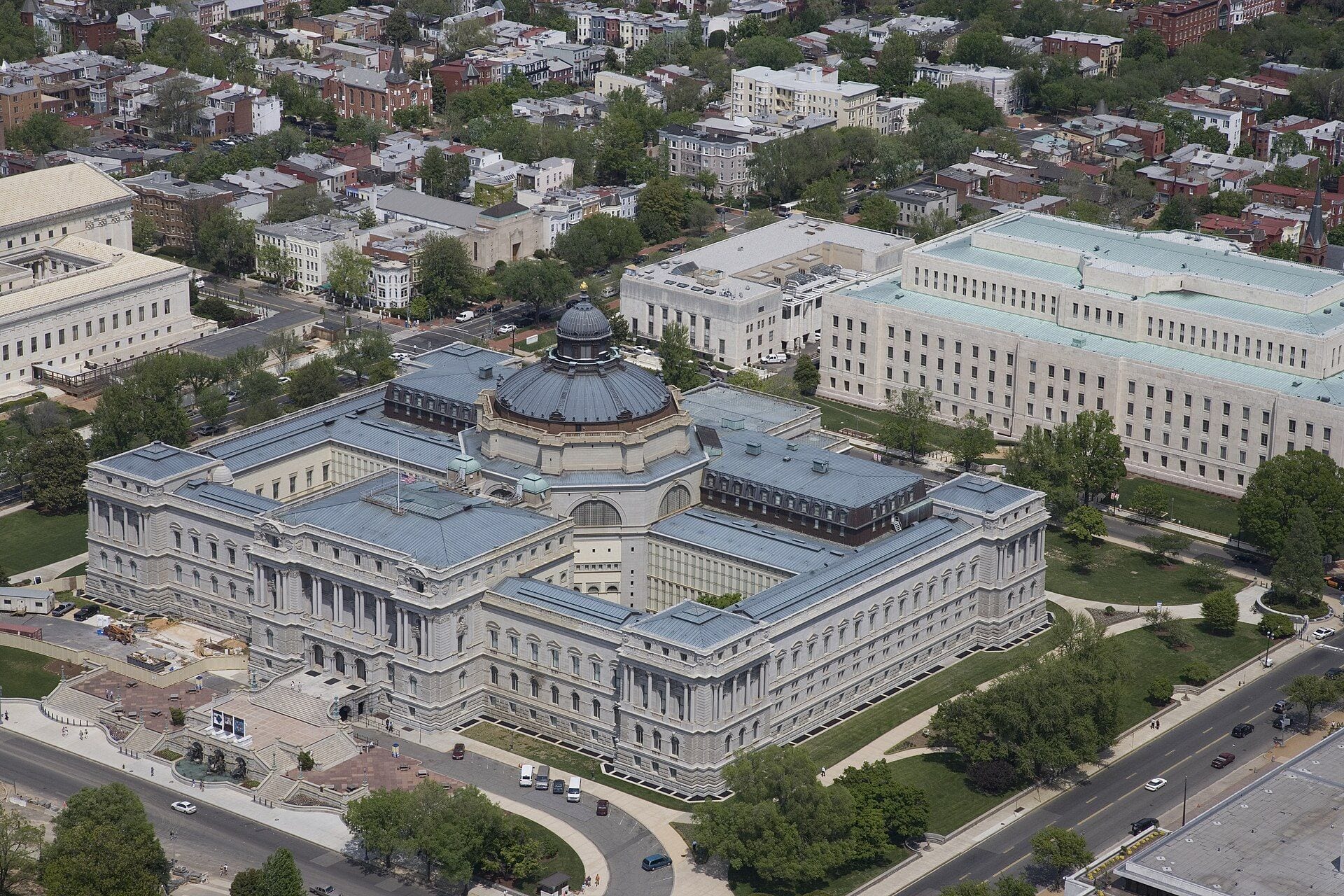
11. Library of Congress
Thomas Jefferson Building, Washington, D.C., United States
At 181 million items, the Library of Congress is the largest collection of recorded knowledge ever assembled, and it is not close. Roughly 41 million books and print materials in 470 languages sit alongside some 75 million manuscripts, 15 million photographs, 5.6 million maps and 4.1 million sound recordings.
It grows by about 12,000 items a day. Congress founded it in 1800 with a $5,000 appropriation and 740 volumes; British troops burned that collection in 1814, and Thomas Jefferson sold the nation his personal library of 6,487 books to start it over.
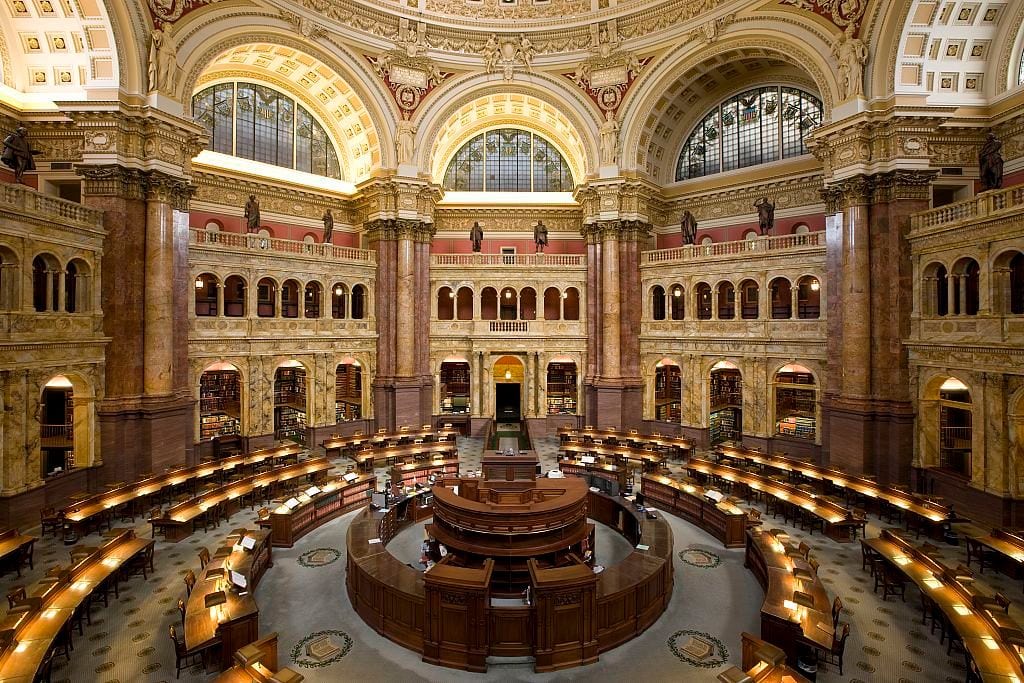
What you actually visit is the Thomas Jefferson Building of 1897, an Italian Renaissance pile facing the Capitol whose Great Hall is stacked with marble, mosaic and gold leaf to a degree that startles first-time visitors.
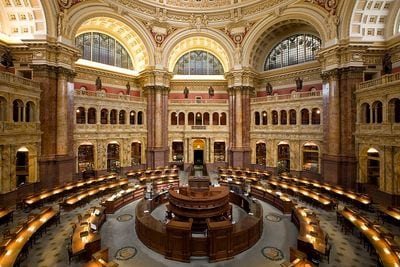
Entry is free, and any adult can register for a reader card on the spot and order material into the Main Reading Room — a domed octagon ringed by sixteen bronze statues. The Library is also the home of the US Copyright Office, which is the quiet mechanism behind all those daily accessions.
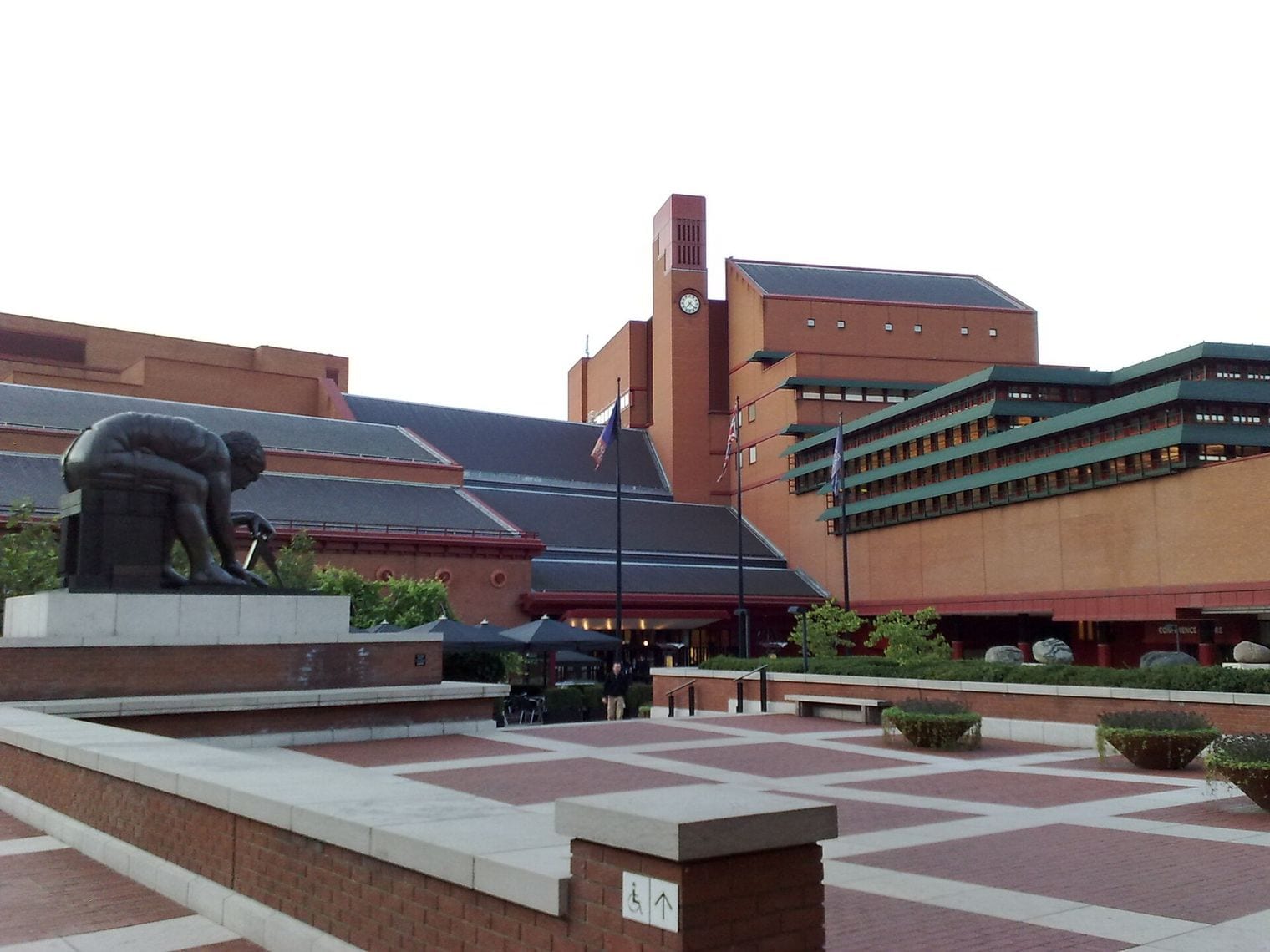
At 170 million items on roughly 625 km388 mi of shelving, the British Library is the largest collection outside Washington. Its own publicity has cited figures as high as 200 million, but the institution's current statement is over 170 million, and that is the number ranked here.
Legal deposit means a copy of virtually everything published in the United Kingdom and Ireland arrives automatically, which adds several kilometres of shelf every year and makes this a collection nobody has to go out and buy.
The St Pancras building, Colin St John Wilson's red-brick landmark of 1998, was the largest public building put up in Britain in the twentieth century, and it is arranged around the King's Library — a six-storey glass tower of George III's books standing in the middle of the entrance hall.
The Treasures gallery is free and holds two of the four surviving 1215 Magna Carta copies, the Lindisfarne Gospels, Leonardo notebooks and Beatles lyrics scribbled on the back of envelopes. A serious cyber-attack in October 2023 took the catalogue offline for months; services have since been rebuilt.
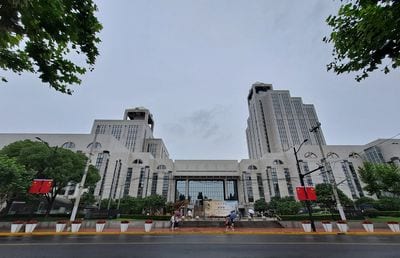
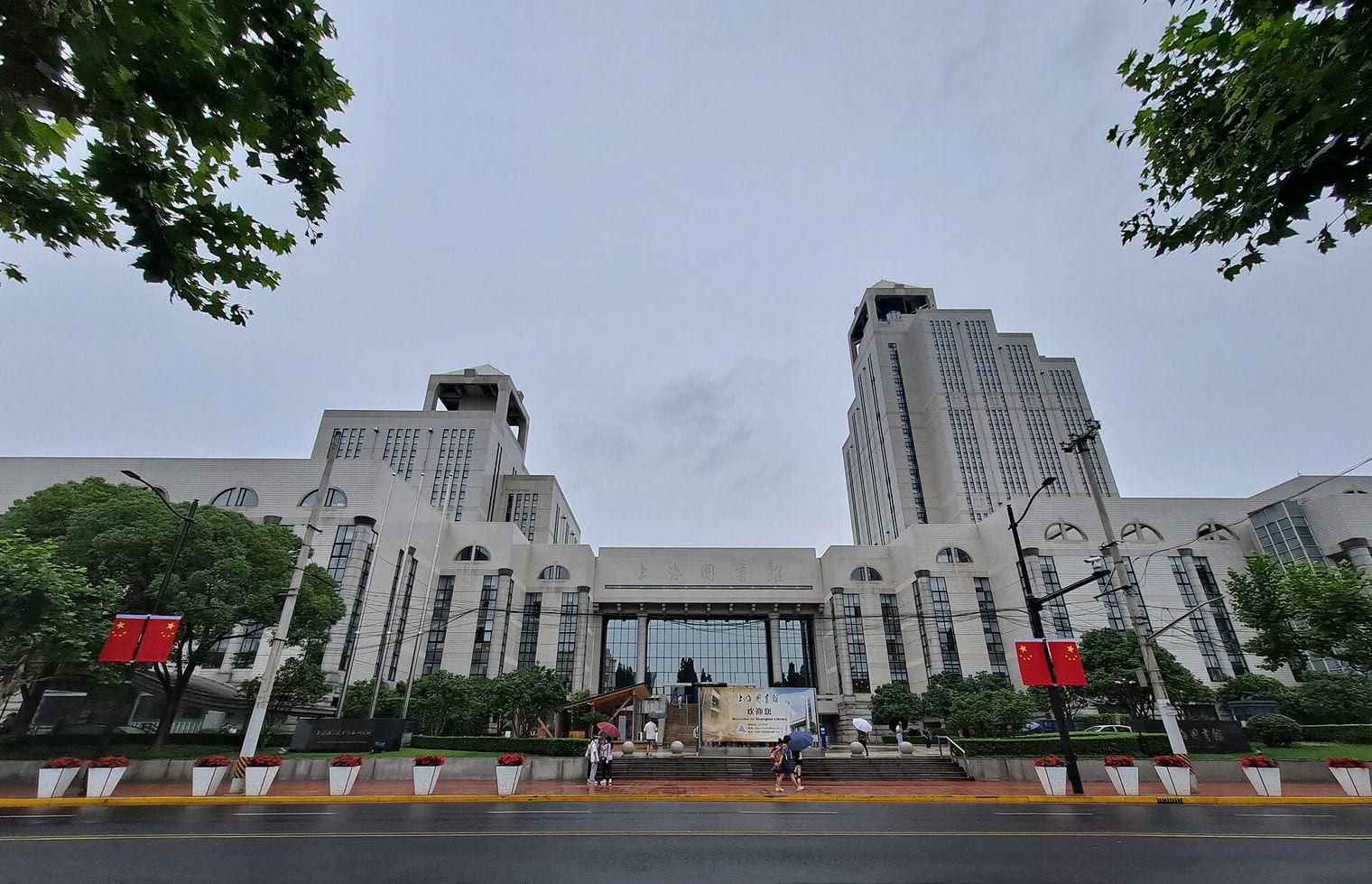
At 58 million items as of the end of 2023, the Shanghai Library is the largest public library in Asia and the third largest collection anywhere. It is a municipal library rather than a national one, which makes the scale remarkable — this is a city collection that outgrew most countries'.
Its particular strength is Chinese genealogy: it holds the world's largest collection of Chinese family trees, some 30,000 of them, alongside major holdings of rubbings, historical documents and Western rare books gathered when Shanghai was a treaty port.
The main building on Huaihai Road opened in 1996 and remains the working research site. In September 2022 the city added Shanghai Library East in Pudong, a roughly 115,000 m² (1.24 million sq ft) block designed to look like a piece of jade resting in a park — one of the largest library buildings ever constructed, and deliberately conceived as a place to spend a day rather than merely fetch a book.
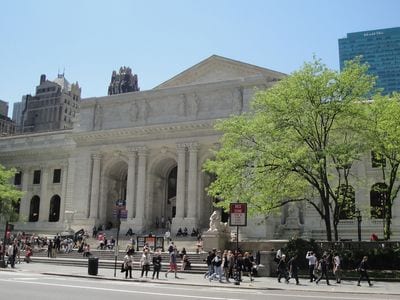
44. New York Public Library
Stephen A. Schwarzman Building, Fifth Avenue, New York City, United States
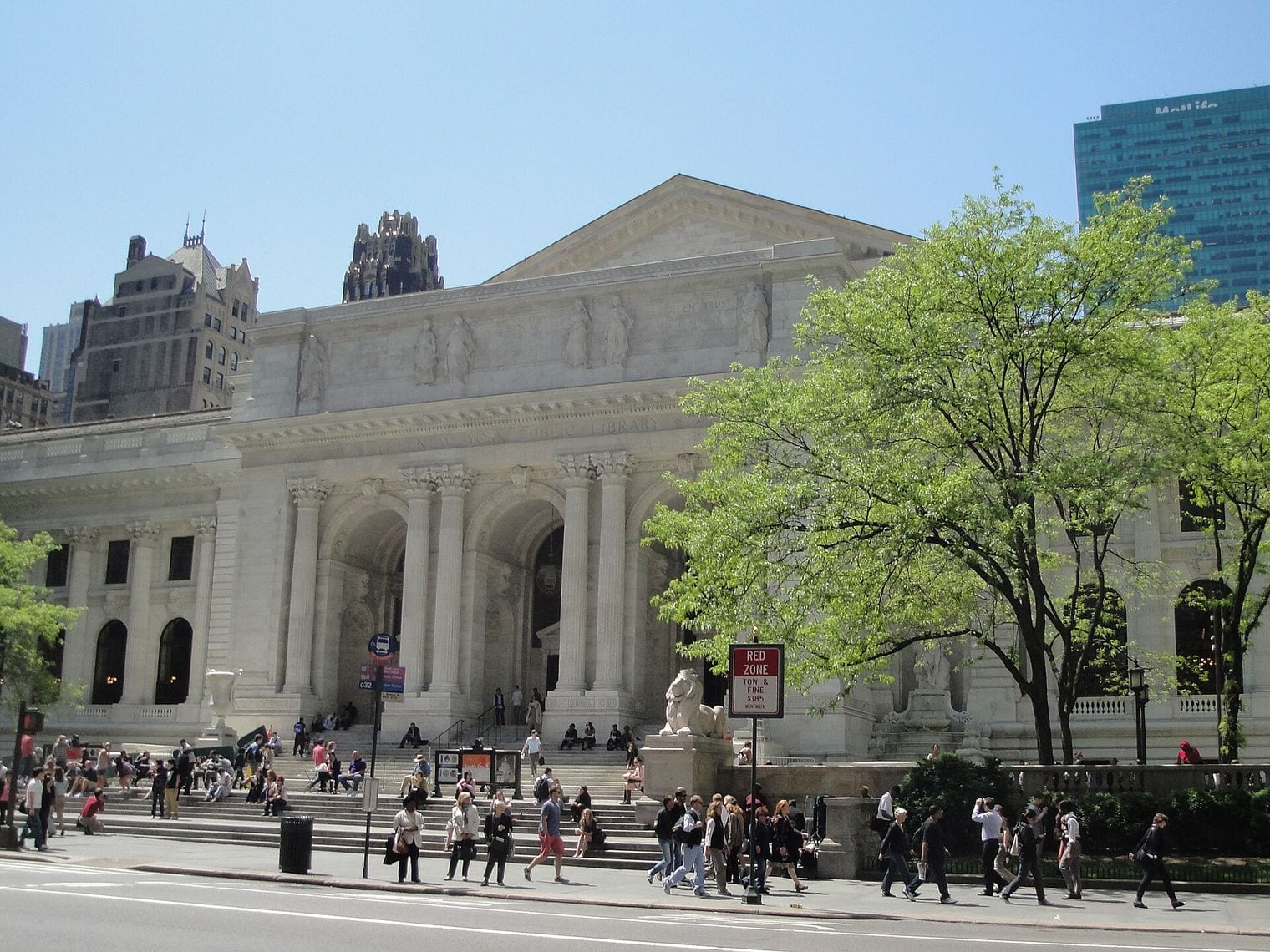
At 56 million items across 92 locations, the New York Public Library is the largest public library system in the United States and the fourth largest collection in the world.
Around 46 million of those items sit in its research collections, which are open to anyone who walks in — no fee, no affiliation, no appointment. The system covers Manhattan, the Bronx and Staten Island; Brooklyn and Queens run their own separate systems, a quirk of the 1898 consolidation that still surprises visitors.
The building everyone pictures is the Stephen A. Schwarzman Building at Fifth Avenue and 42nd Street, Carrère & Hastings' Beaux-Arts masterpiece of 1911, guarded by the marble lions Patience and Fortitude.
Upstairs, the Rose Main Reading Room runs nearly the length of two city blocks under a painted ceiling 15.8 m52 ft overhead, and it is free to sit in. Beneath Bryant Park next door, an extension holds several million volumes on 100 km62 mi of shelving, retrieved by a train of small robotic carts.
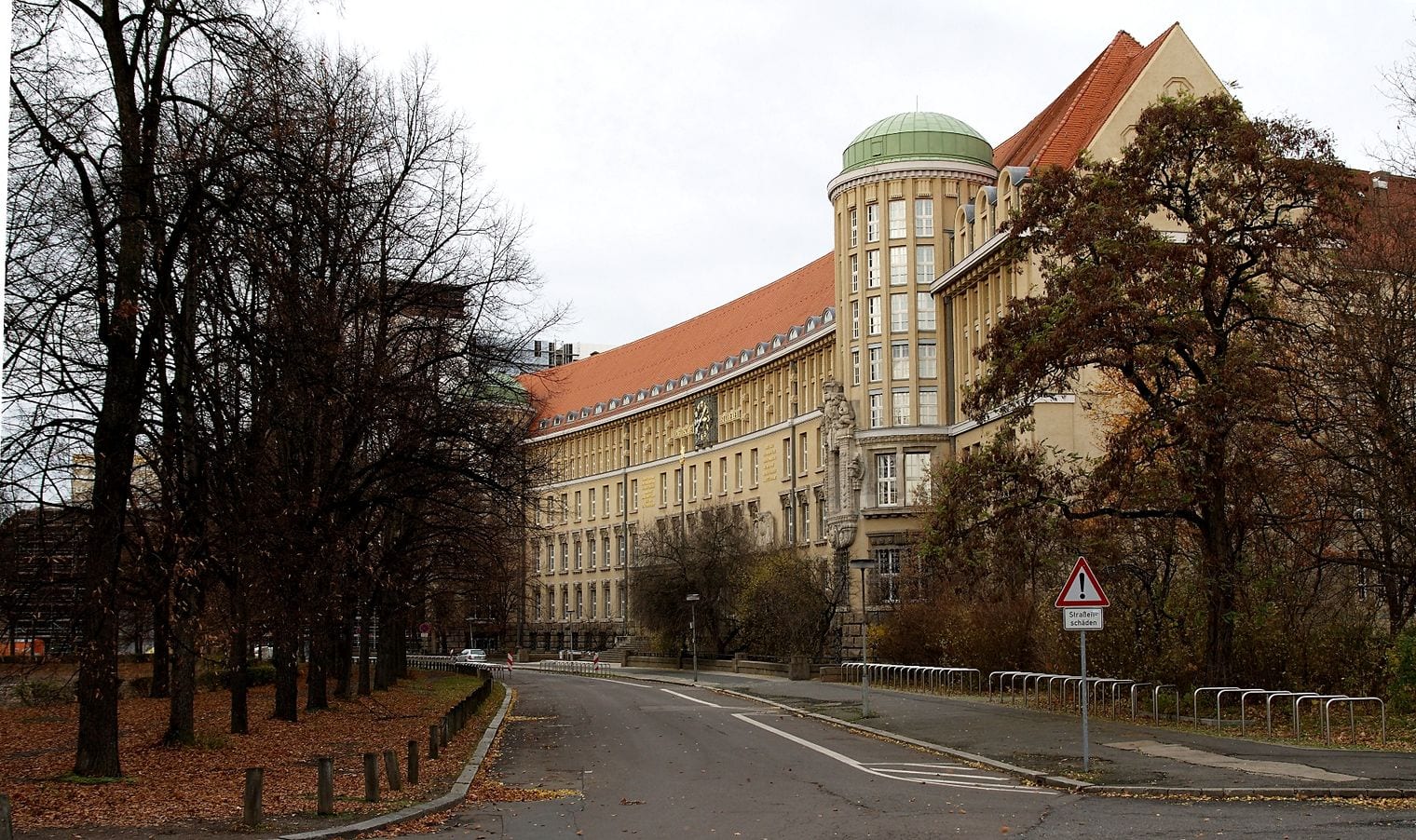
At 53.1 million items at the end of 2024, the German National Library is Europe's second largest and a strikingly modern collection: roughly a third of its holdings are now online publications rather than physical objects.
Its remit is unusually clean — collect everything published in or about Germany, or in the German language, from 1913 onwards. That start date matters, because it means the library does not compete with Munich or Berlin for medieval manuscripts; it is a comprehensive record of the modern published nation instead.
It operates from two cities. Leipzig holds the original 1912 Deutsche Bücherei building and the German Music Archive; Frankfurt am Main runs the post-war site on Adickesallee. The two were separate institutions during the division of Germany and were reunited in 1990. Leipzig also houses the German Exile Archive 1933–1945, which gathers the work of writers and scholars driven out by the Nazi regime, and the German Book and Writing Museum, the oldest of its kind in the world.
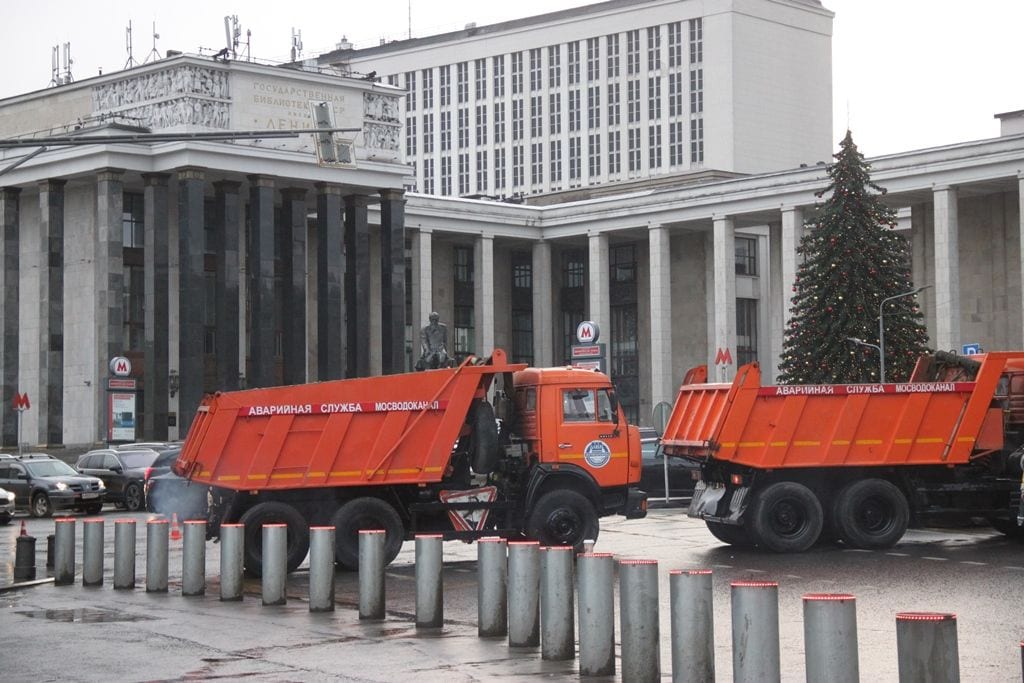
At 48.68 million items as of 1 January 2023, the Russian State Library is the largest in Europe by catalogued holdings. It is separated from the National Diet Library below it by barely half a million items, on figures a year apart, so the two are best read as effectively level rather than firmly ranked.
The collection began in 1862 as the library of the Rumyantsev Museum, Moscow's first free public reading room, and grew enormously after 1917 as nationalised private libraries were absorbed wholesale.
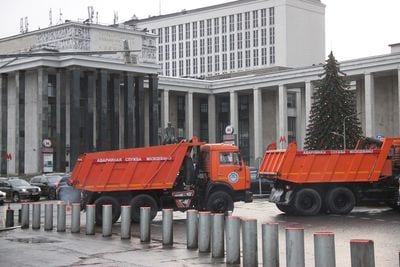
It stands on Vozdvizhenka Street a short walk from the Kremlin, behind a monumental 1930s facade of black granite and bronze that took nearly thirty years to finish. Books are kept in a nineteen-storey depository stack, and the main reading room seats hundreds beneath a coffered ceiling. Through the Soviet decades it was known as the Lenin Library, a name still used casually in Moscow, and the metro station outside it is Biblioteka imeni Lenina.
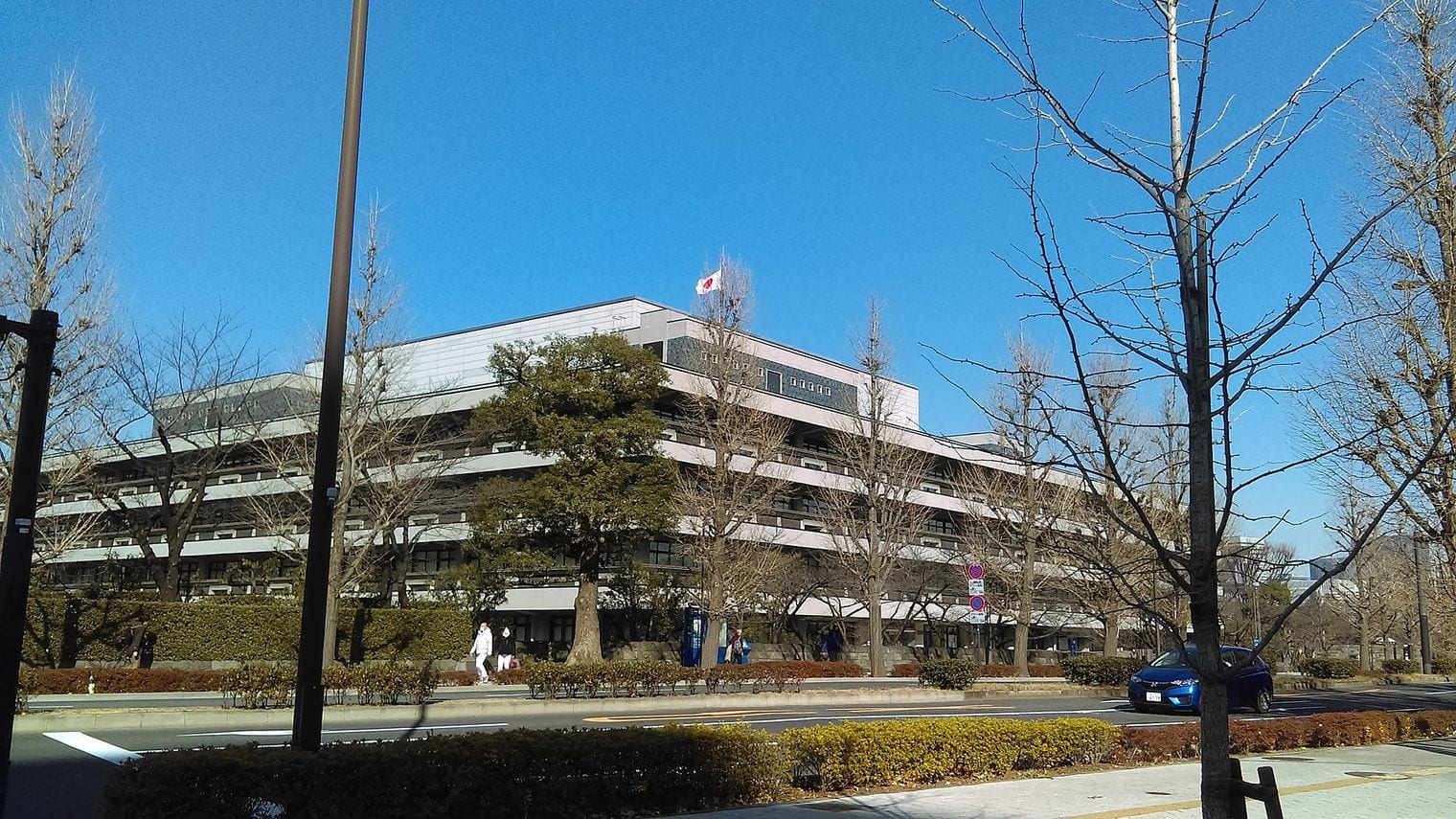
At 48.11 million items in fiscal 2024, the National Diet Library is Japan's only legal deposit library and its national collection, sitting within half a million items of the Russian State Library above — close enough that the pair should be read as a tie.
It was established in 1948 under American occupation and modelled directly on the Library of Congress, including the founding principle that it serves the legislature first: its main building stands beside the National Diet in Nagatacho, and researchers for both houses can commission work from it.
The Tokyo site is complemented by the Kansai-kan, opened in 2002 outside Kyoto to take pressure off the capital, and by the International Library of Children's Literature in Ueno Park, housed in a restored 1906 building. Anyone aged 18 or over can use the reading rooms, though books are fetched rather than browsed — the stacks are entirely closed to readers. Its digital collections have made several hundred thousand out-of-copyright works freely readable online.
88. National Library of China
Zhongguancun South Street, Haidian District, Beijing, China
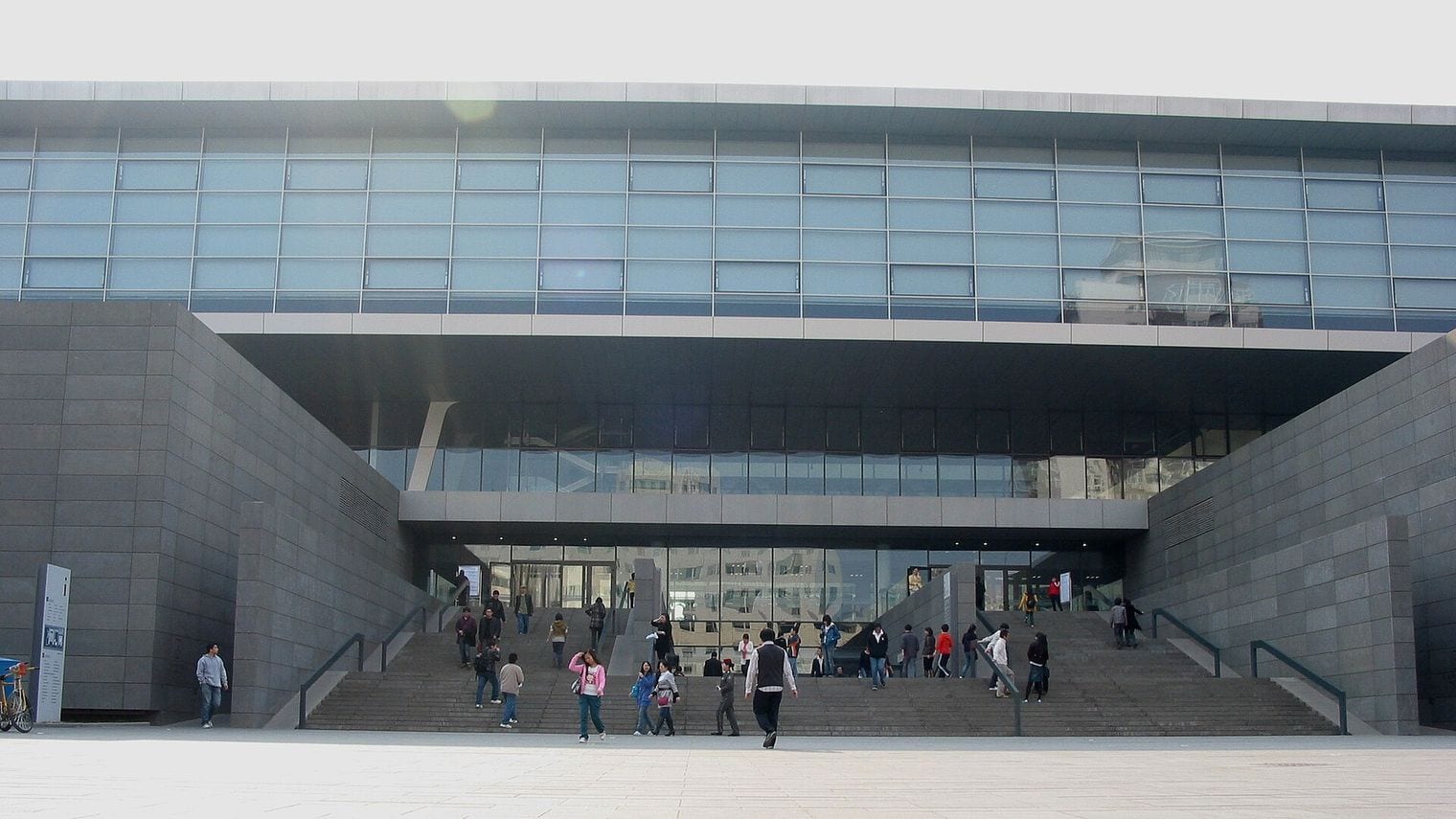
At 44.24 million items, the National Library of China in Beijing is the largest library in Asia by floor area and one of the great manuscript collections anywhere.
It opened in 1909 as the Imperial Library of Peking in the last years of the Qing dynasty, and its historical holdings reflect that inheritance: the surviving volumes of the Yongle Encyclopedia, compiled in 1408 and largely lost since, plus the world's largest collection of inscribed oracle bones — turtle shells and ox scapulae carrying the oldest known Chinese writing.
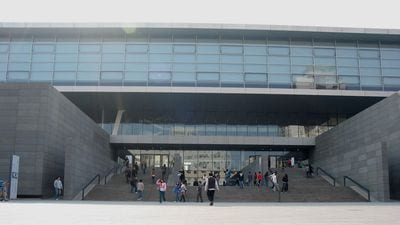
The complex sits in Haidian district near Zizhuyuan Park. The 1987 main building was joined in 2008 by the National Library Phase II, a vast cantilevered block whose reading floors appear to hover over a sunken display of ancient texts. Admission is free with identification, and the library also serves as the national ISBN agency and the country's central legal deposit institution.
99. Royal Danish Library
The Black Diamond, Søren Kierkegaards Plads, Copenhagen, Denmark
At 42.5 million items, the Royal Danish Library ranks ninth — though that figure counts physical units only and leaves out roughly 8.6 million electronic titles, so on a like-for-like count it would sit several places higher.
It is also within a million items of the Bibliothèque nationale de France below it, another pair worth reading as level. The institution took its present shape in 2017, when the Royal Library in Copenhagen merged with the State and University Library in Aarhus to form a single national library across two cities.
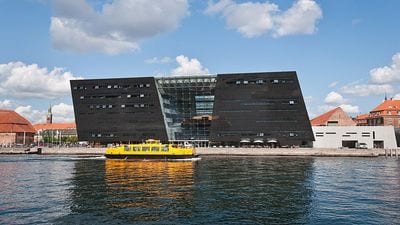
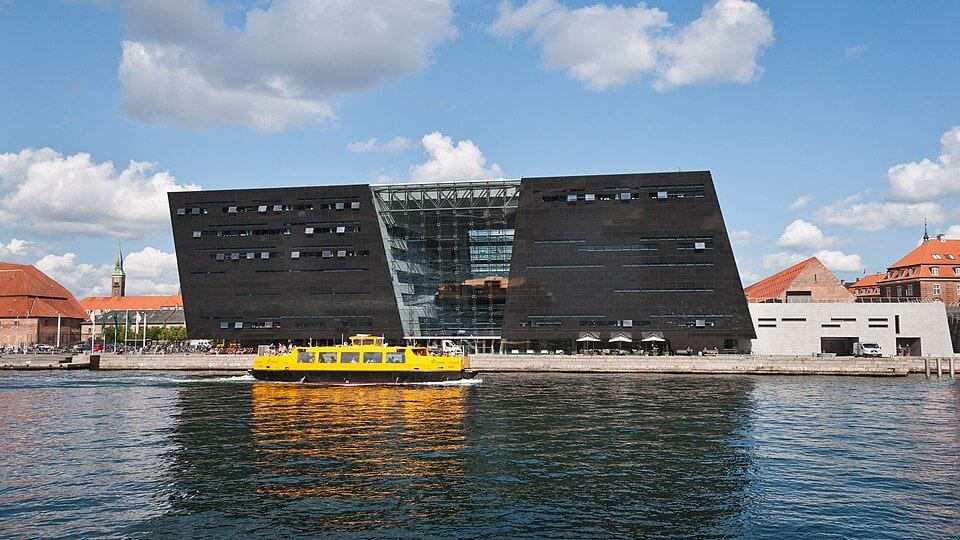
Its landmark is the Black Diamond on the Copenhagen waterfront, a 1999 extension clad in polished black granite, leaning out over the harbour and split by a glazed atrium that frames the water. Walkways over a street join it to the original red-brick library behind. The collection includes the Arnamagnaean manuscripts of Old Norse sagas and Denmark's national photography holdings, and the concert hall inside the Diamond is a working venue.
1010. Bibliothèque nationale de France
Site François-Mitterrand, Quai François Mauriac, Paris, France
At 41.8 million items as of 31 December 2023, the Bibliothèque nationale de France holds the accumulated deposit of French publishing since 1537, when François I decreed that a copy of every book printed in the kingdom be given to the royal library.
Its holdings are unusually balanced between text and image: 16.2 million books sit beside 16.05 million prints and photographs, with 2 million scores, 950,000 maps and globes, and hundreds of thousands of coins, medals and antiquities. It separately maintains 54.3 billion web-archive files, which this ranking excludes.
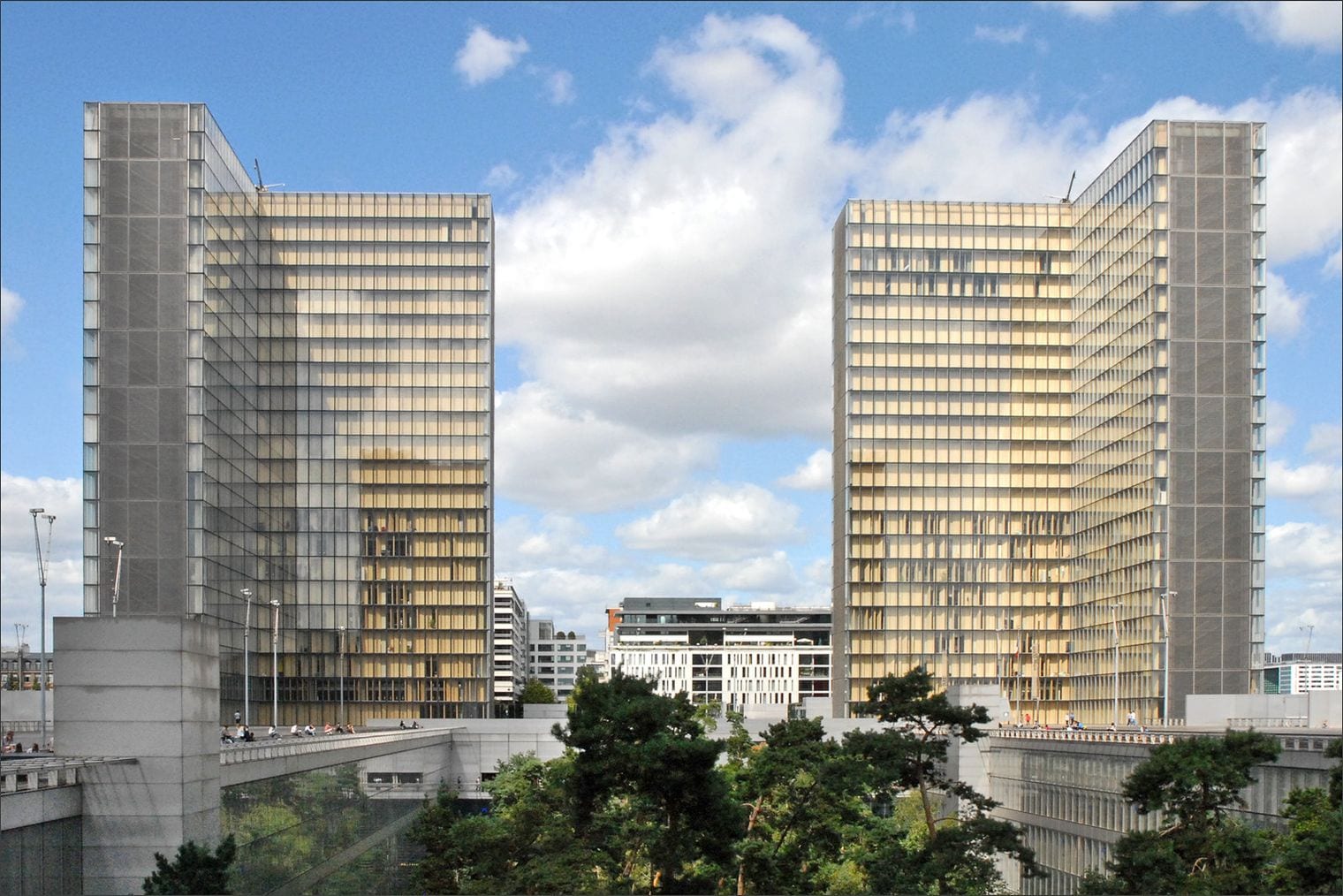
The Site François-Mitterrand, opened in 1996, is Dominique Perrault's arrangement of four glass towers shaped like open books, standing at the corners of a sunken pine forest that readers look into from below ground. The older Richelieu site in the 2nd arrondissement reopened in 2022 after a long restoration, and its Salle Ovale — a domed oval reading room ringed with 20,000 open-shelf books — is now free to walk into without a reader's card.
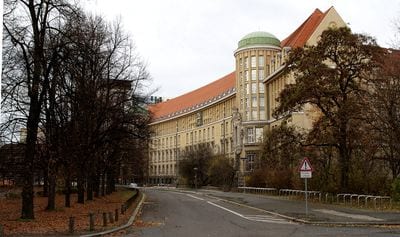
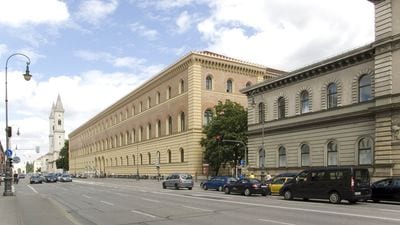
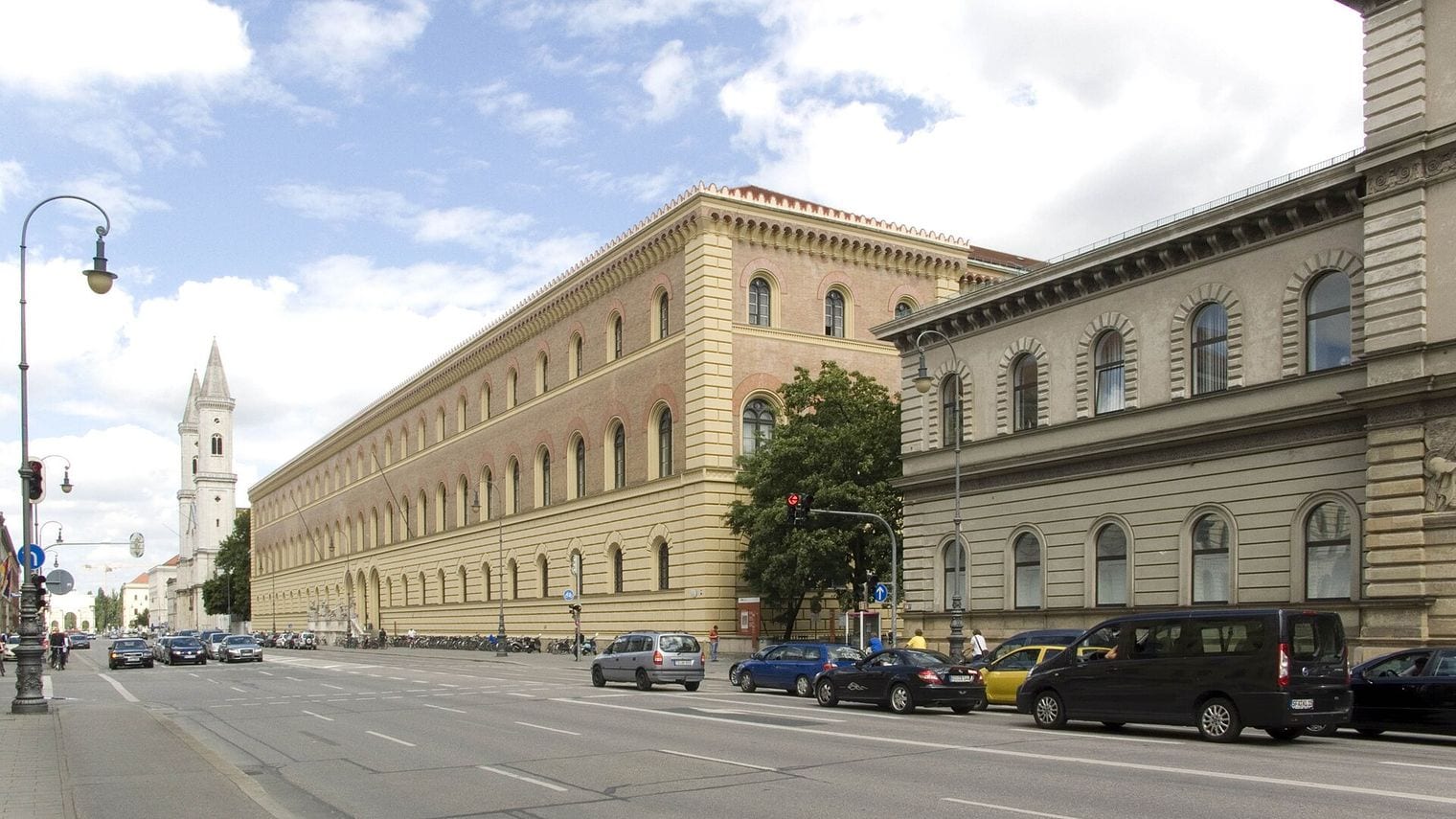
At 40.54 million items in 2025, the Bavarian State Library in Munich is one of Europe's great research collections, though the total needs a word of explanation: nearly half of it, 19.9 million pieces, is an image archive, swollen by the acquisition in 2019 of the photographic archive of the magazine stern.
The book side runs to 11.5 million printed volumes, and the manuscript side is what scholars come for — around 149,000 manuscripts, including one of the world's richest holdings of medieval codices.
Duke Albrecht V founded it in 1558, and the collection was transformed in the early 1800s when Bavaria secularised its monasteries and their libraries arrived by the cartload. The building on Ludwigstrasse is Friedrich von Gärtner's 1843 palazzo, entered up a monumental staircase watched over by statues of Thucydides, Homer, Aristotle and Hippocrates. Bombing gutted it in 1943 and it was rebuilt afterwards; the staircase survived.
1212. University of Illinois Library
Main Library, West Gregory Drive, Urbana, Illinois, United States
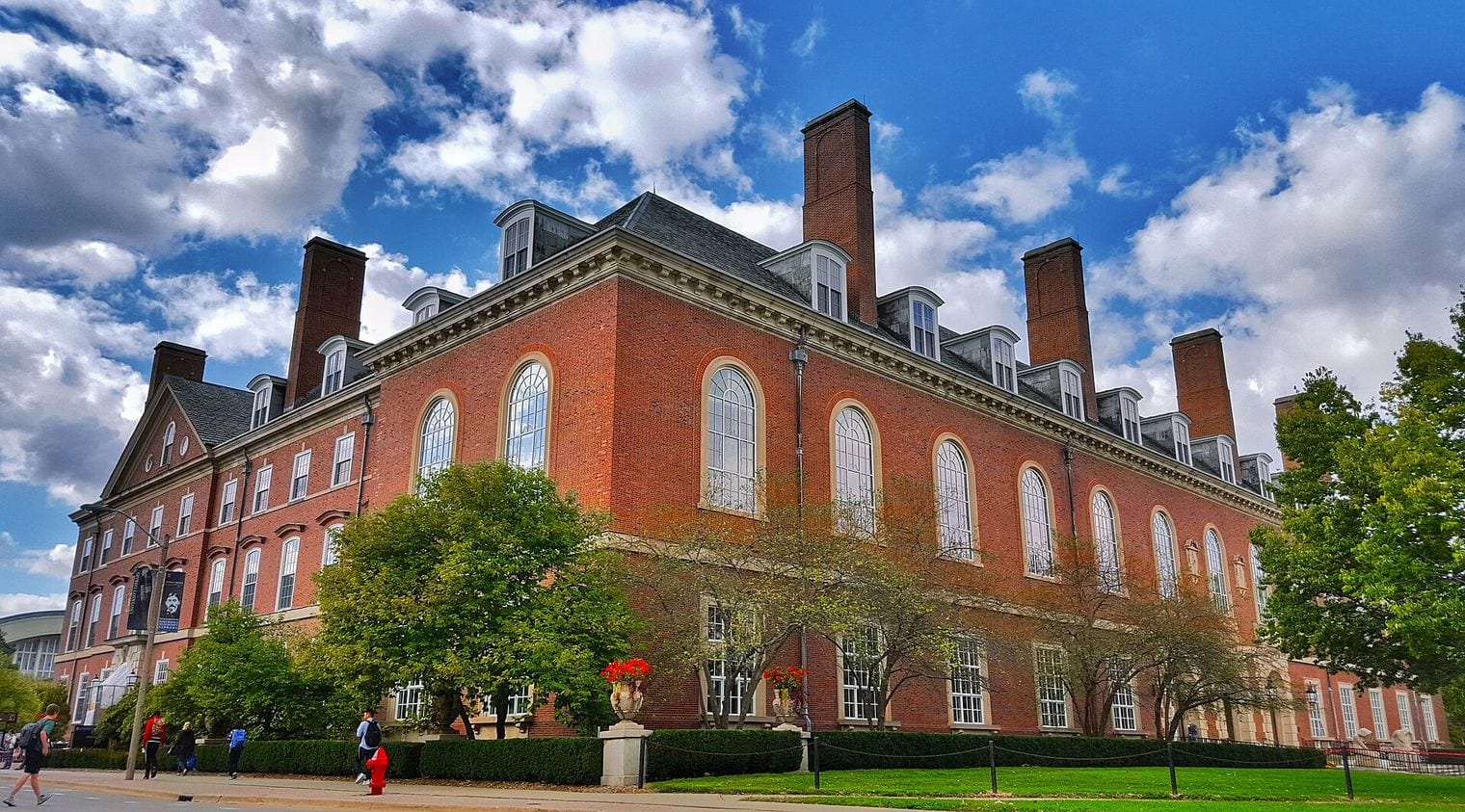
At 39 million items, the University of Illinois Library at Urbana-Champaign holds the largest collection of any public university in the United States. The figure breaks down into more than 15 million volumes and some 24 million other items — microforms, maps, manuscripts, recordings, films and electronic books — spread across about 30 departmental libraries, a structure inherited from a time when each discipline built its own.
The Main Library on West Gregory Drive opened in 1926 and hides its scale well: behind the reading rooms sit the Main Stacks, a ten-tier bookstack that was for decades the largest open-stack collection in the world, and which readers can still walk into. The Rare Book & Manuscript Library holds a Gutenberg Bible leaf, an outstanding collection of English Civil War era proclamations, and the papers of H.G. Wells and Marcel Proust.
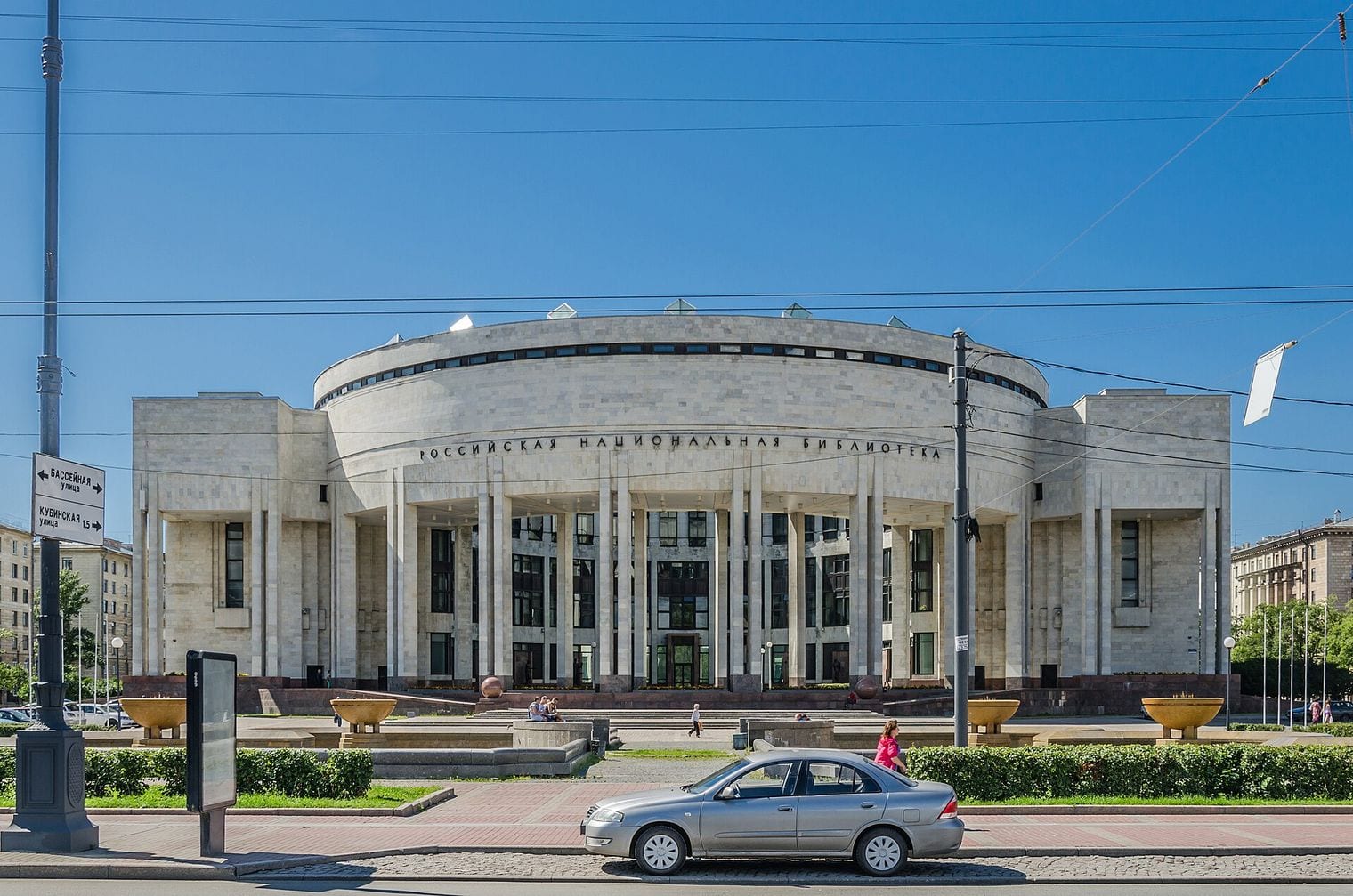
At 36.5 million items, the National Library of Russia in Saint Petersburg is the country's oldest public library and its second largest, founded by Catherine the Great in 1795 and opened to readers in 1814 as the Imperial Public Library.
It was conceived from the start as a public institution rather than a court collection, which was unusual in Europe at the time, and its first holdings came from the Zaluski Library taken from Warsaw during the partitions of Poland — most of which was returned after 1921.
Its historic home is the yellow neoclassical block on Nevsky Prospekt at Ostrovsky Square, with Carlo Rossi's 1830s wing carrying statues of ancient philosophers along its roofline. Inside is Voltaire's personal library, roughly 6,800 volumes bought from his niece by Catherine after his death and still shelved as he left them, annotations and all. A modern building on Moskovsky Prospekt opened in 1998 to hold the bulk of the collection.
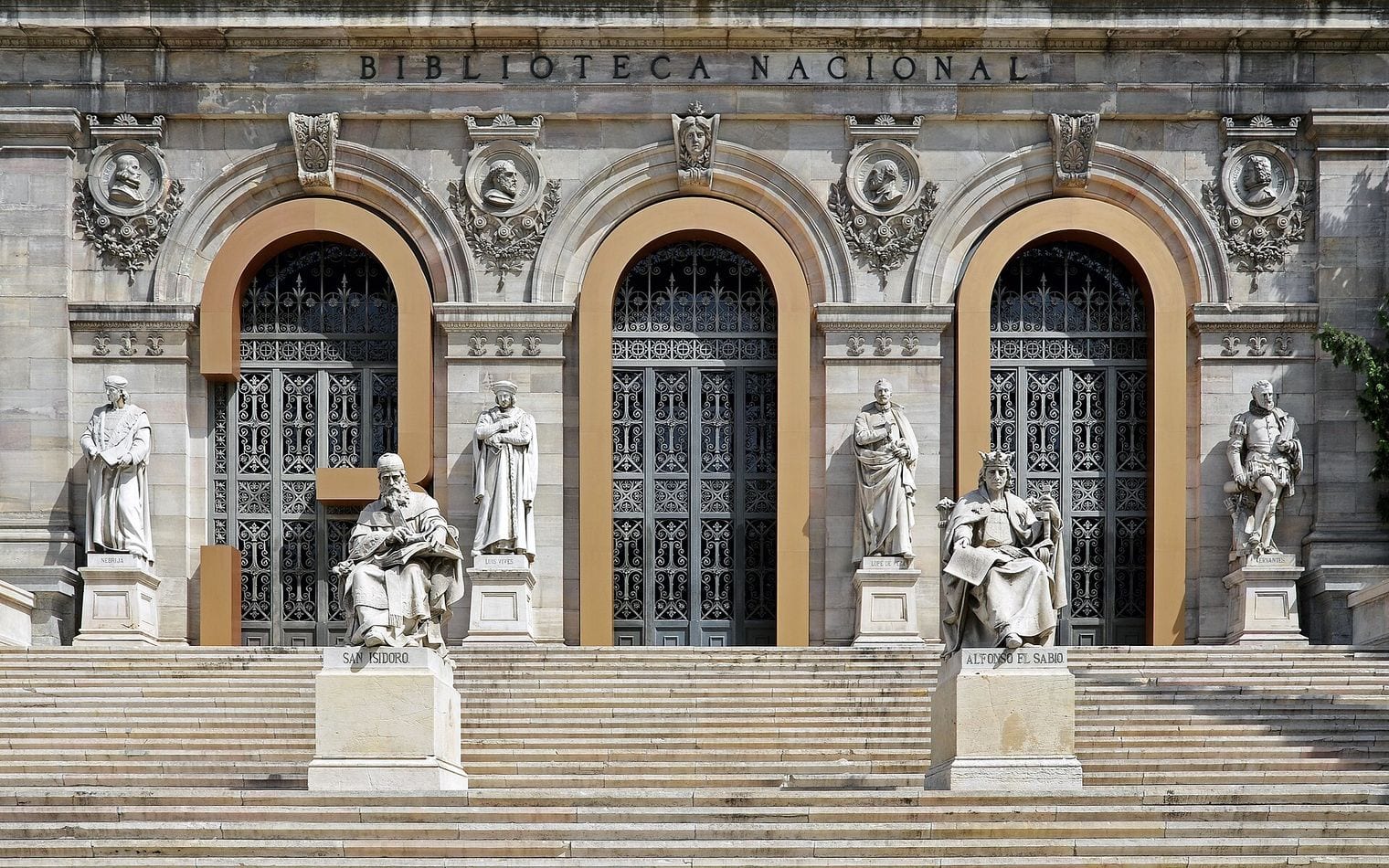
At 26 million items, the Biblioteca Nacional de España is the largest collection in the Spanish-speaking world. Its holdings run to some 15 million books and printed works, 4.5 million graphic materials, 600,000 sound recordings, 510,000 scores, 500,000 maps and 30,000 manuscripts, and it has held legal deposit for everything published in Spain since 1716. Philip V founded it in 1712 as the Palace Public Library, opening the royal collection to any reader who wanted it.
It occupies half of a vast neoclassical palace on the Paseo de Recoletos in Madrid, completed in 1892 and shared with the National Archaeological Museum, which has the back half. A broad flight of steps rises to a colonnaded entrance flanked by seated statues of Alfonso X and Isidore of Seville.
The library's own museum on the ground floor is free and displays rotating treasures — among them the earliest surviving manuscript of the Cantar de mio Cid and a first edition of Don Quixote.
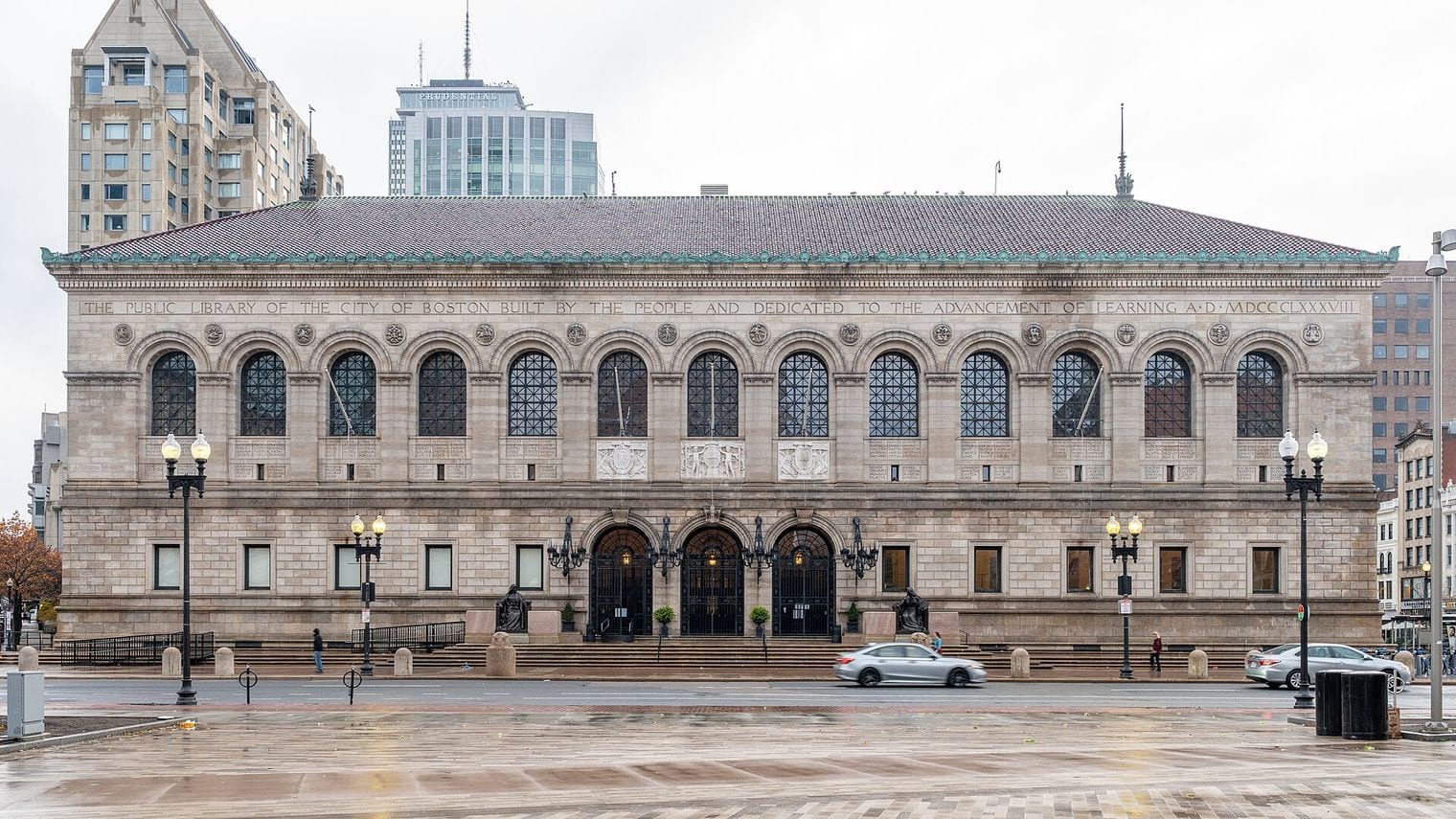
1515. Boston Public Library
McKim Building, Copley Square, Boston, Massachusetts, United States
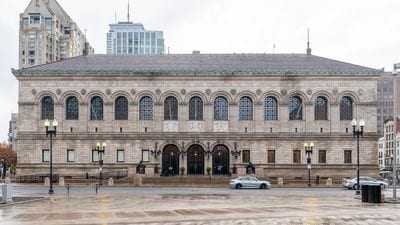
At 24.08 million items, the Boston Public Library rounds out the list and carries two genuine firsts: opened in 1848, it was the first large free municipal library in the United States, and the first anywhere to let ordinary people borrow books and take them home.
It is usually reckoned the third largest library in the country after the Library of Congress and the New York Public Library, and it runs 25 branches alongside the central research collection in Copley Square.
The McKim Building of 1895 was Charles Follen McKim's deliberate attempt at a palace for the people, and the inscription over the door still reads Free To All.
Inside are John Singer Sargent's Triumph of Religion murals, a barrel-vaulted Bates Hall reading room 66 m218 ft long, and an Italianate courtyard with a fountain that most visitors stumble into by accident. The collection holds John Adams's personal library, roughly 1,000 Shakespeare quartos and folios, and the papers of the American abolitionist movement.
FAQ: The World's Biggest Libraries
What is the biggest library in the world?
The Library of Congress in Washington, D.C., with around 181 million catalogued items. Guinness World Records recognises it as the largest library measured by catalogue size, and it adds roughly 12,000 items every day. Its nearest rival, the British Library, holds over 170 million.
Isn't the British Library the biggest?
It is usually listed that way, and the listing is out of date. Several widely copied rankings put the British Library first on a figure of 200 million items or more, drawn from an old blog post. The library's own current statement is that its shelves hold over 170 million items, which places it second here.
Why isn't the Nation's Library in Ankara on this list?
Because its headline figure counts somebody else's collection. Turkey's Presidential Nation's Library is often quoted at 141.7 million items, which would rank it third in the world, but that total combines the library's holdings with the inventory of the Directorate of State Archives. Its own printed resources come to about 5 million, well below this list's cut-off.
How do libraries count their collections?
Inconsistently, which is the honest answer and the reason this ranking states its rules. Some institutions count physical units only, some fold in electronic titles, and some count web-archive captures — which is how the National Library of Australia arrives at 21 billion "items". This list counts what each institution itself holds in every format and excludes web archives, but no two libraries apply quite the same definition, so the middle of the order is close rather than settled.
Can anyone visit these libraries?
Most of them, yes, and usually for free. The Library of Congress issues reader cards to any adult on the spot, the New York Public Library opens its research collections to anyone who walks in, and the National Library of China admits visitors with identification. Reading rooms often require registration even where the building itself is free to enter, and closed-stack libraries such as the National Diet Library fetch books for you rather than letting you browse.
What is the largest library building in the world?
That is a different question from the largest collection, and the answer is in Asia. The National Library of China is the largest library by floor area, and Shanghai Library East, opened in Pudong in 2022 as an annexe to the Shanghai Library, covers roughly 115,000 m² (1.24 million sq ft). Neither is the biggest collection — this ranking counts items, not square metres.