We may earn a commission if you book tickets, tours or a stay through a link on
this page, at no extra cost to you. It never affects which places we list or how
we rank them (how we make money).
The record
72,735 m²782,913 sq ft
Louvre
France
The record
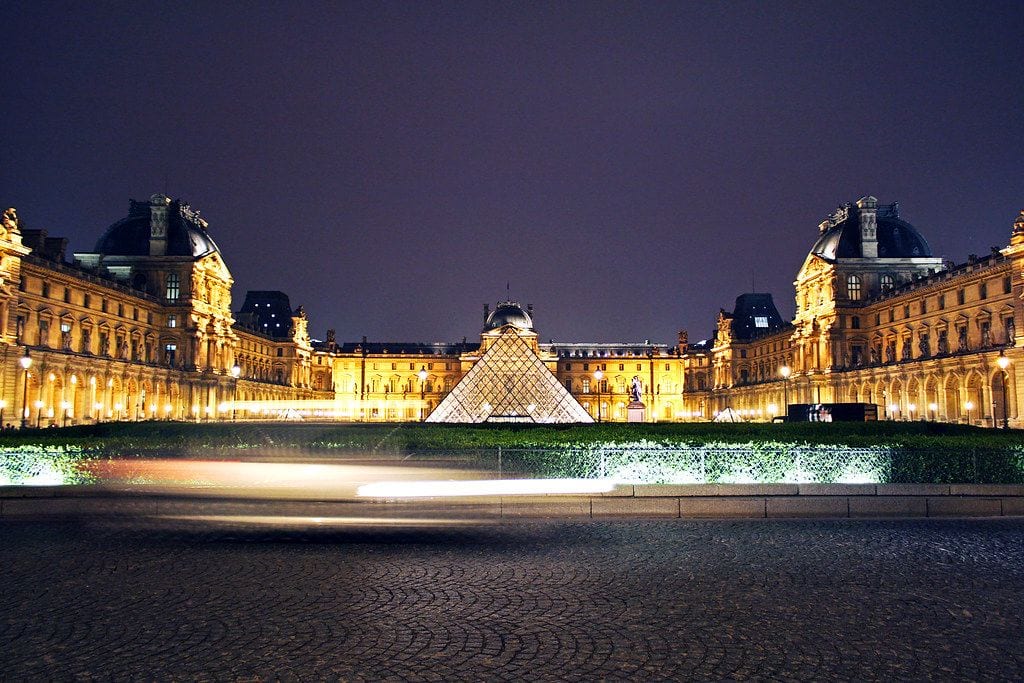
The biggest museum in the world is the Louvre, in France — 72,735 m² (782,913 sq ft), gallery space.
Source: Wikipedia (Louvre) — total exhibition area; 60,600 m² of it permanent collection. Verified .
Amsterdam's Rijksmuseum is often listed among the world's largest museums on a figure of 30,000 m² — but that is the size of its building, and its galleries come to about 12,000 m². That gap is what this countdown is about. Every entry here is ranked on the floor space actually open to visitors: gallery and exhibition area, not the shell around it. The second rule is that it has to be open now.
Munich's Deutsches Museum was quoted at 73,000 m² for decades, but a modernisation means roughly 20,000 m² is walkable today, with another 25,000 m² due in 2028, so it misses the cut. New York's American Museum of Natural History fills over two million square feet and publishes no gallery figure at all, so it cannot be ranked here. What survives both rules runs from 27,090 m² in Seoul to 72,735 m² in Paris, across eight countries.
The Louvre started life as a fortress, not a palace — Philip II built it in the 1190s to guard the downstream approach to Paris, and you can still walk its medieval foundations in the basement.
The British Museum holds around eight million objects and shows well under one percent of them — and has charged nothing to see the permanent collection since it opened in 1759.
The State Hermitage Museum keeps cats on the staff — a colony has patrolled the cellars against rodents since the eighteenth century, and they hold official status in the museum.
SUE the Tyrannosaurus rex was bought at auction for .36 million in 1997, which is how the Field Museum came to own the most complete specimen of the animal ever found.
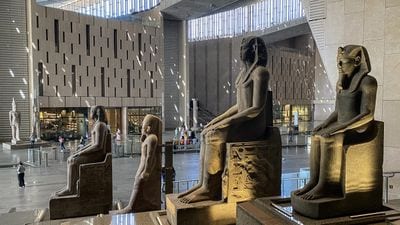
The Grand Egyptian Museum is the first place to show Tutankhamun's entire tomb collection together — roughly 5,000 objects, reunited in one building a century after Howard Carter cleared them.
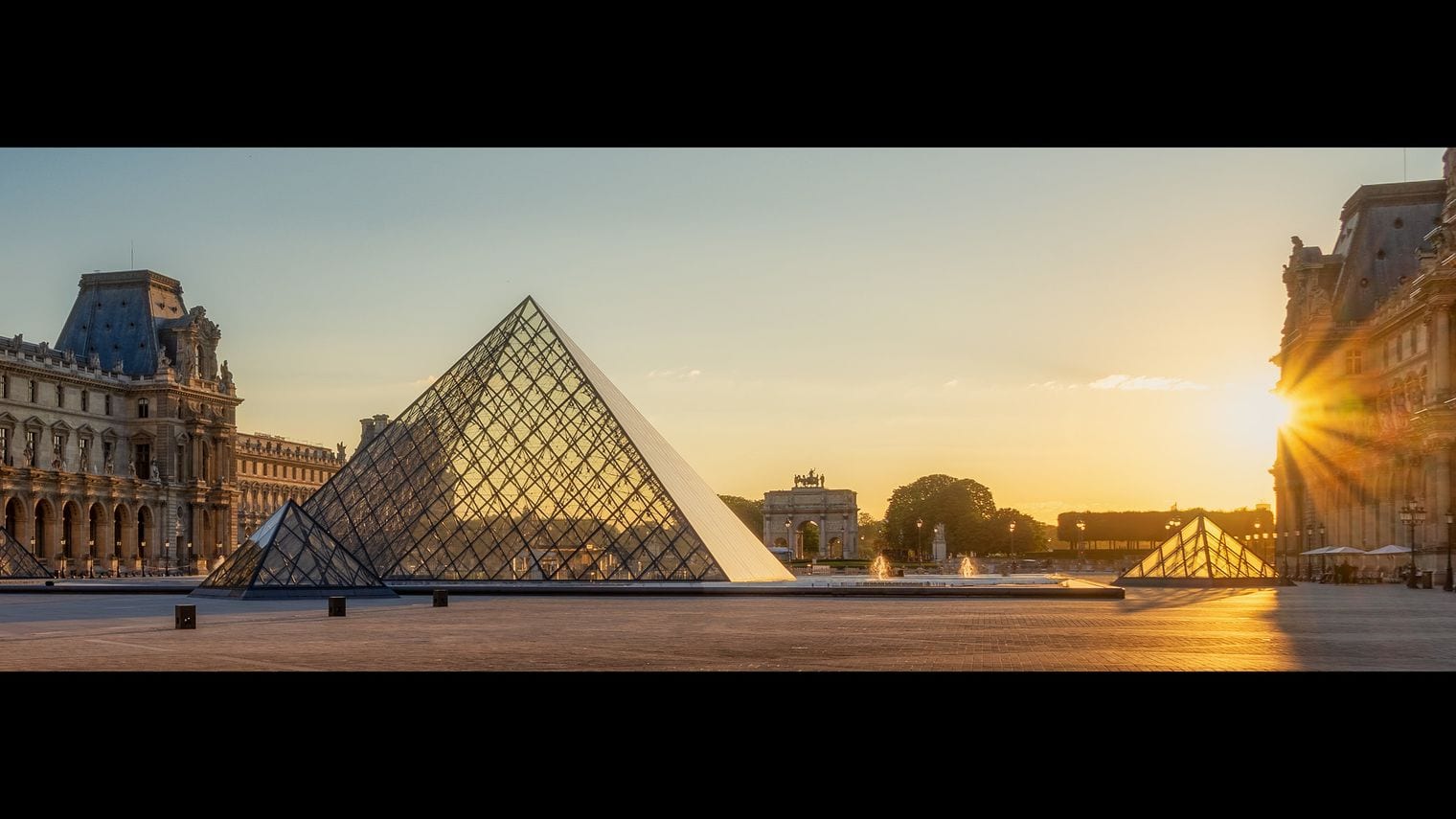
At 72,735 m² of gallery space, the Louvre is the largest museum on earth, and roughly 60,600 m² of that is given over to the permanent collection alone. The building does much of the work: it began as a fortress under Philip II in the 1190s and grew for six centuries as a royal residence before the revolutionary government opened it to the public as a museum in 1793.
Eight curatorial departments run from Egyptian antiquities to nineteenth-century French painting, and only a fraction of the half-million objects catalogued here are on view at any time. Most visitors head straight for the Mona Lisa, the Venus de Milo and the Winged Victory of Samothrace. The reward for going sideways instead is that the Richelieu wing's Near Eastern rooms are often almost empty. I. M. Pei's glass pyramid, added in 1989, is now the way in to all of it.
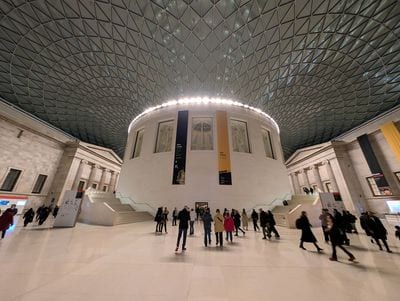
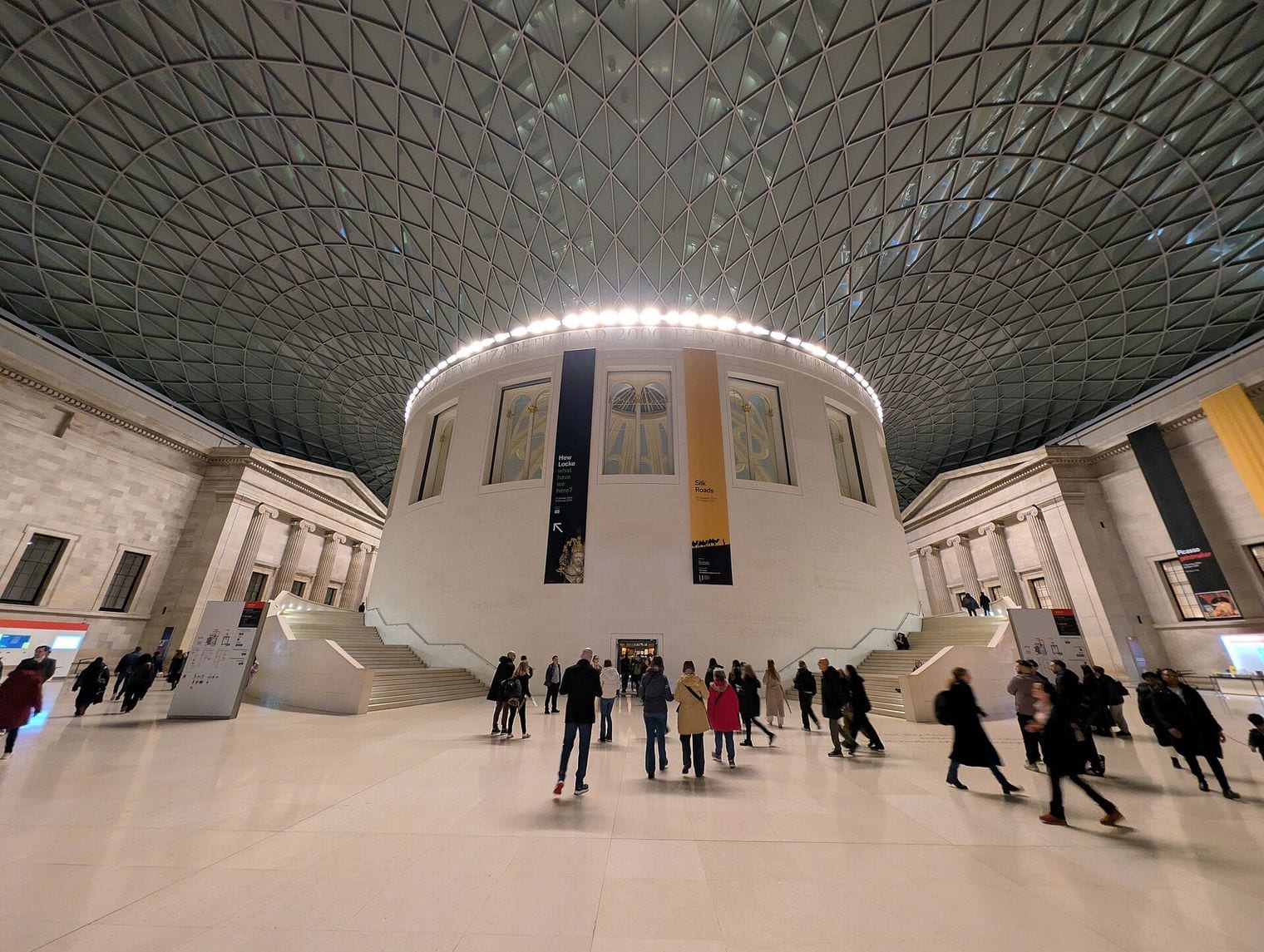
The British Museum puts 70,000 m² of gallery space behind a free front door — no other museum at this scale asks nothing for its permanent collection. It was founded in 1753 around the collection of the physician Hans Sloane and opened to visitors six years later, which makes it the first national public museum of its kind anywhere.
Around eight million objects are held here and well under one percent are on display, so what you walk through is a heavily edited version of a far larger store. The headline rooms hold the Rosetta Stone, the Parthenon sculptures and the Sutton Hoo ship burial. Norman Foster's Great Court, roofed over in 2000, turned the museum's hollow centre into the largest covered public square in Europe and made the whole plan legible for the first time.
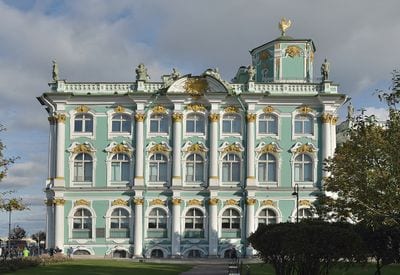
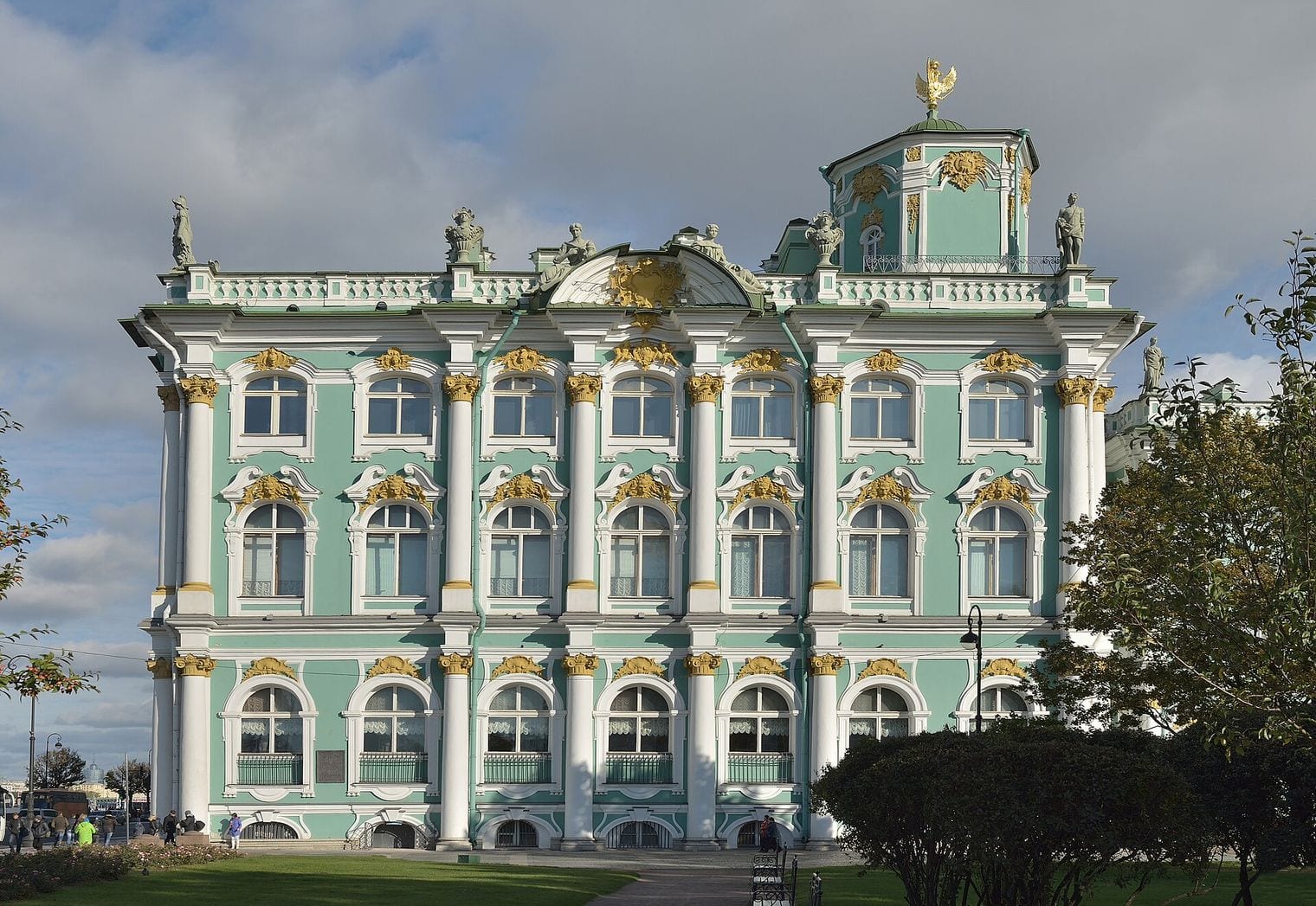
The State Hermitage Museum spreads 66,842 m² of gallery space across a run of buildings on the Neva embankment, the Winter Palace among them — the residence Russia's tsars used until 1917. Catherine the Great began it in 1764 with a single purchase of 225 paintings, and the museum still dates itself to that transaction.
The collection now runs past three million items, from Scythian gold to Matisse, and the rooms themselves are half the exhibit: malachite columns, parquet in a dozen woods, the Jordan Staircase. A resident population of cats has patrolled the cellars against rodents since the eighteenth century and remains on the staff roll. Seeing everything at a few seconds an object would take years, which is the usual and entirely accurate warning.
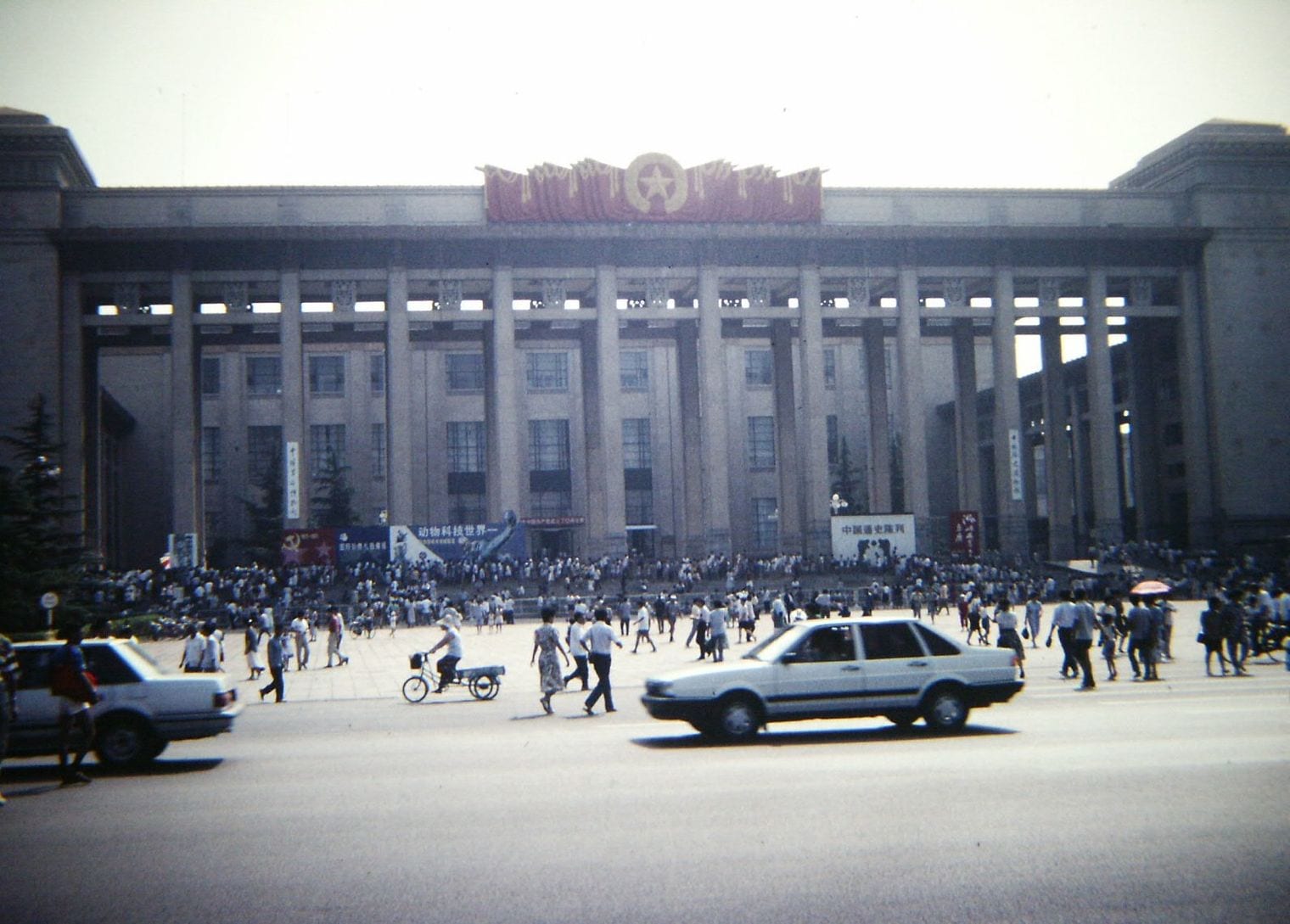
The National Museum of China holds 65,000 m² of gallery space inside a single structure of roughly 200,000 m² on the east side of Tiananmen Square. It was created in 2003 by combining two institutions that already shared the address, then rebuilt and reopened in 2011 at close to four times its earlier size.
The permanent route is essentially a chronology of the country: Ancient China runs from Palaeolithic tools through to the Qing, and the ritual bronzes are the reason to come — the Houmuwu ding, the heaviest piece of ancient bronzework found anywhere, is here. Admission is free and the collection passes 1.4 million items. It is regularly among the most visited museums on earth, so booking ahead is normal rather than optional.
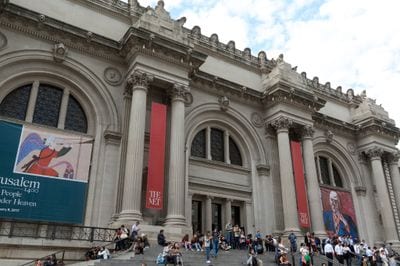
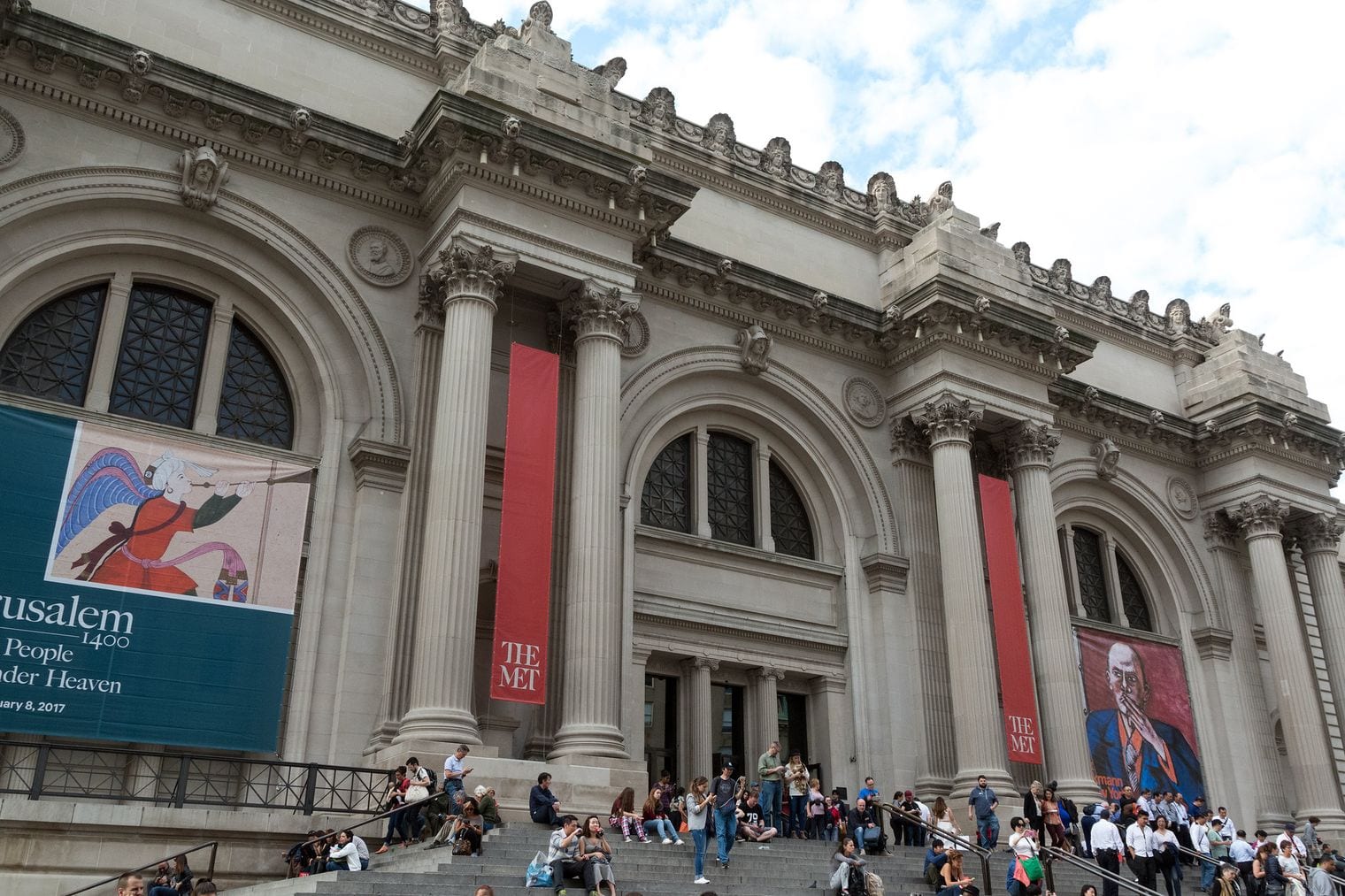
The Metropolitan Museum of Art's Fifth Avenue building carries 58,800 m² of gallery space — about 633,000 square feet — inside a two-million-square-foot pile on the eastern edge of Central Park. Founded in 1870 by a group that had neither a building nor a collection, it now holds more than 1.5 million works spanning five millennia.
The set pieces are famous and worth the crowds: the Temple of Dendur in its glass-walled hall, the arms and armour court, the Costume Institute's spring exhibition. What the figure above does not include is The Cloisters, the museum's medieval outpost in Upper Manhattan, which is counted as a separate site. Even across 58,800 m², the Met shows only a small share of what it owns.
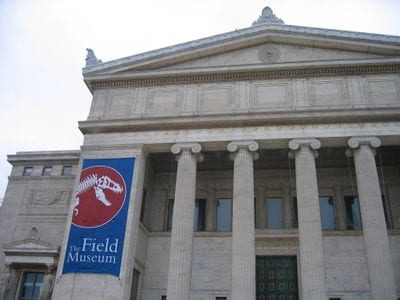
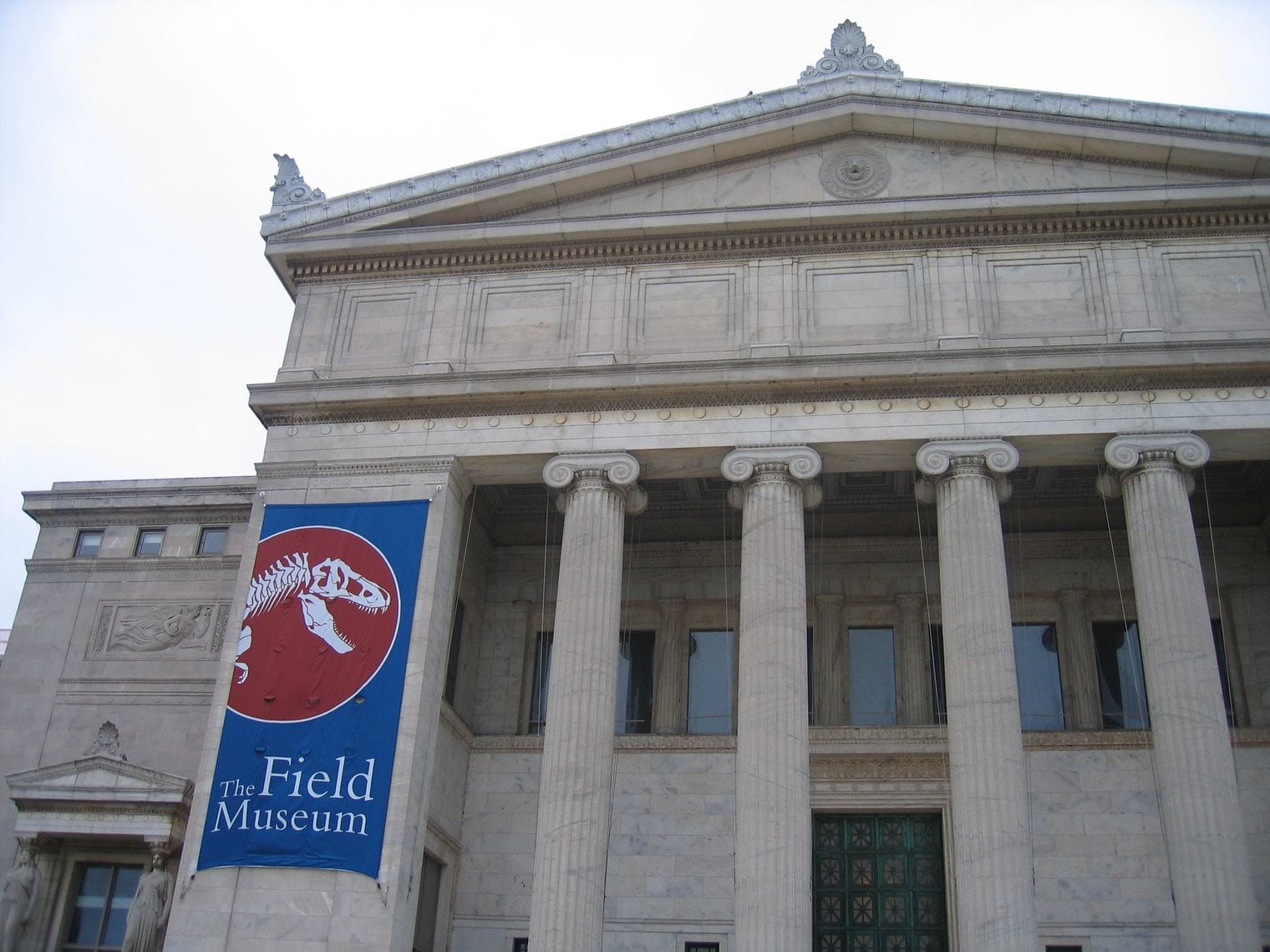
The Field Museum devotes over 480,000 square feet — 44,593 m² — to exhibitions across three public levels, which makes it the largest natural history museum on this list. It grew directly out of the 1893 World's Columbian Exposition, founded to keep the fair's biological and anthropological collections in Chicago, and moved into its present neoclassical building on the lakefront in 1921.
Stanley Field Hall runs 300 feet end to end and is where the museum stages its biggest specimens: Máximo the titanosaur stretches most of its length, and SUE — the most complete Tyrannosaurus rex yet found — has a dedicated gallery upstairs. Behind the public rooms sit roughly 40 million specimens, the working collection of a research institution that happens to admit the public.
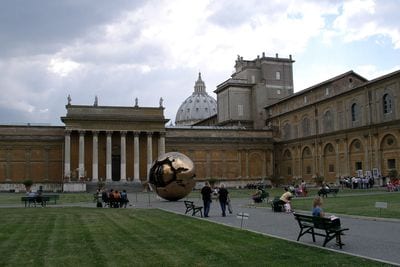
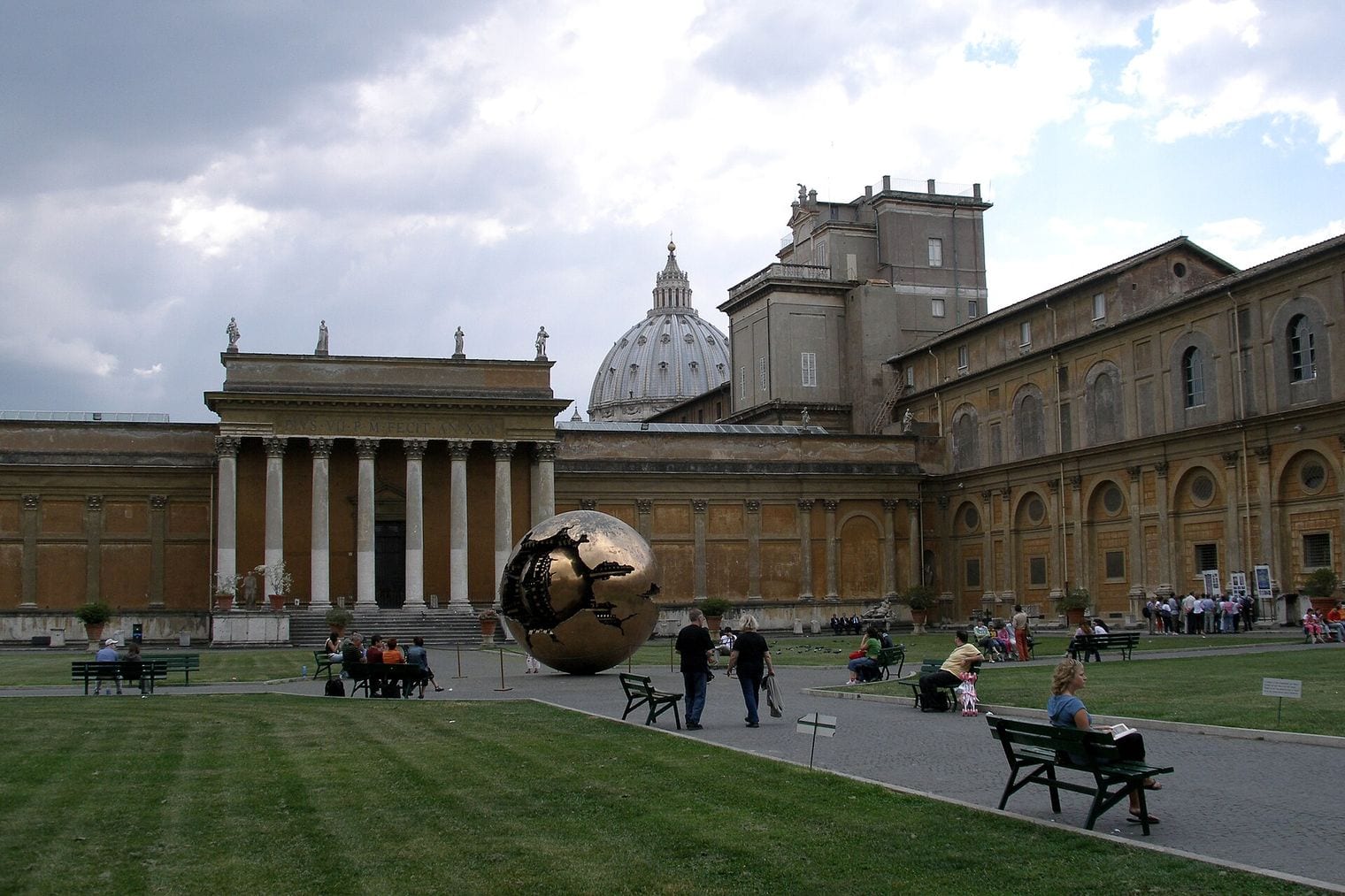
The Vatican Museums pack 43,000 m² of exhibition space into 54 galleries threaded through roughly 1,400 rooms and chapels of the papal palaces. The collection dates its own beginning to 1506, when Julius II put a newly unearthed Laocoön group on public display in the Cortile delle Statue.
Everything funnels toward the Sistine Chapel, and the route there is the point: the Gallery of Maps, the Raphael Rooms, the Egyptian and Etruscan collections, all taken in one direction because circulation is one-way. Only about 20,000 of the 70,000 works held are shown at a time.
Giuseppe Momo's double-helix staircase of 1932, near the exit, is photographed almost as often as the ceiling. The museums stand inside Vatican City, an enclave surrounded entirely by Rome, so a visit slots naturally into a wider stay in the city.
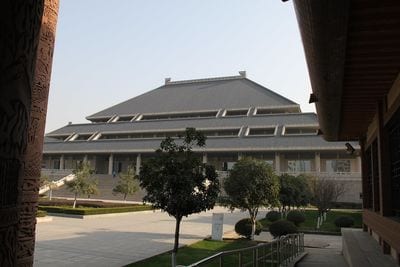
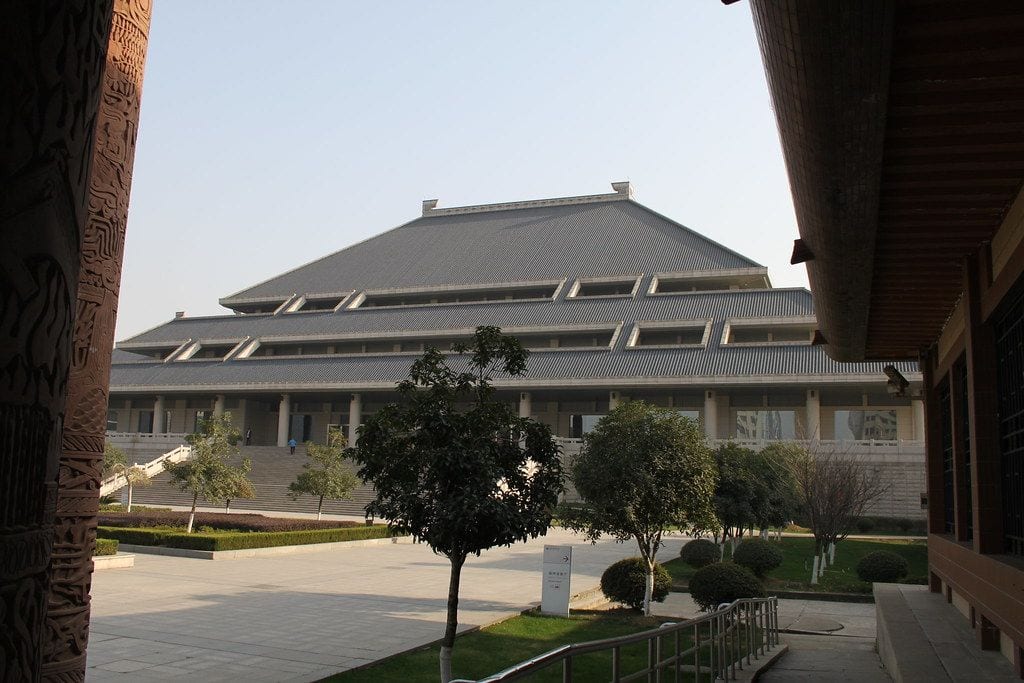
Hubei Provincial Museum opens 38,000 m² of exhibition space beside East Lake in Wuhan, inside a complex of 125,000 m² that grew through a series of expansions. It is the provincial repository for one of China's richest archaeological regions, and admission is free.
Its most famous holding is the bianzhong of Marquis Yi of Zeng — a set of 65 bronze bells cast in the fifth century BC, tuned to sound a full twelve-note chromatic scale across three octaves and recovered intact from a waterlogged tomb in 1978. The museum keeps a playable replica set and stages regular performances on it. The Sword of Goujian, lifted from another Hubei tomb without a spot of rust on its blade, is in the same building.
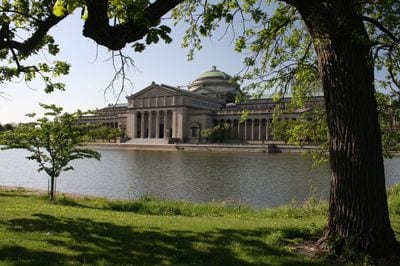
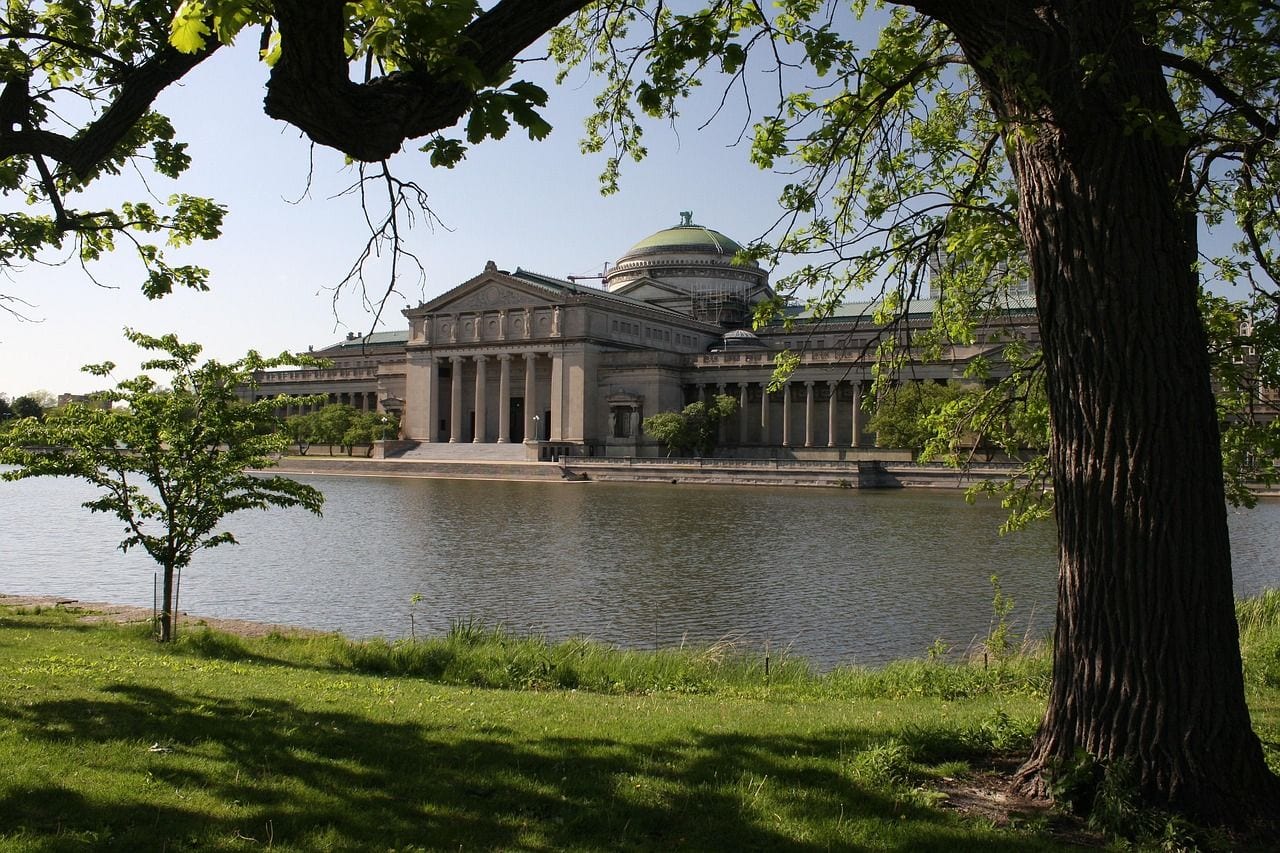
Chicago's Griffin Museum of Science and Industry fills more than 400,000 square feet — 37,161 m² — with hands-on exhibits, which makes it the largest science museum in the Western Hemisphere. It occupies the Palace of Fine Arts, the one building from the 1893 World's Columbian Exposition still on its original site, rebuilt in stone for the museum's opening in 1933.
The exhibits are unusually large because the building allows it: a captured German submarine, U-505, sits whole in an underground hall, a working replica coal mine descends beneath the floor, and the Pioneer Zephyr streamliner is parked indoors. The Henry Crown Space Center holds the Apollo 8 command module, the first crewed spacecraft to circle the Moon. The museum took its current name in 2024 after a donation from Kenneth Griffin.
Shanghai Museum East opened in stages through 2024 and offers around 33,600 m² of exhibition space inside a building of 113,200 m² in Pudong — considerably more display area than the original Shanghai Museum on People's Square, which carries on alongside it.
Twenty halls cover the classical Chinese collections the institution built its name on: ritual bronzes, ceramics, jade, calligraphy and painting, alongside interactive spaces aimed at visitors who are not already specialists. The upper floors open sightlines to the Lujiazui skyline through full-height glazing, a deliberate contrast with the windowless galleries below.
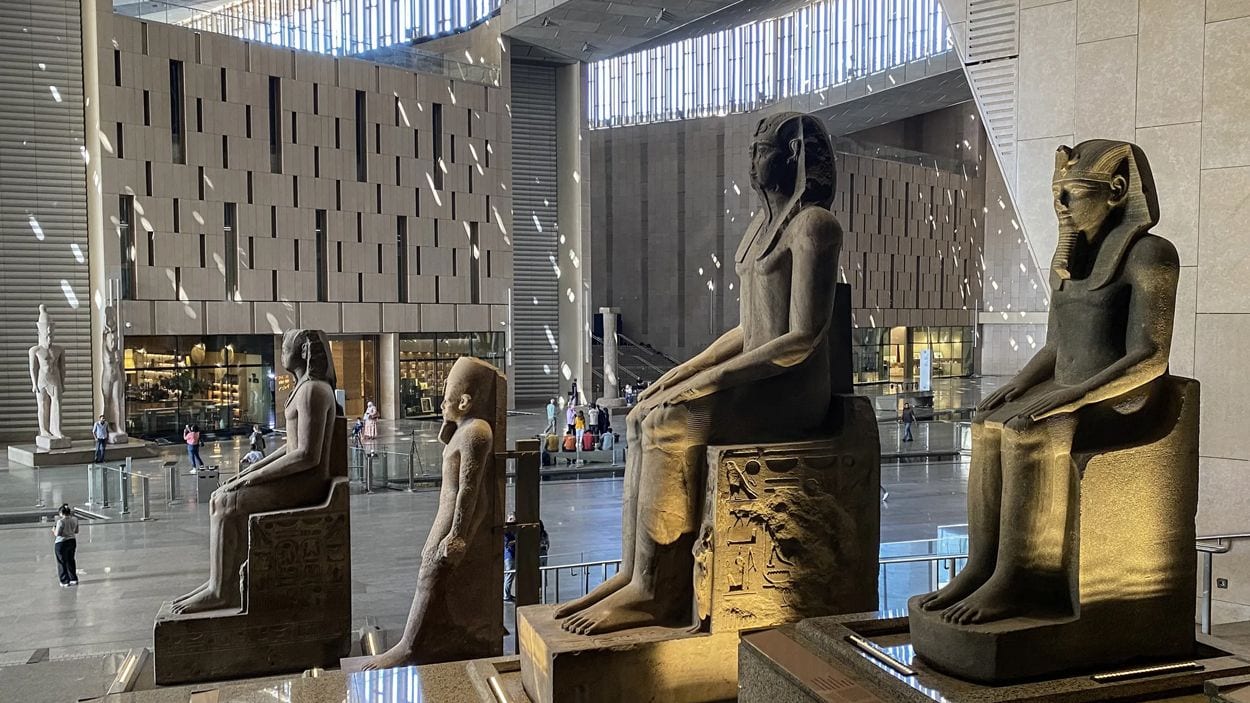
The Grand Egyptian Museum shows 32,000 m² of permanent and temporary galleries — 24,000 m² of it permanent — on a 500,000 m² site within sight of the Giza pyramids. It opened officially in November 2025 after two decades of construction, and it is the newest museum on this list by a wide margin.
Its reason for existing is the Tutankhamun collection: roughly 5,000 objects from the tomb, displayed together in one place for the first time since Howard Carter cleared it. The Grand Staircase climbs six storeys lined with royal statuary and ends at a window framing the pyramids themselves. The Irish practice Heneghan Peng won the design competition in 2003, which gives some sense of how long the project ran.
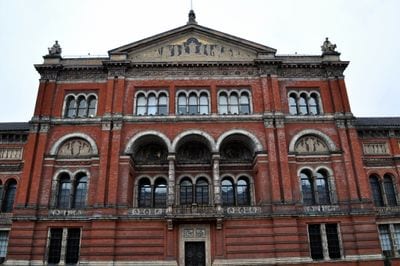
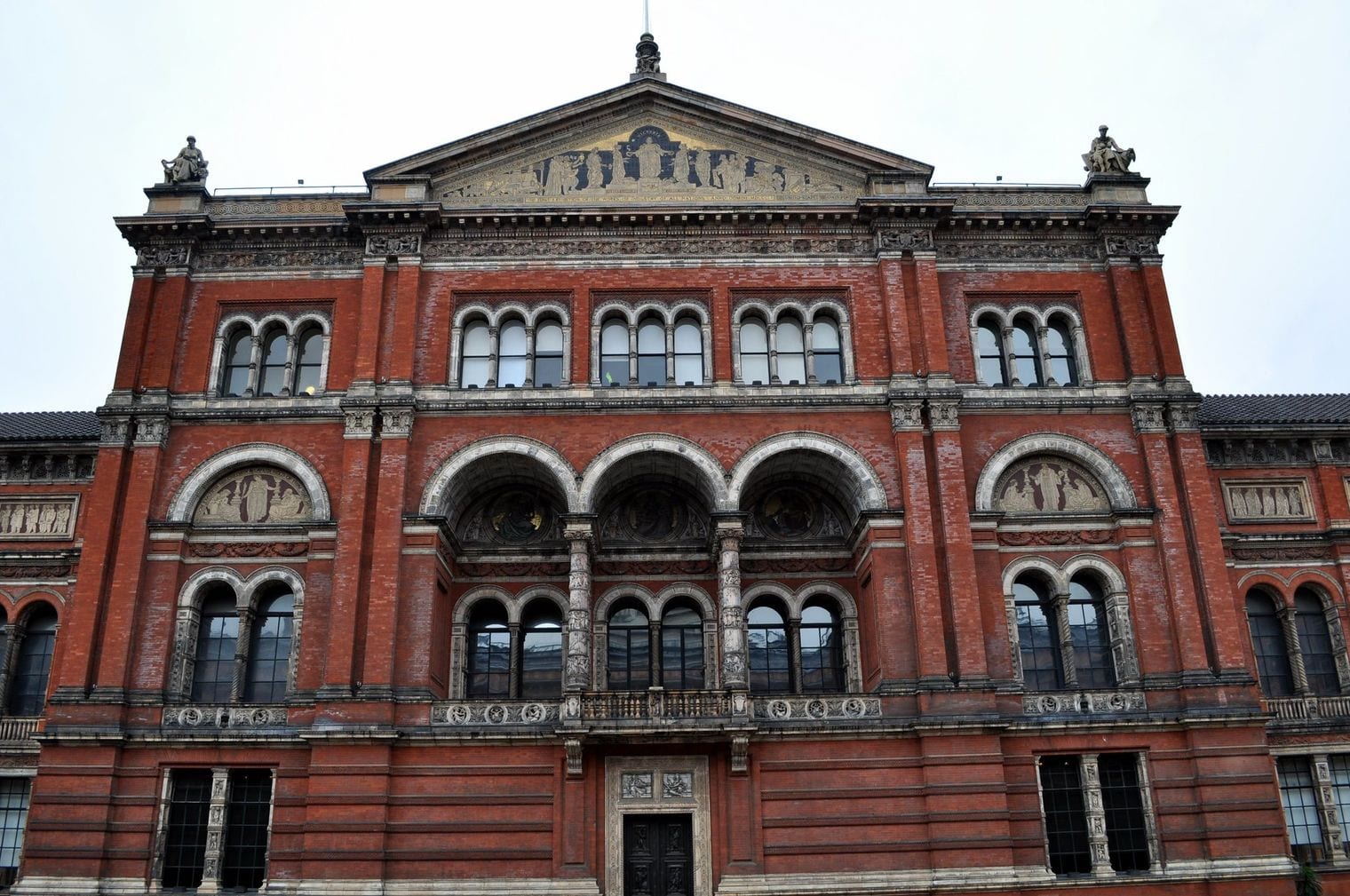
The Victoria and Albert Museum holds 30,658 m² of gallery space across 145 rooms on a 12.5-acre site in South Kensington, and describes itself as the world's largest museum of applied arts, decorative arts and design. It began in 1852, funded by the profits of the previous year's Great Exhibition, and moved here with a mandate to improve British manufacturing by showing people good design.
The Cast Courts are the building's great oddity — full-size plaster copies of Trajan's Column, sawn in two to fit under the roof, and of Michelangelo's David, made in an era when casts were how you studied sculpture you could not travel to. Elsewhere: the Raphael Cartoons, the Ardabil Carpet, Tipu's Tiger. Entry to the permanent collection costs nothing.
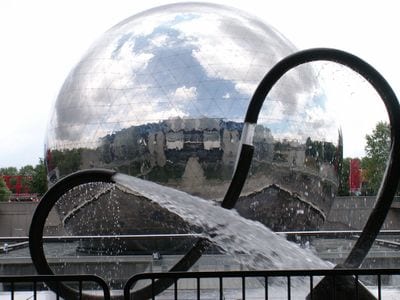
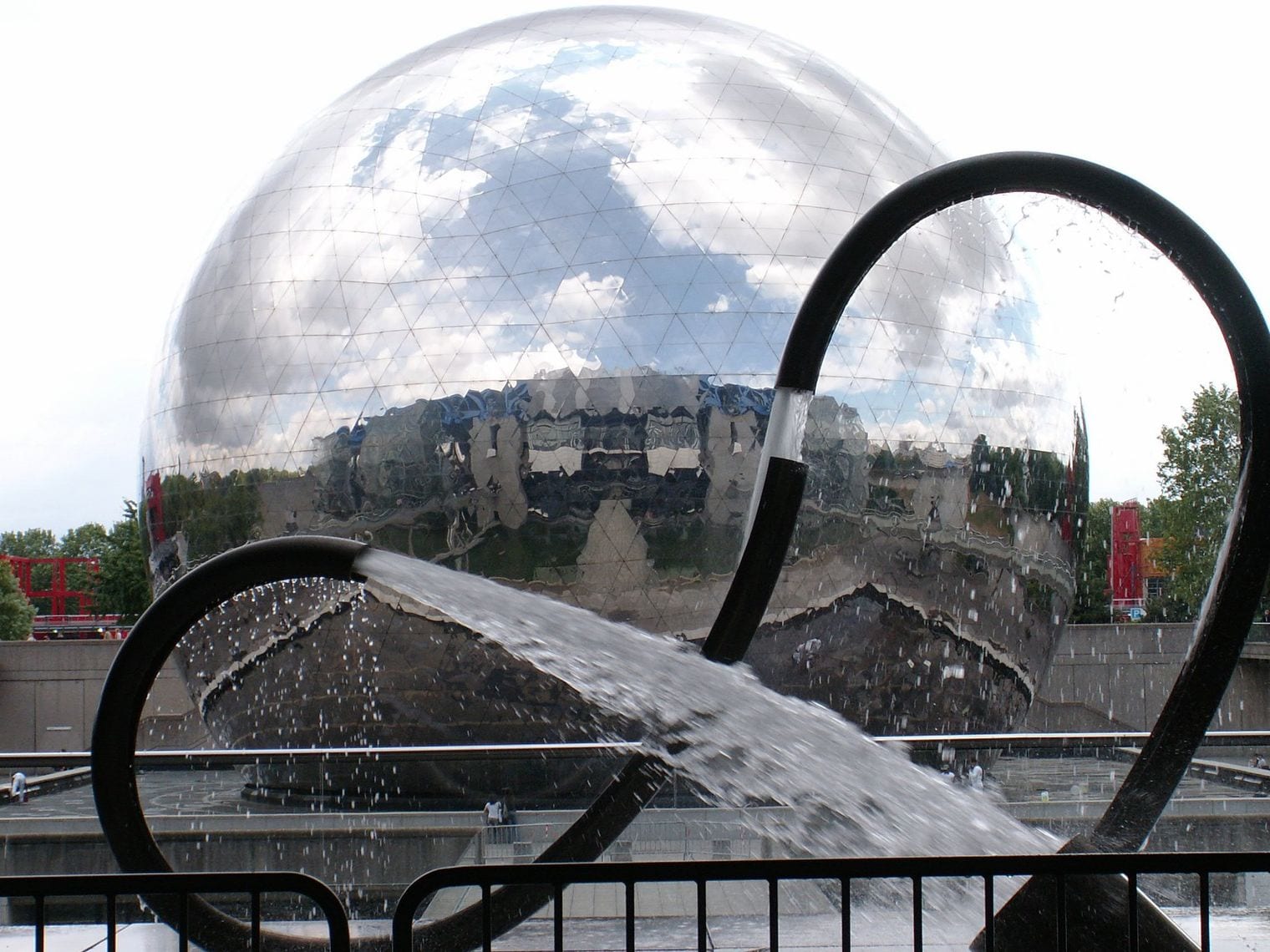
Paris gives the Cité des Sciences et de l'Industrie's Explora exhibition 30,000 m², which makes it the largest science museum in Europe. The building it occupies in the Parc de la Villette was begun as a slaughterhouse and left unfinished when that project was abandoned in the 1970s; the shell was reworked by Adrien Fainsilber and opened as a science museum in 1986.
Explora spreads across two levels covering space, the environment, genetics, mathematics and transport, with a heavy bias toward things you operate rather than read about. The Cité also runs a planetarium and a submarine you can walk through, the Argonaute. Outside on the plaza sits La Géode, a mirrored sphere 36 metres across containing a hemispherical cinema screen.
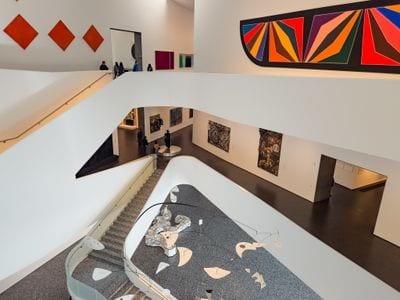
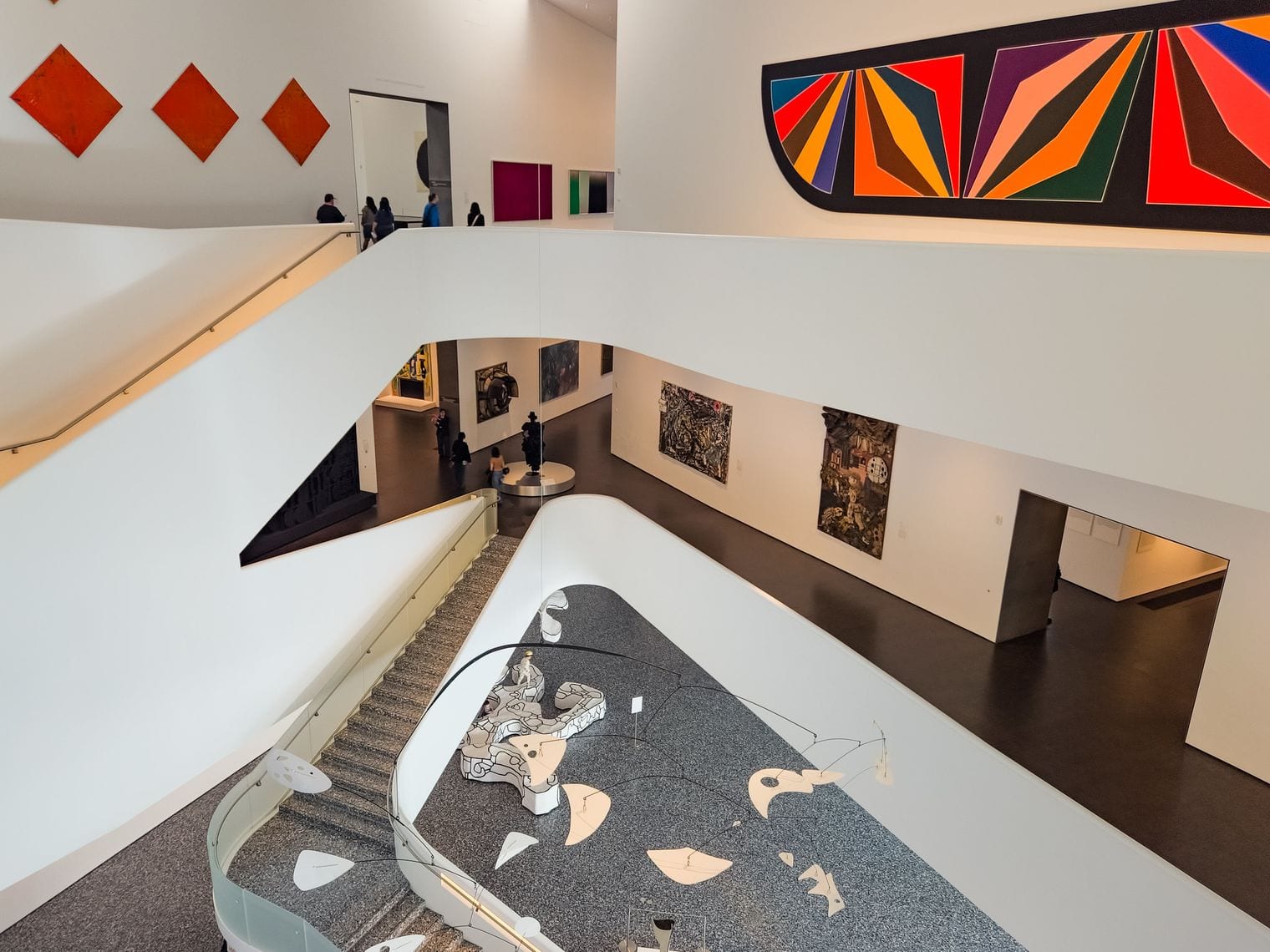
The Museum of Fine Arts, Houston spreads more than 300,000 square feet — about 28,000 m² — of gallery space across three buildings on a 14-acre campus, ranking it among the largest art museums in the United States. The institution dates to 1900 and opened the first art museum built for the purpose in Texas in 1924.
The Nancy and Rich Kinder Building, designed by Steven Holl and opened in 2020, added over 100,000 square feet for modern and contemporary work and completed the campus. Underground walkways connect the buildings, and one of them is James Turrell's The Light Inside, a tunnel washed in slowly shifting colour. Across the street, the Cullen Sculpture Garden was laid out by Isamu Noguchi.
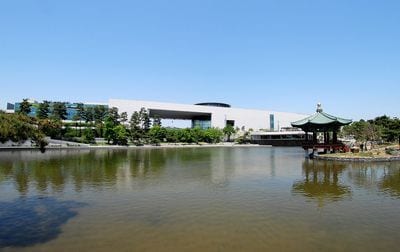
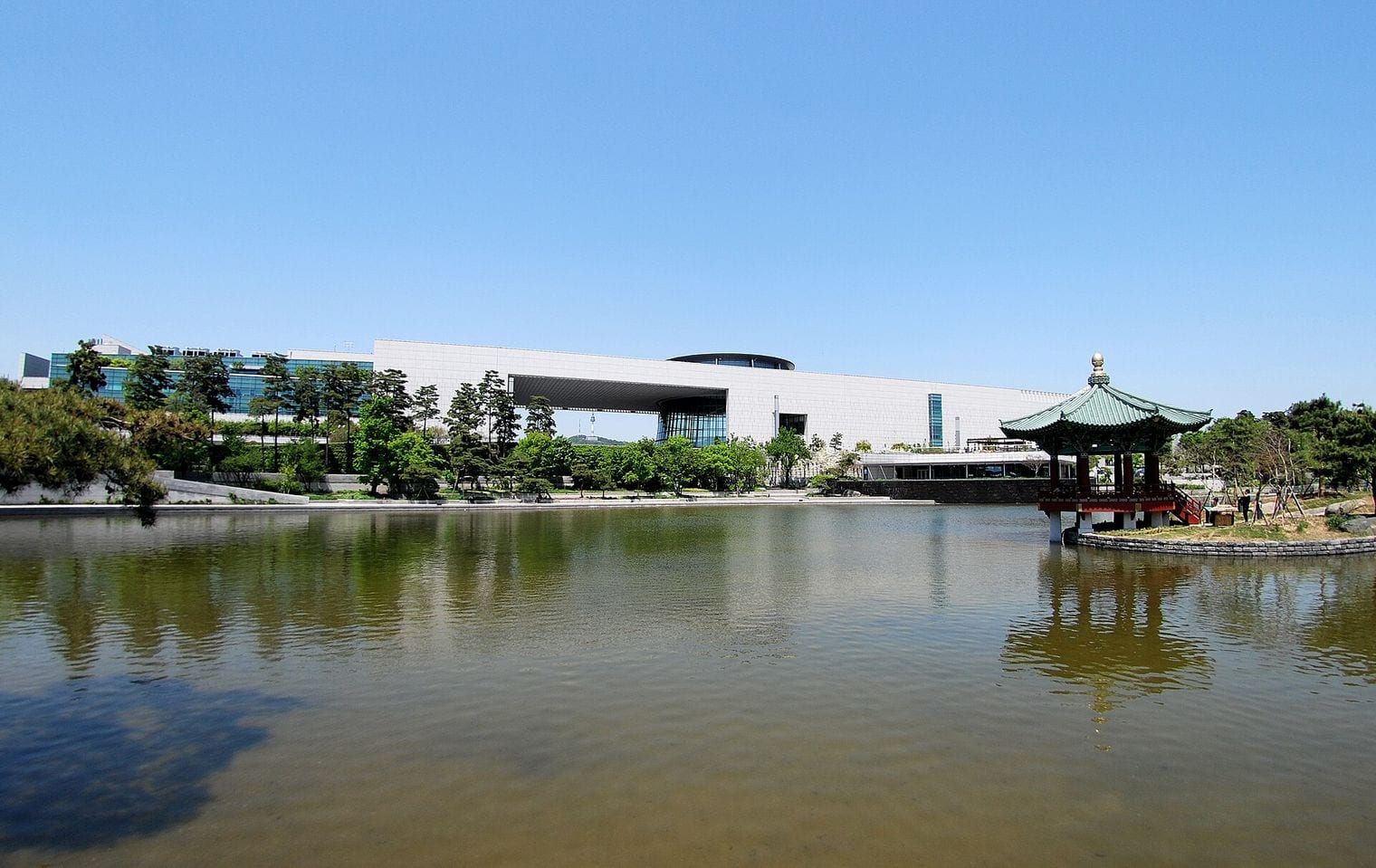
The National Museum of Korea closes this list with 27,090 m² of gallery space, set inside a Yongsan complex of 295,551 m² that ranks among the largest museum buildings anywhere by total floor area. It moved to this site in 2005 and was engineered against both earthquakes and flooding, with the collection held above ground level.
Six permanent galleries run chronologically from Palaeolithic Korea through the Joseon dynasty, with separate wings for calligraphy, sculpture and Asian art. The Room of Quiet Contemplation holds two gilt-bronze Pensive Bodhisattva figures from the seventh century, shown alone in a darkened chamber. A ten-storey marble pagoda from Gyeongcheonsa Temple stands the full height of the entrance hall, and the permanent collection is free.
FAQ: The World's Biggest Museums
What is the biggest museum in the world?
The Louvre, with 72,735 m² of gallery space in Paris — around 60,600 m² of it given to the permanent collection. The British Museum follows at 70,000 m² and Saint Petersburg's State Hermitage Museum at 66,842 m². The three are close enough that the order depends entirely on measuring gallery space rather than total building area.
How is museum size actually measured?
Two different figures get quoted and they are not interchangeable. Gallery or exhibition space is the floor a visitor can walk. Total floor area adds storage, laboratories, offices and plant, which in a big museum is most of the building. The Louvre's galleries sit inside a complex several times their size, so lists built on building area produce a completely different order.
What is the largest natural history museum in the world?
By exhibition space, Chicago's Field Museum, with over 480,000 square feet across three public levels. New York's American Museum of Natural History occupies a far bigger site, over two million square feet in all, but publishes no separate gallery figure, so the two cannot be compared directly on this measure.
Why isn't the Smithsonian on this list?
Because the Smithsonian is a group of separate museums rather than one building, and this list ranks individual museums. Its National Museum of Natural History quotes 325,000 square feet of exhibition and public space, a figure that mixes galleries with lobbies and circulation, so it is not comparable with the gallery-space figures used here.
Which of the biggest museums are free to enter?
Several of the largest charge nothing for their permanent collections, including the British Museum, the Victoria and Albert Museum, the National Museum of China, Hubei Provincial Museum and the National Museum of Korea. The Louvre, the State Hermitage Museum, the Vatican Museums and the Grand Egyptian Museum all charge admission.