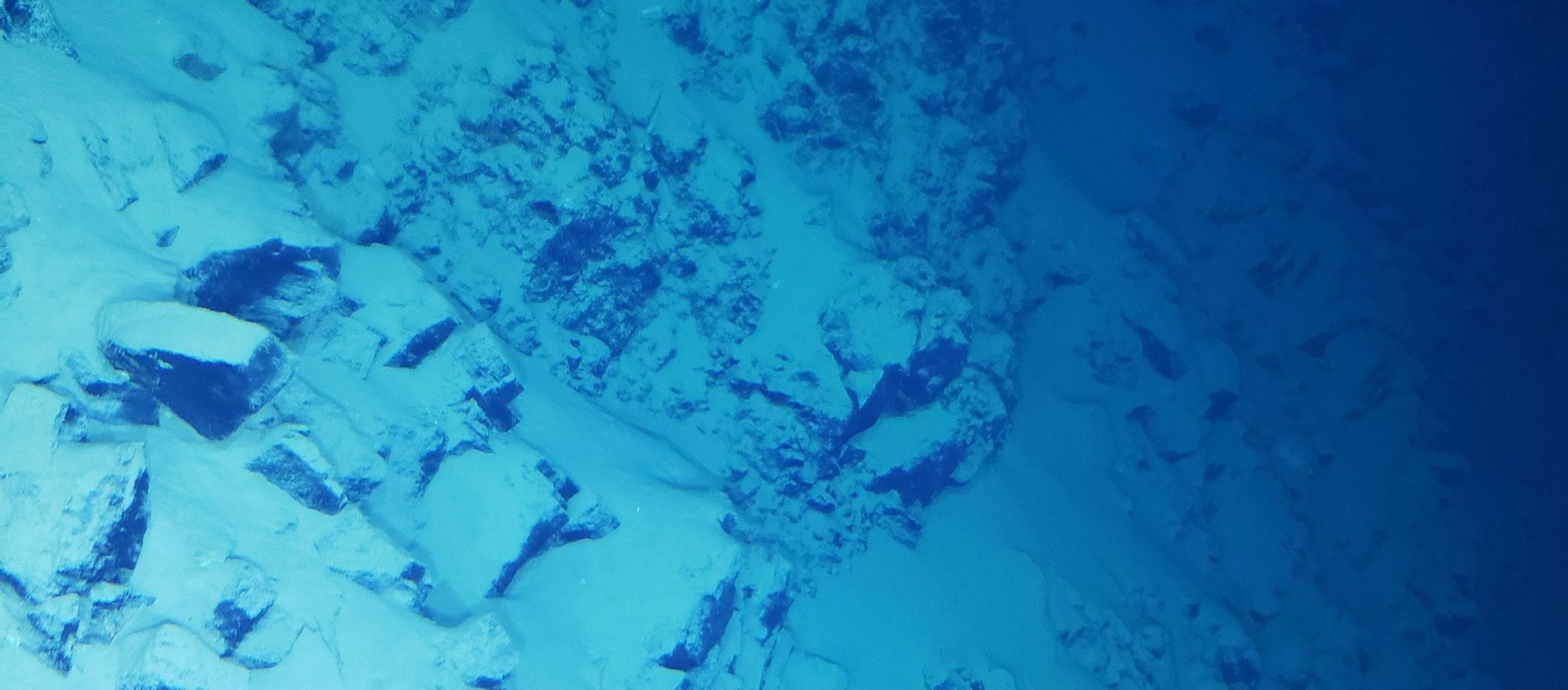
The record
The deepest ocean trench in the world is the Mariana Trench, in the United States — 10,935 m (35,876 ft), maximum depth.
Source: 2021 multibeam study (10,935 +/- 6 m, 95% CI) via Wikipedia Challenger Deep; NOAA. Verified .
Drop Mount Everest into the Challenger Deep and its summit would still sit more than two kilometres beneath the waves. That is the scale of the hadal zone, and these ten trenches hold nearly all of it, running from 10,935 m at the bottom of the Mariana Trench down to 8,266 m in the South Atlantic, across ten countries and every ocean on Earth.
Two rules shape the order. Each trench is ranked once, on its single deepest surveyed point, so the Mariana appears on the Challenger Deep and not again on the Sirena Deep; and only true subduction trenches qualify, which is why the flat-floored Cayman Trough is absent.
Every depth here is the most recent published survey rather than the figure still in circulation, and that costs the list two famous names: the Kuril-Kamchatka Trench drops clean out of the top five, and the Japan Trench misses the cut altogether.
Fun Facts About the World’s Deepest Ocean Trenches
Everything below 6,000 m belongs to the hadal zone, named after Hades, the Greek god of the underworld. Every trench on this list reaches into it, and the ten of them hold nearly all the hadal water on Earth.
Mount Everest would vanish inside the Challenger Deep with more than two kilometres to spare. The mountain stands 8,849 m; the floor of the Mariana Trench lies at 10,935 m, leaving 2,086 m of ocean above the summit.
The deepest fish ever filmed alive was a snailfish recorded at 8,336 m in the Izu-Ogasawara Trench in 2022 — not in a deeper trench, because warmer water there lets fish survive further down.
Only four trenches break the ten-kilometre mark: the Mariana, Tonga, Philippine and Kermadec. Below them the floor rises fast: the fifth-deepest, the Izu-Ogasawara, stops 1,109 m short of the Challenger Deep.
Sea level is an arbitrary place to start measuring. Mauna Kea rises about 10,210 m from its base on the seafloor — taller, base to summit, than Everest stands above the sea, and still not deep enough to reach the floor of the Mariana Trench. Among the world’s tallest volcanoes it is the only one that comes close.
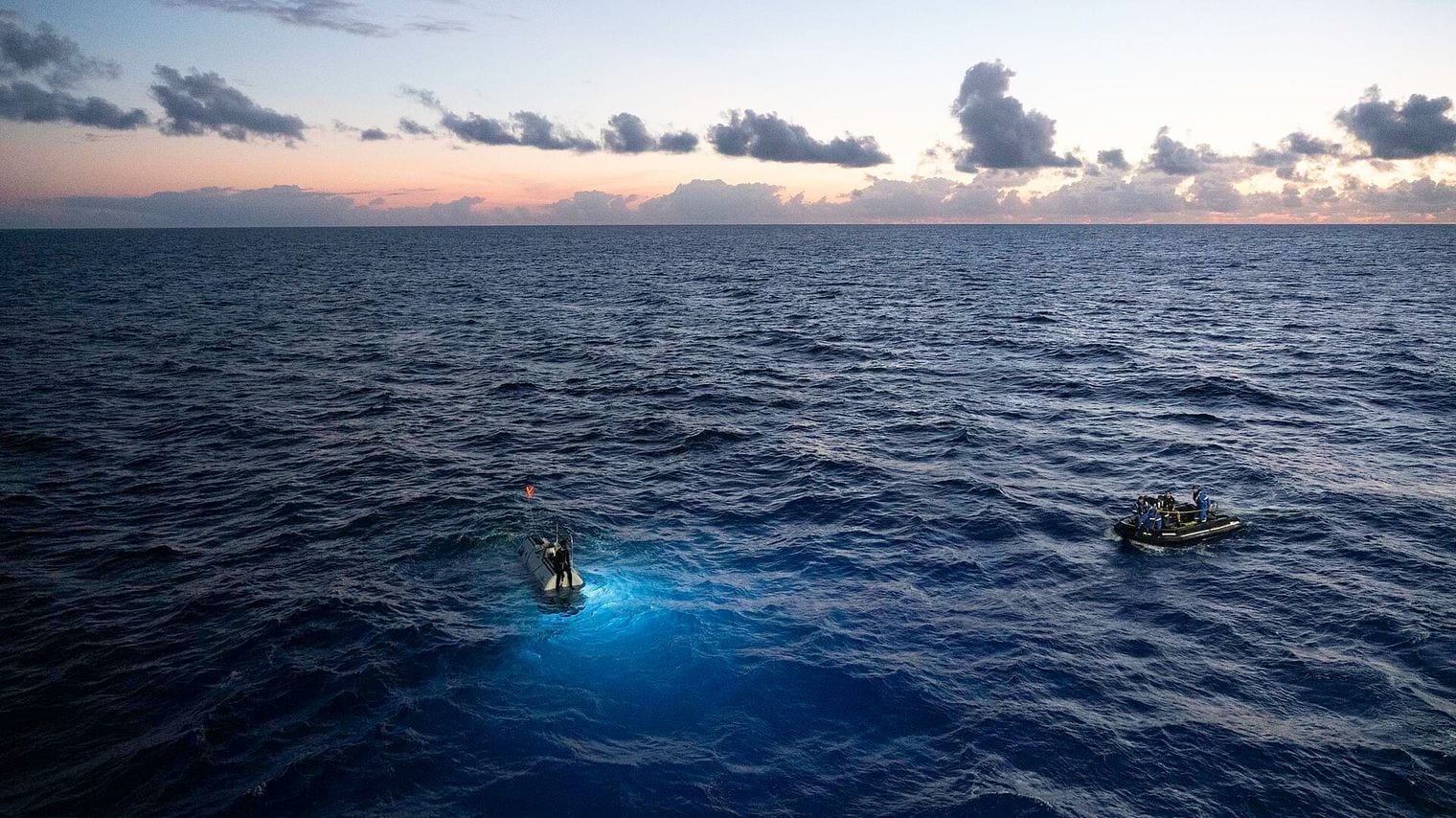
One person, Victor Vescovo, reached the bottom of all five oceans inside a single year, beginning in the Puerto Rico Trench in December 2018. Five of the ten depths on this list were measured on one of his expeditions.
The Kuril-Kamchatka Trench is routinely published at 10,542 m and is nowhere near that deep. Modern surveys put it at 9,600 m, a correction of almost a kilometre that knocks it out of the top five.
11. Mariana Trench
Challenger Deep, western Pacific Ocean, United States
At 10,935 m, the Mariana Trench contains the deepest point on the planet, and no other trench comes within a kilometre of it. The record sits in the Challenger Deep, a slot near the trench's southern end named for HMS Challenger, whose crew first sounded this water with a weighted rope in 1875.
The modern number comes from a 2021 study that placed the floor at 10,935 m with an uncertainty of only six metres, finally settling a century of disagreement.
That disagreement was genuine. A Soviet-era survey in 1957 reported 11,034 m, a reading now treated as a statistical outlier, while figures of 10,989 m and 10,994 m circulated from surveys in 1992 and 2010. The trench itself curves for roughly 2,550 km along the boundary where the Pacific Plate slides beneath the Mariana Plate, and the water stacked above the Challenger Deep bears down at more than a thousand times the pressure at sea level.
At 10,823 m, the Horizon Deep in the Tonga Trench is the second-deepest point on Earth and the deepest anywhere outside the Marianas. The research vessel Horizon, out of the Scripps Institution of Oceanography, located it in December 1952 and the deep took the ship's name. Victor Vescovo dived it in June 2019 during the Five Deeps Expedition, and the direct pressure reading taken by his submersible is the source of the figure used here.
The trench marks where the Pacific Plate plunges beneath the Tonga Plate, and it does so at one of the fastest convergence rates measured anywhere on the planet. That speed is why this stretch of the South Pacific is so seismically busy. The Horizon Deep lies north-east of New Zealand and well beyond sight of any coast, in water where the surface overhead is open ocean in every direction.
At 10,540 m, the Emden Deep at the bottom of the Philippine Trench is the third-deepest point in any ocean. The German survey ship Emden sounded it in 1927 and the deep carries the vessel's name, though it is also known as the Galathea Depth after the Danish expedition that later worked the same water.
It lies roughly 340 km east of Mindanao, close enough that the Philippines holds some of the deepest water on Earth inside its own exclusive economic zone. Deo Florence Onda descended with Victor Vescovo in March 2021, becoming the first Filipino to reach it and making the pair the first people to see the bottom at all. Above them, the Philippine Sea Plate grinds westward and disappears beneath the archipelago.
At 10,047 m, the Kermadec Trench is one of only four on Earth to break the ten-kilometre mark. Its deepest point, the Scholl Deep, sits toward the southern end of a scar that runs roughly a thousand kilometres north-east from New Zealand toward Tonga, and a Danish expedition first identified it in 1952.
The Kermadec has become one of the most intensively studied hadal environments anywhere, largely because of what lives in it. Baited-camera work published by Linley and colleagues in 2017 catalogued the snailfish and amphipods that thrive in water that would crush most machinery, and a joint Chinese Academy of Sciences and New Zealand team reached the floor of the Scholl Deep in December 2022. New Zealand administers the Kermadec Islands strung out above the trench.
55. Izu-Ogasawara Trench
Izu-Ogasawara Trench, western Pacific Ocean, Japan
At 9,826 m, the Izu-Ogasawara Trench runs south from Japan along the line where the Pacific Plate begins its descent beneath the Philippine Sea Plate. It is also called the Izu-Bonin Trench, and its floor went unvisited until 13 August 2022, when Victor Vescovo and Professor Katsuyoshi Michibayashi of Nagoya University took the submersible Limiting Factor to the bottom.
The trench holds a separate record that has nothing to do with depth. In 2022 a team from the University of Western Australia and the Tokyo University of Marine Science and Technology filmed a snailfish here at 8,336 m, the deepest a fish has ever been recorded alive.
The find sits close to the theoretical limit for vertebrate life, and it happened in this trench rather than a deeper one because the relatively warm water here lets fish survive further down.
66. Kuril-Kamchatka Trench
Kuril-Kamchatka Trench, northwest Pacific Ocean, Russia
At 9,600 m, the Kuril-Kamchatka Trench is deeper than all but five trenches on Earth, which is a demotion. For decades it was listed at 10,542 m and ranked among the very deepest, a figure that traces back to mid-century echo-sounding and that content farms still reprint. Modern surveys do not support it, and the peer-reviewed literature now settles on 9,600 m.
The correction was pointed enough that researchers published a paper asking whether the top five deepest trenches were about to lose a member. They were. The trench still ranks among the largest hadal habitats anywhere, sweeping about 2,900 km from Kamchatka down past the Kuril Islands, and in 2025 scientists reported thriving chemosynthetic communities on its floor, living on chemicals seeping from the seabed rather than on anything the sunlit ocean sends down.
At 9,140 m, the New Britain Trench holds the deepest water in the Solomon Sea, in a place called the Planet Deep. The trench is also written as the Bougainville-New Britain or New Britain-Solomon Trench, three names for one continuous arc curving beneath Papua New Guinea, which is why it appears once on this list rather than twice.
It is among the least visited trenches in the top ten. The arc sits in a tangle of small tectonic plates squeezed between the vast Pacific and Australian plates, and the resulting geology is complicated enough that the region generates frequent large earthquakes. The islands overhead, New Britain and Bougainville among them, are volcanic, and the same subduction that opened the trench built them.
At 8,929 m, the Yap Trench is considerably deeper than the number usually printed for it. Reference works still widely list 8,527 m, but Victor Vescovo's expedition mapped the trench with multibeam sonar and then took a submersible to the bottom, recording 8,929 m with an uncertainty of nine metres. That is the first depth here measured by someone actually standing on the floor.
The trench lies in the waters of the Federated States of Micronesia and takes its name from Yap, the island group above it. It is short by the standards of this list and geologically odd: the subduction here has slowed almost to a halt, and instead of ordinary seafloor the trench walls expose rock from the mantle itself. Vescovo dived the neighbouring Palau Trench on the same expedition, reaching 8,027 m.
At 8,376 m, the Puerto Rico Trench holds the deepest water in the entire Atlantic Ocean. The low point is called the Brownson Deep, though the name Milwaukee Deep is used almost interchangeably for the same area, and it lies north of Puerto Rico where the North American Plate slides past and beneath the Caribbean Plate.
Victor Vescovo reached it on 19 December 2018, the first person to visit the bottom of the Atlantic, opening the Five Deeps Expedition that would go on to touch the floor of all five oceans within a year. The depth was fixed by direct pressure measurement from the submersible and by Kongsberg multibeam sonar from the surface ship. The trench is also a tsunami risk, because the plate boundary here is capable of very large earthquakes.
1010. South Sandwich Trench
Meteor Deep, South Atlantic Ocean, United Kingdom
8,266 m27,119 ft
Source: Michael Benz on Unsplash (illustrative image)
At 8,266 m, the South Sandwich Trench is the deepest place in the South Atlantic and the tenth-deepest on Earth. Its low point is the Meteor Deep, named for the German expedition that first sounded this water in 1926 and recorded 8,202 m at a spot some distance from where the true floor turned out to be.
The Five Deeps Expedition resurveyed the trench in February 2019, found the genuine deepest point about twenty-five kilometres from the historic sounding, measured it at 8,266 m and recommended keeping the old name. On the same voyage the team recorded the deepest point in the Southern Ocean proper, the Factorian Deep at 7,434 m, south of the sixtieth parallel. The trench curves east of the South Sandwich Islands, a British overseas territory of ice, volcanoes and no permanent residents.
FAQ: The World’s Deepest Ocean Trenches
What is the deepest ocean trench in the world?
The Mariana Trench, in the western Pacific. Its low point, the Challenger Deep, lies 10,935 m below the surface — more than a kilometre deeper than any rival. A 2021 study fixed that figure to within six metres, ending decades of disagreement between surveys that had ranged from 10,920 m to 11,034 m.
Why do published trench depths disagree with each other?
Because most circulating numbers come from mid-century echo-sounding, which was far less precise than modern multibeam sonar and submersible pressure readings. The Kuril-Kamchatka Trench is still routinely printed at 10,542 m when current surveys put it at 9,600 m. Every depth on this list is the most recent published survey.
How deep is the Mariana Trench compared with Mount Everest?
Everest rises 8,849 m above sea level and the Challenger Deep lies 10,935 m below it. Sink the mountain into the trench and 2,086 m of water would still close over the summit, well more than a mile. The pressure down there exceeds a thousand times what you feel at the beach.
What lives at the bottom of an ocean trench?
More than you would expect. Snailfish, amphipods and sea cucumbers all live in hadal water, and the deepest fish ever filmed was recorded at 8,336 m in the Izu-Ogasawara Trench. In 2025 researchers reported thriving chemosynthetic communities on the Kuril-Kamchatka floor, feeding on chemicals seeping from the seabed.
Has anyone actually reached the bottom of these trenches?
Several have. Victor Vescovo’s Five Deeps Expedition touched the floor of all five oceans between December 2018 and August 2019, and he later dived the Yap, Palau and Izu-Ogasawara trenches. Five of the ten depths ranked here were measured during those crewed descents rather than estimated from the surface, which is why this order differs from most published lists and from the figures that circulate across other world record countdowns.