The record
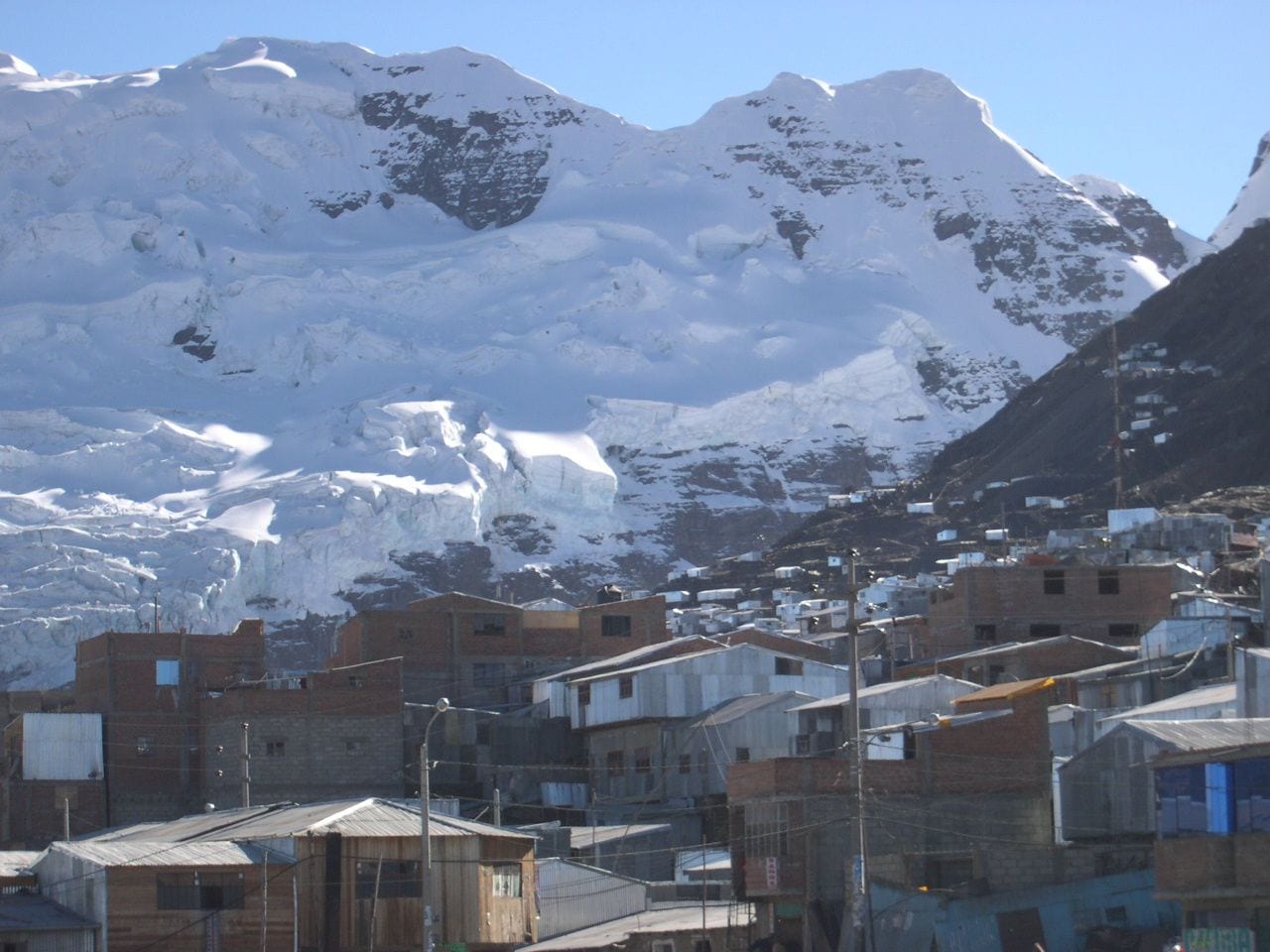
The highest town in the world is La Rinconada, in Peru — 5,100 m (16,732 ft), elevation.
Source: National Geographic (2003); INEI 5,052 m; town spans 4,900-5,100 m. Verified .
The Guinness Book still lists Wenquan, a huddle of buildings on the highway into Tibet at 4,870 metres, as the highest city on Earth — but the only first-hand account on record calls it "small, just a few buildings," and no census has ever counted it.
That is the trouble with this particular record: the places that sit highest are rarely places anyone would call a town. So this countdown measures elevation above sea level at each settlement's central point, and admits only somewhere lived in year-round whose own published figures record at least 2,000 residents.
The floor costs it some famous names — Tuiwa, second on most lists, is a village of 159 people; Shuanghu, the highest county seat anywhere, was largely emptied by an altitude resettlement programme in 2022 — but what it leaves is twelve real towns, running from 5,100 metres down to 4,067. All twelve are in Peru, Bolivia or China, and that is not an accident of sourcing.
Every town on this list is in Peru, Bolivia or China — no fourth country has a settlement above 4,067 metres with more than 2,000 residents. Above roughly 4,000 metres the inhabited world narrows to two places: the Tibetan Plateau and the Andean Altiplano.
El Alto holds more people than the other eleven towns combined — 885,035 at Bolivia's 2024 census, against roughly 523,000 for the rest of the list added together.
La Rinconada has no sewerage system and no piped water, despite around 30,000 people living there year-round. There is roughly half as much oxygen in the air as at sea level.
The record has moved a long way since the Victorians: nineteenth-century British travellers routinely called Phari, at 4,300 metres, the highest town in the world. It now places eighth.
The Battle of Junín was fought without a single shot — the 1824 engagement outside the town was a cavalry action decided with lance and sabre in about 45 minutes, and no firearms were used at all.
The highest county seat on Earth was largely emptied on purpose. Shuanghu in Tibet sits at 4,920 metres and would have ranked second here, but an extreme-altitude resettlement programme moved most of its people to lower ground in 2019 and 2022. It is one of several world record-breakers where the title and the reality have parted company.
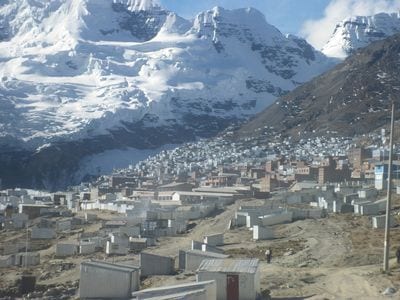
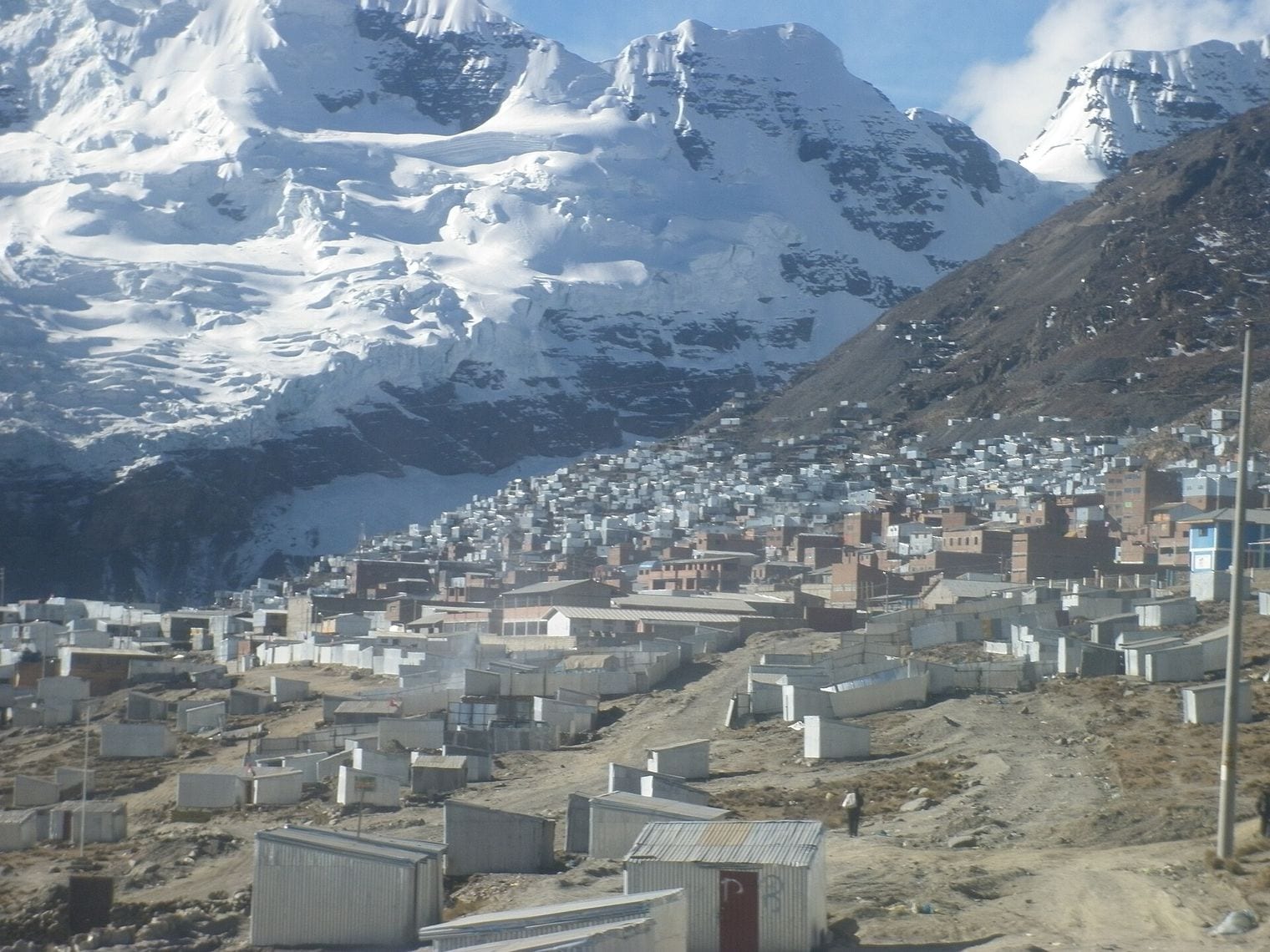
At 5,100 metres16,732 feet, La Rinconada is the highest permanently inhabited place on Earth — a gold-mining town wedged onto a shelf of rock beneath the Ananea glacier in Peru's Puno region. There is roughly half as much oxygen in the air here as at sea level. The town has no sewerage system and no piped water, and it exists for one reason: the ore inside the mountain it is built on.
Its population moves with the gold price, standing at around 30,000 after swelling through the 2000s as bullion rose. Many residents work under the cachorreo system, taking no wage for weeks in exchange for the right to carry out whatever ore they can shoulder on a single day.
Peru's statistics institute places the settlement a little lower, at 5,052 metres, and the town sprawls between roughly 4,900 and 5,100 metres, so the figure you see quoted depends on where in it you are standing.
22. Santa Bárbara
Santa Bárbara, Atocha Municipality, Potosí, Bolivia
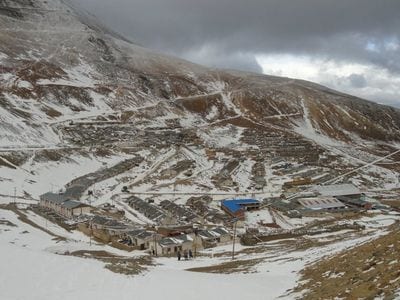
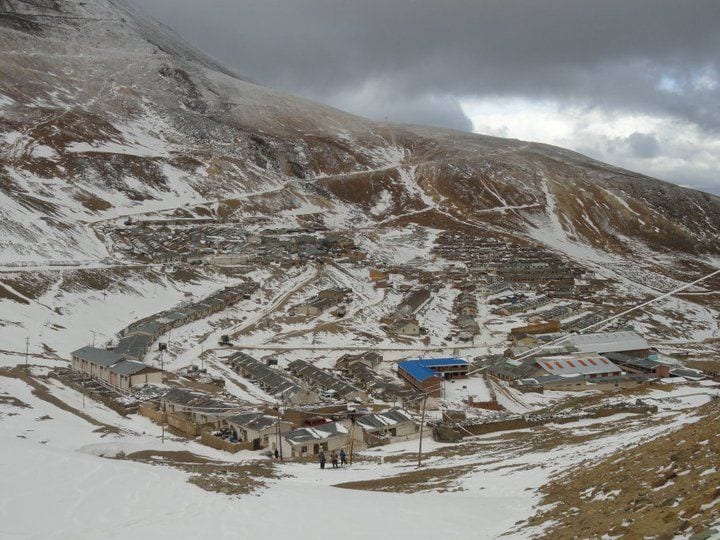
At 4,774 metres15,663 feet, Santa Bárbara is the highest permanently inhabited settlement in Bolivia, and the entry that most published lists of the world's highest places leave out altogether. It sits at the foot of Cerro Chorolque, a 5,552-metre peak in the Potosí department whose flanks carry tin, bismuth, silver, gold and copper.
The 2012 census counted 2,221 residents, making it the largest village in the Atocha municipality — bigger than Atocha itself, the municipal capital. Almost everyone here is tied to the Cooperativa Minera Chorolque, the miners' cooperative founded in 1986 that still works the mountain from several sides at once. Two smaller camps, Fierro Uno and Sagrario, sit nearby on the same slopes.
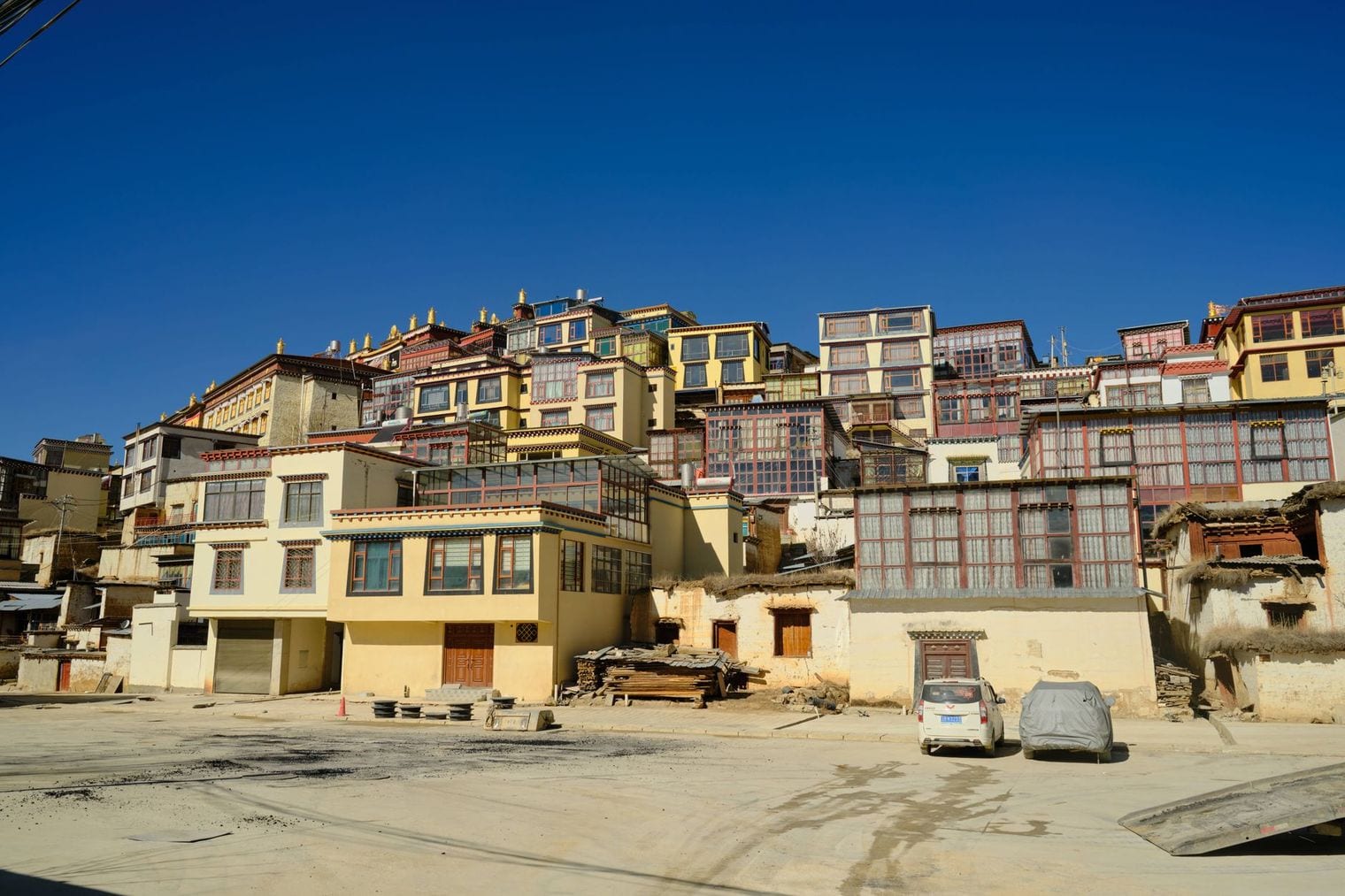
At 4,720 metres15,486 feet, Yanshiping is a road town in the truest sense — a strip of guesthouses, repair shops and canteens along China National Highway 109, the main overland route between Golmud and Lhasa. The Qinghai–Tibet Railway runs past it, and the Tanggula Pass lies not far to the south.
The 2017 township census recorded 2,919 residents. Administratively Yanshiping belongs to Amdo County in Tibet, though it sits physically inside the south-western corner of Qinghai, one of the jurisdictional oddities the plateau throws up. For most travellers it registers as the place the bus stops for noodles on the highest stretch of the drive.
At 4,710 metres15,453 feet, Pana is the administrative seat of Amdo County and sits just ten metres below Yanshiping — the narrowest gap anywhere on this list. It stands on the same highway corridor, on the broad grassland north of the Nyenchen Tanglha range where the road begins climbing towards the Tanggula Pass.
The 2017 census put the township at 3,327 people, though the built-up core is far smaller: a count in 2004 found just 683 living in the town proper, with the rest spread across the grazing land the township administers. That gap between the administrative unit and the actual street grid is a recurring feature of the Tibetan entries here, and the reason several higher county seats could not be ranked at all.
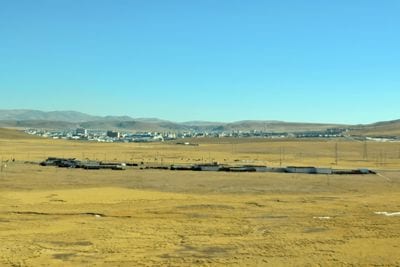
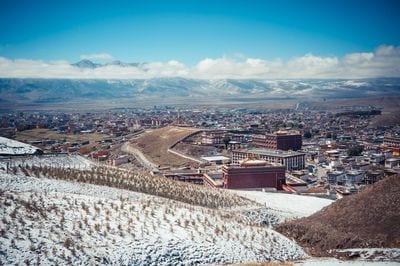
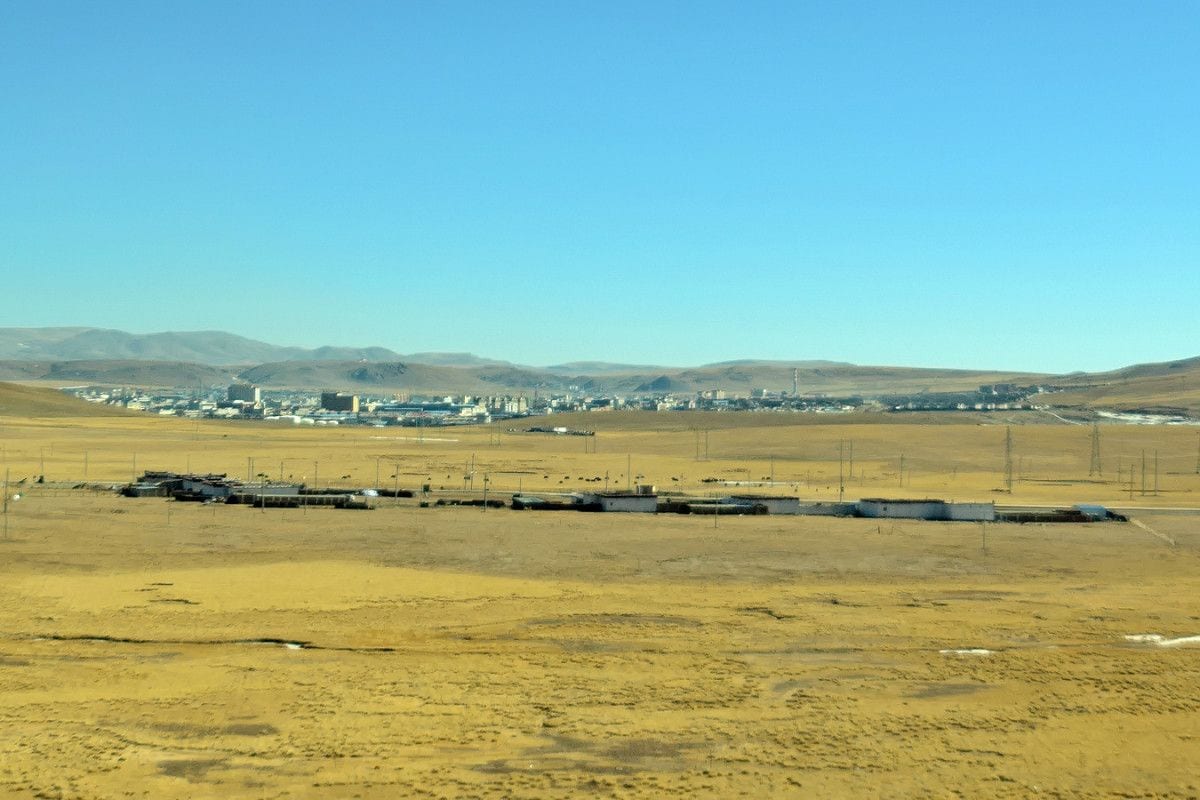
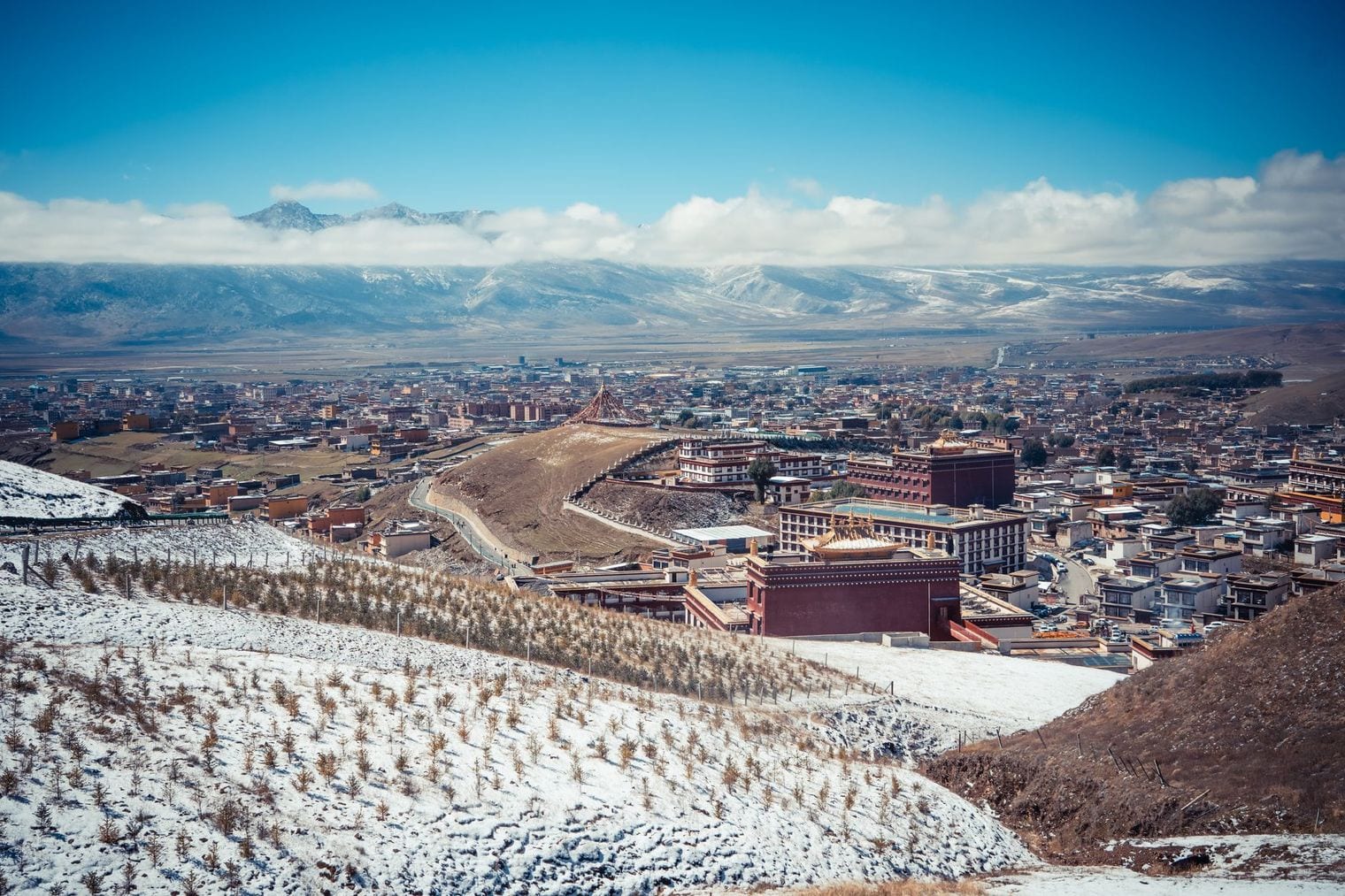
At 4,507 metres14,787 feet, Nagqu is by a wide margin the largest town on this list above 4,500 metres — its urban seat, Seni District, held 108,781 people at the 2010 census. It is the commercial centre of northern Tibet, a grid of concrete and glass set down on an otherwise empty grassland plain.
The town is best known for its August horse-racing festival, when nomadic families from across the northern plateau camp on the outskirts in a tent city that briefly rivals Nagqu itself in size. The Qinghai–Tibet Railway stops here, which is why the town has grown into a supply hub for a region measured in hundreds of kilometres rather than tens.
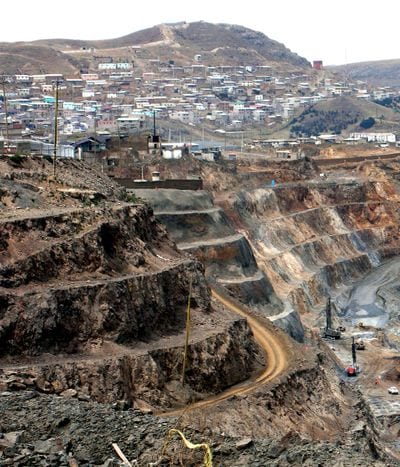
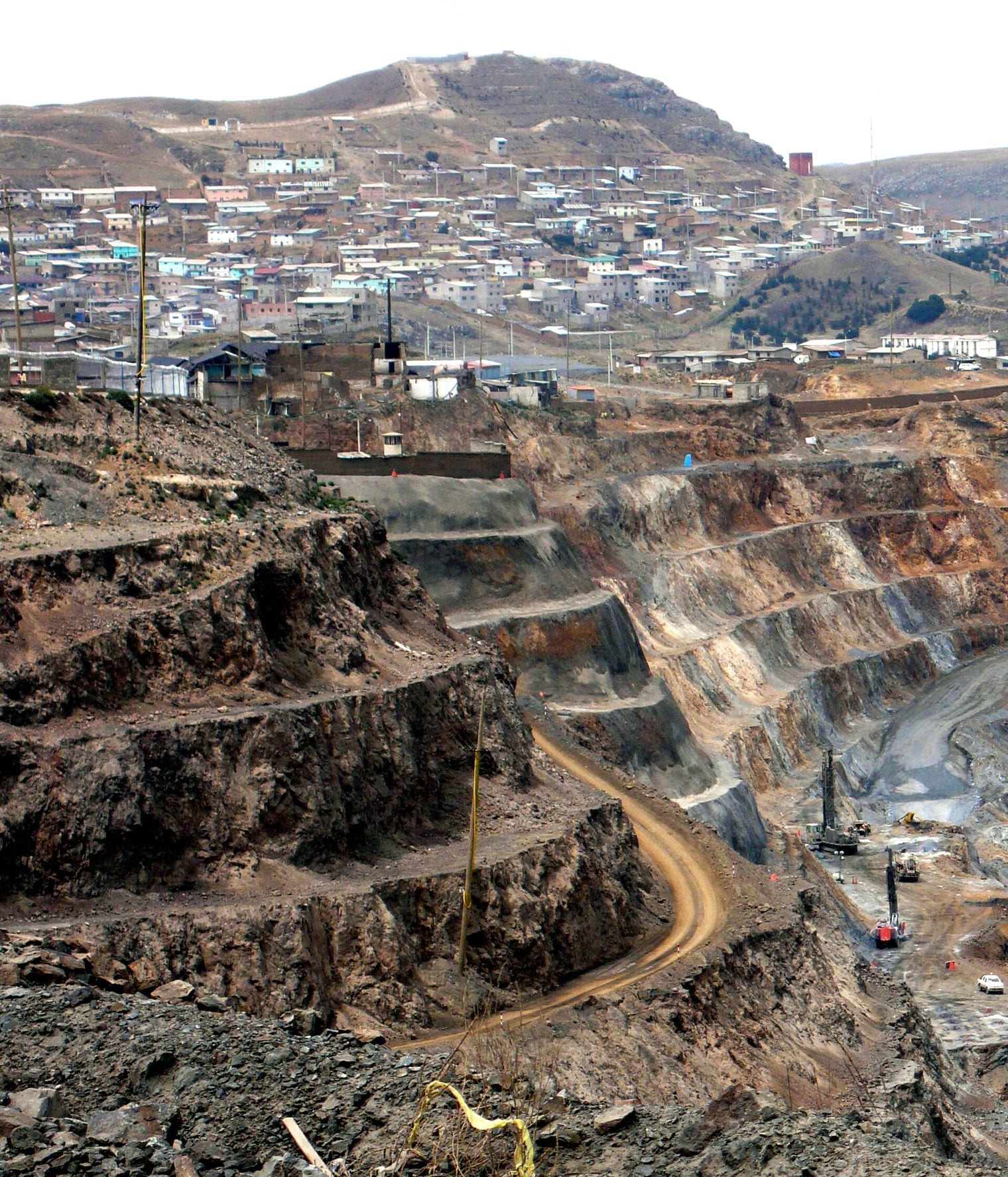
At 4,330 metres14,206 feet, Cerro de Pasco is unlike anywhere else here: the mine is not beside the town, it is in the middle of it. The Raúl Rojas open pit is a vast hole gouged directly into the urban fabric, with streets, schools and housing blocks standing on its rim.
Some 58,899 people lived here at the 2017 census, working silver, zinc and lead deposits that have been dug since the seventeenth century. The pit's expansion has swallowed neighbourhoods over the decades, and heavy-metal contamination has made the town a long-running public-health case in Peru. A 2006 law proposed moving the entire city elsewhere; it has never been acted on.
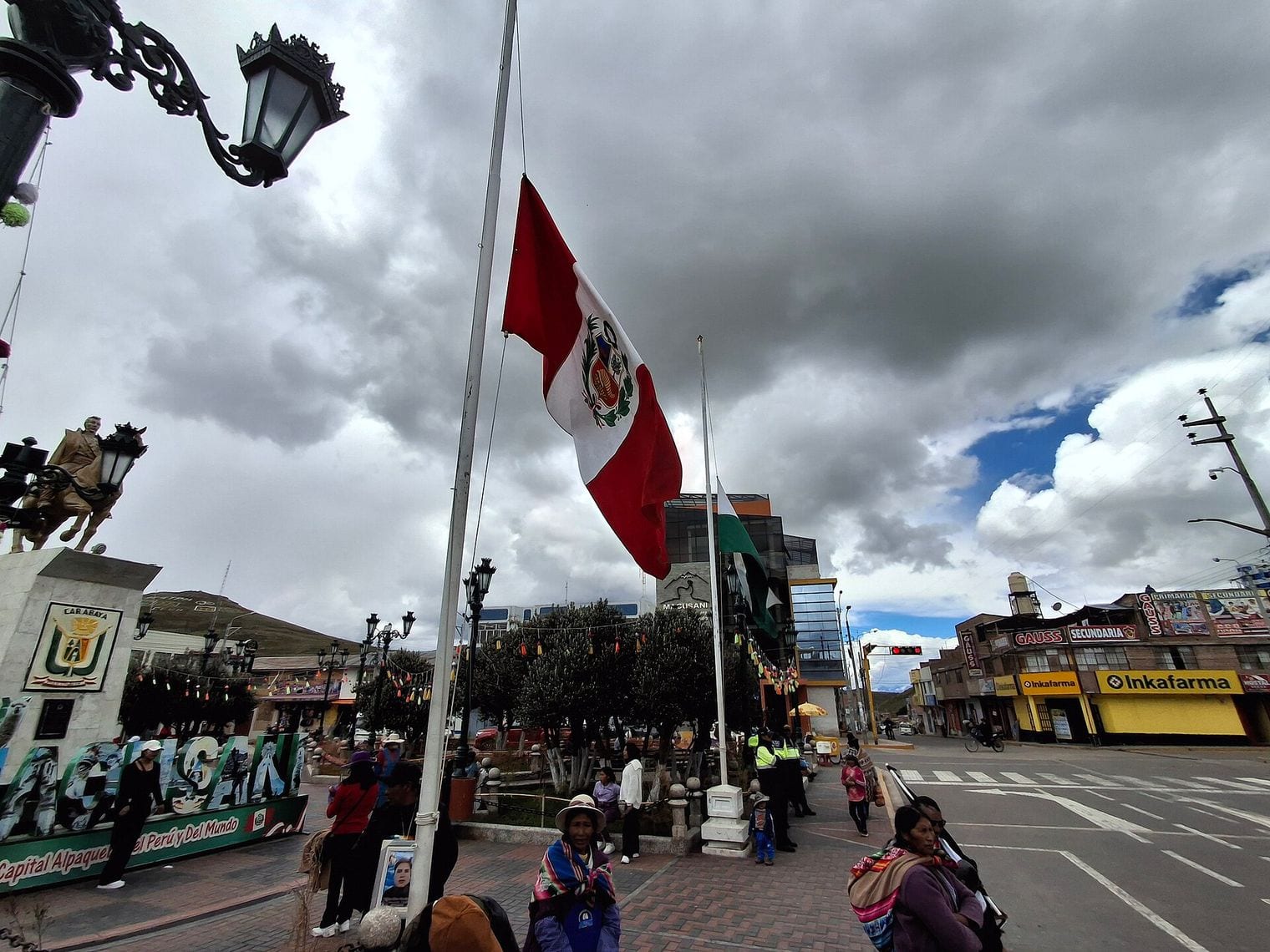
At 4,315 metres14,157 feet, Macusani is the capital of Carabaya province in Peru's Puno region and the highest provincial capital on this list. The town sits in a bowl of high puna grassland ringed by the glaciated peaks of the Cordillera Carabaya, with the Allincapac massif rising nearby.
Around 11,707 people live in the town itself, with the wider district recording 12,664 at the 2017 census. This is alpaca country, and the local economy runs on fibre and livestock raised on grassland too high and too cold for almost any crop. Mineral prospecting on the surrounding plateau has drawn outside interest in recent years, but the herds still set the rhythm of the place.
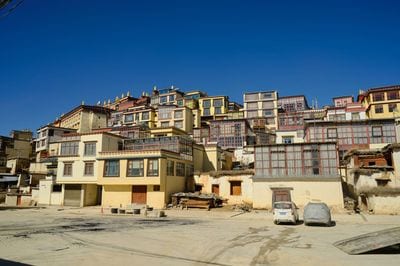
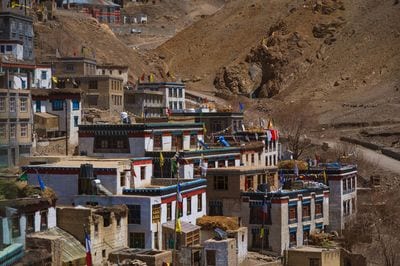
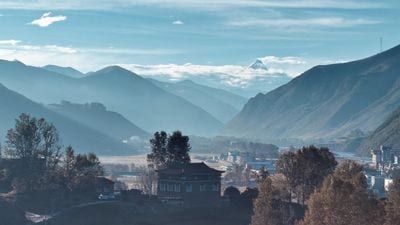
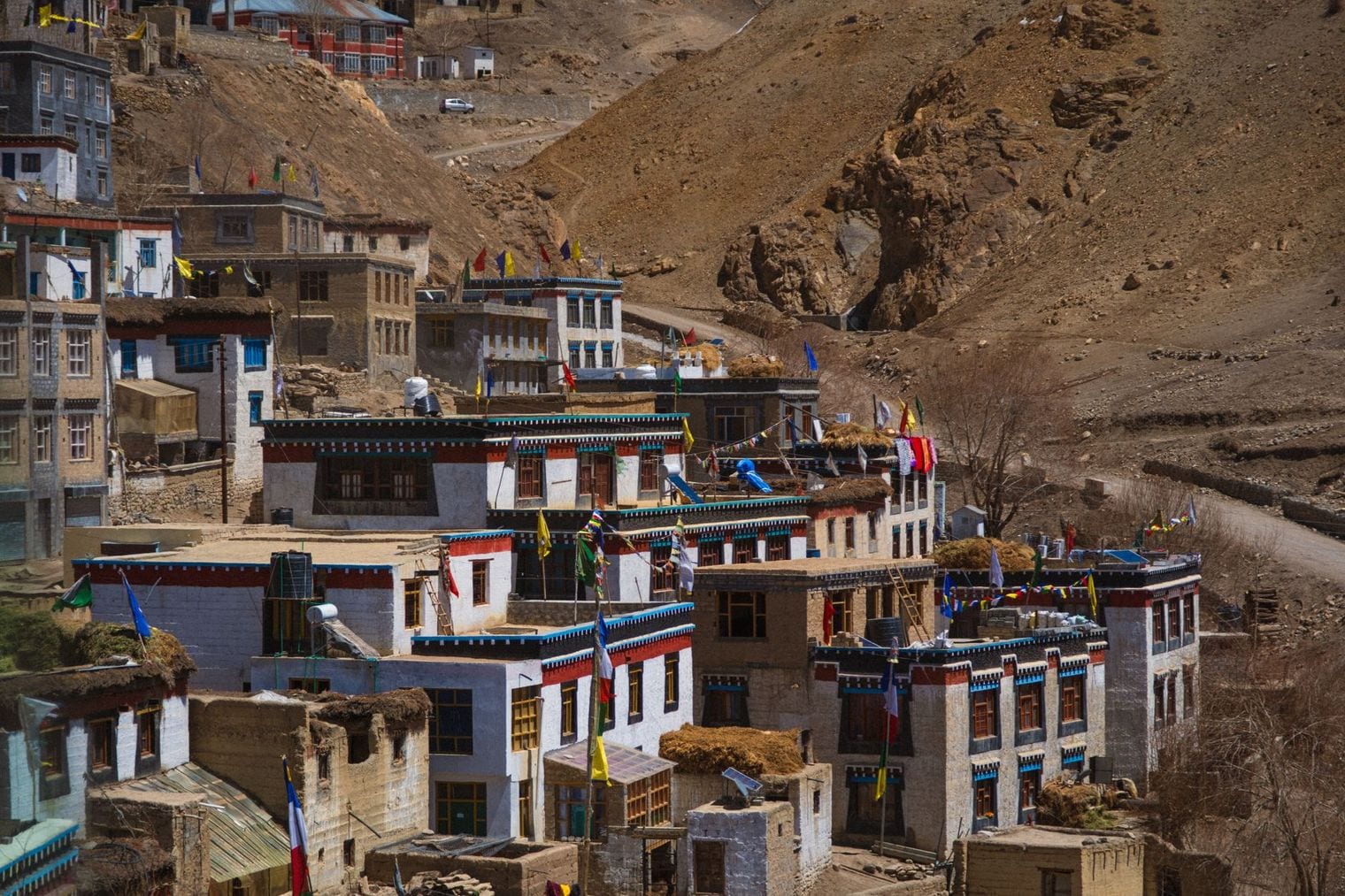
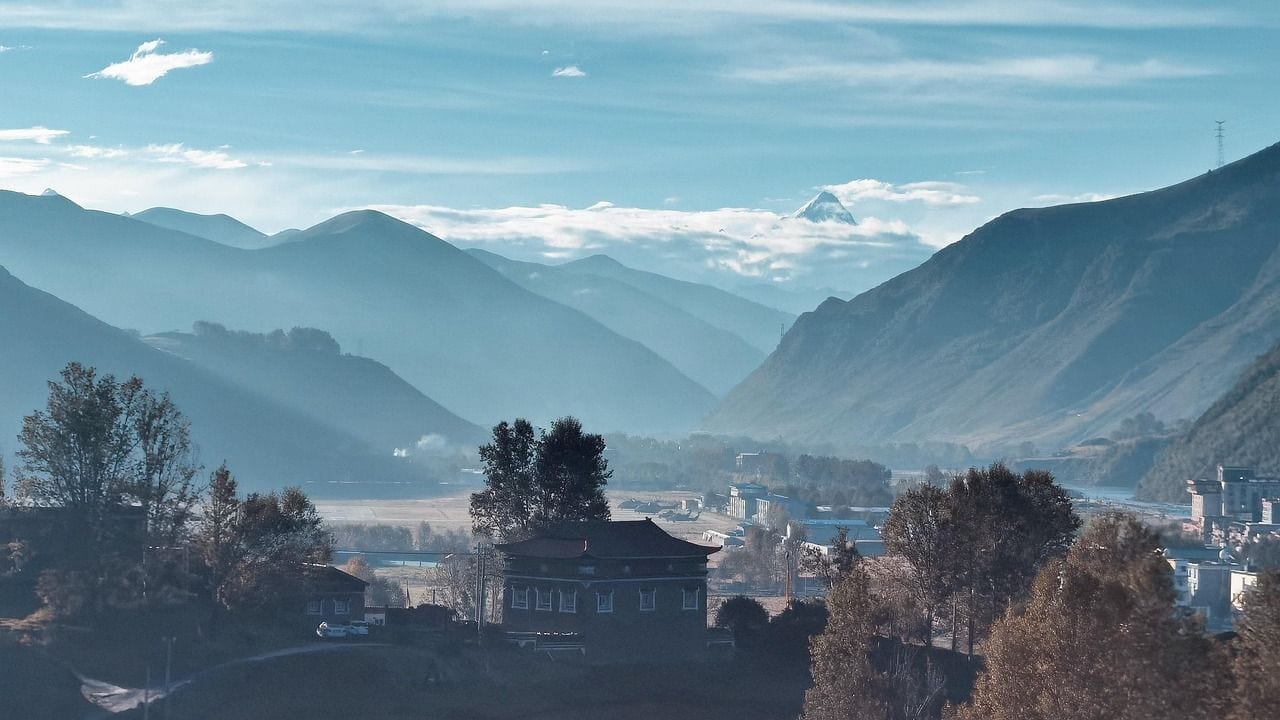
At 4,300 metres14,108 feet, Phari guards the head of the Chumbi Valley, the wedge of Tibetan territory that pushes south between Bhutan and Sikkim. For centuries it was the customs post and staging town on the trade route between Tibet and British India, and nineteenth-century travellers regularly described it as the highest town in the world.
The 2004 township figure was 2,121 residents, and it remains a small place — a dense huddle of buildings on an open, wind-scoured plain beneath Chomolhari, the sacred peak on the Bhutanese border. Its position on a valley floor rather than a pass is much of what makes it habitable at this height, sheltering it from the worst of the wind that scours the ridges above.
99. Shiquanhe
Shiquanhe, Gar County, Ngari Prefecture, Tibet, China
At 4,255 metres13,960 feet, Shiquanhe — also written Ali, and often called Ngari after the prefecture it administers — is the westernmost town of any size in Tibet. It grew from almost nothing into the government and supply centre for a prefecture the size of a mid-sized country, and held 24,112 people at the 2020 census.
The town stands on the Sengge Zangbo, one of the headwater rivers of the Indus, in a landscape of bare ochre hills and enormous skies. Most visitors pass through rather than stop: Shiquanhe is the last place to resupply before Mount Kailash and Lake Manasarovar, several hours further east, and the road in from either direction crosses hundreds of kilometres of empty ground.
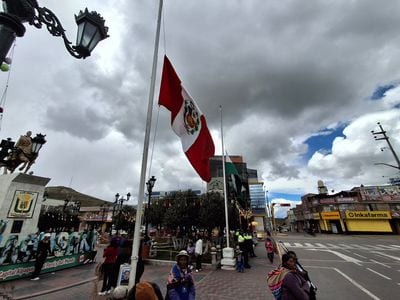
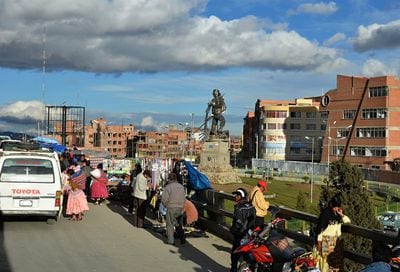
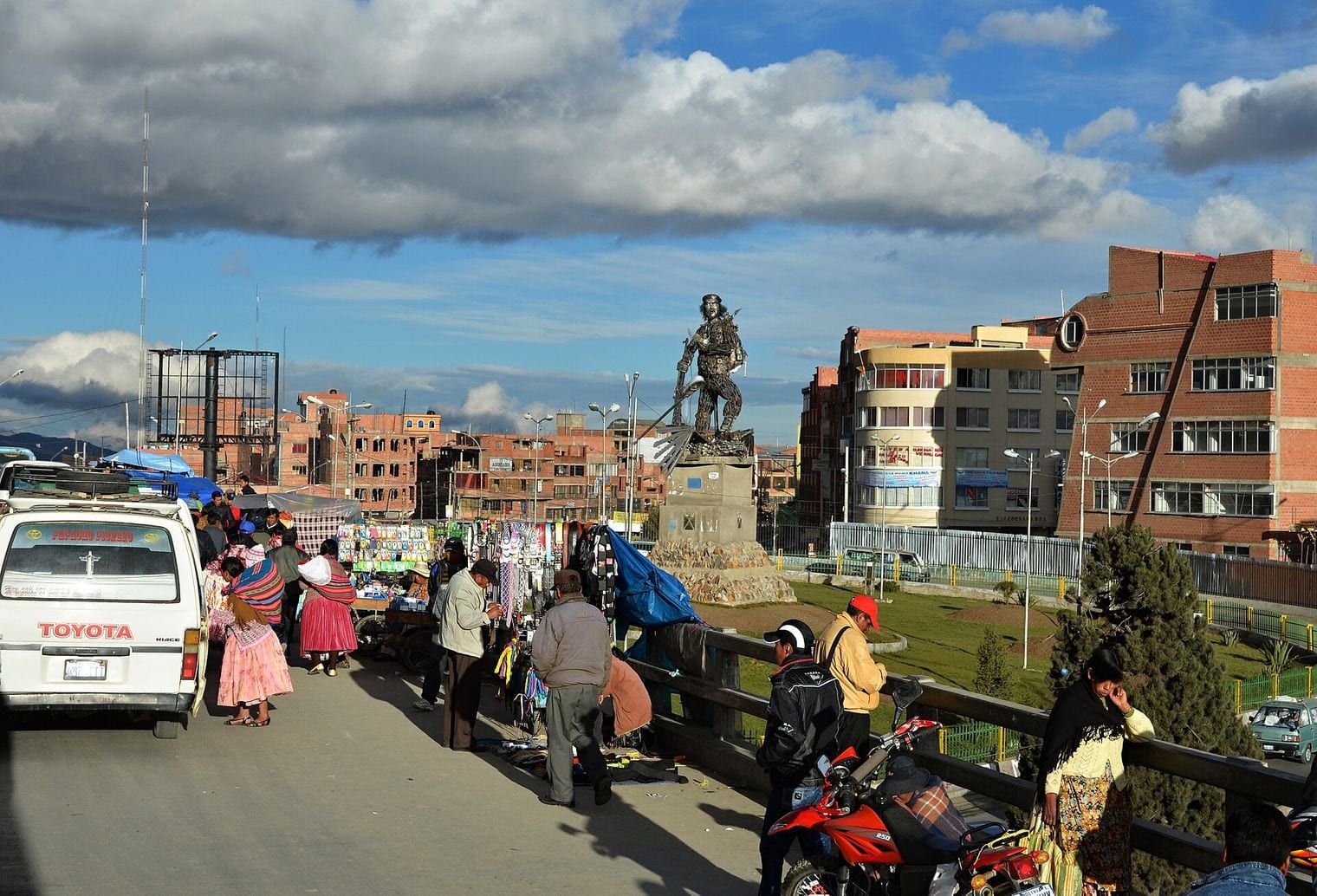
At 4,150 metres13,616 feet, El Alto is the highest major city in the world, and with 885,035 residents at Bolivia's 2024 census it holds more people than every other entry on this list put together. It sits on the flat altiplano directly above La Paz, which fills the canyon below — you can stand at the rim and look down onto the capital's rooftops.
Once a suburb, El Alto is now a city in its own right and a predominantly Aymara one, with a distinctive architecture of brightly coloured cholet buildings that mix Andean motifs with mirrored glass. Mi Teleférico, the cable-car network linking it to La Paz, is among the longest urban aerial systems anywhere — built because the climb between the two cities defeats ordinary buses.
At 4,107 metres13,474 feet, Junín stands on the Bombón plateau beside Lake Junín, the largest lake lying wholly within Peru. The town of 10,976 people is the capital of Junín province, strung along the old central highland road between Lima and the Cerro de Pasco mining district.
The plain outside town was the site of the 1824 Battle of Junín, a decisive engagement in the war that ended Spanish rule in South America and one fought entirely with cavalry — not a shot was fired. The lake is now a national reserve and the only home of the Junín grebe, a diving bird found nowhere else on Earth.
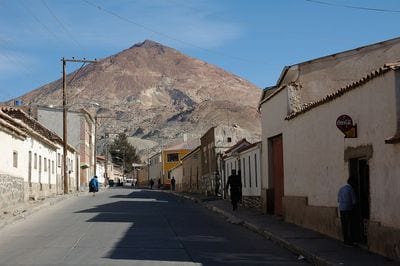
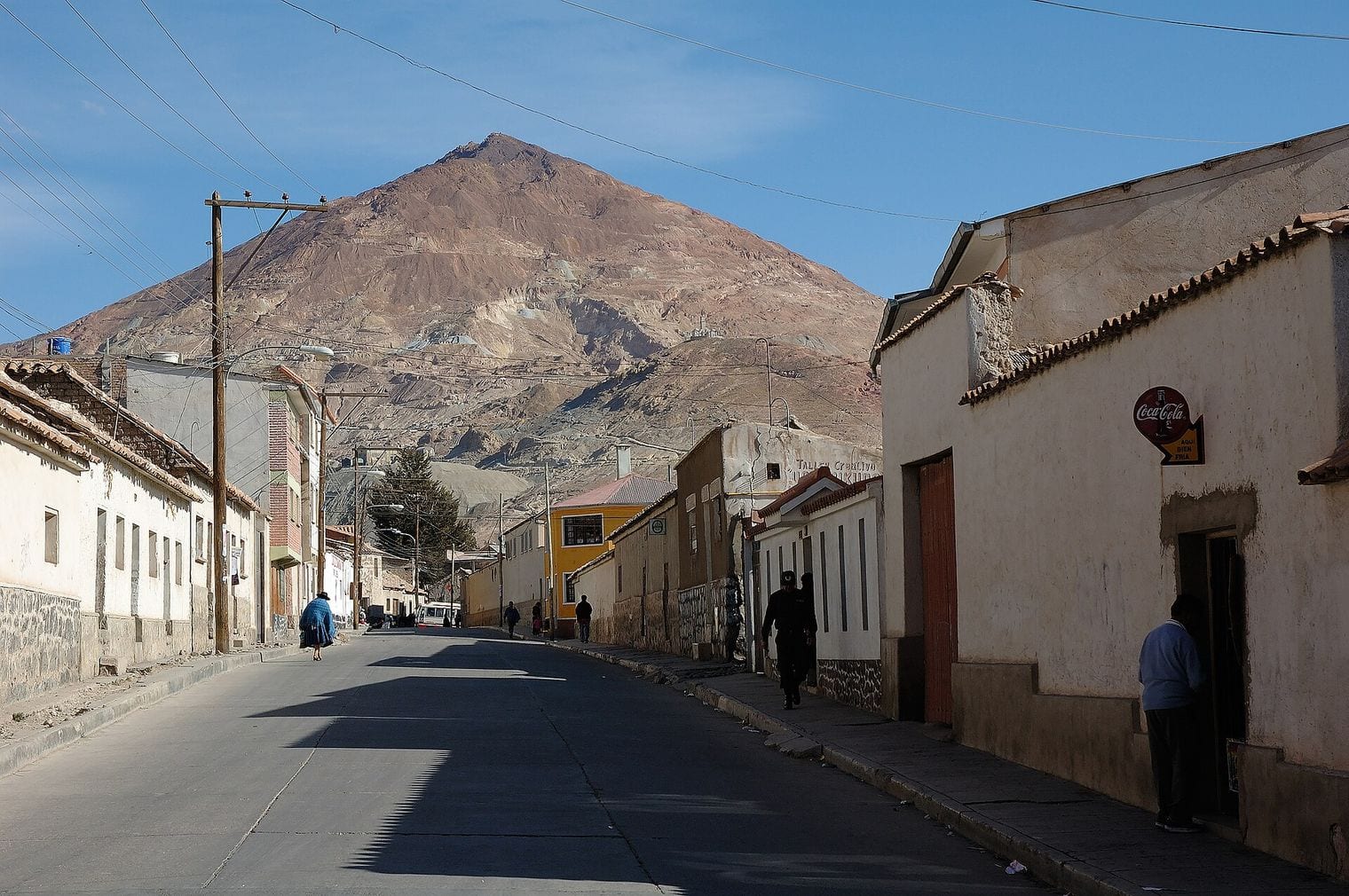
At 4,067 metres13,343 feet, Potosí is the lowest entry that still clears 4,000 metres, and much the most famous. For two centuries the silver dug out of Cerro Rico, the cone-shaped mountain on its doorstep, underwrote the Spanish empire; at its seventeenth-century peak the city ranked among the largest and wealthiest in the world.
Around 267,907 people live here now, and the mountain is still worked, mostly by cooperatives drawing tin and lower-grade silver from tunnels bored over five centuries. The colonial core is a UNESCO World Heritage Site, and the Casa Nacional de la Moneda — the royal mint that struck coin traded from Manila to Amsterdam — is the finest building the boom left behind.
FAQ: The World's Highest Towns
What is the highest town in the world?
La Rinconada in Peru, at roughly 5,100 metres16,732 feet. It is a gold-mining settlement below the Ananea glacier in the Puno region, home to around 30,000 people, and it is the highest place on Earth where people live permanently. Peru's statistics institute gives a slightly lower figure of 5,052 metres, because the town sprawls across several hundred metres of hillside.
How high can people live permanently?
About 5,100 metres appears to be the practical ceiling. Above roughly 5,000 metres the human body cannot fully acclimatise — it slowly loses weight and muscle no matter how long you stay — so settlements higher than La Rinconada exist only as mining camps, monasteries or seasonal shelters. Every town on this list sits between 4,067 and 5,100 metres.
Why are the highest towns all in South America and Tibet?
Because those are the only two places with large expanses of habitable land at extreme altitude. The Tibetan Plateau and the Andean Altiplano are both high but relatively flat, with grazing, water and routes across them. Other high mountain ranges are steep and narrow, offering nowhere to put a town of any size, which is why no fourth country reaches this list.
What is the highest city in the world?
It depends what counts as a city. El Alto in Bolivia, at 4,150 metres with 885,035 residents, is the highest genuinely major city. Potosí at 4,067 metres is often given the title for a city of its age and stature. The Guinness Book still lists Wenquan in China at 4,870 metres, but that is a highway way-station of a few buildings.
Can you visit towns this high?
Yes, though most reward preparation more than spontaneity. Potosí, El Alto and Nagqu are straightforward stops with hotels and transport links. La Rinconada, Santa Bárbara and the Tibetan road towns are harder: they involve long drives, thin air and few services. Acclimatising for a few days at a lower altitude first matters more than anything else you can do.