We build and rank every list first. Booking links come after, and only where
a partner sells a ticket, tour or stay for that exact place, so a place with
nothing to book is listed exactly as prominently as one you can book.
So how do we earn? Some links on this page go to booking
partners, and if you book tickets, tours or a stay through
one, we may earn a commission. It costs you nothing extra.
That commission never decides which places make the list, the order they
appear in, or what we write about them. No entry is sponsored or a paid
placement.
By the CityViking Research TeamPublished Ranked by area · 13 min read
Last verified Checked before launchOct 30, 202616 sources8 publishers7 government & parks5 encyclopedias & research4 venues & other sitesPublished · Nov 1, 2026Researched and checked before it went liveClick for every source and the full change log.
The record
it measures 917 hectares2,266 acres
Wadi-us-Salaam
Iraq
The record
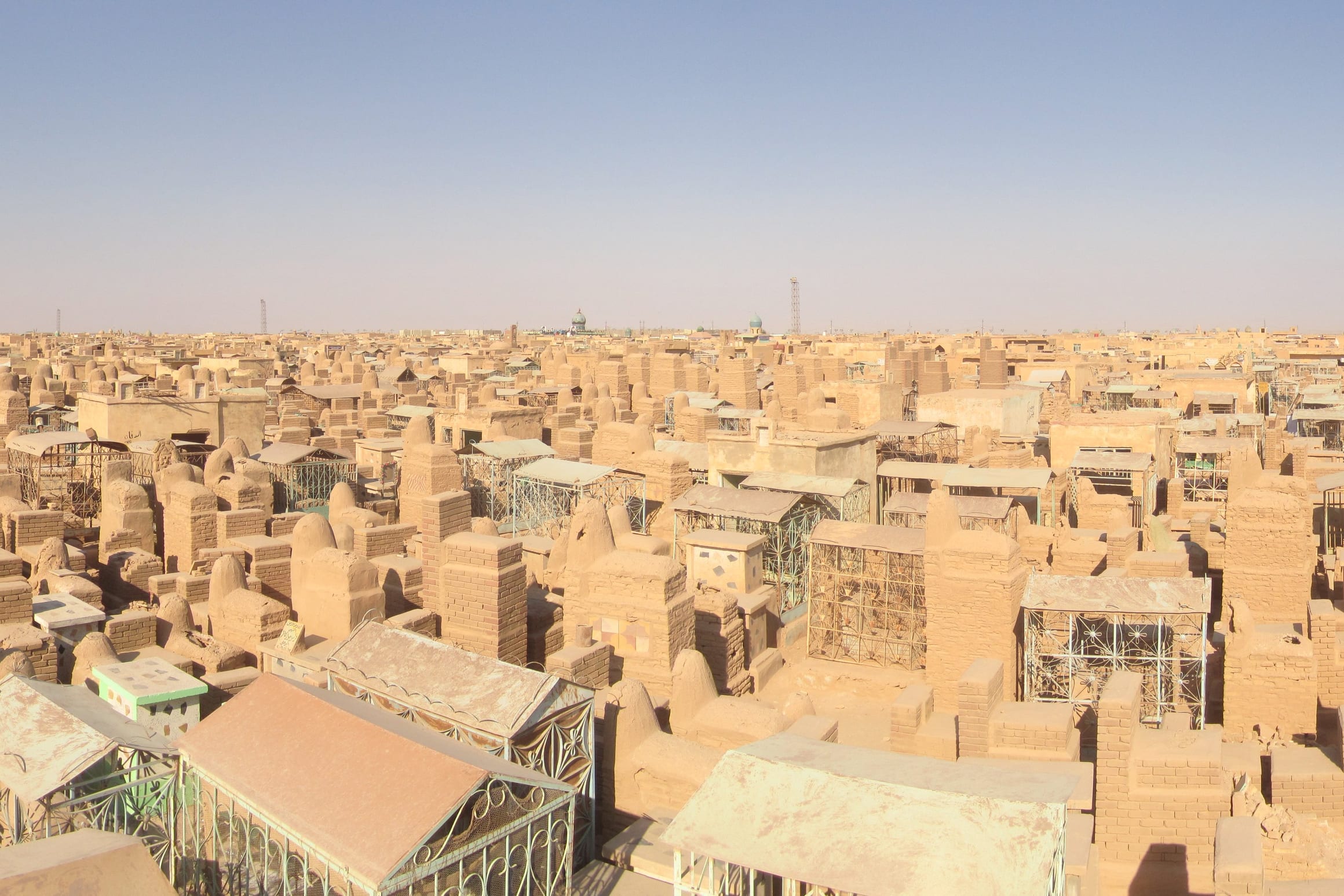
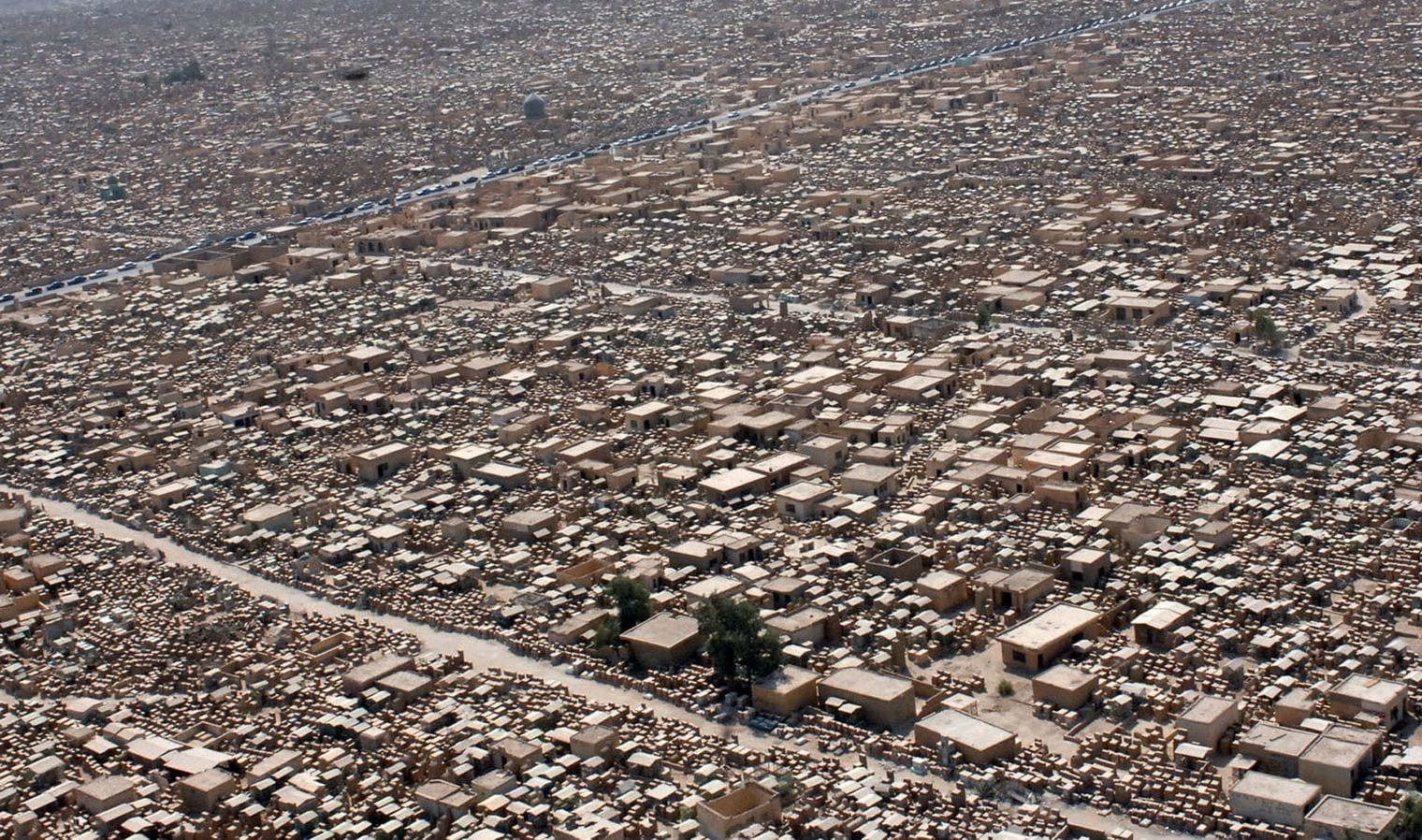
The largest cemetery in the world is Wadi-us-Salaam, in Iraq — it measures 917 hectares (2,266 acres), area.
Source: whc.unesco.org (Wayback copy). Verified .
Short answer
Wadi-us-Salaam in Najaf, Iraq, is the largest cemetery in the world at 917 hectares, well ahead of Rose Hills Memorial Park in Whittier, California, at 567 hectares (1,400 acres). To see it, visit Najaf, where the cemetery spreads beside the shrine of Imam Ali.
Ask for the biggest cemetery in the world and some famous answers fall away: Cairo's City of the Dead is a district of many cemeteries, Pakistan's Makli Necropolis is an archaeological site where burials are banned, and Arlington National Cemetery, at 639 acres, misses the top 15.
This countdown ranks 15 cemeteries by one measure, the total area inside one named cemetery's own boundary as its operator publishes it, from Wadi-us-Salaam in Najaf, Iraq, at 917 hectares to Quantico National Cemetery in Virginia at 293 hectares.
Undeveloped land inside the boundary counts, which is why San Diego Hills in Indonesia ranks on its whole 500 hectares, and why nine of the 15 are in the United States, where the VA publishes the full acreage of its national cemeteries. Every entry is a burial ground in use today. That rule leaves out ancient necropolises, and Iran's Bagh-e Rezvan is out too, because no operator or register confirms its larger reported area.
The largest cemetery takes up 13% of its city. Iraq's submission to UNESCO says Wadi-us-Salaam covers 13% of Najaf, and Guinness World Records lists it as the largest cemetery in the world at 9.17 km².
One cemetery needs its own bus routes.Ohlsdorf Cemetery in Hamburg is served by 25 bus stops on two bus lines, and about two million people visit it every year.
A pond in Daejeon is shaped like Korea. Hyeonchungji, a man-made pond at Daejeon National Cemetery, takes the outline of the Korean Peninsula.
The largest Buddhist pagoda in the United States stands in a cemetery. The Buddhist Columbarium, built in 1999 on the highest ground of Rose Hills Memorial Park in Whittier, east of Los Angeles, is described as the country's largest.
A Cincinnati cemetery grows national champion trees.Spring Grove is also an arboretum, and in 2005 its national champions included a yellowwood and a two-wing silverbell.
Nine of the 15 are in the United States, and seven of those are national cemeteries. The Department of Veterans Affairs publishes the whole acreage of each site, reserve land included, so cemeteries like Riverside and Calverton rank high.
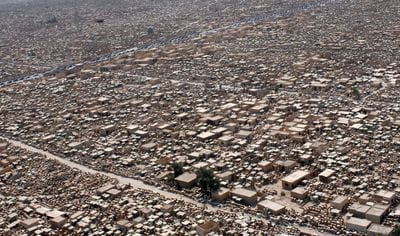
At 917 hectares, Wadi-us-Salaam in Najaf, Iraq, is the largest cemetery in the world, and Guinness World Records lists it as the record holder at 9.17 km².
The figure comes from Iraq's submission to UNESCO's Tentative List, which says the cemetery runs from the centre of Najaf to the far north-west and covers 13% of the city, and press reports put it at more than 1,700 football fields. Wikipedia gives a smaller 601 hectares1,485.5 acres, so published figures range from about 601 to 917 hectares.
The name means "Valley of Peace", and Wadi-us-Salaam lies beside the shrine of Ali ibn Abi Talib, the first Shia Imam. Shia tradition holds that those buried near him will rise with him on Judgment Day, which is why families bring their dead to Najaf from across Iraq and beyond, and the cemetery is said to hold more than 6 million bodies. Its lanes wind between family tombs, domes and plain headstones, and millions of pilgrims pass through every year.
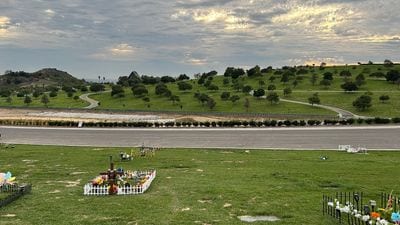
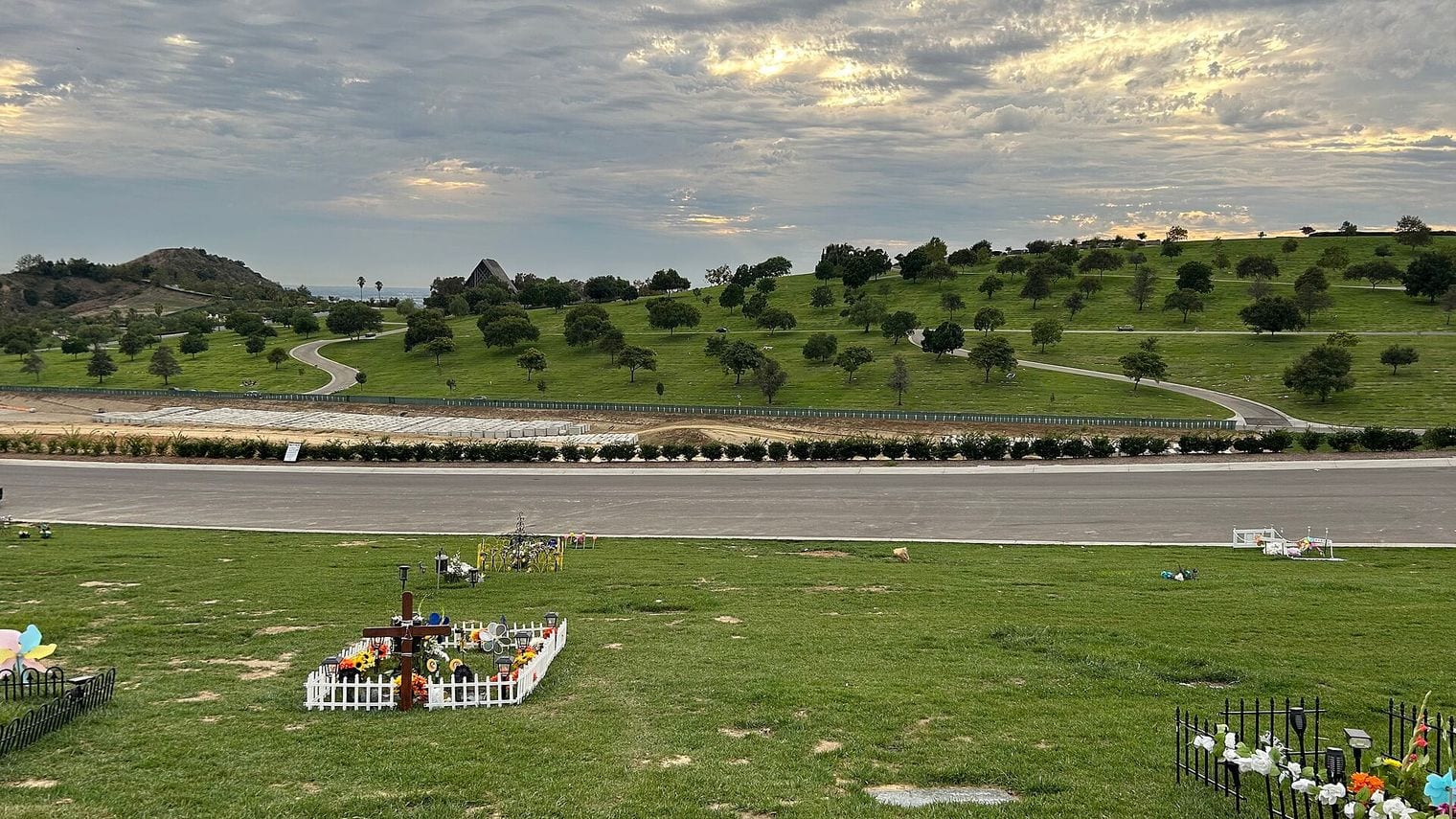
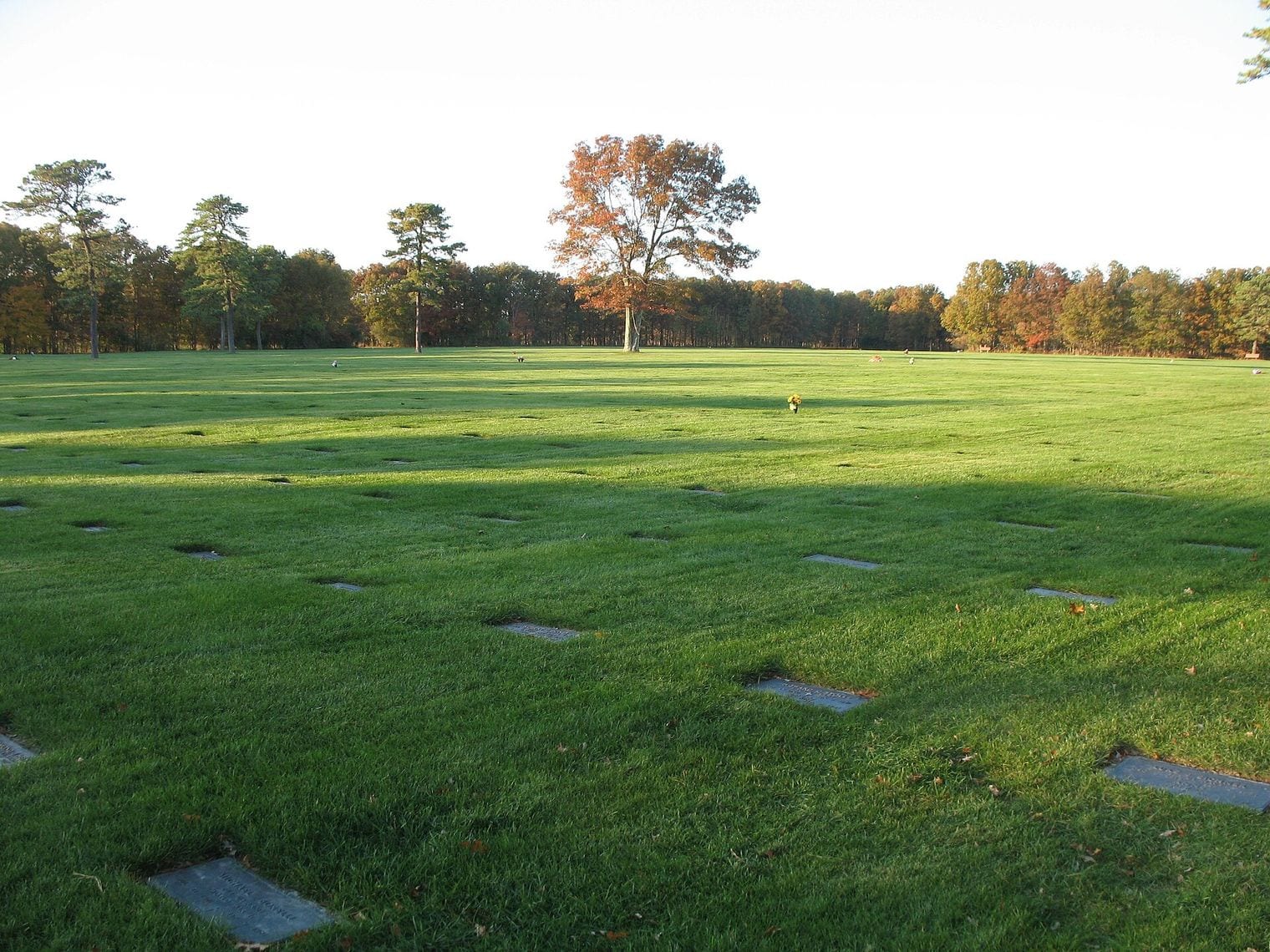
At 567 hectares1,400 acres, Rose Hills Memorial Park in Whittier, California, ranks second in the world on this list, and its operator calls it the largest cemetery in North America. Older figures run higher, because the park once spanned close to 2,500 acres, but 1,400 acres is the area Rose Hills publishes today.
The park spreads over the hills of northern Whittier, east of Los Angeles, with lawns, gardens and mausoleums spread across the slopes. Whittier Heights Mausoleum, built in 1917, was the second public mausoleum in California, and the hallways of its later buildings are named after the California Missions. At the highest point of Rose Hills, the Buddhist Columbarium of 1999 is described as the largest Buddhist pagoda in the United States.
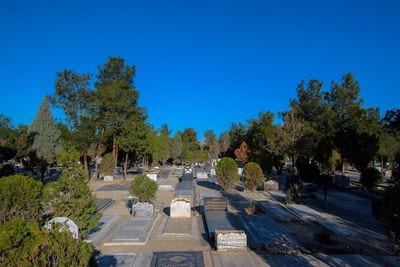
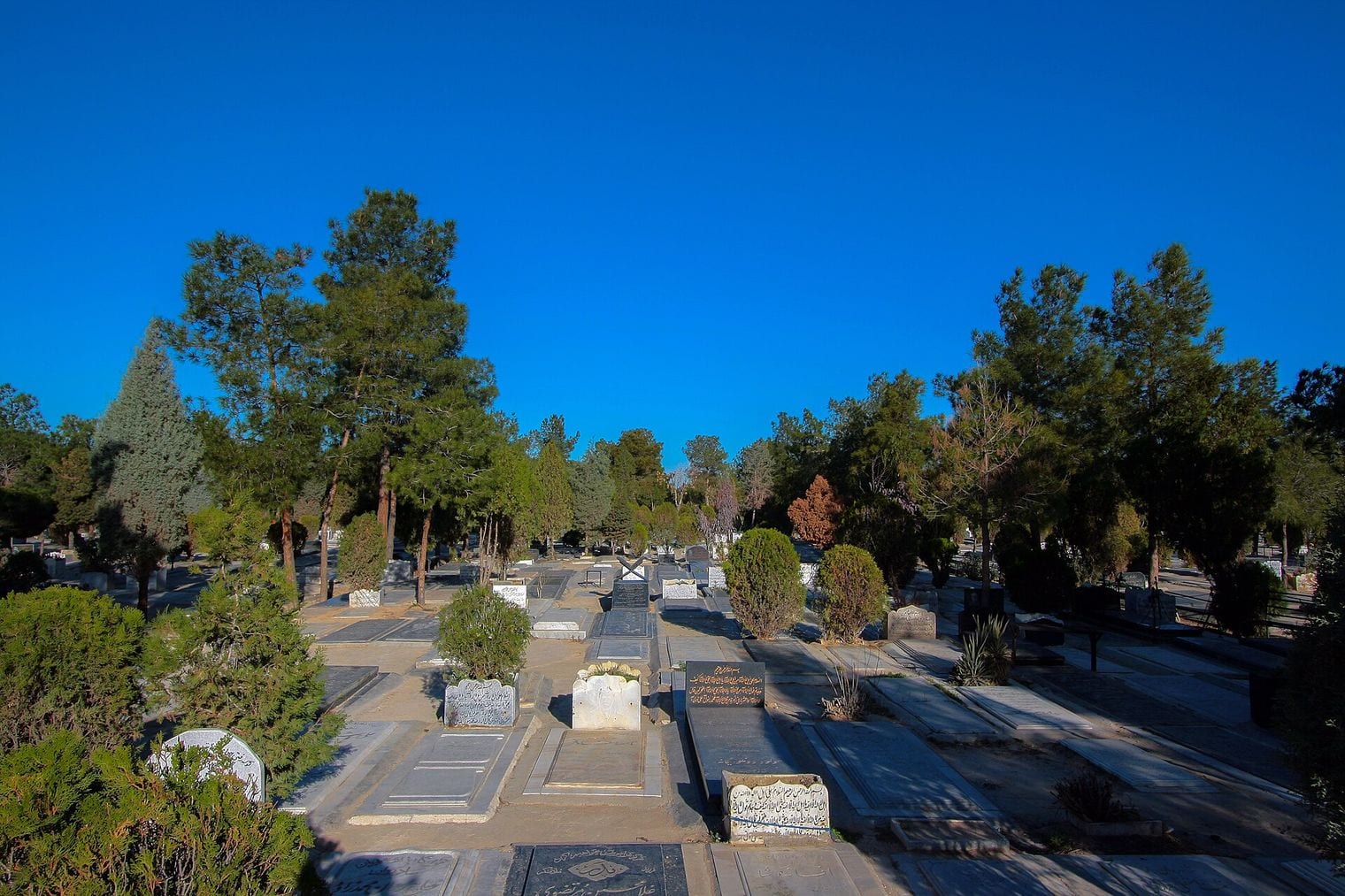
At 534 hectares1,320 acres, Behesht-e Zahra on the southern edge of Tehran is the largest cemetery in Iran by the figure in its Wikipedia infobox. Published areas range widely, from 424 hectares in a 2015 study to 584 hectares given by the cemetery's own chief executive in 2021 after land was added, and Radio Farda put it at more than 500 hectares with nearly 1.7 million graves.
Behesht-e Zahra, "Paradise of Zahra", opened on 29 June 1970 on the road south from Tehran towards Qom. Many soldiers killed in the Iran–Iraq War lie in its martyrs' section, row after row of graves. Writers, singers, athletes and politicians are buried here too, and the vast mausoleum of Ayatollah Khomeini rises close by.
At 505 hectares1,249 acres, Riverside National Cemetery in Riverside, California, is the largest national cemetery run by the US Department of Veterans Affairs, which gave that area in a 2026 planning document. Older sources give 921 acres373 hectares, the area before the VA bought 315 more acres in 2019, so published figures run from about 373 to 505 hectares.
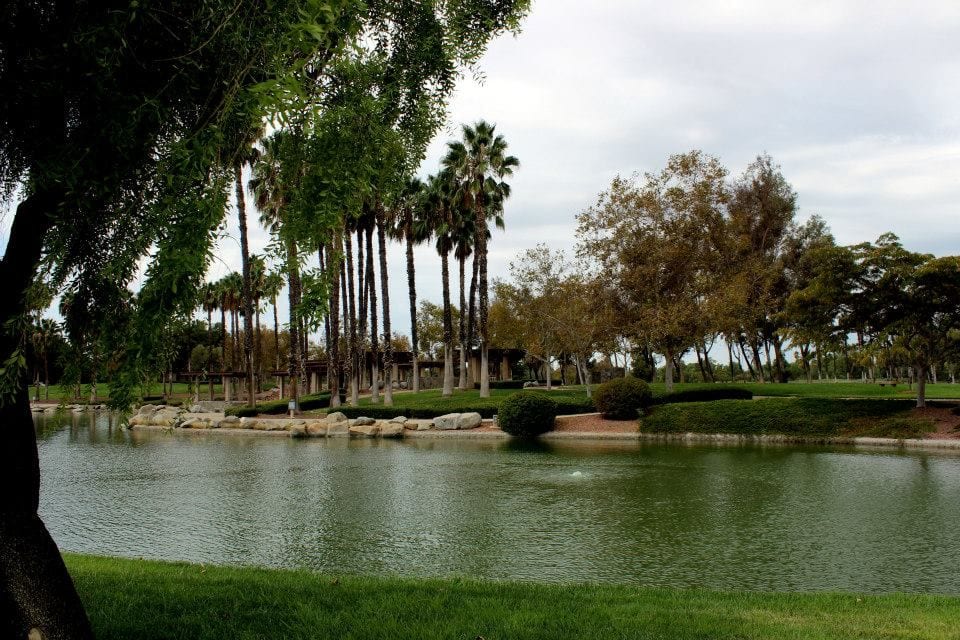
The cemetery was established in 1976 on 740 acres transferred from March Air Force Base, land that was Camp Haan during World War II, and it was dedicated on 11 November 1978 with 15 Medal of Honor recipients in attendance. A central boulevard leads past memorial circles, lakes and a memorial amphitheatre, and the cemetery is home to a national Medal of Honor Memorial.
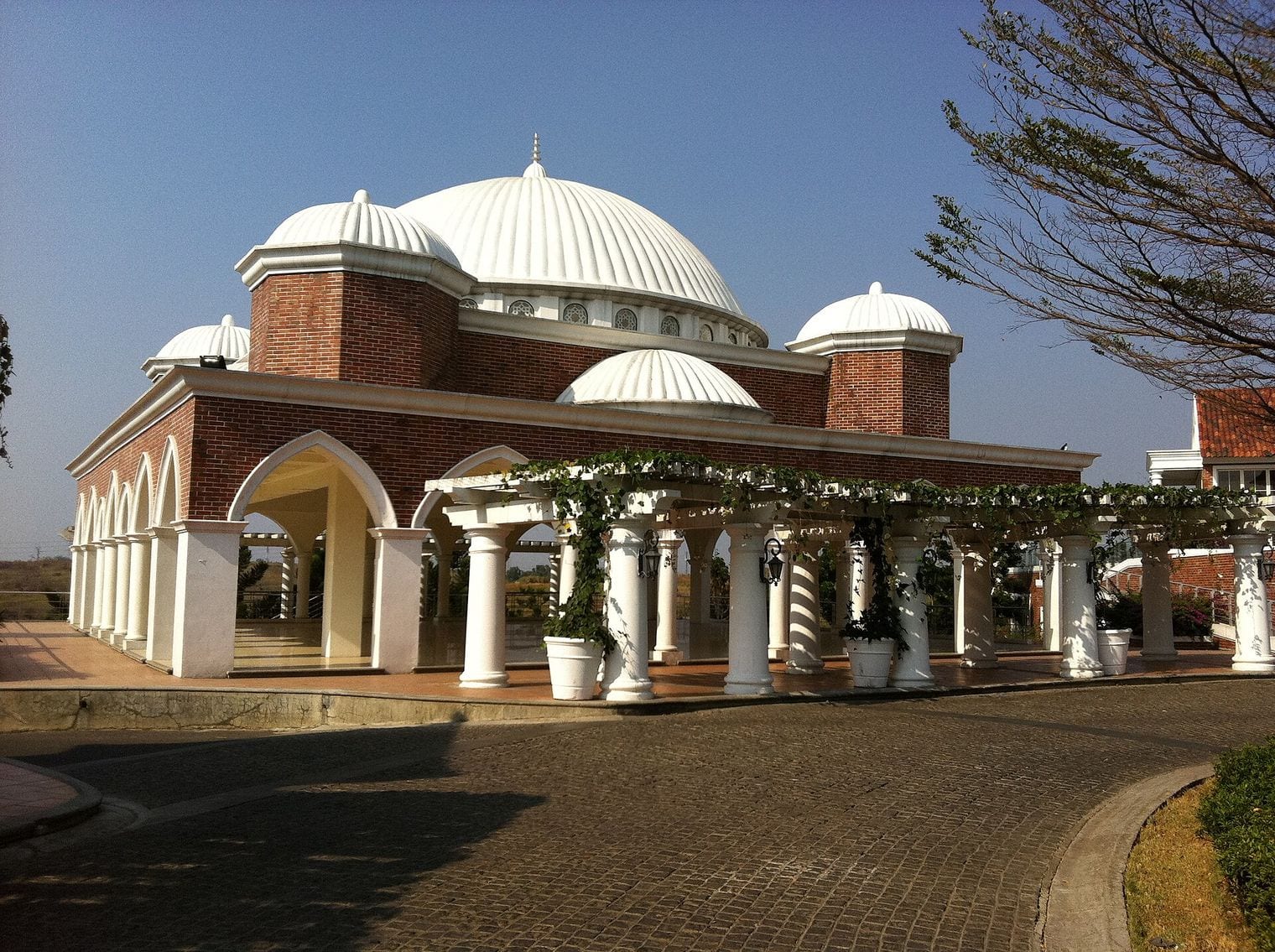
At 500 hectares, San Diego Hills in Karawang, West Java, east of Jakarta, ranks on the area its operator publishes for the whole park. Wikipedia's infobox gives 502 hectares while its text says 500 acres (about 202 hectares), and the operator describes its developed garden zones as about 25 hectares, so most of the land inside the boundary is still reserve.
Despite the name, San Diego Hills has nothing to do with California's San Diego. The Lippo Group opened it in January 2007 on land that had been meant for industry, after founder Mochtar Riady moved his parents' tomb there. Lippo brought in an adviser from Forest Lawn in the United States, and the park follows that model: landscaped gardens built for families to visit, not just for burials.
66. Calverton National Cemetery
Calverton, New York, United States
brought the national cemetery to 1,045 acres (1,045.0 acres)
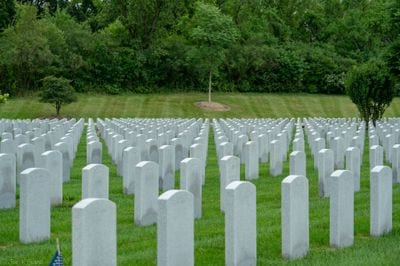
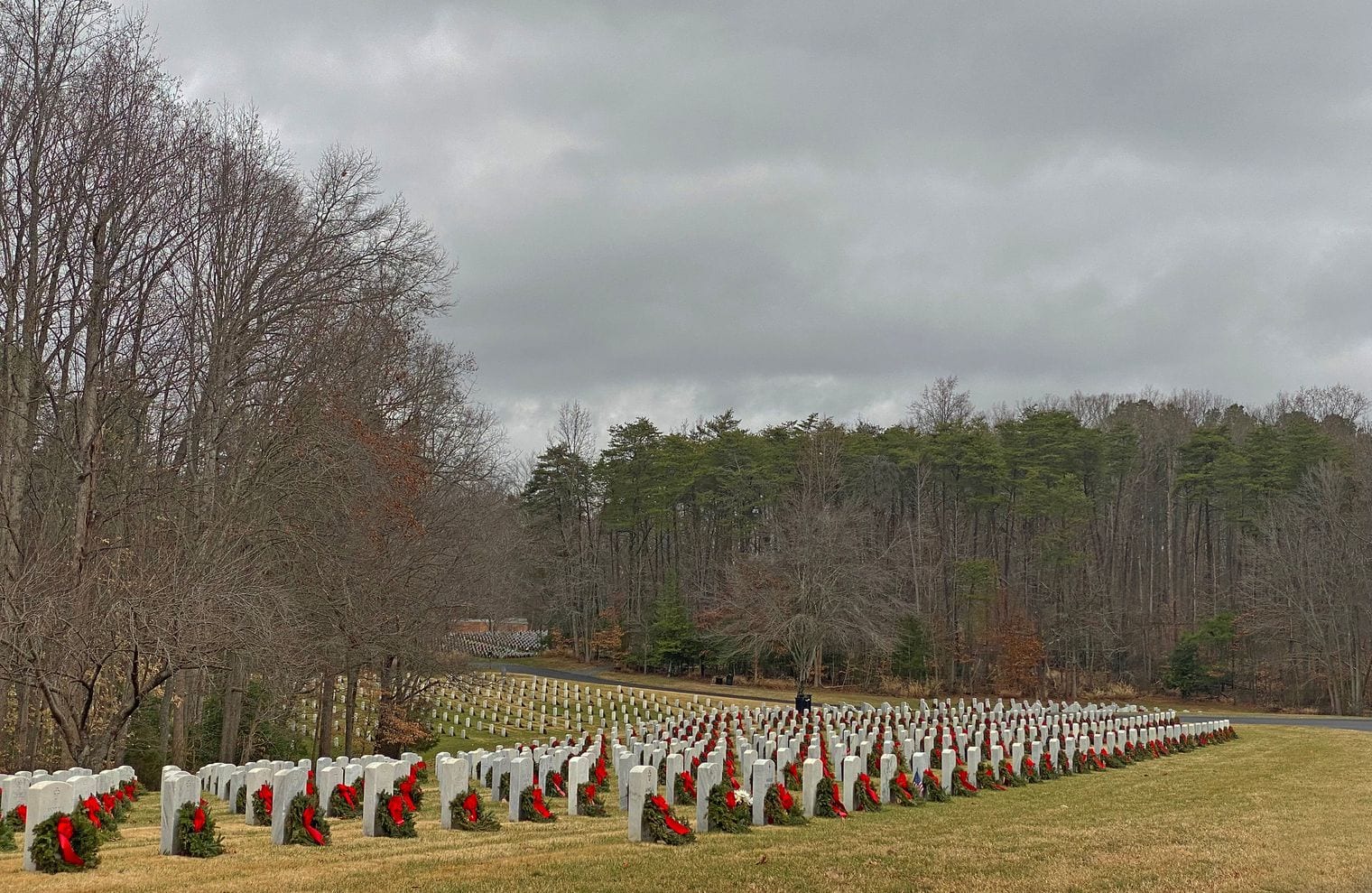
At 423 hectares1,045 acres, Calverton National Cemetery on eastern Long Island, New York, is the second-largest national cemetery in the United States. The VA says a later land transfer from the neighbouring naval installation brought it to 1,045 acres.
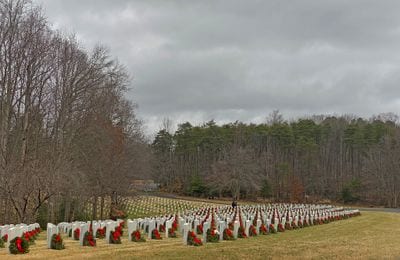
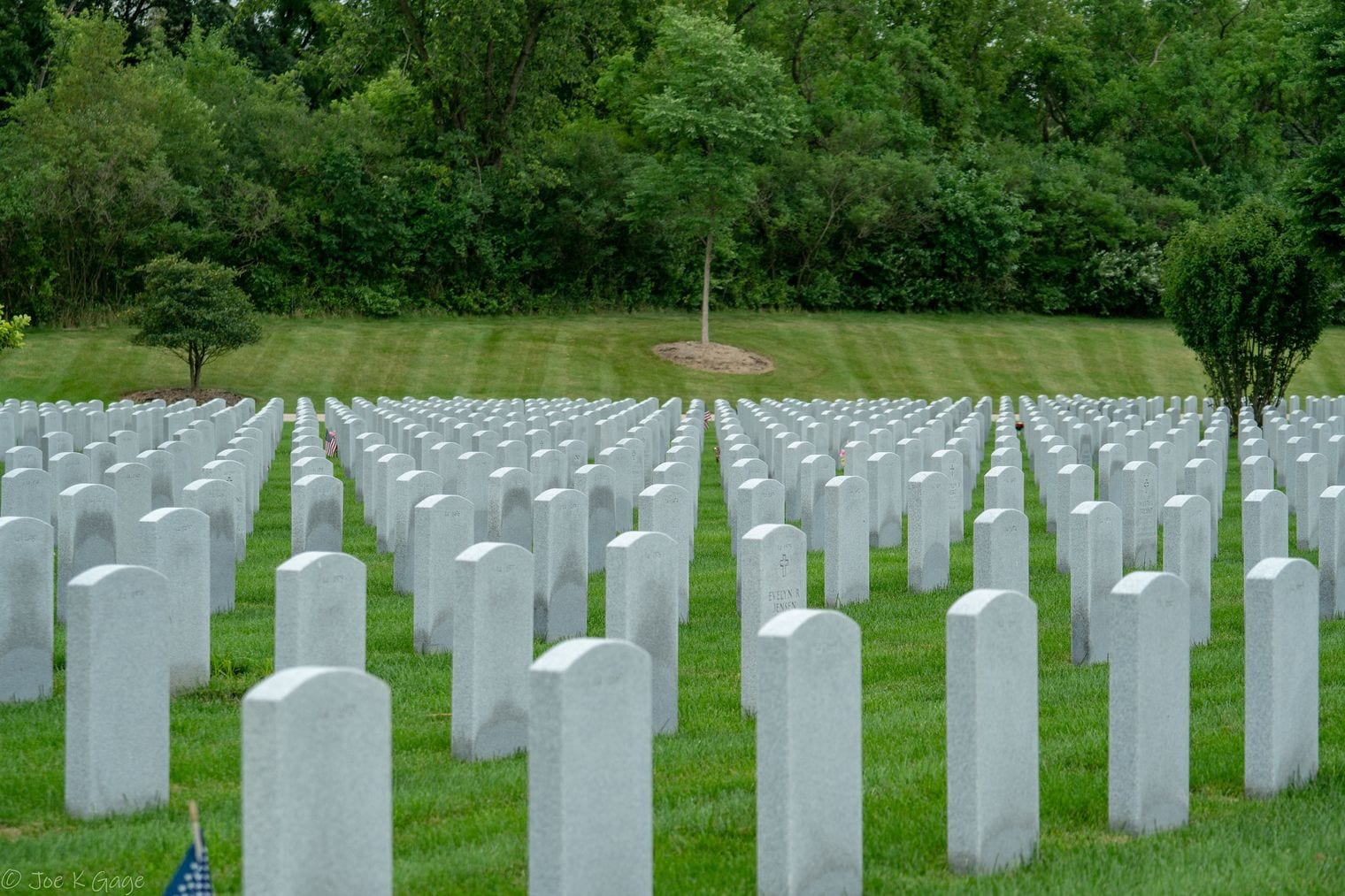
Calverton opened in 1978 as the third national cemetery on Long Island, when Long Island National Cemetery in Farmingdale was running out of space. It is also one of the busiest: it had 212,000 interments by the end of 2008 and was carrying out more than 7,000 burials a year by 2011. Long rows of white headstones stretch across the flat land of the Town of Riverhead in Suffolk County.
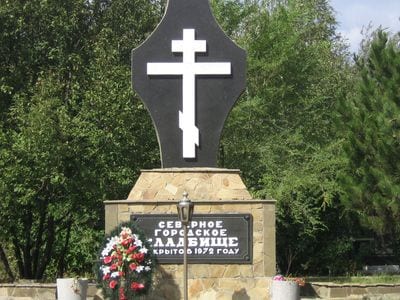
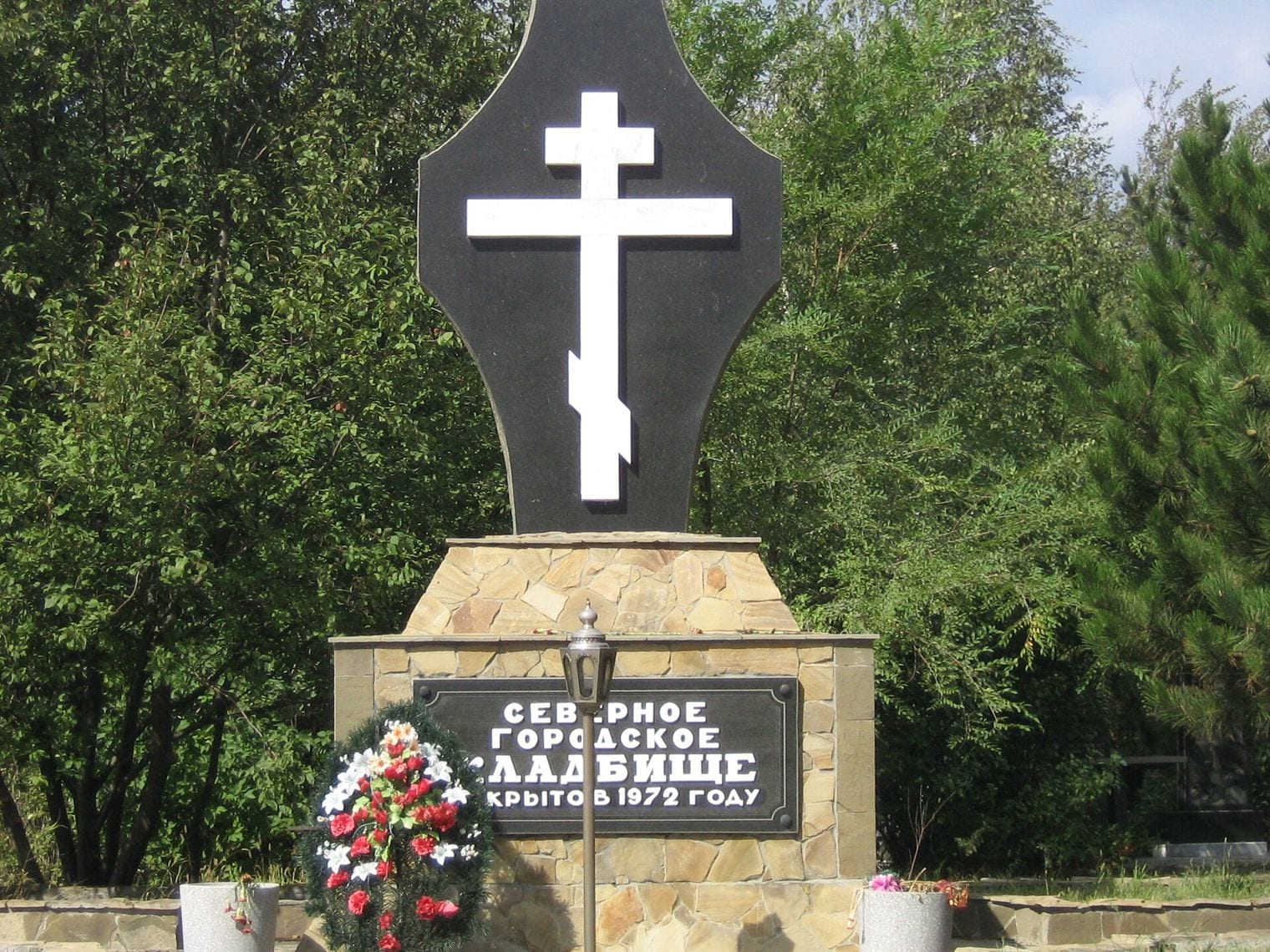
At 400 hectares, the Northern Cemetery in Rostov-on-Don is the largest cemetery by area in European Russia and one of the largest in Europe. No operator or city page publishes its area, so the figure comes from English and Russian Wikipedia and from Novaya Gazeta (2014), which all give 400 hectares. Russian Wikipedia records 355 hectares in 2009, so the figures run from 355 to 400 hectares.
The Northern Cemetery was established in 1972 and is still growing: it has more than 500,000 graves, up from about 355,000 in 2009. Inside the grounds stand the Holy Protection Church, a chapel and a columbarium, along with workshops that make gravestones.
Get new guides like this by email
One email every Thursday with our newest guides for the places you tick.
At 397 hectares982 acres, Abraham Lincoln National Cemetery in Elwood, Illinois, is one of the largest national cemeteries in the United States. The VA says the 982-acre cemetery will provide 400,000 burial spaces when fully developed.
The cemetery was dedicated in 1999 on land that was once the Joliet Arsenal, the Joliet Army Ammunition Plant, south-west of Chicago. It is named after Abraham Lincoln, credited with founding the national cemetery system, who is buried not here but at Oak Ridge Cemetery in Springfield.
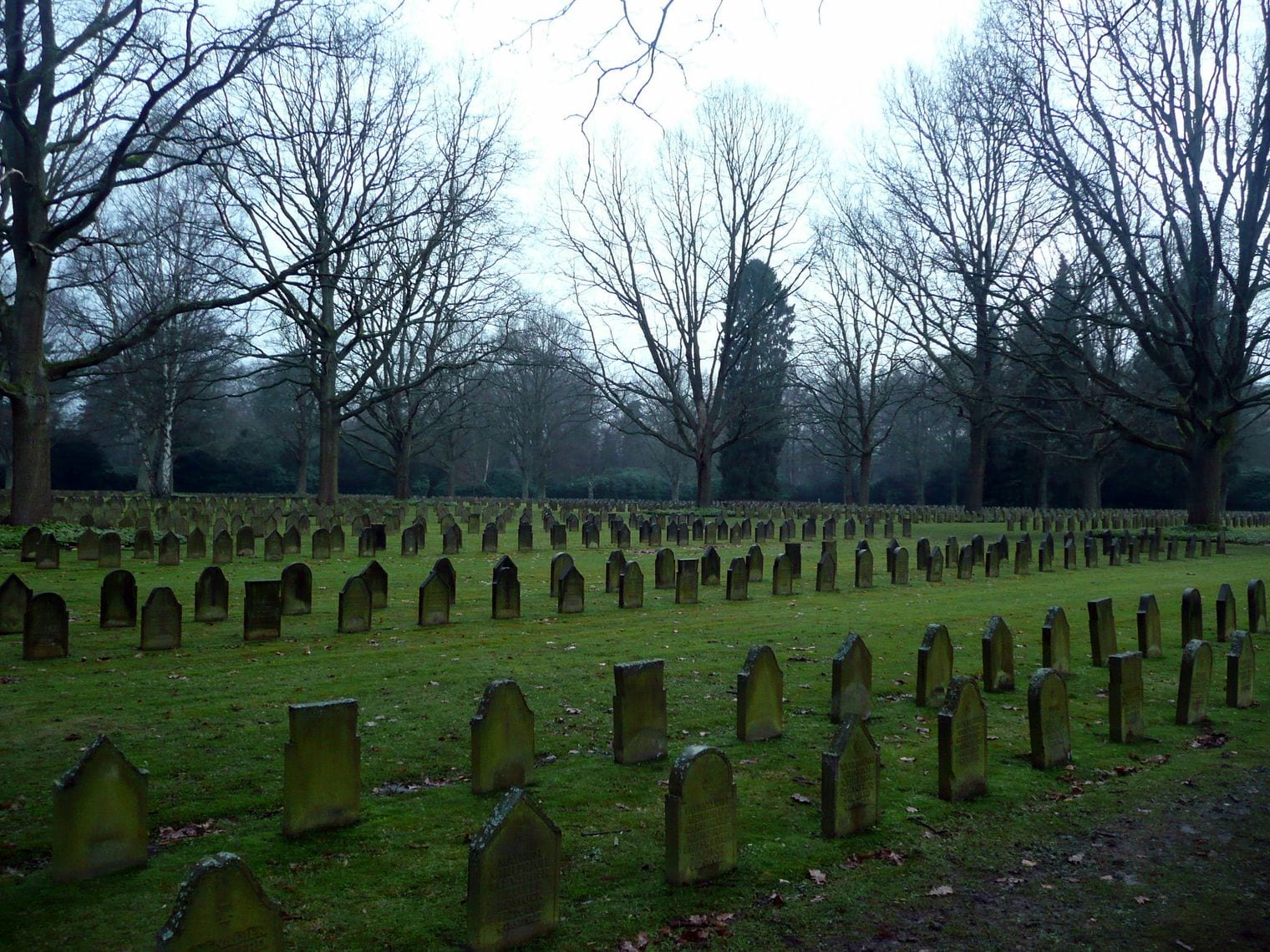
At 391 hectares, Ohlsdorf Cemetery in Hamburg is described by Wikipedia as the biggest rural cemetery in the world, and the City of Hamburg says it stretches 3.5 kilometres from west to east and 1.5 kilometres from north to south, nearly half of the Ohlsdorf district. Some pages round it to 389 or about 400 hectares, but the city and Wikipedia both give 391 hectares.
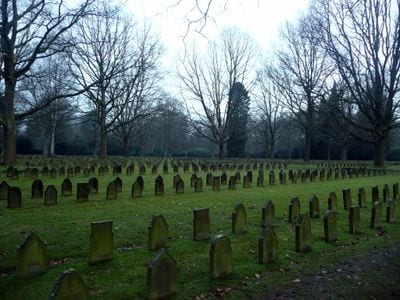
Ohlsdorf Cemetery opened in 1877 as the first American-style park cemetery in Germany, and it still looks like a park: mausoleums, sculptures, ponds and banks of rhododendrons line its avenues, and about two million people visit every year. It is big enough for 25 bus stops on two bus lines, and it holds a Commonwealth War Graves cemetery, a funerary museum and the graves of many notable Hamburg citizens.
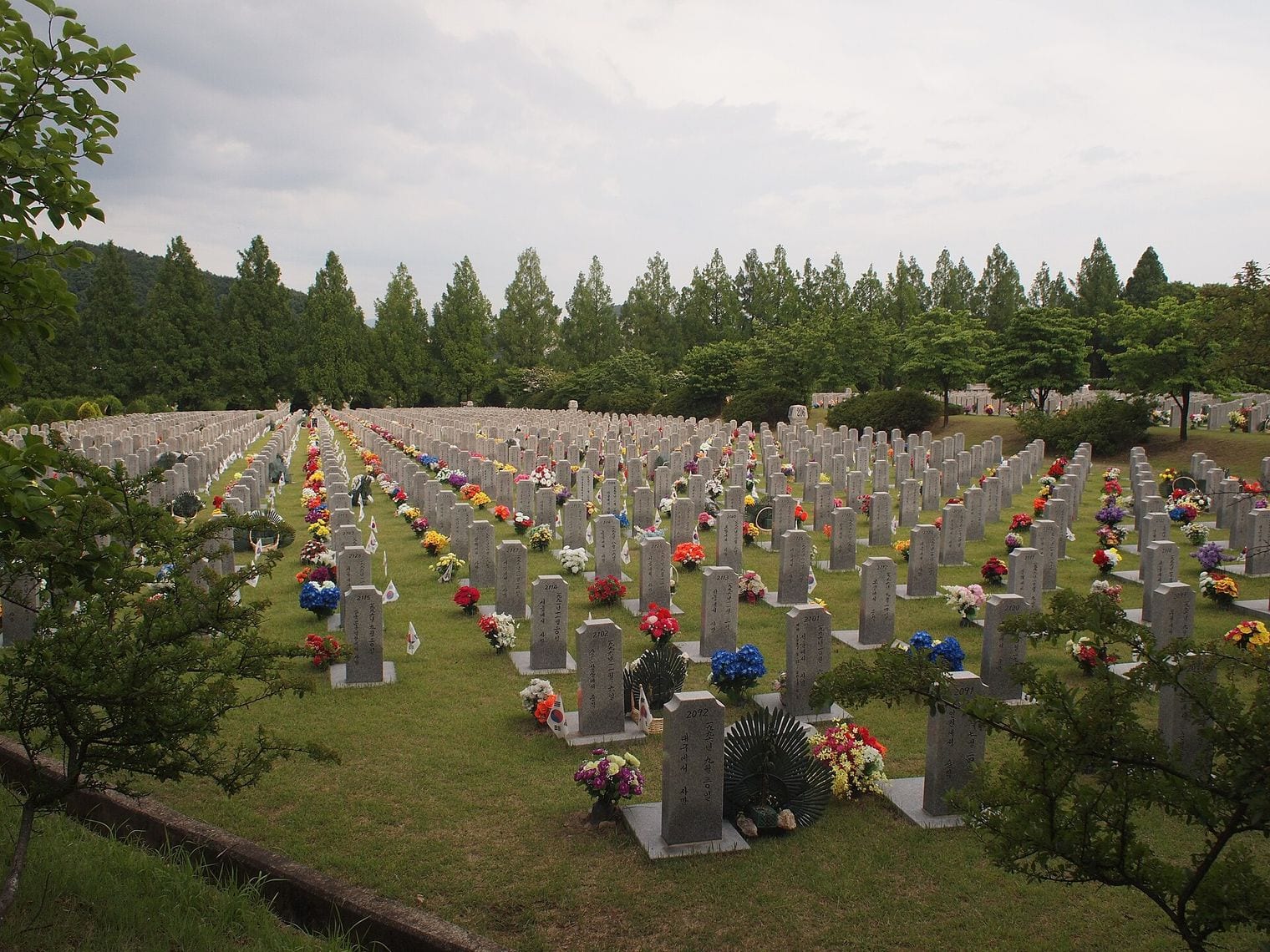
At 331 hectares, Daejeon National Cemetery in South Korea covers a total site of 3,309,553 m², the figure its own website gives. English Wikipedia gives a slightly smaller 3,300,150 m², and the cemetery measured about 3.22 million m² when it was completed in 1985.
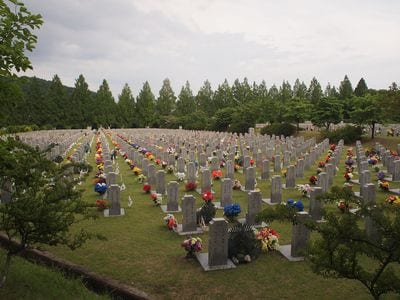
Daejeon National Cemetery is South Korea's second national cemetery, built after the one in Seoul began to run out of space in the 1970s. Work began in 1979 and the first burial took place in 1982. It is reserved for Korean patriots and veterans, from the independence movement to the Korean War and the Vietnam War, and its grounds include a Memorial Tower and Hyeonchungji, a pond shaped like the Korean Peninsula.
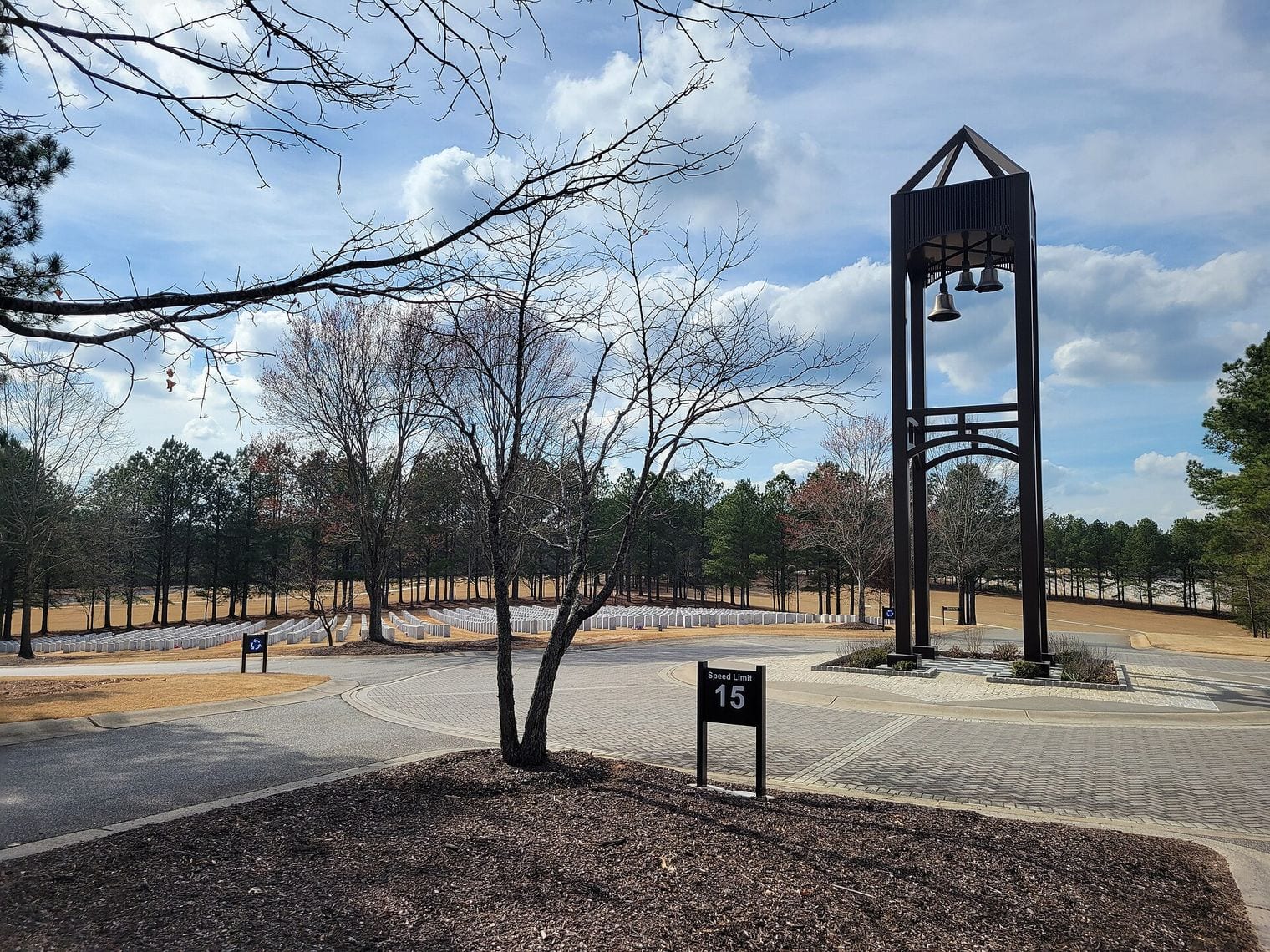
At 314 hectares775 acres, Georgia National Cemetery near Canton, in Cherokee County, Georgia, sits on a site donated in 2001 by Scott Hudgens, an Atlanta land developer and World War II veteran. The VA says only 330 acres will be developed for burials at full capacity, because the rest is too steep, but the whole 775-acre site lies inside the cemetery's boundary.
Georgia National Cemetery opened for burials in 2006 and was dedicated on 4 June that year. Its setting gives views of the Blue Ridge Mountains and Lake Allatoona, and the VA notes that the Etowah burial mounds, built by people of the Mississippian culture, lie in the same region.
1212. Fort Custer National Cemetery
Augusta, Michigan (Kalamazoo County), United States
At 312 hectares770 acres, Fort Custer National Cemetery near Augusta, Michigan, is a 770-acre national cemetery in the words of a 2017 US Senate resolution. Wikipedia gives 770.4 acres for the same site in Kalamazoo County.
The cemetery takes its name from Fort Custer, a World War II training ground that also held German prisoners of war. It became Fort Custer National Cemetery in 1981, when it received a large plot of land from the Fort Custer Training Center for expansion. A memorial pathway is lined with monuments to military units and veterans' groups, and the musician Wade Flemons, a founding member of Earth, Wind & Fire, is buried here.
At 303 hectares749 acres, Massachusetts National Cemetery in Bourne, on Cape Cod, covers the 749.29 acres transferred to the VA's National Cemetery System in 1976. The land was a tract of Otis Air Force Base, and it was the first land the system had acquired to build a new national cemetery since 1949.
The Massachusetts National Cemetery was dedicated on 11 October 1980, about 65 miles south-east of Boston, next to the Otis Air National Guard Base. It was the third new national cemetery to open in nearly 30 years.
At 297 hectares733 acres, Spring Grove Cemetery in Cincinnati, Ohio, is one of the largest cemeteries in the United States, with about 450 acres landscaped and maintained. Its own history page gives 733 acres, as do Wikipedia and The Cultural Landscape Foundation, while its About page says 750 acres303.5 hectares, so the figures run from 297 to 303.5 hectares.
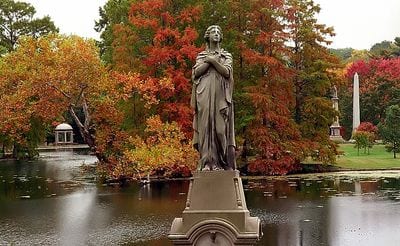
Spring Grove Cemetery was chartered on 21 January 1845 and took its first burial that September. In 1855 the landscape architect Adolph Strauch was hired to redesign the grounds as a garden cemetery of lakes, trees and shrubs, earning praise from Frederick Law Olmsted, and that is the landscape visitors still walk through.
A National Historic Landmark since 2007, it is also an arboretum with national champion trees, and the Civil War general Joseph Hooker and Procter and Gamble co-founder William Procter are buried here.
1515. Quantico National Cemetery
Triangle, Virginia (Prince William County), United States
725 acres donated by the Marine Corps (724.8 acres)
At 293 hectares725 acres, Quantico National Cemetery in Triangle, Virginia, stands on the 725 acres that the US Marine Corps donated to the VA in 1977. The land was part of the Marine Corps training base at Quantico, in Prince William County, south of Washington.
The last place is close: Sydney's Rookwood Cemetery, at 286 hectares in most sources and just outside the list, is given 314 hectares in a 2013 draft management plan, which would put it ahead of Quantico.
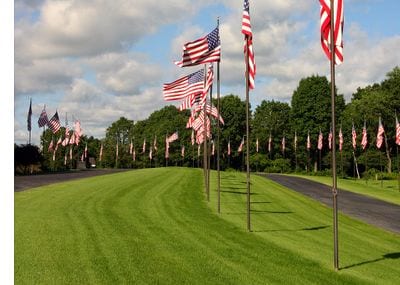
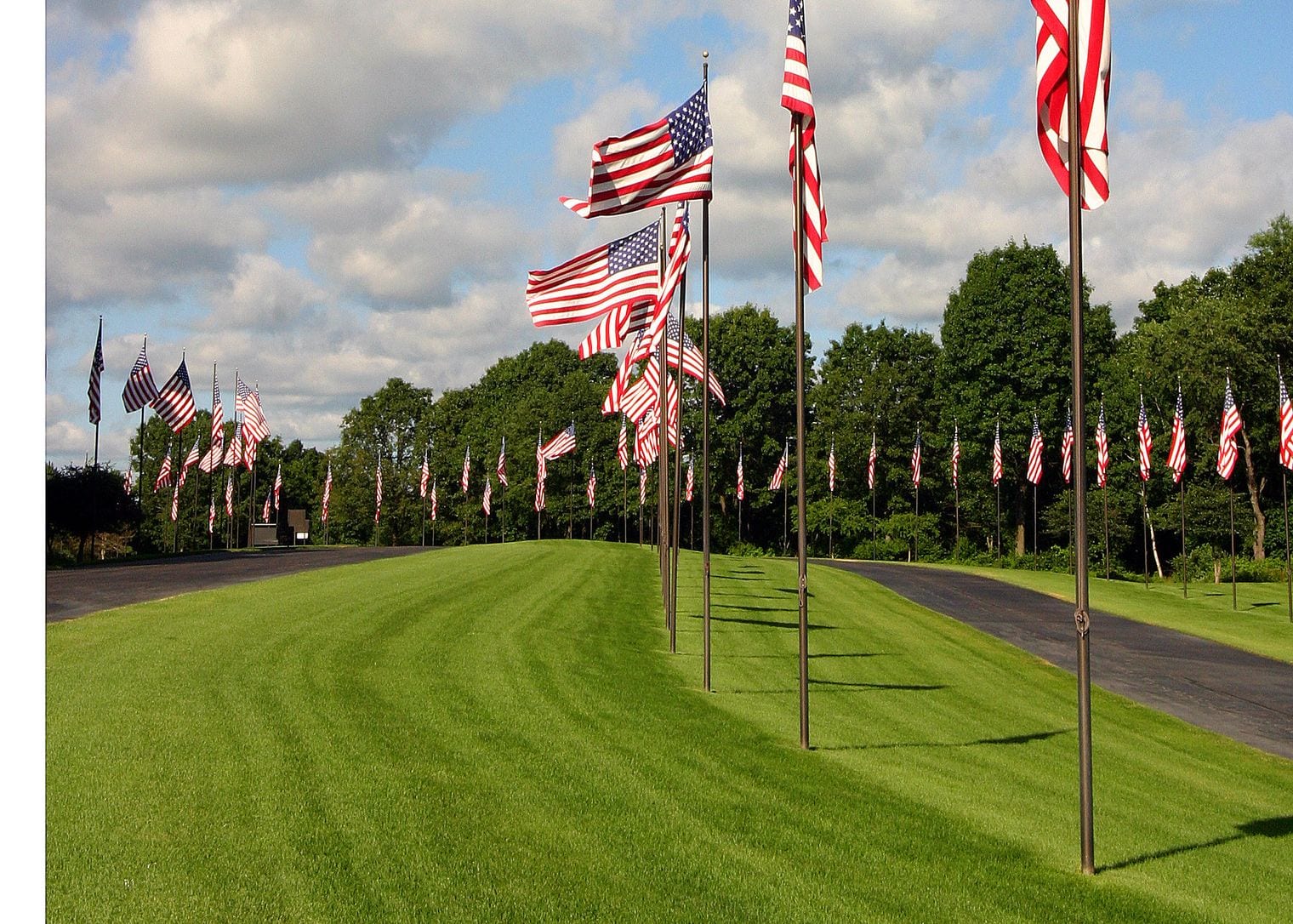
The cemetery, officially the National Memorial Cemetery at Quantico, was dedicated on 15 May 1983. It has nine memorials, the first of them the Edson's Raiders Monument of 1989, which honours the 1st Marine Raider Battalion. On Memorial Day and Veterans Day the Avenue of Honor flies its full set of flags, donated in memory of veterans.
FAQ: The World's Largest Cemeteries
What is the largest cemetery in the world?
Wadi-us-Salaam in Najaf, Iraq, at 917 hectares by Iraq's submission to UNESCO, and Guinness World Records lists it as the largest cemetery in the world at 9.17 km². It lies beside the shrine of Imam Ali and is said to hold more than 6 million bodies. Rose Hills Memorial Park in Whittier, California, comes second at 567 hectares1,400 acres.
How were these cemeteries measured and ranked?
No register ranks cemeteries by area. Guinness World Records ("Largest cemetery", 9.17 km²) and Iraq's entry on UNESCO's Tentative List back the #1, and every other entry rests on its operator's published area plus Wikipedia.
The Northern Cemetery in Rostov-on-Don has no operator or register source, so its 400 hectares comes from English and Russian Wikipedia and Novaya Gazeta (2014). The area counts all land inside each cemetery's boundary, undeveloped reserve land included, which is why several US national cemeteries rank high.
Why isn't Bagh-e Rezvan in Isfahan on the list?
Bagh-e Rezvan in Isfahan, Iran, is reported at 1,205 to 1,305 hectares, which would make it the largest, but only Wikipedia and Persian press give that figure, with no operator or register source behind it. Only about 305 hectares of it is in burial use. Until an official figure confirms it, the list leaves it out, and Wadi-us-Salaam stays first.
What about Cairo's City of the Dead and the Makli Necropolis?
Neither is one cemetery in use today. Cairo's City of the Dead is a district made up of many separate cemeteries, so it has no single boundary to measure. The Makli Necropolis at Thatta, Pakistan, covers about 10 km², but it is a UNESCO World Heritage archaeological site where burials are banned. Ancient royal tomb complexes such as the Ming tombs are left out for the same reason.
Why are Pinelawn Memorial Park and Karşıyaka Cemetery left out?
Their figures are not proven. Pinelawn Memorial Park on Long Island appears at 839 acres only in a ProPublica report, while its operator says just "over 500 acres", which is not enough to rank it. Karşıyaka Cemetery in Ankara is given about 289 hectares (2,890 decares), which is below Quantico's 293 hectares at #15 and is not confirmed by an official source.
Where does Arlington National Cemetery rank?
Just outside the top 15. Arlington National Cemetery, across the Potomac from Washington, covers 639 acres259 hectares by its own figure, short of the 725 acres293 hectares of Quantico National Cemetery at #15. The planned Southern Expansion of about 50 acres is not counted until it is inside the boundary. More record-breaking countdowns are on our world record breakers page.
Sources & updates
How this ranking was verified
Checked before launch
Sources cited
16
Publishers
8
Every figure in this ranking was checked against the record-keeper or official source behind it before publication, and the top of the ranking re-checked live so a newer record would not be missed.
One email every Thursday with our newest guides for the places you tick.
Newsletter
Stay updated with new World Record Breakers
One email every Thursday with our newest guides for the places you tick.
We use cookies to analyze site traffic and improve your experience.
You can accept or reject analytics cookies. See our
May we use analytics cookies? See ourCookie Policy.