We may earn a commission if you book tickets, tours or a stay through a link on
this page, at no extra cost to you. It never affects which places we list or how
we rank them (how we make money).
The record
2,300 km1,400 mi
Great Barrier Reef
Australia
The record
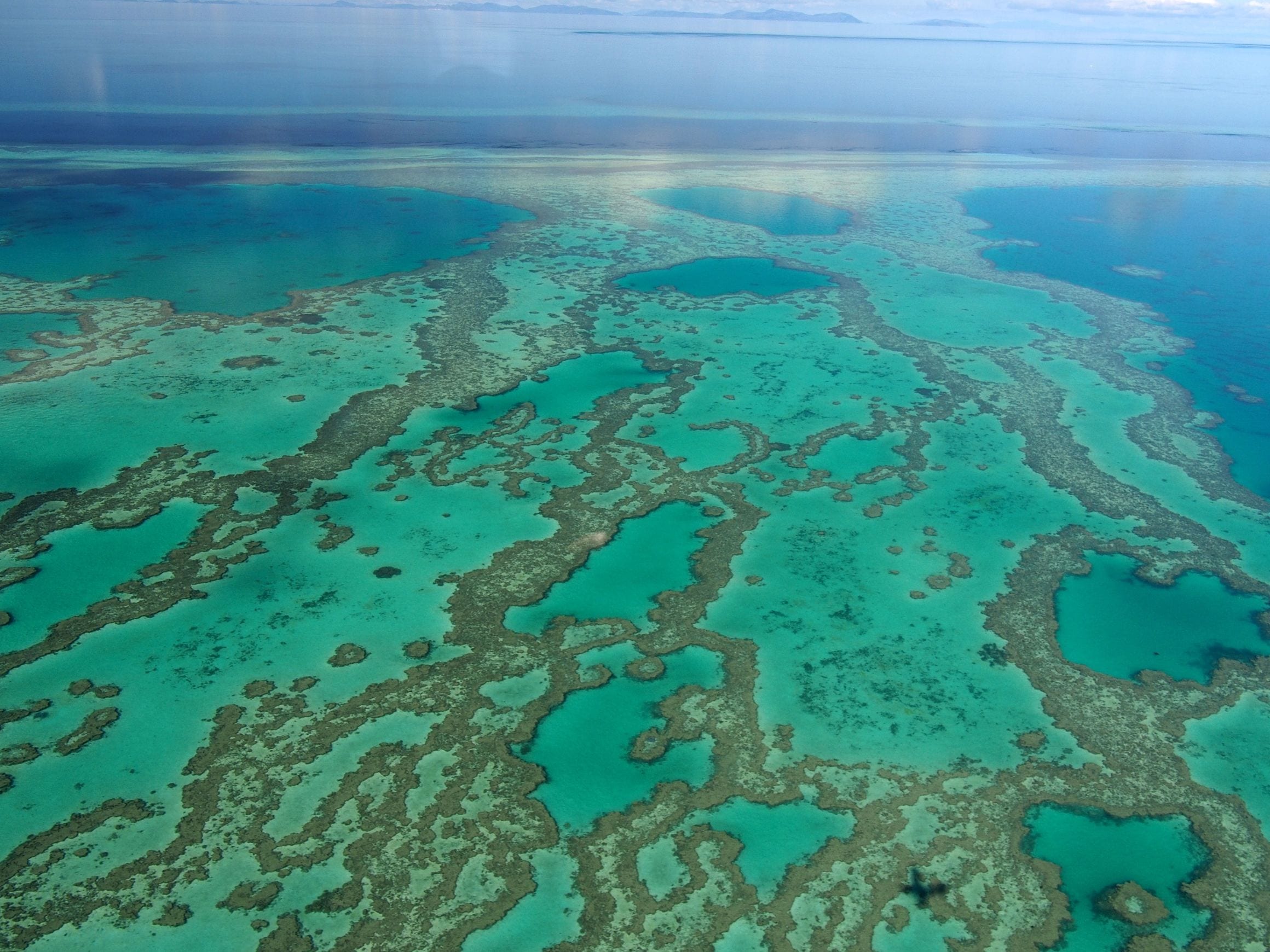
The largest coral reef in the world is the Great Barrier Reef, in Australia — 2,300 km (1,400 mi), reef length.
Source: Guinness World Records — Longest reef; corroborated by GBRMPA and Wikipedia. Verified .
The Red Sea is not on this list, and that is the whole point. Ranking coral reefs by area sounds obvious until you try it: the Great Barrier Reef's famous 344,400 km² is a marine park boundary, and coral covers barely seven per cent of it; New Caledonia has no published reef-area figure at all; the Mesoamerican's 106,629 km² is a whole marine ecoregion.
Rank those together and you compare a park to a lagoon to an ecoregion — which is why rival top tens come out in impossible orders, one placing the Mesoamerican below the Belize reef it contains. So this countdown uses the one figure every reef publishes alike: the distance it runs, end to end, from 2,300 km down to 150 km across ten countries and four ocean basins.
Each entry is a single named reef built by coral — ruling out the Red Sea's 2,000 km of separate fringing reefs, Belize as a section of a system already ranked, and Saya de Malha, a submerged bank that merely hosts coral.
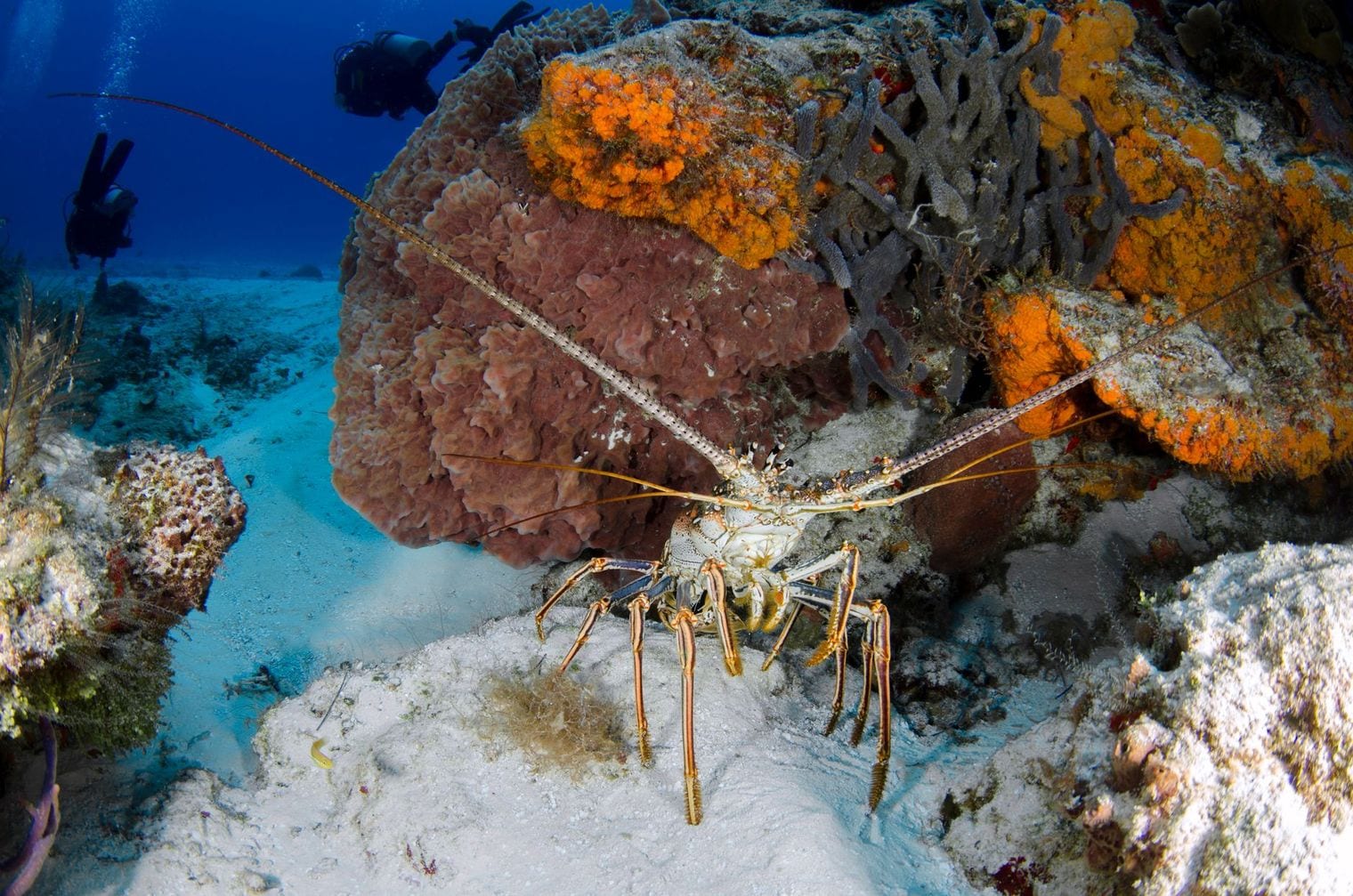
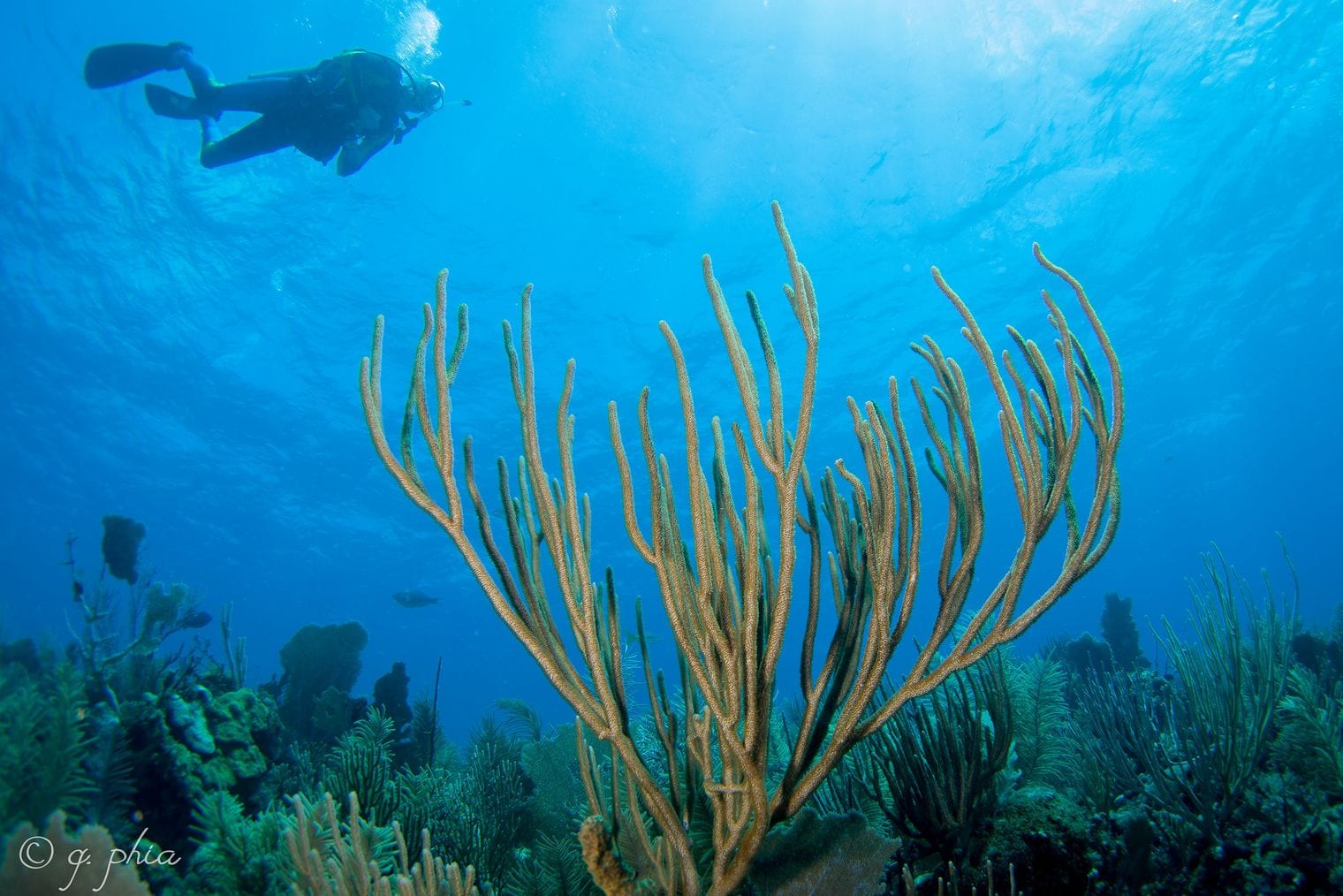
The Great Barrier Reef is the largest living structure on Earth, according to NOAA — and large enough to be seen from space. No other reef comes within 800 km of its length.
Coral reefs cover less than one per cent of the ocean floor but support about a quarter of all marine species, which is why a few hundred kilometres of reef matters out of all proportion to its size.
The longest reef in the world is not actually one reef. The Great Barrier Reef is a chain of nearly 3,000 separate reefs and some 900 islands — the New Caledonian Barrier Reef is the longest genuinely continuous one.
Double barrier reefs — one reef built outside another — are vanishingly rare, with published counts running from about six to a dozen worldwide. Two of them are on this list: Mayotte and Danajon Bank.
The biggest thing usually called a reef is not one. Saya de Malha Bank covers 40,808 km², dwarfing everything here, but it is a submerged bank of seagrass dotted with coral patches rather than a coral reef, so it does not qualify.
One reef on this list can be reached without a boat. At Coral Bay, Ningaloo Reef comes within 500 metres of the beach — close enough to wade in and swim out over living coral.
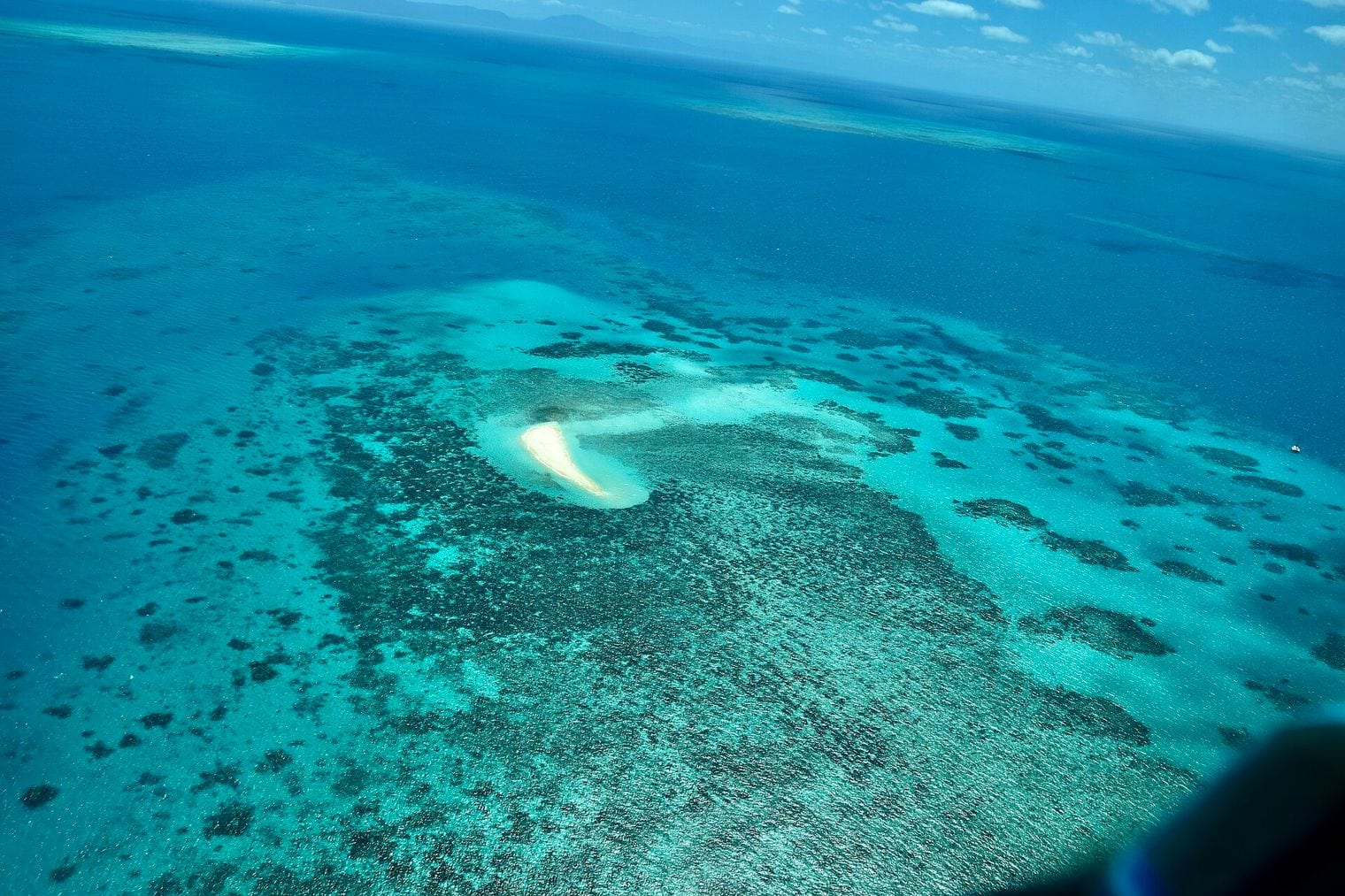
At 2,300 km, the Great Barrier Reef is the longest reef on Earth, and the gap between it and second place is wider than second place itself — Guinness World Records recognises it simply as the longest reef. It is also the least continuous thing on this list.
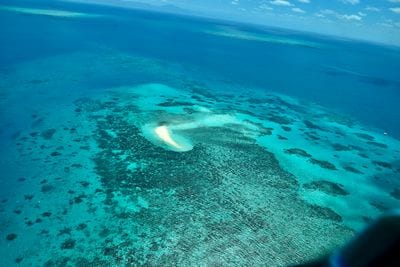
Rather than one wall of coral, it is a chain of more than 2,900 individual reefs and some 900 islands strung along the Queensland shelf in the Coral Sea, which is why its length is measured across the whole system rather than along an unbroken structure.
That scale makes it both the reef everyone pictures and the hardest to see properly. Day boats run from Cairns and Port Douglas out to the ribbon reefs on the outer edge, where the continental shelf falls away and the water is clearest, while southern coral cays such as Heron and Lady Elliot sit close enough that you can snorkel straight off the sand.
It is also the clearest illustration of why area fails as a ranking: coral accounts for only about seven per cent of the 344,400 km² marine park that surrounds it, with seagrass meadows, sand flats and deep inter-reef seabed making up the rest.
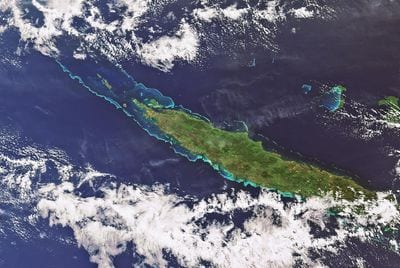
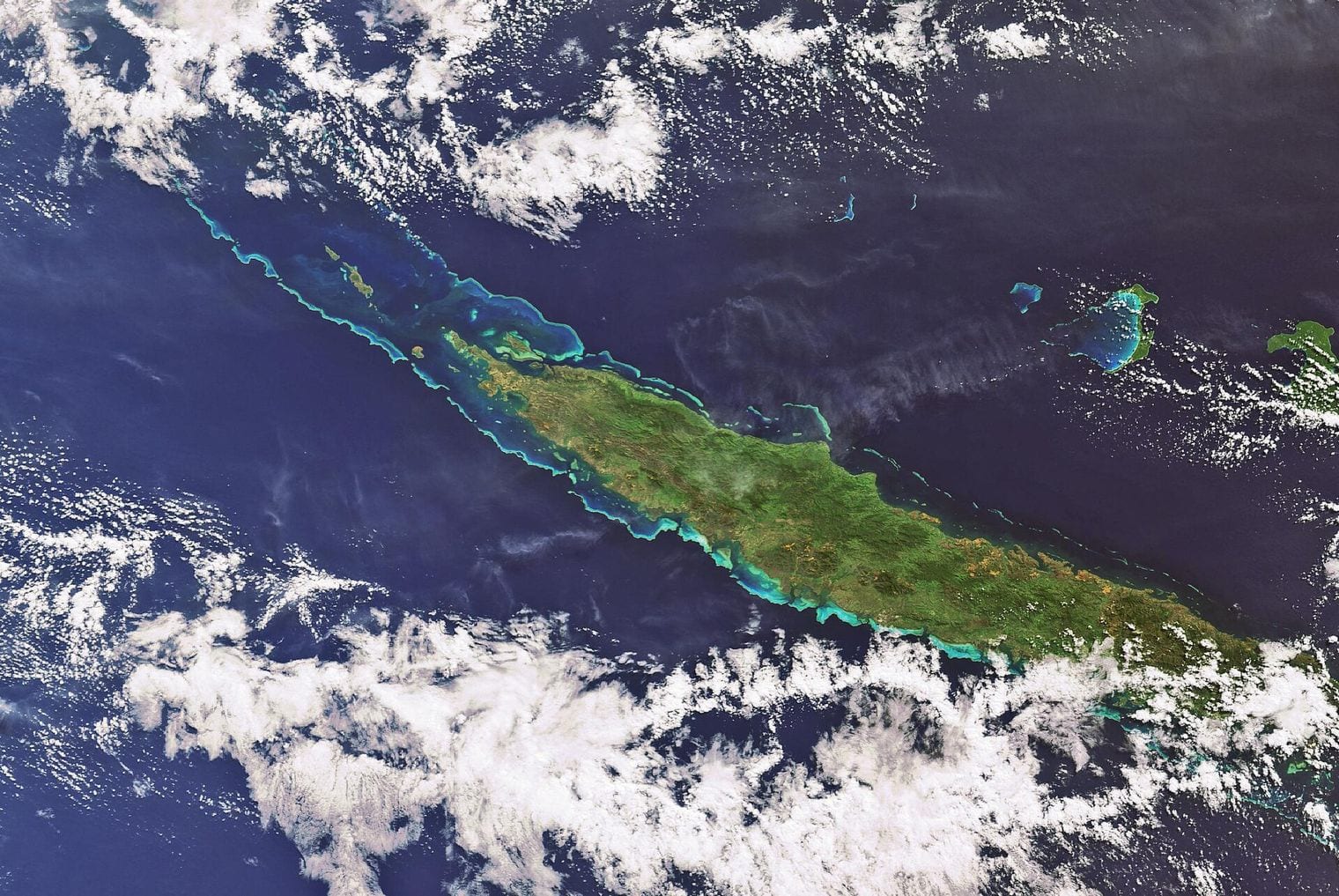
At 1,500 km, the New Caledonian Barrier Reef is the longest genuinely continuous barrier reef in the world — a distinction that belongs to it rather than to the reef above it, because the Great Barrier Reef is a chain of separate structures while this is largely one unbroken wall. It encircles Grande Terre and its outlying islands, enclosing a lagoon of some 24,000 km² that is among the largest anywhere, with an average depth of only about 25 metres.
UNESCO inscribed the lagoons in 2008 for the sheer range of reef types packed into one system: fringing reefs against the shore, the barrier itself, and the double barrier and atoll structures of the Entrecasteaux reefs to the north.
The lagoon shelters dugongs and nesting green turtles, and its shallow, sheltered water makes it one of the more forgiving places on this list to dive. It is also the reef that best exposes the area problem — the 24,000 km² figure so often quoted for it is the lagoon it encloses, not the reef itself, which has no published area at all.
33. Mesoamerican Barrier Reef System
Caribbean coast from Isla Contoy, Mexico to the Bay Islands, Honduras
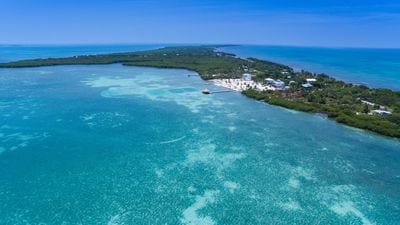
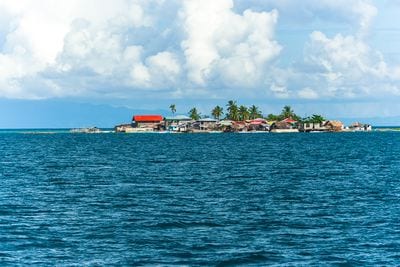
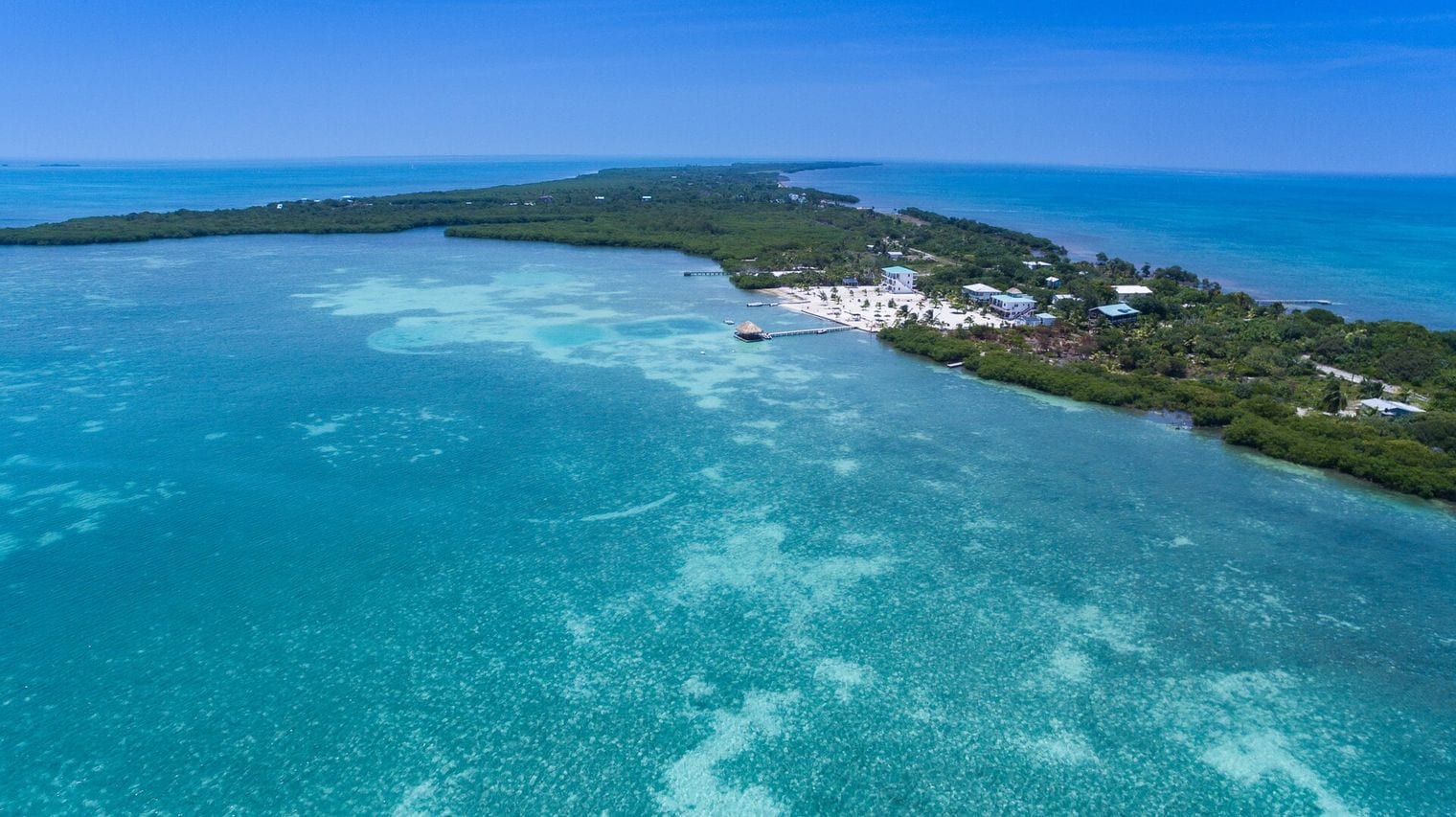
At 1,126 km, the Mesoamerican Barrier Reef System is the longest reef in the Atlantic, running from Isla Contoy off the tip of Mexico's Yucatán Peninsula down past Belize and Guatemala to the Bay Islands of Honduras. Four countries share it, which is part of why it is measured and managed as one system rather than four national fragments.
Its most famous stretch is the Belizean section, where the reef sits far enough offshore to enclose three coral atolls, one of which holds the Great Blue Hole — a near-circular collapsed cave mouth that is probably the single most photographed feature on any reef outside Australia.
That Belizean stretch is also why this entry matters to the ranking: at roughly 290 km it is a segment of this system, not a separate reef, so it is counted here rather than given a rank of its own. Lists that award it one usually end up ranking the parent system below its own part.
44. Florida Reef
Seaward of the Florida Keys, Florida, United States
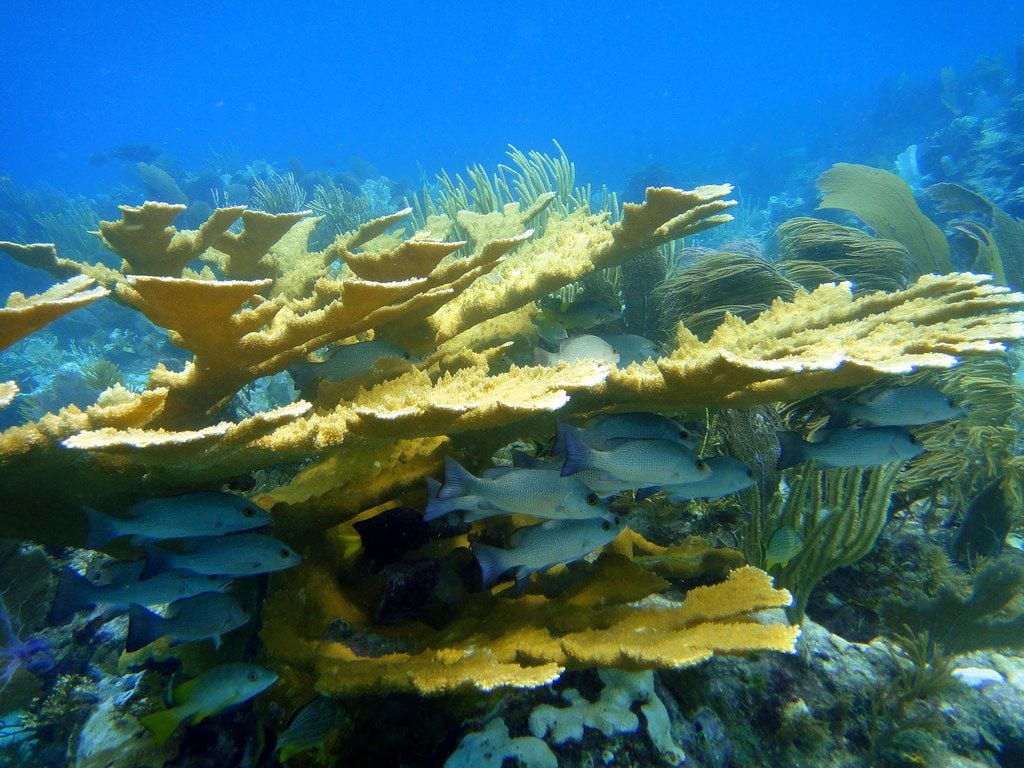
At 270 km, measured along the 20-metre depth contour, the Florida Reef is the only living coral barrier reef off the continental United States. It lies a few miles seaward of the Florida Keys, running in a long arc from near Miami down to the Dry Tortugas, and despite reading as a single line on a map it takes in more than 6,000 individual reefs.
It is the most accessible reef in this countdown by a wide margin. Much of it sits in shallow, warm water within an easy boat ride of the Overseas Highway, and John Pennekamp Coral Reef State Park at Key Largo put a stretch of it under protection as an underwater park decades before most reefs anywhere had any protection at all.
Shallow patch reefs on the landward side suit snorkellers, while the seaward edge drops into spur-and-groove formations that draw divers year-round.
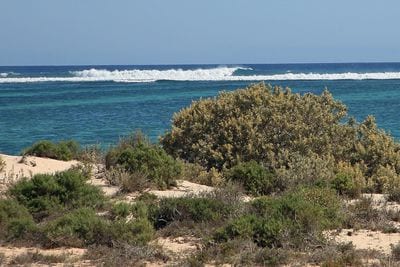
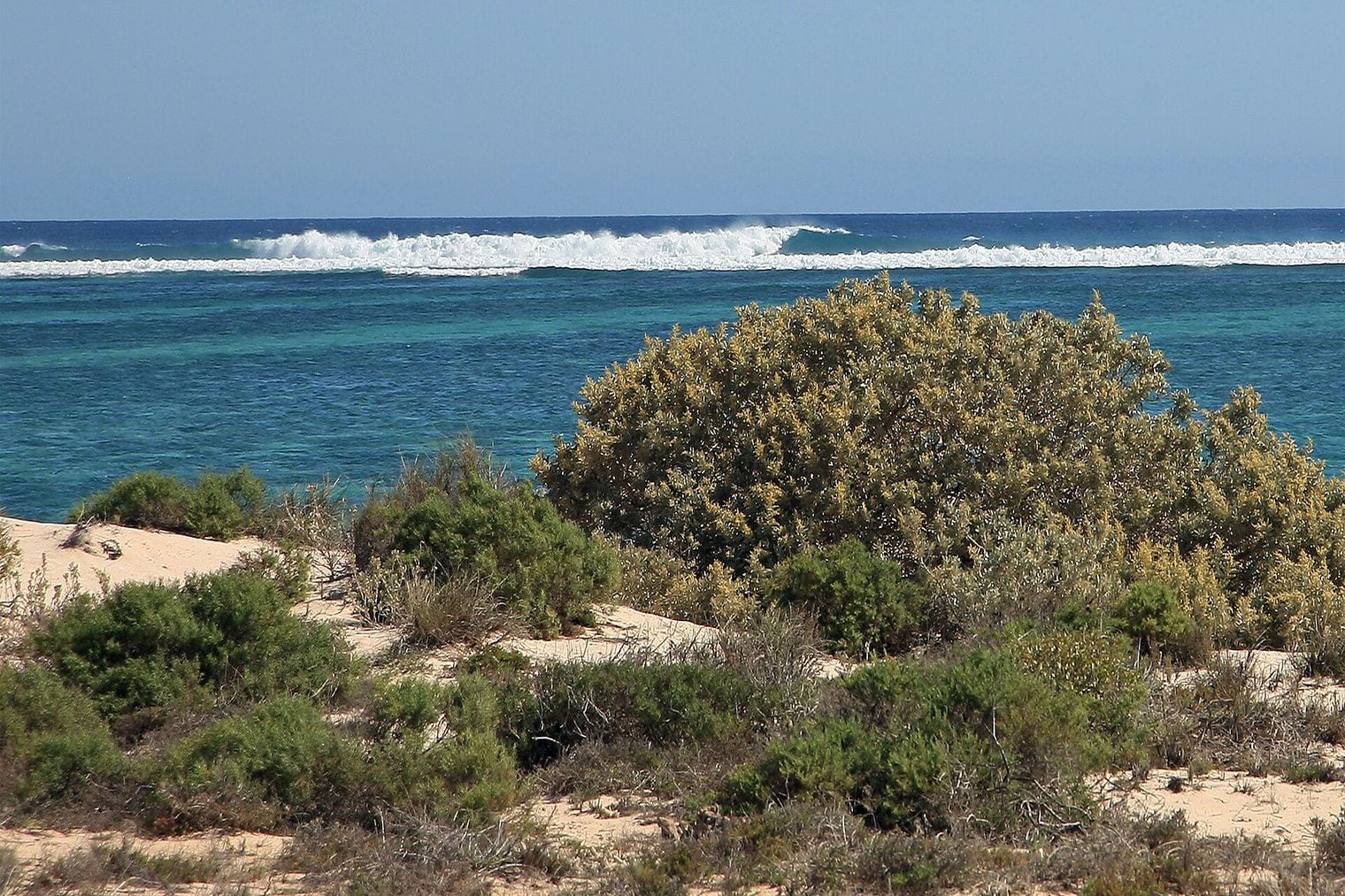
At 260 km, Ningaloo Reef is Australia's largest fringing reef and the one you can reach without a boat. Where most barrier reefs sit far offshore behind a wide lagoon, Ningaloo runs hard against the Western Australian coast — at Coral Bay it is less than 500 metres from the beach, close enough to walk in off the sand and swim out over living coral.
That proximity is the whole appeal, and it is why the reef became a UNESCO World Heritage site in 2011 alongside the arid Cape Range peninsula behind it.
The reef is best known for the whale sharks that gather along it through the autumn and winter months to feed after the coral spawns, joined at other times of year by manta rays, humpback whales and nesting turtles. Few places put a reef of this length and a desert range within sight of each other.
At 225 km, the Andros Barrier Reef runs almost the entire eastern side of Andros Island and is the largest reef in the Bahamas. What sets it apart is not the reef so much as what lies immediately beyond it: the Tongue of the Ocean, a U-shaped trench roughly 30 km wide that deepens from about 1,100 metres at its southern end to 2,000 metres at its northern.
The result is a wall dive that begins in a few metres of water and ends in abyss, with the reef edge dropping away almost vertically only a short swim from shallow coral.
Andros itself is riddled with blue holes — flooded limestone shafts running inland as well as offshore — which makes the island one of the more unusual dive destinations in the Caribbean. It stays quiet compared with the Bahamian resort islands, and much of the reef sees very few visitors in a given year.
At 200 km taken together with the adjoining Pascoe Reef, the Great Sea Reef off the northern shore of Vanua Levu is the longest reef in Fiji and the third longest in the Southern Hemisphere. Fijians know it as Cakaulevu, which translates roughly as the great reef, and it shelters the northern coast from open Pacific swell along most of its length.
It is among the least visited reefs of its size anywhere, with no resort strip along it and access mostly by boat from Labasa or the villages on the north coast. That relative obscurity matters locally in a way it does not elsewhere on this list: the reef sits within traditional qoliqoli fishing grounds and supplies a large share of the protein for communities across Fiji's north, so its condition is a food-security question as much as a conservation one.
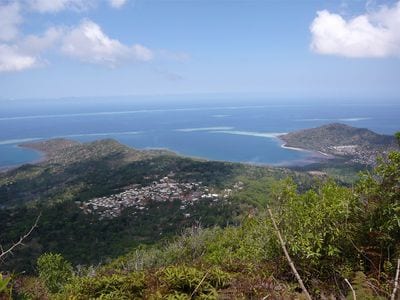
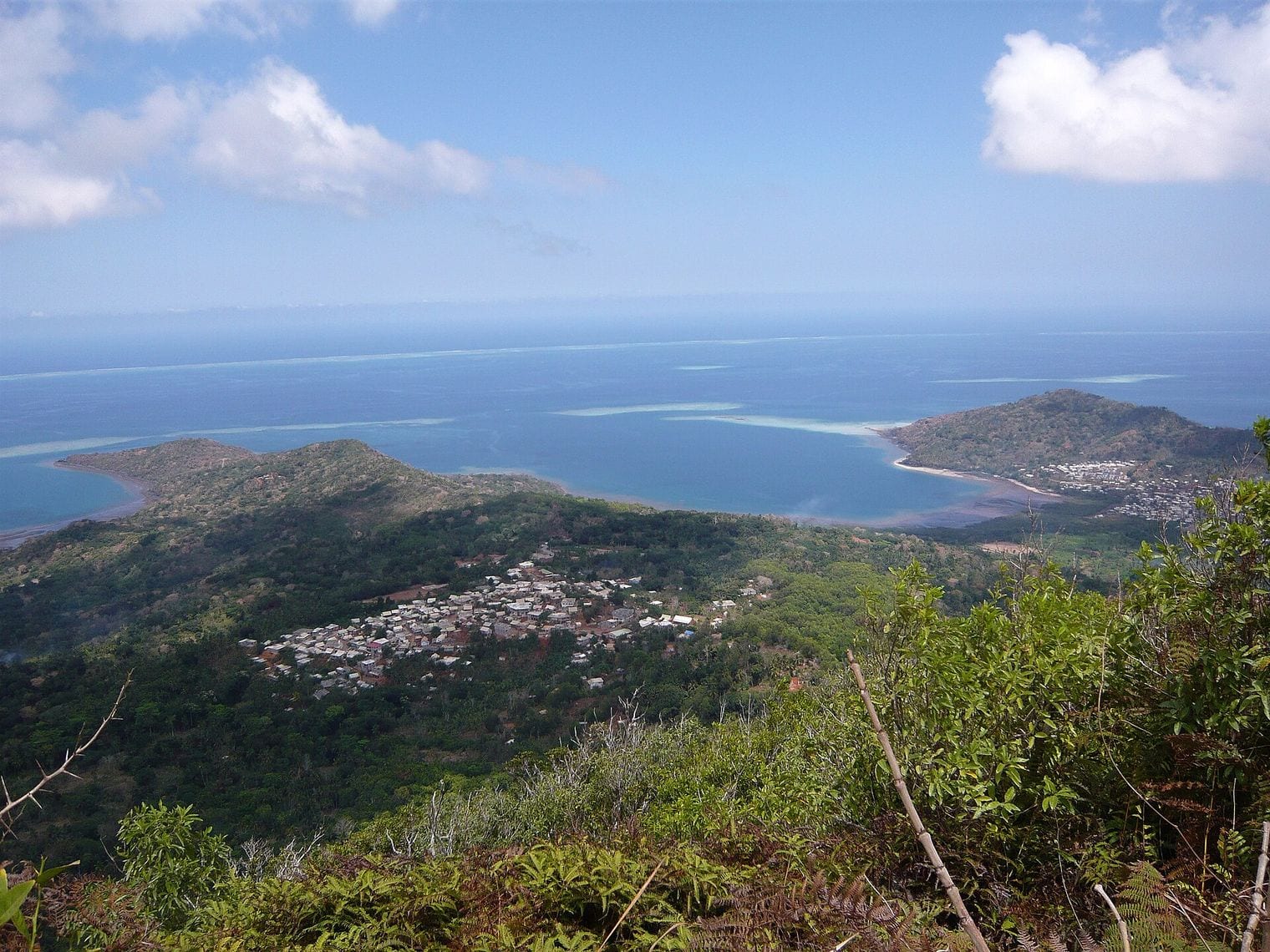
At 195 km, the barrier reef around Mayotte closes an almost unbroken ring about the island and encloses a lagoon of some 1,500 km², one of the largest and deepest in the world. Part of it is a double barrier reef — one reef built outside another, with a channel between them — a formation so rare that only a handful are known anywhere on Earth.
Mayotte sits in the Comoros archipelago in the Mozambique Channel and is an overseas department of France, which makes this the second French entry in the countdown after New Caledonia.
The lagoon is deep enough for humpback whales to enter and calve between roughly July and October, and its passes draw manta rays and turtles. For a reef of this length it remains little known outside France, with far fewer divers than reefs half its size in the Red Sea or the Caribbean.
99. Danajon Bank
Camotes Sea, between Bohol, Cebu and Leyte, Philippines
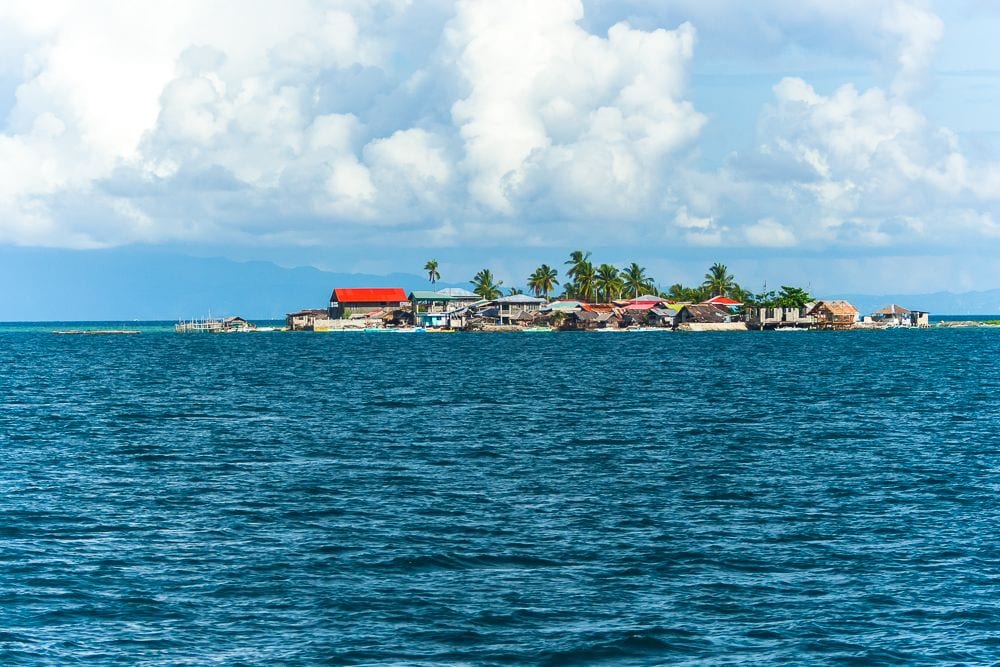
At 156 km, Danajon Bank is the only double barrier reef in the Philippines and one of just six in the world. It formed in the Camotes Sea between Bohol, Cebu and Leyte, where a submarine ridge and a particular combination of tidal currents allowed two sets of reef to build offshore, one behind the other, over thousands of years.
Its rarity sits uneasily with its condition. The reef lies in one of the most densely populated coastal regions of the Philippines and has been fished hard for generations, so it is studied and worked on as much as it is dived.
That said, it is the entry that earns the Coral Triangle its place in this countdown — the surrounding waters hold more coral species than anywhere else on the planet, and Danajon is the one structure there long enough to rank on length.
At 150 km, Jardines de la Reina runs parallel to the southern coast of Cuba, from Cayo Breton to Cayos Mordazo, threading through a chain of more than 600 cays and islands some 80 km offshore. It is the shortest reef to make this list and comfortably the best preserved.
A marine reserve was declared here in 1996 and the wider area became a national park in 2010, with commercial fishing largely kept out and visitor numbers low ever since.
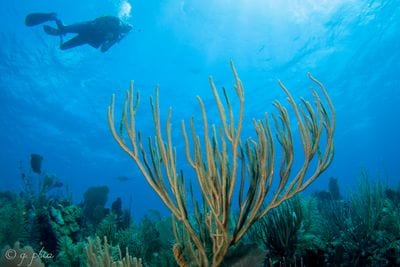
What survives is close to a Caribbean reef as it was before the region's coral decline: healthy stands of black coral and sponges, dense mangrove nurseries in the shallows, and silky and Caribbean reef sharks in numbers that have become genuinely unusual in this sea. Divers reach it only by liveaboard, and permits are limited, which is much of the reason it still looks the way it does.
FAQ: The World's Largest Coral Reefs
What is the largest coral reef in the world?
The Great Barrier Reef, at 2,300 km off the coast of Queensland, Australia. Guinness World Records recognises it as the longest reef, and NOAA calls it the largest living structure on Earth. It is not one continuous wall of coral but a chain of nearly 3,000 separate reefs and around 900 islands.
Why is the Red Sea not on this list?
Because the Red Sea is not a single reef. Its roughly 2,000 km of coral is a series of separate fringing reefs along both coasts, mixed with patch reefs, banks and atoll-like structures. Ranking it here would mean counting an entire coastline's reefs as one, which no other entry on this list does.
What is the longest continuous barrier reef?
The New Caledonian Barrier Reef, at 1,500 km. The Great Barrier Reef is longer overall but is made up of nearly 3,000 individual reefs rather than one unbroken structure, so New Caledonia holds the record for continuity while Australia holds it for total length. Both claims are accurate and often confused.
Why are these reefs ranked by length rather than by area?
Because a like-for-like reef area is not published. The Great Barrier Reef's 344,400 km² is a marine park boundary, New Caledonia has no reef-area figure at all, and the Mesoamerican's 106,629 km² is a whole marine ecoregion. Length is the one measure every system here reports on a comparable basis.
What is the largest coral reef in the Caribbean?
The Mesoamerican Barrier Reef System, at 1,126 km, which is also the longest reef in the Atlantic. It runs from Mexico's Yucatán Peninsula past Belize and Guatemala to Honduras. Its Belizean stretch of roughly 290 km is the most visited section, but it is part of this system rather than a reef in its own right.