We build and rank every list first. Booking links come after, and only where
a partner sells a ticket, tour or stay for that exact place, so a place with
nothing to book is listed exactly as prominently as one you can book.
So how do we earn? Some links on this page go to booking
partners, and if you book tickets, tours or a stay through
one, we may earn a commission. It costs you nothing extra.
That commission never decides which places make the list, the order they
appear in, or what we write about them. No entry is sponsored or a paid
placement.
By the CityViking Research TeamPublished Ranked by installed generating capacity · 12 min read
Last verified Checked before launchOct 30, 202618 sources6 publishers2 government & parks13 encyclopedias & research3 venues & other sitesPublished · Oct 30, 2026Researched and checked before it went liveClick for every source and the full change log.
The record
22,500 MW
Three Gorges Dam
China
The record
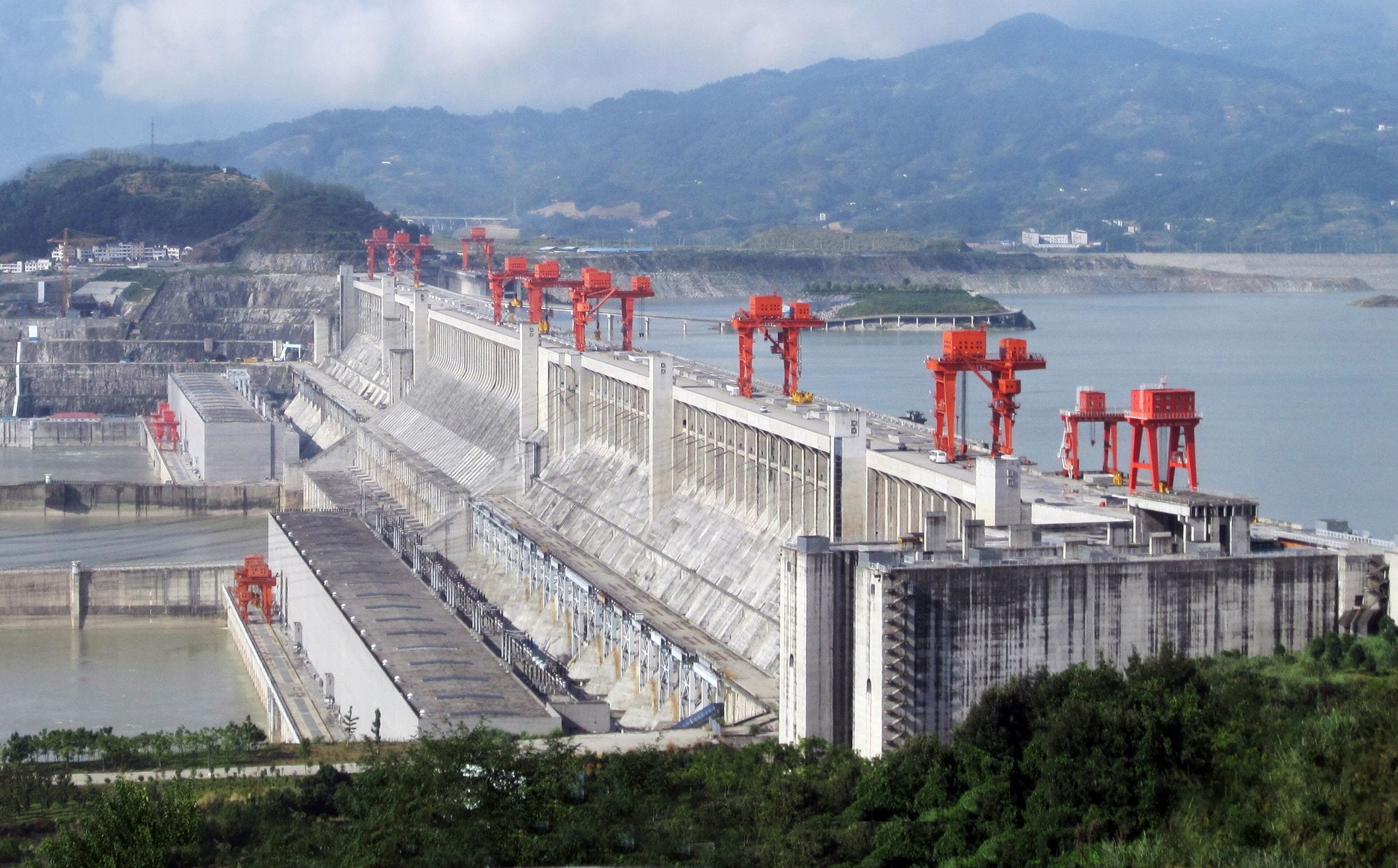
The largest hydroelectric dam in the world is the Three Gorges Dam, in China — 22,500 MW, installed generating capacity.
Source: cypc.com.cn. Verified .
Hoover Dam is the most famous dam in America, yet at 2,080 MW it has less than a tenth of the capacity of the Three Gorges and comes nowhere near this list. This countdown ranks the world's largest dams by installed hydroelectric capacity, from 5,428 MW at Churchill Falls in Canada to 22,500 MW at the Three Gorges, across seven countries, with six of the fifteen in China.
Two rules decide what counts. The first is one dam and its own power station: the 25,215 MW sometimes quoted for the Three Gorges adds the separate Gezhouba Dam downstream, so it is not used here.
The second is that the turbines must be installed and generating, which leaves out Tibet's Medog project, planned at about 60,000 MW and under construction since 2025, and counts Longtan in Guangxi at its installed 4,900 MW rather than the 6,426 MW of its full design. Height and concrete volume are separate records, and by either one the Three Gorges would not lead at all.
Five of the top ten stand on one river system.Three Gorges blocks the Yangtze itself, while Wudongde, Baihetan, Xiluodu and Xiangjiaba follow one another down the Jinsha, its upper course.
Baihetan has the largest turbines in the world — sixteen machines of 1,000 MW each, so two of them together come close to the 2,080 MW of the whole Hoover Dam.
The biggest dam is not always the busiest.Itaipu set the record for a year's output with 103 TWh in 2016, and held it until the Three Gorges produced nearly 112 TWh after the monsoons of 2020.
Itaipu drowned one of the world's largest waterfalls. Its reservoir flooded the Guaíra Falls, and in 1994 the American Society of Civil Engineers named the dam one of the seven wonders of the modern world.
Krasnoyarsk Dam is on Russian money — the 10-ruble banknote carries it, and for twelve years from 1971 it was the largest single power plant on Earth.
Churchill Falls has no big dam at all. Its reservoir is held in by 88 dikes totalling 64 kilometres, and its powerhouse sits 300 metres underground in solid granite.
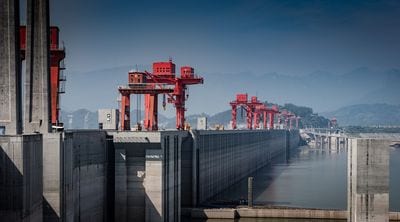
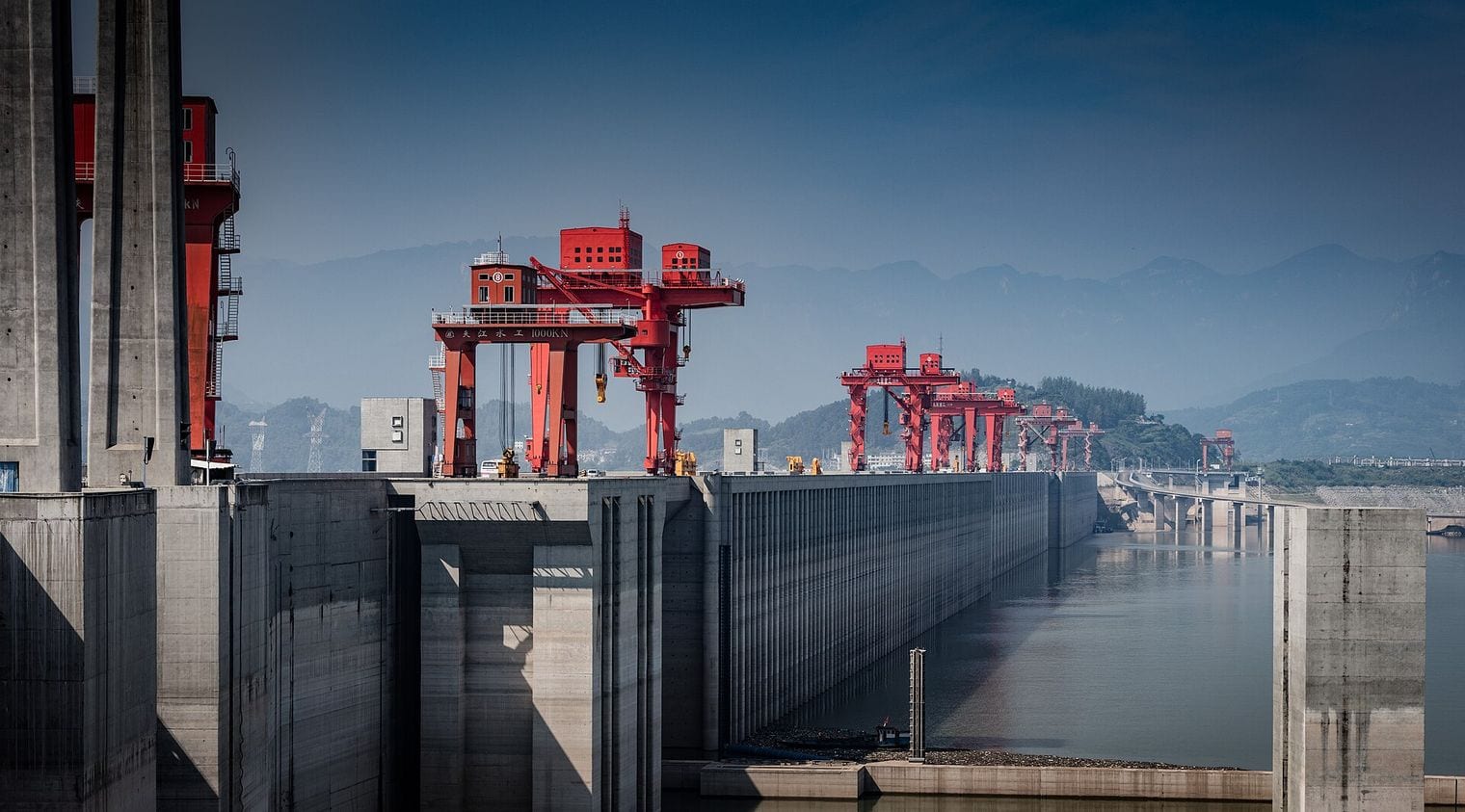
At 22,500 MW, the Three Gorges Dam is the largest power station on Earth, a concrete gravity wall across the Yangtze near Sandouping in Hubei, just downstream of the gorges that gave it its name. Its capacity comes from 32 main turbines of 700 MW each and two smaller 50 MW units, and the last of the main machines began producing power in 2012.
The wall stands 181 metres above its rock base and runs more than 2.3 kilometres across the river, and the project poured 27.2 million cubic metres of concrete.
It was built for flood control and shipping as much as for electricity: a flight of locks and a ship lift, completed in 2015, carry vessels past the dam. The cost was human as well as financial, since estimates of the people displaced by the reservoir range from 1.13 million to about 1.4 million.
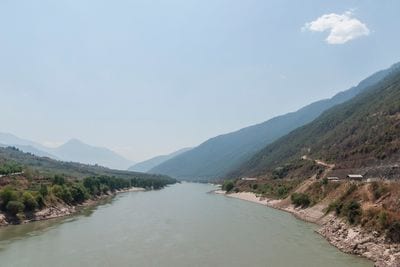
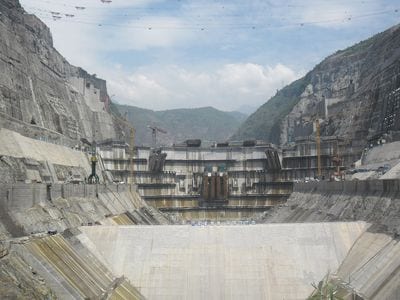
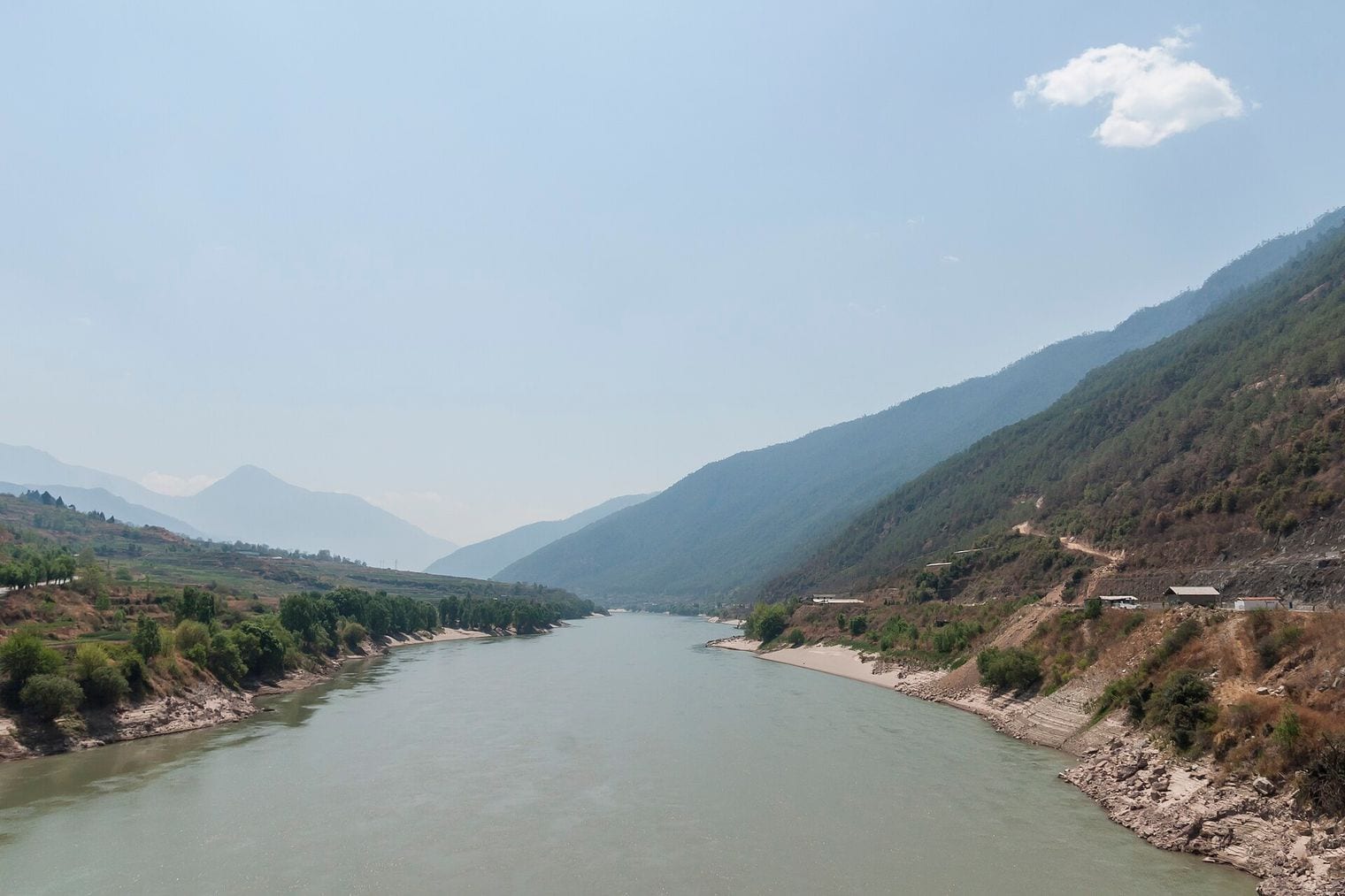
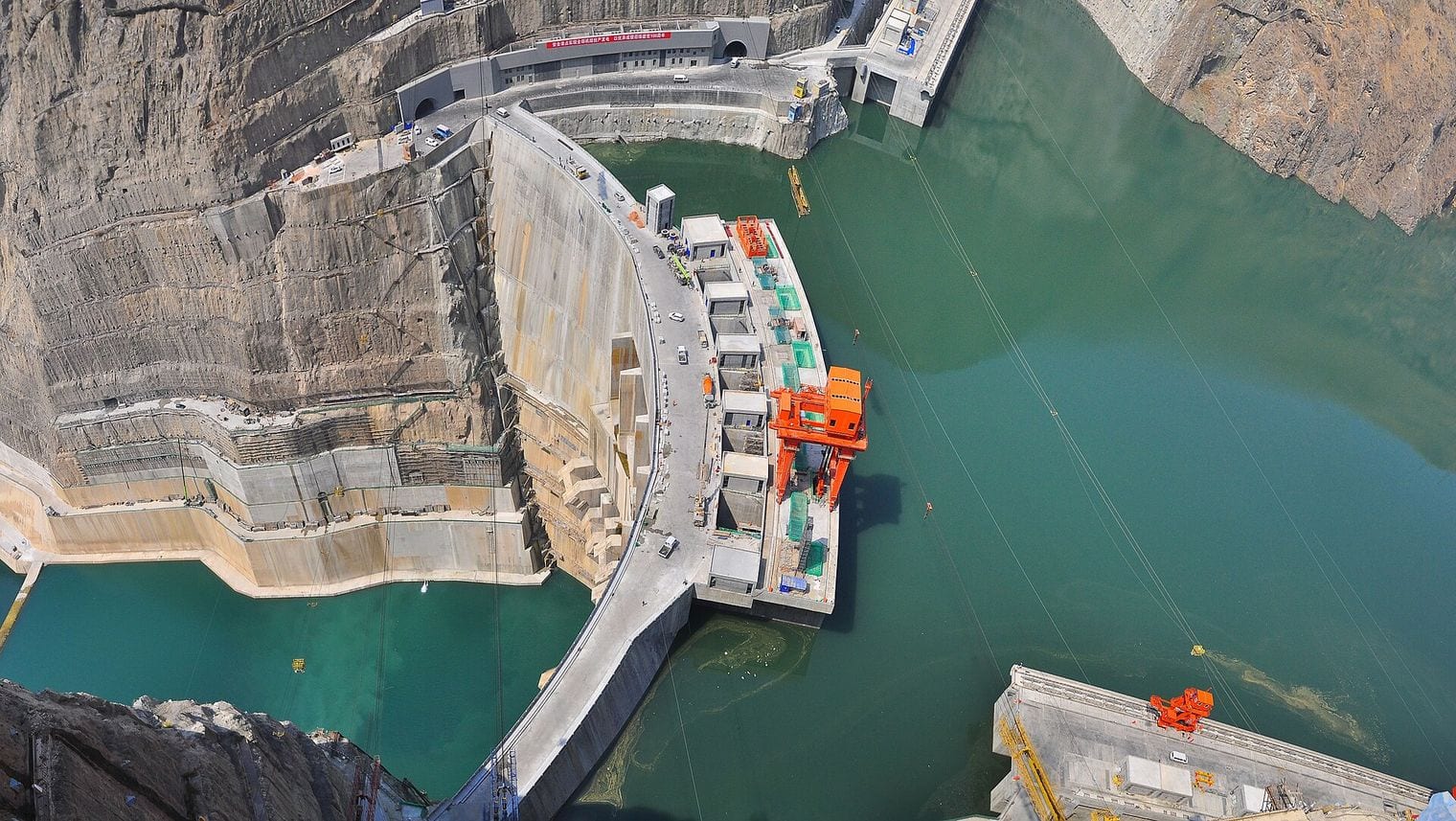
At 16,000 MW, Baihetan is the second-largest hydroelectric plant in the world, a 289-metre double-curvature arch dam on the Jinsha River, the upper Yangtze, where it divides Sichuan from Yunnan. Its two underground powerhouses hold eight generators each, and every one of the sixteen is rated at 1,000 MW, the largest turbines in the world.
The arch is just 13 metres thick at the crest and 72 metres at the base, curving in two directions so that the gorge walls carry the weight of the reservoir.
All sixteen units were running by 20 December 2022, and Baihetan is often described as the last of the giant projects China began with the Three Gorges. It sits in a chain of Jinsha River dams, with Wudongde upstream and Xiluodu and Xiangjiaba below, that sends power from China's southwest towards its eastern cities.
33. Itaipu Dam
Paraná River, Foz do Iguaçu, Brazil / Hernandarias, Paraguay
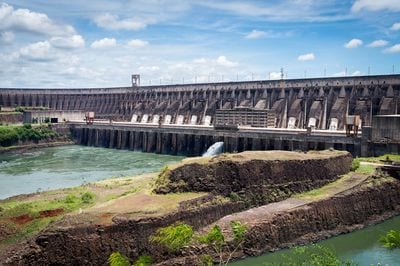
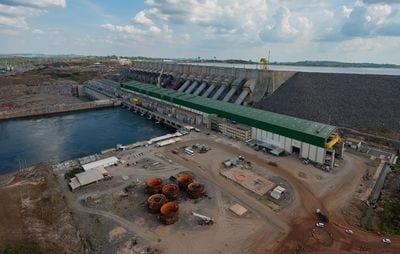
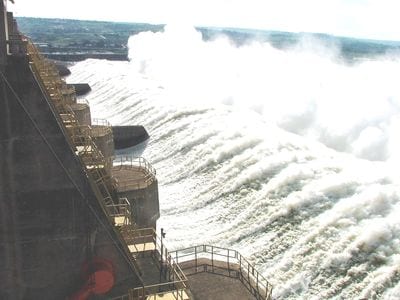
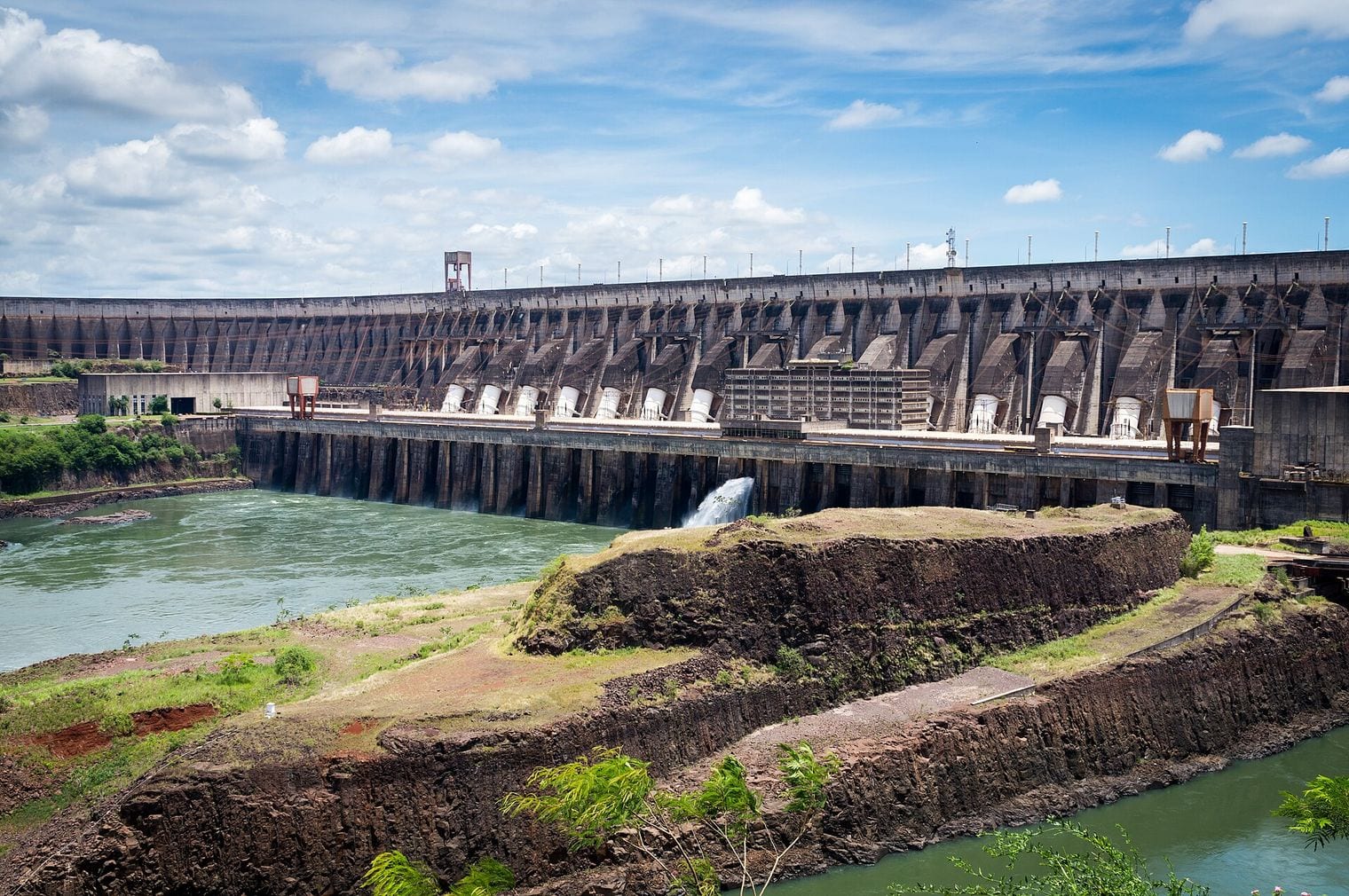
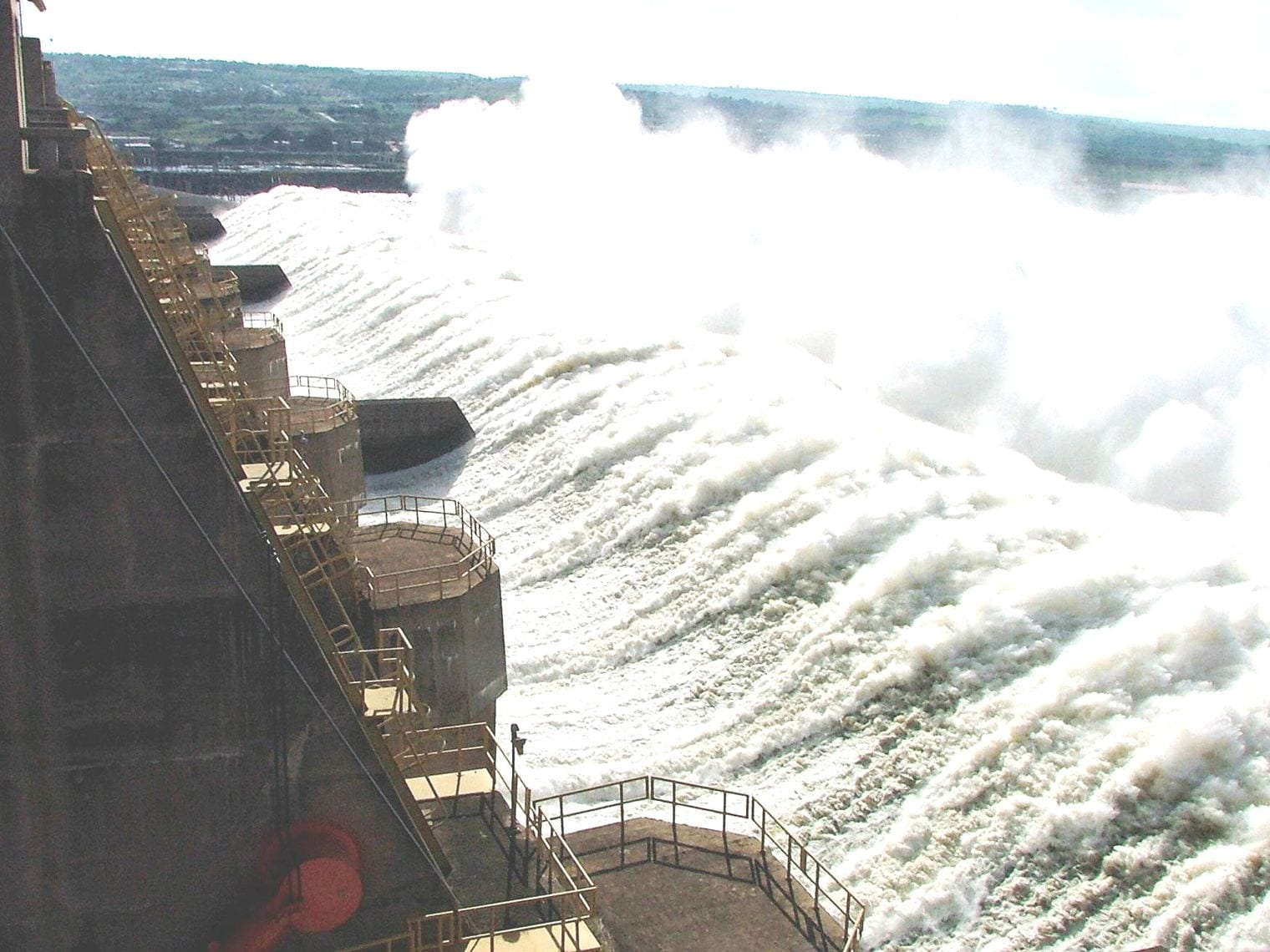
At 14,000 MW, Itaipu is the largest hydroelectric plant outside China, and the one that took the world title from Venezuela's Guri. It spans the Paraná River on the border between Brazil and Paraguay, built under a 1973 treaty between the two countries, and its 20 generating units of 700 MW each began producing power in 1984.
Its reservoir drowned the Guaíra Falls, one of the largest waterfalls in the world, and the construction displaced some 10,000 families. In 1994 the American Society of Civil Engineers named Itaipu one of the seven wonders of the modern world, and in 2016 it generated 103 TWh, a record for a single plant that stood until the Three Gorges passed it after the monsoons of 2020.
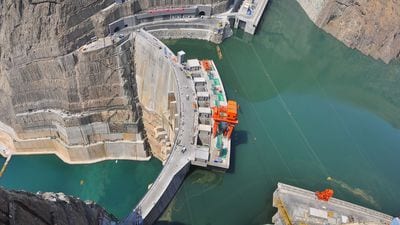
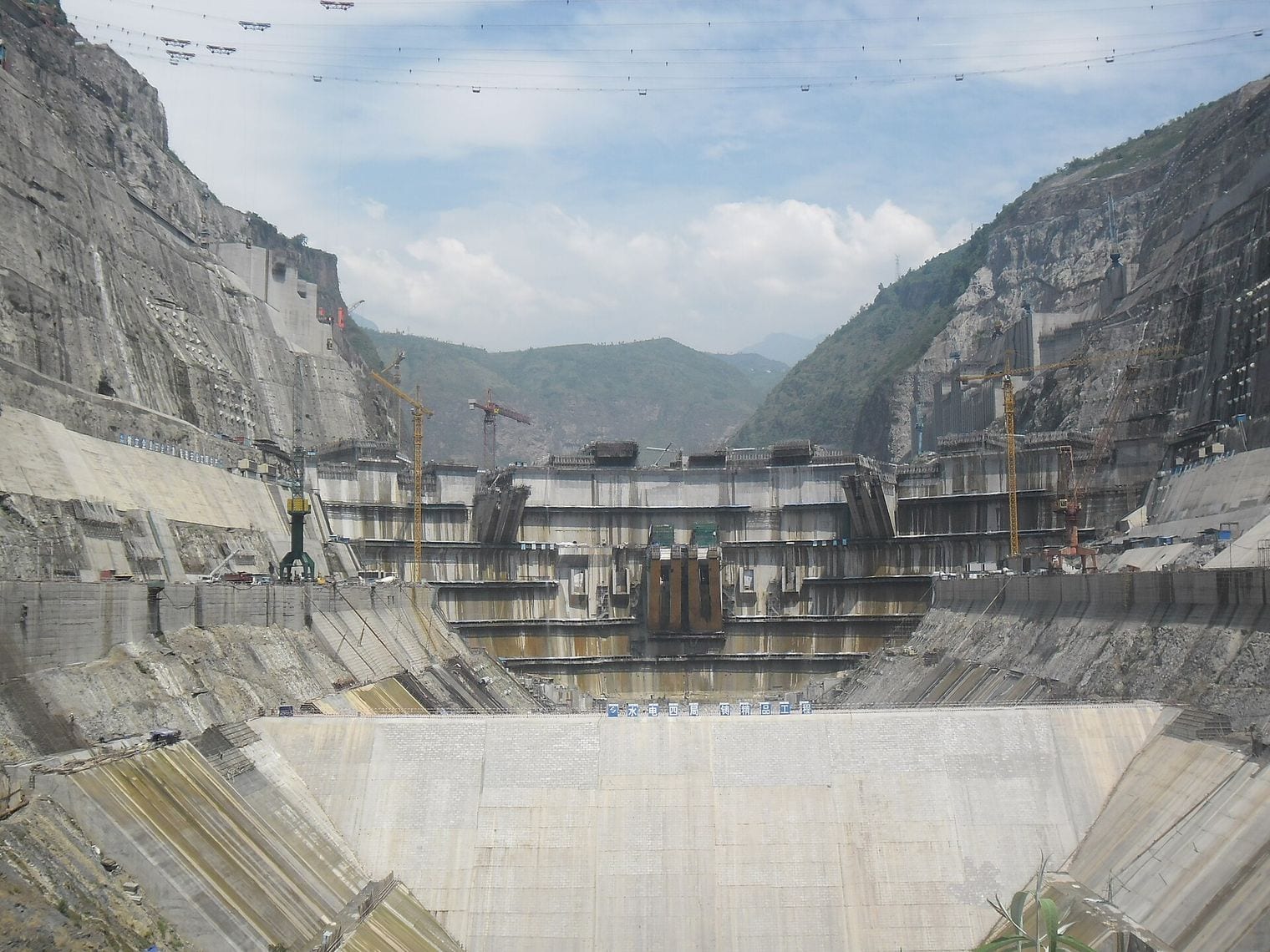
At 13,860 MW, Xiluodu is the fourth-largest power station in the world, a 285.5-metre double-curvature arch on the Jinsha River whose wall reaches from Yongshan County in Yunnan across to Leibo County in Sichuan. Its 18 generators of 770 MW each came online between 2013 and 2014.
It is also the third-tallest arch dam in the world, with a crest about 700 metres long. Power is only part of its job: the dam provides flood and silt control, and its regulated releases are meant to ease navigation further down the Yangtze. China Yangtze Power runs it alongside the Three Gorges and the other great Jinsha River dams.
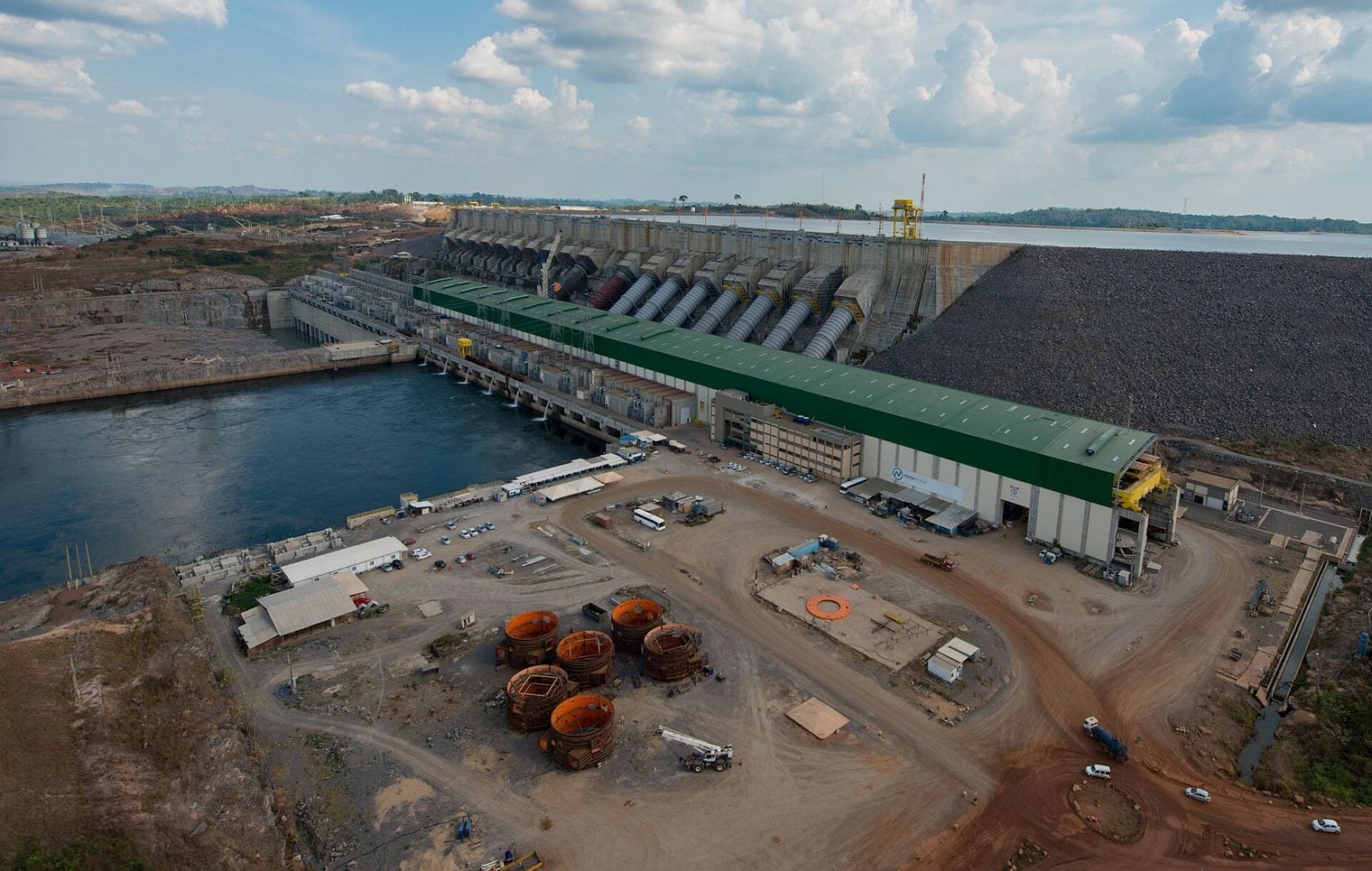
At 11,233 MW, Belo Monte is the largest hydroelectric plant entirely within Brazil and the fifth-largest on Earth, a dam complex on the Xingu River in the state of Pará. The main powerhouse holds eighteen 611 MW turbines, the last of them installed in November 2019, and six small units at the Pimental dam upstream bring it to its full rating.
It holds back far less water than its size suggests: the planned reservoir was cut from 1,225 to 440 square kilometres by moving the dam further upstream, and output swings with the river's seasons, with a guaranteed minimum of 4,571 MW, about 39% of capacity. The project was fiercely opposed by the Indigenous peoples of the Xingu, whose protests against the plans drew attention in Brazil and around the world.
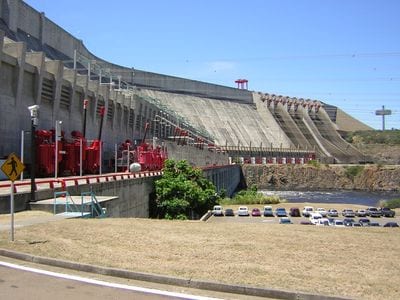
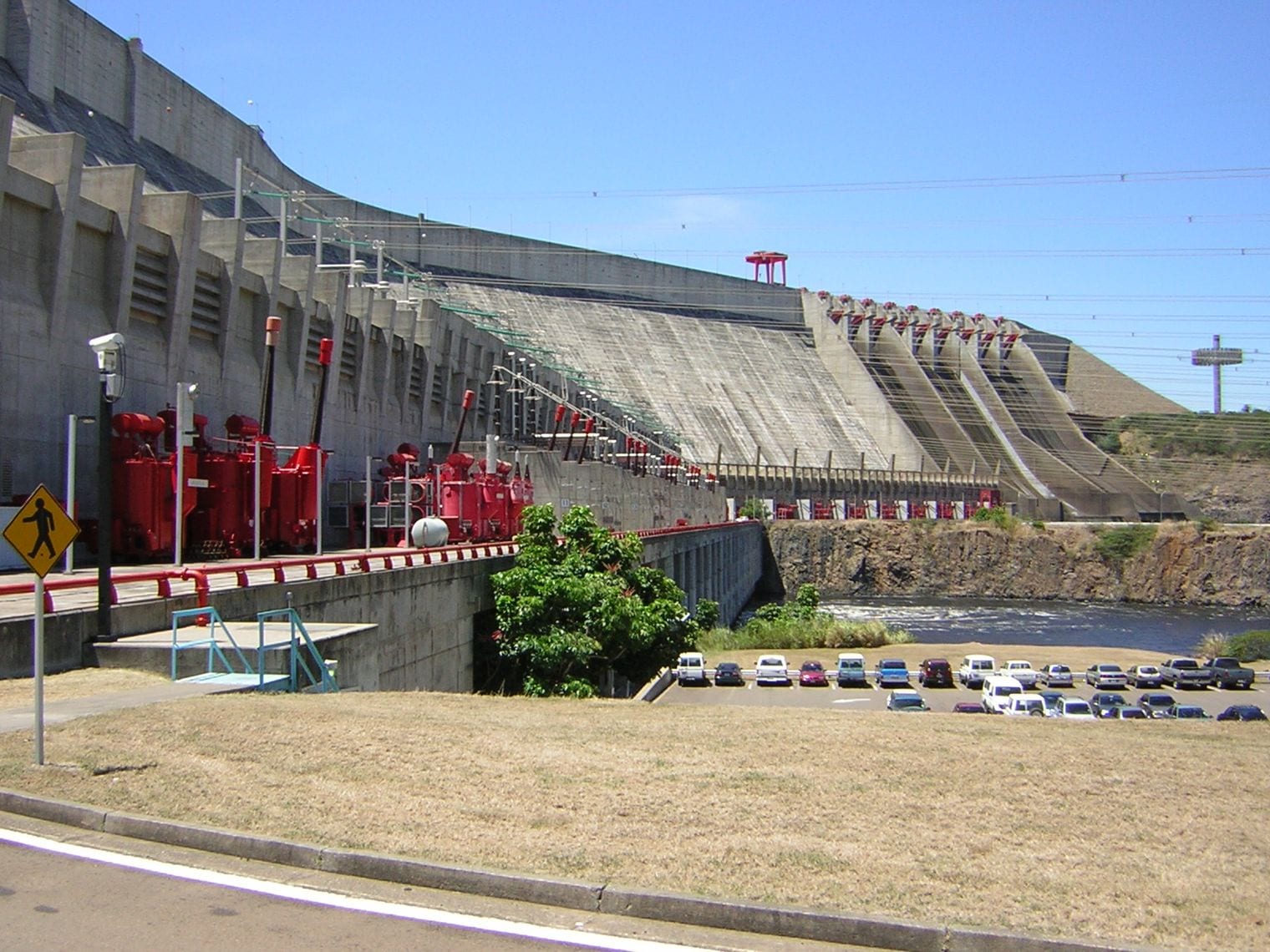
At 10,235 MW, Guri is Venezuela's great power plant, officially the Simón Bolívar Hydroelectric Plant, on the Caroní River in Bolívar State about 100 kilometres above the river's mouth on the Orinoco. Its concrete gravity and embankment dam runs 7,426 metres, and its reservoir of 4,250 square kilometres is one of the largest on Earth. For a time it was the largest hydroelectric station in the world, taking the title from Grand Coulee before Itaipu overtook it.
Sources differ slightly on its rating, and Global Energy Monitor counts 10,200 MW, level with Wudongde, but Guri ranks sixth either way because it generates more in an average year: about 53.41 TWh against Wudongde's 38.91. As of 2006 it supplied more than a third of Venezuela's electricity, and some of its power has gone to Colombia and Brazil.
In recent years not every unit has been available, but this list ranks the capacity installed, not what runs on a given day.
At 10,200 MW, Wudongde is the upstream end of the chain of four giant dams on the Jinsha River, between Sichuan and Yunnan, with twelve 850 MW generators split between underground powerhouses on the left and right banks. Construction began in 2015, the first two turbines went online in July 2020, and the station was fully operational by June 2021.
It is owned by China Three Gorges Corporation, and the cascade it heads continues downstream through Baihetan, Xiluodu and Xiangjiaba. Its capacity matches Guri's in some counts, so the tie is broken by annual output: Venezuela's older plant produces about 53.41 TWh a year to Wudongde's 38.91, which puts Wudongde seventh.
Get new guides like this by email
One email every Thursday with our newest guides for the places you tick.
At 8,370 MW, Tucuruí was the first large-scale hydroelectric project in the Brazilian Amazon, a concrete gravity dam on the Tocantins River in Pará. Its name comes from the Tupí for "grasshopper's water", and its 25 generating units were built in two phases, the first from 1980 to 1984 and the second from 1998 to 2010.
That second phase added a second powerhouse and lifted Tucuruí to its full rating, making it the second-largest plant on this list that lies wholly within Brazil, after Belo Monte. The dam was built for navigation on the Tocantins as well as for power, and it has had a turn on screen too, appearing in the 1985 film The Emerald Forest.
99. Grand Coulee Dam
Columbia River, Grand Coulee, Washington, United States
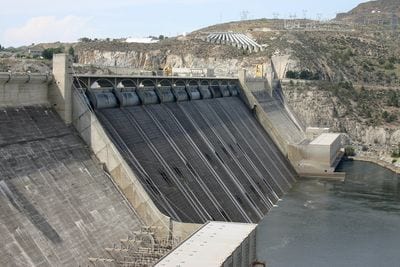
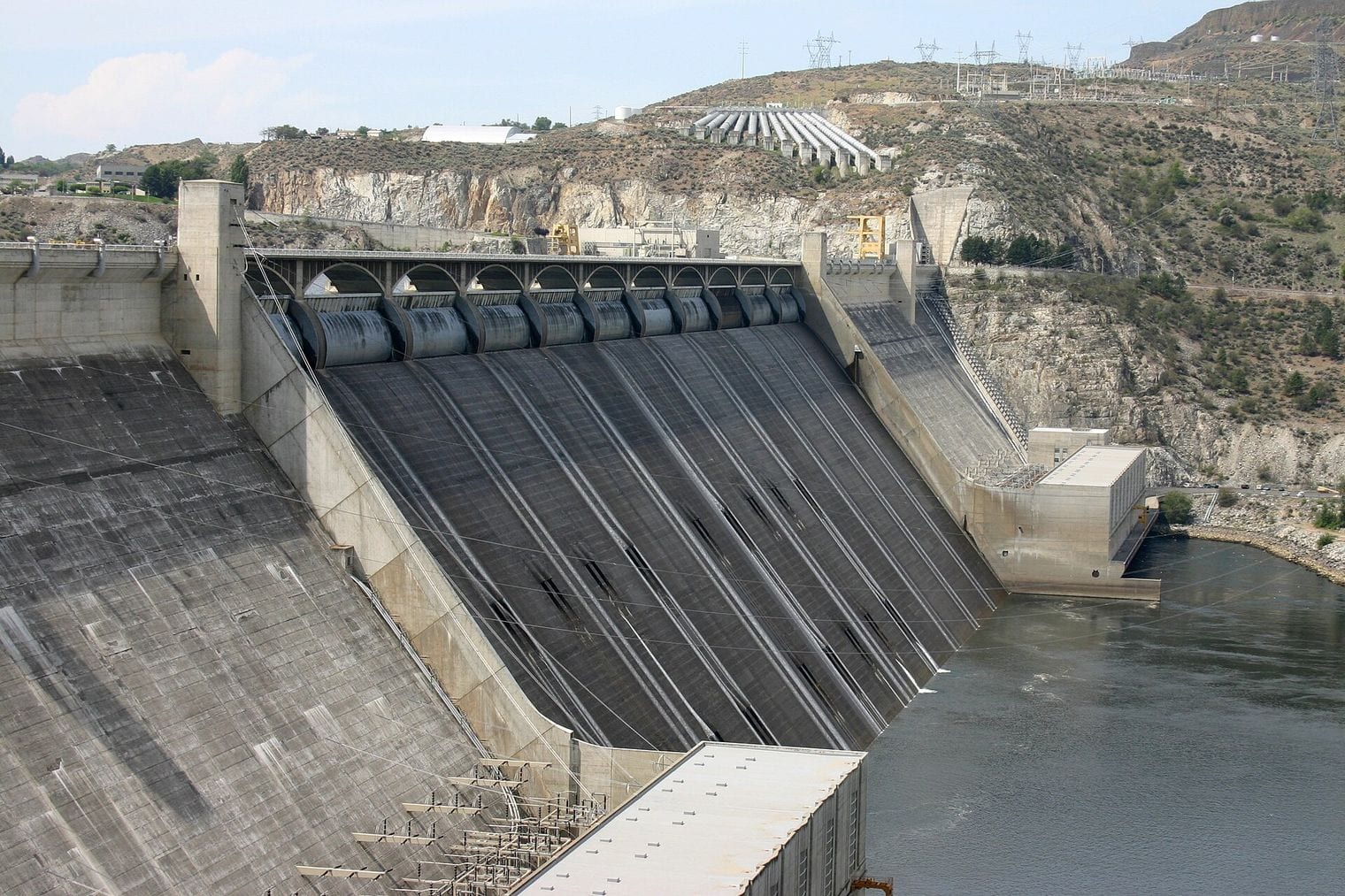
At 6,809 MW, Grand Coulee is the largest power station in the United States and more than three times the size of Hoover Dam's 2,080 MW, a concrete gravity dam on the Columbia River in Washington built between 1933 and 1942. President Franklin D. Roosevelt visited the site in 1934 and backed the "high dam" design, tall enough to power pumps that lift water out of the river to irrigate the Columbia Basin.
The dam began with two powerhouses; the third, completed in 1974, is what lifted it to its present rating. Behind the wall lies Lake Roosevelt, a visitor center tells the story of the dam with photographs and models, and on summer evenings a laser light show is projected onto the dam's face, a tradition since 1989.
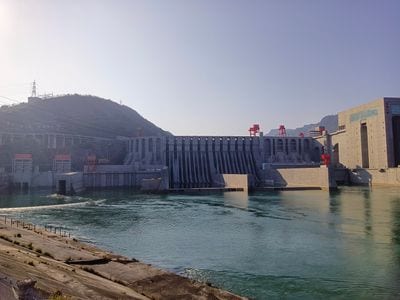
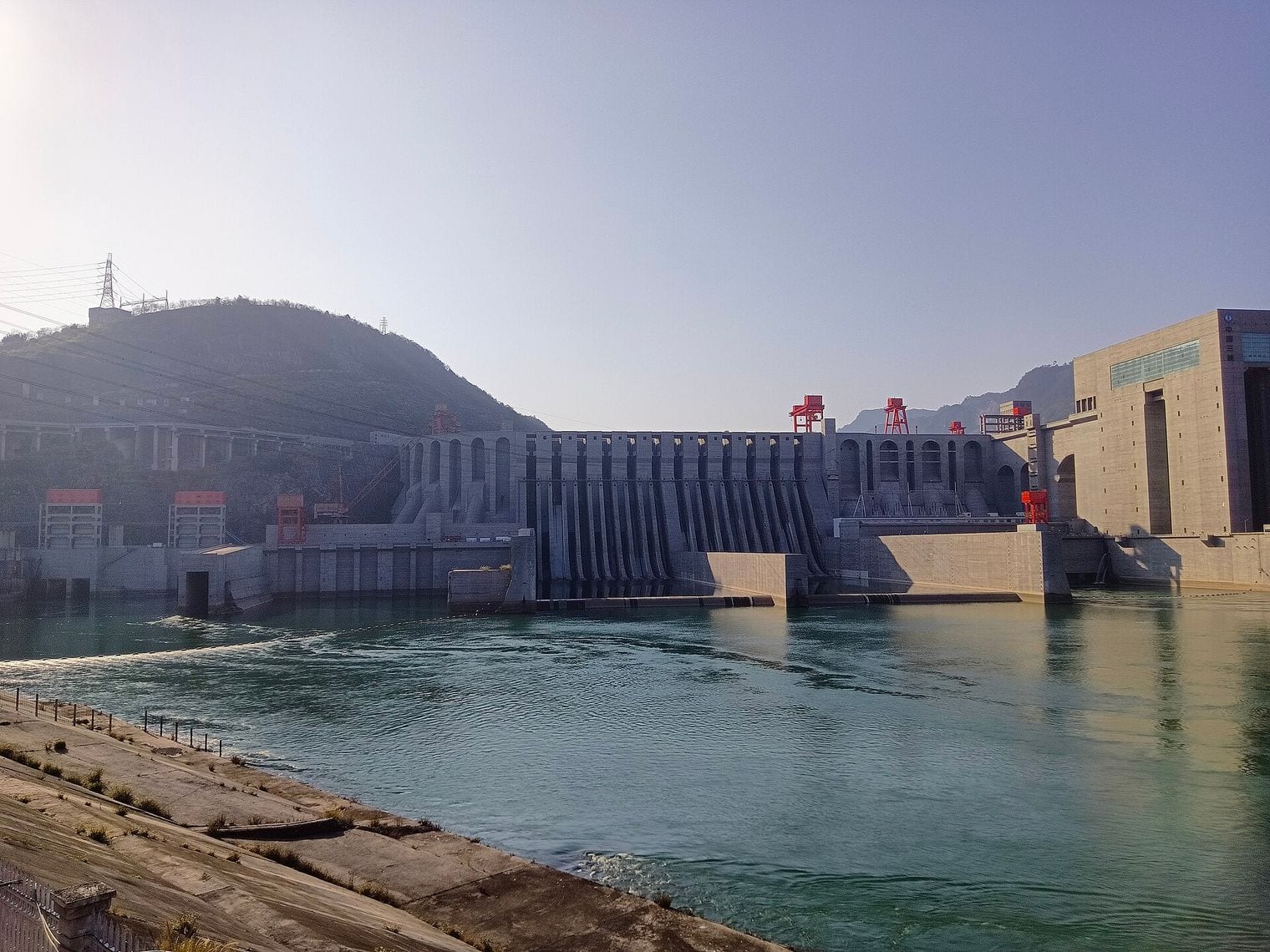
At 6,400 MW, Xiangjiaba is the lowest of the four great Jinsha River dams, a concrete gravity dam between Yunnan and Sichuan. Its operator, China Yangtze Power, lists eight generators of 800 MW each; the Wikipedia list's 7,798 MW adds three 450 MW units the operator does not count, so this ranking uses the operator's figure.
Construction started in November 2006, the first generator came online in October 2012 and the last in July 2014. Its power travels east on the ±800 kV Xiangjiaba–Shanghai HVDC line, which delivers it to Shanghai. Xiangjiaba shares its capacity with Russia's Sayano-Shushenskaya and ranks ahead on annual output, about 30.88 TWh a year against 29.4.
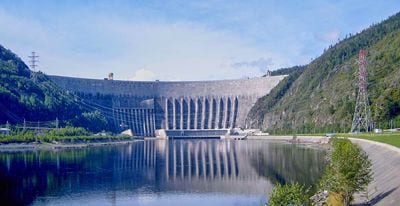
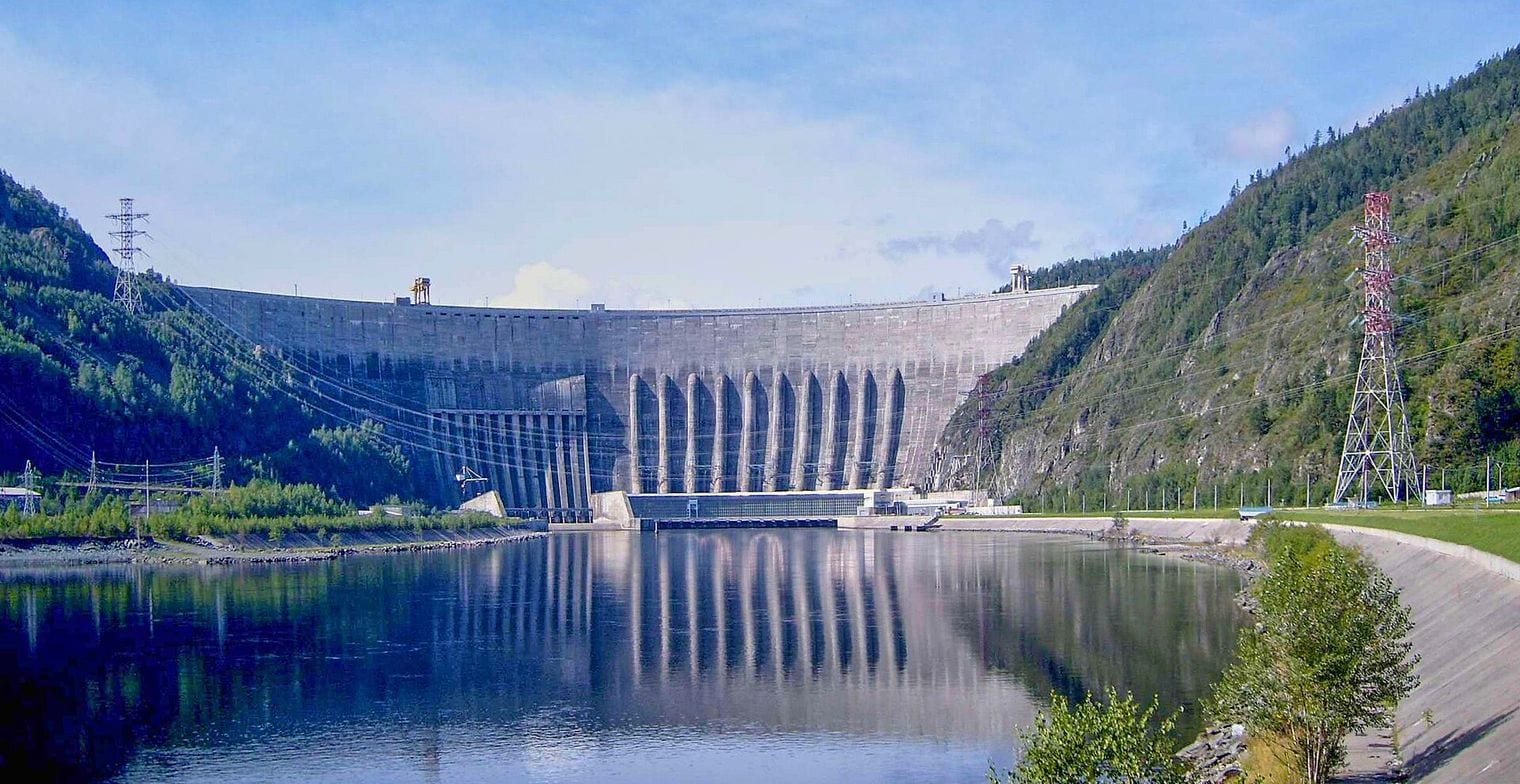
At 6,400 MW, Sayano-Shushenskaya is the largest power plant in Russia, a 242-metre arch-gravity dam on the Yenisei River near Sayanogorsk in Khakassia. Its ten generators of 640 MW each make up the full rating, and its official name honours Pyotr Neporozhny, the Soviet-era Minister of Energy and Electrification.
On 17 August 2009 the plant suffered a catastrophic accident: the engine and turbine rooms flooded and two generators exploded underwater after a short circuit, leaving only two of its ten turbines able to run. Restoring all ten took years, and the station is again Russia's largest. It ties Xiangjiaba on capacity and ranks just behind it on annual generation, about 29.4 TWh a year against 30.88.
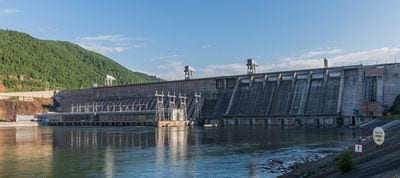
1212. Krasnoyarsk Dam
Yenisei River, Divnogorsk, Krasnoyarsk Krai, Russia
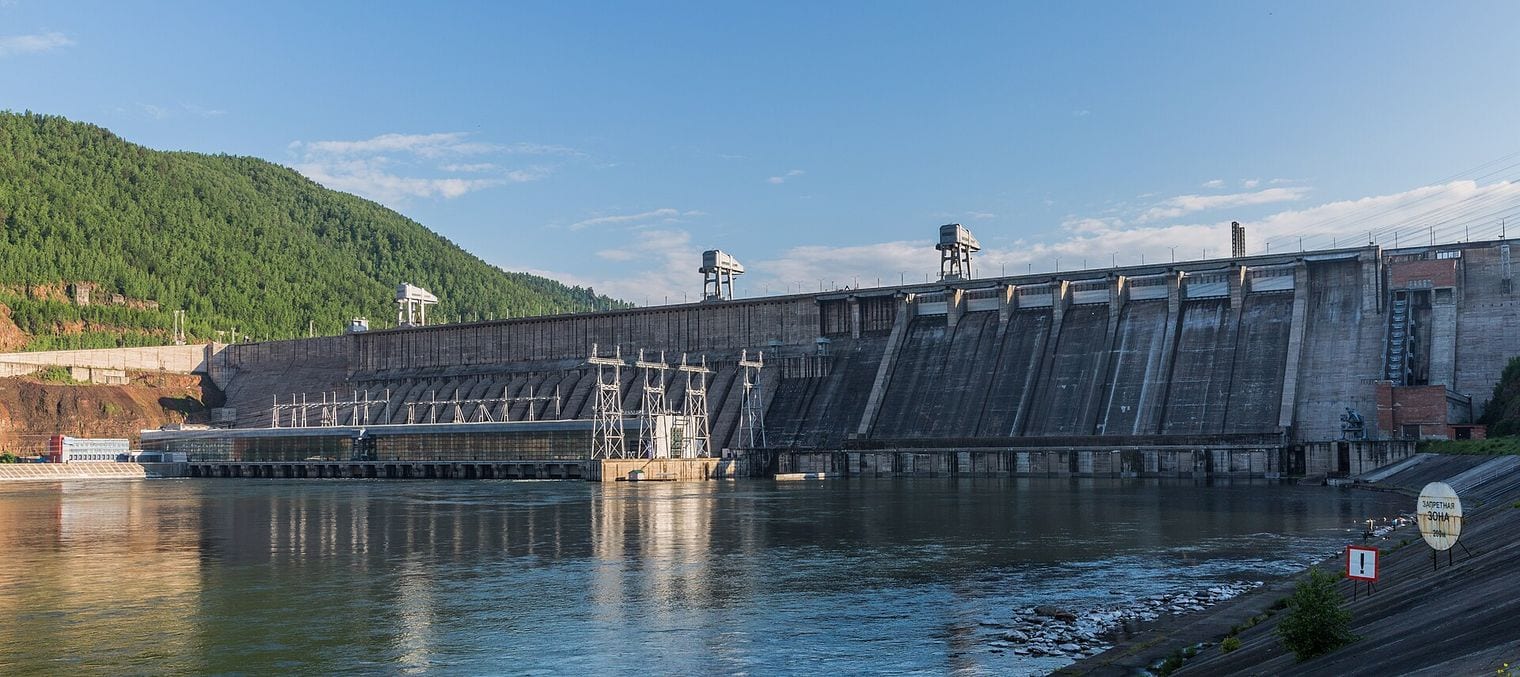
At 6,000 MW, the Krasnoyarsk Dam is a 124-metre concrete gravity wall on the Yenisey at Divnogorsk, about 30 kilometres upstream of Krasnoyarsk, built between 1956 and 1972. When its tenth turbine started in April 1971 it became the largest single power plant in the world, a title it held until Grand Coulee reached 6,181 MW in 1983.
Most of its electricity goes to the Krasnoyarsk aluminium smelter, and both plants are controlled by RUSAL. The reservoir behind it, nicknamed the Krasnoyarsk Sea, covers 2,000 square kilometres, ships pass the wall on an inclined plane, and the dam is such a symbol of the city that it appears on the 10-ruble banknote.
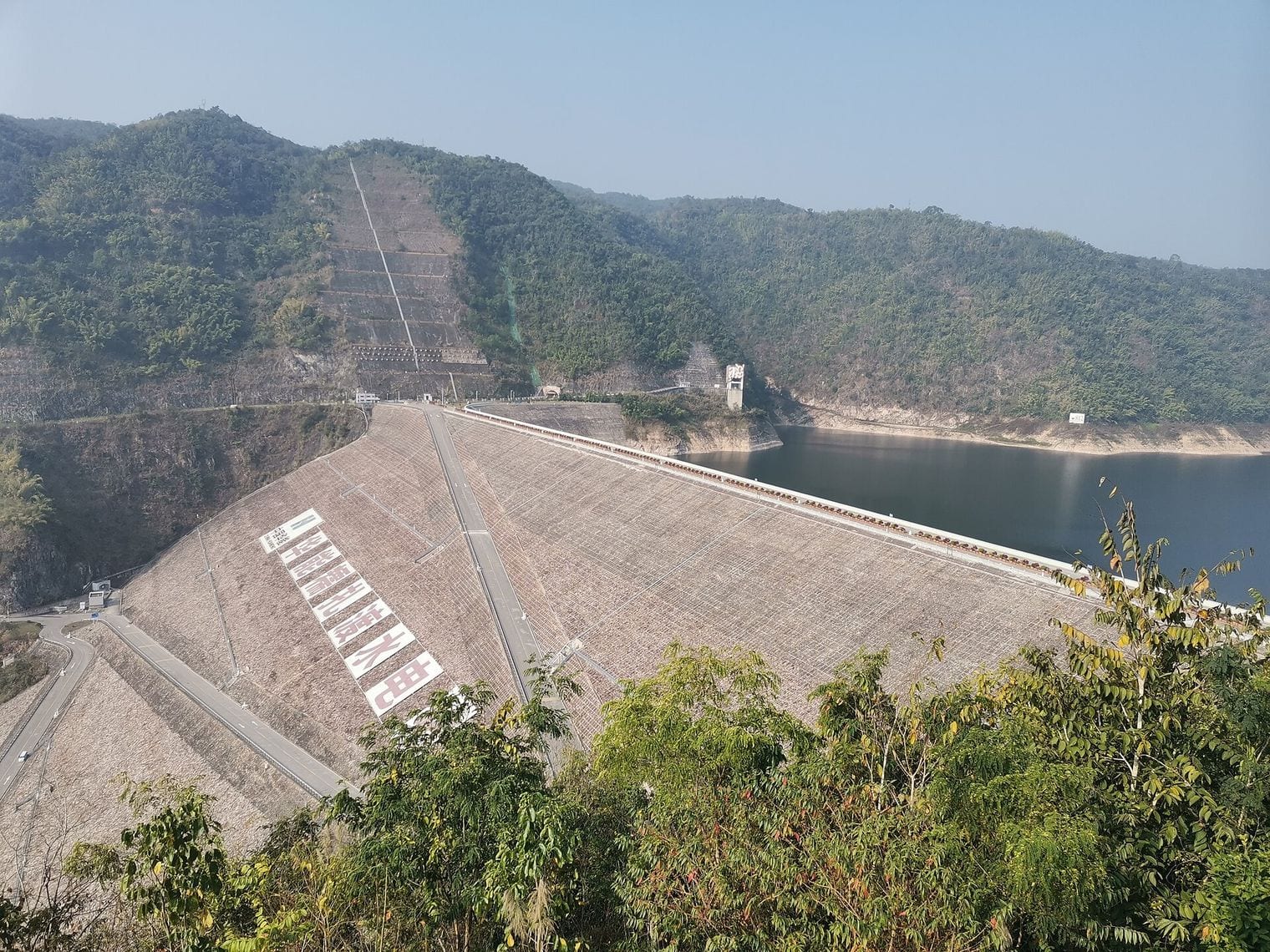
At 5,850 MW, Nuozhadu is the great power station of the Lancang, as the Mekong is called in China, in Yunnan Province. Its 261.5-metre earth-core rockfill embankment holds back a reservoir of about 21.7 cubic kilometres, and nine generators of 650 MW each supply its full rating.
Construction began in 2004, the first generator went online on 6 September 2012 and the last in June 2014. Nuozhadu was built and is run by Huaneng Power International, which holds a concession to build and operate hydroelectric dams on China's stretch of the river, and besides power the reservoir serves flood control and navigation on a river that flows on through Southeast Asia to the sea.
1414. Robert-Bourassa Generating Station
La Grande River, Eeyou Istchee James Bay, Quebec, Canada
At 5,616 MW, the Robert-Bourassa generating station is Canada's largest hydroelectric plant and the largest underground power station in the world, part of Hydro-Québec's James Bay Project on the La Grande River in northwestern Quebec. Its 16 units were commissioned between 1979 and 1981.
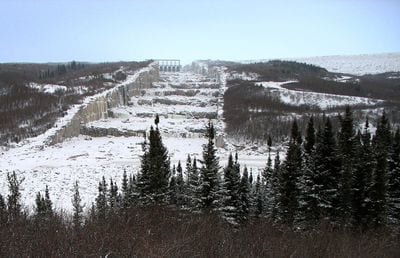
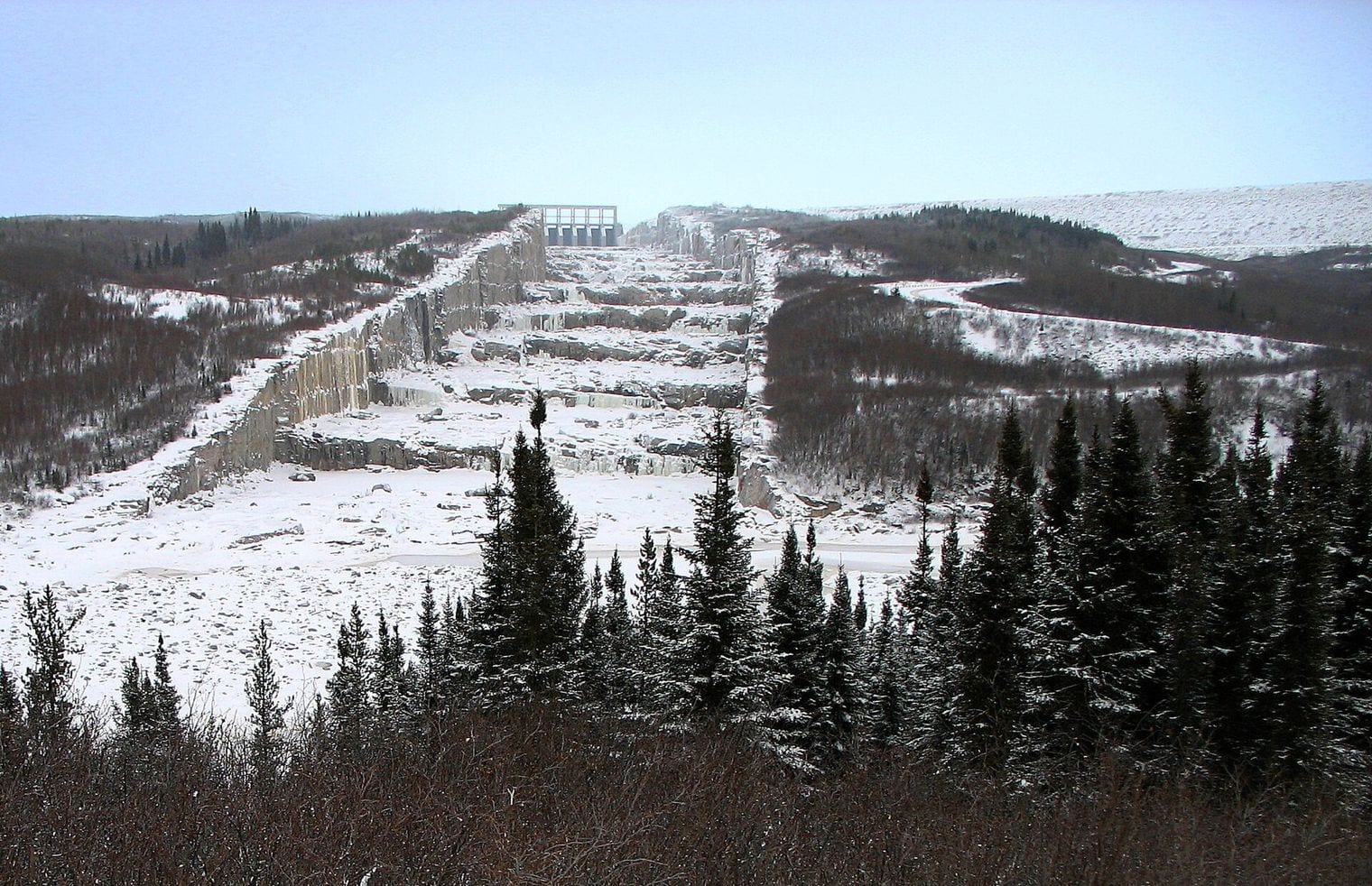
It was originally called La Grande-2 and was renamed after Robert Bourassa, the Quebec premier who gave the James Bay Project its political push. Its most striking sight is above ground: the spillway near the north end of the main dam, nicknamed the Staircase of the Giants for the huge steps the water tumbles down when its eight 12.2-metre gates open.
1515. Churchill Falls Generating Station
Churchill River, Labrador, Newfoundland and Labrador, Canada
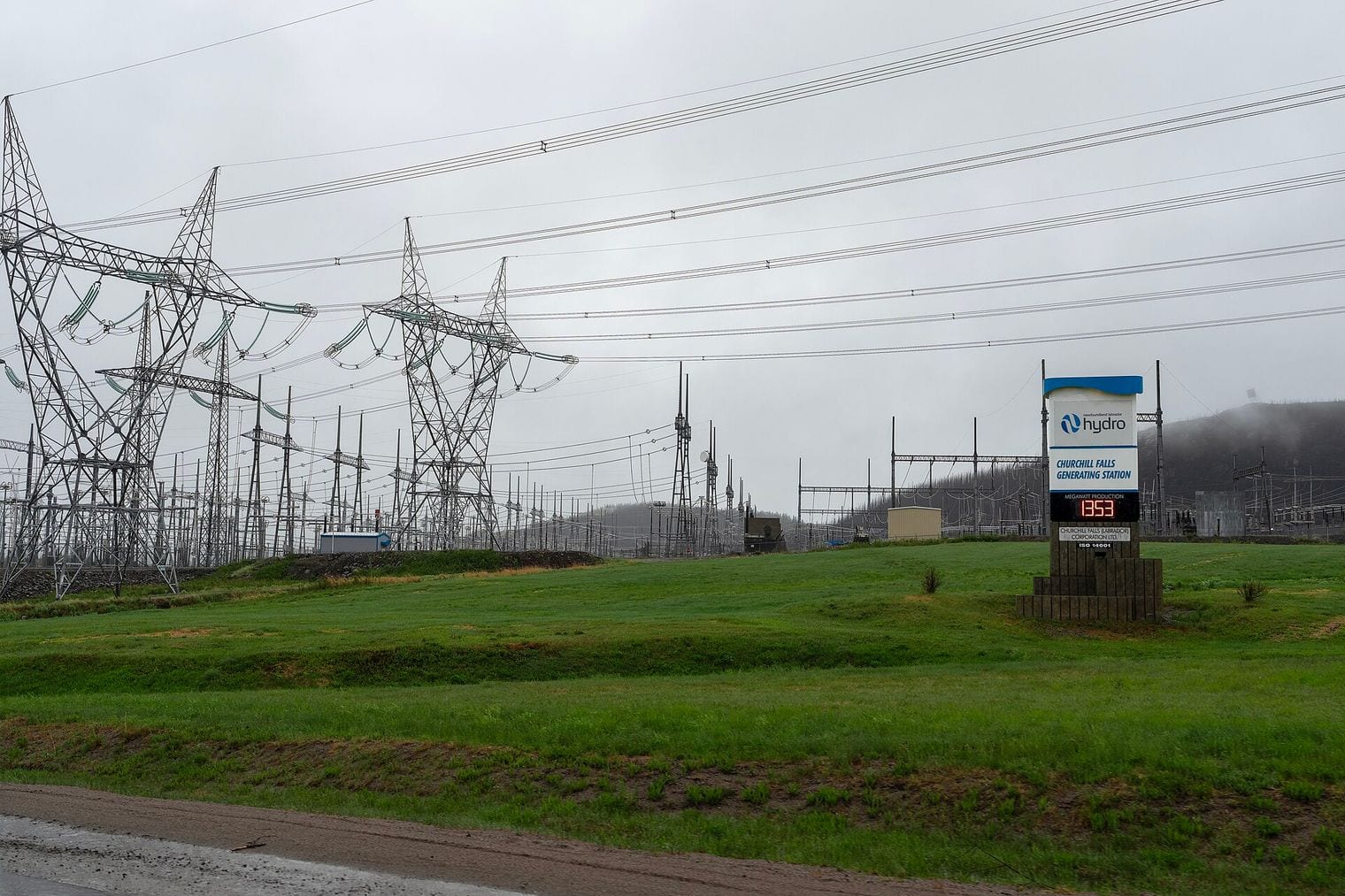
At 5,428 MW, the Churchill Falls Generating Station in Labrador is the second-largest power station in Canada, and it has no great dam at all: its Smallwood Reservoir is held back by 88 dikes totalling 64 kilometres. The water drops more than 305 metres to eleven turbines in a powerhouse hewn from solid granite 300 metres underground, a cavern about 300 metres long and as high as a 15-storey building.
Commissioned between 1971 and 1974, the station is run by the Churchill Falls (Labrador) Corporation, a joint venture of Newfoundland and Labrador Hydro and Hydro-Québec. A 1969 deal sold most of its power to Hydro-Québec at a fixed price for decades, the root of a long dispute between the two provinces; in 2018 the Supreme Court of Canada declined to force the contract open before 2041.
FAQ: The World's Largest Dams
What is the largest dam in the world?
By generating capacity, the Three Gorges Dam on the Yangtze near Yichang, China, at 22,500 MW from 32 main turbines of 700 MW and two of 50 MW. Its last main unit came online in 2012. Second is Baihetan, upstream on the Jinsha River, at 16,000 MW, and third is Itaipu on the Brazil–Paraguay border at 14,000 MW.
How is the size of a dam measured?
There are several ways, and each gives a different winner. This list ranks installed generating capacity, in megawatts, for one dam and its own power station. Height is a separate record, held by China's Jinping-I at 305 metres, and so are concrete volume and reservoir size; we keep each ranking apart across our world record-breakers.
Why is Hoover Dam not on this list?
Because its capacity is 2,080 MW, less than half of what it takes to make the top fifteen. Grand Coulee, at 6,809 MW, is the only American dam here. The first dam out is Ethiopia's Grand Ethiopian Renaissance Dam, inaugurated in 2025 at 5,150 MW, just below Churchill Falls at 5,428 MW.
Which country has the most of the world's largest dams?
China, with six of the fifteen, including the top two and four dams on a single river, the Jinsha. Brazil has three, counting Itaipu, which it shares with Paraguay, and Russia and Canada have two each. Venezuela's Guri and Grand Coulee in the United States complete the list, seven countries in all.
Will this ranking change soon?
Yes. Pakistan's Tarbela Dam, at 4,888 MW, is adding three 510 MW units that would lift it to about 6,418 MW and into the top fifteen, and China's Medog project in Tibet, planned at about 60,000 MW, would take first place by a wide margin once finished. Neither counts until its new turbines are generating.
Sources & updates
How this ranking was verified
Checked before launch
Sources cited
18
Publishers
6
Every figure in this ranking was checked against the record-keeper or official source behind it before publication, and the top of the ranking re-checked live so a newer record would not be missed.
One email every Thursday with our newest guides for the places you tick.
Newsletter
Stay updated with new World Record Breakers
One email every Thursday with our newest guides for the places you tick.
We use cookies to analyze site traffic and improve your experience.
You can accept or reject analytics cookies. See our
May we use analytics cookies? See ourCookie Policy.