We may earn a commission if you book tickets, tours or a stay through a link on
this page, at no extra cost to you. It never affects which places we list or how
we rank them (how we make money).
The record
312 m1,024 ft
Singapore National Stadium
Singapore
The record
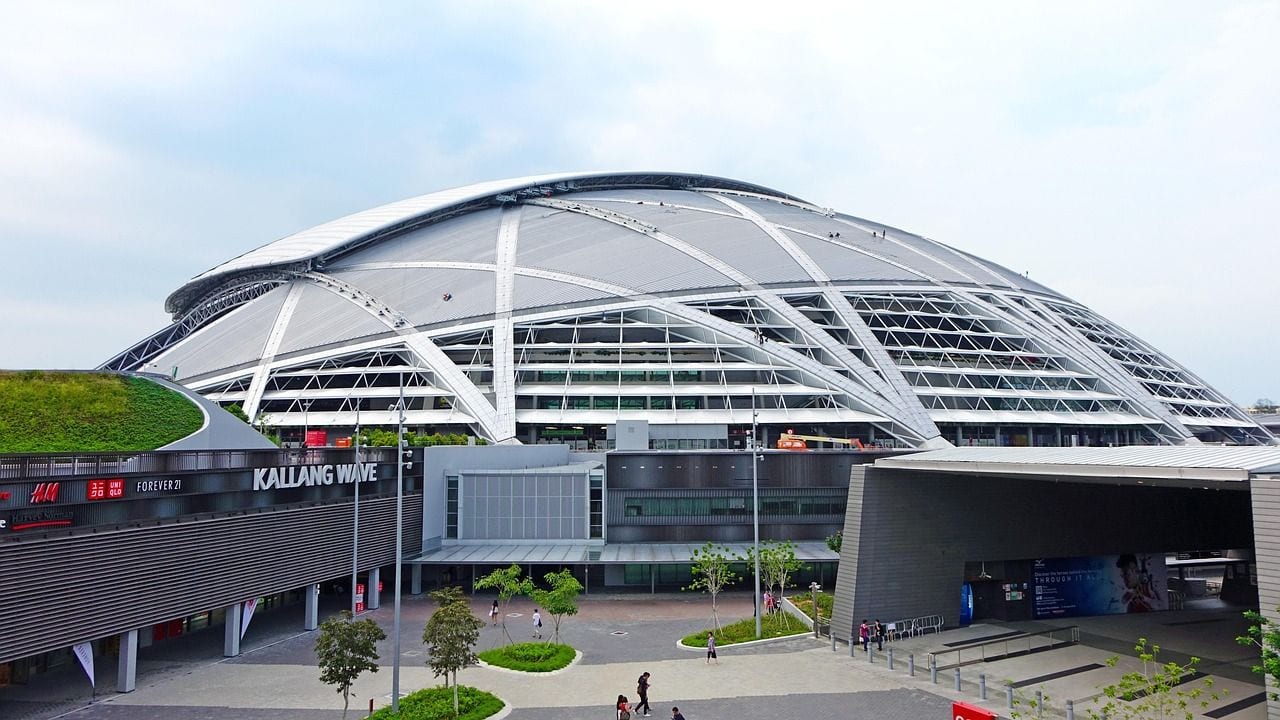
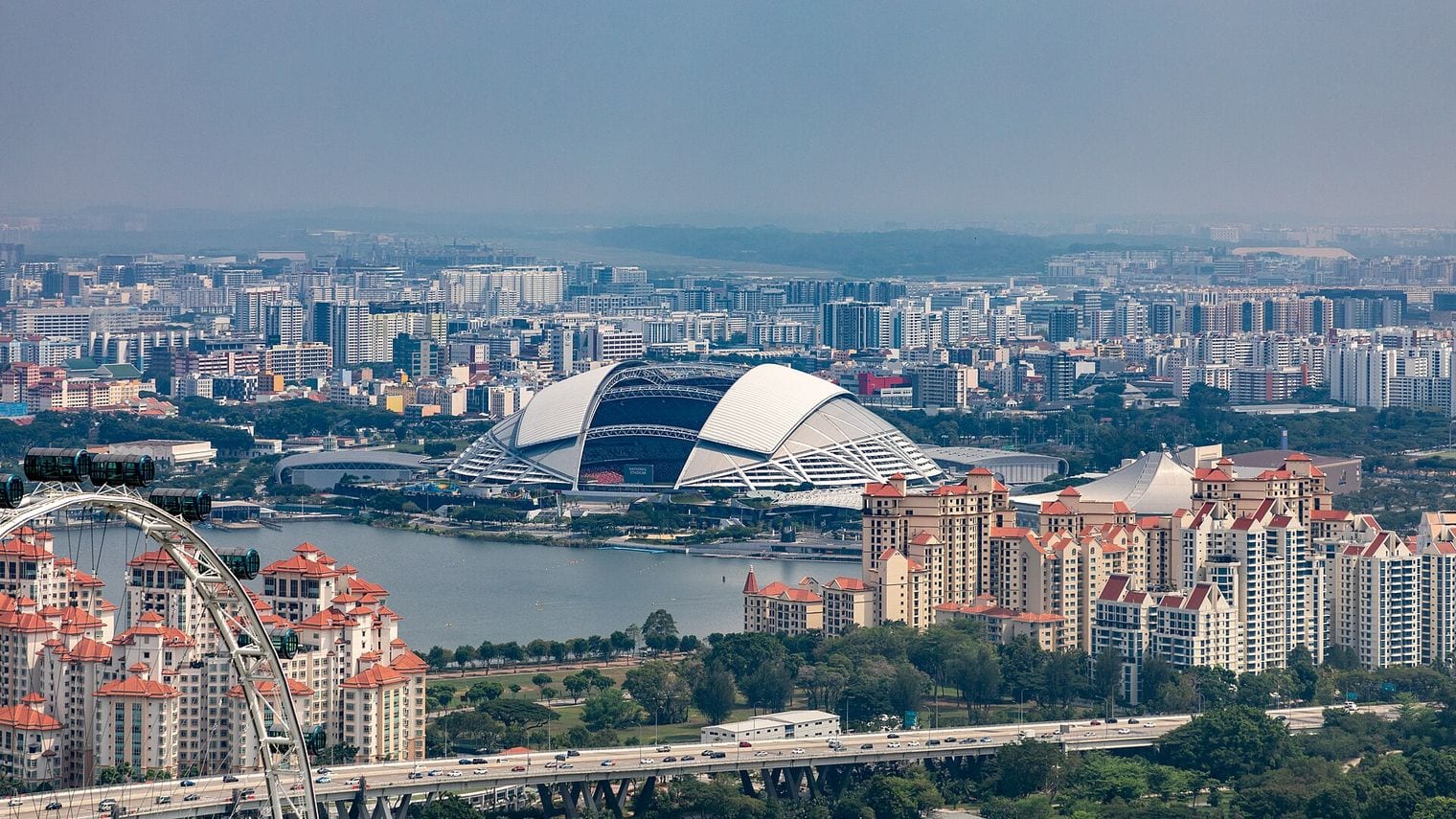
The largest dome in the world is Singapore National Stadium, in Singapore — 312 m (1,024 ft), clear internal span.
Source: Wikipedia List of largest domes (record register); Hladik & Lewis, Int. J. Architectural Computing 2010. Verified .
The O2 in London is 365 metres across and it is not on this list. Neither is the Tokyo Dome. Neither one is a dome: The O2's roof hangs from twelve masts, and Tokyo's is held up by air pressure, while a dome has to hold itself up.
That single rule decides everything below, and so does the way the span is measured — the clear distance inside, under the shell, with an oval dome ranked on its shorter axis and never on the flattering outer diameter that stadium press kits prefer. Measured that way the twelve run from 179 metres in Bulacan to 312 metres in Kallang, across seven countries.
The second rule is that the dome still has to be standing, which is why the collapsed Istra dome and the demolished Georgia Dome are absent. Between them the two rules also cost the list AT&T Stadium, whose roof hangs from two box-truss arches rather than curving over the field on its own.
The O2 in London is wider than every dome on this list and is not a dome at all — its roof measures 365 metres across but hangs from twelve masts, so the register that ranks these spans excludes it by name.
The Pantheon in Rome held the record for more than a thousand years — its roughly 43-metre span went unbeaten from the 2nd century until the Renaissance, and it is still the largest unreinforced concrete dome ever built.
Brunelleschi’s dome over Florence Cathedral held the title for 435 years, from 1436 to 1871, and at 45.5 metres it remains the largest brick-and-mortar dome in the world.
Five of these twelve domes are in Japan, and all of them went up inside a single building boom — Fukuoka in 1993, Nagoya in 1997, the Seibu roof by 1999, then Sapporo and Ōita in 2001.
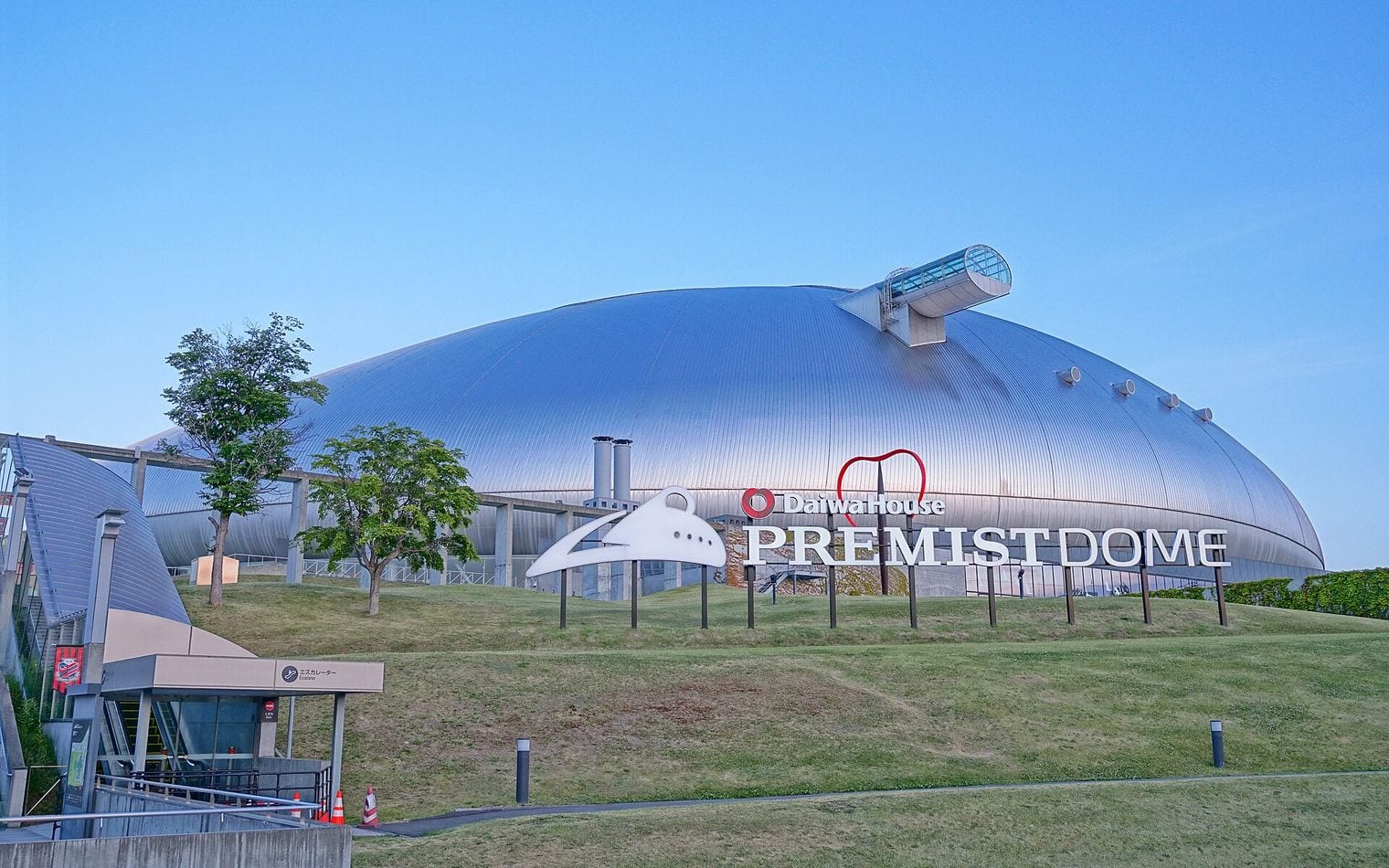
At Sapporo Dome, the pitch leaves the building because the roof cannot — too much snow falls to risk a moving roof, so the grass field slides outside on a cushion of compressed air instead.
The famous number is usually the wrong one. The Astrodome is quoted at 710 feet almost everywhere, but that is the outer roof; the steel only spans 642 feet, and it is ranked here on the smaller figure.
Width and height are different records. None of these domes is especially tall — the Singapore roof stands about 80 metres over the pitch, a fraction of the tallest buildings in the world — and on crowd size the Caesars Superdome comes nowhere near the biggest stadiums in the world, most of which have no roof at all.
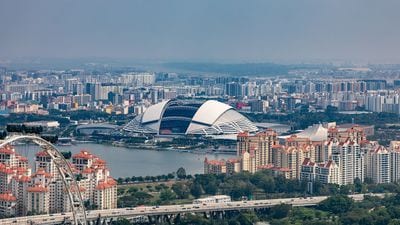
At 312 metres, the Singapore National Stadium spans more clear ground than any dome ever built, and it does it while opening in the middle. The roof is a shallow steel dome carrying two retractable ETFE panels, each about 198 metres across, that slide together hydraulically in roughly twenty minutes — a movement the designers compared to an eye closing. Arup shaped it, Dragages built it, and the dome rises about 80 metres over the pitch.
What makes the scale legible from a seat is that the stadium is deliberately not sealed. A wide western gate leaves the Singapore skyline in view even with the roof shut, and cool air is blown up through the seating rather than chilling the whole volume. The stadium anchors the Sports Hub at Kallang alongside an aquatic centre and an indoor arena, and it takes about 55,000 for football or rugby.
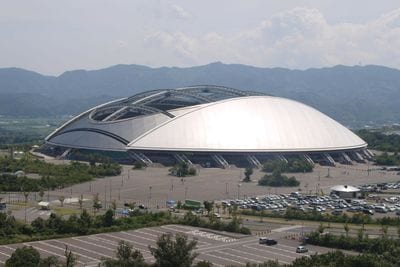
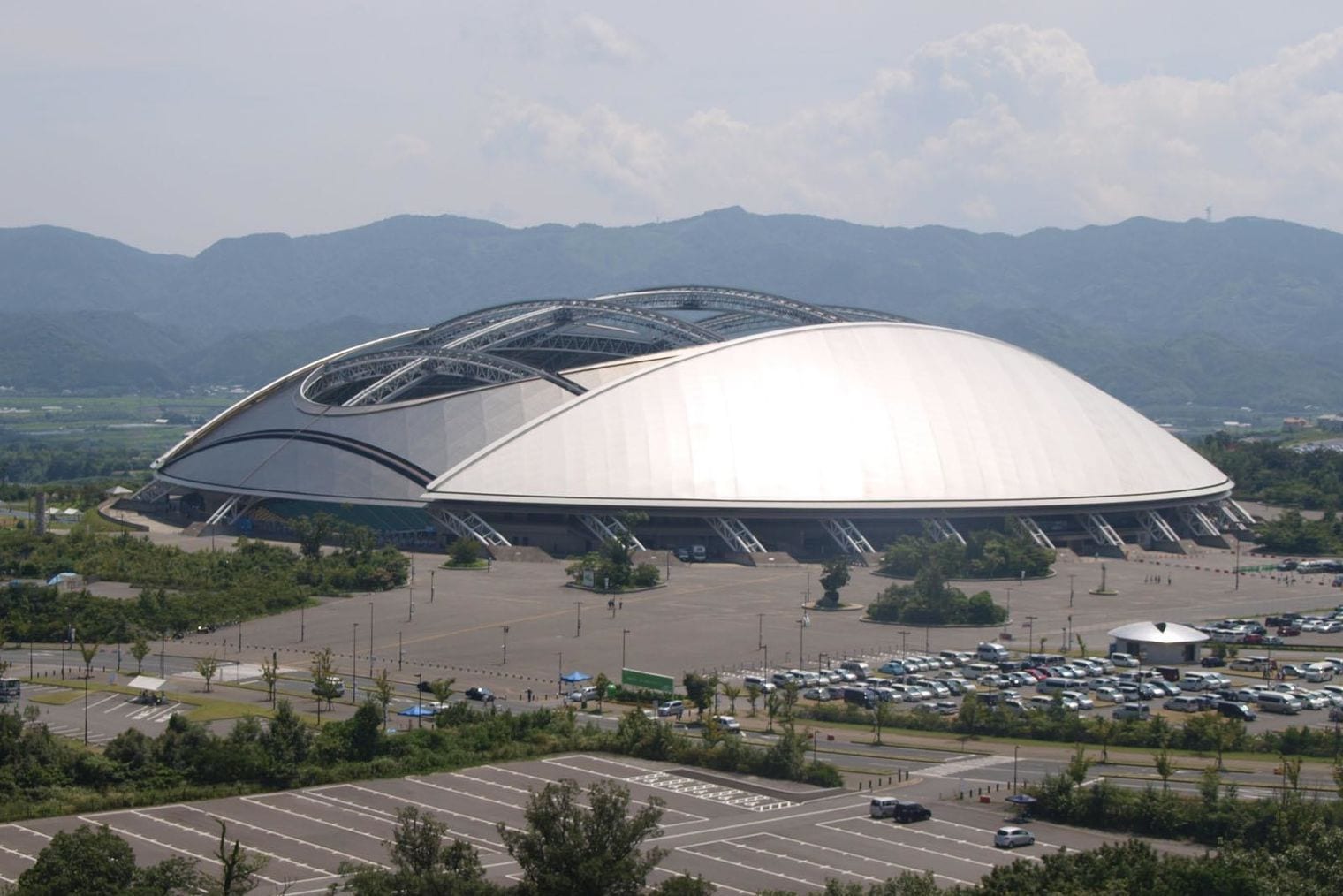
A clear span of 274 metres held the world record from 2001 until Singapore took it, and Crasus Dome Oita still looks the part: a low silver shell on a hillside outside the city, sheathed in titanium, with a retractable centre drawn open and shut on wire traction in about twenty minutes. Kisho Kurokawa designed it and a Takenaka-led group built it, opening it as Oita Stadium in May 2001.
The nickname everyone uses is Big Eye, and from the air the reason is obvious — the fixed titanium ring reads as a lid half-closed over a pupil. It hosted three matches at the 2002 World Cup, seats around 40,000, and is home to the J.League side Oita Trinita. Naming rights have moved several times since it opened; the Crasus name arrived in January 2025.
The 240-metre span at Nantong Sports Centre Stadium was China's first retractable stadium roof, and it remains one of the widest moving structures anywhere. Two curved shells, roughly 1,100 tonnes apiece, ride on 44 trolleys and are hauled into place by a hydraulic system running eight winches — four per shell — closing the roof in about forty minutes. The complete steel roof weighs around 2,200 tonnes.
It opened in 2006 as the centrepiece of a large sports and exhibition complex built for a provincial games, seating a little over 32,000. Closed, the two shells meet to form a continuous curve; open, they part into a shape local descriptions compare to a bird spreading its wings. The venue was renovated and returned to league football in 2025.
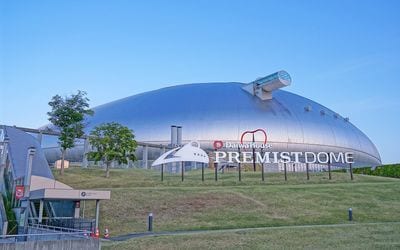
Sapporo Dome measures 227 metres on its shorter axis and 245 on its longer — and the shorter figure is the honest one for a ranking, though the 245 is the number most often quoted. Hiroshi Hara's shell opened in June 2001 in a city that gets several metres of snow a winter, which settled the roof question immediately: it does not open, because nothing that opens would survive the load.
So the pitch moves instead. The grass football field sits on a tray weighing around 8,300 tonnes that floats out of the building on a cushion of compressed air, spends its time outdoors getting the light real turf needs, and slides back in for matches, while the interior converts to artificial turf for baseball. It hosted matches at the 2002 World Cup and remains one of the most quietly ingenious buildings on this list.
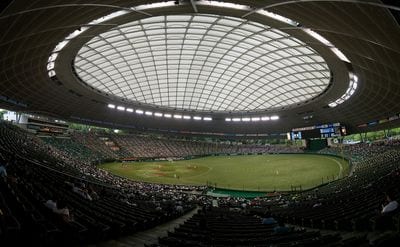
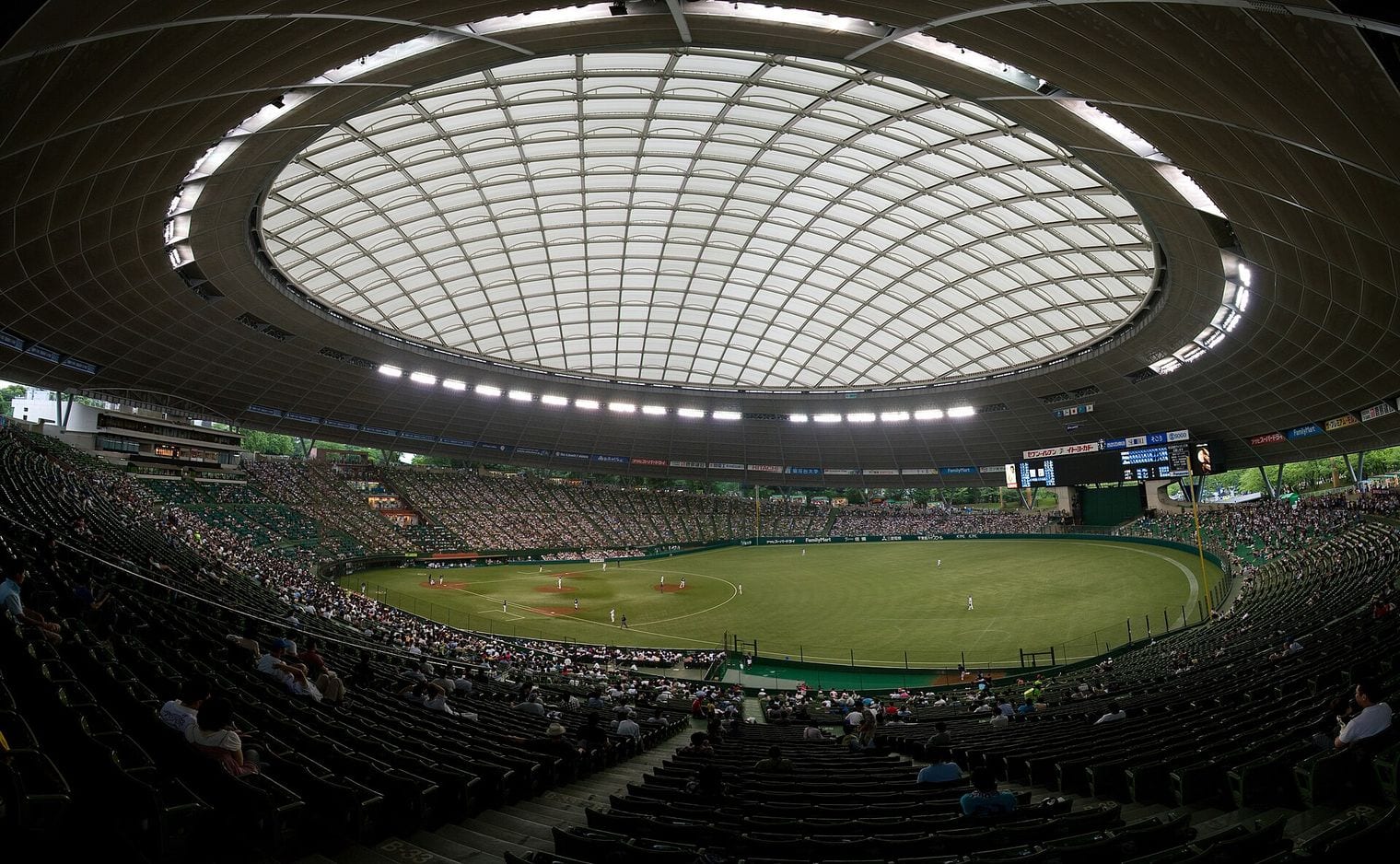
Belluna Dome spans 220 metres, and the odd thing about it is that the stadium underneath is older than the roof.
The ground opened in 1979 with no cover at all; Kajima added the dome between 1997 and 1999, working only in the four-month off-seasons across two separate years, and could not use the usual forest of temporary pillars because the existing stands would not carry them. The roof was instead built inward, ring by concentric steel ring, until it closed on itself.
The result sits on columns rather than sealing to the stands, so air moves through the gap and a well-struck ball can still leave the building — a genuine quirk among domed ballparks. A membrane section about 145 metres across was assembled on the ground and lifted into the completed frame. It holds roughly 31,500 and is home to the Saitama Seibu Lions in Tokorozawa.
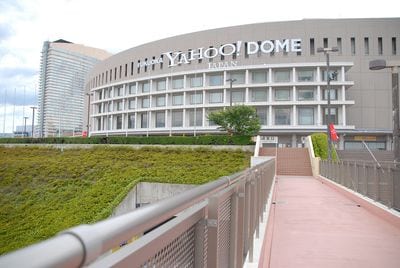
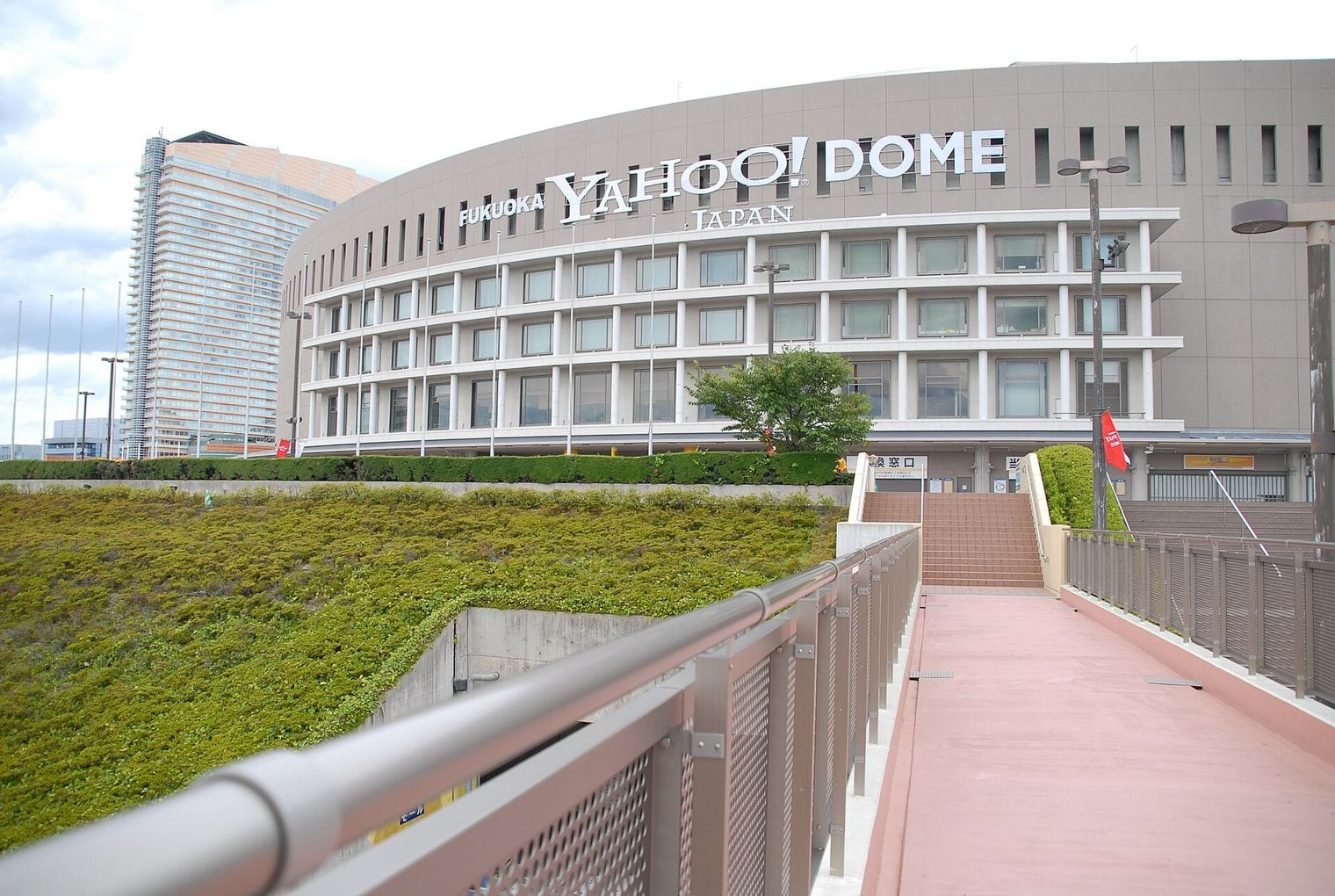
Mizuho PayPay Dome Fukuoka spans 212 metres, and was Japan's first retractable roof when it opened in 1993, with a mechanism that is still unusual: three fan-shaped steel panels clad in titanium just 3 millimetres thick, one fixed and two that rotate around the building's axis on 24 bogie wheel assemblies. The two moving panels weigh roughly 4,000 and 4,200 tonnes between them.
Because the panels swing rather than slide, the roof opens as a widening wedge of sky instead of parting down the middle, which is worth watching once even if you have no interest in the baseball. Takenaka and Maeda built it, and it is home to the Fukuoka SoftBank Hawks. It has taken the naming rights of several sponsors over the years and sits close to the water in Chuo-ku.
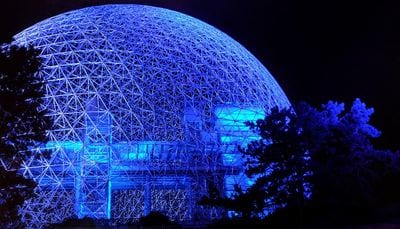
At 210 metres, the Jeddah Super Dome is the largest geodesic dome on the planet, and Guinness World Records recognises it twice — once for that, and once as the largest continuous dome, meaning it is neither segmented nor built to open. It is the only entry here that was never designed around a pitch.
That changes what the space feels like. With no seating bowl and no field to work around, the interior is a single uninterrupted floor of roughly 40,000 capacity, which is why it functions as an exhibition and conference hall as much as an event venue. It opened on Madinah Road in June 2021 and has carried Jeddah's major exhibitions and international events since. It is also the newest structure on this list by two decades.
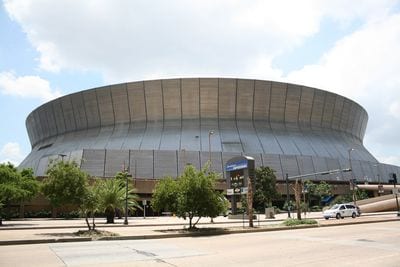
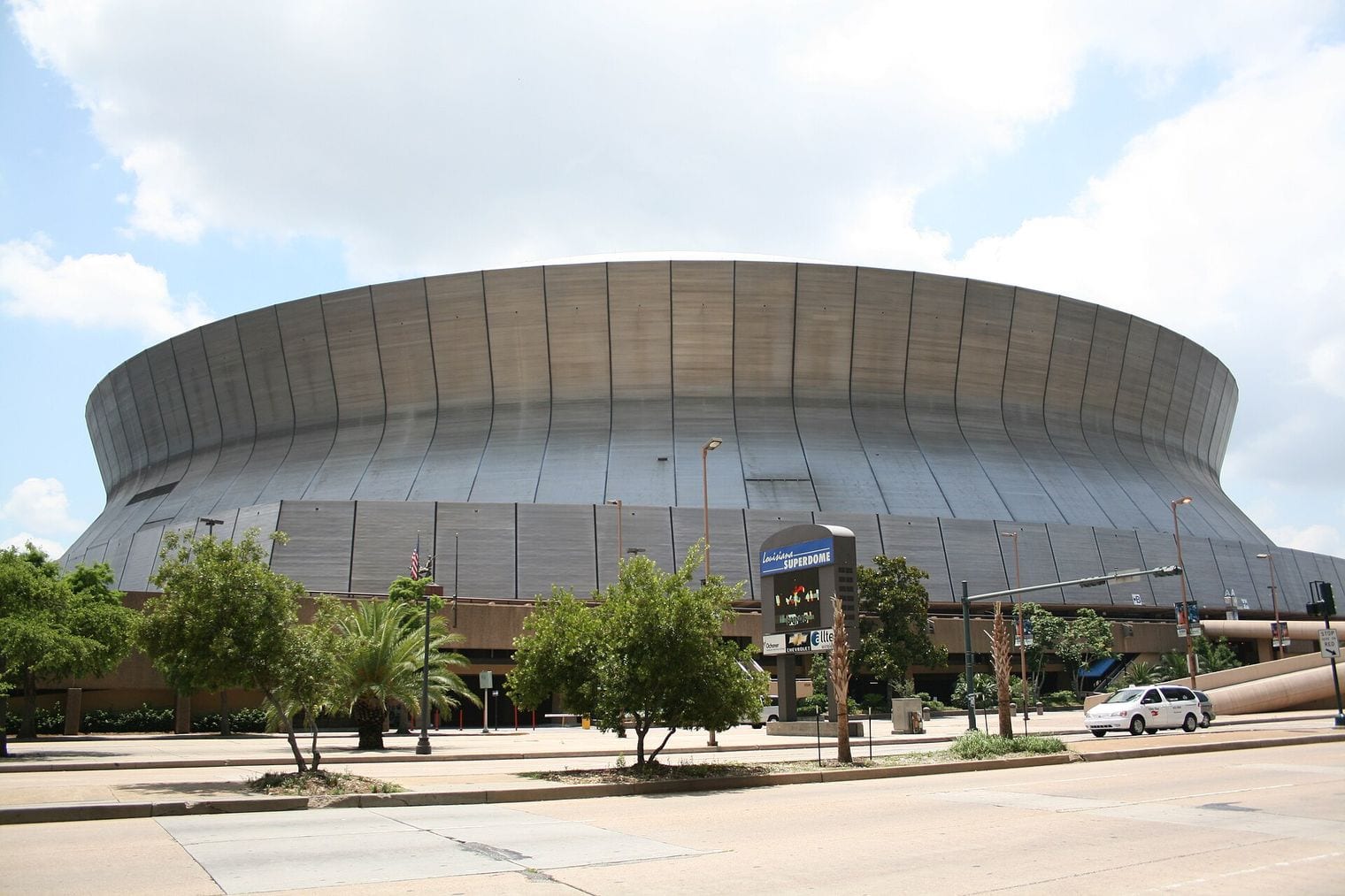
The 207-metre lamella dome of the Caesars Superdome in New Orleans was the largest roofed structure in the world when it opened in 1975, and it is still the widest fixed dome in the Americas. The lamella system builds a roof out of a repeating diamond lattice, each steel member framing two others, and the whole nine-acre surface pushes outward onto a perimeter tension ring roughly 9 feet thick. Erecting it took 37 tower cranes arranged in concentric circles.
It seats 76,468 for football, the largest capacity of any fixed-roof stadium anywhere, and the shape has become shorthand for the city's skyline. It is also the building New Orleans remembers for 2005, when as many as 20,000 people sheltered inside during Hurricane Katrina and the roof was torn in two places. It has been extensively rebuilt since.
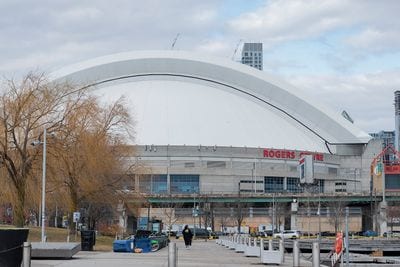
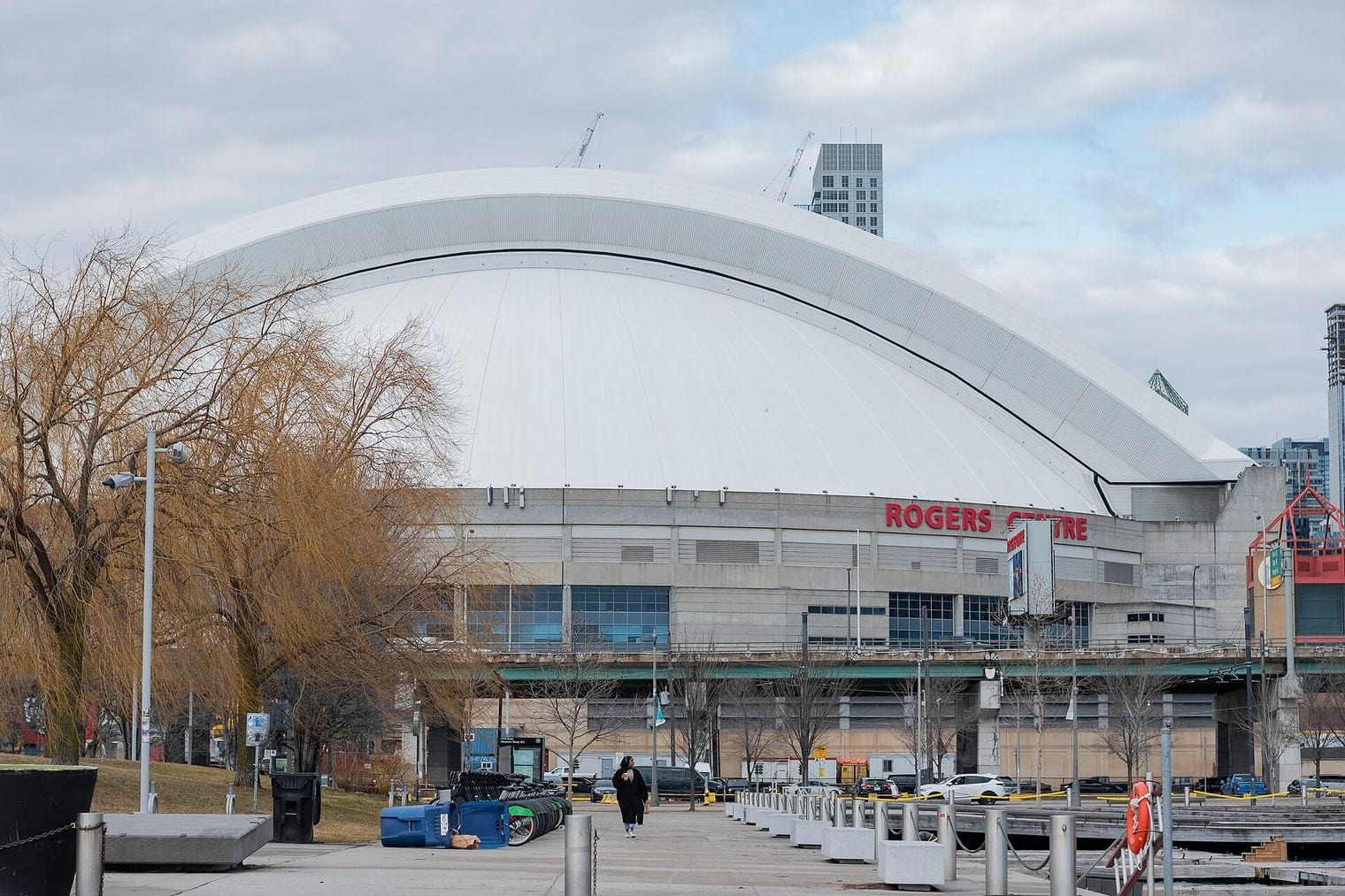
Rogers Centre spans 674 feet — about 205.5 metres — and when it opened in 1989 as SkyDome it was the first stadium anywhere with a fully retractable roof. Four steel panels do the work: one fixed, three sliding on rails, each built from trusses under a corrugated shell and a weatherproof membrane, clearing the field and most of the seats in around twenty minutes.
Everything since has been a refinement of what was worked out here, which makes it the most quietly influential building on this list. It has a hotel attached, with around 70 rooms looking straight down onto the field — an idea nobody has quite repeated at the same scale. EllisDon and Dominion Bridge built it, it seats a little under 50,000 for baseball, and it remains the home of the Toronto Blue Jays.
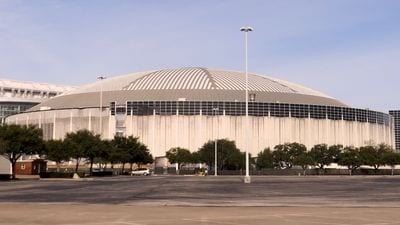
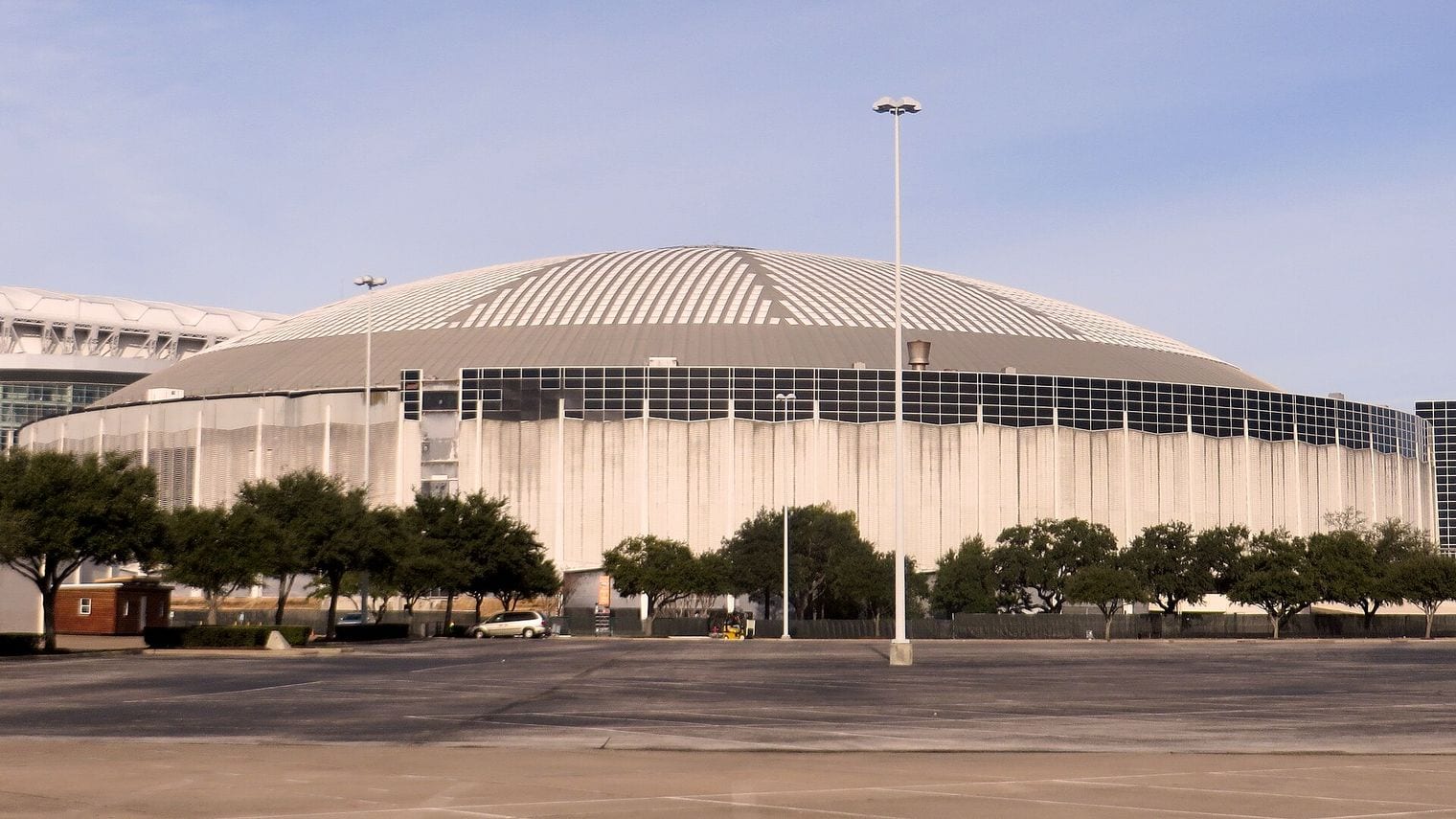
The Astrodome's clear span is 642 feet, about 196 metres, and the distinction matters: the 710-foot figure quoted almost everywhere is the outer roof diameter, not the distance the steel actually crosses. Opened in 1965, it was the first indoor stadium built for a major league baseball team and the first domed sports venue seating more than 20,000, a lamella dome descended from the same structural idea as New Orleans.
It has not been open to the public since 2009 and now serves mostly as storage for the surrounding park, but it is not going anywhere: it joined the National Register of Historic Places in 2014 and was made a Texas State Antiquities Landmark in 2017, which means it cannot be altered or removed without a permit. Repeated redevelopment schemes have come and gone; the building simply stands.
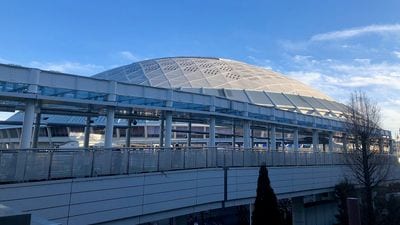
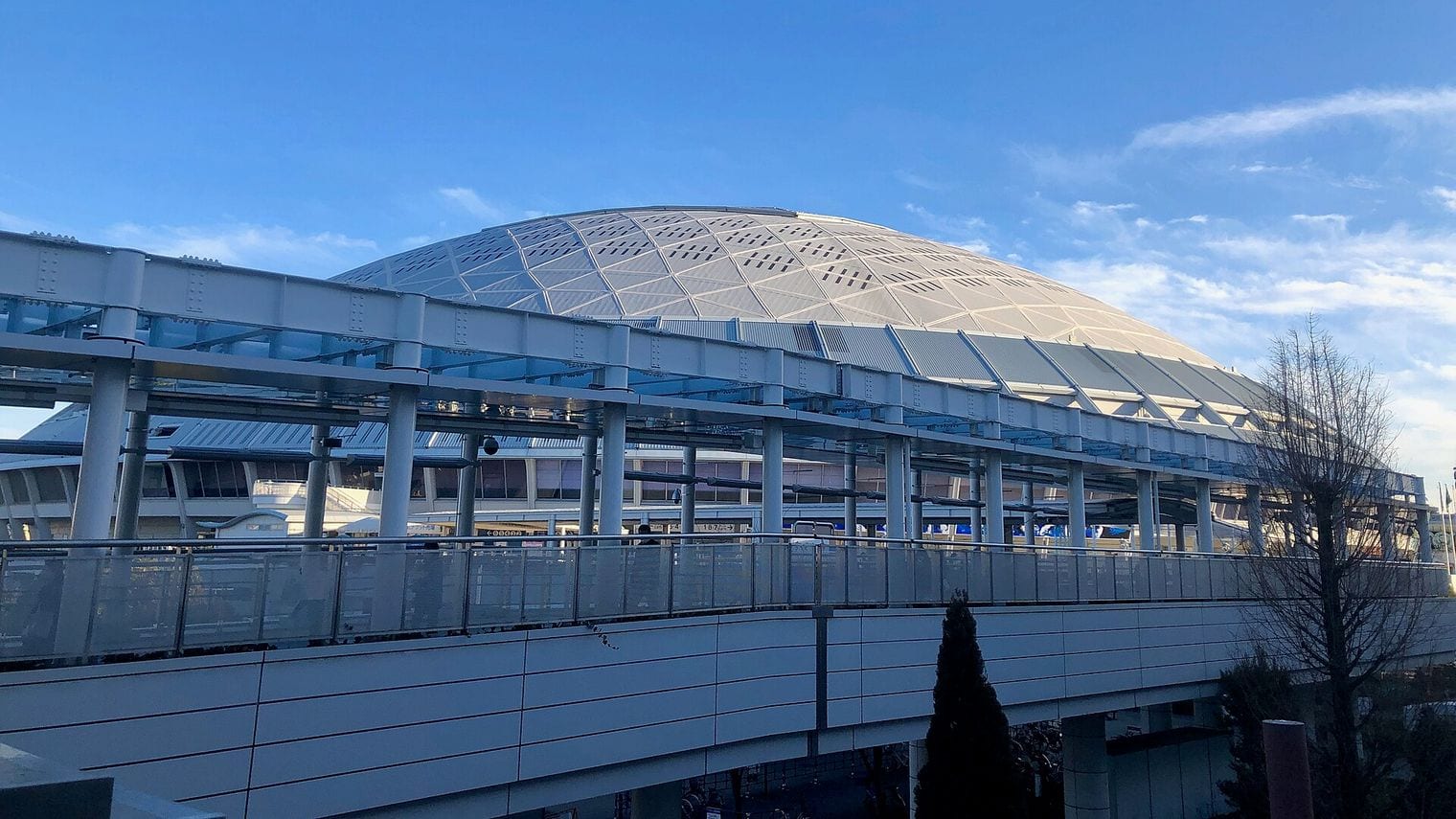
The roof at Vantelin Dome Nagoya spans 187.2 metres, and here too the tempting bigger number is the wrong one — the 229.6 metres often cited is the ring of outer columns, not the dome. What it crosses instead is a single-layer steel lattice, one of the largest of its kind anywhere, made mainly of steel pipe so the structure casts as little shadow as possible.
The roof covers roughly 29,000 square metres and carries a glazed skylight of about 5,000 square metres at its crown, which is what keeps the interior from feeling like a shed. Ceiling height was the governing constraint: baseball needed at least 60 metres of clear air, and the apex sits nearly 67 metres above ground. It opened in 1997 and holds around 40,500 for sport, more for concerts.
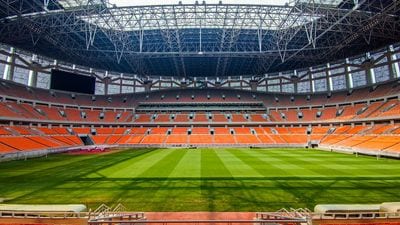
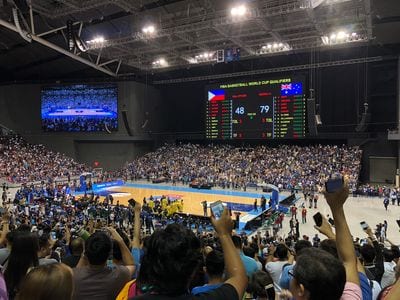
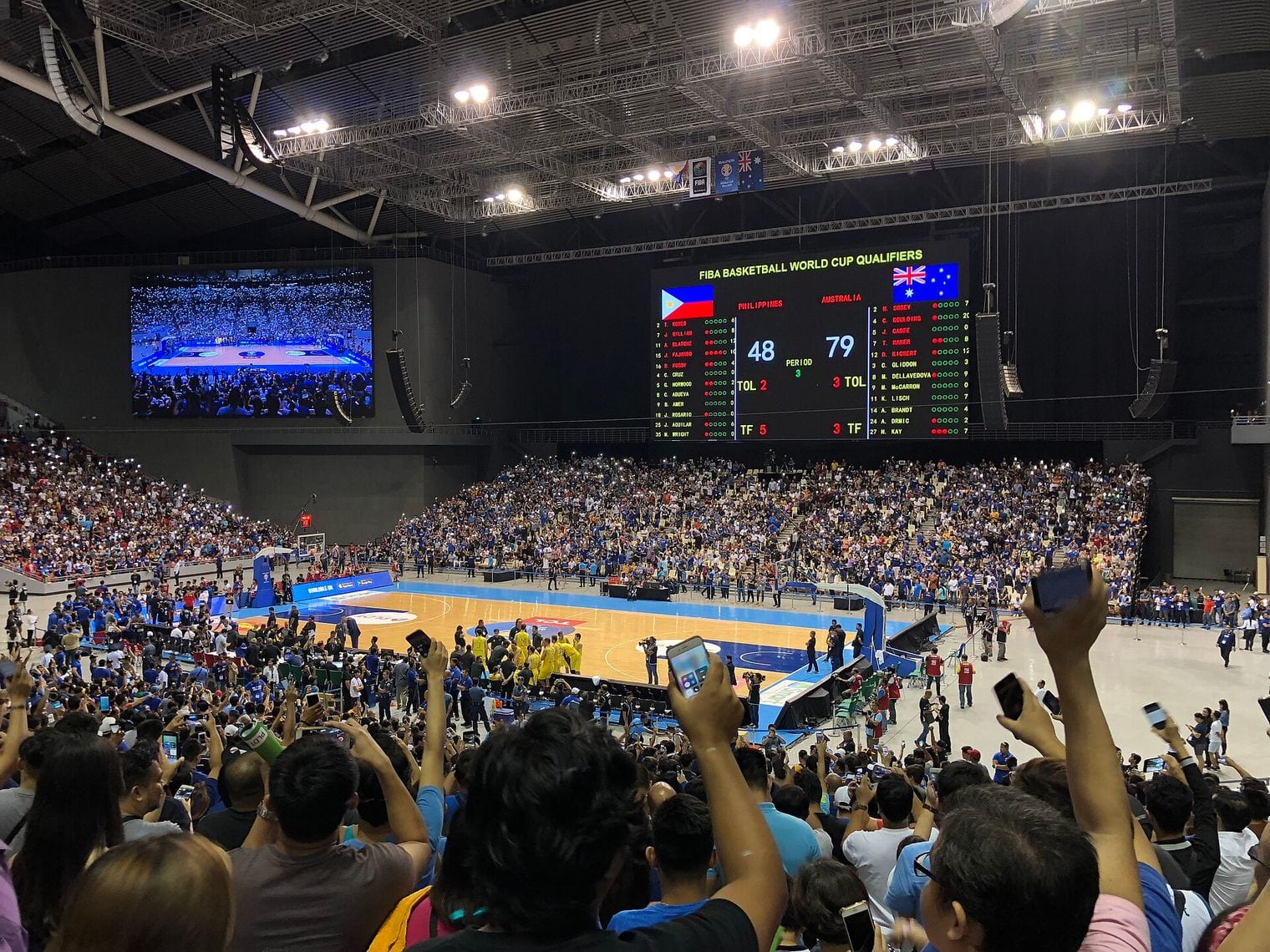
The Philippine Arena is an oval spanning 179 metres at its narrowest and 227 metres at its widest, and the shorter of those figures is what puts it here — but by seated capacity it is simply the largest indoor arena in the world, taking around 55,000 people under one roof with no columns in the way. Populous designed it, the steelwork runs to roughly 9,000 tonnes, and the building stands about 65 metres tall.
It was built not as a stadium but around a speaker's platform, for the centenary of the Iglesia ni Cristo, and the sightlines are set for an audience facing a stage rather than a pitch — which is why Guinness World Records lists it as the largest mixed-use indoor theatre. It opened in July 2014 at Ciudad de Victoria in Bocaue, Bulacan, about 30 kilometres north of Manila.
FAQ: The World's Largest Domes
What is the largest dome in the world?
The Singapore National Stadium, with a clear internal span of 312 metres. It has held the record since 2013 and carries the largest retractable roof ever built, its two panels sliding shut over the pitch in about twenty minutes. Before it, the record belonged to Crasus Dome Oita in Japan.
Why is The O2 in London not on the list?
Because it is not structurally a dome. The O2's roof is a membrane suspended from twelve masts, so it does not carry itself the way a dome has to. At 365 metres it is wider than anything ranked here, which is exactly why the distinction is worth drawing.
Can you actually go inside these domes?
Eleven of the twelve are working venues hosting football, baseball, concerts or exhibitions, and the Jeddah Super Dome is an events hall you can walk straight into. The exception is the Astrodome, which has been shut to the public since 2009 even though the building itself still stands.
What is the largest dome from the ancient world?
The Pantheon in Rome, at roughly 43 metres across. It was the largest dome on Earth for more than a thousand years, and it is still the largest unreinforced concrete dome ever built. Florence Cathedral finally took the record in 1436 and then held it for another 435 years.
Are these the same figures stadiums advertise?
Often not. Venues tend to quote the outer roof diameter, which is always the flattering number. The Astrodome is advertised at 710 feet but spans 642; Nagoya's outer ring of columns measures 229.6 metres against a 187.2-metre dome. This list uses the clear internal span throughout.
Where else does the measuring rule matter this much?
Almost anywhere a structure holds a record. The question of which number a building is entitled to claim runs through the whole set of world record breakers we track, and it gets sharpest on lists ranked by area rather than a single dimension — the largest palaces in the world among them, where what even counts as one building is not obvious.