We may earn a commission if you book tickets, tours or a stay through a link on
this page, at no extra cost to you. It never affects which places we list or how
we rank them (how we make money).
The record
3,000,000 people
Masjid al-Haram
Saudi Arabia
The record
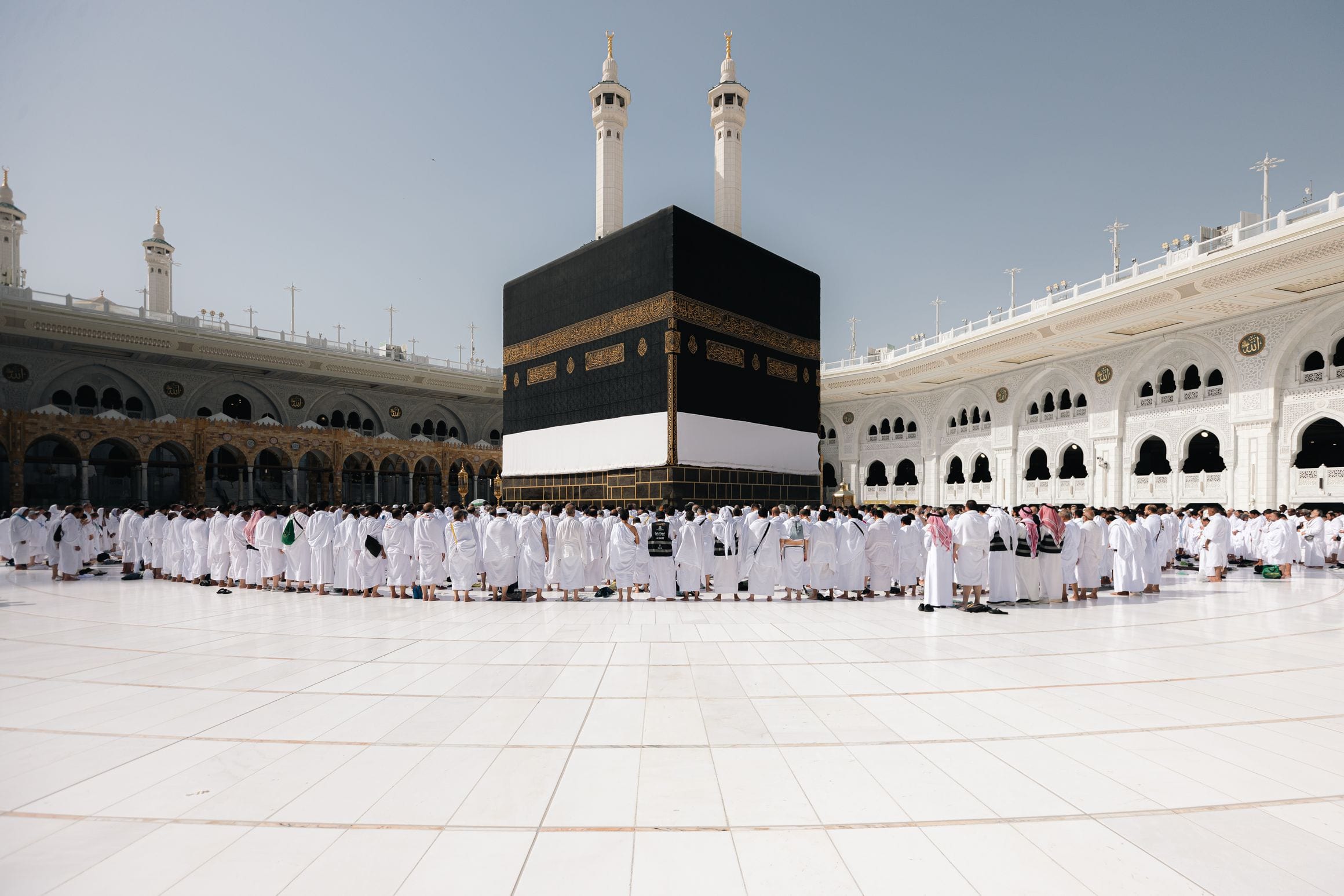
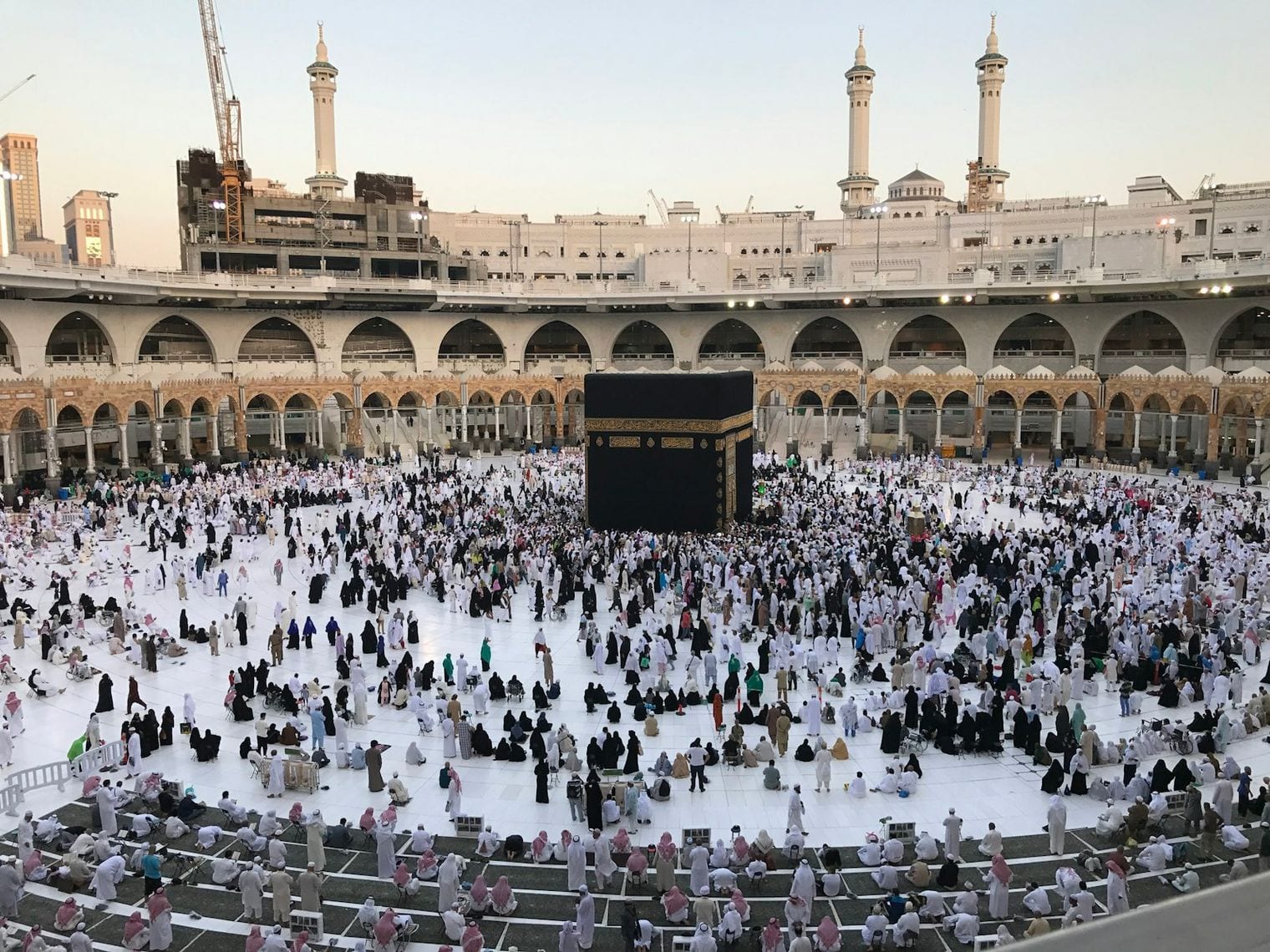
The largest mosque in the world is the Masjid al-Haram, in Saudi Arabia — 3,000,000 people, worshipper capacity.
Source: Saudipedia (Saudi Ministry of Media). Verified .
Abu Dhabi's Sheikh Zayed Grand Mosque holds around 41,000 worshippers, and it does not come close to making this list. The fifteen below run from 60,000 to three million across eleven countries, from Casablanca to Jakarta, and they are ranked on a single number: how many people can pray in the entire consecrated complex at once — prayer halls, courtyards and porticoes counted together, the way Hassan II Mosque counts 25,000 under its roof plus 80,000 on the esplanade outside.
Two rules decide who qualifies. Capacity means the whole precinct rather than the covered hall alone, and the mosque has to be standing and in use today. That second rule costs the list the Great Mosque of Samarra, the biggest on earth for four centuries, of which only the outer wall and its spiral minaret still stand.
Bhopal's Taj-ul-Masajid is absent for a different reason: the 175,000 figure repeated across the internet traces to no source at all, while its own records put the number nearer 26,000.
The mataf alone can process about 107,000 people an hour — the marble ring around the Kaaba at Masjid al-Haram is rebuilt across several levels purely to keep pilgrims circling without a crush.
The tallest minaret in the world is not in Mecca — it belongs to Djamaa el Djazaïr in Algiers, at 265 metres, and it houses a viewing platform and a research centre inside it.
Faisal Mosque has no dome at all — its Turkish architect shaped it like a Bedouin tent, eight concrete faces folding to a point, which was genuinely controversial when it was finished in 1986.
Indonesia’s Istiqlal Mosque was designed by a Christian — Friedrich Silaban, a Protestant architect, won the open competition, and the mosque faces Jakarta Cathedral across the road. The two share parking on each other’s holy days.
250 giant umbrellas unfold every morning in the courtyards of Al-Masjid an-Nabawi, shading roughly 143,000 square metres of open paving so the overflow can pray in the shade.
Hassan II Mosque is built out over the Atlantic, with a laser at the top of its 210-metre minaret pointing toward Mecca at night. The widely repeated story about a glass floor over the sea, however, is not true.
At 3,000,000 people, Masjid al-Haram in Mecca is not just the largest mosque in the world — it is the largest gathering space of any kind that humans have built.
The complex spreads across roughly 1.5 million square metres and wraps around the Kaaba, the black-draped cube every Muslim on earth turns to face five times a day. Its scale is not decorative. During the Hajj, the entire Muslim world funnels into this one courtyard, and the building has been enlarged repeatedly for centuries to keep pace.
The heart of it is the mataf, the open marble ring immediately around the Kaaba where pilgrims perform tawaf, circling seven times counter-clockwise. That ring alone has been rebuilt across multiple levels and can process roughly 107,000 people an hour. Everything else — the prayer halls, the colonnaded galleries, the rooftop terraces, the basements — radiates outward from it. No other mosque on this list is designed around a single point of focus in quite the same way.
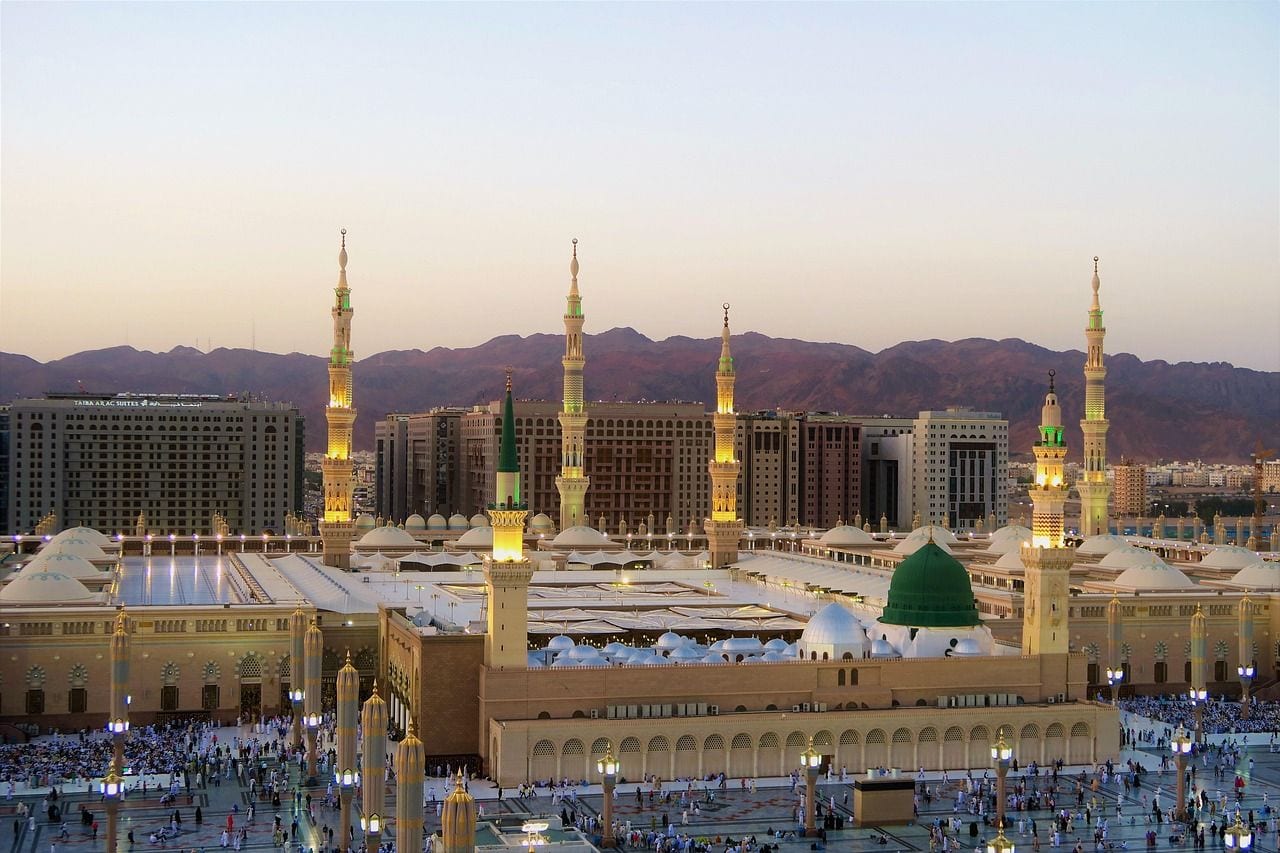
Holding 2,000,000 people, Al-Masjid an-Nabawi in Medina is the second-largest mosque on earth and the second-holiest site in Islam. The Prophet Muhammad built the original here in 623, and it was a modest structure of palm trunks and mud brick; what stands today is the result of successive Saudi expansions that swallowed entire neighbourhoods of the old city.
The green dome at its centre marks the Prophet's tomb, and it is the one part of the complex that has been deliberately preserved unchanged while everything around it grew.
Much of that two million is outdoors. The mosque's ground floor covers about 98,500 square metres, but the courtyards surrounding it add roughly 235,000 more, and it is the courtyards that absorb the Ramadan crowds. In 2010 the site was fitted with 250 giant electrically operated umbrellas that unfold each morning to shade around 143,000 square metres of open paving — an engineering answer to the simple problem that Medina is very hot and the overflow has to pray somewhere.
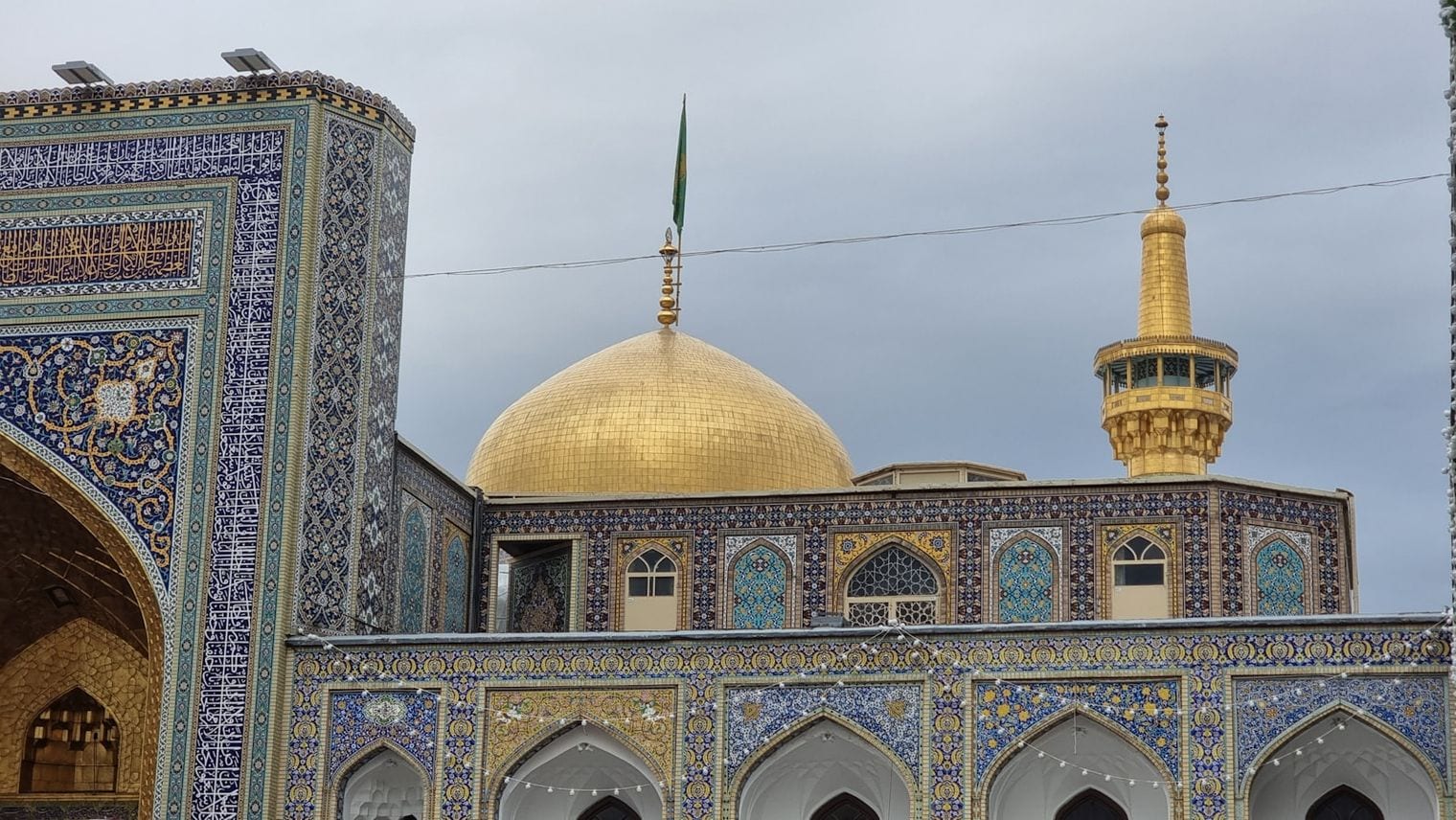
With space for 700,000 people, the Imam Reza Shrine in Mashhad is the largest Islamic sanctuary outside Saudi Arabia. It is a shrine complex rather than a single mosque — a walled city of courtyards, prayer halls, porticoes, libraries, museums and seminaries built up around the tomb of the eighth Shia Imam — and it belongs on this list because its congregational spaces are counted the same way Mecca's and Medina's are. The whole precinct covers about 1.2 million square metres.
Most of that is recent. Before the 1979 revolution the shrine occupied roughly 12 hectares; successive expansions have pushed it past 70. Embedded inside is the Goharshad Mosque, commissioned in 1418 by the Timurid empress Goharshad, whose tiled dome and vaulted iwan are among the finest surviving Persian architecture anywhere. Mashhad receives well over 30 million pilgrims a year, and during Nowruz and the religious calendar's high points the courtyards fill in a way few places on earth can match.
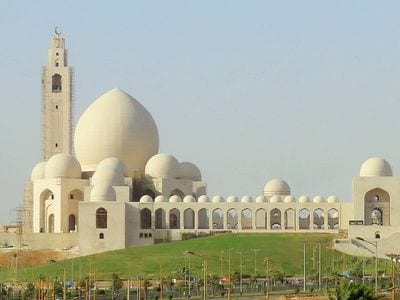
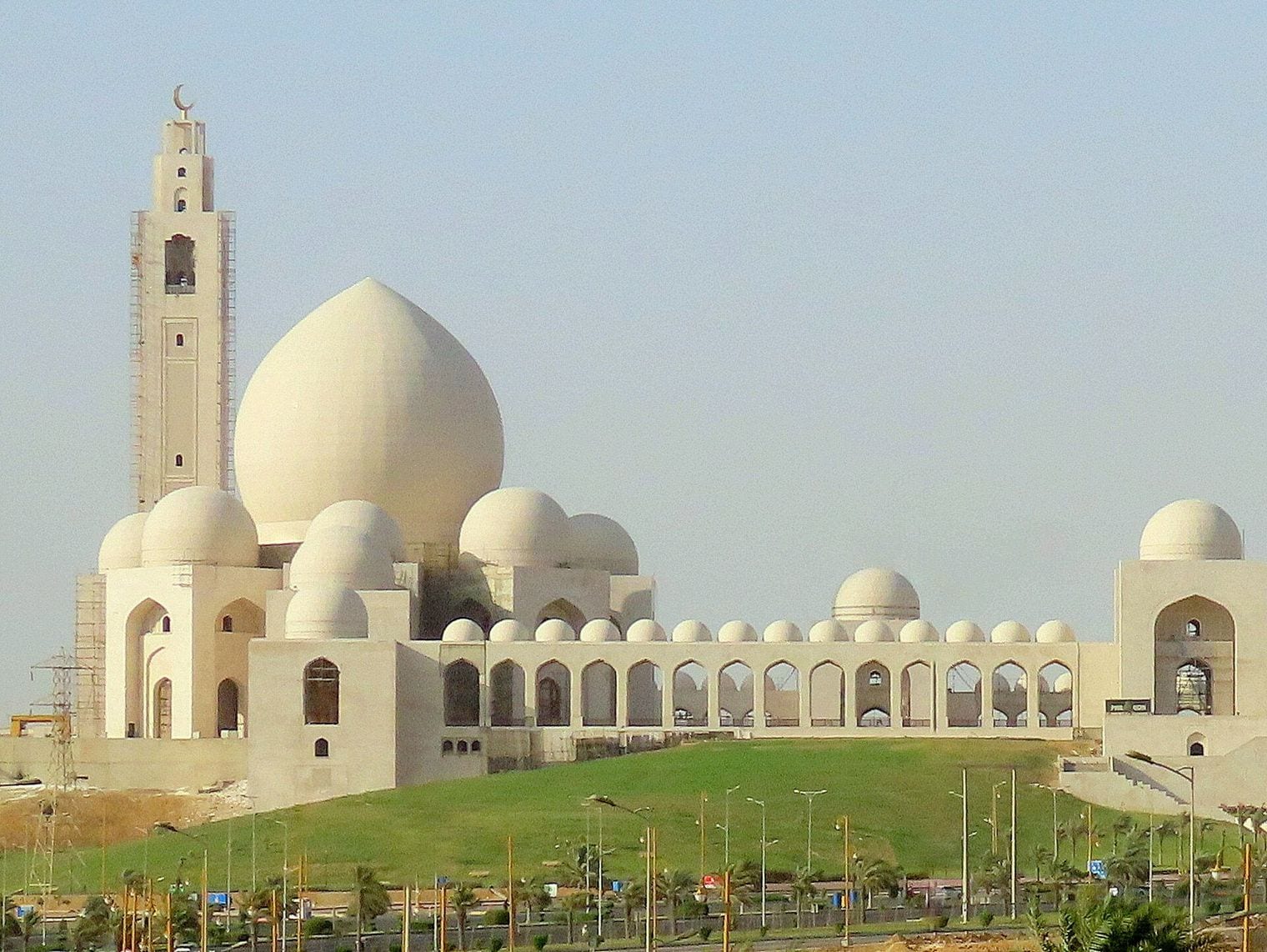
Completed on 1 February 2026 with room for 600,000 people, the Grand Jamia Mosque in Karachi is the newest entry on this list and the largest mosque built anywhere this decade. It sits on top of an 18-metre hill in Bahria Town on the city's eastern edge, spread across about 20 hectares, which is what allows a capacity on this scale — there is simply nowhere in central Karachi with that much open ground.
The design leans on the two Saudi mosques rather than on Pakistan's own Mughal tradition. Its vast courtyard is fitted with automated umbrellas modelled directly on those at Al-Masjid an-Nabawi, unfolding to shade worshippers who cannot fit under the roof, and fountains break up the expanse of paving.
Because the overwhelming majority of its capacity is open-air, the mosque looks its size only on the days it is actually full — Eid, Ramadan, and Friday prayers, when the hill visibly fills from the top down.
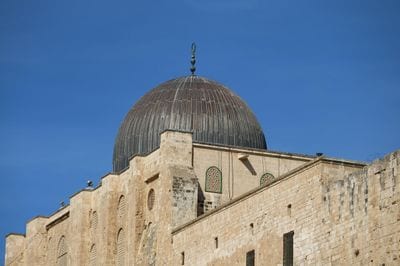
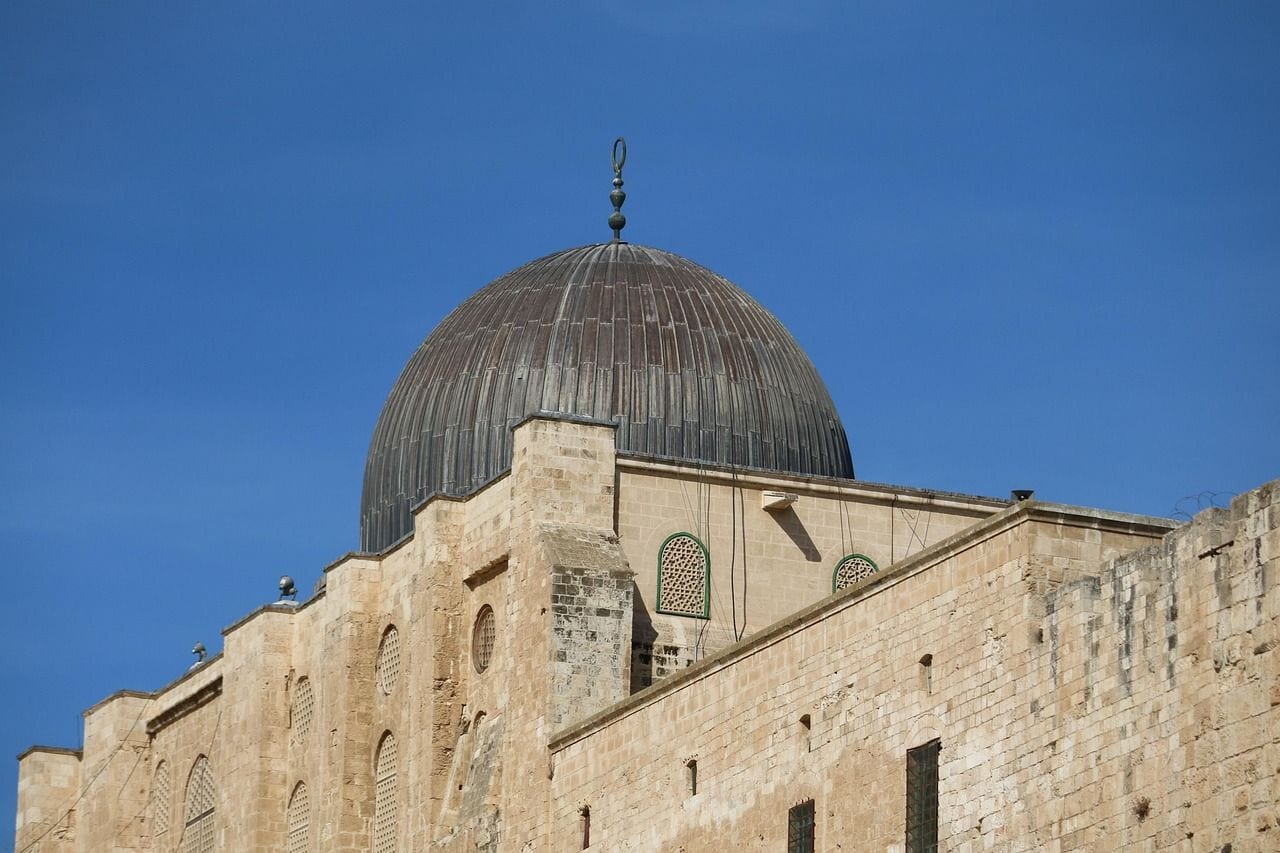
The Al-Aqsa Mosque compound in Jerusalem's Old City holds 400,000 people, and understanding that figure means understanding what is being counted. The name is used two ways: for the silver-domed congregational building at the southern end, which seats only around 5,000, and for the entire 144,000-square-metre walled esplanade it stands on. This list counts the esplanade — the whole consecrated precinct, which also contains the gold Dome of the Rock, open plazas, olive trees and colonnades.
It is the third-holiest site in Islam and the direction Muslims prayed toward before Mecca. Day to day the compound is administered by the Jordanian-run Jerusalem Islamic Waqf, and access to it is contested and frequently restricted, which makes the 400,000 figure a statement about the space rather than a routine occupancy. On the last Friday of Ramadan, when the crowds are largest, the stone floor of the entire platform disappears under worshippers.
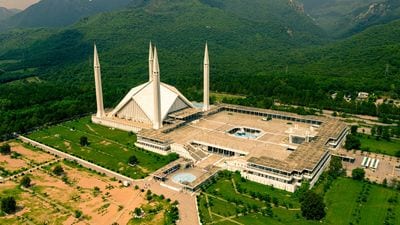
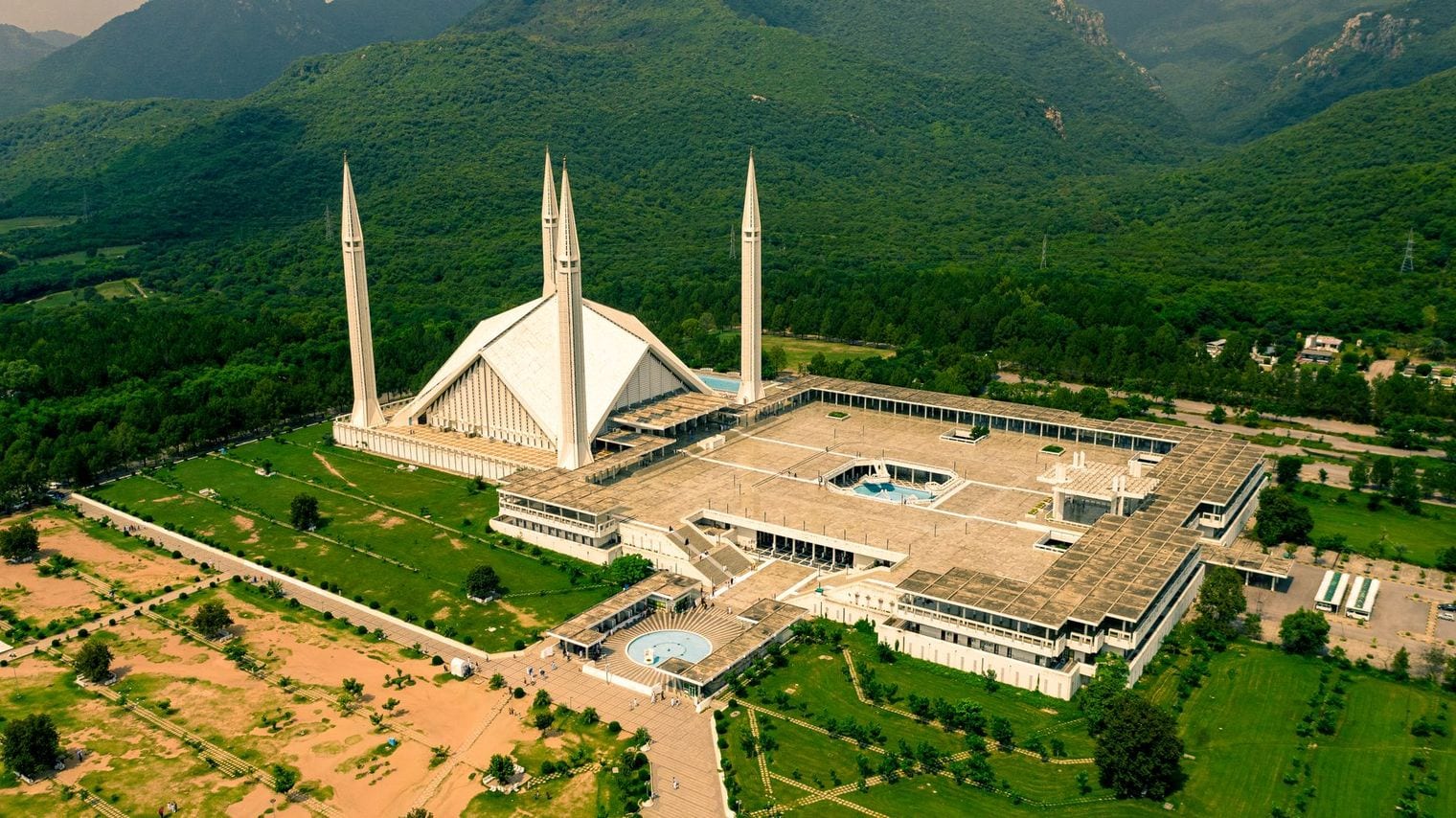
Faisal Mosque holds 300,000 people and looks like nothing else on this list. There is no dome. Turkish architect Vedat Dalokay won the commission with a design shaped like a Bedouin tent — eight concrete sides folding up to a point, with four 90-metre minarets standing away at the corners like tent poles. When it was completed in 1986 the absence of a dome was genuinely controversial; today it is the building Islamabad is known for.
It is also superbly sited. The mosque sits at the northern end of the city where the grid runs out and the Margalla Hills begin, so the white geometry reads against a wall of green rather than against other buildings.
Those four minarets are the tallest in South Asia, and the bulk of the mosque’s capacity comes not from the hall but from the porticoes and the enormous paved courtyard around it. Construction was funded by a grant from Saudi King Faisal, whose name the mosque carries.
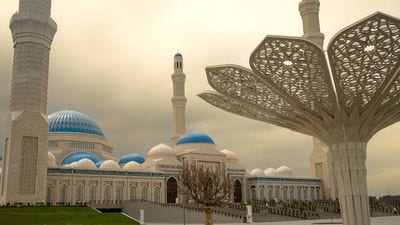
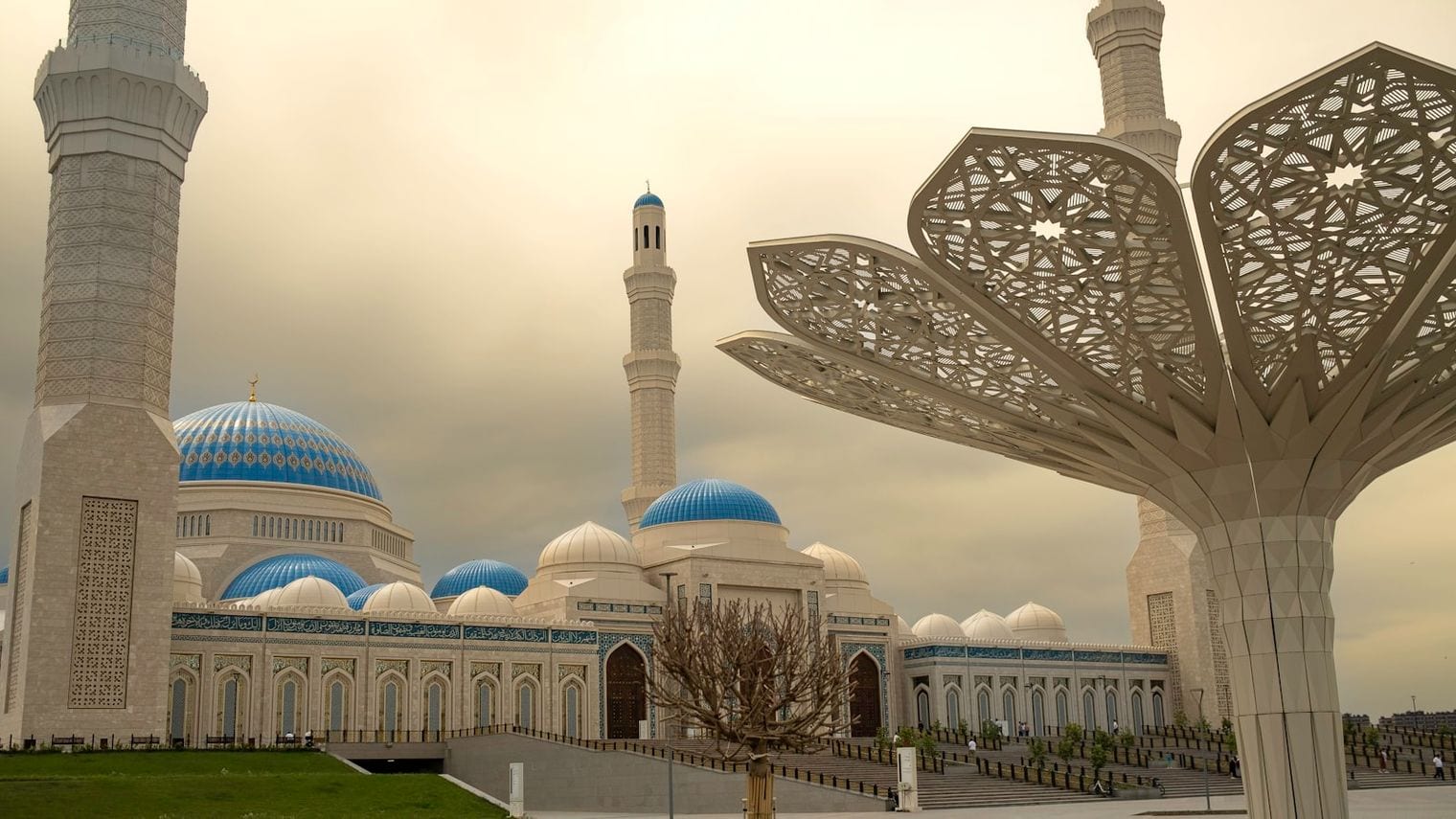
The Astana Grand Mosque holds 235,000 people, which makes it comfortably the largest mosque in Central Asia and the biggest anywhere in the post-Soviet world. It opened in August 2022 on the left bank of the Ishim River, and it was built at a scale that has no real precedent in Kazakhstan — a country where mosque-building on this scale simply was not possible for most of the twentieth century.
The central dome rises 83.2 metres and spans 62 across, ringed by 72 smaller domes, with four minarets at 130 metres marking the corners. Inside, the prayer hall is covered by a single carpet of 15,525 square metres.
The 235,000 total counts the courtyards as well as the halls; the Muslim World League describes the site as holding closer to 300,000 with its outdoor areas included, and the lower figure is the one used here. Blue-and-gold Kazakh ornament runs throughout in place of imported Gulf styling.
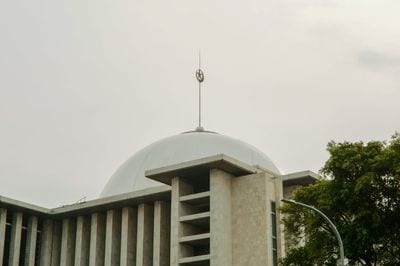
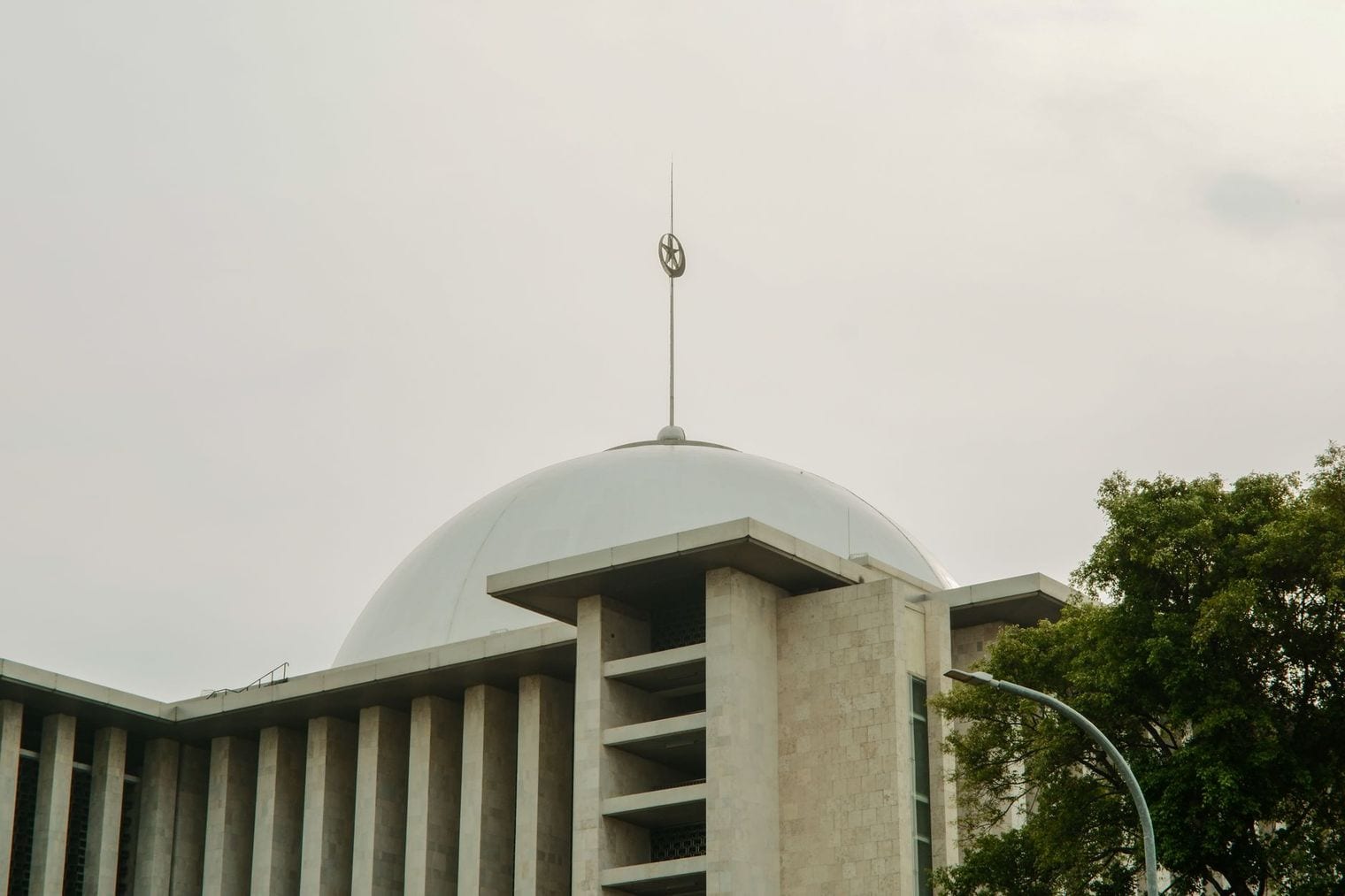
Istiqlal Mosque holds 200,000 people and is the largest mosque in Southeast Asia. Its name means "independence" in Arabic, and it was conceived as a national monument to Indonesia's freedom from Dutch rule rather than as a neighbourhood mosque — which shows in the plain modernist concrete, the absence of ornament, and the single enormous dome carried on twelve pillars.
The capacity breaks down in a way few mosques publish so precisely: about 61,000 in the main prayer room, 8,000 in the preliminary building, 50,000 on the second-floor open terrace and roughly 81,000 more across the corridors and remaining spaces.
The detail most visitors remember, though, is what stands across the road. Jakarta Cathedral, the city's Catholic seat, faces the mosque directly, and the two share parking on each other's major holidays. The mosque was designed by Friedrich Silaban, a Protestant Christian architect who won the open competition for it.
99. Masjid Misr
New Administrative Capital, Cairo Governorate, Egypt
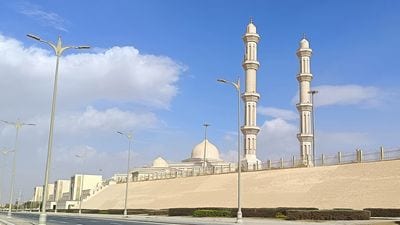
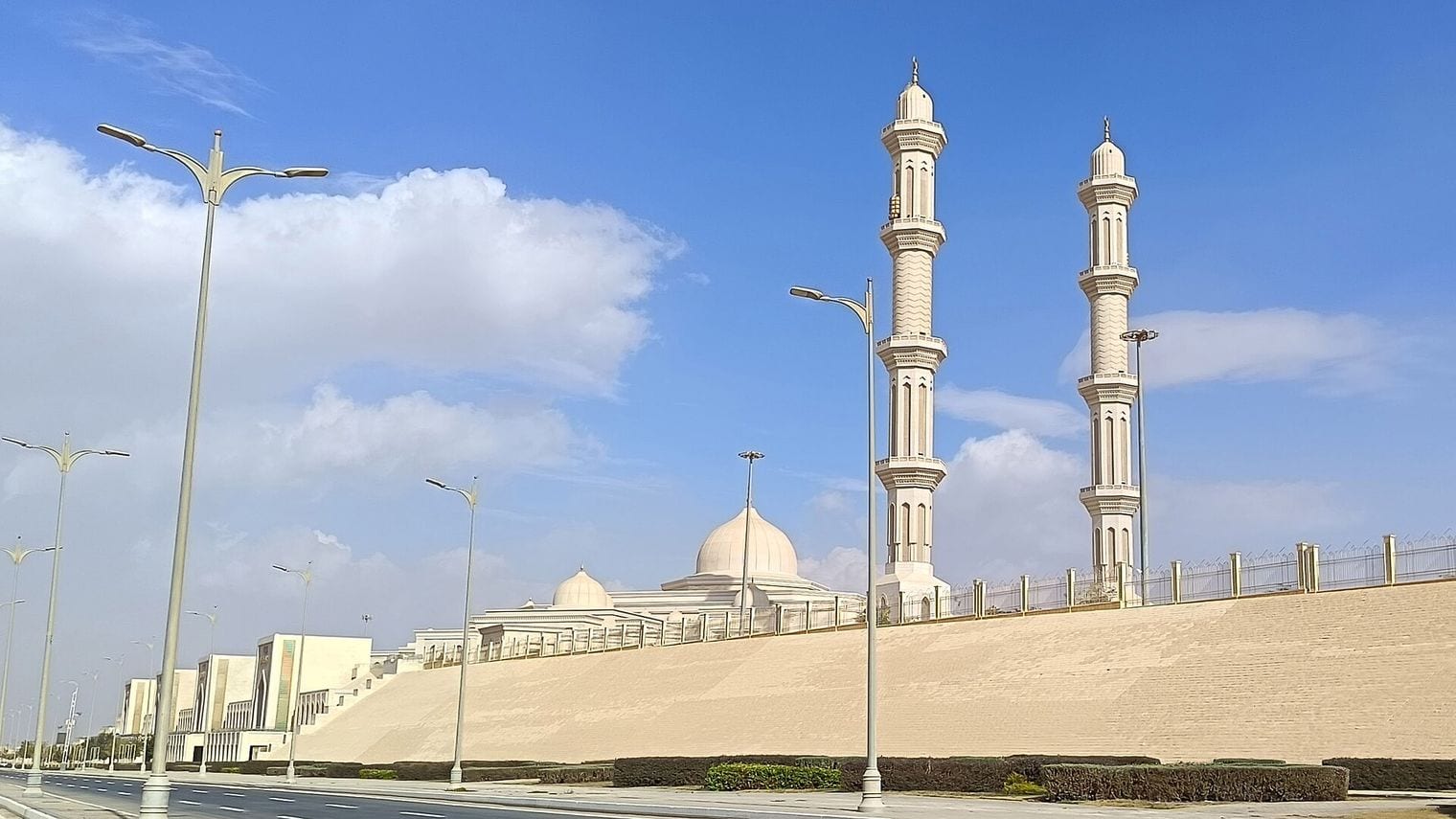
Masjid Misr holds 137,000 people and is the largest mosque in Egypt and in Africa. It anchors the New Administrative Capital, the government city being built in the desert east of Cairo, and it opened in March 2023 as part of the first wave of finished landmarks there. The site covers about 467,000 square metres, most of it courtyard and approach rather than roofed prayer hall.
Egypt built it to hold records, and it does. Two minarets rise 148 metres. Inside is the largest wooden pulpit in the world, hand-carved and standing 16.6 metres high, beneath a chandelier 22 metres across that weighs about 45 tonnes — itself the largest and heaviest of its kind. The effect is deliberately overwhelming, and the contrast with Cairo's thousand-year-old mosques a few dozen kilometres west is the entire point of the project.
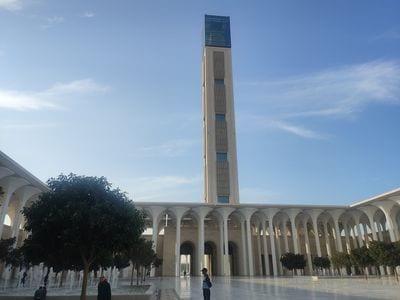
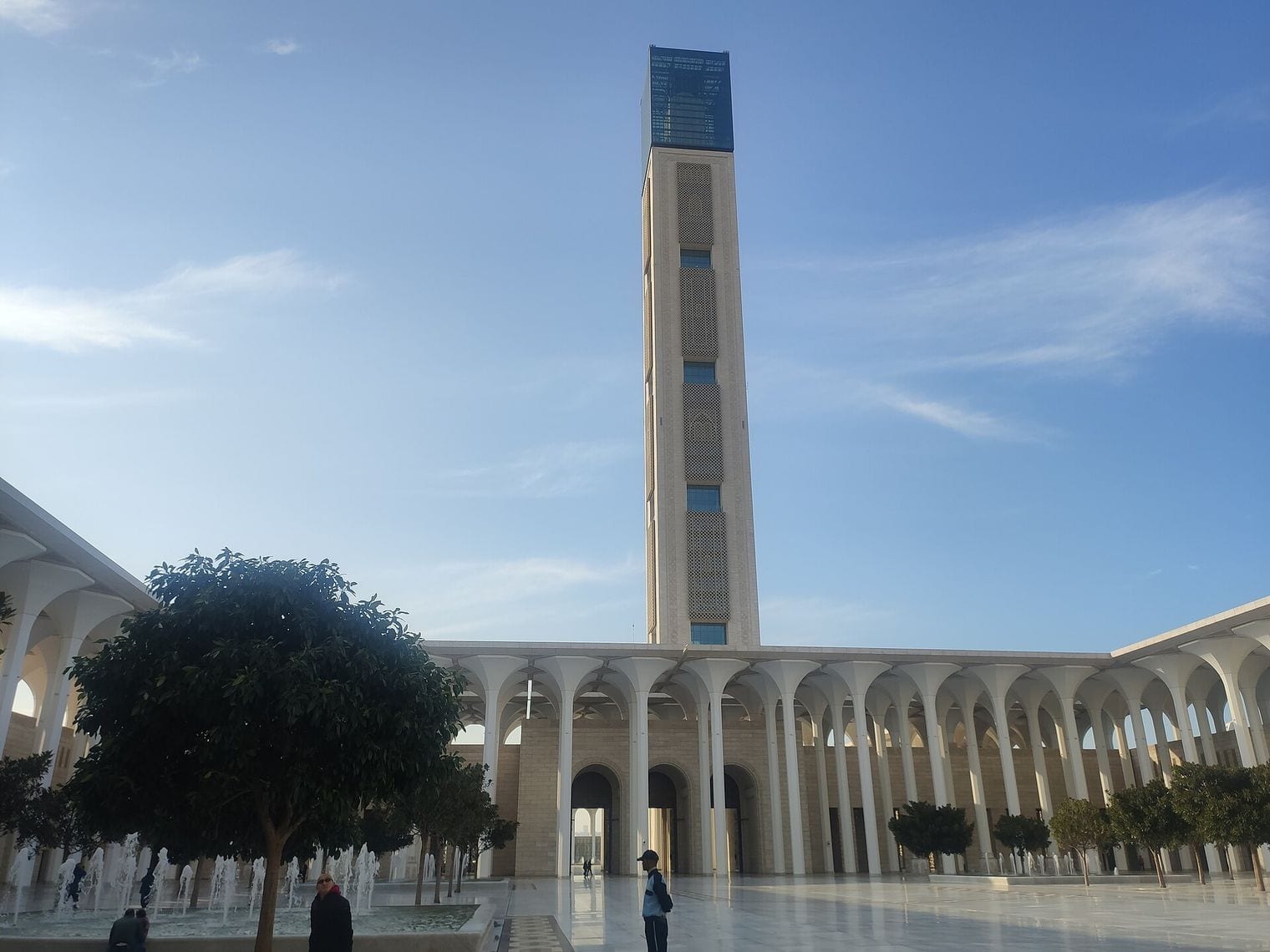
Djamaa el Djazaïr holds 120,000 people and carries the tallest minaret in the world at 265 metres — a slab-sided tower closer to an office block than a traditional minaret, with a viewing platform and a research centre stacked inside it. The mosque overlooks the Bay of Algiers, and the minaret is visible from most of the city and from well out to sea.
The project took the better part of a decade and was politically loaded from the start, intended as a statement of Algerian standing in the Muslim world. The prayer hall sits under a 70-metre dome and is squared off in the North African manner rather than domed in the Ottoman style, with a forest of slender columns and woodwork drawn from Algeria's own craft tradition. By capacity it is the second-largest mosque in Africa, behind only Egypt’s Masjid Misr.
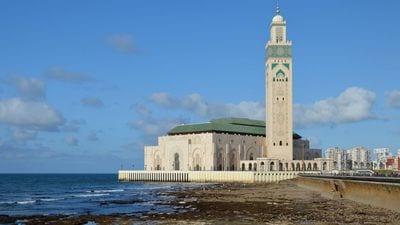
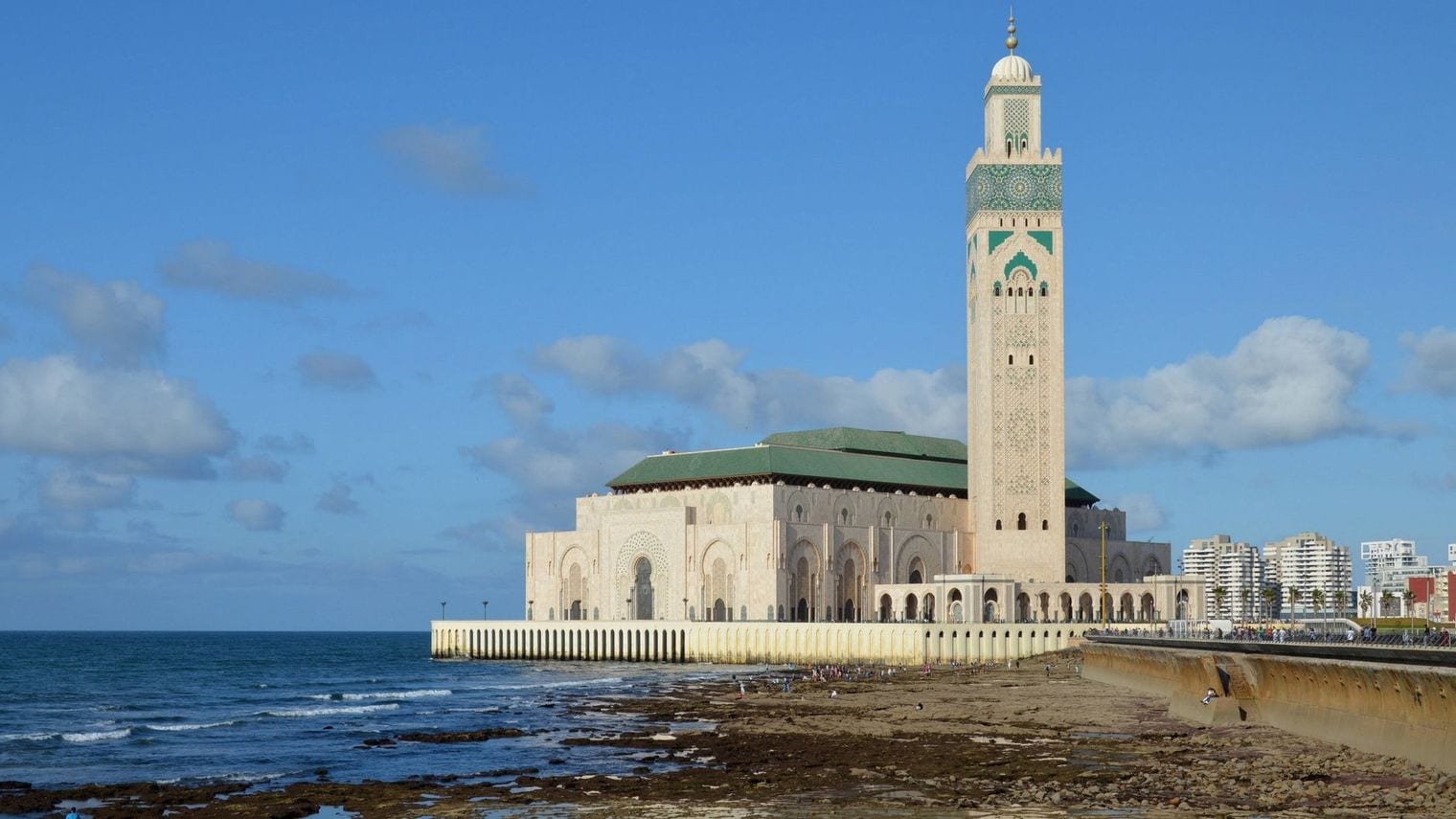
Hassan II Mosque holds 105,000 people — 25,000 inside the prayer hall and another 80,000 on the grounds outside — and it is built out over the Atlantic. Roughly half the structure stands on a promontory reclaimed from the sea at Casablanca, so the waves break directly beneath the eastern wall. Worshippers pray over the water, though the widely repeated claim about a glass floor looking down into the ocean is not true of the building as it stands.
Its minaret reaches 210 metres, the second-tallest in the world, and a laser at the top points toward Mecca at night. Designed by Michel Pinseau and inaugurated in August 1993, it was built by some 3,300 Moroccan craftsmen, and almost every material in it is Moroccan — cedar from the Middle Atlas, marble from Agadir, granite from Tafraout. The roof over the main hall retracts, opening the interior to the sky.
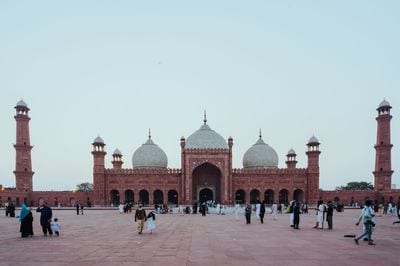
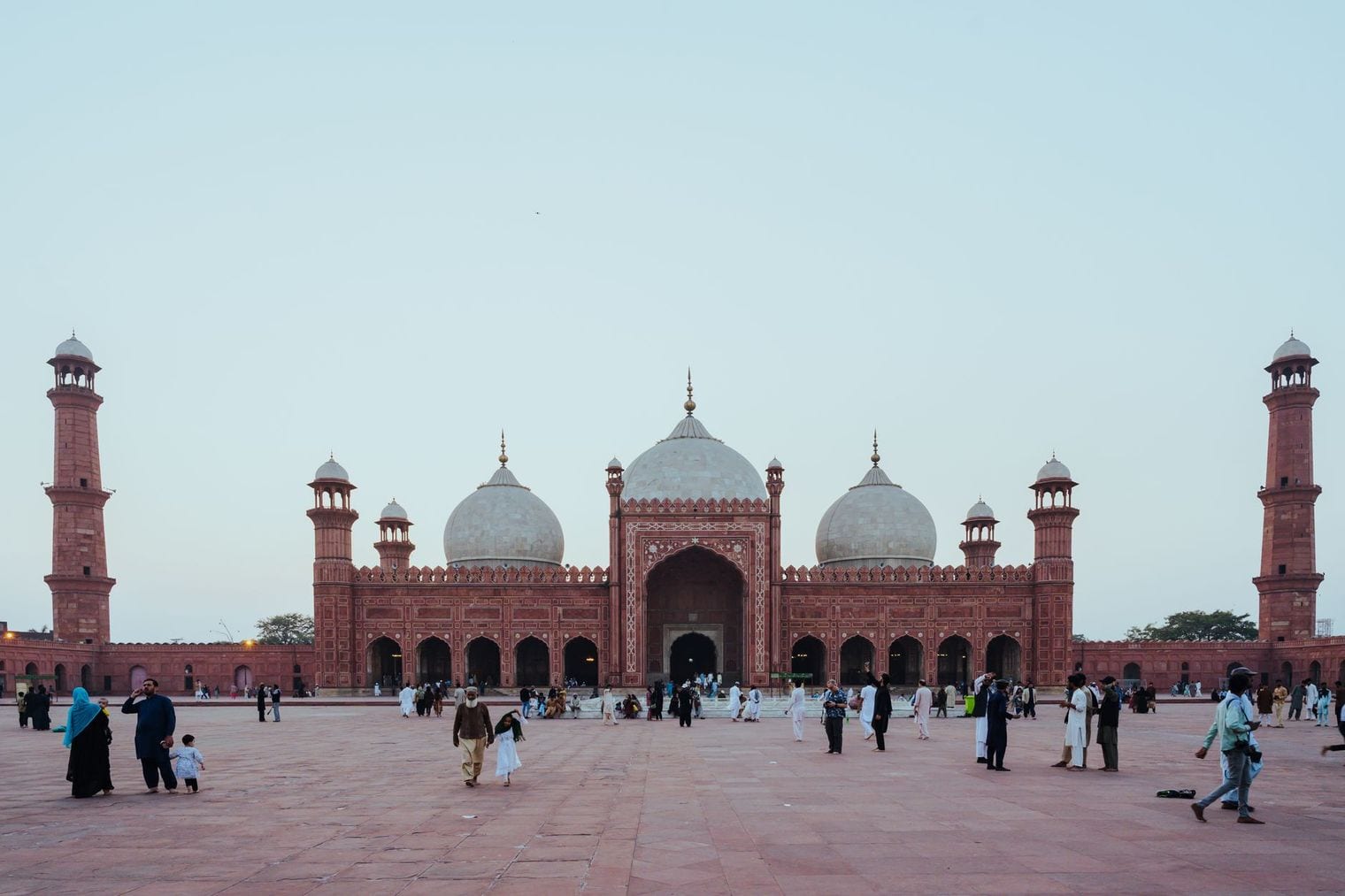
Badshahi Mosque holds 100,000 people, and for more than three centuries it was the largest mosque in the world. Emperor Aurangzeb built it in 1673 as the imperial mosque of Mughal Lahore, and it kept that title until 1986, when Faisal Mosque overtook it.
Almost all of that capacity is the courtyard, one of the largest of any mosque anywhere, a vast red sandstone square that fills for Eid and empties into a near-silent expanse the rest of the week. Three white marble domes sit above the prayer chamber, and eight minarets mark the corners, the four major ones rising about 196 feet. It faces Lahore Fort across a shared plaza, and the two together form the single most recognisable view in Pakistan.
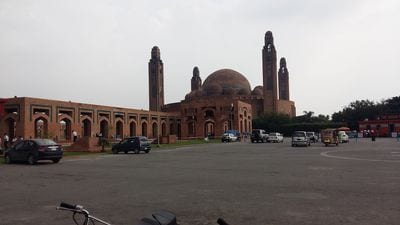
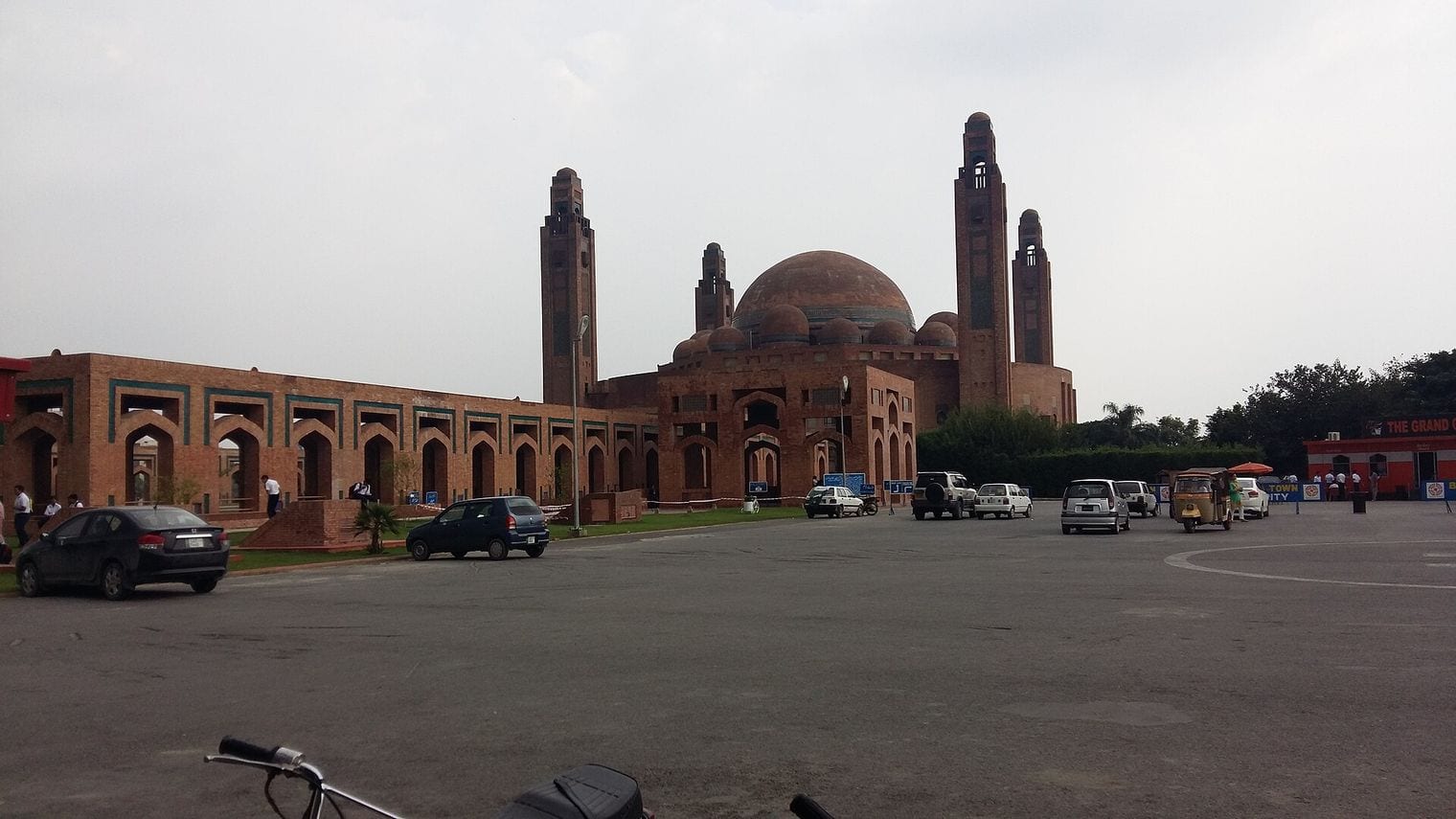
The Grand Jamia Mosque in Lahore holds 70,000 people and was consecrated in 2014, making it one of the largest mosques built anywhere in the twenty-first century. Like its much bigger sibling in Karachi, it sits inside a Bahria Town development on the city's southern edge, on land that allowed a footprint no site in old Lahore could have offered.
Where Karachi's mosque looks to Arabia, this one looks firmly at Lahore itself. The design borrows from the Mughal vocabulary a few kilometres north — scalloped arches, a broad central dome, four minarets — and clads it in an enormous quantity of hand-cut mosaic and glazed tilework, over four million handcrafted Multani tiles in all. The result is a modern building deliberately made to look as though it belongs to the same city as Badshahi.
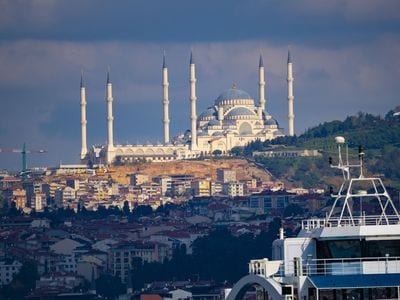
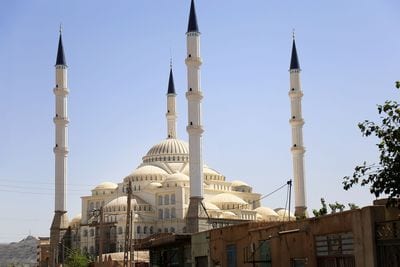
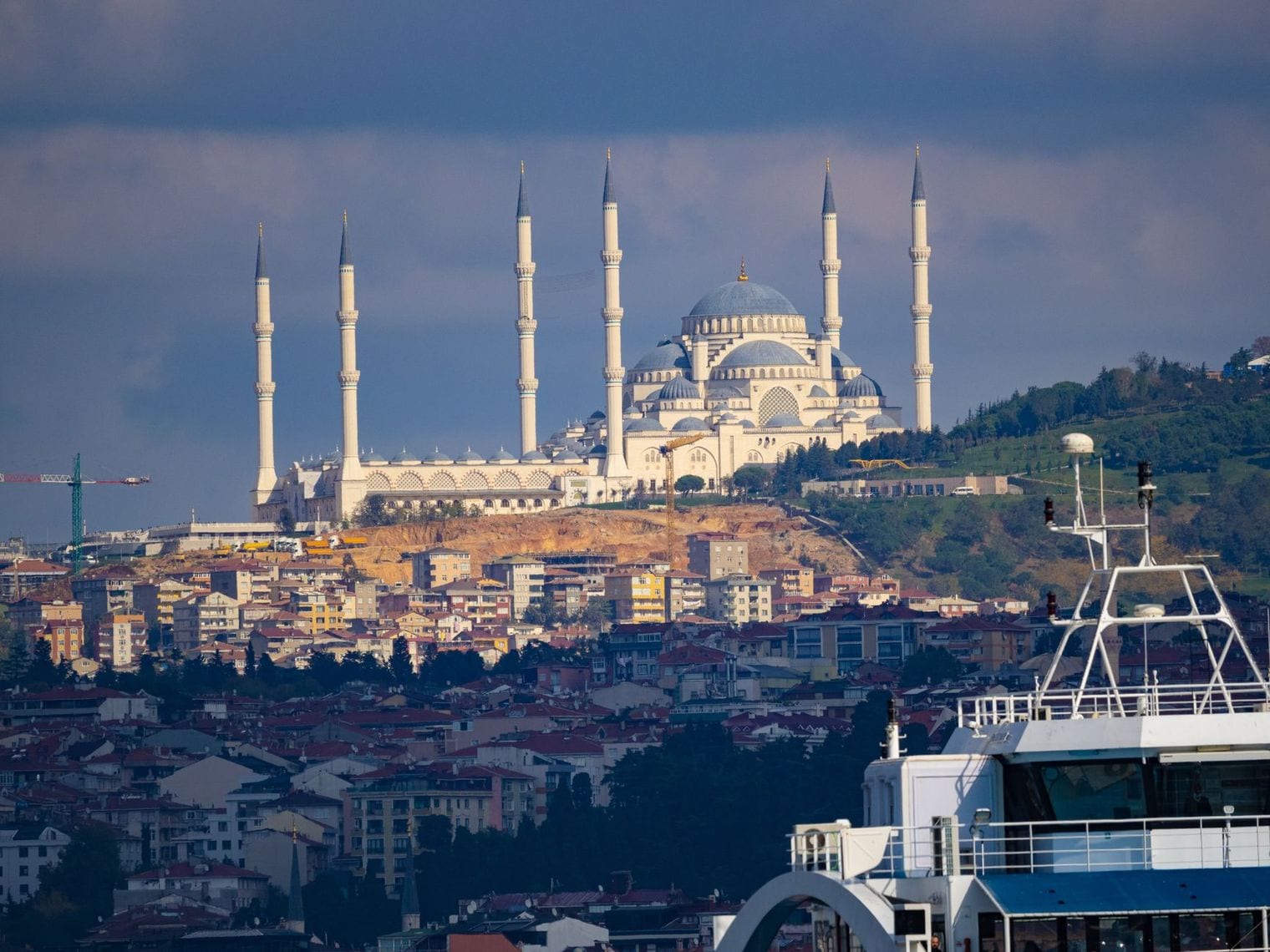
Çamlıca Mosque holds 63,000 people and is the largest mosque in Turkey. It stands on Çamlıca Hill in Üsküdar, the highest point on Istanbul's Asian side, which means it is visible from a great deal of the European shore and from the Bosphorus itself — a siting decision that drew as much comment as the building when it opened in 2019.
Architecturally it is a deliberate reworking of the classical Ottoman mosque at a scale Sinan never attempted. The main dome rises 72 metres, surrounded by 70 smaller domes and semi-domes, and six minarets of 107 metres each mark it out; six is the number Istanbul associates with the Blue Mosque.
Beneath the prayer hall the complex houses a museum, a library, an art gallery and a conference hall, which is unusual — most of this list puts its non-prayer functions in separate buildings.
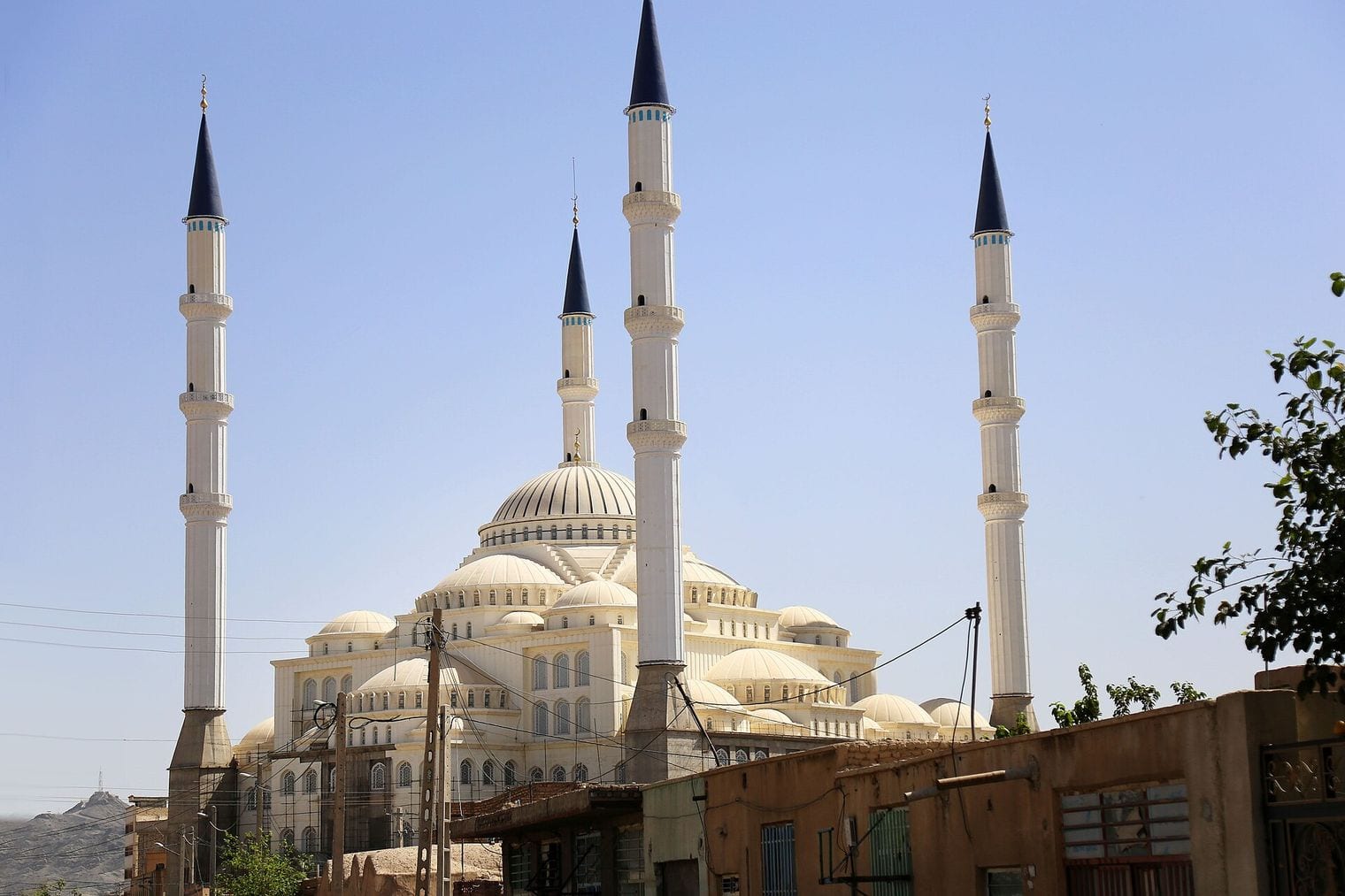
The Jameh Mosque of Makki in Zahedan holds 60,000 people and is the largest Sunni mosque in Iran — a distinction worth pausing on in a country that is overwhelmingly Shia. It serves the Baloch population of Sistan and Baluchestan province in the far south-east, near the Pakistani border, and it functions as the religious centre of that community rather than as a national monument.
The mosque was founded in 1971 alongside the Darul Uloom seminary next door, and it has been enlarged steadily since. Its interior covers about 33,000 square metres within a 50,000-square-metre site, roofed by 52 domes reaching 46 metres, with four minarets at 92 metres.
The style is Hanafi and South Asian rather than Persian — closer to what you would find in Karachi or Kandahar than in Isfahan — which makes it one of the more architecturally distinctive buildings in Iran.
FAQ: The World’s Largest Mosques
What is the largest mosque in the world?
Masjid al-Haram in Mecca, which holds about three million worshippers across a complex of roughly 1.5 million square metres. It surrounds the Kaaba and is the destination of the Hajj, so it is built to absorb the entire Muslim world arriving at once. No other religious building comes within a million of it.
How is a mosque’s capacity measured?
By how many people can pray in the whole consecrated complex at one time, counting prayer halls, courtyards and porticoes together. That matters enormously: Hassan II Mosque holds 25,000 under its roof but 105,000 once its esplanade is included. Figures quoting only the covered hall will always look far smaller.
What is the largest mosque outside Saudi Arabia?
The Imam Reza Shrine in Mashhad, Iran, with room for 700,000 people across its courtyards and prayer halls. The largest purpose-built single mosque outside Saudi Arabia is the Grand Jamia Mosque in Karachi, finished in February 2026, which holds 600,000 and is the newest entry on this list.
Why is the Sheikh Zayed Grand Mosque not on this list?
Because capacity and fame are different things. The Abu Dhabi mosque holds around 41,000 worshippers, which places it well outside the top fifteen even though it is among the most photographed mosques on earth. Several entries here are far less famous and several times larger — a gap that runs through most of our world record countdowns.
Can non-Muslims visit the mosques on this list?
Many of them, yes. Hassan II in Casablanca runs guided tours, and Istiqlal, Çamlıca, Djamaa el Djazaïr and Masjid Misr all admit non-Muslim visitors outside prayer times, usually with modest dress required. Mecca and Medina are the firm exception: both cities are open only to Muslims.