We may earn a commission if you book tickets, tours or a stay through a link on
this page, at no extra cost to you. It never affects which places we list or how
we rank them (how we make money).
The record
4,450,000 m³157,150,267 cu ft
Great Pyramid of Cholula
Mexico
The record
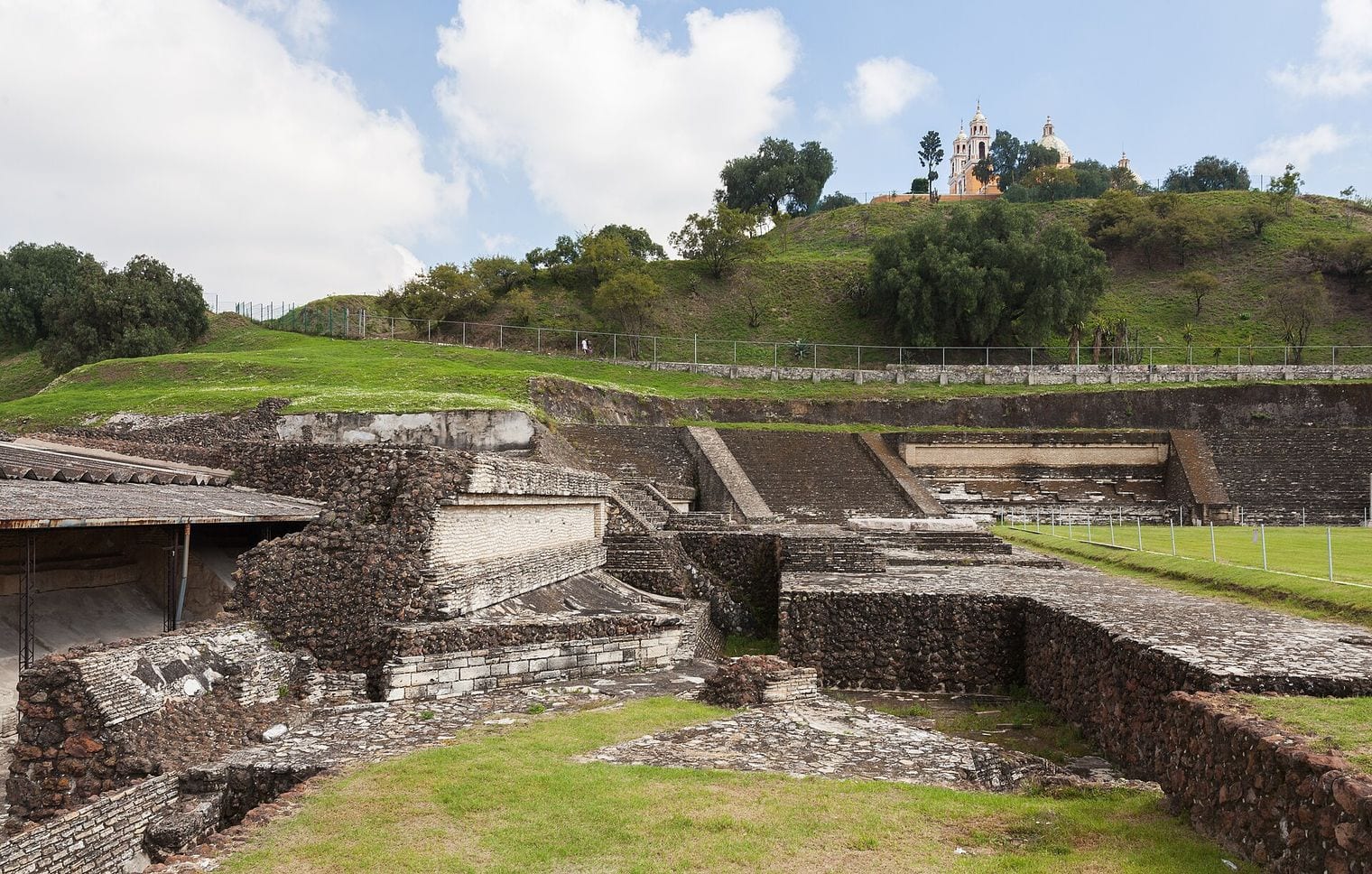
The largest pyramid in the world is the Great Pyramid of Cholula, in Mexico — 4,450,000 m³ (157,150,267 cu ft), volume.
Source: Guinness World Records (largest pyramid), after Lehner, The Complete Pyramids. Verified .
The Great Pyramid of Giza is not the largest pyramid in the world. It is the third. Rank instead by the volume of stone, brick and rubble a builder actually piled up, and first place goes to a grass-covered hill in Mexico with a church on top, followed by a Maya mountain buried in Guatemalan rainforest.
This countdown runs from 4,450,000 m³ down to 200,158 m³ across three countries, ranked strictly by the volume of the man-made mass as built — counting a pyramid's integral basal platform, and excluding hollow modern shells, which is why the Luxor casino in Las Vegas, a glass box with hotel rooms inside it, never enters.
Every entry still stands and can be visited today. Two famous names are missing for a duller reason: Peru's Huaca del Sol was two-thirds washed away by treasure hunters, and Teotihuacan's Pyramid of the Moon has no published volume figure to rank it by.
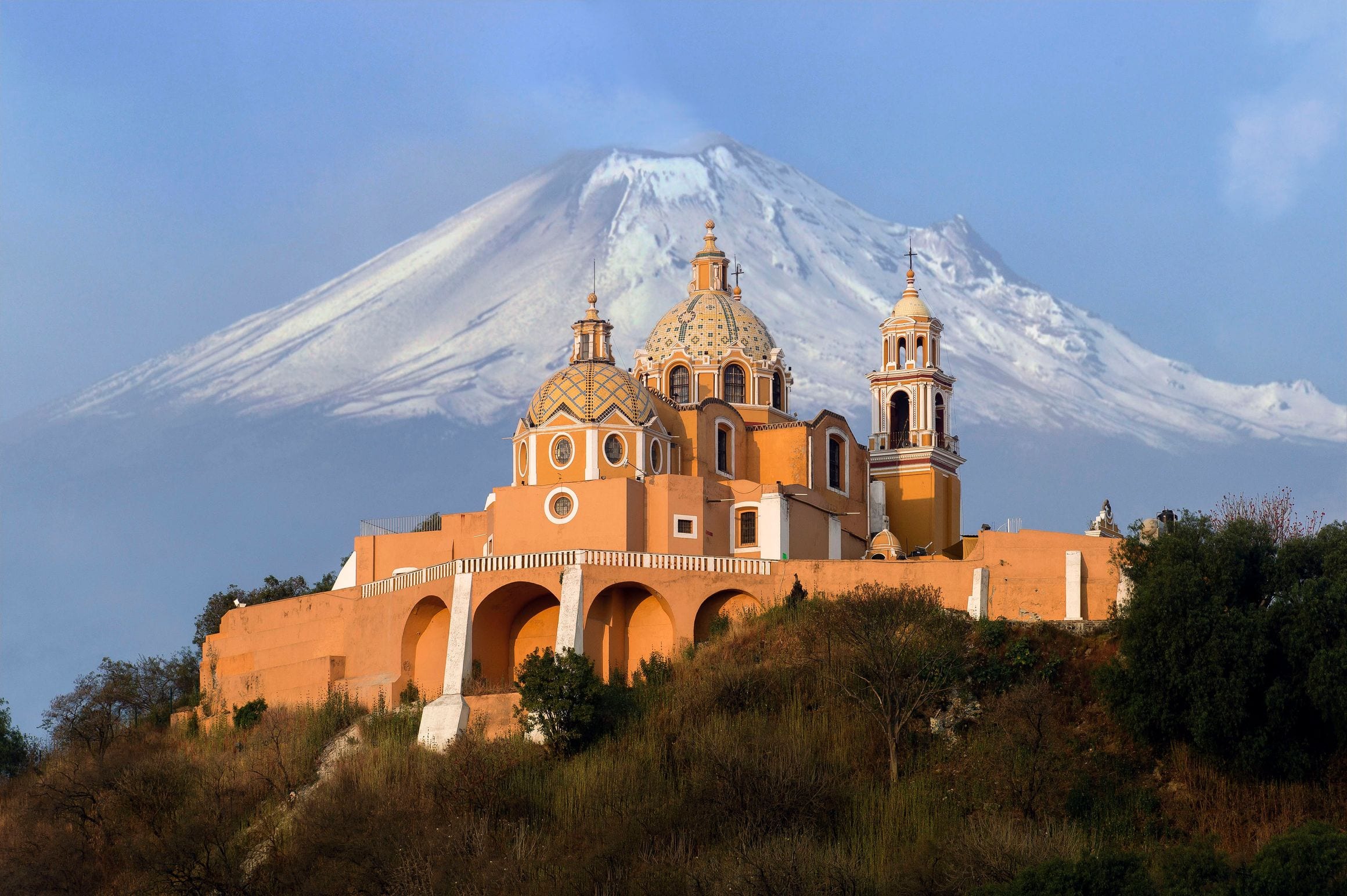
The largest pyramid on Earth has a church on its summit — Cholula was so overgrown that Spanish colonists took it for a hill and built on top, which is part of why it survived.
One pharaoh moved more stone than any other — Sneferu built the Red, Bent and Meidum pyramids, some 3.5 million m³ between them, comfortably out-building his son Khufu.
One king appears on this list twice — Amenemhat III’s Black Pyramid started sinking into the floodplain, so he built a second at Hawara and was buried there instead.
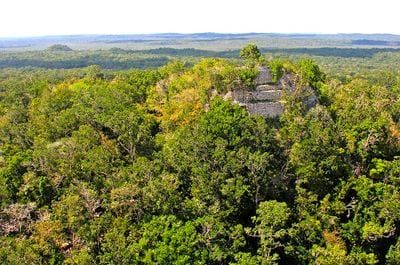
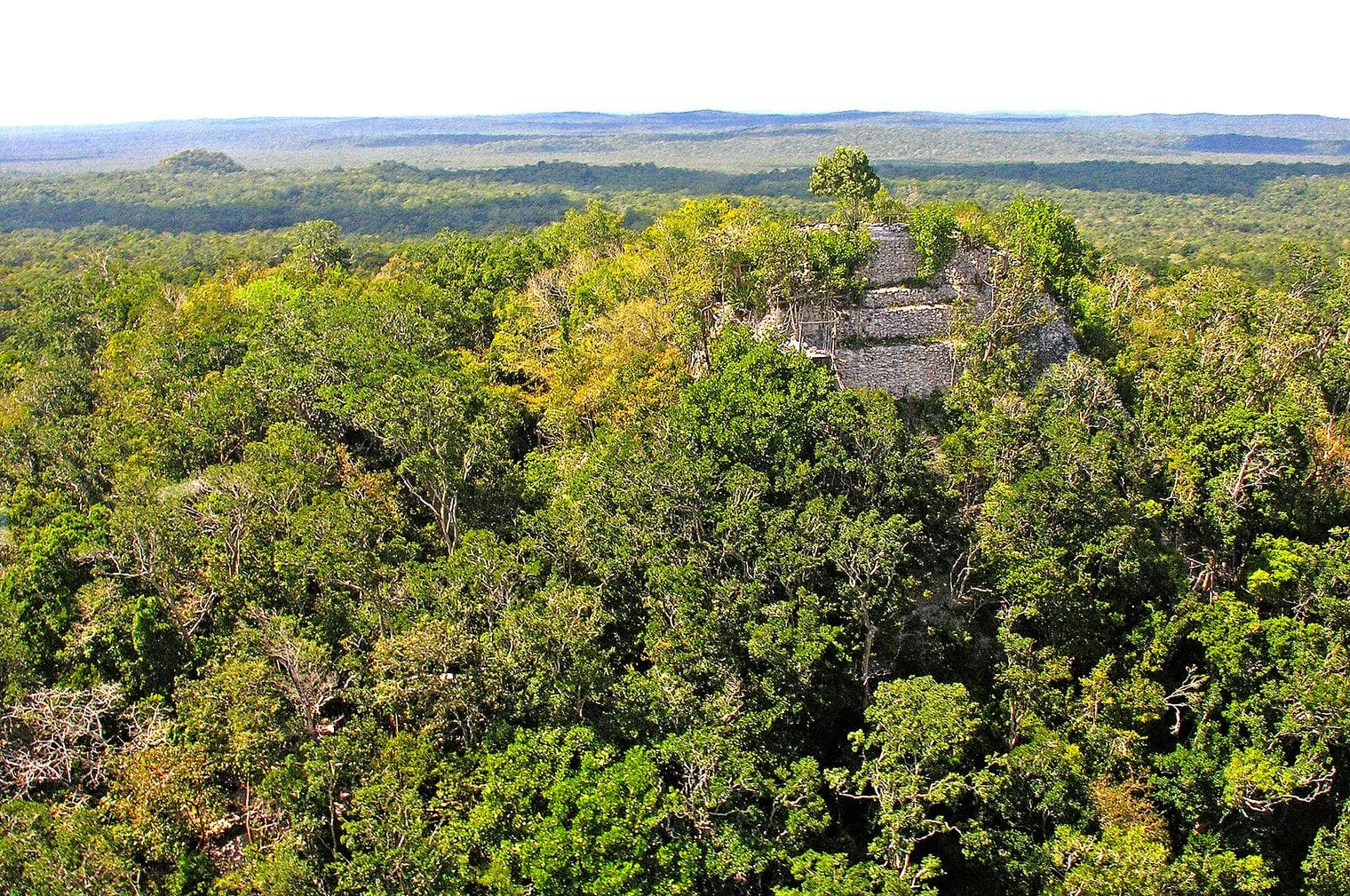
The largest Maya pyramid has no road to it — reaching La Danta means a multi-day walk through Guatemalan rainforest, or a helicopter.
Giza held the world height record for 3,800 years — Khufu’s pyramid was the tallest structure on Earth until medieval cathedrals finally passed it, a run of dominance no modern skyscraper will ever approach.
The oldest entry is the oldest large stone building anywhere — Djoser’s step pyramid predates every smooth-sided pyramid on this list.
At 4,450,000 m³, the Great Pyramid of Cholula holds nearly twice the built volume of the Great Pyramid of Giza, and almost nobody recognises it.
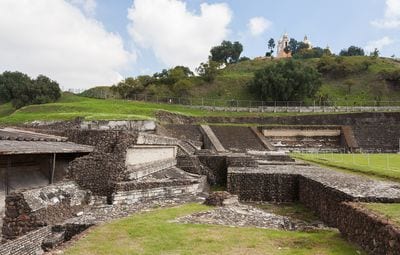
Guinness World Records lists it as the largest pyramid — and the largest monument — ever constructed, rising about 66 m above the Puebla plain on a base covering close to 16 hectares. It does not read as a pyramid from the road. Centuries of grass and soil have turned it into what looks like an ordinary hill.
Its scale comes from repetition rather than ambition. Successive builders raised new pyramids over older ones between roughly the 3rd century BCE and the 9th century CE, each casing swallowing the last, until the mound reached its present bulk.
A Spanish colonial church, the Iglesia de Nuestra Señora de los Remedios, sits on the summit today, reached by a path up the flank. Archaeologists have driven kilometres of tunnels into the base, and a section of them is open to walk through.
At 2,800,000 m³, La Danta at El Mirador is the largest pyramid the Maya ever built, and Guinness World Records recognises it as exactly that. The figure covers the temple together with the vast artificial platform it stands on — a distinction worth stating plainly, because measured as a bare temple it would not place this high.
Richard Hansen, who directs the Mirador Basin Project and calculated the volume, attached his own caveat: the total assumes no natural hill lies buried inside the fill.
Getting there is the hard part. El Mirador sits in dense rainforest in northern Petén, close to the Mexican border, with no road to it. Visitors walk in over several days from Carmelita or arrive by helicopter, and the summit clears the canopy at about 72 m, opening a view over unbroken forest in every direction. The city was abandoned centuries before the Maya sites most travellers know, and much of it is still buried.
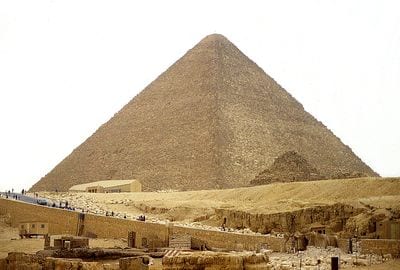
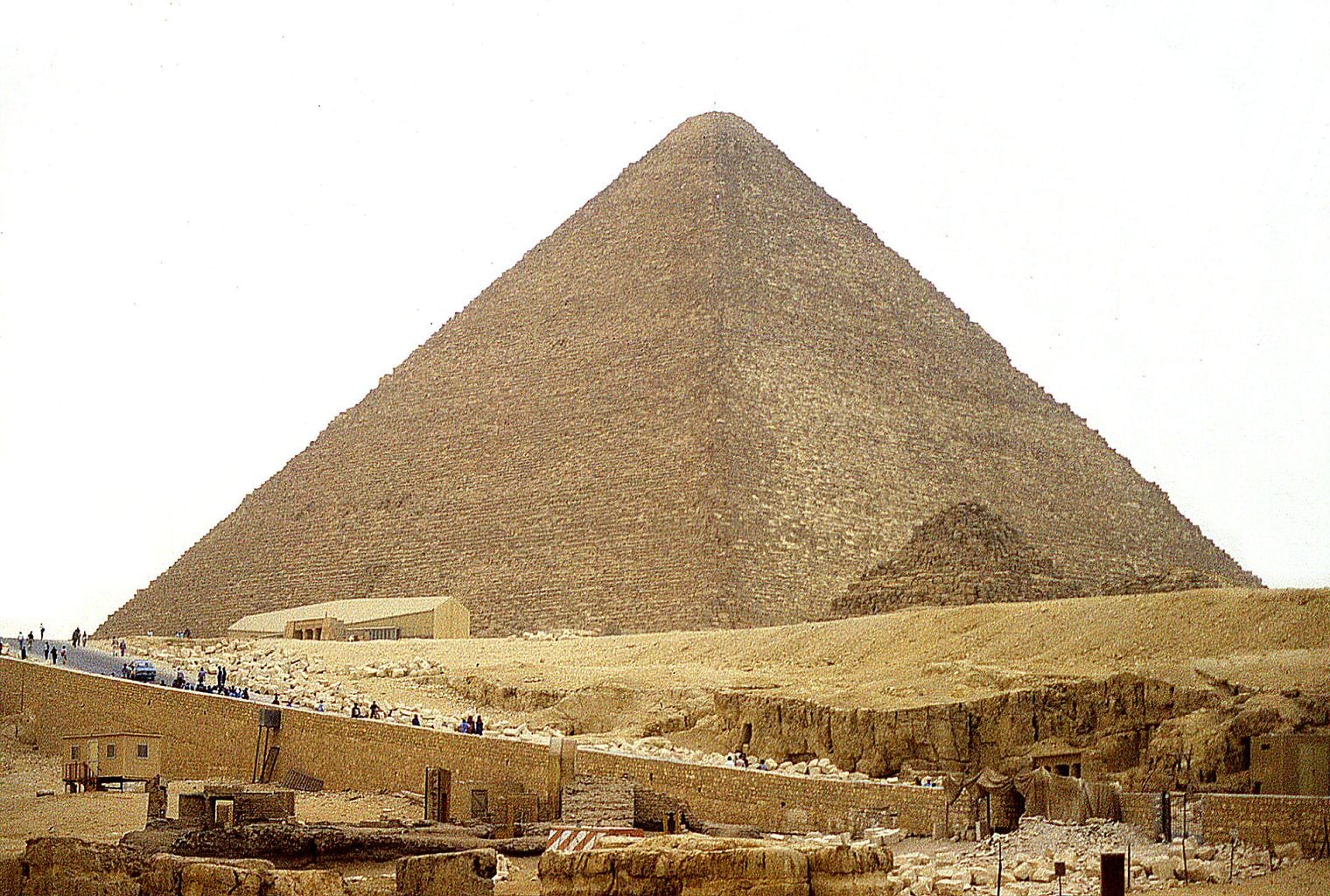
At 2,583,283 m³, the Great Pyramid of Giza is the largest pyramid in Egypt and the third largest in the world — a ranking that surprises people who have only ever heard it described as the biggest. Built for the pharaoh Khufu in the Fourth Dynasty, it is the sole survivor of the Seven Wonders of the Ancient World, and it held the record for the tallest structure on Earth for more than three millennia.
The mass is roughly 2.3 million blocks of limestone and granite, and the precision is the part that still unsettles engineers: the base is level to within a few centimetres, and the sides are aligned close to true north. Most of the polished white casing that once made it gleam was quarried away to build medieval Cairo, leaving the stepped core you see today. Visitors can enter through a forced passage and climb the Grand Gallery to the King's Chamber.
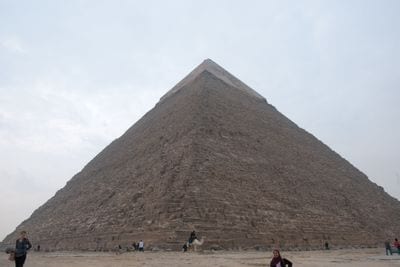
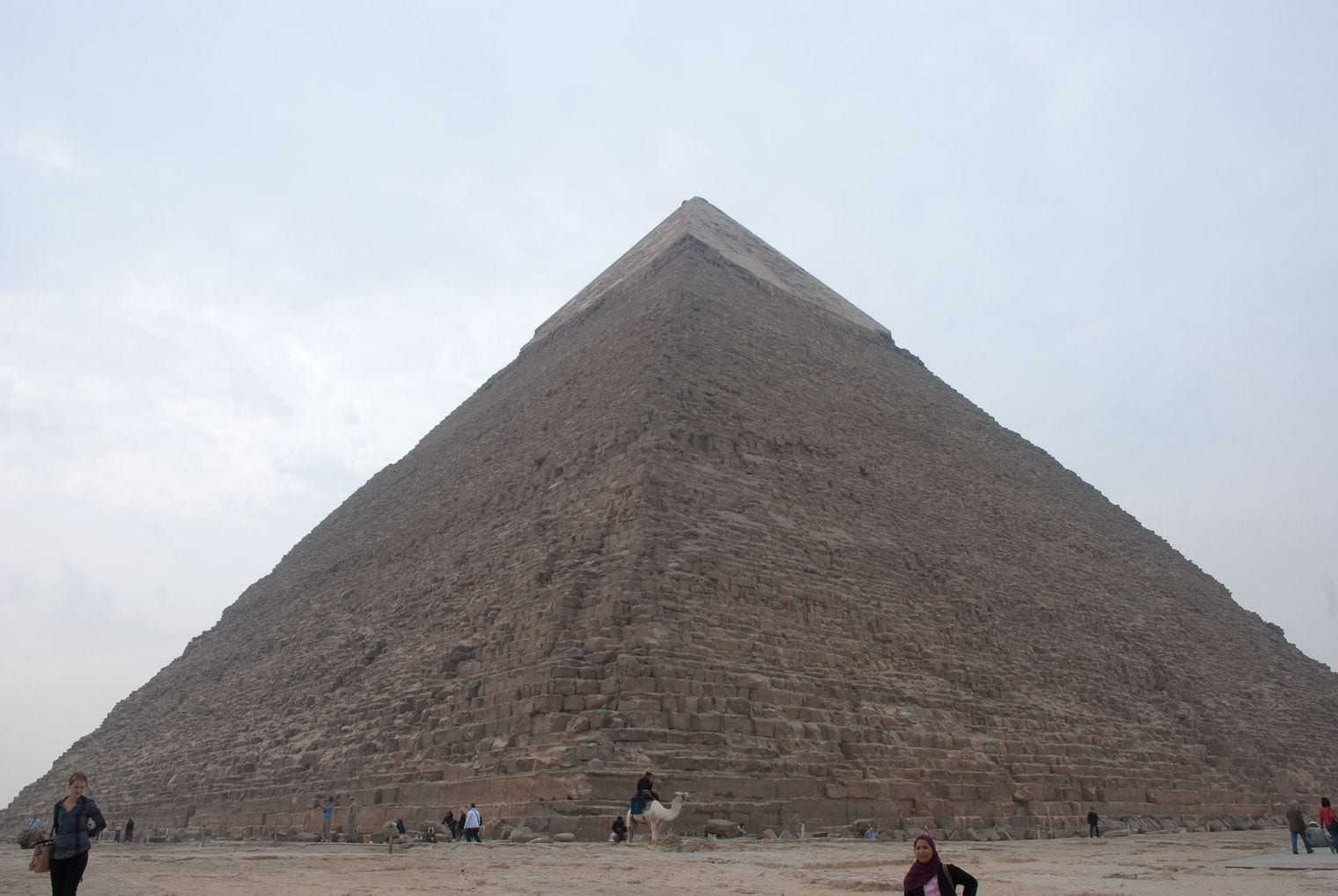
At 2,211,096 m³, the Pyramid of Khafre is only slightly smaller than his father's, and it wins nearly every photograph taken at Giza. It stands on higher bedrock at a steeper angle, so from most viewpoints it looks like the tallest of the three, even though Khufu's pyramid is a few metres taller.
Khafre kept the one detail Khufu lost. A cap of the original polished Tura limestone casing still clings to the top, showing exactly how all three pyramids looked when new. The pyramid anchors a complex that takes in the Great Sphinx and a valley temple of massive granite blocks, both reached on the same plateau ticket. Inside, the burial chamber is cut into the bedrock and is plainer than Khufu's, with a granite sarcophagus set flush into the floor.
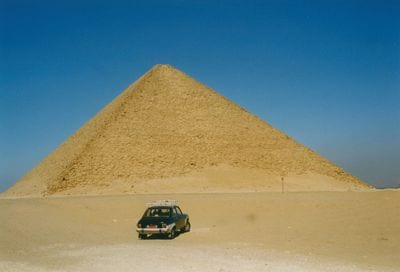
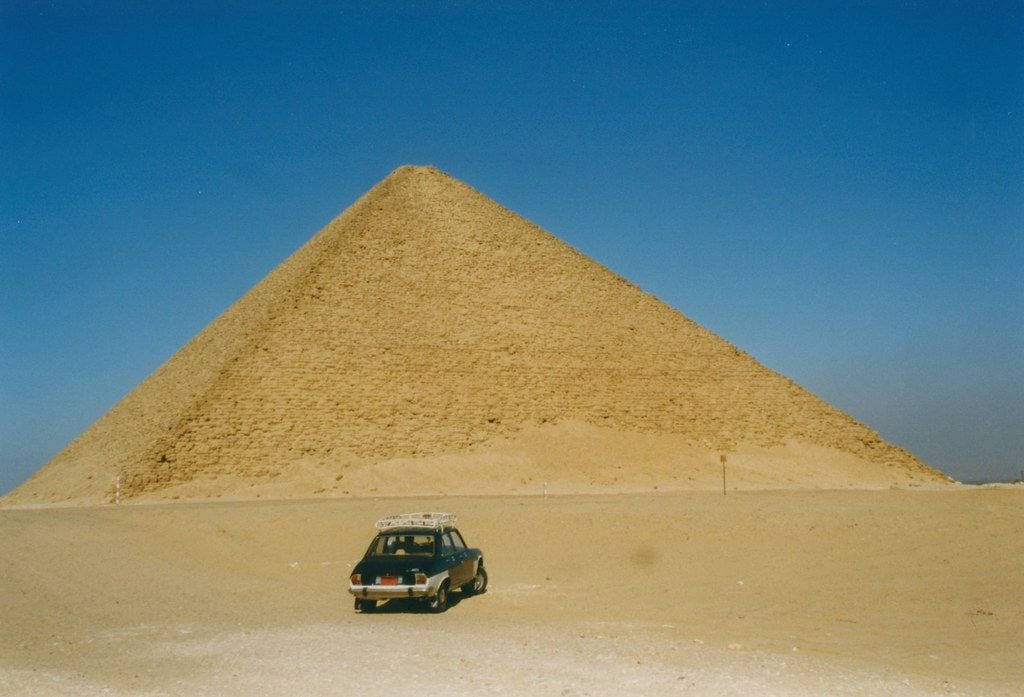
At 1,694,000 m³, the Red Pyramid at Dahshur is the largest of the three pyramids Sneferu built, and the first true smooth-sided pyramid completed anywhere. Its name comes from the reddish limestone of the core, exposed once the white casing came off, which gives the whole structure a warm rust colour in late light.
Dahshur draws a fraction of Giza's crowds, and that is most of its appeal. Visitors can walk straight up the north face to the entrance and descend a long, low passage into three corbelled chambers whose ceilings step inward course by course to a startling height. The site sits out in open desert well south of Cairo, and on many days there is no queue at the entrance at all.
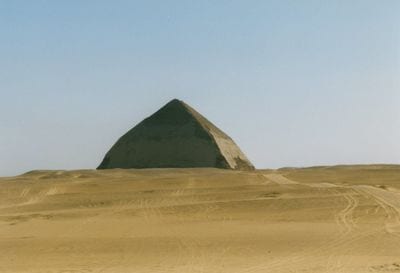
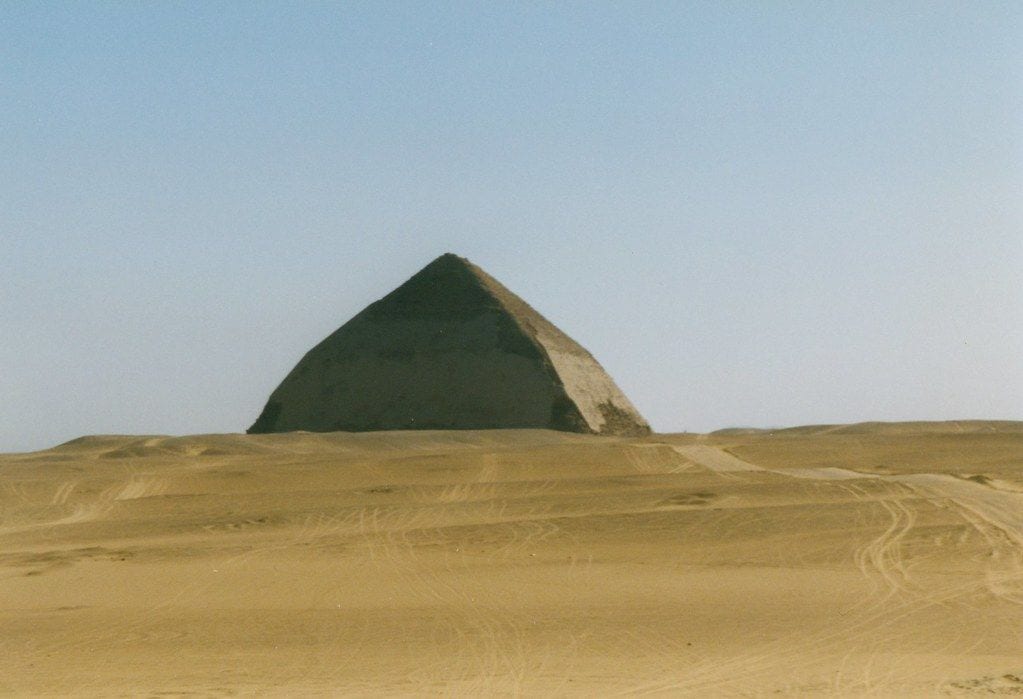
At 1,237,040 m³, the Bent Pyramid is the most obviously experimental building on this list. It changes angle halfway up, from about 54 degrees to a shallower 43. The usual reading is that Sneferu's builders lost their nerve when the structure began showing signs of instability, and finished it at a safer slope rather than start again.
It is also the best-preserved pyramid in Egypt in one specific respect: much of its original polished casing is still attached, which almost nowhere else can claim. Its interior is open to visitors, and a smaller satellite pyramid stands beside it on the same sand. Standing at the base, the kink is unmistakable, and it makes the pyramid look less like a finished monument than like a problem being solved in real time.
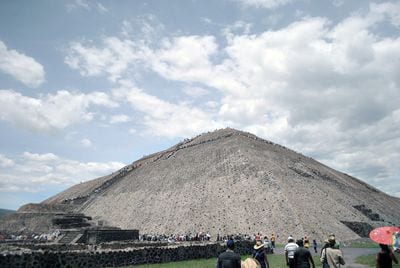
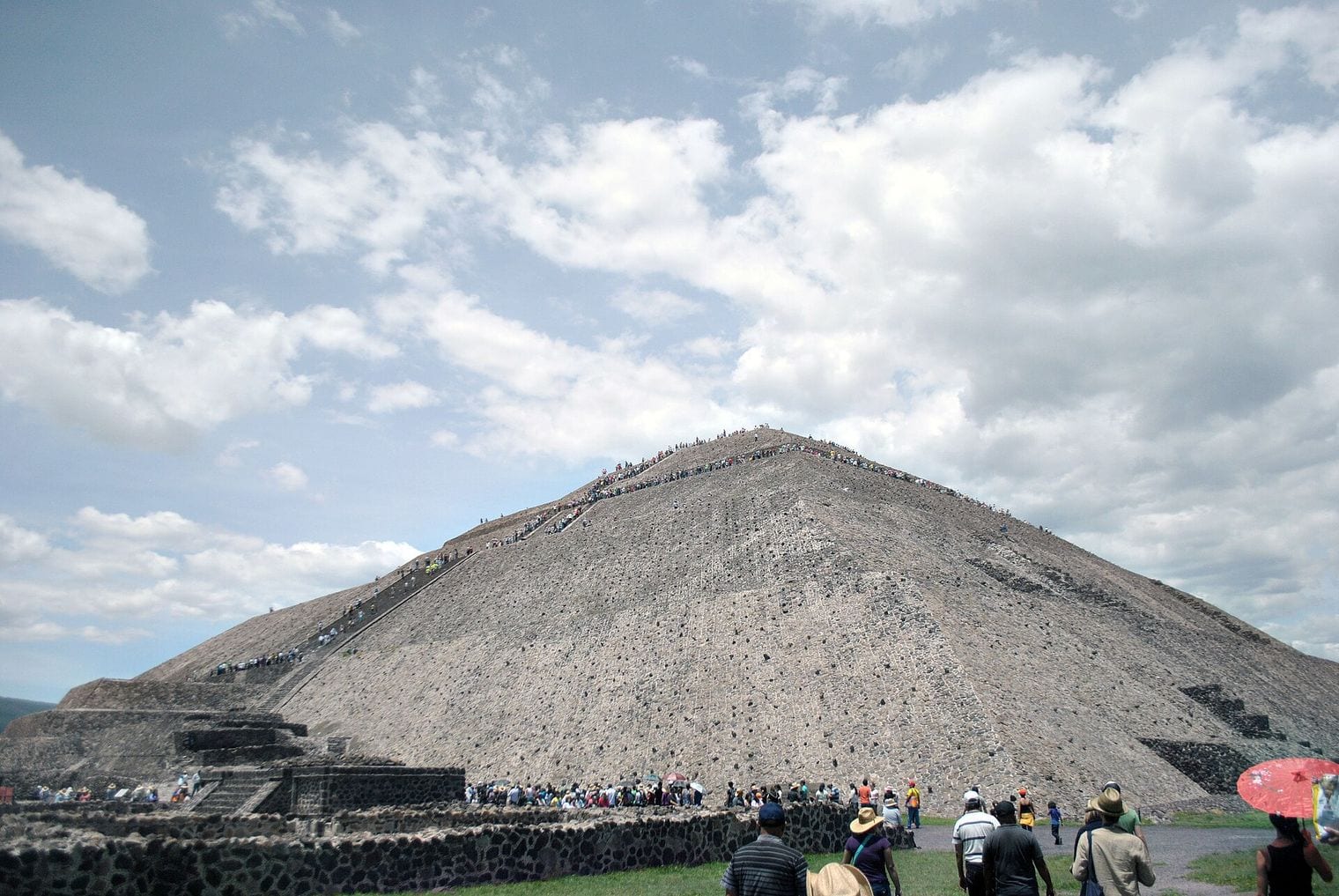
At 1,184,828 m³, the Pyramid of the Sun is the largest structure at Teotihuacan and the biggest pyramid in the Valley of Mexico. That figure is a geometric calculation rather than a survey — nobody has taken the mound apart to measure it — but it sits close to the 1.2 million m³ archaeologists usually quote.
Nobody knows what its builders called it, or what language they spoke. The Aztecs found the city long abandoned, named the two great pyramids for the sun and the moon, and treated the site as the birthplace of the gods.
The pyramid rises in stages beside the Avenue of the Dead, and a cave runs beneath it, which probably explains why it was sited exactly here rather than anywhere else on the plain. Teotihuacan is an easy day trip northeast of Mexico City.
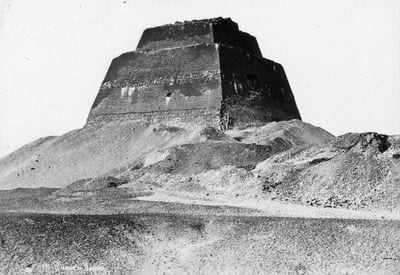
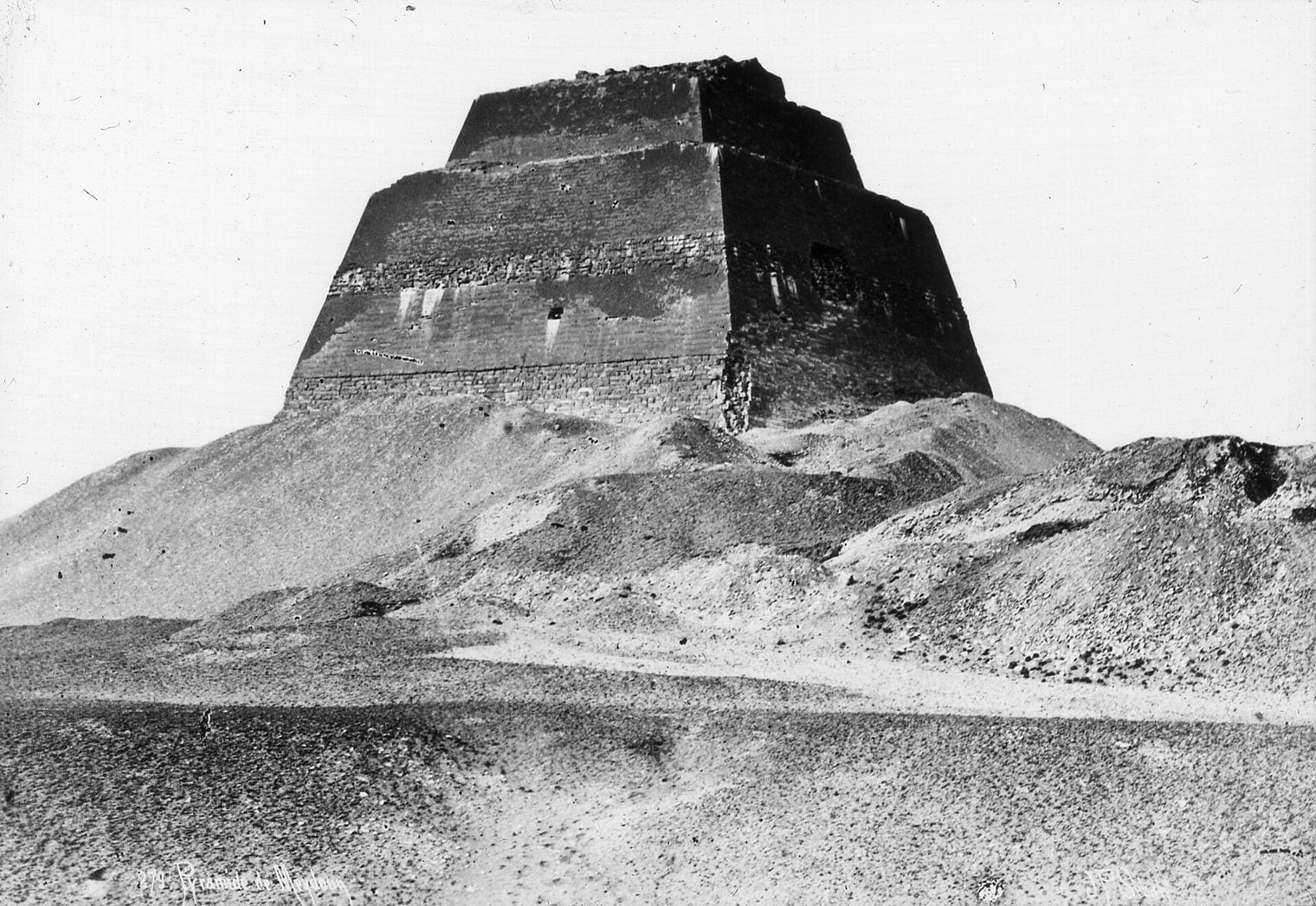
At 638,733 m³, the pyramid at Meidum is the strangest silhouette in Egypt: a three-stepped tower rising out of an enormous mound of its own rubble. It began as a step pyramid and was later filled in to make a smooth-sided one, and at some point the outer skin slid off, leaving the inner core standing like a fortress in the sand.
Whether that happened during construction or thousands of years afterwards is still argued. What is certain is that Sneferu walked away from it and moved north to Dahshur, where he built the Bent and Red pyramids — so Meidum is best understood as the first attempt in a sequence rather than a monument in its own right.
It stands well south of Cairo near the edge of the Faiyum, sees very few visitors, and its entrance passage can be descended to a small burial chamber.
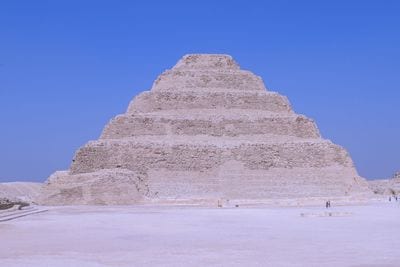
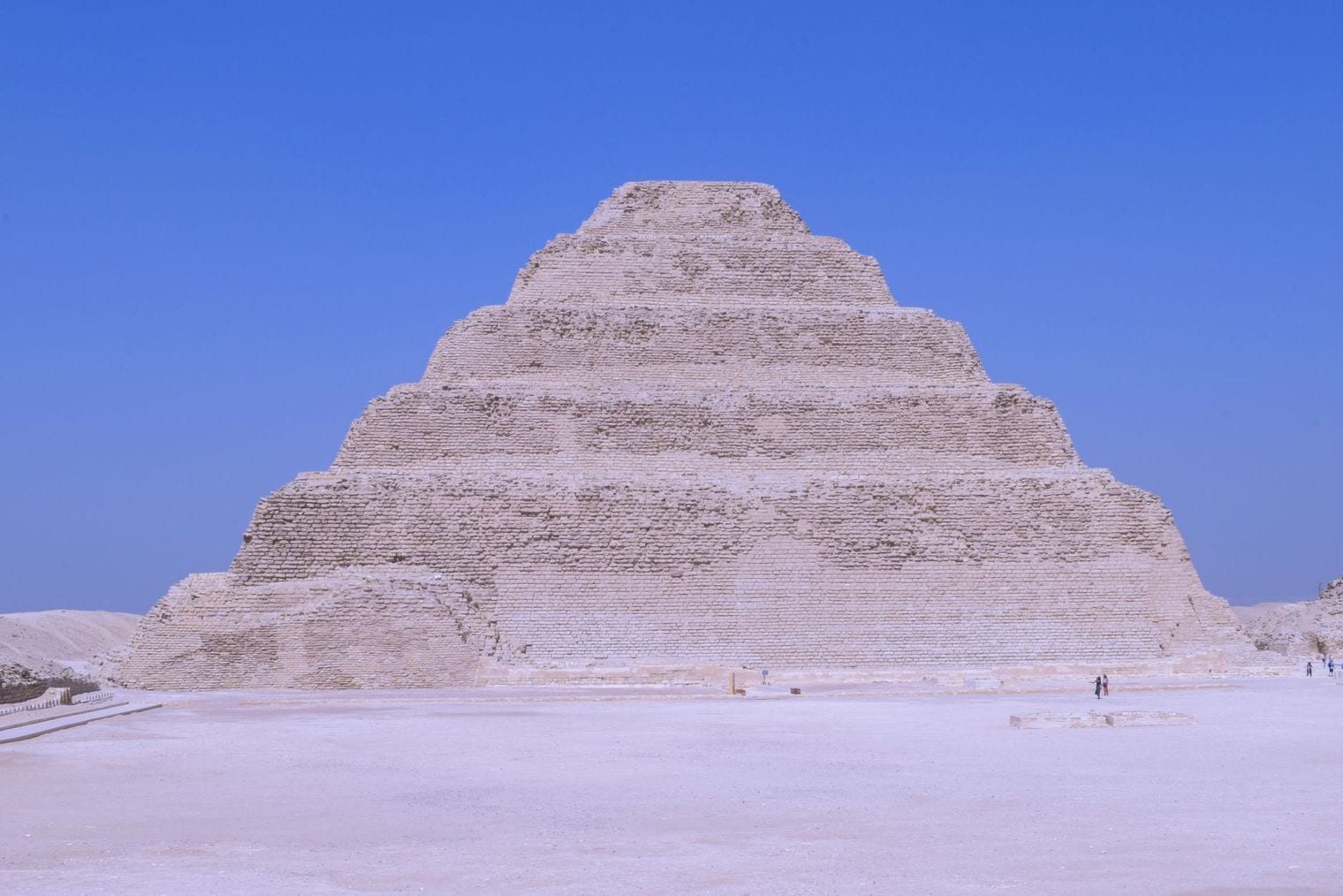
At 330,400 m³, the Step Pyramid of Djoser at Saqqara is the oldest large stone building on Earth and the ancestor of every pyramid above it on this list. Six mastabas of decreasing size stacked one on another take it to about 60 m, a shape nobody had attempted before in cut stone.
It is credited to Imhotep, Djoser's architect — one of the few ancient Egyptian commoners whose name survived, and who was worshipped as a god long afterwards.
A long restoration reopened the pyramid and its subterranean galleries, and the complex around it is as remarkable as the pyramid itself: a vast walled enclosure with a colonnade and dummy chapels built solid, meant to work in the next life rather than this one. Saqqara is a short drive south of Giza and is usually far quieter.
At 288,488 m³, the pyramid of Senusret III at Dahshur is the largest of the Middle Kingdom pyramids, and it marks the point where Egyptian pyramid-building changed method. The core is mud brick rather than solid stone, cased in white Tura limestone — cheaper and much faster to raise, and far less durable once the casing was stripped away.
What survives is a broad brown mound rather than a clean geometric shape, which is why so few visitors give it a second look. The interesting material was always underground. A complex of galleries and shafts around the pyramid held the burials of royal women, and the jewellery recovered from them ranks among the finest work of the period. It stands at the north end of the Dahshur field, within sight of Sneferu's two much older pyramids.
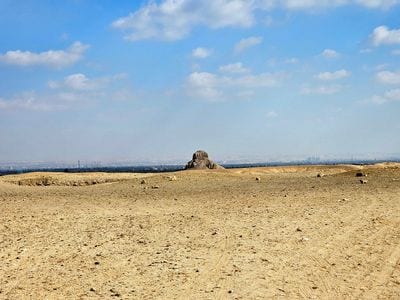
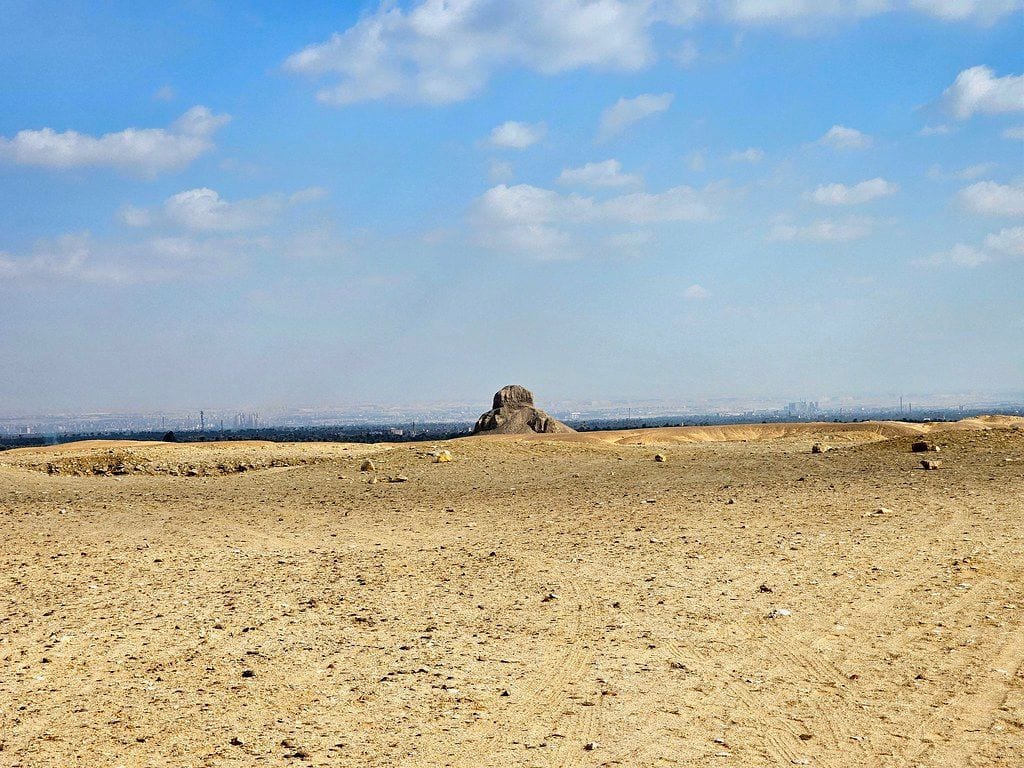
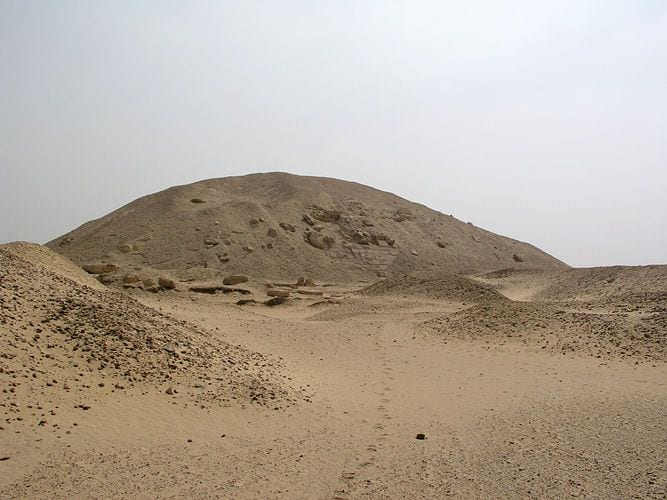
At 274,625 m³, the Black Pyramid at Dahshur was Amenemhat III's first attempt at a tomb, and structurally it failed. Built of dark mud brick on low ground near the Nile floodplain, it began to subside and crack while work was still going on, and the king gave up on it for a second pyramid at Hawara — which appears on this list too, at fifteenth.
What remains is a dark, eroded cone that gives the monument its modern name, ringed by the pits of its own subsidence. Its pyramidion — the polished granite capstone, carved with a winged sun disc and the king's names — was recovered intact and is one of the highlights of the Egyptian Museum in Cairo. The pyramid itself cannot be entered, and it is usually seen from across the Dahshur sand.
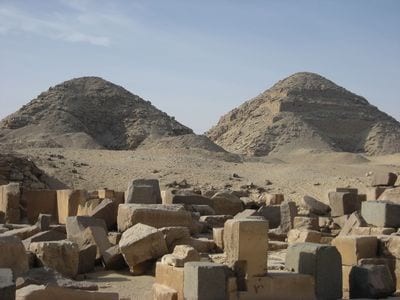
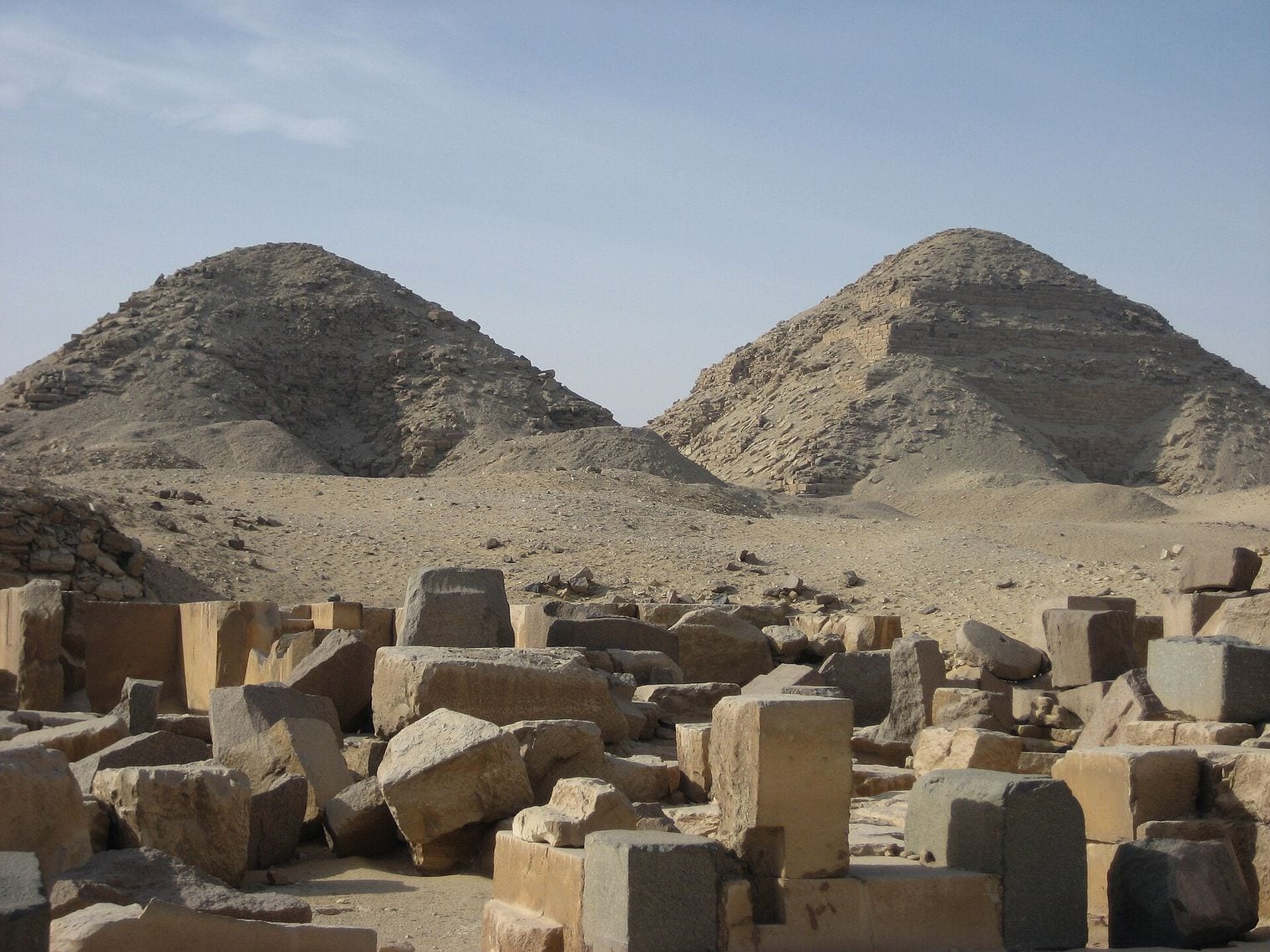
At 257,250 m³, the pyramid of Neferirkare is the largest at Abusir, the necropolis the Fifth Dynasty kings used between Giza and Saqqara. It was begun as a step pyramid and was being converted into a true smooth-sided one when the king died, which left the stepped core exposed — the reason it stands higher than its neighbours yet looks unfinished.
Abusir's real significance is paperwork. The Abusir Papyri, found in the temple beside this pyramid, are among the oldest administrative documents from ancient Egypt, recording duty rosters, temple inventories and offering schedules in remarkable detail. The site is far less visited than Saqqara next door, and the desert around it is dotted with the stumps of smaller pyramids belonging to the same dynasty.
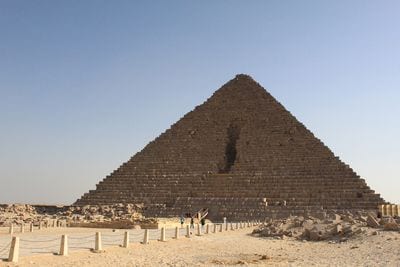
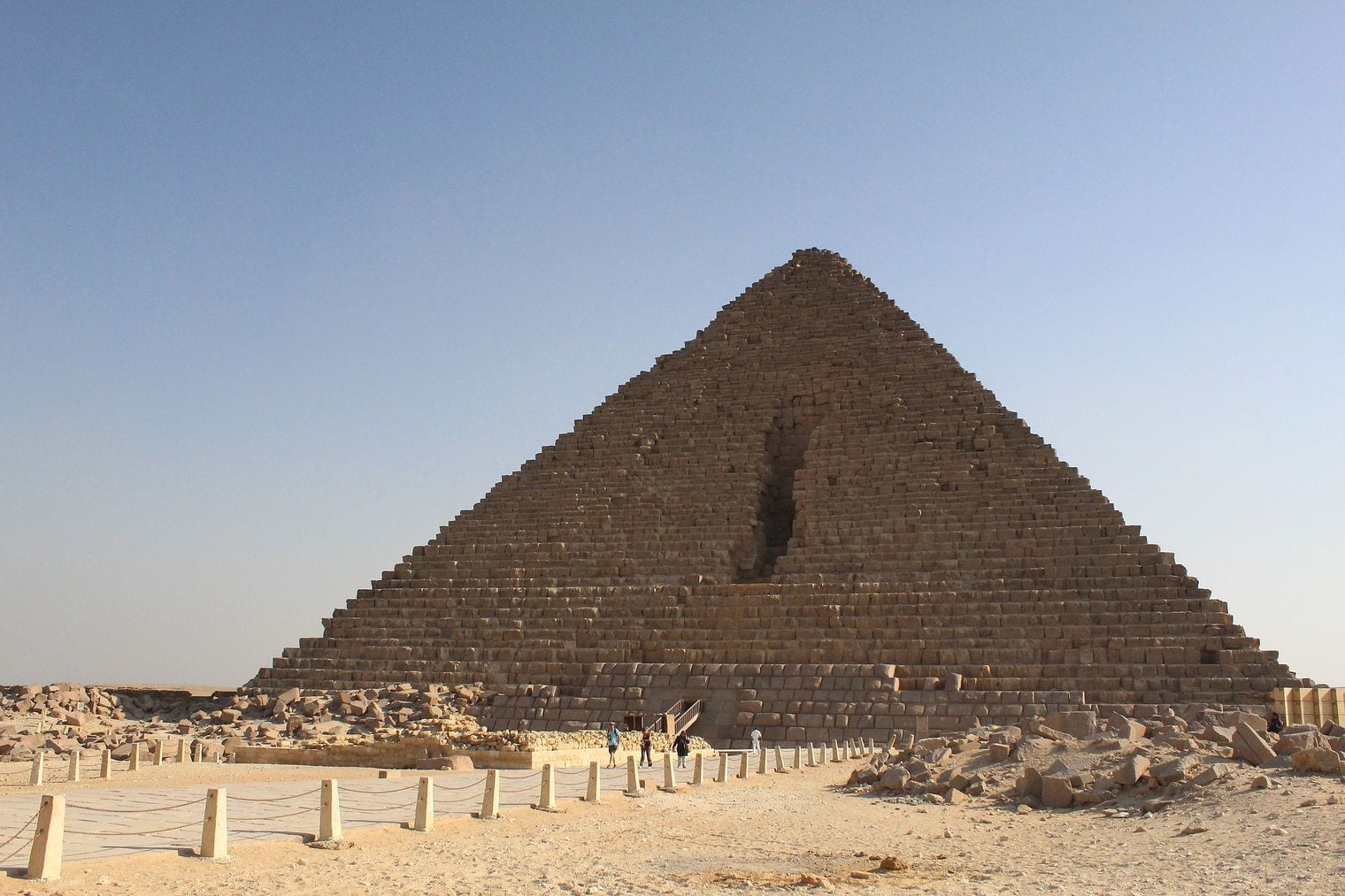
At 235,183 m³, the Pyramid of Menkaure is the smallest of the three at Giza by a wide margin — roughly a tenth the volume of Khufu's — and its modest size has always invited speculation about a short reign or a change of priorities. It is still an enormous building. It simply stands next to two of the largest ever raised.
Its casing was the ambitious part. The lower courses are red Aswan granite rather than limestone, some of it left unpolished, as though the dressing stopped mid-job. A deep vertical gash cuts the north face, the result of a twelfth-century attempt to take the pyramid apart that was given up after months of work. Three small queens' pyramids stand in a row beside it, and the whole group is covered by the standard Giza plateau ticket.
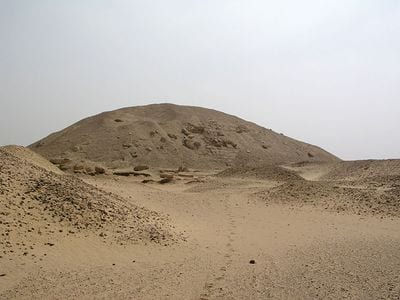
At 225,093 m³, the pyramid of Senusret I at El-Lisht used a construction trick that has fascinated engineers since it was excavated: four stone walls radiating from the centre, crossed by further walls, dividing the interior into thirty-two compartments that were then packed with rubble and cased in limestone. It saved an enormous amount of labour, and it is exactly why the pyramid is a shapeless mound today.
Once the casing was carried off, the loose fill had nothing holding it together. Lisht sits south of Dahshur near the entrance to the Faiyum, and it was the royal cemetery of the early Twelfth Dynasty, when the capital moved to nearby Itjtawy. Nine small pyramids for royal women stood inside the enclosure. The site sees very few visitors and reads more as a working excavation than a monument.
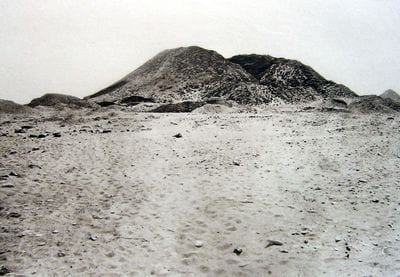
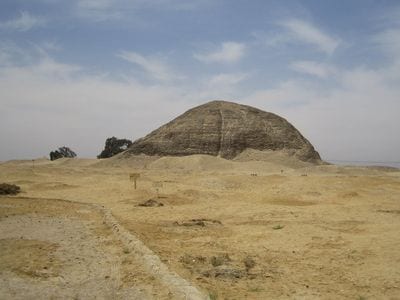
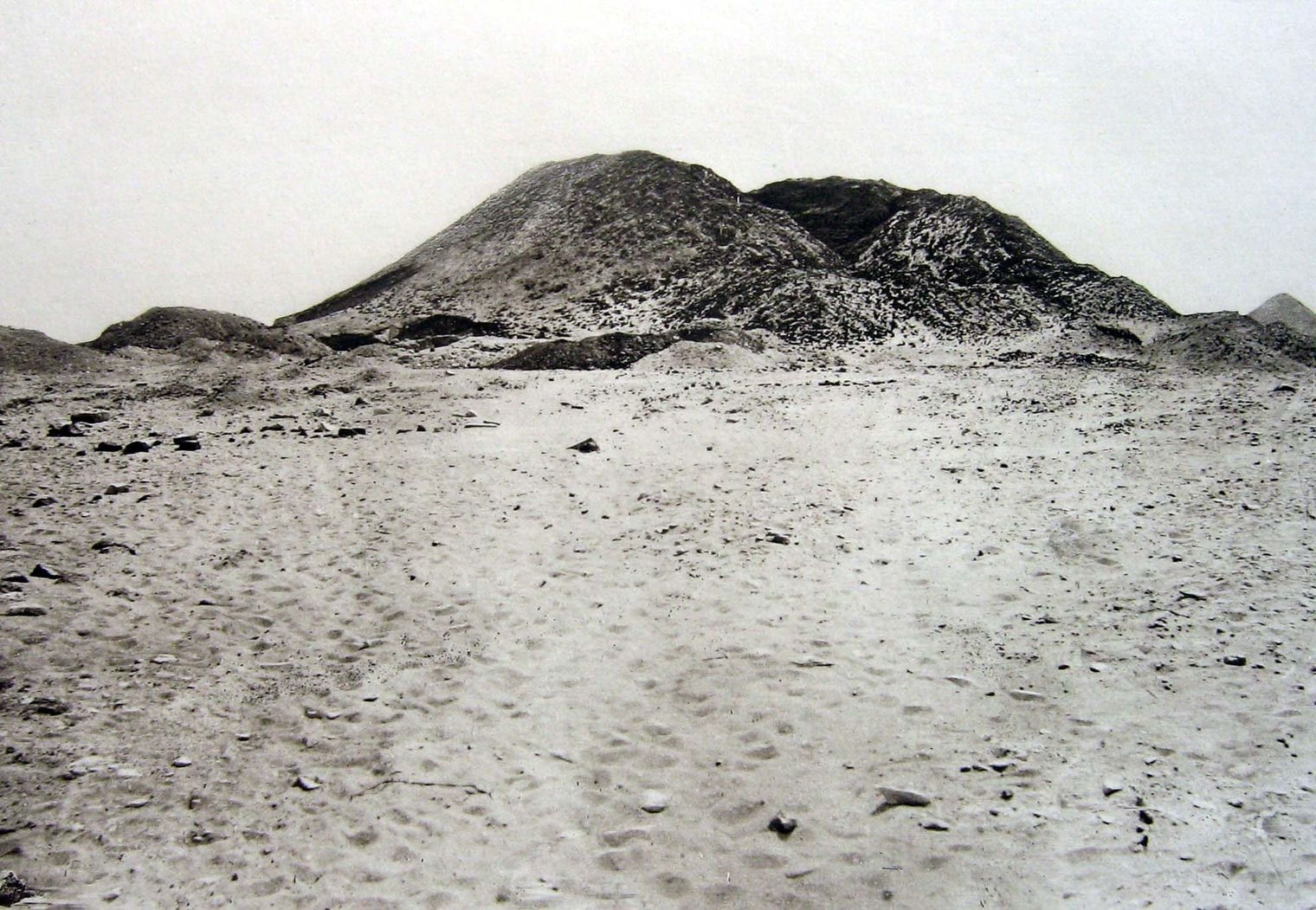
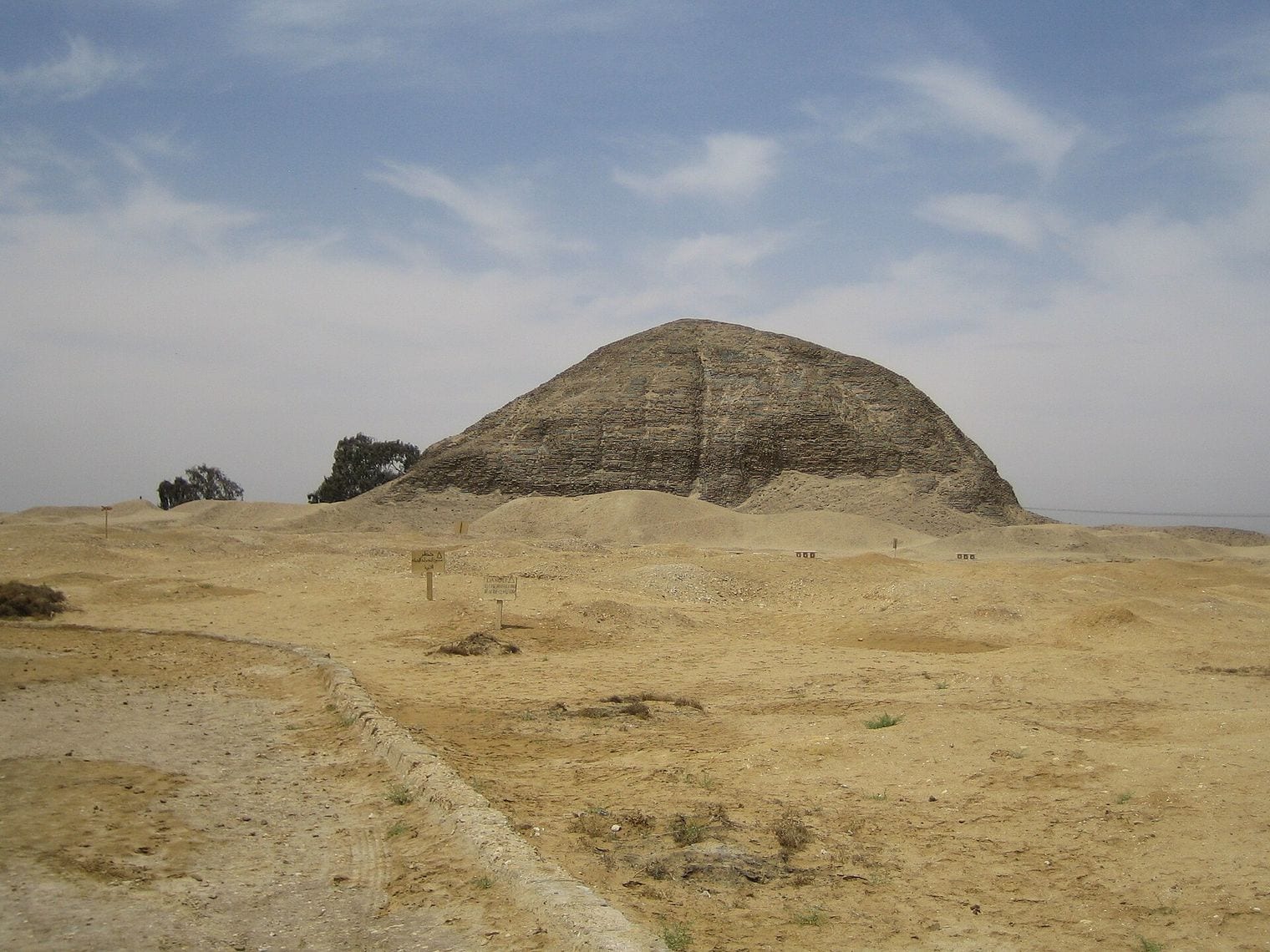
At 200,158 m³, the pyramid at Hawara is Amenemhat III's second and successful attempt, built after his Black Pyramid at Dahshur began to subside. Like that one it has a mud-brick core, and like that one it has weathered down to a broad brown hill — but this one held, and the king was buried in it.
Its fame rests on what stood beside it. Herodotus described an immense mortuary temple here, a labyrinth of courts and chambers that he claimed surpassed the pyramids themselves, and classical writers repeated the account for centuries afterwards. Almost nothing of it survives above ground; its foundations are a field of limestone chips. The burial chamber is a remarkable piece of engineering in its own right — a single hollowed block of quartzite, sealed with a sliding roof slab.
FAQ: The World's Largest Pyramids
What is the largest pyramid in the world?
The Great Pyramid of Cholula in Puebla, Mexico, at roughly 4,450,000 m³ of built mass — nearly twice the volume of the Great Pyramid of Giza. Guinness World Records lists it as the largest pyramid, and the largest monument, ever constructed. It is only about 66 m tall, but its base covers close to 16 hectares.
Why isn't the Great Pyramid of Giza the largest?
Because height and volume are different measurements. Khufu's pyramid is much taller than Cholula and far more steeply pitched, so it is the tallest pyramid ever built — but Cholula and La Danta are broader and bulkier, and both contain more material. Ranked by volume, Giza comes third; ranked by height, it comes first.
How are the pyramids on this list ranked?
Strictly by the volume of the man-made mass as built, measured in cubic metres, counting a pyramid's integral basal platform. Hollow modern buildings shaped like pyramids are excluded, which keeps out the Luxor in Las Vegas and the Transamerica Pyramid. Every entry here is a solid structure that still stands today.
Which of the largest pyramids can you go inside?
Most of the Egyptian ones. Khufu's, Khafre's, Menkaure's, the Red and Bent pyramids at Dahshur, Djoser's step pyramid at Saqqara and Meidum all have accessible interior passages. Cholula's tunnels are partly open to walk through. La Danta and the Black Pyramid cannot be entered.
Are any Mesoamerican pyramids missing from this ranking?
Several large ones, for a documentary reason rather than a size one. Teotihuacan's Pyramid of the Moon, El Tigre at El Mirador and Calakmul's Structure II have no published volume figure in any comparable register, so there is no defensible number to rank them by. Egypt dominates the list partly because its pyramids have all been surveyed and tabulated — a measurement gap that shapes several of our world record countdowns.