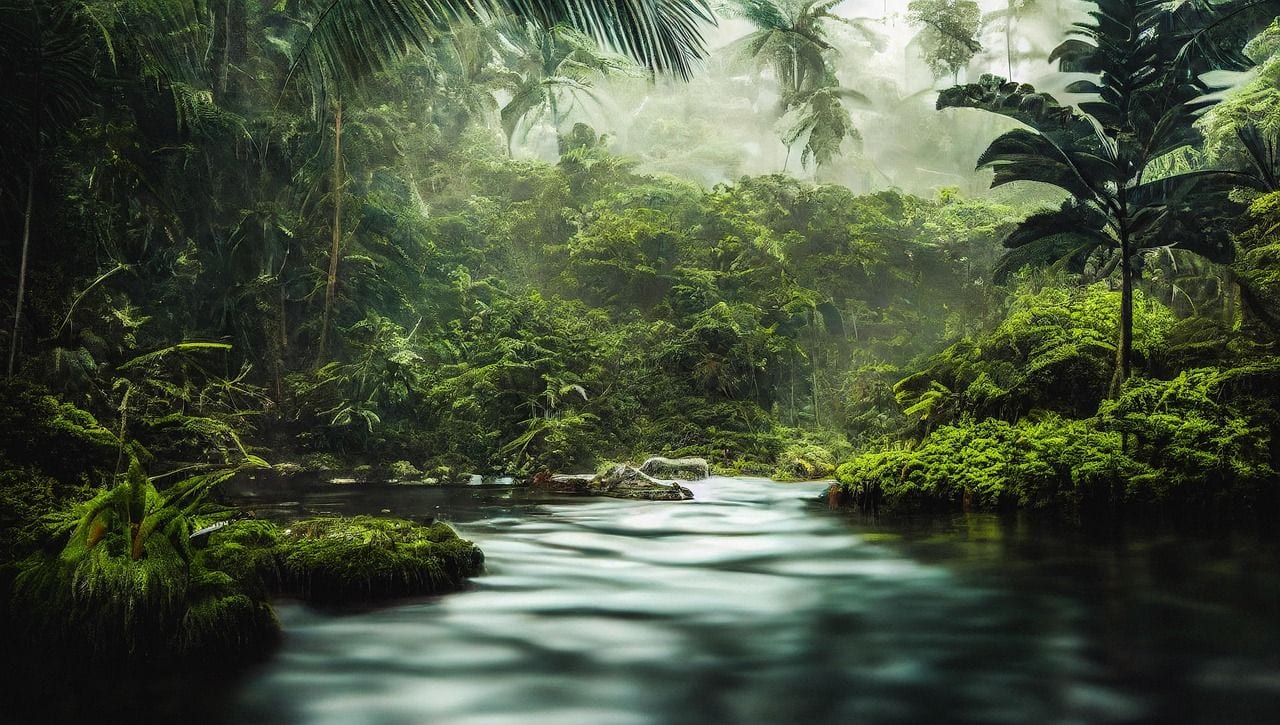
The record
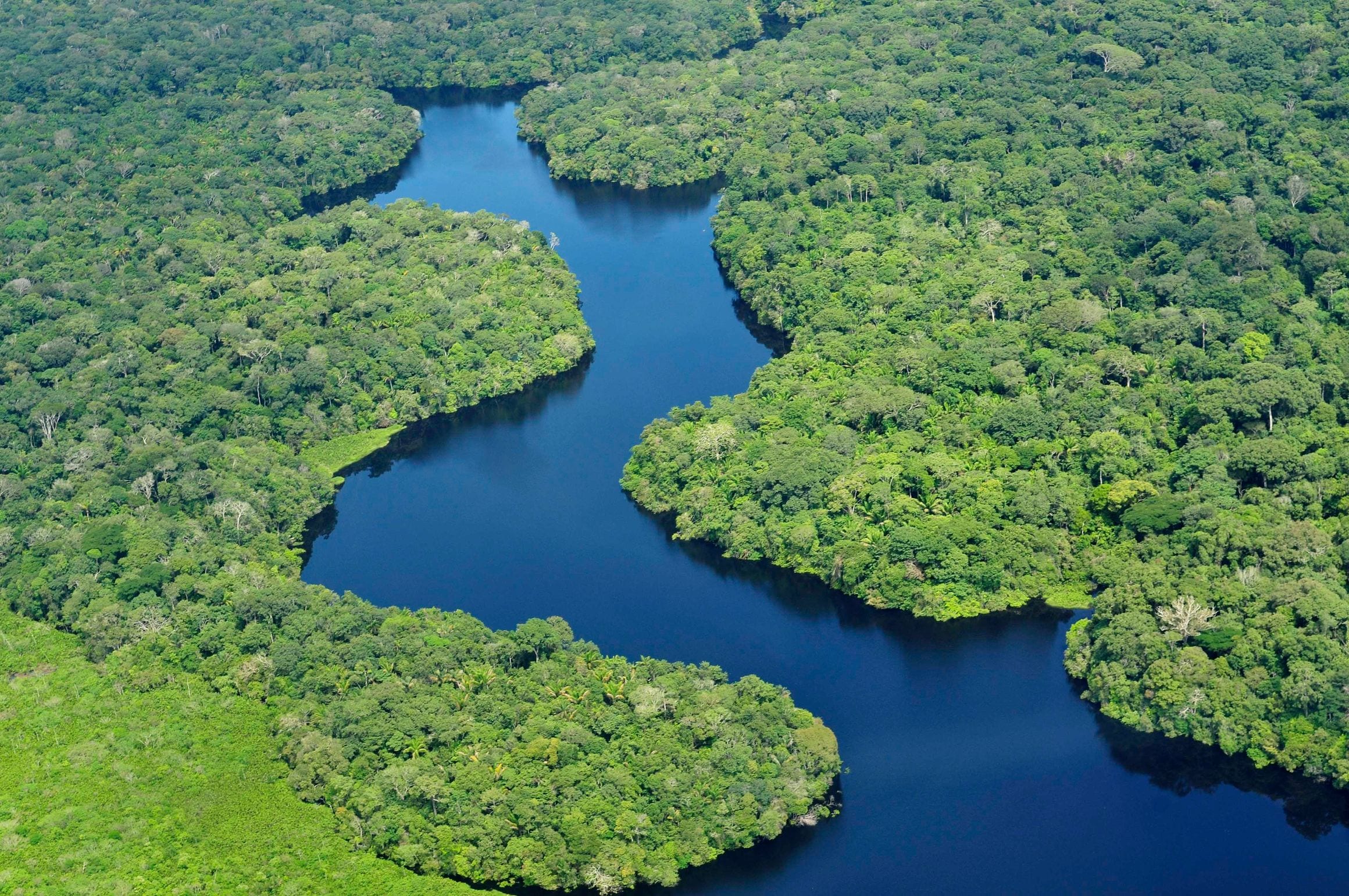
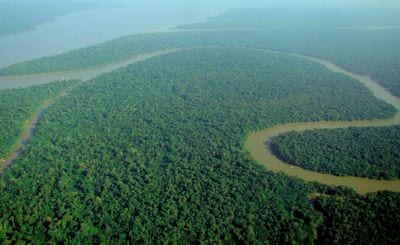
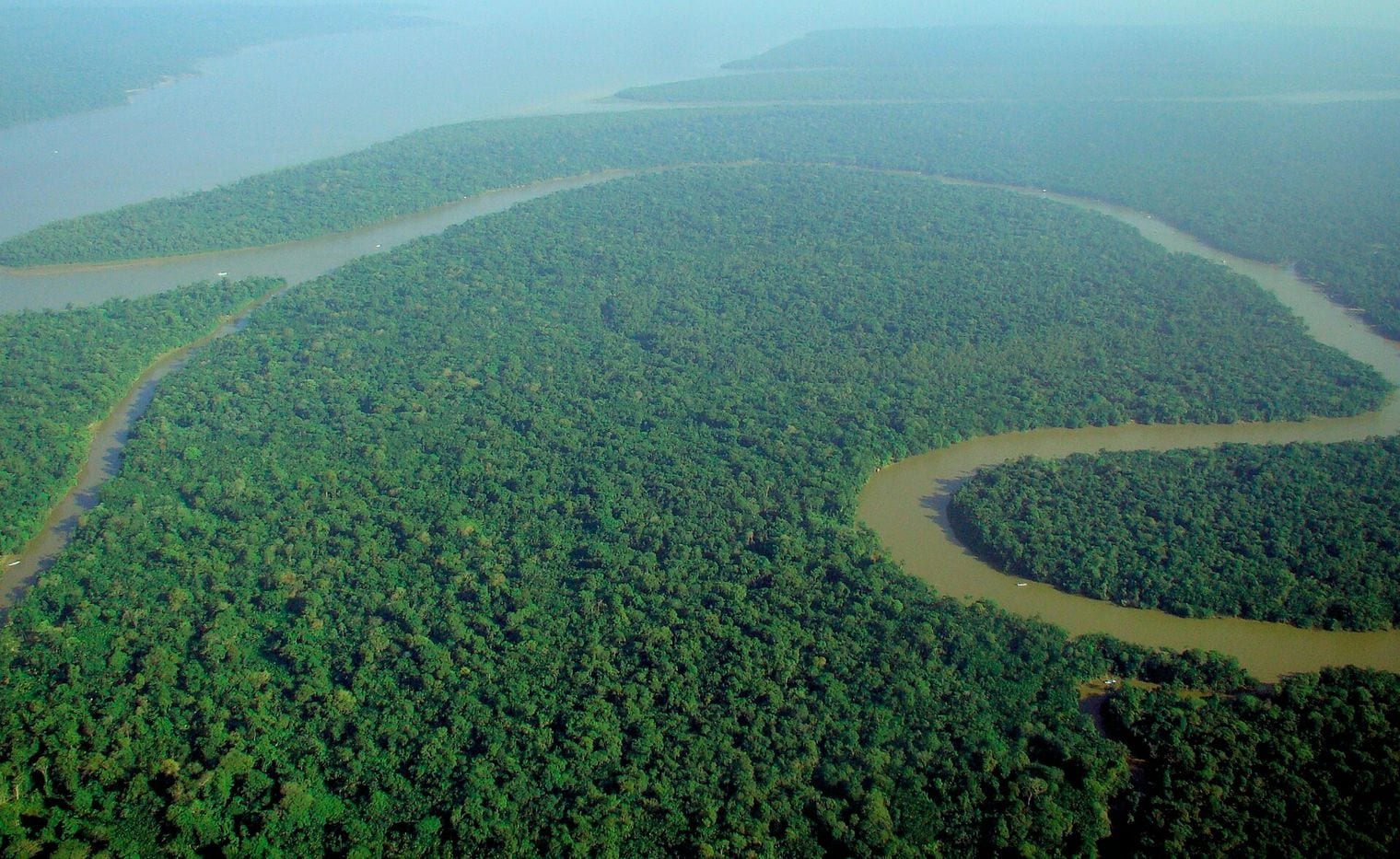
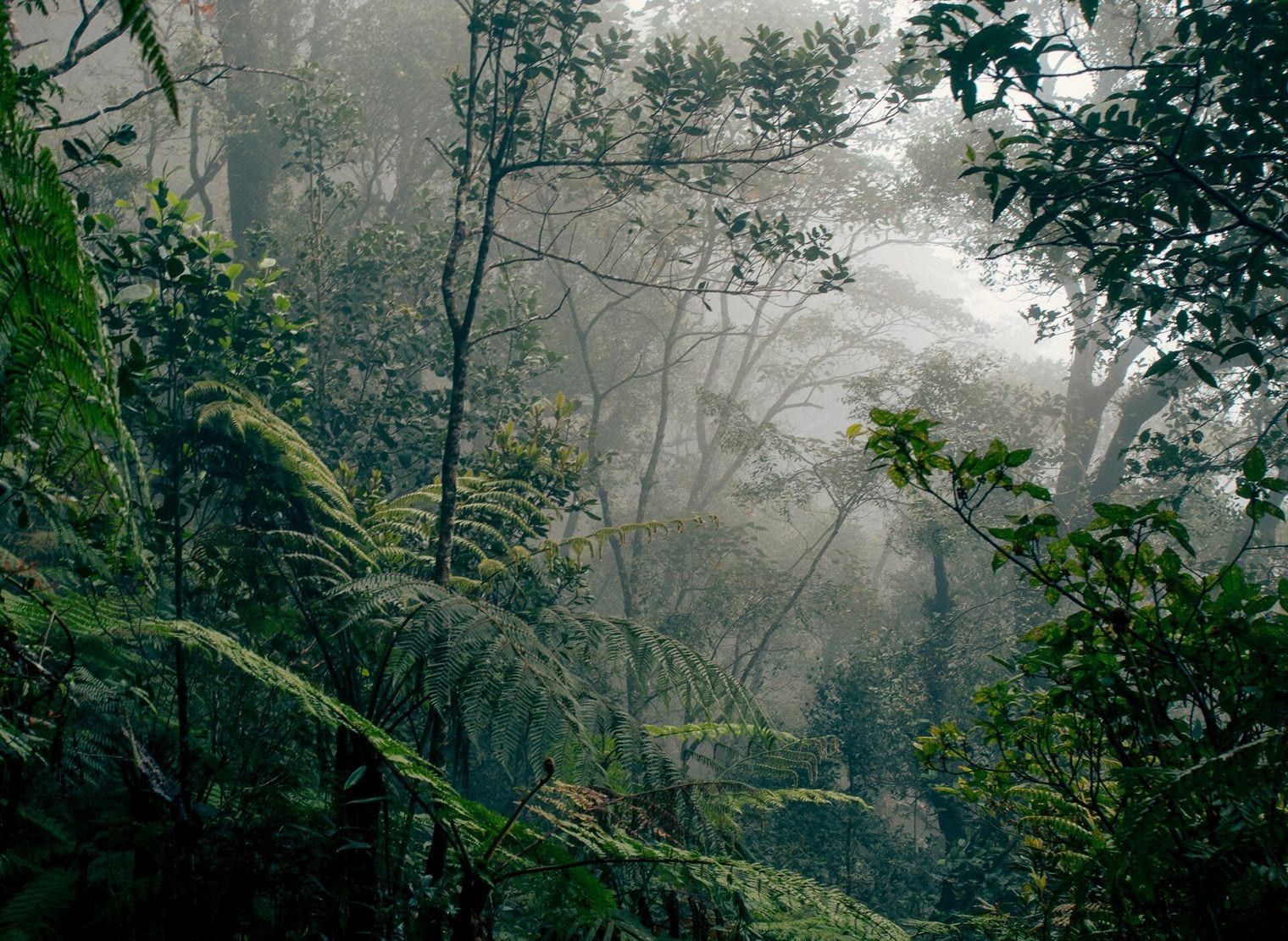
The largest rainforest in the world is the Amazon Rainforest — 6,560,000 km² (2,532,830 sq mi), rainforest cover.
It spans Brazil, Peru and Colombia. Source: Guinness World Records, Largest tropical rainforest: 6,560,000 square kilometre(s), the record page noting the rainforest covers between around 6.24 million and 6.56 million km² depending on the exact definition, and that it is more than 80% of the wider Amazon biome (6.7-6.9 million km², which includes the whole river basin).. Verified .
Sumatra is not on this list, and neither is the Sundarbans, and those two absences explain the rules better than any preamble could. This countdown measures one thing: the standing rainforest inside a named forest region — the trees themselves, not the river basin or the country wrapped around them.
That distinction does real work. It cuts the Congo from a 3,700,000 km² drainage basin down to 2,000,000 km² of actual forest, and it holds the Atlantic Forest, once 1,300,000 km², to the eighth of itself still standing. Regions are counted once at the top level, so the Tongass and the Great Bear are folded into the Pacific temperate rainforest rather than ranked against it.
Mangroves are out: the Sundarbans is the largest on Earth at 10,277 km², but a mangrove swamp is not a rainforest. And Sumatra is absent because no one can pin it down — published figures for it run from 25,000 km² to 139,000 km², depending on what you agree to count.
The Amazon is bigger than the other eleven rainforests here put together — 6,560,000 km² against a combined 4,045,318 km² for ranks 2 to 12. No other entry on the list is even a third of its size.
Rankings that give the Congo 3,700,000 km² are measuring a river, not a forest — that is the Congo's drainage basin. The rainforest inside it covers 2,000,000 km², and the gap between those two numbers is larger than the third-placed rainforest on this list.
The Pacific temperate rainforest is routinely published at a fifth of its real size — several lists rank it at 60,346 km², which is the Northern Pacific coastal forests of Alaska on their own. The band it belongs to runs 3,600 km from Alaska to California and covers 295,000 km².
Two of the twelve are temperate, not tropical — the Pacific and the Valdivian, where the alerce, a conifer that can pass 3,000 years, is among the longest-lived organisms alive.
The Atlantic Forest would rank third if it were still whole — it once covered around 1,300,000 km² of Brazil, Paraguay and Argentina. Mature forest now stands on 12.4% of the area Brazil protects by law, which is what puts it seventh.
Two of the top four rainforests sit on single islands — New Guinea and Borneo, which are also the second and third largest islands in the world. Between them they hold more rainforest than every temperate entry here combined.
You cannot drive into La Moskitia — the last entry has effectively no roads. Getting in means a small plane to a coastal airstrip and then a motorised canoe upriver, which is why it is sometimes called the Little Amazon.
11. Amazon Rainforest
Amazon Basin, South America, Brazil / Peru / Colombia
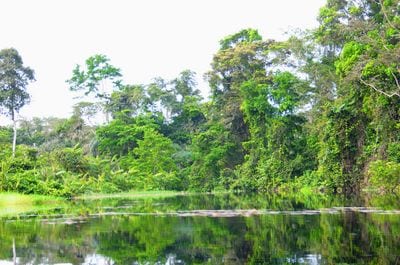
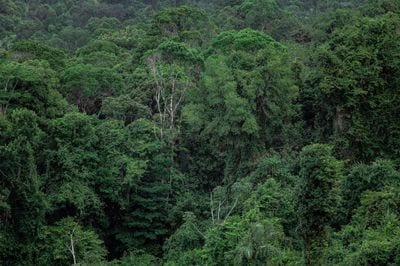
At 6,560,000 km², the Amazon Rainforest is not just the largest rainforest on Earth but larger than every other entry on this list combined. It spreads across nine nations — Brazil holds roughly 60% of it, with Peru, Colombia, Bolivia, Ecuador, Venezuela, Guyana, Suriname and French Guiana sharing the rest.
Guinness World Records puts its extent at between 6.24 and 6.56 million km² depending on where you draw the line, and that range is the whole difficulty of ranking rainforests in a single number.
The figure most people have seen is bigger still, and it is measuring something else. The Amazon biome covers 6.7 to 6.9 million km² and takes in the entire river basin, savanna and floodplain included; the rainforest is the forested four-fifths of it.
On the ground the distinction matters less than the rivers, which serve as the road network — Manaus, a city of two million, is reached from most of Brazil by boat or plane rather than by road. Just downstream, the coffee-dark Rio Negro meets the pale Solimões and the two run side by side for kilometres before they mix.
22. Congo Basin Rainforest
Congo Basin, Central Africa, Democratic Republic of the Congo / Republic of the Congo / Gabon
At 2,000,000 km², the Congo Basin Rainforest is the second largest on the planet and holds about a quarter of the world's remaining tropical forest. It stretches across seven countries — the Democratic Republic of the Congo takes the largest share, alongside the Republic of the Congo, Gabon, Cameroon, the Central African Republic, Equatorial Guinea and Angola's Cabinda enclave.
It is the clearest case on this list of why the basin-versus-forest rule exists: the Congo River's drainage basin is a separate 3,700,000 km², and lists that quote that number are measuring a watershed, not trees.
What sets it apart is how much of it is still intact. Where other great forests are counted in what survives, the Congo is counted in what has barely been touched, and its wildlife shows it — western lowland gorillas, forest elephants and bongo move through country with no roads in it.
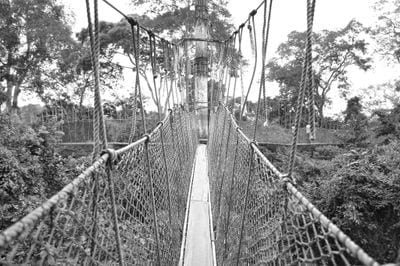
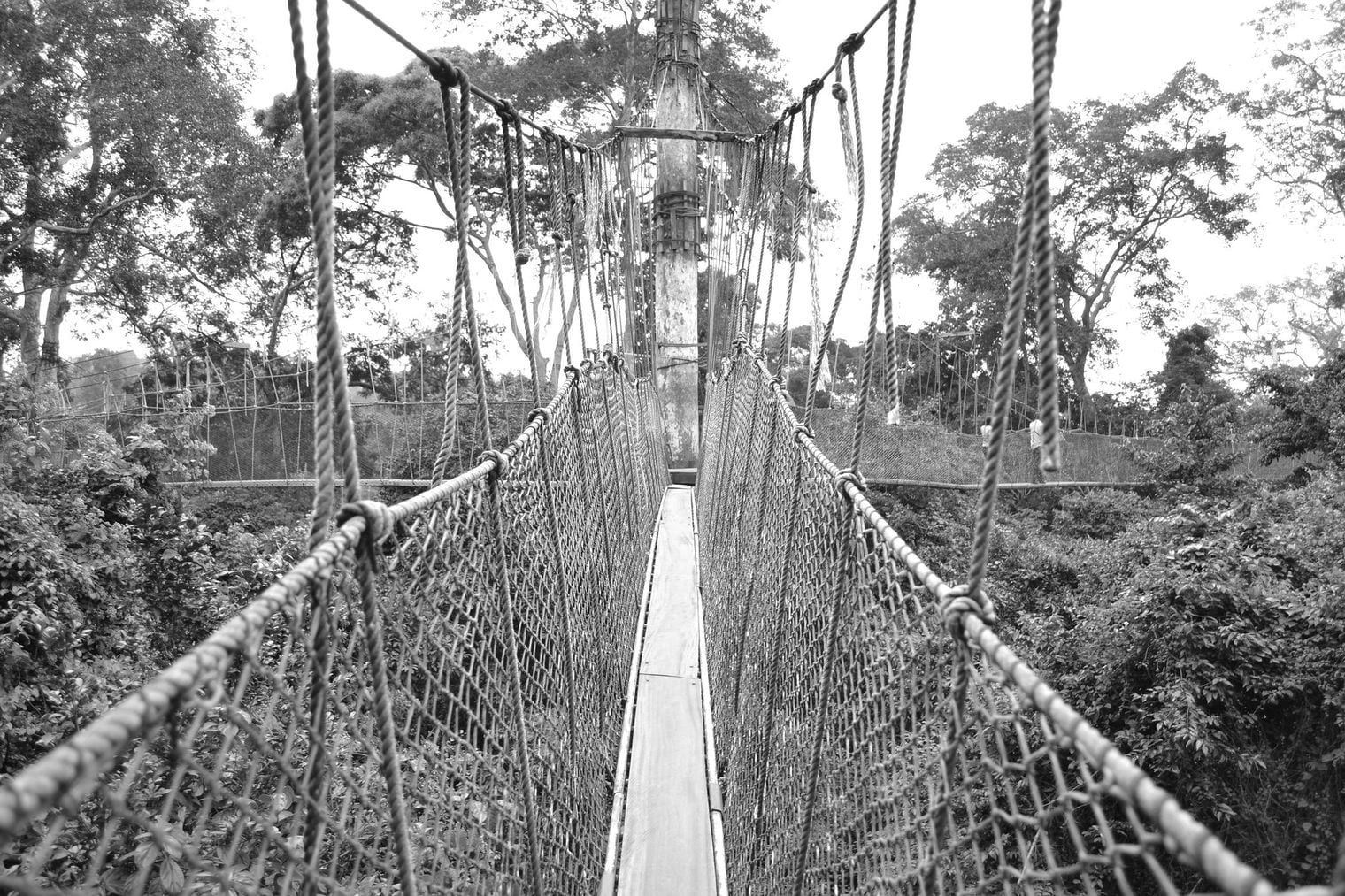
The signature sight is a bai, a natural clearing where minerals draw animals out of the trees into the open, and where the parks of northern Congo and Gabon have built their walkways and viewing platforms.
33. New Guinea Rainforest
the island of New Guinea, Melanesia, Indonesia / Papua New Guinea
At 600,000 km², the New Guinea Rainforest is the third largest tract of primary rainforest on Earth, after the Amazon and the Congo. It is split down the middle by an international border: about 340,000 km² lies in Indonesian Papua and about 260,000 km² in independent Papua New Guinea.
Forest still covers roughly 70% of the island, a proportion no other large tropical landmass comes close to, largely because the terrain has kept the loggers and the roads out rather than because anyone planned it that way.
It is also the most vertical rainforest here. The forest runs from tidal mangrove and swamp at sea level up through lowland and montane rainforest to alpine grassland and some of the last tropical glaciers on Earth, on peaks above 4,800 m.
That compression of climates in a short horizontal distance is why New Guinea is among the least botanically explored places left, and why its birds are its calling card: the birds-of-paradise, whose courtship displays are performed on cleared patches of forest floor and specific bare branches used by generations of the same species.
44. Borneo Rainforest
the island of Borneo, Southeast Asia, Indonesia / Malaysia / Brunei
At 340,640 km², the Borneo Rainforest is the largest in Asia, spread across three countries on a single island — Indonesian Kalimantan holds close to 250,000 km² of it, Malaysian Sabah and Sarawak most of the rest, and tiny Brunei a little over 4,000 km².
That figure is primary forest as mapped by Global Forest Watch in 2020, and it is worth stating the year: Borneo has lost forest faster than almost anywhere on this list, and the island slipped below 50% forest cover during the 2020s.
What remains is dipterocarp forest, dominated by hardwoods that grow 60 m and higher and then, every few years, flower and seed all at once across whole regions in a mast fruiting that the animals time their breeding to.
Borneo is the only place in the world outside Sumatra with wild orangutans, and the lowland river corridors — the Kinabatangan above all — concentrate them along with pygmy elephants and proboscis monkeys, because the forest either side has been cleared and the river is what is left.
55. Pacific Temperate Rainforest
the Pacific Northwest coast, from Prince William Sound to Northern California, United States / Canada
At 295,000 km², the Pacific Temperate Rainforest is the largest temperate rainforest in the world, a Guinness World Record it holds by a comfortable margin. It runs as an almost unbroken coastal band for some 3,600 km, from Prince William Sound in Alaska down through the British Columbia coast and Washington's Olympic Peninsula to the redwood country of Northern California, pinned between the Pacific and a wall of coastal mountains that wring the rain out of the westerlies.
It is also the entry most often published wrong. Several rankings give it 60,346 km², which is the Northern Pacific coastal forests ecoregion in Alaska alone — one segment of the band, not the band.
Two of its best-known pieces get the same treatment: the Tongass and the Great Bear are frequently ranked as rainforests in their own right, when both sit inside this one. Under the canopy it is Sitka spruce, western hemlock and western red cedar, with moss hanging thick enough in the Hoh valley to muffle sound, and coast redwoods at the southern end.
66. Valdivian Temperate Rainforest
the Chilean coastal strip and the southern Andes, 37°S to 48°S, Chile / Argentina
At 248,100 km², the Valdivian Temperate Rainforest is the second largest temperate rainforest on Earth and the only one in South America. It occupies a narrow strip of Chile between the Pacific and the southern Andes, roughly 37°S to 48°S, spilling east across the mountains into Argentina.
The geography is the reason it is so distinct: the Andes to one side and the Atacama to the north have isolated it for millions of years, leaving a forest with no close relatives anywhere nearby.
The result is one of the highest rates of endemism of any forest in the world — around 45% of its vertebrates and up to 90% of its seed plants grow nowhere else. The tree that draws people is the alerce, a conifer that can pass 3,000 years, making it among the longest-lived organisms on the planet.
Unlike the tropical entries here the forest is walkable and cool, threaded with volcanoes and lakes, and the Chilean side has protected large blocks of it in national parks that are among the most accessible wild rainforest anywhere.
77. Atlantic Forest
the Brazilian Atlantic coast, from Rio Grande do Norte to Rio Grande do Sul, Brazil / Paraguay / Argentina
At 162,407 km², the Atlantic Forest is the largest rainforest on this list that is mostly gone. Brazil's own Atlantic Forest Law governs an area of 130,973,638 hectares, and the SOS Mata Atlântica and INPE satellite atlas finds mature forest standing on 12.4% of it — the number used here.
Counting regrowth and secondary forest alongside it lifts the total to roughly a quarter. Before European settlement the forest ran to about 1,300,000 km², which would have placed it third on this list.
What survives is fragmented but extraordinary, with levels of endemism that rival anything in the Amazon, and it happens to sit behind the two largest cities in South America. The Serra do Mar range carries the biggest continuous block, dropping straight from cloud forest to Atlantic beach.
Rio de Janeiro has a piece of it inside the city in Tijuca, replanted by hand in the 19th century after the hills were cleared for coffee, and the golden lion tamarin — down to a few hundred animals in the 1970s — was pulled back from the edge in the coastal remnants north of the city.
88. Maya Forest
the Yucatán Peninsula and the Petén, Mesoamerica, Mexico / Guatemala / Belize
At 150,000 km², the Maya Forest is the largest tropical forest in the Americas after the Amazon, shared between southeastern Mexico, northern Guatemala and Belize. Published figures for it range from 14,164,000 to 15,400,000 hectares depending on where the boundary is drawn, which is why it sits close to the Atlantic Forest and why that pair is the one adjacency on this list worth treating as provisional. Guatemala's Maya Biosphere Reserve alone protects more than 20,000 km² of it.
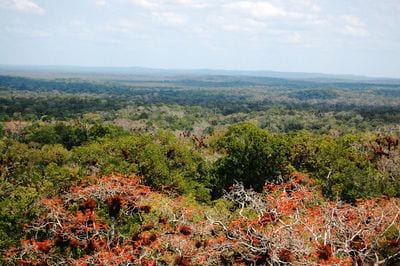
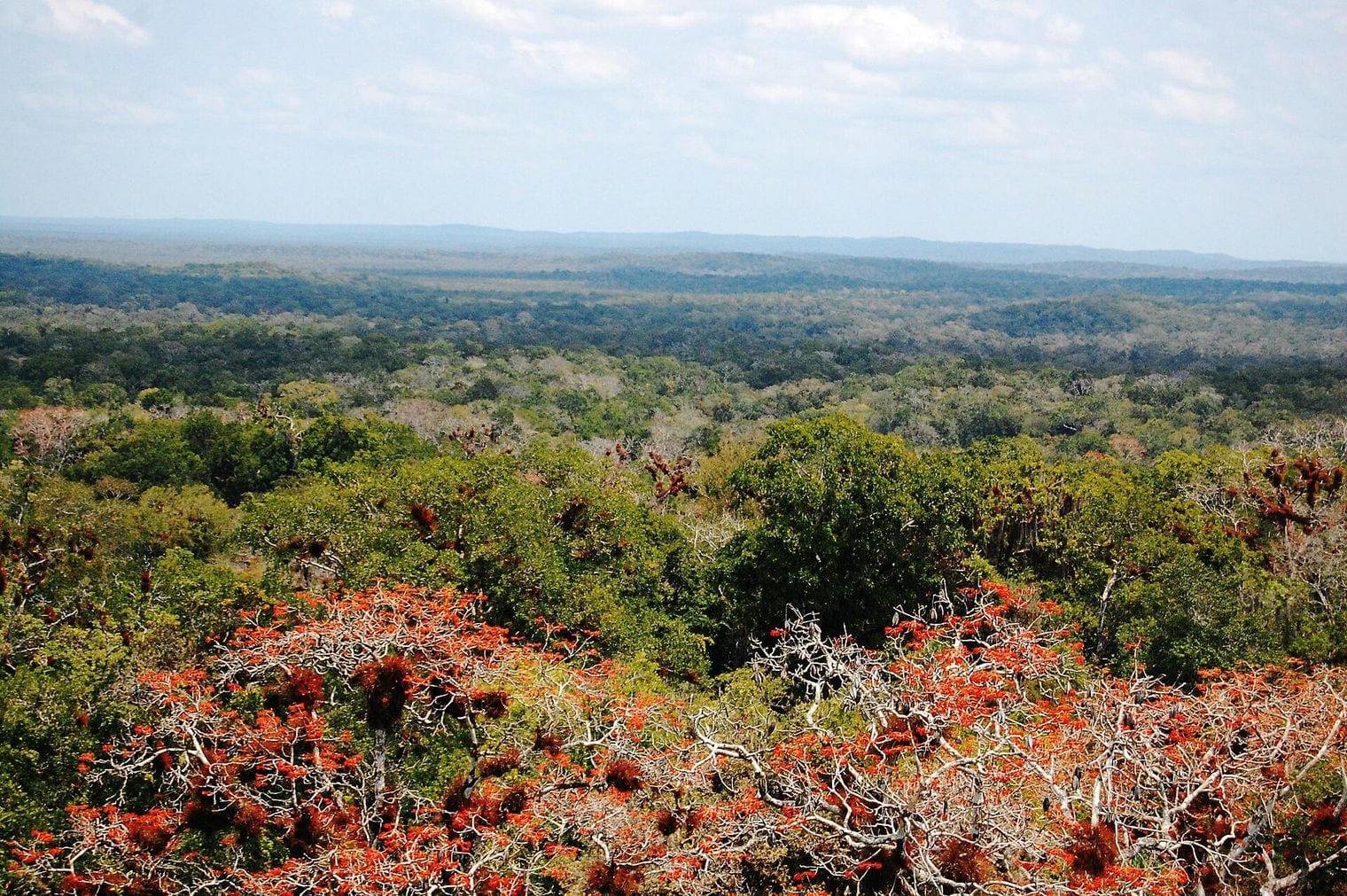
No other rainforest here carries this much architecture. Tikal, Calakmul and El Mirador stand inside the forest rather than beside it, and at Tikal the temple roof combs break the canopy from the top of Temple IV, which is the classic view of the place — green in every direction with grey stone pushing through it.
The forest supports jaguar, Baird's tapir and scarlet macaws, and the limestone shelf beneath it, riddled with cenotes and cave systems, is what gave the Maya their water supply.
99. Guinean Forests of West Africa
the West African coast, from Guinea to the Sanaga River in Cameroon, Liberia / Ivory Coast / Ghana
At 93,047 km², the Guinean Forests of West Africa are what remains of a rainforest belt that once ran unbroken along the coast from Guinea to Cameroon.
That figure is roughly 15% of the hotspot's original 621,705 km², the steepest proportional loss of any entry on this list, and it is split into two subregions — the Upper Guinean forests from Guinea through Sierra Leone, Liberia, Côte d'Ivoire and Ghana, and the Lower Guinean forests across southern Nigeria and southwestern Cameroon, including the offshore islands of São Tomé and Príncipe.
Fragmentation has made the surviving blocks unusually important. Taï National Park in Côte d'Ivoire holds one of the last major stands of primary rainforest in West Africa and is where chimpanzees have been recorded cracking nuts with stone and wooden hammers, a behaviour passed down within particular communities rather than learned by each animal.
The forest is also the home of the pygmy hippopotamus, a solitary, nocturnal animal a fraction of the weight of its river-dwelling relative, and of one of the richest concentrations of primates in Africa.
1010. Chocó-Darién Rainforest
the Pacific coast of Colombia and the Darién Gap, Panama
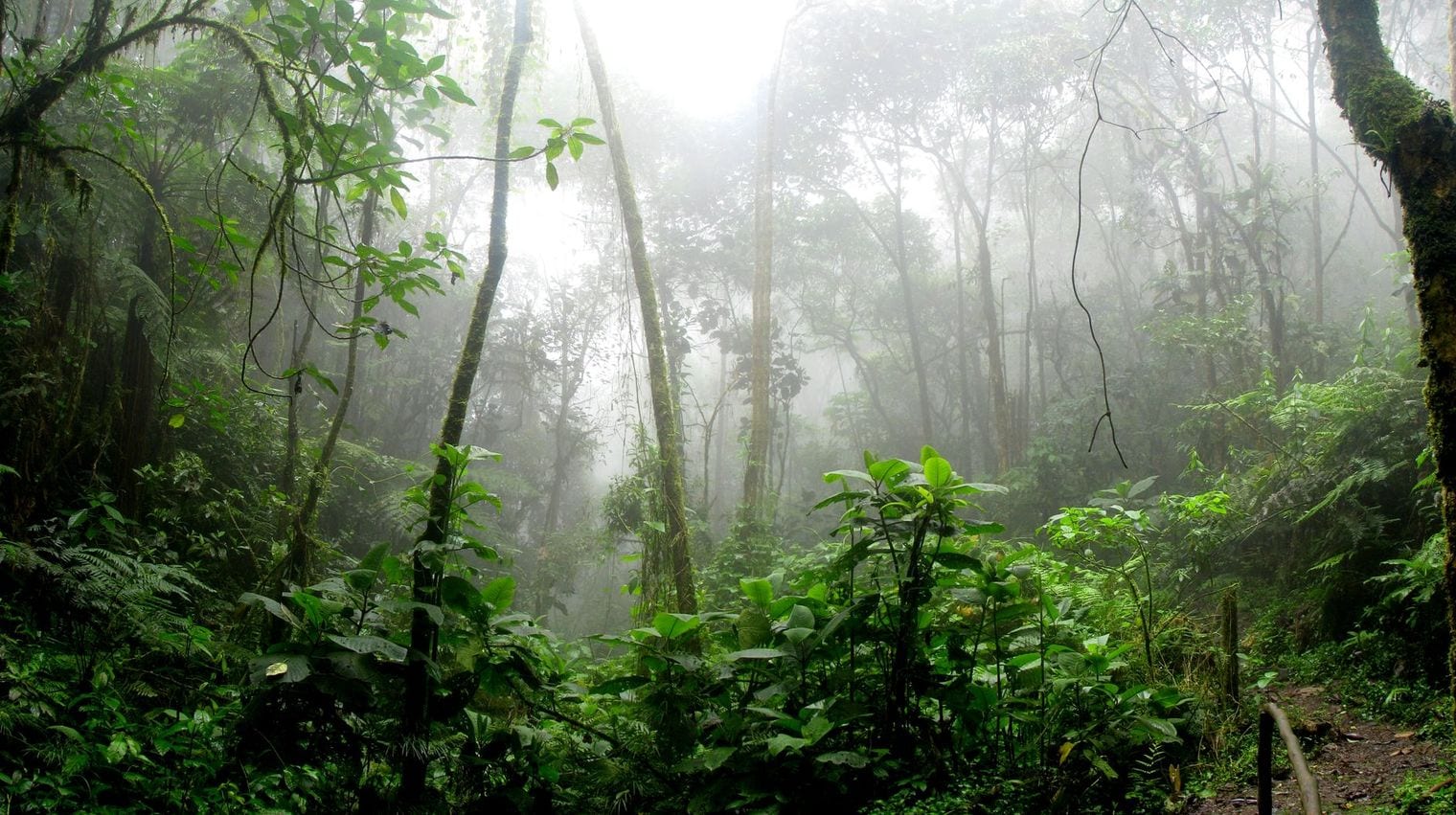
At 73,556 km², the Chocó-Darién Rainforest occupies the Pacific coast of Colombia and the Darién province of Panama, jammed between the ocean and the western Andes. It is one of the wettest places on the planet, taking between 4,000 and 9,000 mm of rain a year — parts of it see rain on most days of the year — and unlike most entries on this list it is still largely intact, because almost nothing has been built through it.
That is most literally true at its northern end, where the Darién Gap is the single break in the Pan-American Highway, roughly 100 km of roadless rainforest and swamp between the road heads in Panama and Colombia.
The isolation shows in the wildlife: the Chocó has one of the highest concentrations of endemic birds anywhere, and the poison dart frogs of the region, whose skin toxins were used on blowgun darts, are found in valleys sometimes only a few kilometres apart with different colouring in each.
At 60,000 km², the Western Ghats Rainforest covers about a third of the 180,000 km² mountain range that runs down India's west coast for some 1,600 km, from Gujarat to the southern tip of the peninsula.
It is the smallest of the great Asian rainforests and among the most heavily surrounded — this is forest with a dense agricultural landscape pressed right up against it — yet UNESCO lists it as a World Heritage site and it is one of the most biologically distinctive places in the world.
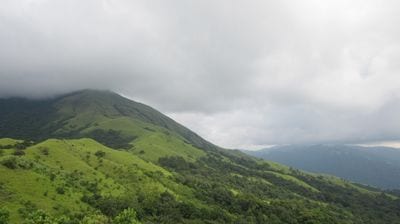
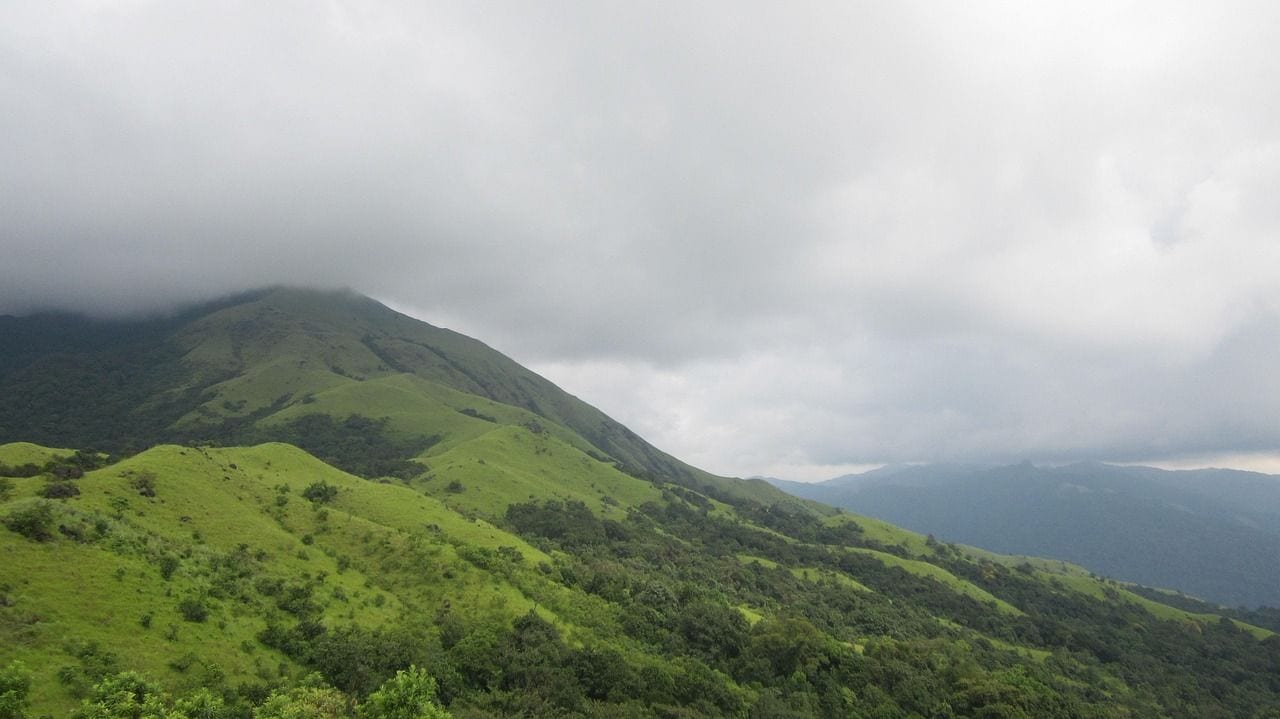
The range makes India's monsoon. It intercepts the southwest winds off the Arabian Sea and forces them up, dumping rain on the western slopes and leaving the Deccan Plateau behind it dry, so the forest is the direct cause of the rain shadow that shapes half the subcontinent.
Agumbe, on the Karnataka side, is known as the Cherrapunji of the south for its rainfall and for its king cobras. The Nilgiri tahr and the lion-tailed macaque live here and nowhere else, and the hill parks — Periyar, Silent Valley, Anamalai — are where most visitors see the forest.
1212. La Moskitia
the Caribbean coast of Honduras and Nicaragua, Central America
At 22,568 km², La Moskitia is the second largest wilderness in Central America and the most significant forest remaining in Honduras, straddling the Caribbean coast of Honduras and Nicaragua. It takes in the Río Plátano Biosphere Reserve on the Honduran side and the far larger Bosawás reserve in Nicaragua, along with the Tawahka and Patuca protected areas between them, forming one continuous block of forest, savanna, wetland and coastal lagoon.
It is the hardest place on this list to reach. There are effectively no roads into it: travel is by small plane to a coastal airstrip and then by motorised canoe up rivers like the Plátano and the Patuca, which is why the region is sometimes called the Little Amazon.
Río Plátano is a UNESCO World Heritage site and has spent much of the last two decades on the danger list, and the forest is the territory of the Miskito, Pech, Tawahka and Garífuna peoples, whose land claims have done more to hold the forest line here than any park boundary.
FAQ: The World's Largest Rainforests
What is the largest rainforest in the world?
The Amazon, at 6,560,000 km². It is larger than the other eleven rainforests on this list put together, and it spreads across nine South American nations, with roughly 60% of it inside Brazil. The Congo Basin is second at 2,000,000 km², which is less than a third of the Amazon's extent.
Why do published rainforest sizes disagree so much?
Because most lists quietly measure different things. A drainage basin is not a forest: the Congo's basin is 3,700,000 km² against 2,000,000 km² of trees. Primary forest is not total tree cover, and a region's historic extent is not what still stands. This list counts standing forest inside the named region throughout, the same way every world record countdown on this site states its basis up front.
What is the largest temperate rainforest in the world?
The Pacific temperate rainforest, at 295,000 km², a Guinness World Record. It runs about 3,600 km from Prince William Sound in Alaska to Northern California. The Valdivian rainforest of Chile and Argentina is second at 248,100 km². Watch for lists that give the Pacific 60,346 km² — that is its Alaskan segment alone.
Why are the Sundarbans and Sumatra not on this list?
Different reasons. The Sundarbans is the largest mangrove forest on Earth at 10,277 km², but a mangrove swamp is not a rainforest. Sumatra genuinely is one, and it is left off because its published area ranges from 25,000 km² to 139,000 km² depending on whether you count the World Heritage core, primary forest, or all forest cover.
Which of the world's great rainforests is the most intact?
The Congo Basin and New Guinea. Both are measured largely in what has never been cleared rather than in what survives, and forest still covers about 70% of New Guinea. At the other end, the Atlantic Forest retains mature forest on 12.4% of its protected area, and the Guinean Forests of West Africa about 15%. The blocks that survive best are usually those sitting inside the largest national parks and reserves.