We may earn a commission if you book tickets, tours or a stay through a link on
this page, at no extra cost to you. It never affects which places we list or how
we rank them (how we make money).
The record
189 m620 ft
Colosseum
Italy
The record
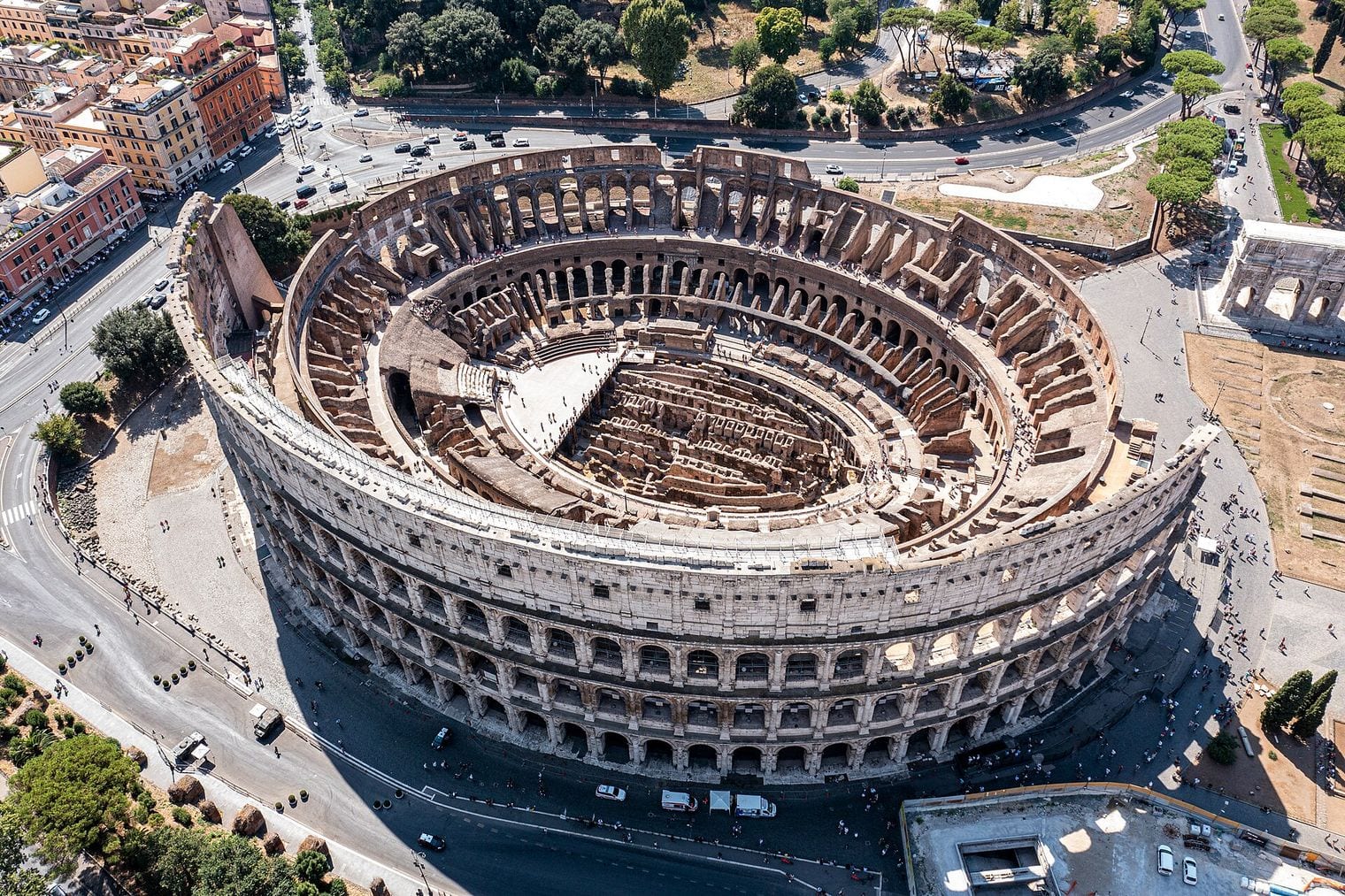
The largest Roman amphitheater in the world is the Colosseum, in Italy — 189 m (620 ft), external major axis.
Source: Wikipedia. Verified .
Rome's Colosseum is the one everybody names, and for once the famous answer is also the right one: at 189 metres end to end, nothing the Romans built came close. What surprises is who else is missing.
Four of the largest arenas ever raised — at Tours, Poitiers, Autun and Metz — would all place in this top twelve, and you cannot visit a single one; they were quarried for stone, built over by the towns that grew around them, or pulled down outright to make way for a road.
So this countdown fixes two rules. It ranks on the external major axis of the ellipse, the surveyed length of the building itself, because seating estimates for these arenas swing wildly — Capua is published anywhere between 34,000 spectators and 60,000, a spread that would move it from fourth place to first. And every entry still stands as something you can walk into, from 135 metres at Pompeii to 189 in Rome, across five countries and two continents.
Fun Facts About the World’s Largest Roman Amphitheaters
Four of the biggest are gone entirely — the arenas at Tours (156 m), Poitiers (155.8 m), Autun (154 m) and Metz (148 m) would each place on this list, but every one was quarried, built over or pulled down. What was left of the Metz arena was razed during the siege of 1552, and its foundations now lie beneath the Centre Pompidou-Metz.
One amphitheatre spent 1,300 years as a walled town — from the fall of the empire until the late eighteenth century, the Arles Amphitheater enclosed four towers, two chapels and more than two hundred houses, with a public square laid out on the arena floor.
A single earthquake erased Verona’s outer wall — the quake of January 1117 brought down the Verona Arena’s four-storey ring of pink and white limestone, leaving one fragment of four arches still standing. Veronese call it l’Ala, “the Wing”.
The Senate once shut down the games for ten years — after rival crowds fought a pitched battle at the Amphitheater of Pompeii in AD 59, Rome banned spectacles in the town for a decade. Tacitus recorded it, and a fresco of the brawl survives in Naples.
Nobody agrees how many people these arenas held — which is why this ranking measures stone instead. The Amphitheater of Capua is published anywhere between 34,000 spectators and 60,000, and the Colosseum between 50,000 and 87,000.
The Roman East hardly built any — barely two dozen purpose-built amphitheatres are known across the eastern provinces, against more than two hundred empire-wide. Greek cities preferred to adapt the theatres and stadiums they already had.
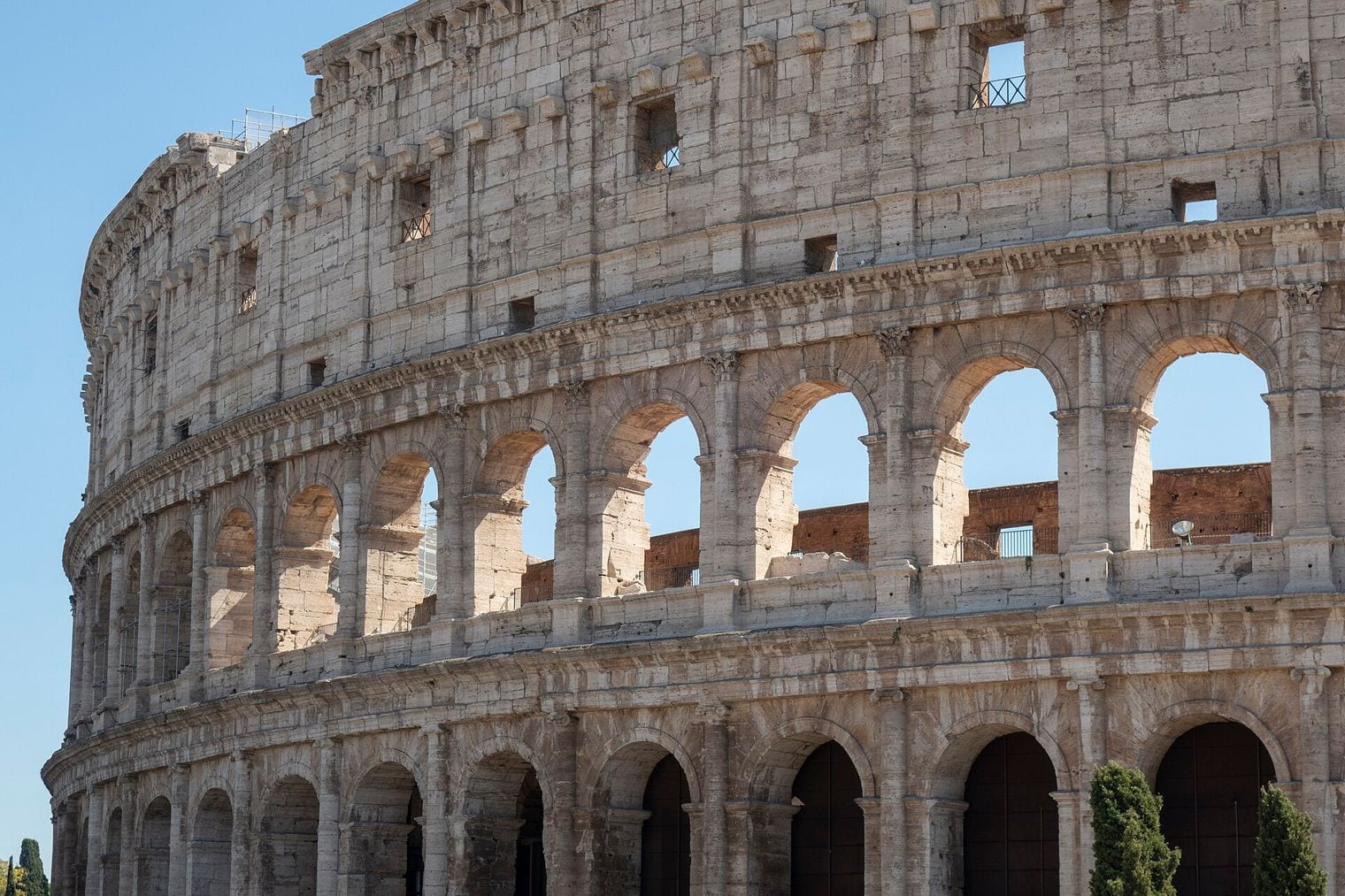
At 189 metres on its long axis and 156 across, the Colosseum is not merely the largest Roman amphitheatre ever built — it beats the runner-up by nineteen metres, a margin no other gap on this list approaches.
Vespasian began it around AD 70 on ground Nero had seized for his palace lake, and his son Titus opened it in AD 80. Where the outer wall survives it still stands 48 metres high, and the travertine shell originally carried eighty arches on each of its three lower tiers.
Modern estimates put the crowd at roughly 50,000, though the Codex-Calendar of 354 claimed 87,000 — the sort of spread that explains why this list ranks by measured stone rather than by seats.
The arena floor, 87 by 55 metres, has been partly re-laid so that visitors can look down into the hypogeum beneath: two levels of tunnels, animal pens and lift shafts that pushed beasts and scenery up through trapdoors in the sand. It remains one of the most visited monuments on earth.
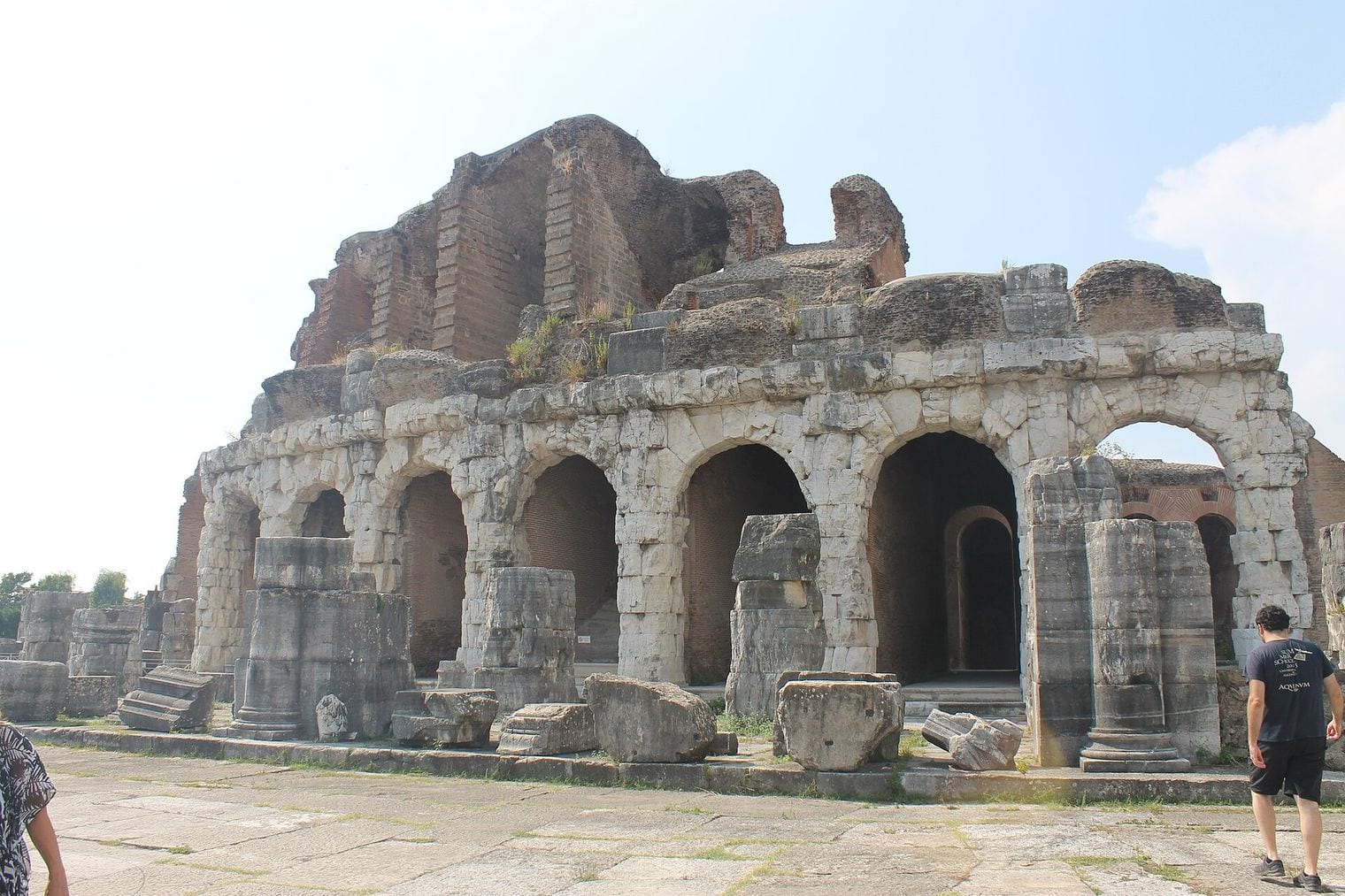
At 170 metres by 139, the Amphitheater of Capua is the second largest the Romans ever raised, and for a long time it was the model rather than the copy — many scholars read the Colosseum's design as a development of what was tried here first.
Its façade rose 46 metres through four levels, with eighty arches on each of the lower three, and the carved keystone busts of gods that once decorated them survive; seven are set into the town hall of nearby Capua.
The building stands at Santa Maria Capua Vetere, and its great asset is underground. The corridors and chambers beneath the arena floor are among the most complete anywhere, so you walk the service passages rather than peer down into them.
Capua was the gladiatorial capital of Roman Italy, and the schools where the Spartacus revolt began in 73 BC stood in this city — though at an earlier arena that the present structure later replaced. In 2024 it joined the UNESCO World Heritage list as part of the Appian Way.
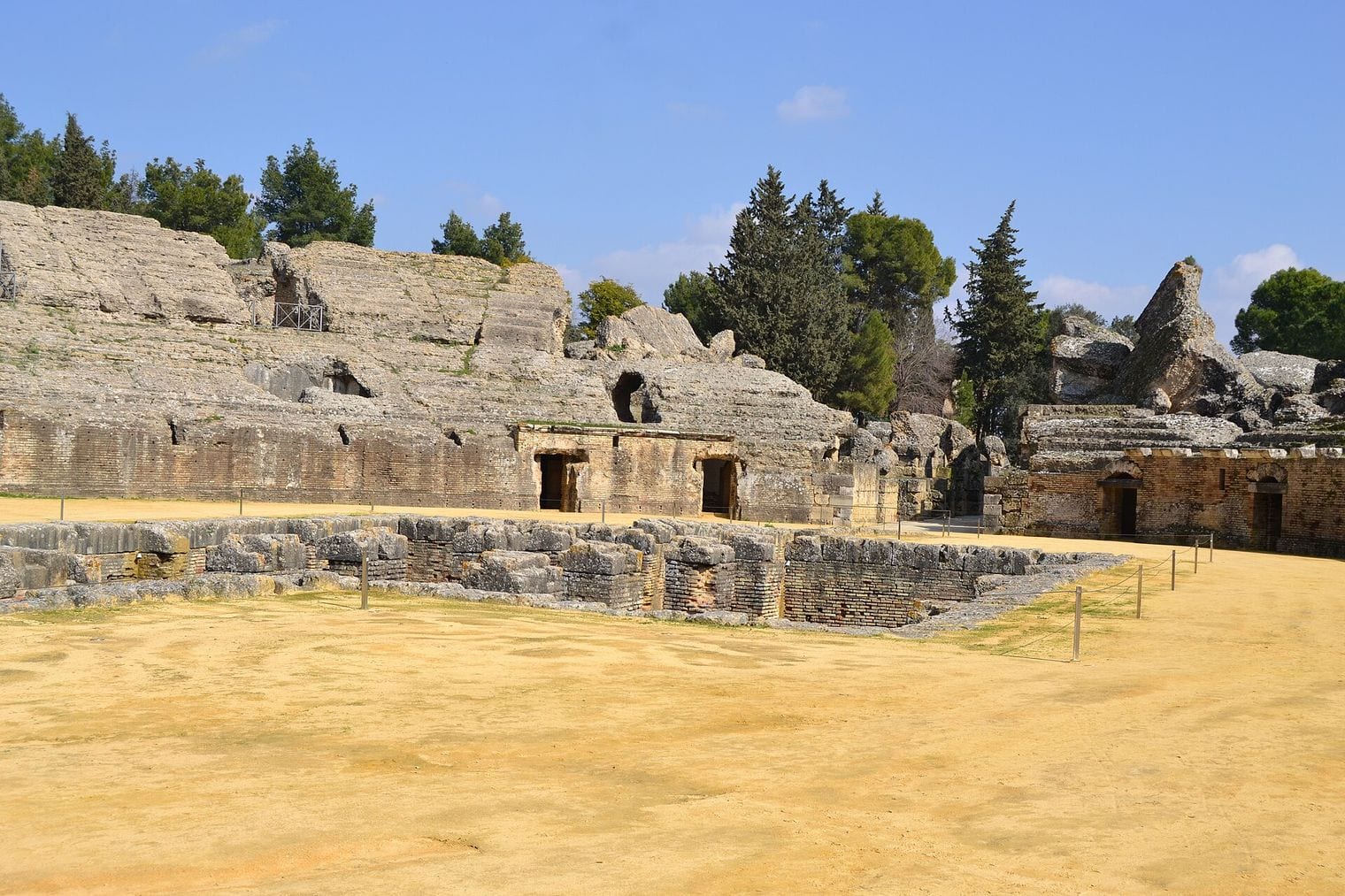
The Amphitheater of Italica measures 160 metres by 137 and seated about 25,000, an extraordinary figure for a town whose population was a fraction of that. Italica, at modern Santiponce just outside Seville, was the birthplace of the emperors Trajan and Hadrian, and it was Hadrian who rebuilt it on a lavish scale between AD 117 and 138. The amphitheatre was the statement piece: a provincial city handed an arena sized for an imperial capital.
What survives is the lower seating, the arena wall and a deep pit beneath the floor — which is where television found it. Italica stood in for the Dragonpit in the seventh season of Game of Thrones, and the visitors that brought have never really tailed off. Come for the arena, then stay for the streets behind it: Italica's grid of mosaic-floored houses is one of the best-preserved Roman townscapes anywhere in Spain, and it is walkable in an afternoon.
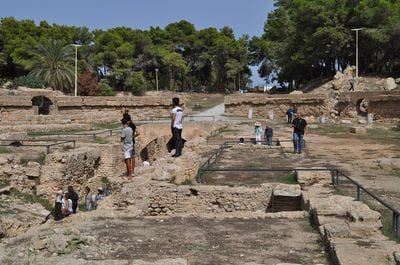
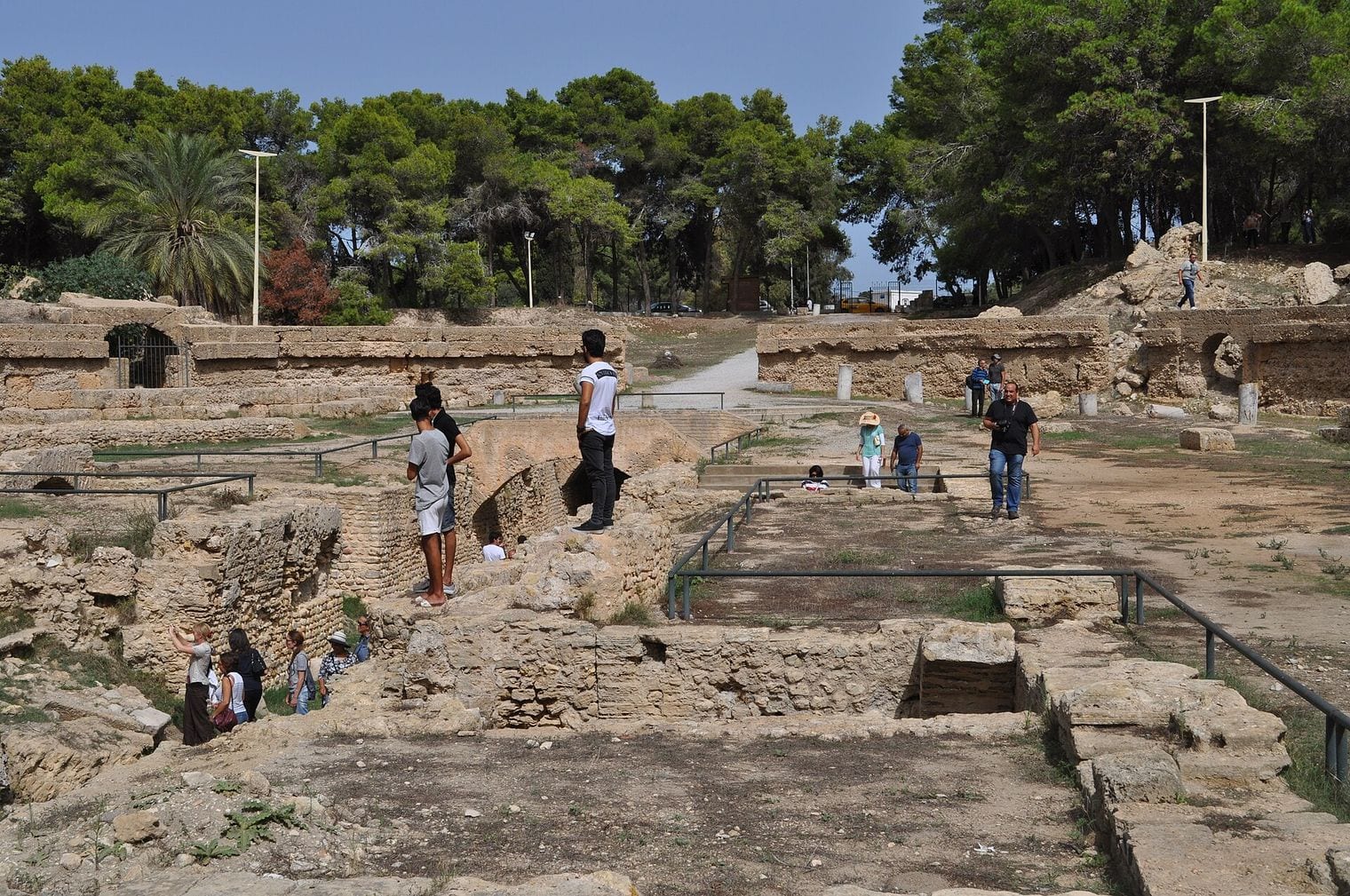
Enlarged to 156 metres by 128, the Carthage Amphitheater held perhaps 30,000 people and was one of only three great African arenas raised on flat ground rather than banked into a hillside — the others being El Jem and Thapsus. An inscription places it in service between AD 133 and 139, on a site already in use from the end of the first century.
It has fared worse than its Tunisian rival. Centuries of stone-robbing stripped the tiers almost to ground level, so what you meet today is the great oval of the arena itself, a restored podium wall, and the service galleries running underneath the floor.
That is still a remarkable thing to stand inside, and it sits within the Archaeological Site of Carthage, inscribed by UNESCO in 1979 — which means the arena, the Antonine Baths and the Punic ports all fit comfortably into the same afternoon.
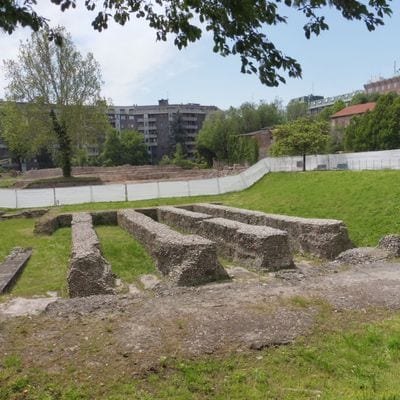
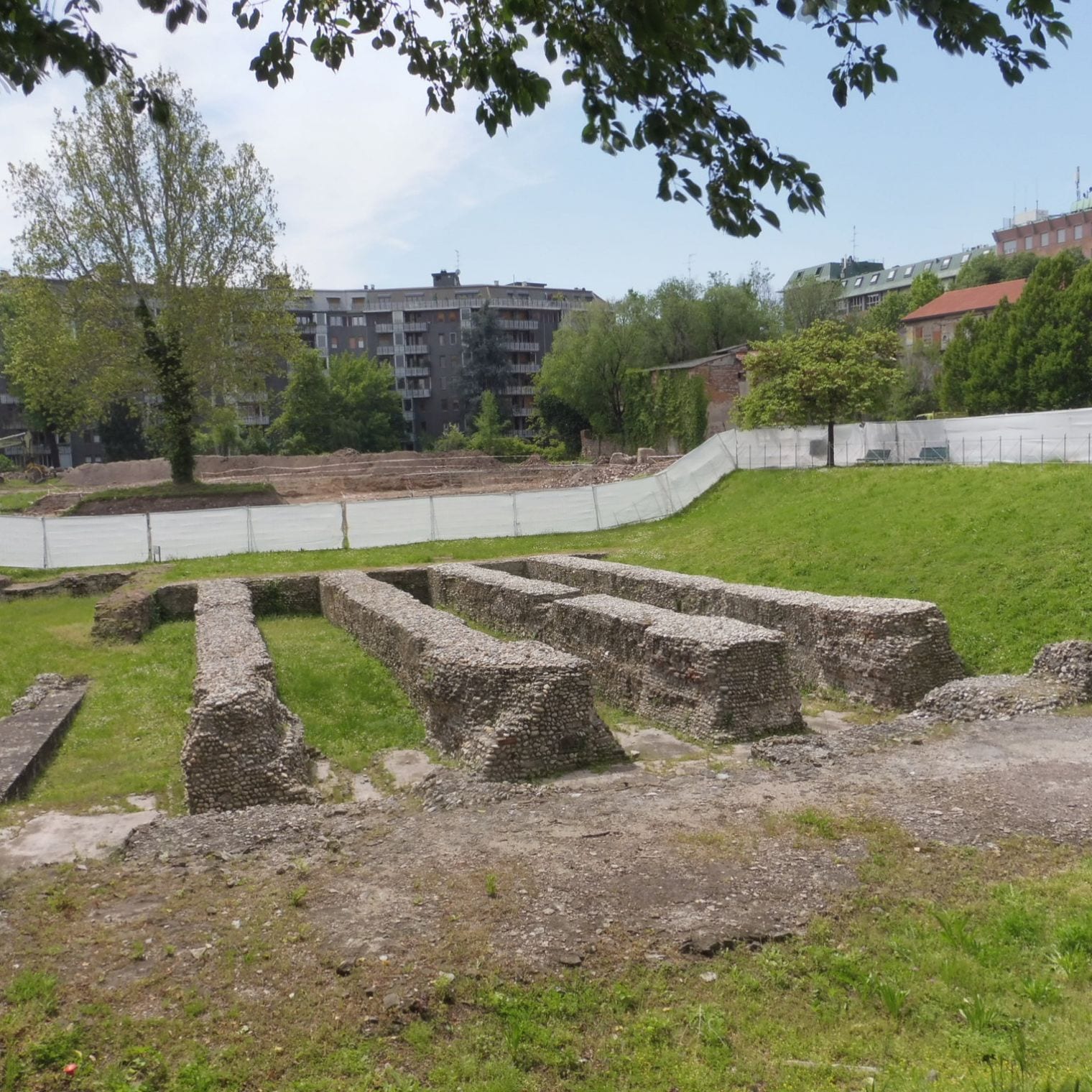
The Milan Amphitheater was 155 metres long and 125 wide, stood some 36 metres high and held up to 35,000 people — the largest in Italy after Rome and Capua, according to the city that now looks after the site. Mediolanum served as an imperial capital in the late empire, and it was given an arena to match its new standing.
Almost none of it rises above ground now, and the reason is unusually well recorded: the amphitheatre lay outside the walls, where an attacker could have used it as a strongpoint, so it was pulled down during the fifth-century invasions and its stone went into the nearby Basilica of San Lorenzo.
The excavated foundations are now a free archaeological park on via De Amicis, with the Antiquarium Alda Levi beside them, and the missing architecture is slowly being planted rather than rebuilt — an amphitheatrum naturae in which trees stand in for the vanished tiers.
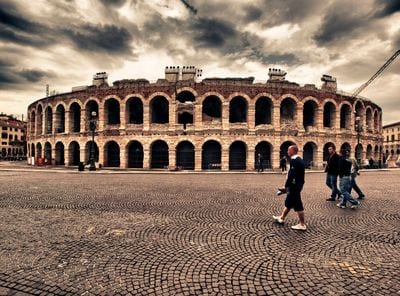
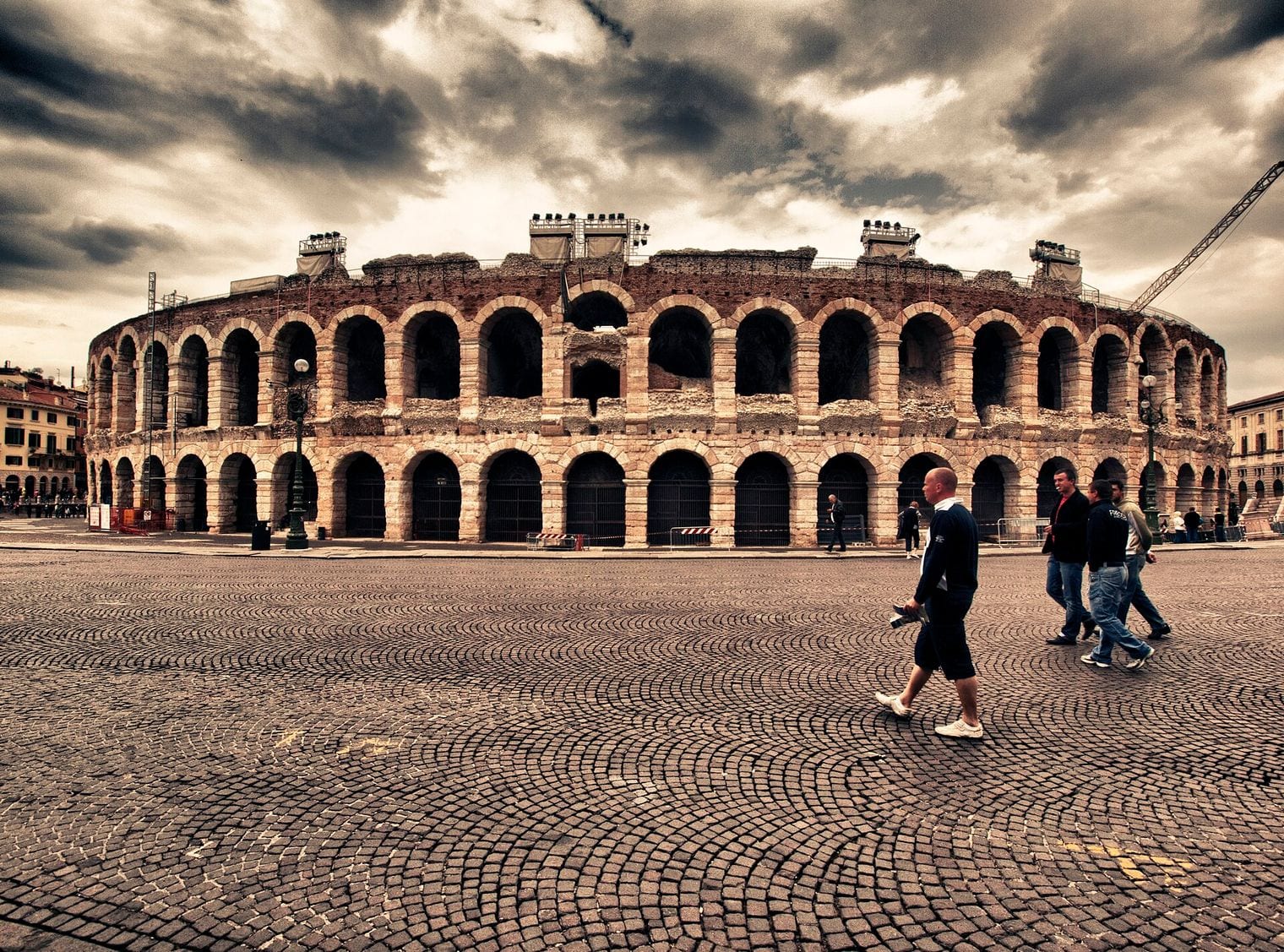
At 152.43 metres by 123.23 — a tidy 520 by 420 Roman feet — the Verona Arena is the amphitheatre that never stopped working. It was finished around AD 30 and held roughly 30,000 Romans; today it seats about 22,000 for an opera festival first staged in 1913. The arena floor still measures 75.68 by 44.43 metres, and the stone benches are the original ones, worn into shallow dishes by two thousand years of audiences.
Its outer ring did not survive. The earthquake of January 1117 brought down almost the whole four-storey façade of pink and white limestone, leaving one freestanding fragment of four arches known ever since as l'Ala — the Wing.
It is the thing to look at from the piazza, because it shows you at full height everything that is gone: the layered arcading, the colour of the Valpolicella stone, the sheer reach of the ring that once enclosed the building you are standing beside.
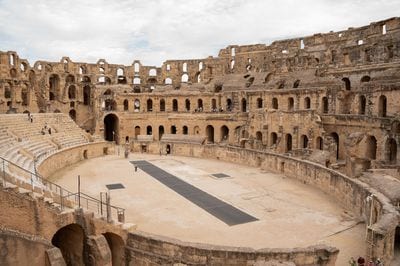
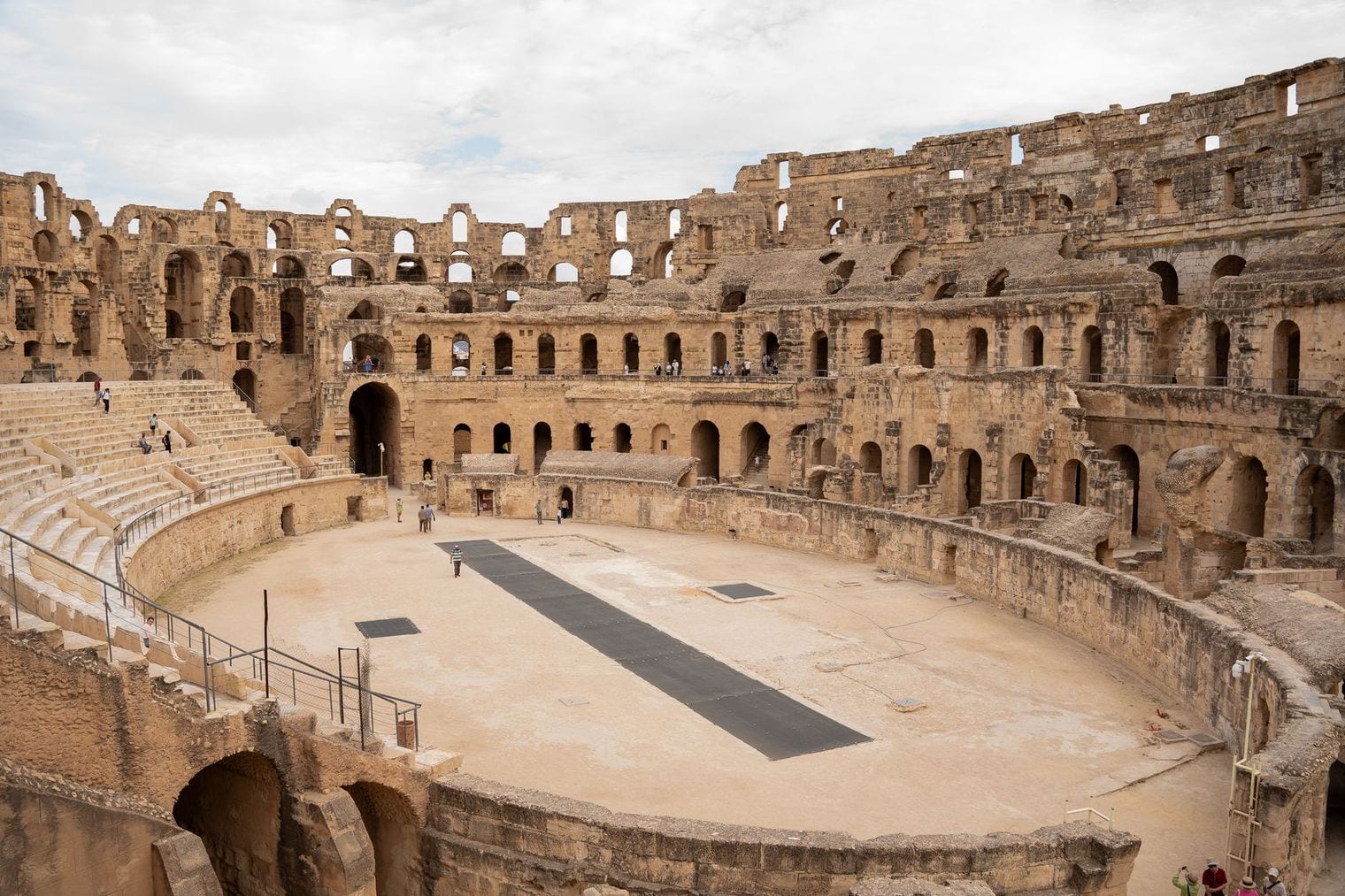
The Amphitheater of El Jem rises 148 metres by 122 straight out of flat Tunisian farmland, with room for something like 35,000 spectators — a colossal building for a town that made its money from olive oil. Roman Thysdrus put it up around AD 238, late in the amphitheatre-building era, and the decoration was never entirely finished.
It is the best-preserved large amphitheatre in the world, and the one that gives the clearest sense of how these buildings actually felt. Three tiers of arcading still stand to full height around much of the circuit, and the passages beneath the arena are open to walk.
The damage is recent by Roman standards: a breach was blown through the wall in 1695 and widened again around 1850. UNESCO inscribed it in 1979, and because it stands almost alone on the plain, it reads at a distance the way the Colosseum no longer can in central Rome.
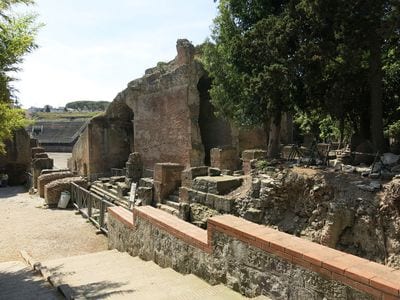
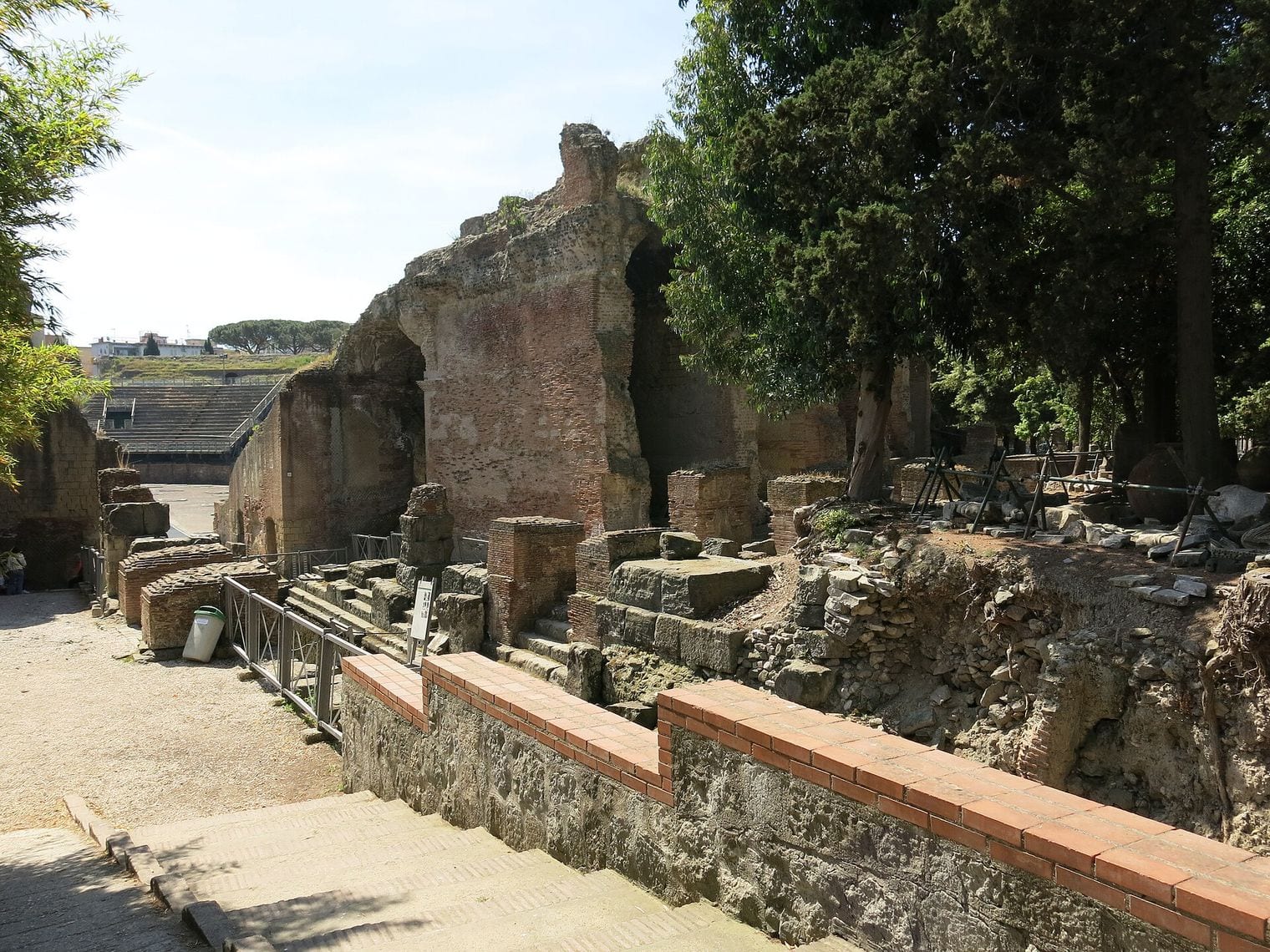
At 147 metres by 117, the Flavian Amphitheater of Pozzuoli was begun under Vespasian and completed under Titus — the same imperial building programme, and quite possibly the same architects, as the Colosseum. Its arena measures 72.22 by 42.33 metres, and its capacity is variously put between 40,000 and 50,000.
Where it beats every rival is below the floor. Medieval builders stripped the exterior marble but left the interior alone, so the hypogeum here is the most complete that survives anywhere: a full basement of corridors and chambers, with the stone housings still in place for the gear that hauled animal cages up to trapdoor level.
You can walk the length of it, which is not true in Rome. Pozzuoli sits in the volcanic Campi Flegrei just west of Naples, so the arena pairs naturally with the crater fields and the steaming ground at Solfatara.
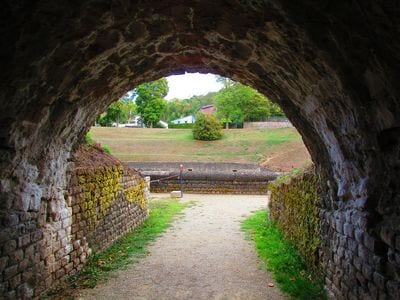
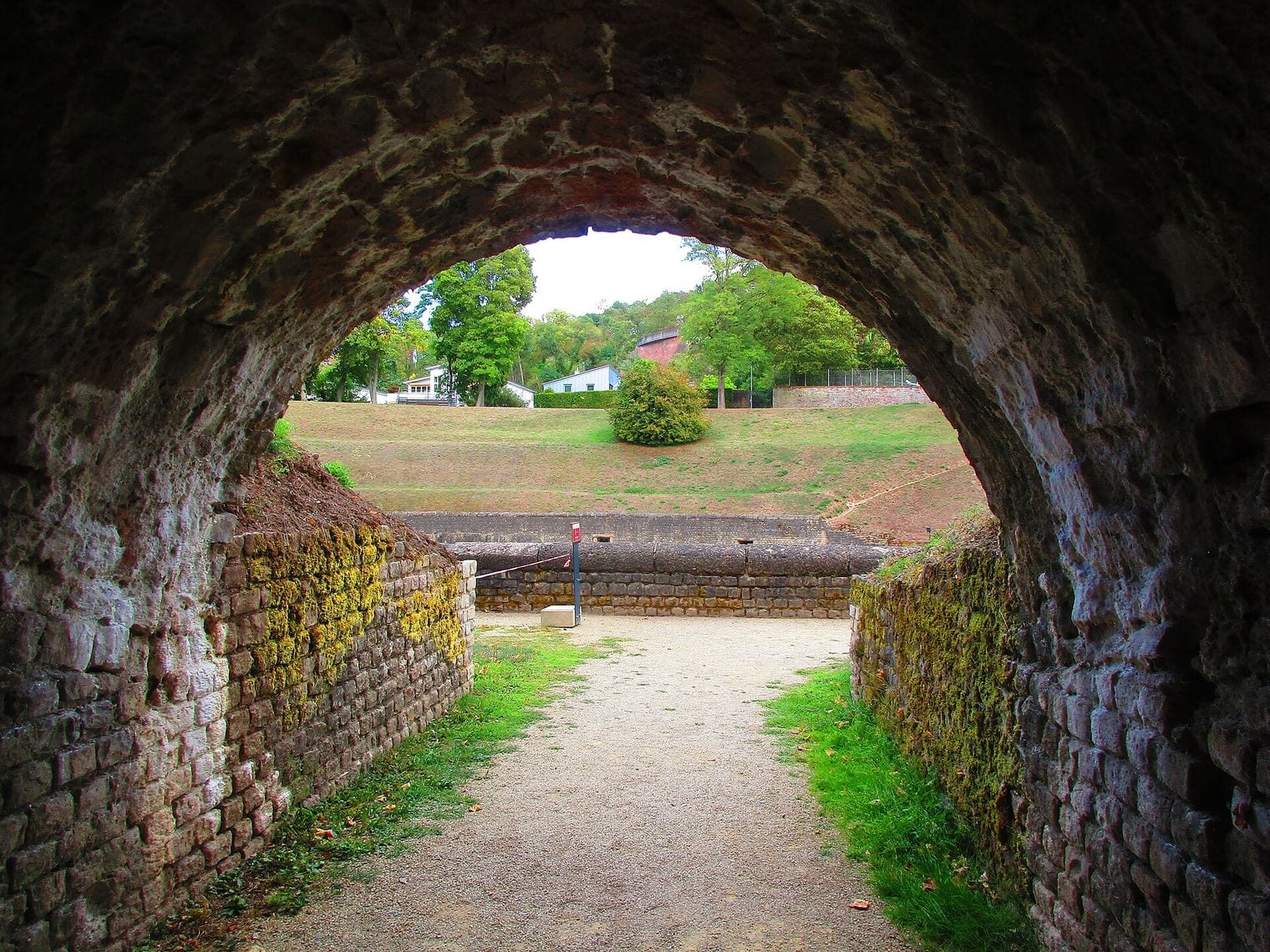
Measuring 145 metres by 120, the Trier Amphitheater held around 20,000 people and ranks among the ten largest Roman amphitheatres still standing. It went up in the second century under Antoninus Pius and was overhauled around AD 293, when Constantius Chlorus made Trier an imperial residence — for a stretch of the late empire this was one of the western capitals, and the amphitheatre was sized accordingly.
It was built directly into the line of the city wall, so it doubled as a gate and a defensive work, and it is cut into the slope of the Petrisberg rather than raised free-standing. The seating banks survive as grassed earthworks, which makes the scale unusually easy to read from inside.
The cellar beneath the arena is intact and open — a vaulted basement where the machinery and the cages were kept — and the whole site has been part of the Roman Monuments of Trier on the UNESCO list since 1986.
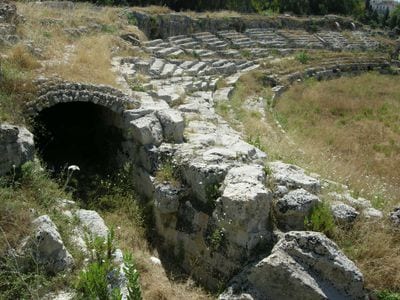
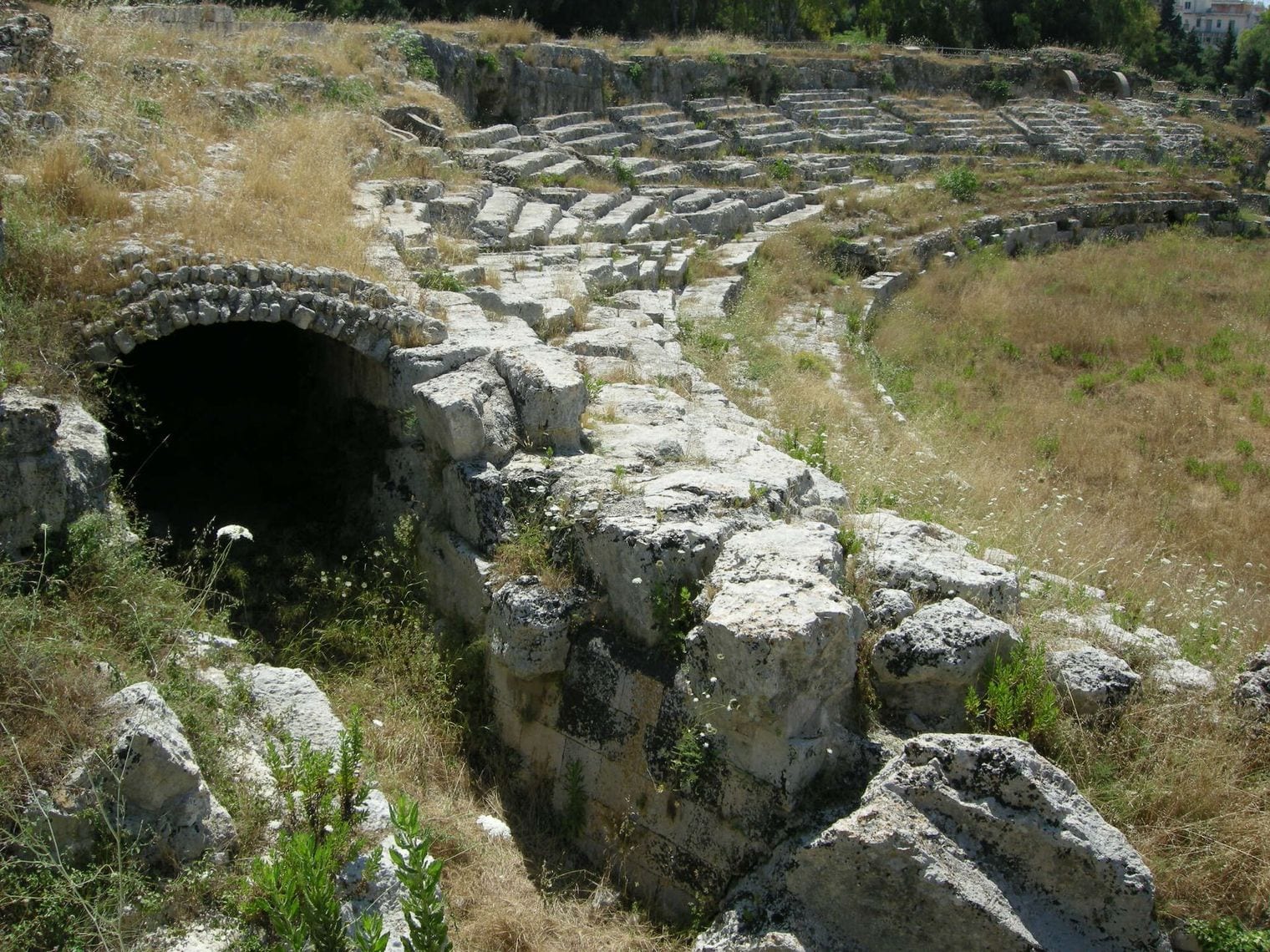
The Roman Amphitheater of Syracuse is 140 metres long and 119 wide, and a great deal of it was never built at all but carved: the lower tiers were cut straight out of the living limestone of the Neapolis hillside. Its date is still argued over — Lugli placed it in the Augustan period, while Golvin put it somewhat later, under the Julio-Claudians.
It lost its facing stone in the sixteenth century, when the Spanish quarried the site to fortify the island of Ortygia, so what remains is essentially the rock-cut skeleton, with a corridor running beneath the arena and a rectangular tank at its centre.
It was first properly excavated in 1839. The setting does much of the work here: the amphitheatre shares the Neapolis Archaeological Park with a Greek theatre, the enormous Ear of Dionysius cave and the ancient quarries, so Greek and Roman Sicily sit within a few minutes' walk of each other.
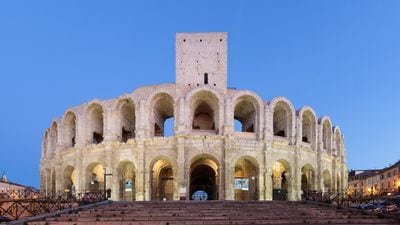
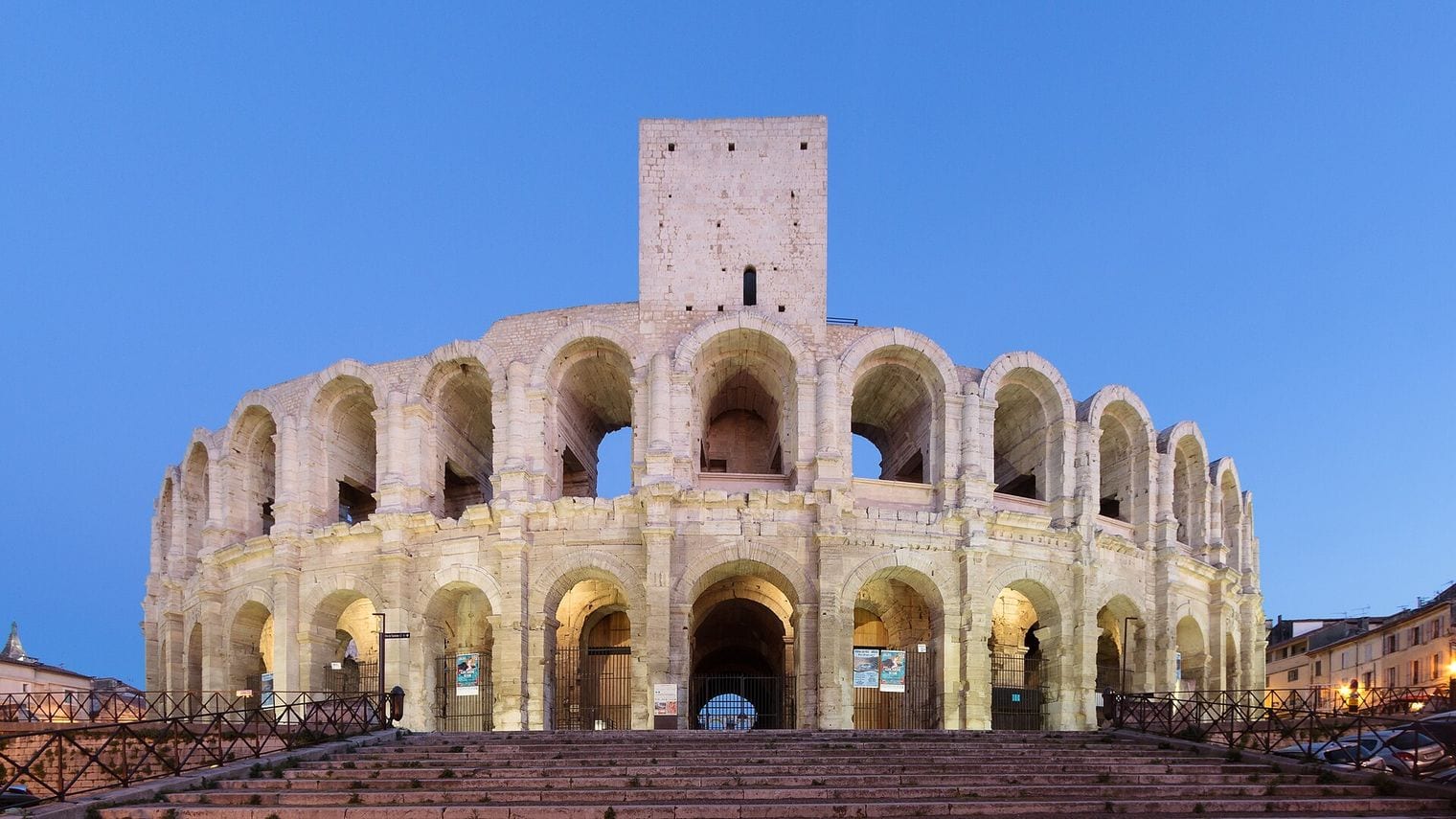
The Arles Amphitheater measures 136 metres by 109 and was built around AD 90 for a crowd of more than 20,000, its architect having had to trim the plans to fit the ground he was given. Two tiers of sixty arches survive, and three medieval towers still rise above them — which is the clue to the building's very unusual afterlife.
When the empire receded, the townspeople simply moved in. The arena became a fortified village: four towers, two chapels, more than two hundred houses packed into the tiers, and a public square laid out on the arena floor.
That arrangement lasted into the late eighteenth century. Clearance began in 1825 at the urging of the writer Prosper Mérimée, and by 1830 the building was staging events again. It still does — bullfights and Camargue races — and it has been UNESCO-listed along with the rest of Roman Arles since 1981.
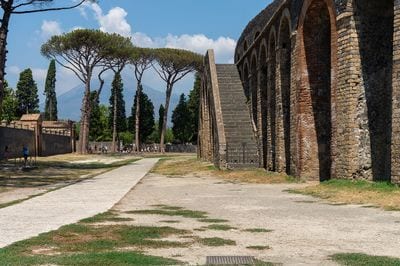
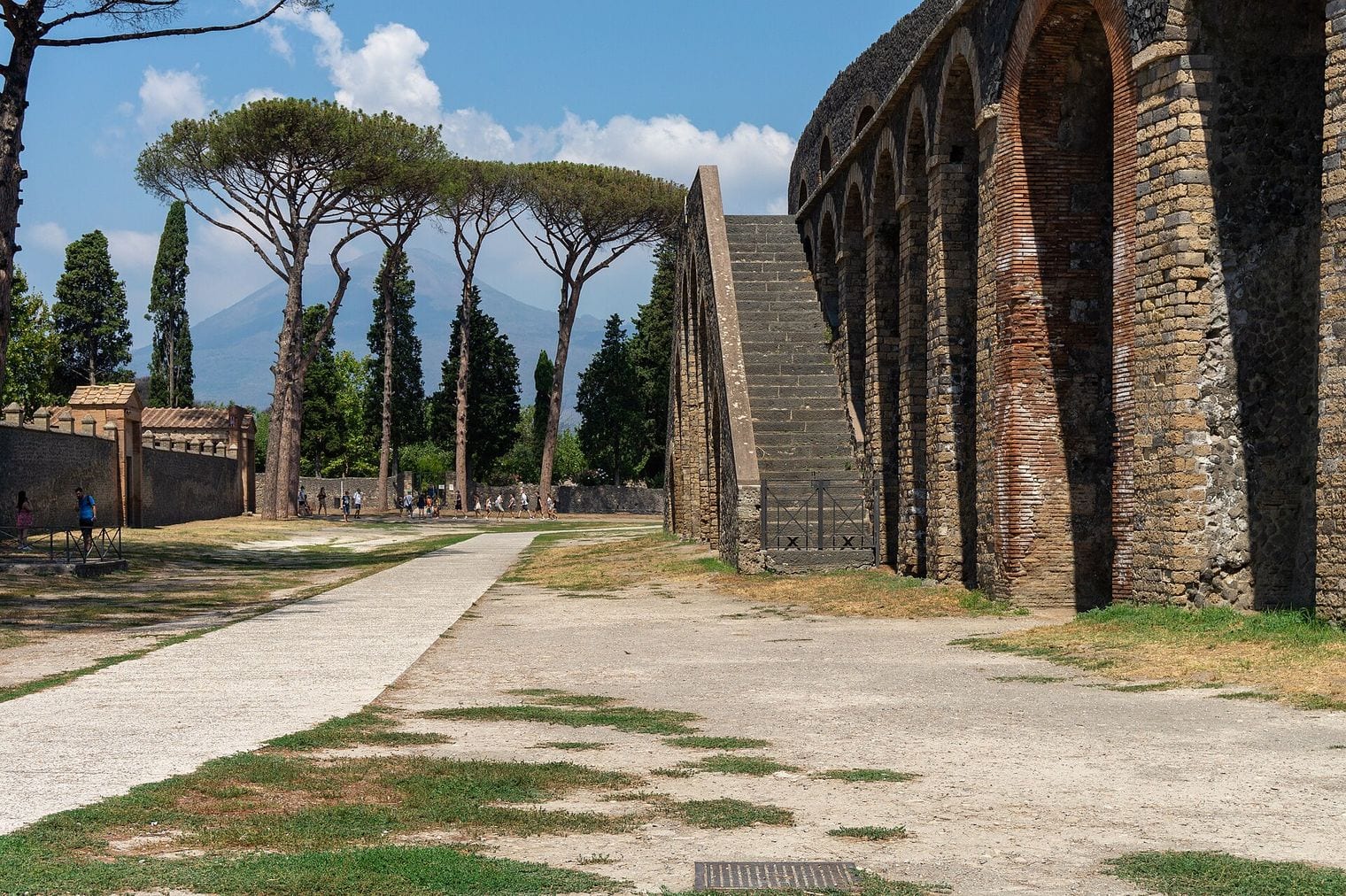
At 135 metres by 104, the Amphitheater of Pompeii closes this list at its smallest — and opens the whole story, because it is the oldest surviving stone amphitheatre in the Roman world. Two local magistrates, Gaius Quinctius Valgus and Marcus Porcius, paid for it around 70 BC, at a time when arenas were still normally thrown up in wood. Its floor sits six metres below ground level and measures 66.7 by 35.1 metres.
It held about 20,000, and it is the scene of the best-documented crowd disaster in antiquity. In AD 59 a gladiator show turned into a pitched battle between Pompeians and visitors from neighbouring Nuceria, insults giving way to stones and then to blades.
Tacitus records that the Senate banned games here for ten years, and the fresco painted of the riot — the only ancient picture of violence in an amphitheatre — now hangs in the archaeological museum in Naples. Vesuvius buried the building intact nineteen years later.
FAQ: The World's Largest Roman Amphitheaters
What is the largest Roman amphitheatre in the world?
The Colosseum in Rome, at 189 m along its major axis and 156 m across. It is nineteen metres longer than the runner-up, the amphitheatre at Santa Maria Capua Vetere, and no arena built anywhere else in the empire came close to matching it.
Which Roman amphitheatre is the best preserved?
El Jem in Tunisia. Three tiers of arcading still stand to their full height around much of the circuit, and the passages beneath the arena are open to walk. It survives far more completely than the Colosseum, which lost most of its outer wall to earthquakes and centuries of stone-robbing.
Why does this list rank by size rather than seating capacity?
Because capacity for these buildings is an estimate rather than a measurement, and the estimates disagree wildly. Capua is published anywhere between 34,000 spectators and 60,000 — a spread wide enough to move it from fourth place to first. The surveyed length of the ellipse does not move.
Are any Roman amphitheatres still used today?
Yes. Verona stages a summer opera festival inside an arena finished around AD 30, and Arles holds bullfights and Camargue races. Both were built to hold crowds and still do, which makes them the best places to understand what these buildings were actually for.
Which of the biggest Roman amphitheatres can you no longer visit?
The arenas at Tours, Poitiers, Autun and Metz were all among the largest ever built, and none survives as a visitable monument. They were quarried for stone, buried beneath later streets, or demolished outright — the Autun arena went in the eighteenth century to make room for a road.