By the City Viking editorial teamPublished Ranked by effective aperture · 13 min read
Last verified Checked before launchOct 30, 202615 sources14 publishers5 encyclopedias & research10 venues & other sitesPublished · Nov 1, 2026Researched and checked before it went liveClick for every source and the full change log.
The record
11.9 mcombined, two 8.4 m mirrors
Large Binocular Telescope
United States
The record
The largest telescope in the world is the Large Binocular Telescope, in the United States — 11.9 m (combined, two 8.4 m mirrors), effective aperture.
Source: news.arizona.edu. Verified .
Short answer
The Large Binocular Telescope on Mount Graham, Arizona, is the largest telescope in the world: its two 8.4 m mirrors on one mount match a single 11.9 m mirror. The Gran Telescopio Canarias on La Palma, at 10.4 m, has the largest single mirror. To see one up close, book a guided tour of either observatory.
The biggest telescope on Earth is still being built. The Extremely Large Telescope in Chile, with a 39 m mirror, is under construction, as are the Giant Magellan and Thirty Meter telescopes, and the James Webb Space Telescope works in space, not on Earth.
This list ranks the fifteen largest optical and infrared telescopes observing today, from the Large Binocular Telescope in Arizona at 11.9 m to the Lowell Discovery Telescope at 4.3 m. Size here means effective aperture, the width of one circular mirror with the same light-collecting area.
The LBT's two 8.4 m mirrors share one mount and count once, at their combined 11.9 m, which puts it ahead of the Gran Telescopio Canarias, whose 10.4 m mirror is the largest single aperture. Identical telescopes at one site, such as the twin Kecks and the four VLT units, count as one entry. Radio dishes, interferometer baselines and telescopes no longer observing, such as Canada's Large Zenith Telescope, are left out.
The biggest single mirror is not the #1. The Gran Telescopio Canarias on La Palma has the largest single aperture at 10.4 m, but the Large Binocular Telescope pairs two 8.4 m mirrors on one mount, which together collect as much light as one mirror 11.9 m across.
The Hale Telescope reigned for more than a quarter of a century. The 200-inch Hale Telescope at Palomar was the largest telescope in the world from 1949 until the Soviet-era BTA-6 saw first light in late 1975, and it is still in use.
Two telescopes use only part of their mirrors. The Hobby–Eberly Telescope and the Southern African Large Telescope each have a mirror of 91 hexagonal segments about 11 m wide, but only a 10 m and a 9.2 m pupil collect light at any moment.
The MMT is named after mirrors it no longer has. The Multiple Mirror Telescope worked with six 1.8 m mirrors from 1979 to 1998, the equal of a 4.5 m telescope, before one 6.5 m mirror replaced them.
Rubin carries the largest camera yet built. The Vera C. Rubin Observatory's 3.2-gigapixel camera takes an image every 40 seconds to map the whole southern sky every few nights.
11. Large Binocular Telescope
Mount Graham International Observatory, Arizona, United States
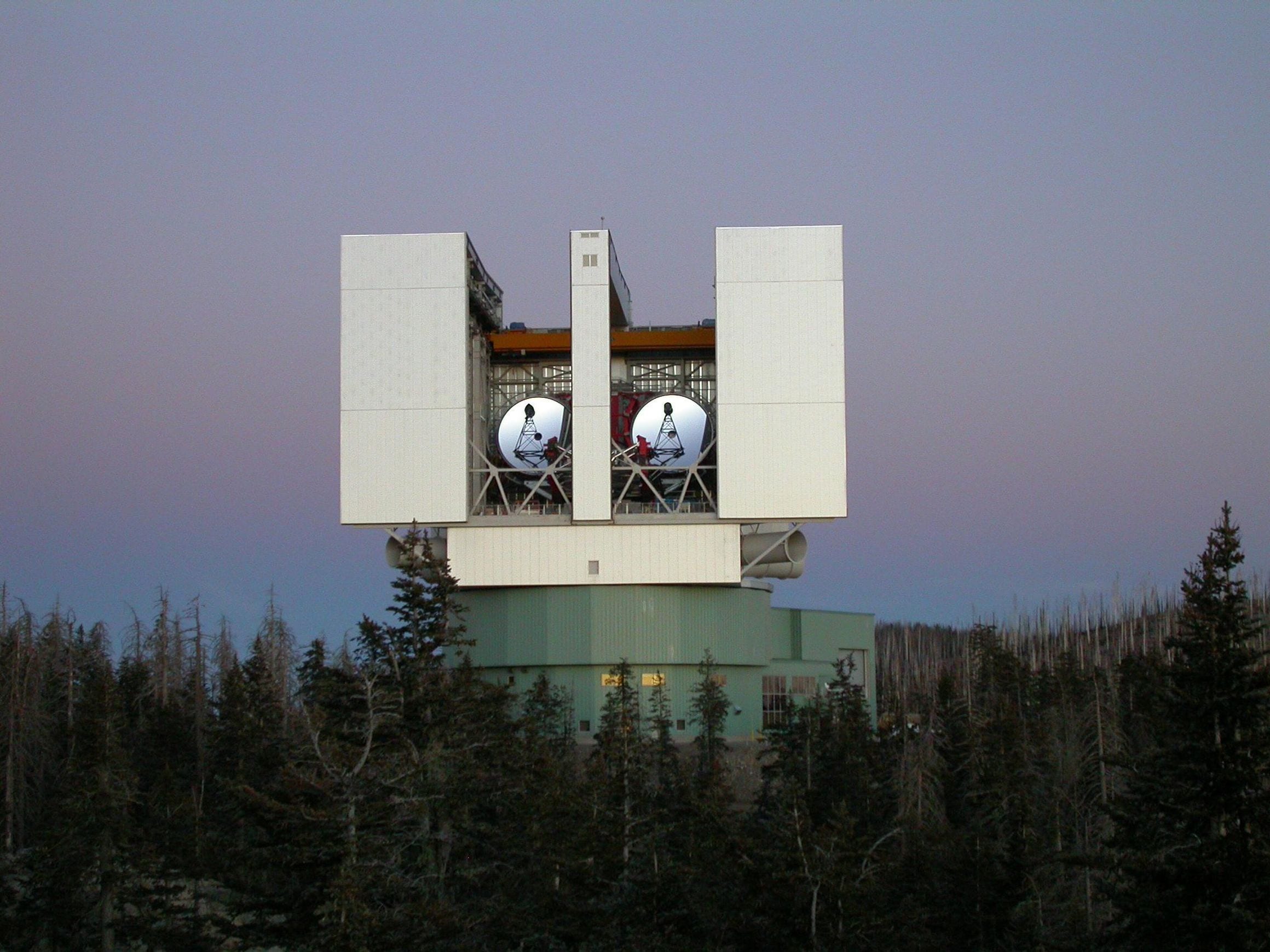
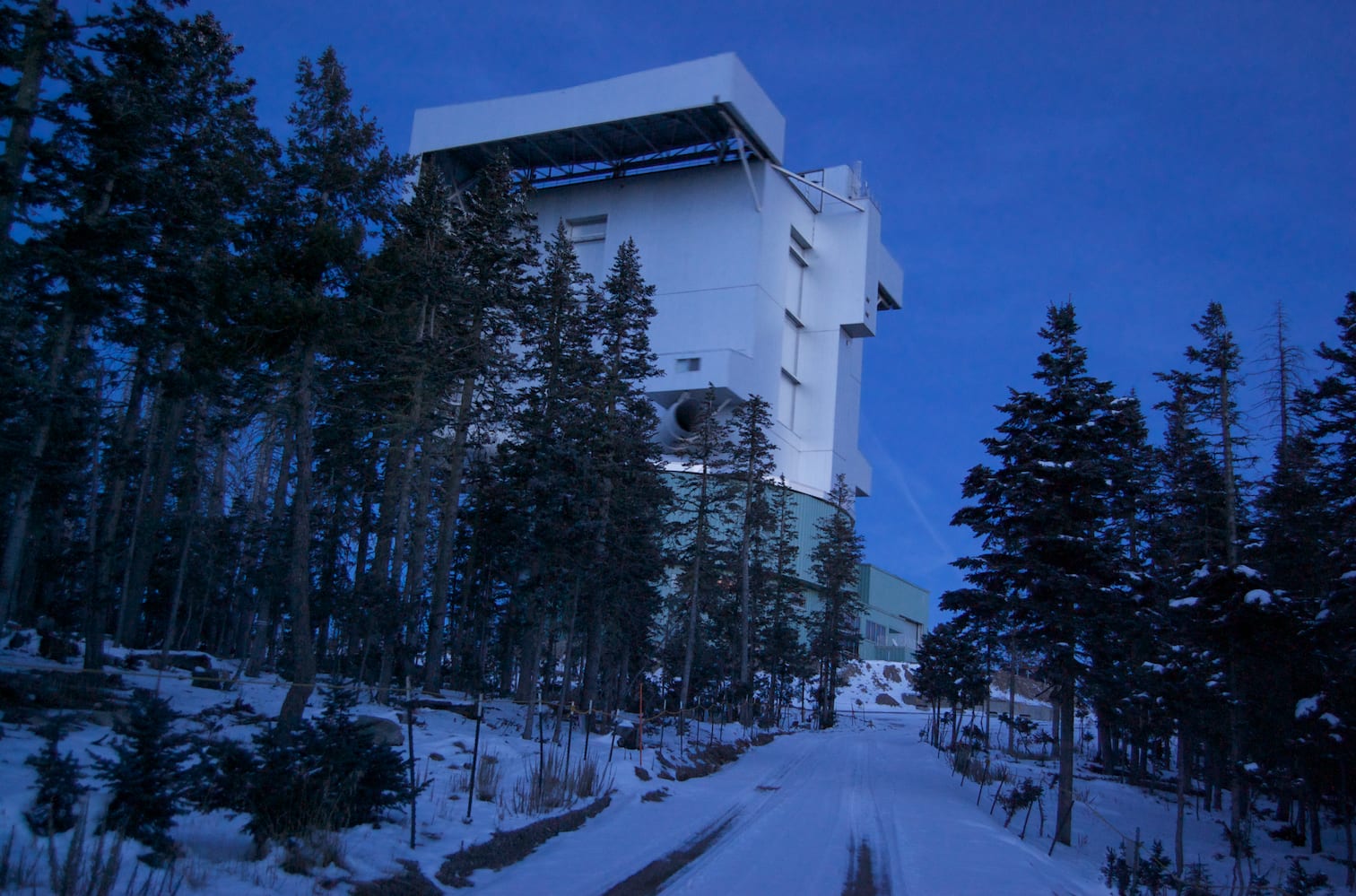
At 11.9 m, the Large Binocular Telescope is the largest telescope in the world by combined effective aperture. Its two 8.4 m mirrors sit side by side on one mount, and together they gather as much light as a single mirror about 11.9 m across; Guinness World Records and the University of Arizona round the figure to 11.8 m.
Each mirror on its own is smaller than the Gran Telescopio Canarias, which is why the GTC holds the record for the largest single aperture.
The telescope stands at about 3,300 m on Mount Graham in the Pinaleño Mountains of southeastern Arizona, part of the Mount Graham International Observatory, and is run by partners in the United States, Italy and Germany.
It saw first light with one mirror in October 2005 and with both together in January 2008, and its mirrors are the largest monolithic, unsegmented mirrors in any optical telescope. In the warmer months, Eastern Arizona College's Discovery Park in Safford runs guided tours up the mountain that include the LBT.
22. Gran Telescopio Canarias
Roque de los Muchachos Observatory, La Palma, Canary Islands, Spain
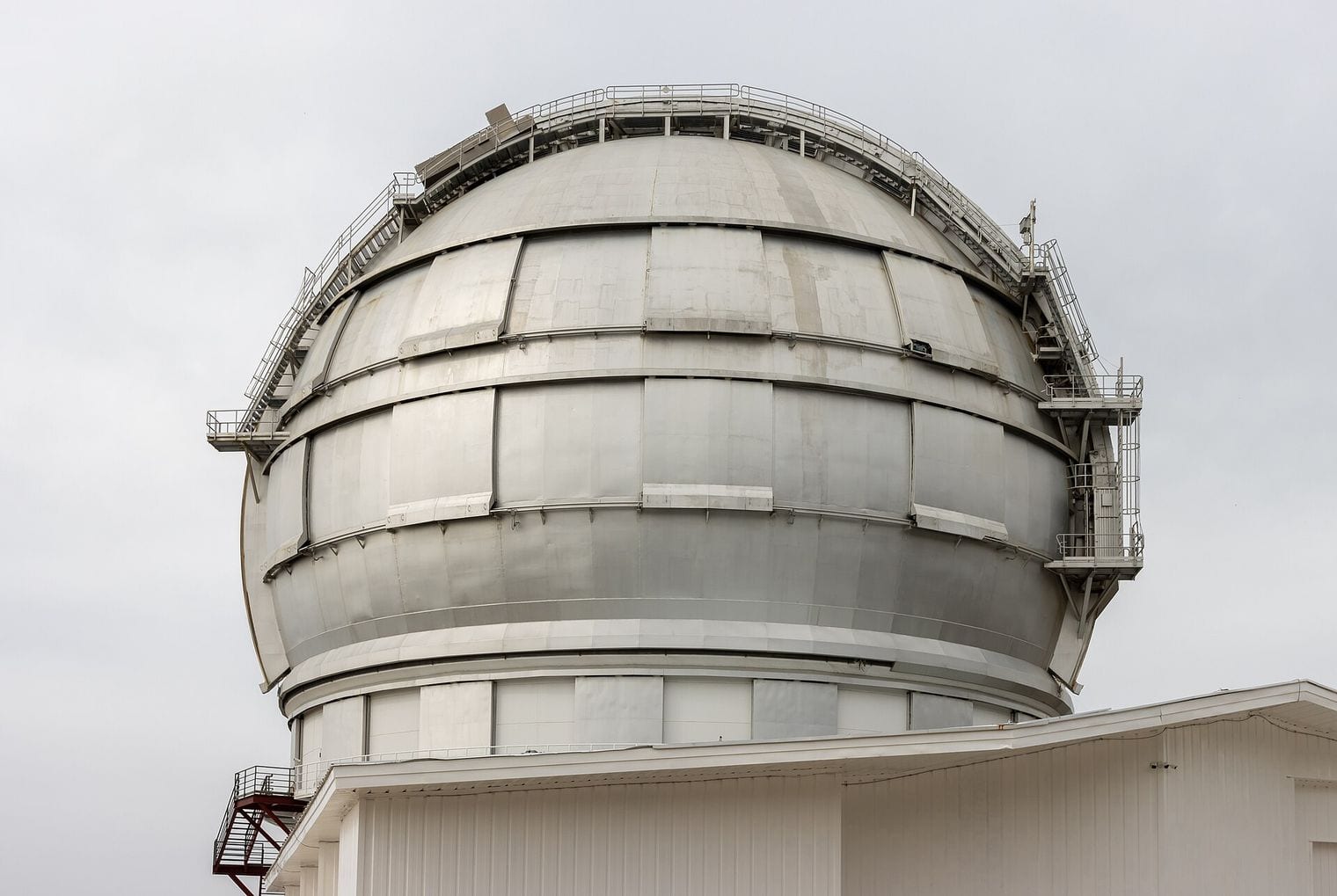
At 10.4 m, the Gran Telescopio Canarias has the largest single primary mirror of any optical telescope in the world, and it ranks second only because the Large Binocular Telescope combines two mirrors. The mirror is made of 36 hexagonal segments of Zerodur glass-ceramic, held in shape by an active optics system so they work as one surface.
The GTC stands at the Roque de los Muchachos Observatory, high on the island of La Palma in Spain's Canary Islands. It began observing with part of its mirror in July 2007, started science in May 2009 and was inaugurated by King Juan Carlos I of Spain that July.
The project is a partnership led by Spain's Instituto de Astrofísica de Canarias, with Mexican institutions and the University of Florida. Authorised guides take visitors inside its dome on tours that start from the observatory's visitor centre.
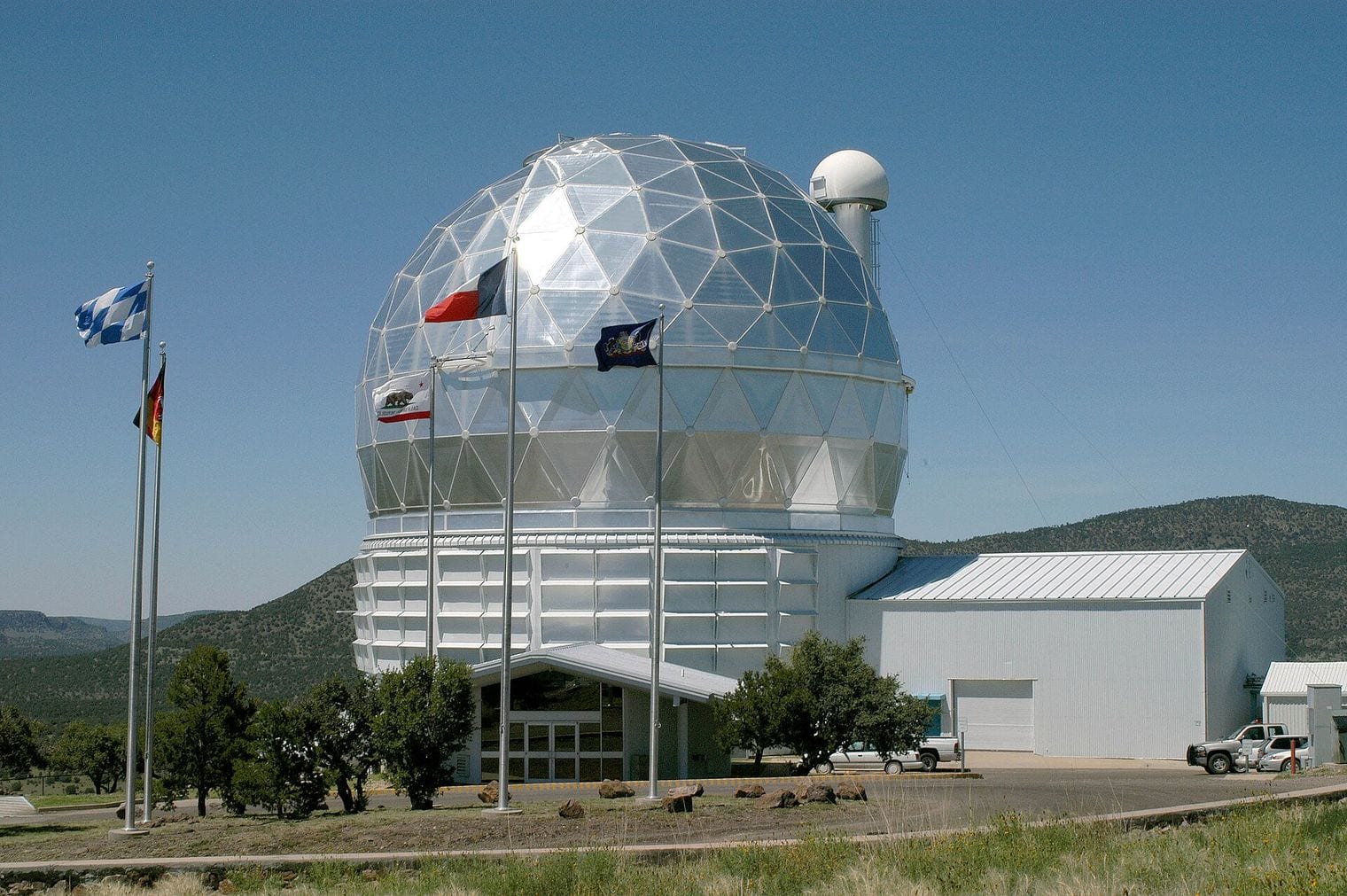
At 10 m, the Hobby–Eberly Telescope matches the twin telescopes of the W. M. Keck Observatory exactly, so the two entries are co-ranked. It is ranked on its effective aperture rather than the size of its glass: the mirror is about 11 m by 9.8 m, built from 91 hexagonal segments, but only a 10 m pupil collects light at any moment, up from 9.2 m before an upgrade completed in 2015.
Its design keeps costs down. The main mirror is fixed at a 55° tilt and only turns around its base, while the instruments at the focus move to follow a target for up to two hours.
First light came in 1996, and the telescope was later upgraded for the Hobby–Eberly Telescope Dark Energy Experiment (HETDEX). The HET stands on Mount Fowlkes at the McDonald Observatory in the Davis Mountains of West Texas, and the observatory's guided tours from its visitors center stop at the telescope.
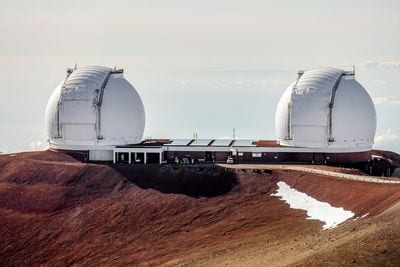
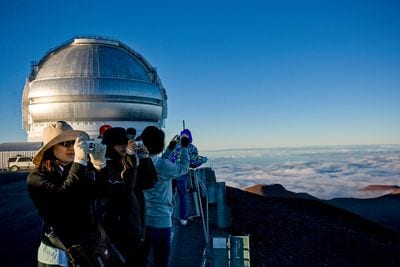
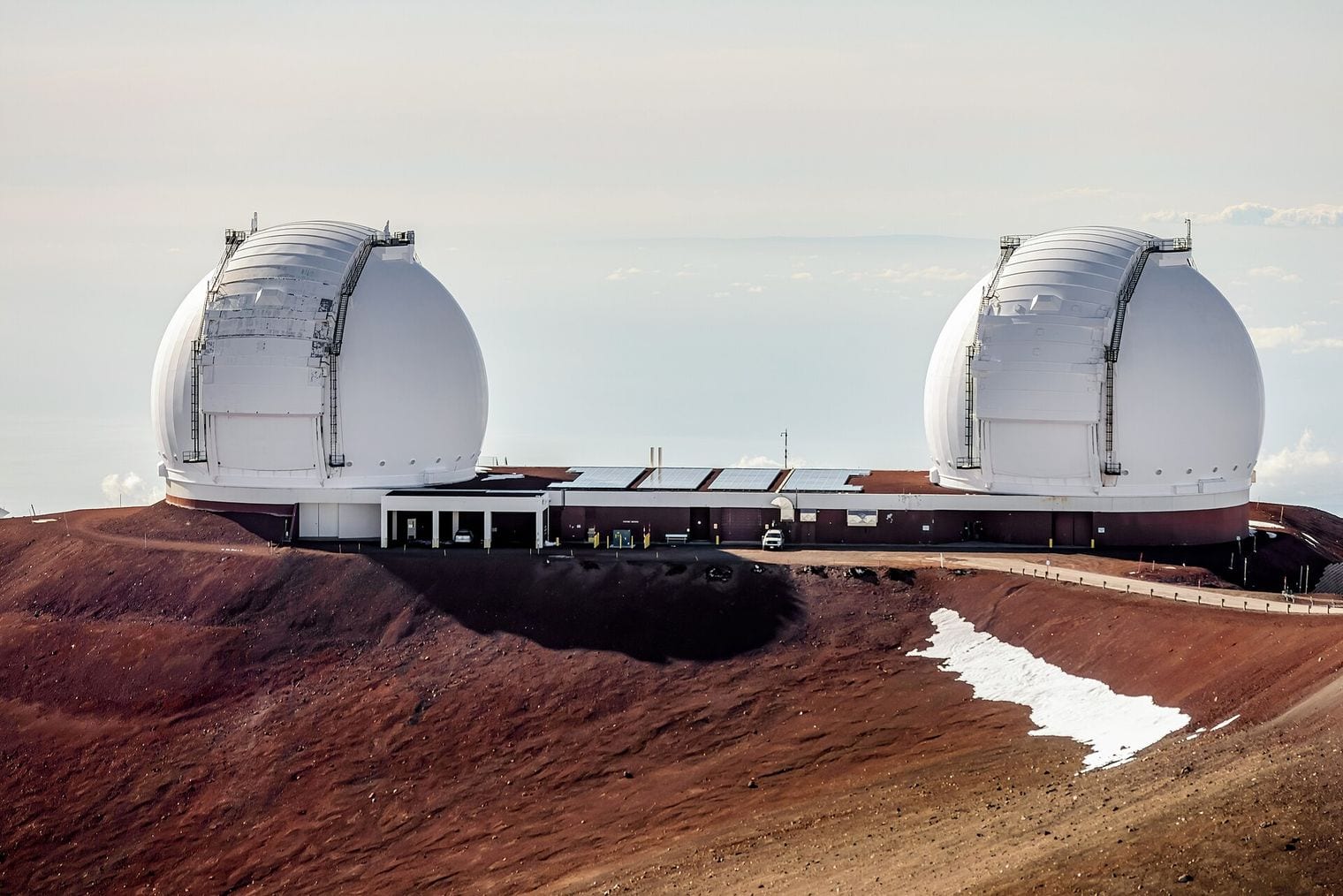
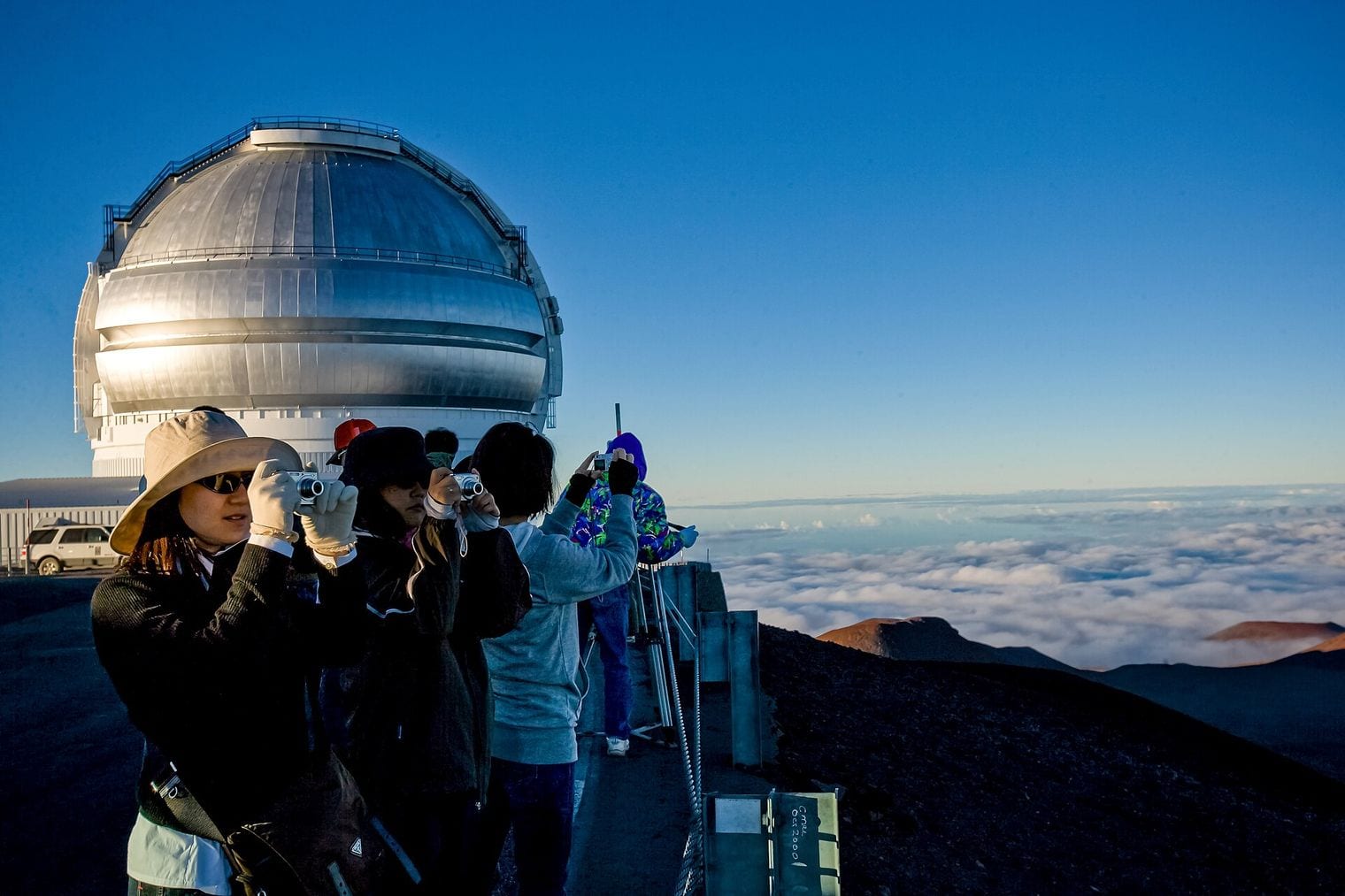
At 10 m, each of the twin telescopes of the W. M. Keck Observatory matches the Hobby–Eberly Telescope, and the two entries are co-ranked; Keck I and Keck II are identical, so they count once here. Each primary mirror is made of 36 hexagonal segments that work together as a single surface, and the active optics that keep them aligned were the key advance that made the telescopes possible.
The observatory sits at 4,145 m near the summit of Maunakea on Hawaii's Big Island. Keck I began science in May 1993 and Keck II saw first light in April 1996, and for more than a decade they were the largest optical telescopes in the world, until the Gran Telescopio Canarias overtook them. Visitors can stargaze at the Maunakea Visitor Information Station at about 2,800 m, and only four-wheel-drive vehicles may carry on up the road to the summit.
55. Southern African Large Telescope
South African Astronomical Observatory, Sutherland, Northern Cape, South Africa
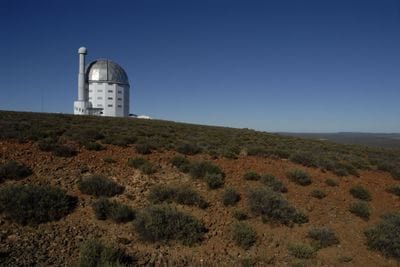
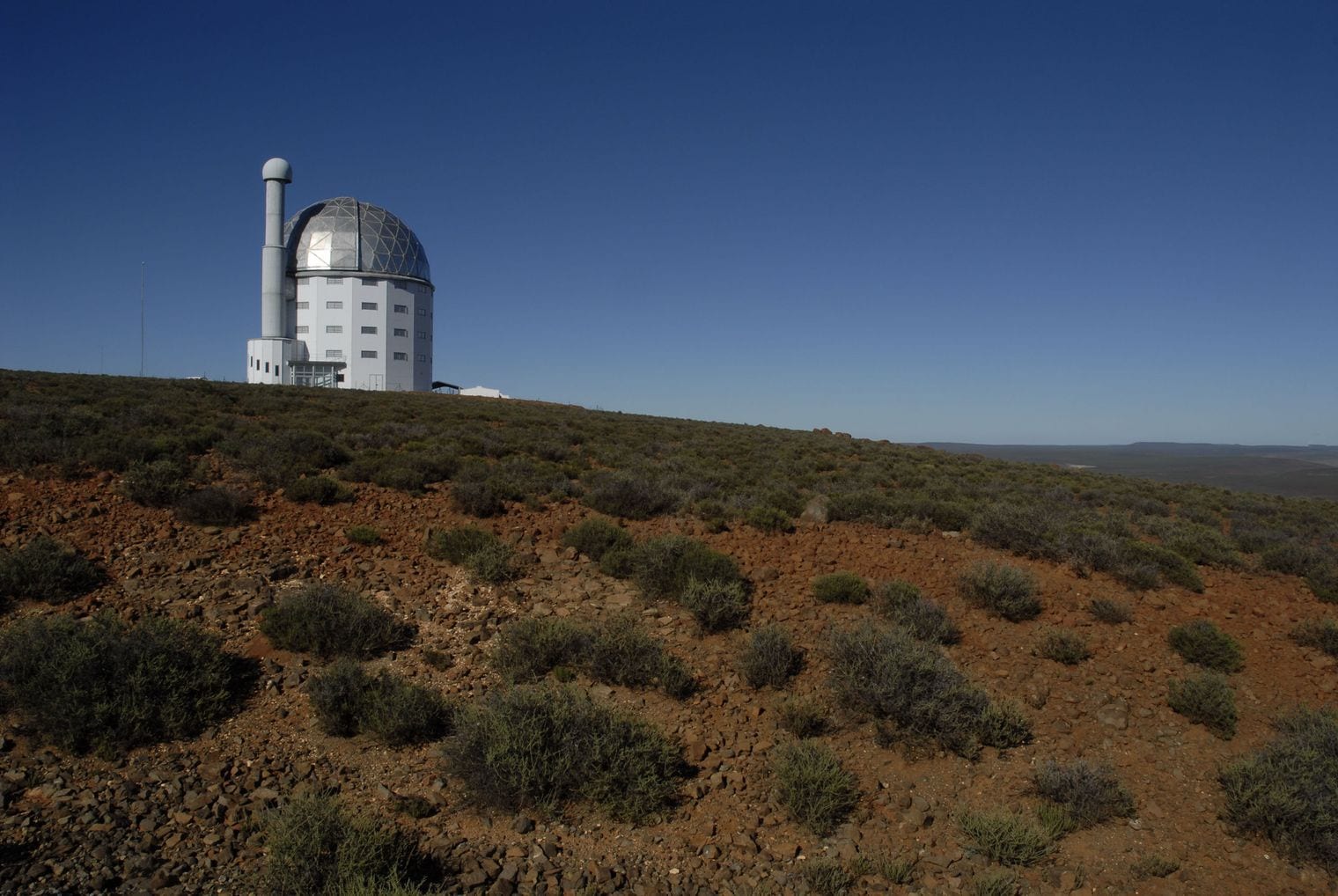
At 9.2 m, the Southern African Large Telescope is the largest optical telescope in the Southern Hemisphere, measured, like the Hobby–Eberly Telescope it is closely based on, by its effective aperture. Its mirror is a hexagon of 91 one-metre segments, about 11.1 by 9.8 m overall, but only a 9.2 m pupil is used at once.
SALT was designed mainly for spectroscopy, and it sees southern skies that telescopes in the Northern Hemisphere cannot. It stands on a hilltop at 1,837 m in the Karoo near the small town of Sutherland, about 370 km north-east of Cape Town, as a facility of the South African Astronomical Observatory. First light with the full mirror came in September 2005, and President Thabo Mbeki opened it that November. The observatory's daytime tours from its Sutherland visitor centre include SALT.
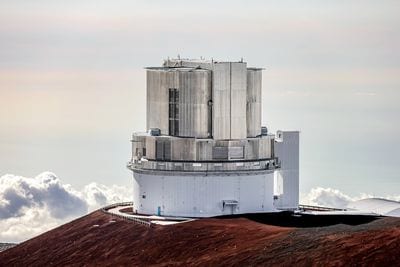
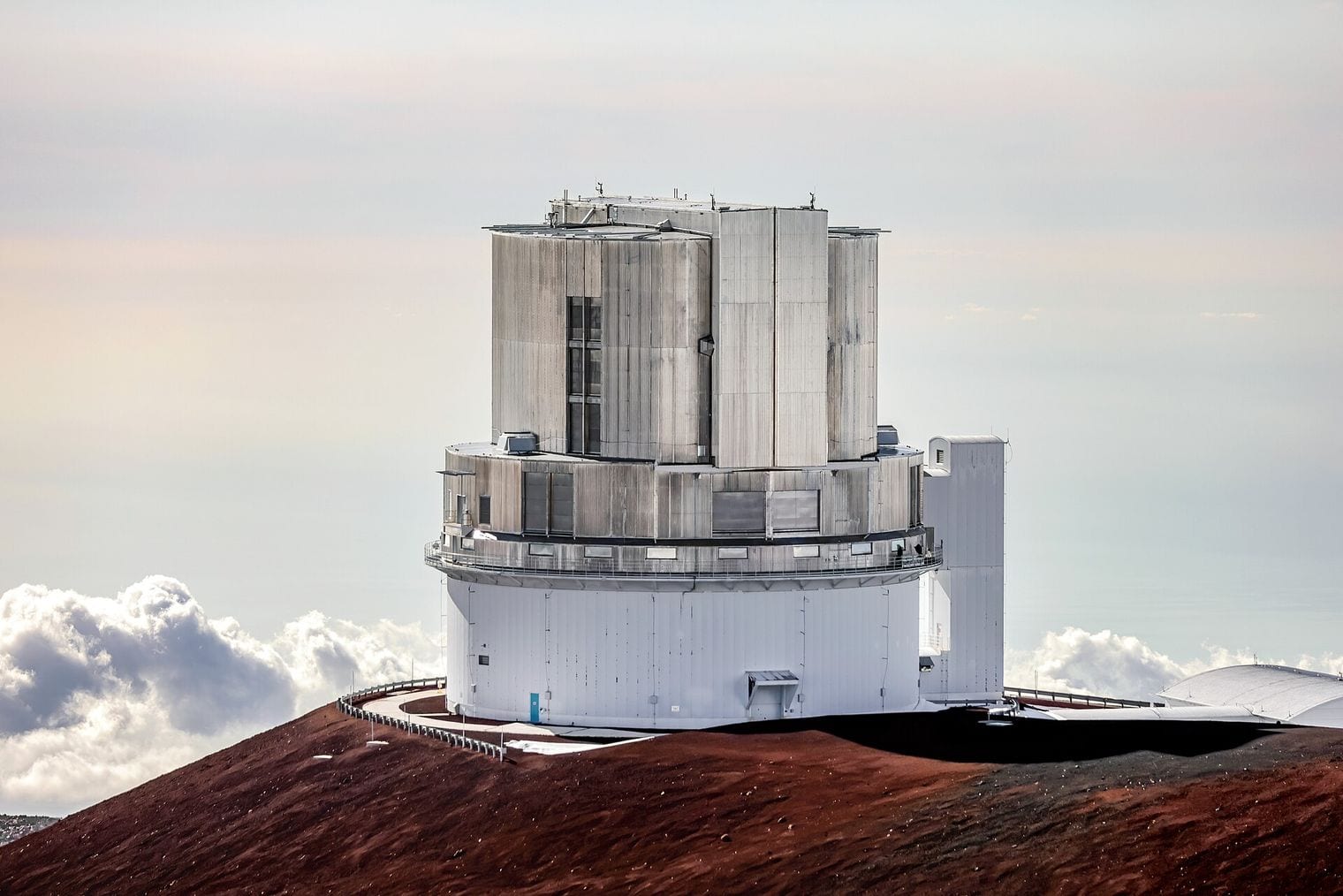
At 8.2 m, the Subaru Telescope shares its figure with each unit of the Very Large Telescope, and the two entries are co-ranked. Its primary mirror is a single piece of glass only 20 cm thick, and from Subaru's commissioning until the Large Binocular Telescope opened in 2005 it was the largest monolithic primary mirror in the world.
The telescope belongs to the National Astronomical Observatory of Japan and stands on Maunakea in Hawaii. It is named after the Pleiades star cluster, known in Japan as Subaru. The first science images were taken in January 1999, and Princess Sayako of Japan dedicated it that September. Its wide-field Hyper Suprime-Cam, installed in 2012, can photograph a large patch of sky in a single exposure.
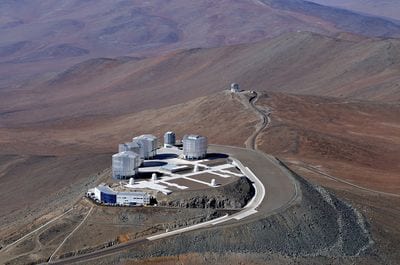
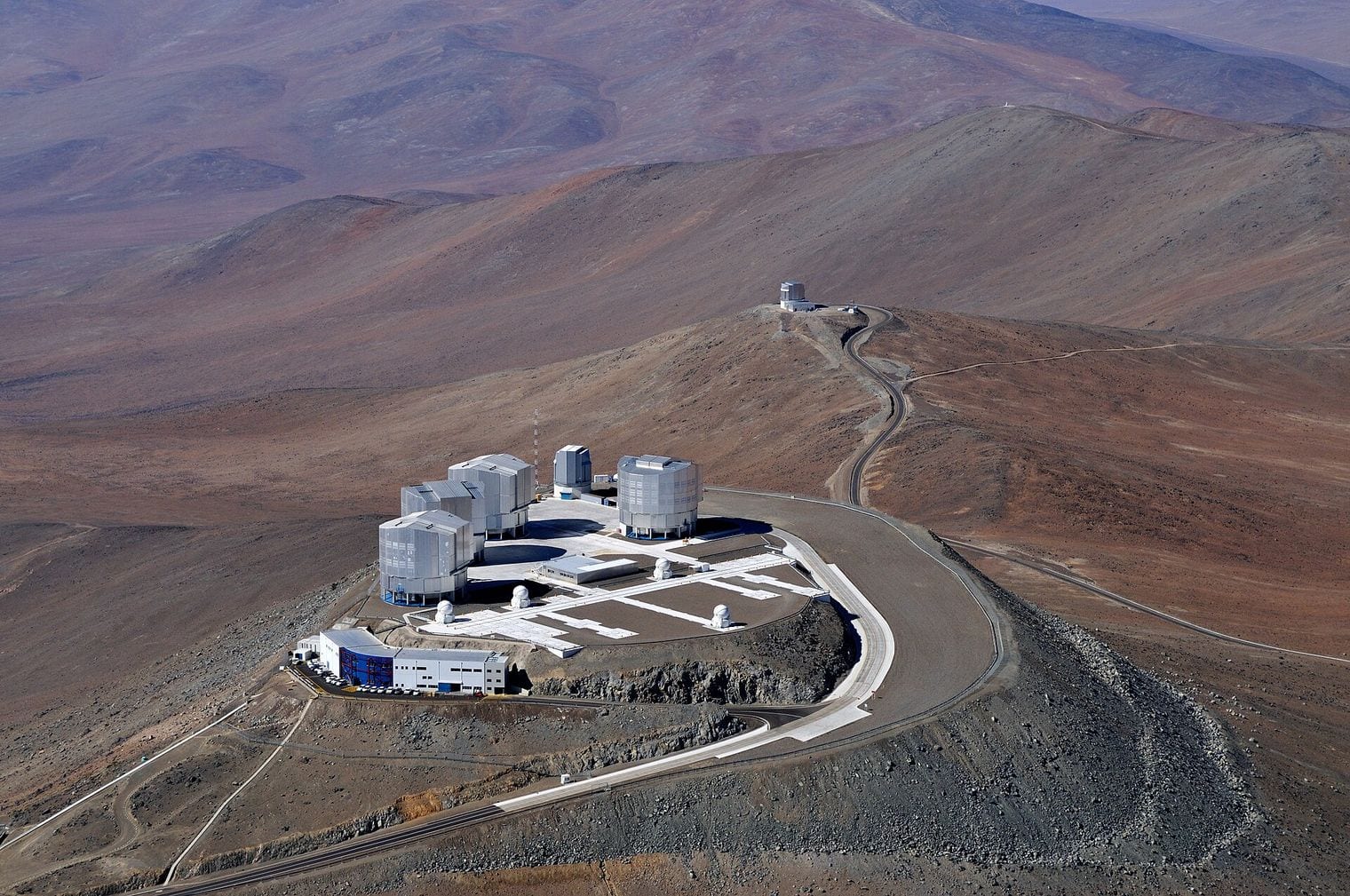
At 8.2 m, each of the four Unit Telescopes of the Very Large Telescope matches the Subaru Telescope, and the two entries are co-ranked; the four identical telescopes count once here. They are named Antu, Kueyen, Melipal and Yepun, words for objects in the sky in the Mapuche language, and they usually work separately but can be combined for very sharp images.
The European Southern Observatory runs the VLT on Cerro Paranal in Chile's Atacama Desert, where the first unit began operating in May 1998. Its pioneering results include the first direct image of an exoplanet and the tracking of stars orbiting the supermassive black hole at the centre of the Milky Way. ESO offers free guided daytime visits to Paranal at weekends, which must be booked ahead.
Get new guides like this by email
One email every Thursday with our newest guides for the places you tick.
At 8.1 m, Gemini North is co-ranked with its twin, Gemini South; the two near-identical telescopes stand on different continents, so each counts as its own entry. Its single mirror is a thin meniscus only 20 cm thick, and like its twin it carries a protected silver coating that helps it make high-quality observations in the infrared.
Officially the Gillett Gemini Telescope, it stands among the observatories on Maunakea, a long drive up from Hilo, and saw first light in 1999 before starting science in 2000. The International Gemini Observatory is a partnership in which the US National Science Foundation provides about 70% of the funding, alongside Canada, Chile, Brazil, Argentina and South Korea.
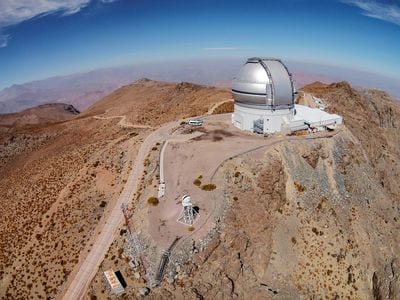
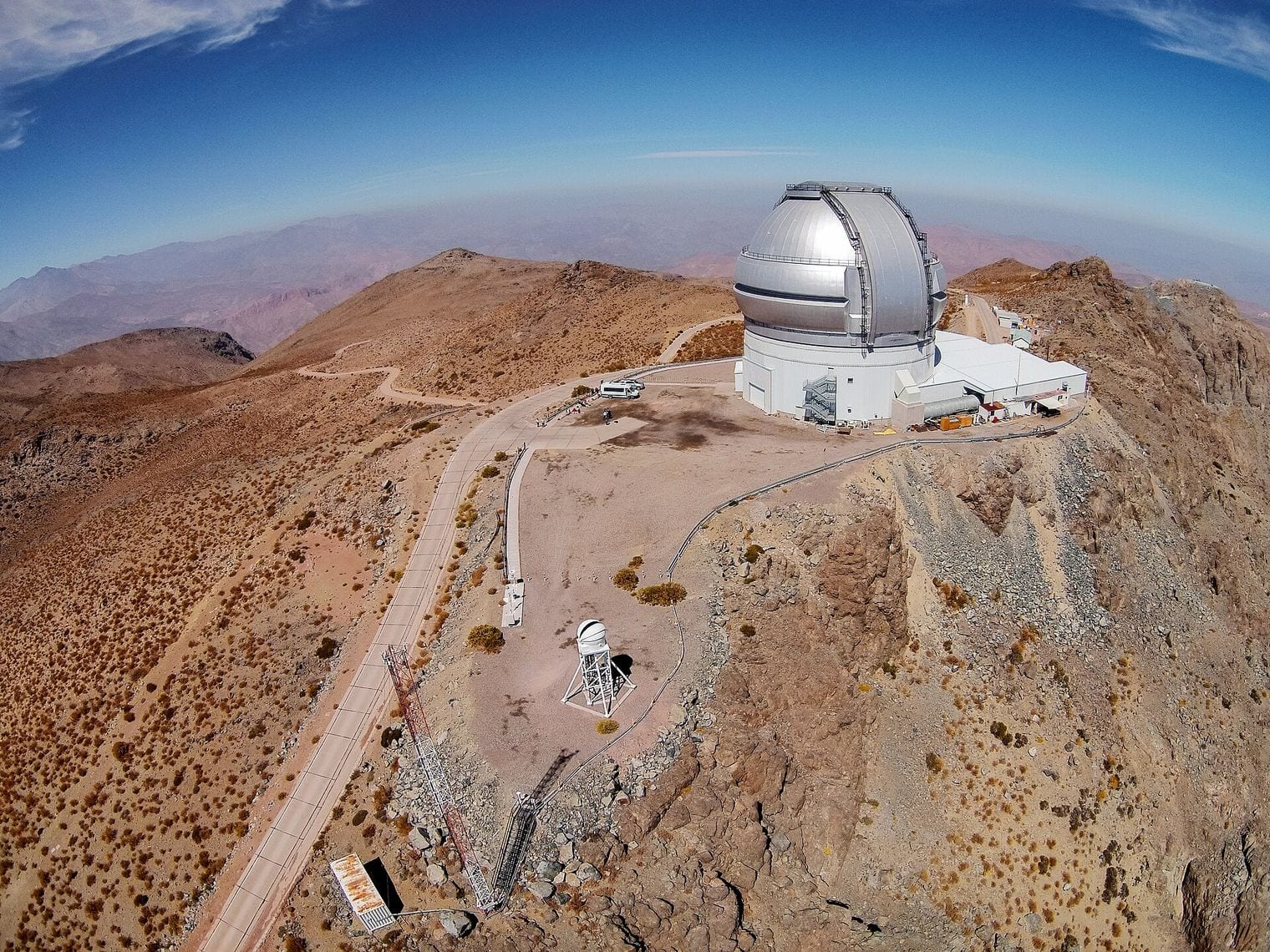
At 8.1 m, Gemini South is co-ranked with Gemini North; the twins were built to cover the northern and southern skies between them, which is why they count as two entries rather than one. It stands at over 2,700 m on Cerro Pachón in the Chilean Andes.
Gemini South, also known as Zorro, saw first light in 2000. It shares Cerro Pachón with the Vera C. Rubin Observatory and the Southern Astrophysical Research Telescope, and its silver-coated mirror gives it the same strength in the mid-infrared as its northern twin. Astronomers from the partner countries share time on both Gemini telescopes, so a team can study targets in either hemisphere.
1010. MMT Observatory
Fred Lawrence Whipple Observatory, Arizona, United States
At 6.5 m, the single honeycomb mirror of the MMT Observatory's telescope matches each of the twin Magellan Telescopes, and the two entries are co-ranked. The mirror, made at the University of Arizona's Steward Observatory Mirror Laboratory, replaced the six smaller mirrors that gave the Multiple Mirror Telescope its name.
From 1979 to 1998 the telescope worked with six 1.8 m mirrors, together equal to a 4.5 m telescope, which made it the third-largest optical telescope in the world when it was dedicated; the upgrade to one mirror ran from 1998 to 2000.
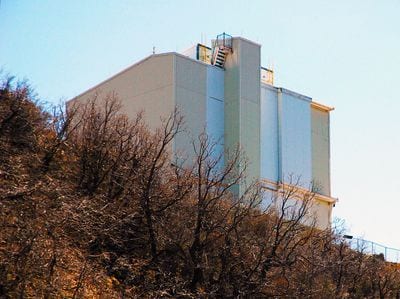
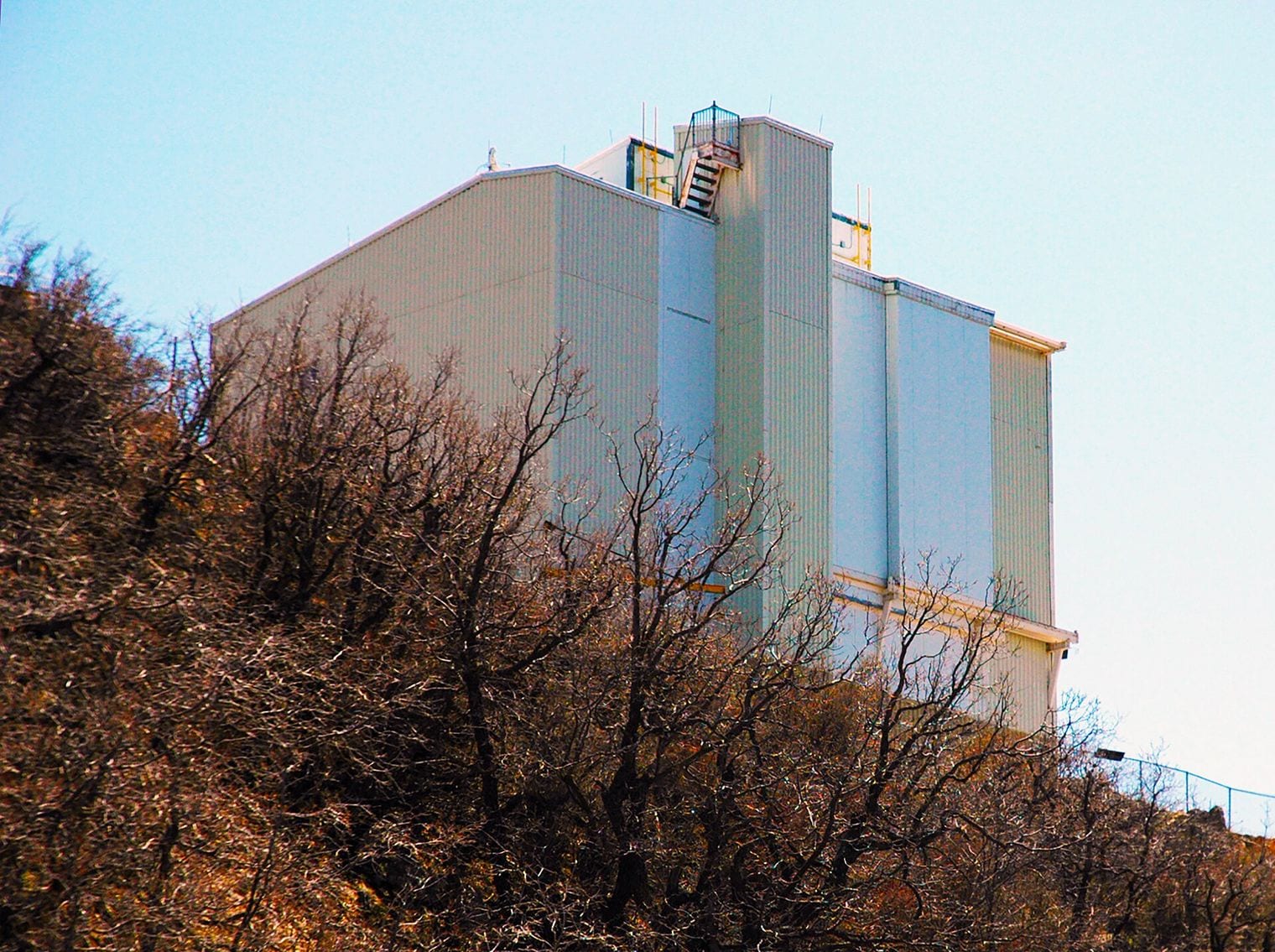
It sits on Mount Hopkins in the Santa Rita Mountains, about 55 km south of Tucson, at the Fred Lawrence Whipple Observatory, in a building whose walls and roof roll back so the telescope cools quickly. Public summit tours to the MMT have been paused while a new tour is developed.
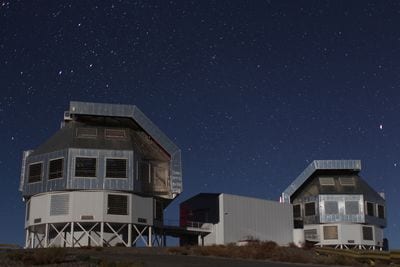
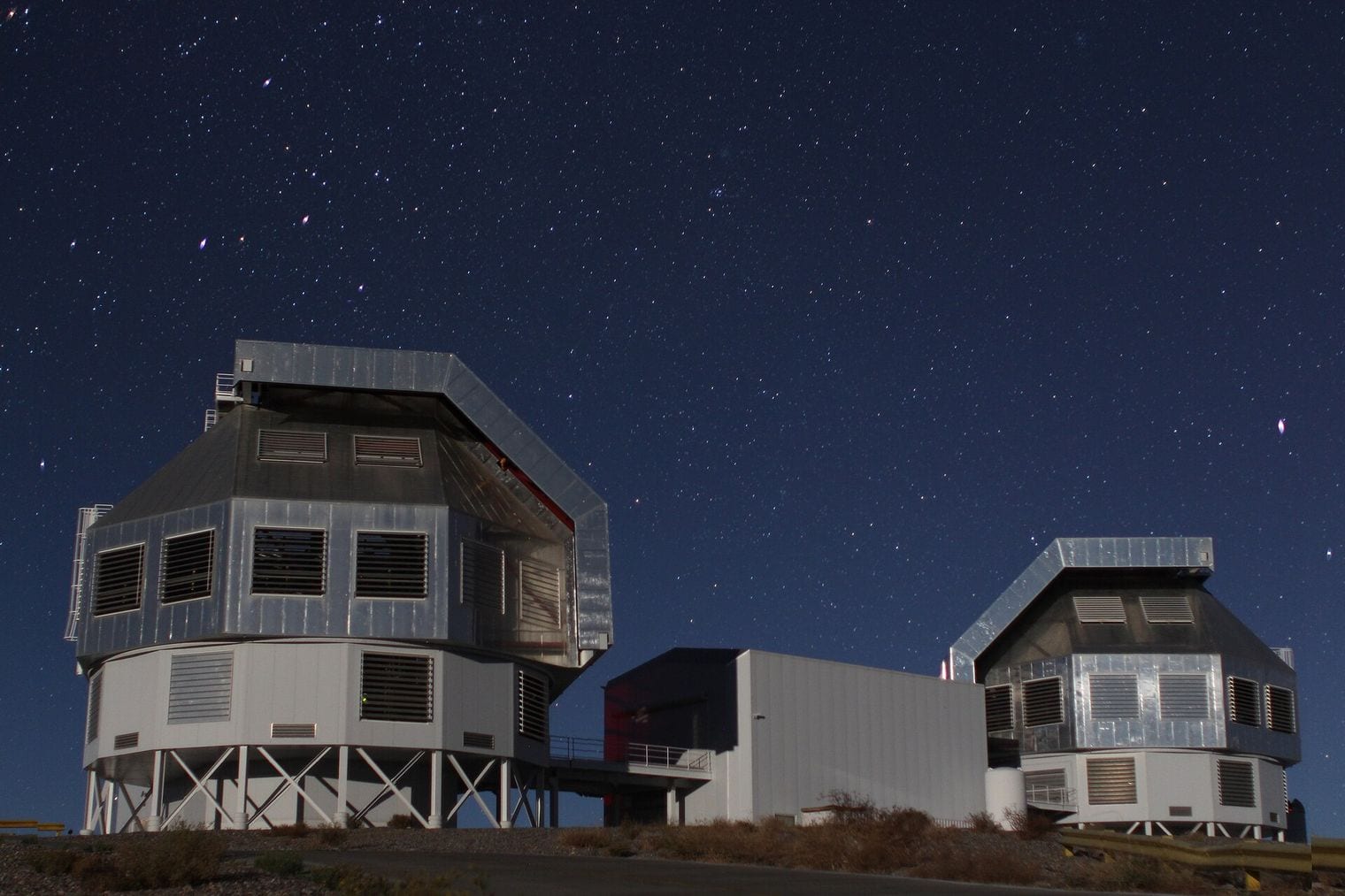
At 6.5 m, each of the twin Magellan Telescopes matches the MMT, and the two entries are co-ranked; the identical pair counts once here. The Walter Baade Telescope saw first light on 15 September 2000, and the Landon T. Clay Telescope followed on 7 September 2002.
The telescopes stand at Las Campanas Observatory in Chile's Atacama Region. They are named after the astronomer Walter Baade and the philanthropist Landon T. Clay and, as a pair, after the 16th-century Portuguese explorer Ferdinand Magellan. A consortium of the Carnegie Institution for Science, the University of Arizona, Harvard University, the University of Michigan and MIT built and runs them, and Las Campanas is also the site chosen for the much larger Giant Magellan Telescope.
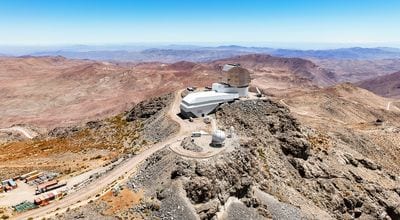
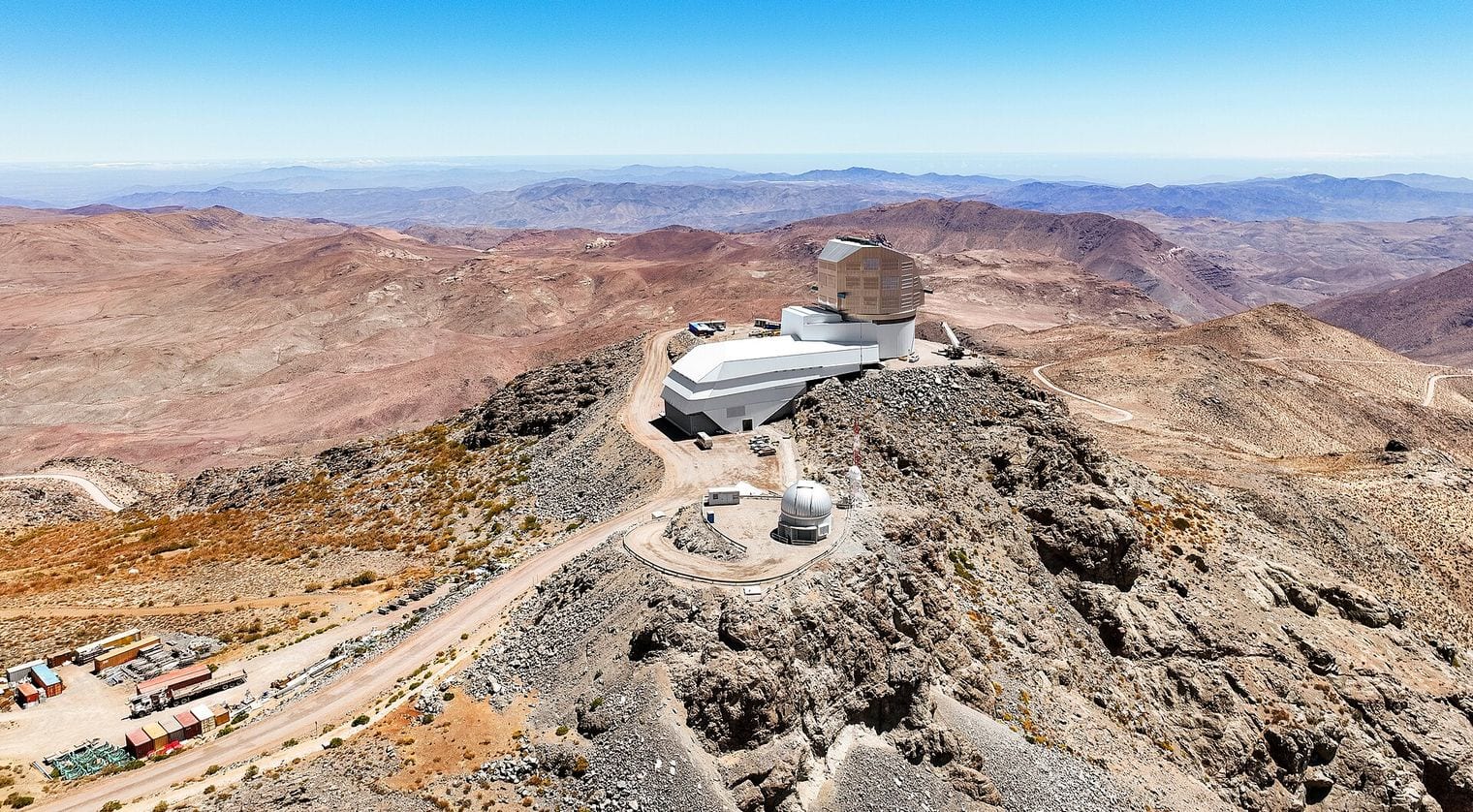
At 6.4 m effective aperture, the Vera C. Rubin Observatory's Simonyi Survey Telescope is ranked on the light it actually uses, not on its 8.4 m primary mirror; the observatory itself quotes a mean effective aperture of 6.49 m. It is a wide-field survey telescope, built to photograph huge swathes of sky rather than to stare at one target.
Its 3.2-gigapixel camera is the largest camera yet built, and the telescope takes an image every 40 seconds to scan the whole southern sky every few nights for the ten-year Legacy Survey of Space and Time.
The first images were released in June 2025. Named after the American astronomer Vera Rubin, who pioneered work on how galaxies rotate, the observatory stands at 2,682 m on the El Peñón peak of Cerro Pachón, with its base in La Serena about 100 km away by road.
1313. BTA-6
Special Astrophysical Observatory, Karachay-Cherkessia, Russia
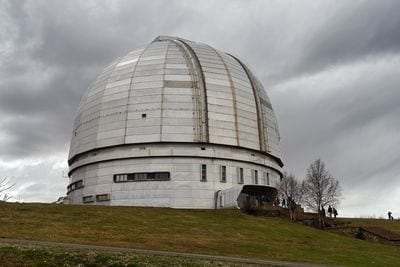
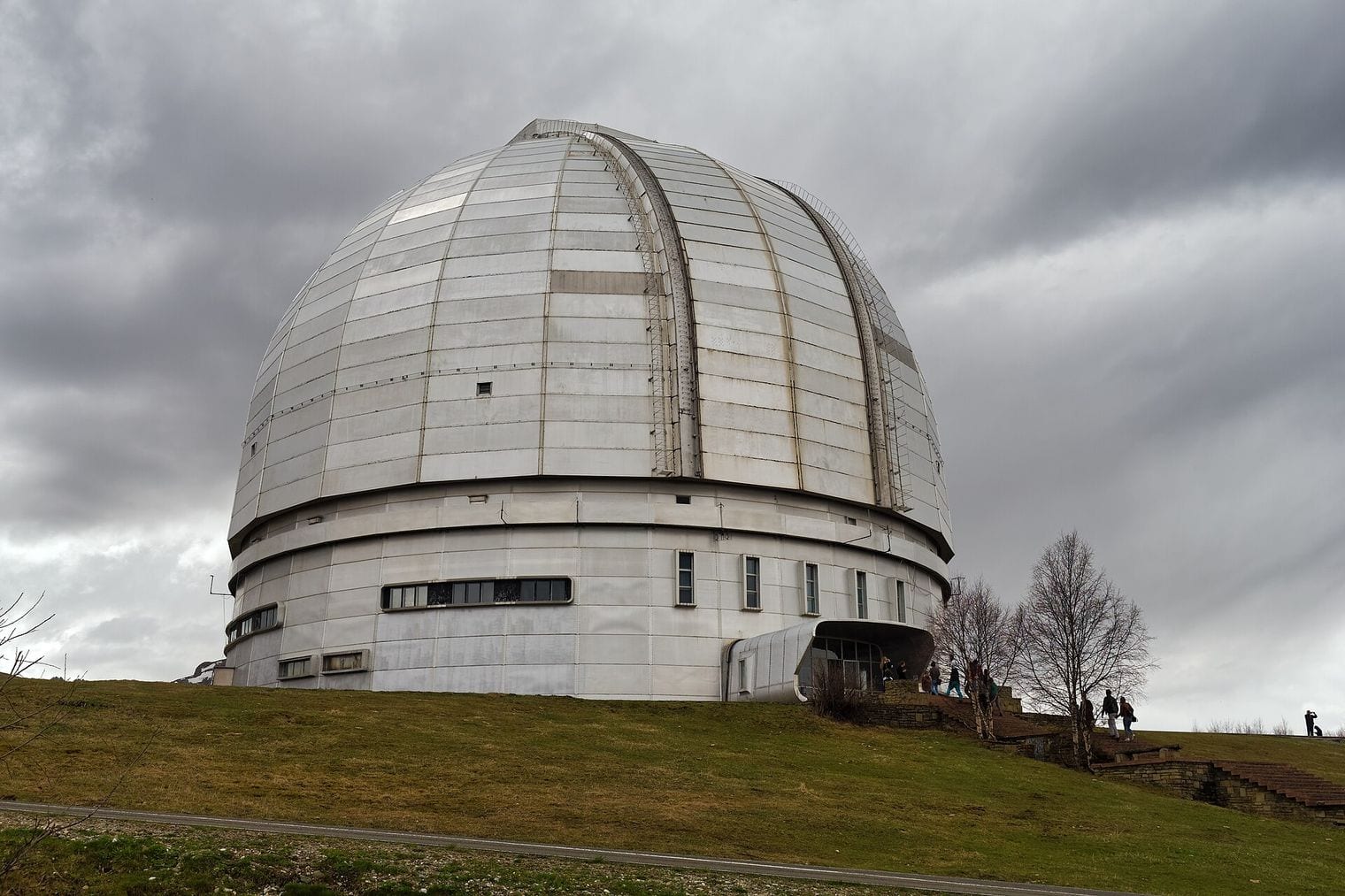
At 6 m, the BTA-6, or Large Altazimuth Telescope, is the largest optical telescope in Eurasia, according to its operator, Russia's Special Astrophysical Observatory. When it saw first light in late 1975 it was the largest telescope in the world, a title it held until the first Keck telescope in Hawaii overtook it.
The Soviet-era telescope pioneered the altazimuth mount with a computer-controlled derotator, now standard on large telescopes. Its solid mirror is close to the largest that can be tilted without serious distortion, and the telescope has long struggled with thermal problems in a dome much bigger than it needs.
It stands at about 2,070 m in the Zelenchuksky District of Karachay-Cherkessia, on the north side of the Caucasus Mountains near the village of Nizhny Arkhyz, and the observatory's other landmark is the RATAN-600 radio telescope.
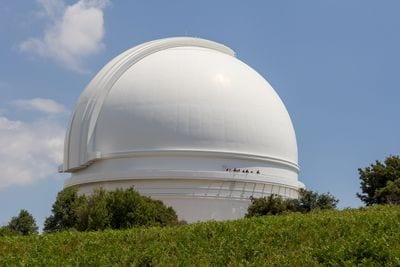
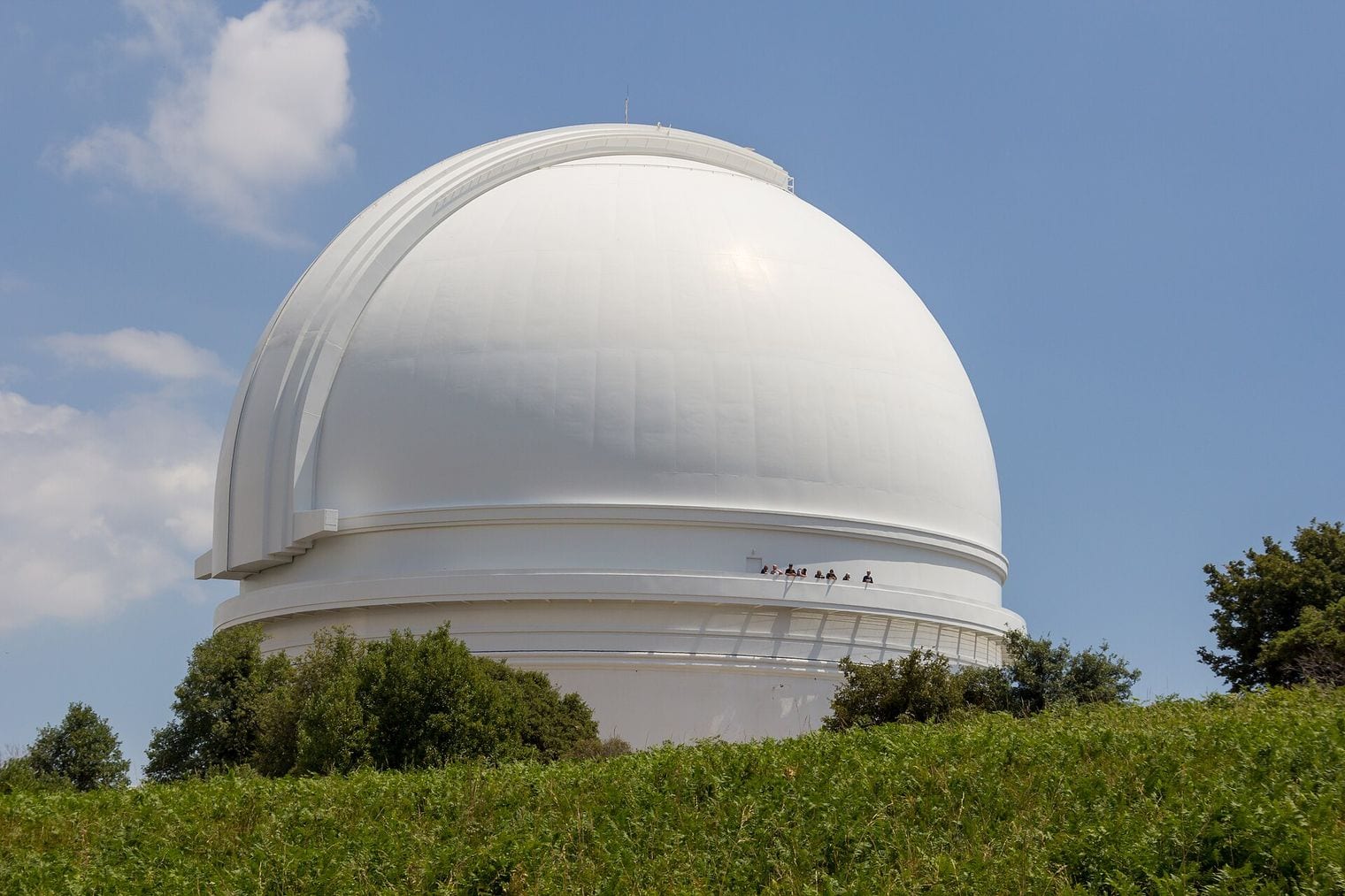
At 5.08 m, the 200-inch Hale Telescope at Palomar Observatory was the largest telescope in the world for more than a quarter of a century, and it is still in active use. Its aluminium-coated honeycomb mirror of low-expansion Pyrex was double the diameter of the next-largest telescope when the Hale was completed in 1949.
It is named after the astronomer George Ellery Hale, who secured Rockefeller Foundation funding in 1928 and planned the observatory but did not live to see the telescope finished. It held the world title until the Soviet BTA-6 came online in the mid-1970s.
Palomar Observatory is in the mountains of San Diego County, where visitors can look straight onto the telescope from a gallery inside the dome, see the museum in the Greenway Visitor Center and join guided tours onto the observing floor.
1515. Lowell Discovery Telescope
Lowell Observatory, Happy Jack, Arizona, United States
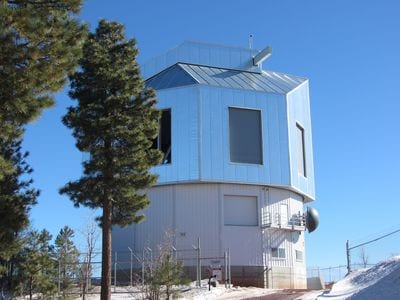
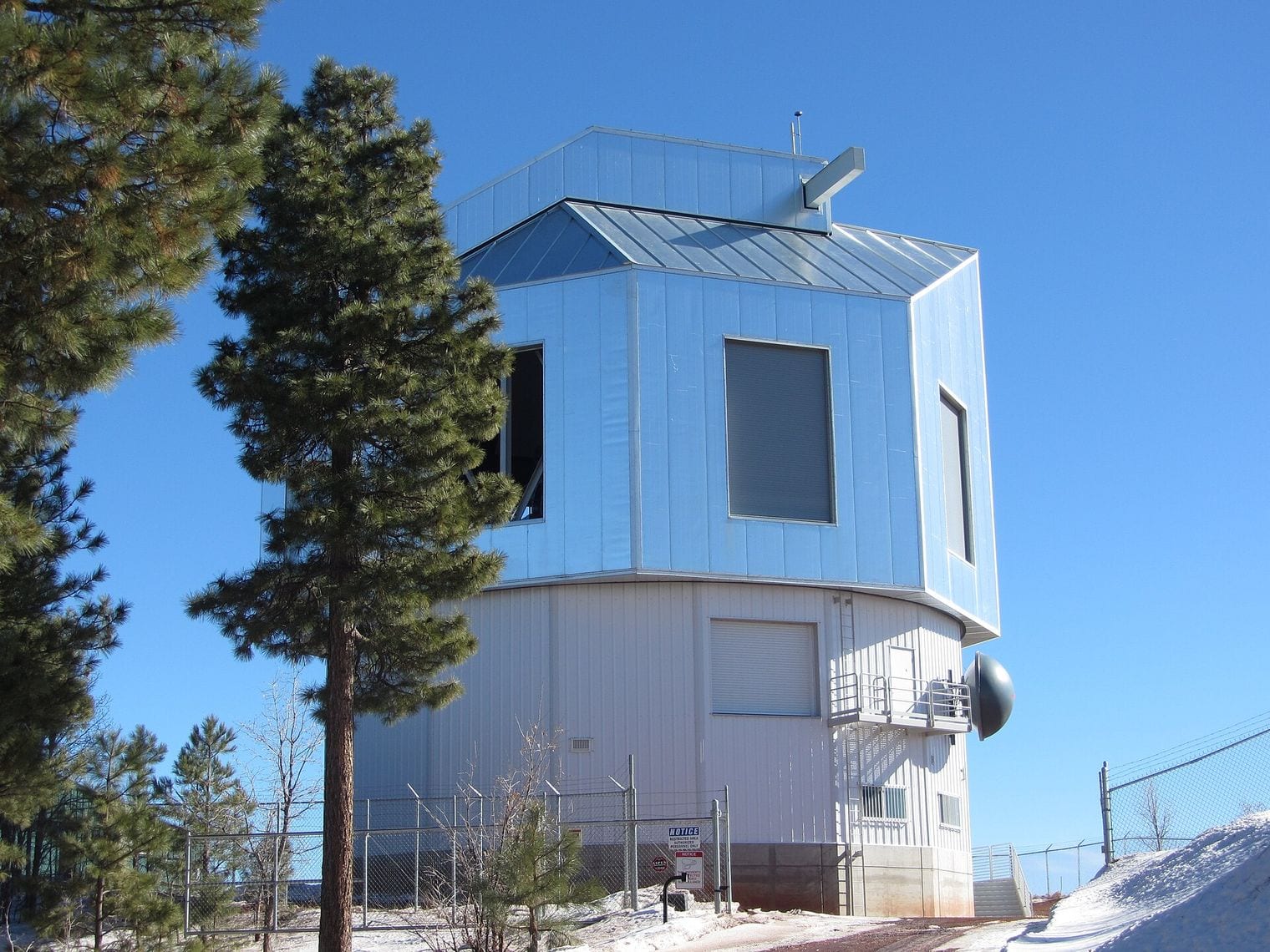
At 4.3 m, the Lowell Discovery Telescope's primary mirror rounds out the list. Built by Lowell Observatory in a partnership with Discovery Communications, it was originally named the Discovery Channel Telescope, and it took its first images in April 2012.
The telescope stands at about 2,360 m at a dark-sky site in the Coconino National Forest near Happy Jack, Arizona, some 65 km south-south-east of Flagstaff. Its home institution is famous for one discovery above all: Clyde Tombaugh found Pluto at Lowell Observatory in 1930. Lowell runs seasonal guided excursions from its Mars Hill campus in Flagstaff out to the telescope.
FAQ: The World's Largest Telescopes
What is the largest telescope in the world?
By effective aperture it is the Large Binocular Telescope on Mount Graham, Arizona, whose two 8.4 m mirrors on one mount gather as much light as a single 11.9 m mirror. The Gran Telescopio Canarias on La Palma has the largest single mirror, at 10.4 m, and the Hobby–Eberly Telescope and the twin Keck telescopes tie at 10 m.
Why isn't the Extremely Large Telescope on the list?
Because it is not finished. The Extremely Large Telescope, with a 39 m segmented mirror, is under construction on Cerro Armazones in Chile, with first light planned for the end of the decade. The Giant Magellan Telescope at Las Campanas is also being built, and work on the Thirty Meter Telescope on Maunakea has been stalled for years. Each will enter the list once it starts observing.
What about the James Webb Space Telescope and giant radio dishes?
They are different kinds of telescope. The James Webb Space Telescope has a 6.5 m mirror but orbits far from Earth, and this list covers telescopes on the ground. China's FAST is a 500 m radio dish, not an optical telescope, and arrays such as the VLTI and CHARA are measured by the distance between their telescopes rather than by mirror size, so they are not ranked either.
How is a telescope's size measured on this list?
Each telescope is ranked on its effective aperture, the diameter of one circular mirror with the same light-collecting area. That is why the 11 m mirrors of the Hobby–Eberly and Southern African Large telescopes count at 10 m and 9.2 m, and Rubin's 8.4 m mirror at 6.4 m. Identical telescopes at one site count once, and telescopes with equal figures are co-ranked.
Which of the largest telescopes can you visit?
Several welcome visitors. Palomar Observatory has a gallery inside the Hale Telescope's dome, ESO runs free weekend visits to the Very Large Telescope at Paranal, and guided tours reach the Hobby–Eberly Telescope at McDonald Observatory, SALT at Sutherland, the Gran Telescopio Canarias on La Palma and, in the warmer months, the Large Binocular Telescope. More record-breaking countdowns are on our world record breakers page.
Sources & updates
How this ranking was checked
Checked before launch
Sources cited
15
Publishers
14
Every figure in this ranking was checked against the record-keeper or official source behind it before publication, and the top of the ranking re-checked live so a newer record would not be missed.
One email every Thursday with our newest guides for the places you tick.
Newsletter
Stay updated with new World Record Breakers
One email every Thursday with our newest guides for the places you tick.
We use cookies to analyse site traffic and improve your experience.
You can accept or reject analytics cookies. See our
May we use analytics cookies? See ourCookie Policy.