We may earn a commission if you book tickets, tours or a stay through a link on
this page, at no extra cost to you. It never affects which places we list or how
we rank them (how we make money).
The record
162.6 ha401.8 acres
Angkor Wat
Cambodia
The record
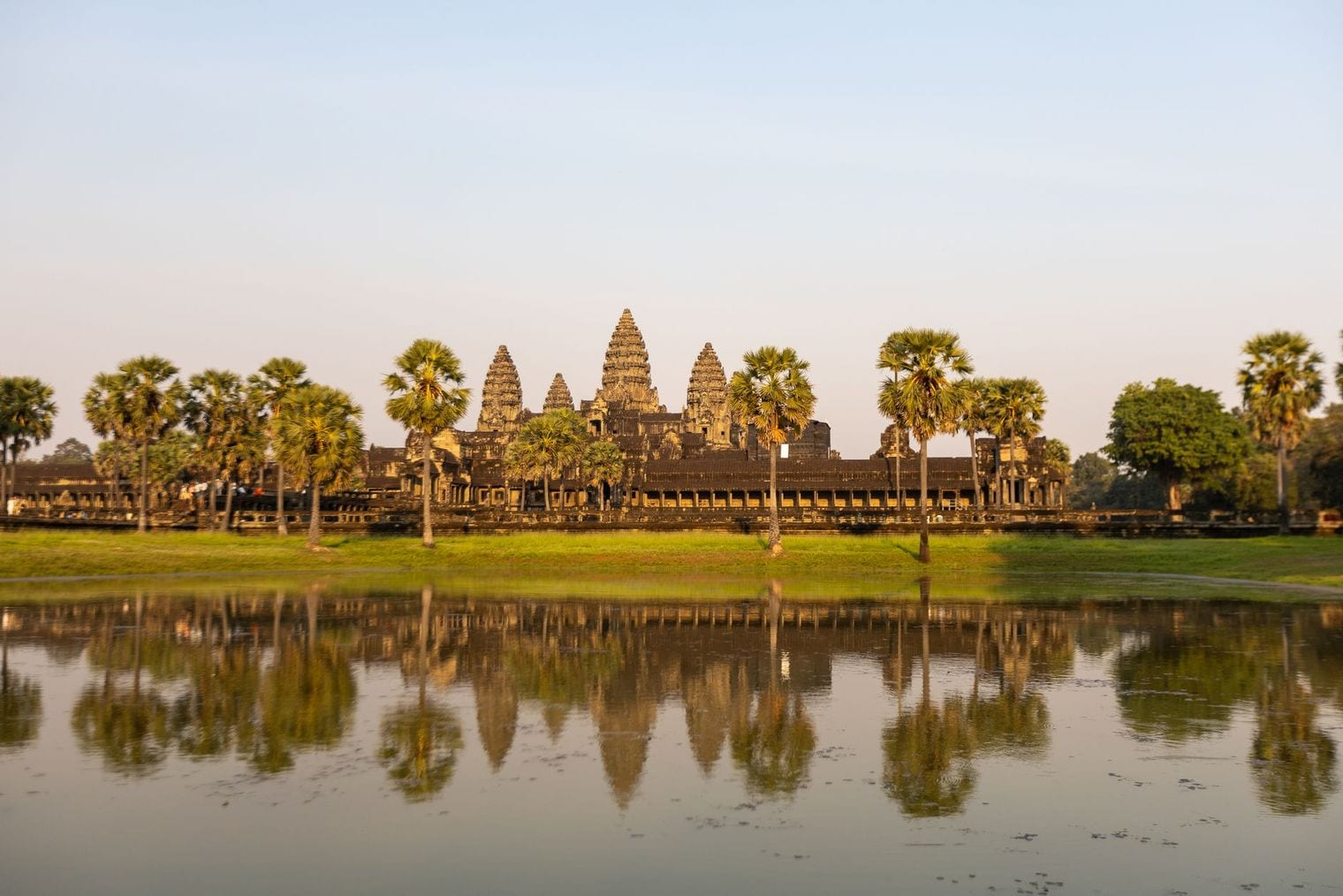
The largest temple in the world is Angkor Wat, in Cambodia — 162.6 ha (401.8 acres), enclosure area.
Source: Wikipedia site_area / Guinness World Records. Verified .
Ask which temple is the largest and you get a dozen answers, because almost nobody agrees where a temple stops. This countdown measures one thing: the ground inside a single temple's own outer boundary — the wall, moat or inscribed precinct its builders drew — from Angkor Wat's 162.6-hectare moated island down to a 14.5-acre Tamil compound at fifteen.
Every entry is standing and open to visitors today, whether it still takes worshippers like Srirangam or is kept as a monument like Medinet Habu. Those two rules cost the list some famous names.
Beijing's Temple of Heaven is larger than everything here, but its 267 hectares are published as a park's area rather than a temple's. The Akshardham campuses in Delhi and New Jersey, Nepal's 246-hectare Pashupatinath district and Thailand's Wat Phra Dhammakaya are grounds around temples rather than temples, and none of them qualify.
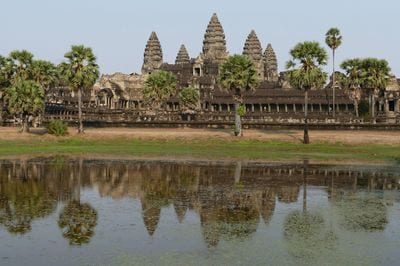
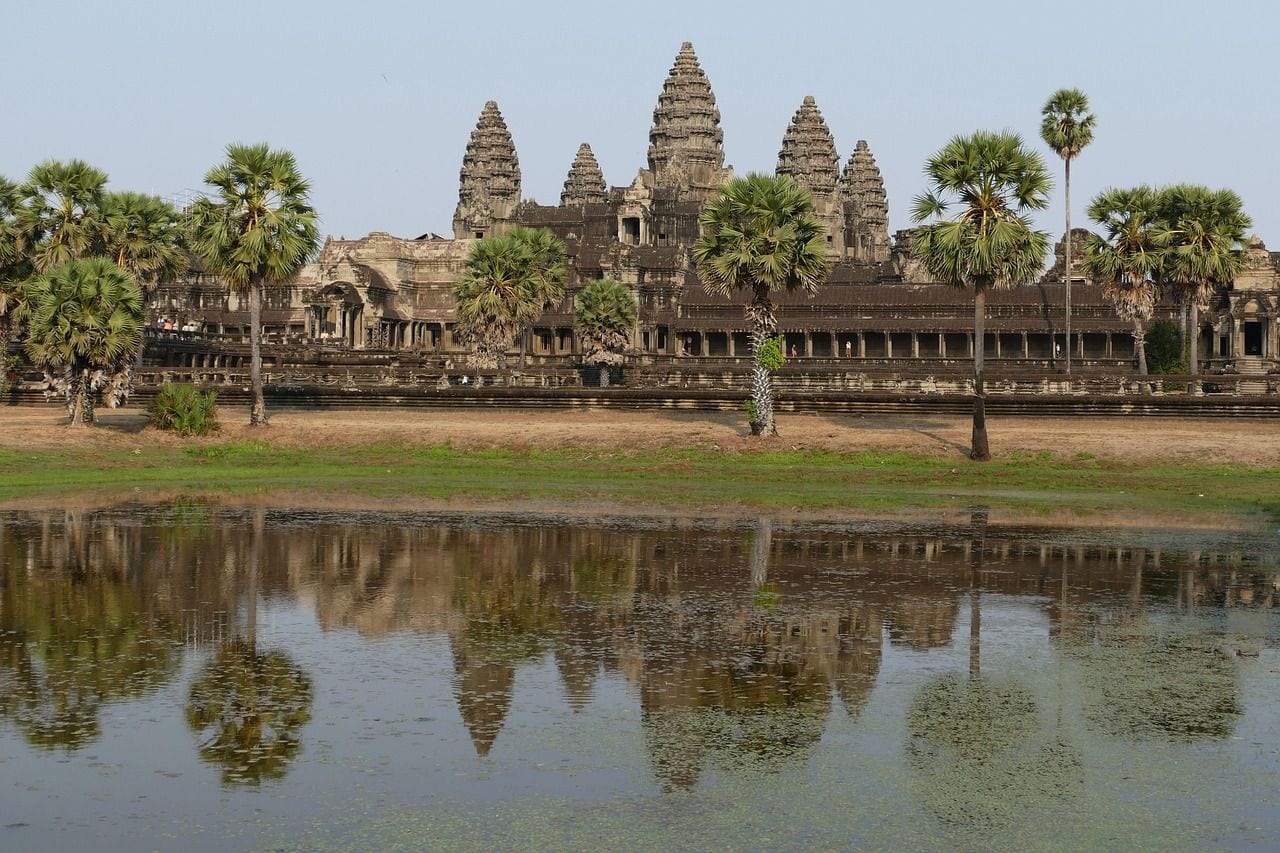
Angkor Wat is mostly water and open ground — its moat is 190 metres across and runs more than five kilometres around the precinct, so the famous five towers occupy a small fraction of the 162.6 hectares the record is measured on.
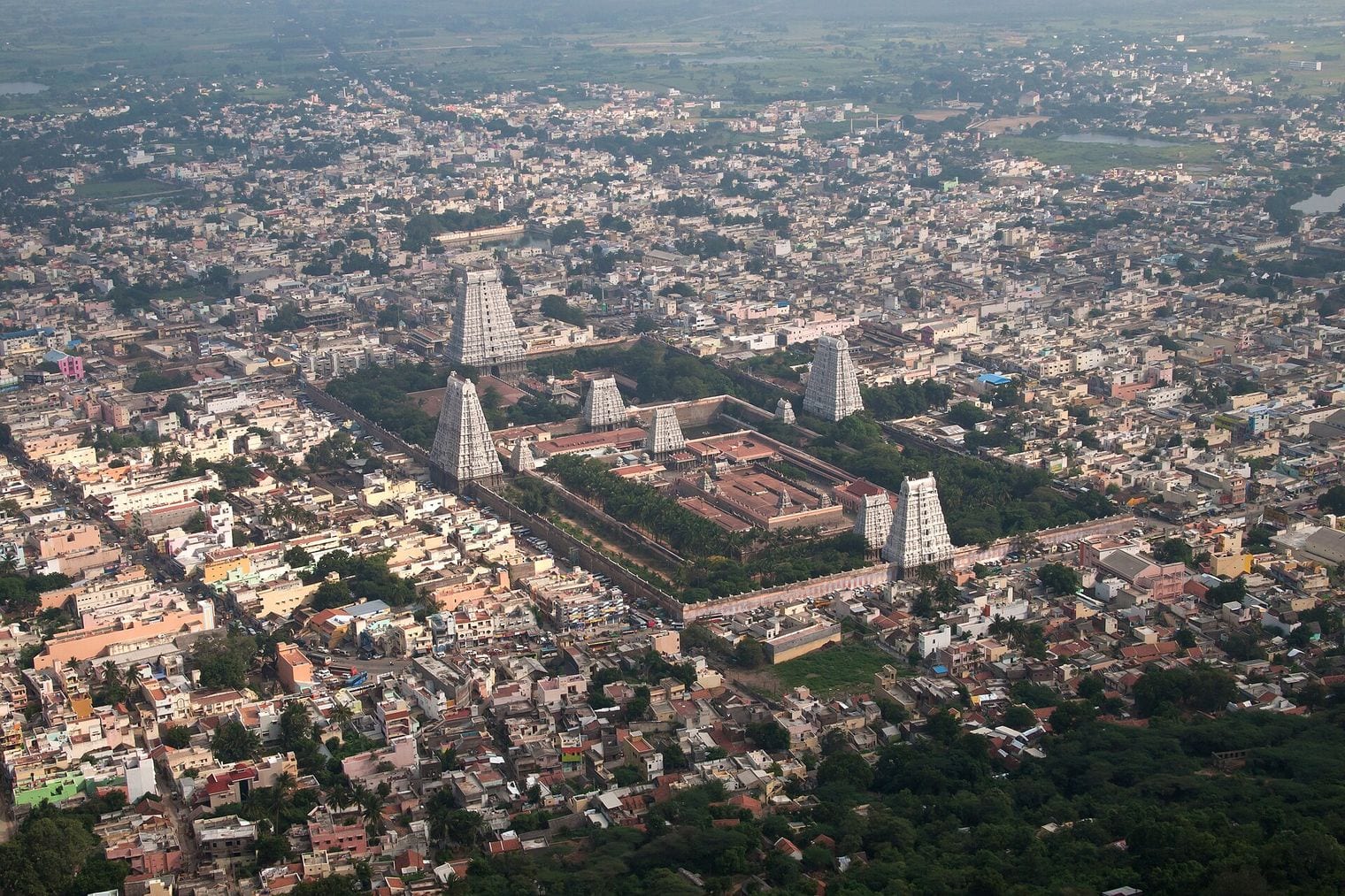
Srirangam has over six miles of wall — the seven concentric prakarams of the Sri Ranganathaswamy Temple total 9,934 metres between them, and the outer rings hold ordinary streets, shops and houses.
Karnak took the best part of two thousand years — successive dynasties kept adding to the complex from around 2112 BCE down to roughly 204 BCE, which is why it reads as four walled precincts rather than one design.
Chidambaram's walls are a dance textbook — the carvings at the Thillai Nataraja Temple set out all 108 karanas of the Natya Shastra, the postures that underpin Bharatanatyam.
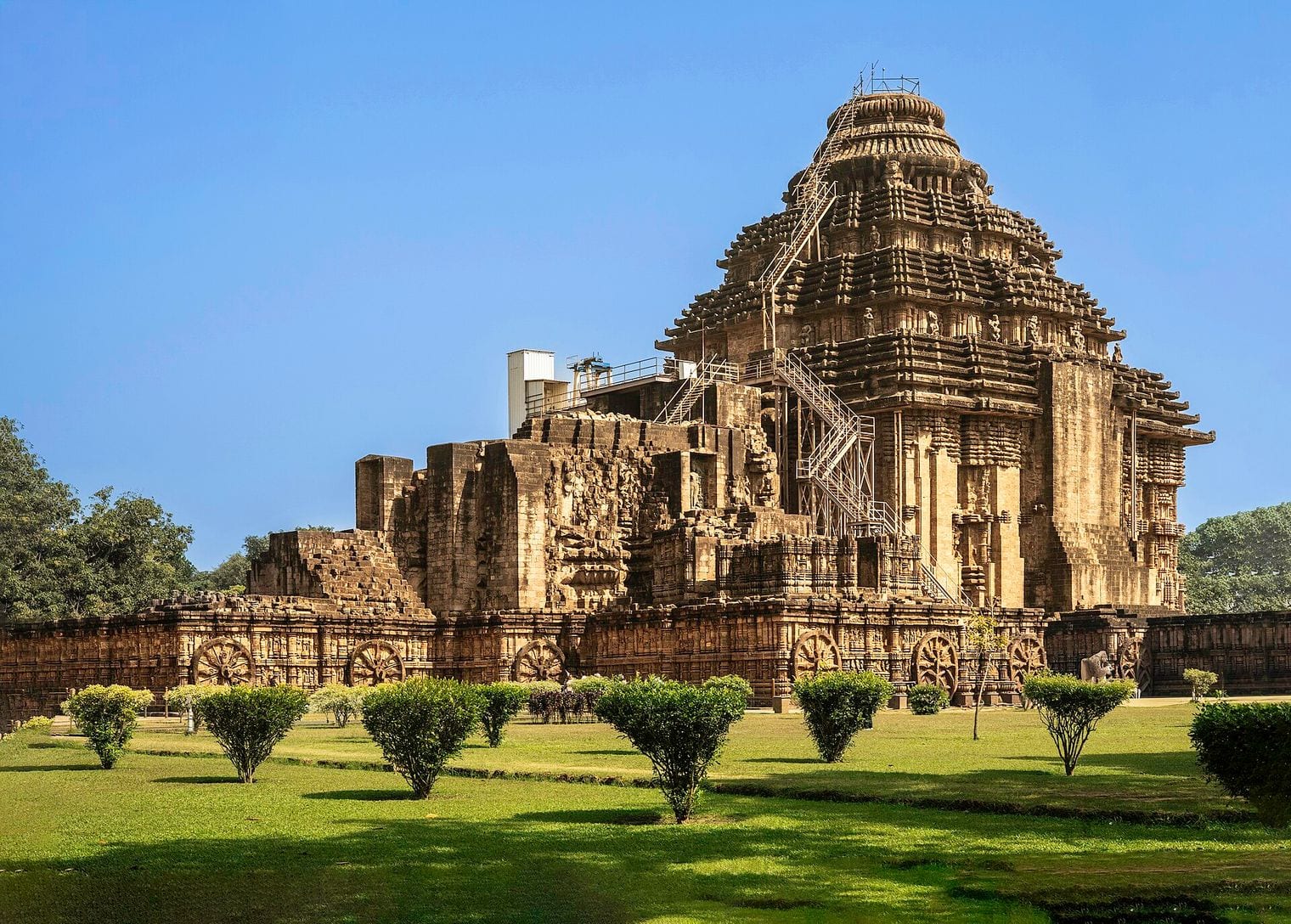
Konark is a chariot, not a tower — what survives of the Konark Sun Temple is carved as the vehicle of Surya, with immense stone wheels ranged along its plinth and horses straining at the front.
The smallest entry here is the loudest — the mani mandapam at Nellaiappar Temple holds two pillars each carved from a single stone, each carrying 48 sub-pillars that sound musical notes when struck.
At 162.6 hectares, Angkor Wat is not merely the largest temple in the world but the largest religious structure of any kind, a distinction Guinness World Records recognises outright. A rectangular moat 190 metres across and more than five kilometres around seals the precinct off from the surrounding forest, and inside it a laterite wall of 1,024 by 802 metres encloses the causeway, the libraries and the five-towered temple mountain that became Cambodia's national emblem.
Suryavarman II raised it in the first half of the 12th century as a Hindu temple to Vishnu, and it passed into Buddhist use rather than being left to the forest, which is much of why it survived so well. UNESCO inscribed it in 1992. Arrive before dawn and the towers resolve out of the dark above the western reflecting pool, but the bas-relief galleries running around the third enclosure repay the walk far more than the sunrise crowd suggests.
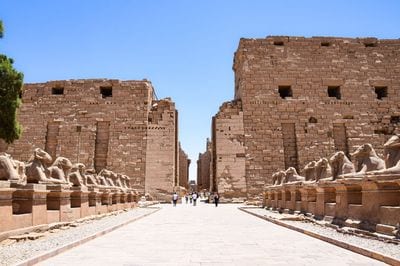
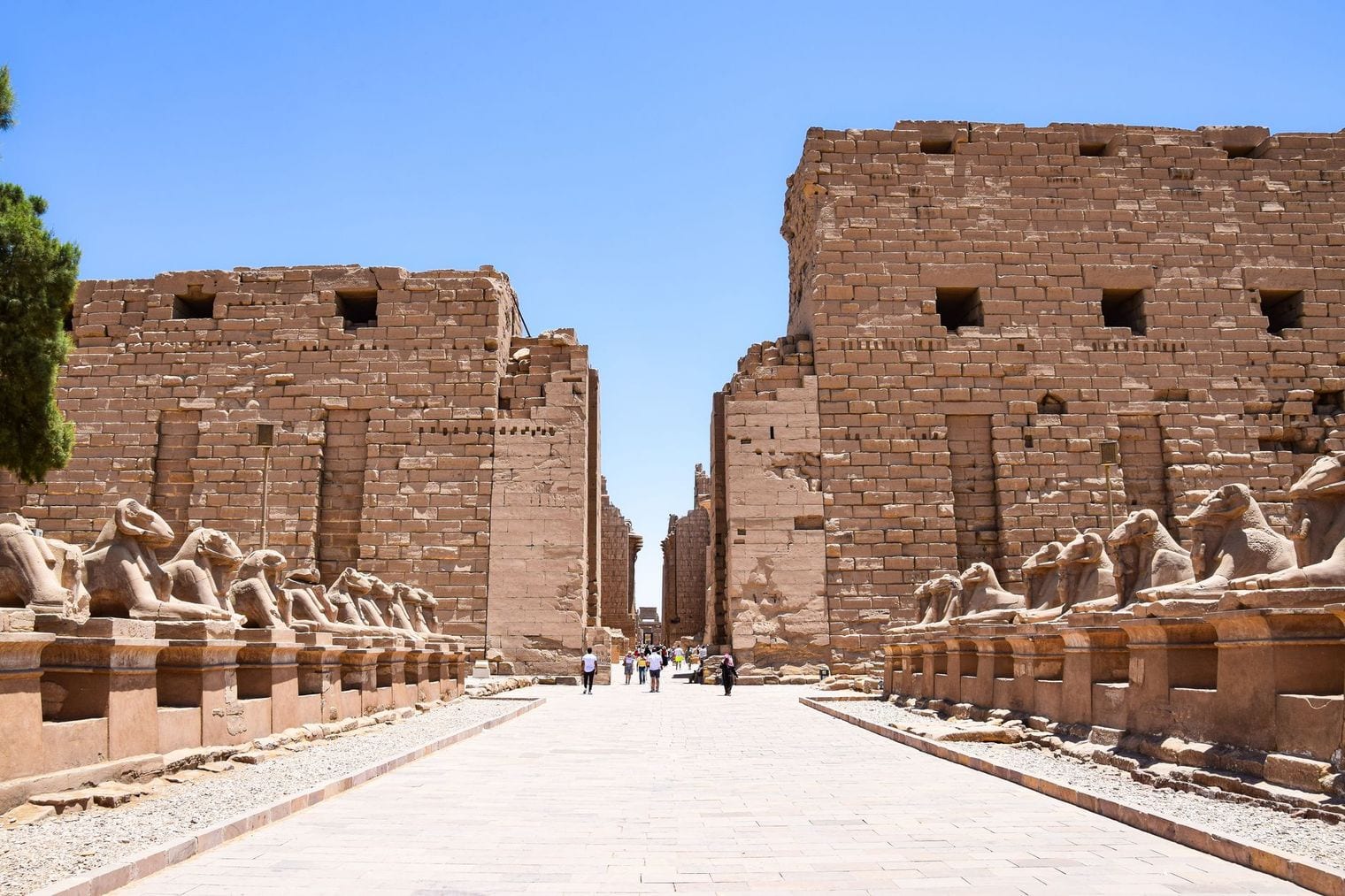
The Karnak Temple Complex covers 250 acres, the figure Guinness World Records certifies as the largest ancient Egyptian temple site. It is really four walled precincts rather than one building, and successive dynasties kept adding to it for close to two thousand years — from around 2112 BCE down to roughly 204 BCE — each ruler raising pylons, obelisks and courts in front of whatever stood there before.
Only the Precinct of Amun-Re admits visitors, but at some 62 acres it is much the largest of the four and holds everything most people come for: the Great Hypostyle Hall, whose fallen roof was once carried on 134 columns in sixteen rows, the sacred lake, and the avenue of ram-headed sphinxes. Karnak is the second-most-visited historical site in Egypt after the Giza pyramids, and it rewards a slow circuit rather than a march down the axis.
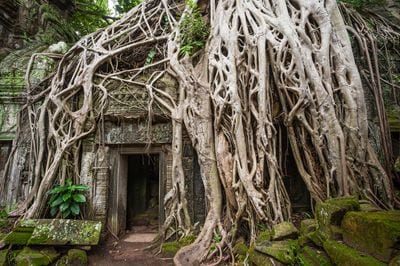
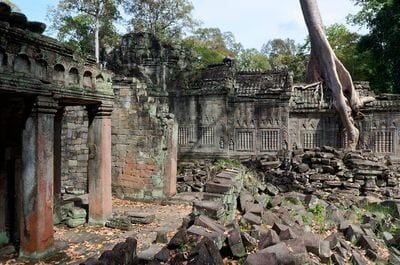
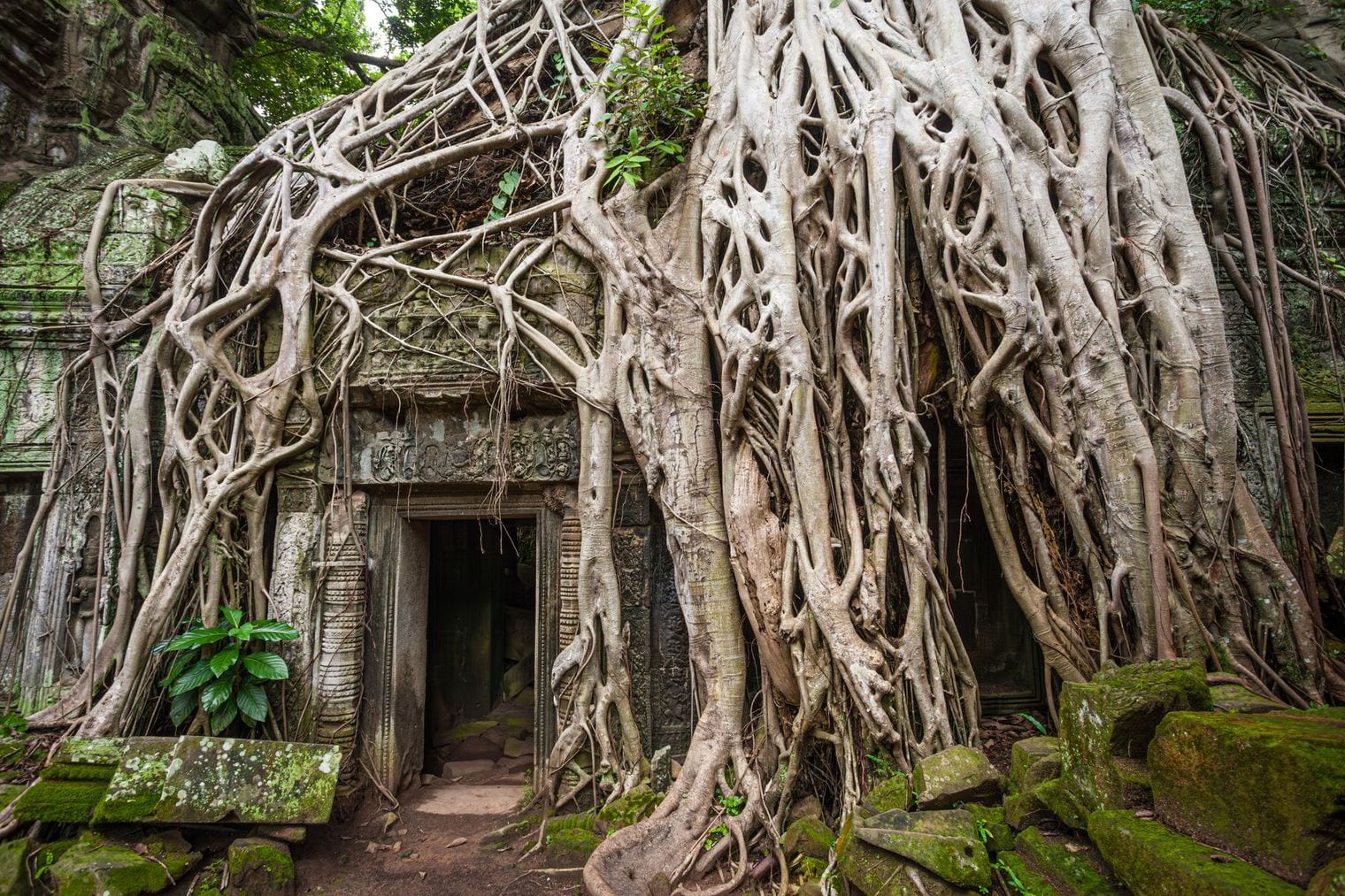
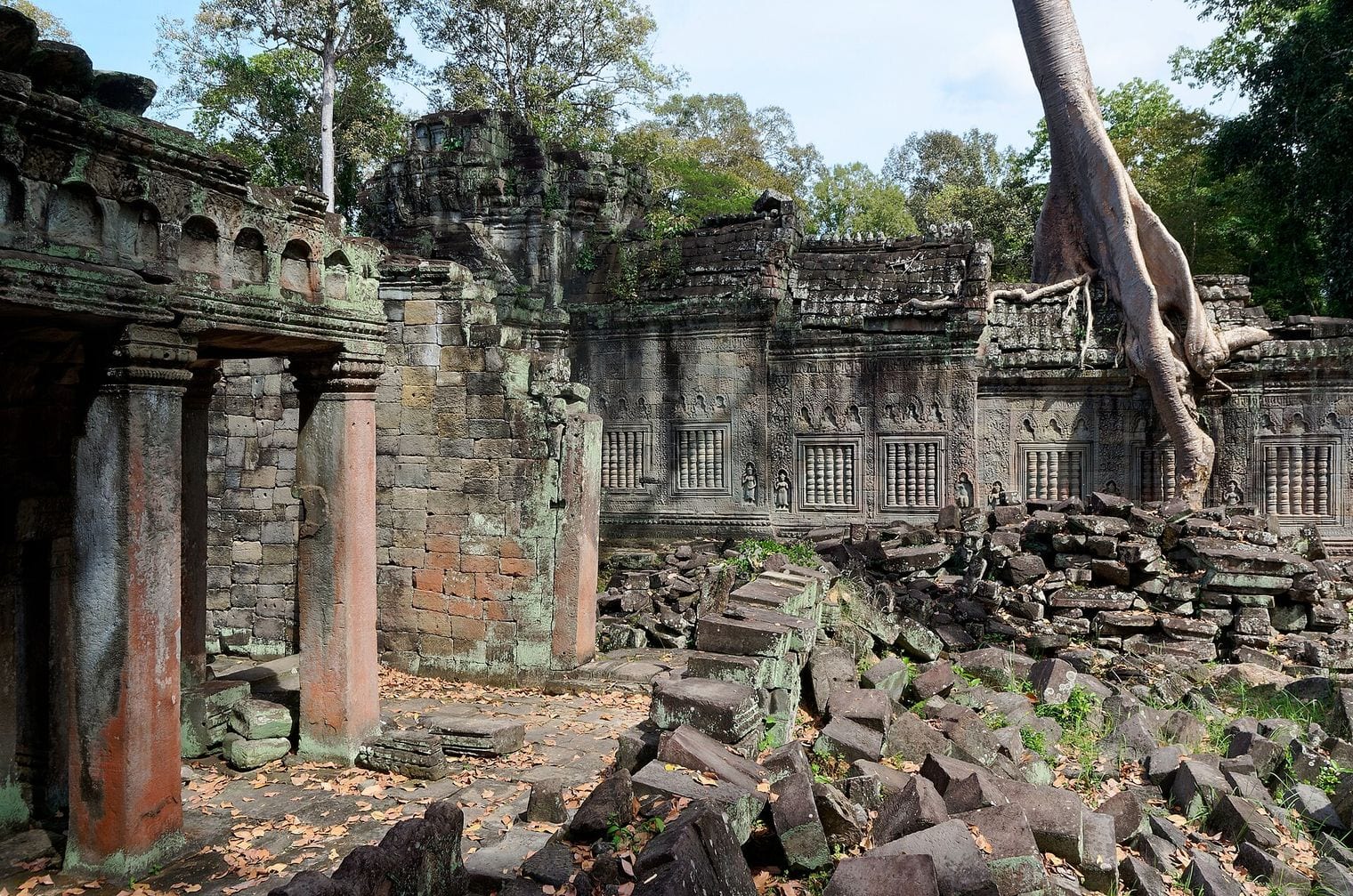
Ta Prohm encloses 650,000 square metres behind an outer wall of 1,000 by 650 metres, which makes it the third-largest single temple precinct here and the one most visitors remember longest. Jayavarman VII founded it late in the 12th century as a Buddhist monastery and place of learning, and the scale of the walled grounds reflects that: this was a working institution with a resident population, not simply a shrine.
What sets it apart is the deliberate decision not to clear it. Silk-cotton and strangler fig roots pour over the galleries and grip the sandstone blocks, and conservators have chosen to stabilise them rather than cut them out, adding wooden walkways, platforms and roped railings so the ruin can be visited without being trampled. Access today runs east to west through the surviving gopuras, which keeps the flow of people moving in one direction.
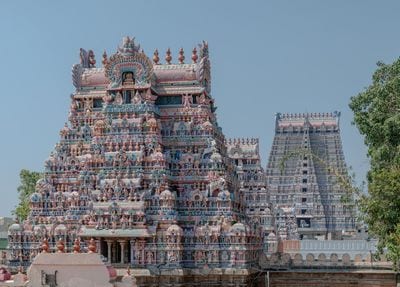
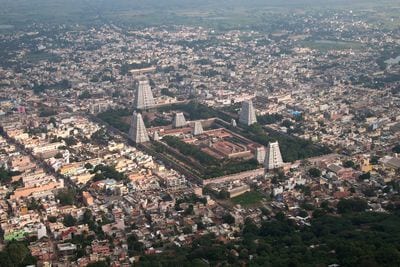
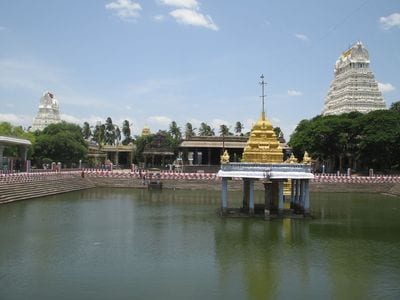
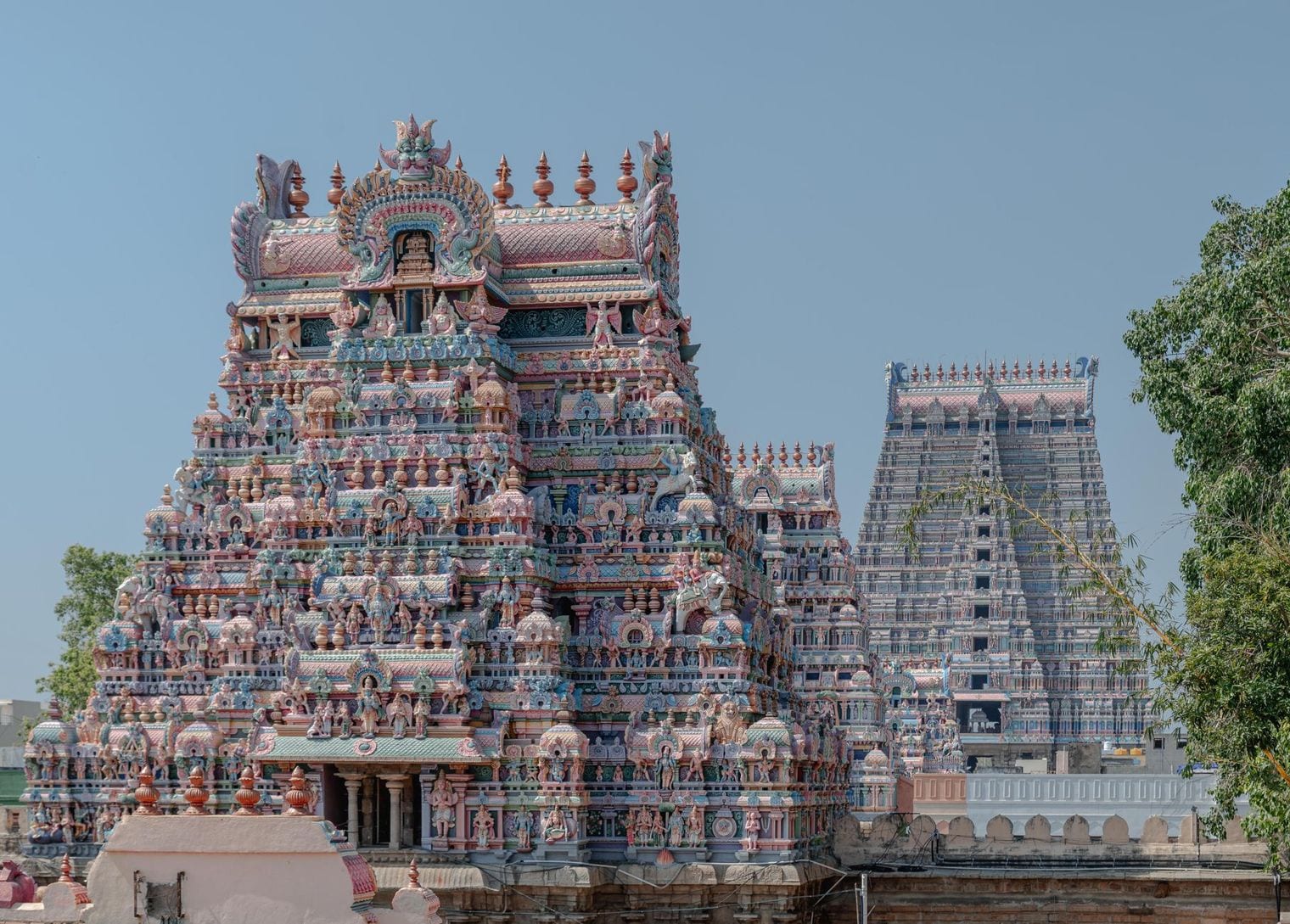
Sri Ranganathaswamy Temple spreads over 155 acres at Srirangam, an island in the Kaveri, and is the largest Hindu temple in the world still in daily worship. Seven concentric prakarams — walled courtyards nested one inside the next — carry 9,934 metres of wall between them, over six miles, and the outer rings hold streets, shops and houses, so the boundary between temple and town dissolves as you walk inward.
Within the walls are 81 shrines, 21 gopuram towers, 39 pavilions and a series of water tanks, all oriented on Vishnu reclining as Ranganatha in the sanctum. Only Hindus may enter the innermost enclosure, but the outer six are open to everyone, and they are where the sheer extent of the place registers — you can walk for twenty minutes inside the temple before you reach anything that looks like one.
Preah Khan occupies 56 hectares inside a moated wall of 800 by 700 metres, a footprint that made it one of the largest foundations Jayavarman VII built and, for a period, a settlement in its own right rather than a temple alone. Its long axial corridors narrow and drop in height as you move toward the centre, a compression Khmer architects used to make the sanctuary feel far deeper into the world than it really is.
The World Monuments Fund has looked after the site since 1991 under an explicit philosophy: stabilise, do not rebuild. Trees stay where taking them out would bring the walls down with them, and fallen blocks are left where they lie. The result is quieter than Angkor Wat and far less photographed than Ta Prohm, which for a lot of people is exactly the appeal of it.
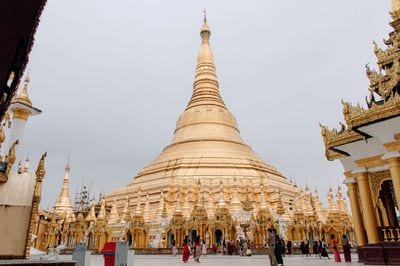
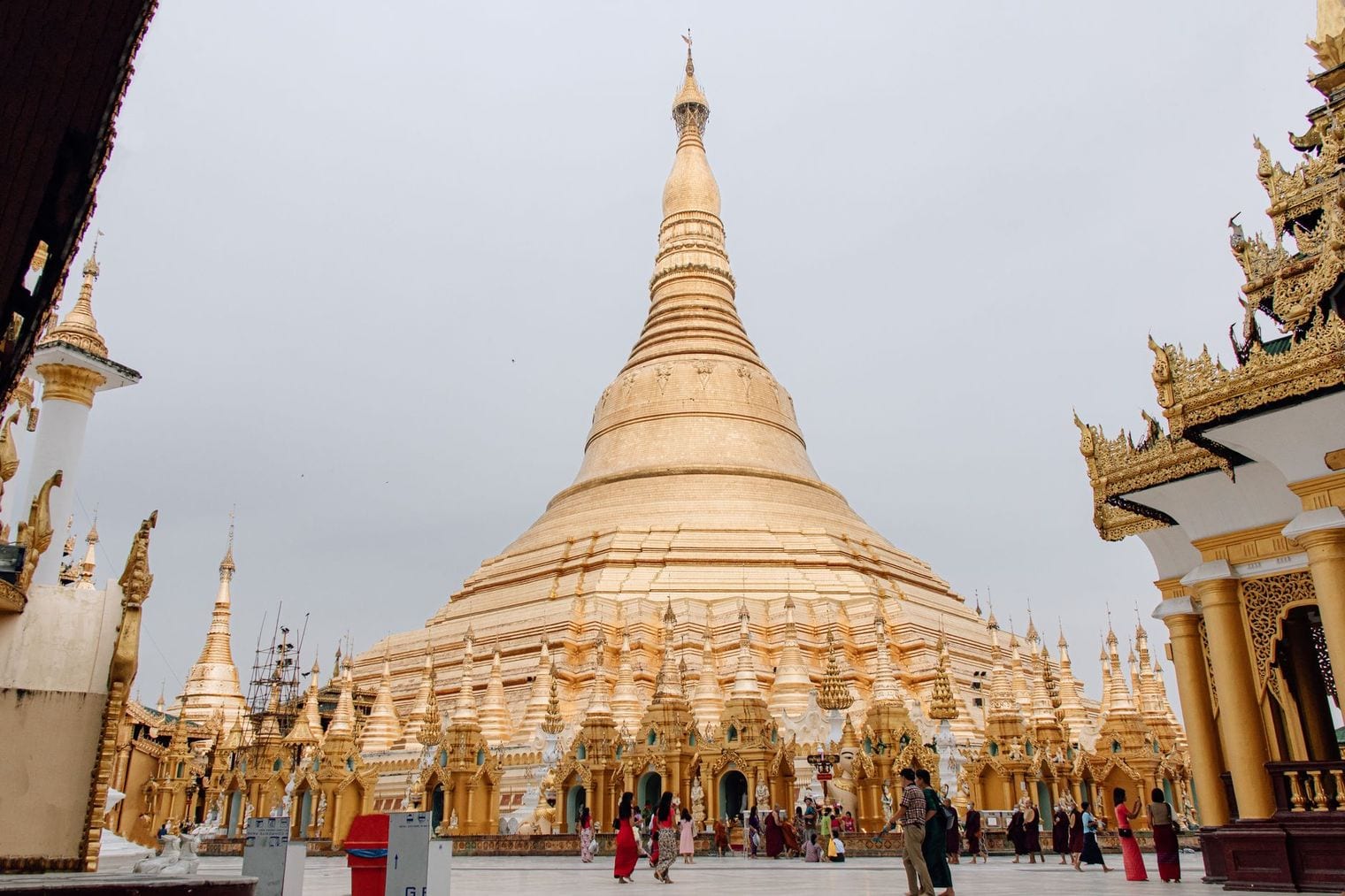
The sacred precinct of the Shwedagon Pagoda on Singuttara Hill runs to 46.3 hectares, the area Myanmar submitted to UNESCO when it placed the site on its Tentative List. Only 5.66 hectares of that is the marble upper platform where the gilded stupa stands. The rest is the hill itself, wrapped in monasteries and donation halls and threaded by four long covered stairways climbing to the terrace.
The stupa rises 112 metres and holds the most sacred Buddhist reliquary in the country. Visitors go barefoot from the foot of the stairs upward, and the platform is at its best around dusk, when the gold takes the last of the light and families gather at the planetary posts marking the day of the week each of them was born on. It opens daily from early morning until late in the evening.
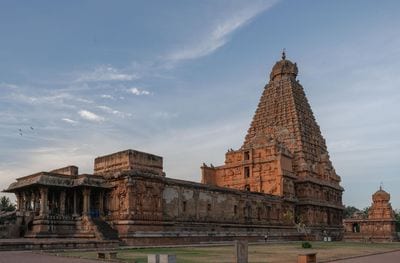
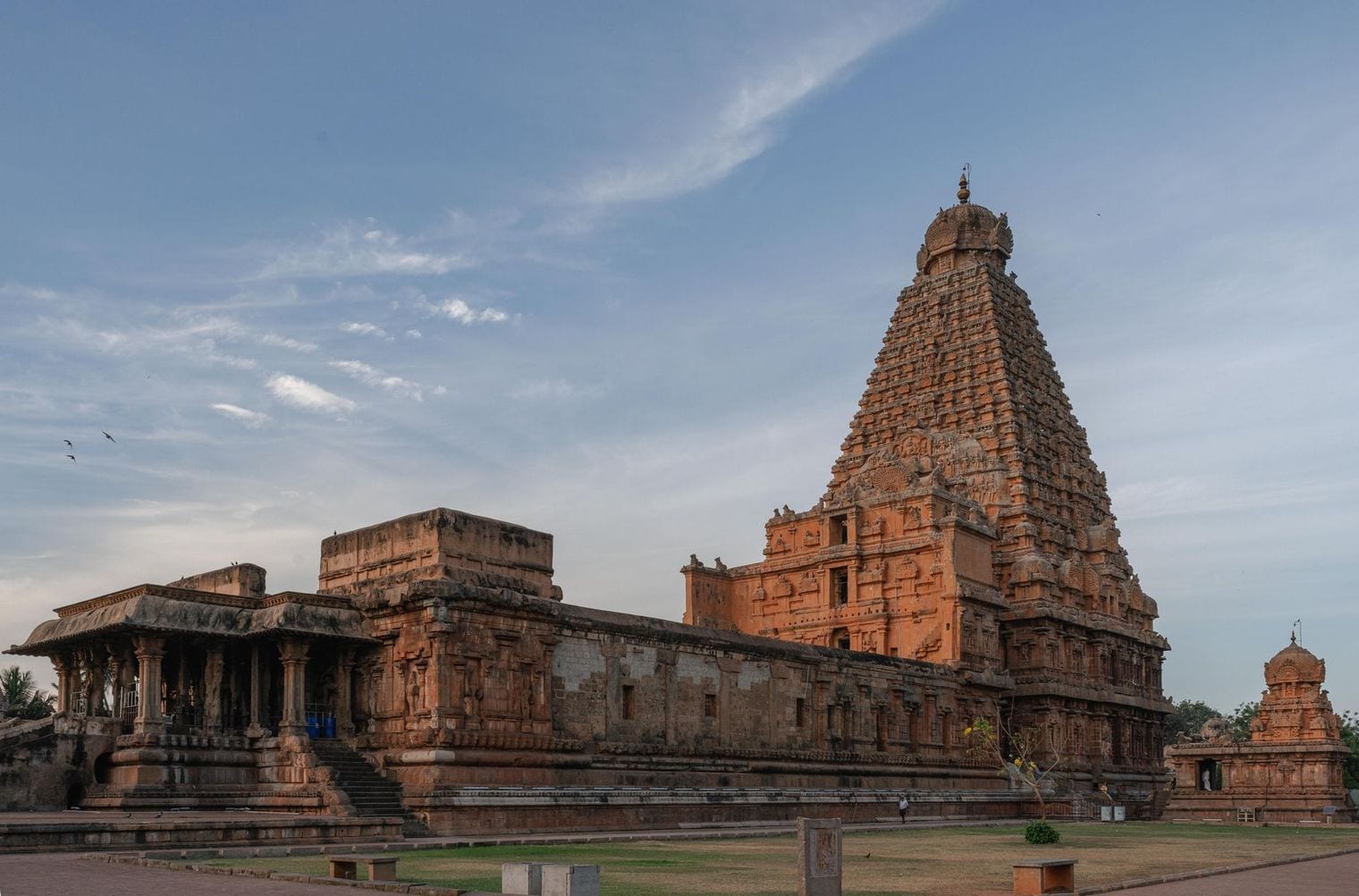
The Brihadisvara Temple at Thanjavur sits in an inscribed precinct of 18.07 hectares, moated and walled, and is the grandest surviving statement of Chola architecture. Rajaraja I built it between 1003 and 1010 CE and named it Rajarajesvaram; Tamils simply call it the Thanjavur Big Temple. Its courtyard runs roughly 241 by 122 metres, ringed by a covered pillared veranda about 450 metres around.
The vimana over the sanctum is the point of the whole design — a pyramidal granite tower crowned by a single massive capstone, built at a scale nothing in the region had attempted. UNESCO inscribed it in 1987 as the first of the Great Living Chola Temples, later joined by Gangaikonda Cholapuram and Airavatesvara. It is worth stressing the word living: this is an active Shaivite temple with a daily ritual cycle, not a preserved ruin.
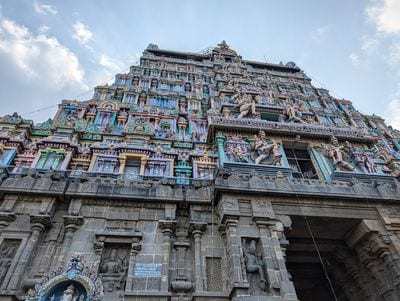
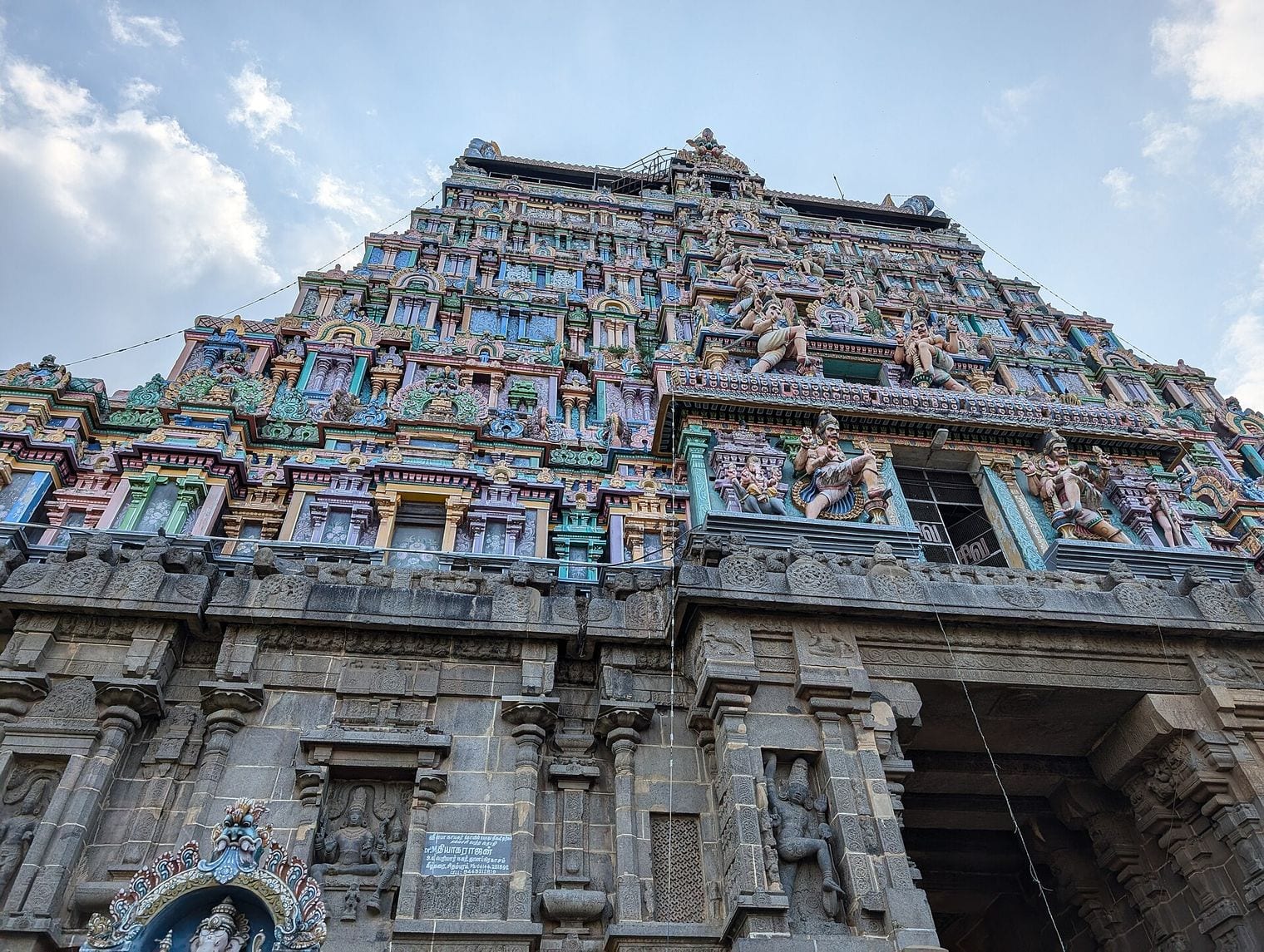
Thillai Nataraja Temple covers 40 acres in the middle of Chidambaram, laid out as four concentric prakarams, and it is the principal home of Shiva as Nataraja, lord of the cosmic dance. The town's name means something close to the stage of consciousness, and the temple is one of the very few common to both the Pancha Sabha and Pancha Bhuta traditions of Tamil Shaivism.
Its most quoted feature is scholarly rather than architectural. Carvings on the temple walls set out all 108 karanas of the Natya Shastra, the postures that underpin Bharatanatyam, which makes the masonry a reference text for Indian classical dance. The other reason people come is the Chidambaram Rahasya: an empty space behind a curtain in the sanctum, standing for the formless. Hereditary Dikshitar priests have administered the temple for centuries.
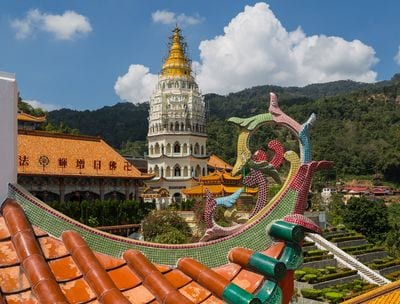
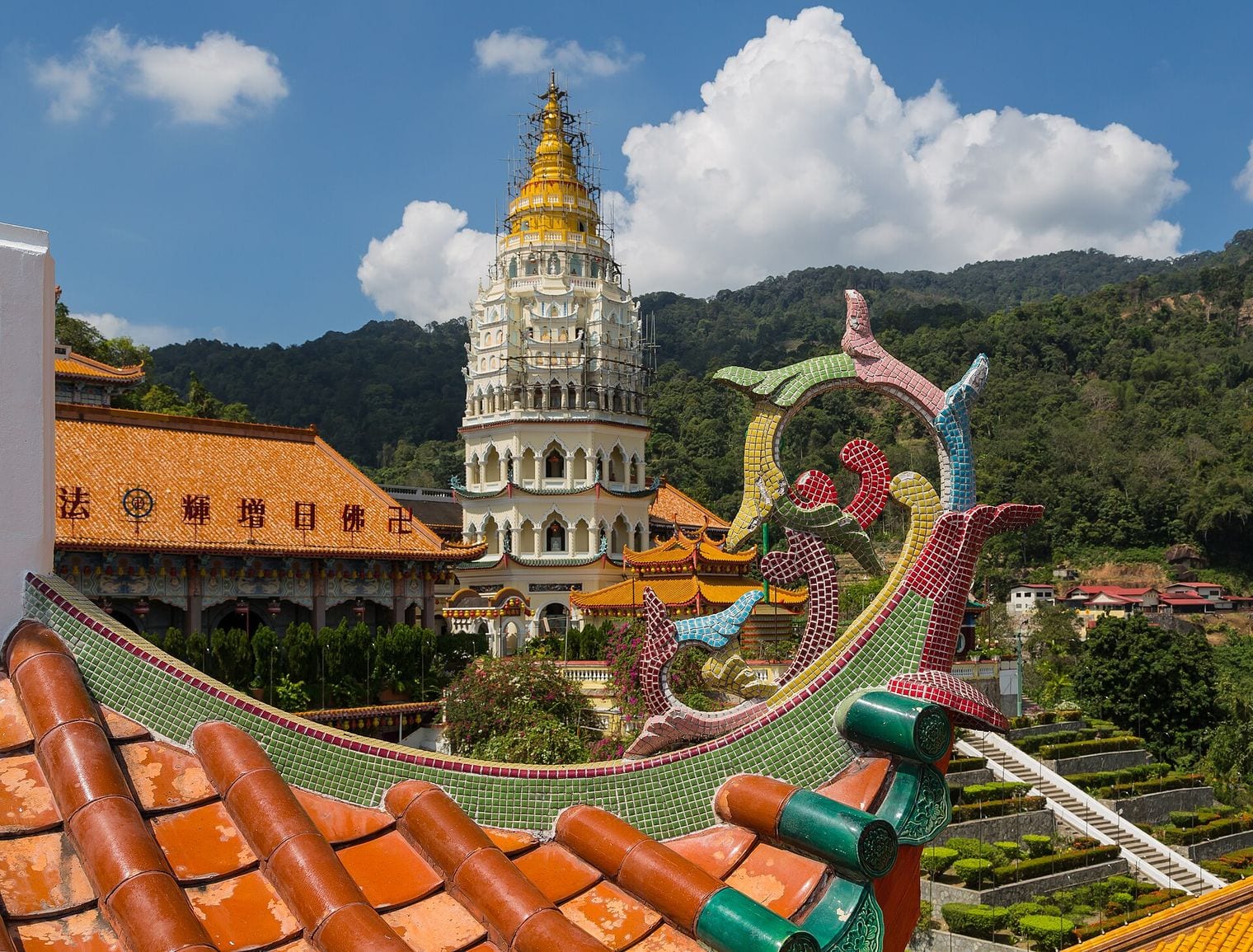
Kek Lok Si was built over a plot of 12.1 hectares on the hillside at Air Itam above George Town, and it is the largest Buddhist temple in Malaysia. The complex went up in stages between 1890 and 1930 at the initiative of its first abbot, Beow Lean, and it draws pilgrims from Hong Kong, Singapore and the Philippines as readily as from Penang itself.
Two things dominate the terraces. One is the seven-storey Pagoda of Ten Thousand Buddhas, commissioned by the Thai king Rama VI, which holds ten thousand alabaster and bronze Buddha images in a tower that changes architectural idiom as it rises. The other is a bronze Guanyin standing 36.57 metres. An inclined lift saves the steepest part of the climb, and the whole hillside is lit for Chinese New Year.
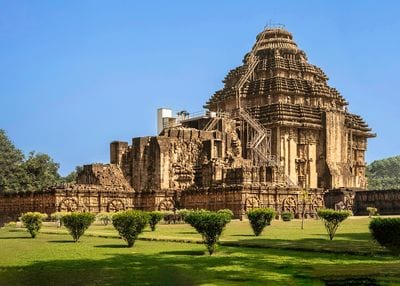
The Konark Sun Temple stands in a 10.62-hectare inscribed precinct on the Odisha coast, and what survives of it is a chariot in stone: the great hall is carved as the vehicle of Surya, the sun god, with immense wheels ranged along its plinth and teams of horses straining at the front. Narasingha Deva I of the Eastern Ganga dynasty raised it around 1250 CE, some 35 kilometres up the coast from Puri.
Much of the temple is ruin. The shikhara tower over the sanctuary, once over 61 metres, has gone, leaving the 30-metre hall as the tallest element on the site. What remains is celebrated for the density of its carving — processions, musicians, animals and the erotic mithuna panels that Kalingan sculptors worked into every available surface. UNESCO inscribed it in 1984, and the Archaeological Survey of India maintains it.
The Annamalaiyar Temple covers 10 hectares at the foot of Arunachala hill in Tiruvannamalai, laid out in five precincts, each entered past a large Nandi. It is one of the Pancha Bhuta Sthalams, the five temples matched to the natural elements, and it is the one that stands for fire: the presiding lingam is the Agni Lingam, and the hill rising behind the gopurams is treated as the deity itself.
That gives the temple its signature event. At Karthigai Deepam, in November or December, a beacon is lit on the summit of Arunachala and burns for days, visible for miles across the plain, while pilgrims in their millions walk the girivalam circuit around the base of the hill. Six rituals are performed daily between early morning and late evening, and the Tamil Nadu endowments department administers the site.
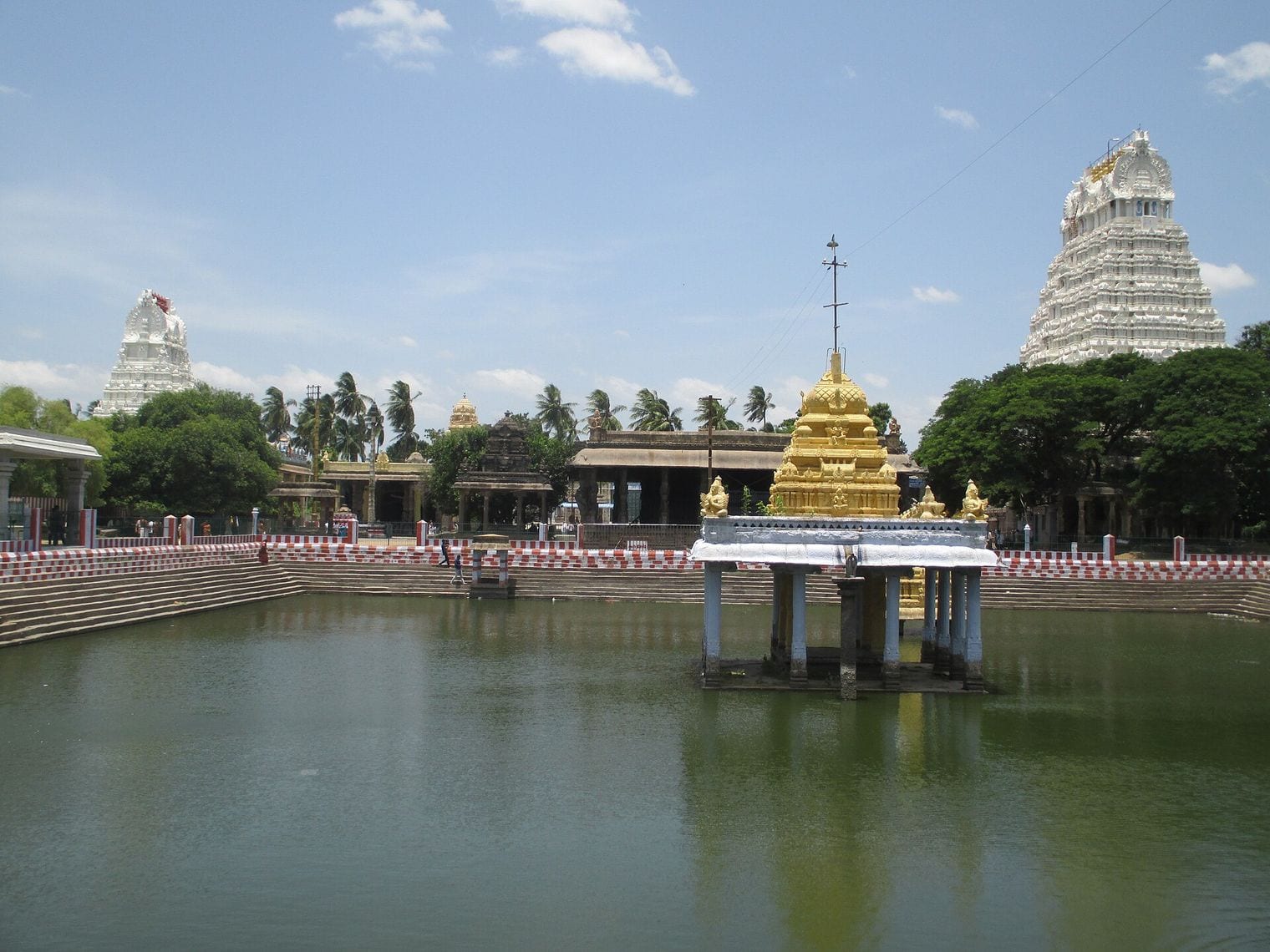
Varadharaja Perumal Temple occupies 23.5 acres in the Vishnu Kanchi quarter of Kanchipuram, and it is one of the 108 Divya Desams, the Vishnu temples celebrated by the Alvar poet-saints. With Ekambareswarar and Kamakshi Amman it forms the Mumurtivasam, the abode of the trio, and Ramanuja — the great Vishishtadvaita philosopher — is held to have lived here.
The temple sits on a low rise called Hastagiri, reached by a flight of steps, and its hundred-pillared hall is a celebrated piece of Vijayanagara stone carving. Its best-known possession is not on view at all: an image of Athi Varadar, kept submerged in the temple tank and raised for public darshan roughly once in forty years, an event that brings enormous crowds to a city otherwise visited for its silk.
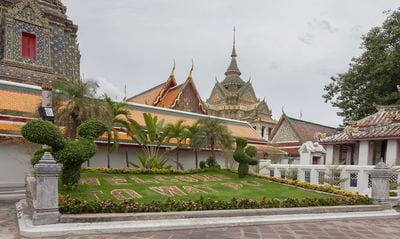
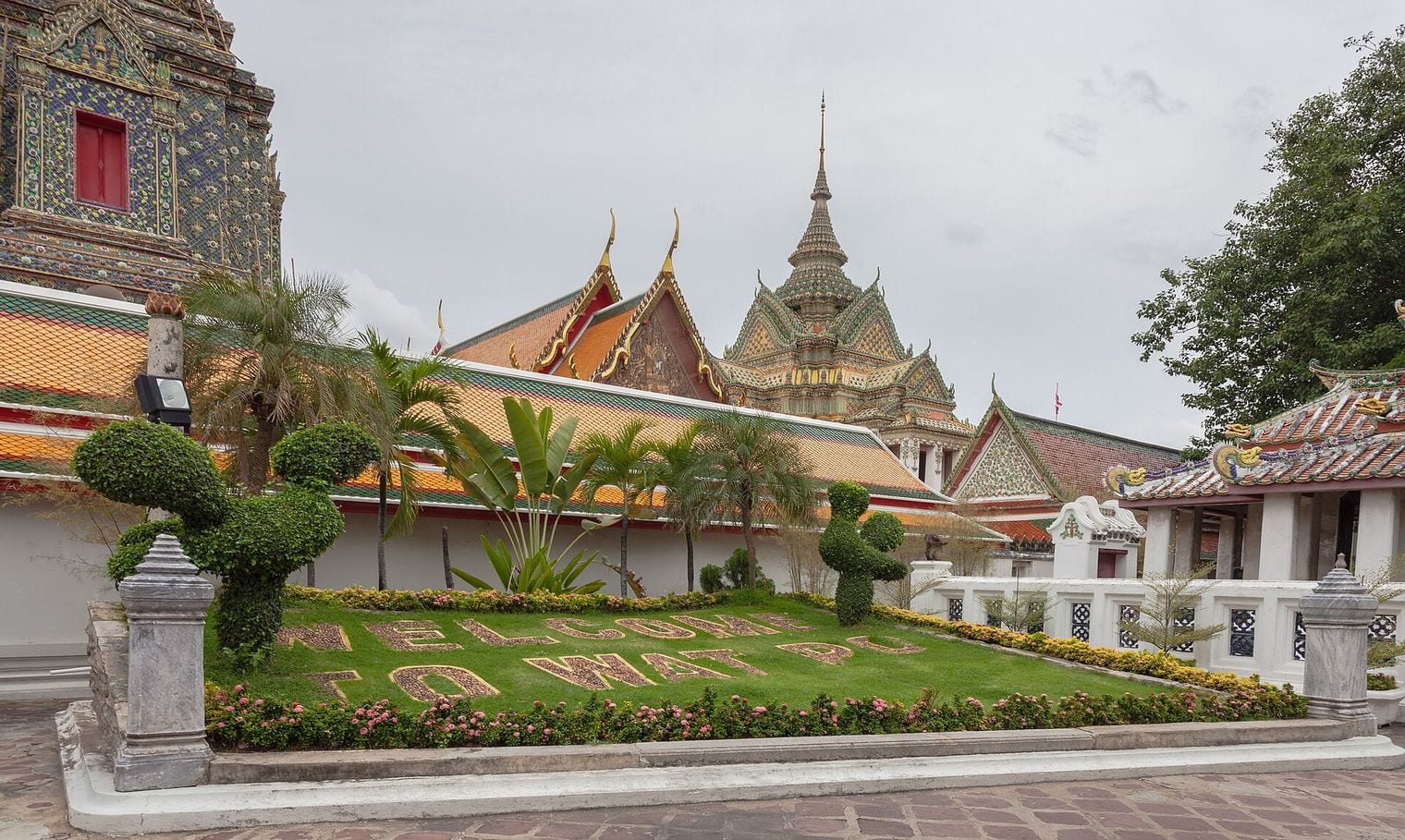
Wat Pho covers 80,000 square metres — 50 rai — immediately south of the Grand Palace in Bangkok's Phra Nakhon district, which makes it one of the largest and oldest wat compounds in the city. Chetuphon Road splits it in two: the northern phutthawat, holding the buildings dedicated to the Buddha, is the half open to visitors, while the southern sankhawat contains the monks' quarters and a school.
The reclining Buddha is why most people come, a gilded figure 46 metres long at the centre of the largest collection of Buddha images in Thailand.
But the compound is also the traditional home of Thai massage, still taught and practised on site, and the diagrams and inscriptions set into its walls make it the earliest centre for public education in the country — Thailand's first university, by common reckoning. Sixteen gates pierce the perimeter wall, of which two admit the public.
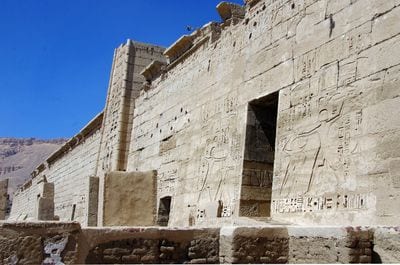
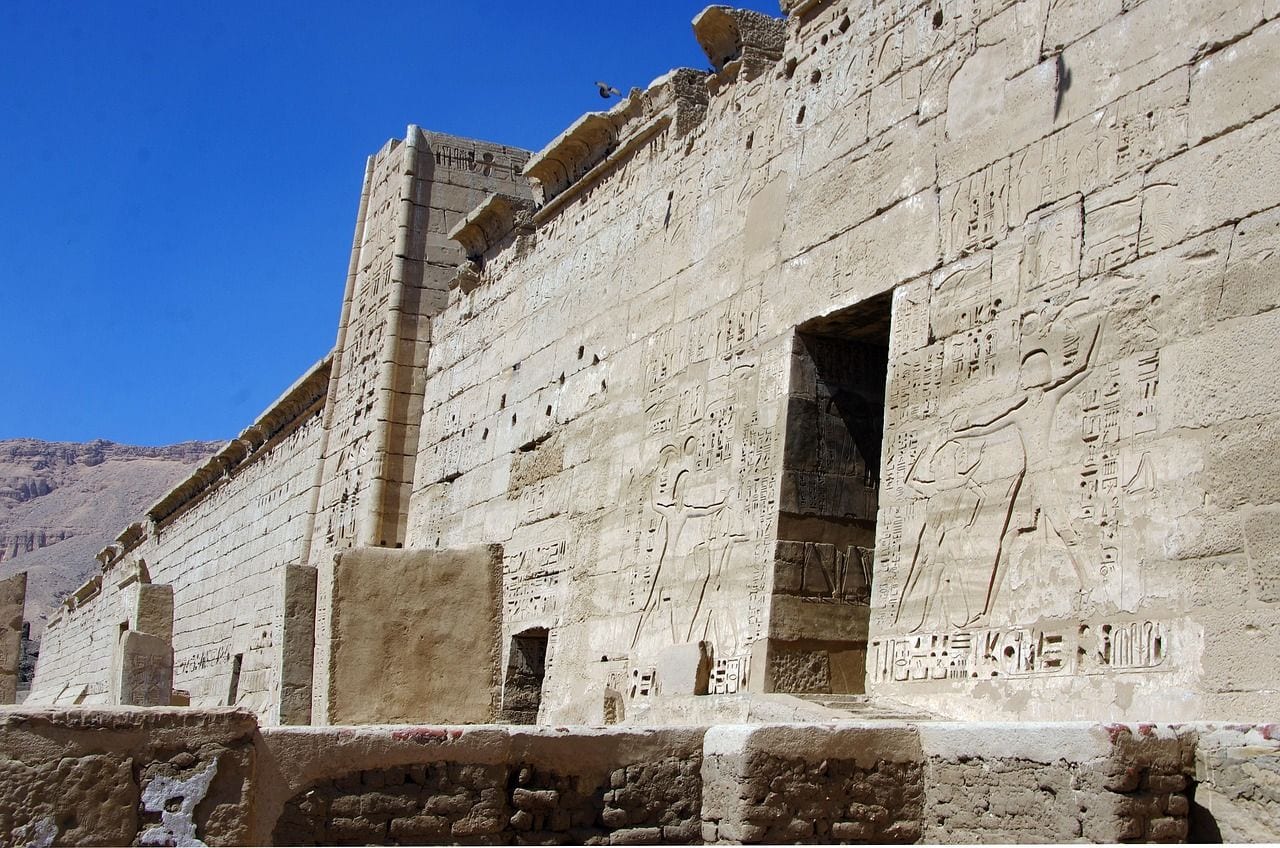
Medinet Habu encloses 66,000 square metres behind a mudbrick temenos wall 18 metres high and 10 metres thick — a boundary built more like a garrison than a sanctuary, which is broadly what the site became. At its heart is the mortuary temple of Ramesses III, some 150 metres long, on the west bank at Luxor beneath the Theban hills.
Its walls carry more than 7,000 square metres of decorated relief, among the best preserved anywhere in Egypt, including the scenes of the naval battle against the Sea Peoples that remain the primary source for that campaign. Original colour survives in the sheltered courts, which is rarer than photographs of Egypt suggest. Excavation and conservation have run here since 1924, and ground plans have been restored so visitors can read the layout on the ground.
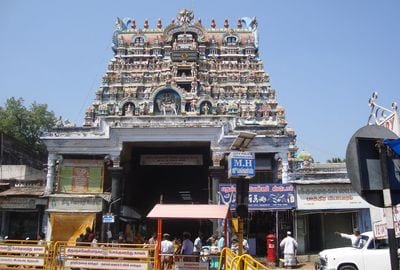
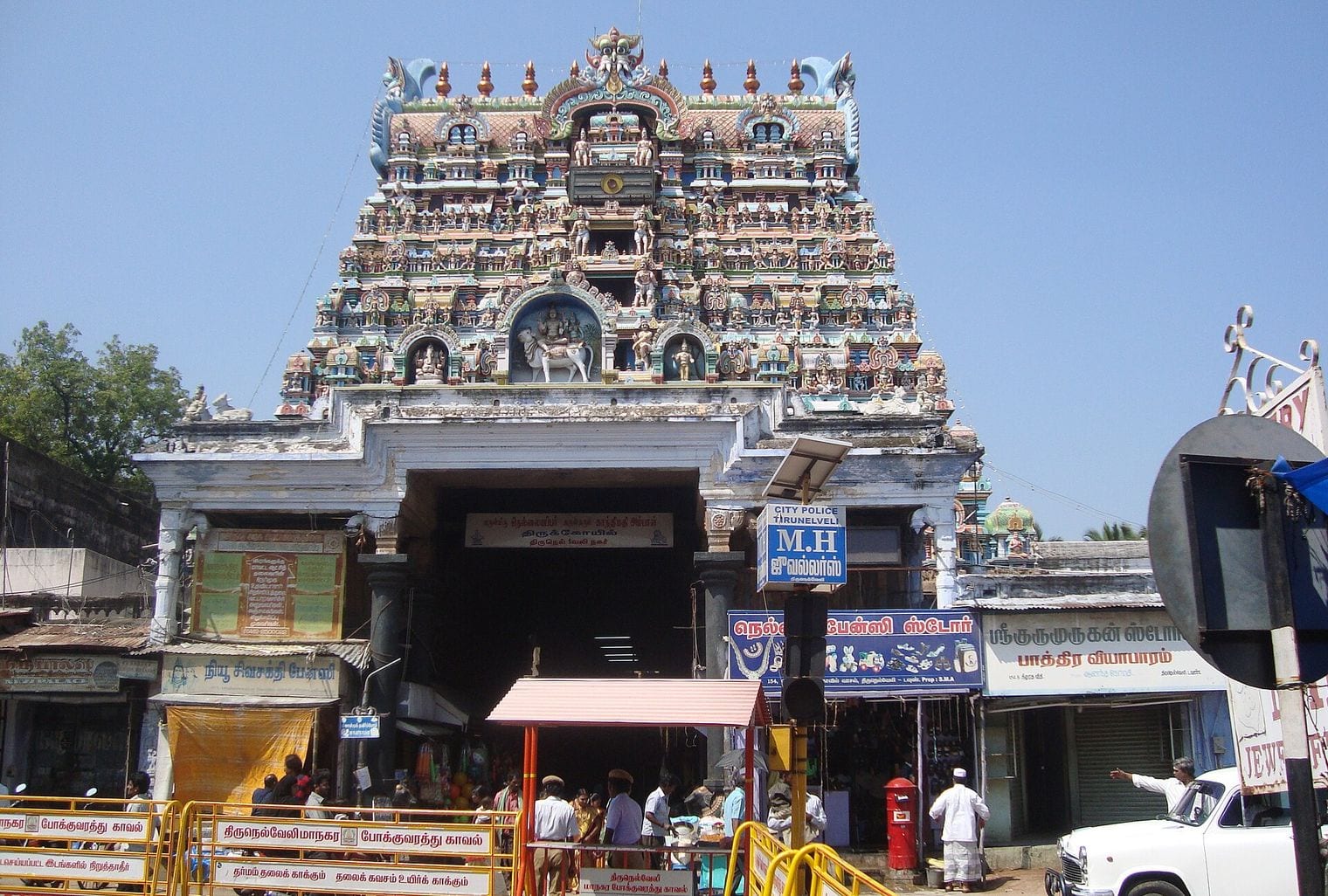
The Nellaiappar Temple complex covers 14.5 acres in Tirunelveli on the north bank of the Thamirabarani, its shrines wrapped in concentric rectangular walls running roughly 850 by 756 feet overall. Shiva is worshipped here as Nellaiappar and Parvati as Kanthimathi Amman, in twin shrines linked by a connecting corridor — an arrangement that gives the complex two centres of gravity rather than one.
It is a Paadal Petra Sthalam, one of the 276 temples praised in the seventh-century Tevaram hymns, which places its standing far earlier than most of the fabric now above ground. The feature visitors are shown first is the mani mandapam, where two giant pillars are each carved from a single stone and each carries 48 sub-pillars that sound musical notes when struck. Together they make the smallest temple on this list one of the most unusual.
FAQ: The World’s Largest Temples
What is the largest temple in the world?
Angkor Wat, in Cambodia. Its moated precinct covers 162.6 hectares, about 402 acres, which makes it not only the largest temple but the largest religious structure of any kind — a record Guinness World Records recognises outright. It was raised in the early 12th century for the Khmer king Suryavarman II and dedicated to Vishnu.
How are the temples on this list measured?
By the ground inside each temple’s own outer boundary — the wall, moat or inscribed precinct its builders drew — and nothing past it. That single rule is what keeps the comparison honest, because every figure then describes the same kind of thing and a Tamil prakaram temple can genuinely be ranked against a Khmer monastery. It is the same wall-to-wall measure we use to rank the largest palaces.
What is the largest Hindu temple still in active worship?
Sri Ranganathaswamy Temple at Srirangam, in Tamil Nadu, at 155 acres. Angkor Wat is larger but has not been a Hindu temple for centuries. Srirangam has been in continuous use, and its seven concentric walled courtyards hold 81 shrines, 21 towers and a working town of streets and houses inside the outer rings.
Why is the Temple of Heaven in Beijing not on the list?
Because its 267 hectares are published as the area of Tiantan Park rather than of a temple precinct, and most of that ground is cypress grove. It is genuinely larger than everything ranked here, which is exactly why it is worth naming — but it is not measured the same way, so it cannot be ranked alongside them.
Why are the Akshardham temples missing?
The Akshardham complexes in Delhi and in Robbinsville, New Jersey are often ranked second in the world on campus figures of 100 and 183 acres. Those numbers cover visitor centres, gardens, exhibition halls and parking as well as the mandir itself. Measured as a single walled temple precinct, neither one reaches this list.
Which is the largest Buddhist temple here?
The Shwedagon Pagoda in Yangon, whose sacred precinct on Singuttara Hill runs to 46.3 hectares. Ta Prohm and Preah Khan were founded as Buddhist monasteries under Jayavarman VII and are larger, but Shwedagon is the biggest that is still a working Buddhist site rather than an archaeological one.
Can you visit all fifteen?
Yes, and that was a condition of making the list: every entry is standing and open to visitors today. Some are living temples with a daily ritual cycle, such as Srirangam, Chidambaram and Wat Pho; others are maintained monuments, such as Medinet Habu and Ta Prohm. A few keep the innermost sanctum for Hindus only.