We may earn a commission if you book tickets, tours or a stay through a link on
this page, at no extra cost to you. It never affects which places we list or how
we rank them (how we make money).
The record
41 platform faces
Grand Central Terminal
United States
The record
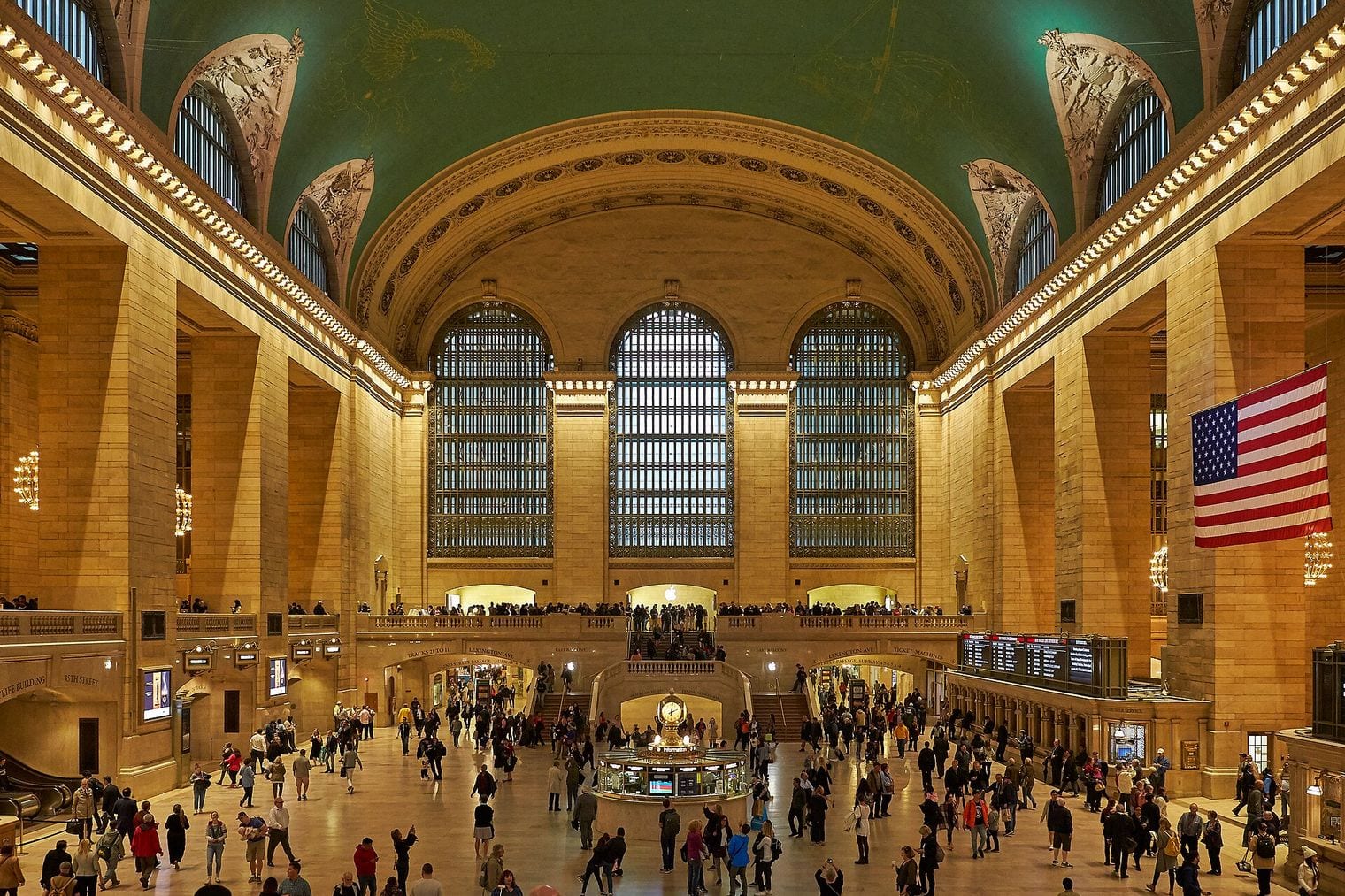
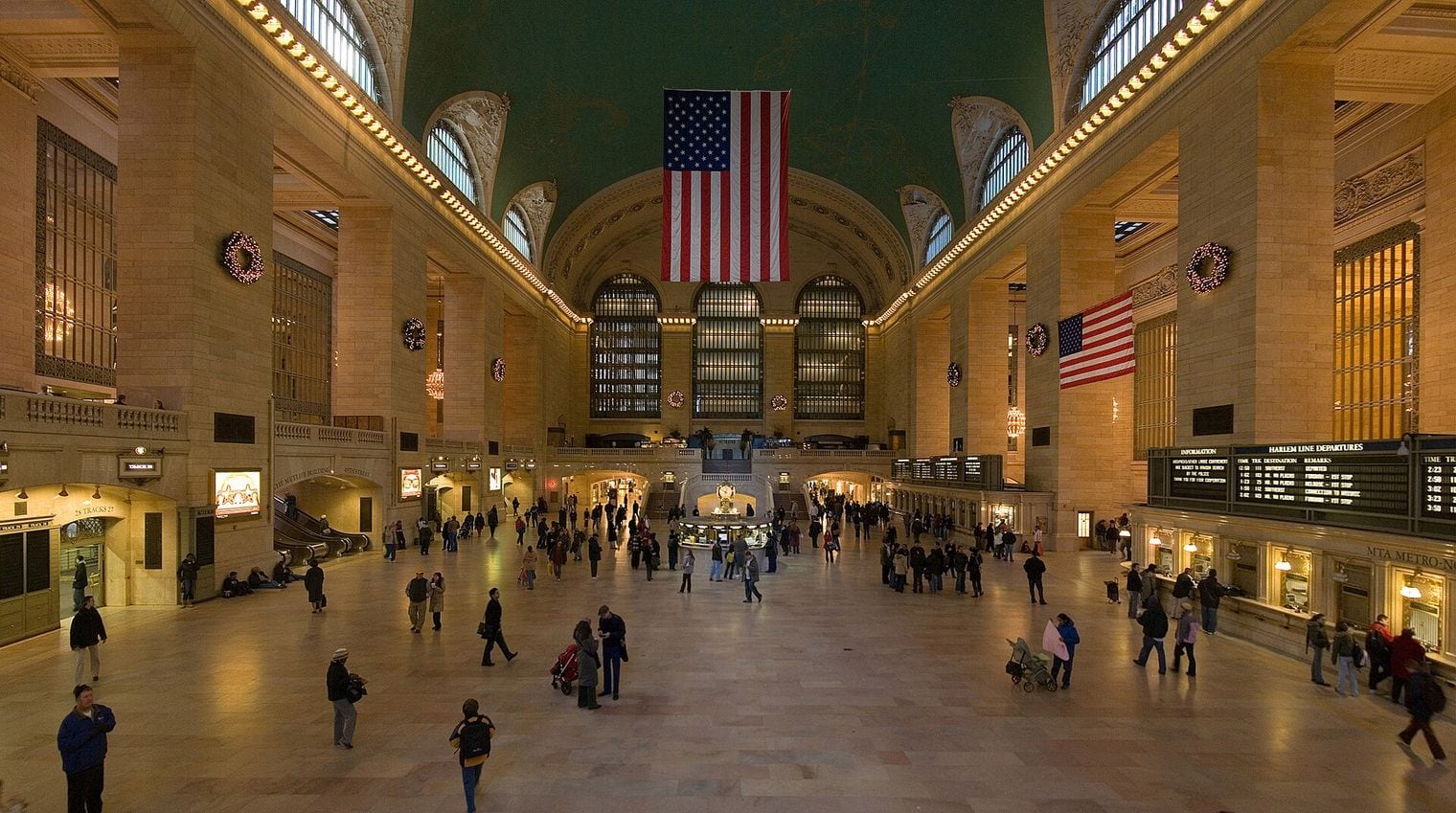
The largest train station in the world is Grand Central Terminal, in the United States — 41 platform faces.
Source: Wikipedia current revision: 28 upper level + 13 lower level in passenger service, of 44 platforms, 56 platformed tracks and 67 tracks in total. Verified .
China opened Chongqing East in June 2025 and the headlines called it the largest railway station in the world: 1.22 million square metres, the size of 170 football pitches. It does not appear on this list. Neither does Shinjuku, which moves more people in a day than any station on earth.
This countdown ranks something narrower and much harder to fudge - platform faces, meaning the number of platform edges a scheduled passenger train can actually pull up against. Floor area depends entirely on where you draw the boundary, and Chongqing East's headline figure covers an entire transport hub whose station building alone is a tenth of that.
A platform edge is simply a platform edge. Counted that way, twelve stations reach thirty or more, from Grand Central's 41 down to a four-way tie at 30, spread across five countries and three continents. Every one is open and running trains today, and tracks without a platform beside them are not counted.
Fun Facts About the World's Largest Train Stations
Grand Central has held the platform record for over a century — its 44 platforms were built between 1903 and 1913, and no station has been designed since that beats them. See Grand Central Terminal.
The world's "largest" station by area does not make this list at all — Chongqing East opened in June 2025 covering 1.22 million square metres, but its yard has only 29 tracks, well short of the 30 platform faces needed to qualify.
The busiest station on earth is not among the biggest — Shinjuku in Tokyo moves around 3.5 million people a day across 29 platform faces, one short of this countdown's threshold.
Beijing's biggest station is also its oldest — a station has stood at Fengtai since 1895, and the rebuilt hub stacks twelve high-speed tracks on a deck above twenty conventional ones.
Paris is the only city with two stations here — Gare du Nord and Gare de l'Est stand less than 300 metres apart in the same arrondissement, and between them they hold 62 platform faces.
Half the list is in China — seven of these twelve stations were built for the high-speed network, and six of those seven opened after 2010.
With 41 platform faces in scheduled service, Grand Central Terminal has more than any station on earth, and it holds the Guinness World Record for the most railway platforms. The figure usually quoted in guidebooks is 67 tracks, but that count folds in yard and siding tracks where trains are stabled between the rush hours.
Fifty-six of those tracks carry a platform, and 41 see scheduled Metro-North departures. The 44 platforms are stacked across two underground levels, an arrangement Manhattan forced on the railroad when it buried its approach tracks and sold off the air rights above them.
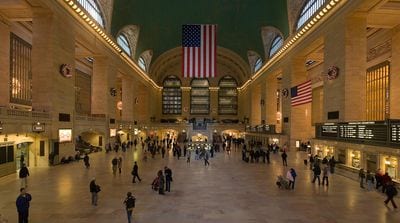
What you notice on arrival has nothing to do with track counts. The Main Concourse opens up under a barrel-vaulted ceiling painted as a Mediterranean winter sky, and the constellations on it run backwards, a reversal the terminal has never corrected.
The four-faced brass clock above the central information booth is the most reliable meeting point in New York. Downstairs, outside the Oyster Bar, the tiled arches of the Whispering Gallery carry a murmur diagonally across the vault to anyone standing in the opposite corner.
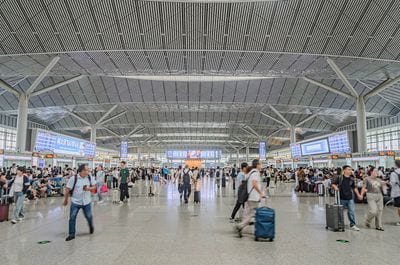
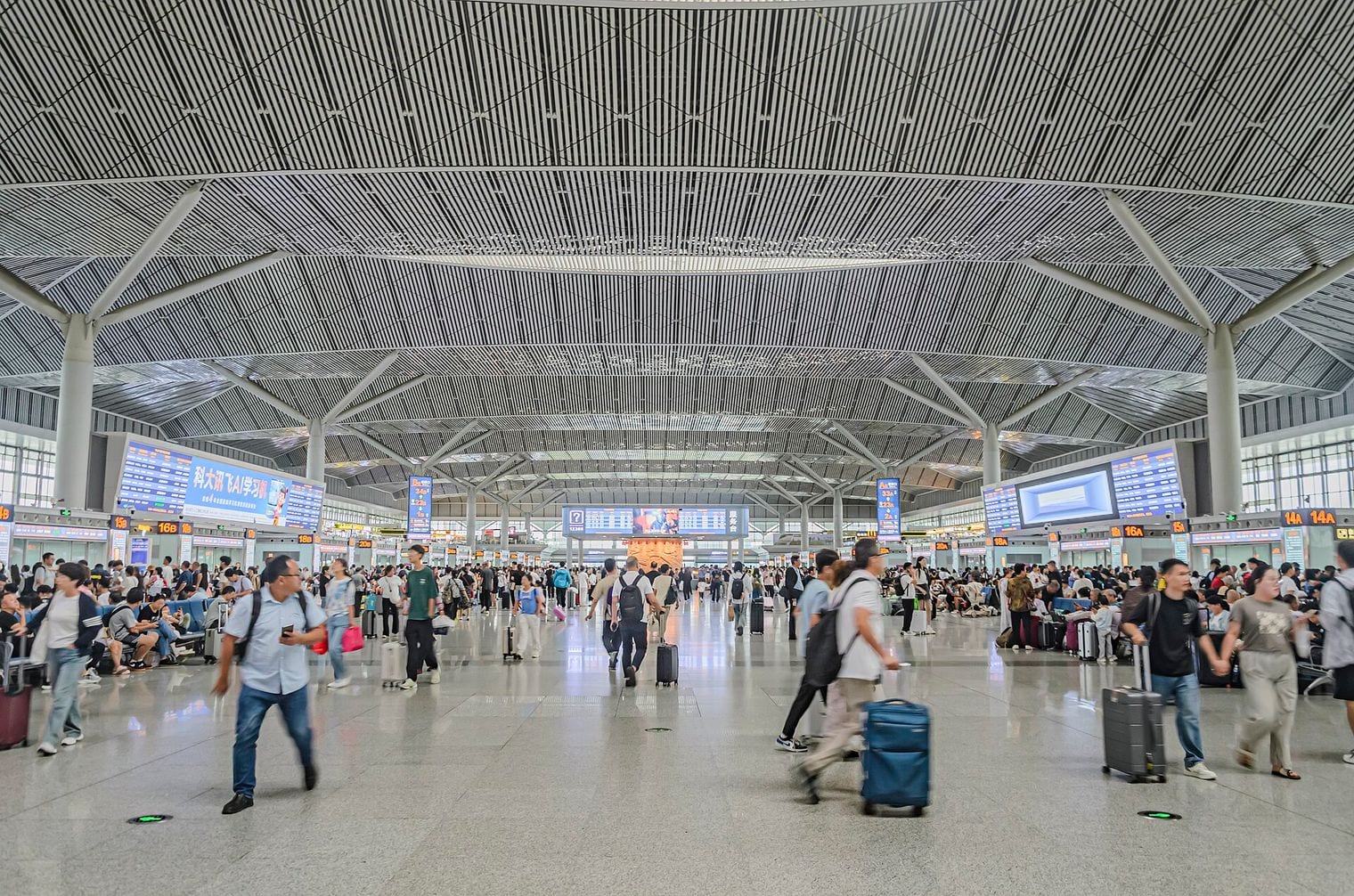
Xi'an North Railway Station counts 34 platform faces, making it the largest station in Asia and the second largest in the world. Eighteen platforms carry them, sixteen island and two side, and every one of the 34 is an arrival-departure track rather than a line running straight through.
The station opened in 2011 as the pivot of China's western high-speed network, and it now dispatches and receives well over 400 passenger trains on a normal day, linking the northwest to Beijing, Chengdu and the coast.
The scale makes more sense once you understand what Xi'an is. This was Chang'an, the eastern terminus of the Silk Road and the capital of thirteen Chinese dynasties, and it remains the gateway to the Terracotta Army standing in its pits east of the city.
The surviving Ming-era walls still enclose the old centre in a complete rectangular circuit that you can cycle in an afternoon. The station sits north of that historic core, deliberately clear of it, because there was no room to thread thirty-four platform edges through a city that has been continuously built on for three millennia.
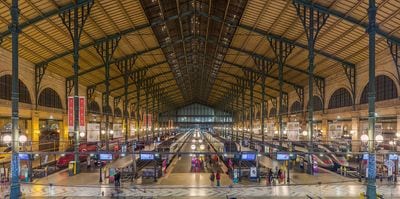
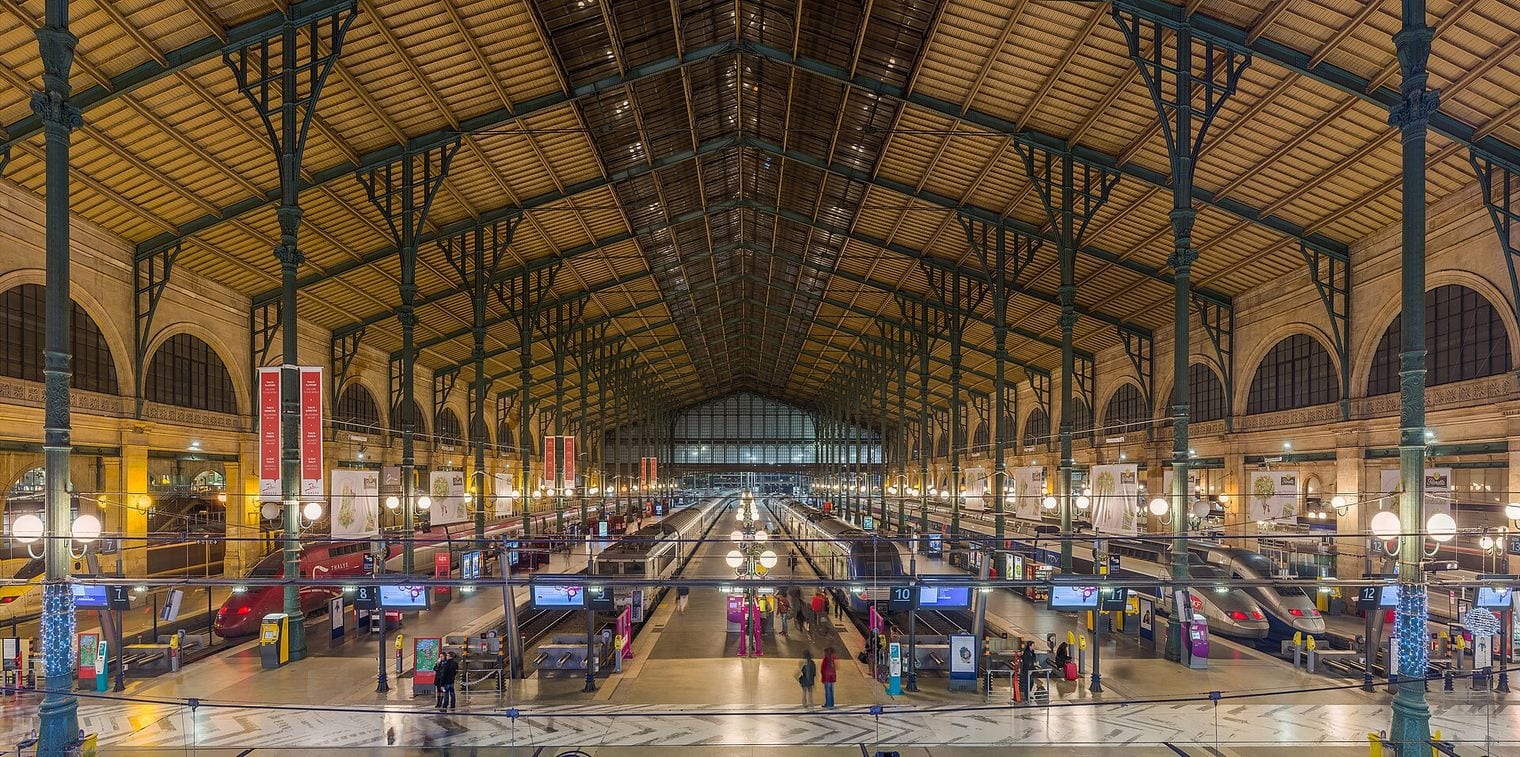
Gare du Nord has 32 platform faces, which ties it with four other stations on this countdown; it takes the higher rank on our secondary measure, annual passenger throughput, where it is comfortably the busiest railway station in Europe. Those platforms are worked harder than almost any others on this list, handling Eurostar services to London and Brussels, TGV departures for northern France, suburban Transilien lines and two RER routes, all inside one 19th-century shed.
The building it happens in is the reason so many travellers photograph a commuter station. The 1864 facade carries allegorical statues of the principal cities the company served, with Paris crowning the top and eight international destinations, London and Berlin and Vienna among them, ranged below it.
Inside, the trainshed's iron support pillars were cast in Glasgow, at the time the only place with a foundry big enough for the job, and the great glazed roof still throws the same flat northern light across the concourse. It is the first sight of France for anyone arriving by train from London, and the Gare de l'Est stands less than 300 metres southeast across the same district.
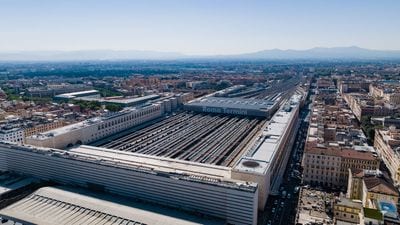
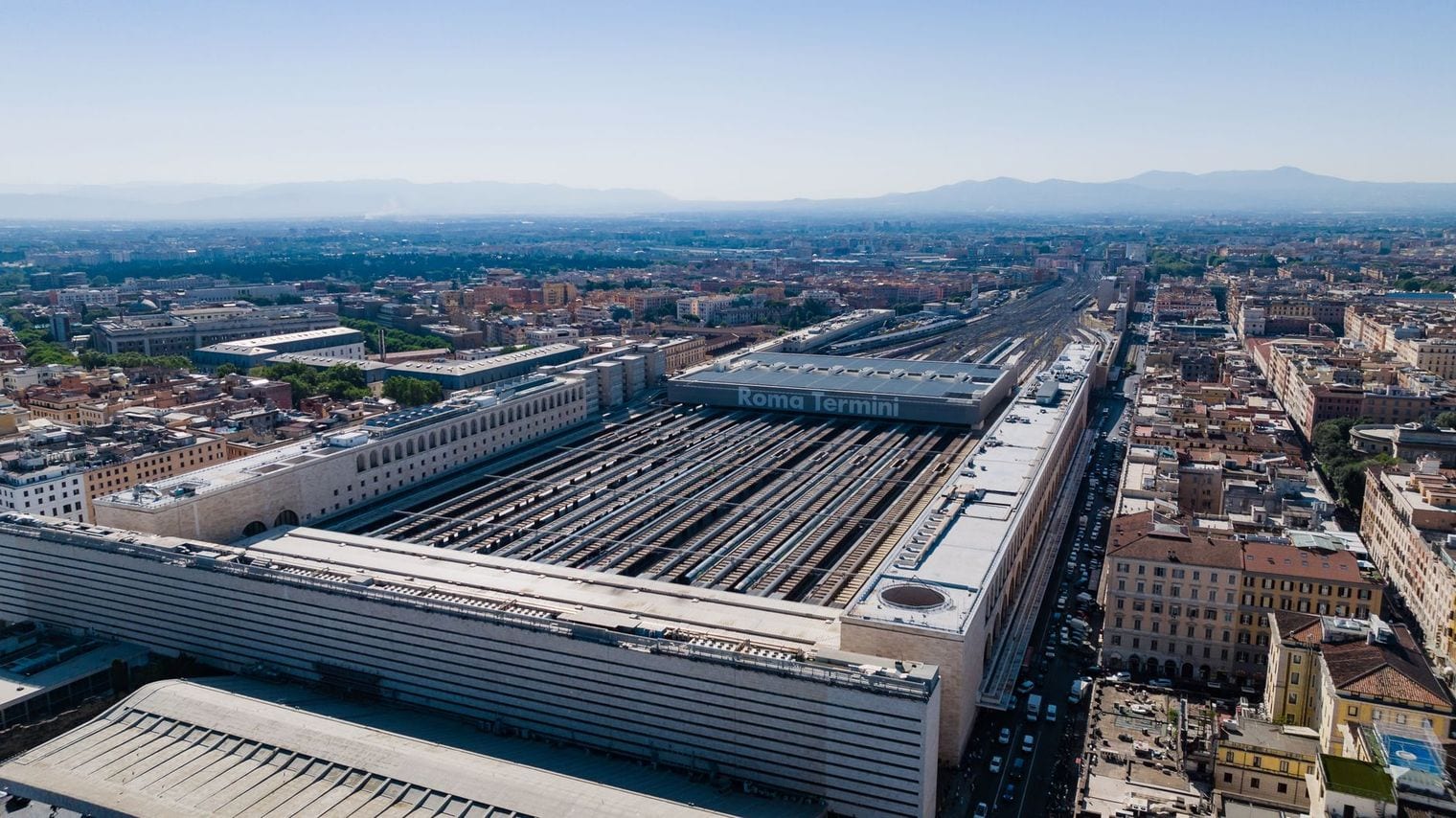
Roma Termini also carries 32 platform faces, tying it with Gare du Nord, Munich, Zhengzhou East and Beijing Fengtai, and separated from them only by passenger volume. The Italian binari run in a broad fan from the concourse in the heart of Rome, and the station is the hub of the whole national network: the fast services to Florence, Milan, Naples and Venice all begin or end here, alongside the regional trains and the airport link out to Fiumicino.
The name comes not from the station being a terminus but from the Baths of Diocletian, the terme whose ruins stand immediately across the piazza. The station's most striking feature is its 1950s frontage, a long low canopy whose cantilevered roof curves out over the entrance and is known locally as the dinosaur.
Excavation for the building uncovered a stretch of the Servian Wall dating to the 4th century BC, and a section of it is preserved inside the station, sitting incongruously beside a fast-food counter.
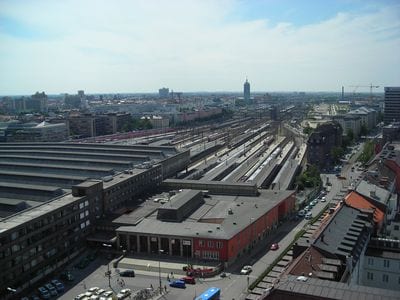
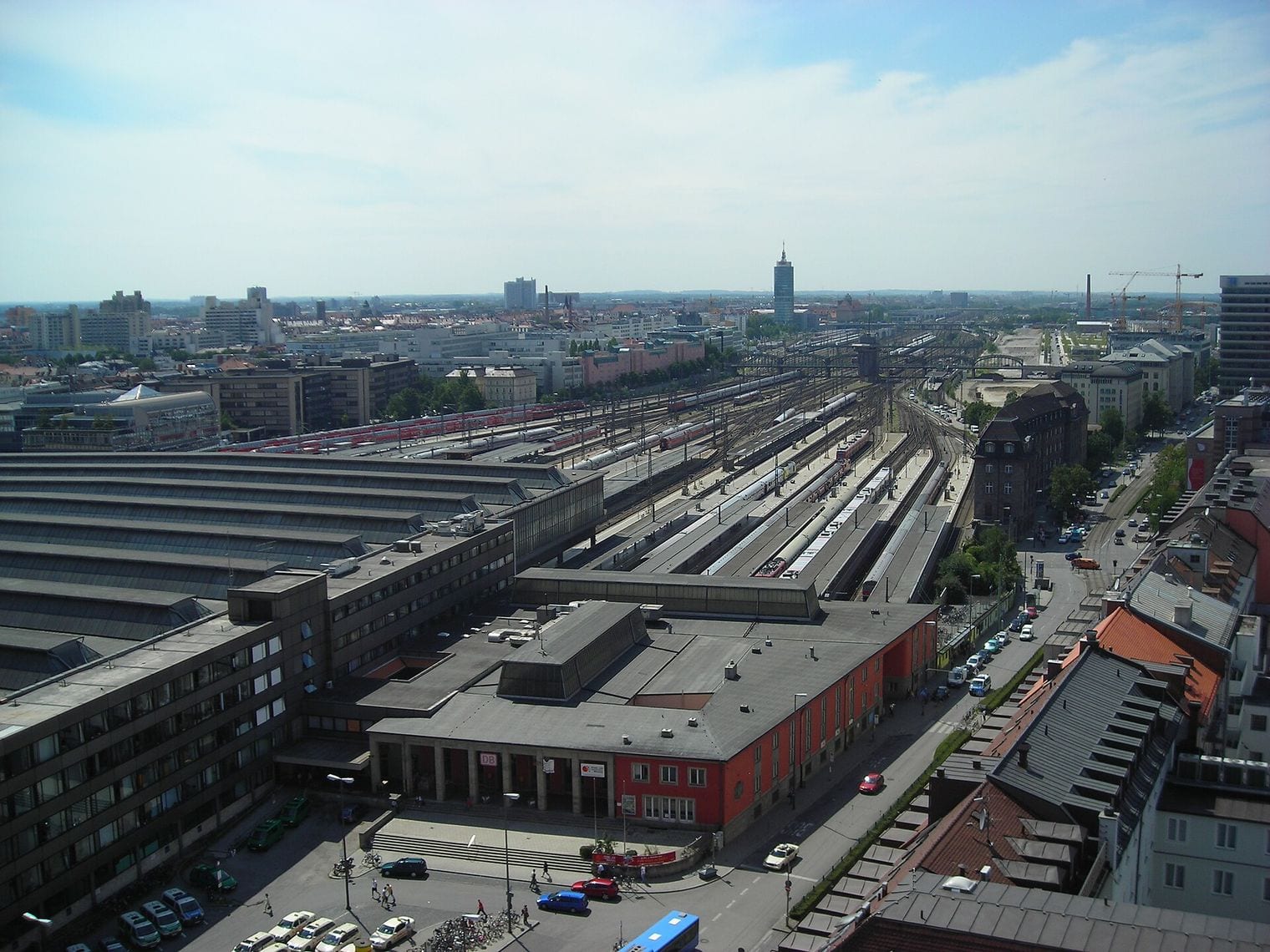
Munich Hauptbahnhof reaches 32 platform faces above ground, the third of the five stations tied at that figure. They are split across three separate halls: sixteen tracks in the main train shed, ten in the Holzkirchner wing to the south and six in the Starnberger wing to the north, an arrangement that catches out travellers who arrive expecting one concourse. The underground S-Bahn and U-Bahn platforms sit beneath all of it and are not counted here.
The station is one of the busiest in Germany and the natural staging post for the Bavarian Alps, with direct services to Salzburg, Innsbruck and Zurich. It is also the reason Munich fills so completely each autumn: the Oktoberfest grounds on the Theresienwiese are a short walk southwest, and the station absorbs the arriving crowds for a fortnight.
The whole complex is being rebuilt around a new S-Bahn trunk line running deep beneath the existing platforms, so the concourse a visitor sees is a temporary state of affairs.
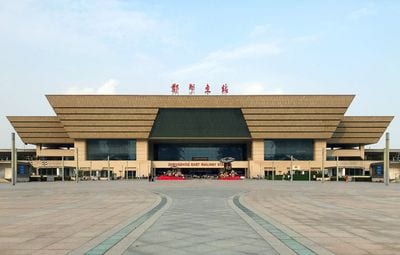
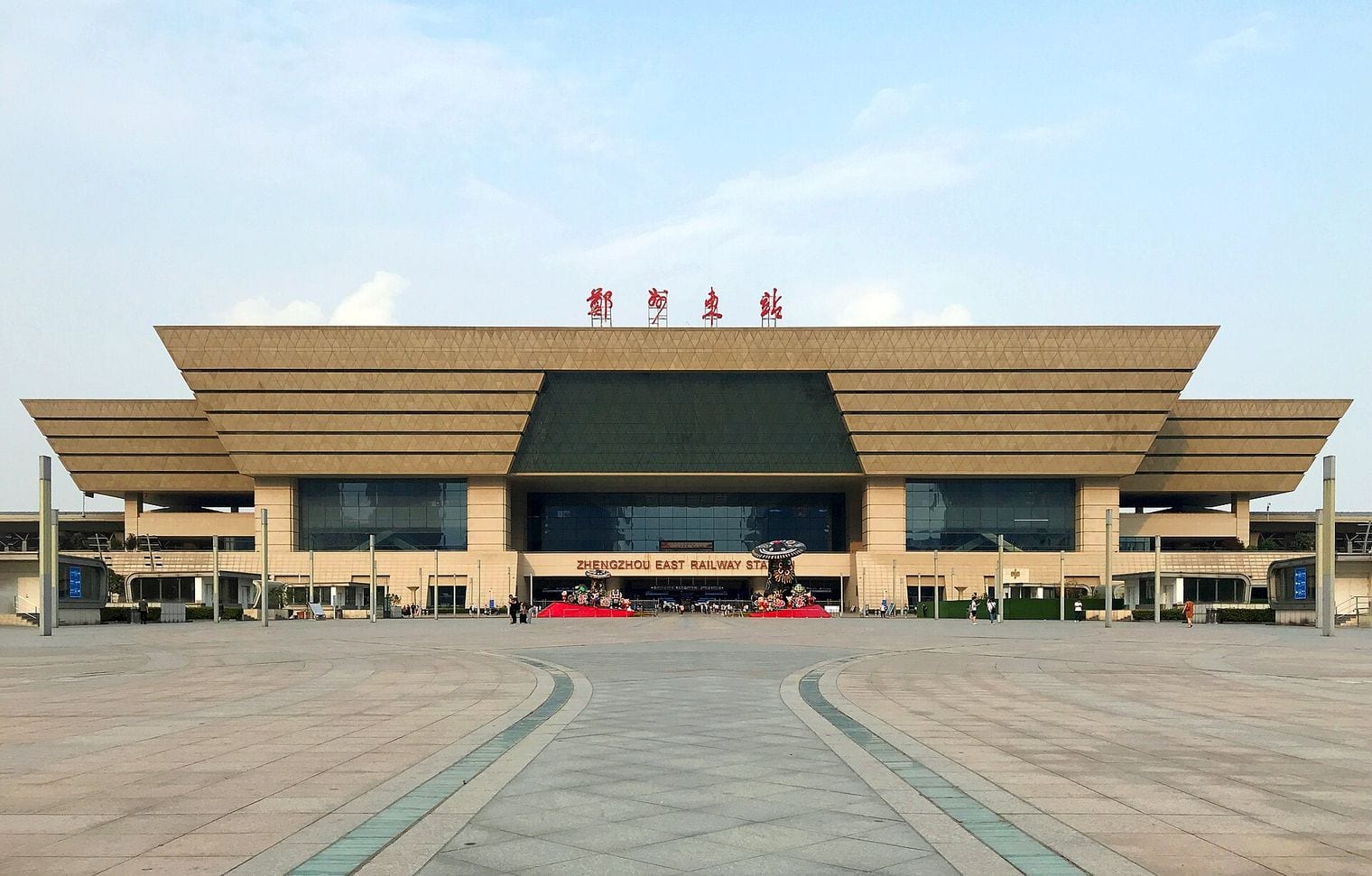
Zhengzhou East Railway Station has 32 platform faces on sixteen island platforms, every track platformed, tying it with Gare du Nord, Roma Termini, Munich and Beijing Fengtai. It opened in 2012 at the point where China's two principal high-speed corridors cross, the Beijing-Guangzhou line running north to south and the Xuzhou-Lanzhou line running east to west, which is precisely why it was built at this scale.
That crossing is an old idea rather than a new one. Zhengzhou grew into a city because the imperial-era railways met here first, and Henan province around it has been the demographic centre of China for most of recorded history.
The station stands in the Zhengdong New District, a planned expansion east of the old town laid out around an artificial lake, and its glass-and-steel hall was designed to echo a traditional roofline at a scale no traditional roof ever reached. For most travellers it is a place to change trains rather than a destination, which is exactly what a crossroads station is for.
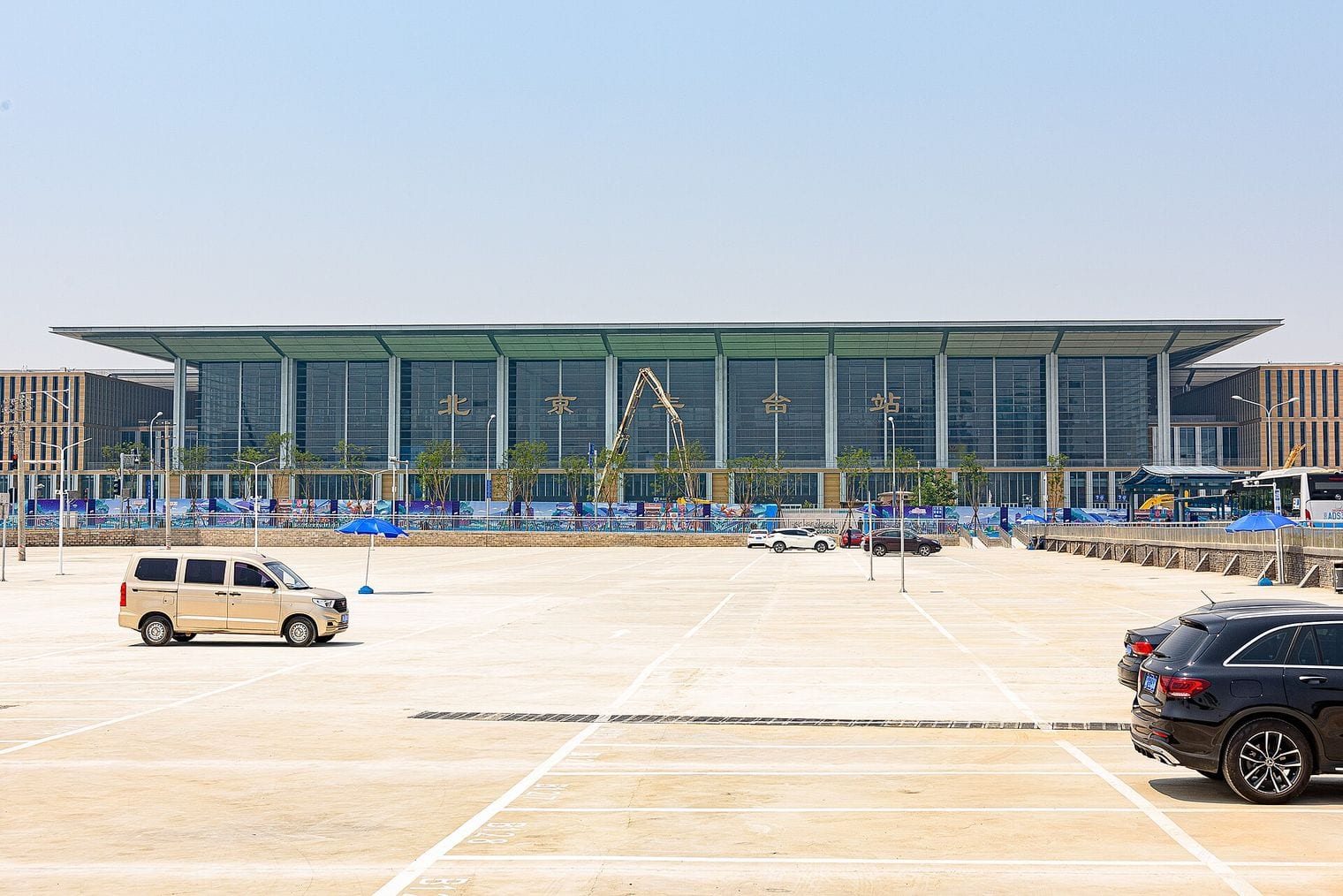
Beijing Fengtai Railway Station carries 32 platform faces across seventeen platforms, completing the five-way tie at that figure. It is the largest railway station in Beijing by some distance, ahead of Beijing South's 24 and Beijing West's 20, and it does something none of the others attempt: the high-speed and conventional yards are stacked vertically rather than laid side by side, with twelve high-speed tracks on an elevated deck above twenty conventional tracks at ground level and the subway below both.
That double-decker arrangement is why the station is routinely described as the largest railway hub in Asia by floor plan, and it is the reason it fits into a district that was already densely built. Fengtai is not a new name on the network.
A station has stood on this site since 1895, making it the oldest railway station in Beijing, and the current building reopened in 2022 after the old one came off the network for a complete rebuild. The waiting halls are designed to hold 14,000 passengers at once.
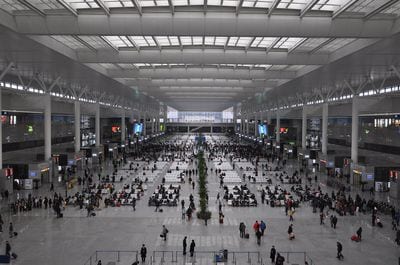
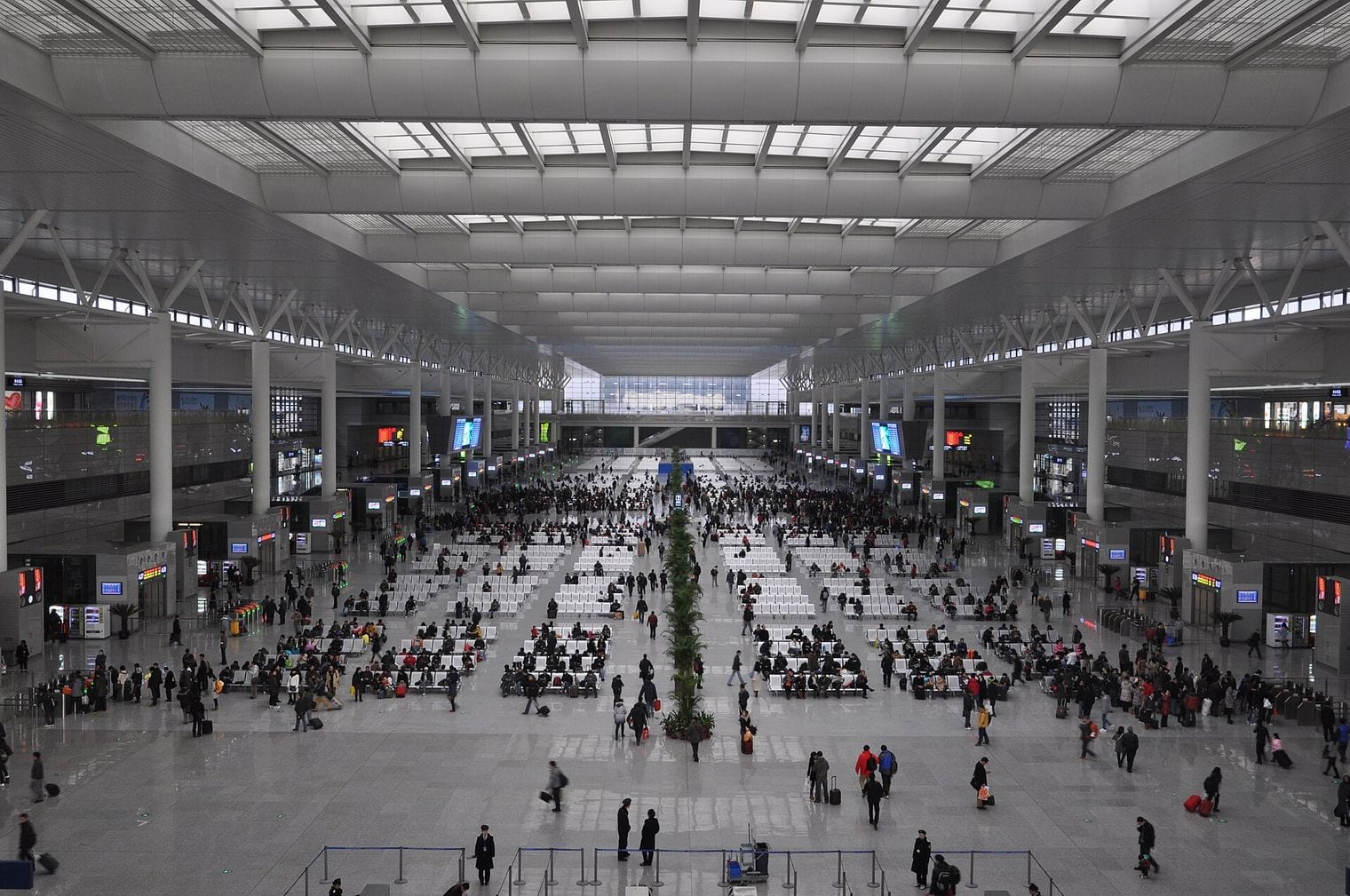
Shanghai Hongqiao Railway Station has 30 platform faces, the first of four stations tied at that number and the busiest of them by a wide margin. They are divided between two yards under one roof, nineteen tracks on the Beijing-Shanghai high-speed side and eleven on the comprehensive side, served by fourteen island platforms and two side platforms. The station is the eastern terminus of the Beijing-Shanghai high-speed railway, the busiest such line in the world.
What makes Hongqiao unusual is what it is attached to. The station shares an integrated transport hub with Shanghai Hongqiao International Airport's Terminal 2, so a passenger can walk from a domestic flight to a high-speed platform without going outside, and two metro lines run beneath the whole complex.
It sits well west of the Bund and the old concession districts, about half an hour from the centre by metro. The design intent was to move intercity passengers through Shanghai without ever routing them into it.
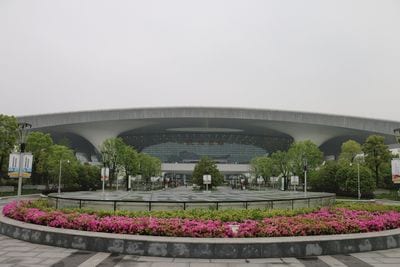
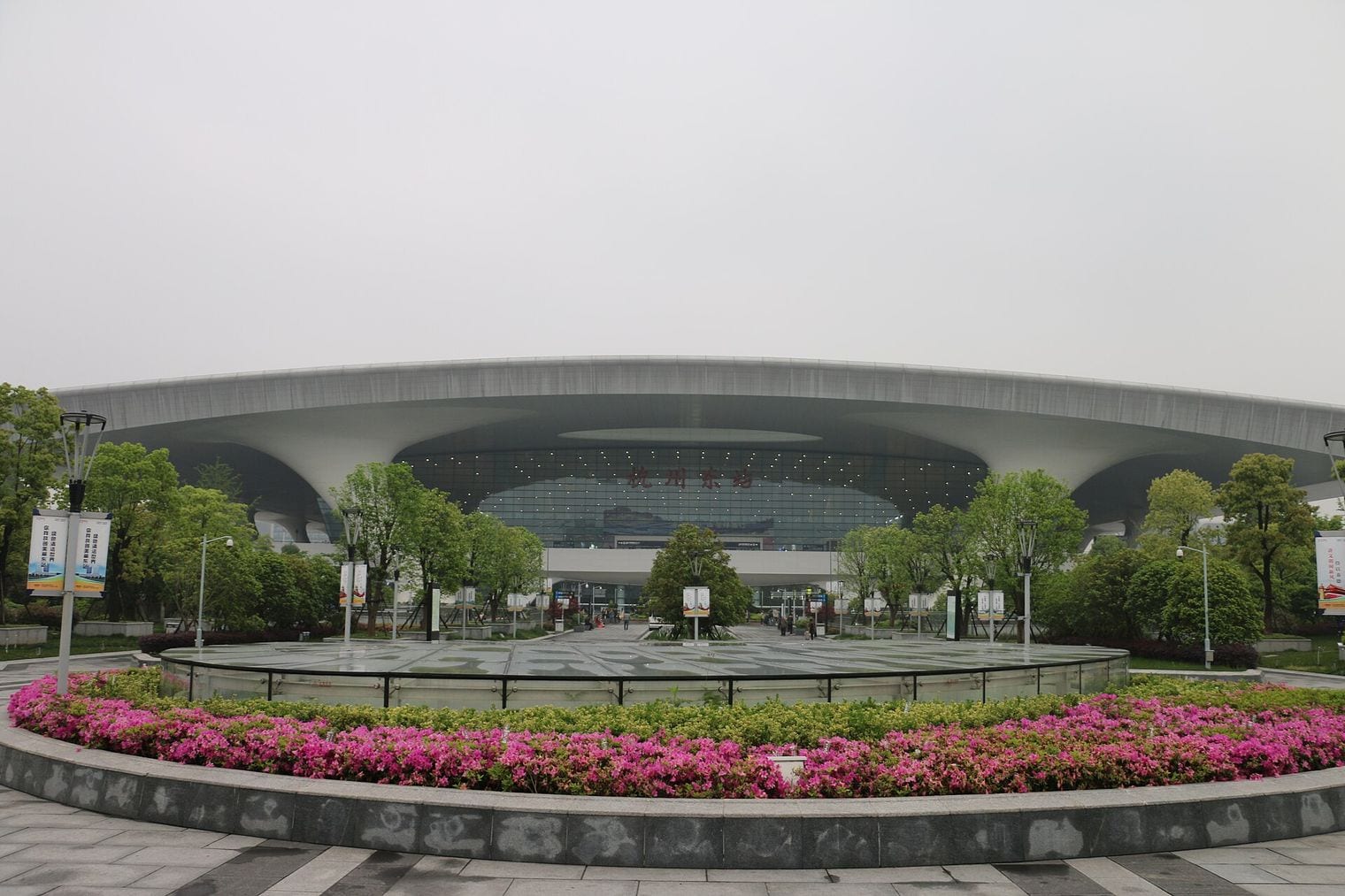
Hangzhou East Railway Station operates 30 platform faces on fifteen island platforms, tying it with Shanghai Hongqiao, Gare de l'Est, Kunming South and Zhengzhou Hangkonggang. It is one of the busiest stations in eastern China, funnelling high-speed services between Shanghai, Nanjing, Ningbo and the inland provinces, and it was substantially rebuilt and reopened in 2013 at roughly four times its previous size.
The city it serves is the reason those platforms fill. Hangzhou sits at the southern end of the Grand Canal, the longest artificial waterway in the world, and West Lake on its western edge has shaped Chinese landscape painting and garden design for a thousand years.
The lake is a UNESCO World Heritage Site, and the causeways and arched bridges that cross it are the images most Chinese travellers associate with the city. The station is about twenty minutes east of the water by metro, which is a short ride for somewhere that draws visitors on this scale.
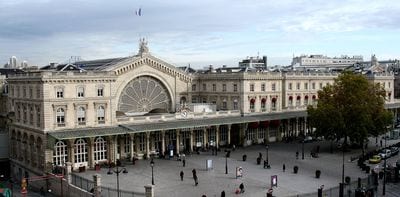
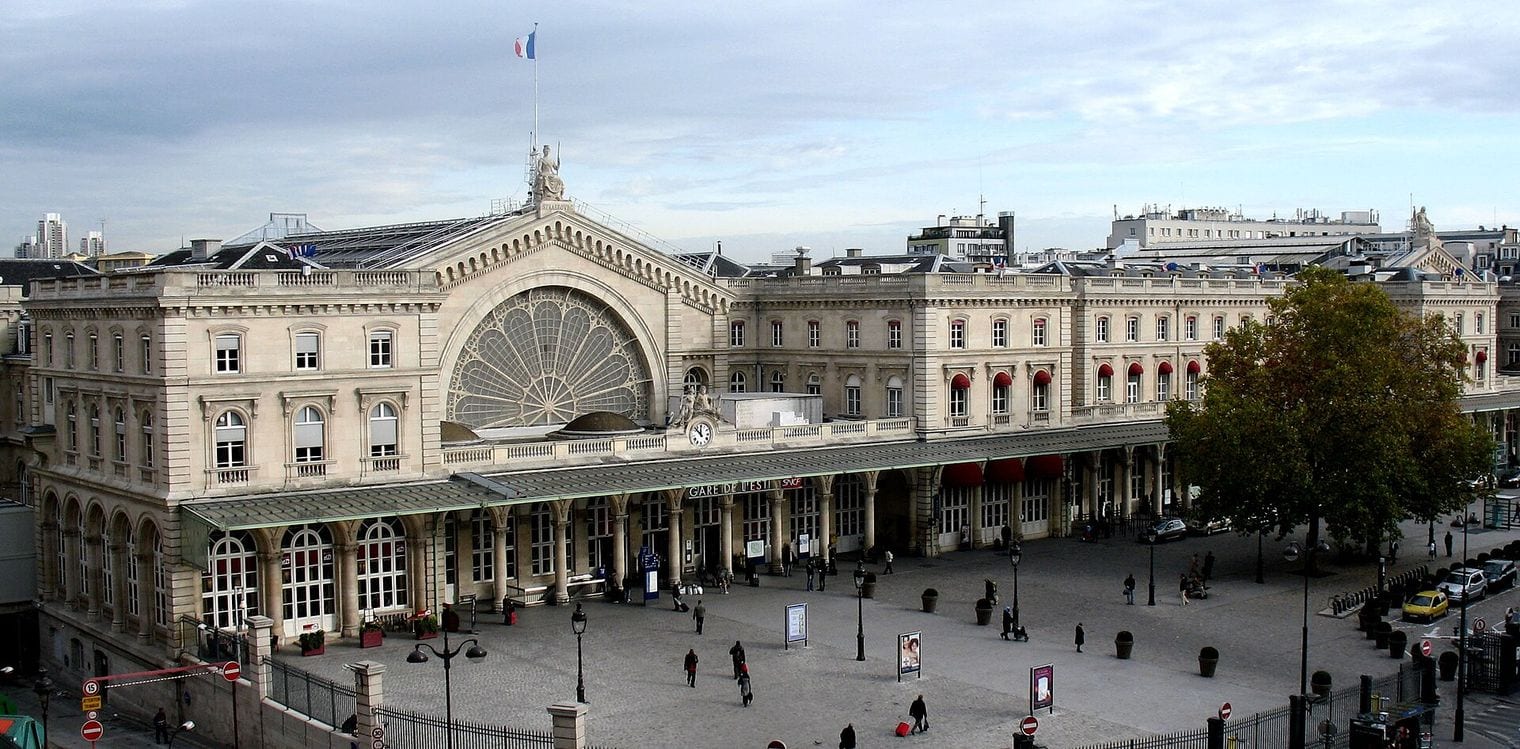
Gare de l'Est completes the Paris pair on this list with 30 platform faces across fifteen platforms, tied with three Chinese stations and ranked between them on passenger volume. It is quieter than its neighbour a few hundred metres northwest, and it handles a different geography: the TGV Est services running toward Strasbourg, Luxembourg, Germany and Switzerland, plus regional trains into Champagne and the Grand Est.
The station opened in 1849 and its western facade is one of the most legible pieces of railway architecture in Paris, with a statue personifying the city of Strasbourg set above the great semicircular window. That geography gave the building a heavier history than most termini.
This was the station from which French troops departed for the eastern front in 1914, a scene recorded in a large canvas that still hangs inside the building. The concourse was widened and glazed in a 1930s expansion, which is why the eastern half feels notably lighter than the original western hall.
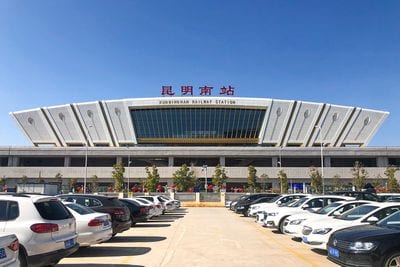
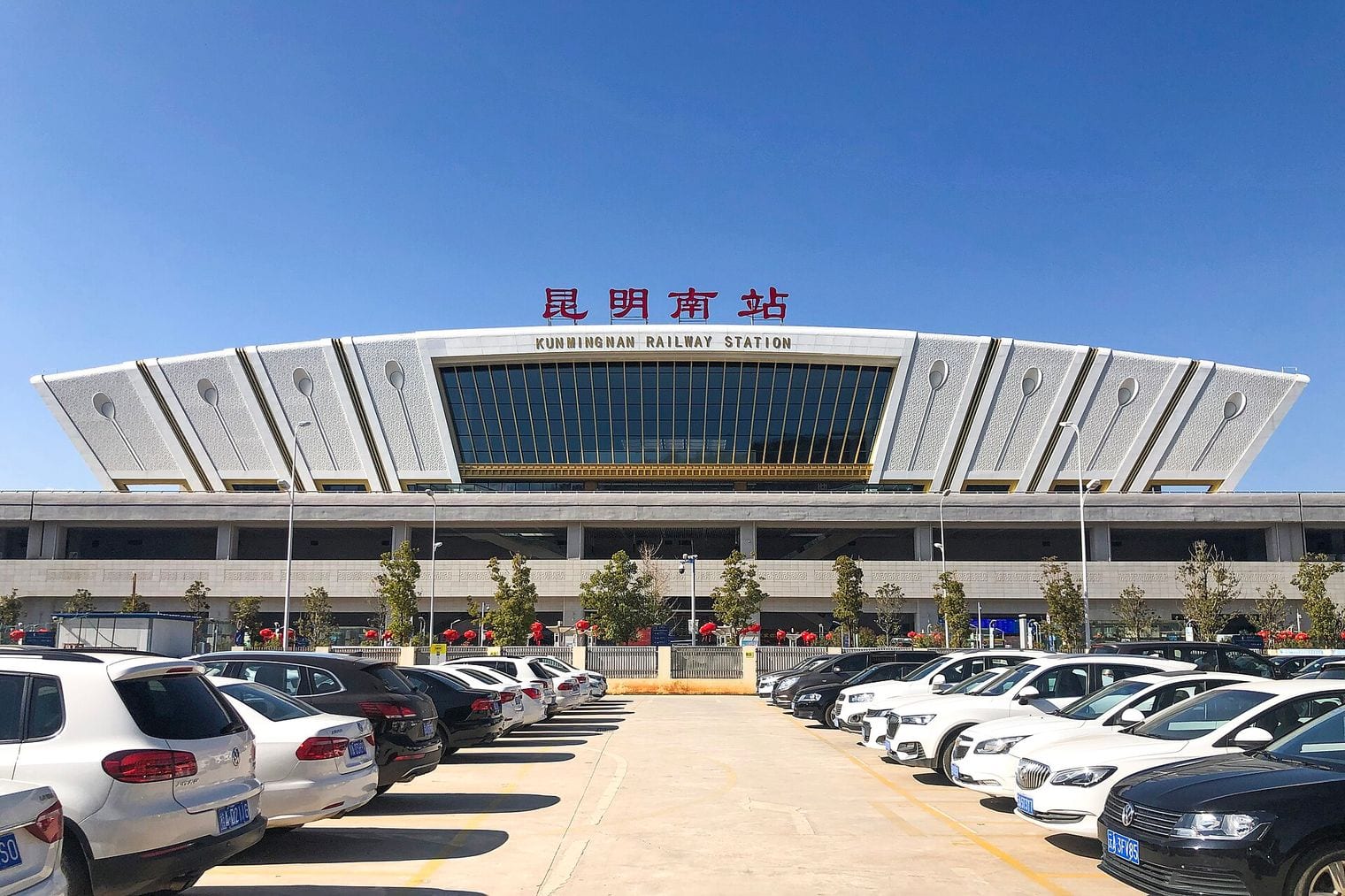
Kunming South Railway Station has 30 platform faces and 30 arrival-departure tracks across sixteen platforms, tying it with Shanghai Hongqiao, Hangzhou East, Gare de l'Est and Zhengzhou Hangkonggang. It opened in December 2016 as the southwestern anchor of the national high-speed network, and it was deliberately overbuilt: the platforms were sized for international traffic toward Southeast Asia rather than for the passengers Yunnan alone generates.
That ambition is now partly realised. The China-Laos railway runs south from Kunming to Vientiane, and the station is the intended northern end of a corridor aimed eventually at Bangkok and Singapore.
The city it serves is known across China as the spring city for a climate that stays mild all year at around 1,900 metres of altitude, and it is the usual staging point for travellers heading to the terraced rice fields of Yuanyang and the old town of Lijiang. The station stands about thirty kilometres from the centre, further out than the airport.
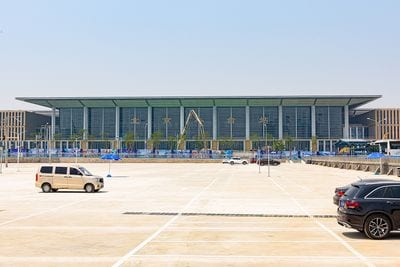
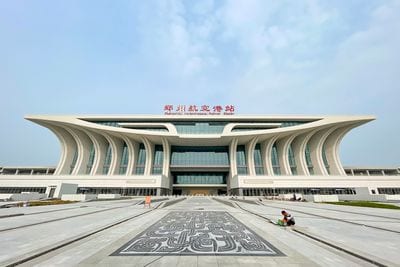
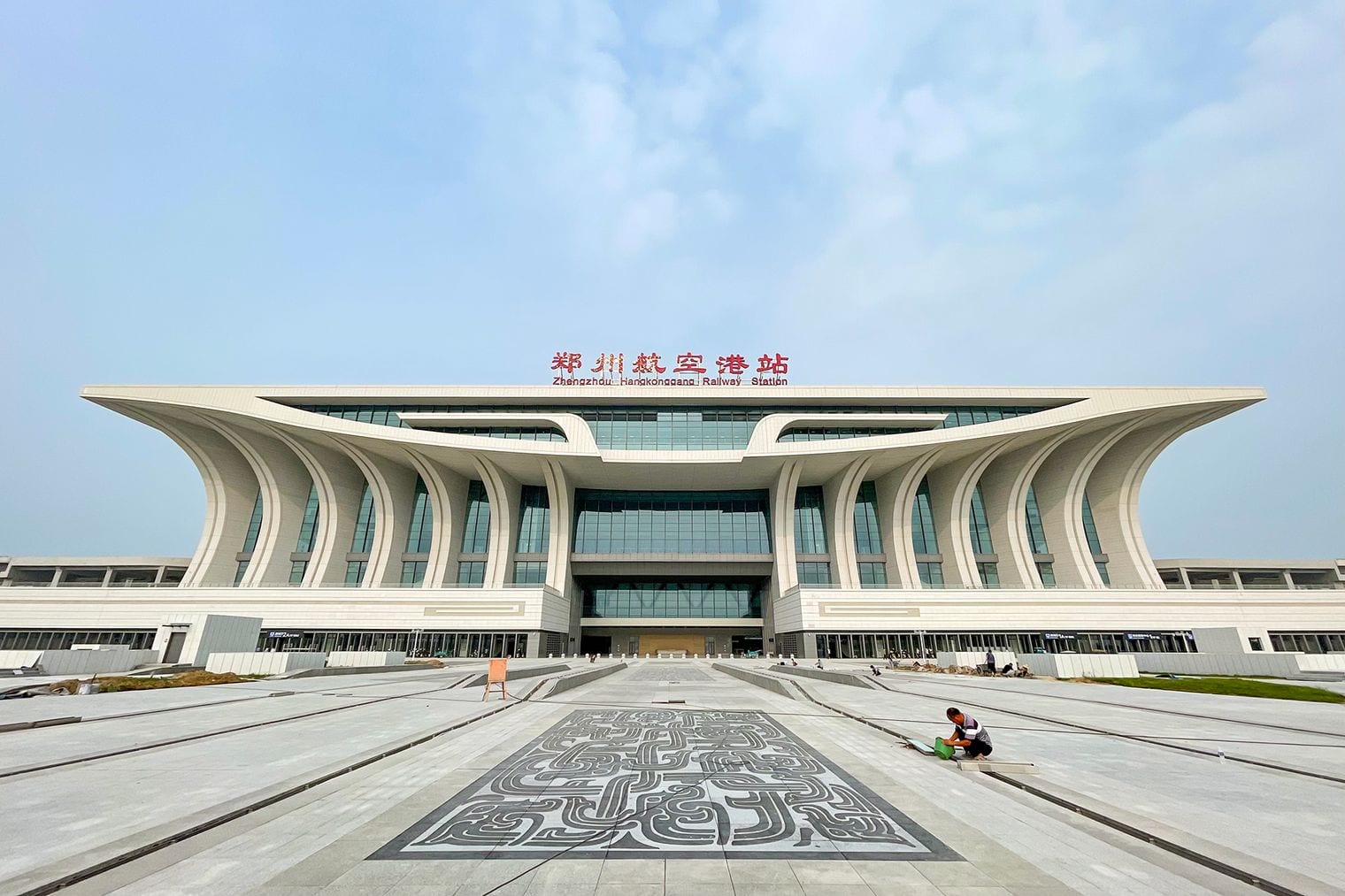
Zhengzhou Hangkonggang Railway Station has 30 platform faces, the last of the stations to clear this countdown's threshold and the newest entry on the list. Its yard is laid out as sixteen platforms and 32 tracks, of which 30 carry a passenger platform edge, arranged across three parallel yards for the high-speed, intercity and airport services that meet here. It opened on 20 June 2022, the same day as Beijing Fengtai.
It is the second station on this list built to serve an airport rather than a city centre, sitting in Zhengzhou's Airport Economy Zone southeast of the city and forming a third major railway gateway alongside Zhengzhou Station and Zhengzhou East.
The building is the most openly decorative here: its roofline is drawn from a bronze vessel excavated at nearby Xinzheng, and the design is described as cranes dancing across nine provinces. For now the platforms are far emptier than their number suggests, which is the usual condition of Chinese infrastructure built a decade ahead of the demand it expects.
FAQ: The World's Largest Train Stations
What is the largest train station in the world?
Grand Central Terminal in New York, which has more platforms than any other station on earth and holds the Guinness World Record for it. Counting the platform edges where scheduled trains actually berth, it has 41, ahead of Xi'an North in China on 34. Its widely quoted figure of 67 tracks includes yard and siding tracks used to stable trains between the rush hours.
Why is Chongqing East not on this list?
Because it is the largest by floor area, not by platforms. Chongqing East opened in June 2025 and covers 1.22 million square metres, but that figure describes an entire integrated transport hub rather than the station building, and its yard has only 29 tracks. On platform count it falls just below the threshold for this ranking.
How are the largest train stations measured?
This countdown ranks platform faces, meaning the number of platform edges a scheduled passenger train can pull up against. Floor area is the common alternative, but it is unreliable: the same station is published at wildly different sizes depending on whether the boundary includes plazas, car parks and metro halls. A platform edge is far harder to define loosely.
Which country has the most of the world's largest stations?
China, with seven of the twelve. Six of those seven opened after 2010, built for a high-speed network that expanded faster than any other in history. The rest of the list is split between the United States, France with two Paris termini, Italy and Germany, all of them stations whose scale was set in the nineteenth century.
Is the busiest train station also the biggest?
No, and the gap is wide. Shinjuku in Tokyo handles roughly 3.5 million passengers a day, more than any station in the world, but it has 29 platform faces and does not make this list. Gare du Nord is the busiest station in Europe and sits third here. Throughput depends on service frequency far more than on platform count.
What is the largest railway station in Europe?
Gare du Nord and Roma Termini share the European lead on 32 platform faces each, with Munich Hauptbahnhof level alongside them. Gare du Nord is placed highest here because it carries more passengers than any other station on the continent. Leipzig Hauptbahnhof is often called Europe's largest, but that claim rests on floor area rather than platforms.