We build and rank every list first. Booking links come after, and only where
a partner sells a ticket, tour or stay for that exact place, so a place with
nothing to book is listed exactly as prominently as one you can book.
So how do we earn? Some links on this page go to booking
partners, and if you book tickets, tours or a stay through
one, we may earn a commission. It costs you nothing extra.
That commission never decides which places make the list, the order they
appear in, or what we write about them. No entry is sponsored or a paid
placement.
By the CityViking Research TeamPublished Ranked by trunk volume · 13 min read
Last verified Checked before launchOct 30, 202613 sources5 publishers2 government & parks2 encyclopedias & research9 venues & other sitesPublished · Oct 31, 2026Researched and checked before it went liveClick for every source and the full change log.
The record
estimated to have a volume of 52,500 cubic ft.1,486.6 cubic meters
General Sherman Tree
United States
The record
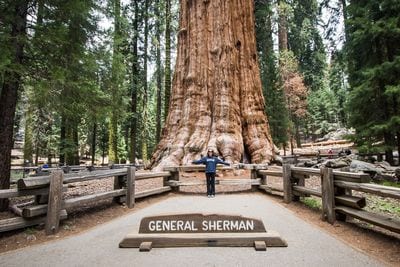
The largest tree in the world is the General Sherman Tree, in the United States — estimated to have a volume of 52,500 cubic ft. (1,486.6 cubic meters), trunk volume.
Source: nps.gov. Verified .
The General Sherman Tree is the most famous tree on Earth, and a straight ranking of the largest trees would be all giant sequoias, because more than a dozen of them are bigger than the largest tree of any other kind.
So this countdown names one champion per species, the largest known living single-stem tree of each, ranked by measured trunk volume, from the Barnes Creek Survivor, a grand fir in Washington at 81.7 m³, to General Sherman at 1,486.6 m³. Only the main trunk counts, so New Zealand's Tāne Mahuta ranks on its 255 m³ trunk, not the 516.7 m³ it reaches with its branches.
A tree must also be alive and grow from a single stem. That rules out Lost Monarch, a coast redwood whose several stems are fused together, the Quinault Lake Cedar, which died in 2016, and Japan's Jōmon Sugi, whose volume is only an approximation. Nine of the thirteen grow in the western United States, two in Canada and two in New Zealand.
More than a dozen giant sequoias outrank everything else. By Wikipedia's list of the largest giant sequoias, 13 of them have more trunk wood than Grogan's Fault, the largest tree of any other species, which is why this list takes one tree per species.
The biggest tree ever measured was cut down. The Crannell Giant, a coast redwood near Trinidad, California, was logged around 1945 with at least 1,743 m³ of stem wood, and a slice of it forms one wall of the One Log Tree House in Eureka.
General Sherman was once the Karl Marx Tree. The socialist Kaweah Colony, which held the land in the late 1880s, renamed it after the author of Das Kapital.
One branch of General Sherman was bigger than most trees. The limb that broke off in 2006 was more than 2 metres thick and 30 metres long, and it cratered the paved walkway when it fell.
A bulldozer driver saved number 13. The Barnes Creek Survivor was due to be removed when Highway 101 was rerouted in 1979, until the operator decided it was significant and the park chose to save it.
Some record trees are kept secret. The locations of Grogan's Fault and the Mossy Creek Giant have never been published, to keep them safe from vandals.
11. General Sherman Tree
Giant Forest, Sequoia National Park, Tulare County, California, United States
estimated to have a volume of 52,500 cubic ft. (1,486.6 cubic meters)
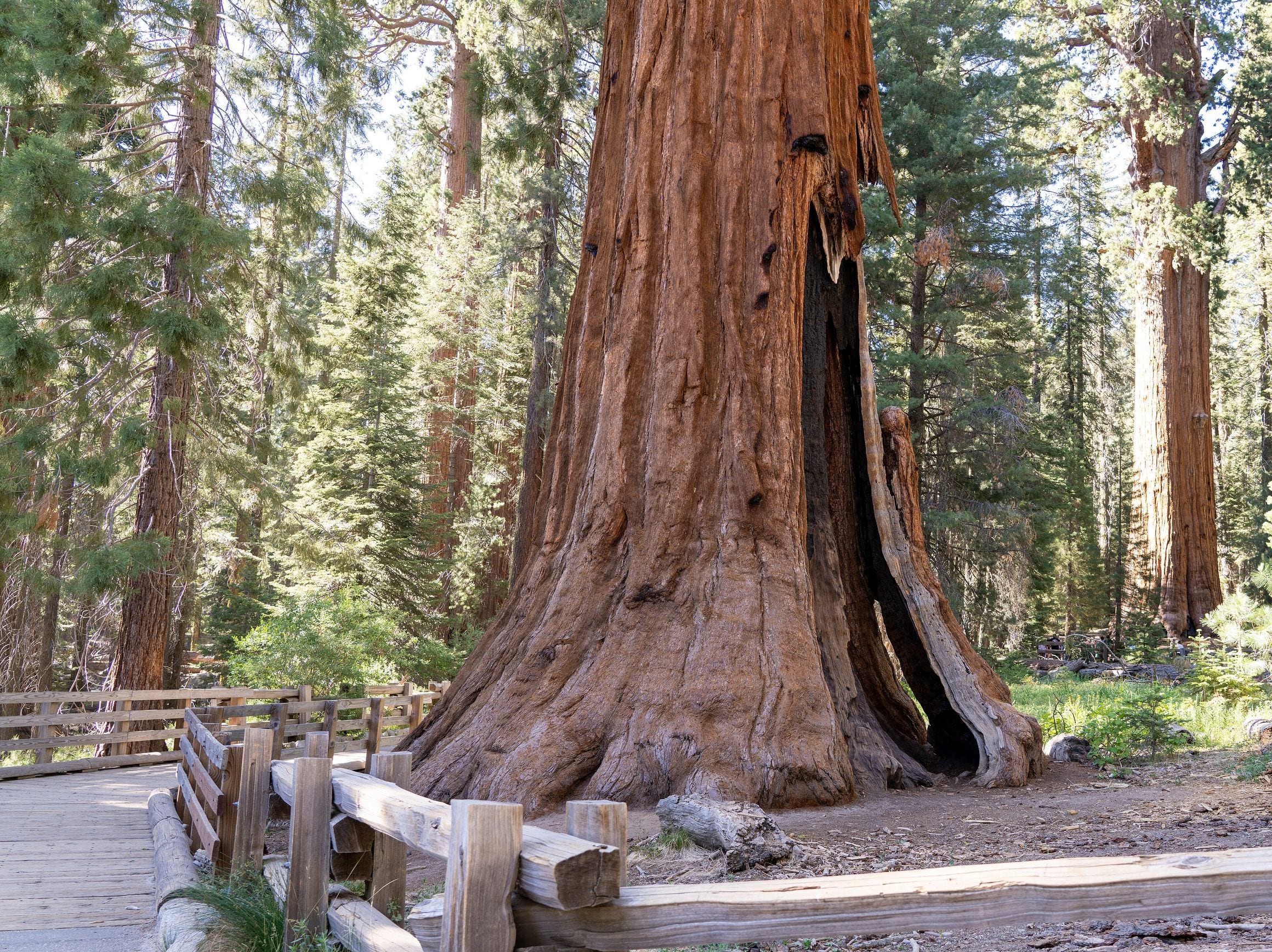
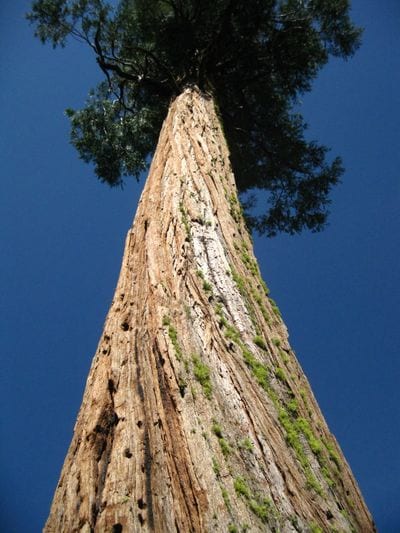
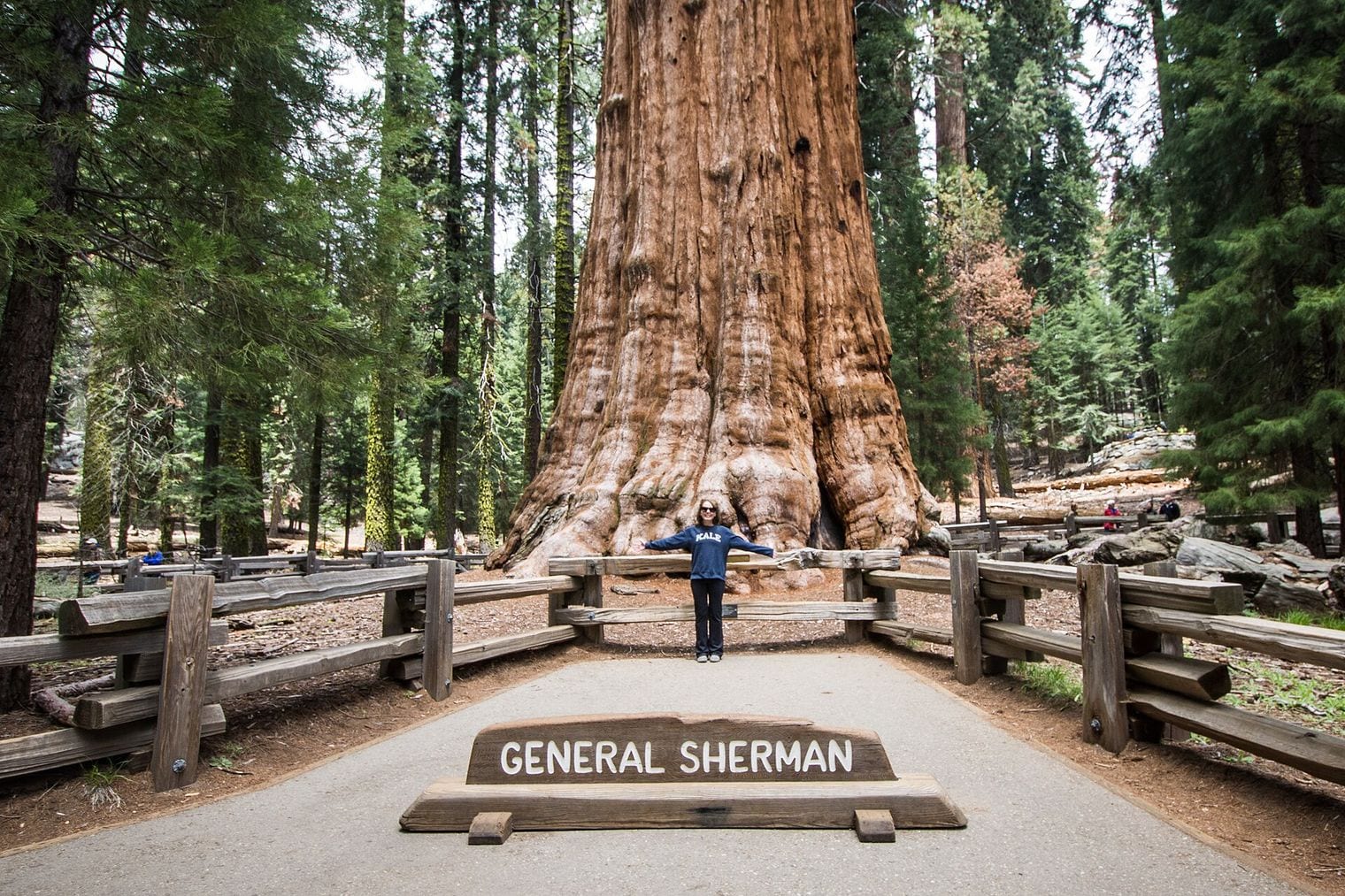
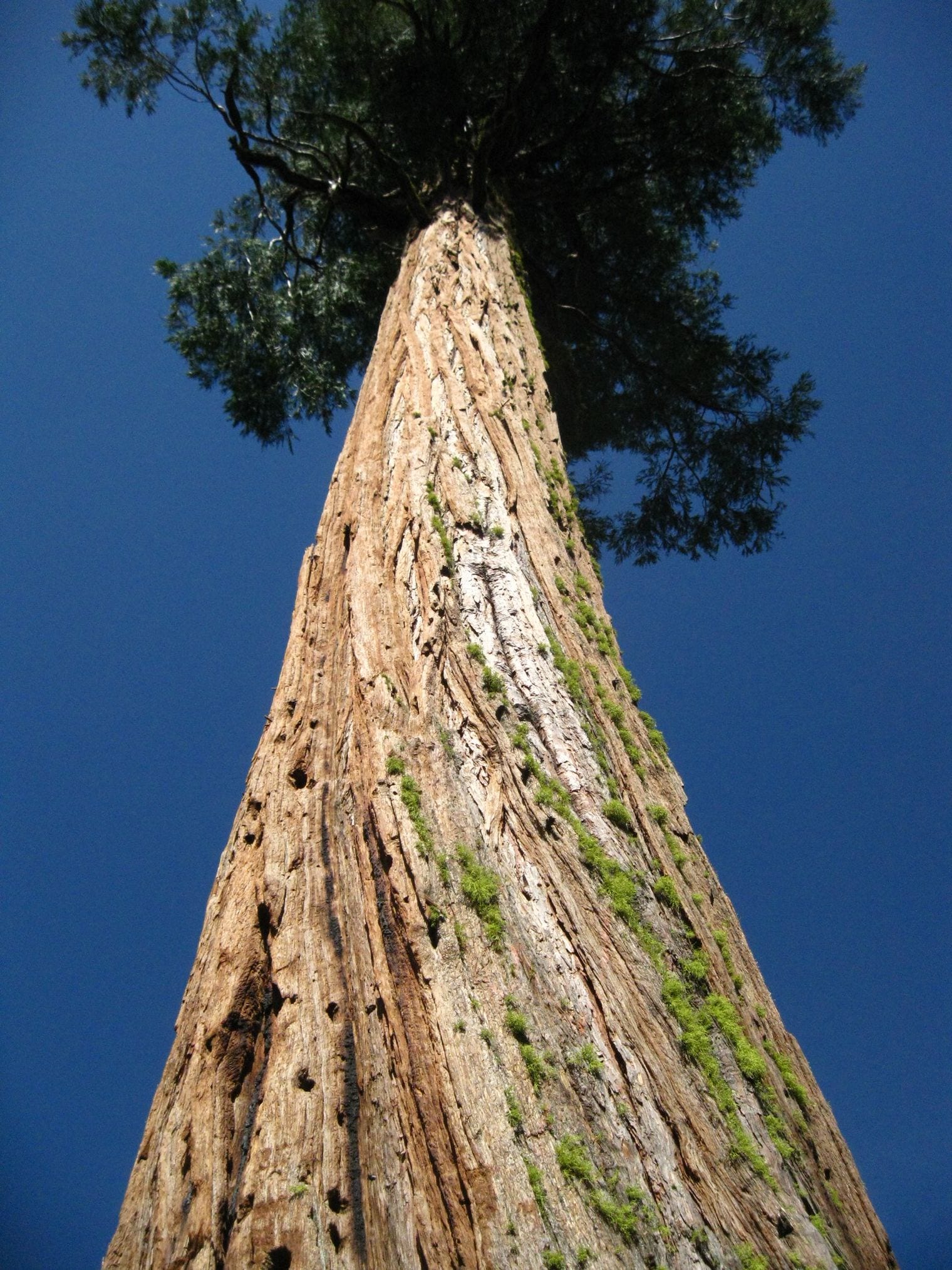
At 1,486.6 m³ of trunk wood, the General Sherman Tree is the largest known living single-stem tree on Earth, a giant sequoia in the Giant Forest of Sequoia National Park, high in the southern Sierra Nevada east of Fresno.
The National Park Service gives its volume as about 52,500 cubic feet; the Gymnosperm Database, from its own survey, puts it at 1,473.4 m³, and either figure leaves every other tree far behind. It stands 83.8 metres tall and is estimated to be 2,300 to 2,700 years old.
The tree is said to have been named in 1879 for the Civil War general William Tecumseh Sherman, and it was confirmed as the largest tree in the world in 1931, after comparisons with the General Grant Tree in what is now Kings Canyon National Park.
In 2006 it dropped its biggest branch, more than 2 metres thick and 30 metres long, a break not thought to signal any problem with its health. Two paved paths lead to it: the Main Trail walks down about half a mile from a car park off the Wolverton Road, and a short wheelchair-accessible trail starts from the Generals Highway, while the paved Congress Trail loop begins close by.
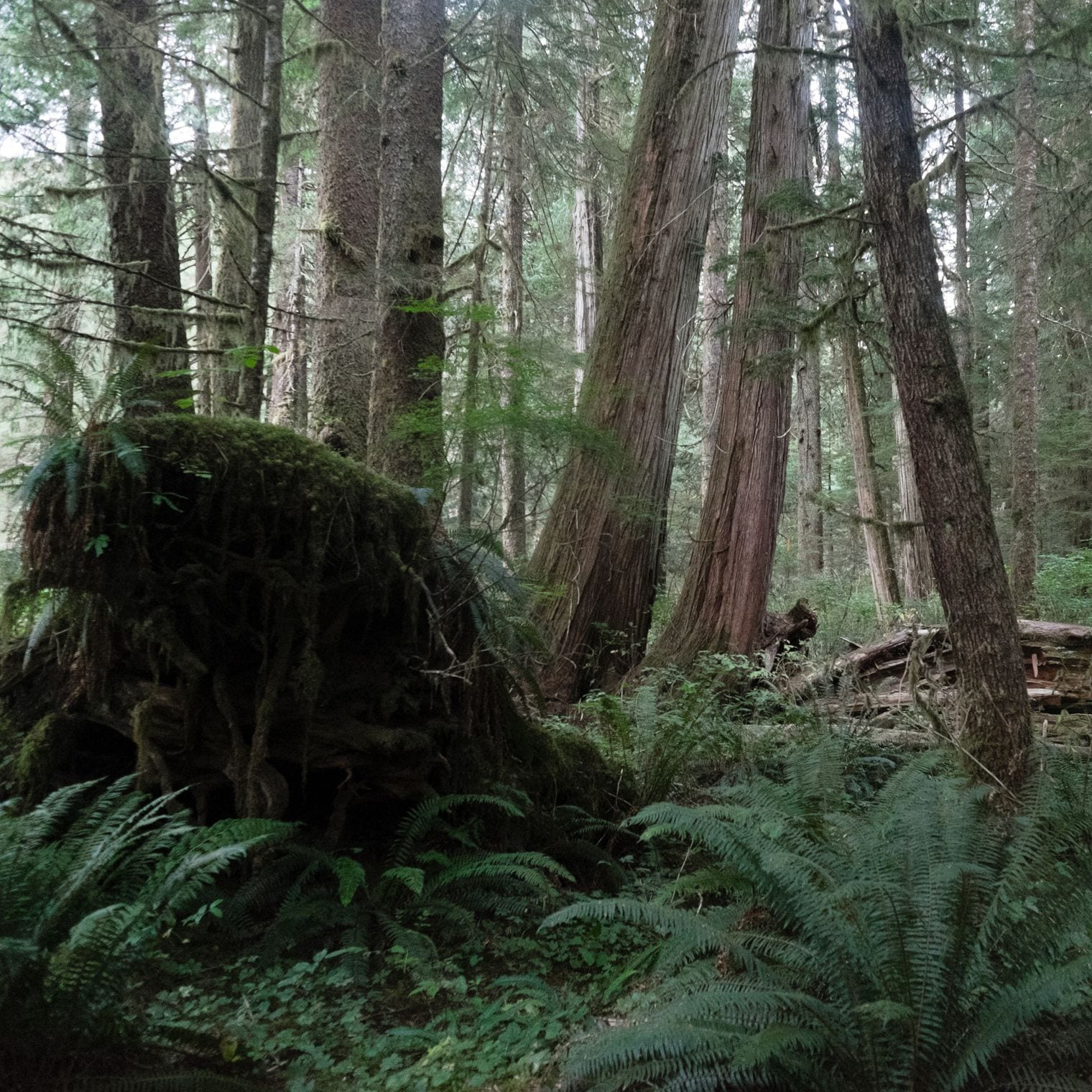
22. Grogan's Fault
Redwood National Park, California (exact location undisclosed), United States
At 1,084.5 m³, Grogan's Fault is the largest known single-stem coast redwood, and the largest tree of any species other than the giant sequoia. It grows in Redwood National Park in northern California, and its volume, published in the Gymnosperm Database, rests on repeated measurements by the big-tree surveyors Chris Atkins, Michael Taylor and Ron Hildebrandt.
Mario Vaden and Chris Atkins found the tree in 2014, and its exact location has never been published. It shares the park with Hyperion, the tallest known tree on Earth. Even Grogan's Fault is small beside the giants that were logged: the Crannell Giant, a coast redwood cut down around 1945, held at least 1,743 m³ of wood.
33. Cheewhat Giant
Pacific Rim National Park Reserve, west coast of Vancouver Island, British Columbia, east of Cheewhat Lake, Canada
wood volume of 449 cubic meters | stem wood volume of the living single-stem tree (Van Pelt 2001 survey)
At 449 m³, the Cheewhat Giant is the largest living western red cedar and the largest known tree in Canada, growing in Pacific Rim National Park Reserve on the west coast of Vancouver Island. The figure comes from Robert Van Pelt's survey, published in his 2001 book Forest Giants of the Pacific Coast, and the tree stands 55.5 metres tall with a trunk close to 6 metres across.
Also called the Cheewhat Lake Cedar, it was found in 1972, inside a park that already protected it, and it took the species title when the Quinault Lake Cedar in Washington died in 2016. The Gymnosperm Database calls this stretch of coast the happy hunting ground for giant redcedars. The species has been called the cornerstone of Northwest Coast Indigenous culture: its wood gave the house planks and canoes, often split from standing trees rather than felled.
44. Red Creek Fir
San Juan River valley, about 15-18 km by road east of Port Renfrew, Vancouver Island, British Columbia, Canada
total wood volume of 349 m3 | total wood volume measured Dec 1998 (12,325 cu ft)
At 349 m³, the Red Creek Fir is the largest coast Douglas-fir with a published trunk volume, growing in the San Juan River valley east of Port Renfrew on Vancouver Island, British Columbia. Robert Van Pelt and Christopher Earle of the Gymnosperm Database measured it in December 1998 at 73.8 metres tall with a trunk 4.23 metres across, and the database names it the largest known individual of the whole pine family, though some Washington trees may yet prove bigger.
Storms have snapped its top at least twice, so it was probably once much taller. Port Renfrew is nicknamed the Tall Tree Capital of Canada, and the fir lies about 15 kilometres from town along rough logging roads in the same valley as Big Lonely Doug, Canada's second-largest Douglas-fir.
55. Queets Spruce
Queets River valley (near Sams River confluence, road's end), Olympic National Park, Washington, United States
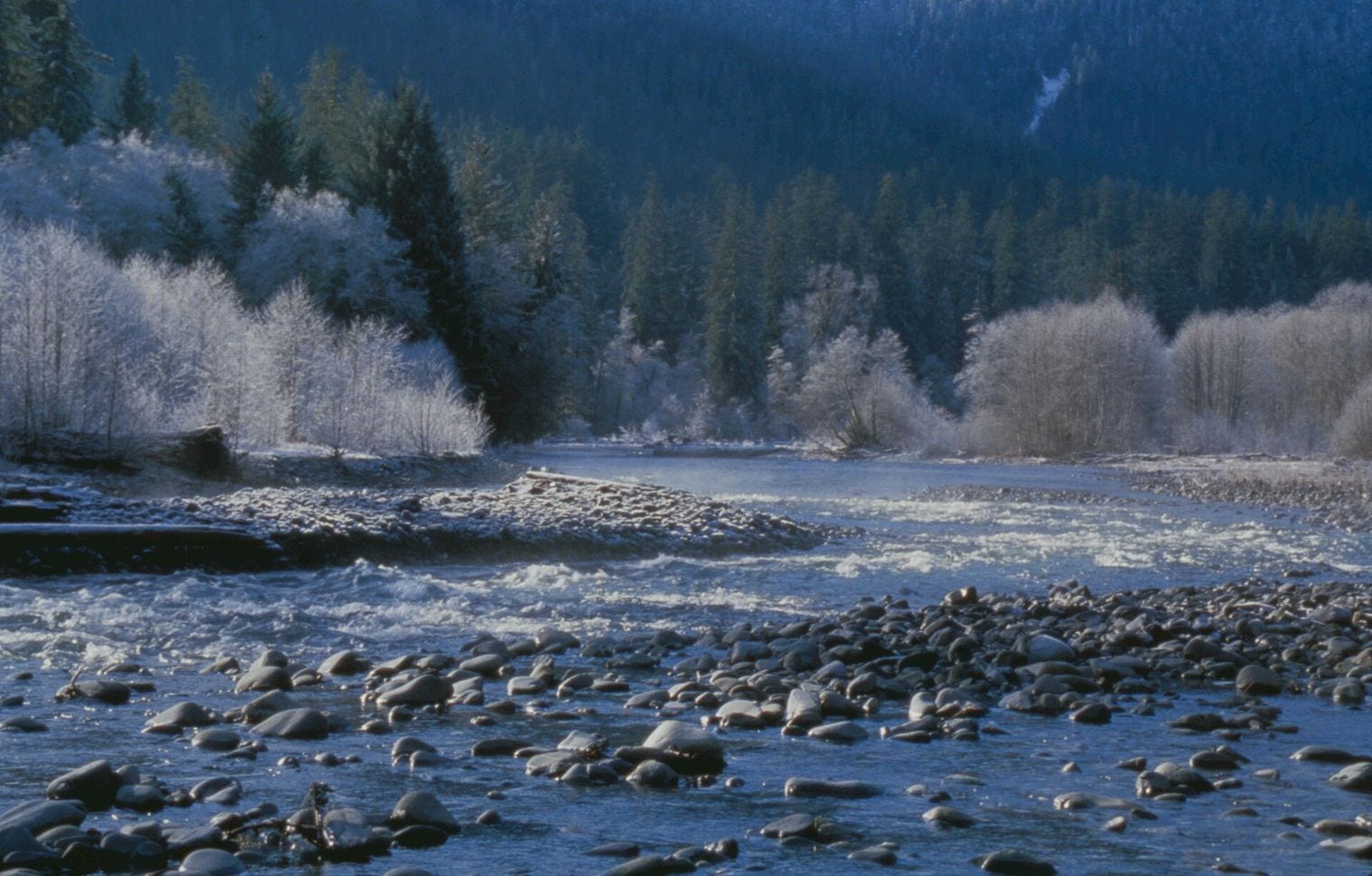
At 337 m³, the Queets Spruce is the largest known Sitka spruce, the biggest of all the spruces, growing in the Queets River valley of Olympic National Park in Washington. Robert Van Pelt's survey, published in 2001, measured it at 75.6 metres tall with a trunk 4.55 metres across, and the Gymnosperm Database, which carries that figure, notes that a fresh measurement is probably due.
Van Pelt first heard of the tree from Bob Wood in the late 1980s, and its growth rings show it is still putting on wood fast.
It adds about a foot to its circumference every 35 years, which Van Pelt worked out at close to 4.3 m³ of new wood a year, enough in his view to make it one of the fastest-growing trees on the planet. The Queets is one of the park's temperate rain forest valleys, and the tree's exact position is not publicised.
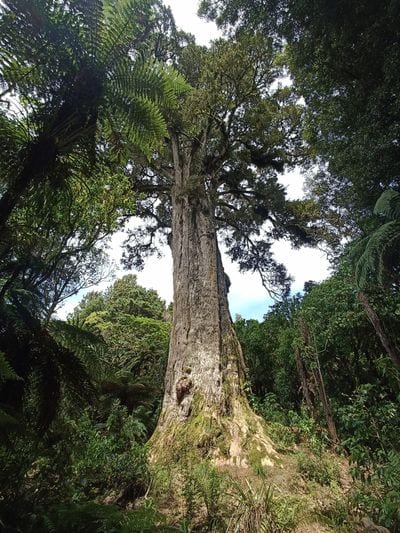
66. Tāne Mahuta
Waipoua Forest, Northland, New Zealand
The main trunk is 17.8 m tall and contains 255 m³ of wood. (9,005 cu ft)
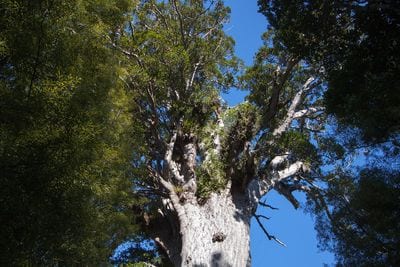
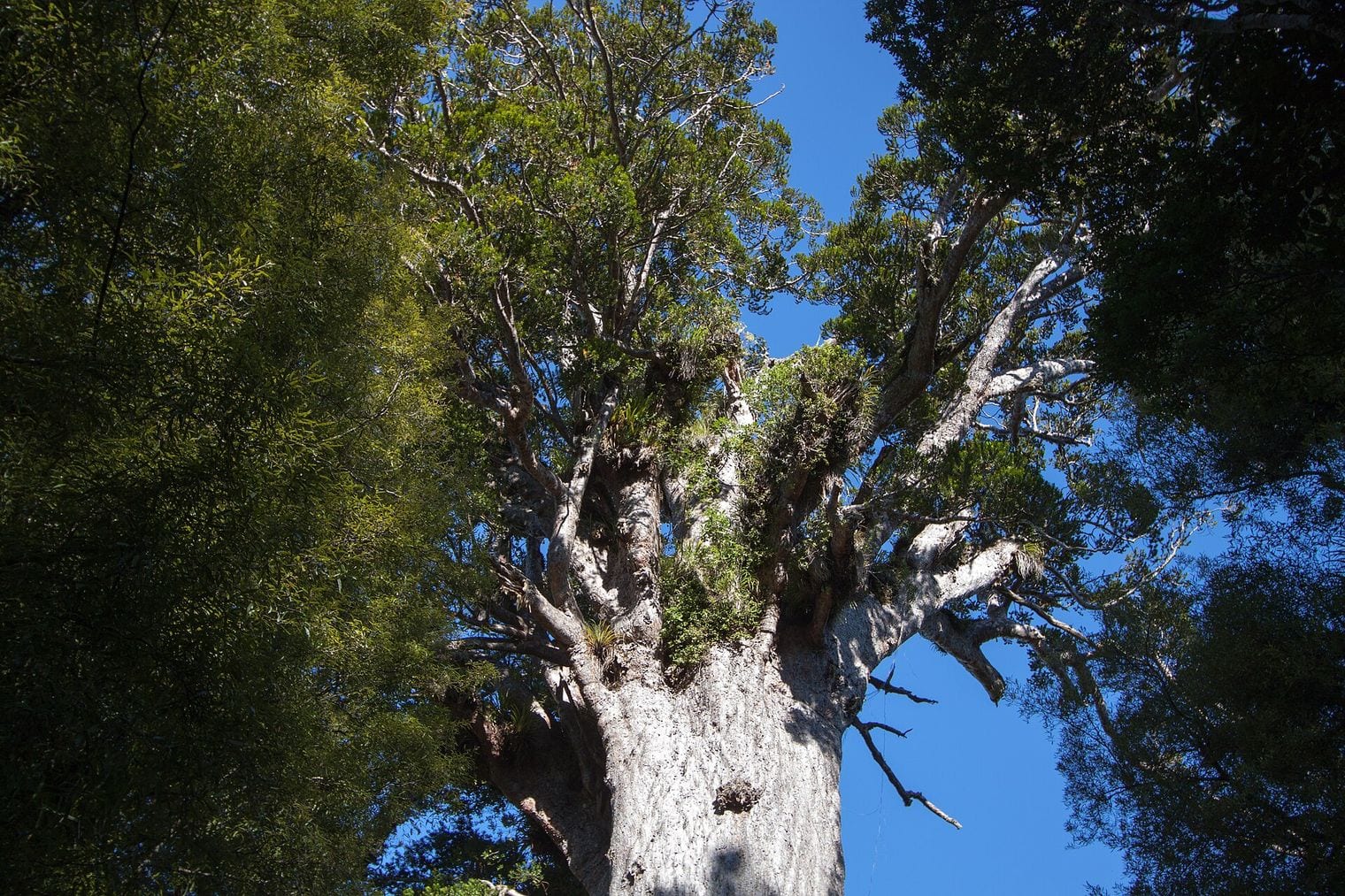
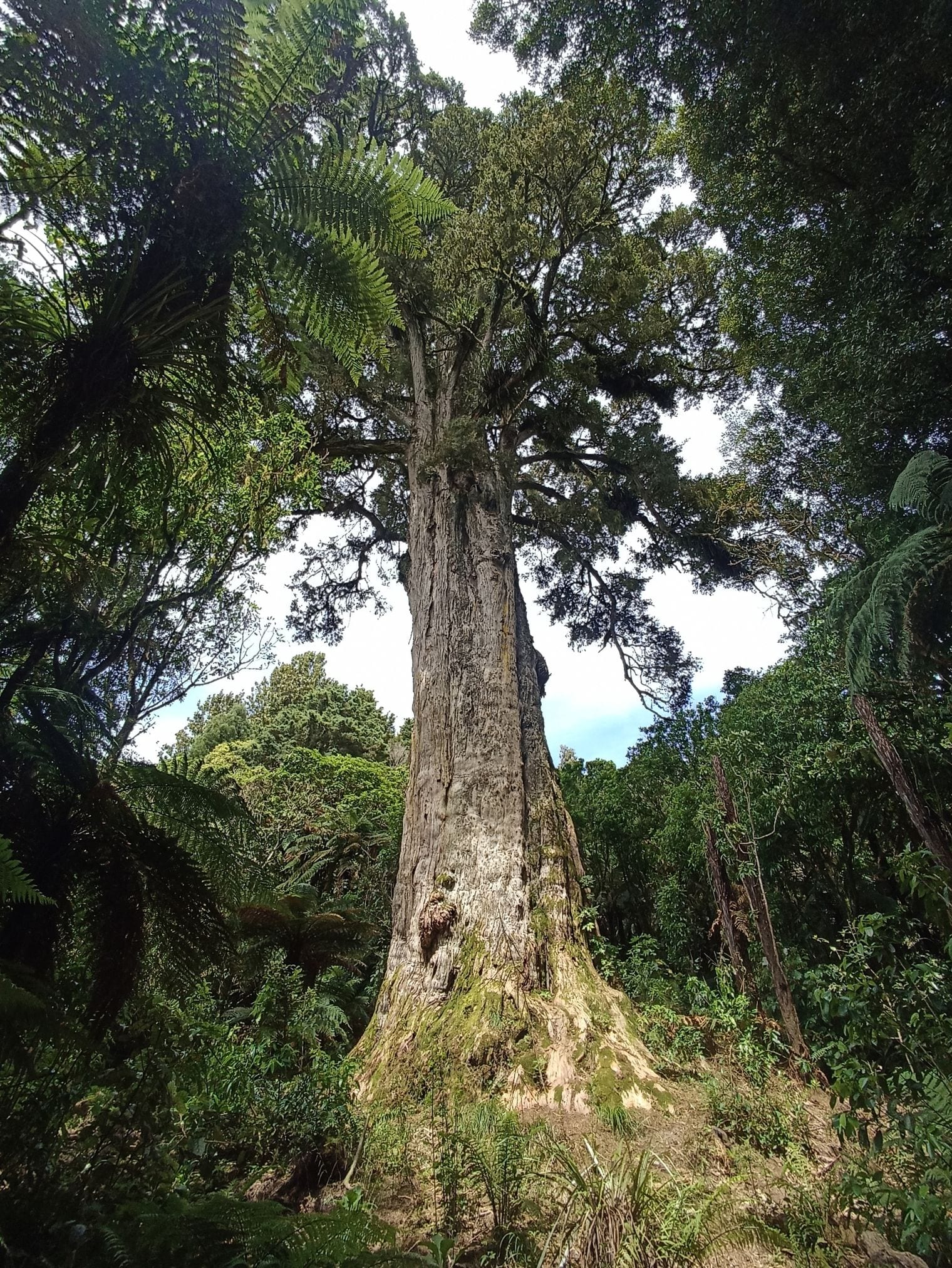
At 255 m³ of trunk wood, Tāne Mahuta is the largest known living kauri, standing in the Waipoua Forest of Northland on New Zealand's North Island. Both the Gymnosperm Database and the New Zealand Tree Register give that figure for its main trunk, which is 17.8 metres tall.
The crown is another matter: it is nearly 35 metres wide with a dozen branches more than a metre thick, and with that wood added the database puts the whole tree at 516.7 m³.
Its name means Lord of the Forest, after Tāne, the Māori god of forests and birds, and its age is estimated at anywhere from 1,250 to 2,500 years. Road builders came across it in 1928.
A short, easy walk signposted from State Highway 12, suitable for wheelchairs and buggies, leads to viewing platforms beside it, and visitors clean their shoes on the way in, because kauri dieback disease threatens the tree and the forest around it. Te Matua Ngahere, the other famous kauri of Waipoua, stands nearby.
Get new guides like this by email
One email every Thursday with our newest guides for the places you tick.
77. Devil's Canyon Colossus
Devil's Canyon near Sawyers Bar, Marble Mountains Wilderness, Klamath National Forest, Siskiyou County, California, United States
At 223 m³, the Devil's Canyon Colossus is the largest known incense cedar, according to the Gymnosperm Database, which publishes its stem volume. It grows in Devil's Canyon near Sawyers Bar, in the Marble Mountains wilderness of Klamath National Forest in far northern California, and stands 50.3 metres tall with a trunk 3.78 metres across.
In 2017 the Salmon August Complex fire burned all around it, yet the tree and the wet meadow surrounding it did not burn. Another giant of the species, the Tanner Lakes Titan in Oregon's Red Buttes Wilderness, was not so lucky: the 2022 Slater fire destroyed it. Incense cedar's soft, even-grained wood was long the favourite for making pencils, and it is still prized for cedar chests and closets.
88. Pouakani
Pouakani, State Highway 30 near Mangapehi / Pureora Forest Park, Waikato, New Zealand
At 203.7 m³, Pouakani is the largest known tōtara, the estimated wood volume given by both the Gymnosperm Database and the New Zealand Tree Register. It grows near Mangapehi in the King Country, at the southern edge of Waikato on New Zealand's North Island, close to Pureora Forest Park, and was measured at 42.7 metres tall with a trunk 3.88 metres across, though the register notes that its top appears to have broken since.
Māori prized tōtara for carvings and great war canoes, and custom after felling one was to plant a seedling in honour of Tāne, god of the forest. Pouakani stands off State Highway 30 and is reached on foot from a car park, an easy walk of about 20 minutes. A sign at its base gives its height, girth and volume, but the Gymnosperm Database warns that those numbers are wrong.
99. Mossy Creek Giant
Yosemite National Park, California (exact location undisclosed), United States
At 163.7 m³, the Mossy Creek Giant is the largest known living sugar pine, the biggest species of pine on Earth, and it grows in Yosemite National Park. Its volume and its 71.6-metre height come from a 2025 survey published in the Gymnosperm Database, and its trunk diameter of 2.64 metres was calculated from lidar scans.
Carl Casey and Martin Crawford found the tree, but its record size was established only in 2024. It took the title from the Whelan Pine in Dorrington, California, the largest sugar pine from 1930 until it died in 2013.
Its location is kept quiet: drought and fire have killed many big sugar pines in the Sierra Nevada this century, and vandals once tried to girdle an Oregon giant with a chainsaw, which the database gives as the reason record trees are best left unpublicised.
1010. Goat Marsh Giant
Goat Marsh Research Natural Area, near Mount St. Helens, Washington, United States
estimated stem wood volume of 126 m3 | estimated stem wood volume of the largest living noble fir (82.9 m tall, 253 cm dbh)
At 126 m³, the Goat Marsh Giant is the largest known noble fir, a stem volume from Robert Van Pelt's survey that the Gymnosperm Database publishes. It grows in the Goat Marsh Research Natural Area on the south-west side of Mount St. Helens in Washington, north of Portland, and stands 82.9 metres tall with a trunk 2.53 metres across; it was confirmed to be healthy in 2021.
No noble firs grow bigger than here. Heavy rain, deep volcanic soils and a long fire-free history have produced the tallest trees in the Washington Cascades, and lidar shows that the 50 tallest known noble firs all stand in or near Goat Marsh, every one above 79 metres. Comparable forests north of the volcano were flattened in the eruption of May 18, 1980, and with them the tallest fir ever recorded, a 99-metre noble fir near Harmony Falls.
1111. Wynoochee Valley hemlock
Upper Wynoochee Valley, Olympic National Park, Washington, United States
wood volume 87 m3 | wood volume, dbh 276 cm, height 59.4 m (Van Pelt 2001)
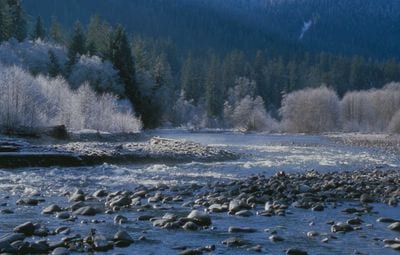
At 87 m³, the Wynoochee Valley hemlock is the largest known western hemlock, an unnamed tree in the upper Wynoochee Valley of Washington's Olympic Mountains, north-west of Olympia, inside Olympic National Park according to the Gymnosperm Database, which publishes its volume from Robert Van Pelt's survey.
It is 59.4 metres tall with a trunk 2.76 metres across, and when Van Pelt and the database's author, Christopher Earle, measured it again in 2018 it was about the same size and still very healthy.
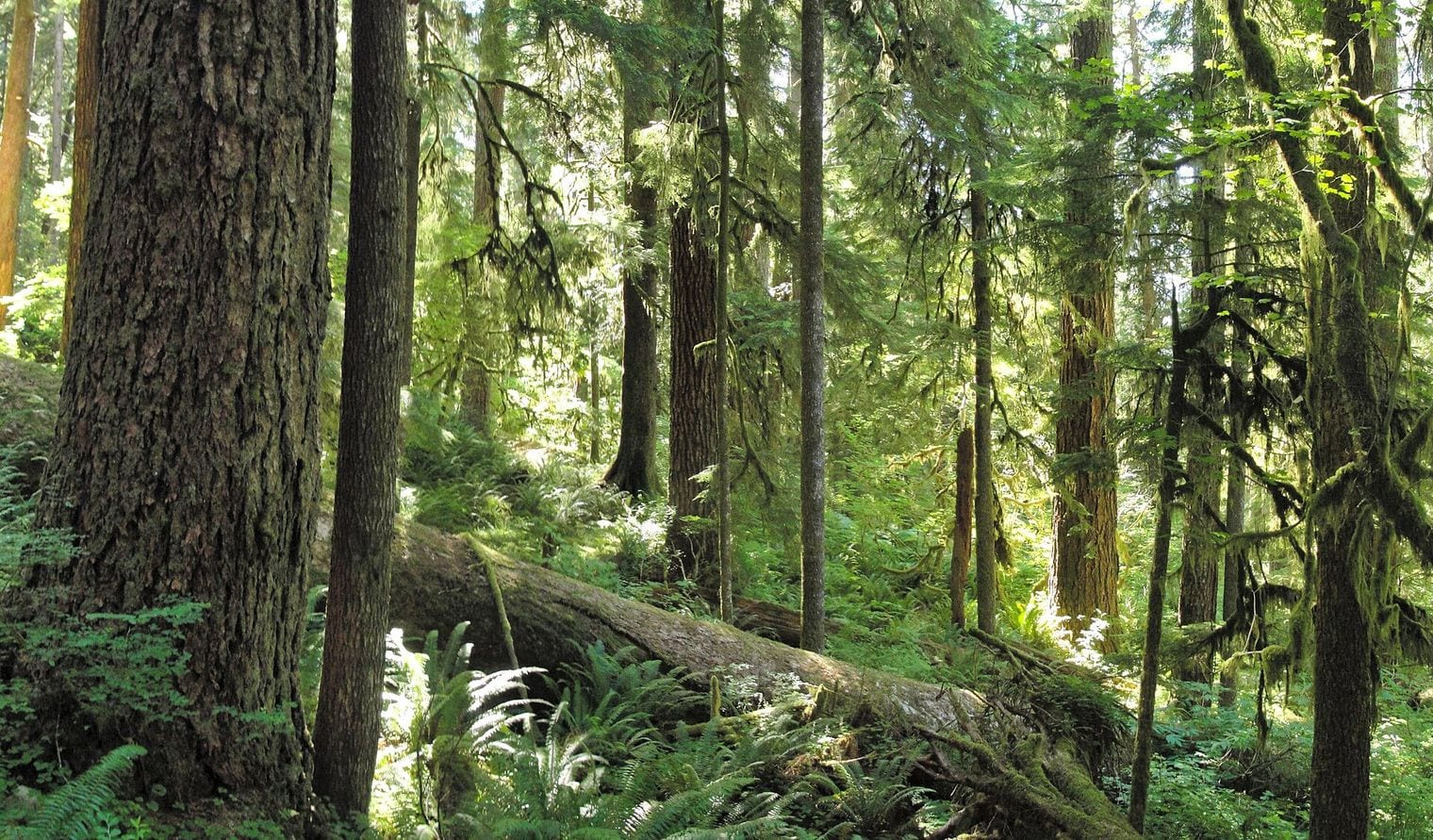
Western hemlock is Washington's state tree, and one of the great survivors of the forest: it can live for centuries in the shade of the understorey before it reaches the canopy. The tallest hemlocks grow farther south, among the coast redwoods of northern California, where one found in Prairie Creek Redwoods State Park in 2014 measured 83.34 metres.
1212. Gus
Jim Girard Memorial Grove, Seeley Lake, Lolo National Forest, Montana, United States
At 83 m³, Gus is the largest known western larch, a stem volume measured by Robert Van Pelt and published in the Gymnosperm Database, with a height of 49.4 metres and a trunk 2.21 metres across.
Also called the Seeley Lake Giant, it grows in the Jim Girard Memorial Grove of Lolo National Forest near Seeley Lake, Montana, north-east of Missoula. It is a near tie with the grand fir at number 13: the order rests on the database's measured figures, just 1.3 m³ apart.
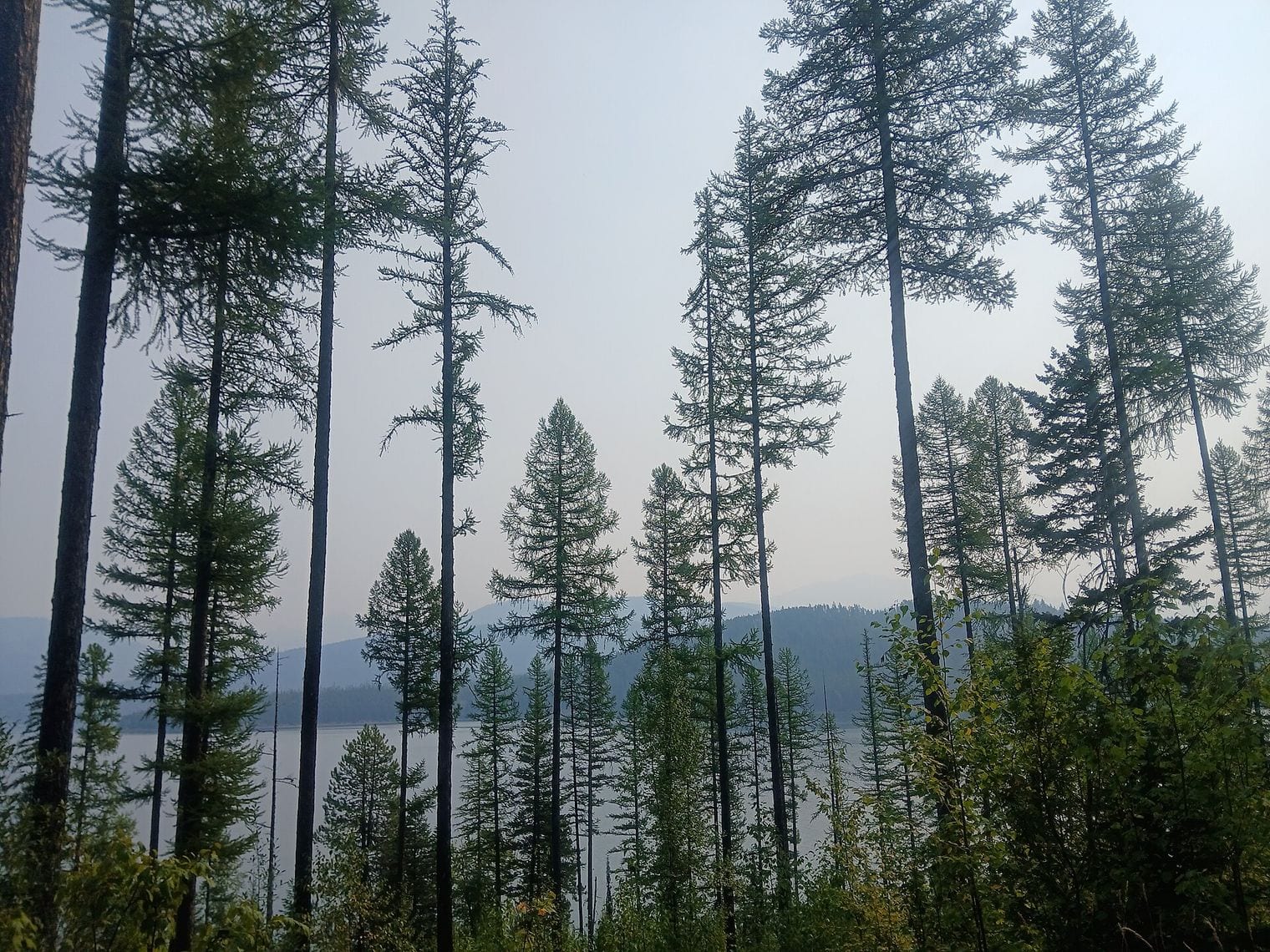
Gus is often said to be about 1,000 years old, and a ring count of 920 years from a stump at Seeley Lake shows how long the larches here can live. In 2020 it was named the national champion western larch on the National Register of Champion Trees. Western larch is a conifer that loses its needles: they turn gold before they fall each autumn, the best season to see the grove.
1313. Barnes Creek Survivor
Near Lake Crescent Lodge beside Highway 101, Olympic National Park, Washington, United States
stem volume of 81.7 m3 | stem volume at the 2023 remeasurement (dbh 217.5 cm, height 69.6 m)
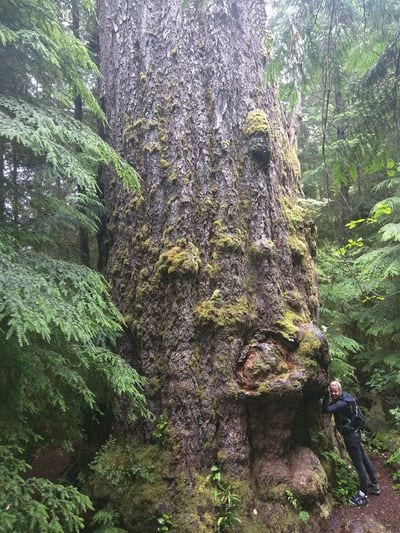
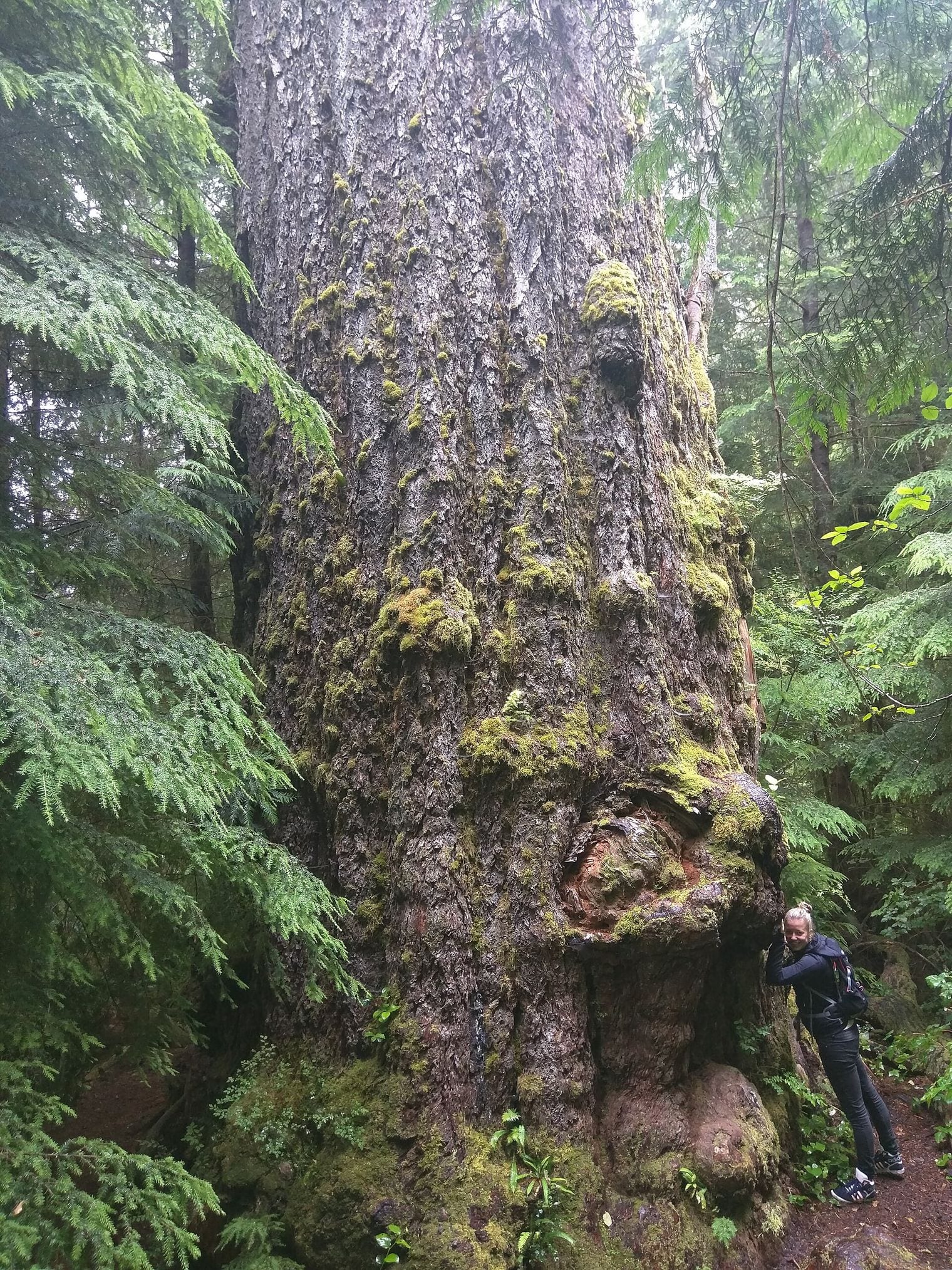
At 81.7 m³, the Barnes Creek Survivor is the largest known grand fir, a stem volume the Gymnosperm Database gives from Robert Van Pelt's 2023 remeasurement, when it stood 69.6 metres tall with a trunk 2.18 metres across.
It grows near Lake Crescent in Washington's Olympic National Park and has been the species champion since 1988. It trails Gus at number 12 by just 1.3 m³, a near tie decided by the measured figures alone, although the fir is about 20 metres taller.
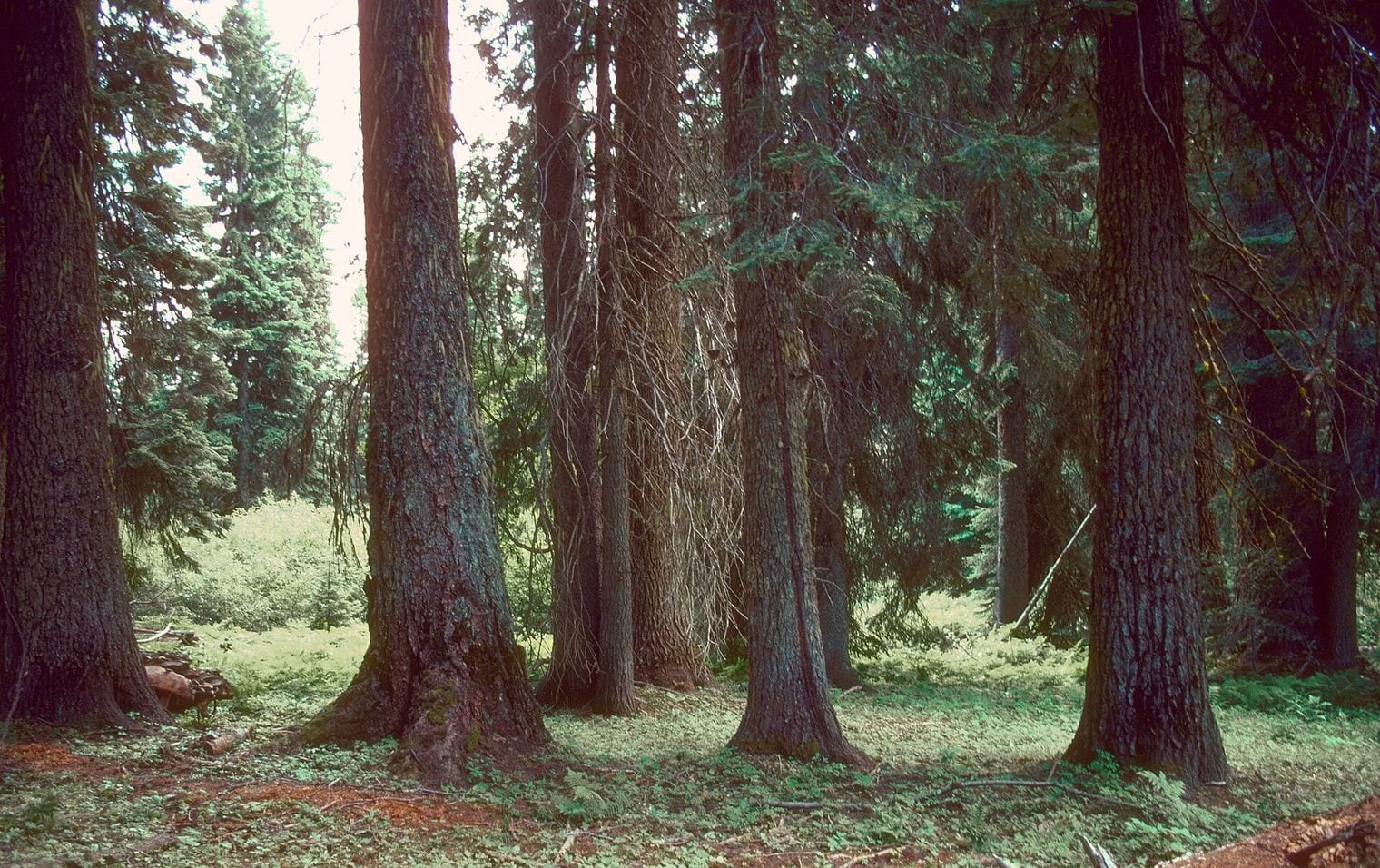
Its name tells its story. The tree was due to be removed when Highway 101 was rerouted in 1979, until a bulldozer operator decided it was a significant tree and the park chose to save it, and it still grows close to the highway. Its volume has grown by 22 percent since 1992, and the database describes it as a very healthy tree.
FAQ: The World's Largest Trees
What is the largest tree in the world?
The General Sherman Tree, a giant sequoia in Sequoia National Park, California, with about 1,486.6 m³ of wood in its trunk by the National Park Service figure. The second-largest tree is another giant sequoia, the General Grant Tree in Kings Canyon National Park. The largest tree of any other species is Grogan's Fault, a coast redwood of 1,084.5 m³.
Why does this list include only one tree per species?
Because a straight ranking would be almost all giant sequoias: more than a dozen of them hold more trunk wood than the largest tree of any other kind. Taking each species' champion instead shows the full range of giant trees, from kauri and tōtara in New Zealand to the cedars, firs and spruces of the Pacific Northwest.
Why are Lost Monarch, Árbol del Tule and the Tasmanian giants not on the list?
None has a measured single-stem volume to rank. Lost Monarch, a coast redwood, is a clone whose separate stems have fused together. Árbol del Tule in Oaxaca, Mexico, has the stoutest trunk on Earth, but the trunk is heavily buttressed and its volume is only an estimate, not a survey measurement. Tasmania's giant mountain ashes Gothmog and Two Towers divide into more than one trunk, so neither has a single-stem figure.
Why is volume measured on the trunk only?
It keeps the comparison fair between species of very different shapes. Branches can add a great deal: Tāne Mahuta has 255 m³ in its main trunk, but its huge crown brings the whole tree to about 516.7 m³. Roots and foliage are never counted, and neither are dead trees such as the Quinault Lake Cedar, which died in 2016.
Is the tallest tree also the largest?
No. The tallest known living tree is Hyperion, a coast redwood in Redwood National Park, while the General Sherman Tree, at 83.8 metres, is shorter but far more massive. The oldest trees are different again, which is why height, age and volume are ranked separately, like the other records across our world record-breakers.
Sources & updates
How this ranking was verified
Checked before launch
Sources cited
13
Publishers
5
Every figure in this ranking was checked against the record-keeper or official source behind it before publication, and the top of the ranking re-checked live so a newer record would not be missed.
One email every Thursday with our newest guides for the places you tick.
Newsletter
Stay updated with new World Record Breakers
One email every Thursday with our newest guides for the places you tick.
We use cookies to analyze site traffic and improve your experience.
You can accept or reject analytics cookies. See our
May we use analytics cookies? See ourCookie Policy.