We build and rank every list first. Booking links come after, and only where
a partner sells a ticket, tour or stay for that exact place, so a place with
nothing to book is listed exactly as prominently as one you can book.
So how do we earn? Some links on this page go to booking
partners, and if you book tickets, tours or a stay through
one, we may earn a commission. It costs you nothing extra.
That commission never decides which places make the list, the order they
appear in, or what we write about them. No entry is sponsored or a paid
placement.
By the CityViking Research TeamPublished Ranked by total edifice volume · 14 min read
Last verified Checked before launchOct 30, 202615 sources4 publishers3 government & parks12 encyclopedias & researchPublished · Nov 1, 2026Researched and checked before it went liveClick for every source and the full change log.
The record
148 ± 29 × 10³ km³Garcia et al. 2020
Pūhāhonu
United States
The record
The largest volcano in the world is Pūhāhonu, in the United States — 148 ± 29 × 10³ km³ (Garcia et al. 2020), total edifice volume.
Source: georgehbalazs.com. Verified .
Short answer
Pūhāhonu in the Northwestern Hawaiian Islands is the largest volcano in the world, at about 148,000 km³, roughly twice Mauna Loa's 74,000 km³. Only its two Gardner Pinnacles rise above the sea, so to stand on one of these giant shields, visit Mauna Loa in Hawaiʻi Volcanoes National Park.
Ask for the largest volcano on Earth and some famous answers fall away: Tamu Massif is the core of an oceanic plateau that a 2019 study found was built by seafloor spreading rather than as one volcano, Ontong Java is a plateau too, and Olympus Mons stands on Mars.
This countdown ranks 15 volcanoes by one measure, total edifice volume: the whole mountain from base to summit, including the part below sea level and, where the study counts it, the rock pressed down into the crust beneath. It runs from Pūhāhonu in the Northwestern Hawaiian Islands, at 148,000 km³, to Suiko Seamount at 23,900 km³.
Each entry is one volcano, active or extinct, above the waves or below them, which is why the submerged Jimmu Seamount ranks, while island totals and erupted volumes stay out. All 15 grew over the Hawaiian hotspot; on land, even Mount Kilimanjaro, often cited as the bulkiest, comes to only about 4,800 km³ of erupted lava by one estimate.
The largest volcano on Earth is named for a turtle.Pūhāhonu means "turtle rising for breath" in Hawaiian, and the 2020 study that measured it found it twice the size of Mauna Loa.
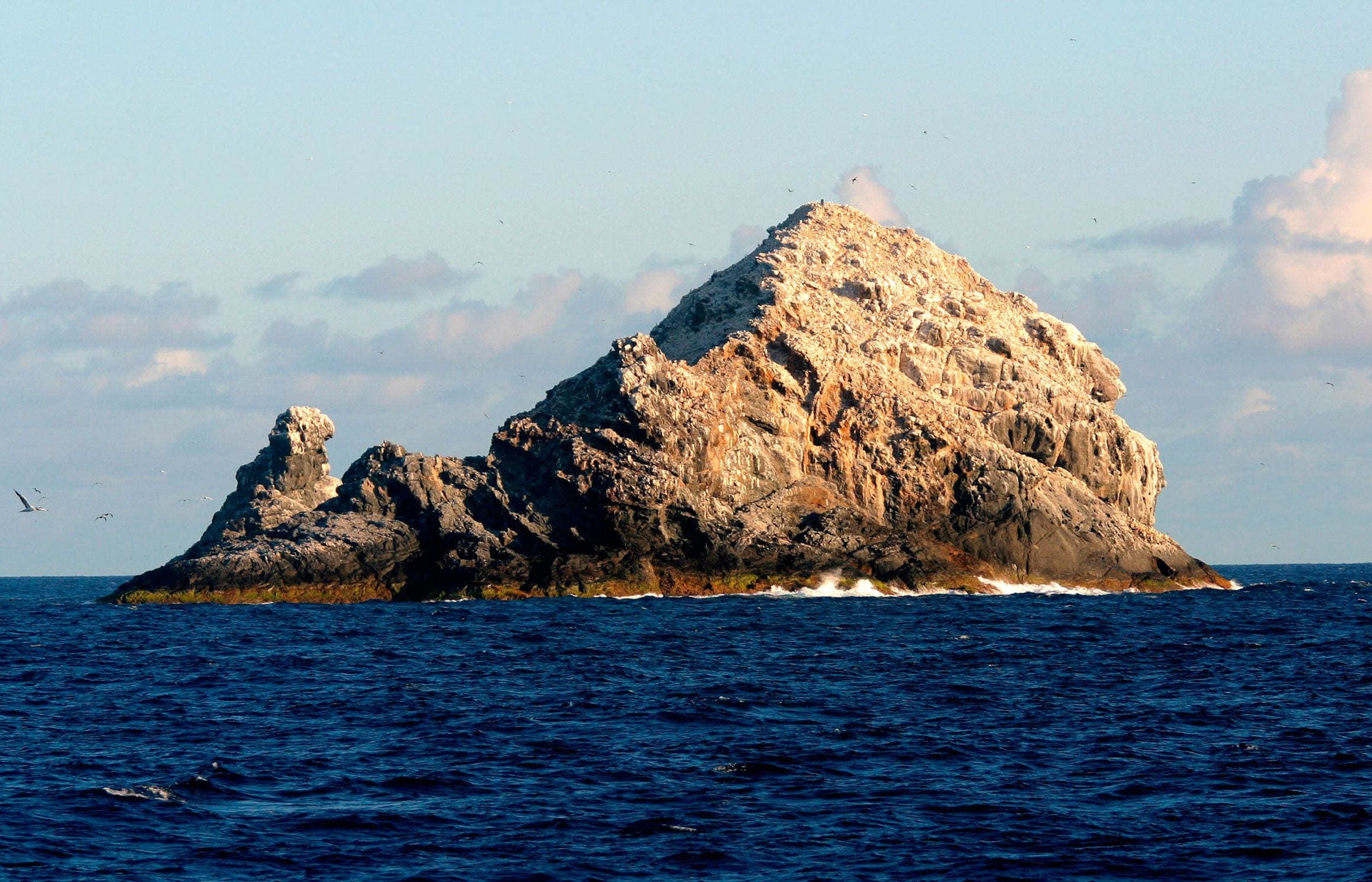
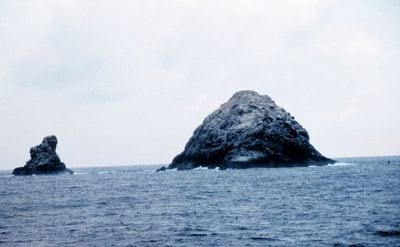
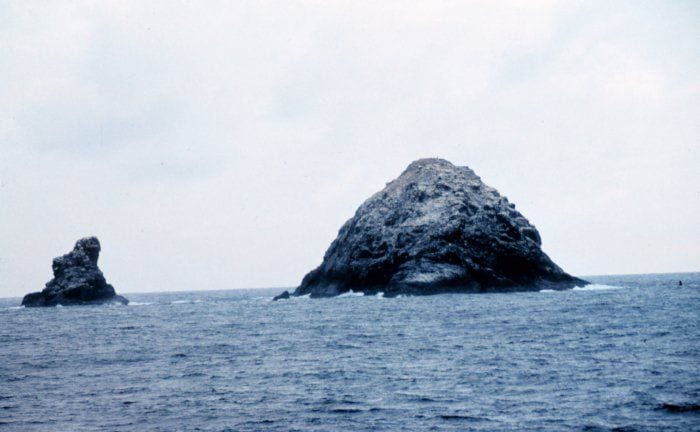
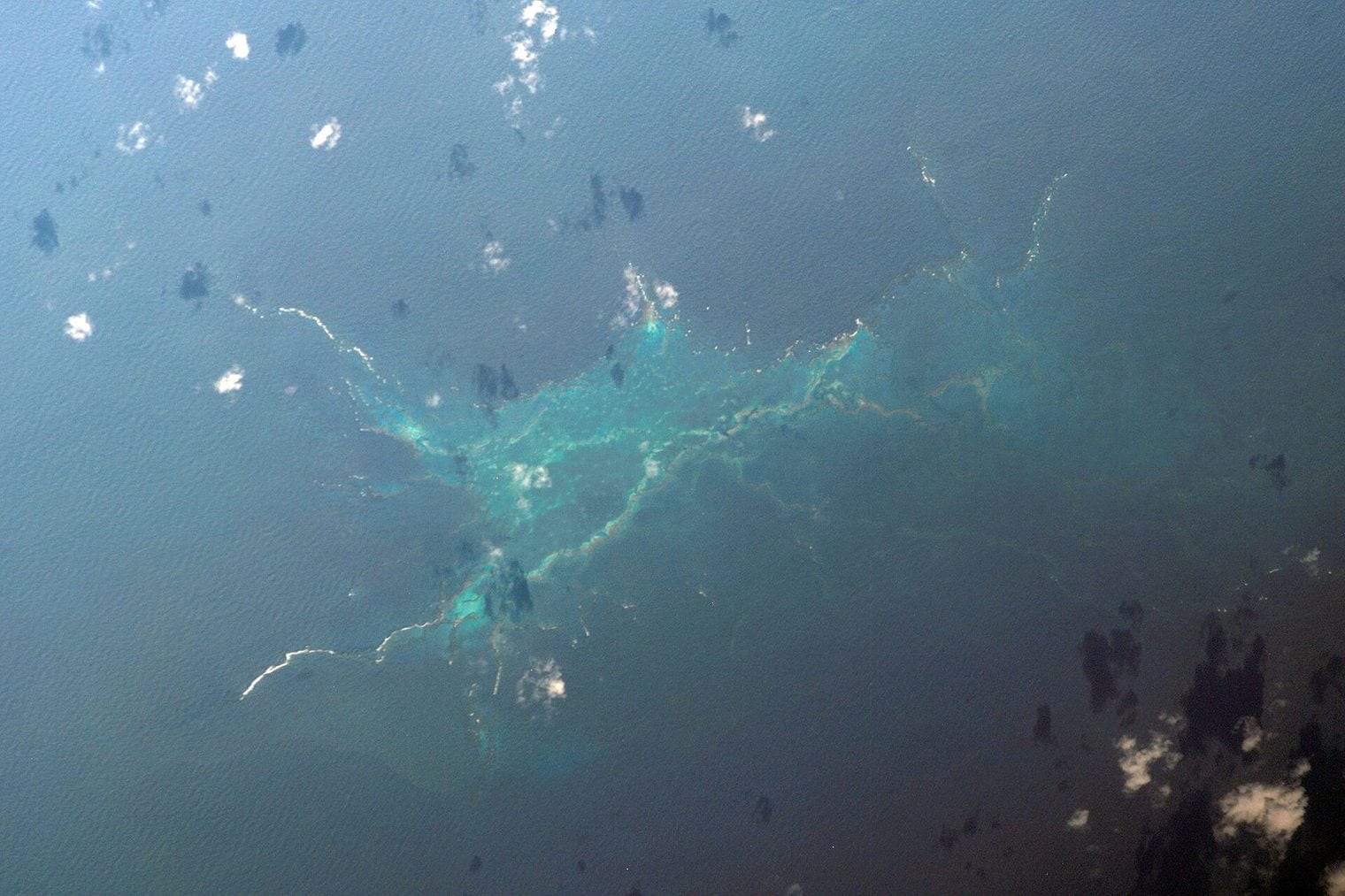
Only two small rocks of it show above the sea. The Gardner Pinnacles, the tips of Pūhāhonu, cover about 6 acres between them and reach just 52 meters170 feet.
Mauna Kea is taller than Everest, counted from its base. Measured from the ocean floor, Mauna Kea rises about 9,330 meters, more than Everest's height above sea level.
The biggest volcanoes bend the Earth's crust. Mauna Kea and Mauna Loa are so massive that they press the ocean crust beneath them down by about 6 km.
Part of Mauna Loa is hidden under Kīlauea. USGS geologists assign about 21,600 km³ of the rock beneath Kīlauea to Mauna Loa, which would raise Mauna Loa's volume to 95,600 km³.
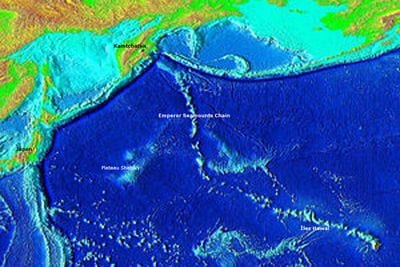
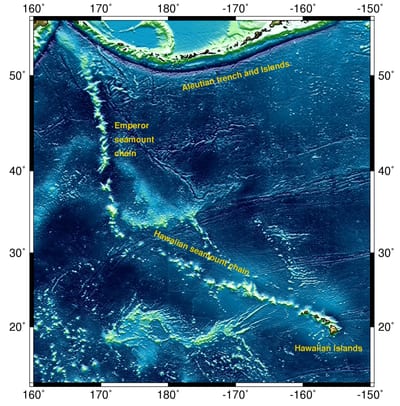
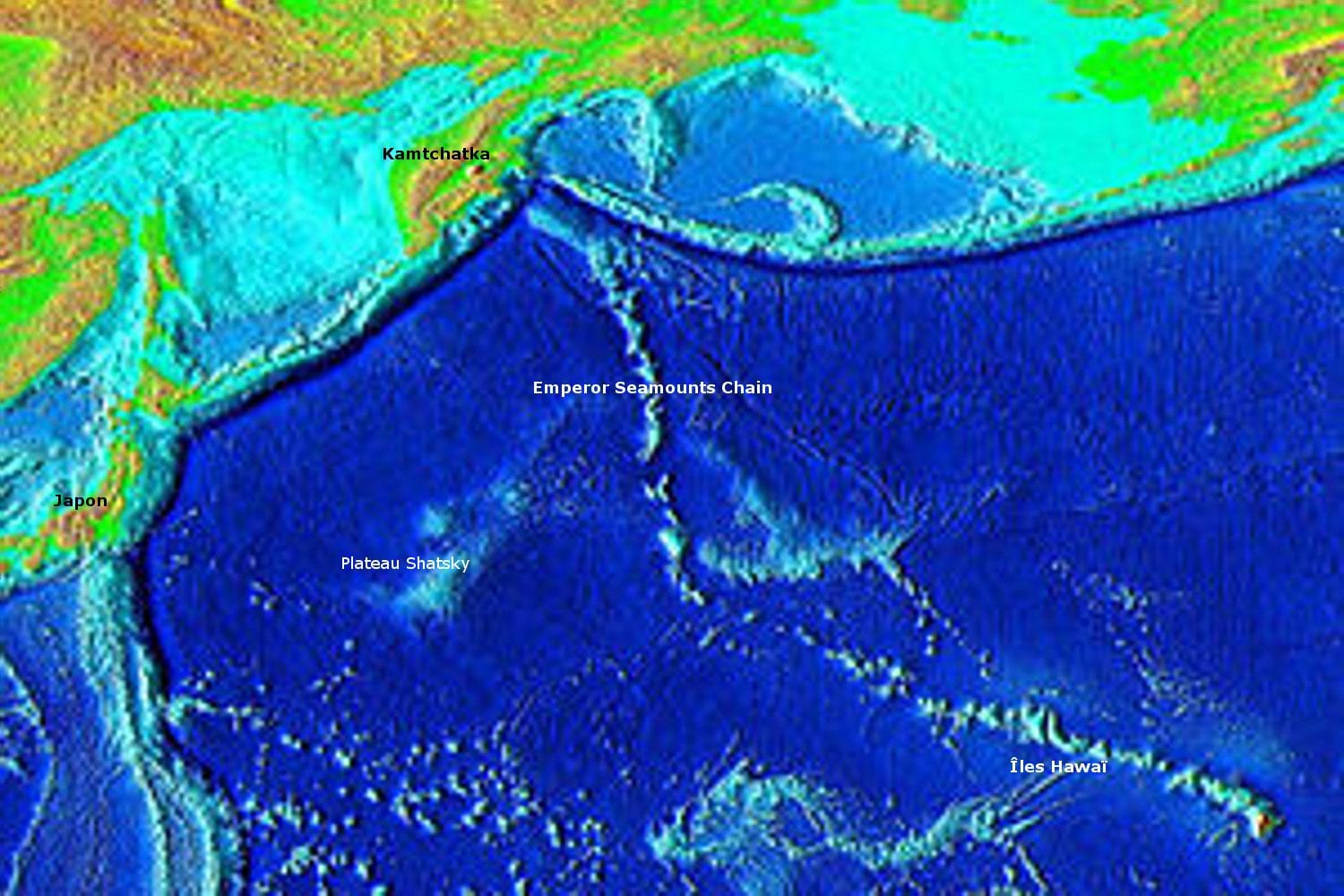
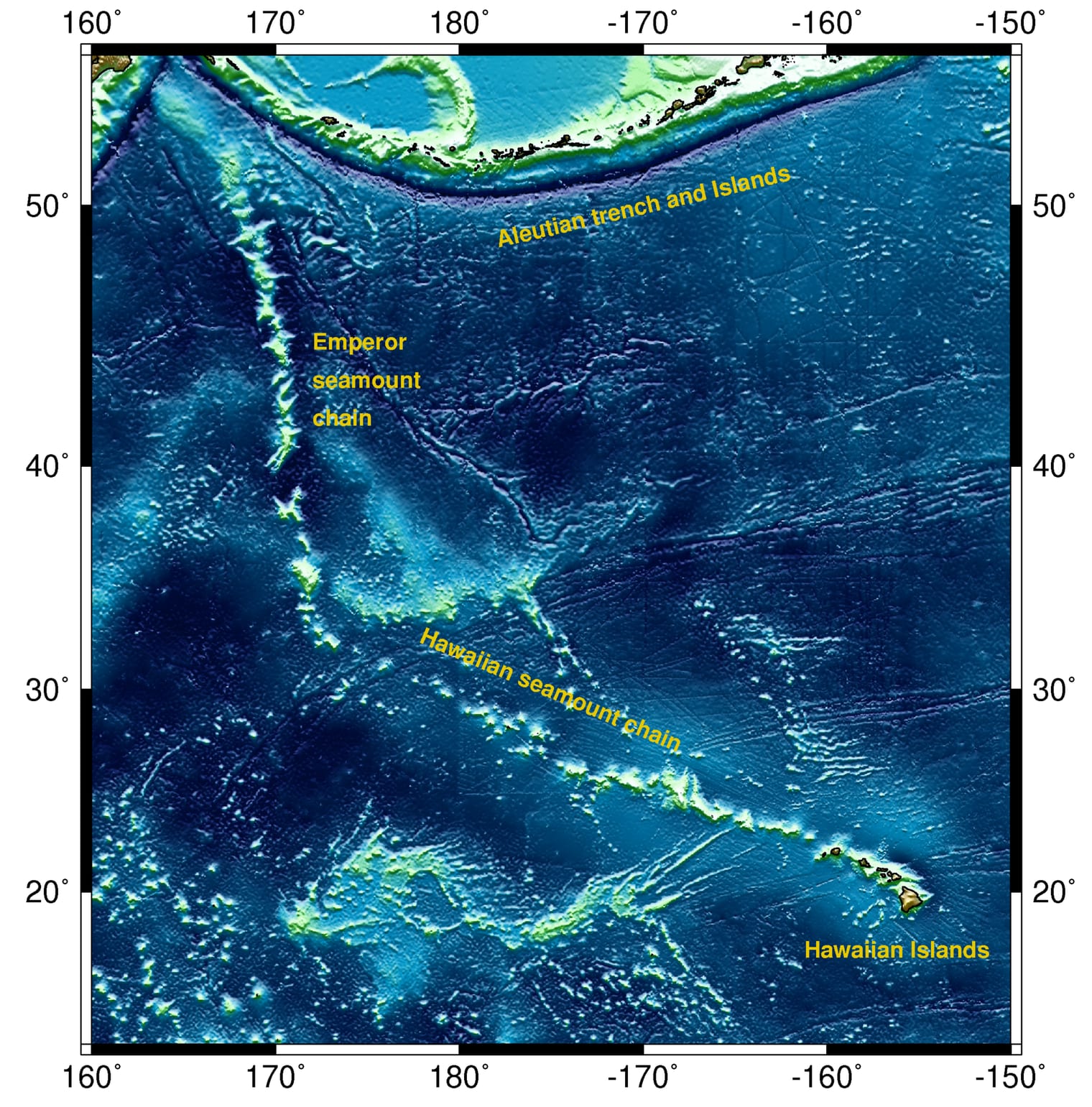
Every volcano on this list grew over one hotspot. The Hawaiian–Emperor chain runs about 6,000 km, with more than 120 volcanoes that erupted over the past 82 million years, and many of its seamounts, like Suiko, are named after emperors of Japan.
How the volumes were measured. Each figure is the whole volcano from base to summit, including its submerged flanks and, where the study counts it, the rock pressed down into the crust beneath.
No single survey covers all 15, so the figures come from four studies, named in each entry: Garcia and colleagues 2020 for Pūhāhonu (multibeam sonar and gravity, including the sunken root); Robinson and Eakins 2006, as plotted in USGS Professional Paper 1801, for the main Hawaiian shields (bathymetry and elevation models on one method, including the root); Xu and colleagues 2022 for Jimmu Seamount (seismic and gravity survey, including the depressed crust); and Bargar and Jackson's 1974 USGS table for Maro Reef and Suiko Seamount, which counts only the part above the seafloor, so those two are understated. Ties are broken by summit elevation.
11. Pūhāhonu
Northwestern Hawaiian Islands (Gardner Pinnacles), Papahānaumokuākea Marine National Monument, Hawaii, United States
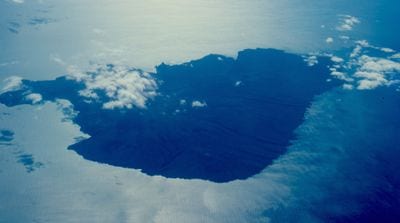
At 148,000 km³, give or take 29,000 km³, Pūhāhonu is the largest volcano on Earth, about twice the size of Mauna Loa. The figure comes from Garcia and colleagues in 2020, who mapped the volcano with multibeam sonar and gravity surveys from the research ship Falkor in 2014 and counted the rock that has sagged into the crust beneath it. A 1974 study working from sparse soundings had put it at 54,000 km³.
Almost all of it is underwater. Above the surface stand only the Gardner Pinnacles, two bare basalt rocks named ʻŌnūnui and ʻŌnūiki, the higher just 52 meters170 feet tall, about 946 km588 miles northwest of Honolulu. Their lava erupted between 14 and 12 million years ago. The Hawaiian name means "turtle rising for breath", and the volcano lies inside Papahānaumokuākea Marine National Monument, a protected area where entry requires a permit.
22. Mauna Loa
Island of Hawaiʻi, Hawaii, United States
Robinson & Eakins 2006 = 74.0 × 10³ km³ (cited by Garcia et al. 2020, EPSL 542:116296, doi:10.1016/j.epsl.2020.116296; open author copy)
At 74,000 km³ in the Robinson and Eakins 2006 survey, Mauna Loa on the Island of Hawaiʻi is the second-largest volcano on Earth and the largest active one. The figure depends on where its edge is drawn: USGS Professional Paper 1801 assigns 21,600 km³ of rock buried beneath neighboring Kīlauea to Mauna Loa, which raises it to 95,600 km³, and Wikipedia quotes about 75,000 km³. Every one of those figures keeps it second, behind Pūhāhonu.
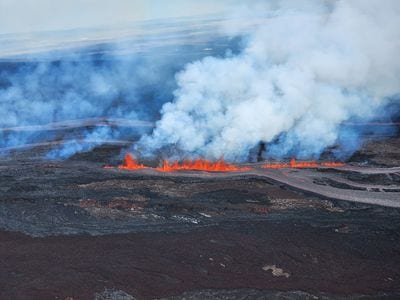
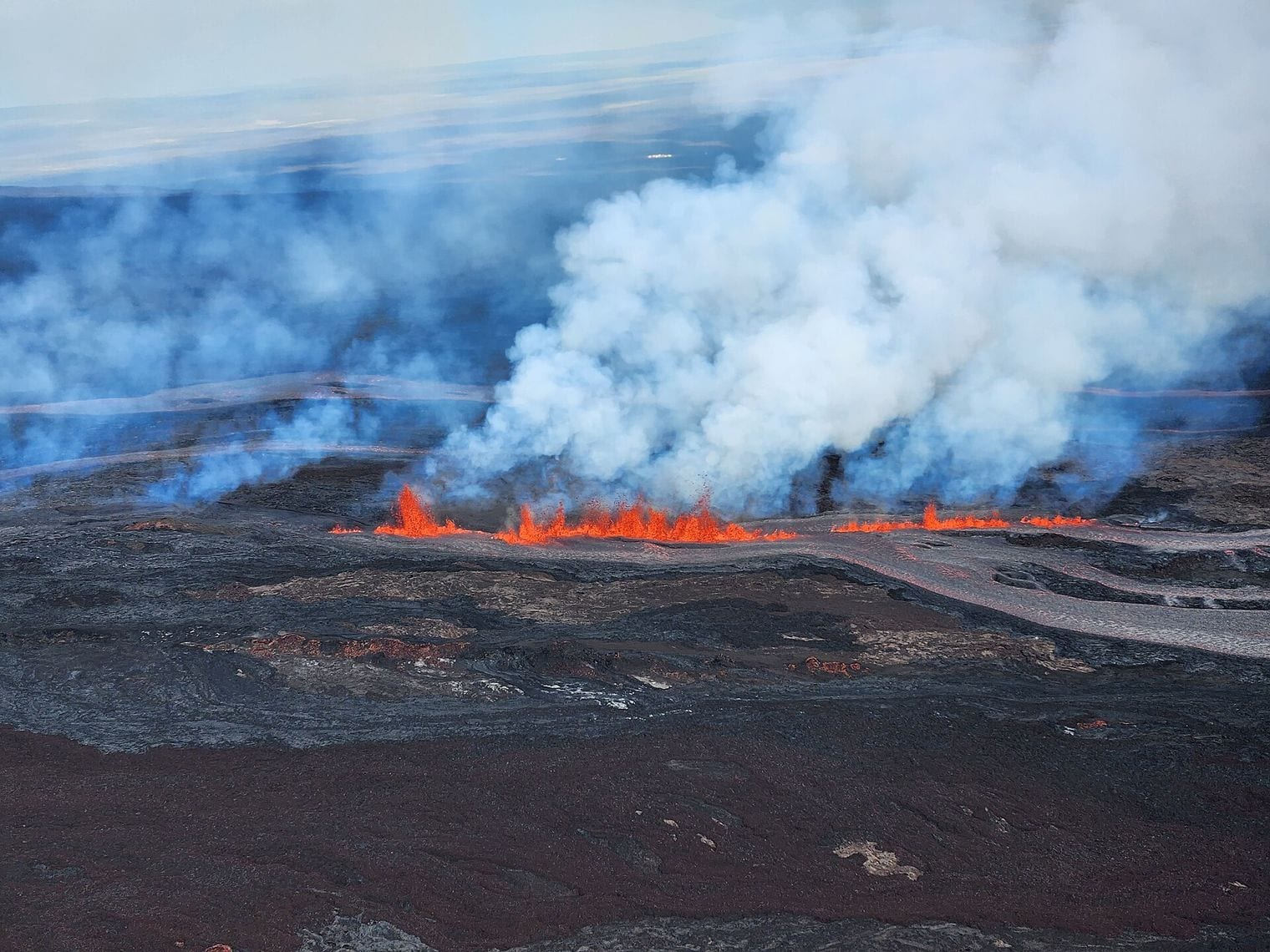
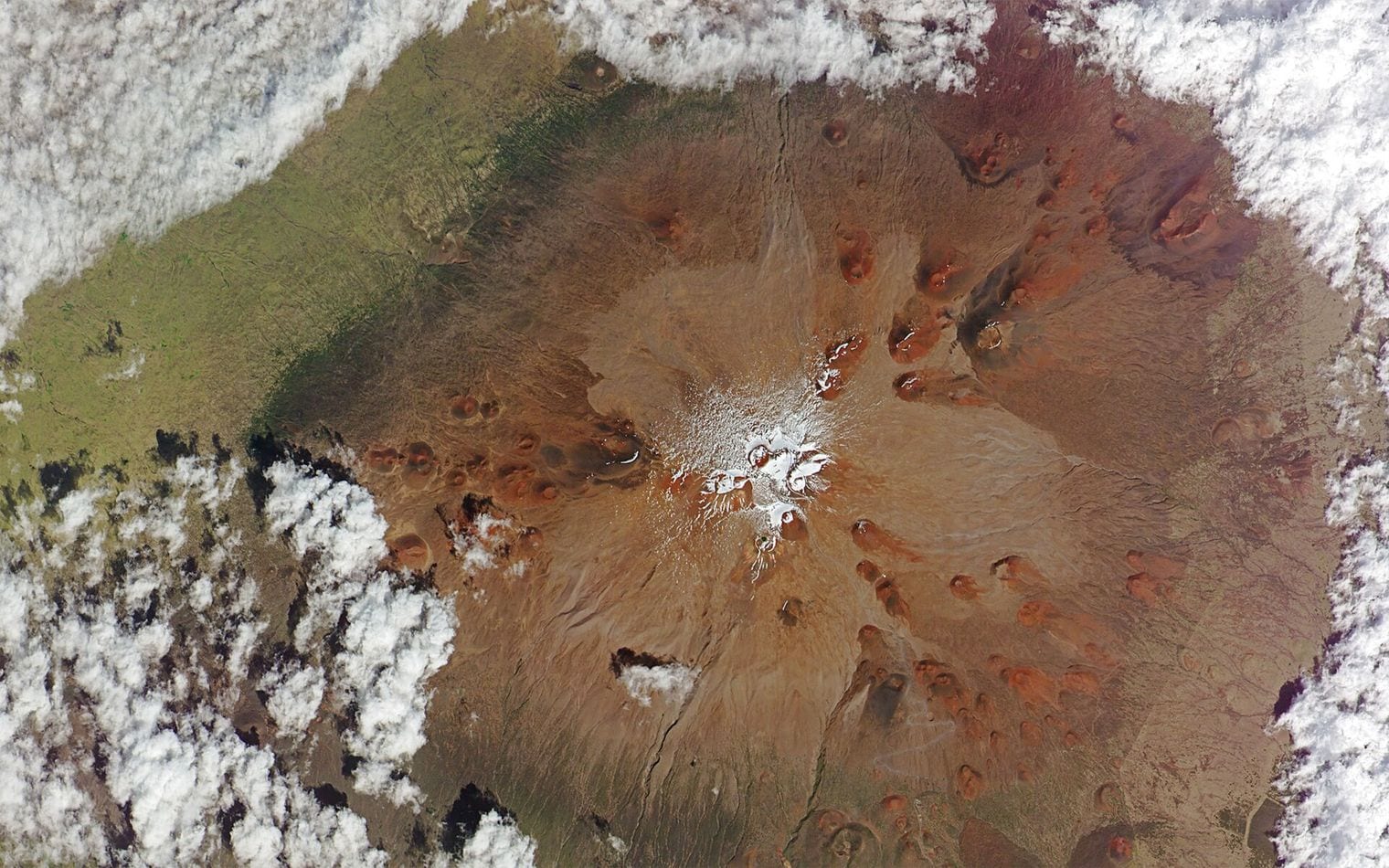
Its broad, gentle dome rises to 4,169 meters13,679 feet, and the summit lies within Hawaiʻi Volcanoes National Park. The Hawaiian Volcano Observatory has watched it since 1912, and the Mauna Loa Observatory near the summit tracks the atmosphere. Its fluid, silica-poor lava rarely explodes, and it erupted as recently as 2022.
At 69,800 km³, Haleakalā on Maui is the third-largest volcano in the world by the Robinson and Eakins 2006 figures plotted in USGS Professional Paper 1801. The massive shield forms more than three-quarters of the island and began to grow about 2 million years ago.
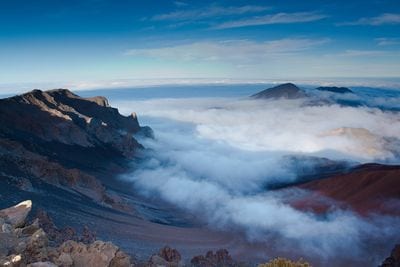
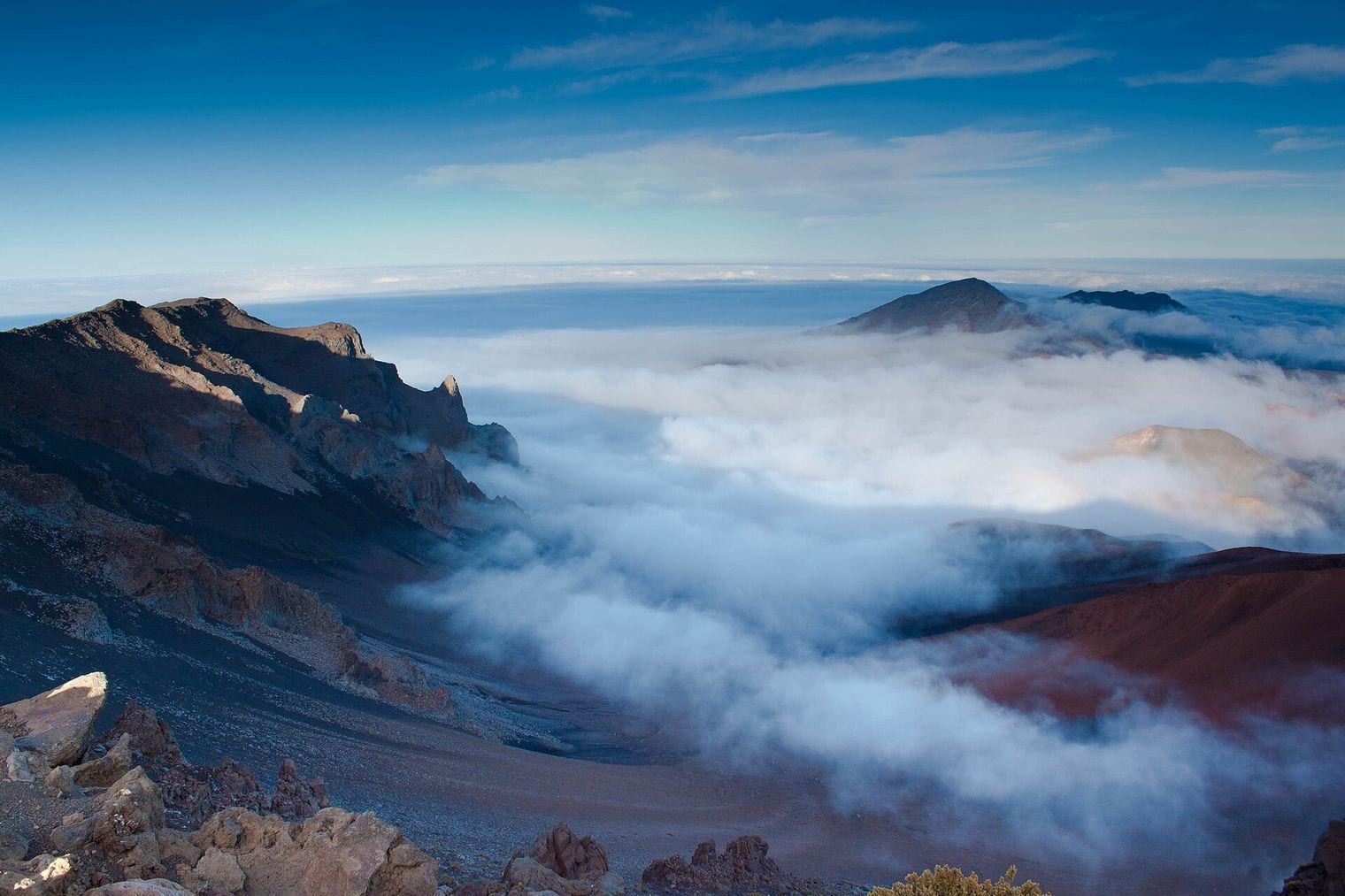
The summit, Puʻu ʻUlaʻula (Red Hill), reaches 3,055 meters10,023 feet and looks down into a barren depression about 11 miles across, 3 miles wide and nearly 800 meters deep, scattered with volcanic cones.
The name means "house of the sun", the crater sits inside Haleakalā National Park, and the clear, dry, still air makes the summit one of the most sought-after sites in the world for telescopes. In Hawaiian tradition, the grandmother of the demigod Māui lived in the crater.
At 57,600 km³, the shield volcano that built Kauaʻi ranks fourth, on the Robinson and Eakins 2006 total that USGS Professional Paper 1801 cites. The island is about five million years old, the oldest of the main Hawaiian Islands apart from Niʻihau, and later rejuvenated eruptions spread lava flows and cones over its eastern two-thirds.
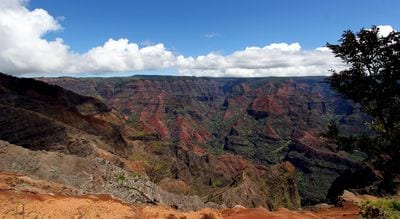
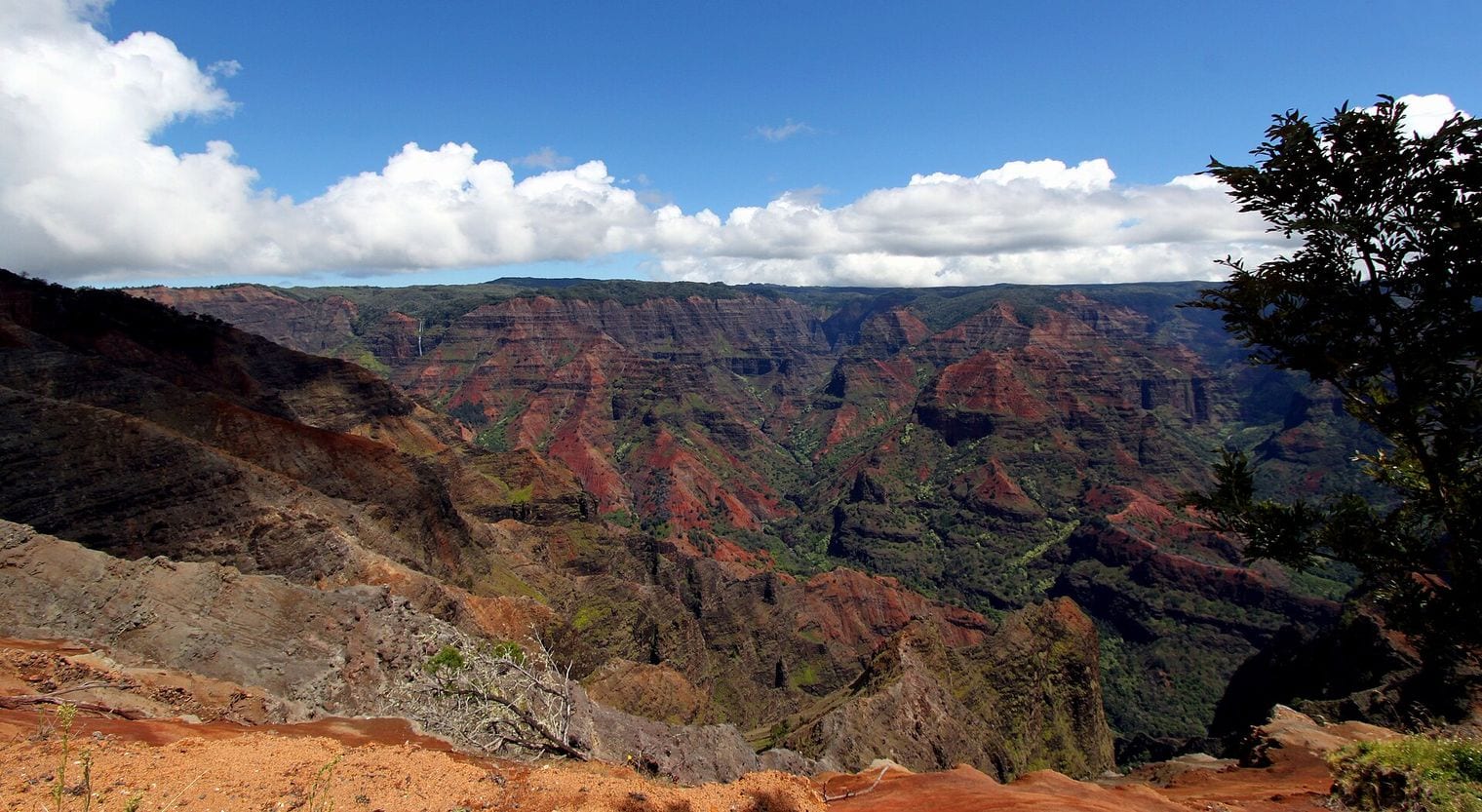
Erosion has carved the old volcano into the Garden Isle's showpieces, Waimea Canyon and the cliffs of the Nā Pali Coast, both protected as state parks. Near the center of the island, Mount Waiʻaleʻale rises to 1,569 meters5,148 feet, and its eastern side is one of the wettest spots on Earth, with an average of about 460 inches (11.7 meters) of rain a year.
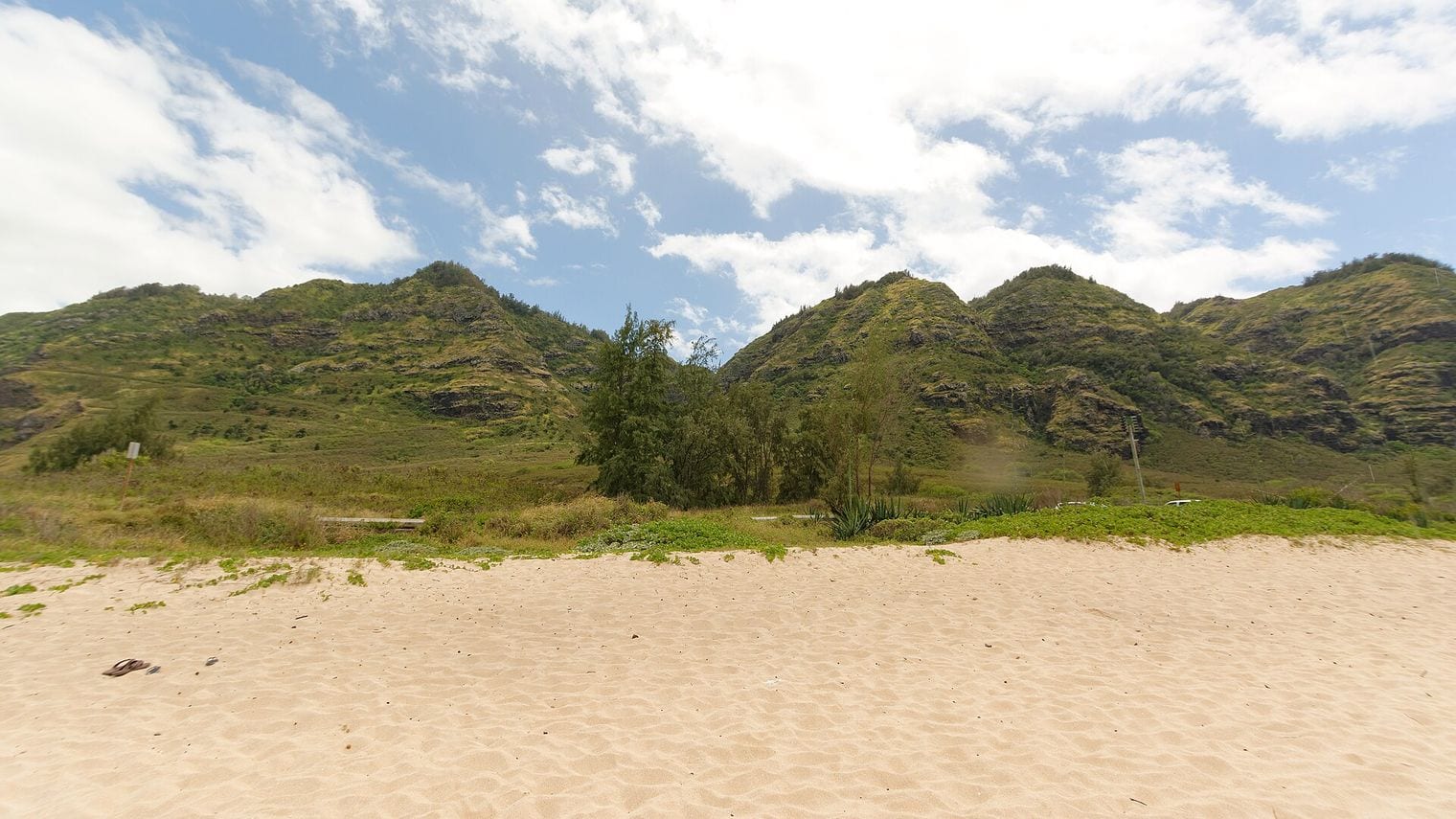
At 53,500 km³ in the Robinson and Eakins 2006 figures, Waiʻanae, the volcano that built the western half of Oʻahu, ranks fifth, just 500 km³ ahead of Jimmu Seamount, a gap small enough that a different survey could reverse it. Its oldest dated lavas are about 3.9 million years old, and it is thought to have last erupted about 2.5 million years ago.
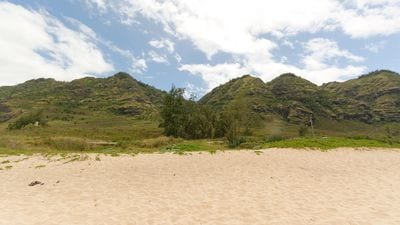
Today it is the Waiʻanae Range, a long, eroded ridge rather than a classic cone, with the old center of activity at Lualualei Valley on the leeward coast. Its crest, Kaʻala, is the highest peak on Oʻahu at 1,227 meters4,025 feet. Like the Koʻolau Range across the island, it is not a mountain range in the usual sense but the remains of a single volcano.
66. Jimmu Seamount
Emperor Seamounts, North Pacific (international waters)
~5.3 × 10⁴ km³ of magmatic material above the top of the oceanic crust (Xu et al. 2022)
At about 53,000 km³, Jimmu Seamount in the Emperor Seamount Chain is the largest volcano on this list beyond the Hawaiian Islands.
The figure comes from Xu and colleagues in 2022, who recorded seismic waves across the guyot on 26 ocean-bottom seismometers and checked the model with gravity data; it counts all the volcanic rock above the top of the old oceanic crust, which the volcano's weight has pressed down by about 3.8 km. An older 1974 estimate of 21,600 km³ counted only the part above today's seafloor.
No part of Jimmu reaches the surface. It is a guyot, a flat-topped seamount far out in the northwest Pacific, in international waters, and like Suiko Seamount and many of its neighbors it is named after an emperor of Japan, here Jimmu, the country's legendary first emperor. The 2022 study found it was built mainly by lava erupted onto the volcano rather than magma intruded inside it.
At 41,900 km³ in the Robinson and Eakins 2006 figures, Mauna Kea ranks seventh, but its published volumes span a wide range. Wikipedia gives about 32,000 km³, and on that lower figure it would drop below Kohala, its neighbor at number eight; this list keeps the Robinson and Eakins number because that study measures every Hawaiian shield the same way.
Its summit is the highest point in Hawaii at 4,207 meters13,803 feet, and measured from its base on the ocean floor it rises about 9,330 meters, more than Everest's height above sea level, which is why some call it the tallest mountain on Earth. Glaciers capped the peak in the ice ages, the mountain is sacred in Hawaiian tradition, and the telescopes built on its summit remain a topic of debate.
Get new guides like this by email
One email every Thursday with our newest guides for the places you tick.
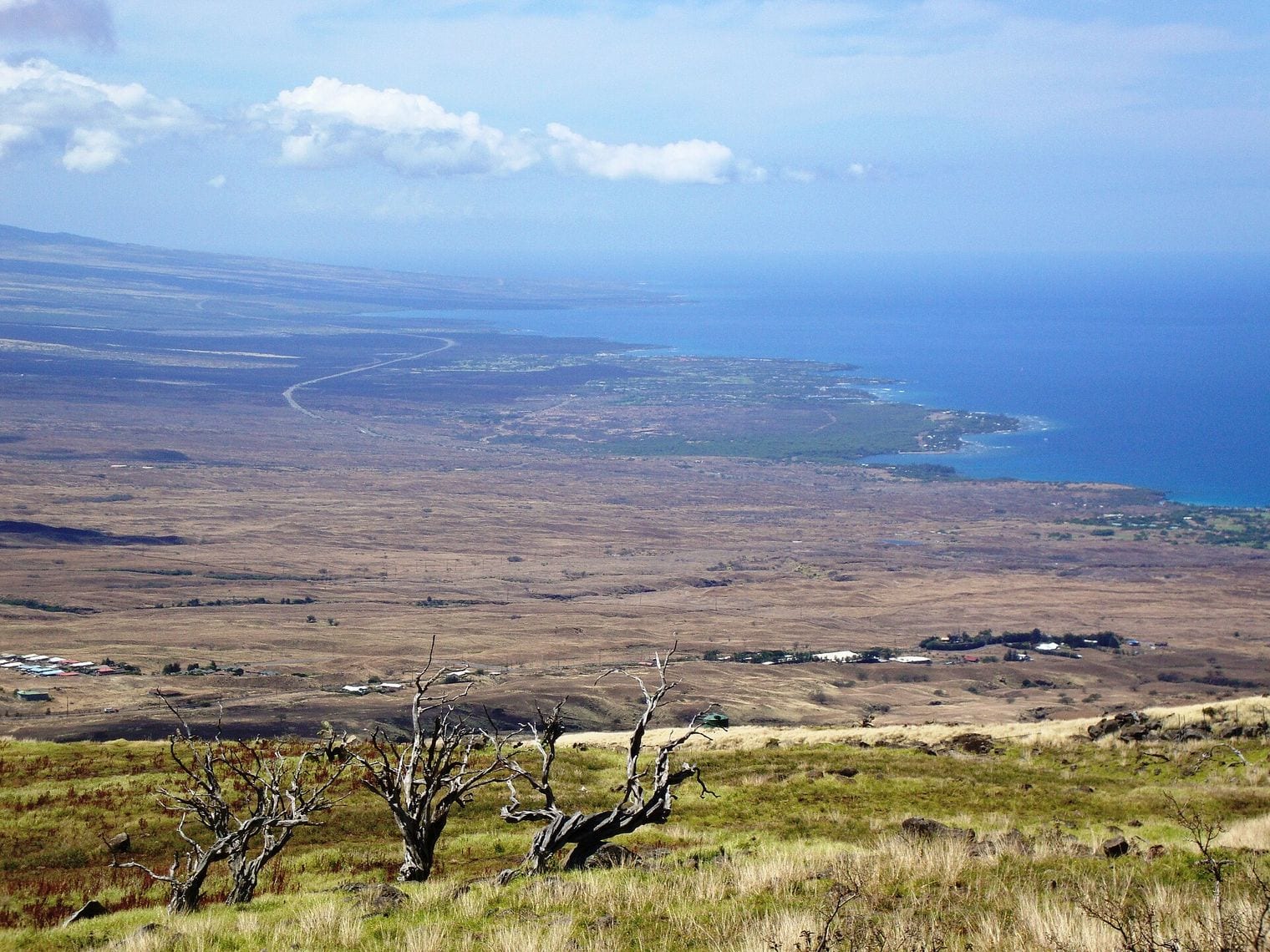
At 36,400 km³ in the Robinson and Eakins 2006 figures, Kohala is the oldest of the five volcanoes on the Island of Hawaiʻi, about a million years old. Its volume sits inside Mauna Kea's published range of 32,000 to 41,900 km³, so the order of the two depends on which Mauna Kea estimate you take.
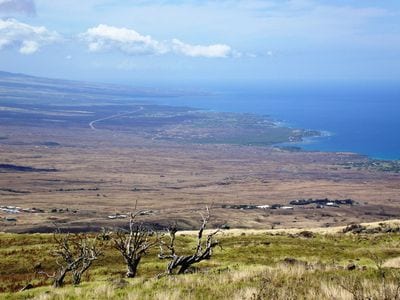
Kohala last erupted about 120,000 years ago, and near the end of its shield-building stage a giant landslide carried away its northeast flank. Erosion has since cut deep valleys into the windward side, with walls about 300 meters high at the Waipiʻo Valley Lookout and over 500 meters at Honopue. Rain on the summit of Kohala Mountain is more than 30 times that on the coast near Kawaihae, just 11 miles away.
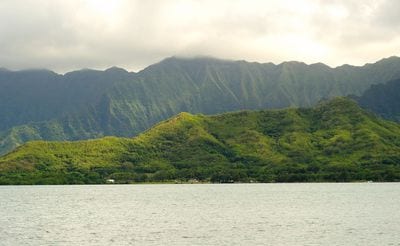
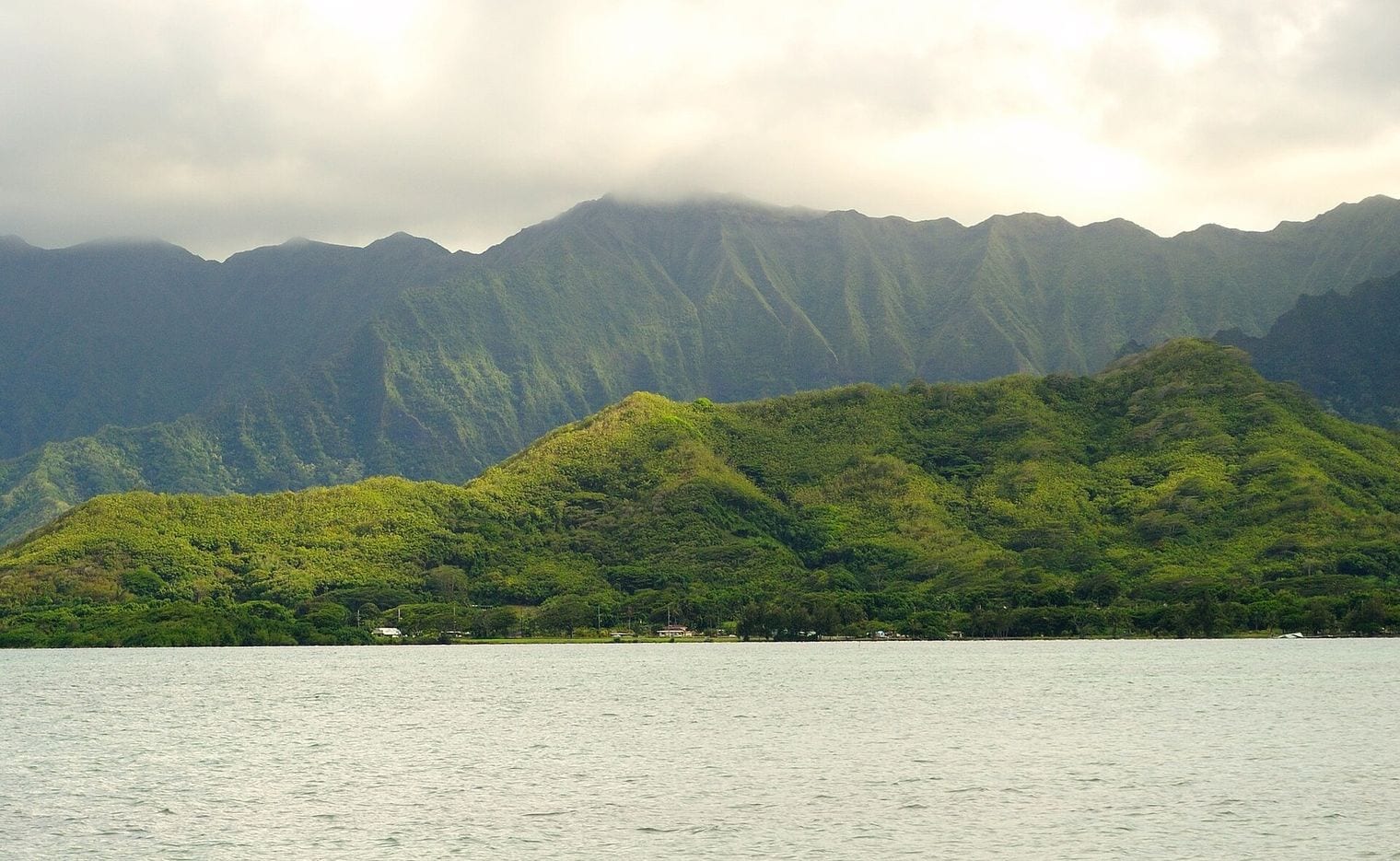
At 34,100 km³ in the Robinson and Eakins 2006 figures, Koʻolau, the volcano behind windward Oʻahu, ranks ninth. It first erupted on the ocean floor more than 2.5 million years ago and grew until it went dormant about 1.7 million years ago; koʻolau means "windward" in Hawaiian.
What survives is the Koʻolau Range, a fragmented remnant designated a National Natural Landmark in 1972. Some thirty later eruptions over the past 500,000 years or so built many of the landmarks of eastern Oʻahu, among them Diamond Head, Punchbowl Crater, Koko Crater and Hanauma Bay. At the Nuʻuanu Pali Lookout, Kamehameha the Great won the 1795 battle that brought Oʻahu into his kingdom.
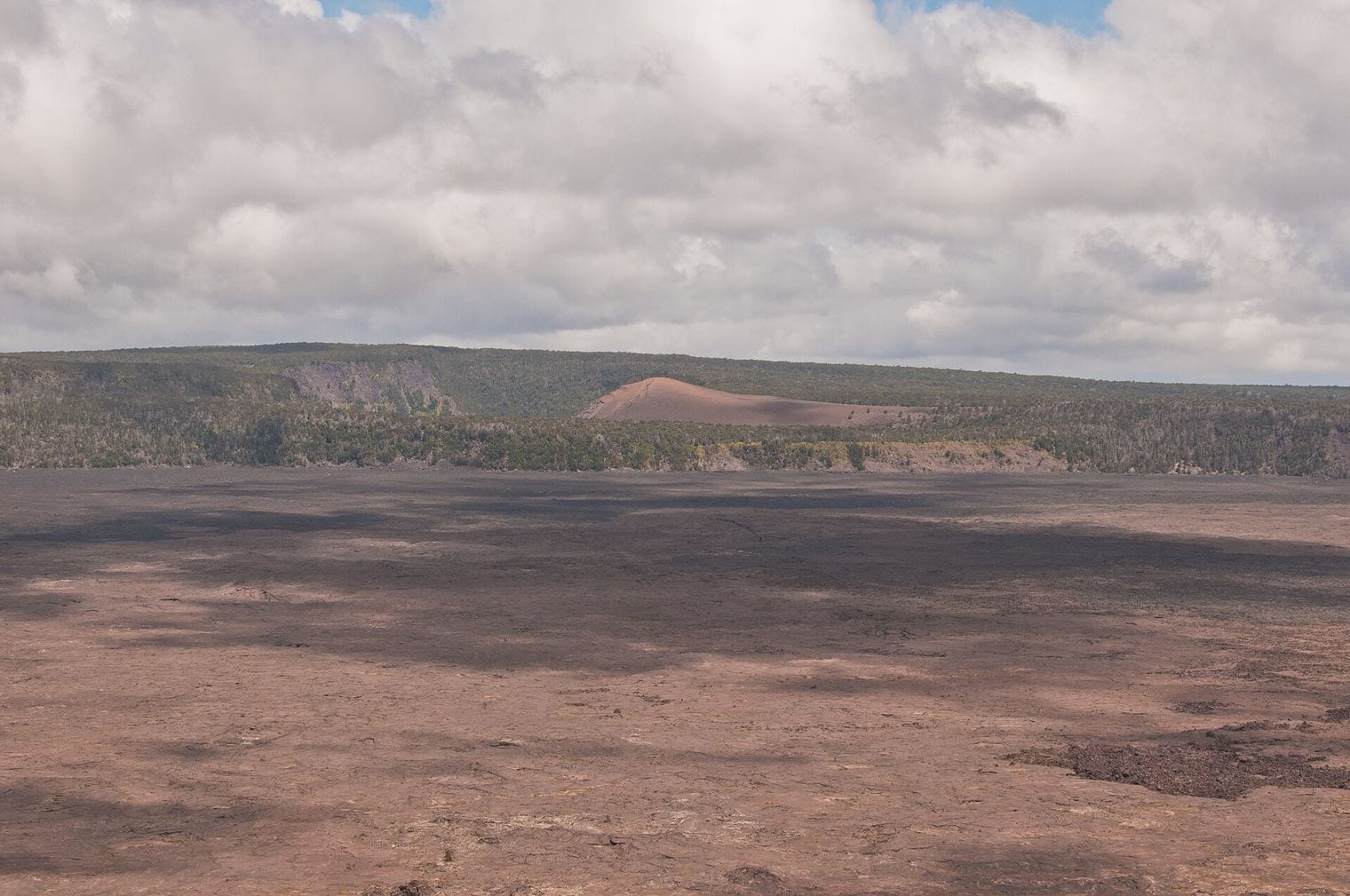
At 31,600 km³ in the Robinson and Eakins 2006 figures, Kīlauea ranks tenth, though this is the most disputed number on the list. USGS Professional Paper 1801 revises it down to about 10,000 km³, treating the rest as Mauna Loa rock buried beneath it; on that figure Kīlauea would fall below West Molokaʻi and out of the top 15. The list keeps 31,600 km³ because it splits the two volcanoes the same way as Mauna Loa's 74,000 km³.
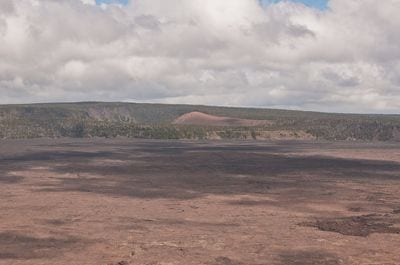
Kīlauea is the most active of the five volcanoes on the Island of Hawaiʻi and among the most active on Earth. Many eruptions center on Halemaʻumaʻu, the pit crater inside its summit caldera that Hawaiian tradition calls the home of Pele, goddess of fire and volcanoes. The Hawaiian Volcano Observatory, now based in Hilo, was founded on its rim in 1912, and the volcano lies in Hawaiʻi Volcanoes National Park, created in 1916.
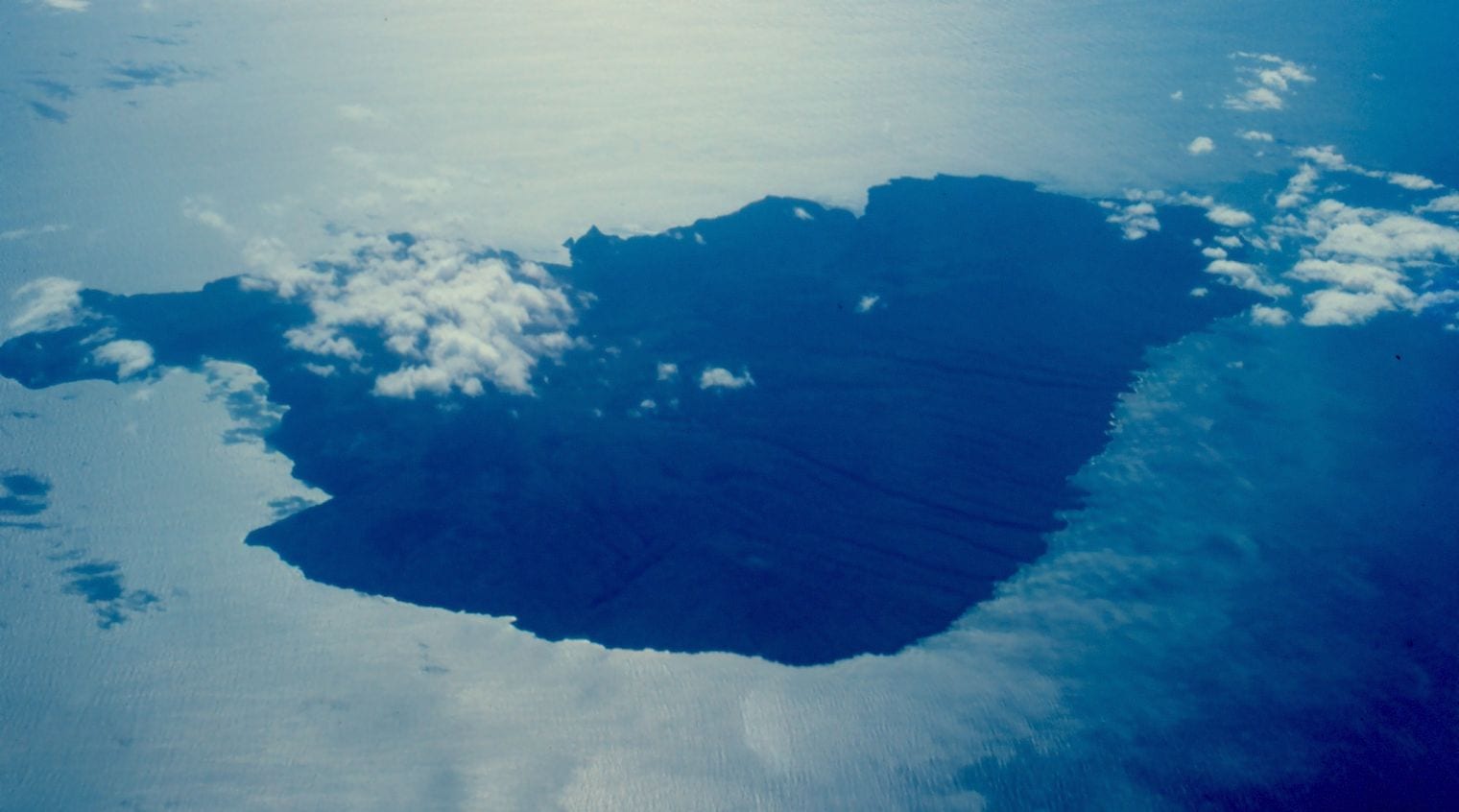
At 30,300 km³ in the Robinson and Eakins 2006 figures, West Molokaʻi, the extinct shield that forms the western half of Molokaʻi, ranks 11th. It sits just behind Kīlauea, whose published volume runs from 10,000 to 31,600 km³, so on the lower Kīlauea figure West Molokaʻi would move up a place.
Its shield-building eruptions ended about 1.89 million years ago, followed by a last postshield phase about 1.76 million years ago. The volcano is sometimes called Mauna Loa, after the small town of Maunaloa on its slopes, a name easy to confuse with the giant at number two. Its low uplands make a far gentler landscape than the sea cliffs of East Molokaʻi.
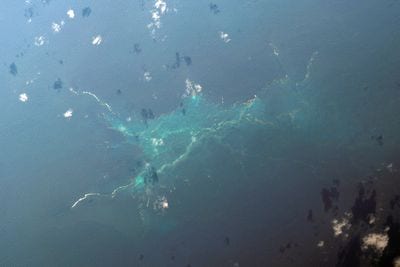
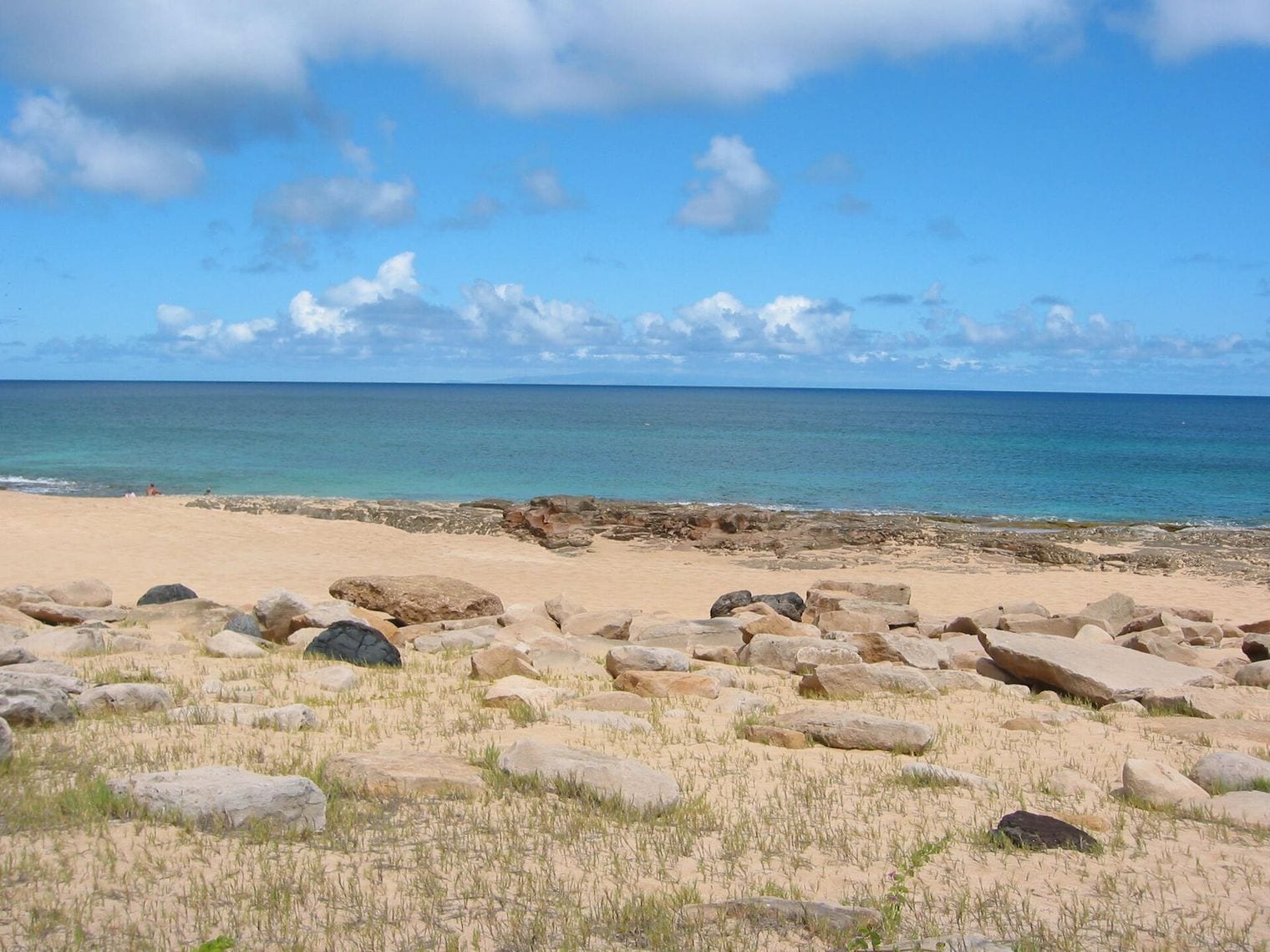
At 26,300 km³ in the Robinson and Eakins 2006 figures, the volcano that built Kahoʻolawe ranks 12th, even though above water it is the smallest of the eight main Hawaiian Islands. Almost all of that volume lies below the sea, about seven miles southwest of Maui.
The island is 11 miles long and 6 miles wide, and its highest point, the crater of Luamakika, reaches only about 450 meters1,477 feet. Lying in the rain shadow of Haleakalā, it is dry, and more than a quarter of it has eroded down to hardpan. The US Navy used it for live-fire training until 1990 and handed it to the state in 1994; no one lives there, and the Kahoʻolawe Island Reserve oversees its restoration.
1313. Maro Reef
Northwestern Hawaiian Islands (Maro Reef), Papahānaumokuākea Marine National Monument, Hawaii, United States
Shield 35 "Maro Reef", total 25.2 × 10³ km³ (Bargar & Jackson 1974)
At 25,200 km³ in Bargar and Jackson's 1974 USGS table, the volcano under Maro Reef ranks 13th. That study measured only the edifice above the surrounding seafloor, with no allowance for rock pressed into the crust below, so the whole volcano is likely larger.
Almost nothing shows above water: Maro Reef is a largely submerged coral atoll about 850 miles1,370 km northwest of Honolulu, with roughly an acre of dry land that the tides can cover.
Its coral spreads from the center like the spokes of a wheel, and it is the largest coral reef in the Northwestern Hawaiian Islands. Captain Joseph Allen of the whaling ship Maro found it in 1820, the same year his ship came upon the Gardner Pinnacles of Pūhāhonu.
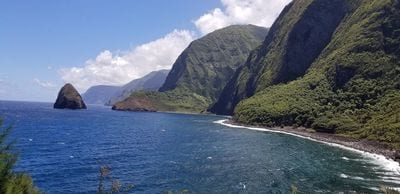
At 23,900 km³ in the Robinson and Eakins 2006 figures, East Molokaʻi ties with Suiko Seamount and takes 14th place on the tiebreak, because its summit stands far higher. The extinct shield forms the eastern two-thirds of Molokaʻi, and its main growth ran from about 2 million to 1.5 million years ago.
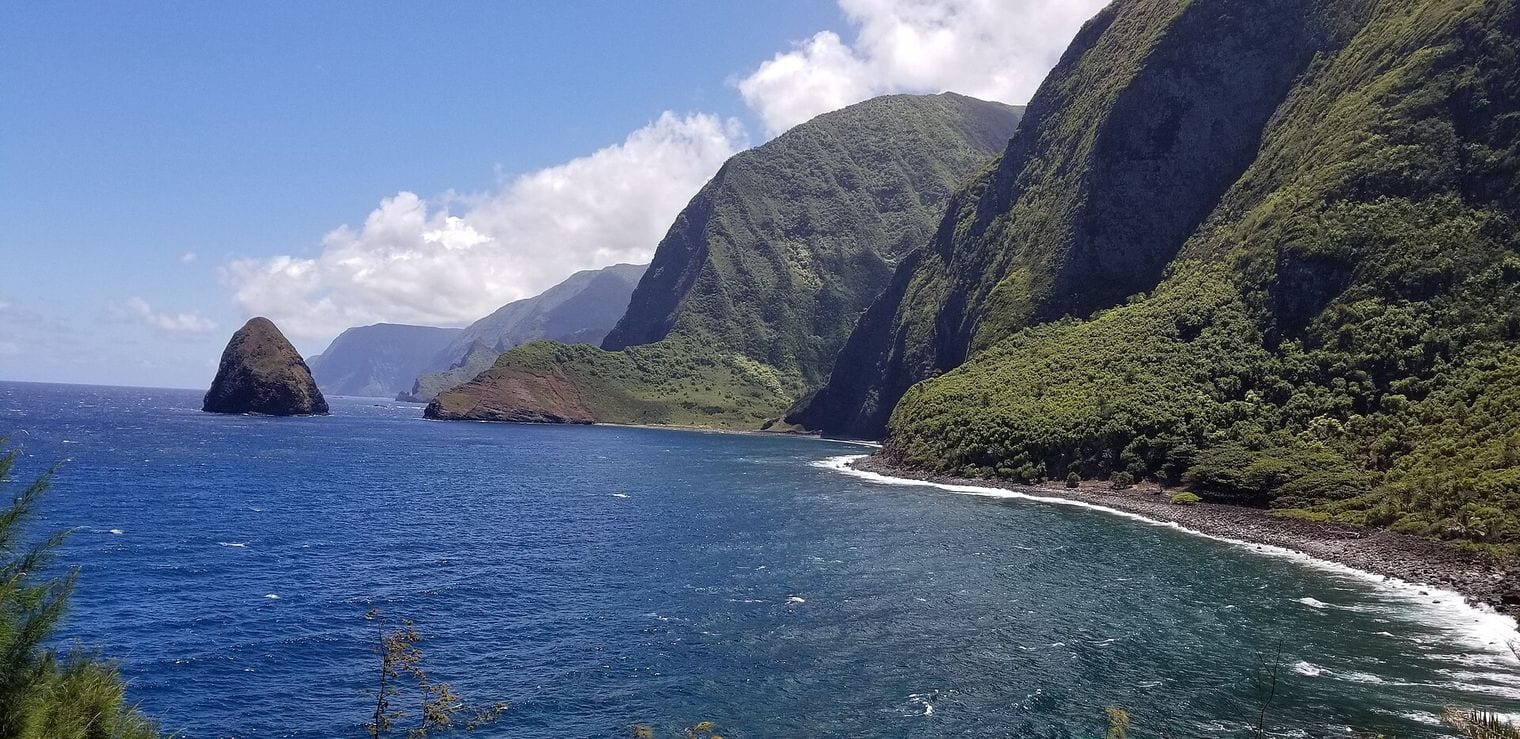
About 1.4 million years ago the northern third of the volcano collapsed and slid into the sea, leaving the towering sea cliffs of Molokaʻi's north shore. A later, small shield of pāhoehoe lava built the Kalaupapa Peninsula at their foot, the last phase of East Molokaʻi. Its highest point is Kamakou, on the southern rim.
1515. Suiko Seamount
Emperor Seamounts, North Pacific (international waters)
Shield 90 "Suiko Seamount", total 23.9 × 10³ km³ (Bargar & Jackson 1974)
At 23,900 km³ in Bargar and Jackson's 1974 USGS table, Suiko Seamount matches East Molokaʻi's volume and ranks 15th on the tiebreak, since its flat summit lies under the sea. Like Maro Reef, its figure counts only the edifice above the seafloor, so it likely understates the whole volcano.
Suiko is a guyot in the Emperor Seamount Chain of the northwest Pacific, in international waters, named after Empress Suiko, who reigned in Japan from 593 to 628. It last erupted about 60 million years ago, and the Pacific Plate has carried it far from the hotspot that built it. Ocean drilling expeditions have cored its lavas for clues to the history of the Hawaiian hotspot.
FAQ: The World's Largest Volcanoes
What is the largest volcano in the world?
Pūhāhonu, in the Northwestern Hawaiian Islands, at about 148,000 km³ by Garcia and colleagues' 2020 study, with an uncertainty of 29,000 km³ either way. Only its tips, the two Gardner Pinnacles, rise above the sea. Mauna Loa on the Island of Hawaiʻi comes second at 74,000 km³, or 95,600 km³ if the rock buried under Kīlauea is counted, and it is the largest active volcano.
Isn't Tamu Massif the largest volcano on Earth?
Tamu Massif, the core of the Shatsky Rise in the northwest Pacific east of Japan, was called the biggest single shield volcano on Earth in 2013. A 2019 study of its magnetic stripes in Nature Geoscience found it was built by seafloor spreading at a mid-ocean ridge rather than as one shield volcano, so it counts as part of an oceanic plateau, and plateaus such as Tamu Massif and Ontong Java are left off this list.
Why isn't Olympus Mons on the list?
Olympus Mons is a giant shield volcano on Mars, and this list ranks volcanoes on Earth only. It was built the same way as the Hawaiian shields, from many thousands of fluid basalt lava flows, which is why the volcanoes here, such as Mauna Loa and Mauna Kea, are the closest Earthly comparison to it.
What is the largest volcano on land?
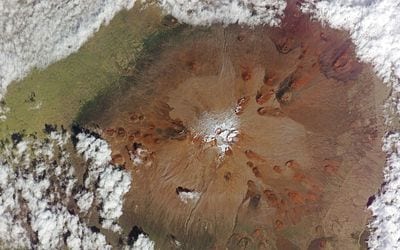
No single study measures continental volcanoes the same way as the ocean shields. Mount Kilimanjaro in Tanzania, often cited as the bulkiest volcano on land, erupted about 4,800 km³ of lava from its three cones, Shira, Mawenzi and Kibo, by one estimate. That is far below the 23,900 km³ at number 15, and every volcano on this list rises from the ocean floor.
How were the volcano volumes measured?
Each figure is the whole volcano from base to summit, including its submerged flanks and, where the study counts it, the rock pressed into the crust beneath. Robinson and Eakins 2006 measured the main Hawaiian shields from bathymetry and elevation models; Garcia and colleagues 2020 measured Pūhāhonu; Xu and colleagues 2022 measured Jimmu Seamount; and Bargar and Jackson's 1974 table, used for Maro Reef and Suiko Seamount, counts only the part above the seafloor.
Why are almost all of the largest volcanoes in Hawaii?
They grew over one hotspot. As the Pacific Plate moved over it, the Hawaiian hotspot built the Hawaiian–Emperor chain, about 6,000 km long, with more than 120 volcanoes erupted over the past 82 million years. Its fluid basalt piles up into huge, gently sloping shields. The search for this list found no single volcano elsewhere with a whole-edifice volume near the 23,900 km³ cutoff.
Sources & updates
How this ranking was verified
Checked before launch
Sources cited
15
Publishers
4
Every figure in this ranking was checked against the record-keeper or official source behind it before publication, and the top of the ranking re-checked live so a newer record would not be missed.
One email every Thursday with our newest guides for the places you tick.
Newsletter
Stay updated with new World Record Breakers
One email every Thursday with our newest guides for the places you tick.
We use cookies to analyze site traffic and improve your experience.
You can accept or reject analytics cookies. See our
May we use analytics cookies? See ourCookie Policy.