The record
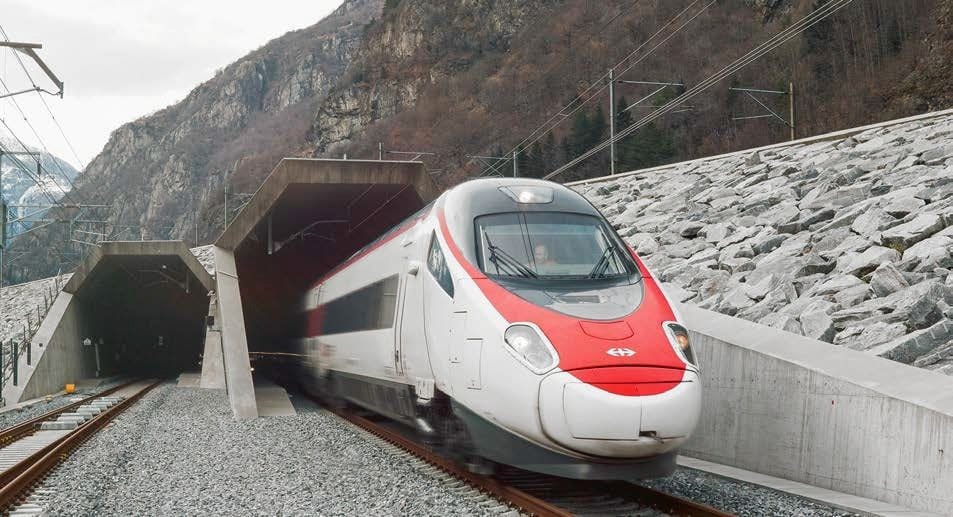
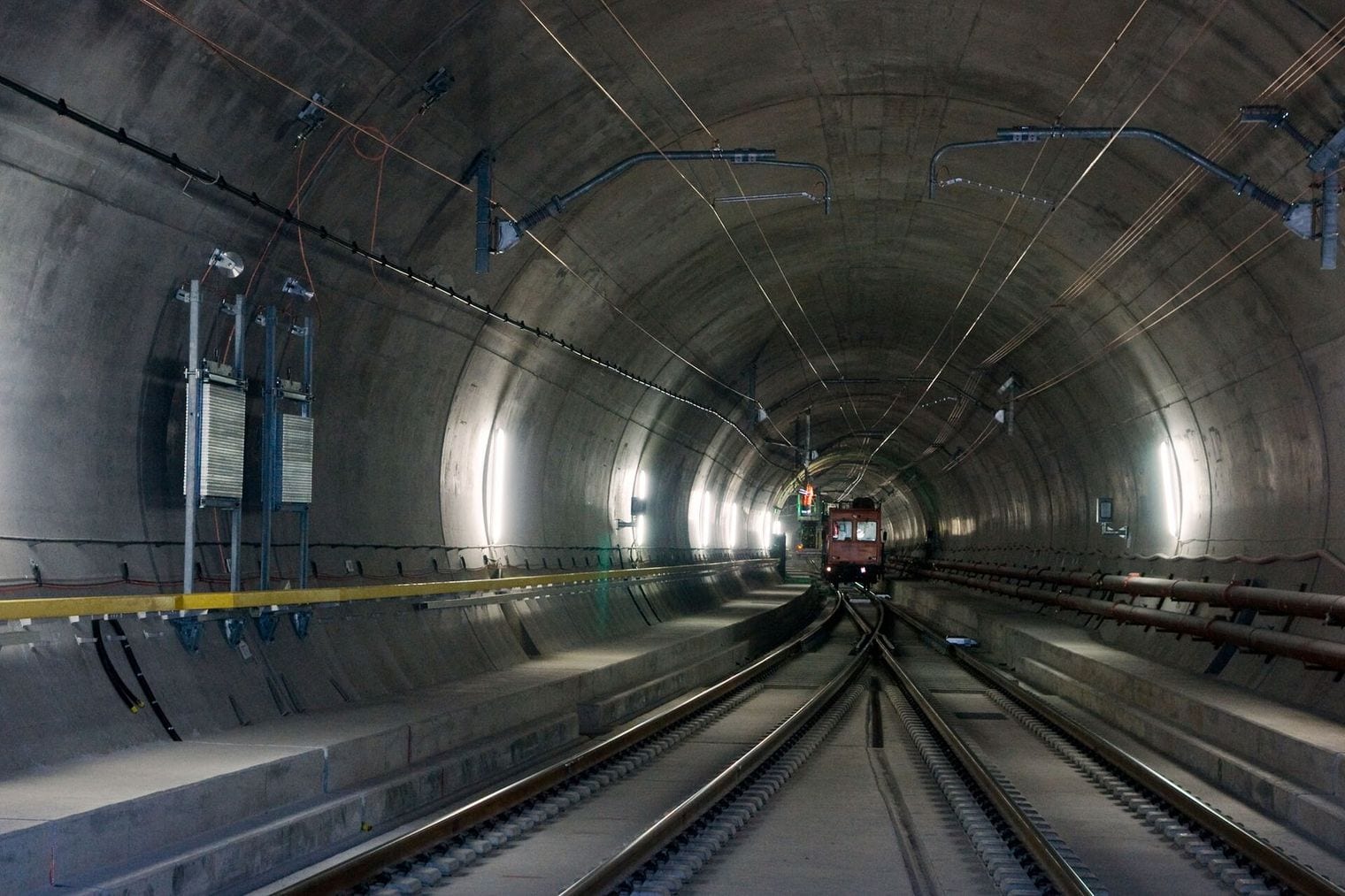
The longest rail tunnel in the world is the Gotthard Base Tunnel, in Switzerland — 57.104 km (35.5 mi), tunnel length.
Source: AlpTransit Gotthard / SBB. Verified .
Nothing on the planet's transport network runs longer than the tunnels trains travel through, and the gap over road is enormous: the longest tunnel you can drive, Norway's Lærdal, would be the shortest entry here by more than a kilometre.
This countdown ranks one continuous mainline railway bore, portal to portal, which is why Shanghai's 40.2-kilometre Airport Link tunnel sits it out despite out-measuring two thirds of this list — it is run by the city's metro operator with metro platforms and metro headways, and rapid transit is a different animal.
We also count only bores carrying trains today, so the Brenner Base Tunnel is absent: at 64 kilometres it will take first place outright, but not until the 2030s. What survives runs from 25.81 to 57.104 kilometres across eight countries, and six of the fifteen are Chinese.
Rail tunnels leave road tunnels far behind — the longest tunnel you can drive through, Norway's Lærdal at 24.51 km, would not even make this list. See the longest road tunnels in the world for how the other half lives.
The Channel Tunnel has the longest undersea stretch of any tunnel on Earth — about 37.9 km of the Channel Tunnel lies beneath the seabed, considerably more than the roughly 23 km of undersea running in the longer Seikan Tunnel.
A base tunnel goes through the mountain, not over it — the Gotthard Base Tunnel holds a nearly flat gradient with more than two kilometres of rock overhead at its deepest, so heavy freight crosses the Alps without the extra banking locomotives the old mountain route required.
Six of these fifteen are in China, and every one opened in 2007 or later — from the Taihang Tunnel that year to the Ping'an Tunnel in 2023, an entire top-15 presence built inside two decades.
The Seikan Tunnel has two stations deep beneath the sea — Tappi and Yoshioka were built inside the undersea section and now serve as emergency evacuation points rather than passenger stops.
First place is due to change hands — the Brenner Base Tunnel between Austria and Italy will run 64 km when it opens in the 2030s, taking the record from the Gotthard outright.
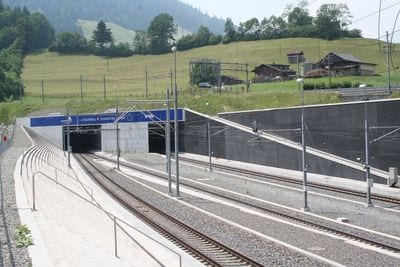
At 57.104 km, the Gotthard Base Tunnel is the longest railway tunnel on Earth by a margin of more than three kilometres, running flat beneath the Swiss Alps from Erstfeld in Uri to Bodio in Ticino.
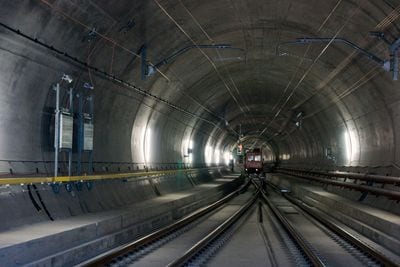
It is a base tunnel in the literal sense: rather than climbing to a pass, it drives straight through the massif at valley level, with more than two kilometres of rock overhead at its deepest point. That flatness is the whole engineering argument, letting heavy freight cross the Alps without the banking locomotives the old mountain route demanded.
It opened in June 2016 after seventeen years of boring, the centrepiece of Switzerland's New Rail Link through the Alps and the Rotterdam–Genoa freight corridor. Passenger trains run it at up to 200 km/h and take about twenty minutes to pass through, with the Zurich–Milan journey now down to roughly three and a quarter hours.
A freight derailment in August 2023 badly damaged the west tube, and repairs took thirteen months of concrete removal and track renewal before full two-tube service resumed in September 2024.
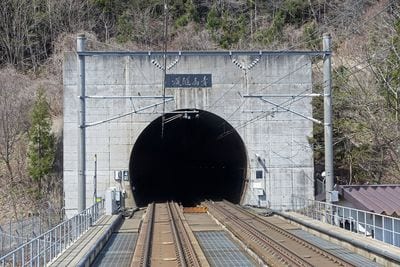
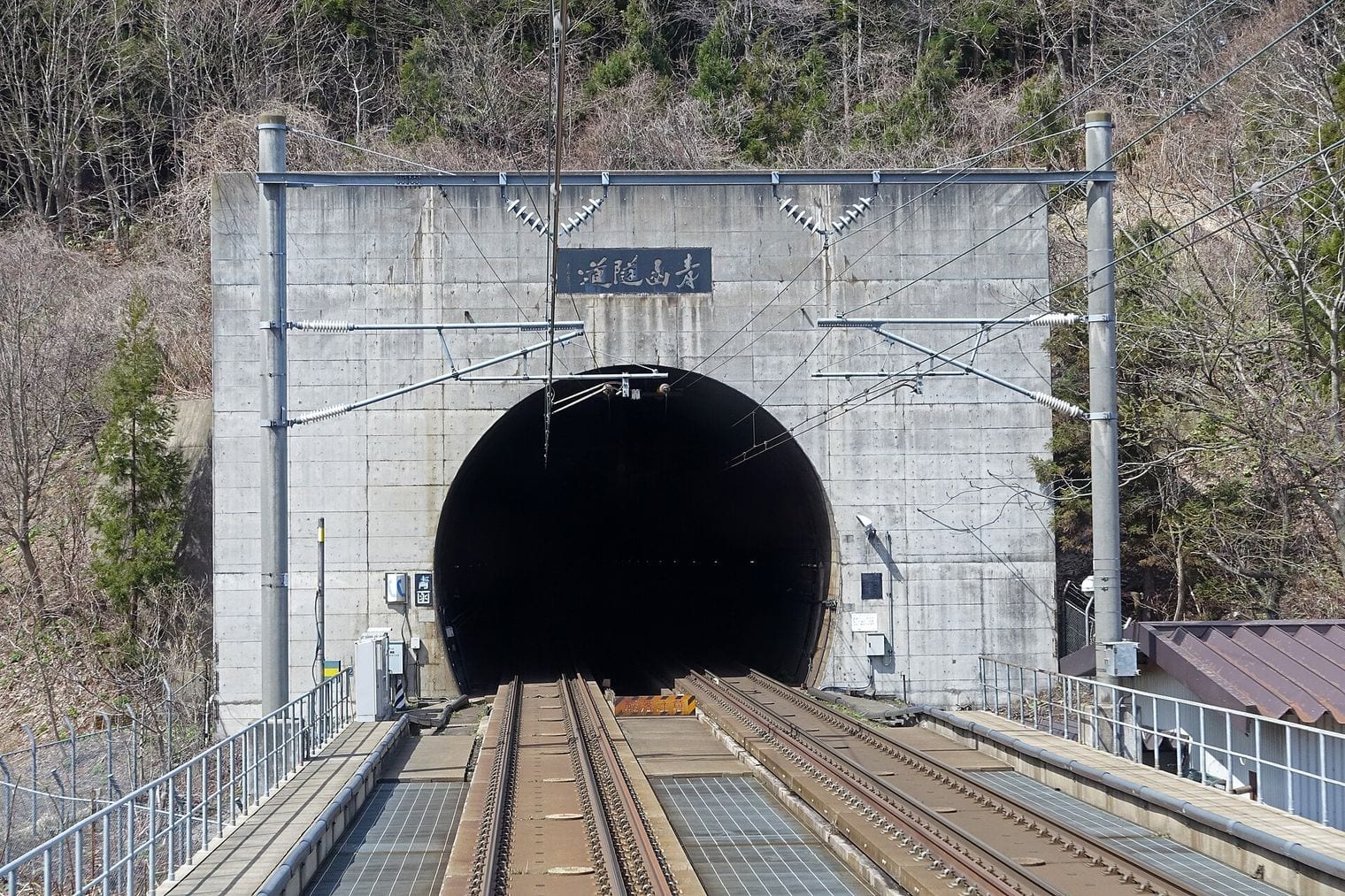
At 53.85 km, the Seikan Tunnel burrows under the Tsugaru Strait to join Honshu to Hokkaido, and it held the world record for twenty-eight years until Gotthard opened. Roughly 23 km of it lies beneath the seabed, reaching about 240 m below sea level. The project was driven by a 1954 ferry disaster in the strait, and the boring that followed proved brutal — the seabed geology flooded the works repeatedly, and construction ran from 1971 to 1988.
It carried narrow-gauge trains for its first decades, then was regauged and rewired to take the Hokkaido Shinkansen, which began running through it in March 2016. Two stations were built deep inside the undersea section at Tappi and Yoshioka; both have since been converted into emergency evacuation points rather than passenger stops, and the escape shafts at Tappi can still be visited from the Aomori side.
33. Channel Tunnel
Coquelles to Folkestone, English Channel, France / United Kingdom
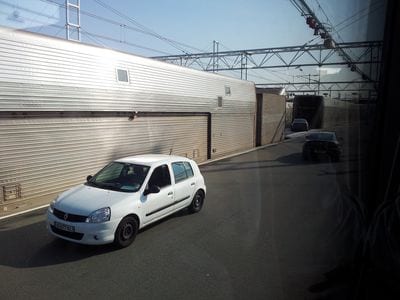
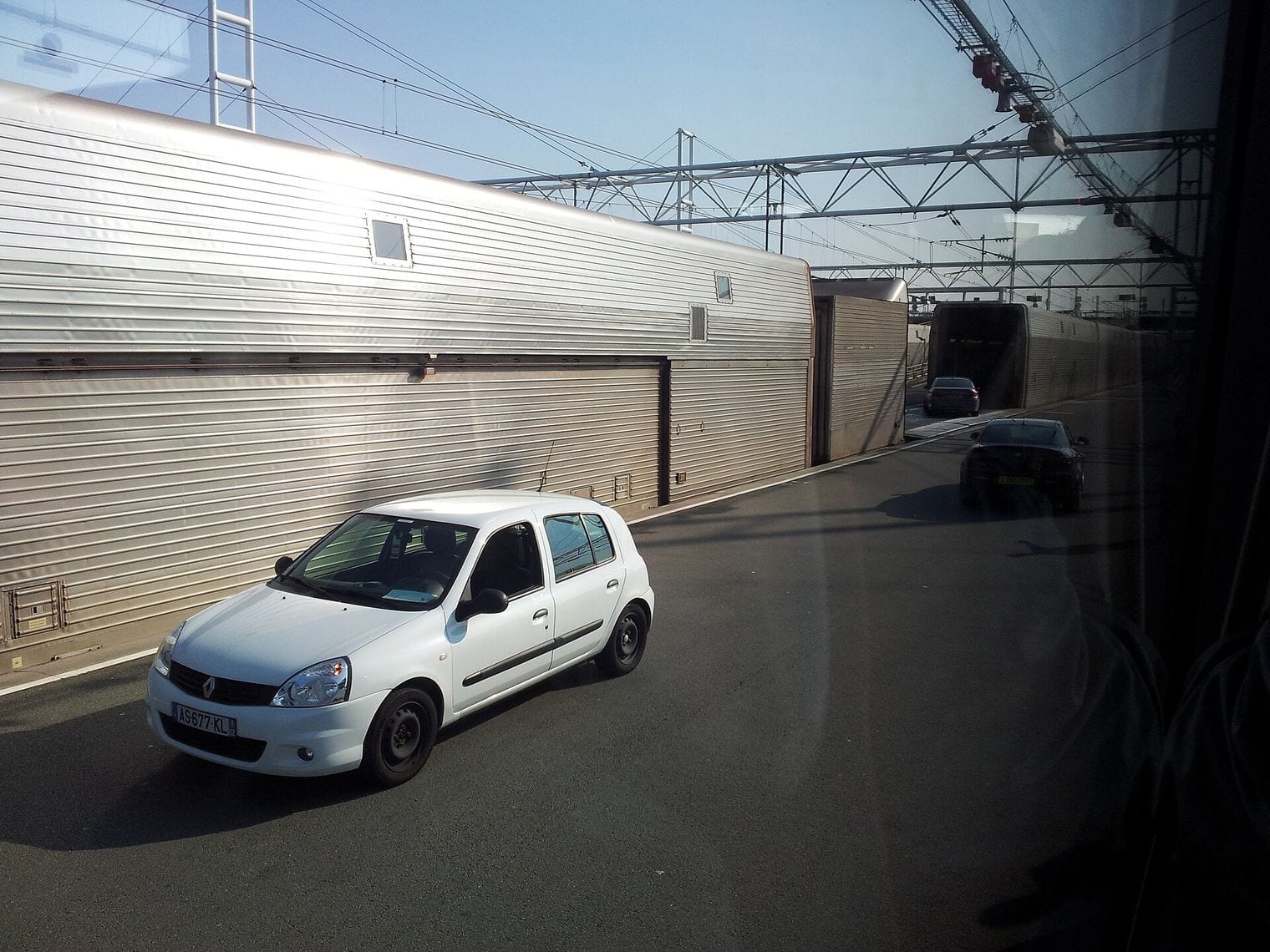
At 50.45 km, the Channel Tunnel links Coquelles in France to Folkestone in England, and while it ranks third overall it holds a record of its own: at about 37.9 km, its undersea stretch is the longest of any tunnel in the world. It is really three parallel bores — two running tunnels for trains and a smaller service tunnel between them, connected by cross-passages, which doubles as the escape and maintenance route.
Boring began from both coasts in 1988 and the two sides met beneath the seabed in 1990; the tunnel opened in May 1994. It runs as much as 75 m below the seabed, following a layer of chalk marl chosen because it is watertight and easy to cut. Today it carries Eurostar passenger services, the LeShuttle vehicle-carrying trains that take cars and lorries through, and cross-Channel freight.
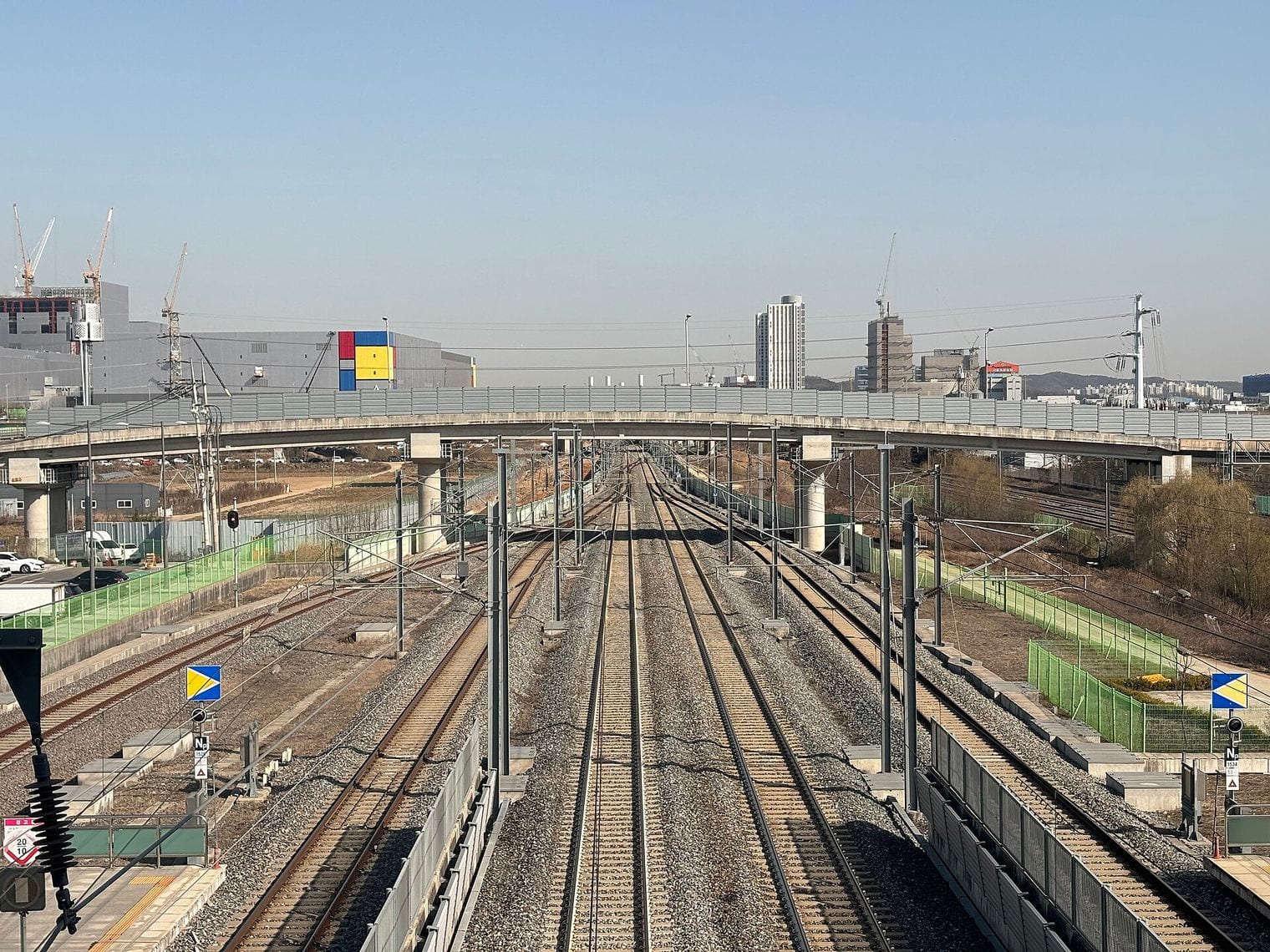
At 50.3 km, the Yulhyeon Tunnel is South Korea's longest by a wide margin and the longest railway tunnel in the world outside Europe and Japan. Remarkably, it accounts for about 82 per cent of the line it belongs to: the Suseo–Pyeongtaek high-speed railway is only 61.1 km long, so the route is essentially one tunnel with short open approaches at either end.
It runs from Suseo in southern Seoul out beneath the dense suburbs of Gyeonggi Province towards Dongtan and Pyeongtaek, which is precisely why it was bored rather than built on the surface — there was no room above ground. Excavation finished in 2015 and the line opened in December 2016, carrying SRT high-speed services that give southern Seoul its own direct link to Busan and Mokpo without routing through Seoul Station.
At 38.813 km, the Songshan Lake Tunnel is the longest railway tunnel in mainland China, and unusually for a bore on this scale it was built for an intercity commuter route rather than a high-speed or heavy-freight line. It runs as twin bores beneath the Songshan Lake district of Dongguan, in the dense manufacturing belt of the Pearl River Delta, and was built for trains running at up to 200 km/h.
It carries the Dongguan–Huizhou intercity railway, part of the Guangdong intercity network that stitches the delta's cities into a single commuting region. Like the Yulhyeon Tunnel, it exists because there was nowhere to put a railway on the surface: the corridor between Dongguan and Huizhou is almost continuously built up, and tunnelling under it was less disruptive than carving a viaduct through. It opened to traffic in 2016.
66. Shenzhen Hong Kong Tunnel
Shenzhen North to West Kowloon, Guangdong and Hong Kong, China
At 35.655 km, the Shenzhen Hong Kong Tunnel carries the Guangzhou–Shenzhen–Hong Kong Express Rail Link underground from Shenzhen North station all the way to the terminus at Hong Kong West Kowloon. About 26 km of that length sits inside Hong Kong, where the entire high-speed line is buried, with the remainder running beneath Shenzhen.
It opened in September 2018 and put Hong Kong on the mainland's national high-speed network for the first time, cutting the run to Guangzhou to roughly three quarters of an hour. Building it meant threading twin bores under one of the most densely built landscapes on Earth — reclaimed harbour ground, existing metro lines and high-rise foundations — using a mix of tunnel boring machines, drill-and-blast and cut-and-cover depending on what lay above.
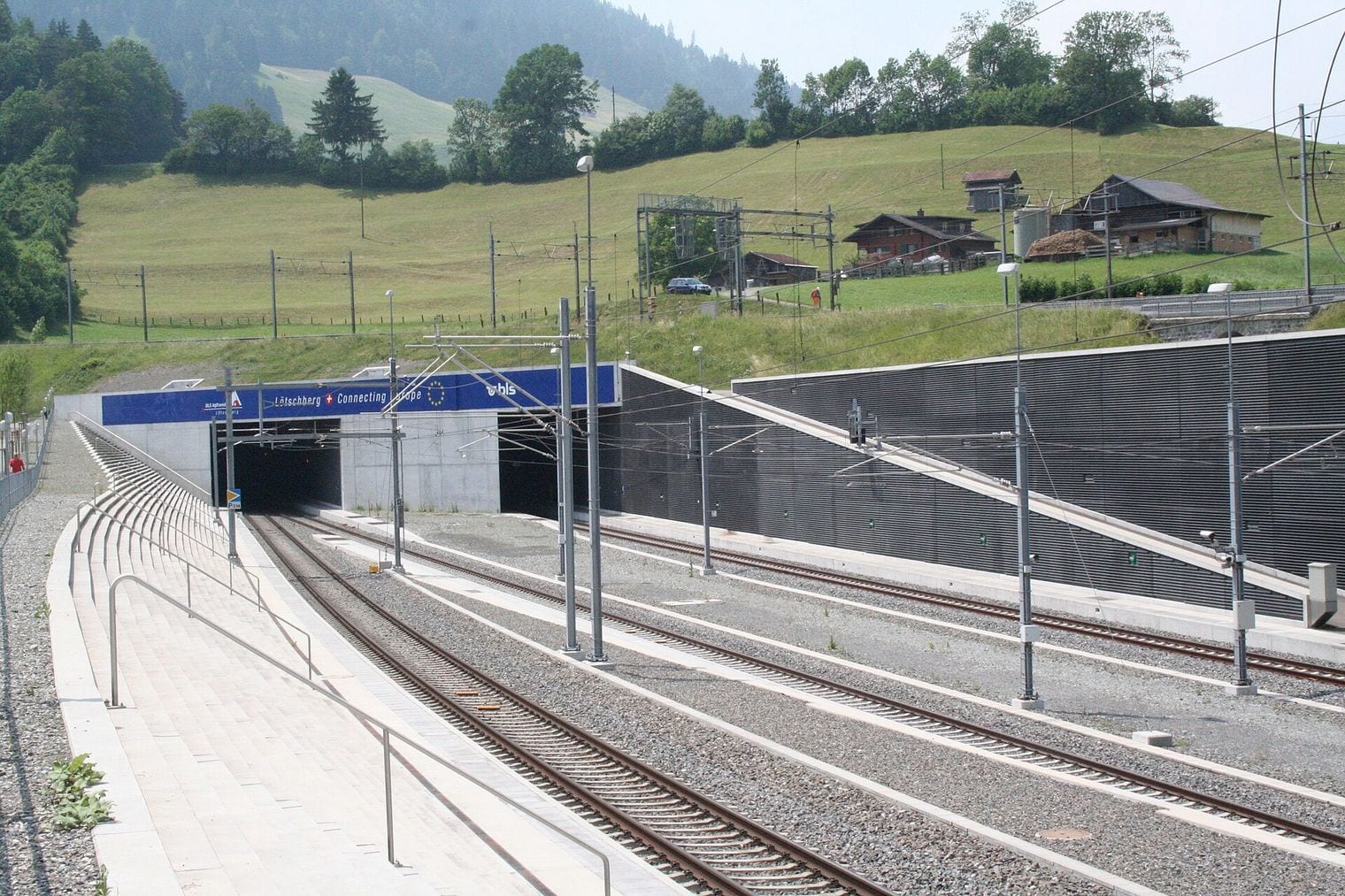
At 34.576 km, the Lötschberg Base Tunnel runs beneath the Bernese Alps from Frutigen to Raron and was the first of Switzerland's great base tunnels to open, arriving in 2007, nine years ahead of the Gotthard. It shortened the Bern–Valais route dramatically and proved the flat-crossing principle that the Gotthard would later scale up.
Its most unusual feature is what was left undone. To hold down costs, only one bore was fitted out with track along its full length; the second was excavated for roughly 14 km and left as an unequipped shell, with a further stretch never dug at all. The result is a tunnel that is single-track for much of its run, which caps how many trains can use it — and fitting out that second bore has been debated ever since.
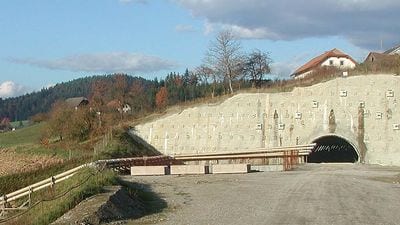
At 32.9 km, the Koralm Tunnel is Austria's longest railway tunnel and the newest entry on this list, opening in December 2025 after more than two decades of planning and construction. It runs beneath the Koralpe massif on the border between Styria and Carinthia, as twin single-track bores linked by cross-passages roughly every 500 m.
It is the centrepiece of the 130 km Koralm Railway between Graz and Klagenfurt, and its effect on the map of southern Austria is hard to overstate: a journey that took about three hours by a circuitous mountain route now takes 41 minutes. The line was built for both freight and passenger trains running at up to 250 km/h, and forms part of the wider Baltic–Adriatic corridor linking Poland and the Czech Republic to the northern Italian ports.
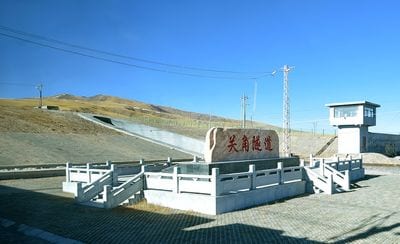
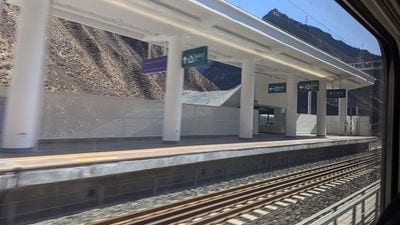
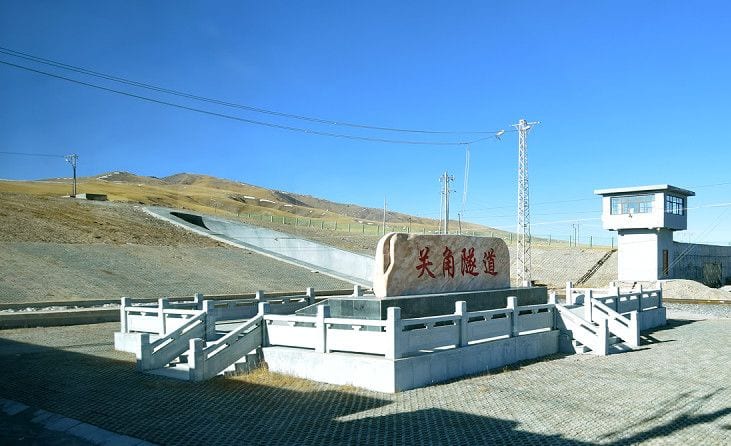
At 32.645 km, the New Guanjiao Tunnel drives beneath Guanjiao Mountain in Qinghai, and it is the highest-altitude entry here by a considerable distance — the surrounding plateau sits above 3,000 m, which shaped everything about how it was built and how it is ventilated. It consists of twin single-track bores and opened in 2014.
It carries the Qinghai–Tibet Railway, and it exists to solve a specific problem: the original alignment climbed over the Guanjiao pass on gradients steep enough that trains needed extra locomotives to get up them, throttling capacity on the line to Lhasa. Boring straight through the mountain instead cut the crossing distance sharply, flattened the gradient and removed the need for banking engines, which is why the route was rebuilt around it.
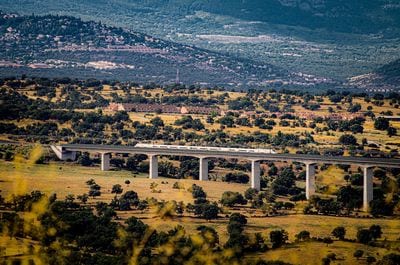
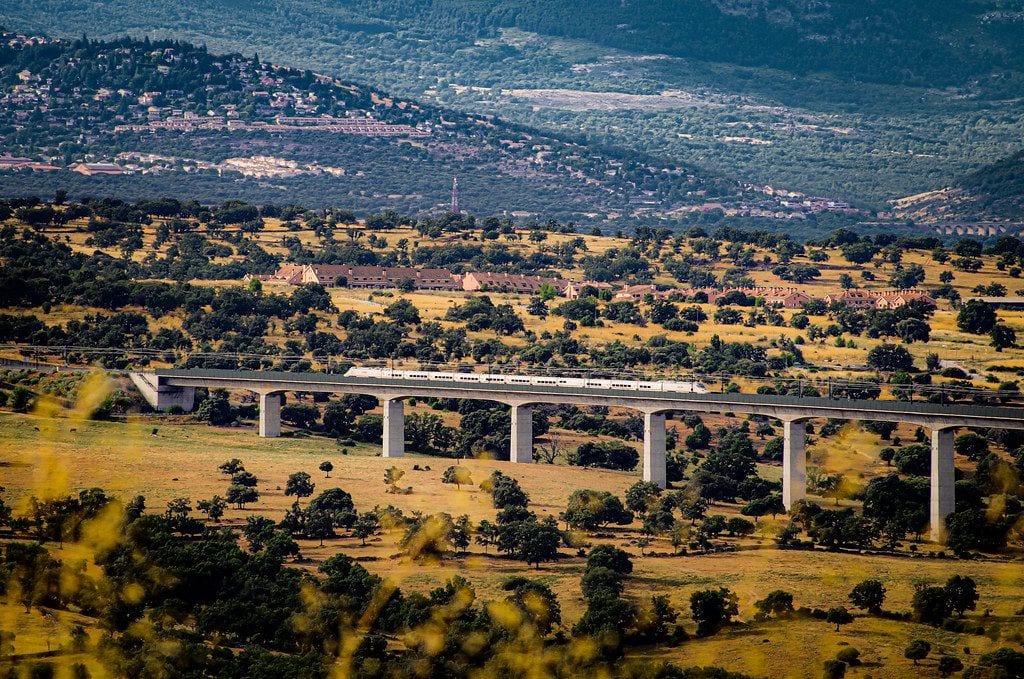
At 28.418 km, the Guadarrama Tunnel is Spain's longest and runs beneath the Sierra de Guadarrama, the granite range separating Madrid from the plains of Castile and León. It was bored as twin tubes of almost identical length — 28.418 km and 28.407 km — by four tunnel boring machines working in pairs from each portal, meeting in the middle in 2005.
It opened in 2007 as part of the high-speed line running north from Madrid towards Valladolid and eventually Asturias, replacing a slow climb over the mountains with a level run through them. The tunnel is effectively in a dead heat with the Ping'an Tunnel below it: the two are separated by just twenty metres, well inside the margin by which published tunnel lengths tend to disagree, so treat the pair as joint tenth.
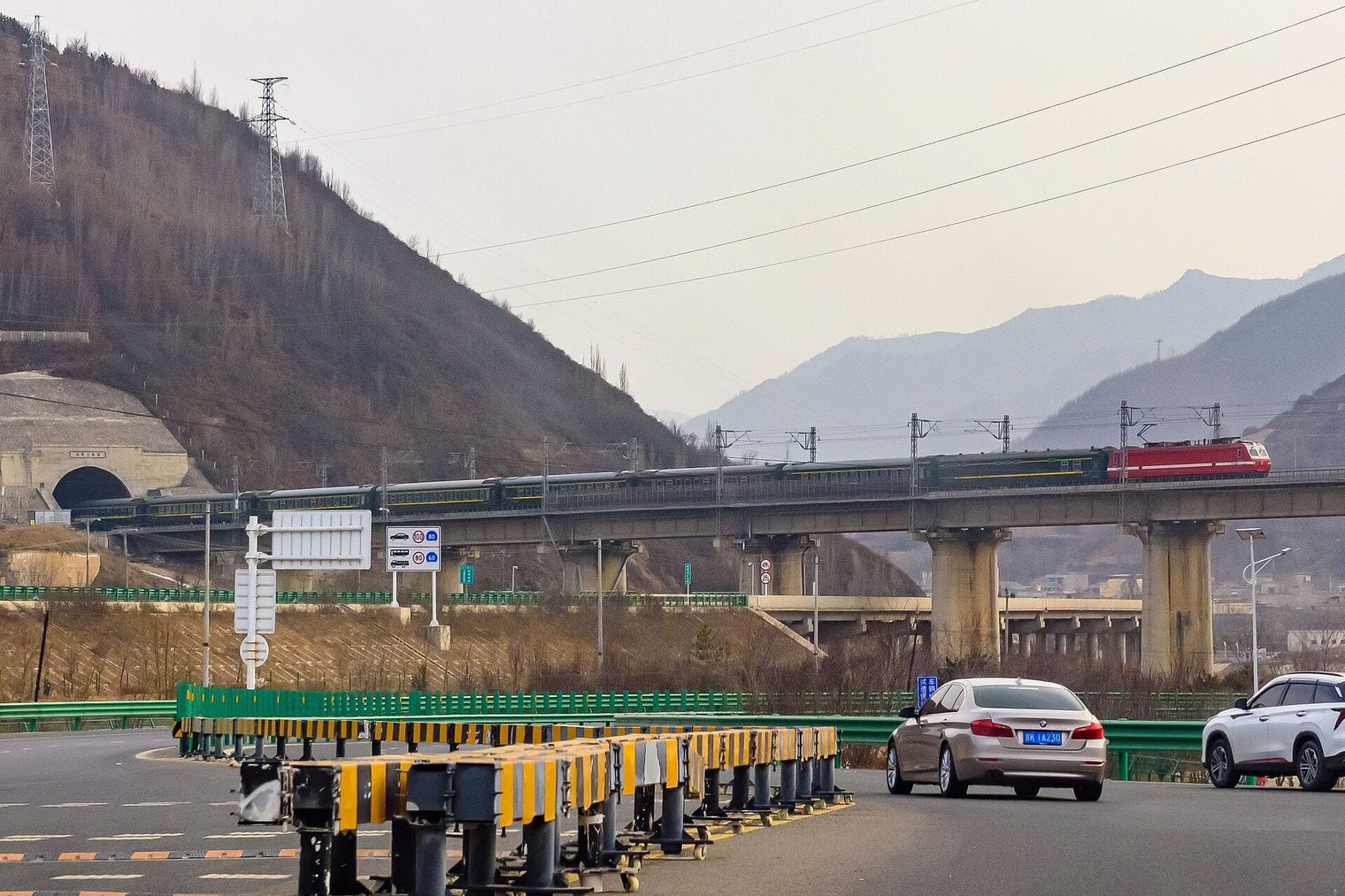
At 28.398 km, the Ping'an Tunnel sits twenty metres behind Guadarrama and is the longest railway tunnel in south-west China. It runs through Mao County in the Aba Prefecture of Sichuan, in the steep Min River valley, as twin single-track bores. One source measures its second tube slightly longer than its first, which would nudge it ahead of Guadarrama — the figures are close enough that the ordering of the two is genuinely arguable.
It is the hardest-won tunnel on this list. The ground it passes through was already fractured, and the 2008 Wenchuan earthquake left the rock weaker still, so the boring ran into soft-rock deformation, rock bursts, water inflows and high ground temperatures in turn. Breakthrough came in February 2017 after 39 months of work, and the Chengdu–Lanzhou railway it serves opened in 2023.
At 28.236 km, the West Qinling Tunnel passes under the West Qinling mountains in southern Gansu, the range that forms the watershed between the Yellow River and the Yangtze and has historically been one of the hardest barriers to rail-building in central China. It was driven as twin single-track bores, partly using large-diameter tunnel boring machines rather than drill-and-blast.
It carries the Lanzhou–Chongqing railway, a route that took roughly a decade to complete precisely because of terrain like this — the line is close to half tunnel and bridge along much of its length. Opened in 2016, it cut a journey that had previously required a long detour, and it gave landlocked Gansu a far more direct freight and passenger link south towards Sichuan and Chongqing.
At 27.848 km, the Taihang Tunnel bores through the Taihang Mountains, the great north–south escarpment that divides the North China Plain from the uplands of Shanxi. Its two bores differ by only nine metres, at 27.848 km and 27.839 km, and it was the longest railway tunnel in China when it was completed in 2007.
It carries the Shijiazhuang–Taiyuan high-speed railway between Hebei and Shanxi, a corridor that matters enormously for coal traffic as well as passengers. The Taihang range had long forced railways into slow, winding climbs, and driving straight through it turned a tortuous mountain crossing into a fast, level run — the journey between the two provincial capitals fell to about an hour.
At 26.445 km, the Hakkōda Tunnel runs beneath the Hakkōda Mountains of Aomori Prefecture at the northern tip of Honshu, carrying the Tōhoku Shinkansen on its final approach towards the Tsugaru Strait. It opened in 2010 with the extension of the line to Shin-Aomori, and it is the longest tunnel on that route.
The Hakkōda range is an active volcanic zone, and boring through it meant working in ground laced with hot springs and geothermal heat, with volcanic gas a persistent hazard during excavation. The tunnel forms one link in a nearly continuous chain of bores across northern Honshu, and trains emerging from it are only a short run from the Seikan Tunnel and the crossing to Hokkaido.
At 25.81 km, the Iwate-Ichinohe Tunnel closes this countdown, running under the Ōu Mountains in Iwate Prefecture on the Tōhoku Shinkansen. When it opened in December 2002 with the extension from Morioka to Hachinohe, it was the longest railway tunnel on land anywhere in the world — a title it held until the Lötschberg Base Tunnel overtook it in 2007.
That distinction is worth pausing on, because every longer tunnel at the time ran under water rather than rock: the Seikan and the Channel Tunnel both crossed straits. Boring it meant cutting through a geologically awkward stretch of the Ōu range, and it is one of a long series of tunnels that carry the shinkansen north through terrain too broken for a surface line to follow economically.
FAQ: The World's Longest Rail Tunnels
What is the longest railway tunnel in the world?
Switzerland's Gotthard Base Tunnel, at 57.104 km. It opened in June 2016, running almost flat beneath the Alps from Erstfeld to Bodio, and ended the Seikan Tunnel's twenty-eight-year hold on the record. Trains pass through it in about twenty minutes at speeds of up to 200 km/h.
Why isn't the Shanghai Airport tunnel on this list?
Because it is rapid transit rather than mainline railway. At 40.2 km the Shanghai Airport Link tunnel would otherwise rank fifth here, but it is run by the city's metro operator with metro-style platforms and headways. This countdown ranks mainline, intercity and high-speed railway bores only.
What is the longest undersea rail tunnel?
The Seikan Tunnel, at 53.85 km, with roughly 23 km of that running beneath the Tsugaru Strait between Honshu and Hokkaido. The Channel Tunnel is shorter overall at 50.45 km, but its undersea stretch of about 37.9 km is the longest of any tunnel anywhere in the world.
Which country has the most of the world's longest rail tunnels?
China, with six of these fifteen, and every one of them opened in 2007 or later. Japan follows with three and Switzerland with two, while South Korea, Austria and Spain contribute one each. The Channel Tunnel is shared between France and the United Kingdom.
Is the ranking about to change?
Yes. The Brenner Base Tunnel between Austria and Italy will measure 64 km once linked to the existing Innsbruck bypass, taking first place from the Gotthard outright. Around 90 per cent of its excavation was finished by mid-2026, with fit-out still to come and opening expected in the early 2030s.