The record
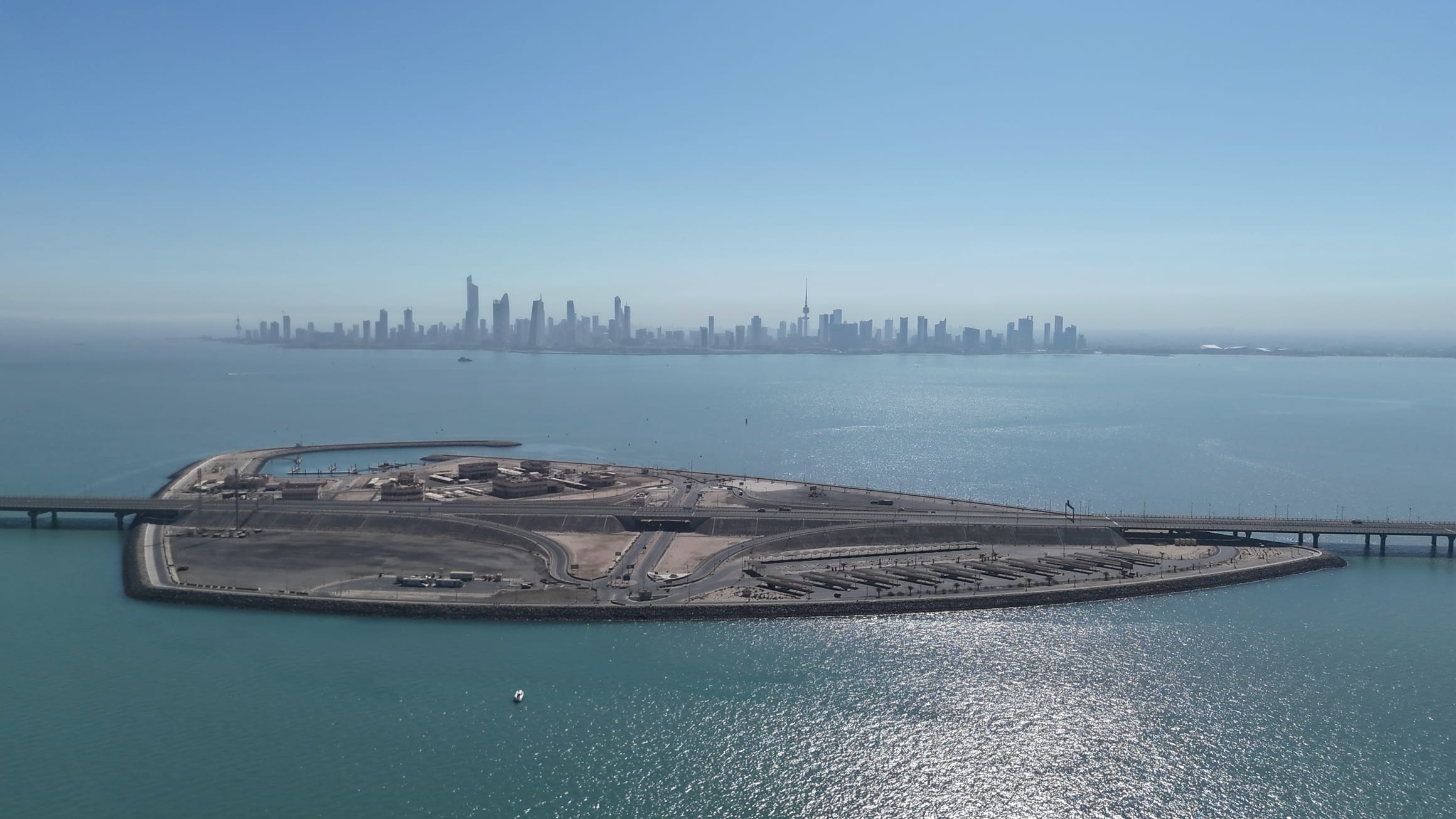
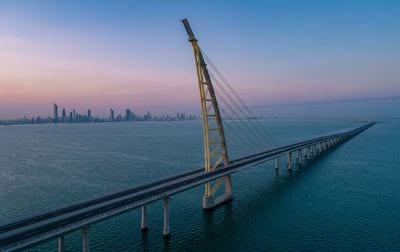
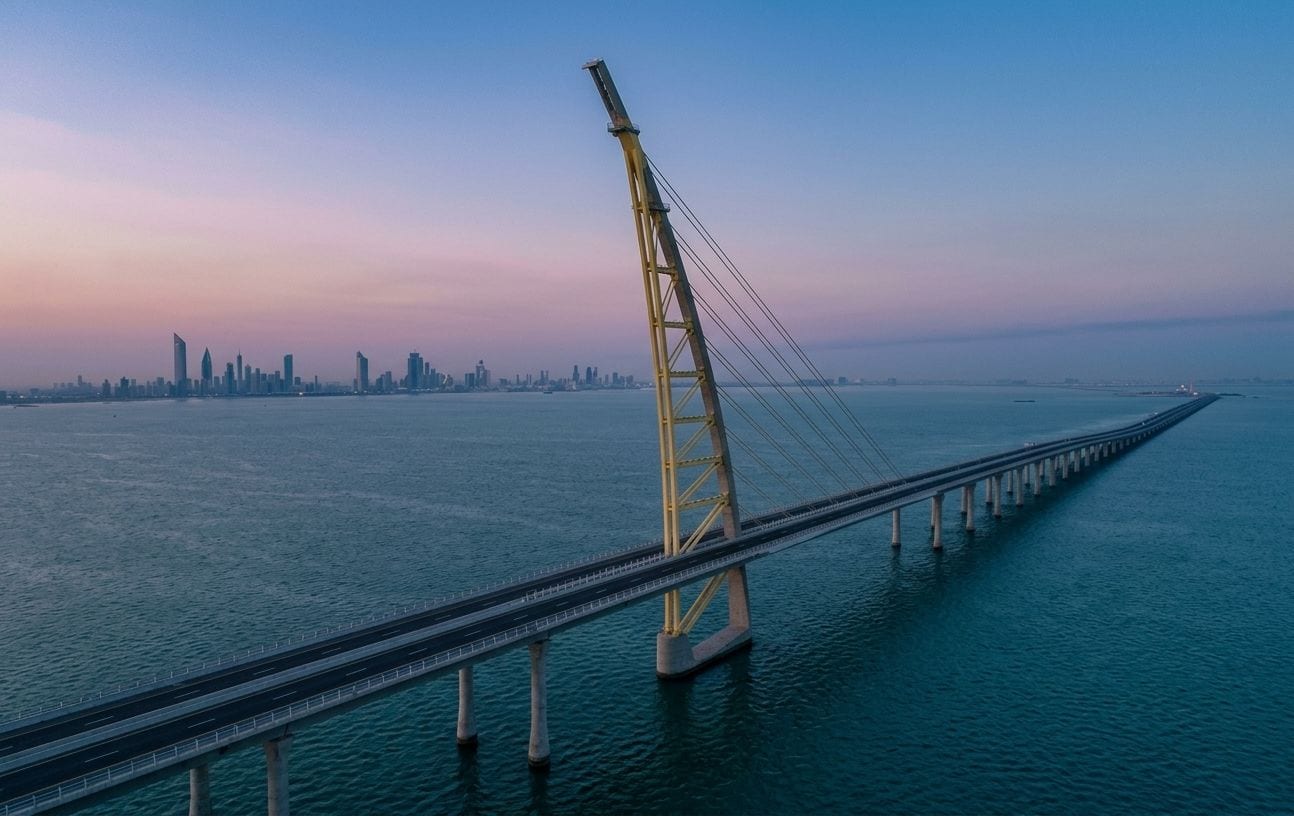
The longest sea-crossing bridge in the world is the Sheikh Jaber Al-Ahmad Al-Sabah Causeway, in Kuwait — 36.14 km (22.5 mi), length.
Source: Wikipedia + Systra project record. Verified .
The Hong Kong–Zhuhai–Macau crossing is 55 km long, and almost none of that is what this list ranks. Take out its 6.7 km immersed tunnel, its artificial islands and its link roads and 22.9 km of bridge remains — the figure Guinness itself certified, and enough for seventh place here.
That rule holds throughout: the bridge, not the fixed link it belongs to. It is why King Fahd Causeway's 25 km of alternating spans and embankments does not qualify, why the Tokyo Bay Aqua-Line counts as 4.4 km rather than 14, and why the 31 km Huangmaohai link contributes two bridges of 2.2 and 1.4 km.
Every entry below crosses genuine saltwater and carries traffic today, which puts out the longer Lake Pontchartrain Causeway on the first count and the Danyang–Kunshan viaduct on both. The range runs from 13.1 km to 36.14 km across eight countries — and the longest one is not in China.
Fun Facts About the World's Longest Sea-Crossing Bridges
The world's longest sea bridge is not the one usually named as it — Kuwait's Sheikh Jaber Al-Ahmad Al-Sabah Causeway puts 34.1 km of route above open water, an offshore run its designers log as a world record, while the far more famous Hong Kong–Zhuhai–Macau crossing is only 22.9 km of actual bridge.
The Hong Kong–Zhuhai–Macau Bridgedives into the seabed because of an airport. A span tall enough to clear the shipping channel into the Pearl River would have stood in the approach path to Hong Kong International, so the road drops into a 6.7 km immersed tunnel and climbs back out between two artificial islands.
The Hangzhou Bay Bridge has a service area in the middle of the sea — a 10,000 m² platform on more than 400 piles, carrying a 145.6 m viewing tower several kilometres from the nearest shore, above a bay that funnels the largest tidal bore on Earth.
The Pingtan Strait is one of the three roughest stretches of sea in the world, ranked with Bermuda and the Cape of Good Hope. Gales above force 6 blow on more than 300 days a year, and 29 typhoons crossed the site while the bridge was being built.
A longer bridge over water exists, and it is disqualified — the Lake Pontchartrain Causeway in Louisiana runs 38.4 km and holds the Guinness record for the longest continuous bridge over water, but Pontchartrain is a lake, so it crosses no sea at all.
Length is only one way to rank a bridge — measured instead by how far the deck stands above whatever lies beneath it, the highest bridges in the world are an almost entirely different list, led by a Chinese canyon crossing 625 m up. Ranked by age, the oldest bridges change the answer again.
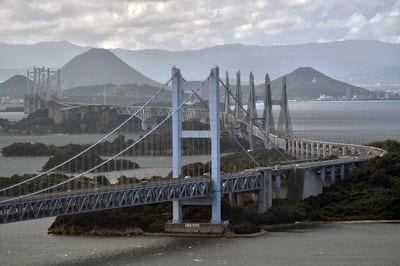
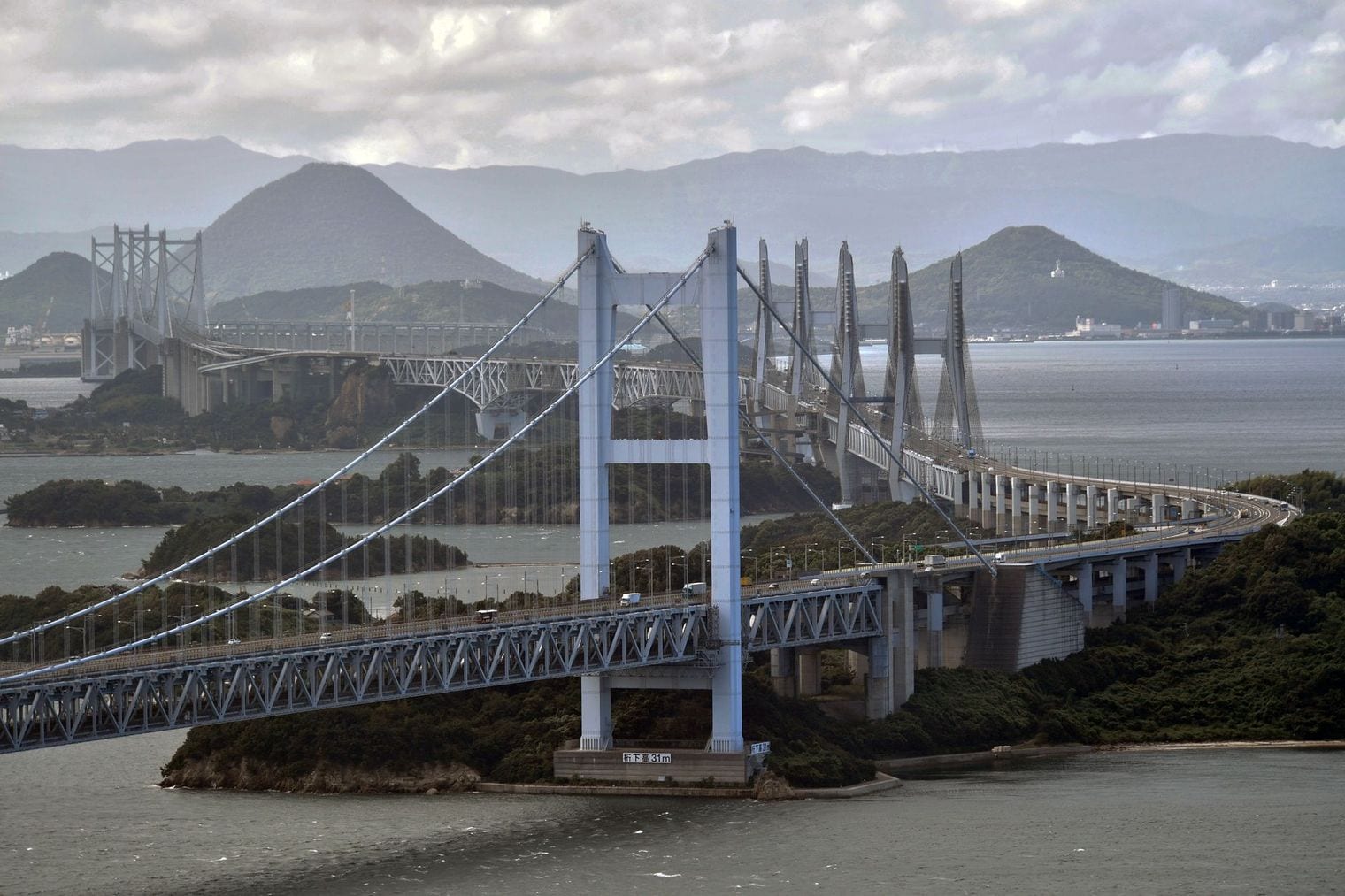
The Great Seto Bridge is the longest two-tiered road-and-rail bridge in the world, and it is really six bridges in a row — suspension, cable-stayed and truss designs strung across five islands, with expressway traffic above and trains below.
At 36.14 km, the Sheikh Jaber Al-Ahmad Al-Sabah Causeway is the longest bridge over the sea anywhere on Earth, and 34.1 km of its route stands above open water — an offshore run its designers record as a world record in its own right.
It crosses Kuwait Bay in a long, near-straight line from Shuwaikh, on the edge of Kuwait City, north to Subiyah, carried on 1,190 piers and more than 1,100 prefabricated box-girder spans. The name says causeway; the structure is viaduct almost end to end, which is precisely why it ranks here and King Fahd's part-embankment crossing does not.
The drive replaces a long inland detour around the head of the bay with a crossing of about half an hour, and it was built to serve Silk City, the planned development on the northern shore. Two artificial islands interrupt the run, each carrying its own service buildings. Everything about it was engineered for a shallow, blisteringly hot and highly saline bay that is punishing to concrete and steel alike. It opened in May 2019.
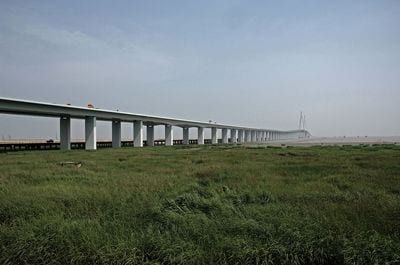
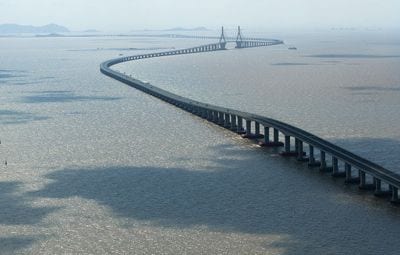
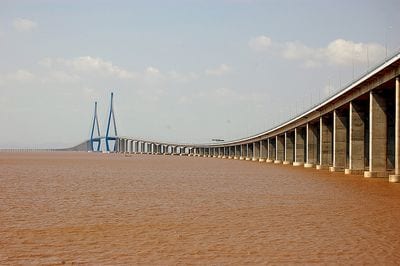
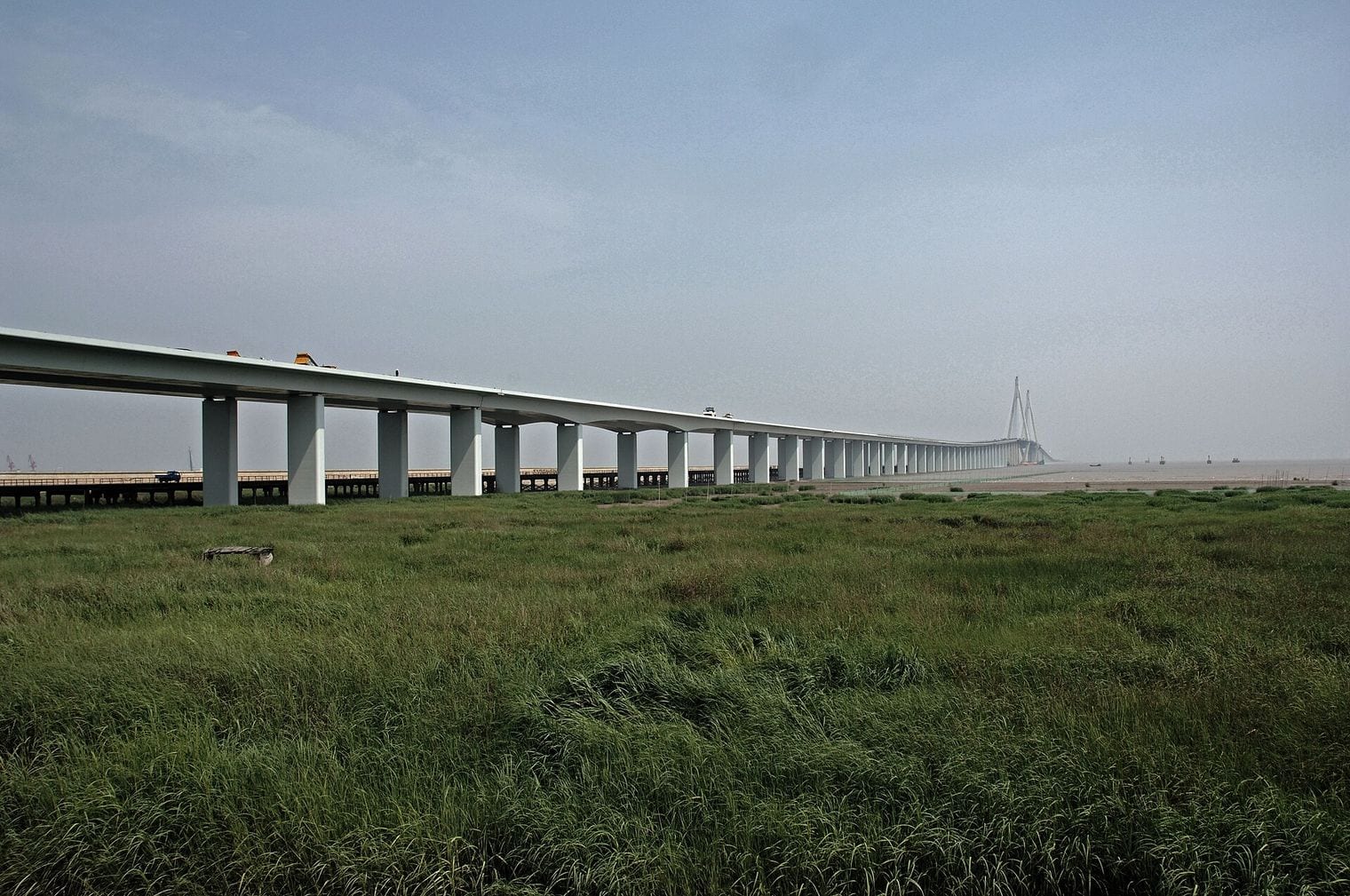
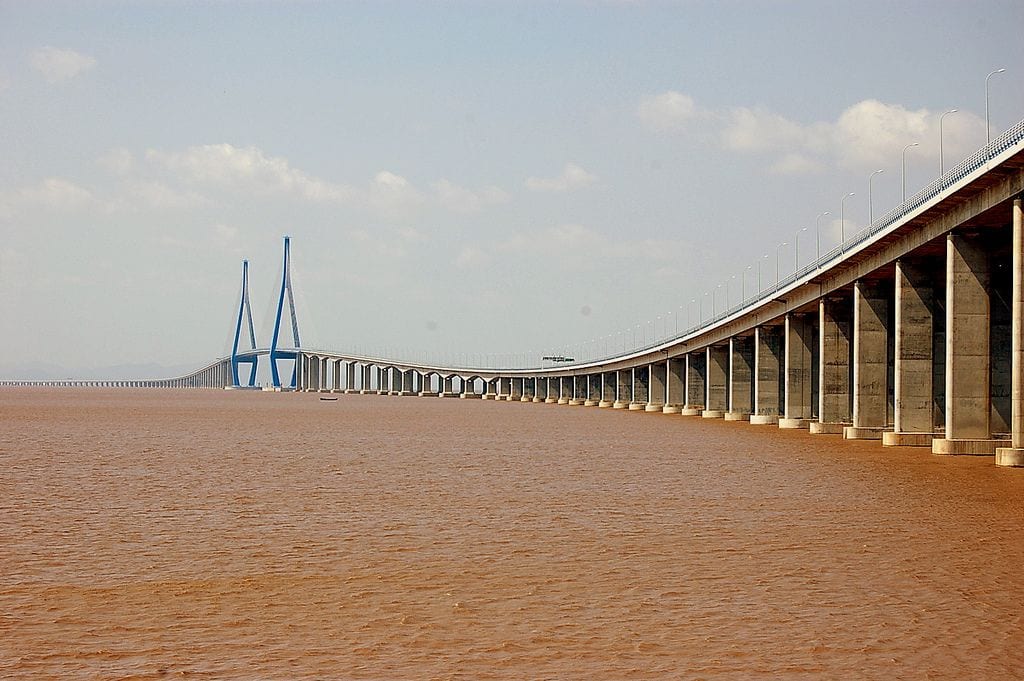
At 35.67 km, the Hangzhou Bay Bridge is the longest sea crossing in China and the second longest in the world, running north to south across the mouth of one of the most difficult bays on the Chinese coast. Hangzhou Bay funnels the world's largest tidal bore, and the crossing had to be designed around fierce currents, typhoon winds and a seabed of soft silt shot through with shallow pockets of natural gas.
It carries six lanes between Jiaxing and Cixi, near Ningbo, replacing a journey that used to loop far inland through Hangzhou. Two cable-stayed sections lift the deck clear for shipping, and roughly midway along there is a service platform built out over the water with a viewing tower on top — a rest stop in the middle of the sea, several kilometres from the nearest land. It opened to traffic on 1 May 2008.
33. Donghai Bridge
Hangzhou Bay, Pudong to Yangshan Port, Shanghai, China
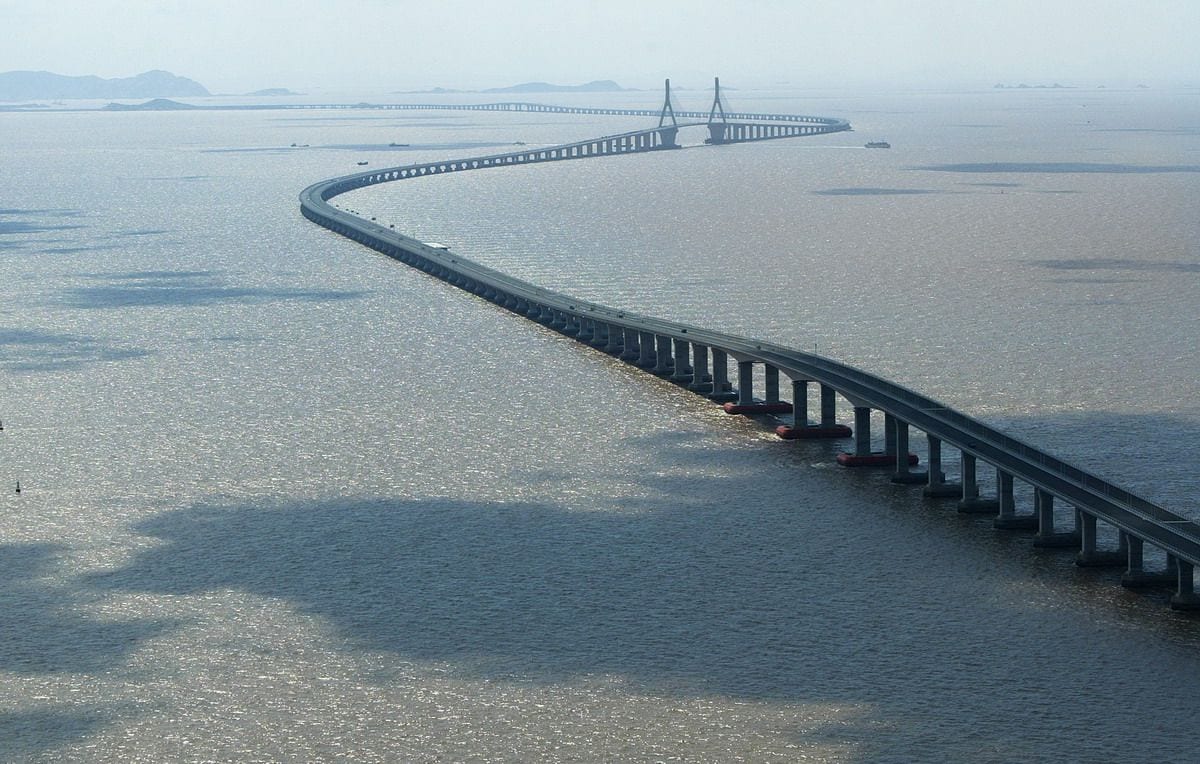
At 32.5 km, the Donghai Bridge was the first of China's giant sea crossings and is still the third longest anywhere. It runs southeast from Shanghai's Pudong district out to the Yangshan islands, and it exists for one reason: Shanghai's river port could not take the deepest container ships, so the city built a deep-water terminal offshore and then had to reach it.
Most of the structure is low viaduct skimming just above the water, rising to a cable-stayed span where shipping passes beneath. It is a working freight artery rather than a scenic drive — lorries running to and from the Yangshan terminal dominate the traffic — and the waters alongside it now hold one of China's earliest offshore wind farms, so the view from the deck is a corridor of turbines. It opened in December 2005.
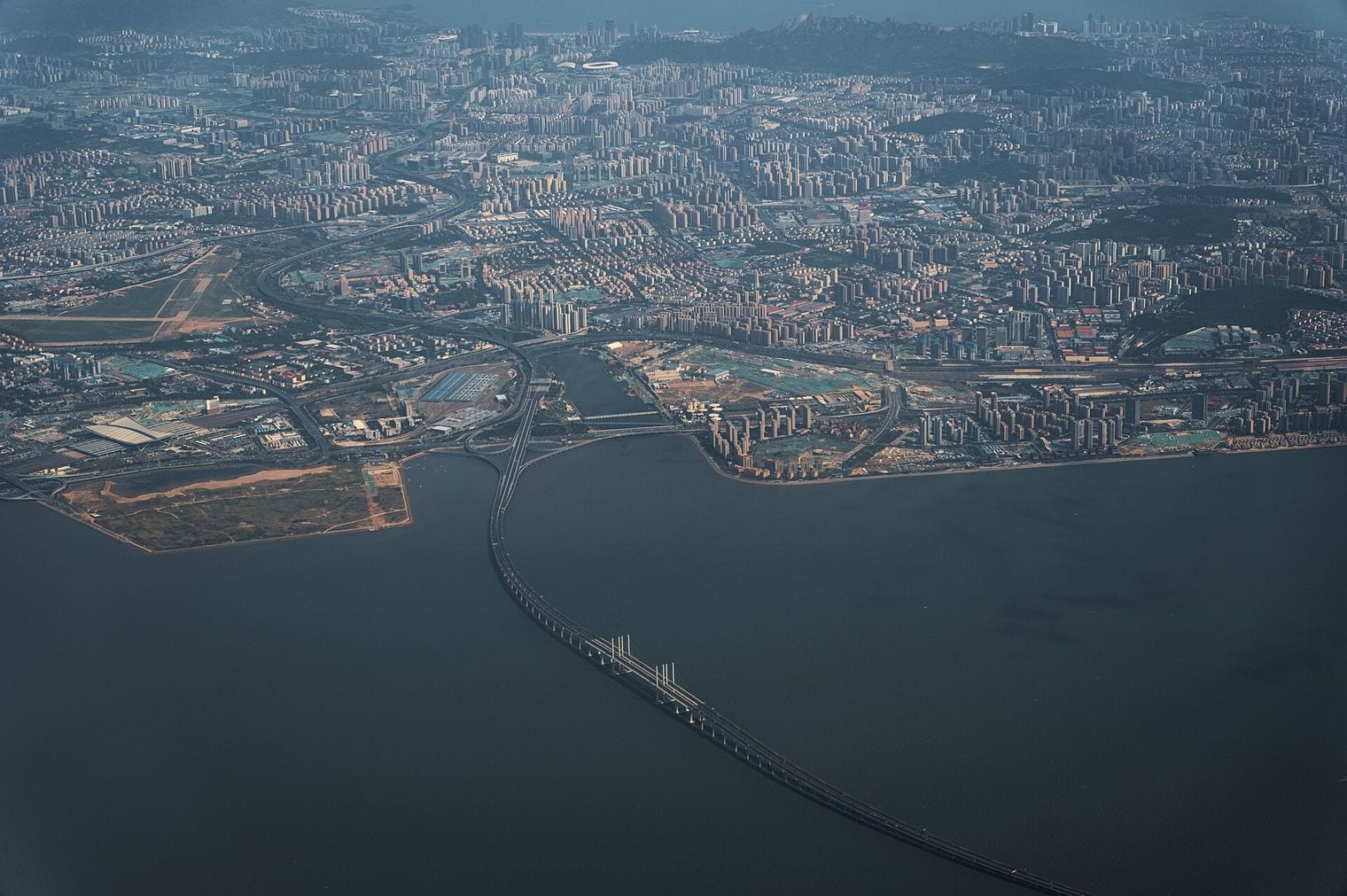
At 26.71 km, the Qingdao Jiaozhou Bay Bridge crosses the bay that the city of Qingdao is built around, linking the Licang district on the eastern shore to Huangdao on the west. It once held a Guinness record, though the certified figure of 41.58 km counted the whole connection project including its approach spurs rather than the single bridge measured here.
The crossing carries three cable-stayed sections and, unusually, a full interchange out in the middle of the bay, where a spur peels away to Hongdao Island — a motorway junction with open water on every side. It reduced a long drive around the head of the bay to roughly twenty minutes and pulled Huangdao firmly into Qingdao's orbit. It opened on 30 June 2011.
55. Jintang Bridge
Huibieyang, Jintang Island to Zhenhai, Ningbo, Zhejiang, China
At 26.54 km, the Jintang Bridge is the longest link in the chain of crossings that ties the Zhoushan archipelago to mainland China. It runs from Jintang Island across the Huibieyang waters to Zhenhai, on the edge of Ningbo, and it is the section that finally made it possible to drive from the islands to the mainland at all.
Zhoushan is a scatter of more than a thousand islands off the Zhejiang coast, reached for centuries only by boat, and the bridge chain that Jintang completes was one of the largest island-connection projects ever attempted. Its cable-stayed main span lifts the deck high enough for traffic heading into Ningbo-Zhoushan, which handles more cargo tonnage than any other port on Earth. It opened in December 2009.
66. Sultan Abdul Halim Muadzam Shah Bridge
Penang Strait, Batu Kawan to Batu Maung, Penang, Malaysia
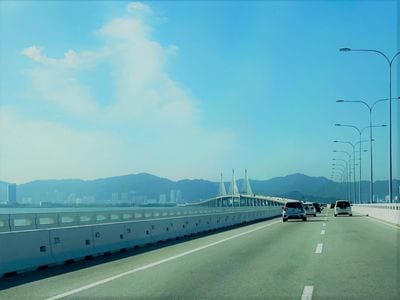
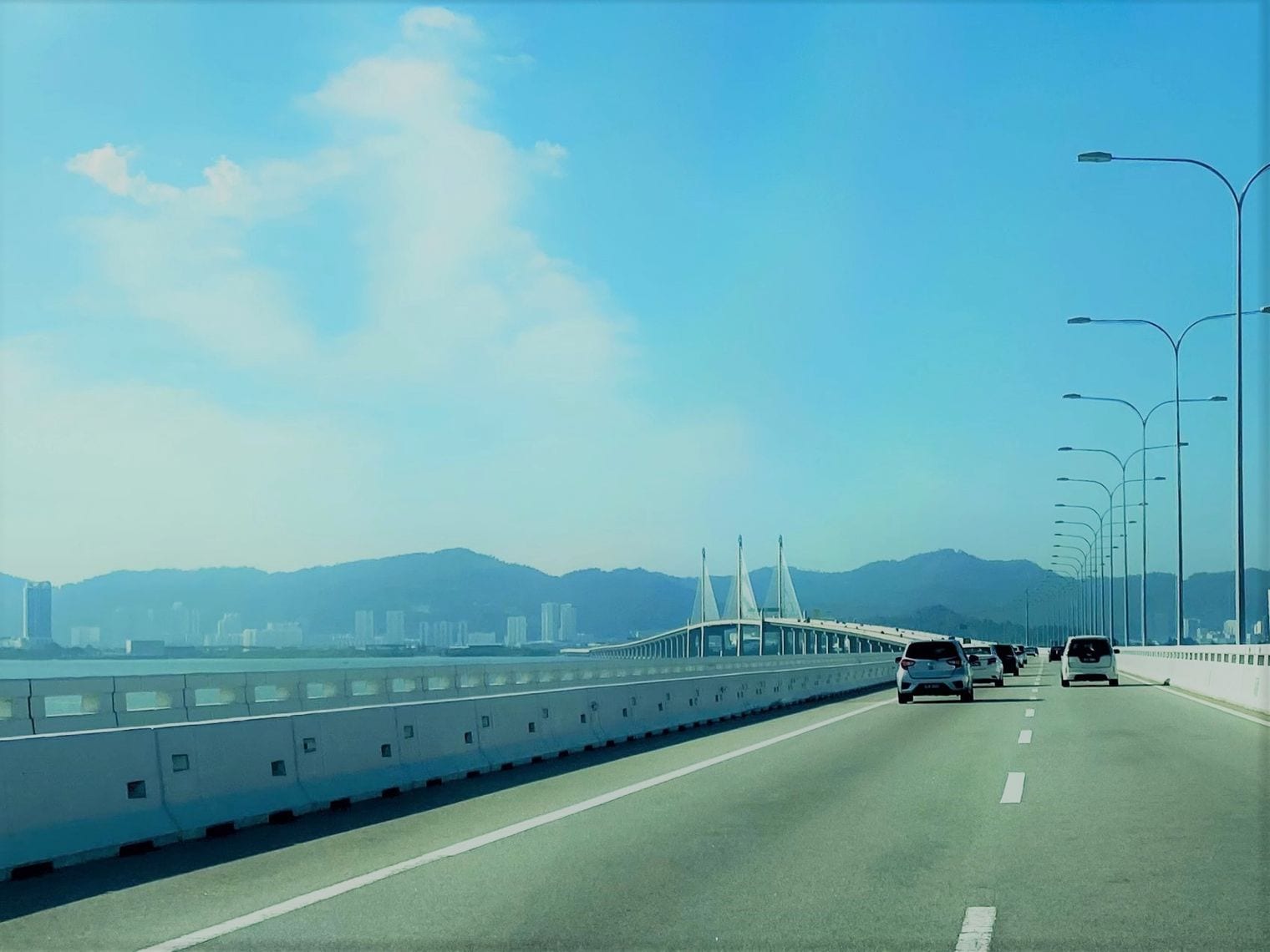
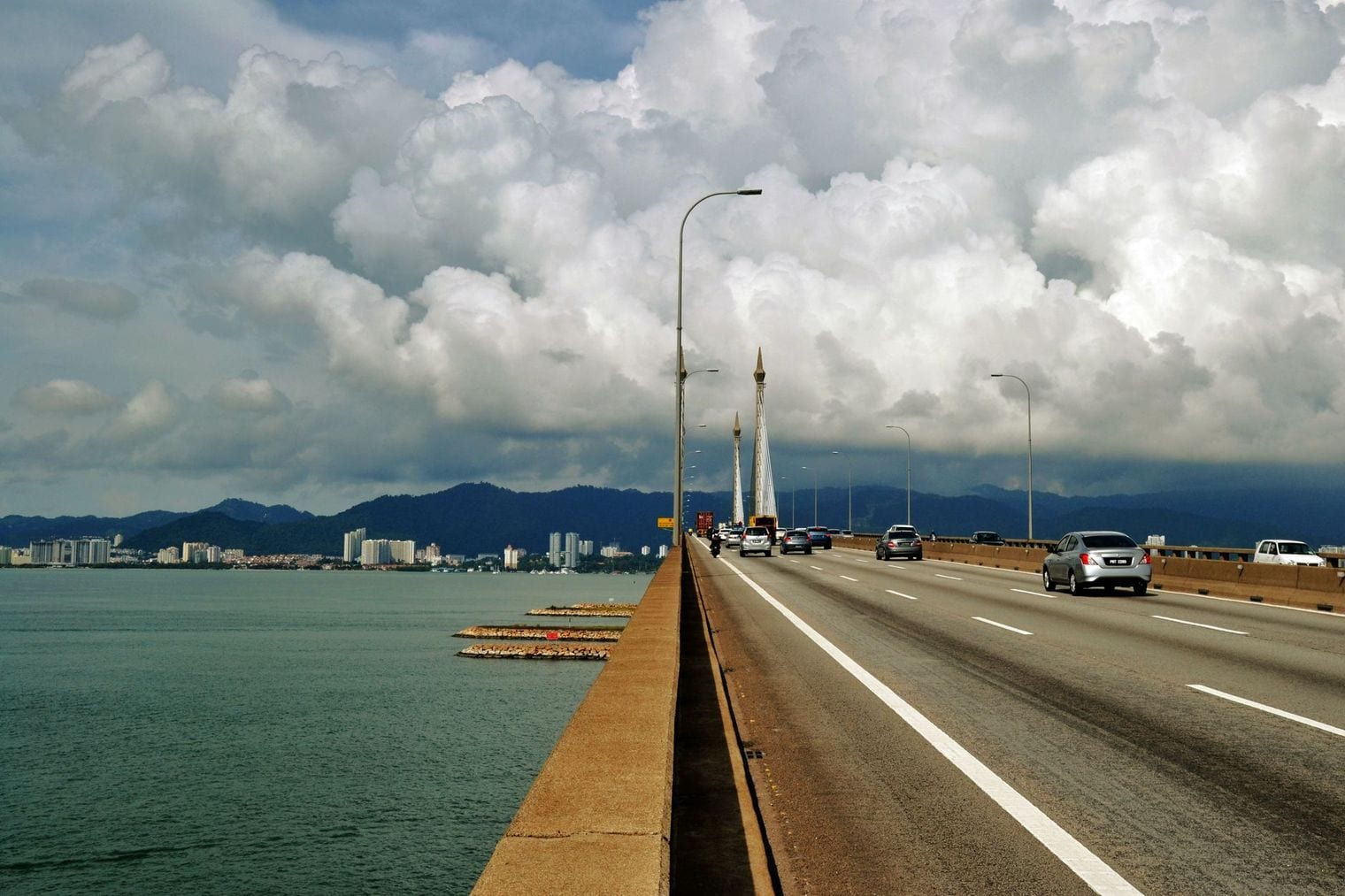
At 24 km, of which 16.9 km stands over water, the Sultan Abdul Halim Muadzam Shah Bridge is the longest bridge in Southeast Asia and Penang's second link to the Malaysian mainland. It runs from Batu Kawan on the peninsula across to Batu Maung at the southern tip of Penang Island, well south of the original Penang Bridge.
Almost nobody uses the official name — to Malaysians it is simply the Penang Second Bridge. It was built to take the strain off the first crossing, which had long been carrying far more traffic than it was designed for, and to open up the mainland side of the strait for development. The deck clears the water by about 30 m at the cable-stayed main span. It opened in March 2014.
77. Hong Kong–Zhuhai–Macau Bridge
Lingding Bay, Hong Kong to Zhuhai and Macau, China
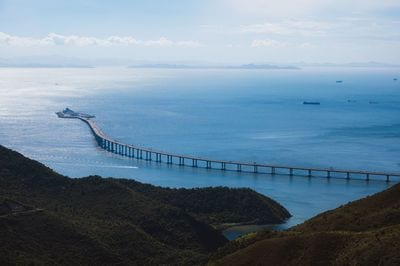
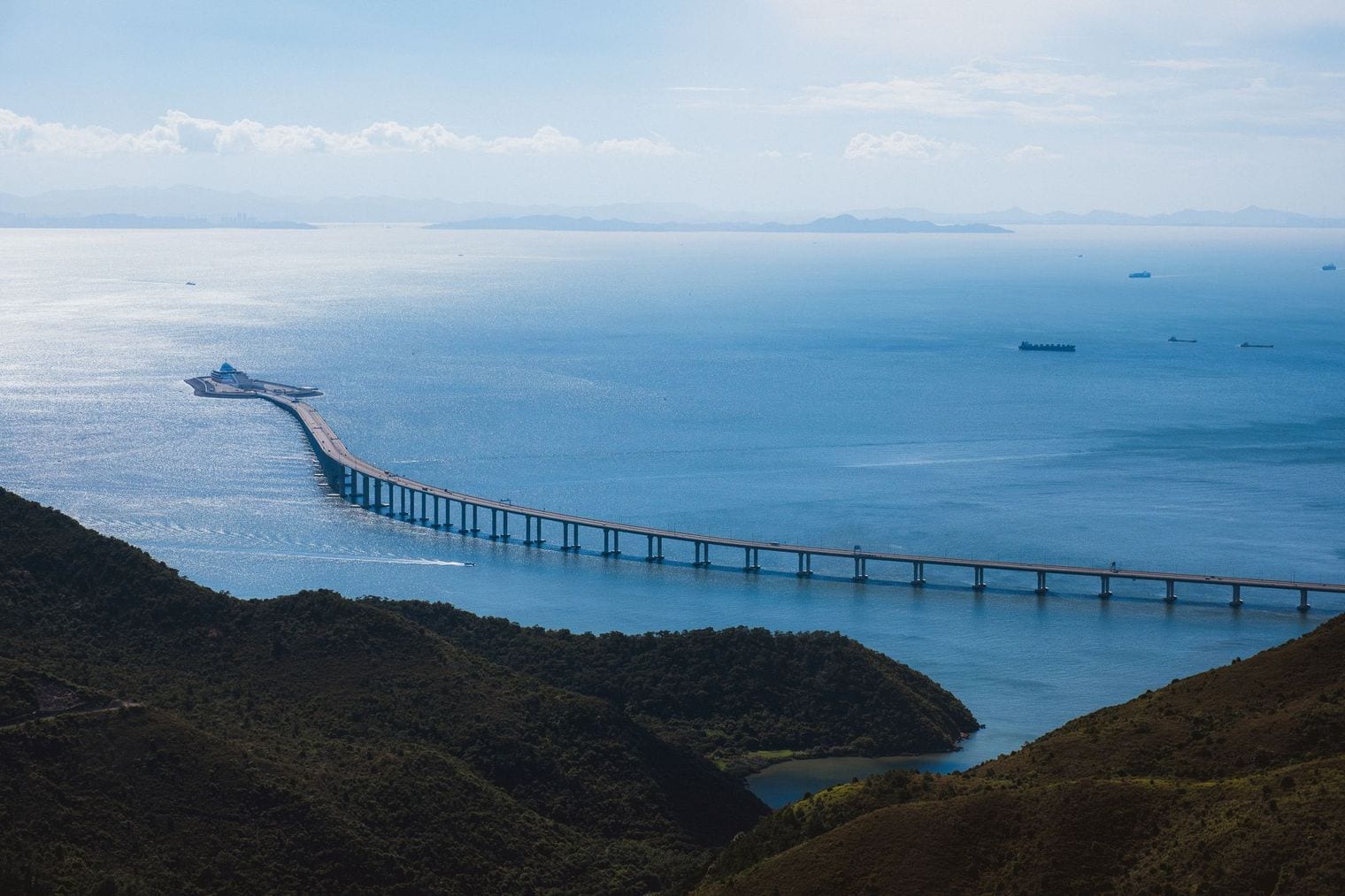
At 22.9 km of bridge, the Hong Kong–Zhuhai–Macau Bridge is the most misreported structure on this list. Its headline figure is 55 km, but that covers the entire fixed link — link roads, two artificial islands and a 6.7 km immersed tunnel included. The bridge itself measures 22.9 km, and that is the number Guinness certified as the longest bridge over water.
The tunnel exists because the crossing has to pass a shipping channel into the Pearl River where a bridge tall enough for the vessels would have stood in the approach path to Hong Kong International Airport.
So the road descends into the sea, runs beneath the channel and climbs back out, which gives the crossing its strange interrupted profile. Traffic drives on the right in mainland China and on the left in Hong Kong, so the carriageways swap sides at the boundary. It opened in October 2018.
88. Shenzhen–Zhongshan Bridge
Lingding Bay, Shenzhen to Zhongshan, Guangdong, China
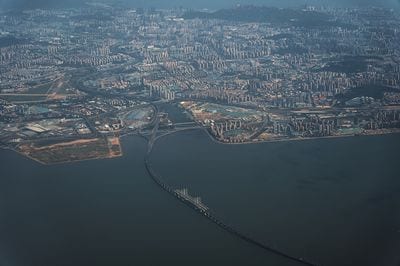
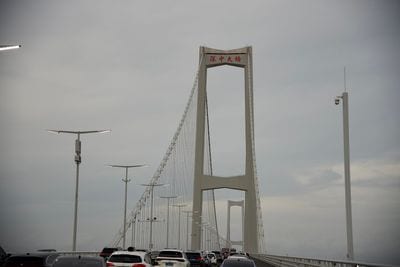
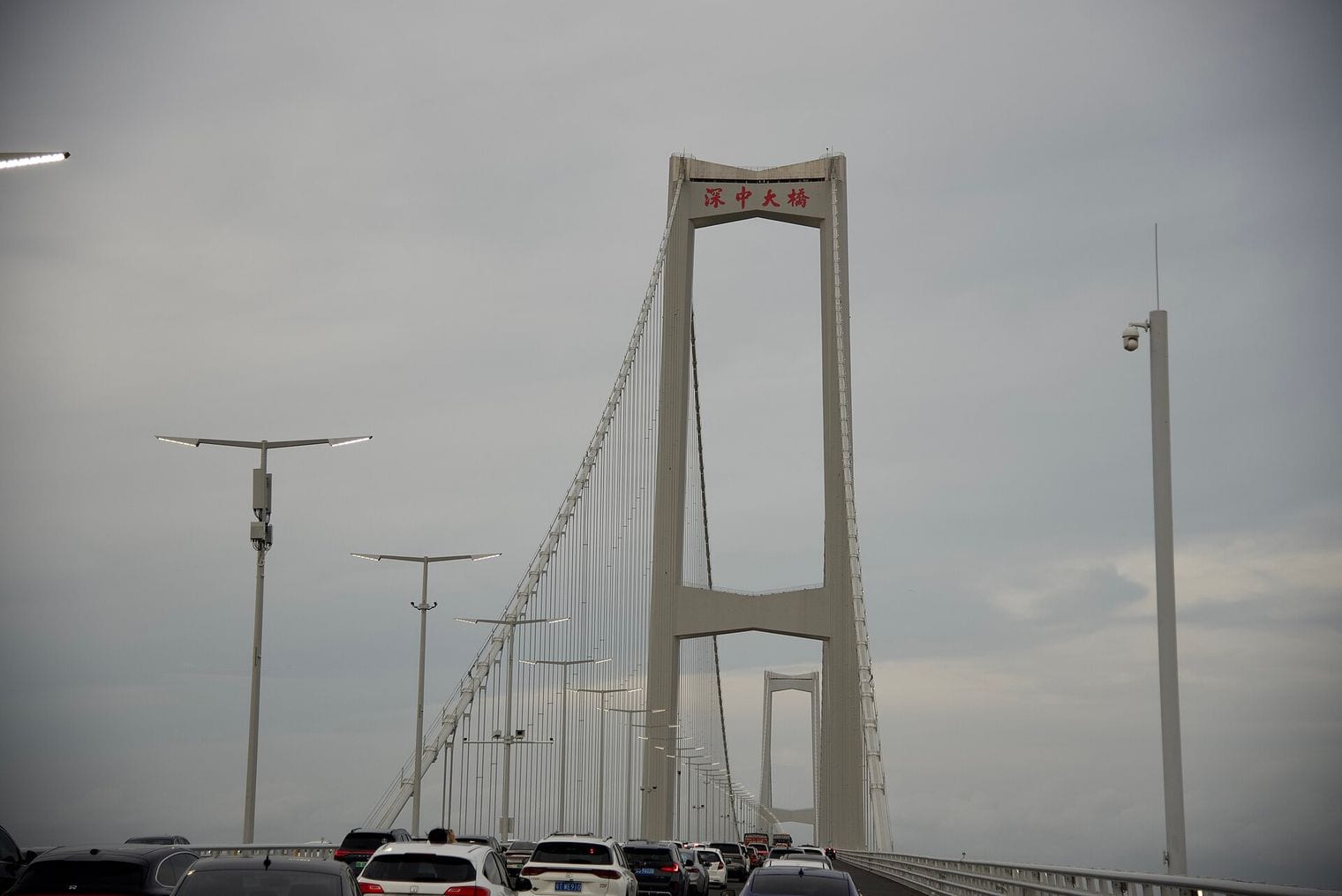
At 22.5 km, the bridge portion of the Shenzhen–Zhongshan Link is the newest giant on this list and solves the same problem as its neighbour in the same way: an immersed tunnel where shipping lanes and an airport approach rule out height, and bridge everywhere else. Around 15.5 km of that bridge stands over open sea.
The link crosses the Pearl River estuary between Shenzhen on the east bank and Zhongshan on the west, replacing a road journey of about two hours with one of roughly thirty minutes. Its main span reaches 1,666 m, among the longest ever built over the sea, and its towers had to be held low enough to stay clear of aircraft using Shenzhen Bao'an airport. It opened on 30 June 2024.
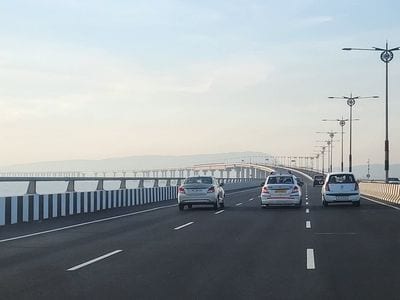
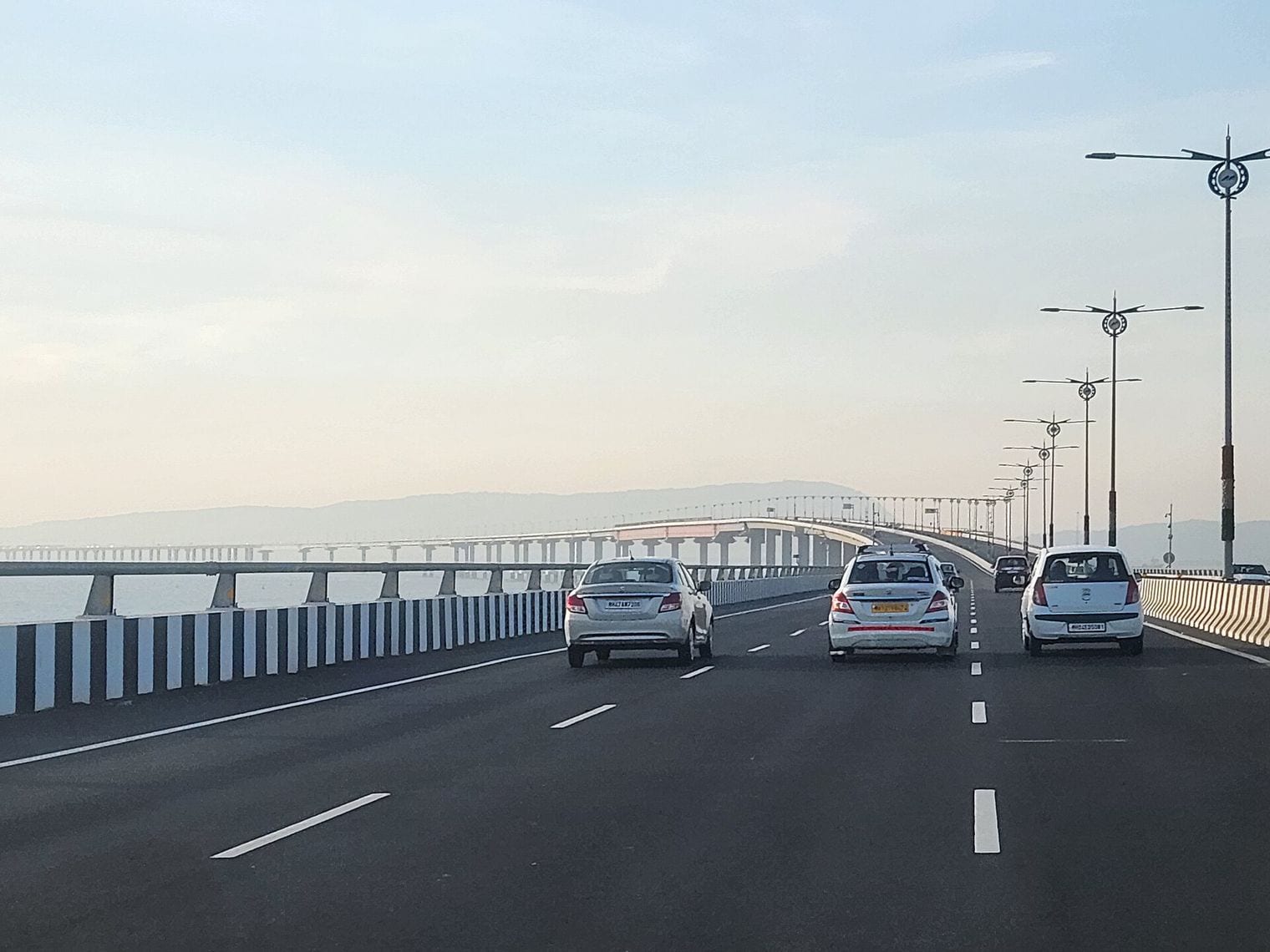
At 21.8 km, with 16.5 km of that over water, Atal Setu is the longest sea bridge in India and the only Indian entry on this list. It crosses Thane Creek from Sewri, in south Mumbai, to Chirle on the Navi Mumbai side, passing north of Elephanta Island on 1,089 piers driven into deep tidal mud.
Its full name is the Atal Bihari Vajpayee Sewri-Nhava Sheva Atal Setu, and it is still widely called the Mumbai Trans Harbour Link. It cuts a congested road journey of well over an hour to about twenty minutes.
Thane Creek is a major wintering ground for migratory flamingos, and that shaped the design: the bridge carries noise and view barriers along the stretch nearest the mudflats, and its lighting was specified to throw as little as possible onto the water. It opened in January 2024.
1010. Chesapeake Bay Bridge–Tunnel
Mouth of Chesapeake Bay, Virginia Beach to Cape Charles, Virginia, United States
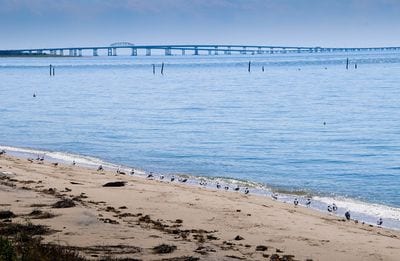
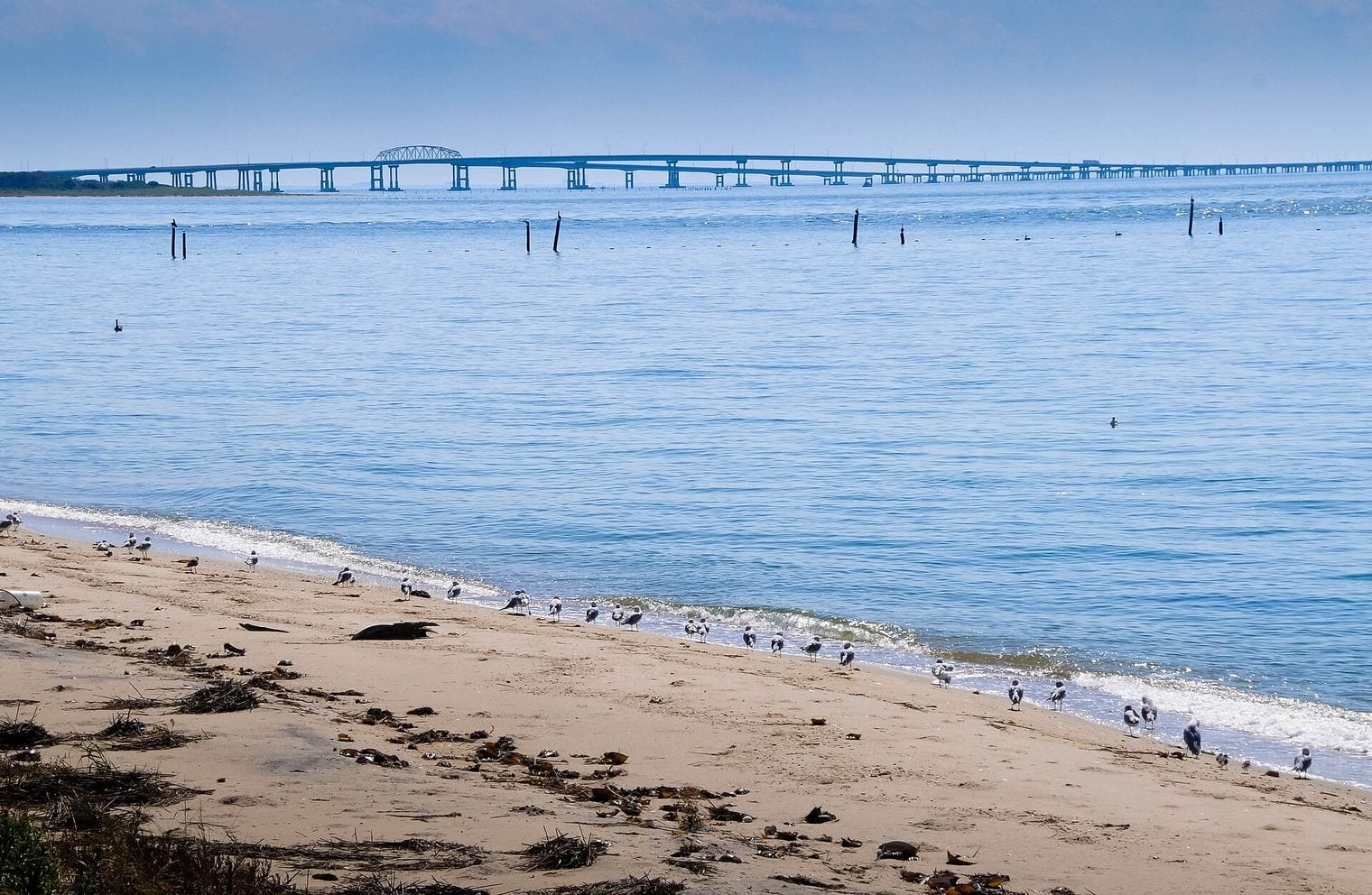
At 21.42 km of bridge — 12.5 miles of low trestle plus the North Channel and Fisherman Inlet spans — the Chesapeake Bay Bridge–Tunnel is the longest sea crossing in the Americas and the oldest structure in this top ten. The full facility measures 28.3 km, but that figure also counts two mile-long tunnels, an earth causeway and four artificial islands, none of which are bridge.
It carries US Route 13 across the mouth of Chesapeake Bay, where the bay opens into the Atlantic, joining Virginia Beach to the southern tip of the Delmarva Peninsula. The tunnels are there so that warships and container traffic can reach Norfolk without obstruction. Drivers get roughly seventeen miles of open water with land barely visible on either side, and a parallel trestle added in 1999 doubled the capacity of the original 1964 crossing.
1111. Incheon Bridge
Yellow Sea, Songdo to Yeongjong Island, Incheon, South Korea
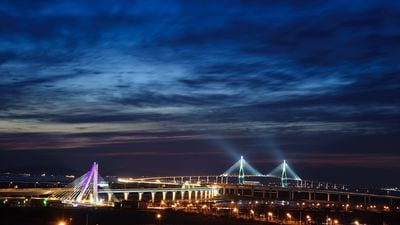
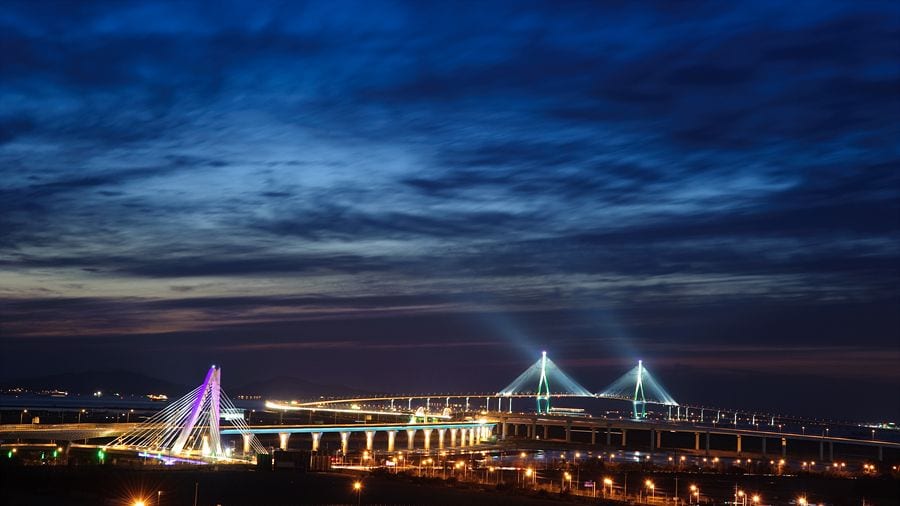
At 21.38 km, the Incheon Bridge is the longest in South Korea and finishes barely 40 m behind the Chesapeake crossing — close enough that the two are effectively tied, with the older structure taking the higher rank. It links Songdo, on the Incheon waterfront, out to Yeongjong Island and the country's main international airport.
Its cable-stayed main span of 800 m is among the longest of that type anywhere, and the pylons rise 230 m, tall enough to read as a landmark from much of the Incheon shoreline. The crossing gave Seoul a second route to the airport and took a substantial bite out of the drive from the southern half of the metropolitan area. It opened in October 2009.
1212. Pingtan Strait Road-Rail Bridge
Pingtan Strait, Changle to Pingtan Island, Fujian, China
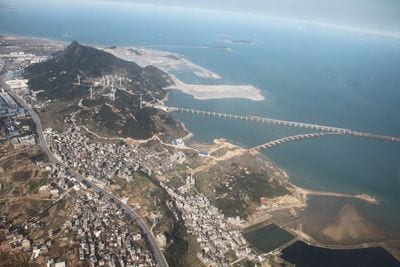
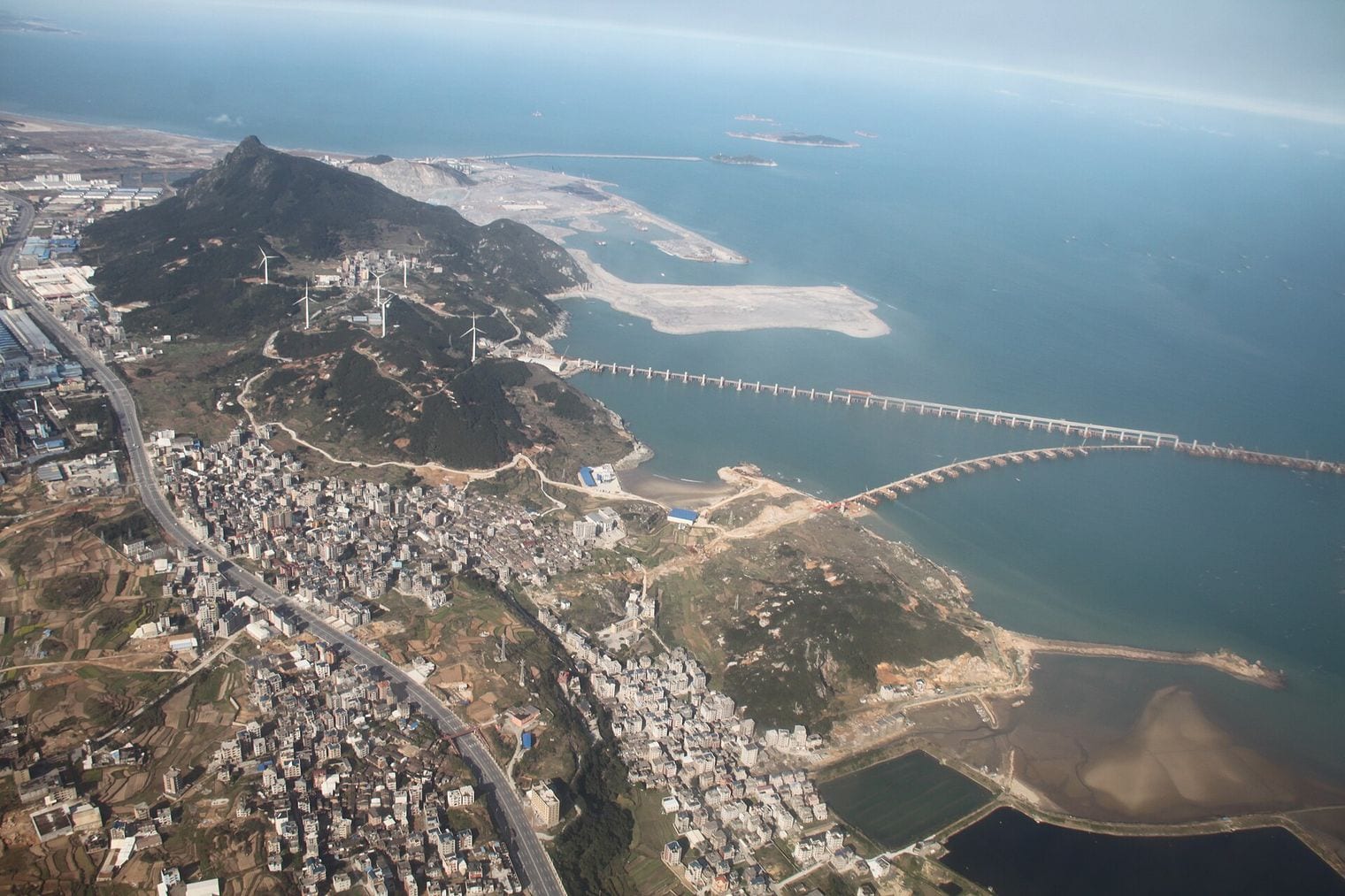
At 16.34 km, the Pingtan Strait Road-Rail Bridge is the longest cross-sea bridge in the world carrying both road and rail, with a six-lane highway on the upper deck and a double-track railway running beneath it. It hops from Songxia on the Fujian mainland across four small islands before reaching Pingtan Island.
The strait is among the windiest stretches of sea anywhere, with gales blowing on more than 300 days a year over deep water, fast currents and a seabed of bare rock that gives piles little to grip. Engineers had long treated it as a place where bridges simply could not be built, and construction needed purpose-built vessels able to work in swells that would halt ordinary marine plant. It opened in December 2020.
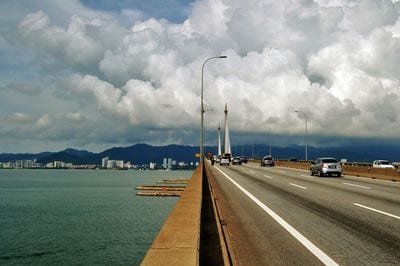
At 13.5 km, with 8.4 km of it over water, the Penang Bridge was the first fixed link between Penang Island and the Malaysian mainland and remains one of the country's defining pieces of infrastructure. It runs from Gelugor on the island to Perai on the mainland, and for nearly thirty years it was the only way to drive to Penang.
A cable-stayed centre section lifts the deck to let shipping through the strait, and the crossing has become a fixture of Penang life well beyond transport: the annual Penang Bridge International Marathon runs across it, one of the few occasions anyone gets to cross it on foot. It remains the shorter and more central of the island's two mainland links. It opened in September 1985.
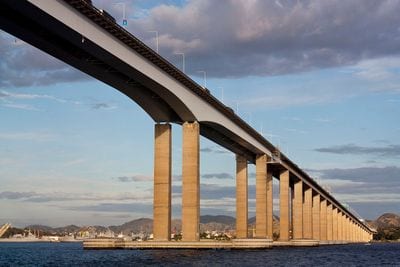
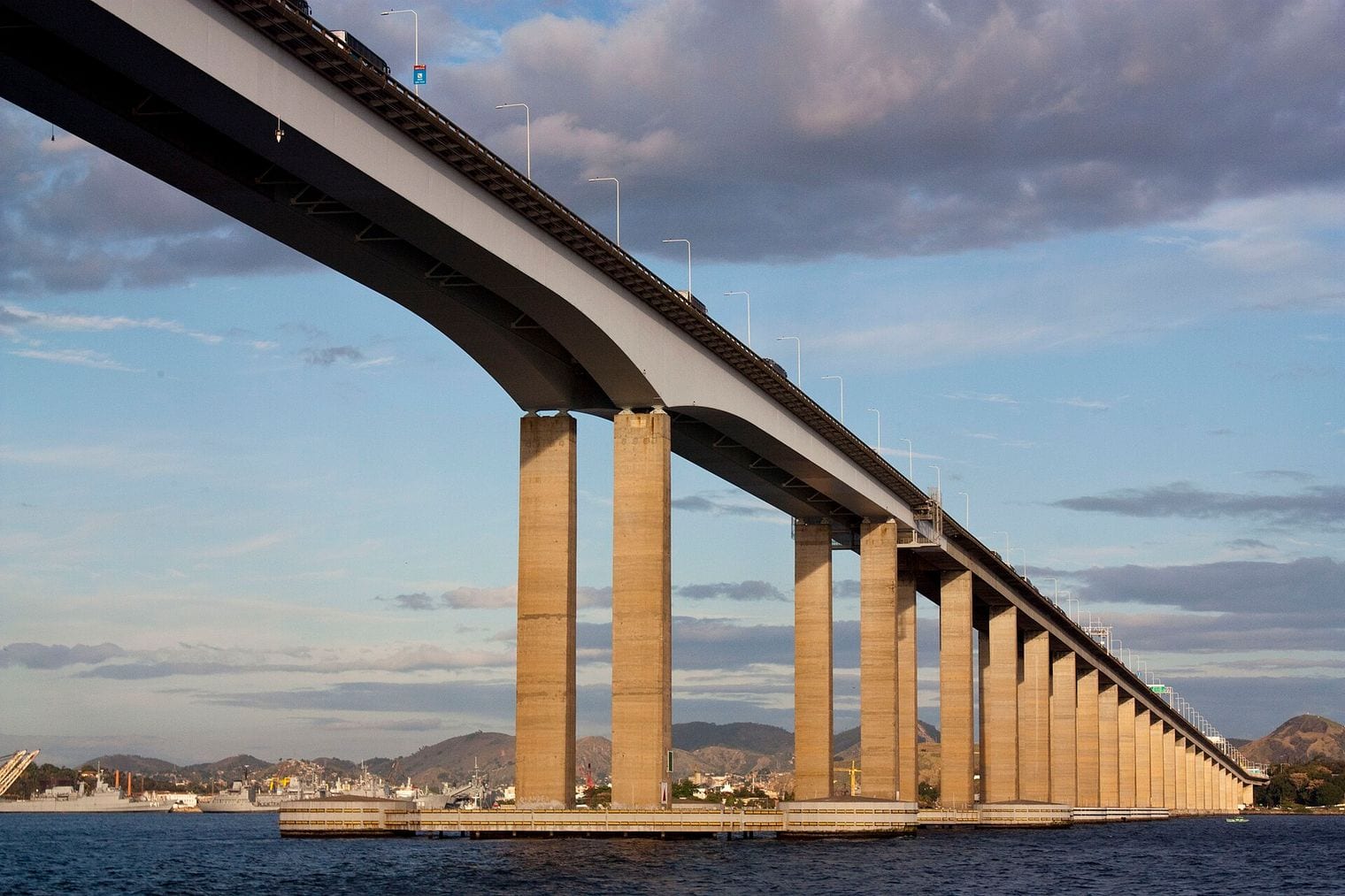
At 13.29 km, of which 8.8 km stands over water, the Rio–Niterói Bridge is the longest sea-crossing bridge in the southern hemisphere. It spans Guanabara Bay from Rio de Janeiro across to Niterói, and its central navigation span sits 72 m above the water so that shipping can still reach Rio's port beneath it.
Officially it is the President Costa e Silva Bridge, but nobody calls it that. Before it opened, crossing the bay meant either a ferry or a long drive around the head of it. Its 300 m steel box-girder centre span was the longest of that type in the world when it was built, and the westward view from the deck takes in Sugarloaf Mountain and the Corcovado. It opened in March 1974.
1515. Great Seto Bridge
Seto Inland Sea, Kurashiki, Okayama to Sakaide, Kagawa, Japan
At 13.1 km, the Great Seto Bridge is the longest two-tiered road-and-rail bridge in the world and the only Japanese entry on this list. It is not a single span but six of them, strung together with viaducts across five small islands in the Seto Inland Sea, connecting Kurashiki in Okayama prefecture on Honshu to Sakaide in Kagawa on Shikoku.
Expressway traffic runs on the upper deck and the Seto-Ohashi rail line on the lower, and the crossing was the first fixed link ever built between Honshu and Shikoku. Because the six bridges include suspension, cable-stayed and truss designs in turn, the structure overhead changes character every few kilometres as you drive. It opened in April 1988.
Longer Sea Crossings Still to Come
This ranking moves. Two Chinese projects now under way would enter the top five on the day they carry traffic: a sea-crossing railway bridge across Hangzhou Bay, running close to 30 km and built for trains at 350 km/h, and the Changhai crossing out to the Changshan islands off Dalian, planned at 25.5 km with a 19 km marine section.
Neither carries traffic yet, so neither is ranked here — the same rule that keeps every entry above something you could drive or ride today.
The shape of the list is worth noticing too. Eleven of the fifteen have opened since 2005 and five since 2018, because the engineering that makes a 30 km marine viaduct affordable — box girders cast onshore and floated out, deep-water piling, corrosion design for warm salt water — only matured in the last twenty-five years. These bridges are less a collection of landmarks than a record of that shift.
Length is also not the only answer to a stretch of water. Where a channel is too deep, too busy or too close to an airport for a span — as both the Hong Kong and Shenzhen crossings found — the solution is to pass underneath instead, which is the same problem the longest road tunnels are built to solve from below. Both sit alongside this ranking in our world record-breakers index.
FAQ: The World's Longest Sea-Crossing Bridges
What is the longest sea-crossing bridge in the world?
The Sheikh Jaber Al-Ahmad Al-Sabah Causeway in Kuwait, at 36.14 km. Despite the name it is a viaduct rather than an earth causeway, carried on 1,190 piers across Kuwait Bay, and 34.1 km of its route stands above open water — the longest offshore section of any road crossing anywhere.
Isn't the Hong Kong–Zhuhai–Macau Bridge the longest?
It is the longest sea crossing, at 55 km, but not the longest sea-crossing bridge. That 55 km counts link roads, two artificial islands and a 6.7 km immersed tunnel. The bridge alone measures 22.9 km, which is the figure Guinness certified and which places it seventh on this list.
Why isn't the Lake Pontchartrain Causeway included?
Because Lake Pontchartrain is a lake, not a sea. Its 38.4 km would otherwise rank first, and it does hold the Guinness record for the longest continuous bridge over water. This list ranks crossings of saltwater seas, bays and straits, which is also why the Danyang–Kunshan viaduct and its 164.8 km are absent.
What is the longest sea bridge outside Asia?
The Chesapeake Bay Bridge–Tunnel in Virginia, with 21.42 km of bridge across the mouth of Chesapeake Bay. It ranks tenth here and is the longest in the Americas, ahead of Brazil's Rio–Niterói Bridge. Europe has no entry at all: Denmark's Great Belt comes closest, but its East and West bridges are two separate structures either side of the island of Sprogø rather than one crossing.
Can you drive across all of them?
Yes — every bridge here carries road traffic today, which is the condition for being ranked at all. Two of them carry trains as well, on a second deck below the roadway: the Pingtan Strait Road-Rail Bridge in Fujian and the Great Seto Bridge in Japan. On those two you can either drive across or ride across the same structure.