We build and rank every list first. Booking links come after, and only where
a partner sells a ticket, tour or stay for that exact place, so a place with
nothing to book is listed exactly as prominently as one you can book.
So how do we earn? Some links on this page go to booking
partners, and if you book tickets, tours or a stay through
one, we may earn a commission. It costs you nothing extra.
That commission never decides which places make the list, the order they
appear in, or what we write about them. No entry is sponsored or a paid
placement.
By the City Viking editorial teamPublished Ranked by construction year of the oldest standing fabric · 14 min read
Last verified Checked before launchOct 30, 202615 sources9 publishers8 encyclopedias & research7 venues & other sitesPublished · Nov 1, 2026Researched and checked before it went liveClick for every source and the full change log.
The record
AD 340
Trier Cathedral
Germany
The record
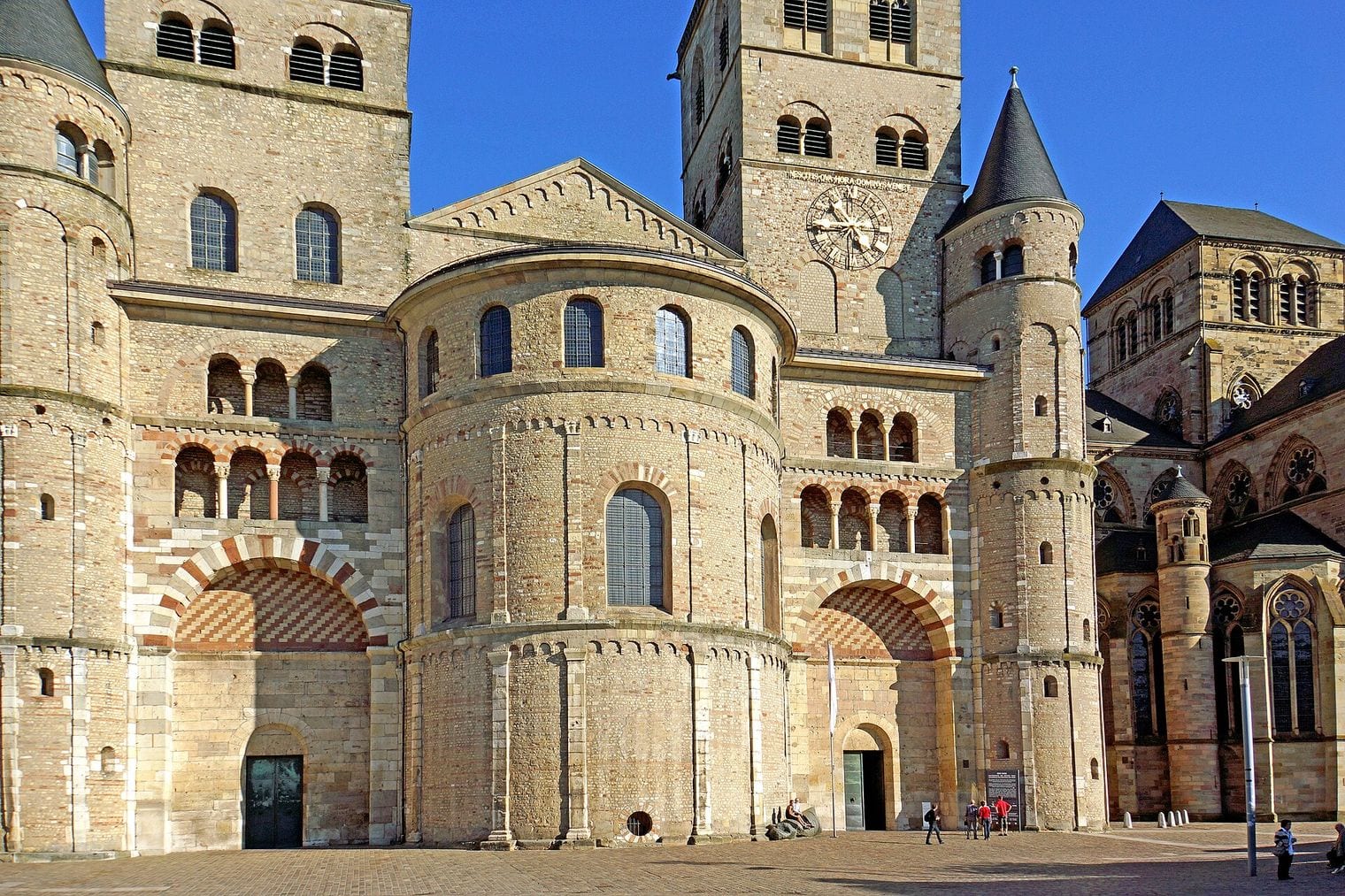
The oldest church in the world is Trier Cathedral, in Germany — AD 340, construction year of the oldest standing fabric.
Source: trierer-dom.de. Verified .
Short answer
Trier Cathedral in Germany has the oldest church walls still standing, its square core begun in 340, ahead of the Church of Fafertin in Syria, dated 372 by an inscription. To see 4th-century church walls still in use, visit Trier, where that core sits inside the working cathedral.
Ask for the oldest church in the world and the famous answers fall short: the Church of the Holy Sepulchre in Jerusalem was razed in 1009 and rebuilt, the 4th-century basilica in Bethlehem survives only below the floor of its 6th-century successor, and Etchmiadzin's date of 301 is a founding tradition rather than the walls standing today.
This countdown ranks 15 churches by one measure, the year building began on the oldest walls still standing above ground in a structure put up as a church, from Trier Cathedral's core of 340 to Georgia's Bolnisi Sioni, begun in 478.
The walls must stand today, in a working church or as a roofless ruin like the lone apse at Fafertin in northern Syria. That rule leaves out excavated floors such as the house church at Dura-Europos, and buildings that were something else first, such as Rome's Pantheon, a temple before it became a church.
One of the earliest Crucifixion scenes is carved on a church door. The cypress doors of Santa Sabina in Rome, made around 430, include the first known publicly displayed depiction of the Crucifixion.
A whole church was built around one man's pillar. Simeon Stylites lived on top of a column that was raised over time to 18 metres, and the four basilicas of Saint Simeon's church were laid out around it after his death.
The Mausoleum of Galla Placidia never held Galla Placidia. The empress died and was buried in Rome; the story that she lies in her Ravenna chapel dates only from the 13th century.
Tree rings helped date a Roman church. Dendrochronology puts the felling of the roof beams of Santo Stefano Rotondo at around 455, under Pope Leo I, years before its consecration.
A church helps date an alphabet. The inscriptions of Bolnisi Sioni, dated to 493 or 494, are among the oldest dated texts in the Georgian script.
Rome has four of the 15 churches, and the stone villages of northern Syria have five.Fafertin, Babisqa, Ksejbe, Dar Qita and Qal'at Sim'an all belong to the Dead Cities, inscribed by UNESCO in 2011.
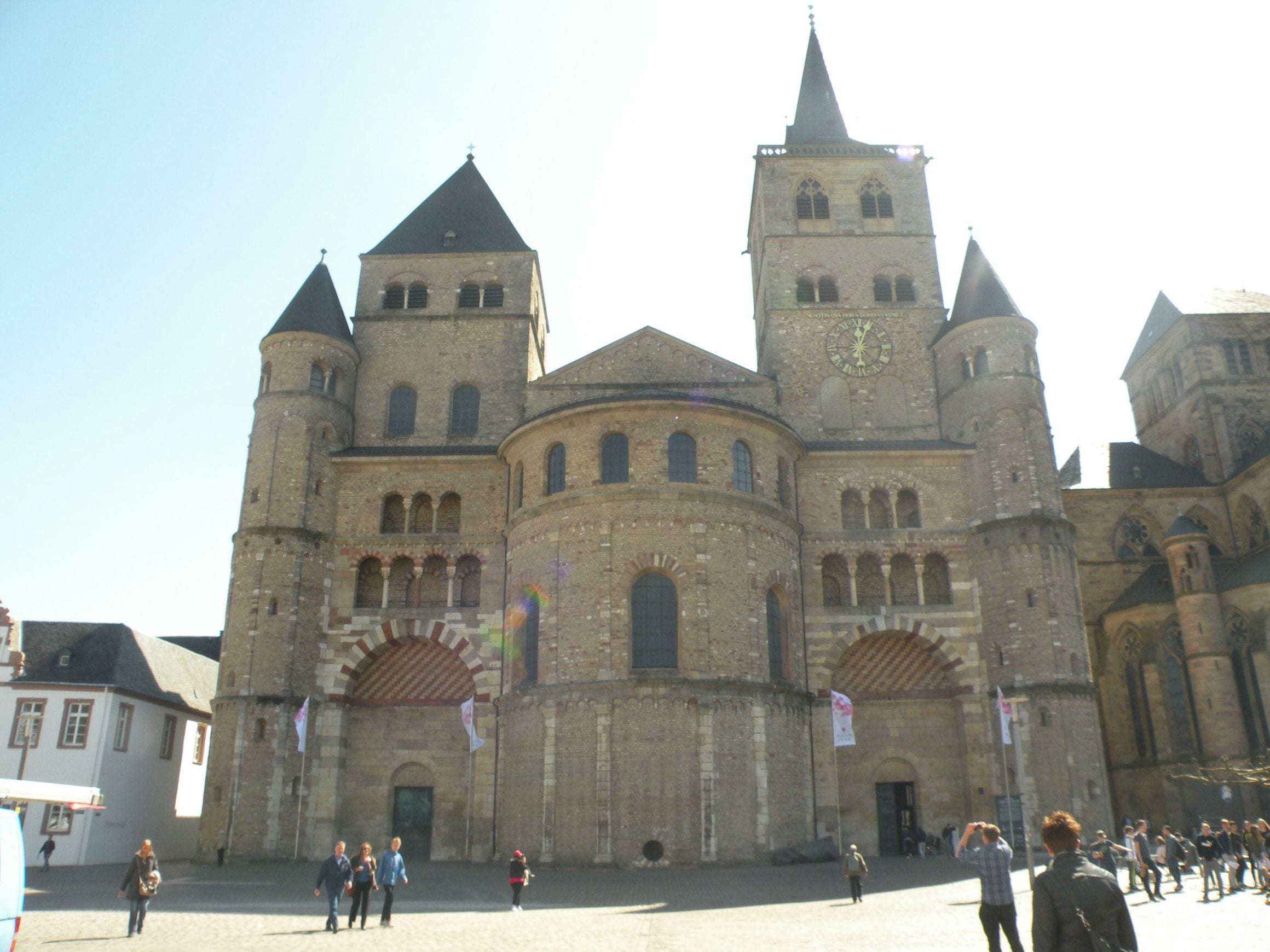
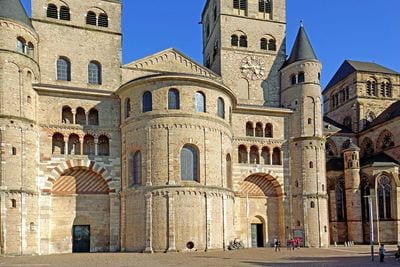
Begun in 340, the square core of Trier Cathedral holds the earliest dated church walls on this list, and they still carry a working cathedral. The cathedral's own history dates this new building, the "Quadratbau", to 340 and says its outer walls still form the heart of the church; excavations suggest work started in the 340s and was interrupted around 350. Those surviving parts make Trier Cathedral the oldest cathedral in Germany.
Trier was one of the great cities of the late Roman Empire, and a tradition holds that the cathedral rose on the site of a palace of Helena, mother of Constantine the Great. Later centuries wrapped the Roman core in a Romanesque church whose imposing westwork, with four towers and an extra apse, has been copied many times.
Behind the east choir, a Baroque chapel keeps the Holy Robe, venerated as the seamless robe of Jesus. Since 1986 the cathedral has been part of a UNESCO World Heritage Site with the city's Roman monuments and the Church of Our Lady next door.
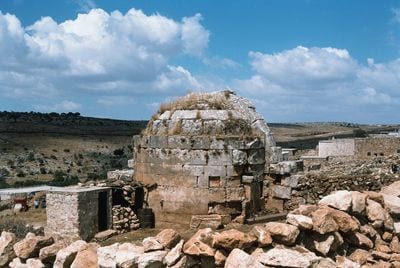
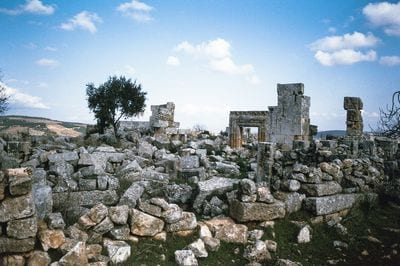
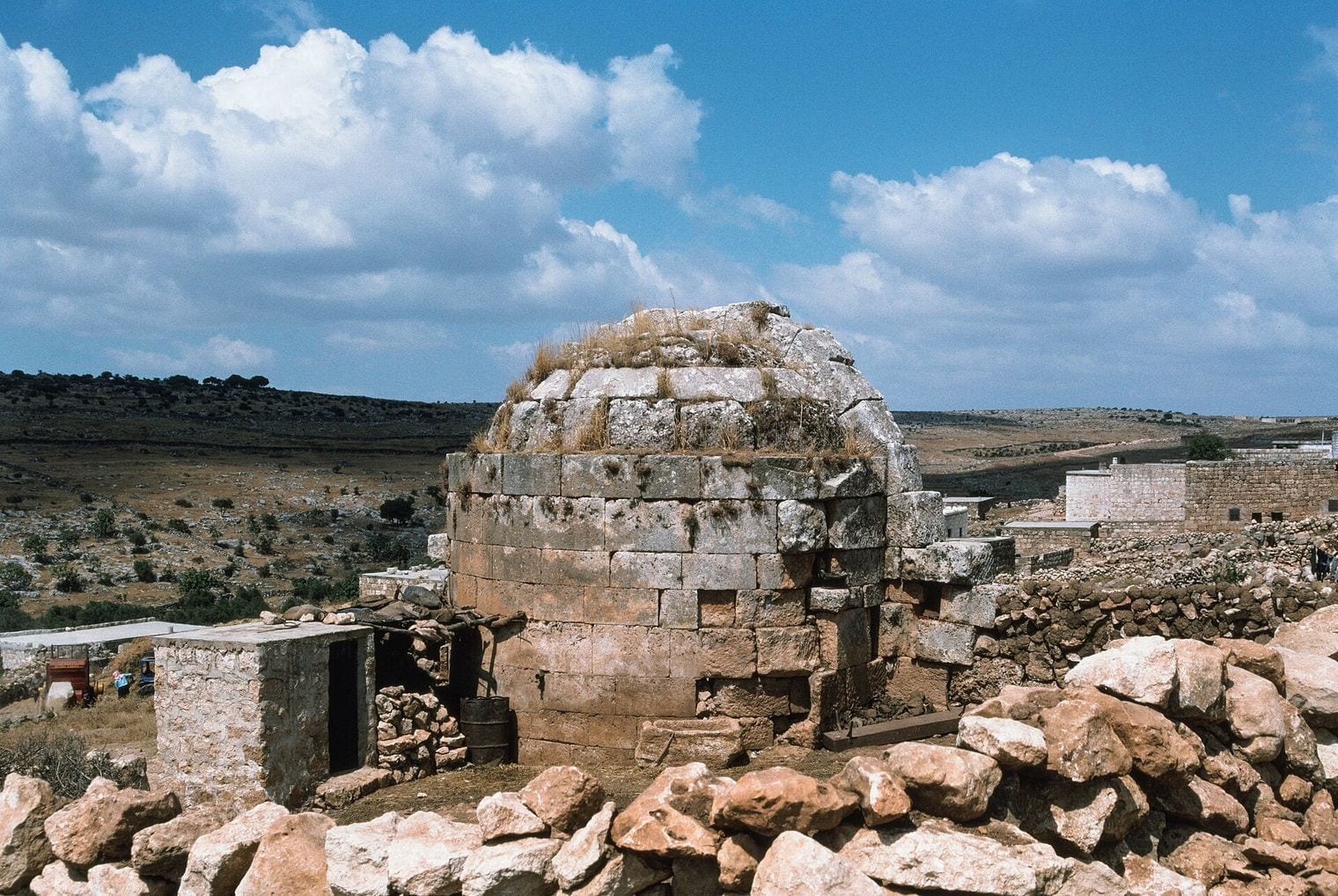
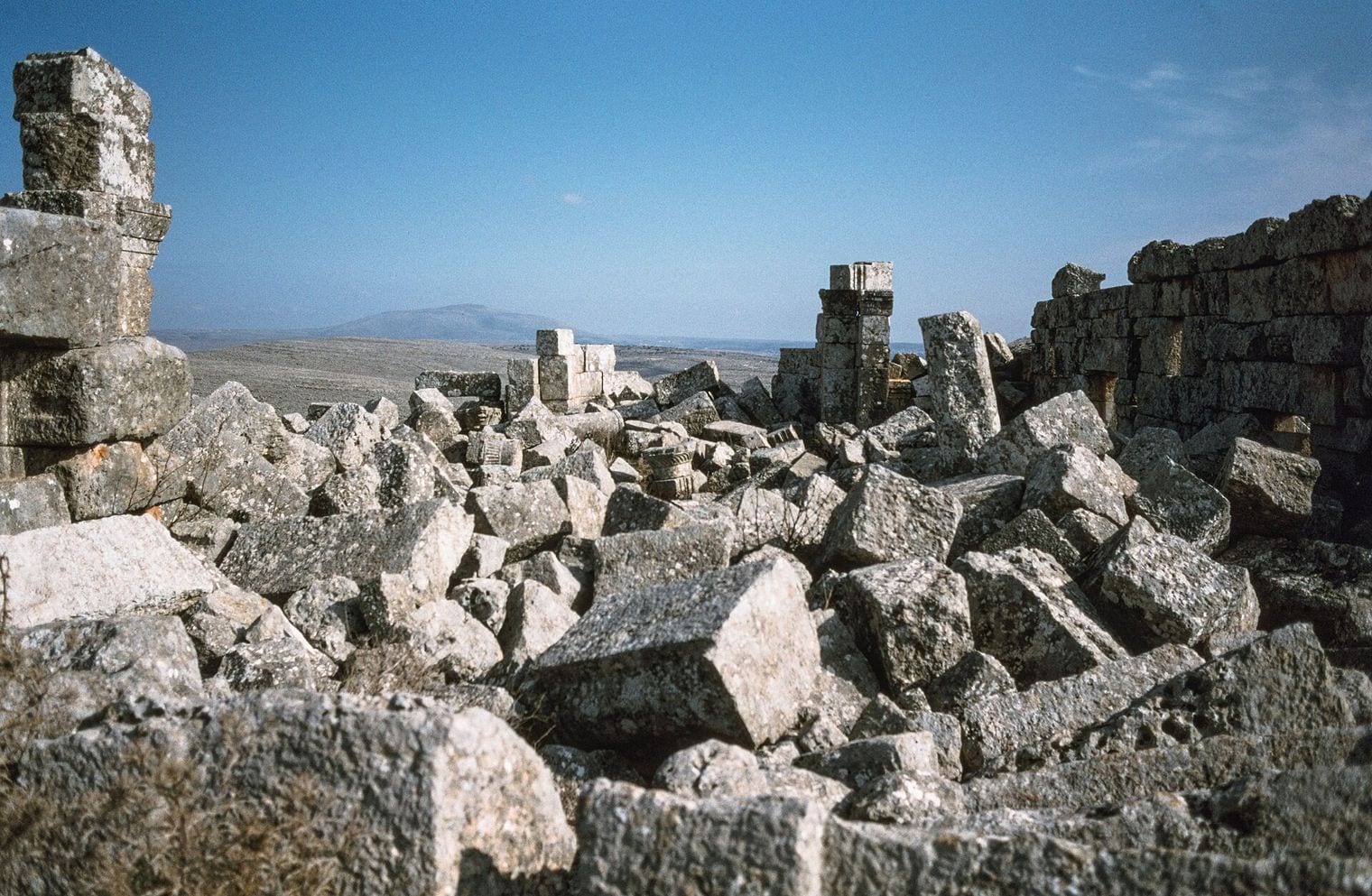
Dated 372 by an inscription on a lintel, recorded by the American archaeologist Howard Crosby Butler, the Church of Fafertin is counted the earliest surviving church in Syria.
Its apse is the one structure left standing in the village, and it stands in good condition on an east-facing slope in the Jebel Sem'an hills north-west of Aleppo. Surveyors in 1997 found too little of the rest of the church to re-check the date, so the ranking rests on Butler's reading of the stone.
Fafertin belongs to the Dead Cities, the abandoned stone villages of the limestone massif of northern Syria, and in 2011 it was inscribed with them as a UNESCO World Heritage Site, the Ancient Villages of Northern Syria. Seen across the bare hillside, the curved wall of the apse is a rare thing: a church sanctuary from the generation after Constantine, still upright in open country rather than buried under a later building.
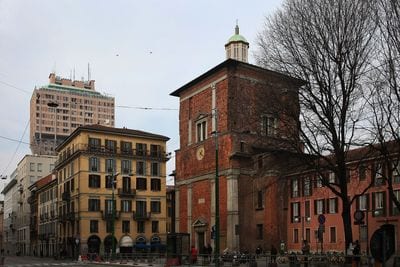
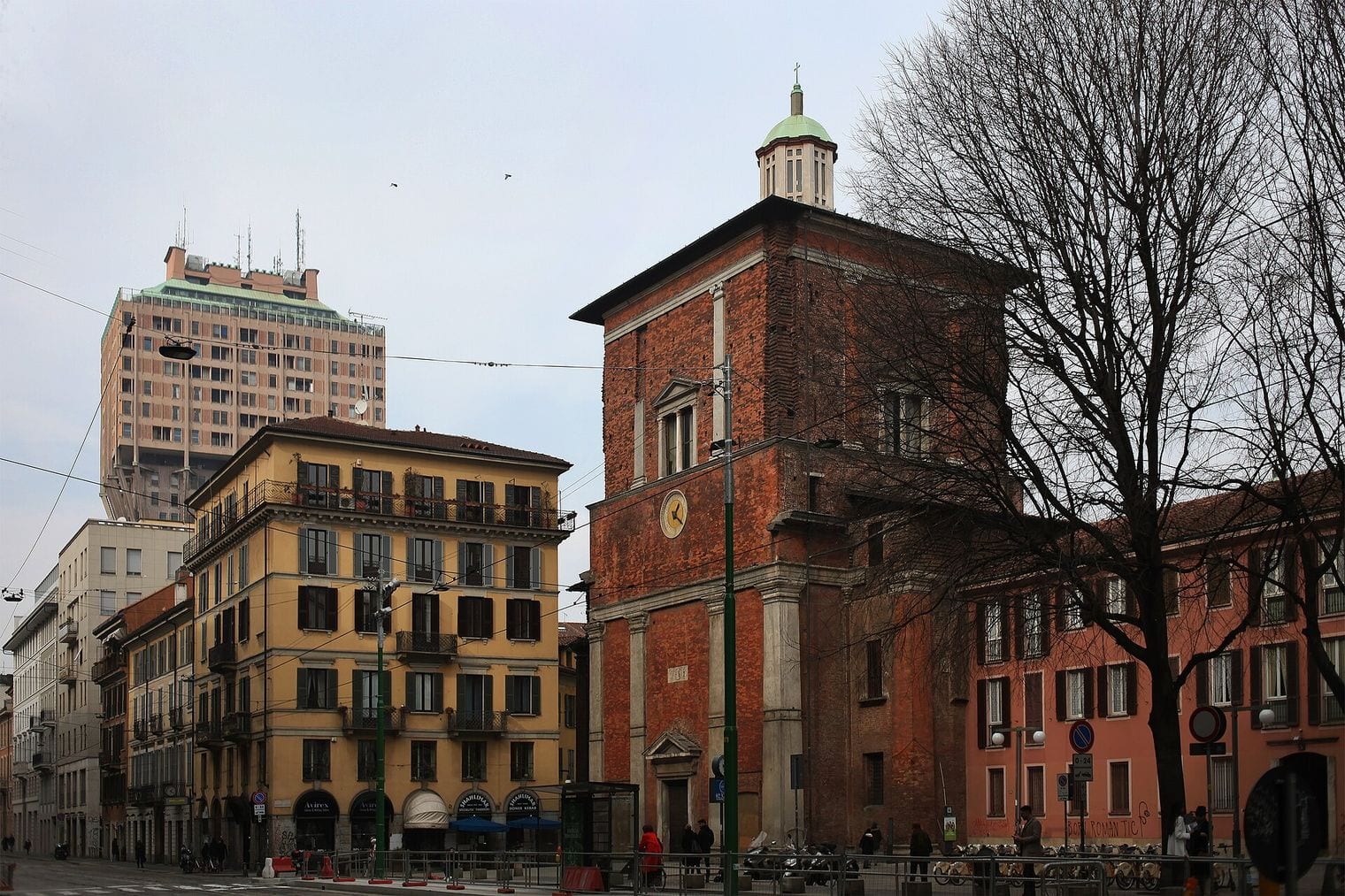
Begun in 382 for Bishop Ambrose and built between 382 and 386, San Nazaro in Brolo still stands on its original walls beside the old Roman road from Milan to Rome. Ambrose dedicated it to the Apostles as the Basilica Apostolorum, and relics of the Apostles still lie under the altar. An inscription he wrote describes the church's cross-shaped plan with apses on its arms, a layout then shared only with the Church of the Holy Apostles in Constantinople.
Serena, a niece of the emperor Theodosius I, gave the marble for the shrine that held the relics. Later builders added a Romanesque octagonal drum with a ring of small columns over the crossing, and from 1512 Bramantino designed the Trivulzio Mausoleum, an octagonal chapel for the Trivulzio family. Inside the Renaissance and Romanesque layers, the walls Ambrose raised are what make this one of the oldest churches in Milan.
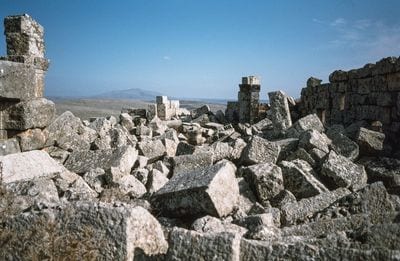
Dated 390 by a lintel from its atrium, the East Church of Babisqa is the larger of the two basilicas in this ruined village in the Jebel Barisha hills of Idlib province. That lintel names the priest Markianos Kyris, a second lintel dated 401 names him as the architect, and another inscription records the priest Moses completing the facade in 480, so the church went up in stages over several generations.
Babisqa is one of the Dead Cities, and in 2011 it became part of the UNESCO World Heritage Site of the Ancient Villages of Northern Syria.
Besides the two churches, the village keeps large and small public baths, the only certain baths found in the Jebel Barisha, and a marketplace dated 547 by an inscription on its upper storey. The East Church itself survives only in part, but its dated lintels make it one of the earliest securely dated churches in the region.
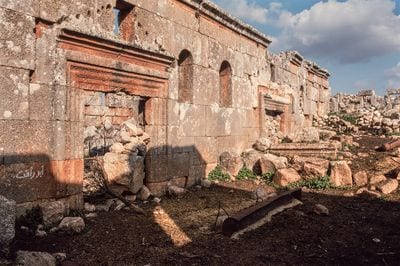
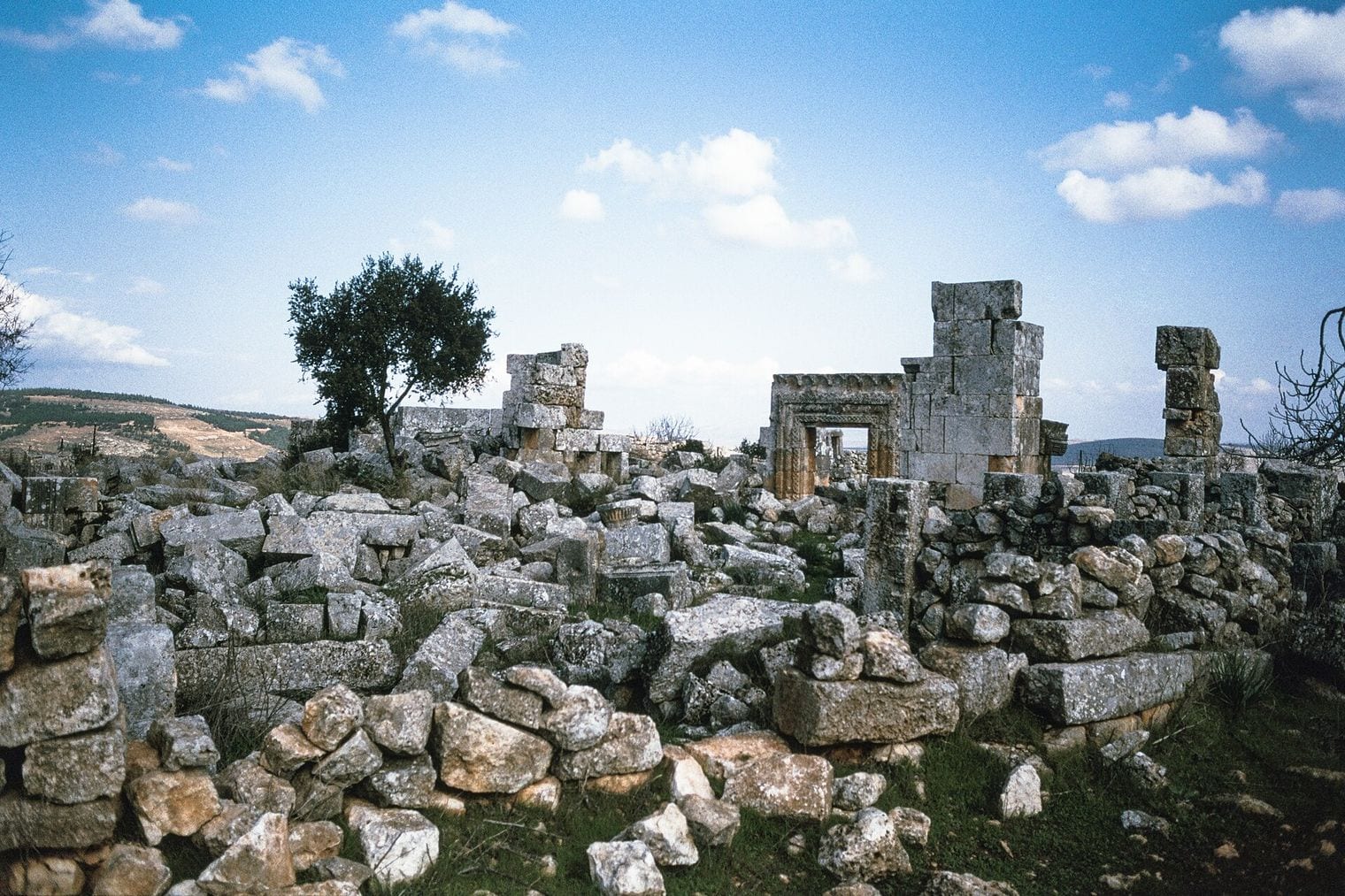
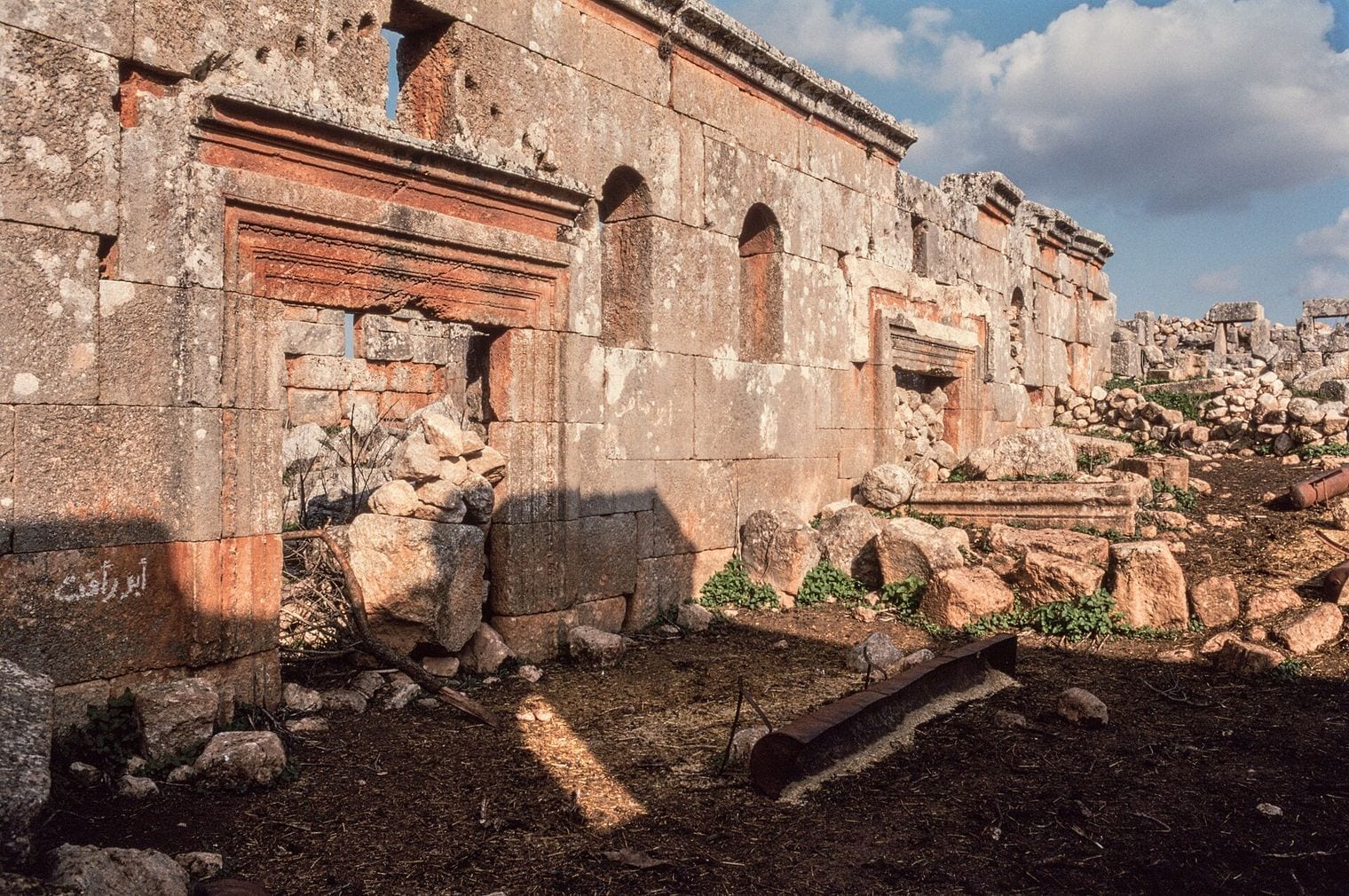
Built in 414, the date carved on the lintel above its south-eastern entrance, the East Church of Ksejbe stands at the top of the village's eastern slope on the north-eastern edge of the Jebel Barisha. Its south facade still stands with both of its ornate entrances, while the north, east and west ends of the church have fallen.
Ksejbe is another of the Dead Cities inscribed by UNESCO in 2011 as part of the Ancient Villages of Northern Syria. Alongside a smaller church on the western edge of the village, its remains include olive presses and stone buildings that probably date from the 5th and 6th centuries.
The hilltop gives a long view over the limestone uplands, and the surviving facade, carved doorways and all, shows how finely the masons of these villages worked barely a century after Constantine's conversion.
Dated by its inscription to August 418, the Church of Saints Paul and Moses is the oldest of the three churches in Dar Qita, a ruined village on the northern slope of the Jebel Barisha in Idlib province.
It was a three-aisled basilica about 20 metres long with a semicircular apse; the lowest course of its west wall and the east wall up to the arch of the apse still stand, and parts of the church were reworked in the early 6th century.
Dar Qita shows how a Dead Cities village kept building churches for more than a century. The Church of Saint Sergius, finished in 537 according to the inscription over its west door, stands nearby, and a small baptistery more than 6 metres high is one of the best-preserved buildings in the village. The ruins of Baqirha, another Dead Cities village, lie a few hundred metres to the south.
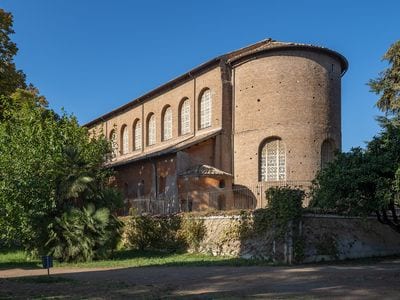
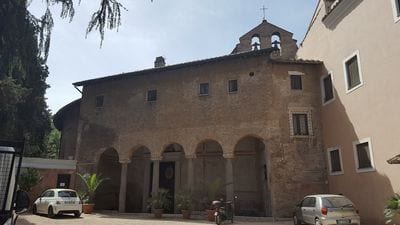
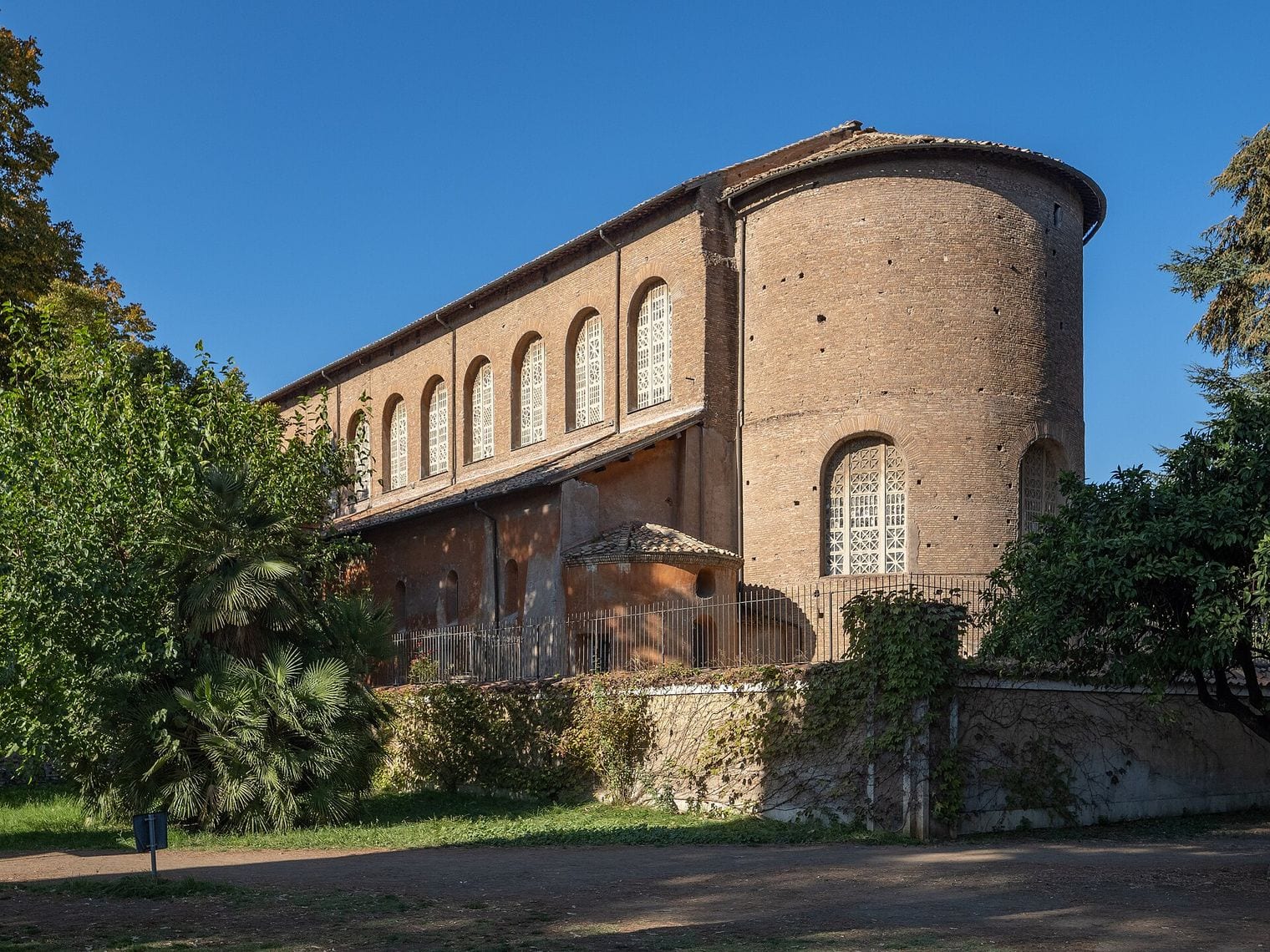
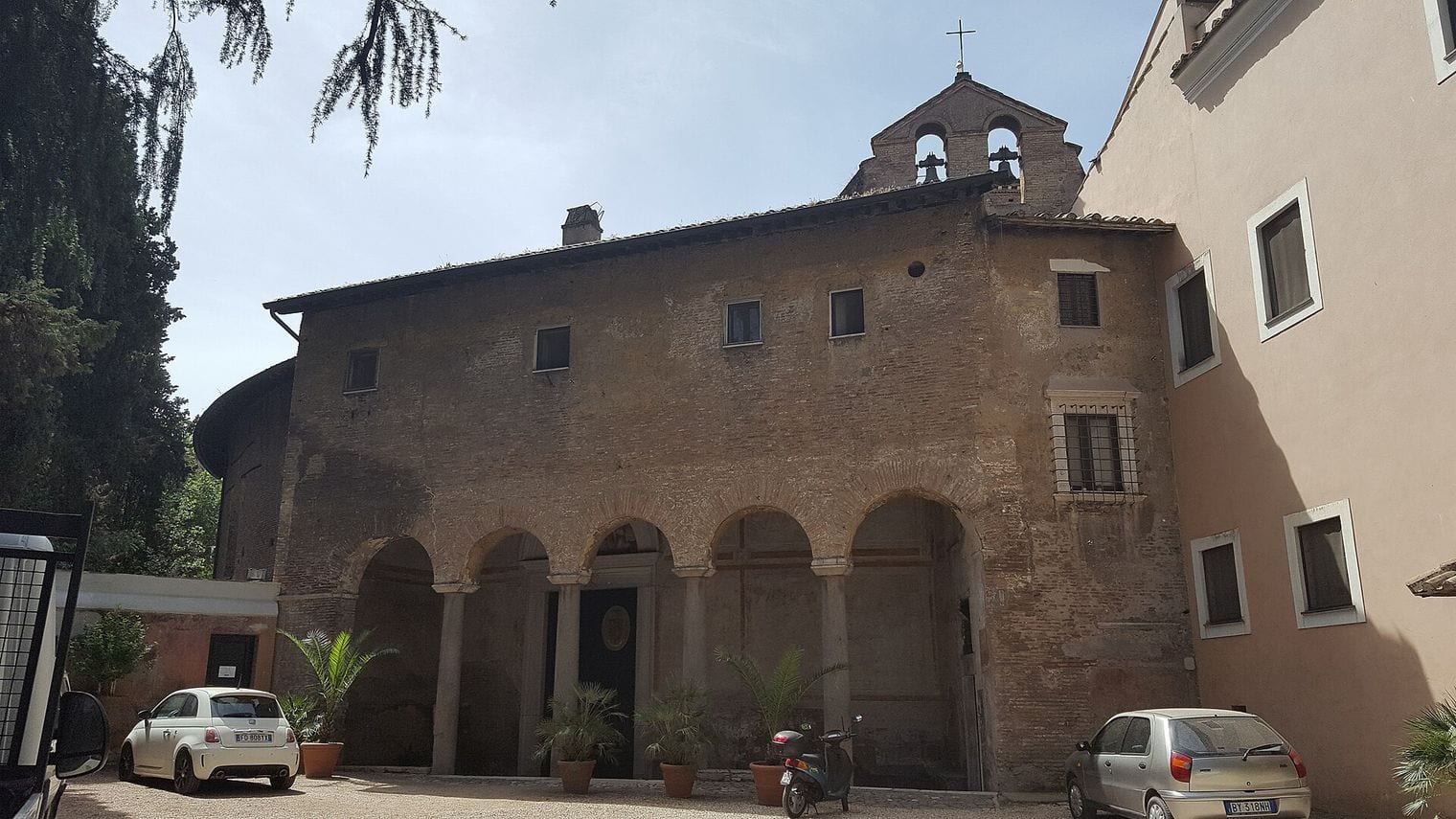
Built between 422 and 432 by Peter of Illyria, a Dalmatian priest, Santa Sabina stands on the Aventine Hill in Rome near the site of a temple of Juno. Inside, it keeps the plan of a 5th-century basilica: a long, light-filled nave divided from the side aisles by two rows of columns carrying an arcade.
The church is best known for its cypress wood doors, carved around 430 with biblical scenes that include the earliest known publicly displayed depiction of the Crucifixion. Santa Sabina is the mother church of the Dominicans, the order Pope Honorius III approved in 1216, and the stational church for Ash Wednesday, when the pope traditionally begins Lent here. Step outside to the garden next door for one of the finest views over the rooftops of Rome.
Get new guides like this by email
One email every Thursday with our newest guides for the places you tick.
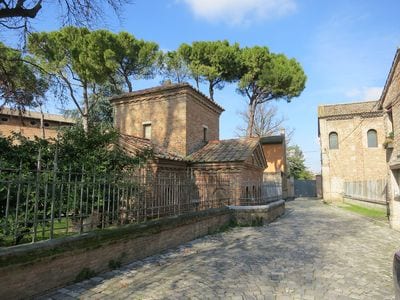
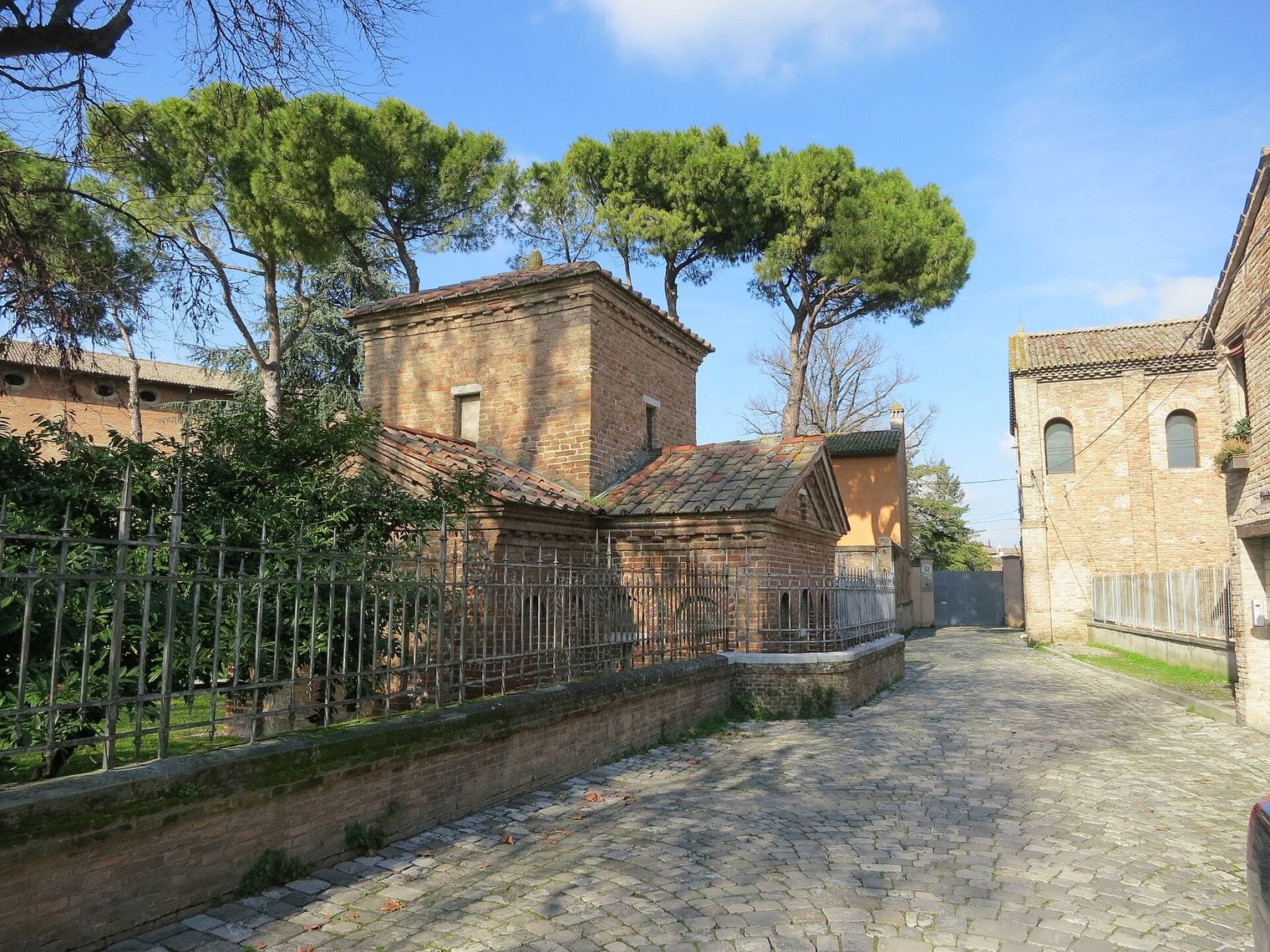
Built between 425 and 450, the Mausoleum of Galla Placidia in Ravenna was put up as a cross-shaped chapel, probably dedicated to Saint Lawrence, at the end of the narthex of the palace church of the Holy Cross. Its building span overlaps with those of Santa Maria Maggiore (432) and San Pietro in Vincoli (439); it ranks first of the three on its 425 start, although it may have been finished later than either.
Despite the name, the empress Galla Placidia was not buried here: she died in Rome and was buried there, and the tomb story dates only from the 13th century.
The small brick exterior hides one of the most beautiful interiors of the late Roman world, covered in glass mosaics, from Christ as the Good Shepherd over the entrance to deer drinking at a spring and a dome where a gold cross shines among stars. The chapel is one of eight Ravenna monuments inscribed together on the UNESCO World Heritage List in 1996.
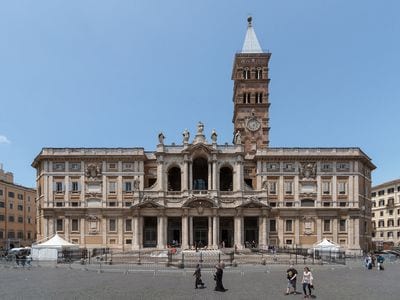
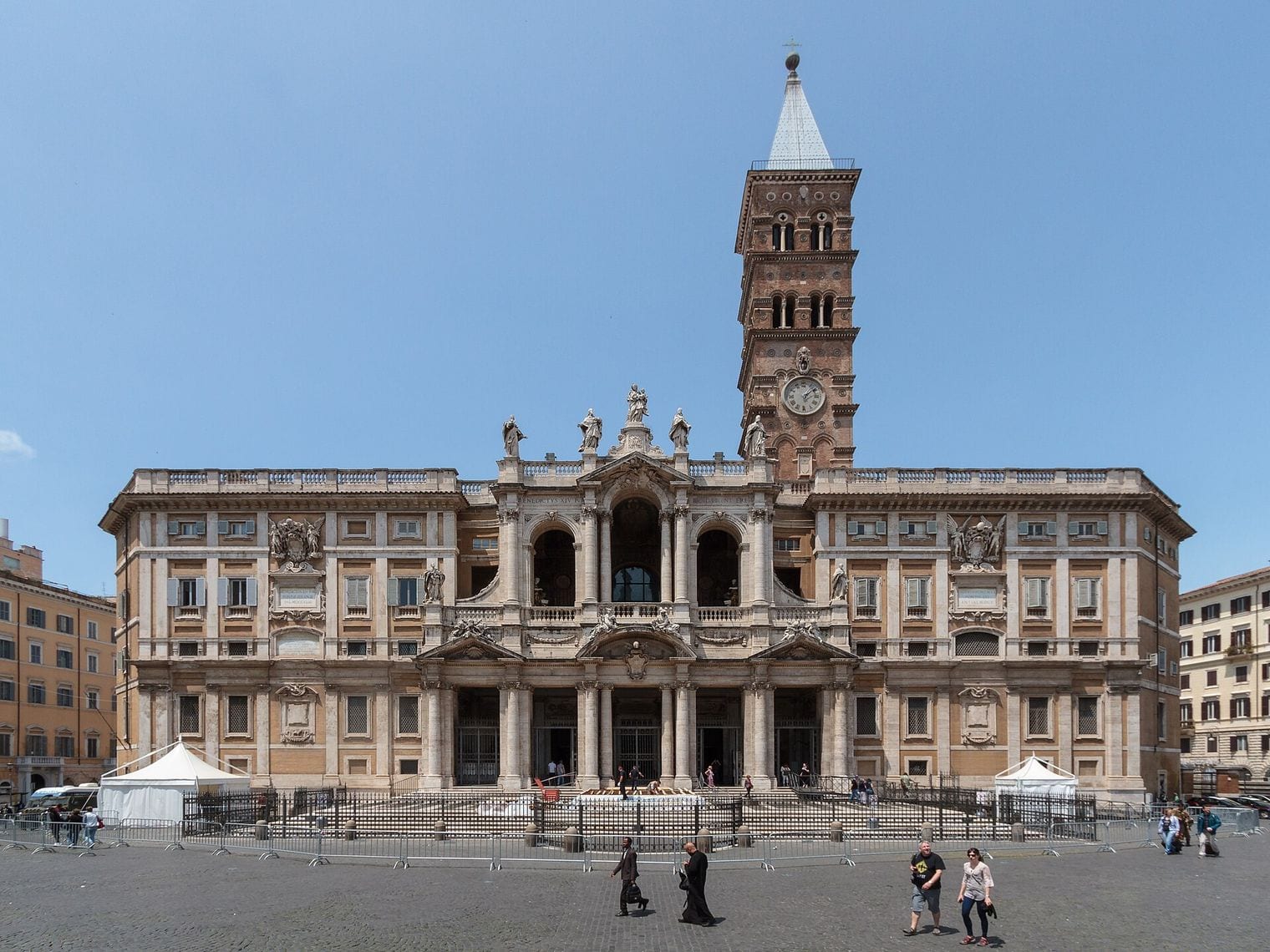
Rebuilt from 432 under Pope Sixtus III, whose pontificate ran to 440, Santa Maria Maggiore on Rome's Esquiline Hill keeps the nave and triumphal-arch mosaics of his time, the inscription "Sixtus Episcopus plebi Dei" among them.
Some historians move the start of the present church back to Pope Celestine I in the 420s, and Sixtus consecrated it in 434, so its dates overlap with those of the Galla Placidia chapel (425) and San Pietro in Vincoli (439); it ranks between them on its 432 start.
One of the papal basilicas of Rome and one of the Seven Pilgrim Churches, Santa Maria Maggiore is dedicated to the Virgin as Our Lady of the Snow, after the legend of a summer snowfall that marked out its site. Behind the later facades, the 5th-century mosaics of the nave tell Old Testament stories in panels high above the columns. Pope Francis chose to be buried here, and his tomb has drawn pilgrims since 2025.
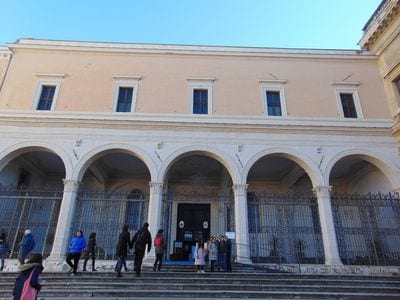
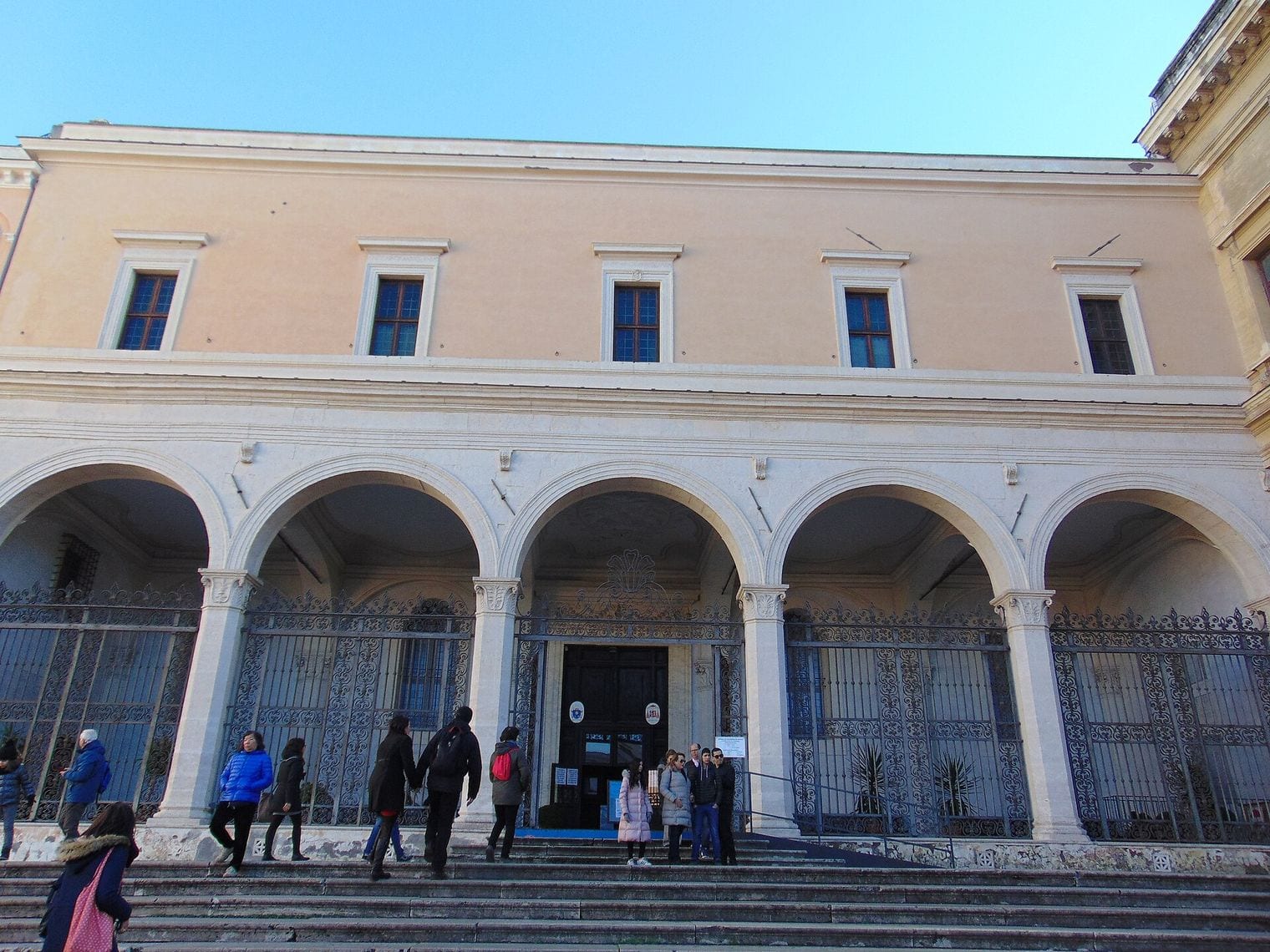
Consecrated in 439 by Pope Sixtus III, San Pietro in Vincoli was rebuilt on older foundations in Rome from 432 to house the chains said to have bound Saint Peter in Jerusalem. Its 432 to 440 building span overlaps with Santa Maria Maggiore's and the Galla Placidia chapel's, and it ranks tenth on its 439 consecration. The church is also called the Basilica Eudoxiana, after the empress Eudoxia, who gave the chains to Pope Leo I.
Most visitors come for Michelangelo's statue of Moses, the centrepiece of the tomb of Pope Julius II, but the chains themselves are kept in a reliquary beneath the high altar. The church has been restored many times, by Pope Adrian I and again in the 11th century, yet its plan, a broad nave lined with ancient columns, still follows the 5th-century basilica on the Colle Oppio, a short walk from the Colosseum.
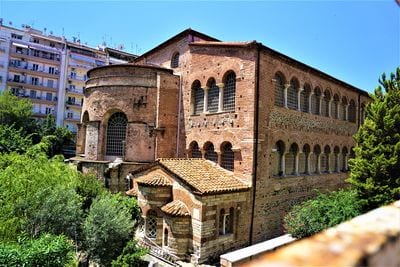
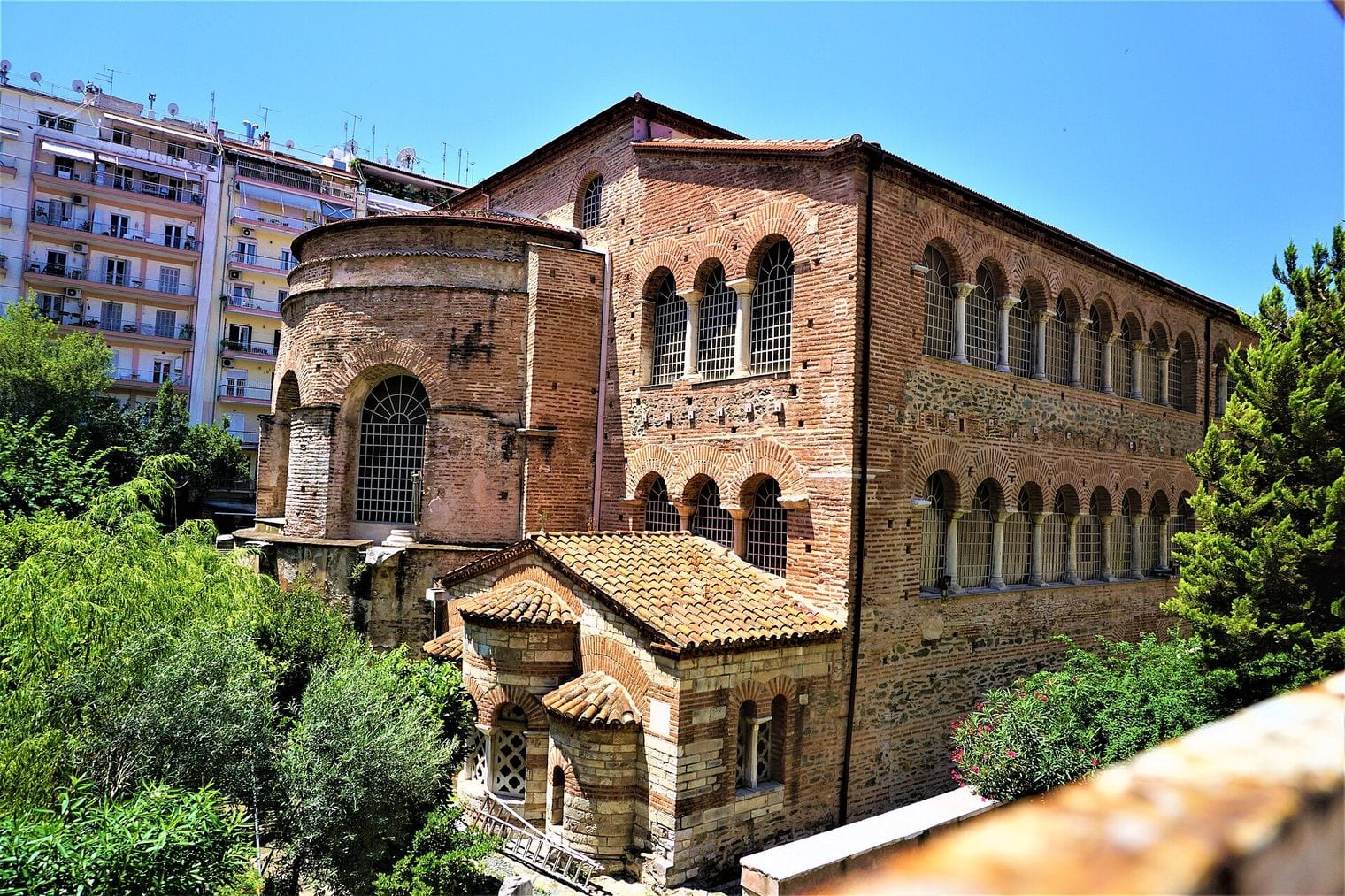
Dated from its bricks and mosaics to about 450 to 470, the Church of the Acheiropoietos in Thessaloniki is one of the earliest Christian basilicas still standing in Greece. Its span overlaps with those of the Monastery of Stoudios (454) and Santo Stefano Rotondo (468), and it ranks first of the three on its 450 start.
The name, first recorded in 1320, means "not made by hands" and refers to a miraculous icon of the Virgin Hodegetria once kept here. Much of the original interior survives: fine 5th-century Ionic capitals from a workshop in Constantinople, green Thessalian marble columns, the original marble paving of the nave and fragments of mosaic in the arches.
The church was modified in the 7th century and again in the 14th and 15th, and in 1988 it was inscribed on the UNESCO World Heritage List with the other early Christian and Byzantine monuments of Thessaloniki.
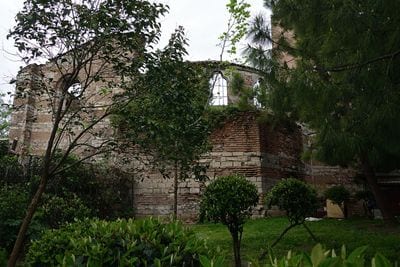
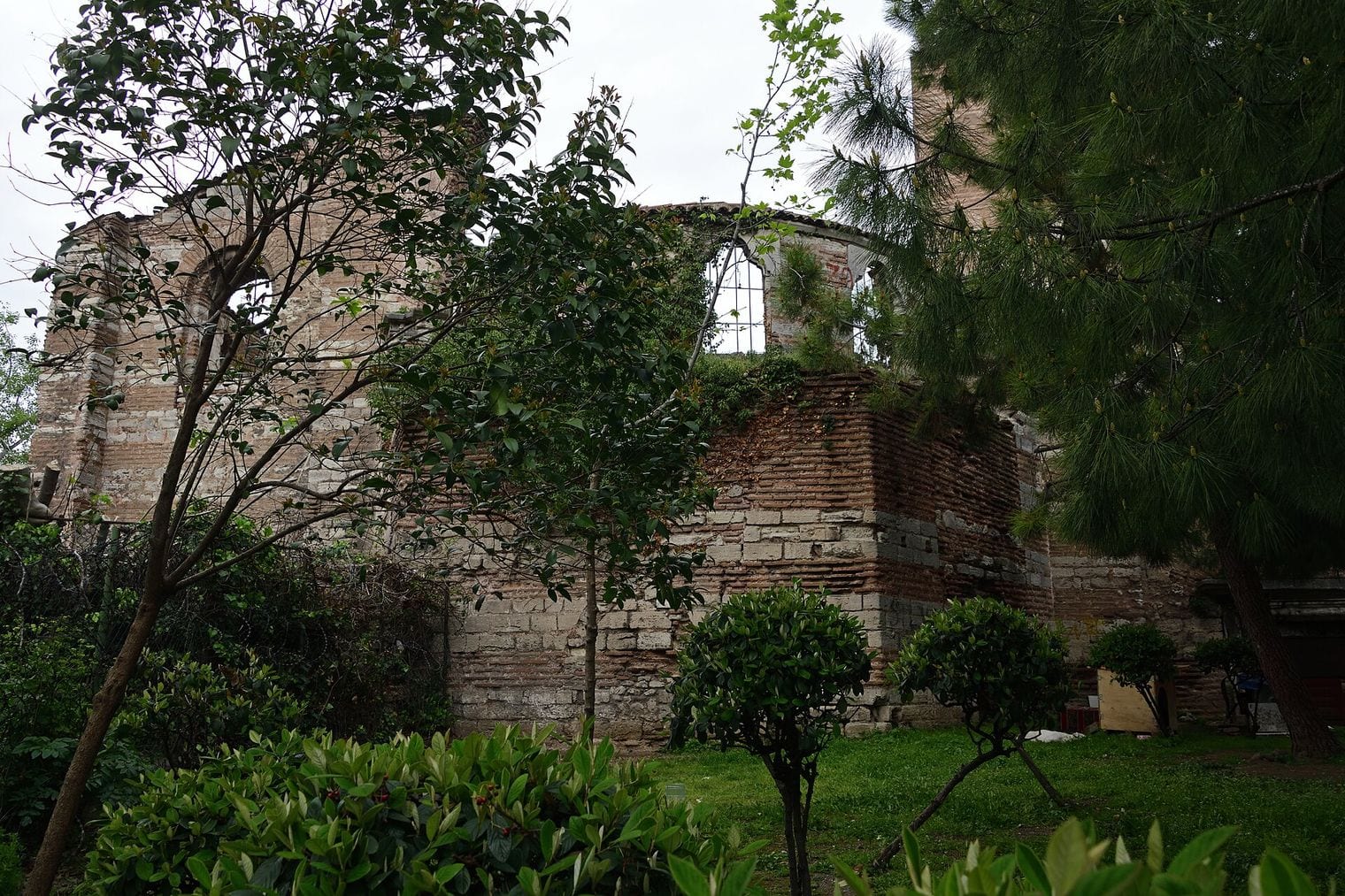
Founded before 454 by the consul Studius, the basilica of Saint John the Baptist at the Monastery of Stoudios is generally counted the oldest surviving church in Istanbul, older than the present Hagia Sophia by more than 80 years. An inscription suggests it was built before Studius became consul in 454, though some scholars date it to 463, which overlaps with the Acheiropoietos (450) and Santo Stefano Rotondo (468); it ranks between them on the 454 date.
The monastery became one of the great centres of Byzantine monastic life and stayed loyal to Orthodoxy through the iconoclast disputes. Crusaders wrecked it in 1204, and it was not fully restored until 1290; after the Ottoman conquest an equerry of Sultan Bayezid II turned the church into the Imrahor Mosque.
A great fire in 1782 and the 1894 earthquake left it a roofless ruin, and a restoration that began in 2023 has put a protective roof over the 5th-century walls once again.
Consecrated by Pope Simplicius between 468 and 483, Santo Stefano Rotondo on Rome's Caelian Hill was the first church in Rome built on a circular plan. Work had begun under Pope Leo I: tree rings date the felling of its roof beams to around 455, so its building span overlaps with those of the Acheiropoietos (450) and the Monastery of Stoudios (454), and it ranks after them on the 468 consecration.
The church is dedicated to Saint Stephen, the first Christian martyr, and as Hungary's national church in Rome also to Stephen I, the first king of Hungary. Its walls carry 34 frescoed scenes of martyrdom painted in the 16th century by Niccolò Circignani, known as Pomarancio, and Antonio Tempesta for Pope Gregory XIII, a graphic cycle that few visitors forget. Beneath the church lies a 2nd-century mithraeum, linked to the barracks of Roman soldiers nearby.
1414. Church of Saint Simeon Stylites
Qal'at Sim'an, near Darat Izza, Aleppo Governorate, Syria
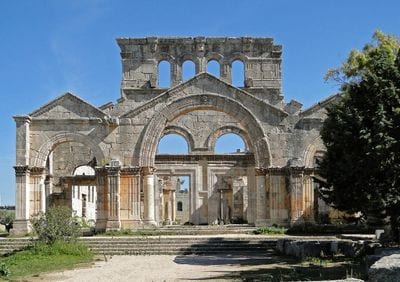
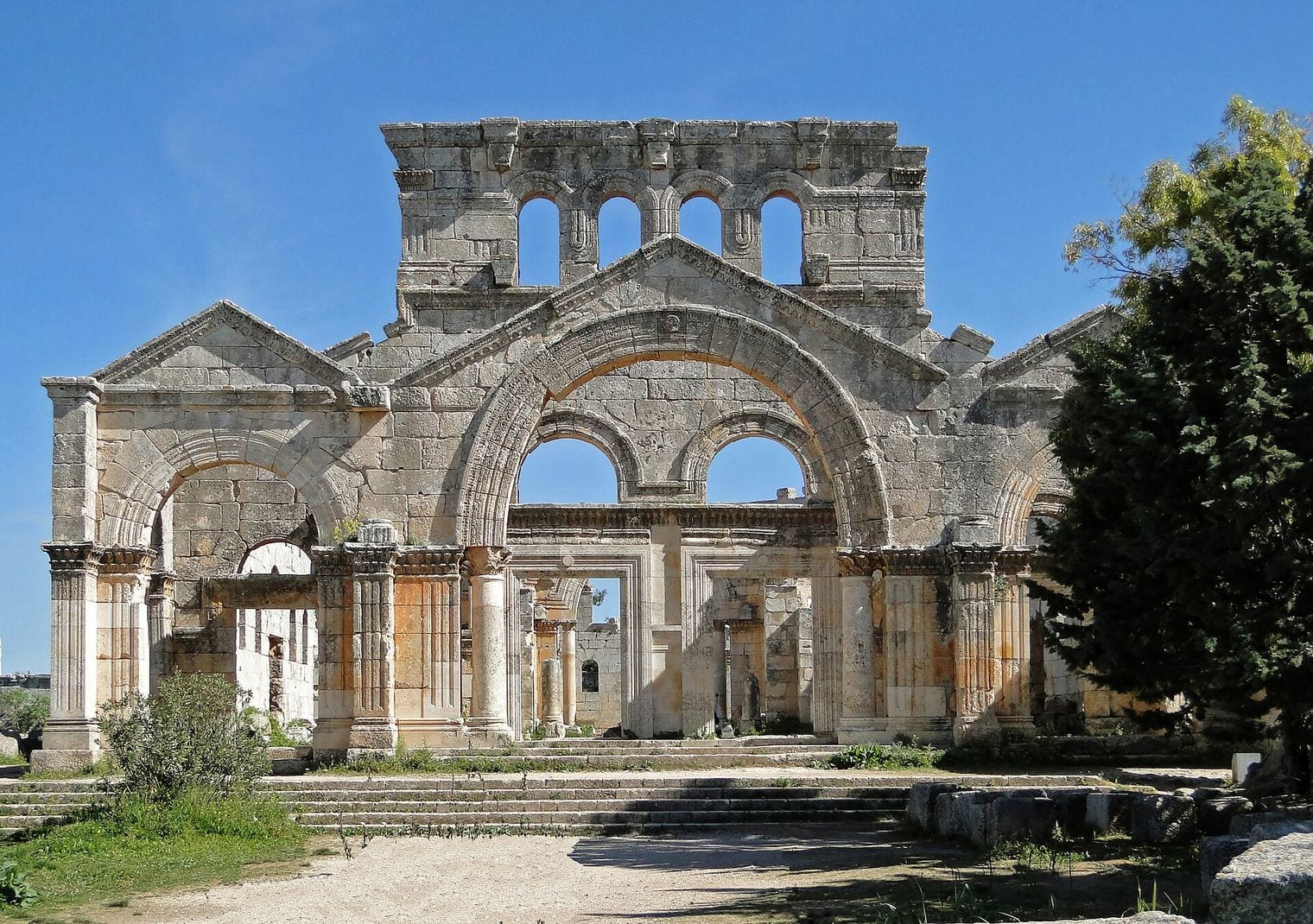
Begun in 476, the Church of Saint Simeon Stylites rose around the pillar on which the monk Simeon lived until his death in 459, on a hilltop near Darat Izza north-west of Aleppo. Four basilicas spread out from a central octagon, with the column at its heart, and when the complex was completed around 490, by some accounts no church surpassed it until Hagia Sophia was finished in 537.
Simeon started on a platform about 3 metres high and his column was raised over time to 18 metres; pilgrims later chipped it away for relics until only a stump was left.
An air strike in May 2016 damaged the church and the remains of the pillar, and the 2023 earthquake added more damage, but the walls and arches of the basilicas still stand. The site is part of the UNESCO-listed Ancient Villages of Northern Syria, and Syria's antiquities authority reopened it to visitors with a ceremony in October 2026.
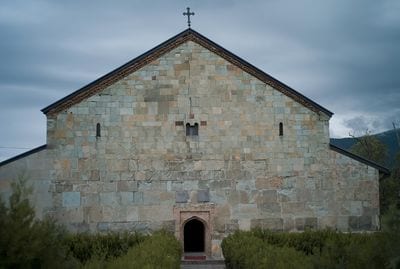
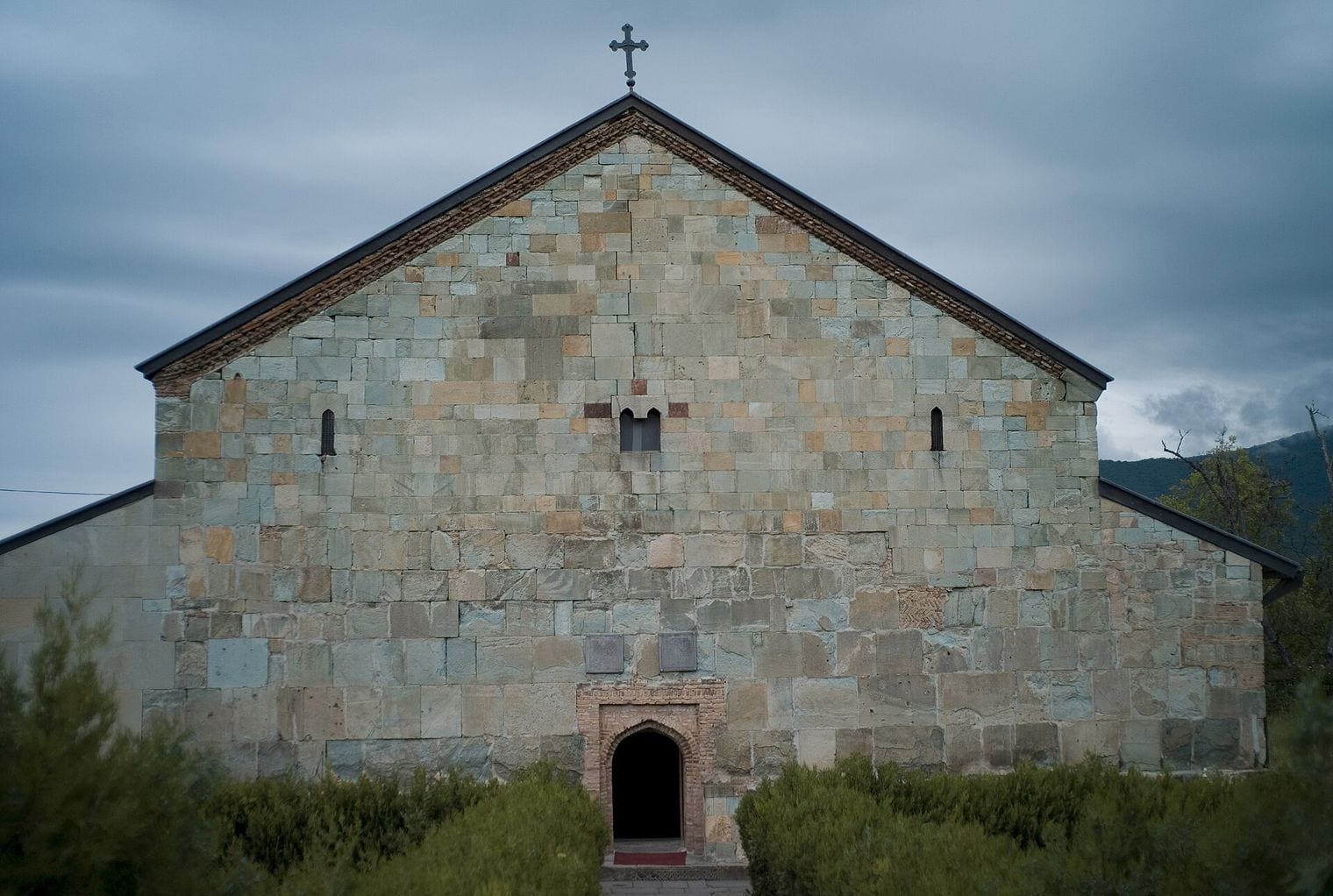
Begun in 478 or 479, Bolnisi Sioni in Georgia's Kvemo Kartli region is the oldest church building still standing in the country, and it remains a working Georgian Orthodox church. An inscription at its northern entrance records that it was built between 478 and 493, giving the three-aisled basilica an unusually precise date for a church of its age.
That inscription and its companions, the Bolnisi inscriptions, are among the oldest dated texts in the Georgian alphabet, which makes the church a landmark for the language as well as for its architecture. The basilica stands in a quiet village south-west of Tbilisi, and its plain stone walls and long nave give a clear picture of how the earliest Georgian churches were built, before the domed churches the country is known for.
FAQ: The World's Oldest Churches
What is the oldest church in the world?
Counting only walls that still stand in a building put up as a church, it is Trier Cathedral in Germany, whose square core was begun in 340 and still forms the heart of the working cathedral. The Church of Fafertin in Syria, dated 372 by an inscription, comes second, and San Nazaro in Brolo in Milan, begun in 382, third.
Why isn't the Church of the Holy Sepulchre on the list?
Constantine's church in Jerusalem, built between 326 and 335, was razed in 1009 and rebuilt in 1048 and again in the 12th century. The oldest part still standing, the lower wall of the rotunda around the tomb, is dated only to the 4th century, and a date that wide cannot be ranked against Trier's 340.
What about Etchmiadzin Cathedral and the Church of the Nativity?
Both are famous for dates older than their walls. Etchmiadzin's founding in 301 to 303 is a tradition, and the cathedral standing in Armenia today is the rebuilding of 483 or 484, just outside this top 15. In Bethlehem, the basilica of 339 survives only below ground, beneath the Emperor Justinian's 6th-century church.
Why is the Church of Julianos at Brad missing?
Built between 399 and 402, it would have ranked fifth, but its survival cannot be confirmed. It was reported damaged or destroyed by Turkish air strikes on 22 March 2018, which Turkey denied, and no reliable later report settles its condition, so the list leaves it out rather than count walls that may be gone.
Aren't there older churches, such as Dura-Europos or the Pantheon?
Older Christian sites exist, but none passes both rules. The house church at Dura-Europos in Syria, the prayer hall at Megiddo in Israel and the church at Aqaba in Jordan are excavated ruins rather than standing walls, and Rome's Pantheon was a temple before it became a church. Milan's San Lorenzo and San Simpliciano lack a secure date. More rankings like this sit among our world record breakers.
Sources & updates
How this ranking was checked
Checked before launch
Sources cited
15
Publishers
9
Every figure in this ranking was checked against the record-keeper or official source behind it before publication, and the top of the ranking re-checked live so a newer record would not be missed.
One email every Thursday with our newest guides for the places you tick.
Newsletter
Stay updated with new World Record Breakers
One email every Thursday with our newest guides for the places you tick.
We use cookies to analyse site traffic and improve your experience.
You can accept or reject analytics cookies. See our
May we use analytics cookies? See ourCookie Policy.