We build and rank every list first. Booking links come after, and only where
a partner sells a ticket, tour or stay for that exact place, so a place with
nothing to book is listed exactly as prominently as one you can book.
So how do we earn? Some links on this page go to booking
partners, and if you book tickets, tours or a stay through
one, we may earn a commission. It costs you nothing extra.
That commission never decides which places make the list, the order they
appear in, or what we write about them. No entry is sponsored or a paid
placement.
By the City Viking editorial teamPublished Ranked by founding year of the library · 10 min read
Last verified Checked before launchOct 30, 202611 sources10 publishers2 encyclopedias & research9 venues & other sitesPublished · Nov 2, 2026Researched and checked before it went liveClick for every source and the full change log.
The record
Scriptorium documented with certainty from 517
Chapter Library of Verona
Italy
The record
The oldest library in the world is the Chapter Library of Verona, in Italy — Scriptorium documented with certainty from 517, founding year of the library.
Source: bibliotecacapitolare.it. Verified .
Short answer
The Chapter Library of Verona is the oldest working library in the world by dated record, documented from a codex copied in 517, just ahead of Saint Catherine's Monastery in Sinai, whose library was founded between 527 and 565. To walk through an ancient abbey library hall, visit Admont or Melk in Austria.
Ask for the oldest library in the world and the usual answers are ruins or the wrong date: the Library of Alexandria and Ashurbanipal's library at Nineveh vanished as working libraries long ago, and the famous 859 of Al-Qarawiyyin in Fez is the founding of its mosque-university, while its library dates from 1349.
This countdown ranks 11 libraries that still work by the earliest dated evidence of the library itself, from a codex copied in Verona in 517 to the books of Melk Abbey in 1089. Guinness World Records names Saint Catherine's Monastery in Sinai the oldest continuously operating library, but Verona's dated manuscript is older, so Sinai ranks second.
Each library must still be run by the institution that founded it, as the monks of Einsiedeln still run theirs from 934. That rule leaves out the Abbey Library of St Gall, whose abbey was dissolved in 1805, and Durham's priory library, broken at the Reformation.
Guinness's oldest library ranks second here. Guinness World Records names the library of Saint Catherine's Monastery, founded between 527 and 565, the oldest continuously operating library, yet a codex copied for the Chapter Library of Verona is dated 517.
One man's scriptorium made 218 books. The epitaph of Pacificus, who led Verona's scriptorium in the early ninth century, credits him with 218 manuscripts, a figure scholars now accept as an exact count.
Exeter kept one book out of 66. Of the 66 books Bishop Leofric gave Exeter Cathedral, only the Exeter Book of Old English poetry is still there; 16 others survive in the British Library, the Bodleian and Cambridge University Library.
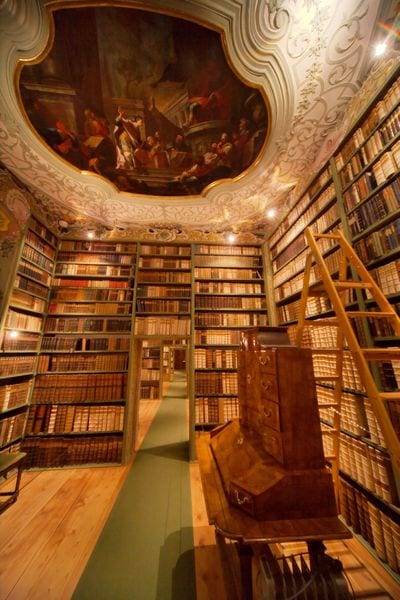
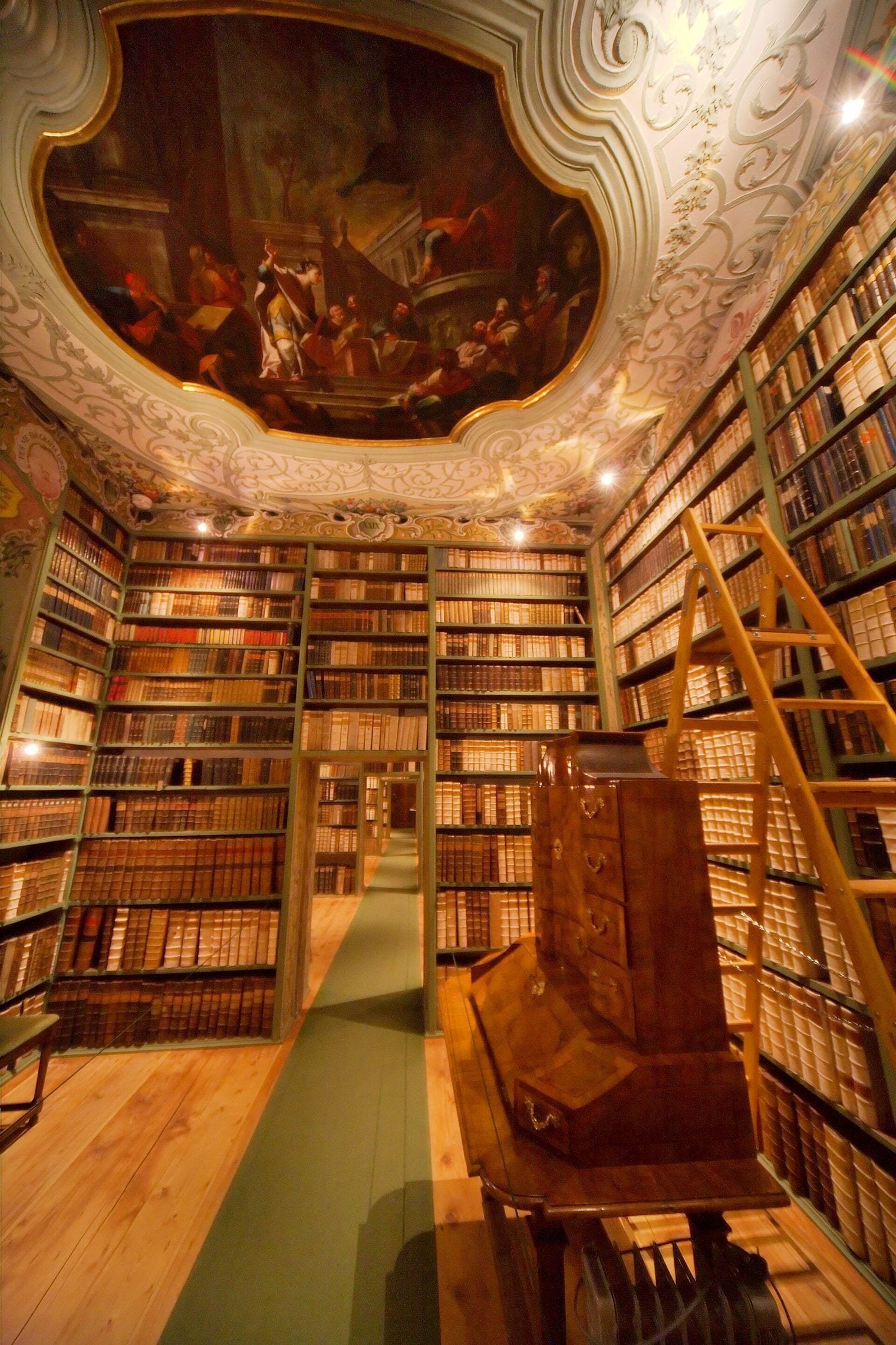
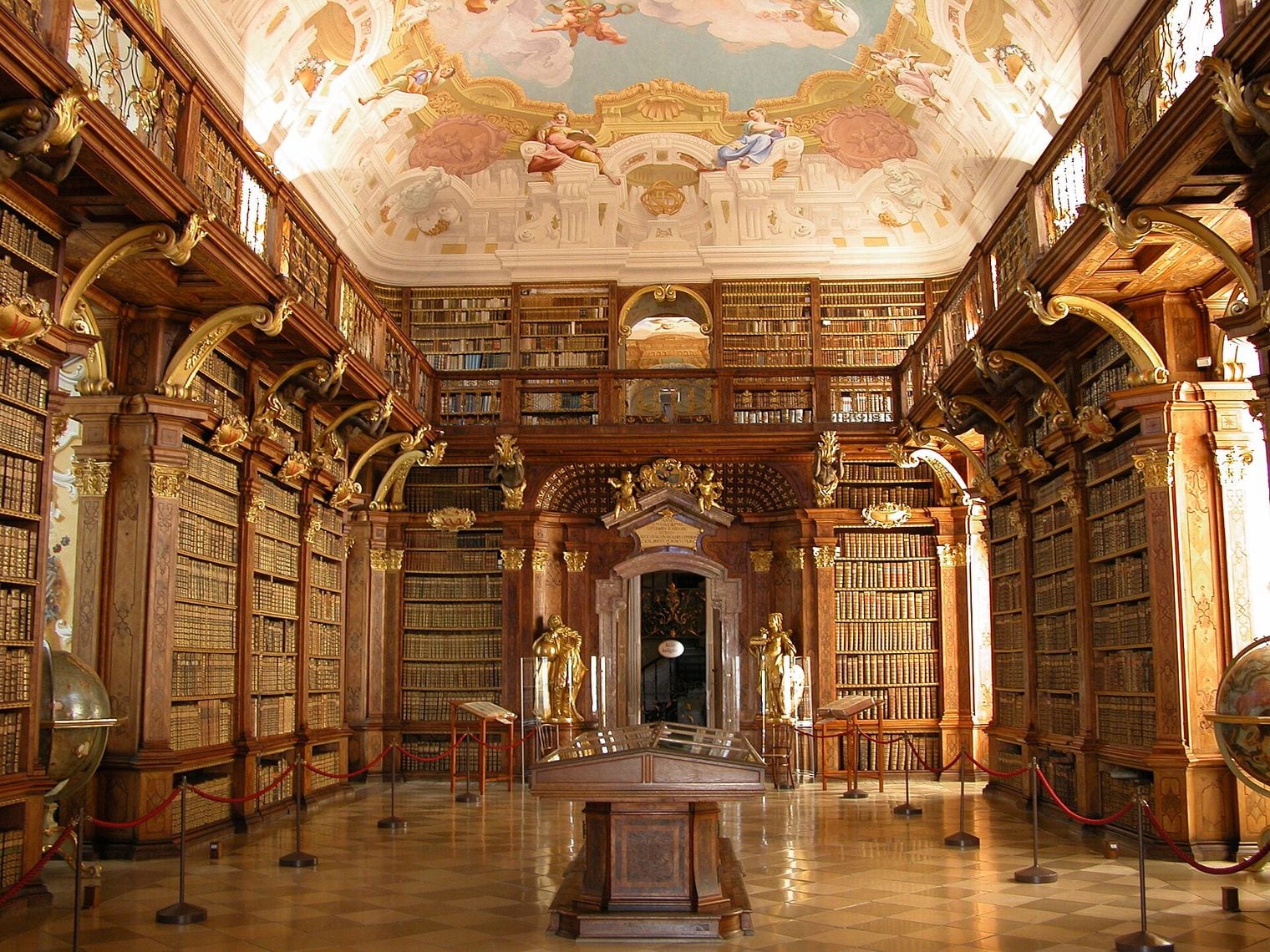
Admont's library hall is 70 metres long. Completed in 1776, the hall at Admont Abbey is what the abbey calls the largest monastic library in the world.
Austria holds four of the 11. St. Peter's in Salzburg comes first, and three abbey libraries followed within 15 years: Admont in 1074, Göttweig in 1083 and Melk in 1089.
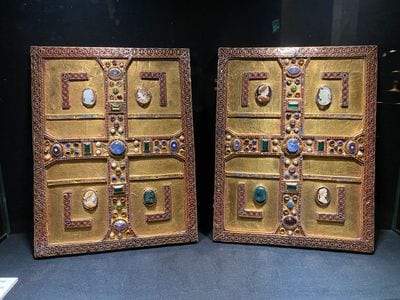
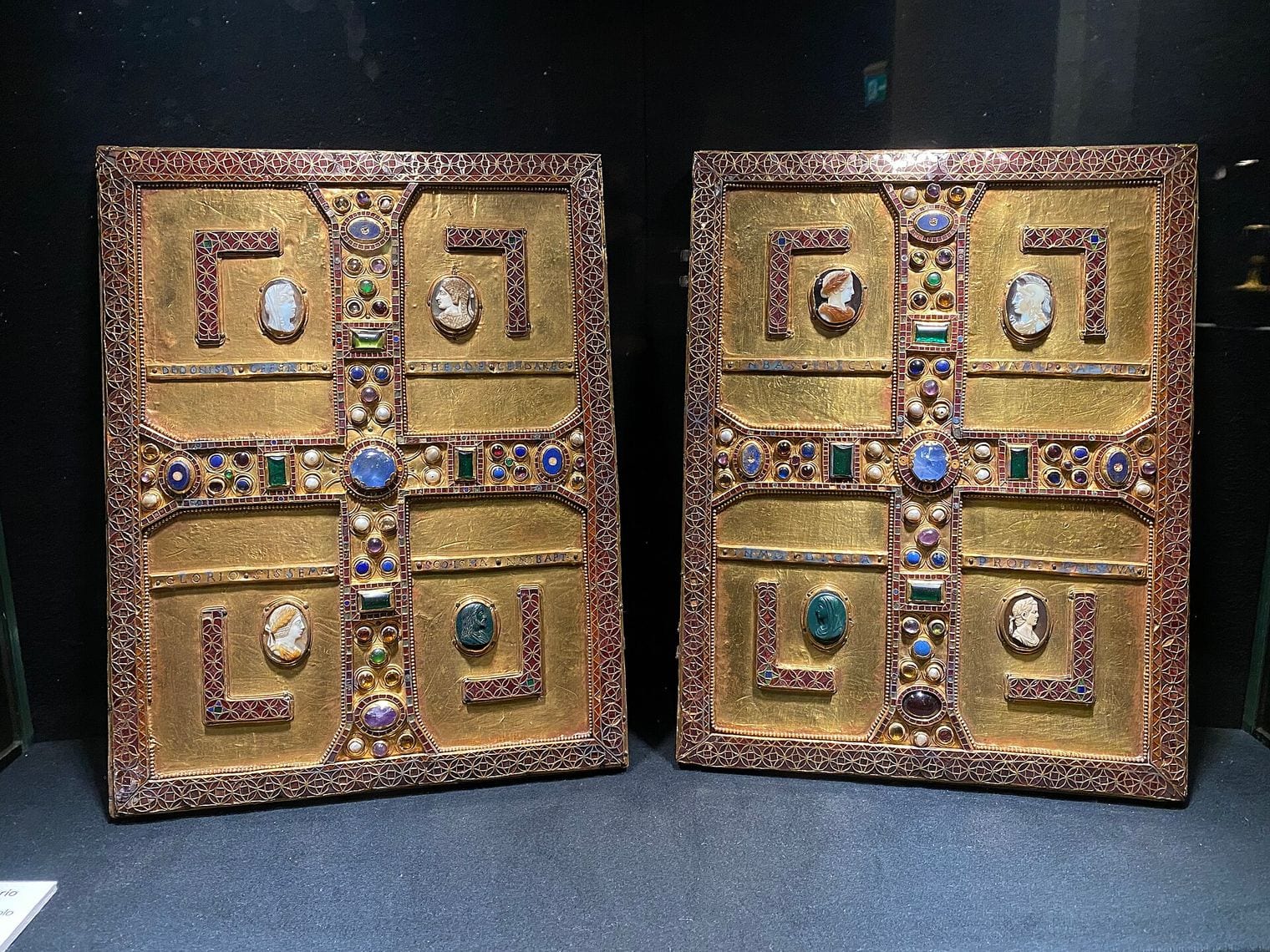
A lost Gospel book left its cover behind. The first record of books at Monza, near Milan, is a letter of 603 from Pope Gregory the Great to Queen Theodelinda about a Gospel book; the book is lost, but a jewelled cover traditionally linked to the gift survives in the treasury.
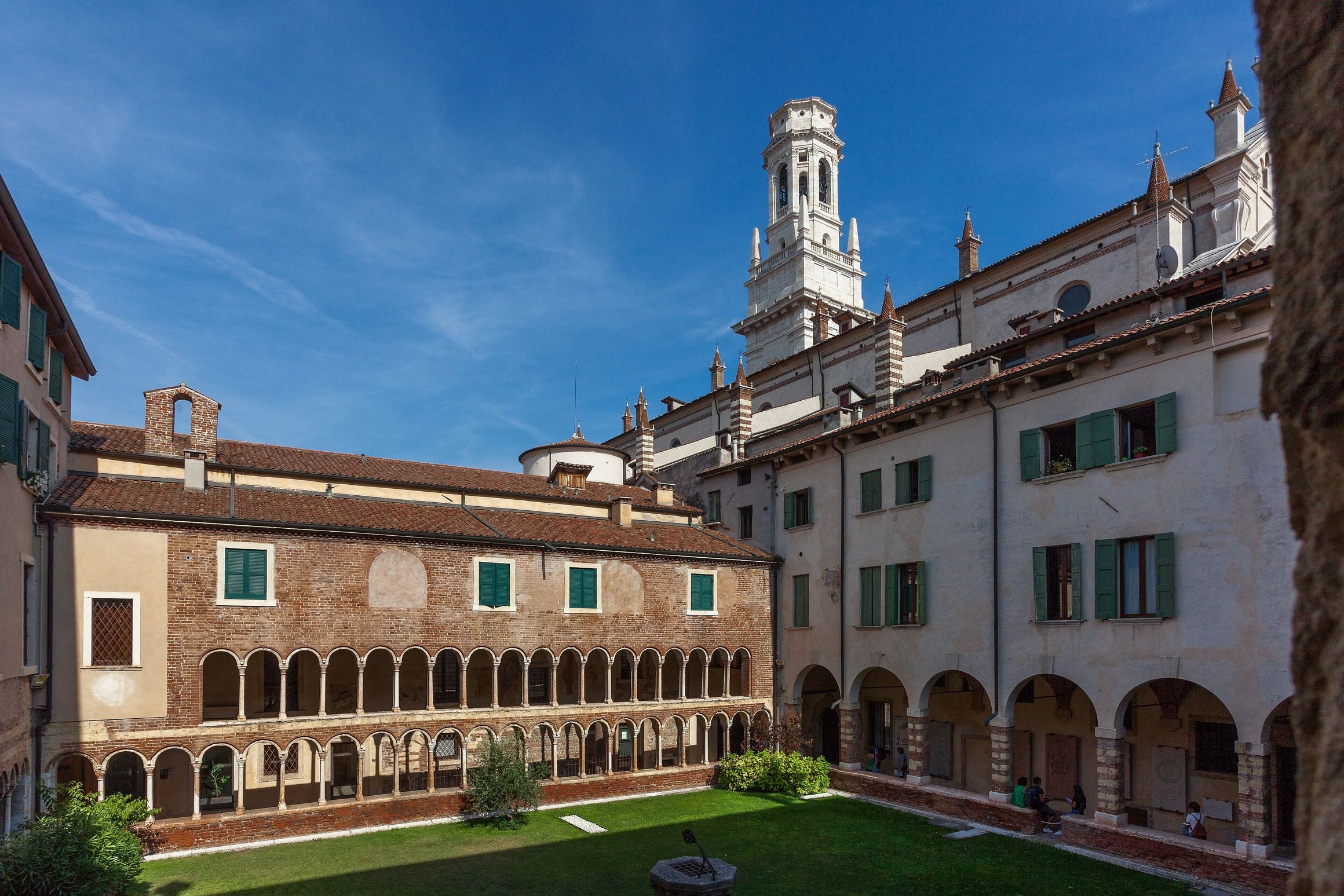
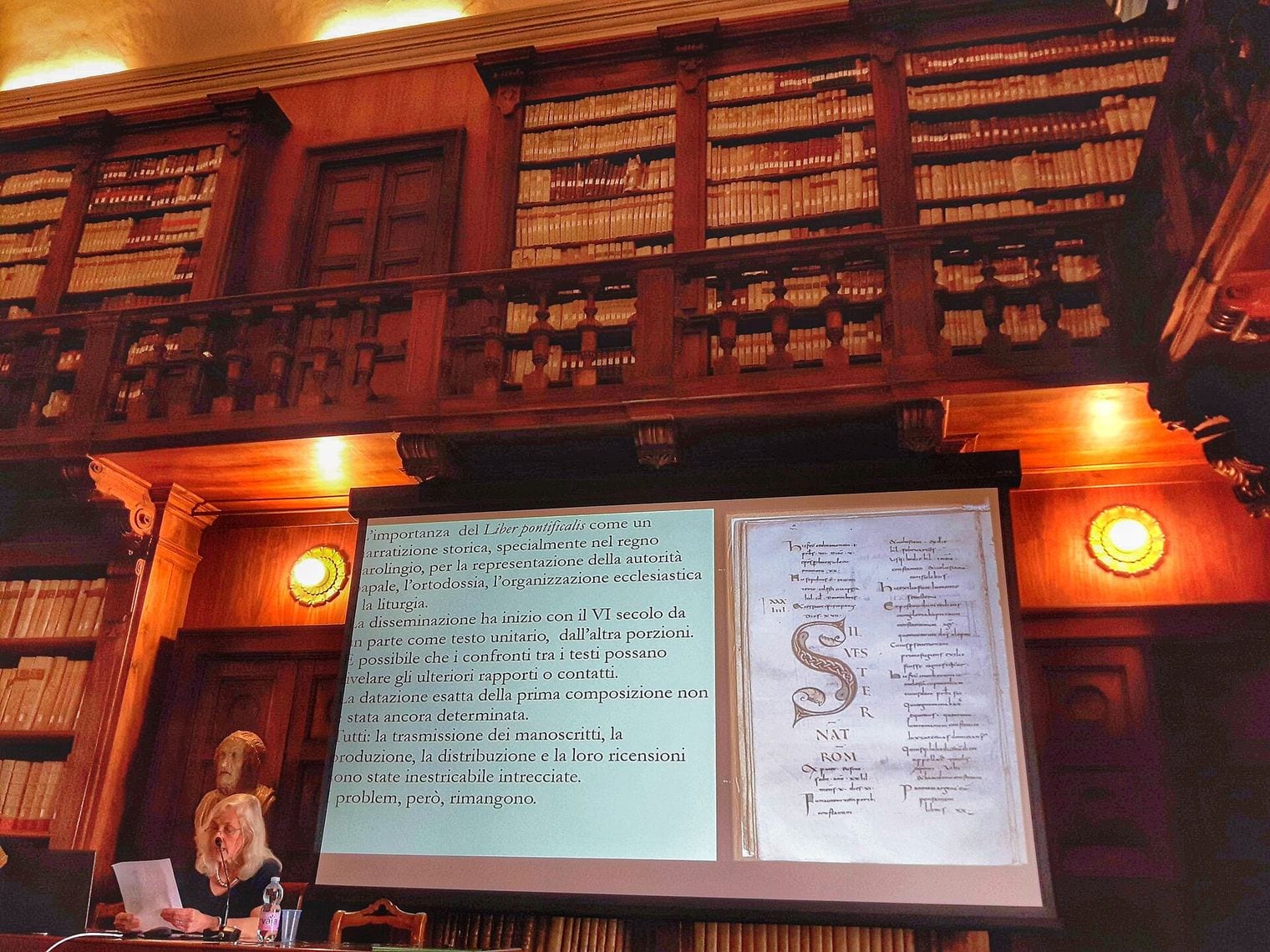
In 517 a cleric named Ursicinus dated the codex he had copied in Verona, and that date is the earliest certain record of the Chapter Library of Verona, the oldest library on this list. The cathedral's school for priests and its scriptorium grew up together beside the Duomo, and the library still belongs to the cathedral chapter; it traces its roots further back, but 517 is the first year written down.
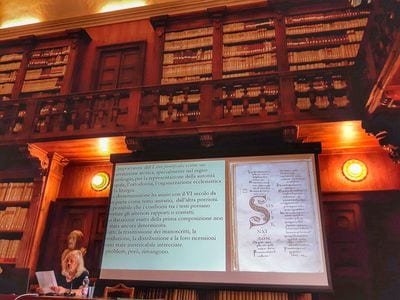
Its great age of copying came in the early ninth century under Pacificus, whose epitaph credits him with making 218 manuscripts, a figure once taken for poetic exaggeration and now accepted as an exact count. Some of its parchments were scraped and reused, and beneath the letters of Saint Jerome scholars found a Roman law textbook, the Institutes of Gaius, and Pliny the Elder's Natural History.
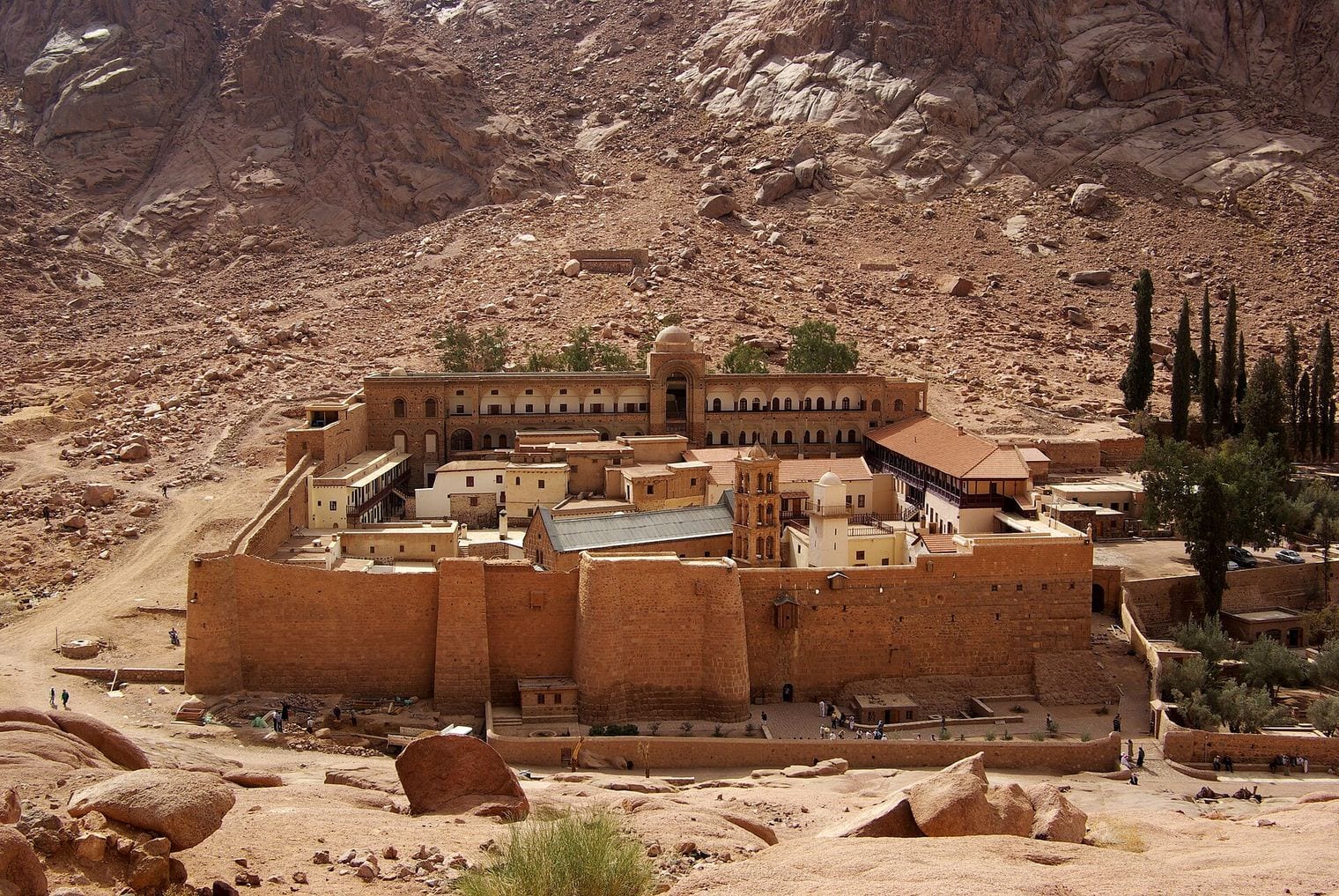
22. Saint Catherine's Monastery
Saint Catherine, South Sinai Governorate, Egypt
established at the time of the construction of the monastery, between 527 and 565 CE, on the orders of Byzantine Emperor Justinian I
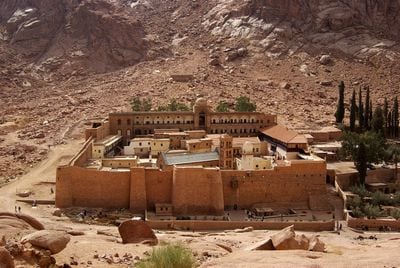
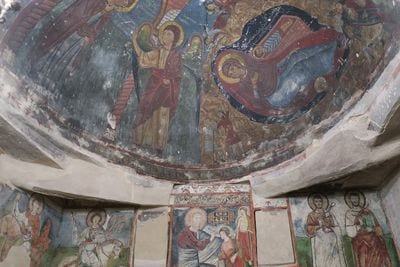
Founded between 527 and 565, when Emperor Justinian I had the monastery built at the foot of Mount Sinai, the library of Saint Catherine's Monastery is the one Guinness World Records names the world's oldest continuously operating library. It ranks second here only because Verona's record carries an earlier exact date.
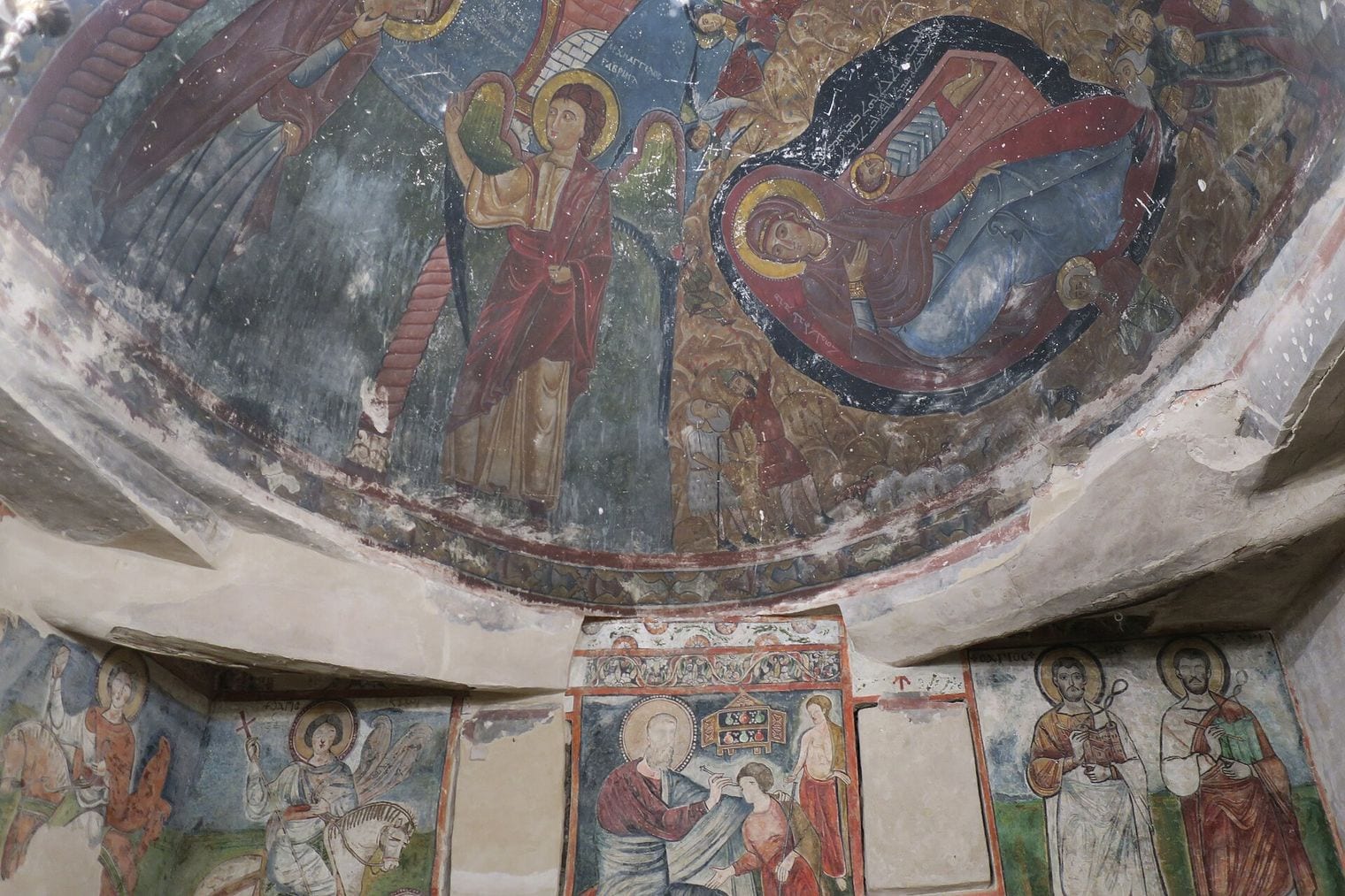
The library is famed for manuscripts such as the Codex Sinaiticus and the Syriac Sinaiticus, and the monastery also keeps early Christian icons, among them the earliest known depiction of Christ Pantocrator. Run by the Greek Orthodox monks of the autonomous Church of Sinai, the walled monastery encloses the Chapel of the Burning Bush and became a UNESCO World Heritage Site in 2002 for its importance to Judaism, Christianity and Islam.
33. Capitular Library of Monza
Duomo di Monza, Monza, Lombardy, Italy
La prima testimonianza scritta di codici appartenenti alla basalica risale al 603
The first record of books at the basilica of Monza dates from 603, when Pope Gregory the Great wrote to the Lombard queen Theodelinda about his gift of a Gospel book, and that letter is the starting point of the Capitular Library of Monza. It is the first record of books there rather than a founding charter, and the basilica's chapter of canons still keeps the library today.
Theodelinda is believed to have founded the church as a royal chapel, just northeast of Milan, and the Gospel book itself is lost. A jewelled cover traditionally linked to the pope's gift survives in the Duomo's treasury, which also holds the Iron Crown of Lombardy and a Late Antique ivory diptych of about 500.
44. St. Peter's Abbey Library, Salzburg
St. Peter-Bezirk 1, Salzburg, Austria
oldest codex kept in the monastery, the Verbrüderungsbuch written in 784
The oldest book kept at St. Peter's Abbey in Salzburg is its Verbrüderungsbuch, a confraternity book that Bishop Virgil deposited in 784, and that volume is the earliest dated evidence of St. Peter's Abbey Library, whose own founding year is not recorded. It is counted as the oldest library in Austria.
Saint Rupert founded the abbey in 696, and it is the oldest monastery in the German-speaking world with a continuous history since its foundation. Among its roughly 800 manuscripts the confraternity book, which lists the names of monks and benefactors to be remembered in prayer, is still the most precious.
55. Monastery of the Syrians
Wadi El Natrun, Beheira Governorate, Egypt
He acquired for the monastery a 6th-century copy of the Peshitta, the Syriac Bible, from a family of Tikrit in 906 or 907.
In 906 or 907 the Monastery of the Syrians in Egypt's Wadi El Natrun acquired a 6th-century copy of the Peshitta, the Syriac Bible, from a family of Tikrit, the first dated evidence of its library; sources place the start between 906 and 932. The Coptic Orthodox monastery takes its name from the Syriac monks who used it from the 8th to the 14th century, after merchants from Tikrit bought it.
Its library grew most under one of those monks, Moses of Nisibis, who travelled to Baghdad in 927 to ask the caliph to exempt the monasteries from tax, then searched Syria and Mesopotamia for books and came home three years later with 250 Syriac manuscripts. The monastery stands in the Nitrian Desert northwest of Cairo, one of the historic desert monasteries of Wadi El Natrun.
Get new guides like this by email
One email every Thursday with our newest guides for the places you tick.
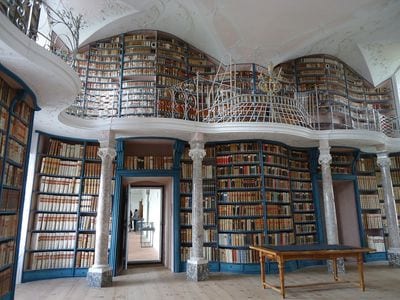
The library of Einsiedeln Abbey was founded in 934, the abbey itself states, and the Benedictine monks of this Swiss monastery still run it more than a thousand years later. By the mid-10th century the abbey also had its own writing school, and 64 manuscripts from that first period survive in Einsiedeln Abbey Library today.
The collection runs to around 230,000 printed books and more than 1,200 manuscripts, with the older holdings shelved in a baroque hall that visitors can see on guided tours. The abbey grew from the forest hermitage that Meinrad set up here in 828, and its Black Madonna in the Chapel of Grace draws hundreds of thousands of pilgrims every year.
77. Exeter Cathedral Library
Bishop's Palace (west wing), Cathedral Close, Exeter, Devon, England
Leofric, the first bishop of Exeter, gave the Exeter Book to the cathedral library in 1072 (the library began in his episcopate, 1050-1072)
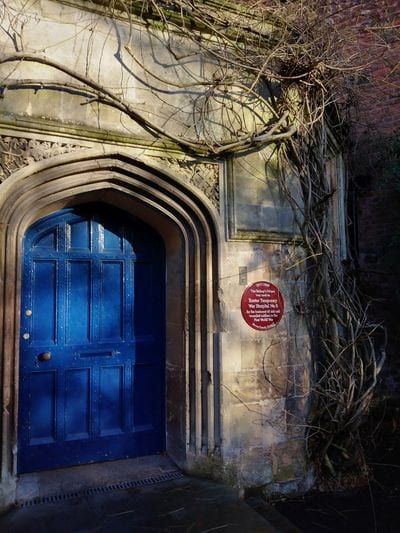
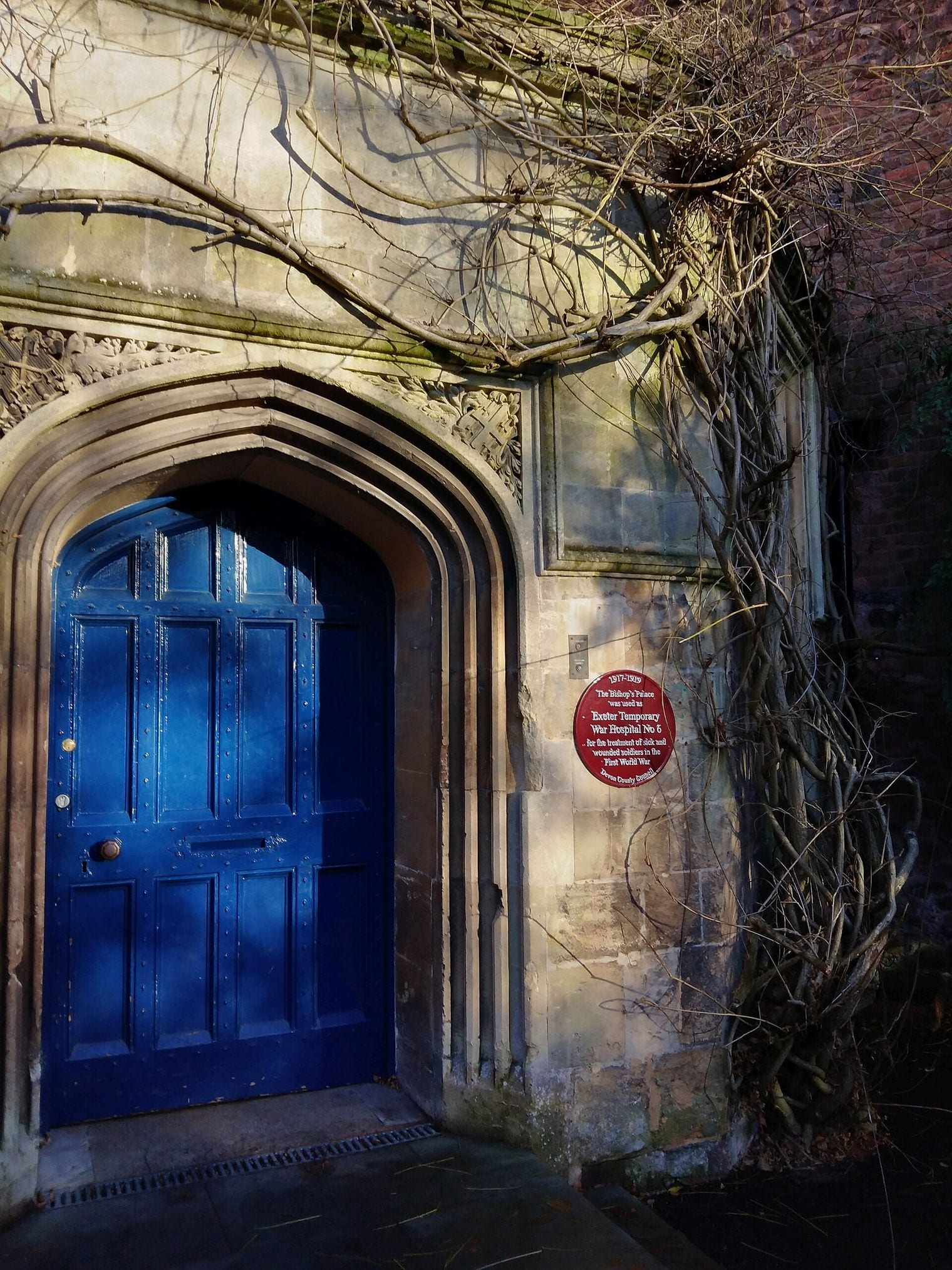
Exeter Cathedral Library dates its oldest treasure to 1072, when Leofric, the first bishop of Exeter, gave his church the Exeter Book of Old English poetry, and the library itself began during his time as bishop. It is the only English library on this list.
Leofric presented 66 books in all, and the Exeter Book is the only one still in the library; 16 others survive in the British Library, the Bodleian Library and Cambridge University Library. The library sits in the west wing of the Bishop's Palace in the Cathedral Close, where the Exeter Book, much admired for its handwriting and the quality of its verse, remains its greatest treasure.
88. Admont Abbey Library
Admont, Styria, Austria
Kloster Admont ... im Jahre 1074 gegründet; mit der Errichtung des Klosters auch Bücher mitgegeben
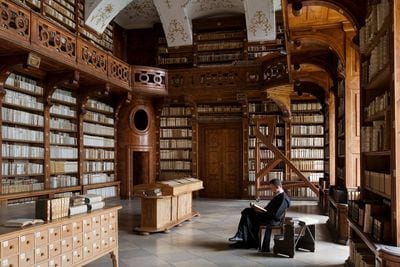
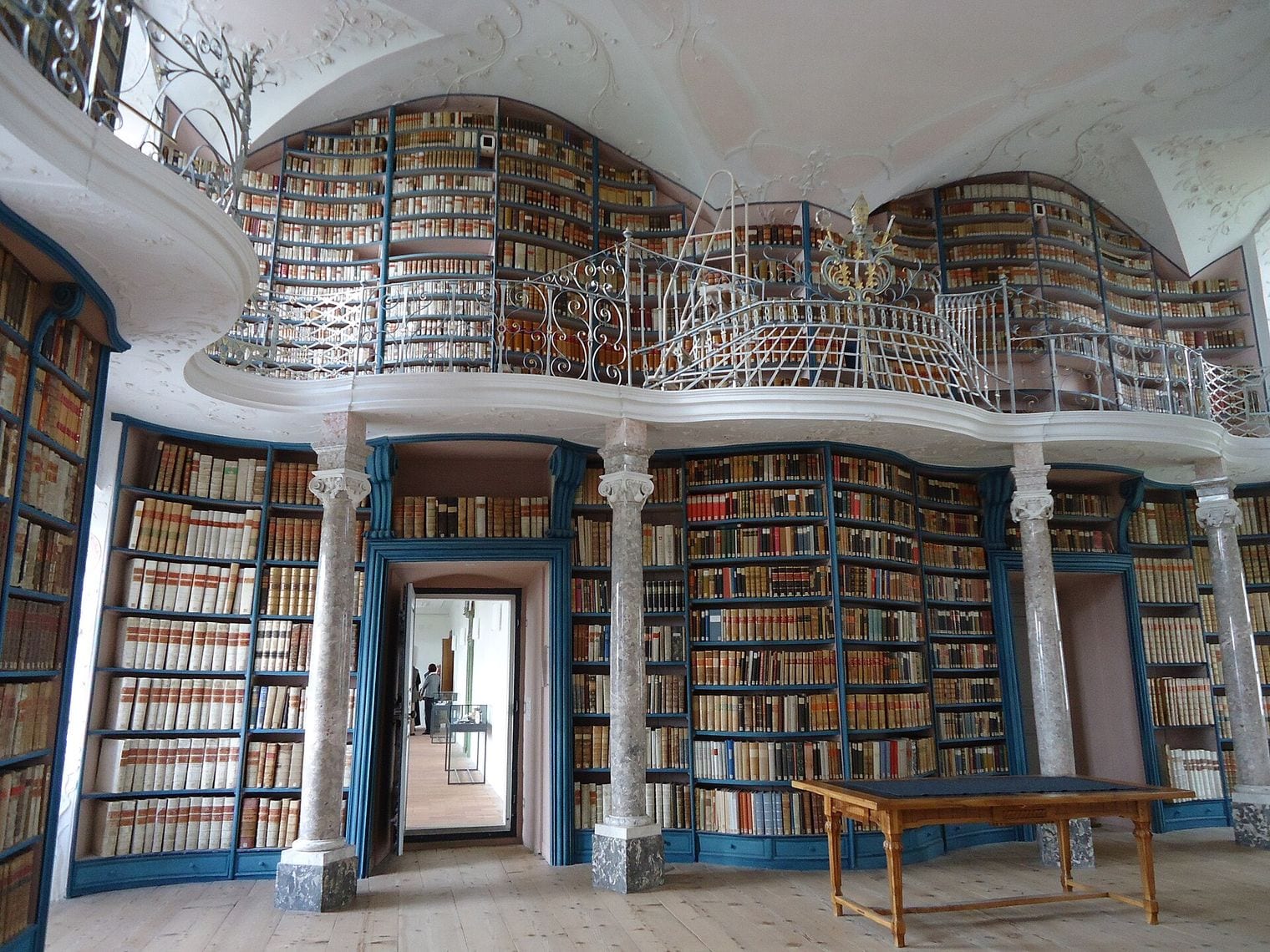
Admont Abbey was founded in 1074 by Archbishop Gebhard of Salzburg, and books came with the monks from the start, so the library of this Benedictine house in Styria is as old as the abbey itself. Admont Abbey Library is now best known for its late-baroque hall, which the abbey calls the largest monastic library in the world.
The hall was completed in 1776 to designs by Joseph Hueber and stretches 70 metres, with seven ceiling frescoes painted by Bartolomeo Altomonte when he was over 80 and sculptures by the abbey's sculptor Josef Stammel. Around 60,000 of the abbey's roughly 200,000 volumes stand on its shelves, and when fire later swept the abbey the archives burned but the library was saved.
Göttweig Abbey Library goes back to 1083, when Bishop Altmann of Passau founded the abbey on its hill near Krems and valuable manuscripts arrived from St. Blasien with the foundation. Altmann set up a monastic school and organised a library, and through the Middle Ages the abbey was a seat of learning.
Today the Benedictine abbey is renowned for its library, which holds a valuable collection of books, manuscripts, coins and antiquities. Its baroque rebuilding gave Göttweig the largest baroque staircase in Austria, the imperial staircase with its celebrated ceiling fresco, and the abbey is part of the Wachau, a UNESCO World Heritage landscape.
1010. Monastery of Saint John the Theologian
Chora, Patmos, Greece
in 1088, the cleric Christodoulos established a monastery on Patmos; the initial Christodoulos collection of 330 manuscript codices was the nucleus of the library
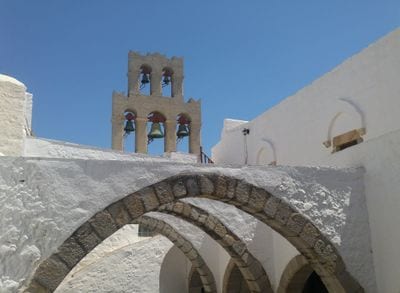
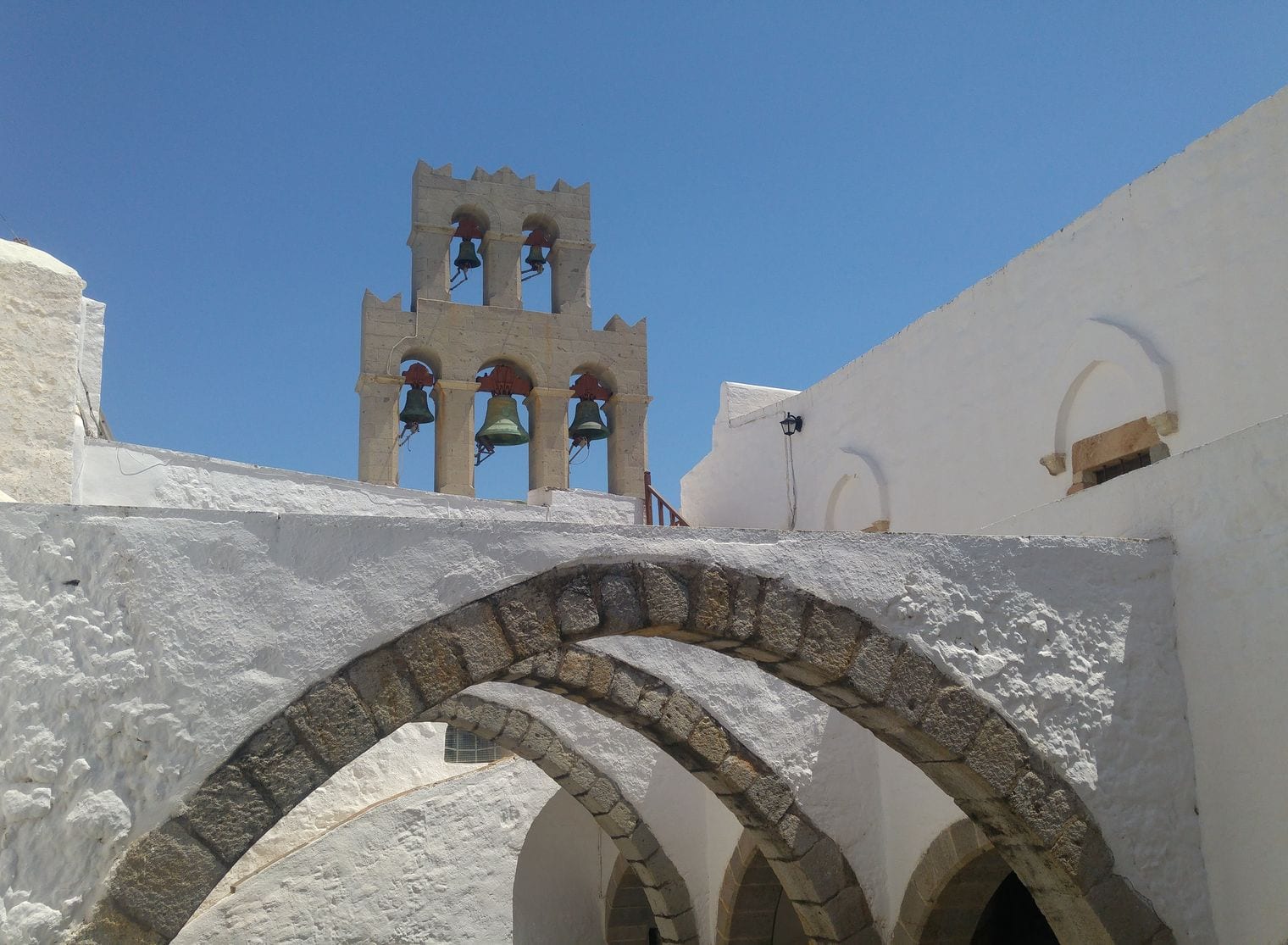
In 1088 the Byzantine emperor Alexios I Komnenos gave the island of Patmos to the monk Christodoulos, who founded the Monastery of Saint John the Theologian there, and his own collection of manuscripts became the core of its library. Sources date the library's start anywhere from 1088 to 1103, so it could rank just behind Melk rather than ahead of it.
The library holds at least 330 manuscripts, 267 of them on parchment, including 82 manuscripts of the New Testament. The monastery rises over the town of Chora and is named after John of Patmos, who according to the Book of Revelation received his visions on the island; with Chora and the nearby Cave of the Apocalypse it became a UNESCO World Heritage Site in 1999.
1111. Melk Abbey Library
Melk, Lower Austria, Austria
seit 1089 ohne Unterbrechung bestehenden Benediktinerkloster
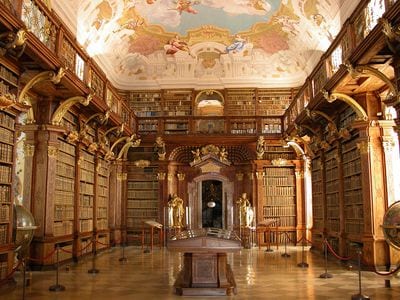
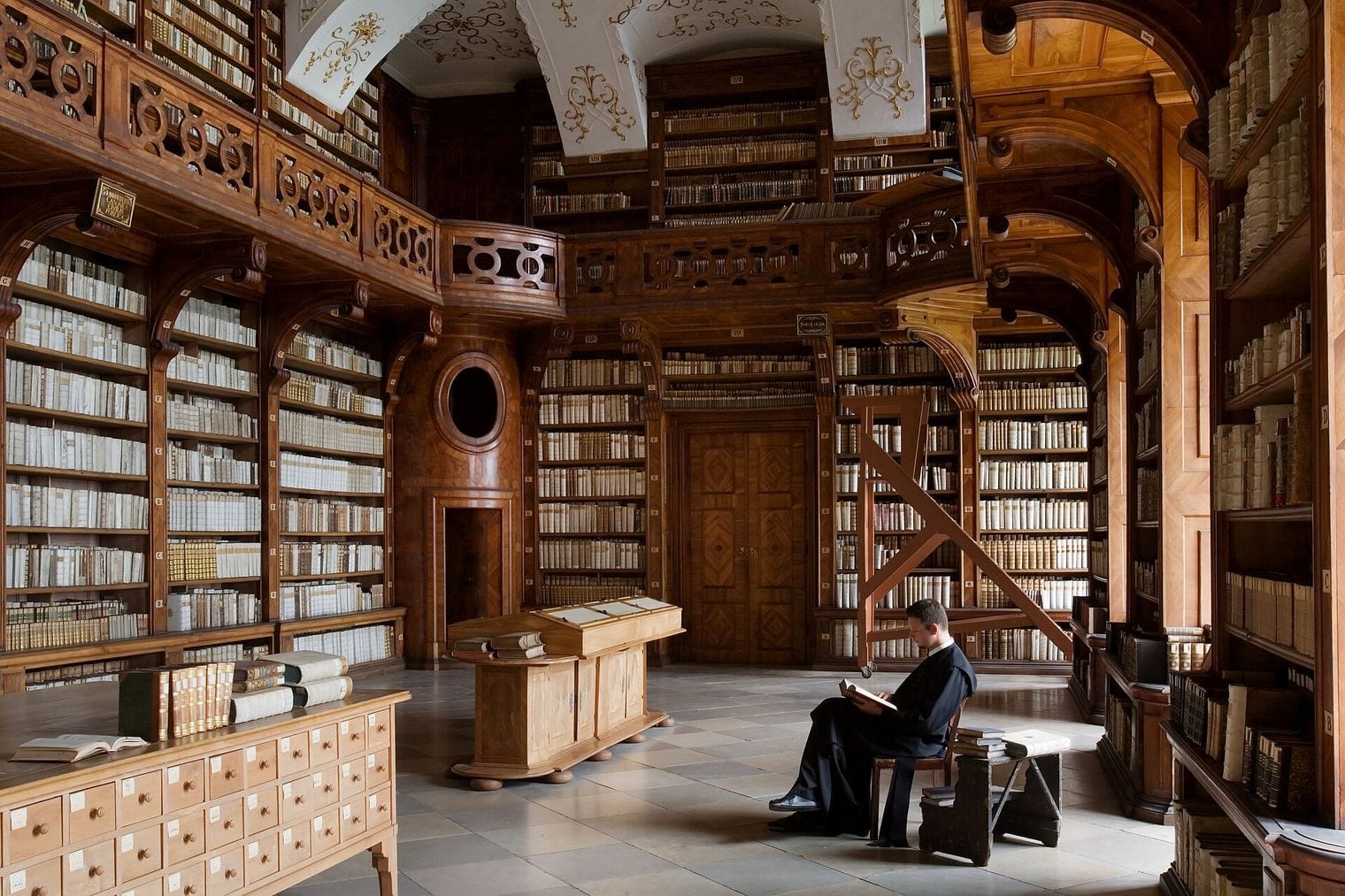
The Benedictine abbey on its rock above the Danube has run without a break since 1089, when Margrave Leopold II gave one of his castles to monks from Lambach Abbey, and the history of Melk Abbey Library is bound up with it from the start. That founding year falls inside the 1088 to 1103 window given for Patmos, so the last two places on this list could swap.
In the Middle Ages the library became renowned for its manuscripts, and the baroque abbey built between 1702 and 1736 to designs by Jakob Prandtauer makes the library hall and the abbey church the highlights of a visit, an easy trip west of Vienna. Umberto Eco named Adso of Melk in The Name of the Rose after the abbey, and in 2019 a researcher found a parchment strip here with lines of the medieval poem Der Rosendorn.
FAQ: The World's Oldest Libraries
What is the oldest library in the world?
Counting only libraries that still work, and the earliest dated evidence for each, it is the Chapter Library of Verona in Italy, documented from a codex copied in 517. Saint Catherine's Monastery in Sinai, founded between 527 and 565, comes second, although Guinness World Records names it the oldest continuously operating library, and the Capitular Library of Monza, first recorded in 603, third.
Isn't Al-Qarawiyyin in Fez the oldest library?
The famous date of 859 belongs to the mosque in Fez that grew into the University of al-Qarawiyyin, not to its library. The Marinid sultan Abu Inan founded the Al-Qarawiyyin Library in 1349, which places it well after Melk's 1089 and outside this list of 11. Lists that call it the oldest library are counting the university's founding year.
Why aren't the Library of Alexandria or Ashurbanipal's library included?
They no longer work as libraries. This list counts only libraries still run by the institution that founded them, so the Library of Ashurbanipal at Nineveh, the Library of Alexandria, the library of Pergamum, the Library of Celsus at Ephesus, Hadrian's Library in Athens and Baghdad's House of Wisdom, all lost or in ruins, sit outside it, as does the Mogao library cave at Dunhuang.
Why isn't the Abbey Library of St Gall on the list?
Its abbey, founded in 719, was dissolved in 1805, and although the books stayed in place, the library counts only from that break, which leaves it far down the order. Durham Cathedral's priory library, from 1083, broke the same way when the priory was dissolved at the Reformation, and Cologne Cathedral's, catalogued in 833, returned to the chapter from the Prussian state only in 1867.
Can you visit the world's oldest libraries?
Several show their halls to visitors: the baroque library of Admont Abbey, the library hall at Melk, an easy trip from Vienna, and Einsiedeln's baroque hall on guided tours. Others are working monastic and cathedral libraries that serve mainly scholars, so check with each institution before you go. More rankings like this sit among our world record breakers.
Sources & updates
How this ranking was checked
Checked before launch
Sources cited
11
Publishers
10
Every figure in this ranking was checked against the record-keeper or official source behind it before publication, and the top of the ranking re-checked live so a newer record would not be missed.
One email every Thursday with our newest guides for the places you tick.
Newsletter
Stay updated with new World Record Breakers
One email every Thursday with our newest guides for the places you tick.
We use cookies to analyse site traffic and improve your experience.
You can accept or reject analytics cookies. See our
May we use analytics cookies? See ourCookie Policy.