We may earn a commission if you book tickets, tours or a stay through a link on
this page, at no extra cost to you. It never affects which places we list or how
we rank them (how we make money).
The record
11,626 years
Göbekli Tepe
Turkey
The record
The oldest monument in the world is Göbekli Tepe, in Turkey — 11,626 years, age.
Source: UNESCO WHS 1572 (inscribed 2018): monumental structures 9,600-8,200 BCE. Verified .
The Great Pyramid of Giza does not make this list. Neither does Stonehenge, nor the Colosseum, nor any pyramid in Egypt or Mexico — every one of them is thousands of years too young. The oldest monuments still standing were raised by people with no writing, no metal tools and, in the two oldest cases here, no farming either.
This countdown ranks them by the start of their documented monumental building phase in calibrated BCE, running from Göbekli Tepe at around 9600 BCE down to Newgrange at 3200 BCE, across ten countries. Two rules decide who qualifies. A monument has to be a monument rather than a settlement, which is why Çatalhöyük is absent.
And it has to still stand where it was built and be open to visitors today — a rule that costs the list Syria's Tell Qaramel, the oldest stone towers on Earth, the drowned Neolithic sites of the Euphrates, and Nabta Playa, whose stones now sit in a museum in Aswan.
The two oldest monuments here were built before farming, pottery or writing existed — the hunter-gatherers who raised Göbekli Tepe and Karahan Tepe quarried and carved multi-tonne limestone pillars without agriculture, metal tools or the wheel.
The Tower of Jericho held the record for the tallest structure on Earth for about 5,500 years — from roughly 8000 BCE until the Pyramid of Djoser rose at Saqqara. Its 22 stone steps are the oldest staircase ever found.
Not one of the 15 stands in the Americas or Africa. Those continents built early and built big, but their oldest monuments all fail the visiting test: Peru’s Sechin Bajo and Louisiana’s Watson Brake are effectively closed to the public, and Egypt’s Nabta Playa stone circle was lifted and moved to a museum in Aswan.
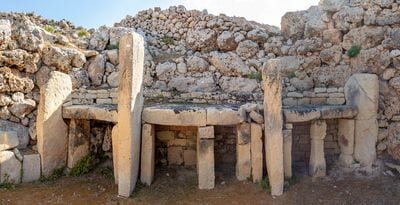
Malta’s temples are the oldest free-standing buildings in the world — Ġgantija went up around 3600 BCE using coralline limestone blocks weighing upwards of fifty tonnes, on an island whose temple-building culture flourished for a thousand years and then vanished.
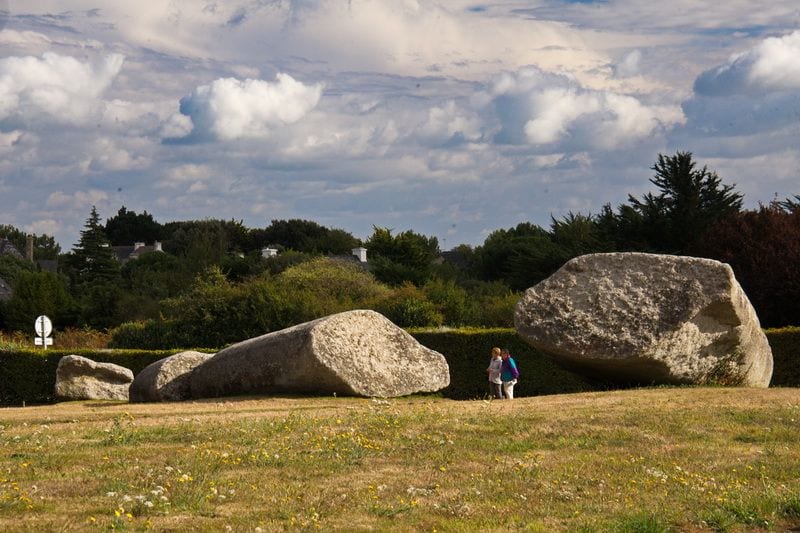
The largest stone ever raised in prehistoric Europe weighed around 280 tonnes — the Grand Menhir Brisé at Locmariaquer, more than 20 metres tall before it fell and broke into four pieces.
Newgrange was engineered as an astronomical instrument. For a few mornings each winter solstice, sunrise passes through the slot above its entrance and lights the burial chamber at the end of a 19-metre passage for about seventeen minutes.
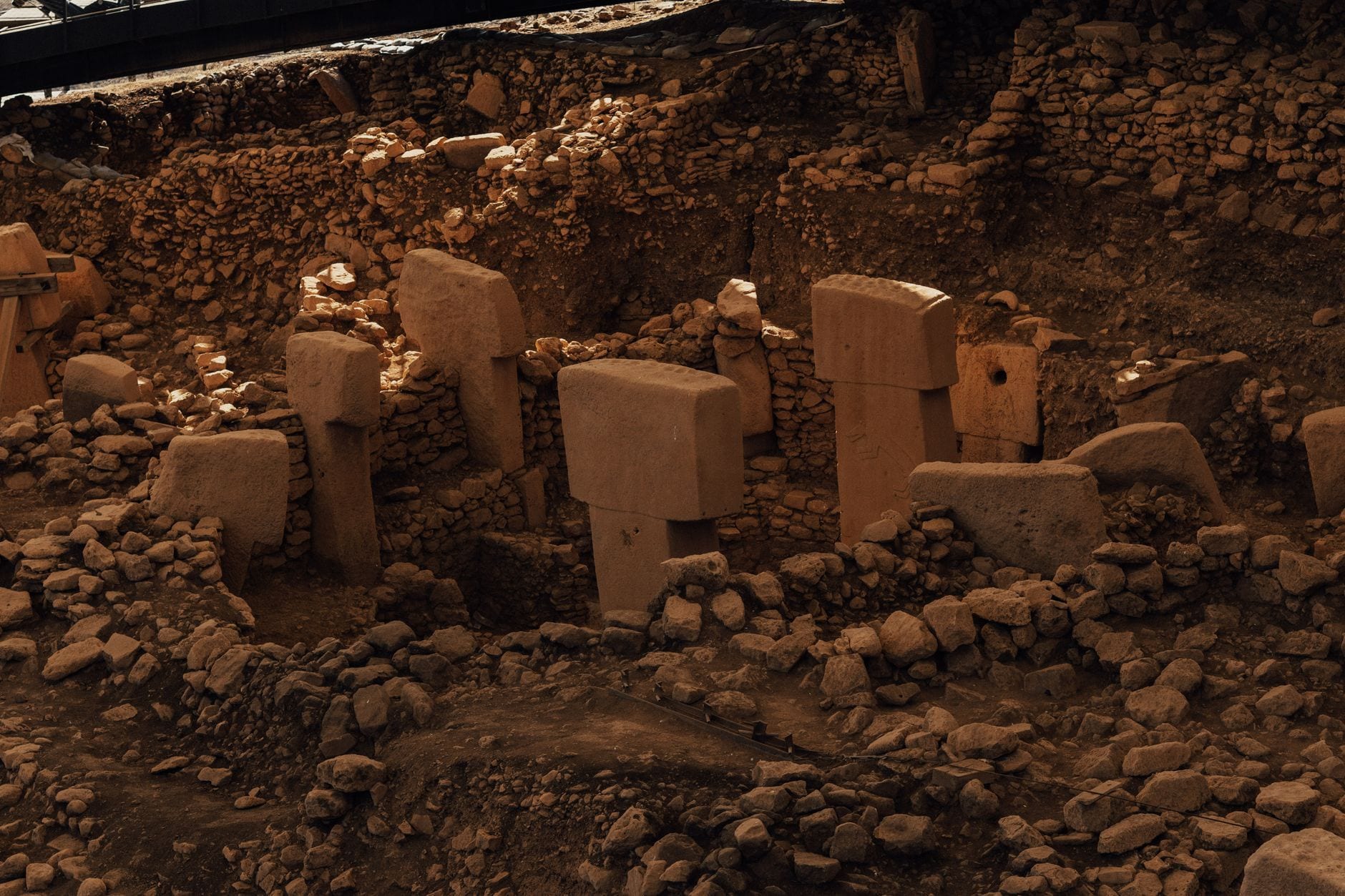
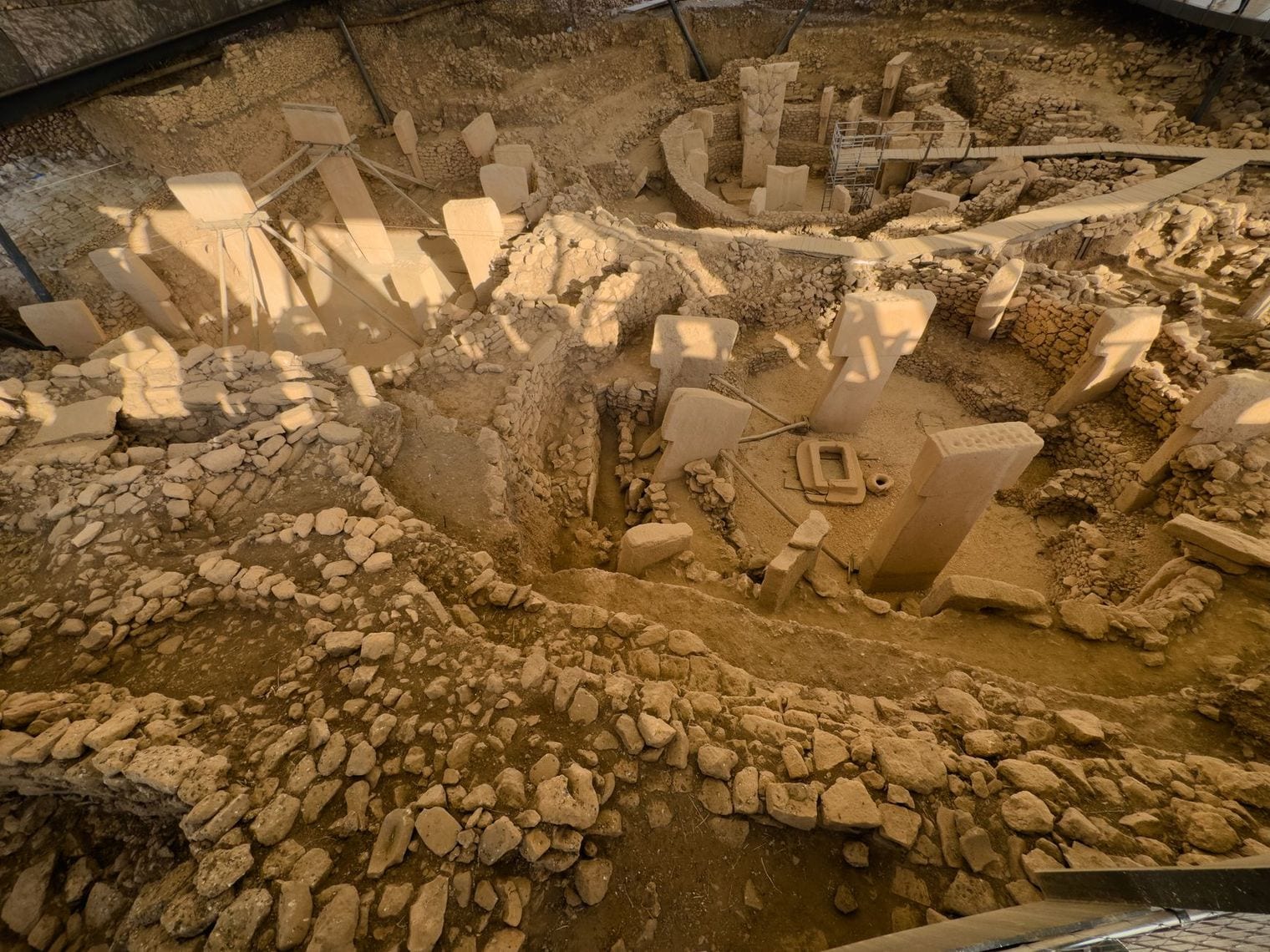
At 11,626 years old, Göbekli Tepe is the oldest monument on Earth and the reason archaeologists rewrote the story of civilisation. UNESCO dates its monumental structures to between 9600 and 8200 BCE, which puts the first enclosures roughly seven thousand years before the Great Pyramid and a full four thousand years before anyone in the region farmed a field.
Hunter-gatherers quarried limestone T-shaped pillars up to 5.5 metres tall, carved them with foxes, boars, cranes and scorpions, and arranged them in great round-oval enclosures on a ridge in the Germuş mountains of south-eastern Turkey.
The site sits above Şanlıurfa under a sweeping modern canopy that lets you walk a raised walkway directly over the excavated enclosures. What makes it genuinely disorienting is the sequence: monumental religion here appears to come first, and settled farming afterwards, inverting the order every textbook once taught.
Excavation has touched only a fraction of the mound, and geophysical surveys in 2026 detected traces of large buildings nearby that may have been lived in — so the site is still actively rearranging what we think we know.
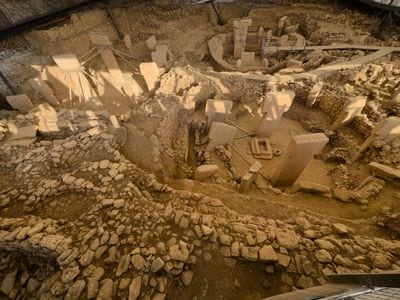
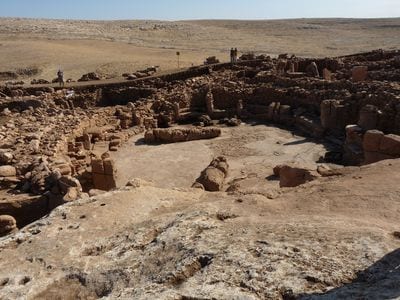
At 11,526 years old, Karahan Tepe is Göbekli Tepe's near-twin and its closest rival for the title. Excavations led by Necmi Karul under Turkey's Taş Tepeler project place its earliest structures in the middle of the Pre-Pottery Neolithic A, and specialists describe the two sites as broadly contemporary; some stratigraphic estimates push Karahan's founding back as far as 9750 BCE, which would make it the older of the pair.
It is ranked second here because Göbekli Tepe's monumental phase carries the firmer published date range, not because the question is settled.
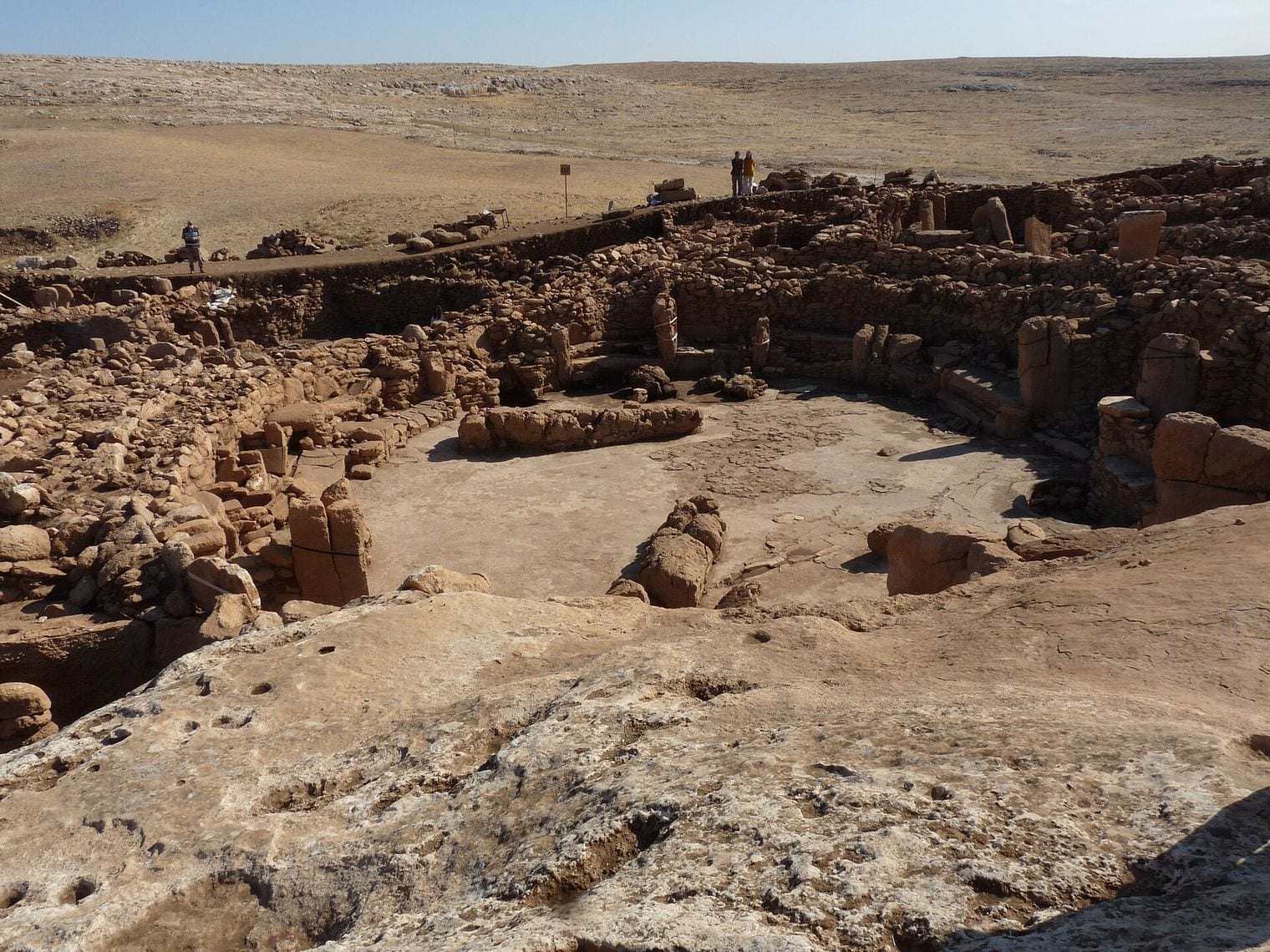
What Karahan Tepe has that its famous neighbour does not is a room carved directly into the bedrock, where eleven pillars rise from the living rock beside a human head sculpted from the same stone, its neck emerging from the wall as though surfacing.
A 28-metre elliptical communal building could hold around two hundred people. The site lies in the Tektek mountains about 46 kilometres east of Göbekli Tepe, and each excavation season keeps producing things nobody expected, including a T-shaped pillar bearing a detailed human face uncovered in 2025.
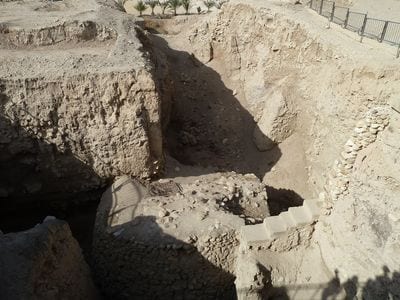
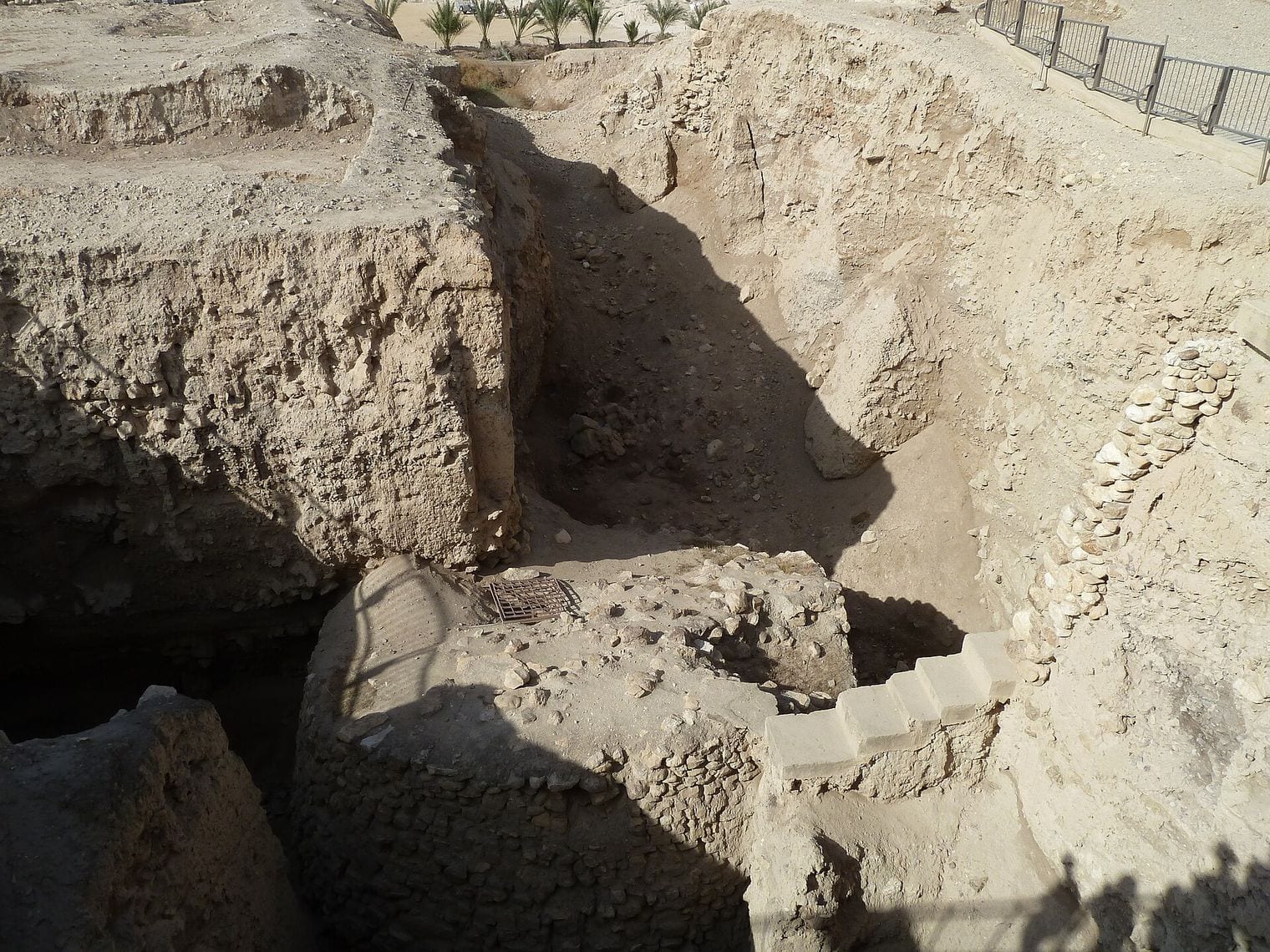
At 10,026 years old, the Tower of Jericho is the oldest monumental structure anyone has ever built inside a town. It stands 8.5 metres tall, a solid cone of undressed stone raised around 8000 BCE against the inner face of Jericho's wall, with twenty-two steps threaded up through its core — the oldest staircase in the world.
For roughly five and a half thousand years afterwards, until the Pyramid of Djoser went up at Saqqara, nothing taller was built anywhere on the planet.
Archaeologists still argue about what it was for. Kathleen Kenyon, who excavated it in the 1950s, read it as defensive, but later work has proposed flood protection, a marker of communal authority, or a ritual platform aligned on the summit of the nearby Quruntul mountain.
It stands at Tell es-Sultan on the edge of modern Jericho in Palestine, which UNESCO inscribed in 2023, and visitors can walk right up to the shaft and look down the stairwell that Neolithic feet cut into it.
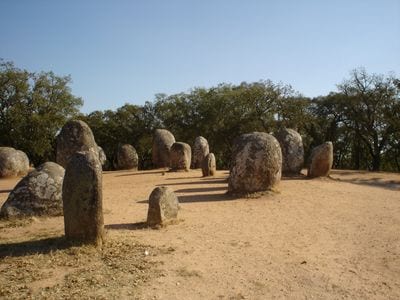
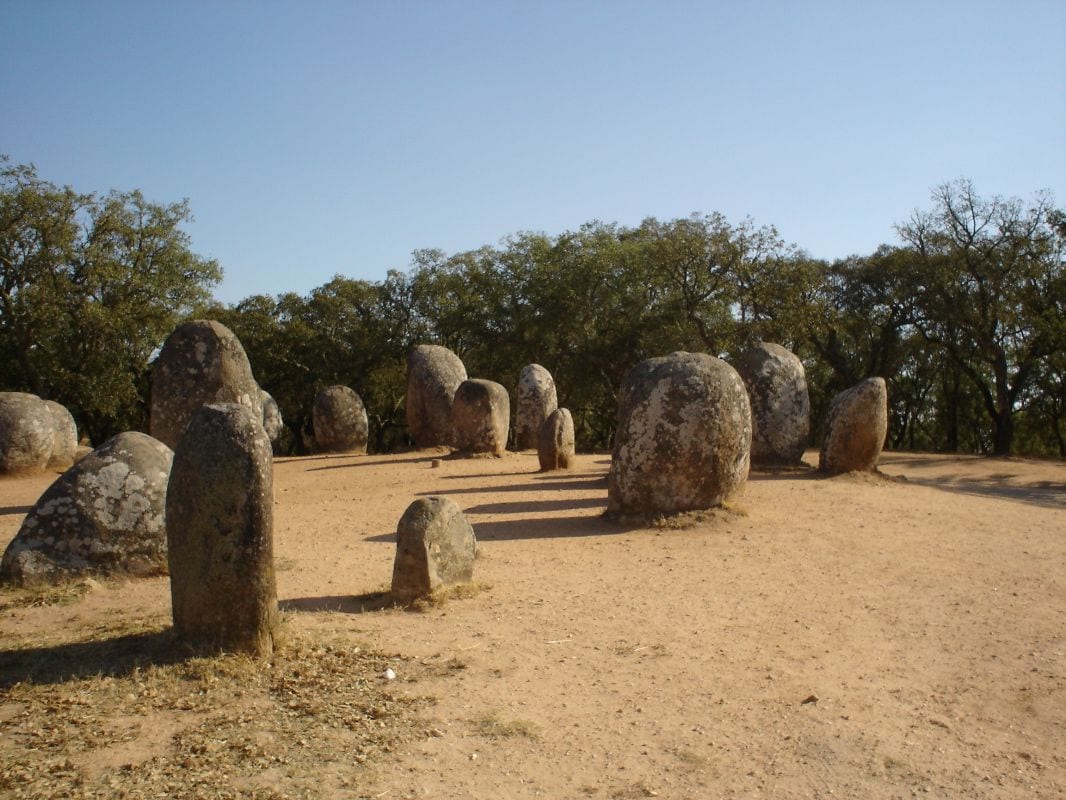
At 8,026 years old, the Almendres Cromlech is Europe's oldest stone circle and it predates Stonehenge by roughly three thousand years. Ninety-five rough granite menhirs stand on a cork-oak slope west of Évora in Portugal's Alentejo, arranged as a circle at the eastern end and a much larger ellipse to the west.
The earliest stones went up around 6000 BCE in the Early Neolithic, and the monument kept being enlarged and rearranged for close to three millennia, which is a longer working life than most cathedrals.
Some of the stones carry faint carved crooks, circles and wavy lines, worn shallow by eight thousand years of Portuguese weather, and the layout appears to be set on solar alignments. Many of the monoliths had toppled before archaeologist Mário Varela Gomes re-erected them in the 1980s, working from their excavated sockets.
It is free to visit and almost never crowded — a dirt track off the Évora road, a handful of parked cars, and a field of standing stones older than any writing system.
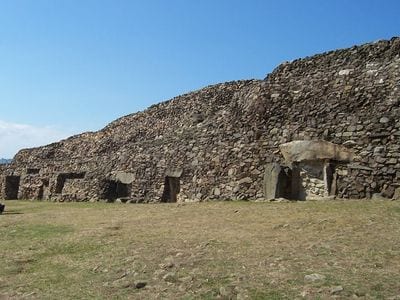
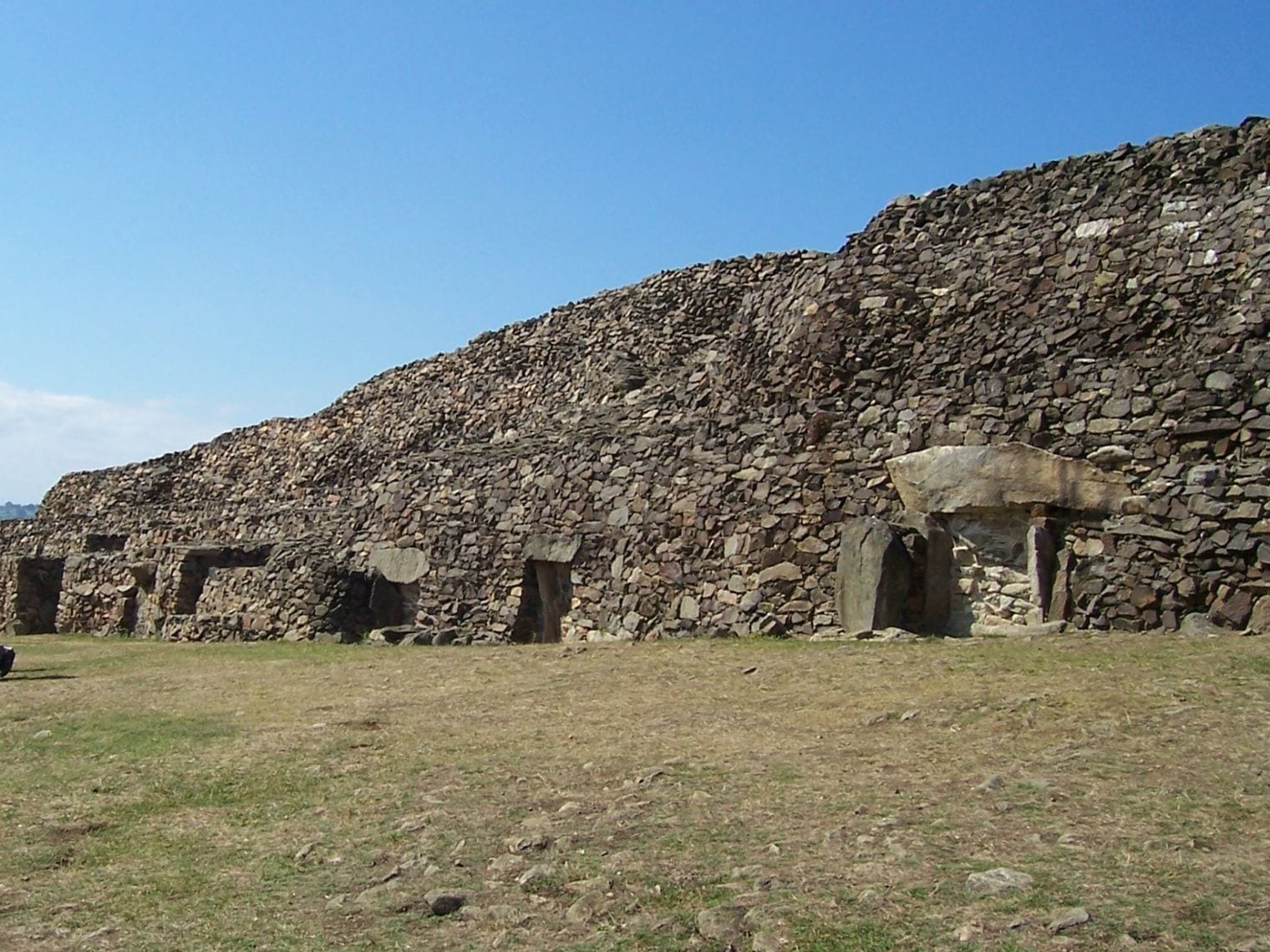
At 6,876 years old, the Cairn of Barnenez is the oldest surviving monument in western Europe and one of the oldest built structures on the continent. It is a stepped mass of dry-stone masonry 72 metres long and 25 metres wide, containing eleven separate burial chambers reached by long passages.
The first phase went up from around 4850 BCE in local dolerite with five chambers; a second phase, from roughly 4450 BCE, added six more in granite. André Malraux, who intervened to save it, called it a prehistoric Parthenon.
That rescue was needed because the cairn was being quarried for road stone in the 1950s, and the damage turned out to be a gift: the cut face exposed the internal chambers in cross-section, so you can see exactly how the thing was assembled. It overlooks the estuary of the Morlaix river in Finistère, Brittany, and its scale is hard to absorb — this is a monument raised a thousand years before the Egyptians built anything at all.
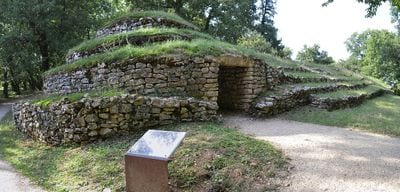
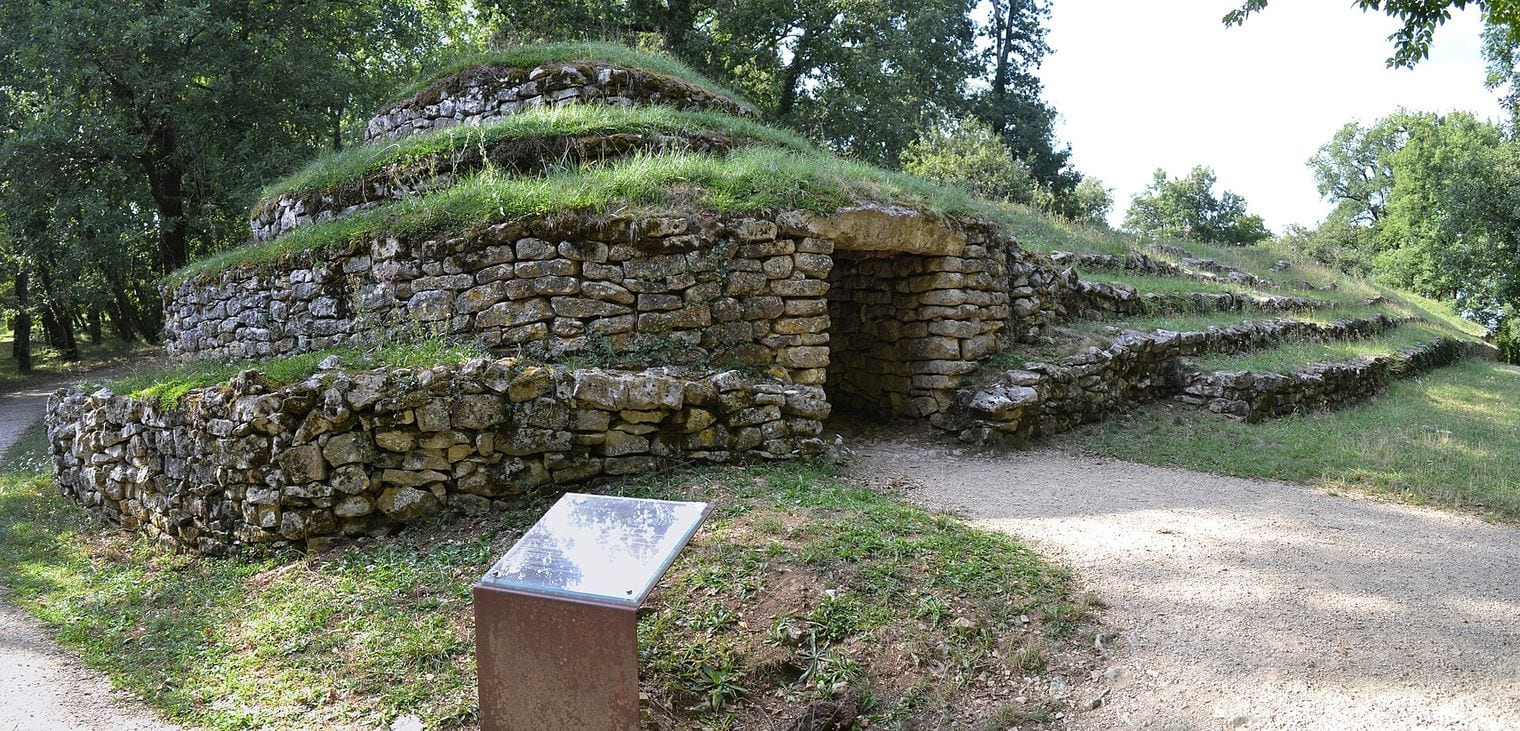
At 6,826 years old, the Tumulus of Bougon is a necropolis of five megalithic mounds in the Deux-Sèvres countryside of western France, the oldest of them — mounds E1 and F0 — dated to around 4800 BCE. The group was in use across roughly 1,200 years, from about 4700 to 3500 BCE, and the mounds differ enough in plan and construction to read as a catalogue of how Neolithic tomb-building evolved in Atlantic France.
The site was found in 1840 and its excavation caused a sensation, though nineteenth-century methods destroyed a good deal of what they uncovered. Mound A alone held around 220 burials.
A museum opened beside the site in 1993, built into an old farmhouse, and it does something unusual: alongside the finds it documents experimental archaeology carried out here, including trials that dragged multi-tonne stones with wooden rollers and ropes to test how the capstones were moved. The mounds are a short walk away across open fields.
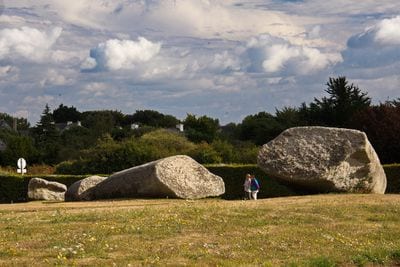
At 6,726 years old, the Locmariaquer megaliths include the largest single stone ever raised by prehistoric Europeans. The Grand Menhir Brisé stood more than 20 metres tall and weighed around 280 tonnes when it was erected about 4700 BCE — it now lies broken in four pieces, and how it fell is still disputed between deliberate demolition and earthquake.
Quarrying, shaping and standing a granite block that size, without draft animals or the wheel, remains one of the least explained feats in European prehistory.
Beside it sits the Table des Marchands, a passage grave whose capstone is a fragment of another giant menhir, its underside carved with an axe and a plough — meaning these people were already recycling monuments older than themselves.
Locmariaquer sits at the mouth of the Gulf of Morbihan in Brittany, a few kilometres from the Carnac alignments, and in July 2025 UNESCO inscribed the whole megalithic landscape as the Megaliths of Carnac and the Shores of Morbihan, Brittany's first World Heritage site.
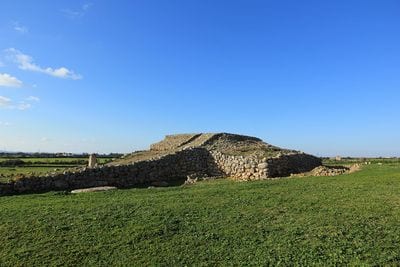
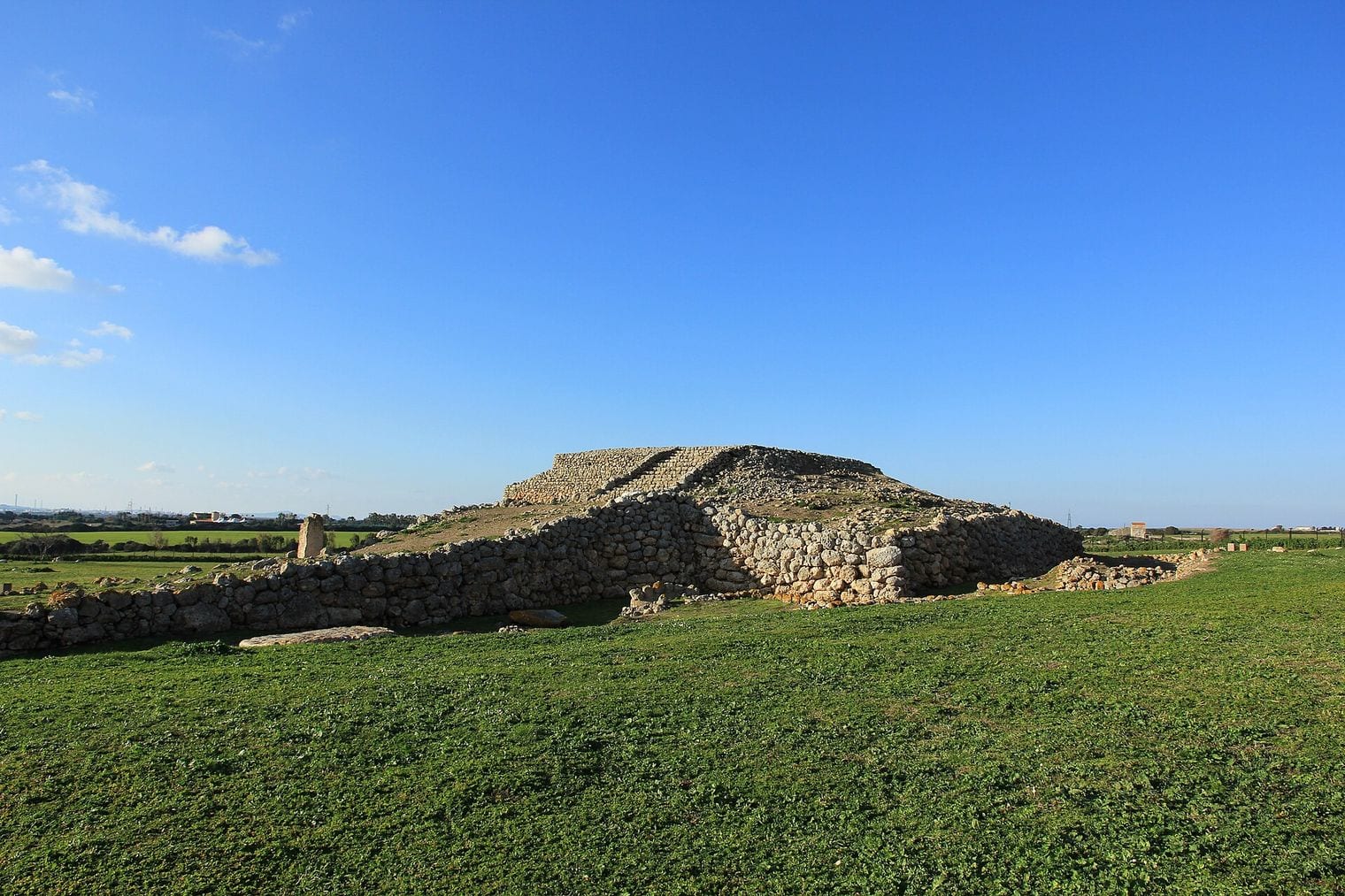
At 6,026 years old, Monte d'Accoddi is the strangest monument in Europe: a stepped stone platform on the plain outside Sassari in northern Sardinia that looks unmistakably like a Mesopotamian ziggurat, built by people who had no contact with Mesopotamia whatsoever.
The oldest phase dates from around 4000 BCE and formed a platform roughly 27 metres square rising about 5.5 metres. Between 3500 and 3000 BCE the whole thing was buried under earth and stone and a second, larger terrace built on top, reaching some 36 by 29 metres and around 10 metres high.
A long ramp climbs the front of it, and scattered around the base are a menhir, a dolmen and a great slab of limestone pitted with cup-marks that is usually read as a sacrificial table. Nothing else like it survives anywhere in the western Mediterranean. It was discovered in 1954 in a farmer's field, sits a short drive north of Sassari on the road to Porto Torres, and is open to visitors for a small charge.
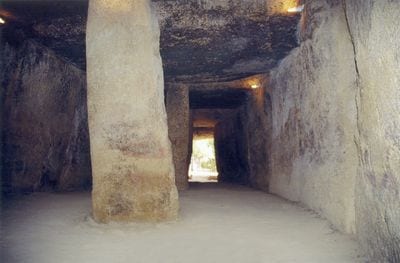
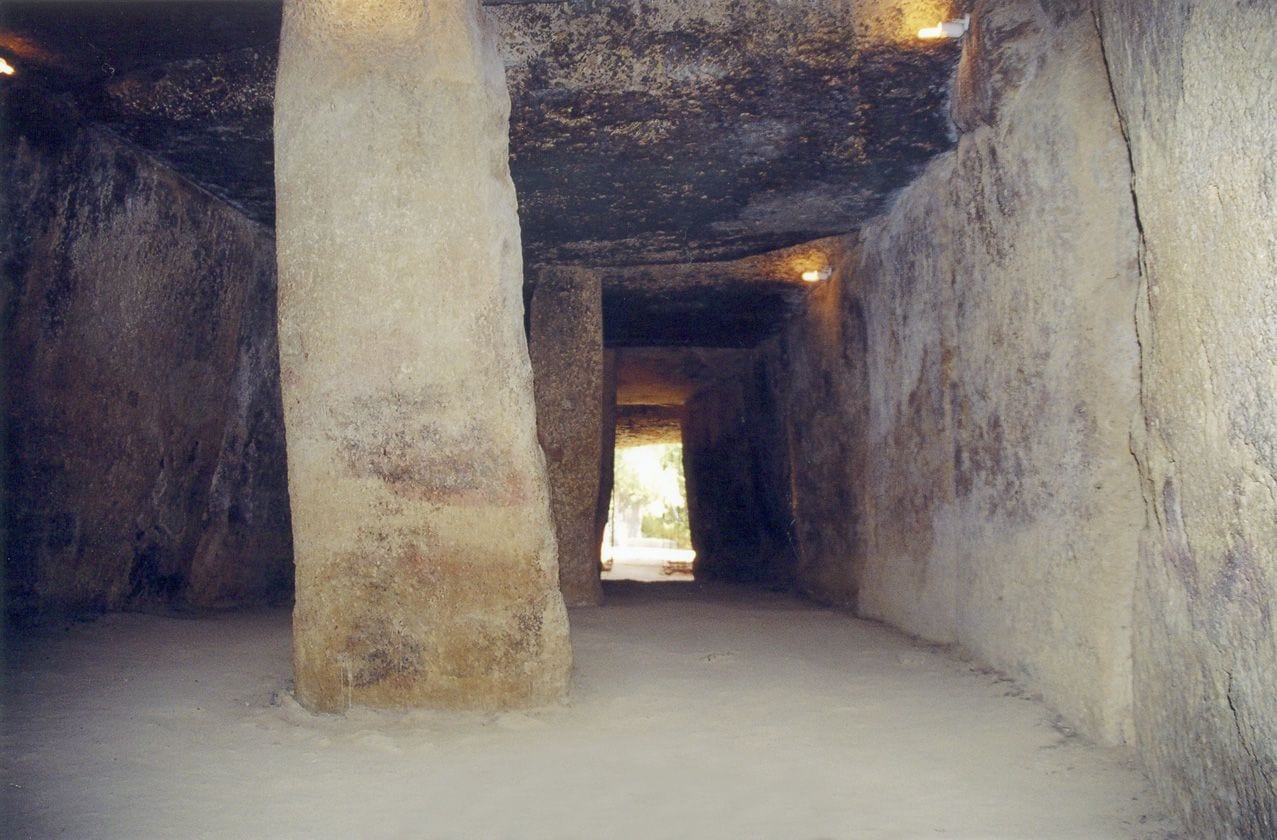
At 5,826 years old, the Dolmen of Menga is the most colossal stone monument of its age anywhere in Europe. Built around 3800 BCE at Antequera in Andalusia, its chamber runs 27.5 metres long, 6 metres wide and 3.5 metres high, roofed by five enormous capstones — the largest weighing roughly 150 to 180 tonnes, which is heavier than anything at Stonehenge by a factor of several.
A 2024 study in Science Advances traced the stones to a source about a kilometre away and argued the build required load-bearing calculations and friction management amounting to early engineering science.
Menga also breaks the rules of its own tradition. Almost every Iberian dolmen faces the sunrise; this one is oriented instead on La Peña de los Enamorados, the human-profile mountain that dominates the skyline to the north-east. A deep well was sunk into the floor of the chamber itself. Menga, its neighbour Viera and the tholos of El Romeral form the Antequera Dolmens Site, inscribed by UNESCO in 2016 and free to enter.
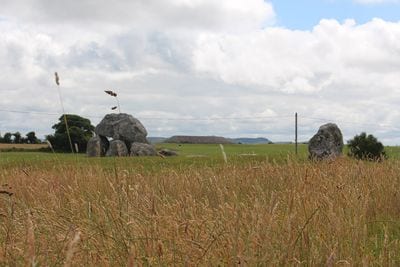
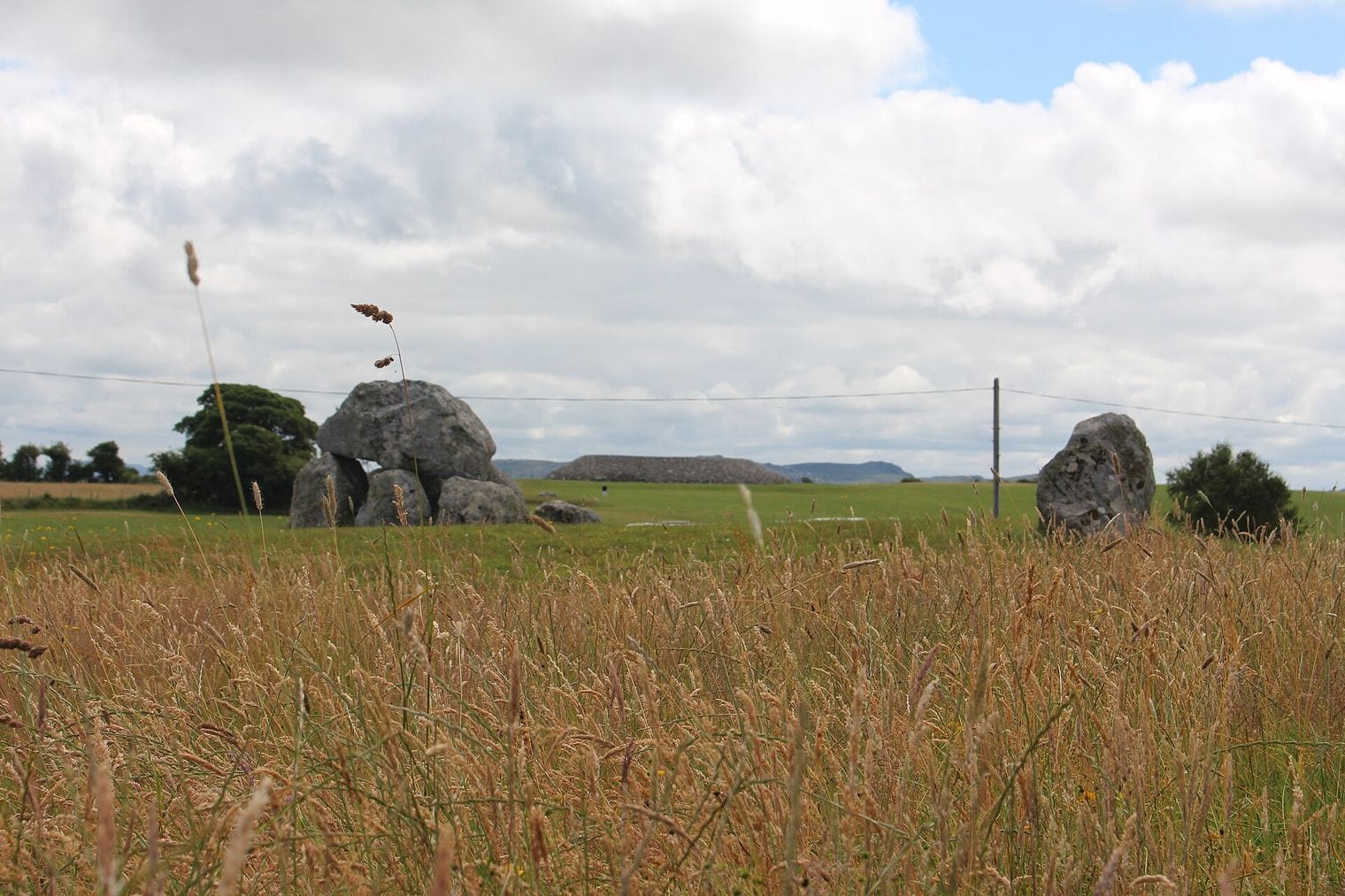
At 5,776 years old, Carrowmore is the largest and oldest cluster of megalithic tombs in Ireland, spread across a low limestone plateau in County Sligo beneath the flat-topped mountain of Knocknarea.
Around thirty monuments survive of the fifty-odd on record, most of them small dolmen-circles: a boulder circle enclosing a simple chamber of upright stones under a capstone. The satellite tombs are dated to roughly 3800 to 3700 BCE, which makes them among the earliest passage tombs anywhere in the Irish tradition and older than Newgrange by several centuries.
At the centre stands Listoghil, the one large cairn in the group, built around 3500 BCE and the only tomb here where megalithic art and unburnt burials have both been found — cremation was the norm at the other monuments. The whole cemetery is arranged around it, and the surrounding hills carry more tombs on almost every summit. The Office of Public Works runs a visitor centre on site with a walking route through the fields between the monuments.
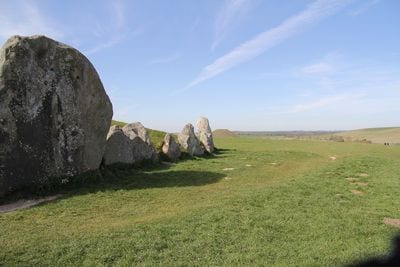
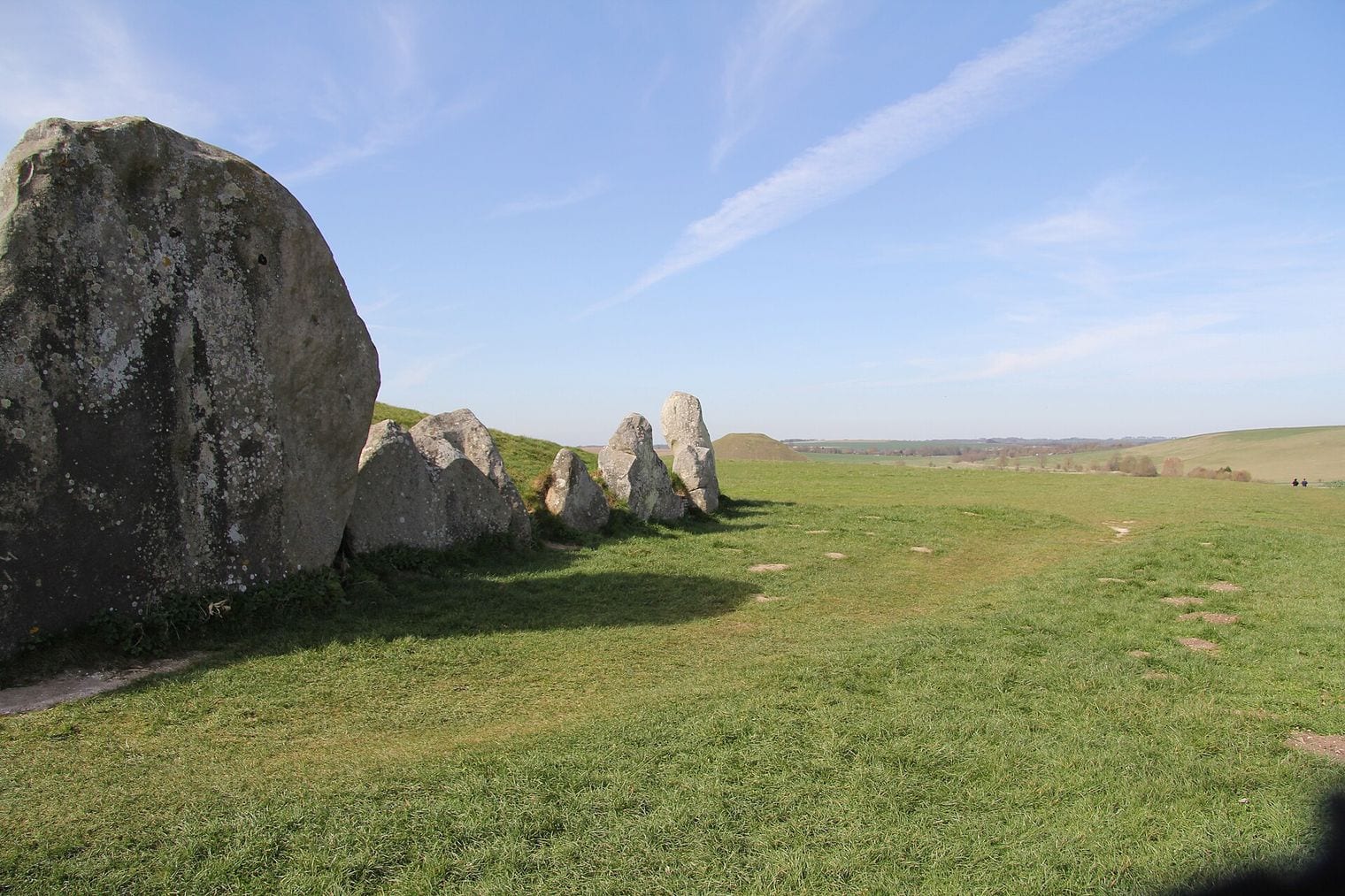
At 5,676 years old, West Kennet Long Barrow is one of the largest and best-preserved Neolithic chambered tombs in Britain, raised around 3650 BCE on a chalk ridge above the Kennet valley in Wiltshire.
The earthen mound runs about 100 metres east to west, and at its eastern end a facade of huge sarsen boulders screens a passage with five stone chambers opening off it. Bayesian modelling of the primary burials narrows the first interments to a span of only a few decades in the thirty-seventh century BCE.
The remains of at least forty-six people were placed inside, and the bones had been sorted — skulls and long bones grouped separately, some removed entirely. After roughly a thousand years of use the passage was deliberately blocked with rubble and the great sarsens dragged across the entrance to seal it.
It stands a short uphill walk from the road, inside the Avebury World Heritage landscape and within sight of Silbury Hill, and it is free to enter and open at any hour.
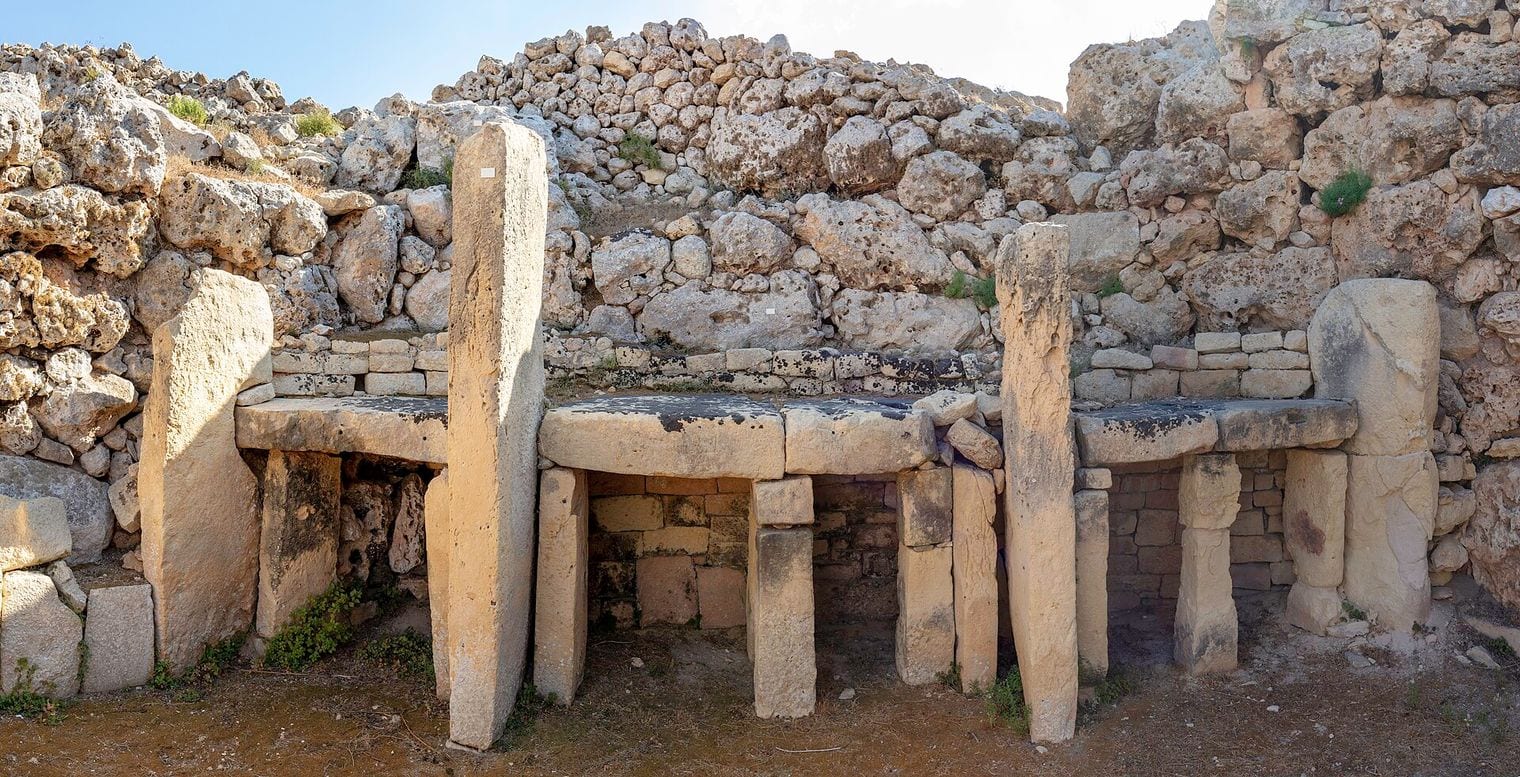
At 5,626 years old, Ġgantija is the oldest of Malta's megalithic temples and among the oldest free-standing buildings anywhere in the world. Its South Temple, the larger and older of the two structures inside a shared boundary wall, was raised around 3600 BCE on the Xagħra plateau on Gozo.
The builders used coralline limestone blocks reaching over five metres and weighing upwards of fifty tonnes, laid out in the lobed apses that define the Maltese temple plan, and they did it without metal tools or the wheel.
The name comes from the Maltese word for giant: local tradition held that a giantess who lived on beans and honey carried the stones up from the coast and built the place in a single night while nursing a child.
That the temples are the work of an isolated island culture that flourished for a thousand years and then vanished makes them stranger still. Ġgantija was inscribed by UNESCO in 1980 and has a modern interpretation centre, with the temples reached along a raised walkway.
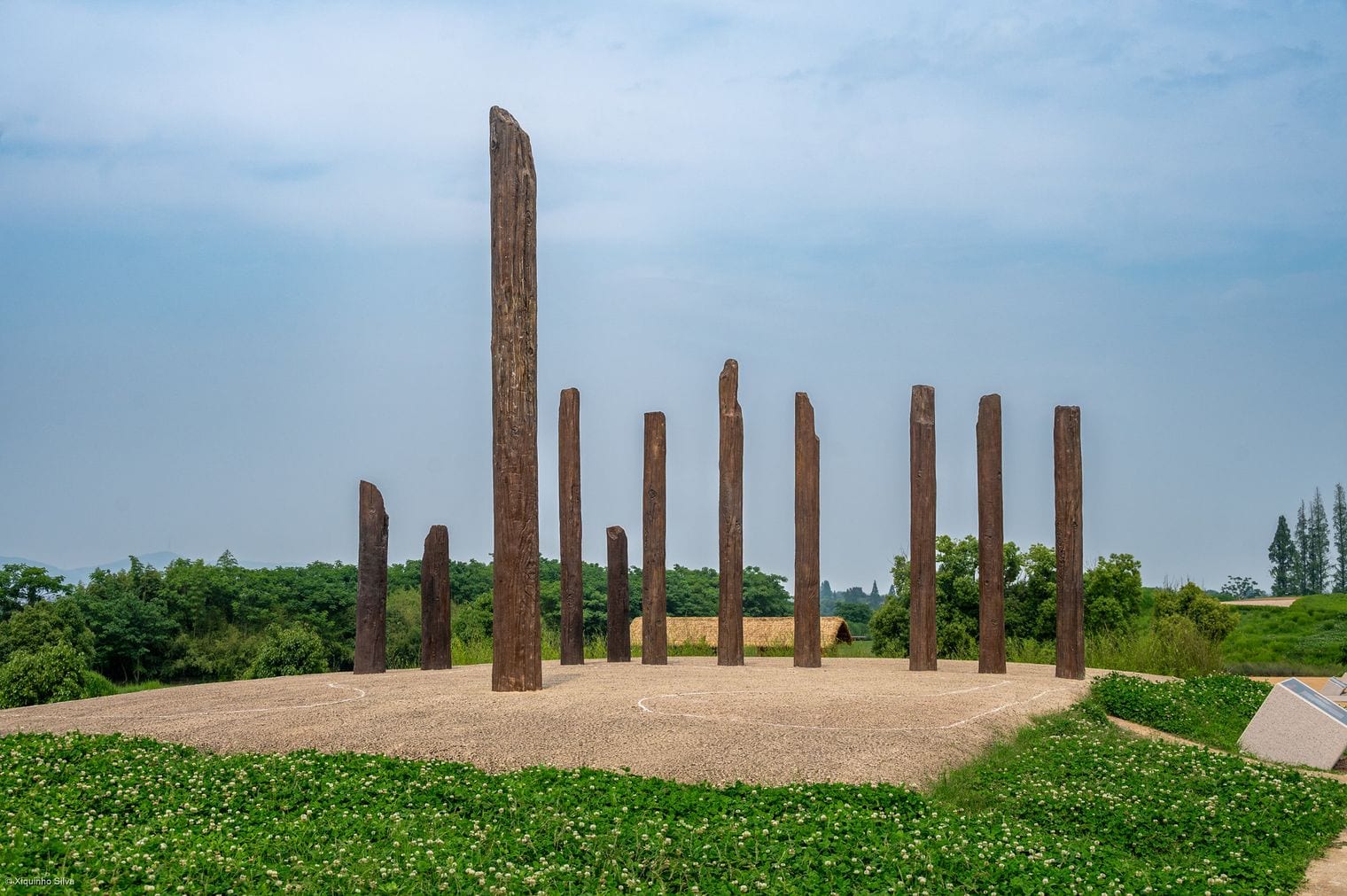
At 5,526 years old, Niuheliang is the oldest ritual monument in East Asia and the earliest ancestral temple discovered in China. Built around 3500 BCE by the Hongshan culture, it sprawls across roughly 50 square kilometres of ridgeline in Liaoning province, and what makes it exceptional is what is missing: no dwellings, no domestic rubbish, no evidence anyone lived here.
Sixteen separate locations carry stone-built platform altars, cairn burial mounds and the semi-subterranean structure known as the Goddess Temple, and nothing else.
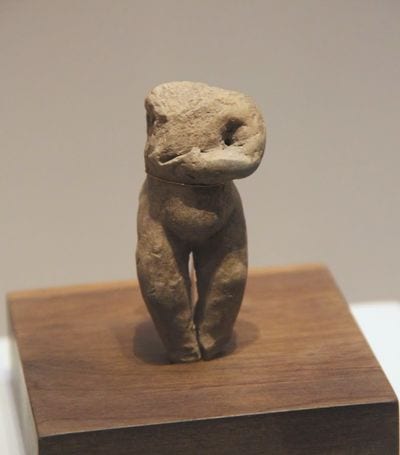
That temple gave up a life-size clay female head with jade discs inlaid as eyes, along with fragments of figures several times human size. The graves beneath the cairns held jade alone — coiled dragon-pigs, cloud-shaped plaques, hoop ornaments — with no pottery or tools among the offerings, a burial practice found nowhere else at this date.
Niuheliang is on UNESCO's tentative list as part of the Sites of Hongshan Culture, and the national archaeological site park reopened in 2024 with galleries built over the Goddess Temple and the altars.
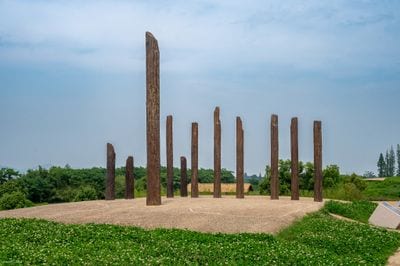
At 5,326 years old, Liangzhu City is the oldest large-scale hydraulic monument on Earth. Raised from around 3300 BCE in the Yangtze delta near Hangzhou, its outer works comprise eleven dams, levees and reservoirs — the earliest water-conservancy system of this scale anywhere, capable of holding back floods and moving stone by boat across the wetlands.
At the centre sits Mojiaoshan, an artificial terraced platform covering nearly 300,000 square metres and standing 12 to 16 metres above the plain, on which the elite compounds were built.
Moving that much earth demanded organised labour on a scale that forced a rethink of when complex society began in China, pushing the date back by well over a thousand years.
The Liangzhu are best known for their jade: cong tubes and bi discs carved with a mask-and-beast motif so fine the incisions are barely visible without magnification. UNESCO inscribed the ruins in 2019, and the site is presented as an archaeological park in Yuhang district, with the main jade collection in a museum a few kilometres away.
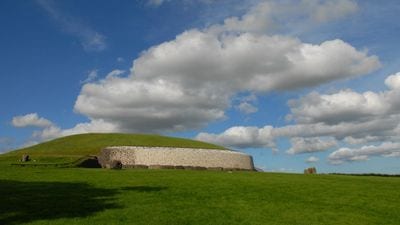
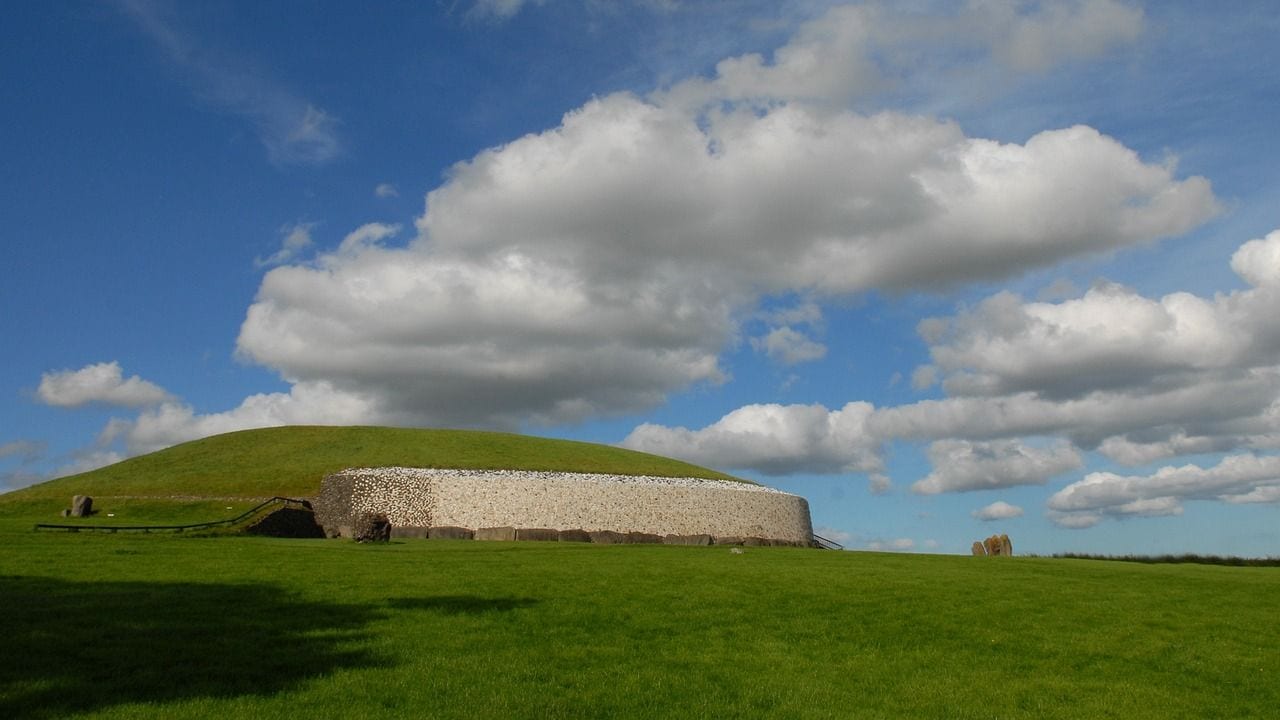
At 5,226 years old, Newgrange is the most famous passage tomb in the world and the finest surviving demonstration that Neolithic builders understood astronomy precisely.
Constructed around 3200 BCE in the bend of the Boyne in County Meath, the mound covers about an acre, retained by a kerb of ninety-seven boulders — several of them, including the great entrance stone, carved with the spirals and lozenges that define Irish megalithic art. A 19-metre passage runs in to a cruciform chamber roofed by a corbelled vault that has stayed watertight for five thousand years.
Above the entrance sits a slot known as the roof-box. For a few mornings around the winter solstice, sunrise sends a beam through it that travels the length of the passage and lights the chamber floor for about seventeen minutes. Newgrange is the centrepiece of the Brú na Bóinne World Heritage site, inscribed in 1993, and access is by guided tour from the visitor centre; solstice places are allocated by an annual public lottery.
FAQ: The World’s Oldest Monuments
What is the oldest monument in the world?
Göbekli Tepe in south-eastern Turkey, whose monumental enclosures UNESCO dates to between 9600 and 8200 BCE. That makes the first of them roughly 11,600 years old, built by hunter-gatherers who had no farming, no pottery and no writing. Its neighbour Karahan Tepe is close enough in age that the order may yet change.
Is Göbekli Tepe really older than the pyramids and Stonehenge?
Yes, and not narrowly. Its first enclosures predate the Great Pyramid of Giza by around 7,000 years and Stonehenge by about 6,600. The gap between Göbekli Tepe and the pyramids is far wider than the gap between the pyramids and the present day, which is why the site forced a rethink of early prehistory.
Why isn’t Stonehenge on this list?
Because it is too young. Stonehenge’s first phase, a ditch and bank enclosure, dates to around 3000 BCE, which places it behind every monument in this countdown, including Newgrange at 3200 BCE. Famous does not mean old: most of the world’s best-known monuments are thousands of years younger than the ones ranked here.
What is the oldest monument in the Americas?
The circular plaza at Sechin Bajo in Peru, radiocarbon-dated to about 3500 BCE, with the mound complex at Watson Brake in Louisiana built around the same time. Neither appears here because neither is genuinely open to visitors: Watson Brake sits on part-private land, and Sechin Bajo is an active excavation.
How do archaeologists date monuments this old?
Mainly by radiocarbon-dating organic material sealed in the construction layers, then calibrating those raw readings against tree-ring records to convert them into calendar years BCE. Stratigraphy and tool typology cross-check the result. Every date on this list is a calibrated range, which is why they are given as approximate rather than exact years.