The record
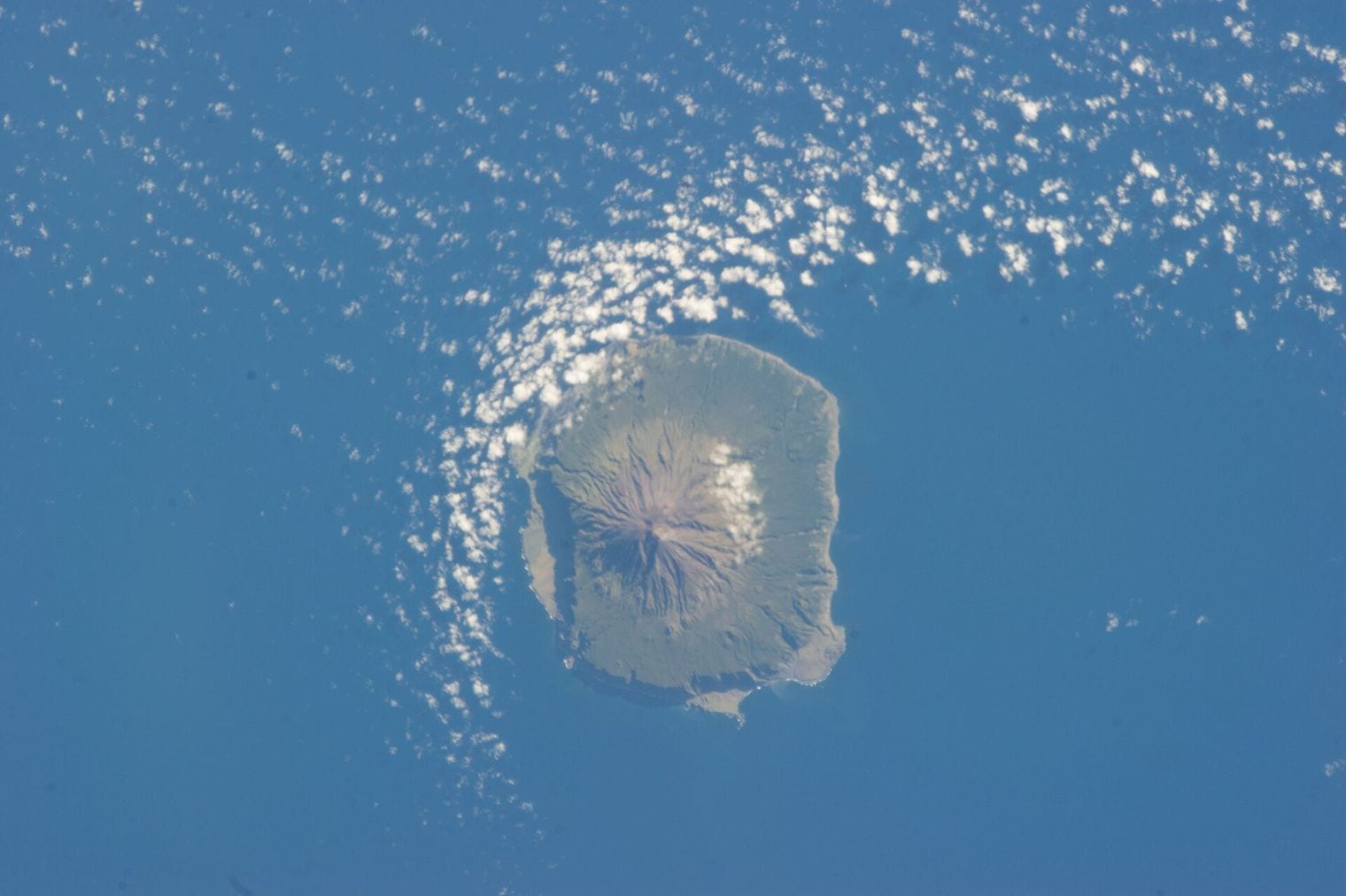
The remotest inhabited island in the world is Tristan da Cunha, in the United Kingdom — 2,439 km (1,516 mi), distance to the nearest inhabited land.
Source: Wikipedia/Wikidata coordinates, great-circle computed; corroborated by the published Edinburgh-Jamestown figure of 2,434 km. Verified .
Ask which island is the most remote and someone will say Pitcairn — fifty people, a mutiny, a speck in the South Pacific. It does not make this list. Pitcairn's nearest neighbours, on Mangareva, are 540 km away, closer than any of the ten islands below.
Remoteness here is a single number: the great-circle distance from an inhabited island to the nearest permanently inhabited land outside its own group, running from 858 km at Svalbard to 2,439 km at Tristan da Cunha. Two rules settle the rest. Distance is measured group to group, so the Cocos (Keeling) Islands count as one place rather than two islets seven kilometres apart.
And inhabited means a settled civilian community, which rules out the weather station on Gough Island — 350 km from Tristan, and the reason Tristan keeps its title — along with Kerguelen, Diego Garcia and Ascension, where nobody holds the right to live.
Fun Facts About the World’s Remotest Inhabited Islands
Tristan da Cunha has no airstrip, and never has had one — the only way onto the world’s remotest inhabited island is a boat from Cape Town, roughly a week each way.
An uninhabited island 350 km away is the reason Tristan holds its title — Gough Island is far closer than Saint Helena, but its only occupants are the crew of a weather station, so it does not count as inhabited land.
Kiritimati is the first inhabited place on Earth to begin each new day — the Line Islands run on UTC+14, the furthest-forward time zone in use anywhere.
Nobody has the right to live on Ascension Island — it has around 800 residents, a school and a council, but every one of them is there on a work contract, which is why it is absent from this list.
Citizens of more than forty countries can move to Svalbard without a visa — the 1920 Svalbard Treaty grants equal right of residence and work to every signatory nation.
Bermuda is not in the Caribbean — it sits in the North Atlantic at roughly the same latitude as South Carolina, and its reefs are the northernmost in the Atlantic.
11. Tristan da Cunha
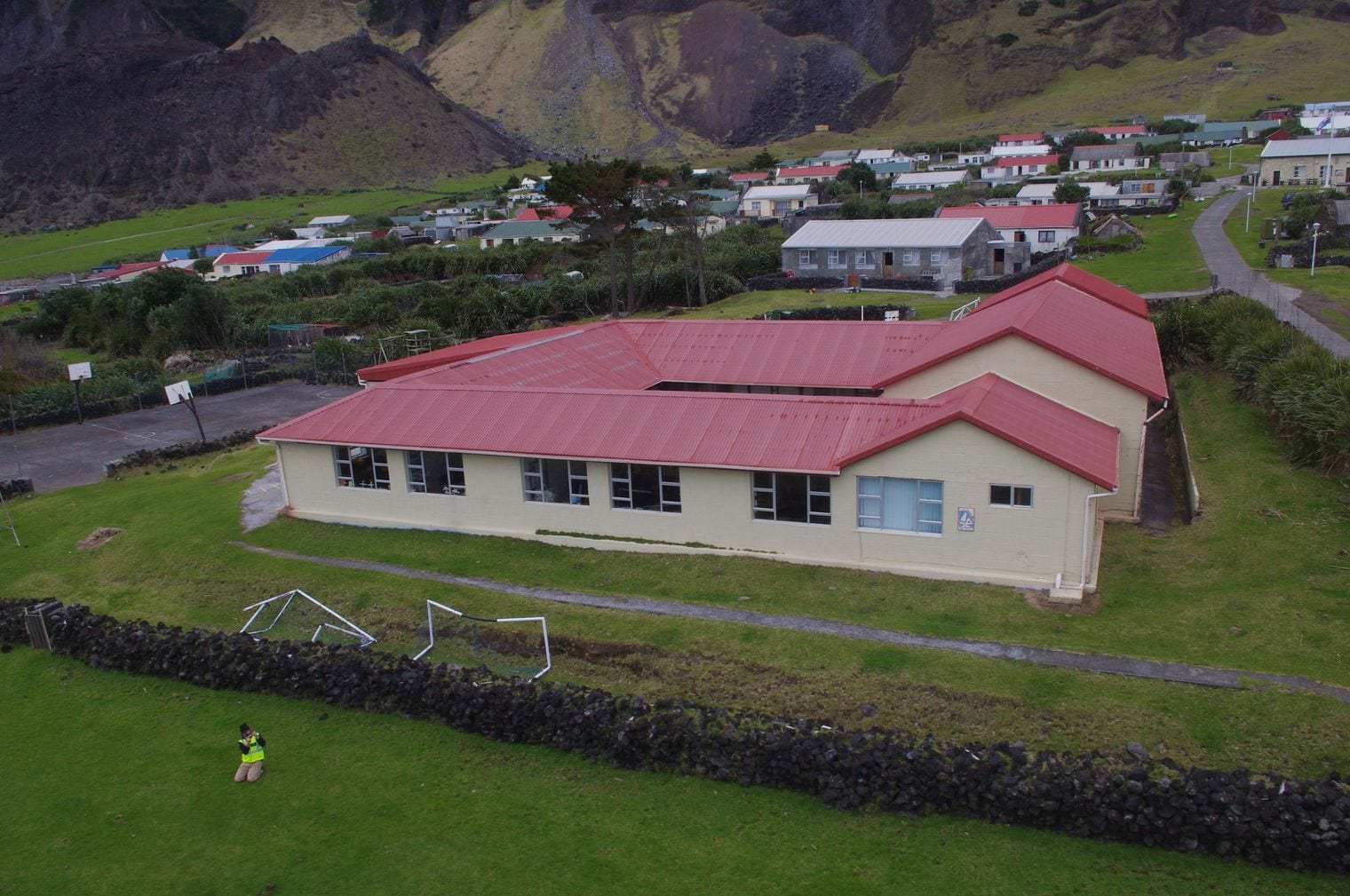
Edinburgh of the Seven Seas, Tristan da Cunha, United Kingdom
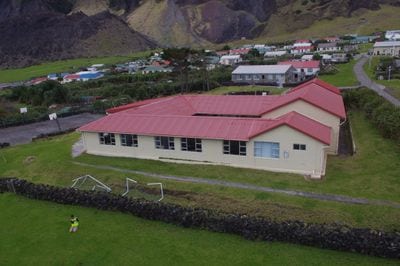
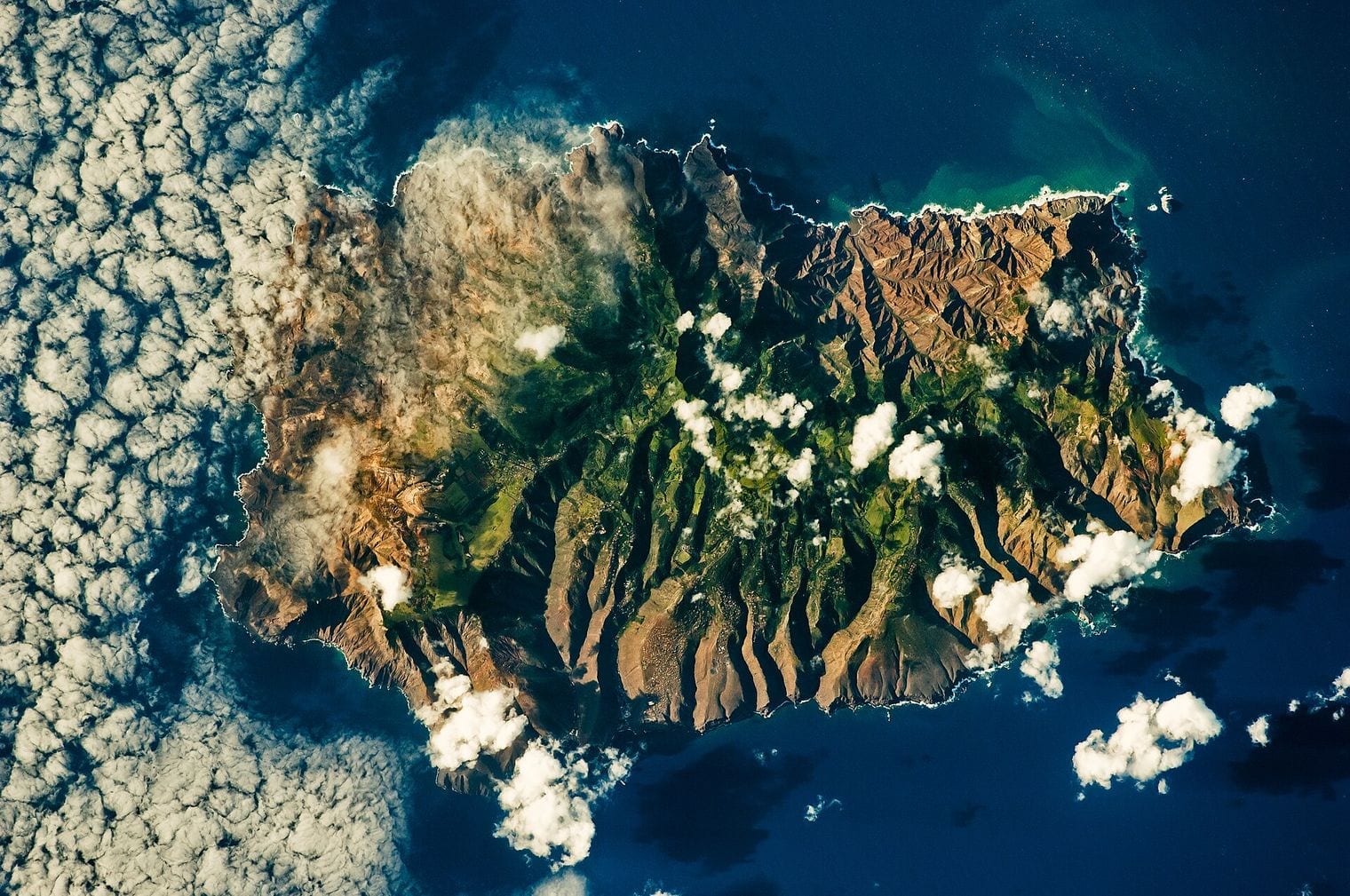
At 2,439 km from Jamestown on Saint Helena, Tristan da Cunha is the most isolated permanently inhabited place on Earth. Around 250 people live in its single settlement, Edinburgh of the Seven Seas, on the only flat shelf of a volcanic cone that rises straight out of the South Atlantic.
There is no airstrip and there never has been. The only way in is a boat from Cape Town, roughly a week each way, and rough seas can leave the island without a sailing for months.
The community farms a communal plot known as the Patches, fishes rock lobster, and shares a handful of surnames between almost every household. In 1961 the volcano erupted beside the settlement and the entire population was evacuated to England; nearly all of them chose to come back two years later. The archipelago's other islands — Inaccessible, Nightingale and Gough — have no settled population at all, which is precisely why Tristan holds its title.
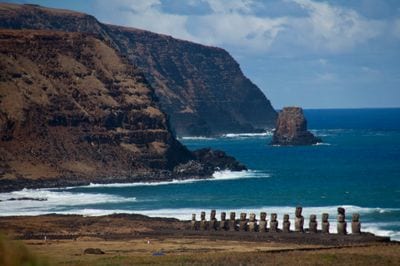
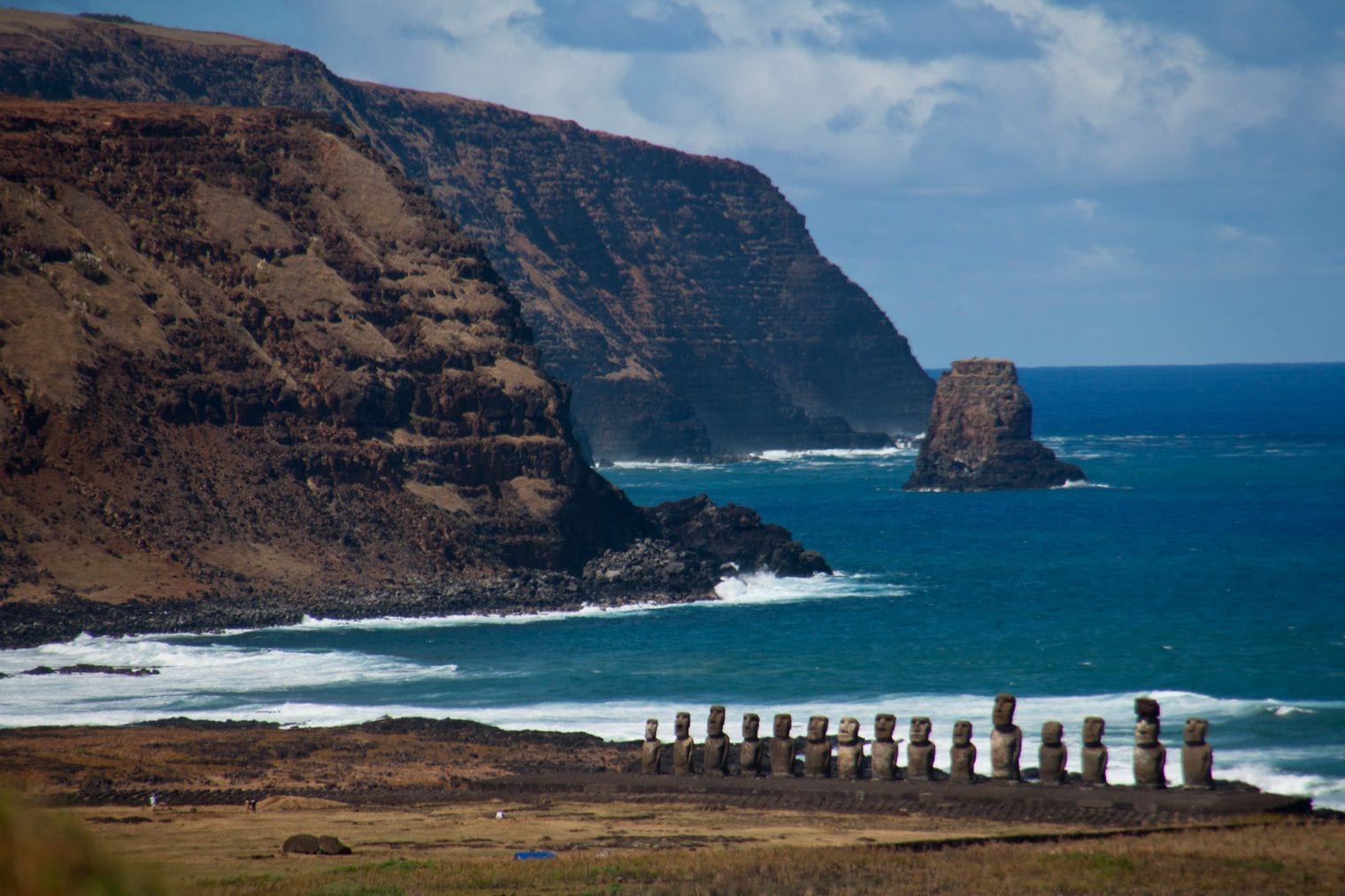
Easter Island sits 2,076 km from Adamstown on Pitcairn, its nearest inhabited neighbour, and 3,512 km from the Chilean mainland that governs it. Around 7,750 people live here, most of them in Hanga Roa on the west coast. Rapa Nui, as it is known in the local language, is a triangle of grassland and volcanic crater barely 25 km across, and standing at its centre you are farther from another community than almost anywhere else on the planet.
The island is famous for the moai — close to 900 carved stone figures, some over ten metres tall, quarried from the slopes of Rano Raraku and dragged to platforms around the coast. Much of the island falls inside Rapa Nui National Park, a UNESCO World Heritage Site, and the ceremonial village of Orongo overlooks the crater lake of Rano Kau. The isolation that makes the island remarkable is also what makes the achievement remarkable.
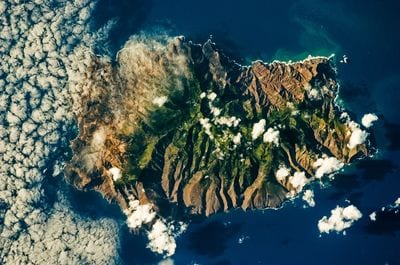
Saint Helena lies 1,878 km from Tombua on the coast of Angola, the nearest land with a settled population. Ascension Island is closer, about 1,300 km to the north-west, but nobody holds the right of abode there — every resident is on a work contract — so by the rule this list uses, Africa is Saint Helena's nearest company.
Roughly 4,400 people live on the island, most within reach of Jamestown, a narrow Georgian town wedged into a valley between two cliffs.
This is where Britain sent Napoleon in 1815, and where he died six years later at Longwood House; both the house and his original grave site are looked after by the French state.
Jacob's Ladder climbs 699 steps straight up the valley wall from Jamestown, and the grounds of Plantation House are home to Jonathan, a Seychelles giant tortoise believed to have hatched around 1832. An airport opened in 2016, replacing a mail ship as the island's link to the world.
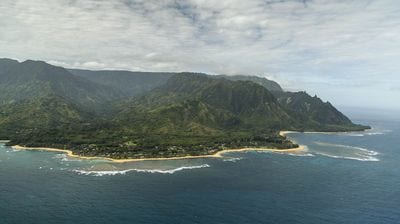
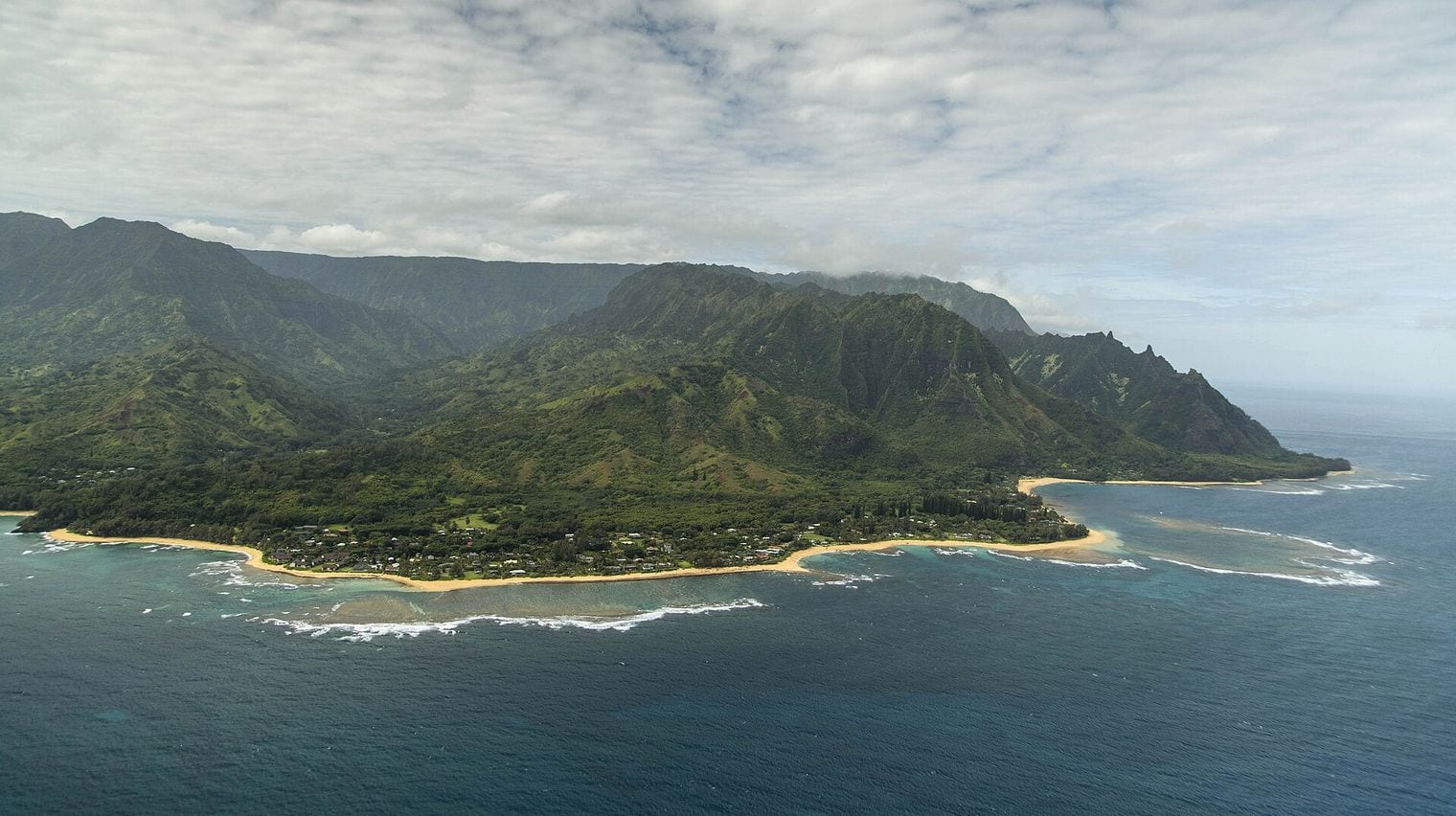
The Hawaiian Islands are 1,740 km from Tabuaeran in Kiribati, measured from Nāʻālehu on the southern tip of the Big Island — the southernmost town in the United States. That makes this the most isolated major population centre on Earth: roughly 1.4 million people, a fifteen-hundred-kilometre swim from the nearest neighbours, and nearly 4,000 km from the American mainland. It is the entry on this list that surprises people, because remoteness and obscurity are not the same thing.
The chain is the exposed top of a volcanic hotspot, and it is still building — Kīlauea is among the most active volcanoes anywhere, an hour’s drive from Hilo, the island’s largest town, while Mauna Kea rises higher from its seafloor base than any mountain on Earth measures from sea level.
That isolation also produced one of the most distinctive collections of wildlife in the world: the overwhelming majority of Hawaii's native plants and animals evolved here and live nowhere else.
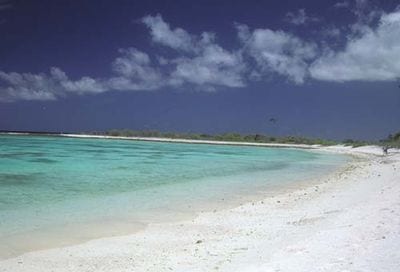
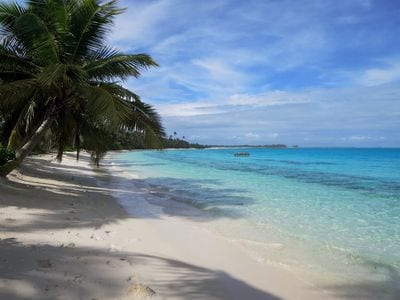
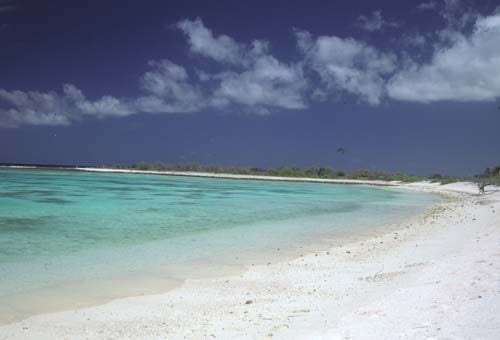
Kiritimati is 1,223 km from Penrhyn in the Cook Islands, and around 7,400 people live on it. It is the largest coral atoll in the world by land area, holding more dry land than many volcanic islands manage, yet almost none of it rises more than a few metres above the Pacific.
The name is the Gilbertese rendering of Christmas, and it is not to be confused with Christmas Island in the Indian Ocean, which is Australian and sits a third of the way around the planet.
Captain Cook reached the atoll on Christmas Eve in 1777 and gave it the name it still carries. Today it is known for two things: extraordinary bonefishing in the shallow lagoon flats, and its clock. The Line Islands run on UTC+14, the furthest-forward time zone in use, so Kiritimati is the first inhabited place on Earth to begin each new day.
66. Bermuda
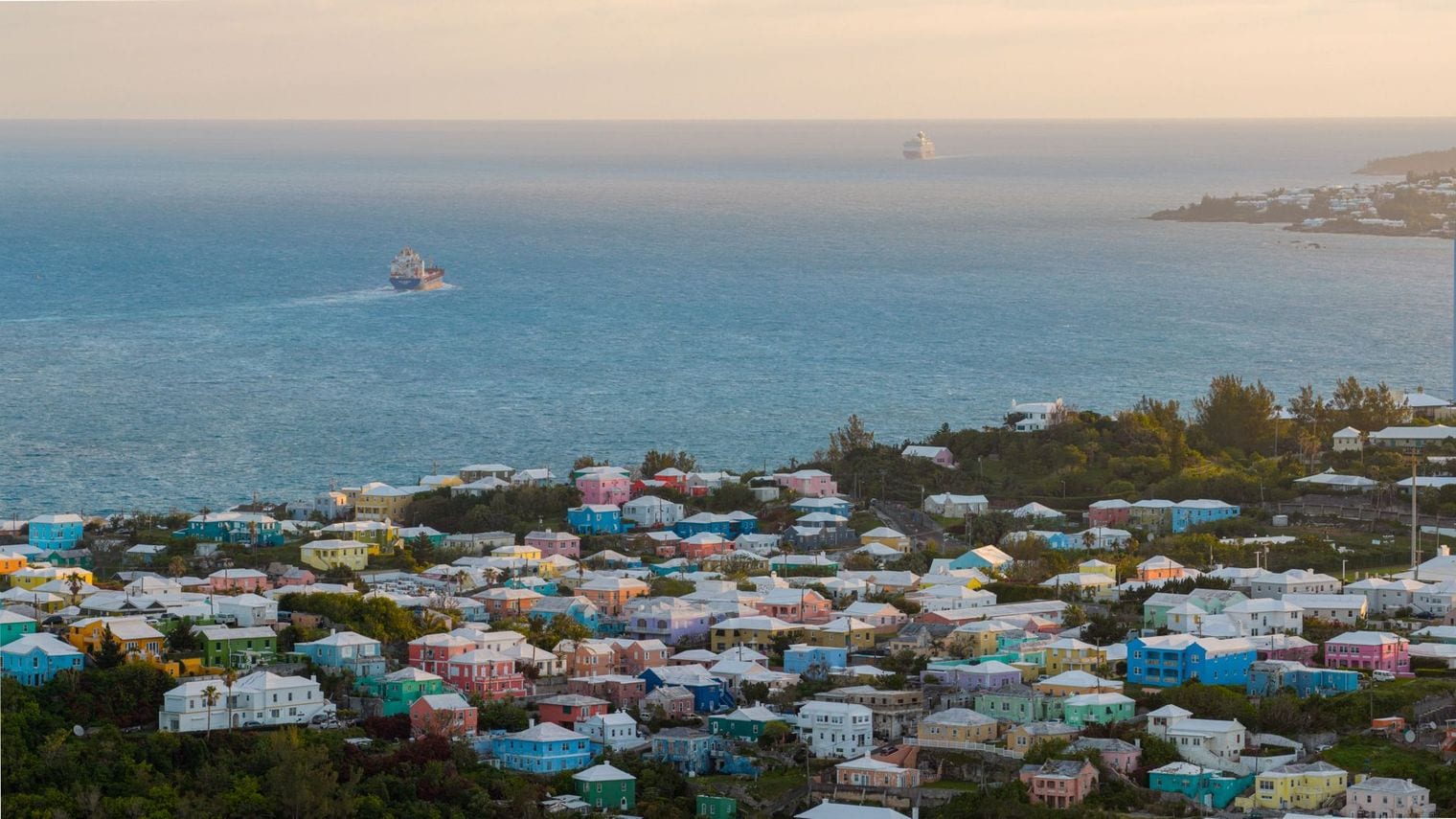
Somerset Village, Sandys Parish, Bermuda, United Kingdom
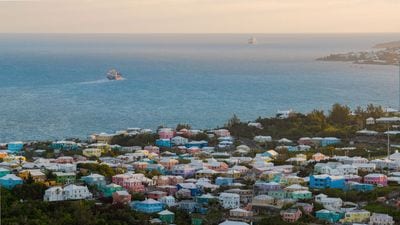
Bermuda's nearest inhabited land is Buxton, on North Carolina's Outer Banks, 1,040 km west. Around 64,000 people live on a hook of connected islands totalling barely 54 km², which makes it one of the most densely settled places on this list and one of the least likely to feel remote while you are standing on it.
It is also routinely misplaced: Bermuda is not in the Caribbean but in the North Atlantic, sitting at roughly the same latitude as South Carolina.
The Gulf Stream keeps it subtropical despite that latitude, and the reefs it built are the northernmost coral reefs in the Atlantic. St George's, founded in 1612, is a UNESCO World Heritage Site and the oldest continuously inhabited English town in the New World, while the Royal Naval Dockyard at the far western end recalls the long stretch when this speck of rock was the Royal Navy's Atlantic linchpin.
77. Galápagos Islands
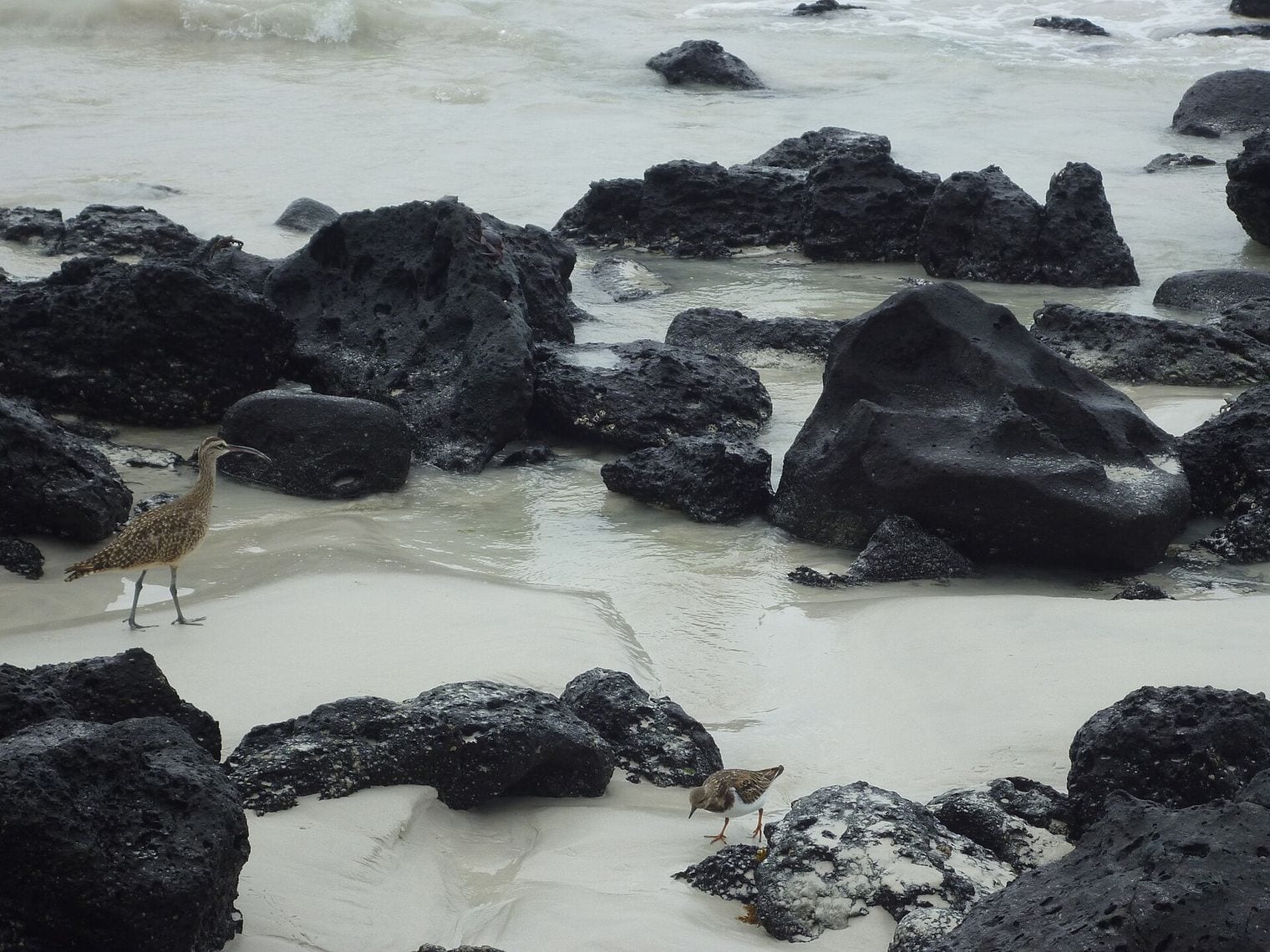
Puerto Baquerizo Moreno, Galápagos Islands, Ecuador
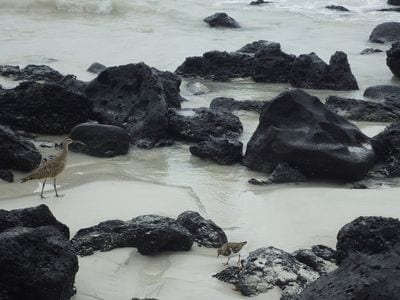
The Galápagos Islands are 989 km from Manta on the Ecuadorian coast. Cocos Island, off Costa Rica, is nearer — but it carries only rotating park rangers, so the mainland is the closest settled land. About 33,000 people live across four of the islands, chiefly on Santa Cruz and San Cristóbal, inside a province that is over 97% national park.
Charles Darwin spent five weeks here in 1835 aboard the Beagle, and the variations he noticed between islands became one of the foundations of evolutionary theory. The archipelago was among the very first sites inscribed on the UNESCO World Heritage list in 1978.
Giant tortoises still graze the highlands, and the marine iguana — the only lizard on Earth that forages in the sea — exists nowhere else, an outcome that only a few hundred kilometres of open ocean could have produced.
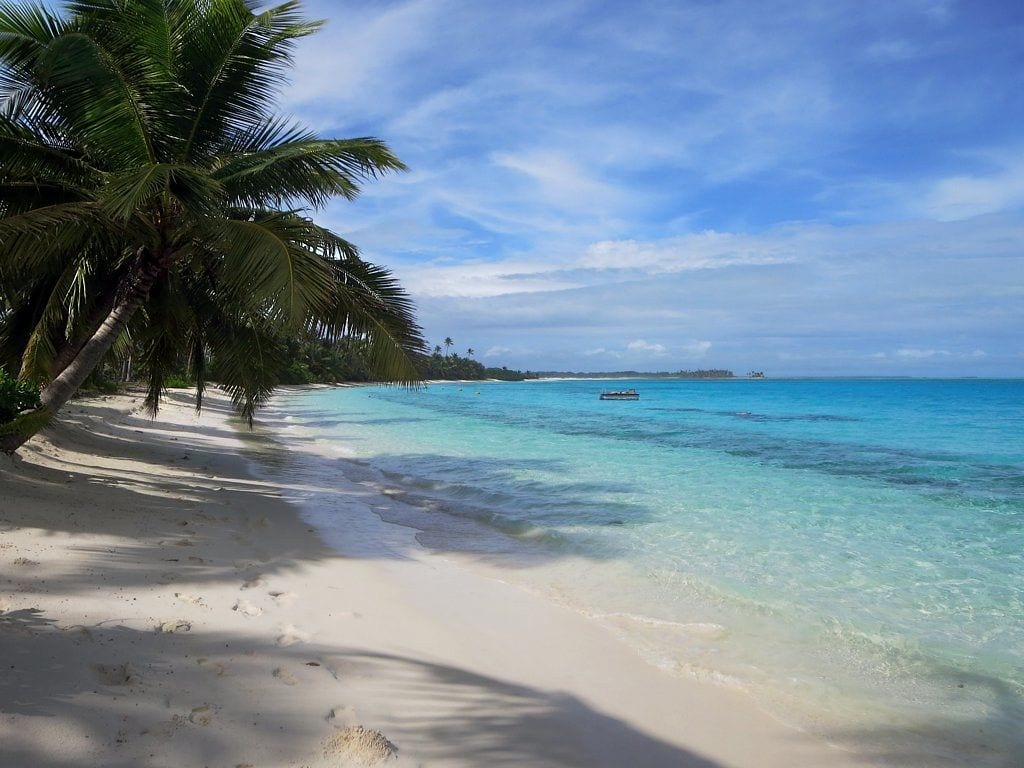
The Cocos (Keeling) Islands sit 976 km from Flying Fish Cove on Christmas Island, the nearest inhabited land. Twenty-seven coral islands ring two atolls in the eastern Indian Ocean, and only two of them are settled: Home Island, where the Cocos Malay community lives, and West Island, which holds the airstrip and most of the Australian administration. Between them they account for roughly 600 people.
The Clunies-Ross family governed the islands as a private domain for about 150 years from 1827, until the Australian government bought them out in 1978 and the islanders voted to integrate with Australia in a UN-supervised ballot in 1984. Darwin stopped here in 1836 and used the atoll to work out how coral reefs form as a volcanic island subsides beneath them — a theory that turned out to be right.
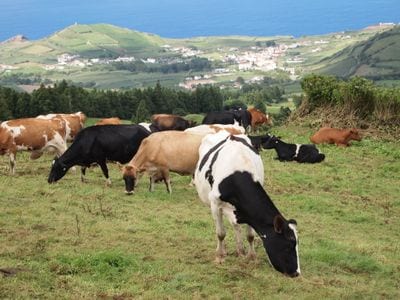
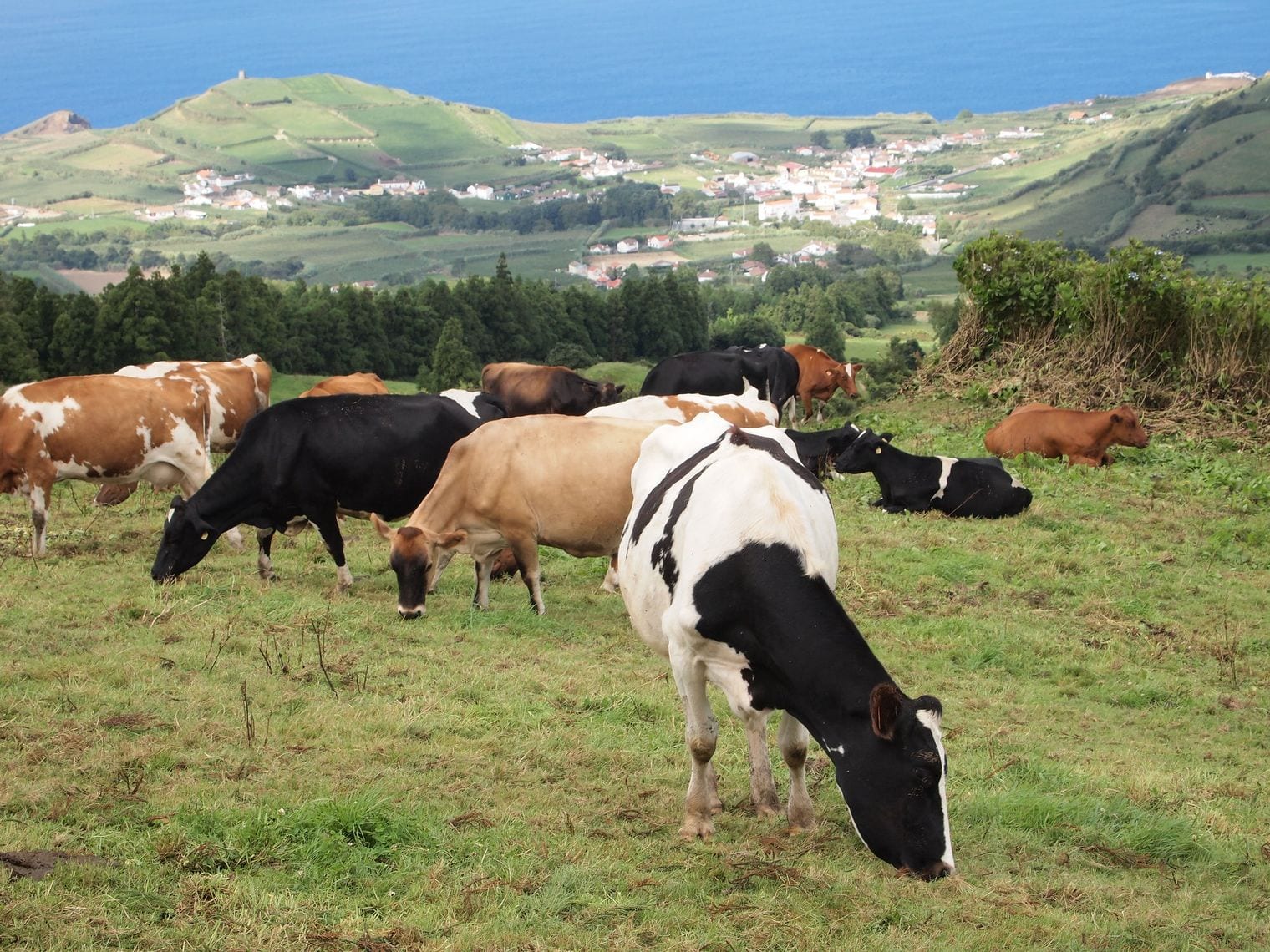
The Azores lie 890 km from Funchal on Madeira, measured from Santa Maria at the archipelago's south-eastern end. Nine volcanic islands are spread across some 600 km of the North Atlantic, home to around 236,000 people, and they sit directly astride the Mid-Atlantic Ridge — the seam where the North American and Eurasian plates pull apart, which is why the islands exist at all.
Pico Island carries Portugal's highest point, a 2,351-metre volcano that rises in a near-perfect cone straight from the sea, with vineyards walled into black lava fields at its base. São Miguel holds the twin crater lakes of Sete Cidades, and the surrounding waters are among the best places in the world to see whales, a legacy of the deep ocean that drops away just offshore and of a whaling tradition that ended within living memory.
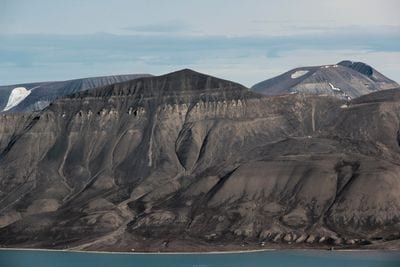
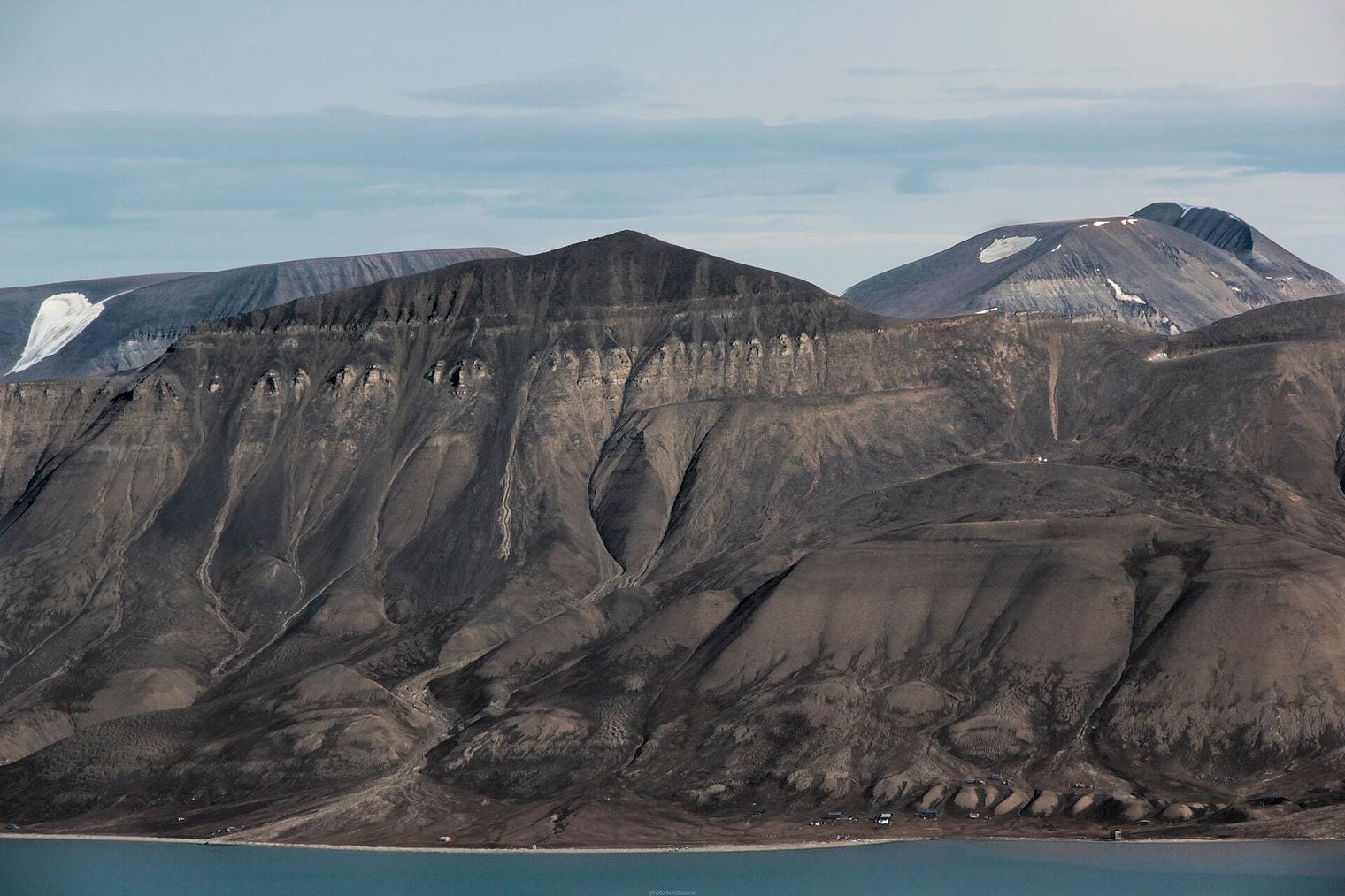
Svalbard is 858 km from Honningsvåg on the Norwegian mainland, and around 2,500 people live at Longyearbyen, at 78° north — one of the northernmost settlements of any size on the planet. Nothing nearer counts: Bjørnøya and Jan Mayen, both closer, carry only rotating station crews and have no permanent population at all. The sun stays below the horizon from late October to mid-February, and above it around the clock for four months in summer.
The archipelago is governed by Norway under the Svalbard Treaty, an unusual arrangement that lets citizens of more than forty signatory countries live and work here without a visa. Deep inside a mountain outside Longyearbyen, the Global Seed Vault stores duplicates of crop seeds from gene banks worldwide, kept cold by the permafrost — a backup for global agriculture, placed here precisely because it is so far from everywhere else.
FAQ: The World's Remotest Inhabited Islands
What is the most remote inhabited island in the world?
Tristan da Cunha, a British overseas territory in the South Atlantic. Its roughly 250 residents live 2,439 km from the nearest settled land, Jamestown on Saint Helena. There is no airstrip, so the island is reached only by boat from Cape Town — a voyage of about a week in each direction.
Why is Pitcairn Island not on this list?
Pitcairn has a famous name and a tiny population, but remoteness here is measured in kilometres rather than reputation. Its nearest inhabited neighbour, Mangareva in French Polynesia, lies about 540 km away — closer than any island in this top ten, and closer than most people assume.
What is the most remote island in the world if it does not have to be inhabited?
Bouvet Island, in the far South Atlantic, which sits roughly 1,600 km from the coast of Antarctica and farther still from anywhere else. Nobody lives there, which is exactly why it is absent from this ranking: this list counts only islands with a permanent civilian community.
Can you actually visit these islands?
Most of them, easily. The Azores, Bermuda, Hawaii, the Galápagos and Svalbard all have airports and established tourism. Tristan da Cunha is the difficult one: no airstrip, a week-long sailing from South Africa, and the island council's permission needed before you travel.
How is the distance to the nearest inhabited land measured?
As a great-circle distance between settlements — the shortest line across the Earth's surface from a settled place on the island to the nearest settled place outside its own island group. Research stations and military garrisons are not counted, because nobody permanently lives at them. The same rule — one measurable number, applied the same way to every entry — governs all of our world record countdowns.