We may earn a commission if you book tickets, tours or a stay through a link on
this page, at no extra cost to you. It never affects which places we list or how
we rank them (how we make money).
The record
172.5 m565.9 ft
Sagrada Família
Spain
The record
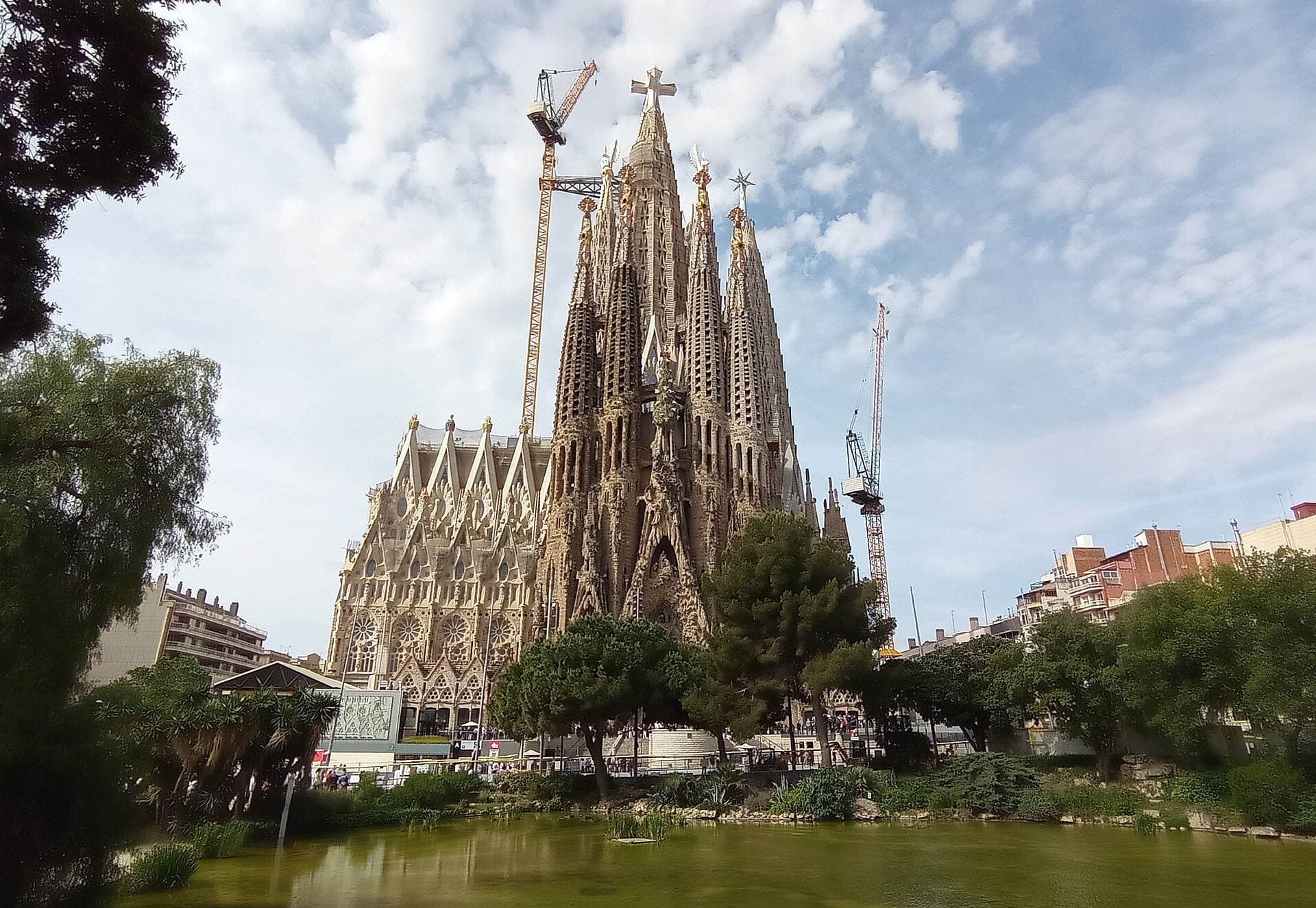
The tallest church in the world is the Sagrada Família, in Spain — 172.5 m (565.9 ft), height.
Source: Sagrada Família Foundation. Verified .
Notre-Dame de Paris does not make this list. Neither does St Paul’s in London, nor the Duomo in Florence — the churches most people picture when they hear the word cathedral all fall comfortably short. The twenty here run from 172.5 metres down to 123.3 metres, spread across twelve countries and three continents, and they are ordered one way only: by the height of the church building itself, measured to the tip of its tallest spire, tower or dome cross.
That rule costs the list some famous towers. St Mark’s Campanile in Venice and the Dom Tower in Utrecht stand apart from their churches, so neither qualifies, and nor does the 147-metre spire still rising over Hamburg’s St. Nikolai, a bombed shell that serves today as a war memorial rather than a church. Every building below is whole, still standing and open to visitors — and Salisbury Cathedral, England’s tallest, misses the cut by twenty centimetres.
The record changed hands in 2026, after 135 years.Ulm Minster had been the tallest church on earth since 1890; the Sagrada Família passed it in October 2025 and reached its final 172.5 m in February 2026.
Three of these churches once held the title of tallest building in the world — and they handed it to each other. Strasbourg Cathedral held it for 227 years, until Rouen took it in 1874, and Cologne took it from Rouen in 1880.
Only two of the twenty stand outside Europe.The Basilica of Our Lady of Peace in Ivory Coast is the tallest church on any other continent, and Maringá Cathedral in Brazil is the tallest in the Americas.
Germany holds seven of the twenty places, and Hamburg alone holds three.St. Michael’s and St. Peter’s are a genuine dead heat at 132 m each — no survey separates them — and St. James’ follows at 125.4 m.
The whole list spans less than 50 metres, and the bottom half is desperately tight: Maringá, Antwerp, Tallinn and Riga are separated by a total of 70 centimetres.
The world’s biggest church is only its seventh-tallest.St. Peter’s Basilica in Rome is still the largest church anywhere by interior area and volume, but on height five European churches and one in Ivory Coast stand above it.
Gaudí deliberately stopped short. The Sagrada Família tops out at 172.5 m because Montjuïc hill behind Barcelona rises to 177.7 m, and he held that human work should not stand taller than the mountain.
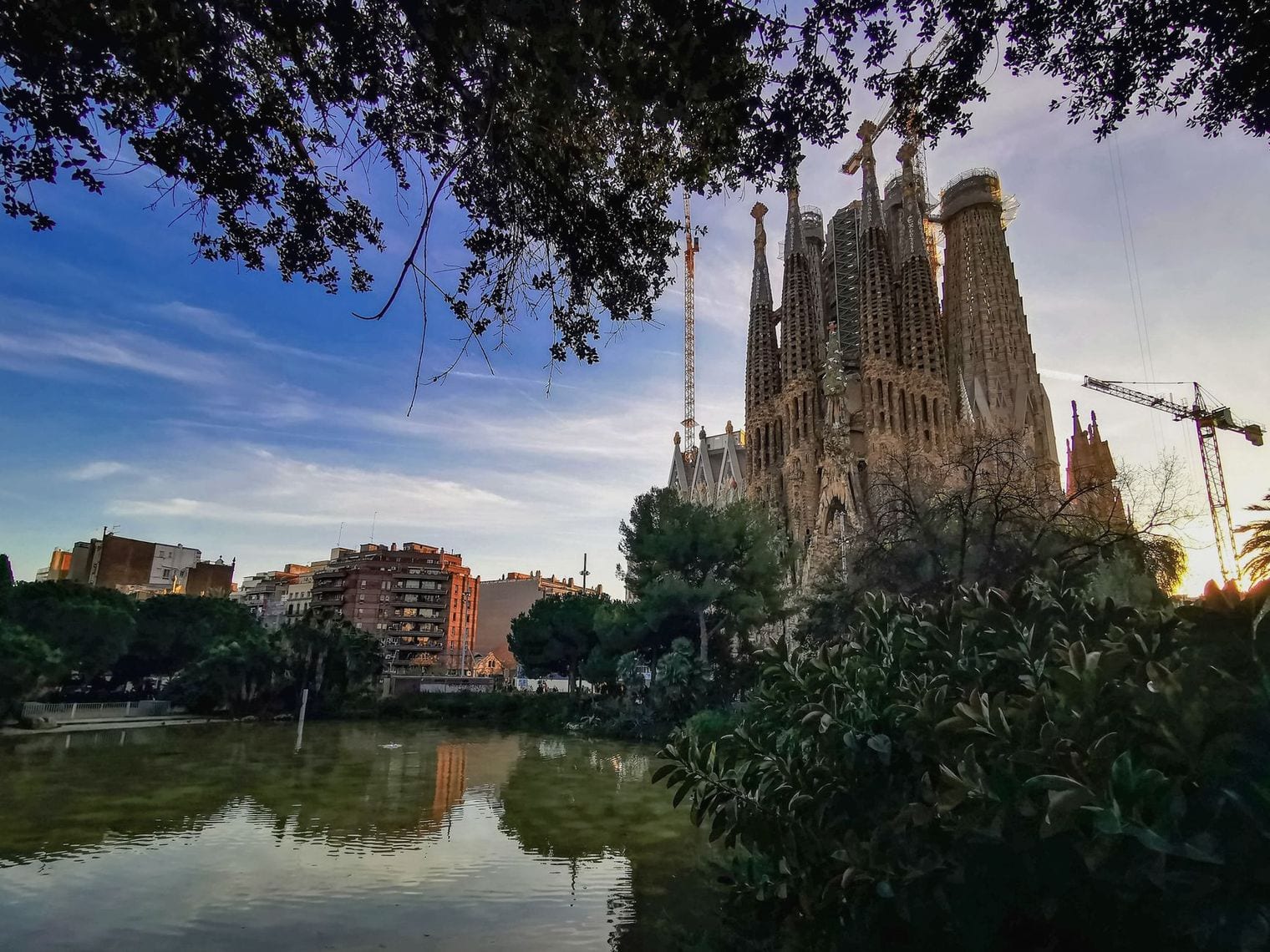
At 172.5 metres, the Sagrada Família is the tallest church ever built, and it claimed that title only recently. Its central Tower of Jesus Christ overtook Ulm Minster in October 2025, and on 20 February 2026 a crane lifted the upper arm of its ceramic-and-glass cross into place, bringing the tower to full height after more than 140 years of construction.
The number is not arbitrary. Gaudí capped his design at 172.5 metres so that it would sit just below the 177.7-metre Montjuïc hill behind the city, on the principle that human work should not rise above the mountain.
What that means for a visitor is a basilica finished on the outside and still a building site within: interior work is scheduled to continue past 2028. The trade-off is that you can now see Gaudí’s full silhouette as he intended it, eighteen towers resolving into one, and the newest of them is the one you can pick out from almost anywhere in Barcelona.
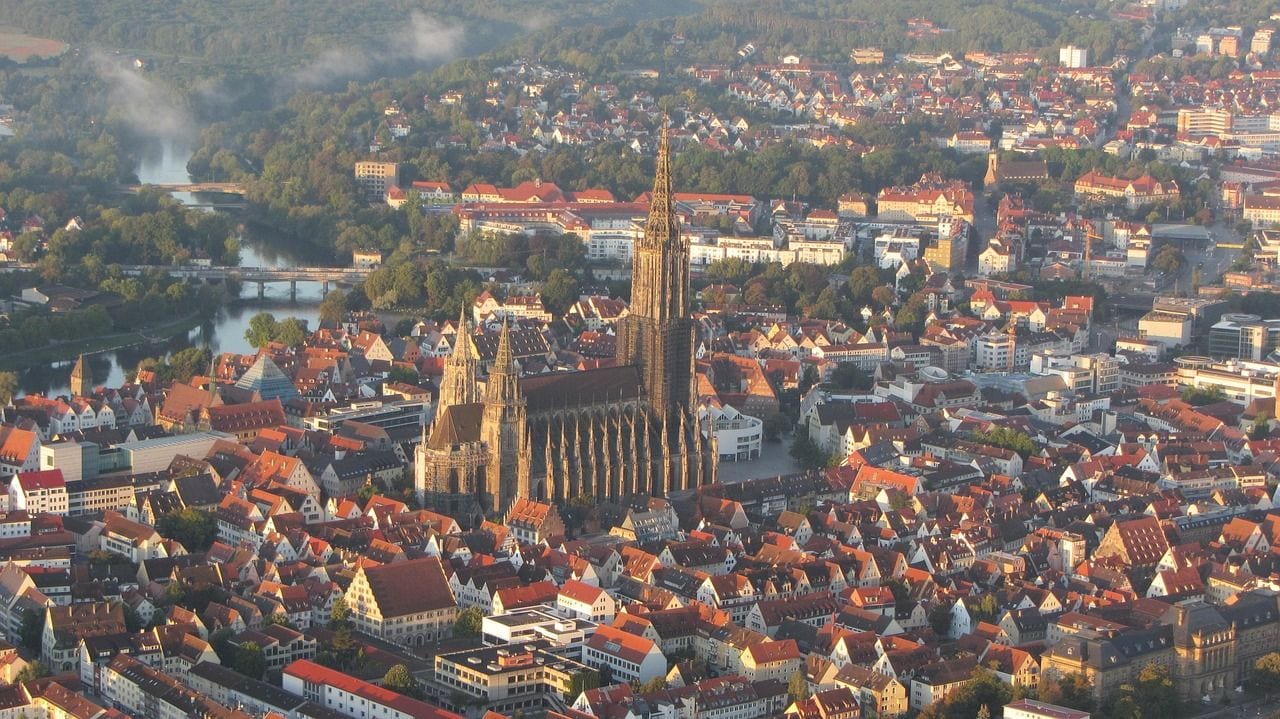
At 161.53 metres, Ulm Minster held the record for the world’s tallest church for 135 years, from the completion of its spire in 1890 until Barcelona overtook it in October 2025. It is still the tallest spire ever finished in stone, and it exists at that height for competitive reasons: the design was raised mid-build specifically so that Ulm would clear Cologne Cathedral, which had claimed the record a decade earlier.
It is also, despite the scale, a Lutheran parish church rather than a cathedral — Ulm has never been a bishop’s seat, and the building was paid for by the townspeople who commissioned it in the fourteenth century. A spiral staircase climbs inside the spire to a gallery high on the tower, and on a clear day the view reaches south to the Alps. The stonework is under near-permanent restoration, which is what keeps a spire of this age standing.
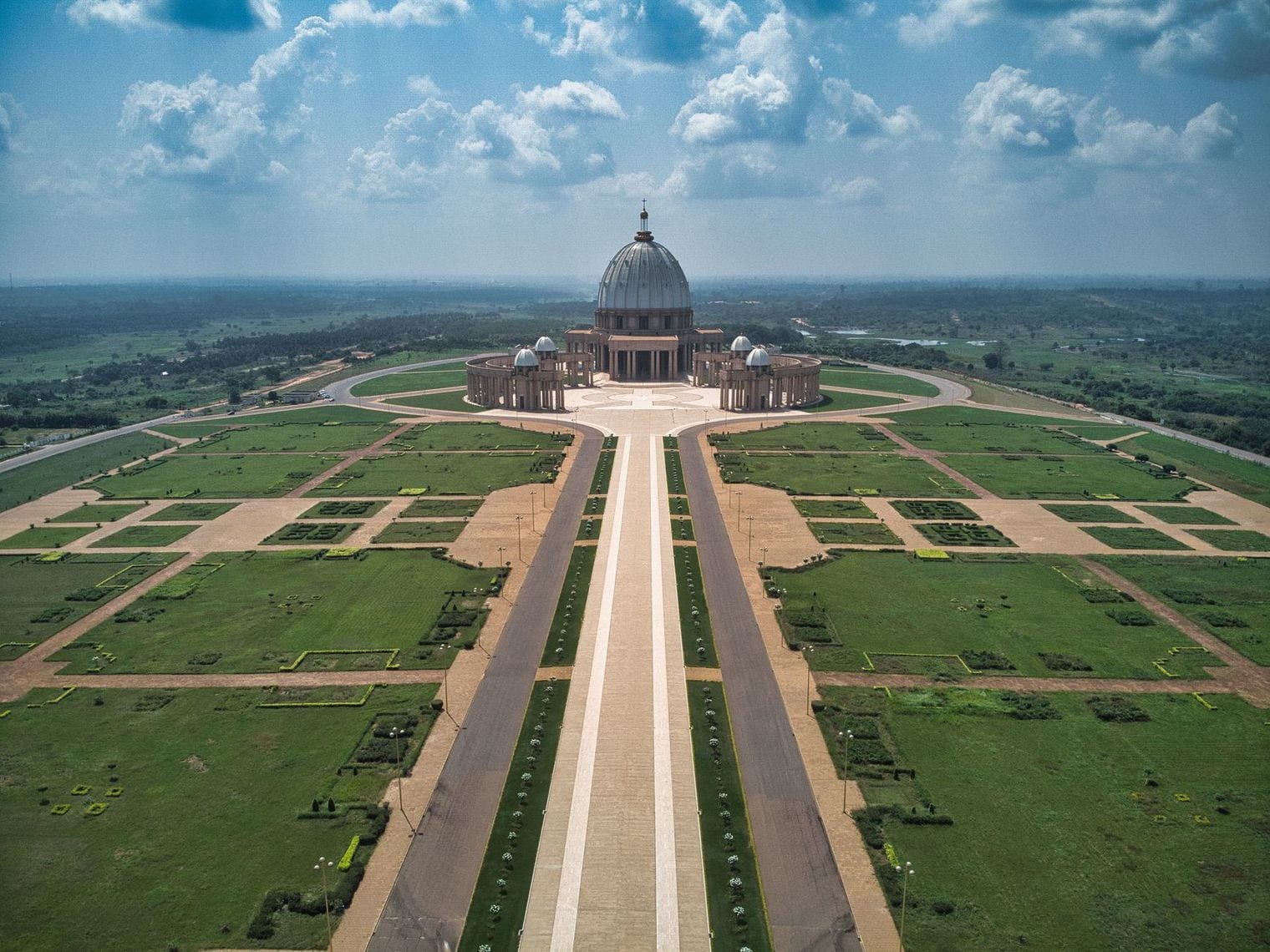
At 158 metres, the Basilica of Our Lady of Peace in Yamoussoukro is the tallest church outside Europe and the tallest Catholic church anywhere, clearing Cologne Cathedral by barely half a metre. Guinness World Records also lists it as the largest church in the world, with roughly 30,000 square metres of floor area — a figure that put it past St Peter’s Basilica, on which its dome and colonnade were closely modelled.
It was built in an extraordinary hurry, between 1986 and 1989, in the birthplace of Côte d’Ivoire’s first president, Félix Houphouët-Boigny, who funded it and is buried on the site. The basilica seats around 18,000 people, and the esplanade in front of it can hold a crowd of 300,000 — numbers wildly out of proportion to Yamoussoukro itself, which is part of what makes arriving here so strange. Its stained glass covers some 7,400 square metres.
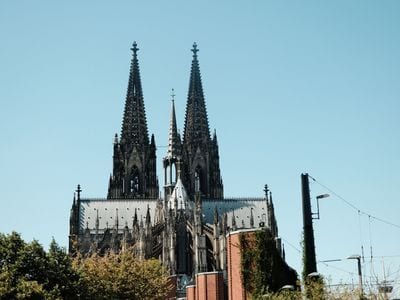
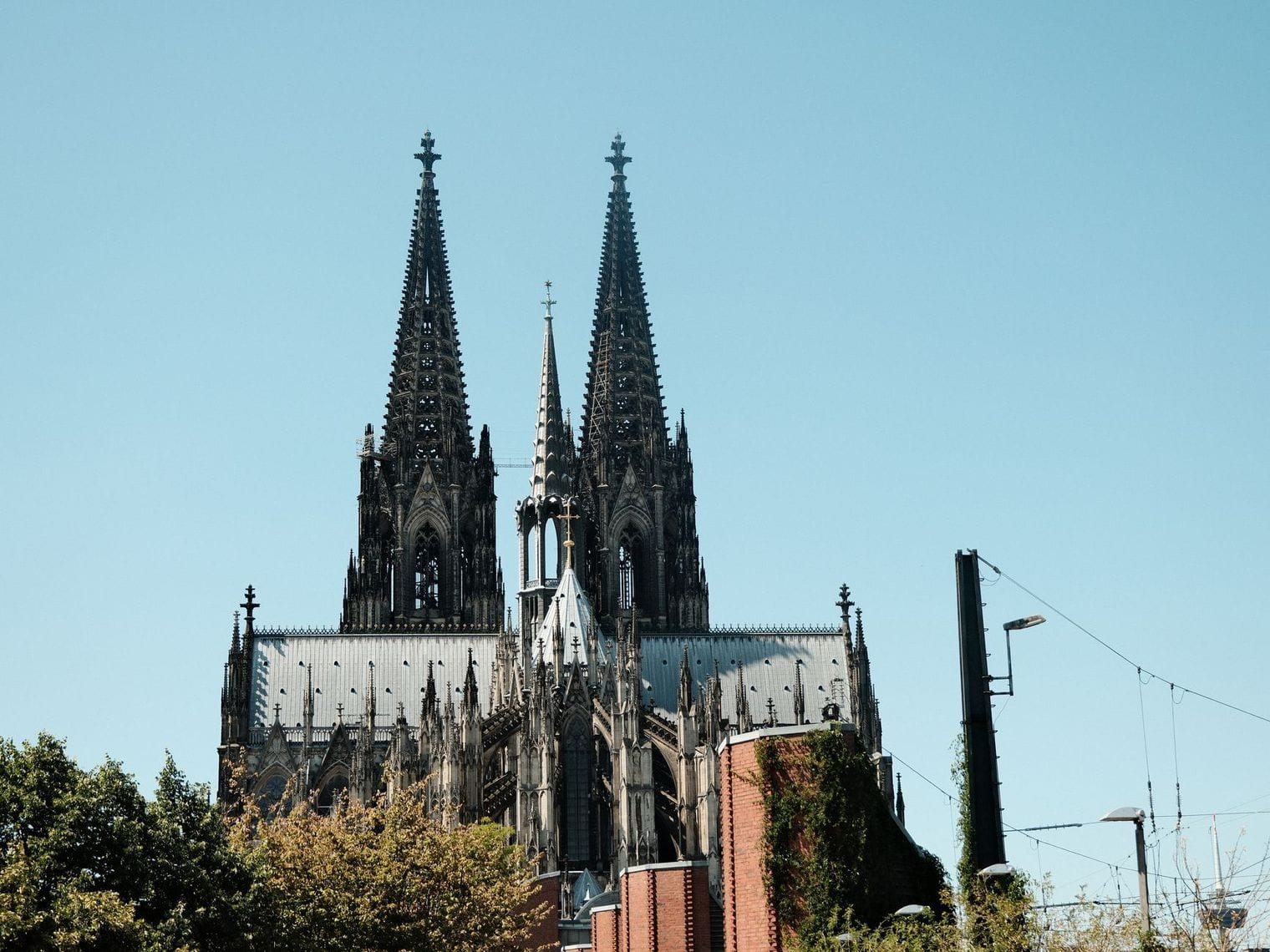
At 157.4 metres, Cologne Cathedral has the tallest twin-tower façade of any church in the world, and it misses third place on this list by less than a metre.
It was the tallest building on earth from 1880 to 1884, and it took 632 years to reach that point: begun in 1248, abandoned for most of the sixteenth to nineteenth centuries with a medieval crane left standing on the unfinished south tower, and completed only when nineteenth-century Prussia took up the original plans.
The reason it was begun at all still sits behind the high altar. The Shrine of the Three Kings, a gilded reliquary said to hold the remains of the Magi, arrived in Cologne in 1164 and drew enough pilgrims to justify a building on this scale. The cathedral is a UNESCO World Heritage Site, and 533 steps climb the south tower to a platform just beneath the bells.
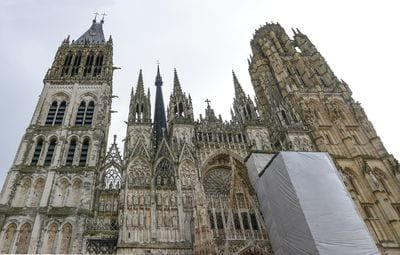
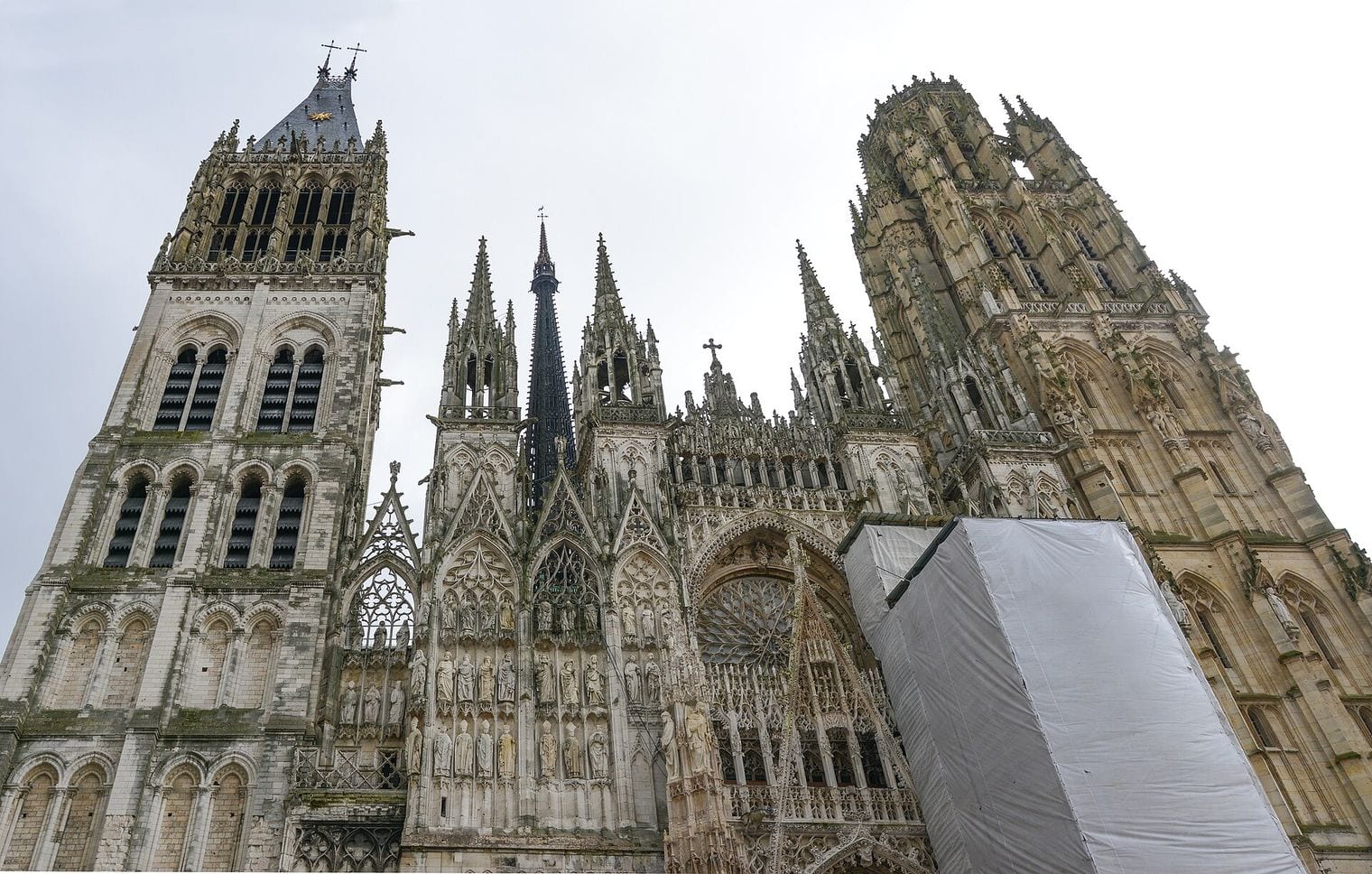
At 151 metres, Rouen Cathedral is the tallest church in France and was the tallest building in the world for four years, from 1876 until Cologne passed it in 1880. Its height comes from a cast-iron spire bolted onto a Gothic stone tower — a nineteenth-century solution after lightning destroyed the previous timber one, and a join that is obvious once you know to look for it.
The west front is the more famous thing. Monet painted it more than thirty times between 1892 and 1894 from a room across the square, working the same stone through different hours and weather, and those canvases are now spread across museums worldwide. The cathedral also holds the tomb containing the heart of Richard the Lionheart. In summer the façade is used as a screen for a projected light show after dark.
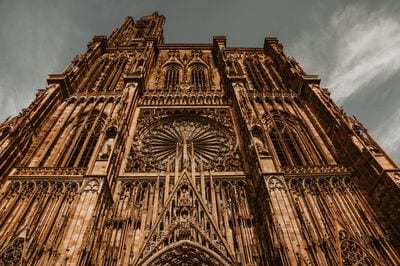
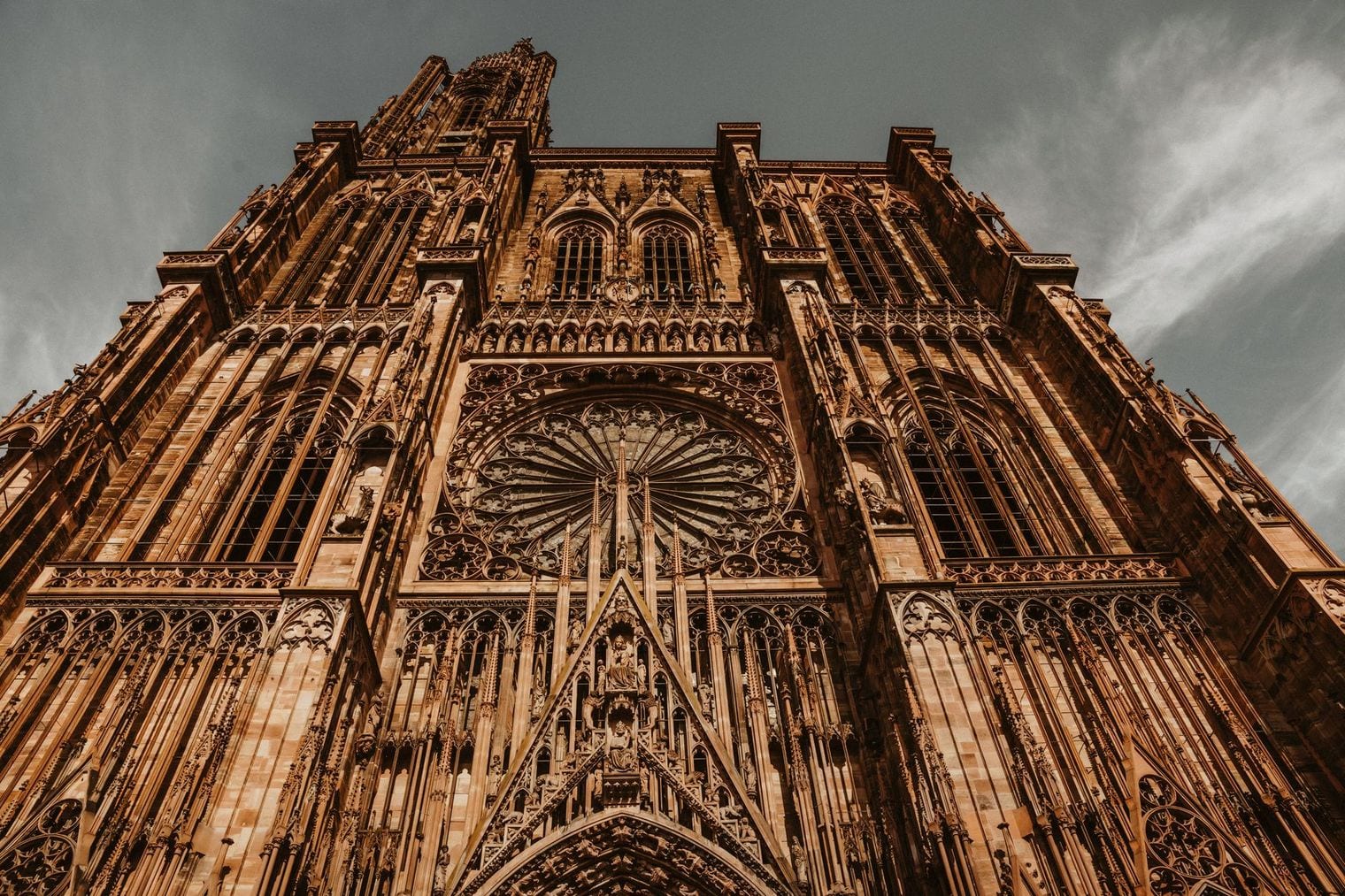
At 142 metres, Strasbourg Cathedral was the tallest building in the world for 227 years — from 1647 until 1874 — the longest run any structure has ever held that record. It was finished in 1439, which also makes it the tallest structure completed anywhere in the fifteenth century, and its pink Vosges sandstone gives it a colour no other cathedral on this list has.
Its silhouette is lopsided on purpose, or at least by default: a second tower was planned to match the first and never built, so a single spire rises off one side of the west front.
Inside, an astronomical clock from the 1840s runs a procession of automata each day at half past twelve. Victor Hugo called the building a prodigy of the gigantic and the delicate, and 332 steps lead up to a viewing platform at the base of the spire.
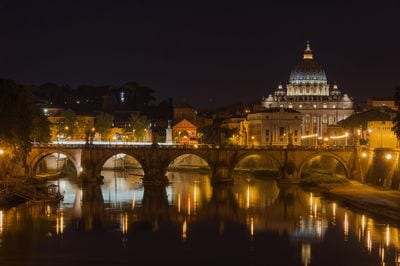
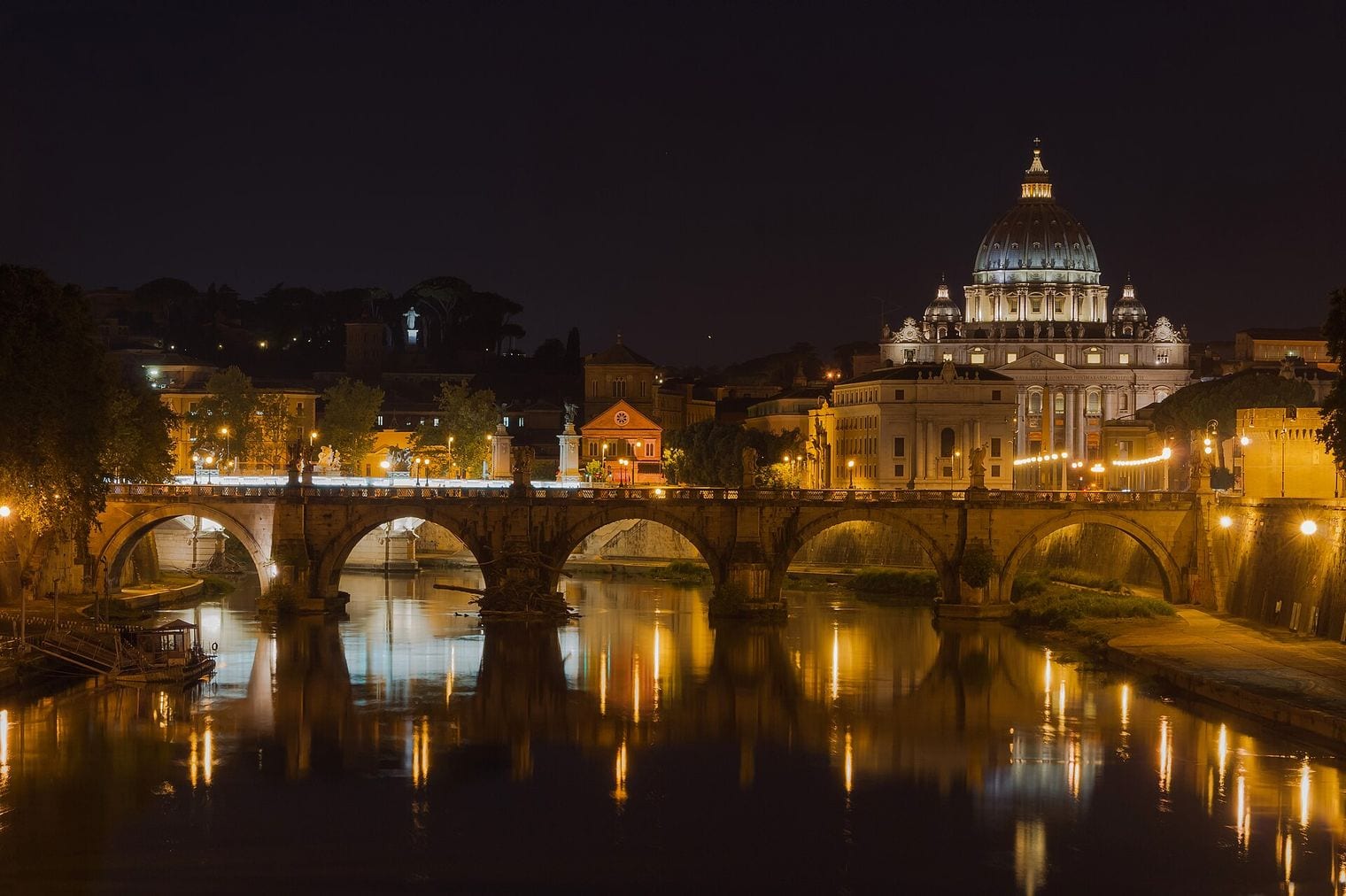
At 136.57 metres to the top of its cross, St. Peter’s Basilica edges out Vienna by around twenty centimetres — the tightest margin in the upper half of this list. Height is not really its record, though: it remains the largest church in the world by interior area and volume, and it is the building against which the two churches above it were consciously measured.
Michelangelo designed the dome and did not live to see it closed, which happened in 1590 under Giacomo della Porta. You can climb between its inner and outer shells, the staircase leaning with the curve as it narrows, to a lantern gallery looking down the length of St Peter’s Square.
The basilica stands over what is traditionally held to be the apostle Peter’s tomb, and everything about the scale — the nave, the baldachin, the piazza’s colonnade — is calibrated to make you misjudge distance.
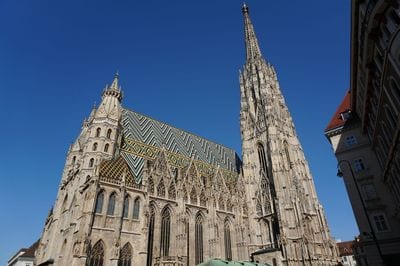
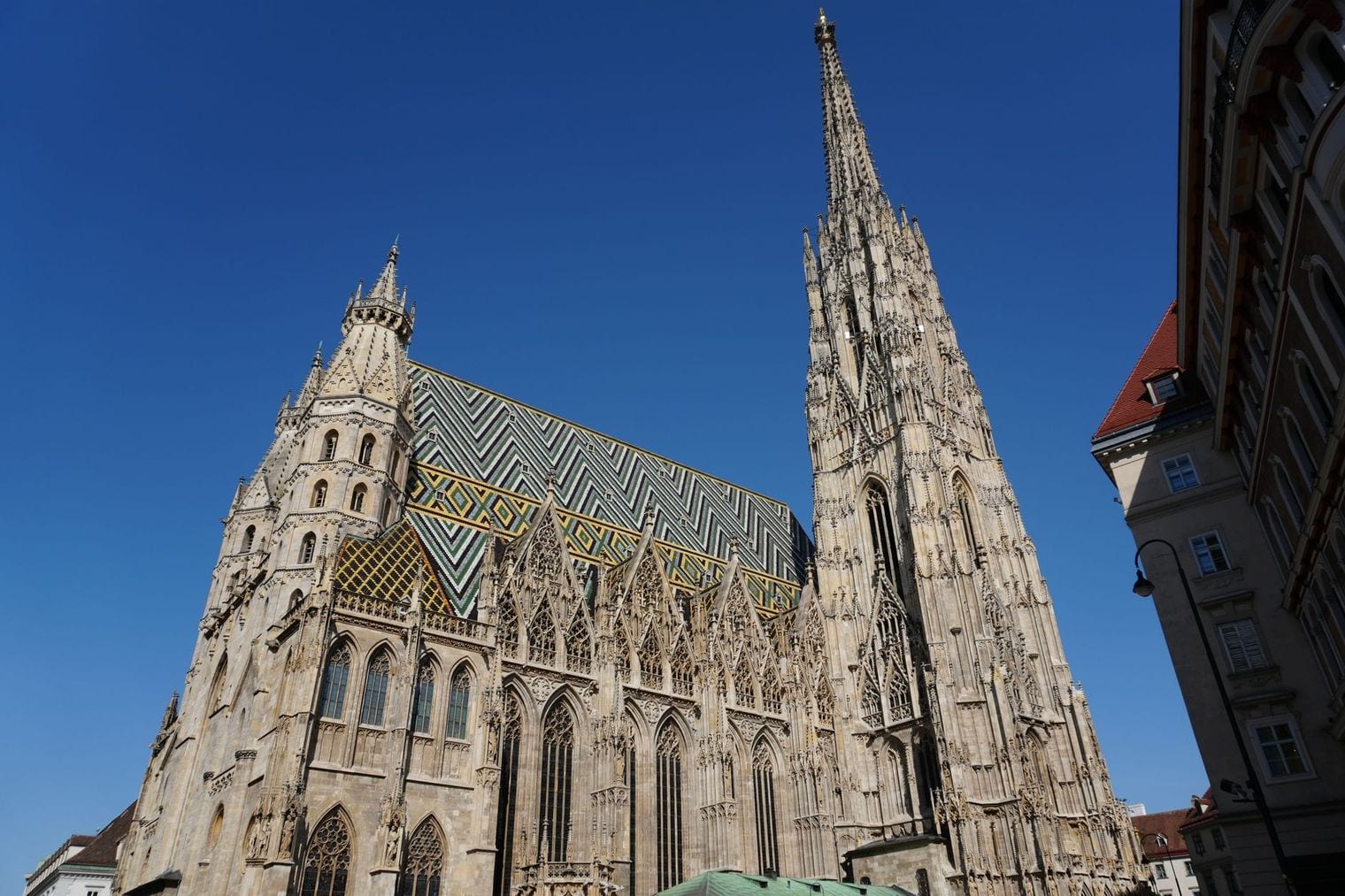
At 136.4 metres, St. Stephen’s Cathedral is the tallest church in Austria, and it sits just two-tenths of a metre behind St. Peter’s Basilica in Rome. Viennese call it the Steffl, and its south tower — finished in 1433 after 65 years of work — is the part that carries the height, reached by 343 steps to a watchman’s room once used to spot fires in the city below.
The roof is the detail people remember: 230,000 glazed tiles laid in zigzags and, on the south side, the double-headed eagle. It burned in 1945 and was rebuilt with contributions from across the Austrian provinces, each funding a different element. The north tower was never completed to match, so it carries a Renaissance cap and the Pummerin, a bell recast from Ottoman cannon, which rings in the new year for the whole country.
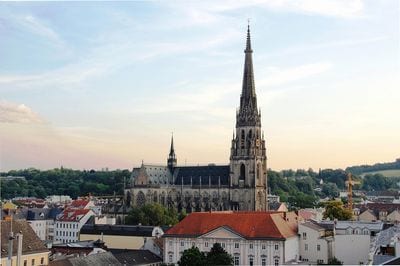
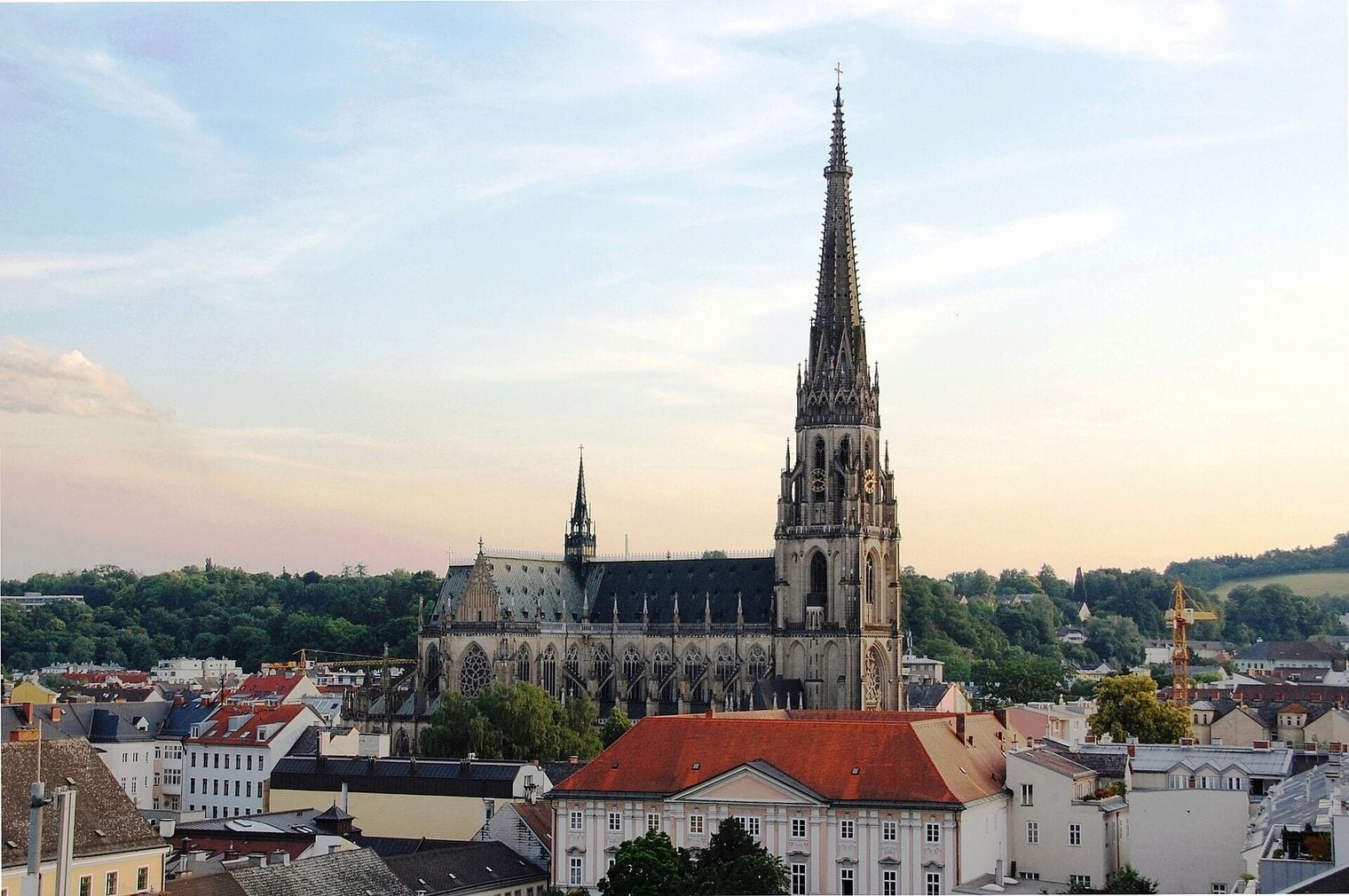
At 134.8 metres, the New Linz Cathedral is Austria’s largest church by floor area but deliberately not its tallest — it stops about two metres short of St. Stephen’s in Vienna. That was a rule, not a coincidence: no building in the Austro-Hungarian empire was permitted to rise above the capital’s cathedral, so the Linz design was trimmed to comply while taking the area record instead.
It is a much younger building than most on this list, begun in 1862 and finished in 1924, built in a neo-Gothic style out of local sandstone. It seats around 20,000 people, and its stained glass includes windows showing scenes of Linz itself rather than only scripture — a nineteenth-century civic touch. The tower is open to climb, and the cathedral is still the seat of the Diocese of Linz.
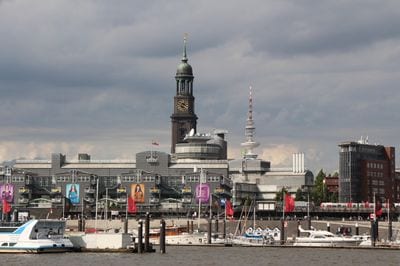
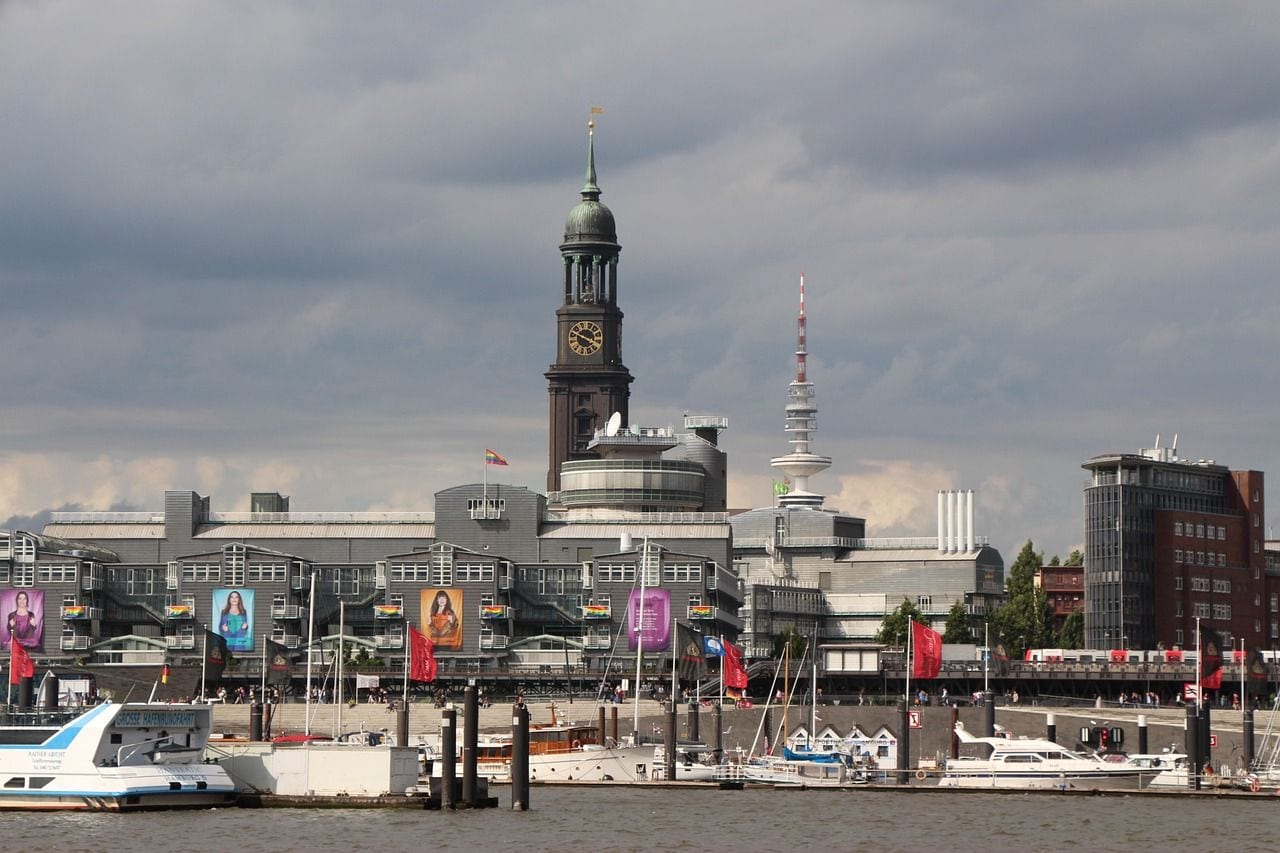
At 132 metres, St. Michael’s Church, Hamburg shares tenth place outright with another church a kilometre away: both measure the same, and no survey separates them. Known universally as the Michel, it is the tallest church anywhere built in the eighteenth century, finished in 1786, and its copper-green baroque tower is the single most recognisable thing on the Hamburg skyline.
It has been rebuilt more than once — lightning took the first tower, and a workman’s blowtorch started the fire that gutted it in 1906 — which is why a baroque church here carries a steel-framed spire underneath. A lift and a staircase both reach the viewing platform at 82 metres, looking straight down the Elbe at the port. A trumpeter still plays a chorale from the tower twice a day, a Hamburg fixture for centuries.
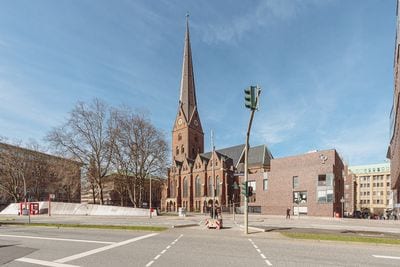
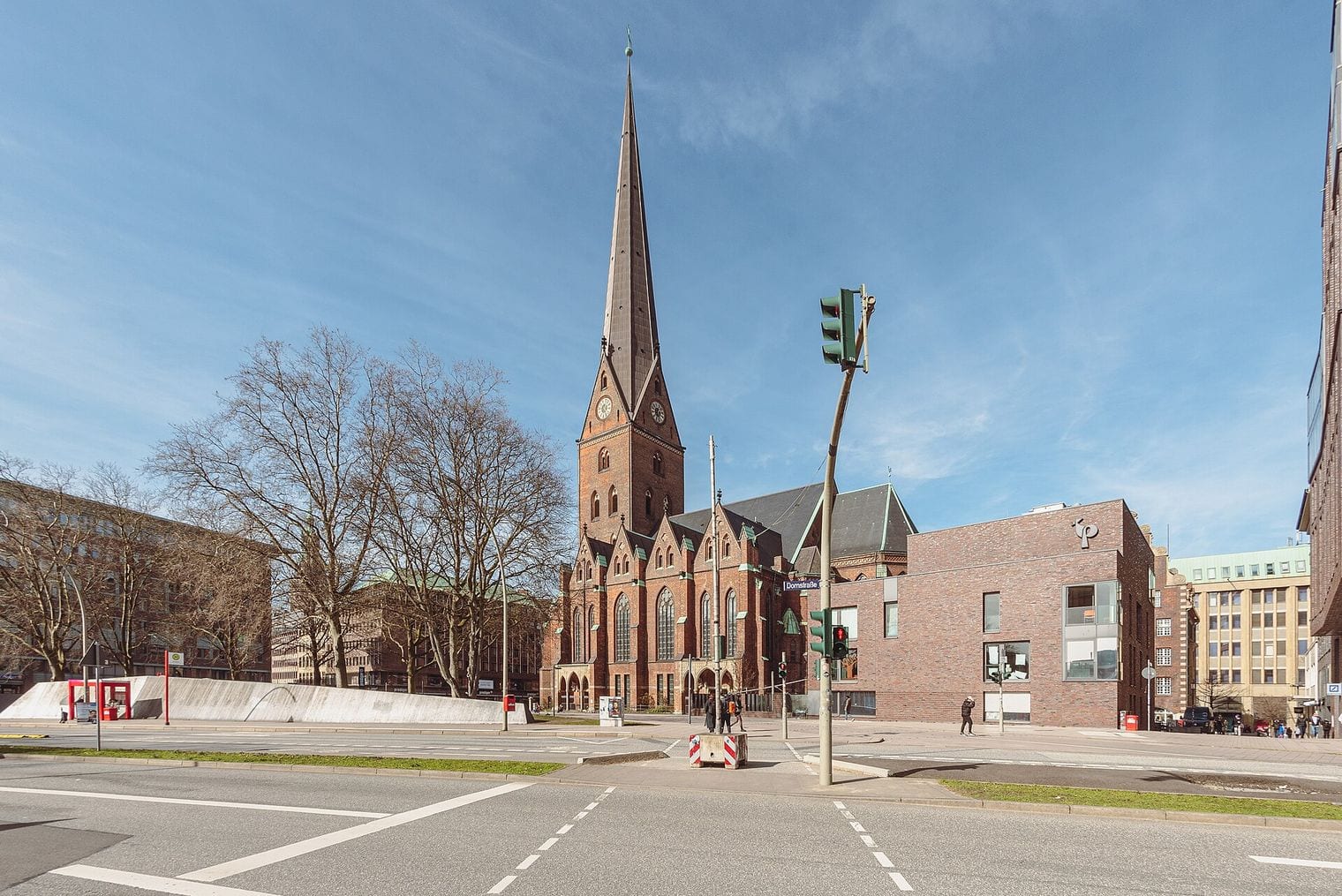
At 132 metres, St. Peter’s Church, Hamburg is level with the Michel to the last measurement, and the order between the two is arbitrary — pick whichever you can see from your hotel window. What St. Peter’s can claim on its own is age: it is the oldest parish church in Hamburg, with a congregation on this site since the twelfth century, and it is the tallest Hamburg church to have come through the twentieth century structurally intact.
The present building went up after the Great Fire of 1842 swept the medieval one away, and its spire was completed in 1878. The climb is the appeal — 544 wooden steps, no lift, up through the timbers of the tower to a window-level view over the Rathaus and the Binnenalster. On the way in, look at the bronze lion’s-head door handle, which dates from around 1342.
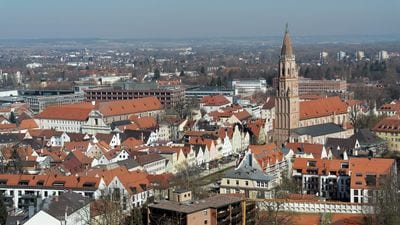
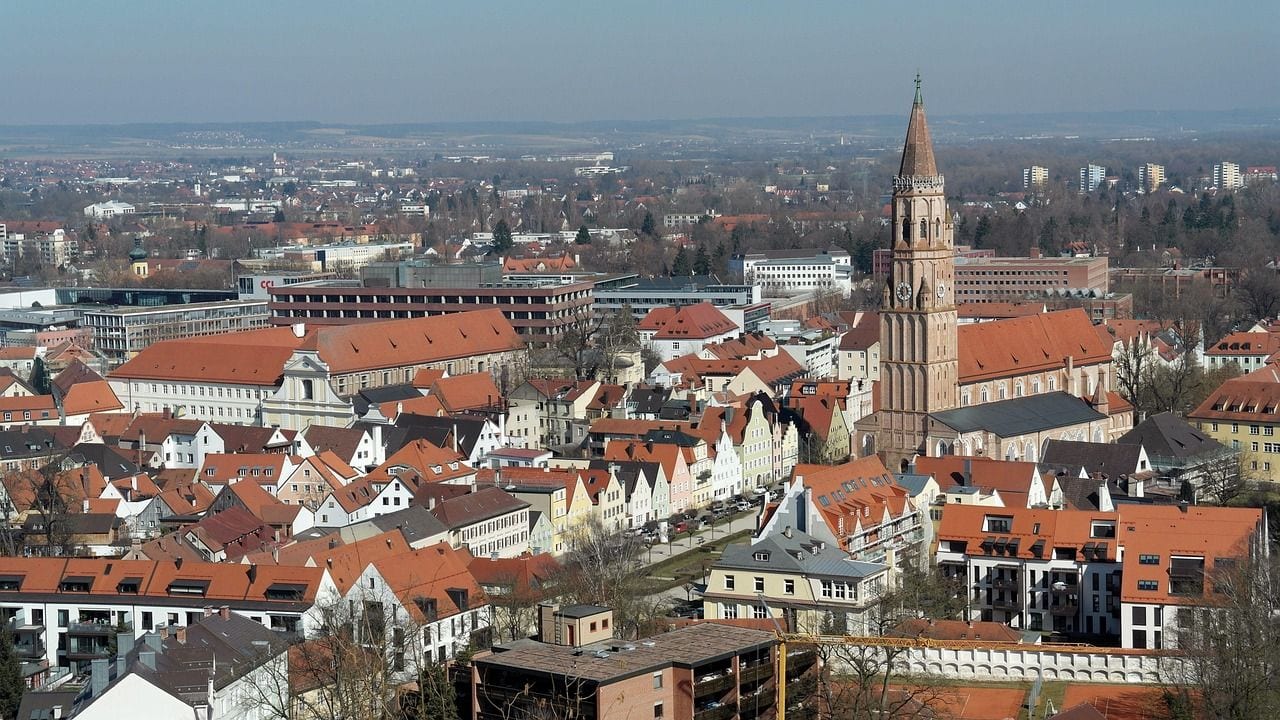
At 130.6 metres, St. Martin’s Church, Landshut is the tallest brick structure in the world and the tallest church in Bavaria — a record that has stood since roughly 1500 and that no later brick building has come close to taking. It is a genuinely improbable object: a late-Gothic tower built entirely of fired clay, tapering so severely at the top that the masonry near the finial is only centimetres thick.
Much of it is credited to Hans von Burghausen, the master mason whose tomb is set into the church’s exterior wall. Inside, the nave is a hall church, its columns unusually slender for the load they carry, so the space reads as far lighter than the outside suggests. Landshut sits about an hour north-east of Munich, and the tower is visible from well outside the town — which, for a church made of bricks, is the whole point.
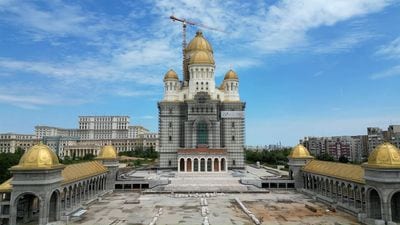
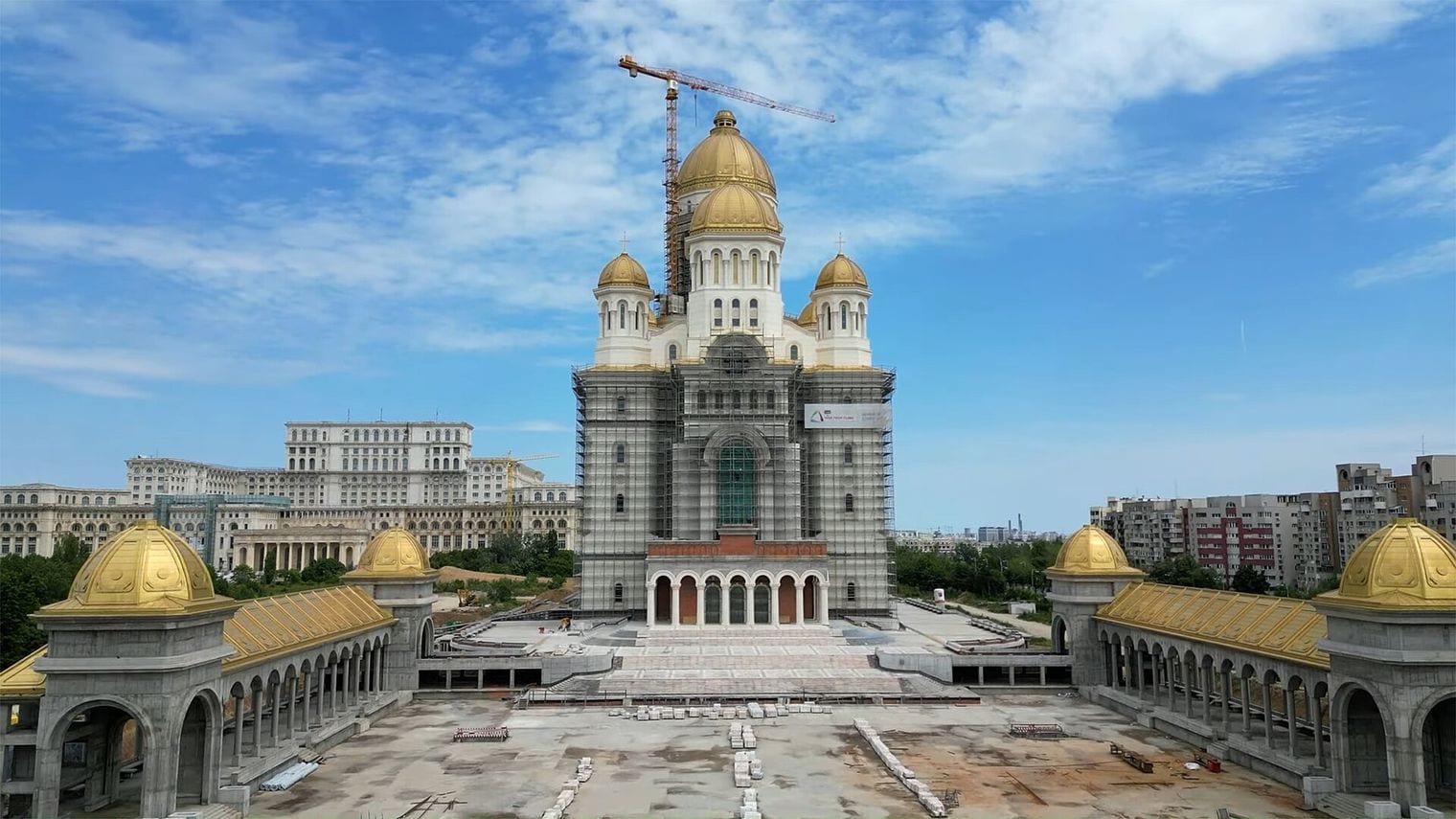
At 127 metres, the People’s Salvation Cathedral in Bucharest is the newest building on this list by decades — it was consecrated on 26 October 2025 — and it is both the tallest Orthodox church and the tallest domed cathedral anywhere. Measured from the ground rather than from its own base, the figure rises to about 133 metres, because the cathedral stands on a raised platform; the 127-metre number is the building itself.
It collects several other records on the way up. Its iconostasis, at over 400 square metres, is the largest in the Orthodox world, and it houses the largest free-swinging church bell on earth. It stands beside the Palace of the Parliament on ground cleared during the Ceaușescu era, cost in the region of €315 million, and has been argued about in Romania for most of the thirty years it took to build.
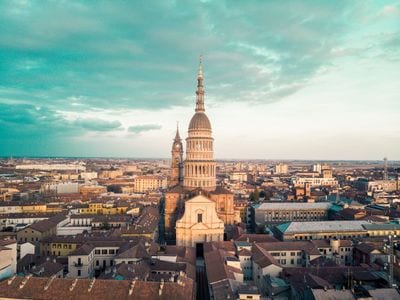
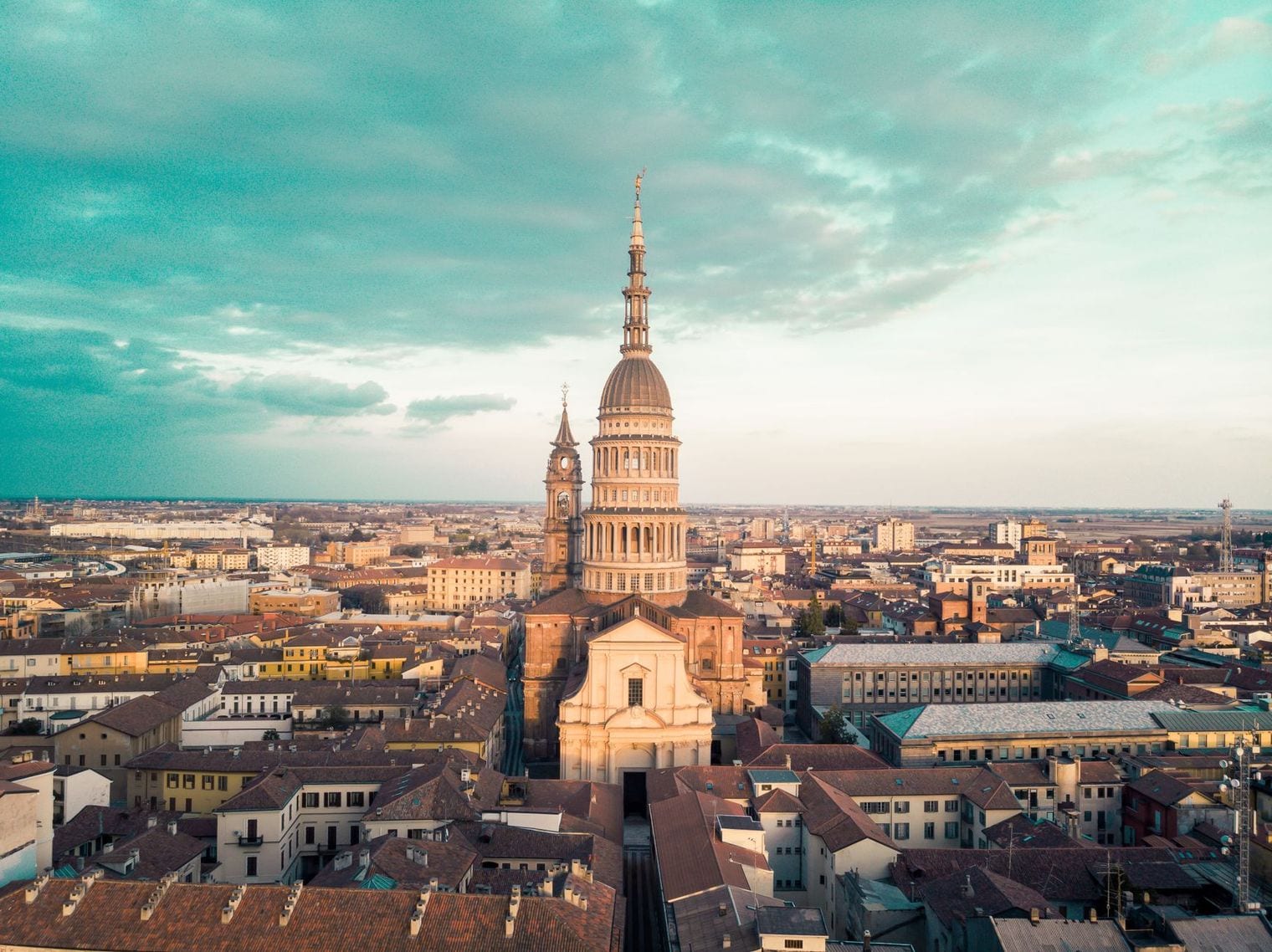
At 126 metres, the Basilica of San Gaudenzio in Novara is the tallest church in Italy, beating St Peter’s dome by a clear ten metres and edging Hamburg’s St. James’ by about half a metre. Strip off the statue at its summit and the masonry alone measures 121 metres — a distinction worth making, because the spire here is doing something no other dome on this list attempts.
It is the work of Alessandro Antonelli, who spent from 1841 to 1887 grafting an absurdly tall cupola onto an existing sixteenth-century church, and who built the similarly vertiginous Mole Antonelliana in Turin. The structure is masonry the whole way, without a steel frame, and it has needed reinforcement more than once since. Novara sits between Milan and Turin, and the dome is the thing you see from the train long before the town itself.
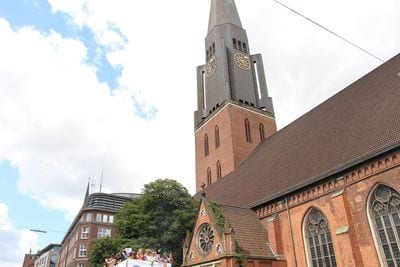
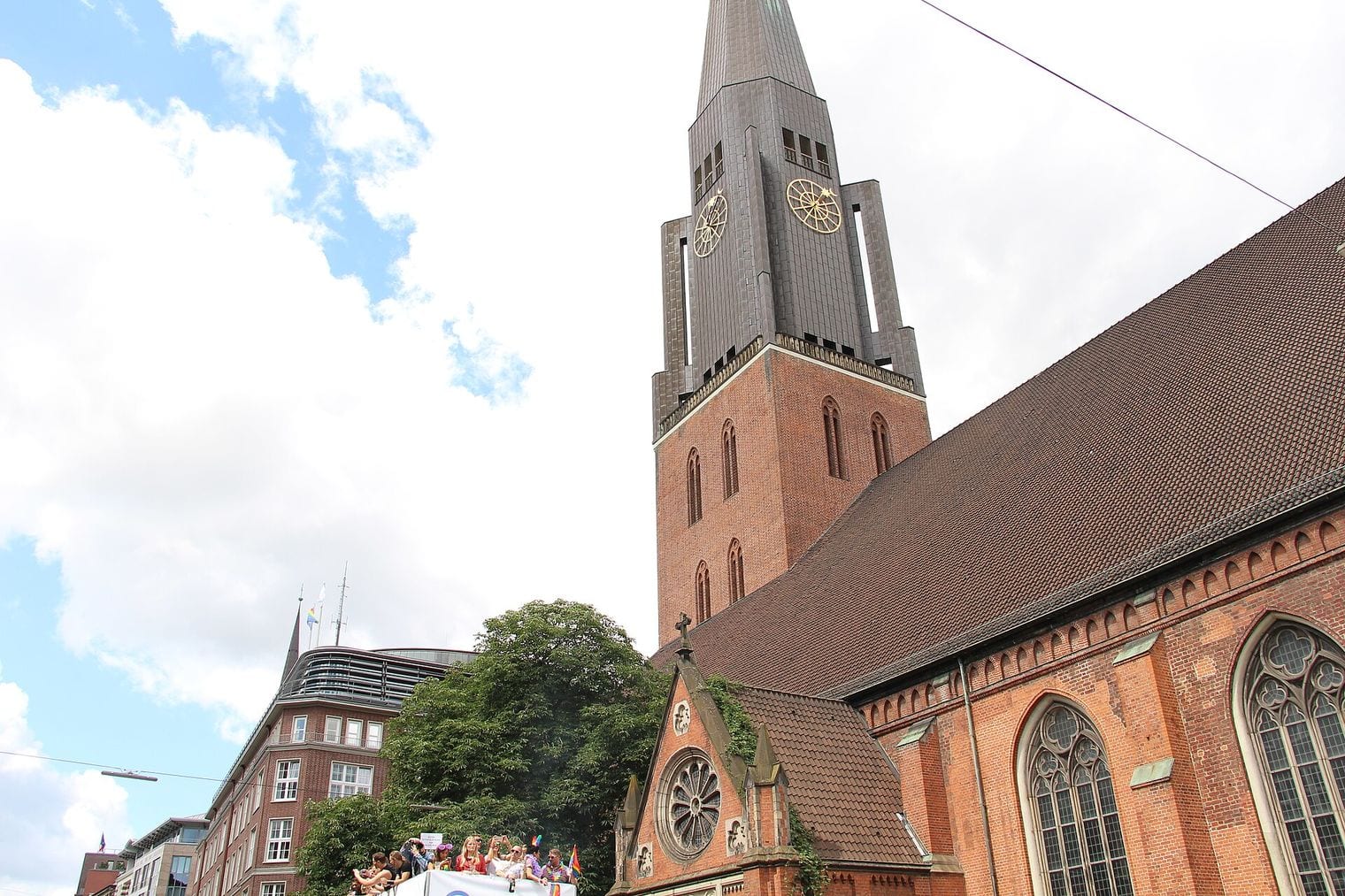
At 125.4 metres, St. James’ Church, Hamburg is the fourth-tallest church in a city that holds three of the top twenty, and it is separated from Lübeck below it by only 40 centimetres. Its spire is the modern one on this list: the medieval tower did not survive the bombing of 1944, and the replacement, finished in 1963, is a spare copper-clad cone that makes no attempt to imitate what stood before.
The reason to go inside is the organ. Arp Schnitger built it between 1689 and 1693, and it survived the war because the pipework had been removed and stored elsewhere — around 4,000 of its pipes are original, which makes it one of the most important baroque organs anywhere. The brick hall church around it dates to the fourteenth and fifteenth centuries, and recitals are a regular fixture.
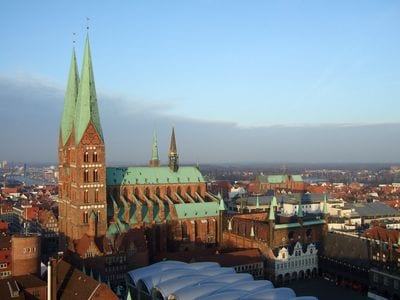
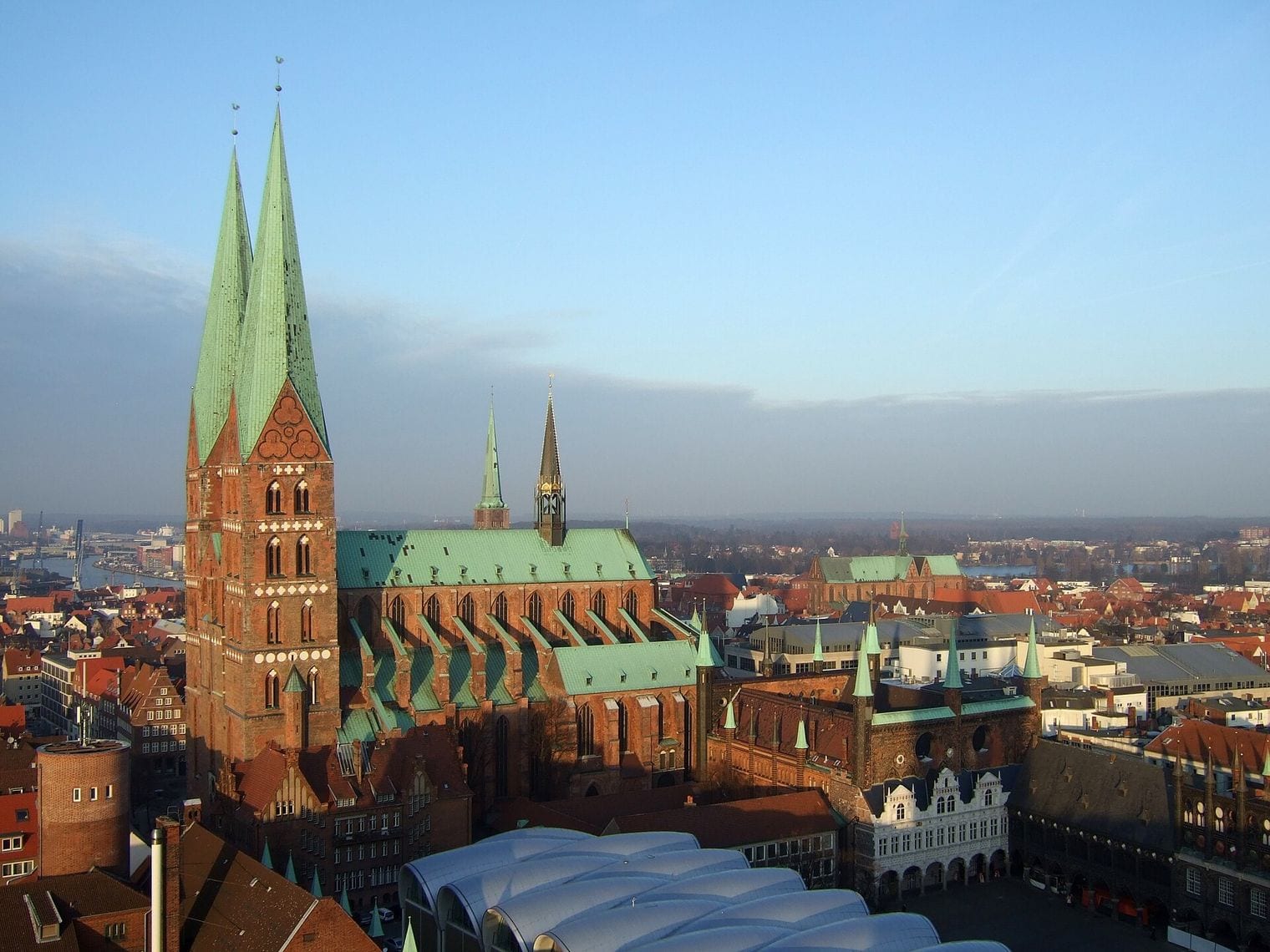
At 125 metres, St. Mary’s Church, Lübeck has the second-tallest twin-tower façade in the world, and until Cologne was finally completed in 1880 it had held the medieval record for one for more than five centuries. It is the model that Brick Gothic churches around the Baltic were built to copy — the merchants of the Hanseatic League exported this silhouette from Lübeck to Danzig, Riga and Tallinn.
Its vaulted brick nave is the highest of its kind anywhere at about 38.5 metres. In a side chapel the shattered bells still lie in the floor where they fell during the air raid of Palm Sunday 1942, left exactly as they landed as a memorial. Lübeck’s old town is a UNESCO World Heritage Site, and this church is the building the whole skyline is arranged around.
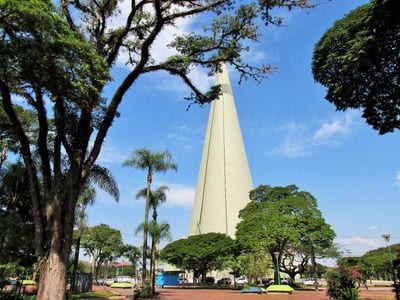
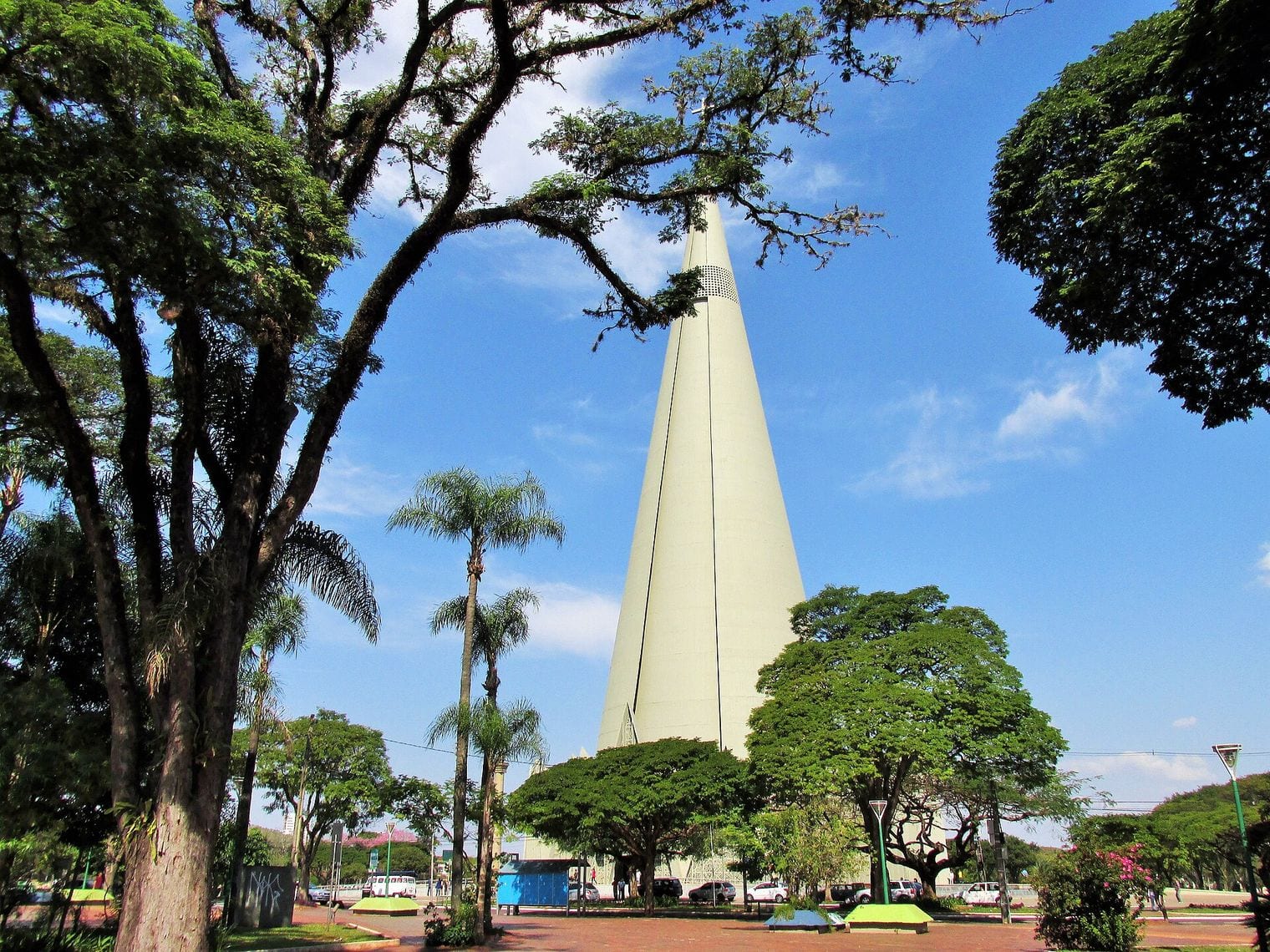
At 124 metres to the tip of its cross, Maringá Cathedral is the tallest church in the Americas — North and South — and it clears Antwerp by a tenth of a metre. It looks like nothing else here: a plain white cone rising straight off the ground with no tower, no spire and no façade, a single conical shell that is the entire building.
José Augusto Bellucci designed it in the late 1950s, and the shape was drawn from the Soviet Sputnik satellites then in the news, which is why a Catholic cathedral in southern Brazil resembles a rocket.
It was completed in 1972 for a city that had itself only been founded in 1947, built as a statement of ambition by a settlement barely two decades old. It holds around 4,700 people, and the interior is a single soaring space with no columns at all.
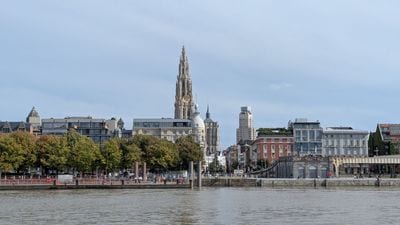
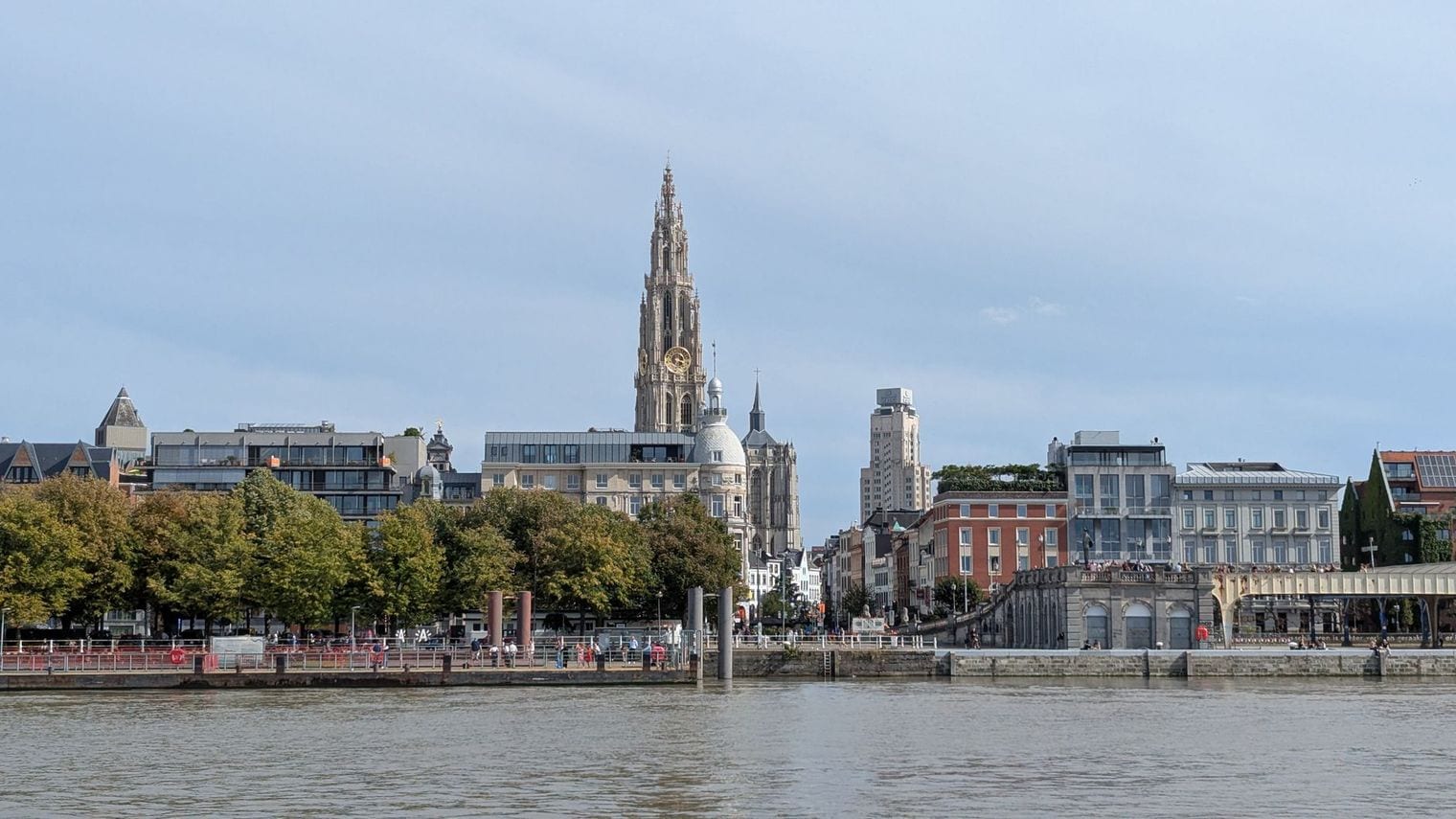
At 123.9 metres, the Cathedral of Our Lady, Antwerp is the tallest church in the Low Countries, and it sits within a tenth of a metre of Maringá above it and two-tenths of St. Olaf’s below — three churches on three continents effectively level. Its north tower took from 1352 to 1521 to finish; the south tower was begun, ran out of money and stops short, so the west front has stayed lopsided for five hundred years.
It functions as much as a gallery as a church. Four large Rubens altarpieces hang here, including The Raising of the Cross and The Descent from the Cross, painted for this building and still in the space they were designed for. The tower carries a 49-bell carillon, and UNESCO lists it among the belfries of Belgium and France.
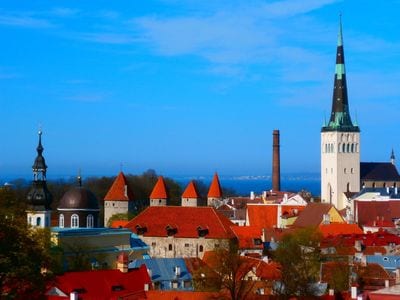
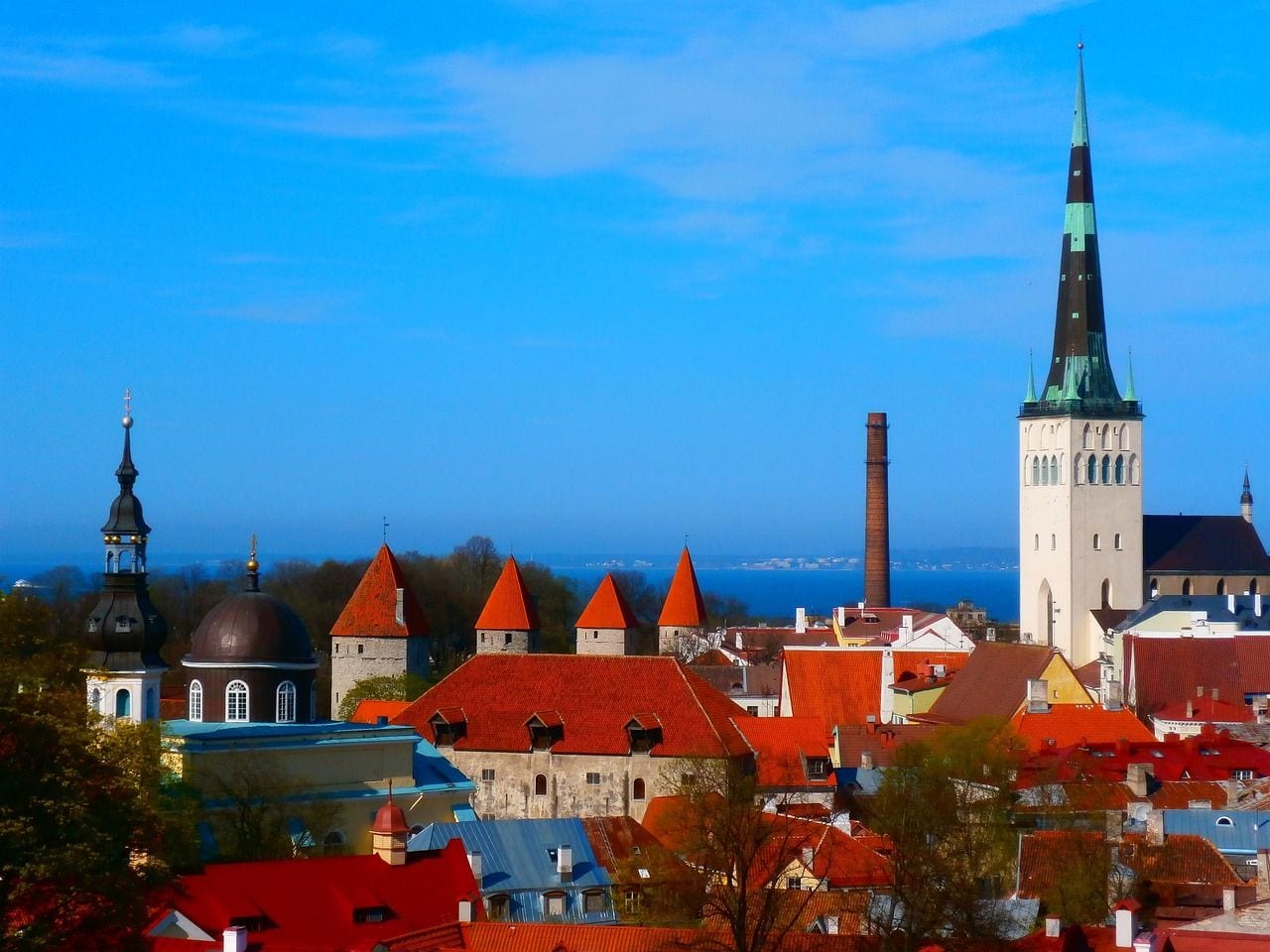
At 123.7 metres, St. Olaf’s Church, Tallinn is the tallest church in the Baltic states, and by some accounts its earlier spire made it the tallest building in the world between 1549 and 1625.
That claim rests on a medieval height of 159 metres, and it is genuinely disputed: the figure depends on reading the original measurement in Rhineland fathoms, where local fathoms would put the spire nearer 115 to 125 metres. Either way it was enormous, and lightning has struck the tower at least eight times and burned it three, so what stands now is the more modest nineteenth-century rebuild.
It is also the tallest Baptist church anywhere, which is an unusual thing for a medieval Hanseatic building to be; the congregation is Estonian Baptist. A narrow spiral stair of 232 steps climbs to an external walkway that rings the base of the spire, giving the best view over Tallinn’s old town and out to the ferry harbour. The walkway is open seasonally and the stair is genuinely tight.
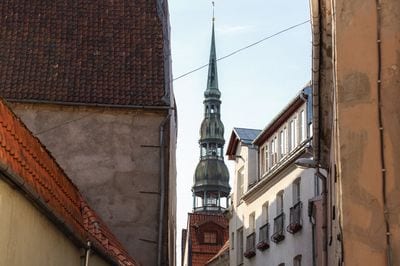
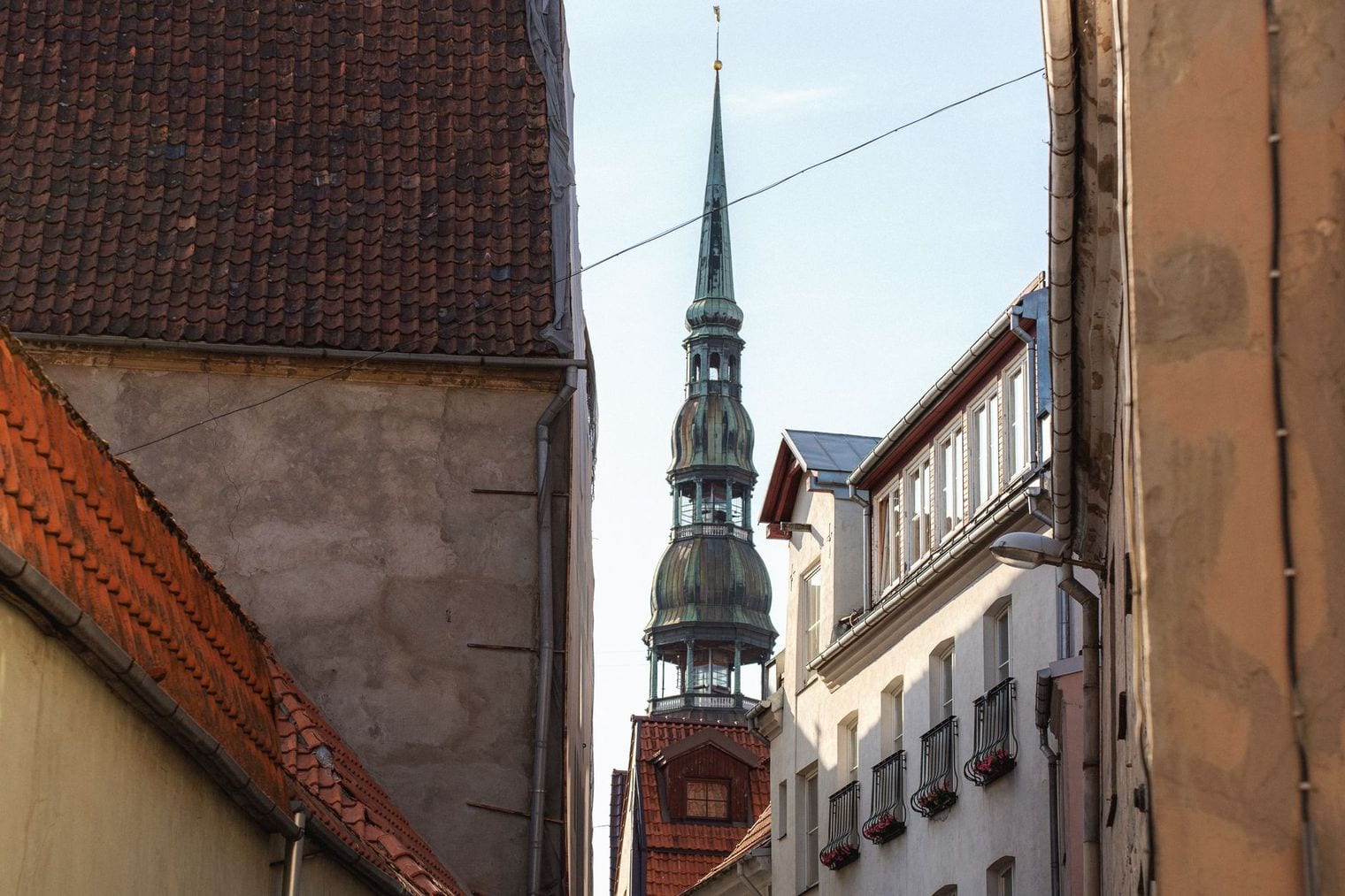
At 123.3 metres, St. Peter’s Church, Riga takes the last place on this list by four-tenths of a metre over Tallinn — the two tallest buildings in the Baltics, forty centimetres apart. It is the second-tallest church in the region and the tallest in Latvia, first recorded in 1209, and its tower has an unusually eventful record of falling down: it collapsed in 1666, again in 1721, and burned out after shelling in June 1941.
The present spire went up in 1973 and is steel rather than timber, which is why it has stayed put. That rebuild also brought a lift, so this is the easiest climb of any church here: it runs to a viewing gallery at 72 metres, looking over the red roofs of Riga’s old town and the Daugava river. A weathercock has topped the spire in one form or another since the fifteenth century.
FAQ: The World’s Tallest Churches
What is the tallest church in the world?
The Sagrada Família in Barcelona, at 172.5 metres. Its central Tower of Jesus Christ overtook Ulm Minster in October 2025 and reached full height on 20 February 2026, when the upper arm of its cross was lifted into place. The basilica is complete on the outside but interior work continues past 2028.
What was the tallest church before the Sagrada Família?
Ulm Minster in Germany, which held the title for 135 years. Its 161.53-metre spire was finished in 1890 and is still the tallest church spire ever completed in stone. It was deliberately raised mid-construction so that Ulm would clear Cologne Cathedral, which had taken the record a decade earlier.
Why are Notre-Dame and St Paul’s not on this list?
Because neither is tall enough. This ranking is by height alone, and the cut-off for the top twenty is 123.3 metres. Notre-Dame de Paris and St Paul’s Cathedral in London are both well short of that. So is Salisbury Cathedral, England’s tallest church, which misses the list by twenty centimetres.
What is the tallest church in the United States?
Riverside Church in New York City, at 119.8 metres. It ranks twenty-third in the world, three places below the cut for this list. The tallest churches in the Americas are further south: Maringá Cathedral in Brazil, at 124 metres, holds the record for both continents.
Which is the tallest church outside Europe?
The Basilica of Our Lady of Peace in Yamoussoukro, Ivory Coast, at 158 metres. It is also the tallest Catholic church anywhere and, by Guinness World Records, the largest church in the world by floor area. Only two of the twenty churches on this list stand outside Europe.
What is the newest church on this list?
The People’s Salvation Cathedral in Bucharest, consecrated on 26 October 2025 and the only church here completed this century. At 127 metres it is also the tallest Orthodox church and the tallest domed cathedral anywhere — three records at once, which is unusual even among the world record breakers we track.
Do tower-only ruins count as the tallest churches?
Not here. This list ranks complete church buildings, so a surviving tower whose church is gone does not qualify — which is why Hamburg’s 147-metre St. Nikolai, now a war memorial, is absent. Detached bell towers are excluded on the same rule, including St Mark’s Campanile in Venice and Utrecht’s Dom Tower.