We may earn a commission if you book tickets, tours or a stay through a link on
this page, at no extra cost to you. It never affects which places we list or how
we rank them (how we make money).
The record
601 m1,972 ft
Makkah Royal Clock Tower
Saudi Arabia
The record
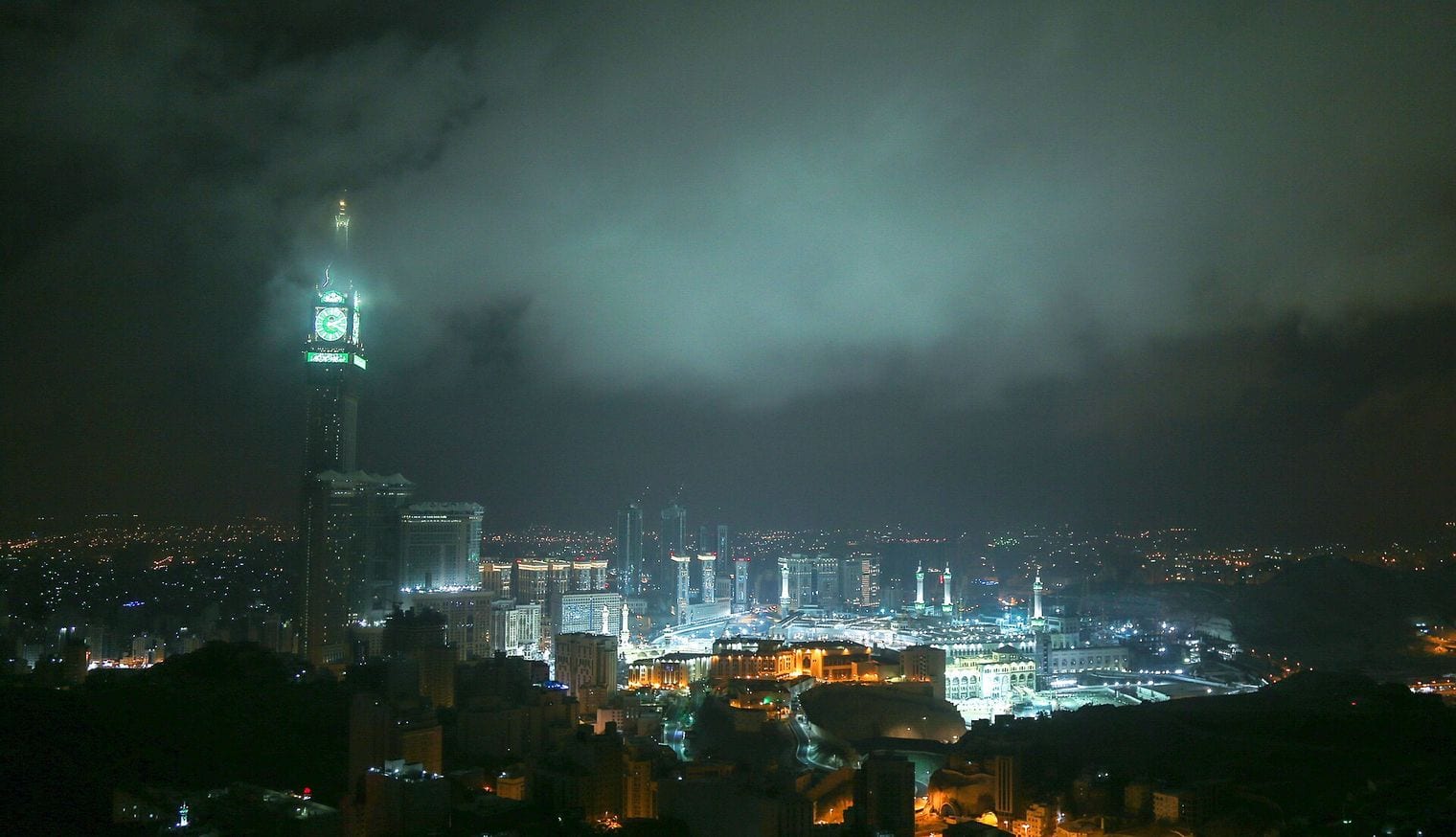
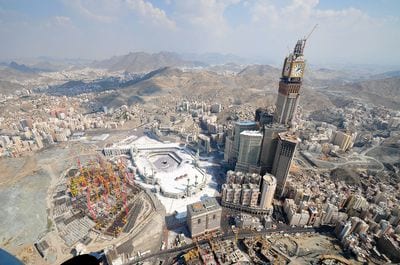
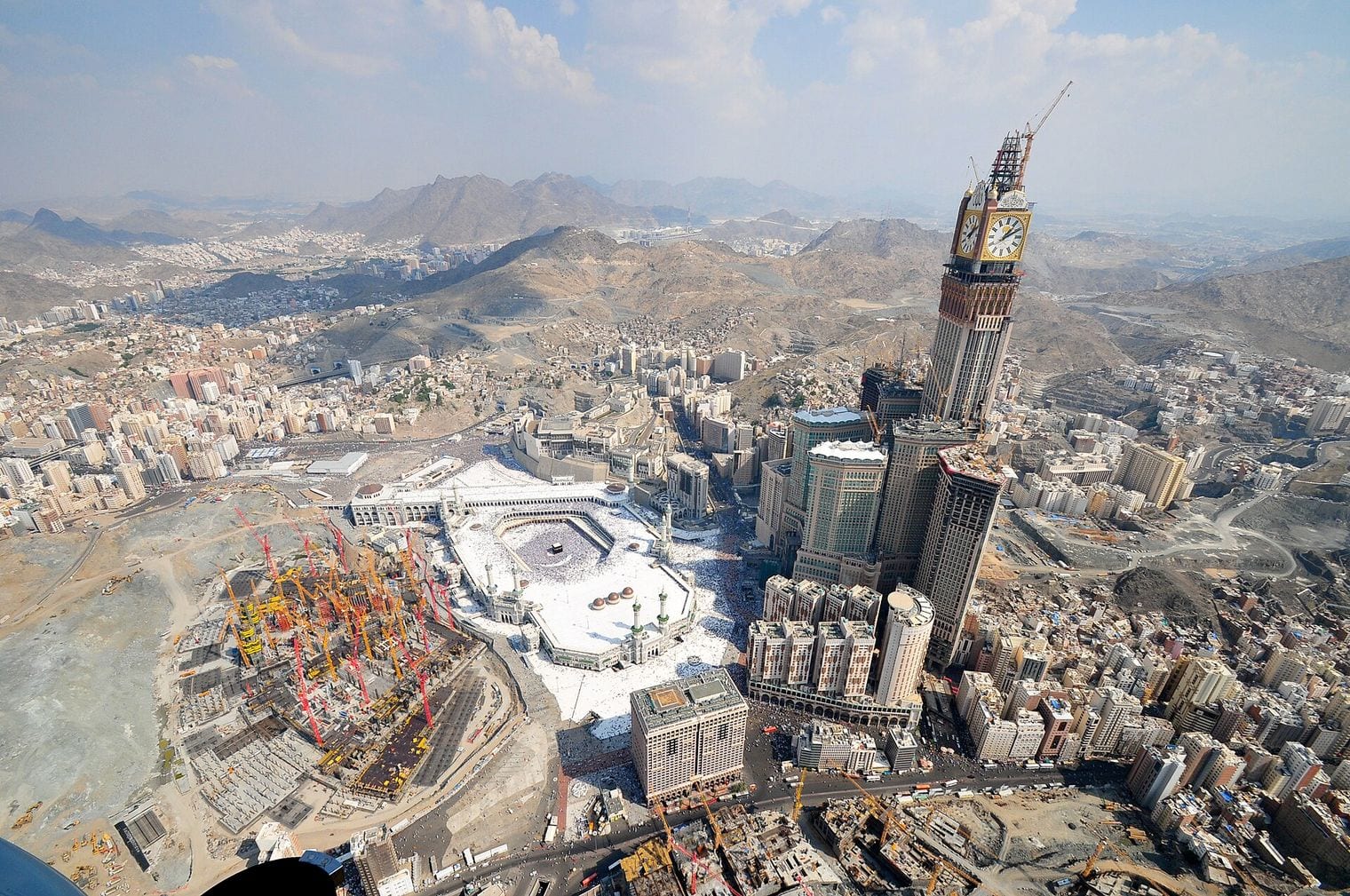
The tallest clock tower in the world is the Makkah Royal Clock Tower, in Saudi Arabia — 601 m (1,972 ft), height.
Source: Guinness World Records / CTBUH. Verified .
Big Ben does not make this list. London's Elizabeth Tower stands 96 m tall - a giant in 1859, but barely half the height of the towers ranked here, which run from 601 m down to 112 m across eight countries.
Two rules decide the order. The first is what gets measured: the architectural height of the structure carrying the clock, spires and ornamental crowns included, antennas excluded - which is why Tokyo's NTT Docomo Yoyogi Building enters at 240 m rather than the 272 m it reaches with its mast.
The second is that the clock must be a working exterior face forming part of the tower's crown, not a dial fixed to the base of something taller. That rule costs the list Chicago's Board of Trade Building, whose 4 m clock sits low on the facade of a 184 m tower, and Moscow State University, whose famous 9 m dials no primary source will pin to a measurable tower height.
The four dials on the Makkah Royal Clock Tower are 43 m across, about six times the width of Big Ben's — and they sit higher above the ground than any clock faces ever built.
Big Ben does not qualify. London's Elizabeth Tower is 96 m tall, some 16 m short of the cut, and its 7 m dials are smaller than the ones on Philadelphia City Hall.
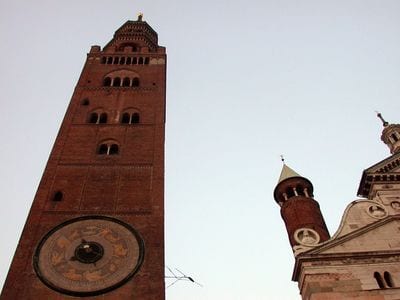
The Torrazzo of Cremona carries the largest astronomical clock in the world, an 8.20 m dial built between 1583 and 1588 that tracks the zodiac, the moon's phases, the solstices and eclipses rather than the working day.
Hamburg holds three places on this list — St. Michael's, St. Peter's and the city hall — matched only by New York. The two churches are level to the metre at 132 m apiece.
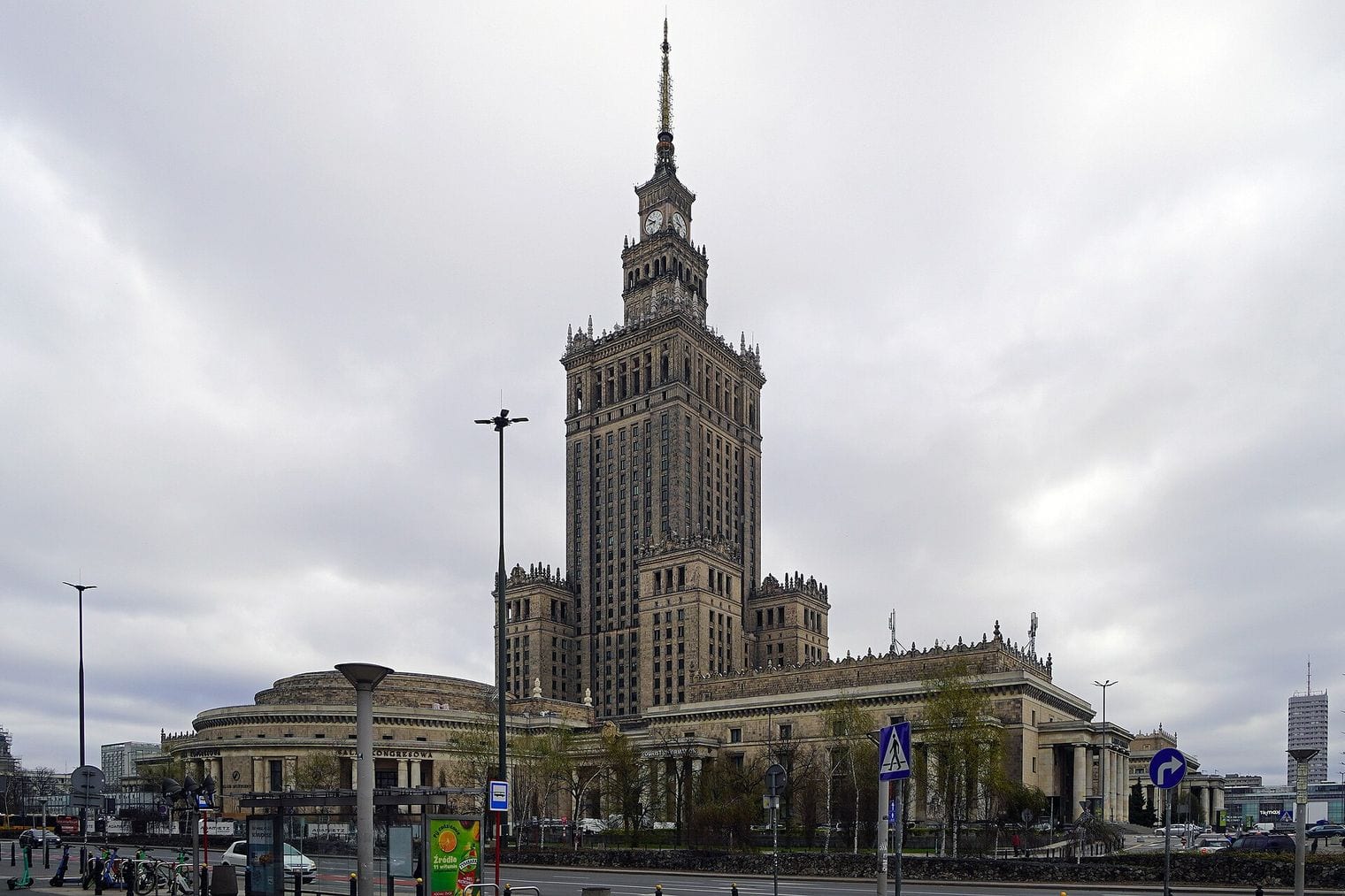
Warsaw's Palace of Culture and Science was the tallest clock tower in the world for barely two years, from the night its clocks started in 2000 until Tokyo's Docomo tower gained a face in 2002.
Italy's tallest bell tower stands over a village of a few thousand people: the Mortegliano campanile in Friuli, whose clock was built by Solari of Pesariis — the firm behind the split-flap departure boards once found across Europe.
At 601 m, the Makkah Royal Clock Tower is not merely the tallest clock tower in the world - it is taller than the next two on this list stacked together. Guinness World Records recognises it as the tallest clock tower, and nothing has approached it since.
The tower is the centrepiece of Abraj Al Bait, a complex of seven towers that rises directly beside the Great Mosque in Mecca, and it functions as a hotel for pilgrims rather than as a civic monument.
The clock itself is built at a scale nothing else comes close to. Four identical faces, one on each side, measure 43 m across - roughly six times the diameter of the dials on Big Ben - and they sit higher above the ground than any clock faces ever built.
A golden crescent crowns the whole structure. Because the tower is oriented to the Kaaba below it, the clock is read by crowds numbering in the hundreds of thousands during pilgrimage season.
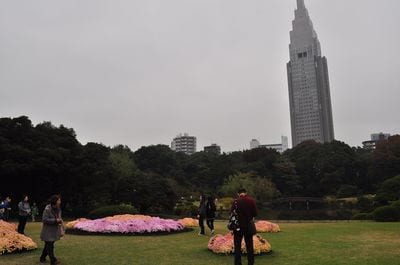
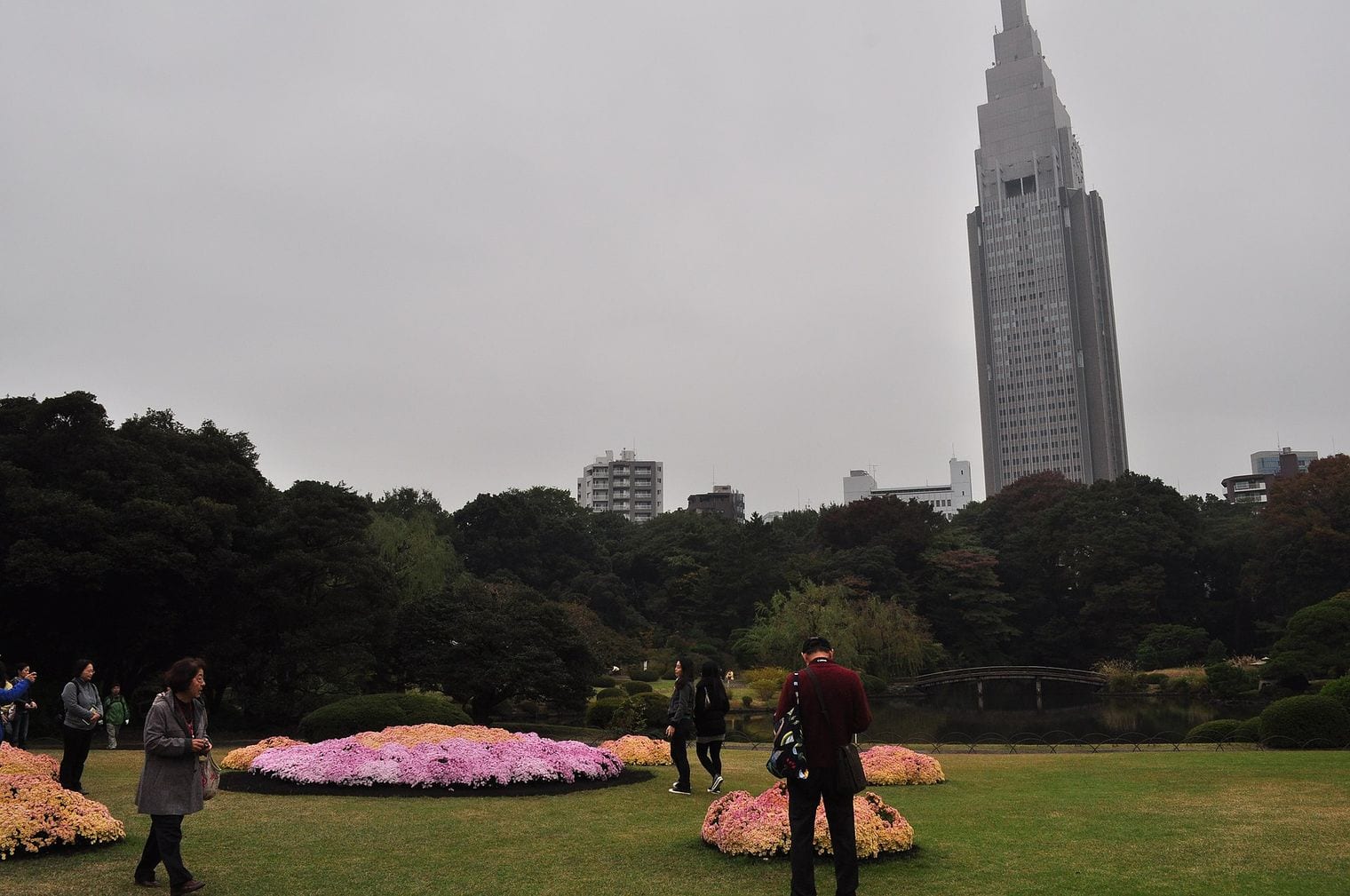
At 240 m, the NTT Docomo Yoyogi Building is the tallest clock tower outside Saudi Arabia. The figure is worth pausing on: the building reaches 272 m if you measure to the top of its mast, but that mast is an antenna rather than architecture, so the ranking here uses the 240 m architectural height. Applying the other figure would not change its position, but it would break the basis the rest of the list is measured on.
The tower rises over Shibuya in Tokyo and is often compared to the Empire State Building, whose setback silhouette it echoes in a much slimmer form. Its single clock face, 15 m in diameter, was added in November 2002 to mark NTT Docomo's tenth anniversary - two years after the building itself was finished, which makes it one of several entries here whose clock came later than its stonework.
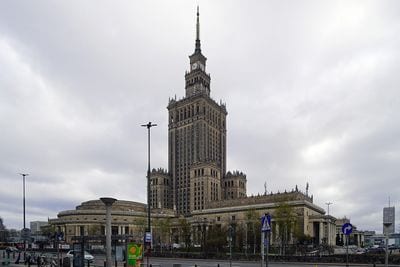
At 237 m, Warsaw's Palace of Culture and Science held the title of tallest clock tower in the world for two years, from the moment its clocks started in 2000 until Tokyo's Docomo tower gained its face in 2002.
The height breaks down into a 120 m main structure, a 40 m turret and a 77 m spire, and it remains one of the tallest buildings in Poland. Note that some sources quote 230.7 m; the building's own figure, and the one used here, is the full architectural height.
The four clock faces measure 6.3 m across and were added at the summit ahead of the millennium celebrations, beginning to keep time on 31 December 2000. The palace was a gift from the Soviet Union, completed in 1955, and Varsovians have argued about it ever since - a building that many would happily see gone, wearing a clock that most of the city sets its watch by.
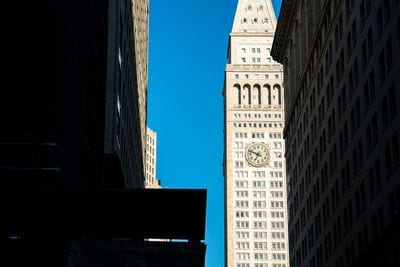
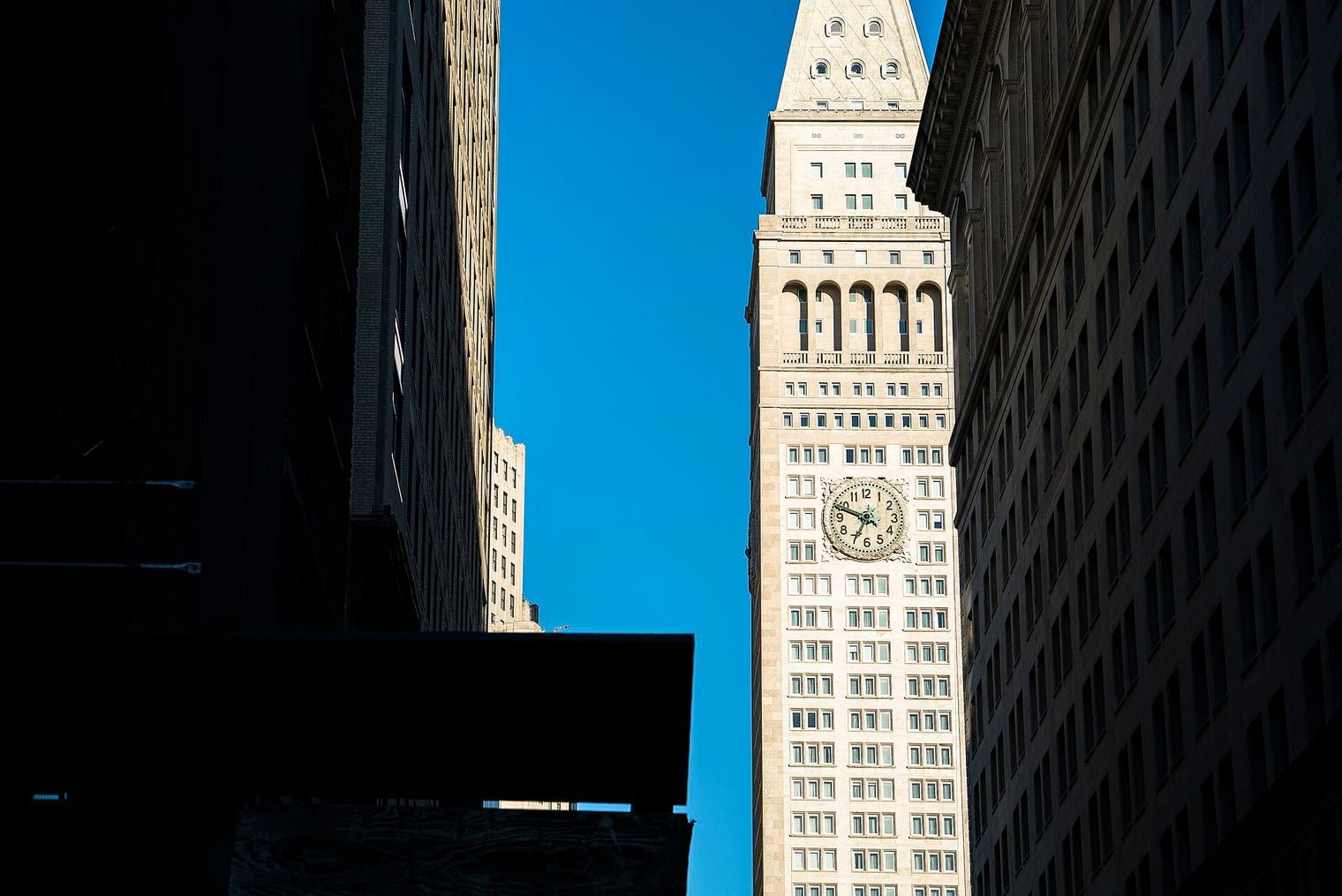
At 213.4 m, the Metropolitan Life Insurance Company Tower on Madison Square was the tallest building in the world when it opened in 1909, holding that title until the Woolworth Building overtook it in 1913. It remains the tallest entry on this list that was purpose-built as a campanile, its design borrowed loosely from the bell tower of St Mark's in Venice - though at more than twice the height of the original.
Four clock faces, each 8 m across, were installed in 1912 and are set into the tower a little over halfway up, below the pyramidal crown and its lantern. The dials are lit at night and the tower chimes the hours. The building has since been converted to a mix of offices and hotel rooms, but the clock has remained a fixed point on the Manhattan skyline for more than a century.
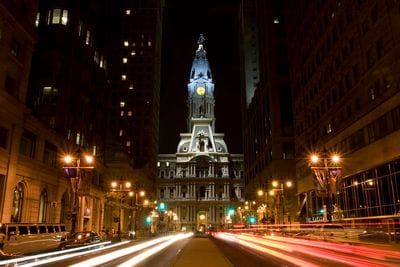
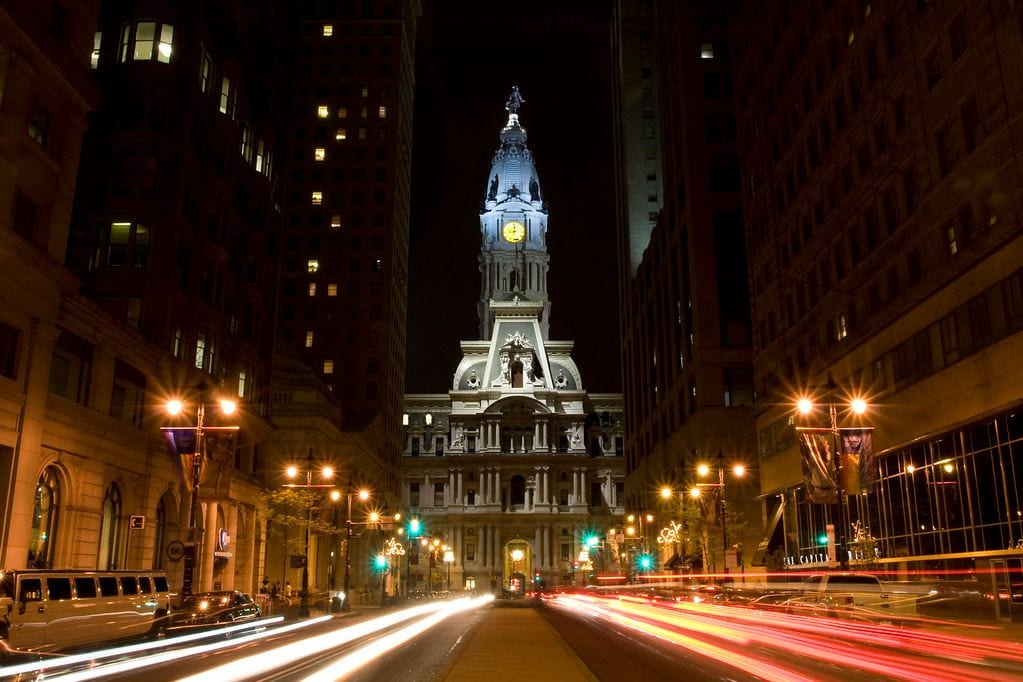
At 167 m, Philadelphia City Hall was the tallest clock tower in the world from its completion in 1901 until the Metropolitan Life tower passed it in 1909, and it is still the tallest masonry building anywhere - load-bearing stone and brick, with no structural steel frame carrying the walls. A statue of William Penn stands on top, and for decades an informal agreement kept every other building in the city below the brim of his hat.
Its four clock faces are 7.9 m in diameter, which makes them noticeably larger than the 7 m dials on Big Ben. The tower is open to visitors: a lift runs up to an observation deck immediately beneath the statue, giving a view straight down the two boulevards that meet at the building.
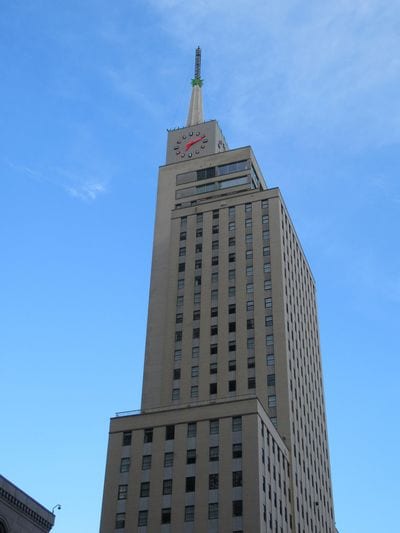
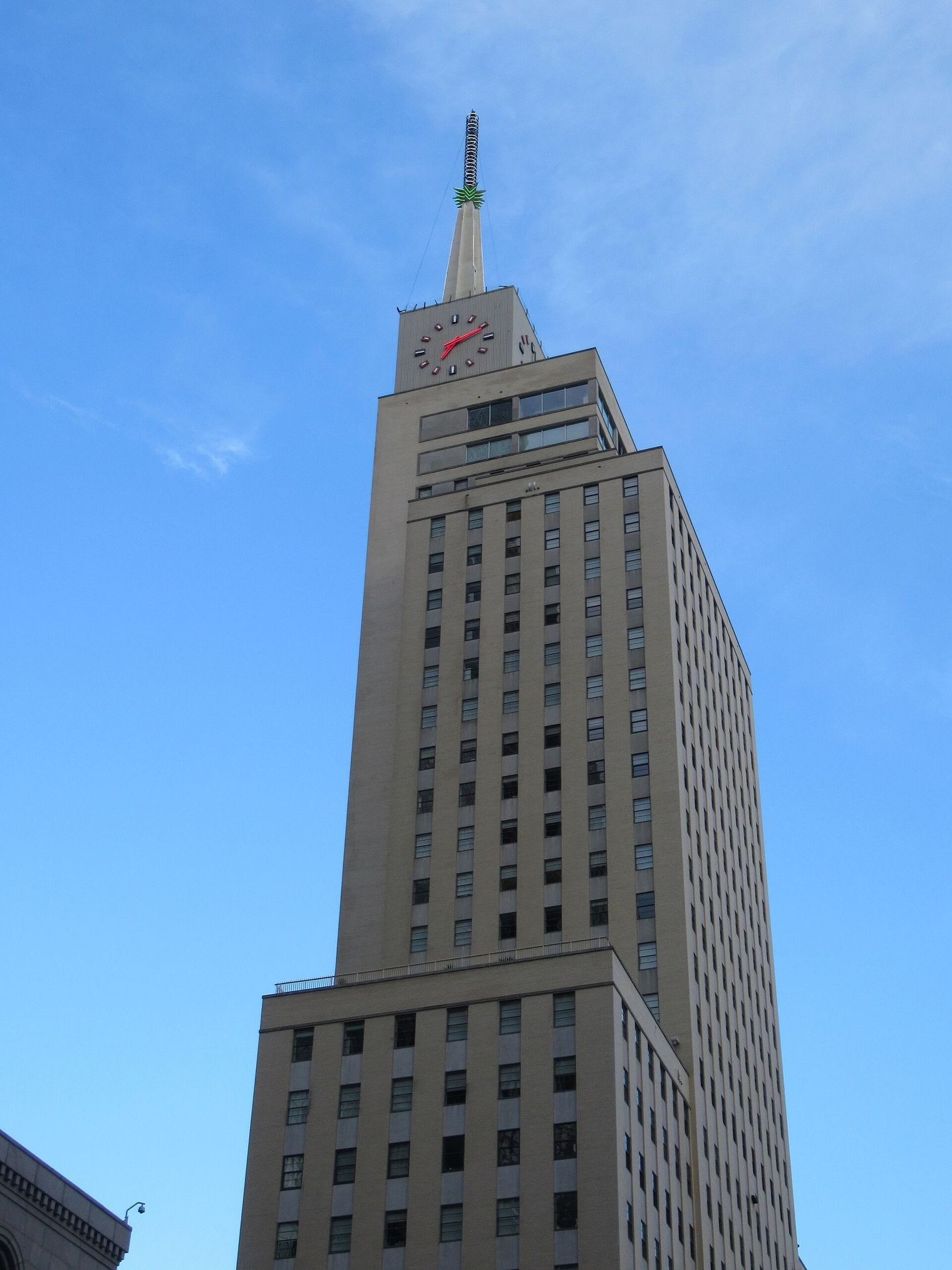
At 159.4 m, the Mercantile National Bank Building gives Dallas one of the tallest clock towers in the United States. The building was finished in 1942 and the ornamental clock tower added the following year, wartime restrictions on materials having shaped what could be built and when.
Above the clock stage sits a decorative weather spire, which is why some sources quote a taller figure; the ranking here uses the architectural height recorded by the Council on Tall Buildings and Urban Habitat.
The four faces measure 9.4 m across and are among the largest clock dials in the United States. New movements and hands were manufactured for them in 2007 by the Electric Time Company, so the mechanism running today is modern even though the housing is not. The tower was converted into 225 apartments, part of a wider revival of the block that had stood largely empty for years.
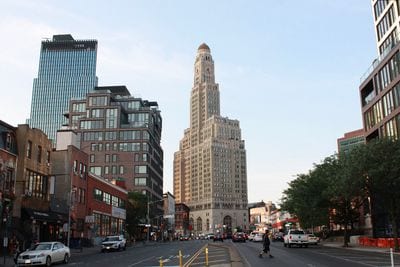
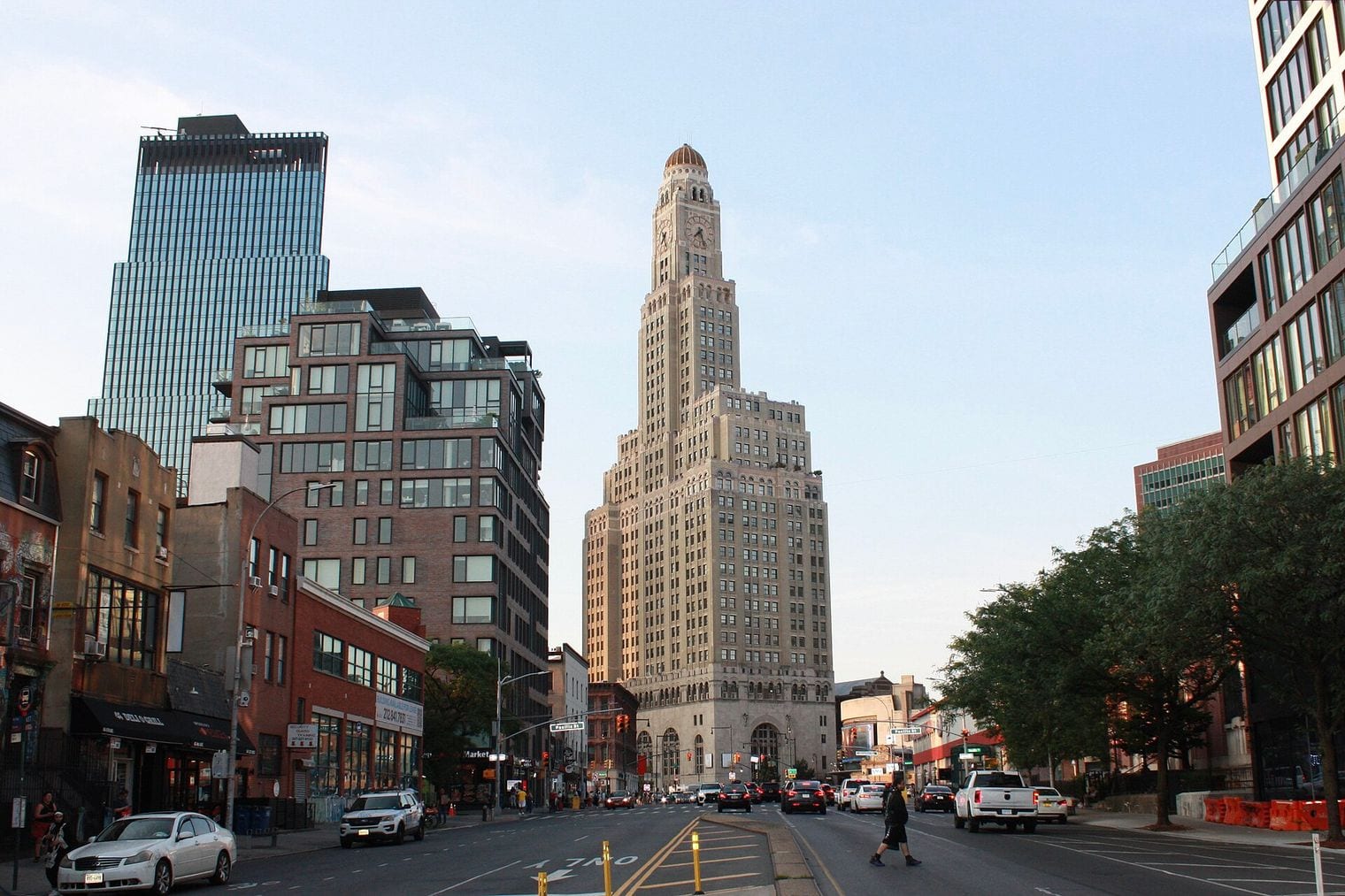
77. Williamsburgh Savings Bank Tower
1 Hanson Place, Brooklyn, New York City, United States
At 156 m, the Williamsburgh Savings Bank Tower was Brooklyn's tallest building for more than eighty years and carries what was, until 1962, the largest four-faced clock in the world.
Each dial measures 27 ft - a little over 8 m - and the four of them fill the square shaft between the thirtieth and thirty-second floors, directly beneath the gilded dome. For most of the twentieth century it served as the borough's unofficial beacon, visible far across the low roofline around it.
The clock went dark for years before a million-dollar restoration relit the faces in November 2007 and set the hands running again in January 2008, with further repairs in 2013. The building opened in 1929 and now holds 179 apartments, its vaulted banking hall serving as an event space. It is a rare case of a clock tower that has outlived the institution that built it entirely intact.
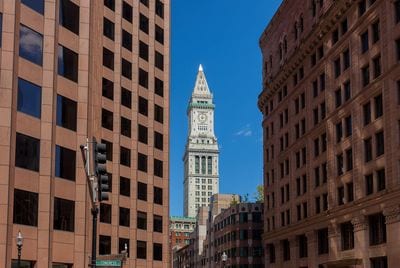
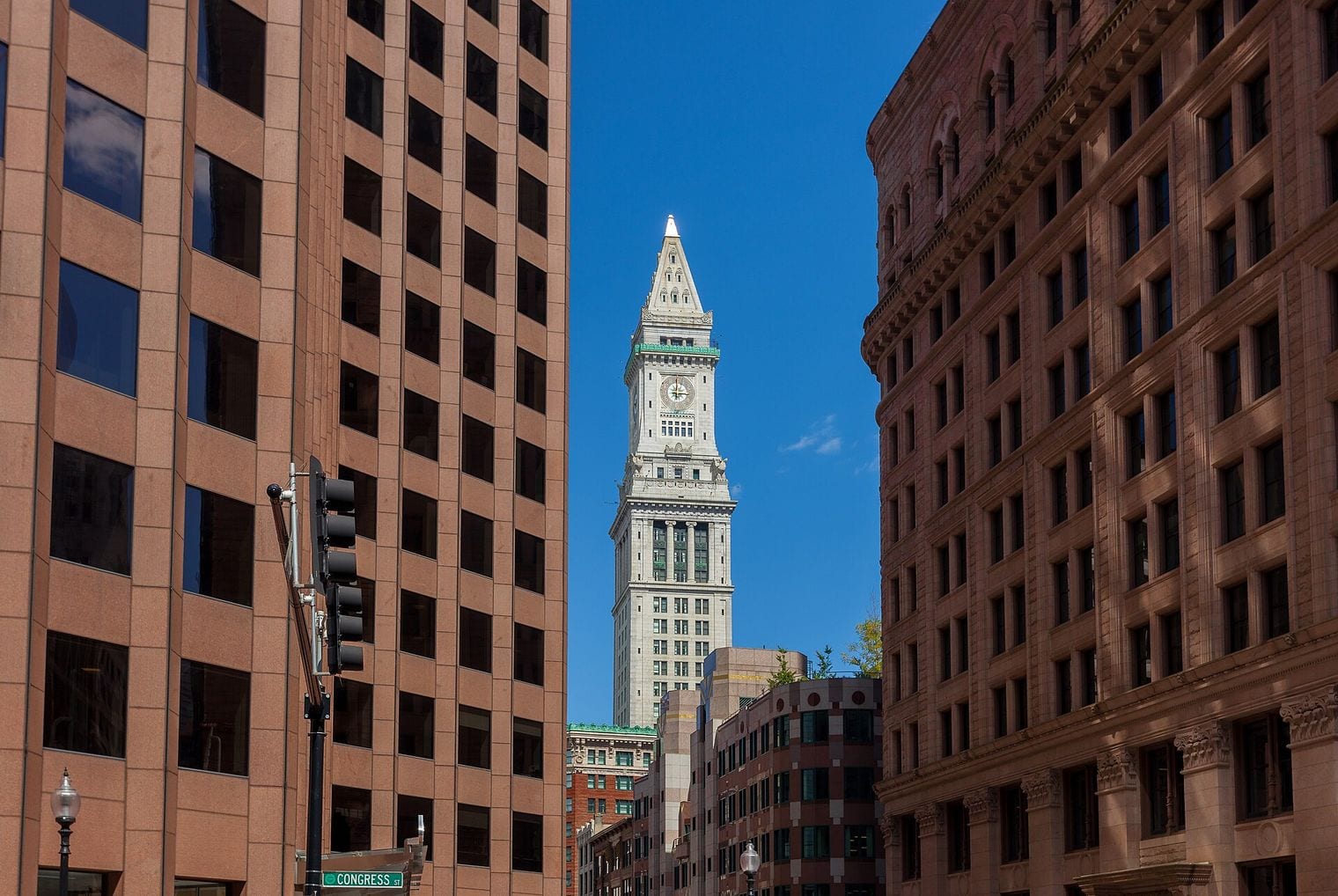
At 151 m, the Custom House Tower gave Boston its first true skyscraper, and it did so by exploiting a loophole: federal property was not bound by the city's height limit, so a granite tower was dropped onto a Greek Revival customs house of the 1840s and completed in 1915. The result is one of the odder silhouettes on this list, a classical temple with a clock tower growing out of its roof.
The four faces are 6.7 m in diameter, and for much of the twentieth century they kept famously poor time - the original installation used an undersized motor that was never really equal to the hands it had to turn. The hands were replaced with carbon fibre in December 2020, a considerable weight saving on the original redwood. The building now operates as a Marriott timeshare with a public observation deck on the twenty-sixth floor.
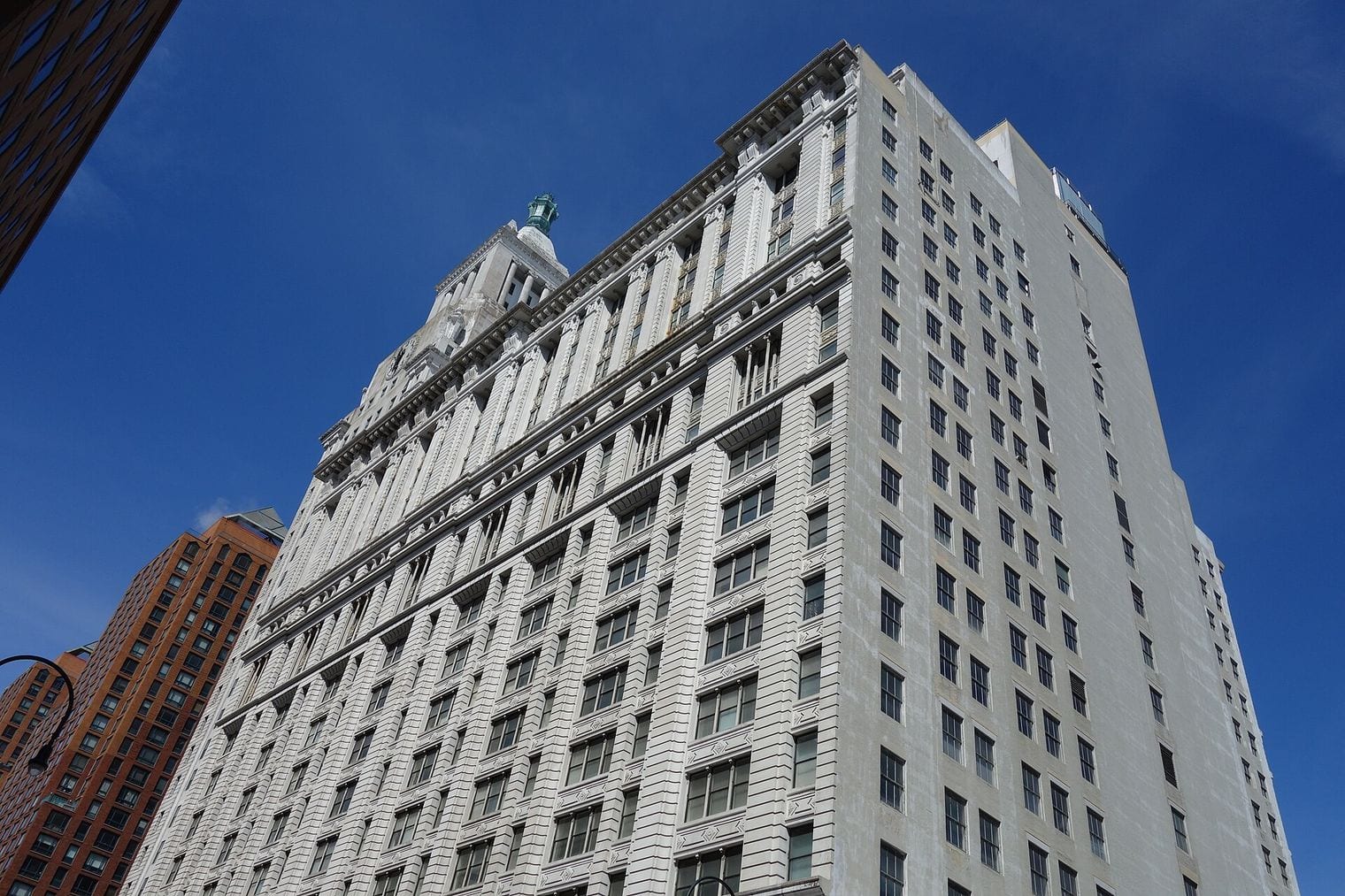
At 146 m to the top of its lantern, the Consolidated Edison Building carries one of Manhattan's least-photographed great clock towers, standing over Irving Place at the eastern edge of Union Square. The tower was added by Warren and Wetmore - the firm behind Grand Central Terminal - in an expansion completed in 1929, and it is a memorial: the urns and obelisks at its summit honour Con Edison employees who died in the First World War.
Each of the four clock faces is sixteen feet wide, and above them sits a bronze lantern that the company called its tower of light, floodlit in colour from 1929 onwards and still lit for occasions today. The building was designated a New York City landmark in 2009 and remains Con Edison's headquarters, which makes it one of the few towers here still used by the organisation that raised it.
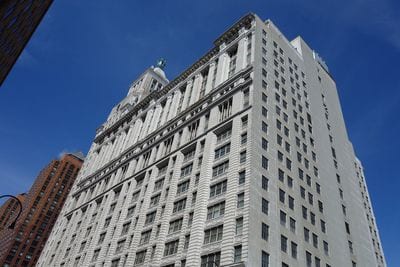
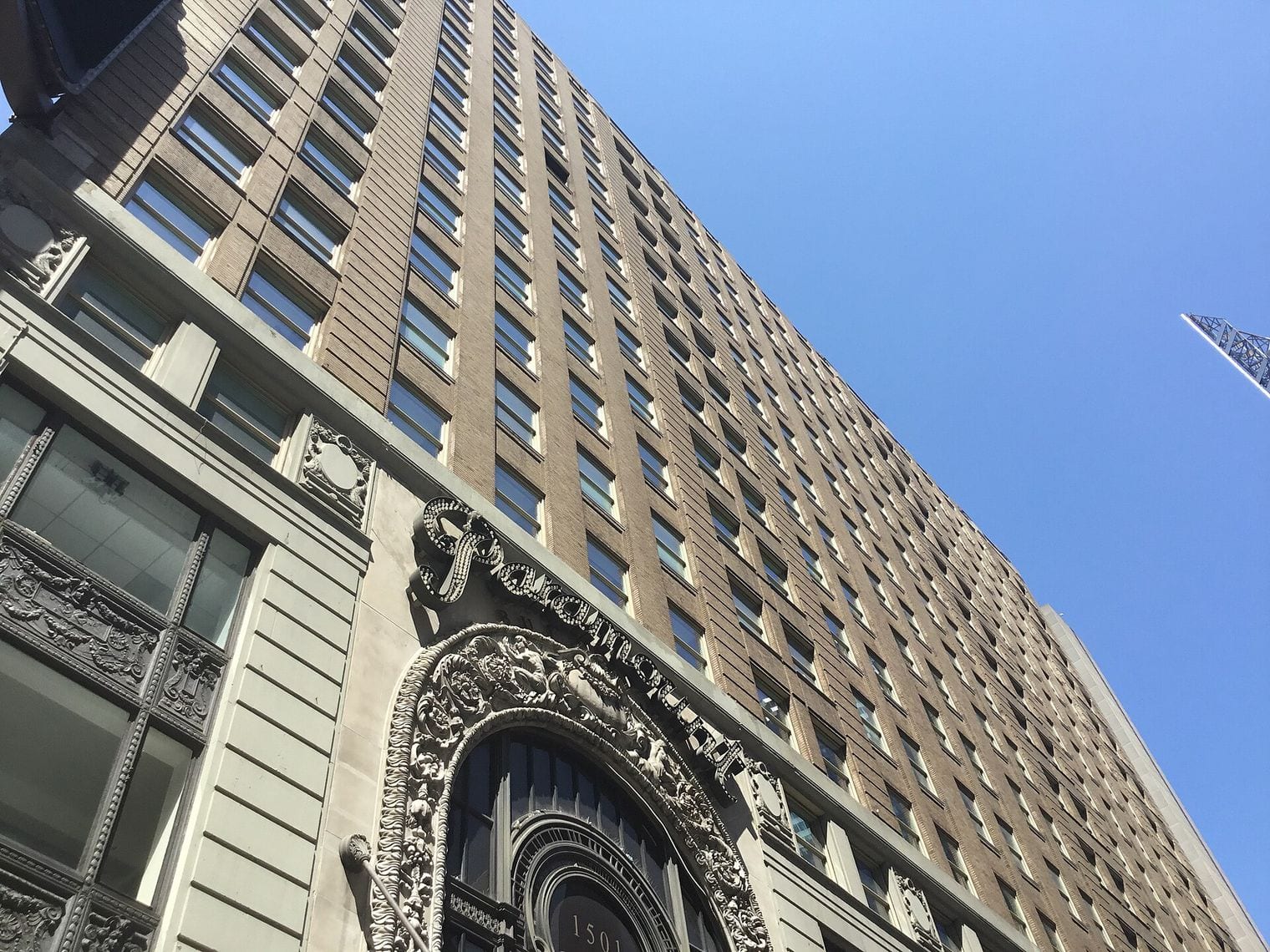
1010. Paramount Building
1501 Broadway, Times Square, New York City, United States
At 139 m to its pinnacle, the Paramount Building rises above Times Square as a stepped Art Deco wedding cake, and its crown is pure showmanship: a four-faced clock above the thirtieth storey, topped by a glass globe. The hour markers on the two larger faces, each about 25 ft wide, are twelve circular glass panels decorated with the five-pointed stars of the Paramount Pictures logo - a corporate signature written across the sky at a scale nobody could miss.
The clock and globe were blacked out during the Second World War and stayed dark for decades before a restoration in 1996 brought both back. The globe now glows a steady white after dusk and pulses red every fifteen minutes to mark the quarter hours, with chimes to match. It is a rare case of corporate signage that outlived its own advertising purpose and became a landmark.
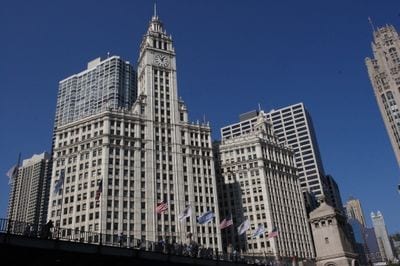
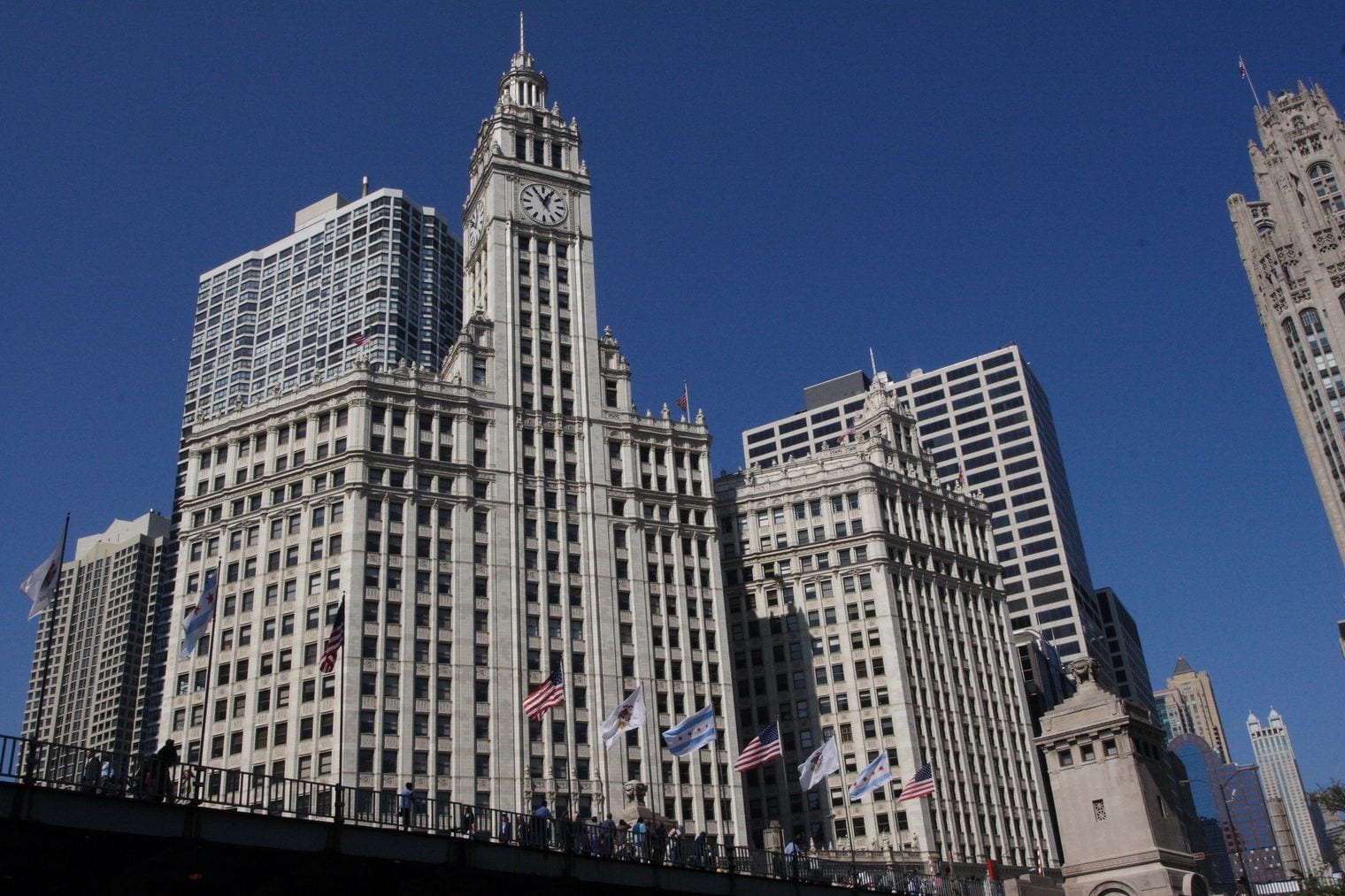
At 133.5 m, the Wrigley Building anchors the north bank of the Chicago River, and its clock tower is a direct quotation: the design was modelled on the Giralda, the Moorish-turned-Renaissance bell tower of Seville Cathedral. Completed in 1922 as the headquarters of the chewing gum company, it was the first major office building north of the river and effectively created the Magnificent Mile behind it.
The clock faces measure 5.97 m across, and the tower is best known for something other than its dials - the white terracotta cladding, graded through several subtly different shades from grey-white at the base to bright white at the crown so the building appears to catch more light as it rises. Floodlit since it opened, it is one of the most consistently illuminated buildings in the city, and the clock reads clearly from Michigan Avenue at any hour.
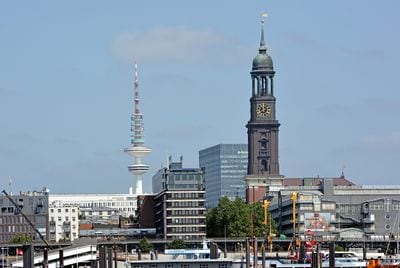
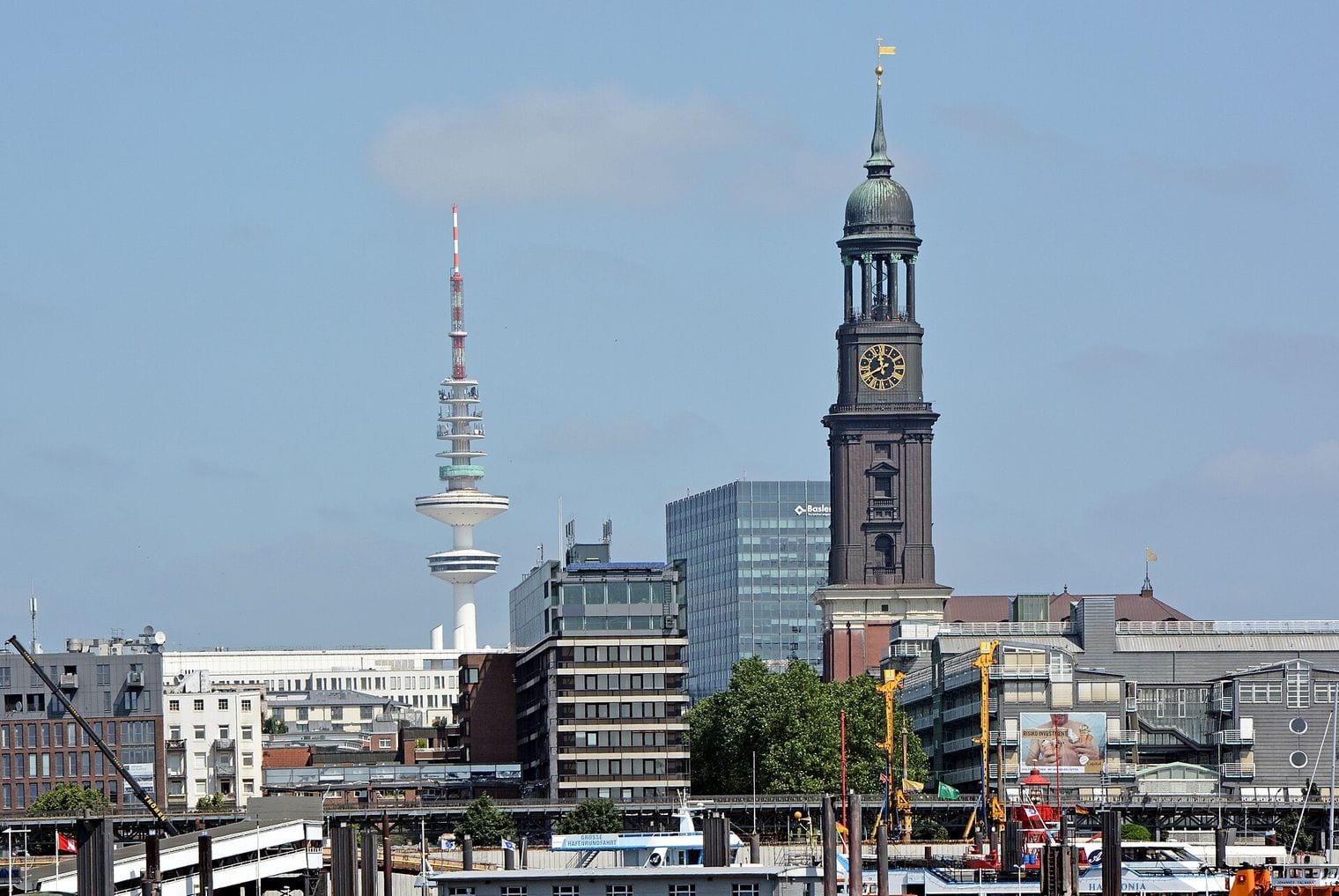
At 132 m, St. Michael's Church shares its exact height with St. Peter's a kilometre to the east - the two are level to the metre, and they are separated here on the size of their dials rather than their stature.
St. Michael's carries the largest clock faces in Germany at 8 m across, which is why it takes the higher position. Hamburgers call it simply the Michel, and its copper tower has been a navigation mark for ships coming up the Elbe for centuries.
The tower visitors climb today dates from 1912, rebuilt after a fire destroyed its predecessor in 1906 - the third incarnation of a church that has had rather more than its share of misfortune. A lift and a staircase both reach the viewing platform at 82 m, which offers the best single view of the harbour in the city, and a trumpeter still plays a chorale from the balcony twice a day.
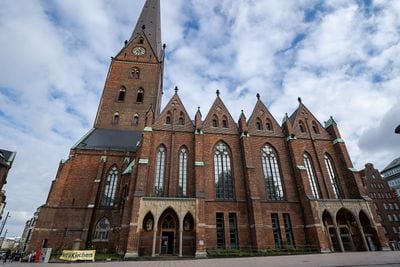
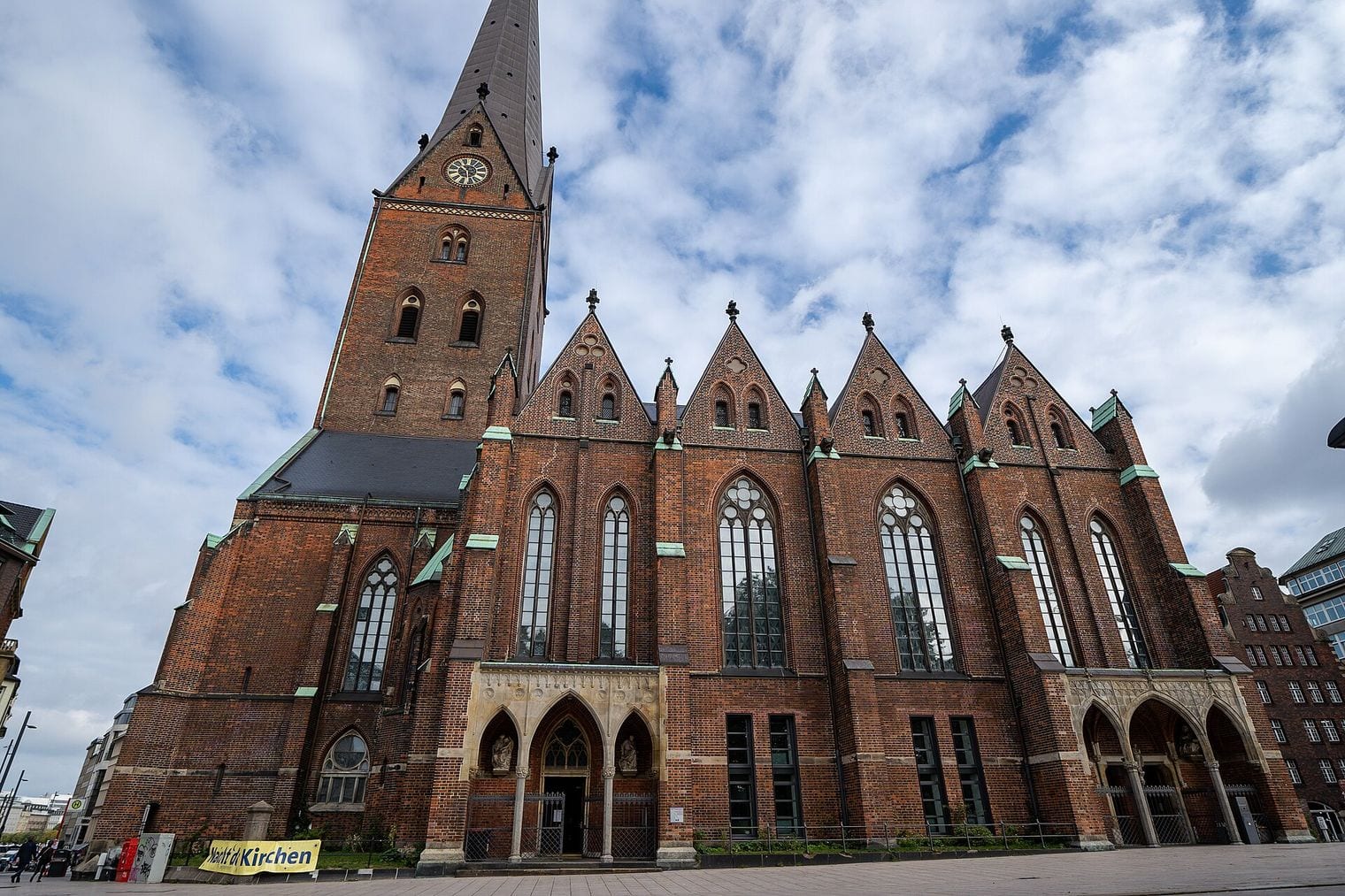
At 132 m, St. Peter's Church is level with St. Michael's to the metre and gives Hamburg two of the eighteen tallest clock towers on Earth - three, counting the city hall further down this list. It is also the oldest church in the city, standing on a site continuously in use since the twelfth century, though the tower that carries the clock today was finished in 1878.
Its predecessor is worth a mention: a spire of 127.5 m stood here from 1516 and was for a time among the tallest structures anywhere, until the Great Fire of 1842 swept through the parish and took it. The replacement is a little taller than what it succeeded. Visitors can climb 544 steps to a viewing point high on the shaft, and the tower's green copper spire remains the most recognisable object on the skyline of the old city centre.
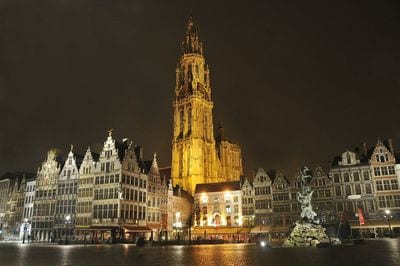
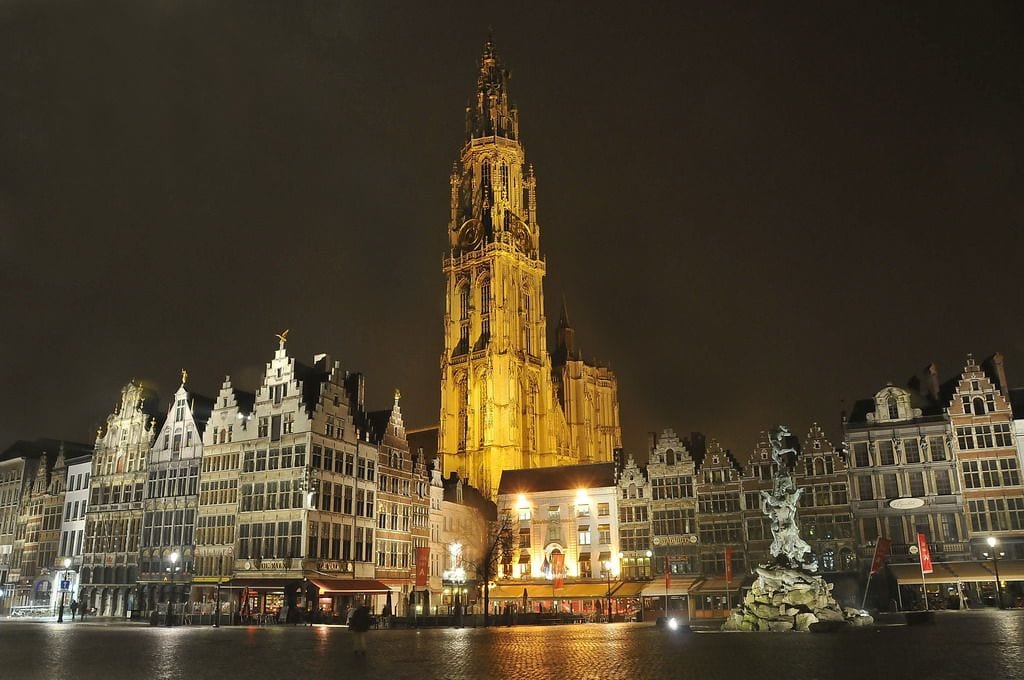
At 123 m, the Cathedral of Our Lady in Antwerp is the tallest church on this list and the tallest Gothic structure in the Low Countries, its north tower completed in 1521 after more than a century and a half of work. A second tower was planned to match it and never rose beyond a stump, which gives the cathedral its distinctive lopsided profile - one of the most photographed silhouettes in Belgium.
The clock faces were added in the eighteenth century, long after the stonework was finished, and the tower forms part of the Belfries of Belgium and France, inscribed as a UNESCO World Heritage site. Inside hang four major paintings by Rubens, who worked in the city, and the tower carries a carillon that is played in concert through the summer. The climb to the belfry is open to visitors on guided tours.
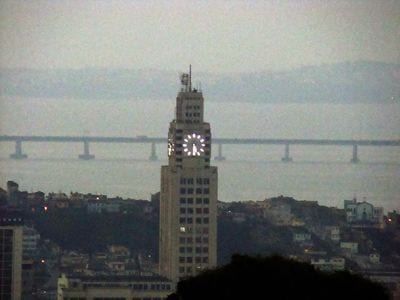
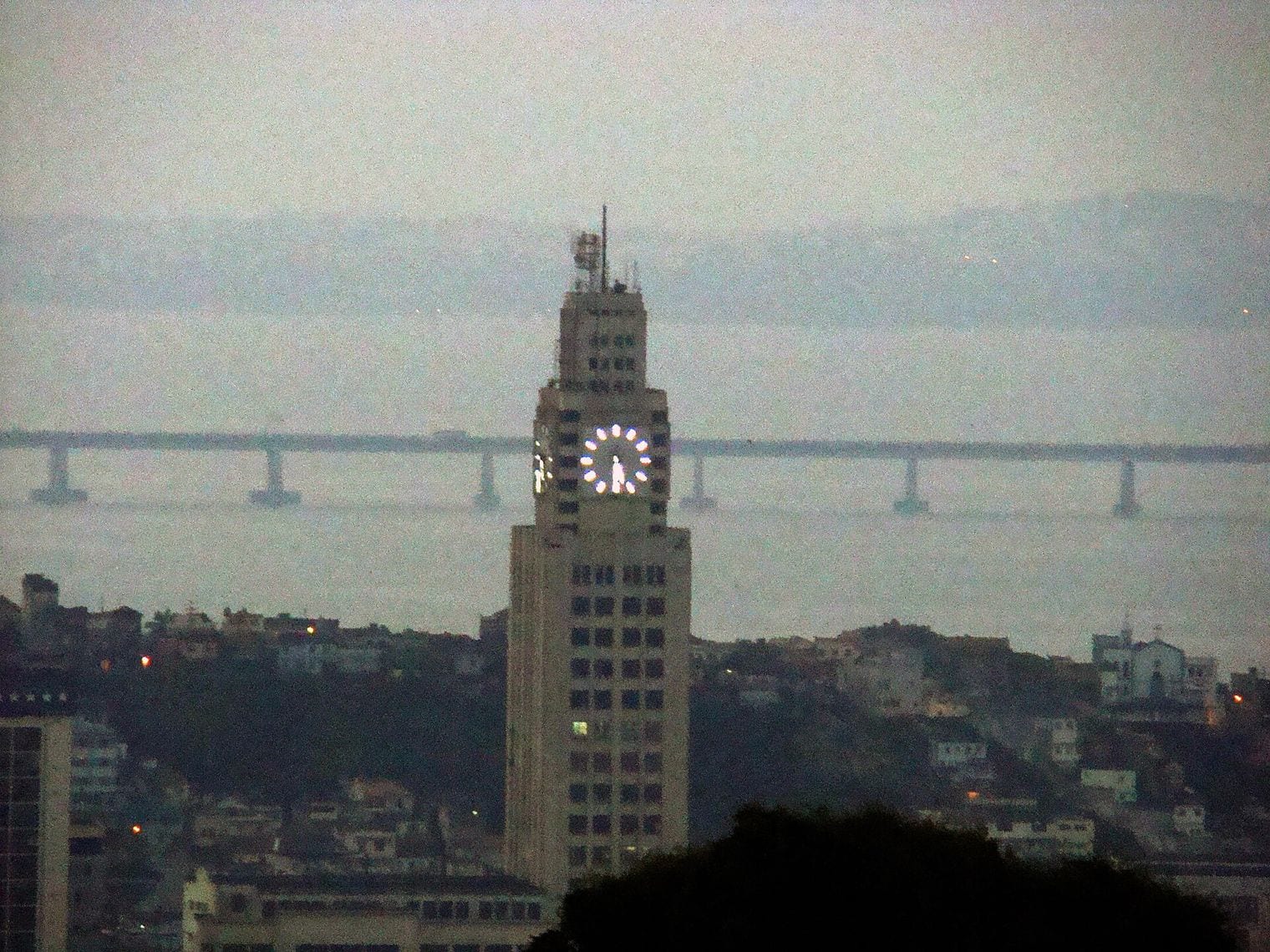
At 122 m, the clock tower of Central do Brasil station is the tallest in South America and one of the great Art Deco objects of Rio de Janeiro. Its four faces are 20 m tall - measured in height rather than diameter, because they are rectangular rather than round - and they sit around 110 m above the ground, spanning several floors of the tower. The clock was supplied by IBM and the tower inaugurated in 1943.
It is probably the most widely seen entry on this list that most people could not name: the station gave its name to Walter Salles's film Central Station. Hundreds of thousands of commuters pass beneath it on a working day. A maintenance overhaul returned the mechanism to correct time after a long spell of neglect, and the faces are lit again at night.
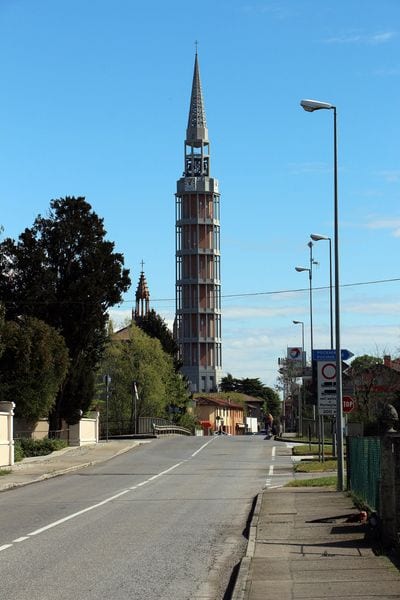
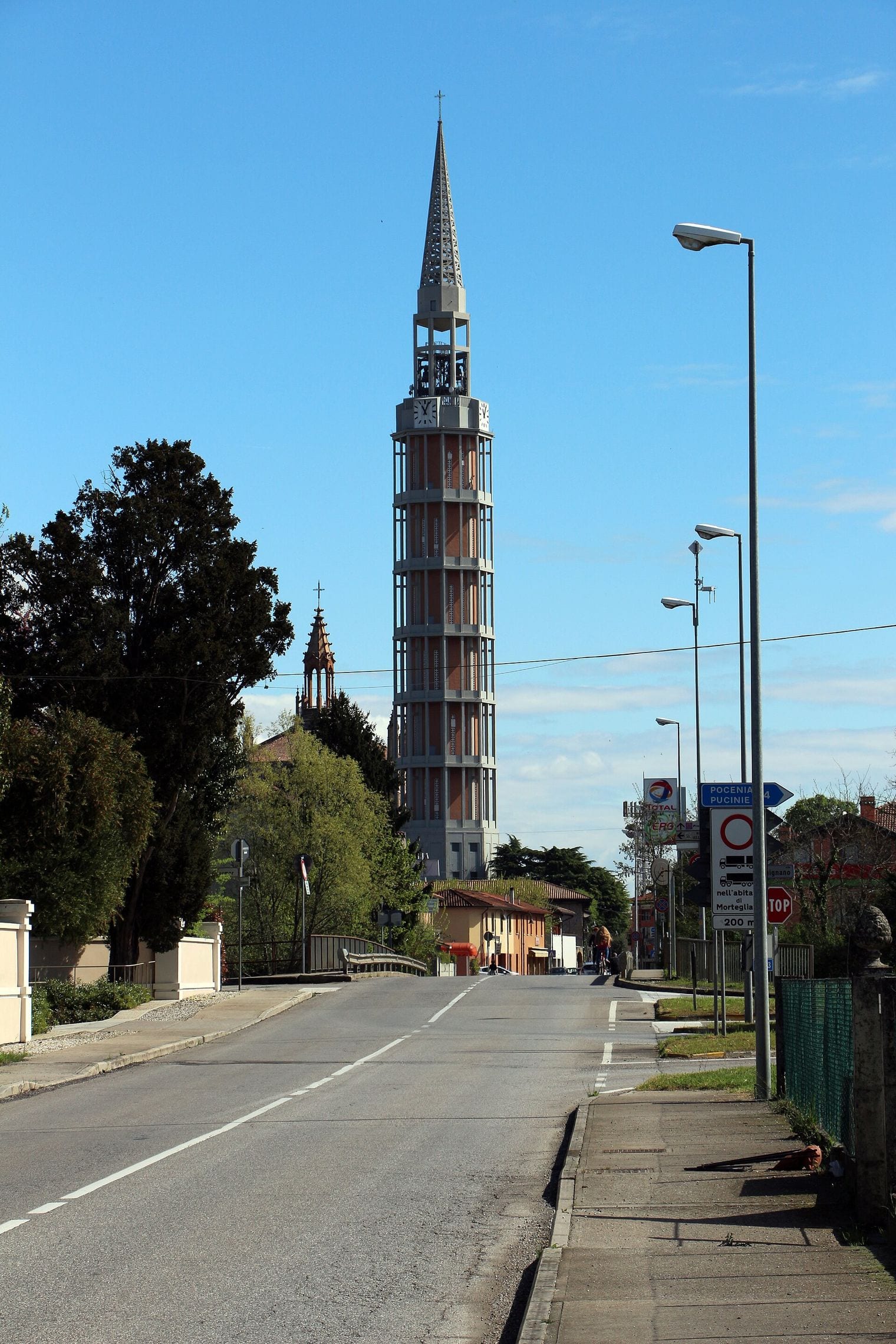
At 113.2 m, the bell tower at Mortegliano is the tallest in Italy, which is a considerable claim in a country with rather a lot of bell towers.
It stands over a village of a few thousand people in Friuli, near Udine - the smallest place on this list by a wide margin, and a reminder that height in this category has never tracked the size of the settlement. Construction finished on 22 August 1959 and it was inaugurated the following month.
The structure divides into 85 m of shaft to the bell chamber and roughly 27 m of spire above it. Four clock faces, each about 3 m high, are mounted on the balustrade of the bell chamber, and the movement was built by Solari of Pesariis, a Friulian firm better known for the split-flap departure boards once found in airports and stations across Europe.
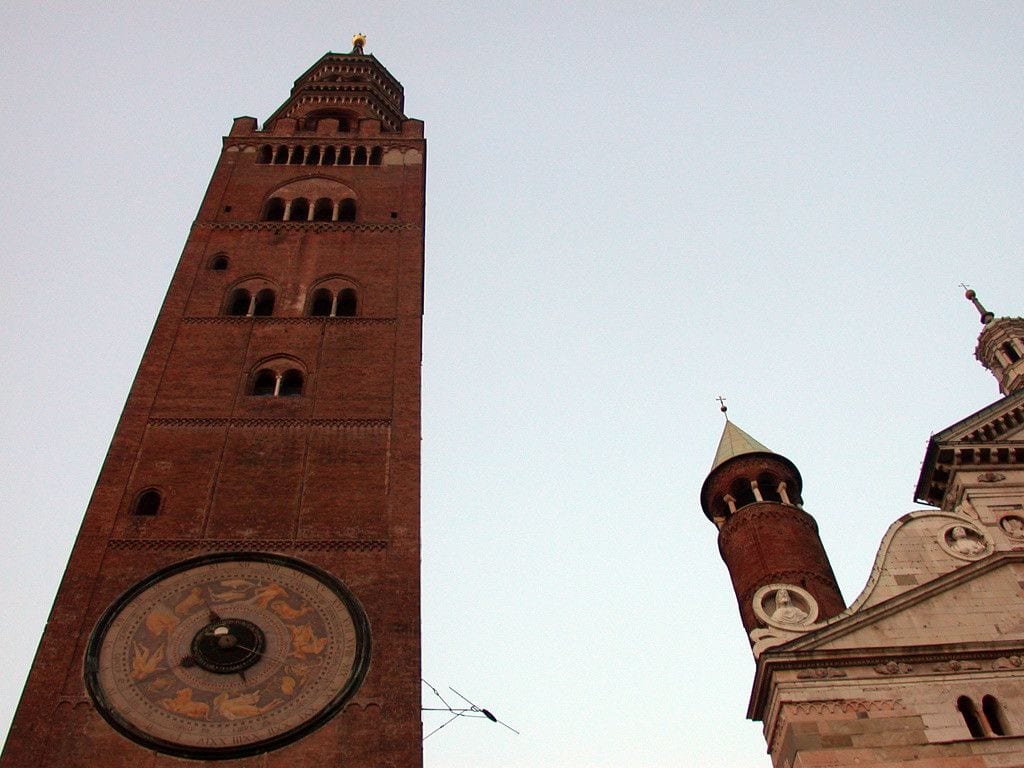
At 112.54 m, the Torrazzo of Cremona is the oldest structure on this list by nearly two centuries and the oldest brick building over 100 m still standing anywhere - finished in 1309 and surveyed at that precise height by the Politecnico di Milano. It clears the Mortegliano tower by barely two thirds of a metre and Hamburg's city hall by roughly half a metre, so the bottom of this ranking is genuinely tight.
What sets it apart is the clock. The astronomical dial on its fourth level measures 8.20 m across and is the largest astronomical clock in the world, its mechanism built by Francesco and Giovan Battista Divizioli between 1583 and 1588. The face maps the sky rather than the day, tracking the zodiac, the phases of the moon, the solstices and equinoxes, and eclipses. Visitors can climb the tower for a view over the Po valley.
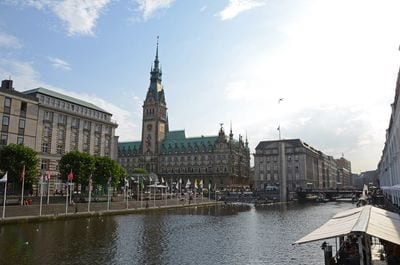
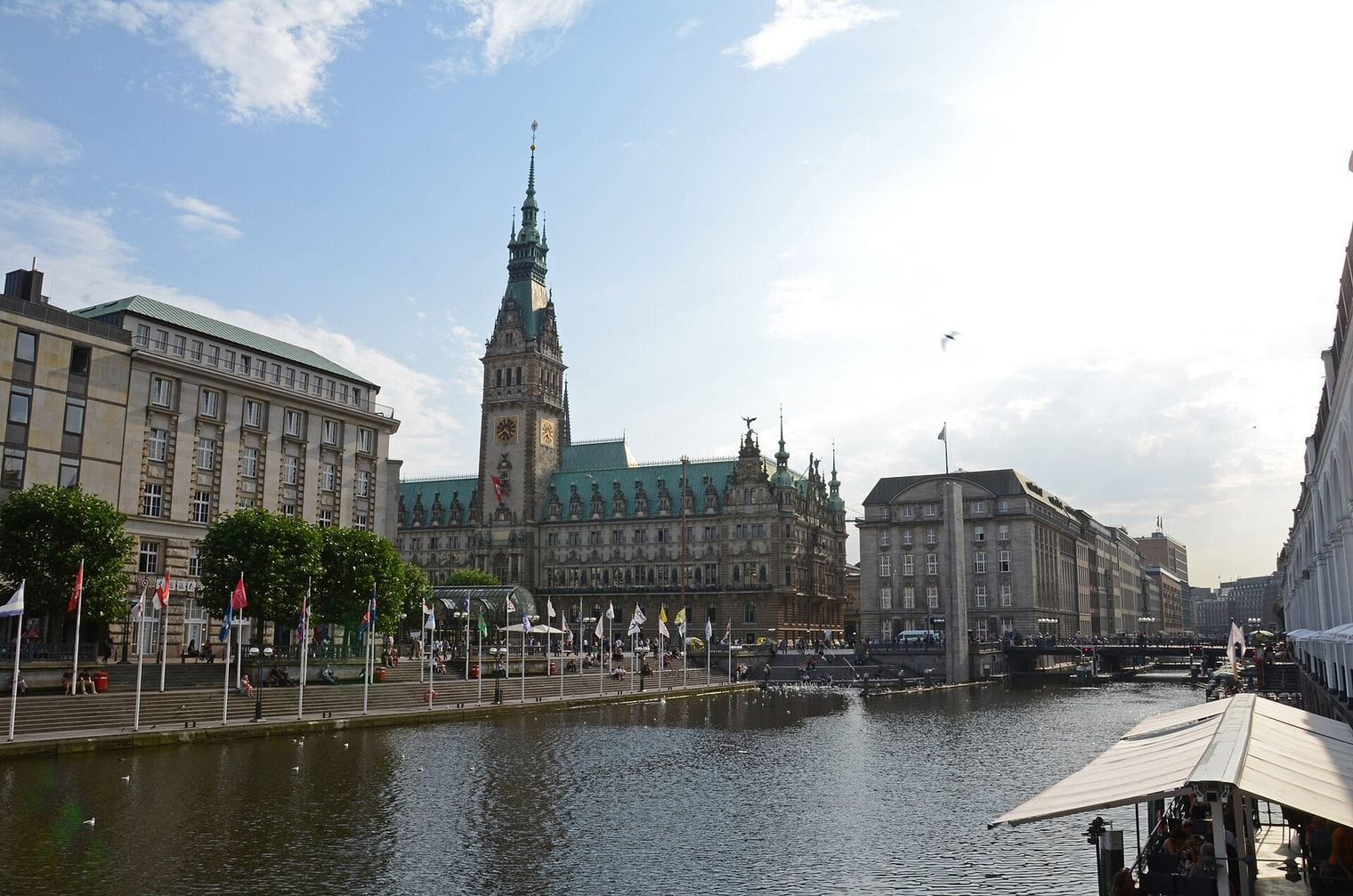
At 112 m, Hamburg City Hall closes this ranking by the narrowest of margins - roughly half a metre behind the Torrazzo of Cremona, close enough that a different survey could reorder the two. It is the second-tallest city hall tower in Germany and gives Hamburg a third entry on this list, matched only by New York.
There is a pleasing symmetry to its proportions: the tower stands 112 m high above a facade 111 m wide, so the building is very nearly as tall as it is broad. It was built in sandstone between 1886 and 1897 to a design overseen by Martin Haller, on timber piles driven into the marshy ground beside the Alster. The tower clock keeps the minutes precisely while the bells sound only the quarters, and 436 steps climb the shaft inside.
FAQ: The World's Tallest Clock Towers
What is the tallest clock tower in the world?
The Makkah Royal Clock Tower in Mecca, Saudi Arabia, at 601 m. It is recognised by Guinness World Records and holds the title by an enormous margin — it stands taller than the second and third towers on this list stacked on top of each other, and its four clock faces sit higher above the ground than any others ever built.
Is Big Ben one of the tallest clock towers in the world?
No. London's Elizabeth Tower, whose great bell is Big Ben, stands 96 m tall — well short of the 112 m needed to reach this list. It is famous for its age, its chimes and its setting rather than its height. Its 7 m dials are smaller than those on Philadelphia City Hall.
What is the largest clock face in the world?
The four faces on the Makkah Royal Clock Tower, each 43 m in diameter — roughly six times the width of Big Ben's dials. For a mechanical rather than a modern clock, the Torrazzo of Cremona carries the largest astronomical dial in the world at 8.20 m, built between 1583 and 1588.
Which country has the most of the world's tallest clock towers?
The United States, with eight of the eighteen. Almost all date from a single burst of Art Deco tower building between 1922 and 1943, when American banks, newspapers and utilities competed to crown their headquarters with a clock. Germany follows with three, all in Hamburg, and Italy has two.
Can you go up any of the world's tallest clock towers?