We may earn a commission if you book tickets, tours or a stay through a link on
this page, at no extra cost to you. It never affects which places we list or how
we rank them (how we make money).
The record
137 m449 ft
Steamboat Geyser
United States
The record
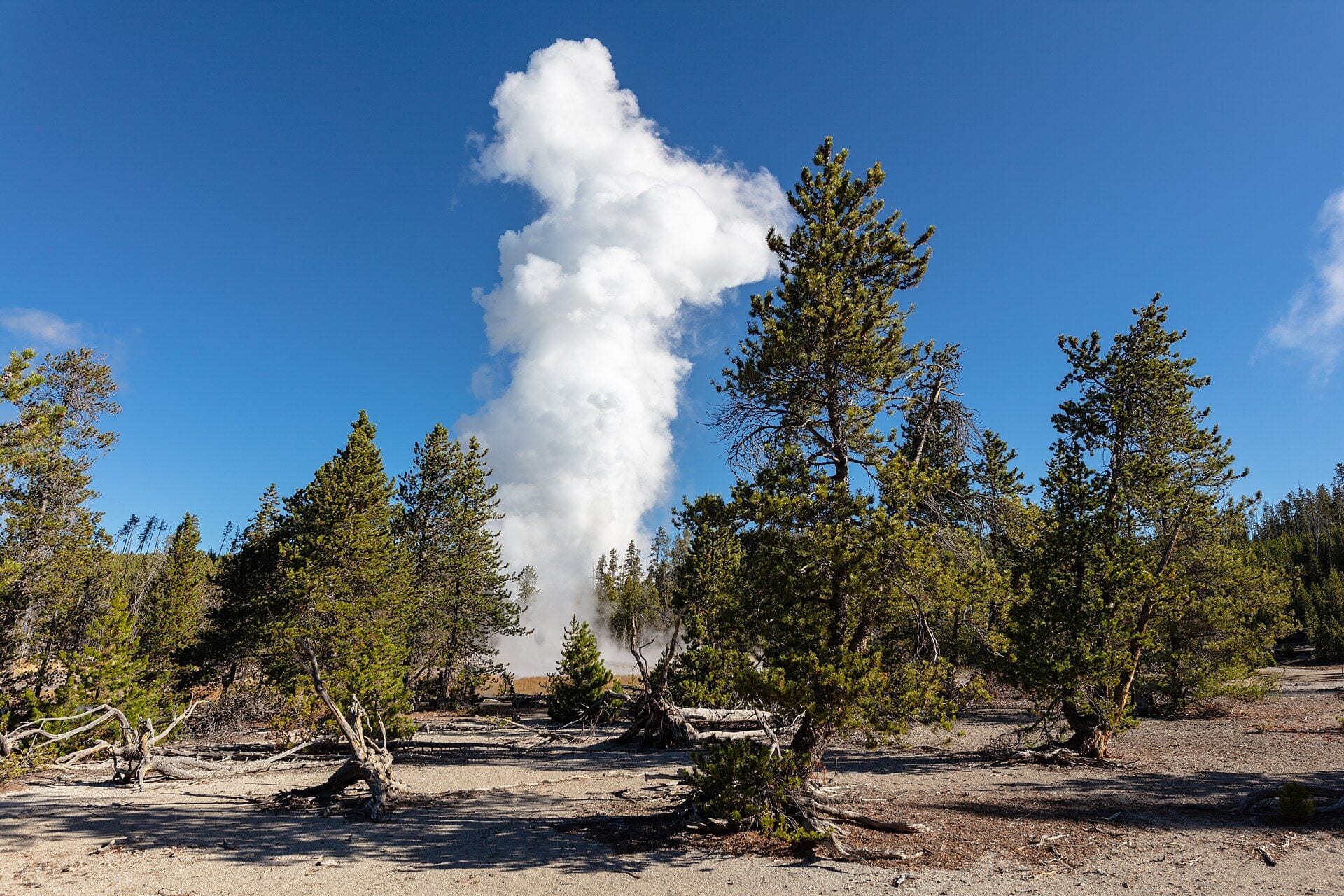
The tallest geyser in the world is Steamboat Geyser, in the United States — 137 m (449 ft), maximum recorded eruption height.
Source: Guinness World Records. Verified .
The tallest geyser ever measured threw water 460 m into the air, more than three times higher than anything you are about to read — and it has not erupted since 1904. New Zealand's Waimangu explains both rules this countdown runs on. The first is membership: every geyser here has erupted at least once since 2000, so this is a list of records you could still, with patience and luck, go and stand in front of.
The second is what gets measured. All of these throw a steam plume far higher than their water, and the two figures are quoted interchangeably almost everywhere, so the ranking uses the tallest water column a named authority has recorded with a date — from Pōhutu's 30 m in Rotorua to Steamboat's 137 m in Yellowstone.
Those rules cost the list Germany's Andernach, which reaches 61.5 m but is a cold-water carbon-dioxide geyser rising from a drilled borehole, and Yellowstone's Splendid, quiet since 1998.
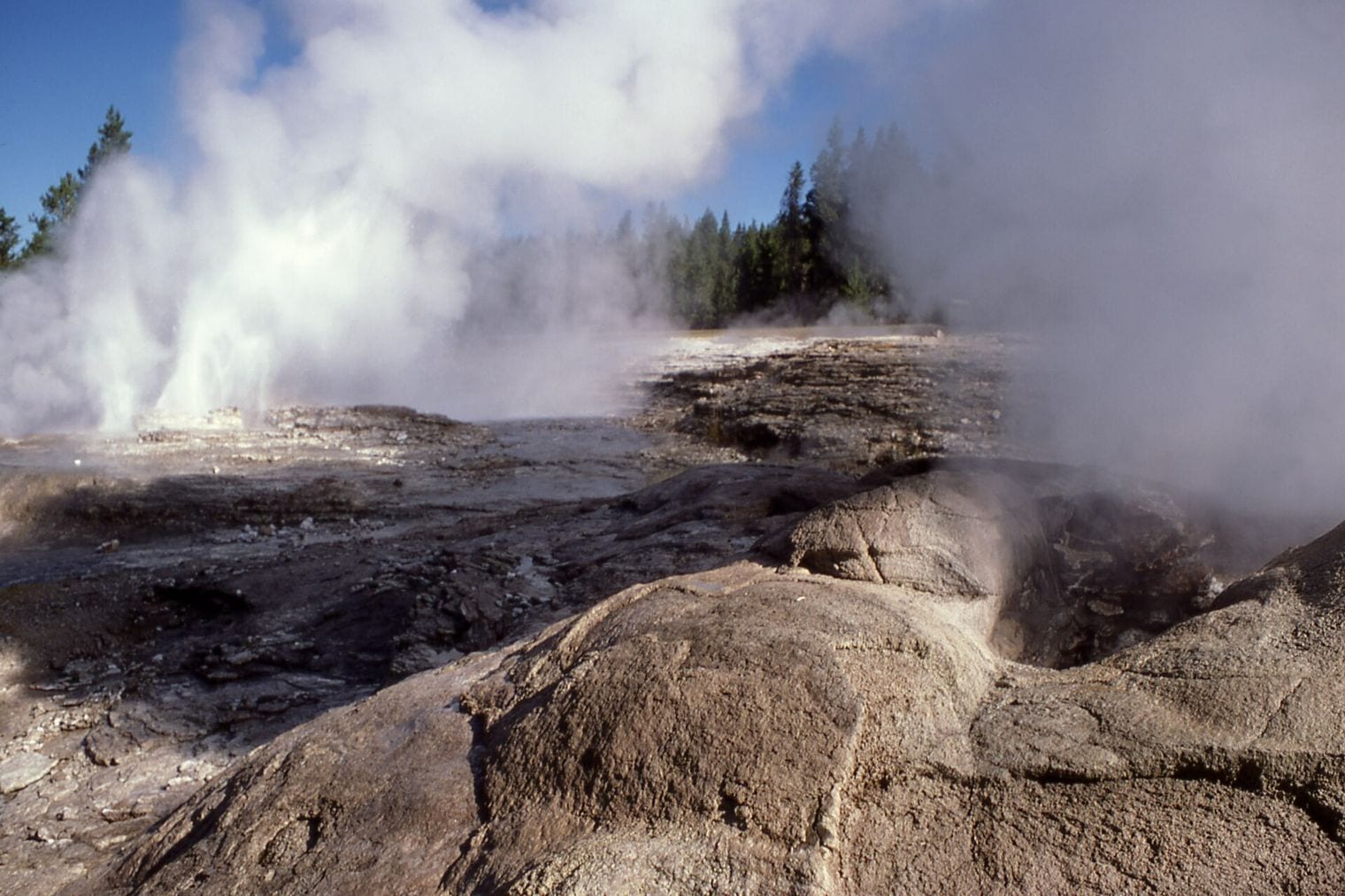
Yellowstone contains more than 500 geysers — roughly half of every geyser on Earth, and by some counts two-thirds. That single park — the oldest of all the world’s national parks, gazetted in 1872 — is why nine of the thirteen entries below share one address.
The word geyser comes from one specific geyser — Geysir in Iceland, from the Old Norse geysa, to gush. Every language that has a word for the phenomenon borrowed the name of the runner-up on this list.
The tallest geyser ever recorded was more than three times taller than today’s champion. New Zealand’s Waimangu reached beyond 460 m1,500 ft in 1903, then stopped for good in November 1904 and has never played since.
Steamboat’s water is the short part of the show. The jetting phase lasts up to forty minutes; the steam phase that follows can roar for days, and is often audible before you can see it.
Geysers run on volcanoes. Every field on this list sits over an active volcanic system — Yellowstone’s caldera, Iceland’s mid-Atlantic rift, the Kamchatka arc — which is why a map of the world’s tallest geysers looks like a map of its plate boundaries.
The world’s highest geyser field sits in the Atacama Desert — El Tatio in Chile, at 4,320 m above sea level with over 80 active geysers. None of them make this list: its columns average about 75 cm.
Old Faithful is the ninth tallest geyser here. It became the most famous geyser in the world on punctuality alone.
11. Steamboat Geyser
Norris Geyser Basin, Yellowstone National Park, Wyoming, United States
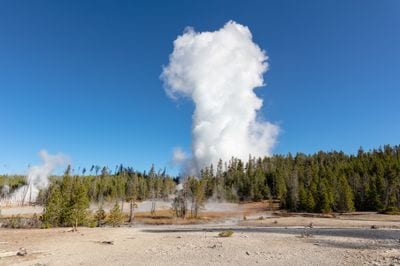
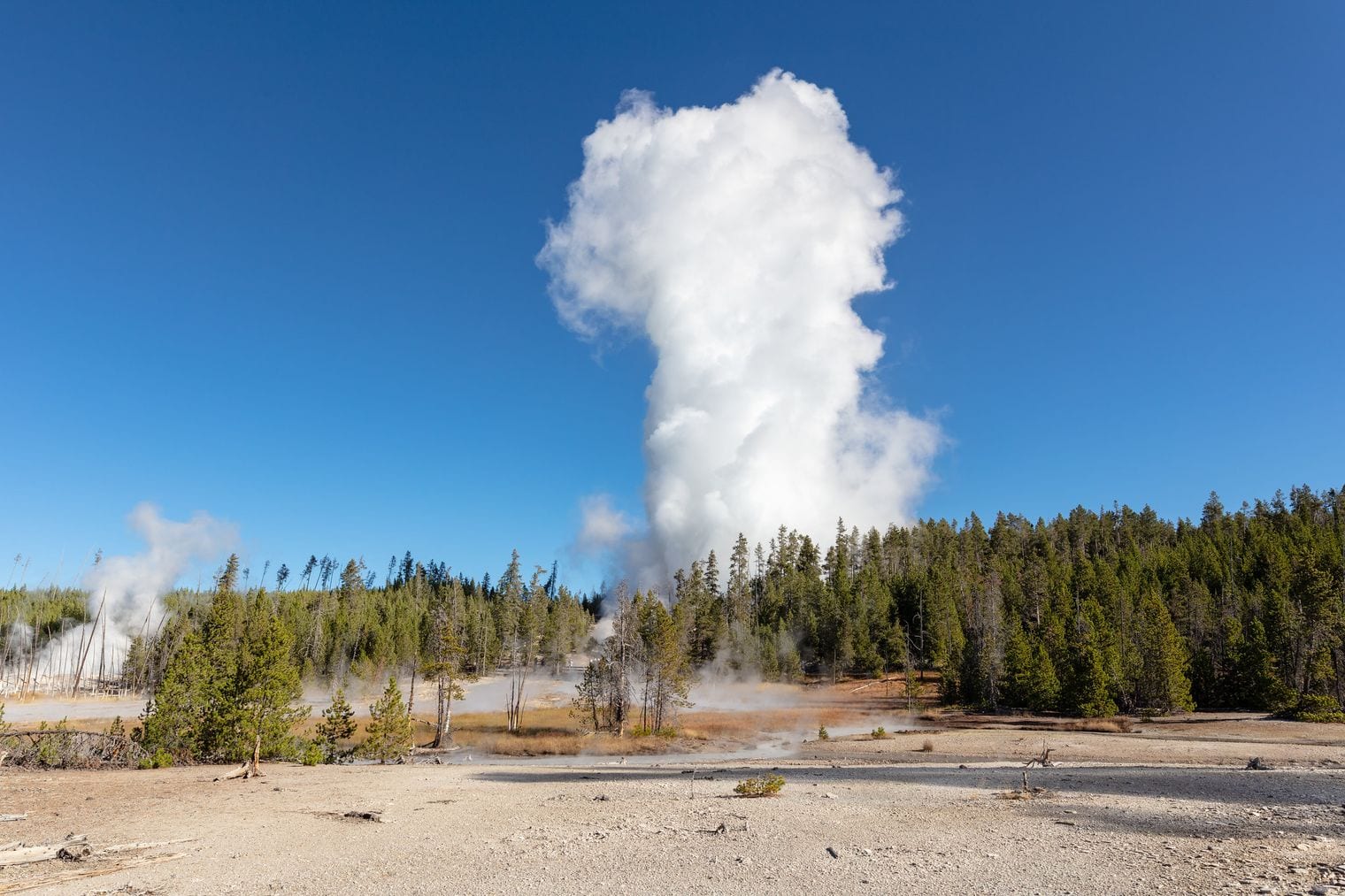
At 137 m449 ft, Steamboat Geyser throws the tallest column of water on the planet. Guinness World Records dates that measurement to 19 July 2020; the National Park Service, describing the ordinary case rather than the record, says major eruptions clear more than 300 feet.
It stands in the Norris Geyser Basin, the hottest and most volatile of Yellowstone's thermal areas, and it keeps no schedule anyone has ever cracked — documented intervals run from three days to fifty years.
The water phase lasts up to forty minutes and is only the opening act. What follows is a roaring steam phase that can carry on for hours or days, audible long before you reach the boardwalk. Steamboat came back to life in March 2018 after three and a half years of silence and has since logged 173 major eruptions through February 2026, including a run of 48 in a single year — twice.
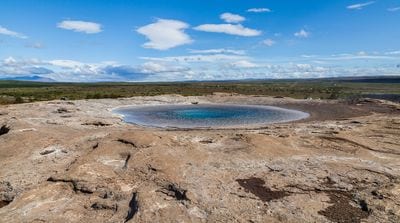
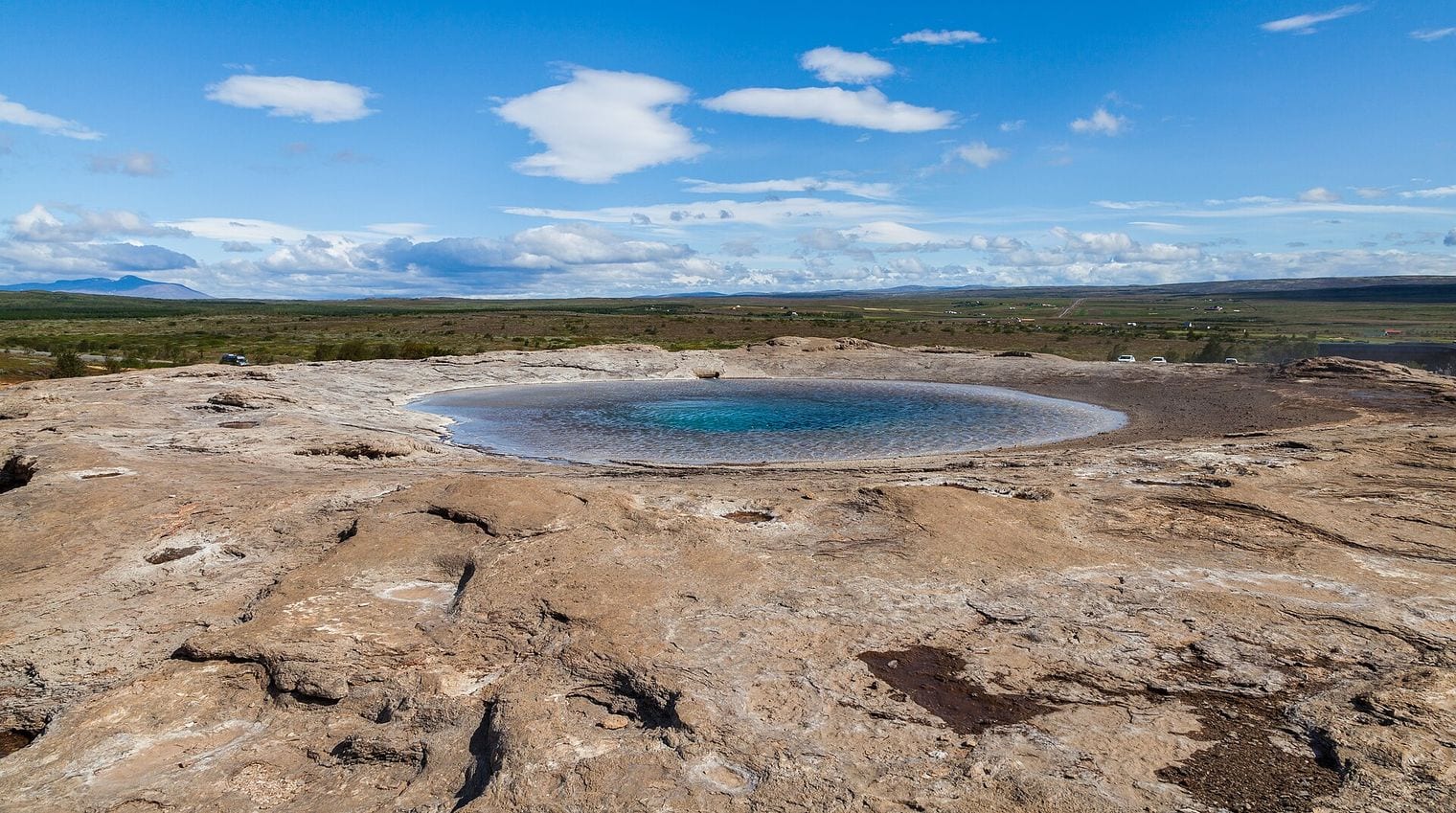
At 122 m400 ft, Geysir is the geyser that gave every other geyser its name, from the Old Norse geysa, to gush. That figure is not ancient history: earthquakes in South Iceland in 2000 shook the plumbing back into life and it played to 122 m for two days, erupting around eight times daily before settling back to three.
It is only fair to say what has happened since. Geysir last erupted in 2016, and the 170 m sometimes attributed to an eruption in 1845 carries no measurement anyone can check, which is why it is ranked here on the column that was actually recorded. Visitors to Haukadalur almost always watch its neighbour Strokkur instead, which performs every few minutes — but the hot, quiet, faintly breathing pool beside it is the original.
33. Giant Geyser
Upper Geyser Basin, Yellowstone National Park, Wyoming, United States
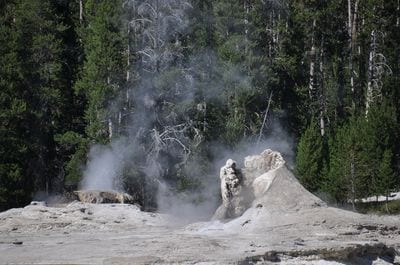
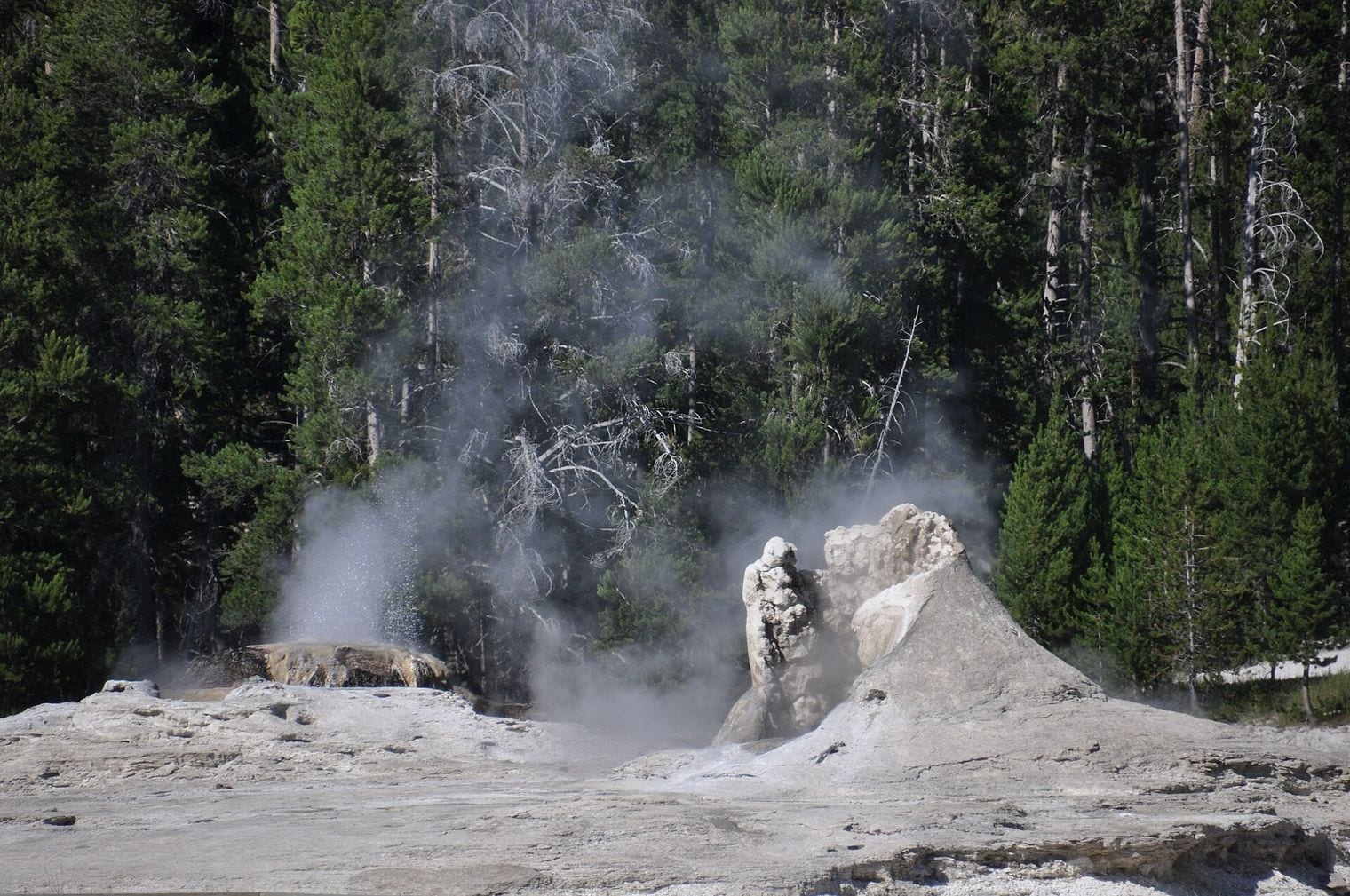
At 76 m250 ft, Giant Geyser is the tallest thing in Yellowstone's Upper Geyser Basin and the second tallest on this list. It erupts from a broken cone that looks like a shattered chimney, a few minutes' walk from Old Faithful along the Firehole River, and when it goes it can hold the column up for more than an hour.
Giant has spent most of the last decade proving how little geysers care about visitor schedules: twenty-eight eruptions in 2018, eight in 2019, then nothing at all from 2020 to 2022. It stirred again in 2026 with eruptions on 26 June and 17 August, the second estimated at 150 to 200 feet for over an hour — enough for Yellowstone's scientist-in-charge to suggest it may have entered a more active phase.
44. Great Fountain Geyser
Lower Geyser Basin, Yellowstone National Park, Wyoming, United States
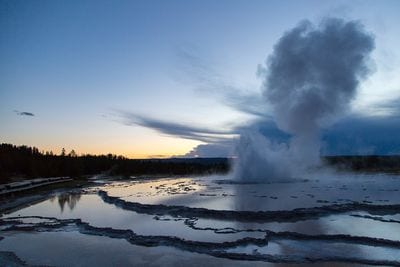
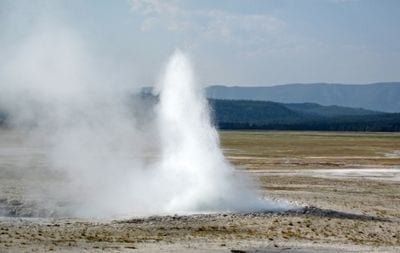
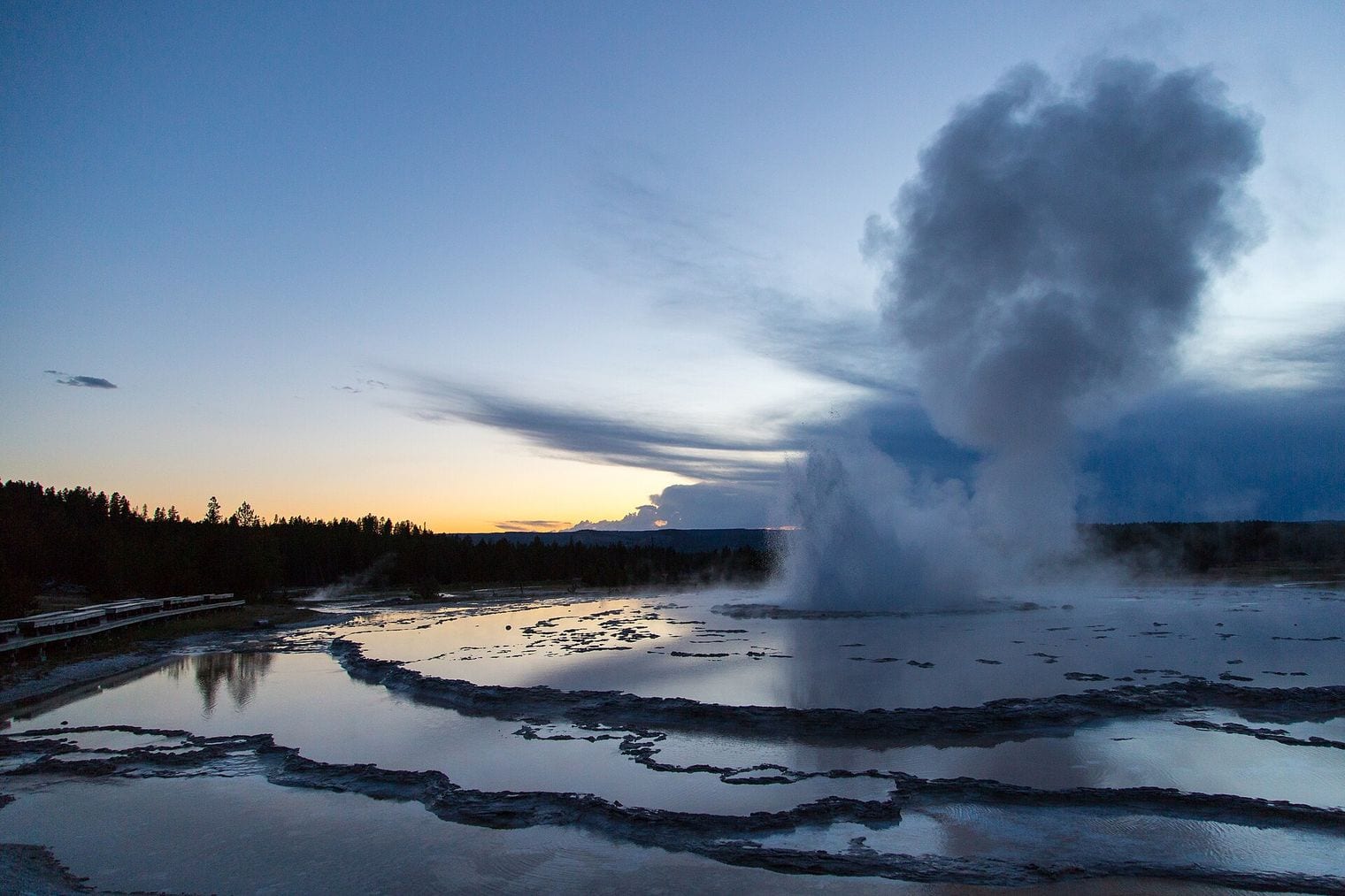
At 67 m220 ft at its wildest, Great Fountain Geyser is the only feature in the Lower Geyser Basin the park issues predictions for, which makes it the most plannable big geyser in Yellowstone after Grand. Most eruptions are far smaller — around 100 feet is typical — but the occasional superburst is the reason it ranks this high.
It sits on Firehole Lake Drive, erupting every nine to fifteen hours from a wide terraced platform of sinter that floods before it plays, so the whole basin turns to mirror. Eruptions run about an hour in a series of bursts. It also drops into what geyser watchers call a wild phase, when intervals stretch to three days and the predictions stop being worth much.
55. Grand Geyser
Upper Geyser Basin, Yellowstone National Park, Wyoming, United States
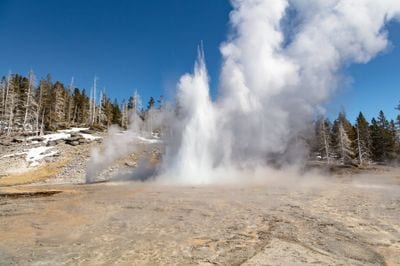
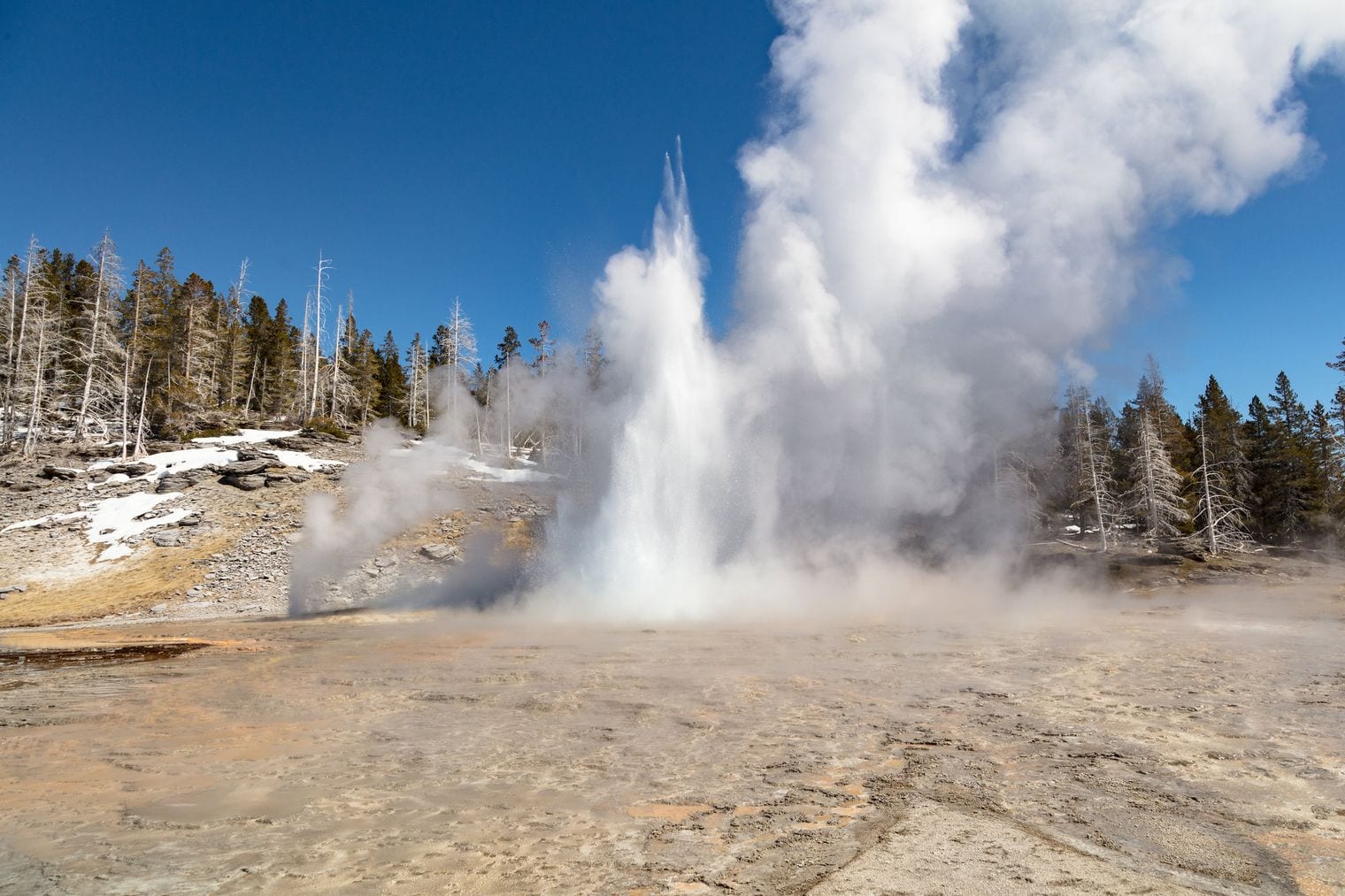
At 61 m200 ft, Grand Geyser is the tallest predictable geyser in the world — and the first of four geysers on this list that share exactly that figure. Published maxima cluster on round numbers, so rather than invent precision the tie is broken by how often each one performs, and Grand wins it outright: it erupts every six to seven hours, reliably enough that the park posts a window.
Grand is a fountain geyser, playing from an open pool rather than a cone, and it does not go up in one smooth jet. An eruption lasts nine to twelve minutes and arrives in one to four separate bursts, sometimes five, each one climbing after the crowd has decided it is over. The second and third bursts are frequently the tallest.
66. Beehive Geyser
Upper Geyser Basin, Yellowstone National Park, Wyoming, United States
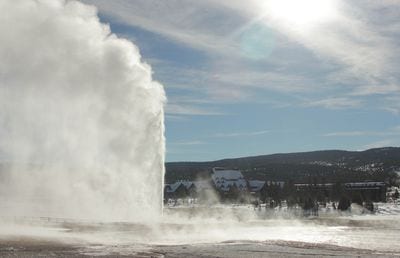
At 61 m200 ft, Beehive Geyser matches Grand's maximum and ranks just behind it on frequency, going up every eleven to twenty-four hours. Its cone is the reason it makes this list at all: a metre-high mound of sinter that narrows to a tight throat and works exactly like a nozzle, converting a modest volume of water into a jet that outreaches geysers with far more behind them.
It has an unusually helpful habit. A small separate vent a few metres away, known as Beehive's Indicator, generally starts playing several minutes ahead of the main event, giving anyone on the Upper Geyser Basin boardwalk enough warning to walk over. The eruption itself lasts around five minutes and is loud, narrow and startlingly vertical.
77. Giantess Geyser
Upper Geyser Basin, Yellowstone National Park, Wyoming, United States
At 61 m200 ft by the Park Service's own figure, Giantess Geyser is the least dependable of the four geysers tied at that height, which is precisely why it places third among them. The park describes its frequency with admirable bluntness: none to 41 eruptions per year.
When it does perform it is the most dramatic thing in the Upper Geyser Basin. Giantess erupts in violent bursts rather than a sustained column, and the episode can run anywhere from four to forty-eight hours, ending in a steam phase that fills the whole basin.
It woke in August 2020 after more than six years of silence, played again that September, and once more in August 2021 — the sort of pattern that makes geyser watchers cancel plans at short notice.
88. Morning Geyser
Fountain Group, Lower Geyser Basin, Yellowstone National Park, Wyoming, United States
At 61 m200 ft and, unusually, just as wide, Morning Geyser produces the broadest column on this list — a genuine wall of water rather than a jet. It shares the 200-foot figure with Grand, Beehive and Giantess, and ranks last of the four on the tie-break because it performs the least often of them all.
Morning belongs to the Fountain Group in the Lower Geyser Basin, sharing plumbing with Fountain Geyser next door in a rivalry that usually keeps one of them quiet. It ran frequently through 2012 and 2013, went silent from that October, and surfaced again in the second half of 2018. Seeing it is close to pure luck, which is part of why it has a devoted following.
99. Old Faithful
Upper Geyser Basin, Yellowstone National Park, Wyoming, United States
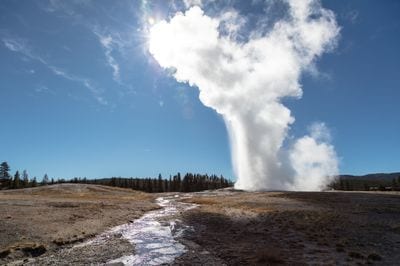
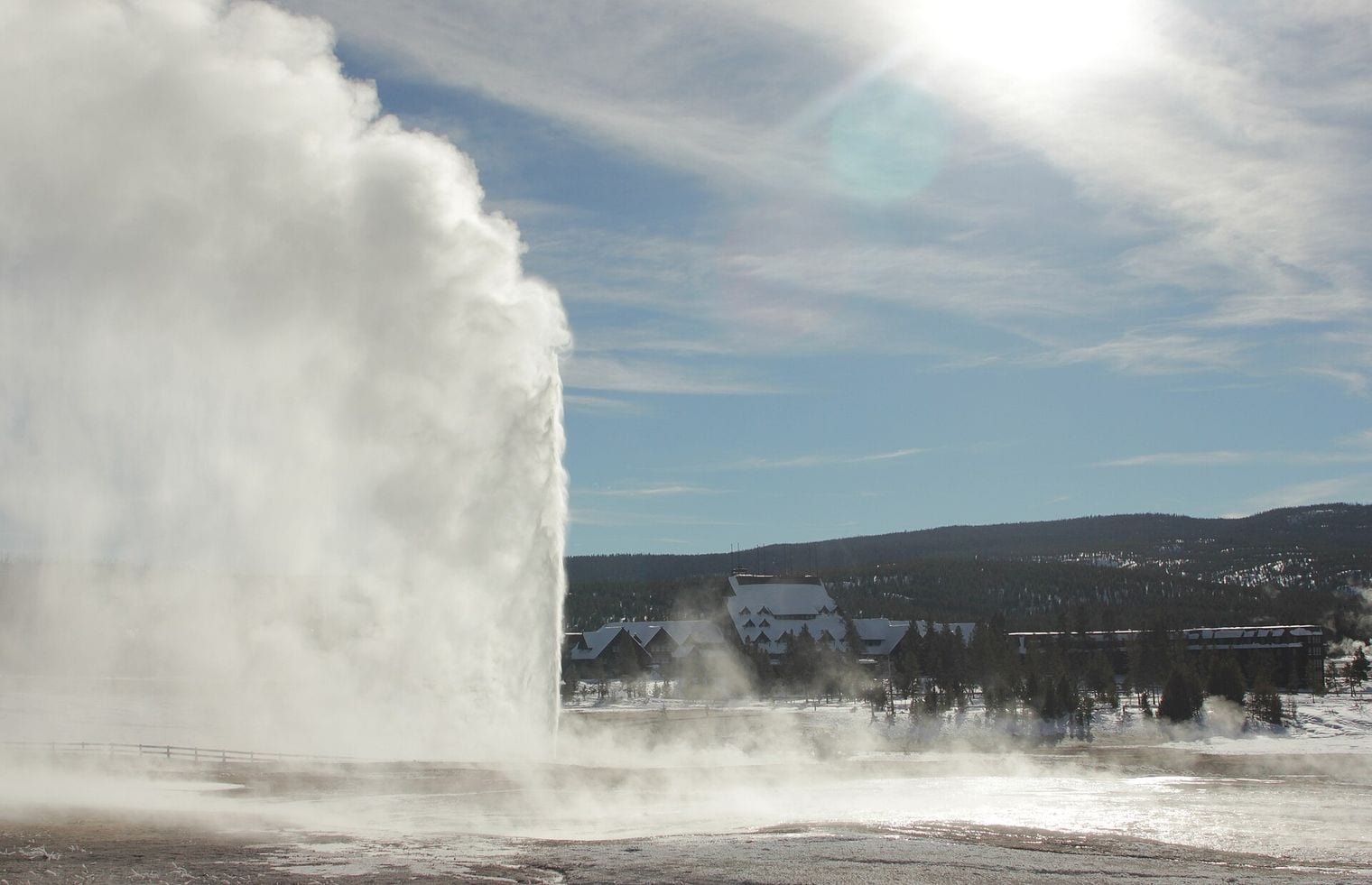
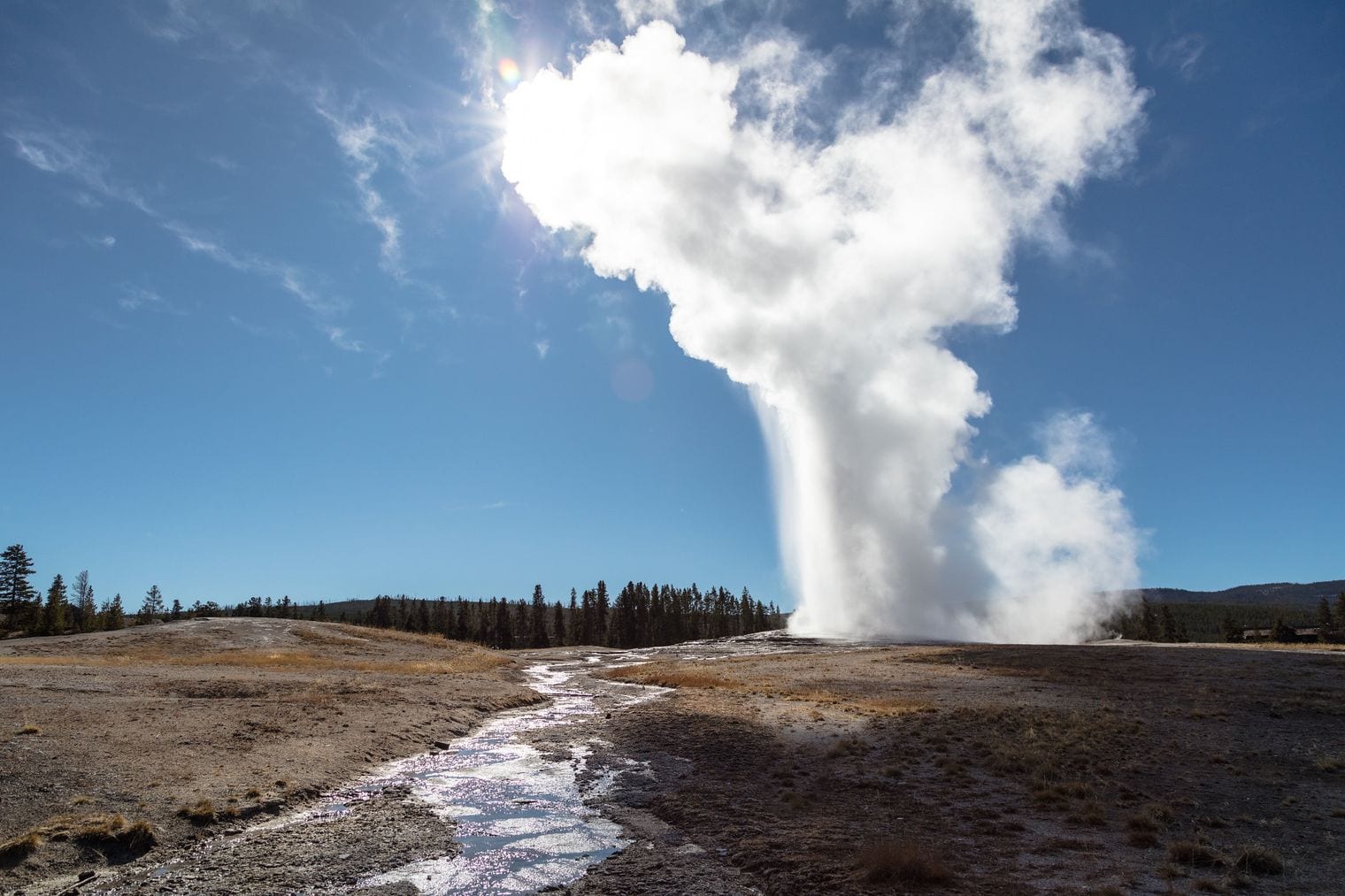
At 56 m185 ft at its very best, Old Faithful is the most famous geyser on Earth and only the ninth tallest. Its average eruption is nearer 44 m145 ft, and the gap between its reputation and its ranking is the single most useful thing this list can tell you about Yellowstone.
What made its name was never height but reliability. It plays roughly every 92 minutes, with intervals running from about 35 minutes to two hours, and the park has been predicting it for well over a century — the duration of one eruption forecasts the wait until the next.
It remains the easiest big geyser in the world to see, with a boardwalk, a visitor centre and posted times, which is worth a great deal when four of the geysers above it may not perform this year at all.
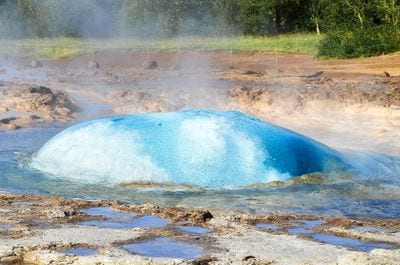
At 40 m131 ft at its highest, Strokkur is the geyser almost everyone who says they have seen Geysir has actually seen. It sits a short walk from its more famous neighbour in Haukadalur, on Iceland's Golden Circle, and its usual performance is a more modest 15 to 20 m.
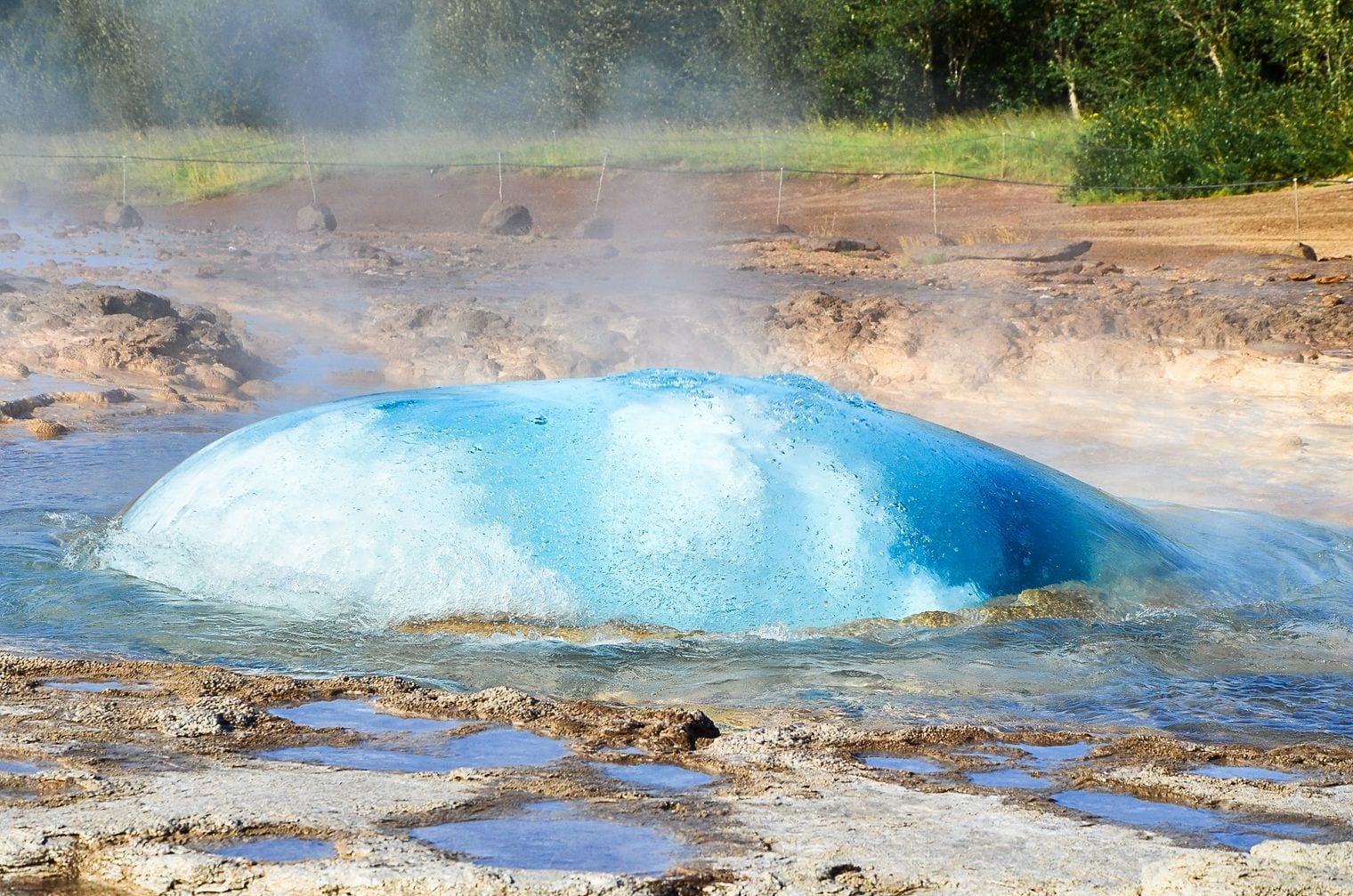
It ties Velikan on maximum height and ranks ahead of it on the tie-break by a wide margin: Strokkur erupts every six to ten minutes, all day, every day. Watch the pool and you will see the tell — the water domes upward into a startling blue blister a moment before it bursts. Its dependability is not entirely natural: the conduit was cleared in 1963, and it has performed without interruption ever since.
1111. Velikan Geyser
Valley of Geysers, Kronotsky Nature Reserve, Kamchatka, Russia
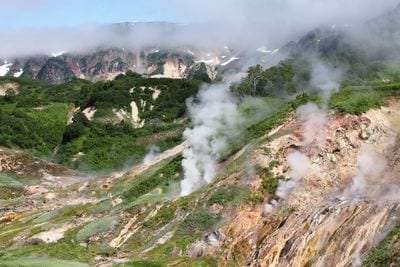
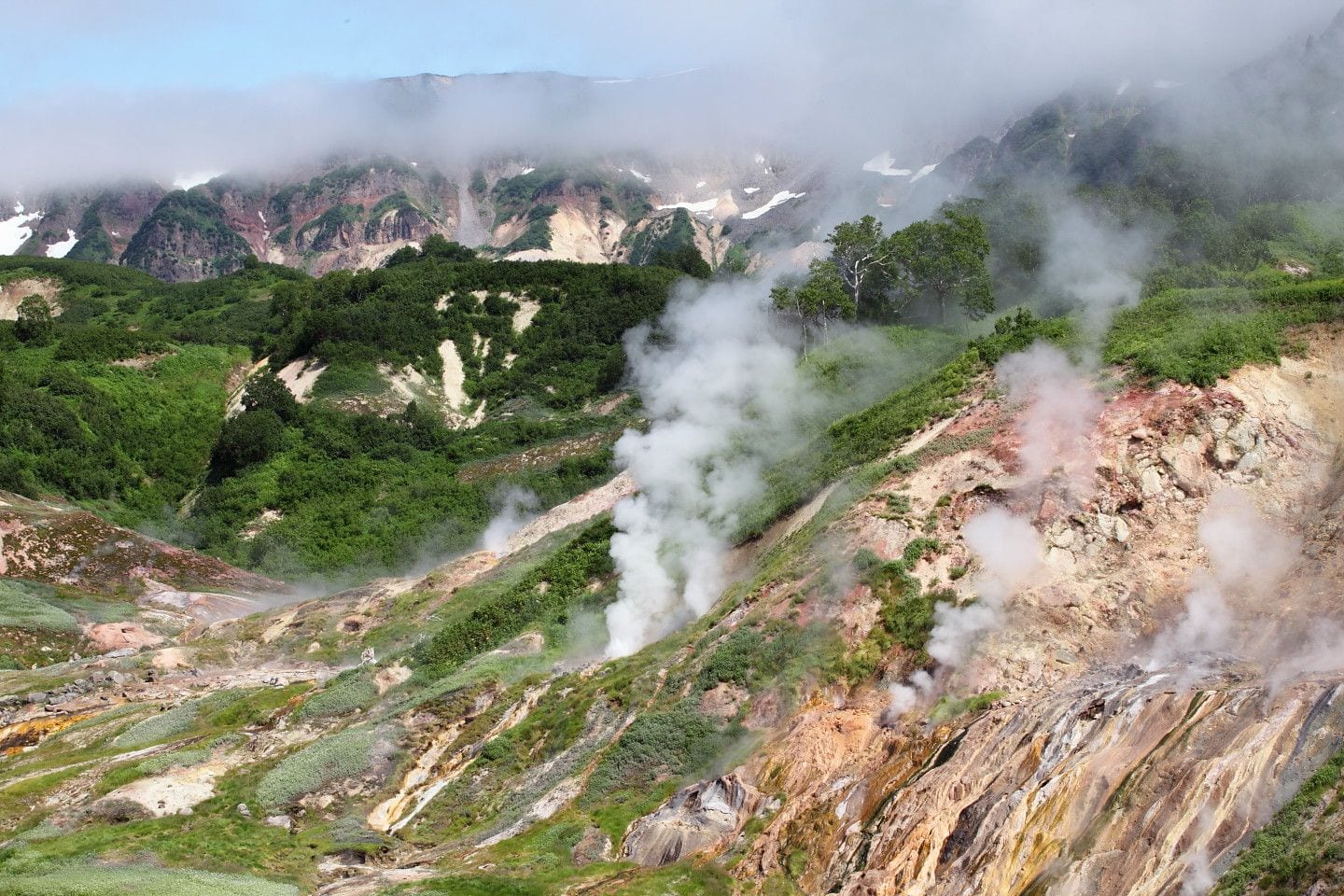
At 40 m131 ft, Velikan — the name simply means giant — is the tallest geyser in Russia's Valley of Geysers, the second largest concentration of geysers anywhere after Yellowstone. Around ninety geysers sit along six kilometres of the Geysernaya river valley on the Kamchatka Peninsula, a place unknown to science until a Soviet-era survey stumbled into it in 1941.
It is the hardest geyser on this list to reach: the valley lies deep inside the Kronotsky Nature Reserve and is accessible only by helicopter, with visitor numbers tightly capped. Velikan also survived the event that nearly ended the valley — a vast landslide in June 2007 that buried part of the field and dammed the river. It was not among the features lost, and it plays still.
1212. Fan Geyser
Upper Geyser Basin, Yellowstone National Park, Wyoming, United States
At 38 m125 ft, Fan Geyser earns its name by erupting from all seven of its vents at once, throwing a spreading sheet of water rather than a single column and arcing it clean over the boardwalk to land some 200 feet from the vent.
Fan almost never plays alone. Its plumbing is connected to Mortar Geyser a few metres away, and the two now erupt together most of the time, Mortar sending jets to around 80 feet from its own two vents. The pair keep famously irregular hours, with intervals running from days to months and eruptions lasting about half an hour, which has made them a long-running obsession for the geyser-gazing regulars of the Upper Geyser Basin.
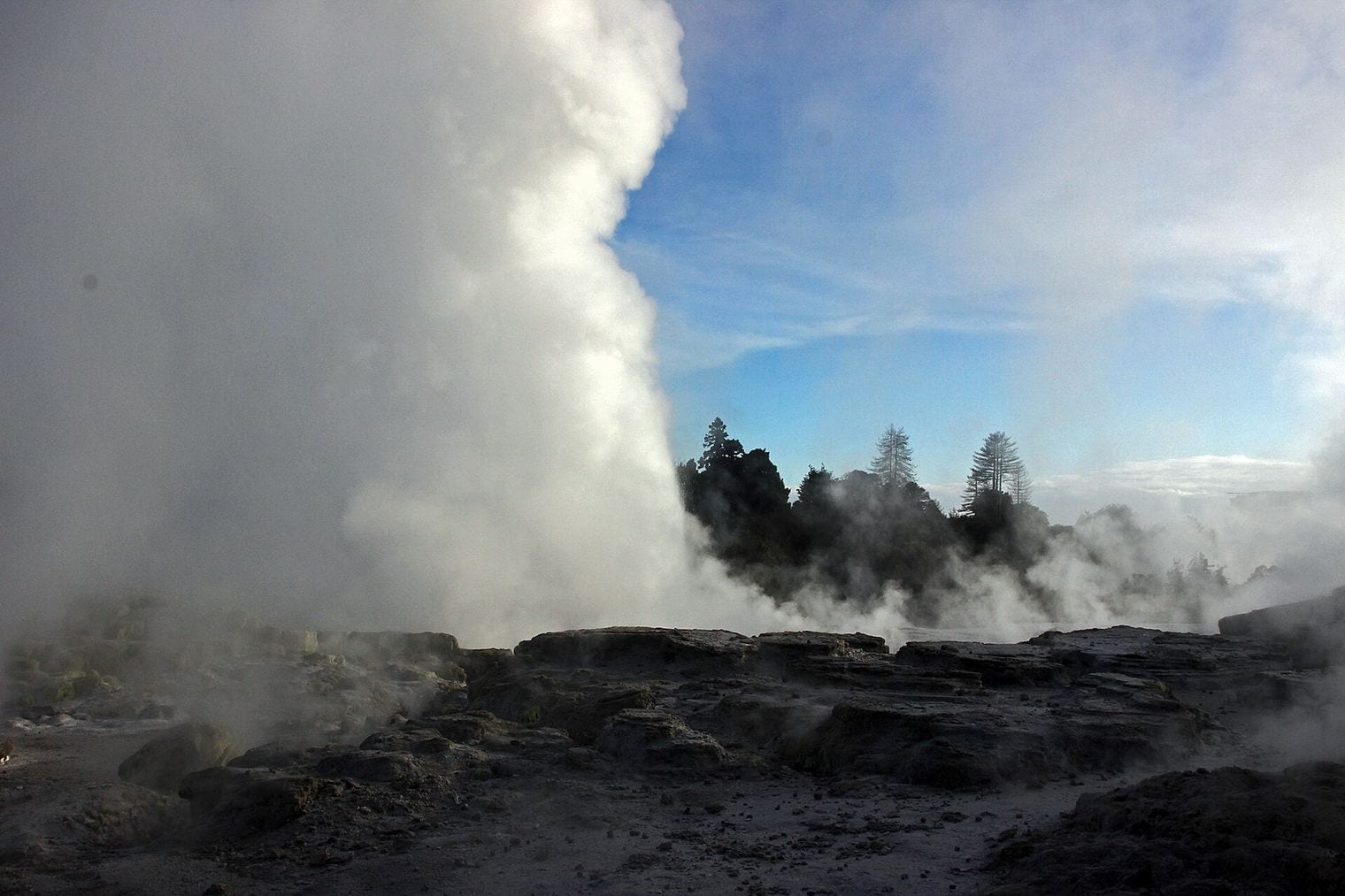
At 30 m98 ft, Pōhutu Geyser is the largest active geyser in the southern hemisphere and the only entry on this list south of the equator. Its name is Māori for something close to big splash, and it erupts from a vent barely half a metre across in the Whakarewarewa thermal valley at Rotorua, on New Zealand's North Island.
It is also the most obliging geyser here after Strokkur, playing up to twenty times a day for ten to twenty minutes at a stretch, roughly hourly.
It sits within Te Puia, a Māori cultural centre and carving school built around the geothermal field, so the geyser comes with the context of the people who have lived alongside it. The vent that threw water 460 m in 1903 and never played again lies about 20 km south, in its own rift valley.
FAQ: The Tallest Geysers in the World
What is the tallest geyser in the world?
Steamboat Geyser, in Yellowstone's Norris Geyser Basin, at 137 m449 ft — a column Guinness World Records dates to 19 July 2020. It is also one of the least predictable geysers on Earth, with documented gaps between major eruptions running from three days to fifty years, so seeing it is largely a matter of luck.
Is Old Faithful the tallest geyser?
No — Old Faithful is only ninth on this list, reaching 56 m185 ft at its best and averaging nearer 44 m145 ft. Its fame rests entirely on reliability: it plays roughly every 92 minutes and the park has been publishing predicted times for well over a century.
What is the tallest geyser ever recorded?
Waimangu, in New Zealand, which threw water beyond 460 m1,500 ft in 1903 — more than three times the height of today's record-holder. It played for only four years, stopping on 1 November 1904, and has never erupted since. That is why it does not appear on this list, which ranks geysers still active today.
Which of the world's tallest geysers is easiest to actually see?
Strokkur in Iceland, which erupts every six to ten minutes, and Pōhutu in New Zealand, which plays up to twenty times a day. Of the truly big ones, Grand Geyser is the tallest predictable geyser in the world, erupting every six to seven hours to a posted window.
Why are so many of the world's tallest geysers in Yellowstone?
Because Yellowstone holds more than 500 geysers — around half of every geyser on the planet, and by some counts two-thirds. Geysers need a rare combination of heat, water and fractured plumbing, and only a handful of fields worldwide produce tall ones: Yellowstone, Iceland's Haukadalur, Russia's Kamchatka Peninsula and New Zealand’s Rotorua. All four sit on active volcanic systems, and all four are protected land — as national parks or nature reserves.