We may earn a commission if you book tickets, tours or a stay through a link on
this page, at no extra cost to you. It never affects which places we list or how
we rank them (how we make money).
The record
153.79 m504.6 ft
Tianning Pagoda
China
The record
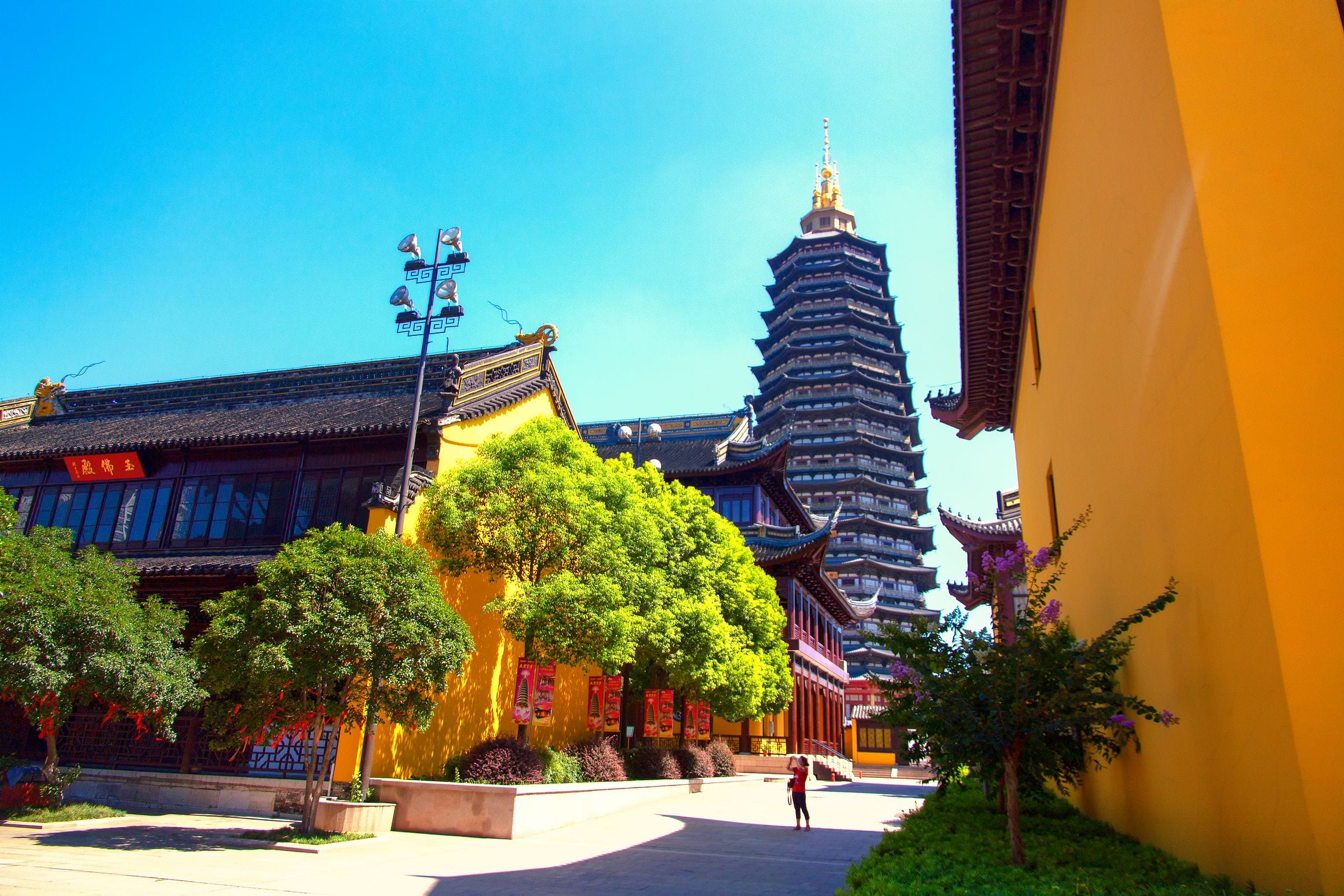
The tallest pagoda in the world is the Tianning Pagoda, in China — 153.79 m (504.6 ft), height.
Source: Guinness World Records. Verified .
Shwedagon does not make this list. Neither does Sri Lanka’s Jetavanaramaya nor Thailand’s Phra Pathom Chedi, because the buildings most people picture when they hear the word pagoda are solid bell-shaped stupas — a different structure entirely from the tiered tower with projecting eaves that the word properly describes.
The twelve here run from 153.79 metres down to 73.27 metres across China, Vietnam and Japan, and they are ordered one way only: by the pagoda’s own height, measured from the ground at its base to the tip of its finial, with whatever hill or podium sits beneath it left out.
That rule costs the list two well-known towers. Hangzhou’s Leifeng Pagoda is widely quoted at 71.679 metres, but 9.7 of those belong to a modern exhibition podium built over the ruins of the original. Yangzhou’s Dayun Pagoda clears 112 metres and is a museum landmark rather than a temple. Everything below is a working religious pagoda still standing today, ancient and modern ranked side by side.
Every pagoda on this list has an odd number of storeys. They run from the five of Japan’s Seidai-ji tower to the thirteen of Tianning, Chongwen and four others — pagodas are almost always built with an odd tier count, and not one of the twelve breaks the rule.
The tallest pagoda ever raised in China was wooden, and it is long gone. Emperor Yang of Sui put up a timber tower in Chang’an in 611 that reached about 100 m. Nothing built in China matched it again for nearly a thousand years.
A pagoda in Luoyang once held the world height record. The Yongning Pagoda was finished in 516 and burned eighteen years later; surviving accounts put it anywhere from roughly 100 m to about 155 m, which would have made it the tallest building on earth and a rival to the modern record-holder.
The tallest pagoda outranks the tallest pyramid.Tianning Pagoda stands about seven metres higher than the Great Pyramid of Giza, and taller than any pagoda that has ever stood in Japan, Korea or Southeast Asia.
Japan’s tallest pagoda is younger than the bullet train.The 75 m tower at Seidai-ji is reinforced concrete, finished in 1987, and has a lift. The tallest wooden pagoda in the country, Tō-ji in Kyoto, stops at 54.8 m.
The oldest all-wooden pagoda still standing just misses the cut. The Sakyamuni Pagoda of Fogong Temple at Yingxian has stood since 1056 and survived repeated earthquakes, but at 67.31 m it falls short of twelfth place.
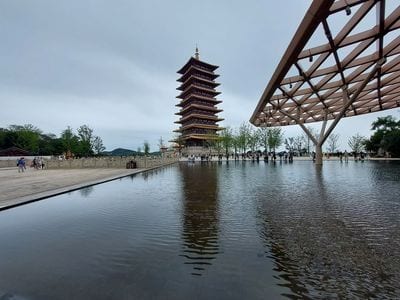
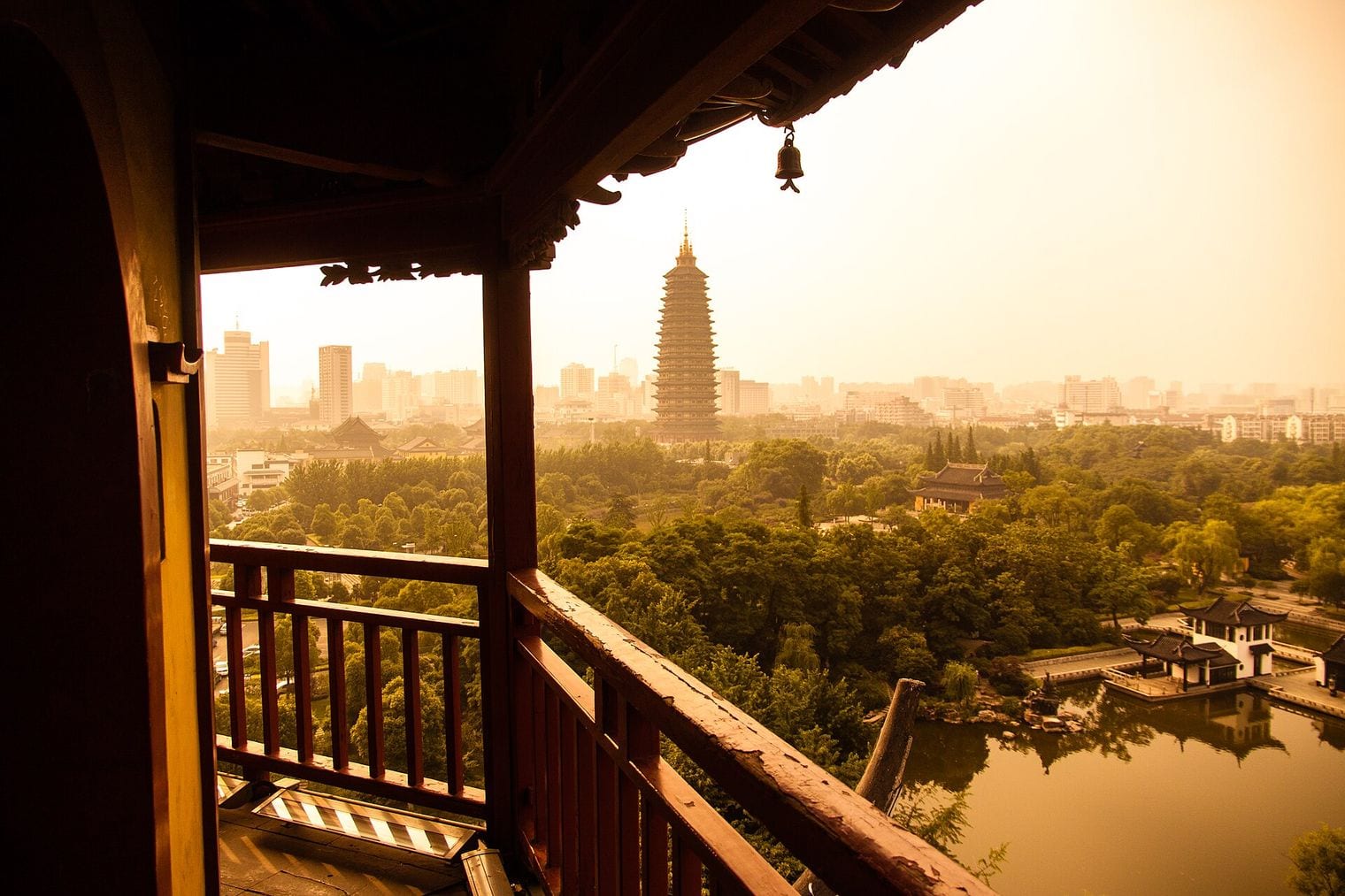
At 153.79 metres the Tianning Pagoda in Changzhou is the tallest pagoda on earth, and Guinness World Records says so in as many words. Thirteen storeys of steel frame dressed in timber-style Tang and Song detailing rise from the grounds of Tianning Temple, a Chan monastery founded here in the Tang dynasty and counted among the four great Chan houses of China.
Construction began in 2002 and finished in 2007, and the tower carries roughly a thousand tonnes of bronze ornament — eaves, brackets, bells and a gilded crown that catches the light from halfway across the city.
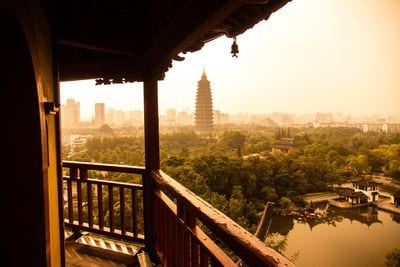
What makes it worth the trip is that it was designed to be climbed rather than admired from a distance. A lift runs most of the way up, the upper galleries open onto Changzhou and the canal country beyond, and a great bronze bell hangs in the base. It is a genuinely modern building doing an ancient job, and the argument about whether a steel-framed pagoda counts as a real one tends to end the moment you stand underneath it.
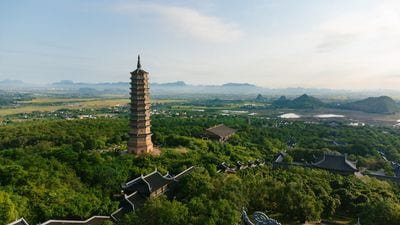
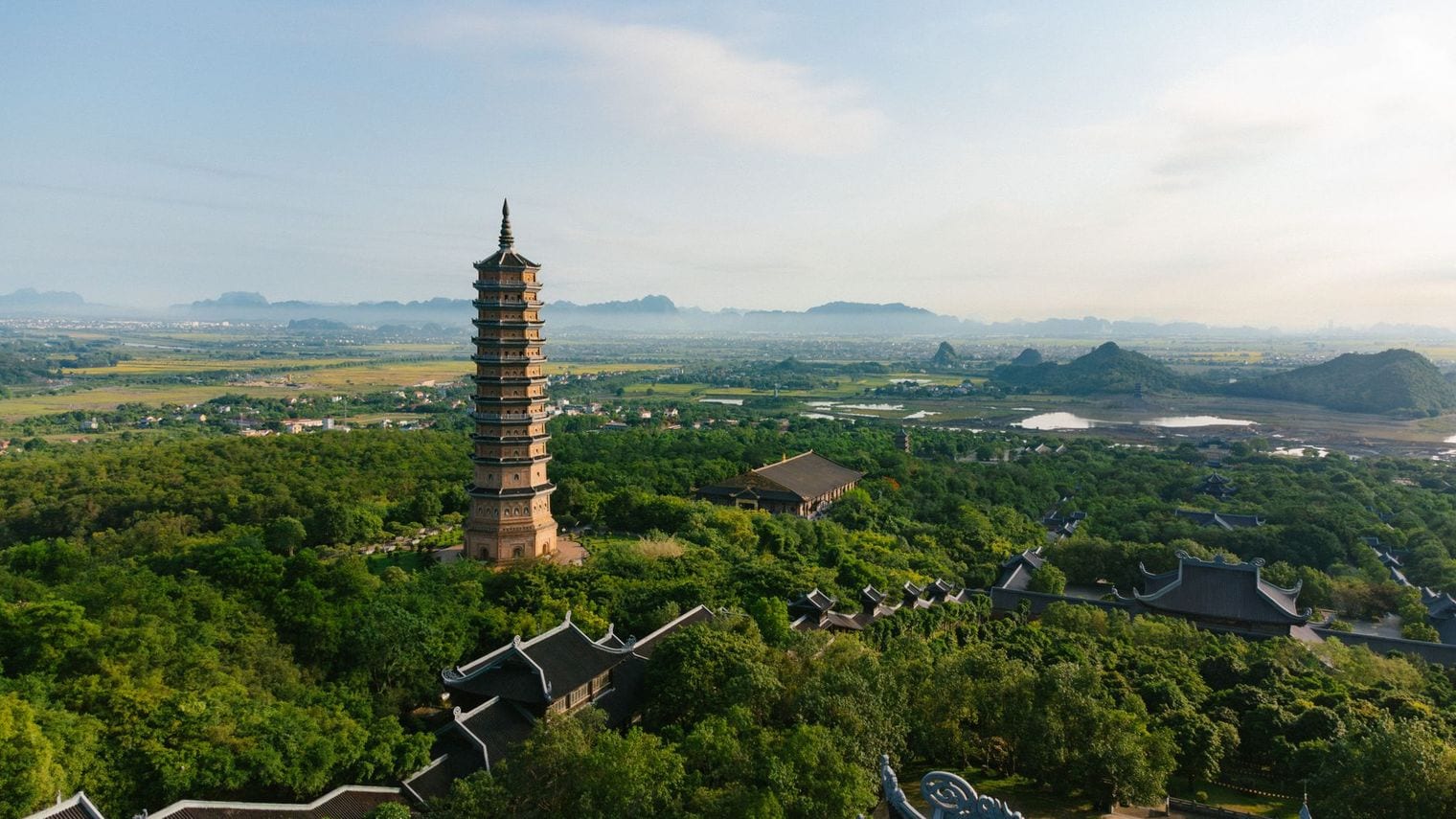
The Bái Đính Bảo Tháp rises 100 metres over the limestone hills of Ninh Bình, which makes it the tallest pagoda anywhere outside China. It is hexagonal rather than square or octagonal, thirteen floors tall, and built on a base of fired Bát Tràng brick worked in a decorative style borrowed from the Lý dynasty. Small stone Buddhas climb each of its six edges, and the chambers inside hold relics brought from India and Myanmar.
The tower anchors the Bái Đính complex, a sprawl of halls and courtyards across the hillside that ranks among the largest Buddhist sites in Vietnam and draws pilgrims from the whole country each spring. Climb the stairs and the reward is the view: karst ridges running to the horizon, the Tràng An waterways threading between them, and the roofs of the complex stepping down the slope below you. Hoa Lư, Vietnam’s tenth-century capital, sits a short drive away.
33. Great Bao'en Temple Pagoda
Dabao'en Temple Ruins Park, Qinhuai, Nanjing, Jiangsu, China
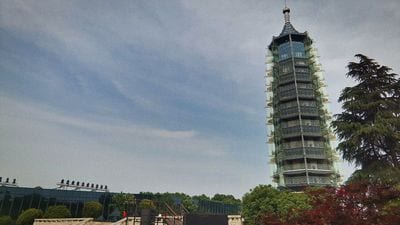
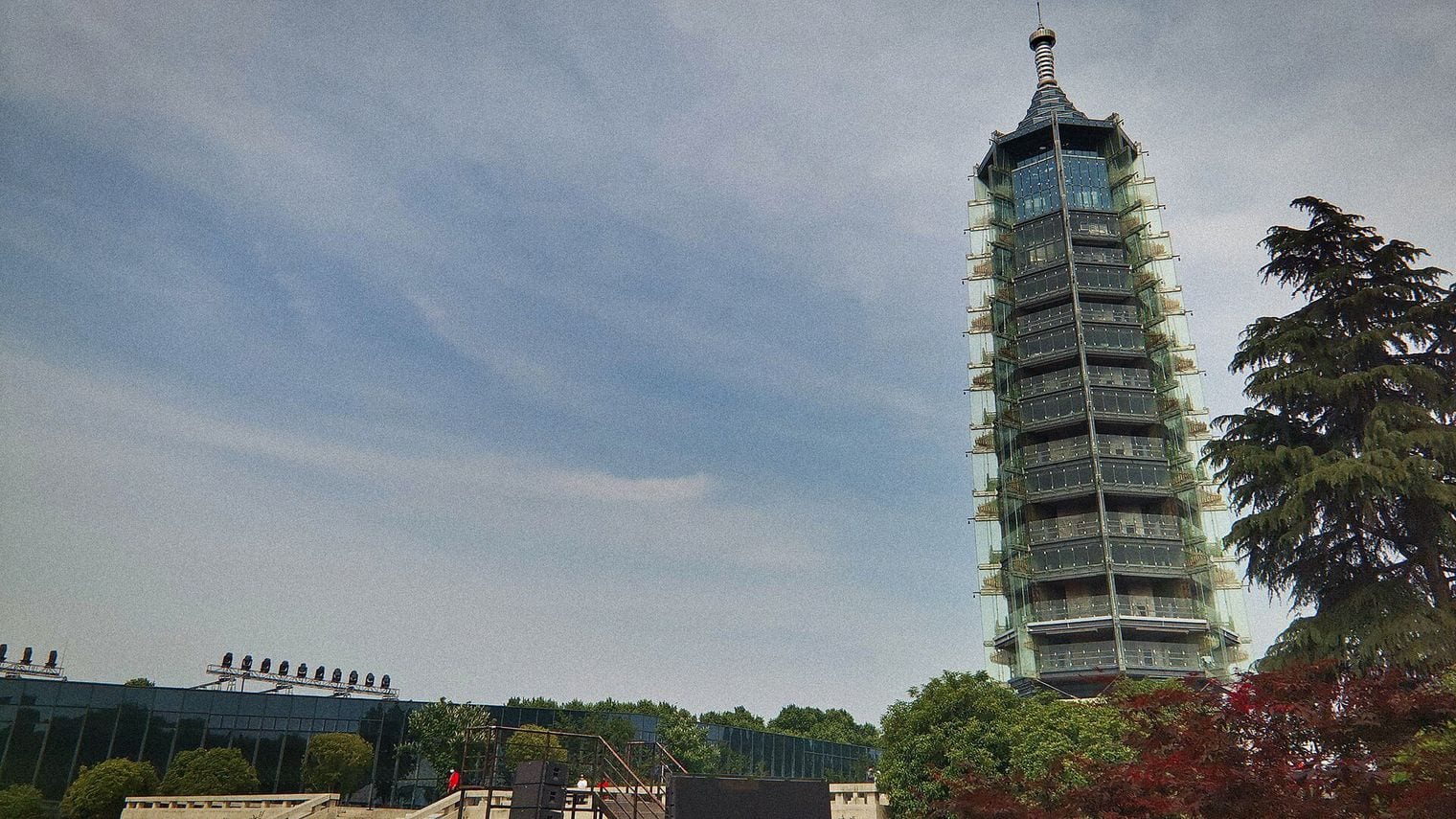
The Great Bao'en Temple Pagoda in Nanjing stands 93.157 metres, and many accounts still give it as 108 — that was the planning figure, a 99-metre tower on a nine-metre base, and the building that went up in 2015 is shorter and stranger than the drawings. It is nine storeys of steel and ultra-white glass, etched and glazed and fired to suggest the coloured tiles of the Ming pagoda that stood here before it.
That original was the Porcelain Tower, 78.2 metres of glazed brick raised by the Yongle Emperor — the same ruler who built the Forbidden City — for his mother, and reckoned one of the wonders of the medieval world until it was destroyed in 1856.
The modern tower is deliberately not a replica: it bridges the excavated foundations on steel beams so the underground relic chamber below is never touched, and at night it is lit from within in shifting colour. You are looking at a protective canopy that happens to be a pagoda.
44. Foding Pagoda
Niushou Mountain, Jiangning, Nanjing, Jiangsu, China
The Foding Pagoda is 88 metres tall, which puts it about three quarters of a metre clear of the Ming pagoda ranked below it — near enough that the gap comes down to how precisely each was measured, since this figure is the round number its operator publishes and the next one is quoted to the millimetre.
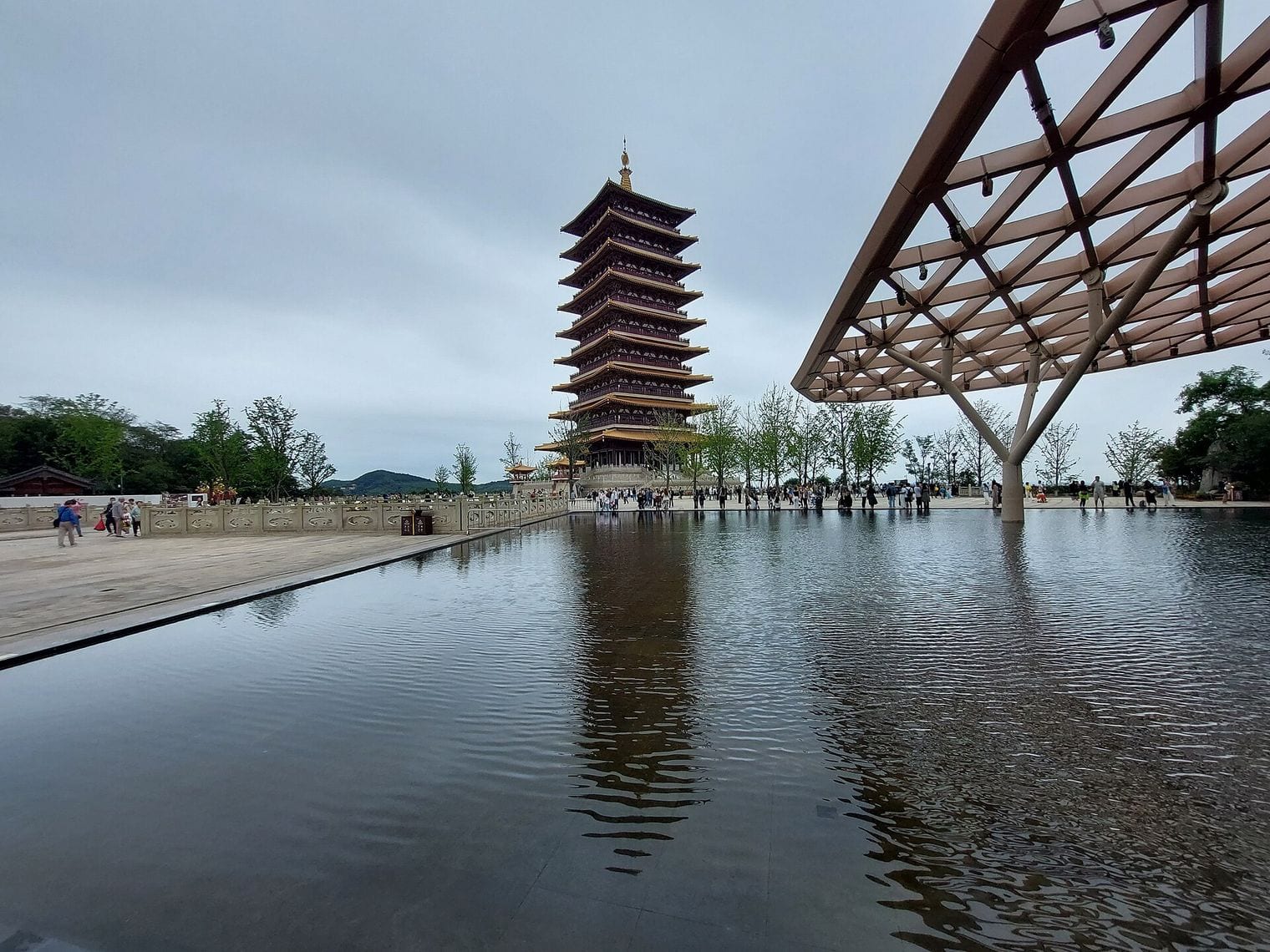
Nine levels on a square plan in unambiguous Tang style, it crowns Niushou Mountain south of Nanjing, part of a Buddhist complex built in the 2010s around a relic of the Buddha’s skull.
The eighth level holds a bronze bell cast with the full text of the Diamond Sutra, and the ninth a seated Vairocana Buddha. The tower is the landmark of the whole site, visible from the approach road long before you reach it, and it makes a useful pairing with the subterranean Usnisa Palace dug into the hillside opposite. Note that the interior is not open for climbing while restoration work continues, so plan on admiring this one from the terrace.
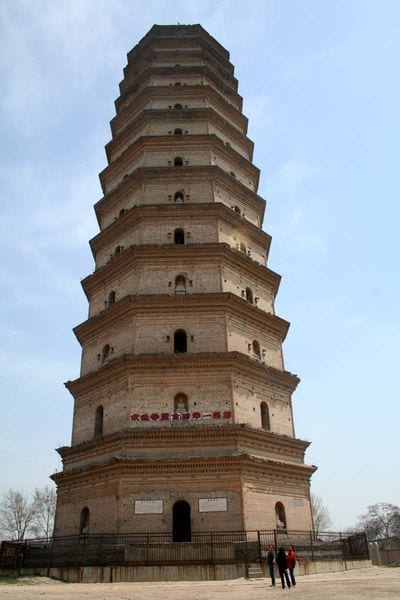
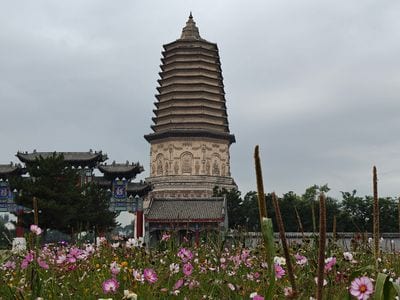
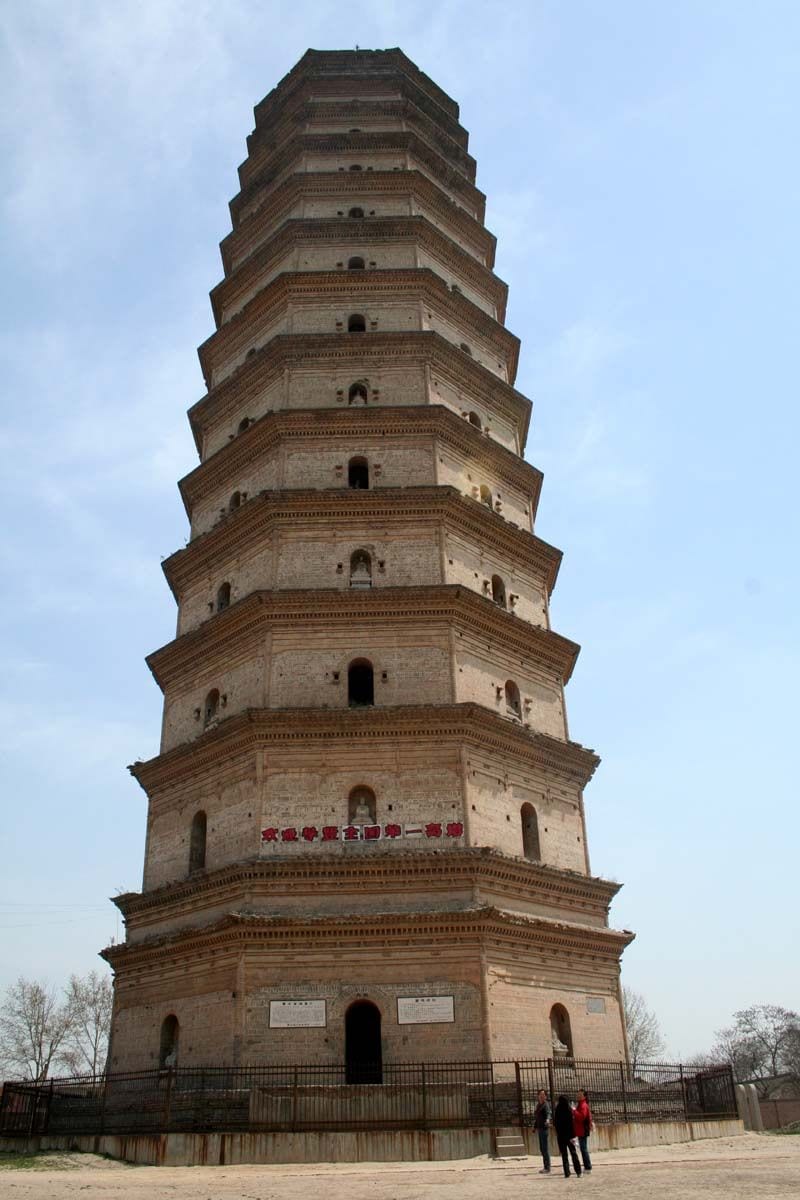
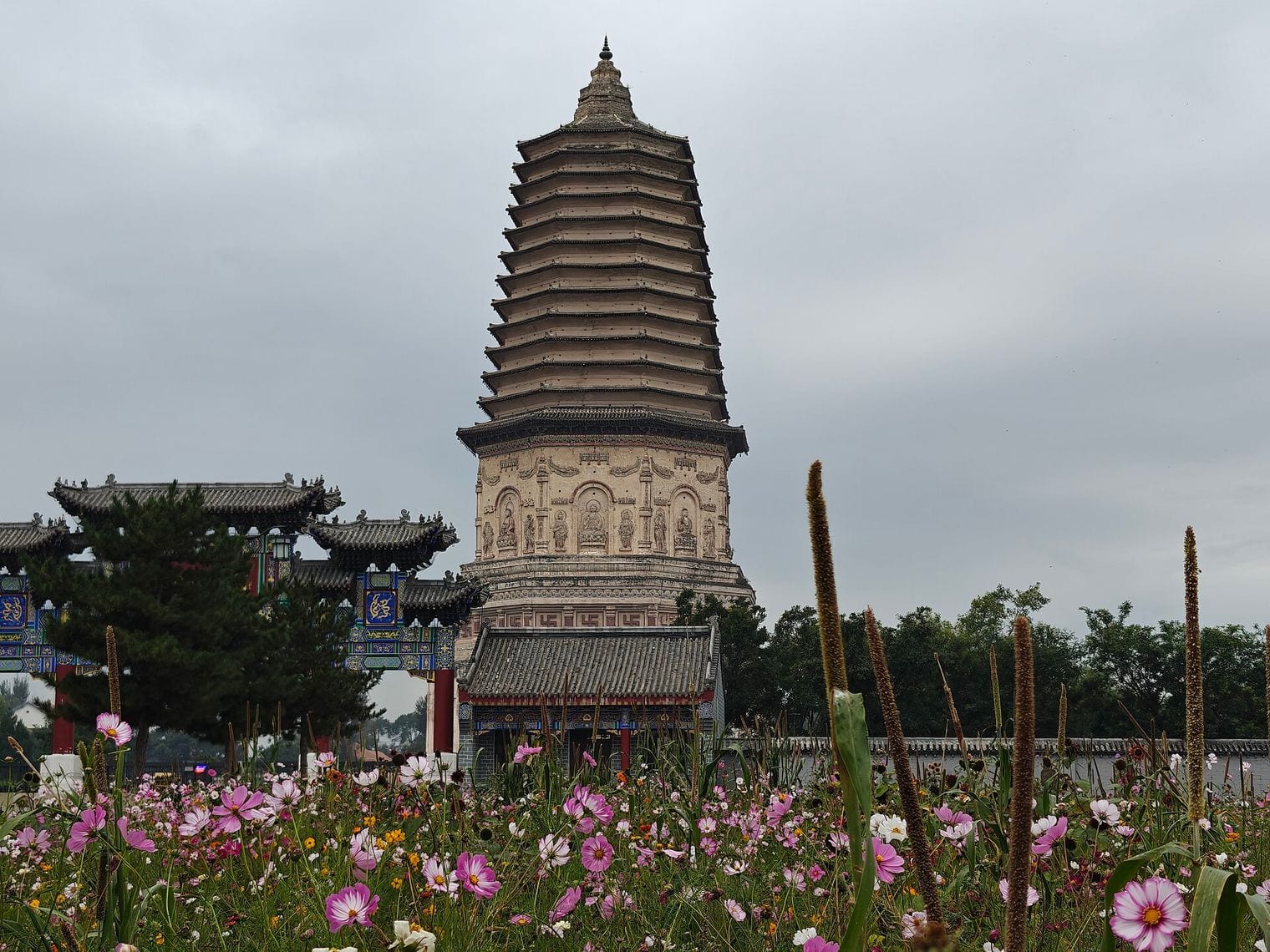
At 87.218 metres the Chongwen Pagoda is the tallest brick pagoda in China, and it takes some finding — it stands in Jingyang County outside Xianyang, an hour from Xi’an and almost unvisited compared with the Wild Goose pagodas in the city.
Thirteen octagonal storeys of grey brick taper upward without a single structural timber, the whole thing raised between 1591 and 1605 at the urging of Li Shida, a Ming minister who came from the county, and built by craftsmen brought north from the Yangtze delta.
Each storey carries four doorways and four niches, and the niches still hold their Ming stone Buddhas, weathered but in place after four centuries. The stair inside runs all the way to an open platform at the top, which is rarer than it sounds — most pagodas of this age are sealed above the lower floors. It has been a National Key Cultural Relic since 2001, and English-language sources routinely understate its height by eight metres.
The Fenyang Wenfeng Pagoda measures 84.97 metres after restoration, up from 80.12 before it, and it is the tallest pagoda on this list that was never built for the Buddha.
A wenfeng or “literary peak” pagoda is a feng shui structure, raised to draw scholarly fortune to the town beneath it, and this one went up in 1623 on funds Zhu Zhijun gathered from the people of Fenyang in Shanxi. Thirteen octagonal storeys of brick, hollow inside, with a spiral stair winding counter-clockwise between the inner and outer walls.
It trades the title of China’s tallest brick pagoda with Chongwen depending on which local authority you ask, and Fenyang’s claim has been printed often enough to stick locally even though the Shaanxi tower is the taller of the two. Either way it is an extraordinary piece of late-Ming engineering, listed as a National Key Cultural Relic in 2006, and it dominates a stretch of the Fen valley better known now for its distilleries than its scholars.
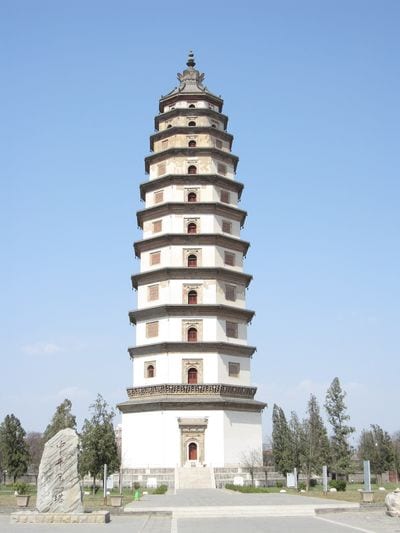
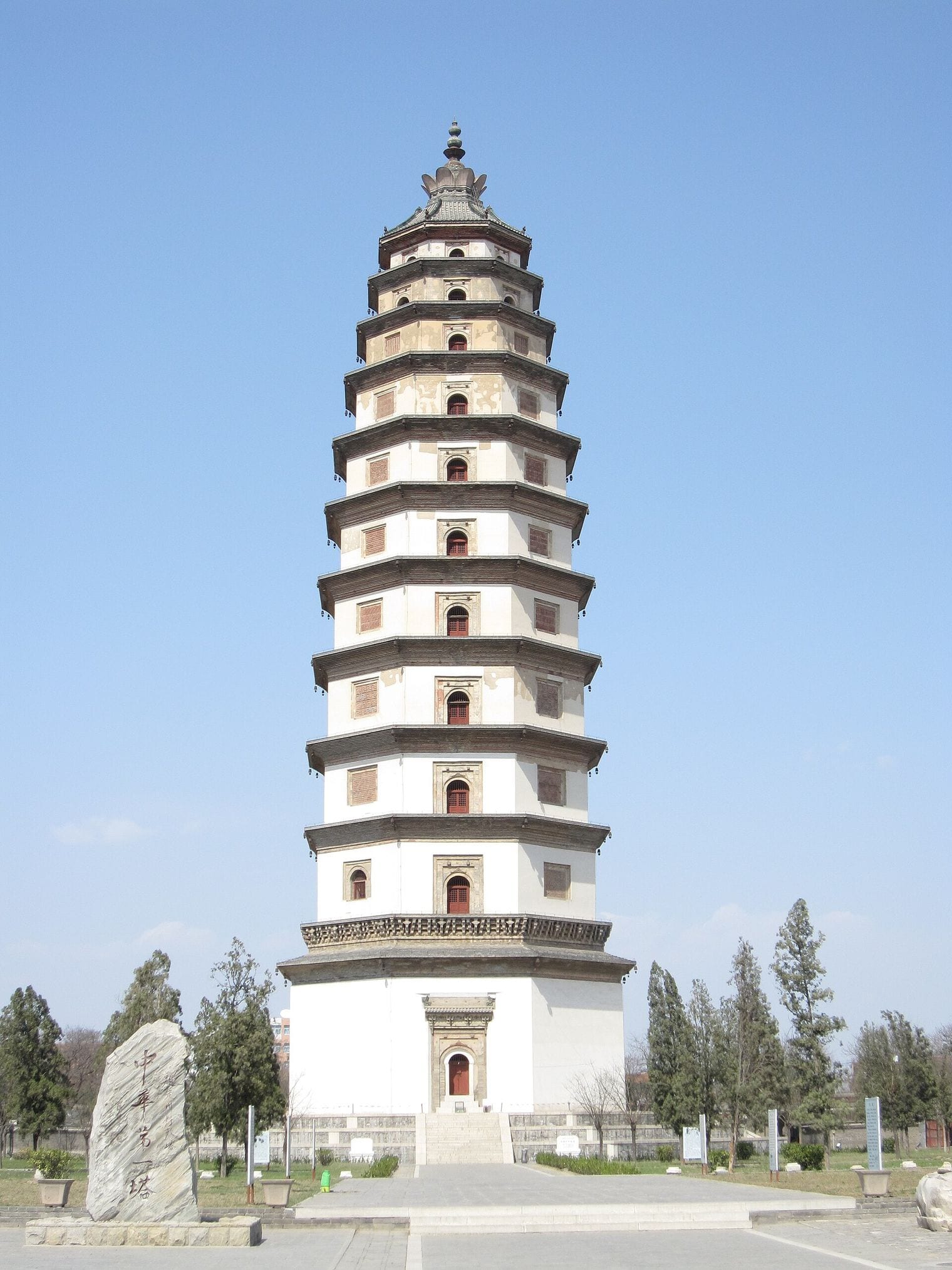
The Liaodi Pagoda reaches 84 metres and was, for more than five centuries after it was finished, the tallest building standing in China. It went up at Kaiyuan Monastery in Dingzhou between 1001 and 1055, eleven octagonal brick storeys on a broad platform, and its name gives away the second job it was doing: liaodi means roughly “watching the enemy”, and Song officers climbed it to track Liao troop movements across the plain to the north.
That dual purpose shows in the design. The interior is effectively a pagoda within a pagoda, an inner tower carrying the load with a spiralling gallery wrapped around it, which is why it is still standing when so many of its contemporaries are not.
It counts as one of the Four Treasures of Hebei, and standing at the base you get a clear sense of why a building like this read as an act of state as much as an act of faith.
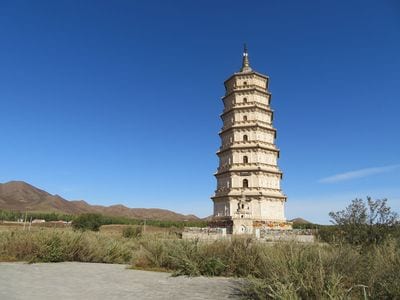
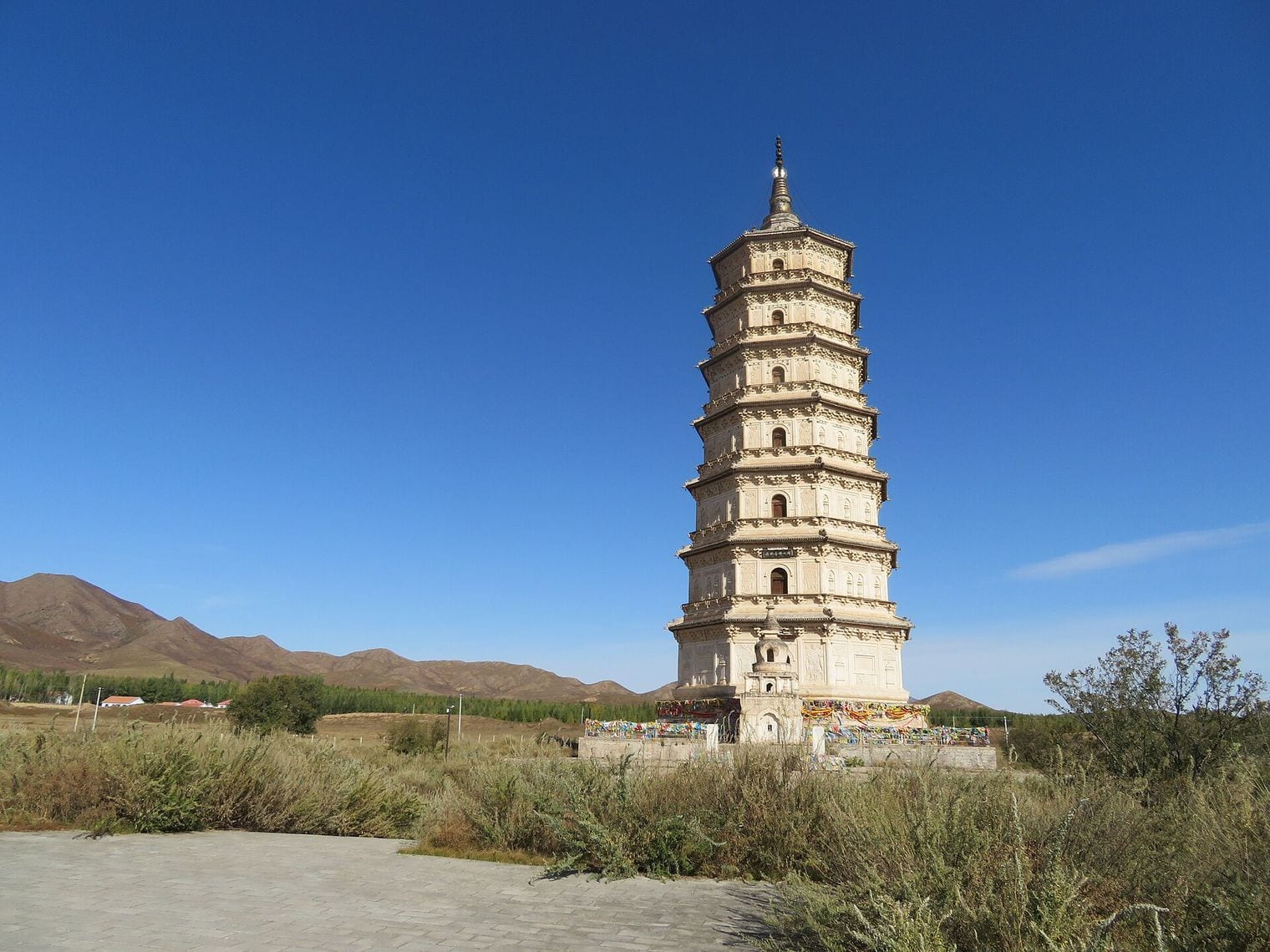
The Daming Pagoda is 80.22 metres of solid Liao-dynasty brickwork on the grasslands of Ningcheng County in Inner Mongolia, and by sheer volume of material it is the largest ancient pagoda in China. Thirteen storeys of densely stacked eaves rise from an octagonal base carved with guardian figures, a form the Khitan builders of the Liao made their own and repeated across what is now Liaoning, Hebei and Inner Mongolia.
It is the biggest of three pagodas that survive from Zhongdu, the Liao Middle Capital, a city that has otherwise almost entirely gone back to grass. That context is the reason to come: you are looking at a 900-year-old tower standing alone in open country, with the outline of the vanished capital still legible in the ground around it. Chifeng makes the natural base, and the drive out crosses some of the emptiest landscape in northern China.
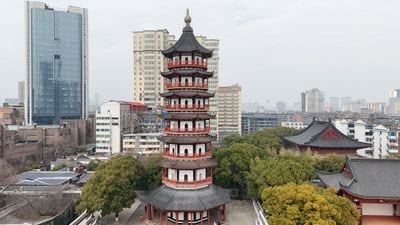
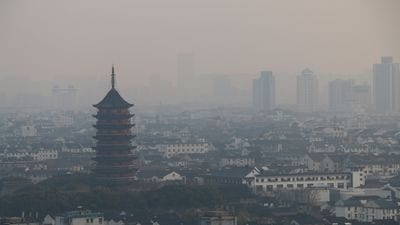
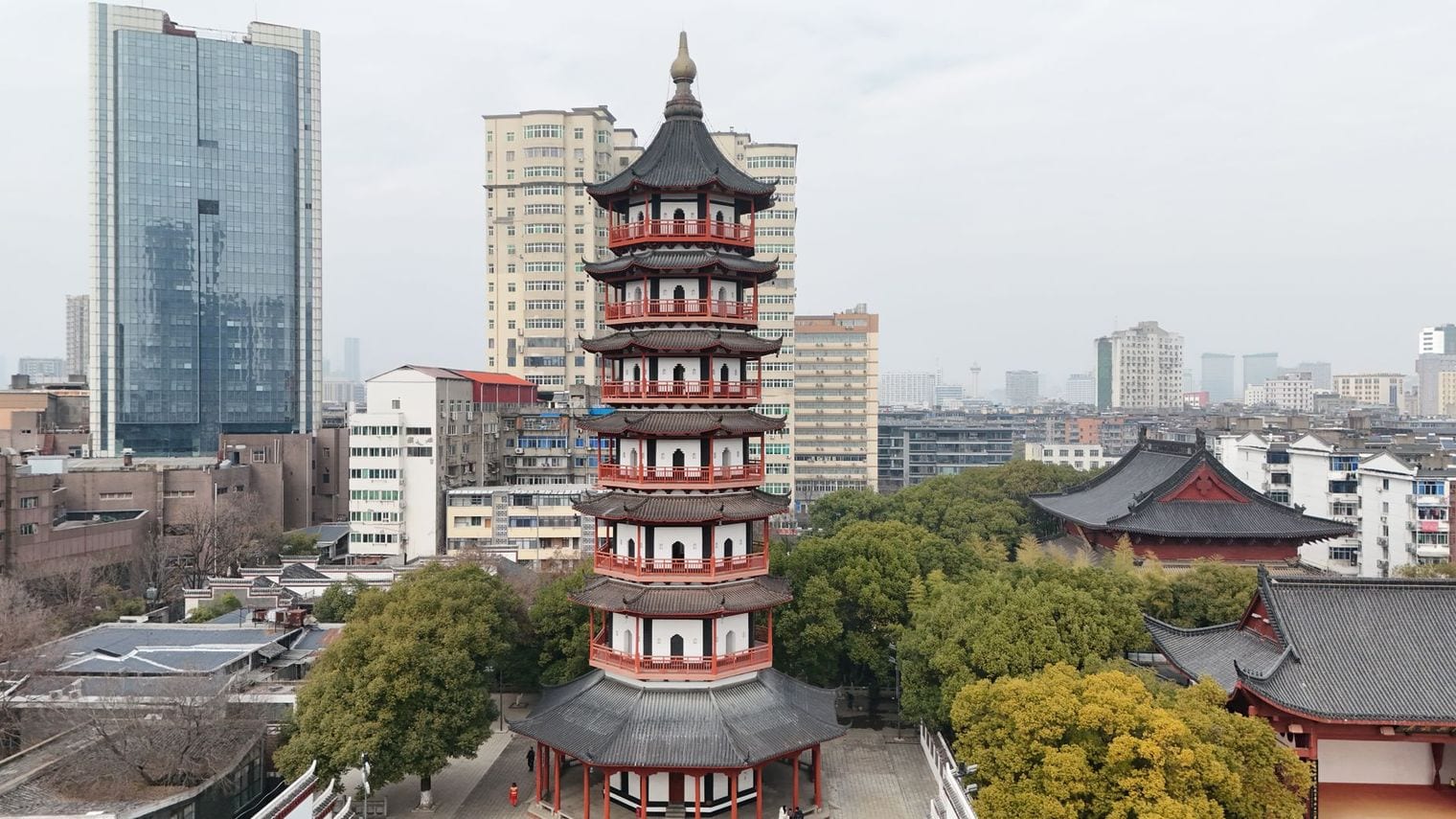
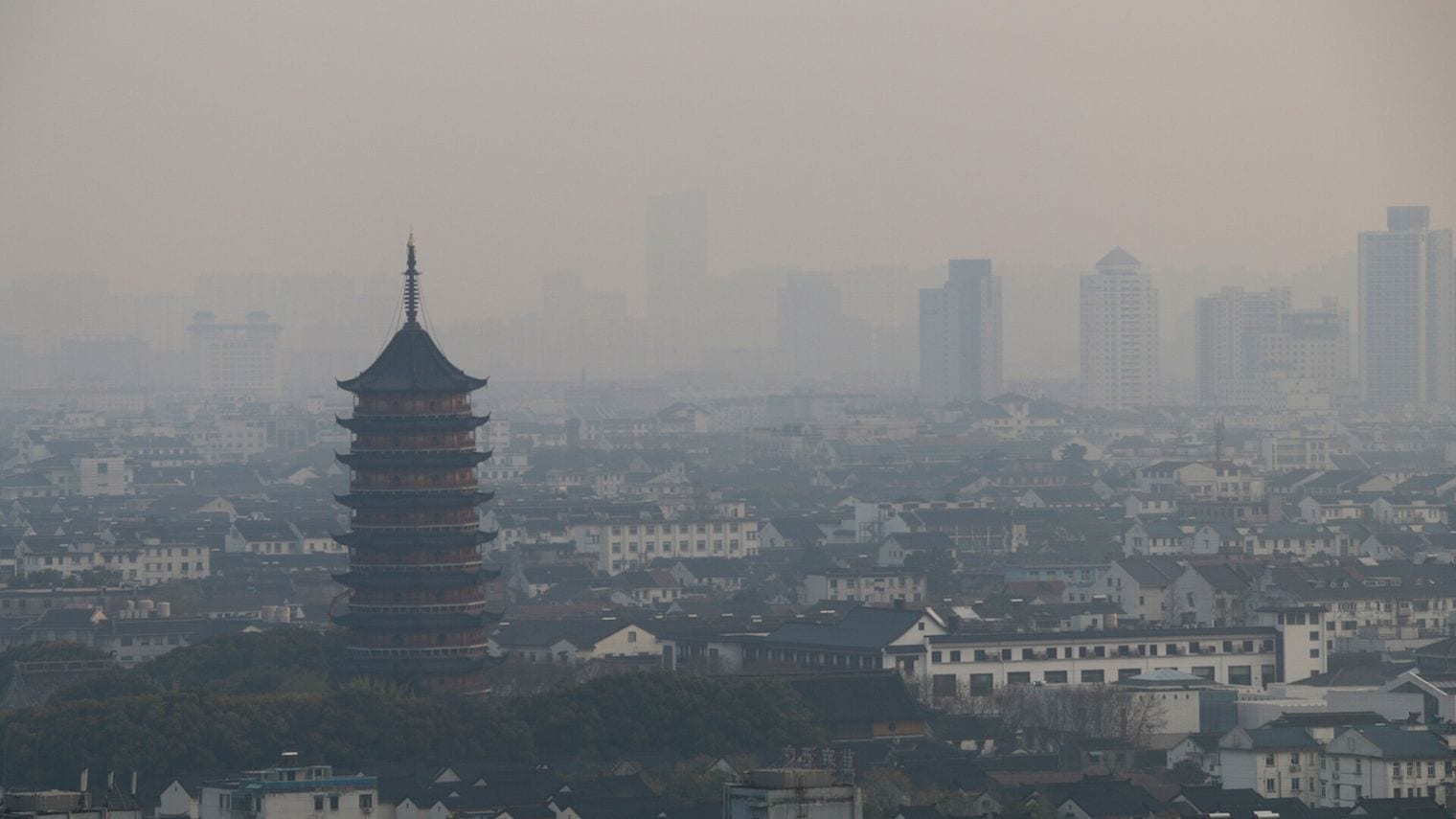
At 76 metres the Beisi Pagoda is the tallest thing in Suzhou's old town and has been since it was rebuilt in 1153, which in a city of canals and low garden walls means it is visible from almost everywhere.
Nine octagonal storeys of brick core wrapped in wooden eaves and balconies, it once stood eleven storeys tall before damage brought it down to its present height — the double eaves and upswept corners are close cousins of the Liuhe Pagoda in Hangzhou.
It sits in the grounds of Bao'en Temple at the northern end of Renmin Road, and unlike most pagodas of its age you can go up. The climb is steep and the galleries narrow, but the payoff is a roof-level view over the grey tiles and white walls of the old town, with the classical gardens picked out as pockets of green. Half an hour here recalibrates how you read the rest of Suzhou.
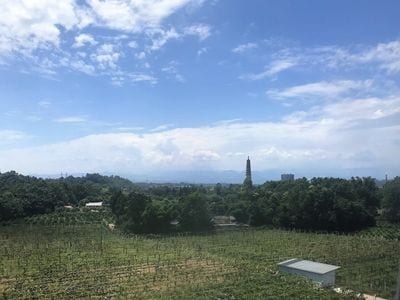
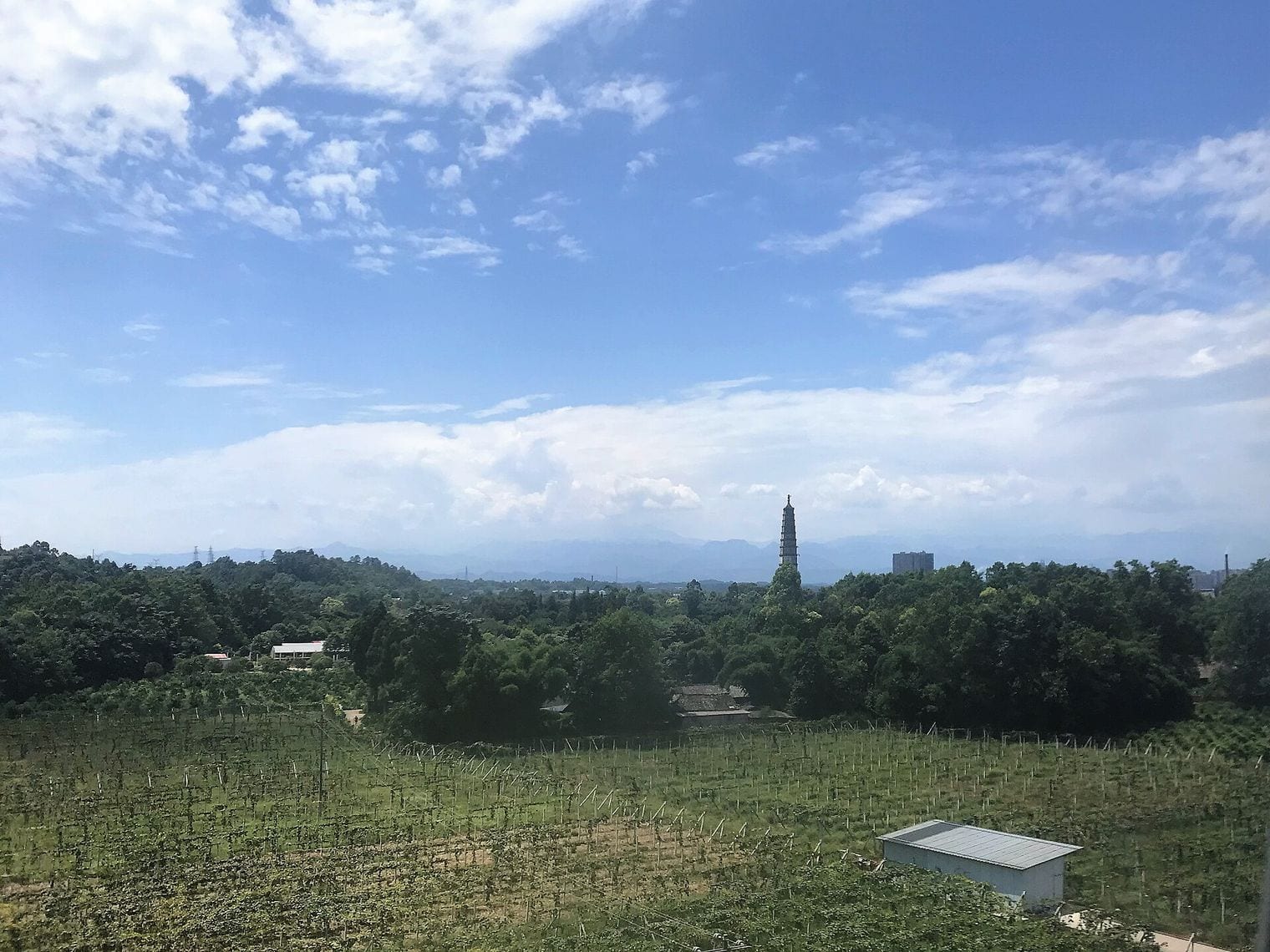
The Huilan Pagoda stands 75.48 metres on the bank of the Nan River at Qionglai, west of Chengdu, which makes it the tallest ancient pagoda in Sichuan. Thirteen hexagonal storeys of brick sit on a three-tier red sandstone base, and its full name, Huilan Wenfeng Pagoda, records both jobs it was built for: calming the river and lifting the fortunes of local scholars.
It sits roughly half a metre below the pagoda ranked above it and about the same distance above the next one down, so this stretch of the ranking is effectively a three-way photo finish.
The tower first went up in the Ming Wanli era as the River-Calming Pagoda, was destroyed in the fighting at the end of that dynasty, and was rebuilt in stages across the Qianlong, Tongzhi and Guangxu reigns. It is the one ancient pagoda near Chengdu you can still climb.
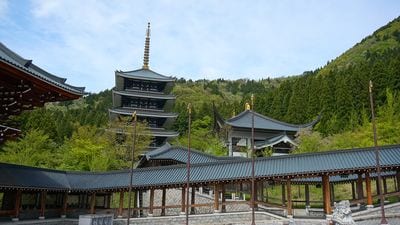
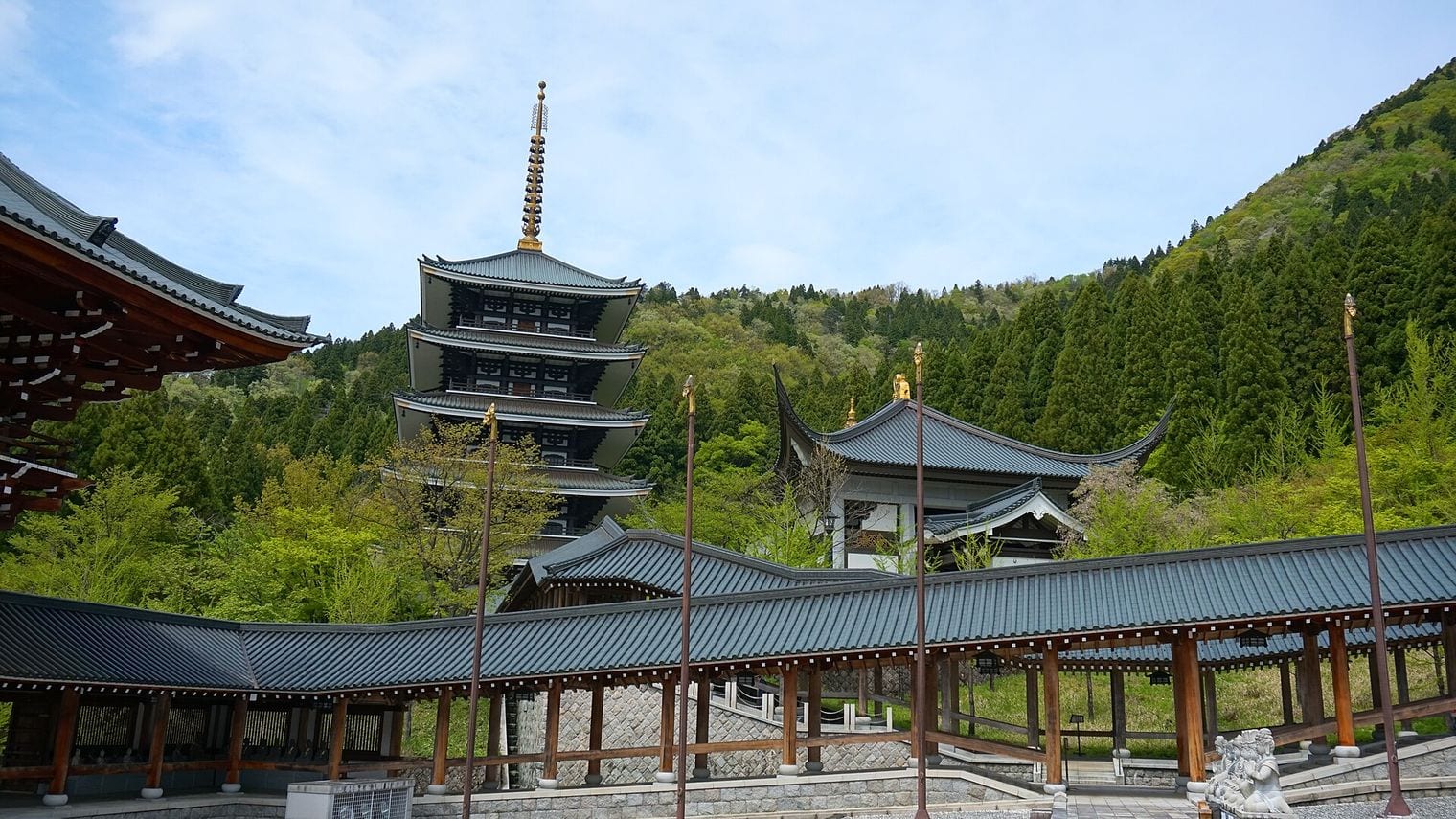
The Seidai-ji Five-Storey Pagoda is 75 metres tall and it is, by a margin of twenty metres, the tallest pagoda in Japan — a fact that surprises people who assume the answer must be an ancient timber one in Kyoto or Nara.
It was finished in 1987 in reinforced concrete at Daishiyama Seidai-ji in Katsuyama, deep in the Fukui countryside, and there is a lift inside. Tō-ji’s celebrated Kyoto pagoda, the tallest wooden one in the country, reaches only 54.8 metres.
The temple around it is as unexpected as the tower. Its main hall holds the Echizen Daibutsu, a seventeen-metre seated Vairocana modelled on the great Buddha of the Fengxian Temple at Longmen in China, with walls of smaller Buddhas ranked behind it. The whole complex was built in one extraordinary burst of private spending in the 1980s, it is open daily year-round, and the temple runs special viewings for the sea of cloud that settles over the valley below.
1212. Qingzhou White Pagoda
Soborga, Balin Right Banner, Chifeng, Inner Mongolia, China
The Qingzhou White Pagoda is 73.27 metres of octagonal brick and timber raised between 1047 and 1049, and it may be the most lavishly decorated building on this list. Emperor Xingzong of Liao built it for his mother, the Empress Dowager Xiao Noujin, and its seven storeys carry 856 bronze mirrors and some 2,240 wind bells, with 56 celestial kings worked in relief across the faces. In a wind off the Mongolian grassland the whole tower rings.
It stands on the ruins of Liao Qingzhou in Balin Right Banner, north of Chifeng, and the sealed chambers inside were packed with scriptures, silks and reliquaries — a hoard that has since told archaeologists more about Liao Buddhism than almost any other find. There is nothing around it but grass and the low earth lines of the vanished city, which is exactly why a white tower nine centuries old reads so strongly here.
FAQ: The World’s Tallest Pagodas
What is the tallest pagoda in the world?
The Tianning Pagoda in Changzhou, China, at 153.79 metres. Finished in 2007 and recognised by Guinness World Records, it is a thirteen-storey steel-framed tower built in Tang and Song style, and it stands roughly seven metres taller than the Great Pyramid of Giza. A lift carries visitors most of the way to the top.
Why is Shwedagon not on this list?
Shwedagon is a stupa — a solid, bell-shaped monument — rather than a pagoda in the strict architectural sense of a tiered tower with projecting eaves. This ranking covers tiered pagoda towers only, which is also why Sri Lanka’s Jetavanaramaya and Thailand’s Phra Pathom Chedi are absent despite standing taller than most entries here.
What is the tallest ancient pagoda still standing?
The Chongwen Pagoda in Jingyang County, Shaanxi, at 87.218 metres, completed in 1605. It is the tallest brick pagoda in China and taller than the better-known Liaodi Pagoda at Dingzhou, which many English-language sources still describe as the tallest surviving pre-modern Chinese pagoda on a figure that is eight metres short.
Which country has the most of the world’s tallest pagodas?
China, by a wide margin — ten of the twelve. The pagoda is an East Asian building form, and China holds both the modern record-holders and nearly every surviving historic tower above 70 metres. Vietnam and Japan supply one each. The pattern repeats among the world’s tallest buildings, where China has more supertalls than anywhere else.
What is the tallest pagoda in Japan?
The five-storey pagoda at Daishiyama Seidai-ji in Katsuyama, Fukui, at 75 metres. It is reinforced concrete, was finished in 1987 and has a lift inside. The tallest wooden pagoda in Japan is Tō-ji in Kyoto at 54.8 metres, more than twenty metres shorter than the concrete newcomer.