We may earn a commission if you book tickets, tours or a stay through a link on
this page, at no extra cost to you. It never affects which places we list or how
we rank them (how we make money).
The record
182 m597 ft
Statue of Unity
India
The record
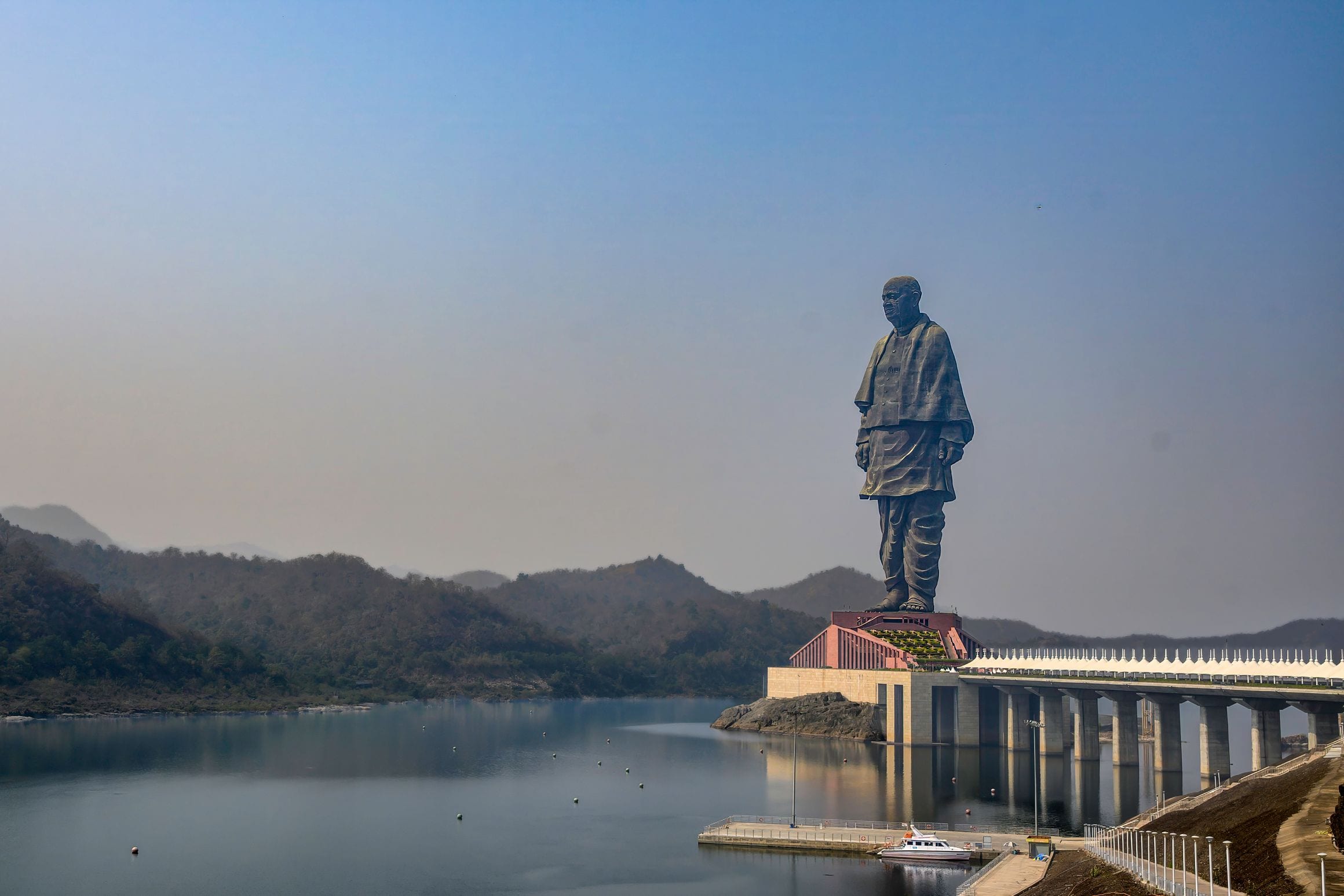
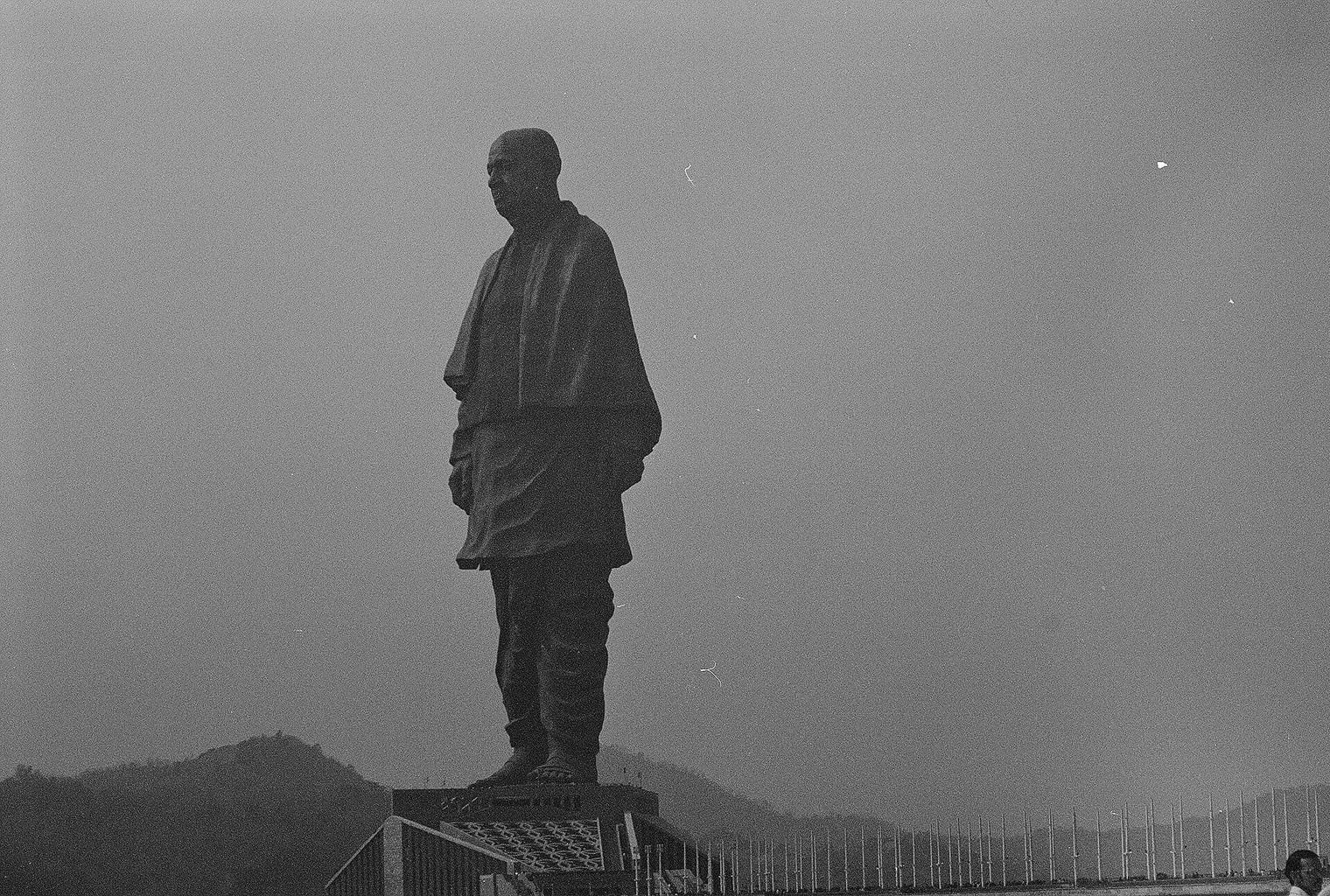
The tallest statue in the world is the Statue of Unity, in India — 182 m (597 ft), statue height.
Source: Wikipedia (Statue of Unity; 240 m with its 58 m base). Verified .
Christ the Redeemer stands 30 metres tall. The Statue of Liberty is 46. Neither is anywhere near this list, which opens at 76 metres and climbs to 182 — fifteen colossi across eight countries and territories, thirteen of them in Asia.
Two rules decide what qualifies. The first is where the tape stops: this ranks the figure alone, excluding pedestal, plinth and lotus throne, which is why the Spring Temple Buddha appears here at 128 metres rather than the 208 you will usually see quoted — that larger number adds a 25-metre pedestal and a 20-metre lotus throne beneath the Buddha's feet.
The second is that the statue has to be standing today, which is why Japan's 80-metre Awaji Kannon, dismantled in 2023, is absent. Those two rules cost the list some famous names: Batangas' Mother of All Asia is quoted at 98.15 metres, but that figure includes the building underneath it, and China's Emperors Yan and Huang is 51 metres of carved head sitting on 55 metres of hillside.
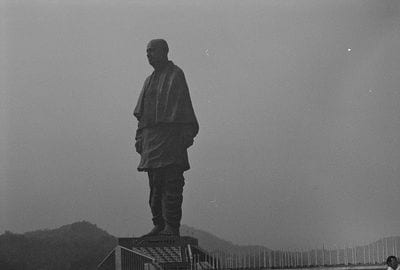
At 182 m597 ft, the Statue of Unity is the tallest statue on Earth, and it holds the title by a margin no other entry comes close to — 54 m clear of second place, which is more than the total height of many statues further down this list.
It depicts Sardar Vallabhbhai Patel, independent India's first deputy prime minister and the man who folded some 500 princely states into a single country. It stands on an island in the Narmada River in Gujarat, facing the Sardar Sarovar Dam, and was unveiled on 31 October 2018 — Patel's birthday.
The 182 m is the bronze-clad figure alone. A 58 m base lifts the whole monument to 240 m, and that larger number is the one Gujarat's tourism material tends to lead with, which is exactly the kind of substitution this ranking is built to strip out.
Inside, lifts carry visitors up to a viewing gallery set in the statue's chest, looking out across the dam and the Satpura and Vindhya ranges. It is not a quiet place: 5.82 million people visited in 2024 alone.
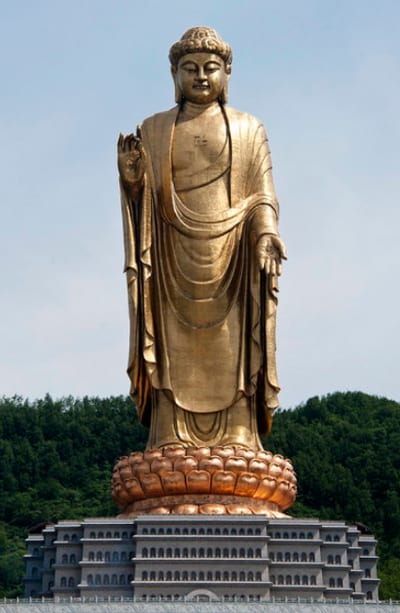
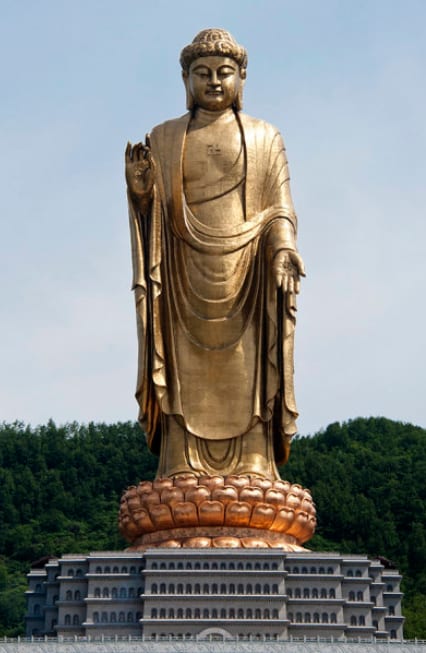
At 128 m420 ft, the Spring Temple Buddha is the tallest Buddha in the world and was the tallest statue of any kind for a decade, from its completion in September 2008 until the Statue of Unity overtook it in 2018. It represents Vairocana Buddha, is cast in copper, and stands in the Fodushan Scenic Area in Lushan County, Henan.
This is the statue that makes the measuring rule worth stating out loud. You will very often see it listed at 208 m, and that figure is real — it just is not the Buddha. It adds a 20 m lotus throne and a 25 m pedestal built into the hillside beneath the figure's feet.
Measured the way every entry here is measured, from the soles up, the Buddha is 128 m, which is where it ranks. The site sits near the Tianrui hot spring that gives the statue its name.
33. Laykyun Sekkya
Khatakan Taung, near Monywa, Sagaing Region, Myanmar
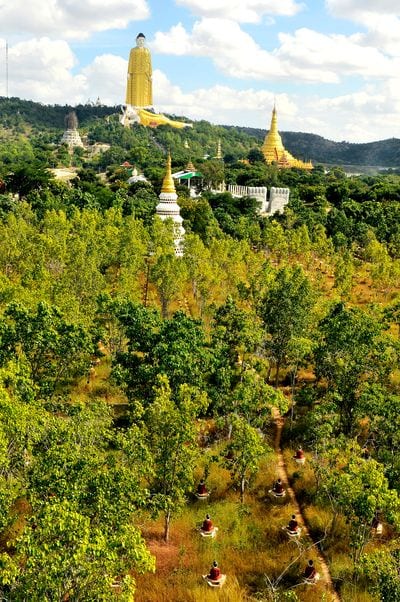
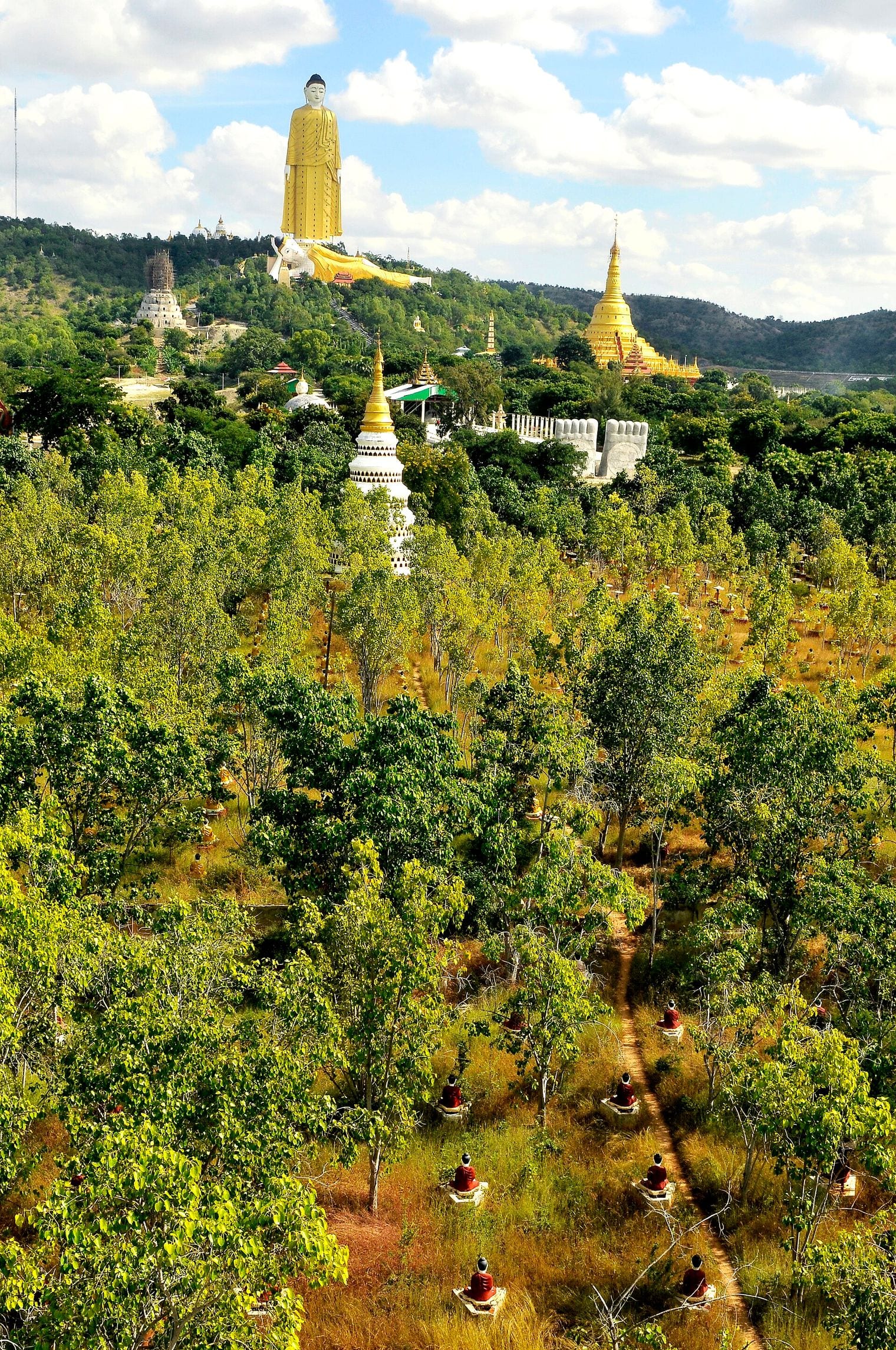
At 116 m381 ft, Laykyun Sekkya is the tallest standing Buddha in the world and the tallest statue in Southeast Asia. It rises from a hillside at Khatakan Taung, outside Monywa in Myanmar's Sagaing Region, and was completed on 21 February 2008 after eleven years of work.
For seven months it was the tallest statue on the planet — until the Spring Temple Buddha was finished that September and pushed it into second. Its throne adds a further 13 m, bringing the full monument to 129.2 m, though only the figure counts here. The statue is hollow and visitors can climb inside it, and the surrounding site is dense with Buddhist sculpture, including a vast reclining Buddha laid out at the foot of the hill.
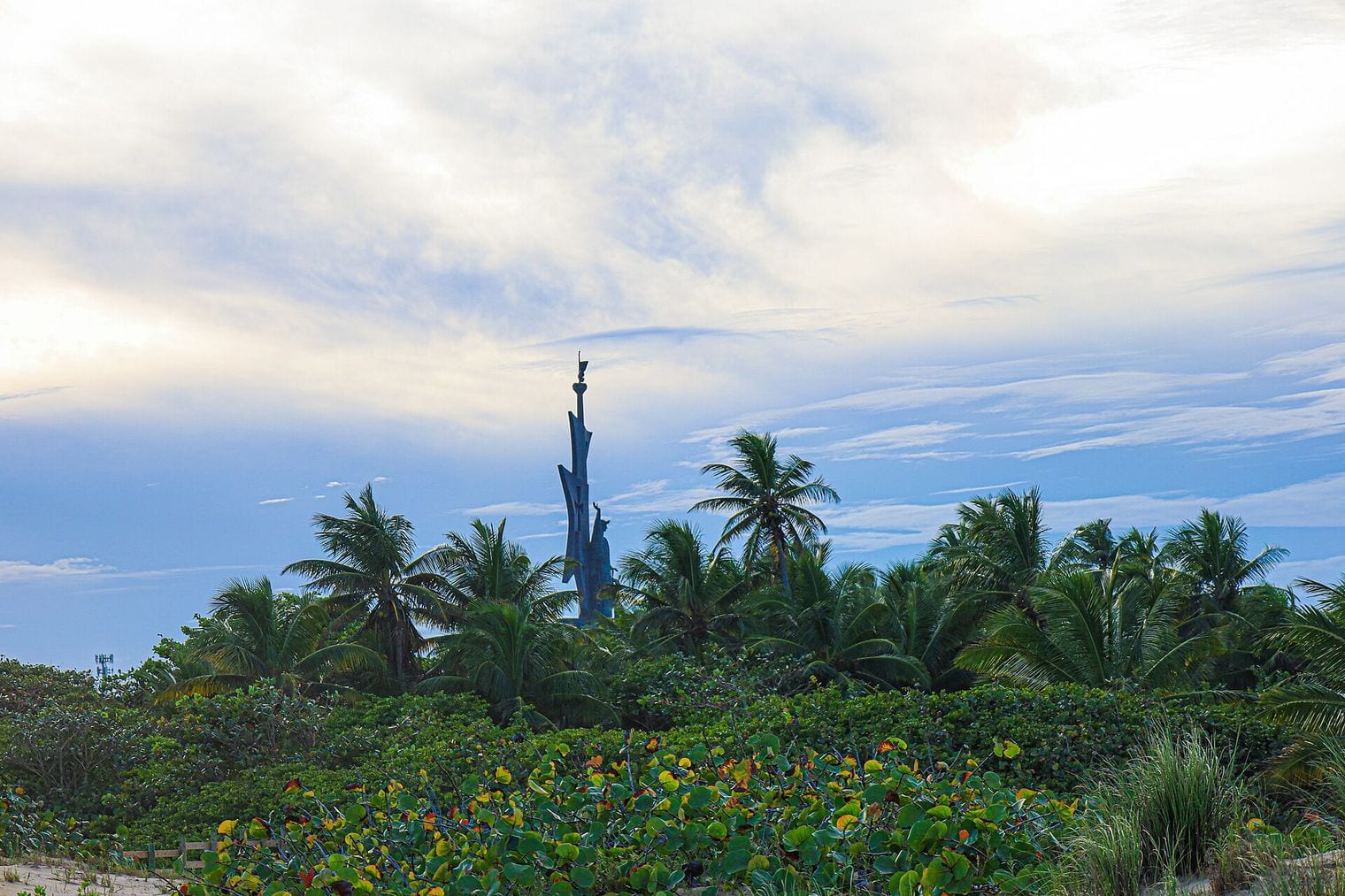
At 110 m361 ft, Birth of the New World is the tallest statue in the Americas and the only entry on this list outside Asia and Europe. It stands on the Atlantic coast at Arecibo, Puerto Rico, and depicts Christopher Columbus at the wheel of a ship, with the Niña, the Pinta and the Santa María worked into the structure behind him.
Its route to the coastline was long. The sculpture was designed in 1991 and spent roughly a quarter of a century in search of a home before Arecibo raised it in 2016. It has proved durable since: it came through Hurricane María in 2017 without structural damage, even as the visitor complex planned around it stalled in legal disputes and storm repairs. The bronze figure is visible for miles along the coast road.
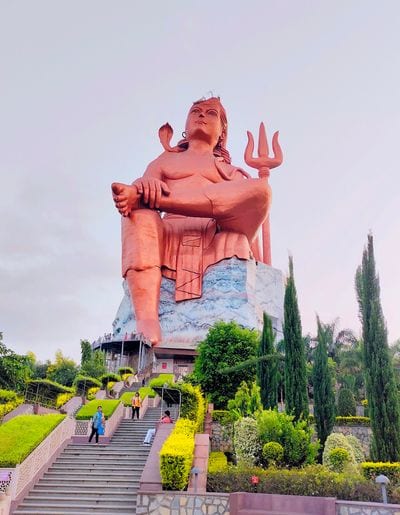
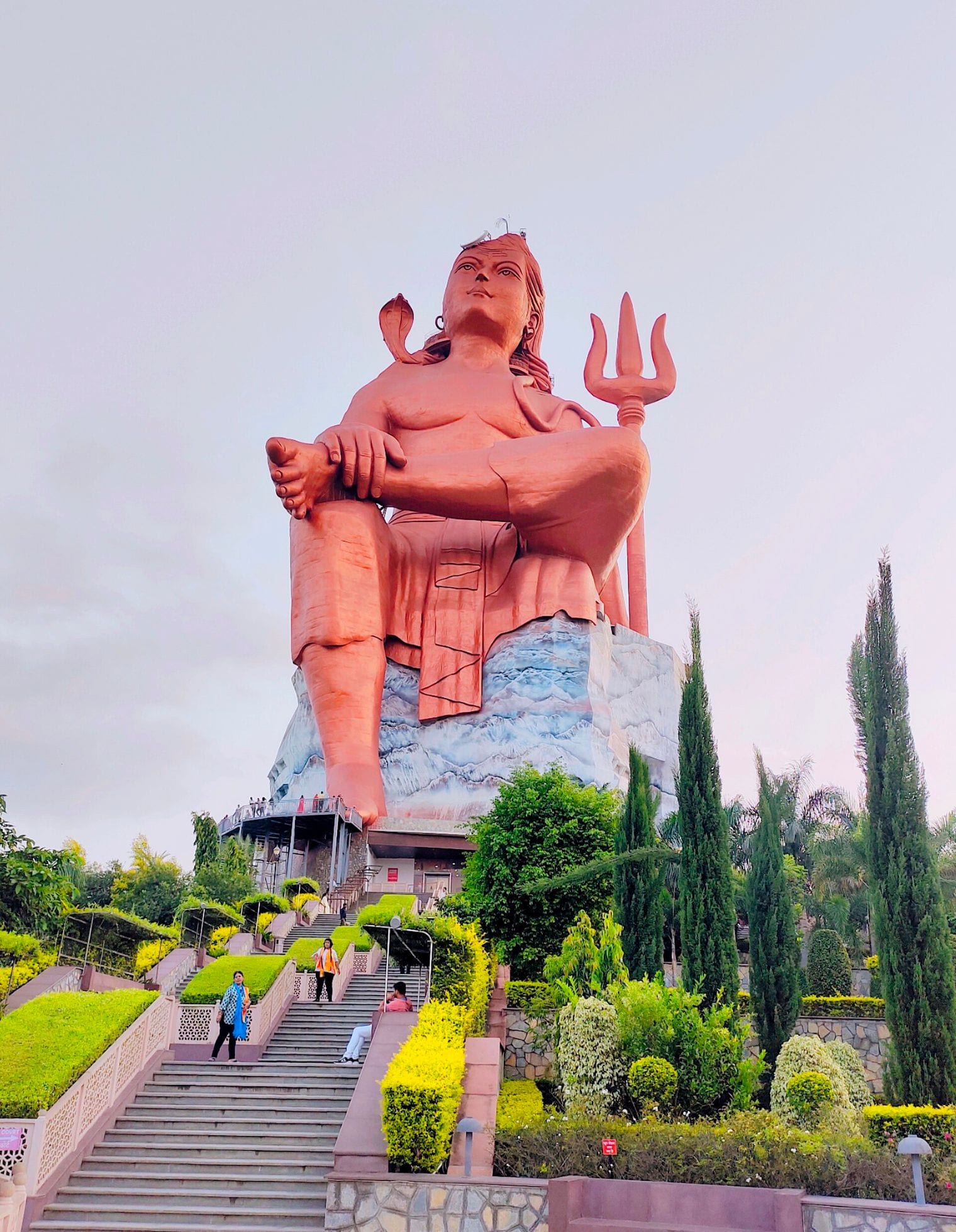
At 106 m348 ft, the Statue of Belief at Nathdwara in Rajasthan is the tallest statue of a Hindu deity anywhere in the world. It shows Shiva seated in meditation, trishula in hand, on the hill of Ganesh Tekri, and it is the newest arrival in this list's top five.
Construction finished in 2019, but the statue only opened to the public in October 2022. Like the Statue of Unity it is built to be entered rather than only looked at: lifts serve viewing galleries at 6 m, 34 m and 82 m, and there is an exhibition hall inside the structure.
A 34 m pedestal raises the whole monument to around 112 m, and it is that combined figure you will sometimes see quoted in place of the statue's own height.
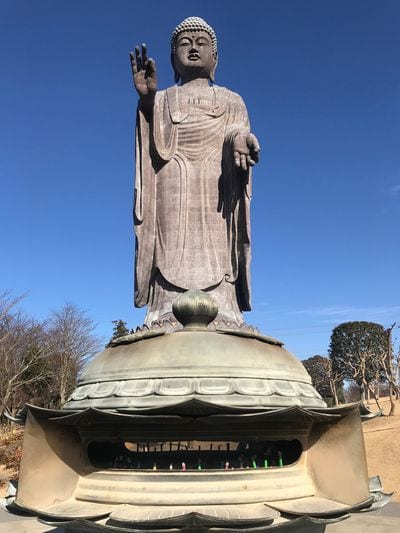
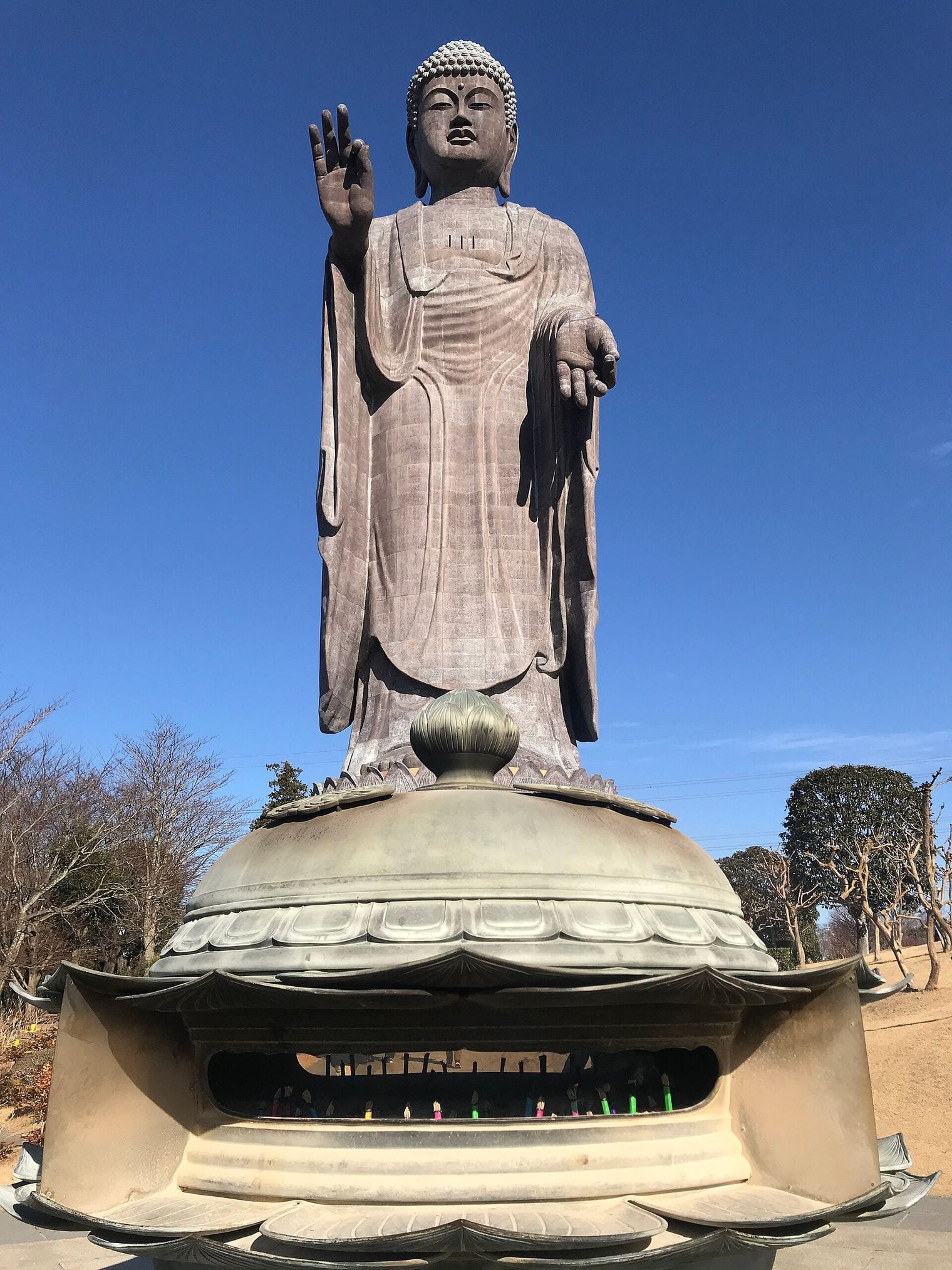
At 100 m328 ft, Ushiku Daibutsu in Ibaraki Prefecture is the tallest statue in Japan and was the tallest in the world when it was completed in 1993 — a title it held for fifteen years, until Myanmar and China both overtook it in 2008.
It depicts Amitābha Buddha, is built from bronze plate over a steel frame, and is designed to be walked into. A lift climbs to an observation deck at 85 m, level with the Buddha's chest, from which the Tokyo skyline is visible on a clear day. A 10 m base and a 10 m lotus platform lift the whole monument to 120 m — again, the figure alone is what ranks it here.
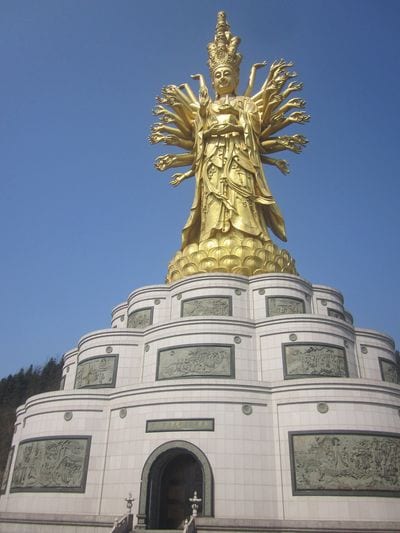
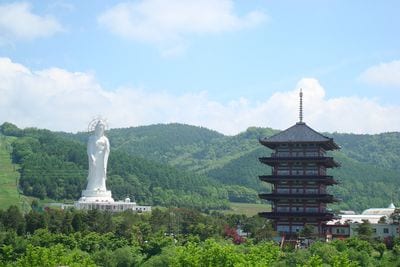
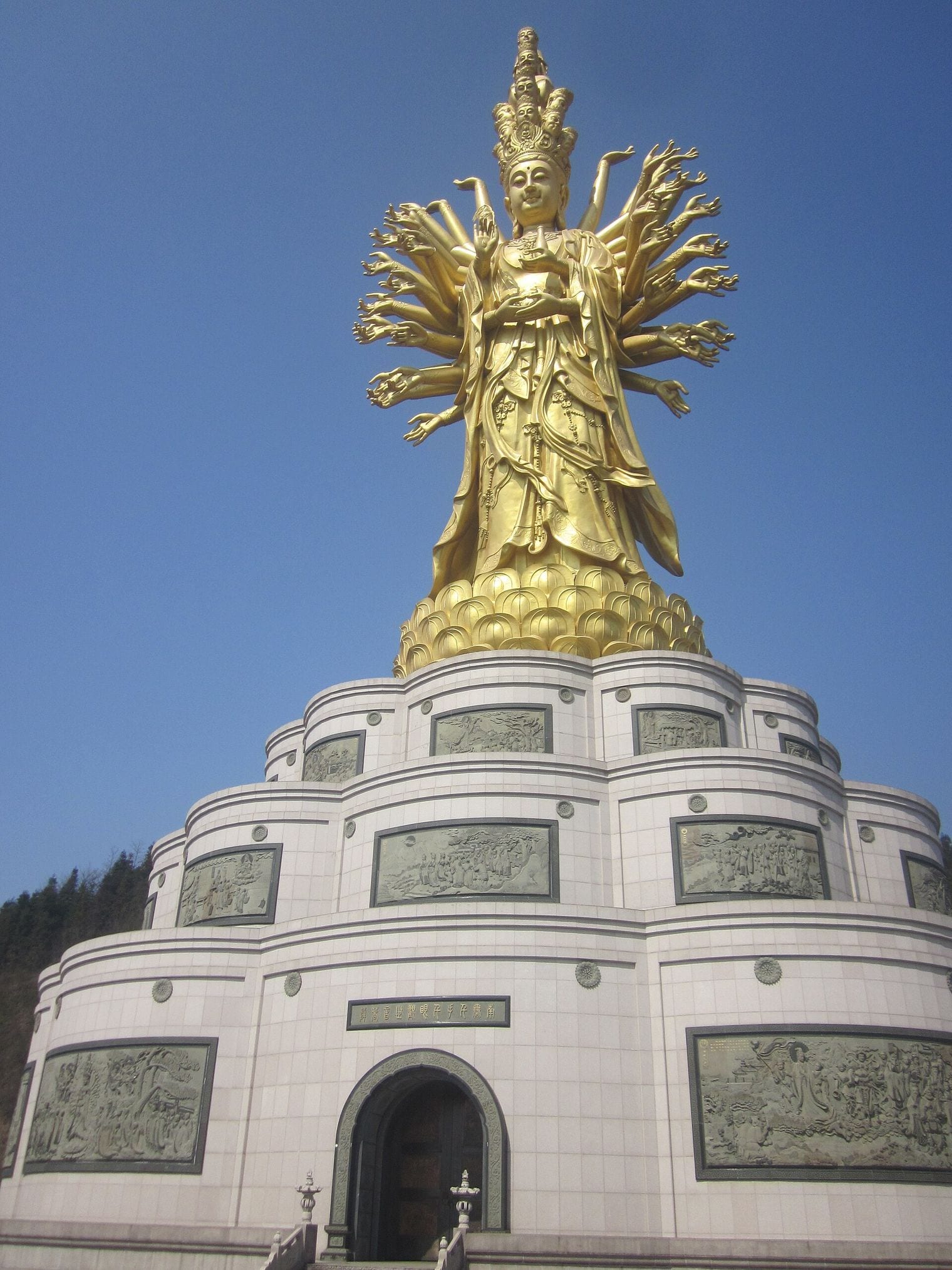
At 99 m325 ft, Guishan Guanyin at Weishan in Hunan is one of the tallest gilded statues in the world. It represents Guanyin, the bodhisattva of compassion, in the thousand-armed form, and was completed in 2009 at the Mizhu Temple site.
The figure is finished in gold leaf over bronze, which makes it startlingly bright against the green Hunan hills in a way photographs rarely prepare you for. It stands at the centre of a large temple complex built around it, and the approach is deliberately staged so that the statue is revealed gradually as visitors climb. It ranks a single metre below Ushiku Daibutsu, one of several very tight finishes in the middle of this list.
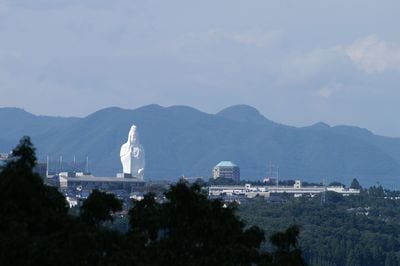
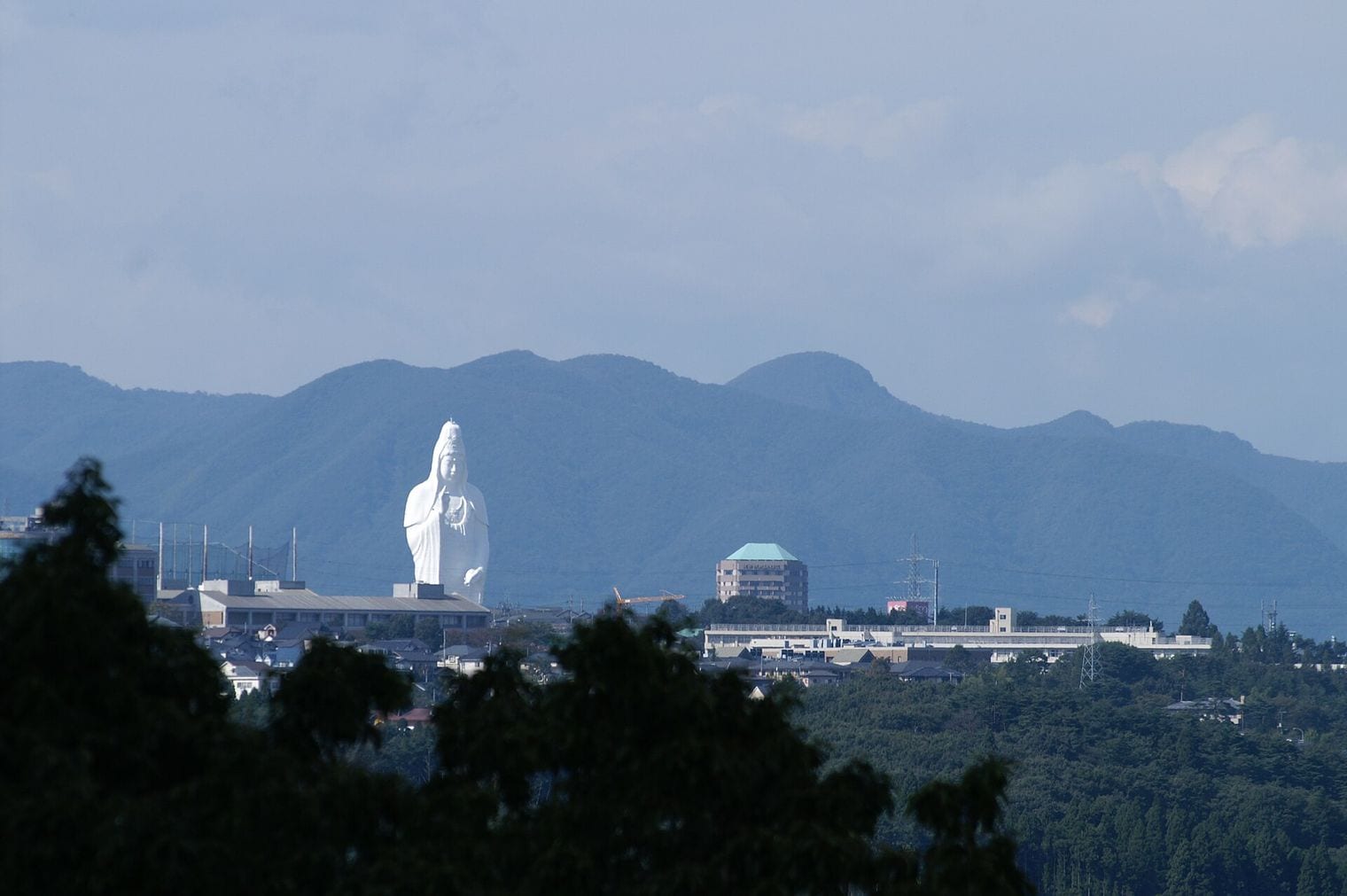
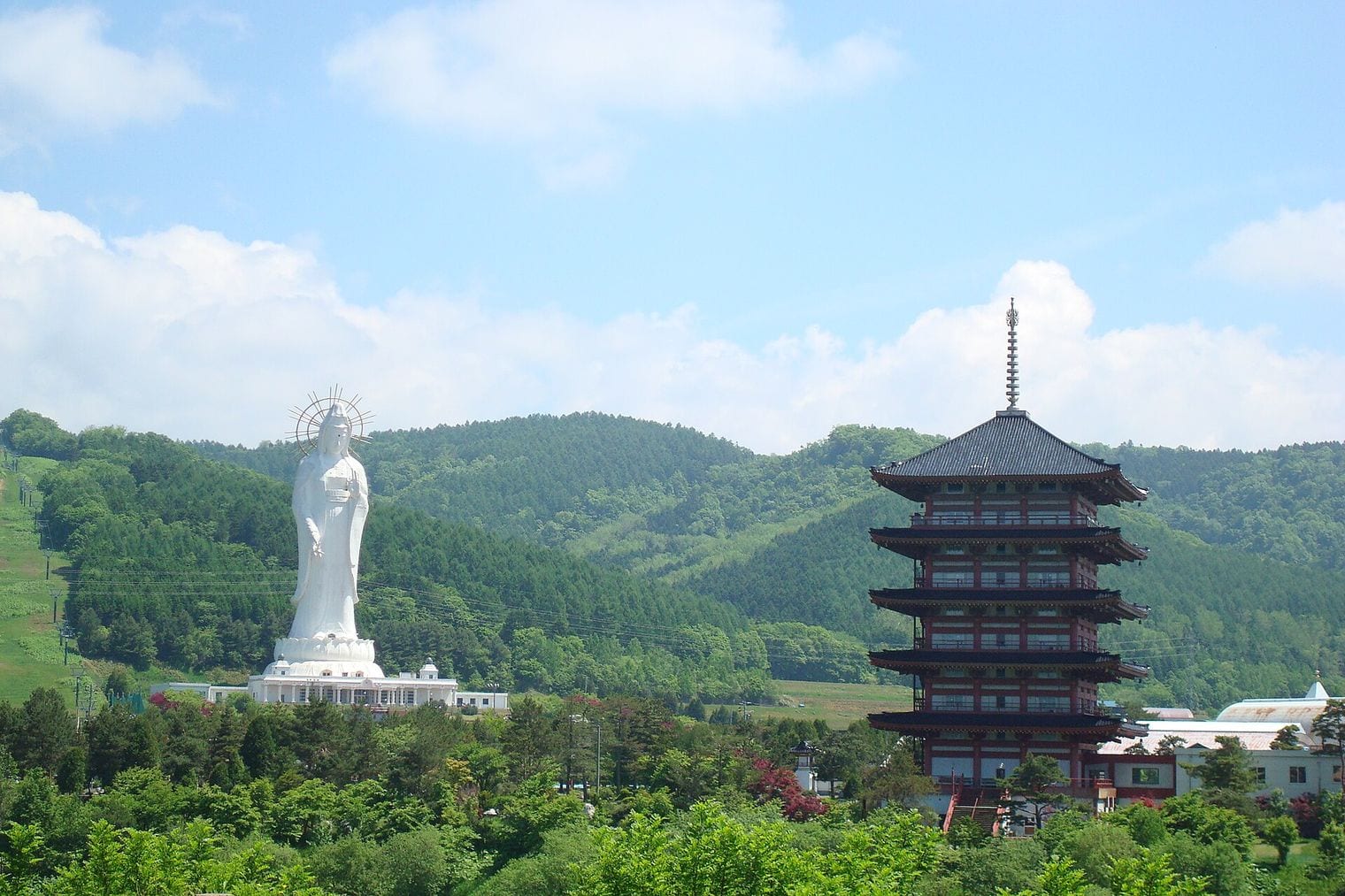
At 92 m302 ft, Sendai Daikannon in Izumi-ku is the tallest statue in the Tōhoku region and one of the tallest depictions of Kannon anywhere. It was completed in 1991 and depicts the bodhisattva holding a wish-fulfilling jewel, standing white against the hills on the northwestern edge of Sendai.
It ties exactly with the Great Buddha of Thailand at 92 m; where two statues finish level here, the earlier completion is ranked first, which places Sendai's 1991 figure above Ang Thong's 2008 one. The statue is hollow, and visitors ride a lift to the top and then walk down through twelve interior floors lined with more than a hundred smaller Buddhist statues. Its base adds a further 8 m, bringing the structure to 100 m.
99. Great Buddha of Thailand
Wat Muang, Wiset Chai Chan, Ang Thong Province, Thailand
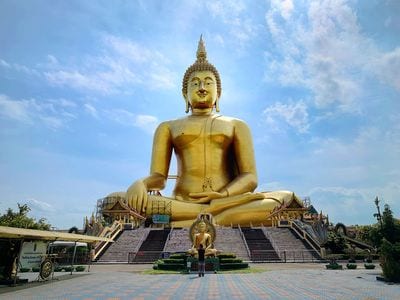
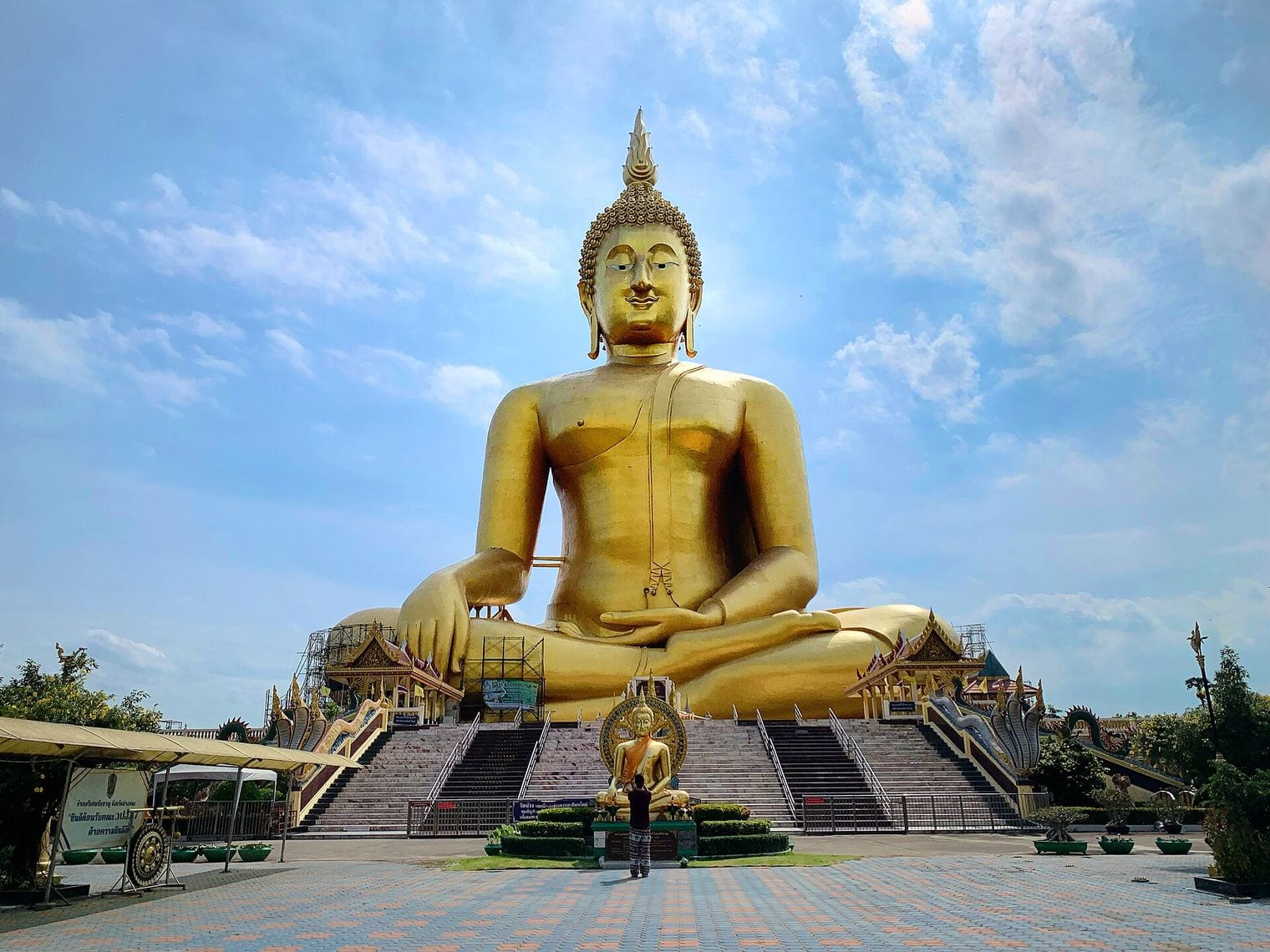
At 92 m302 ft, the Great Buddha of Thailand at Wat Muang is the tallest statue in Thailand and the tallest seated Buddha on this list. Construction ran from 1990 to 2008, and the finished figure is 63 m across at its widest point — proportionally the broadest thing here.
It shares the 92 m mark exactly with Sendai Daikannon, and takes the lower of the two places on the completion-date tiebreak. The Buddha is painted a strong gold and sits in the open on the flat plain of Ang Thong province, roughly two hours north of Bangkok, which makes it visible from a long way off across the rice fields. The temple grounds around it are filled with sculpture, including a much-photographed depiction of Buddhist hell.
At 88 m289 ft, the Dai Kannon of Kita no Miyako park in Ashibetsu is the tallest statue on Hokkaidō and was, briefly at the end of the 1980s, the tallest statue in the world. It was completed in 1989 and depicts Kannon standing with a lotus in hand.
It is the most remote entry on this list by some distance, set in a park in a small coal-country city in central Hokkaidō, and it sees a fraction of the visitors that the Japanese entries further south do. The statue is hollow and has an interior observation level near the top; the surrounding park has changed hands and purpose several times since the statue went up, which has left this colossus standing in unusually quiet surroundings.
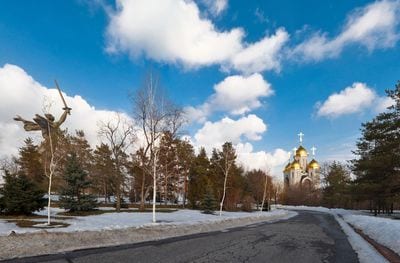
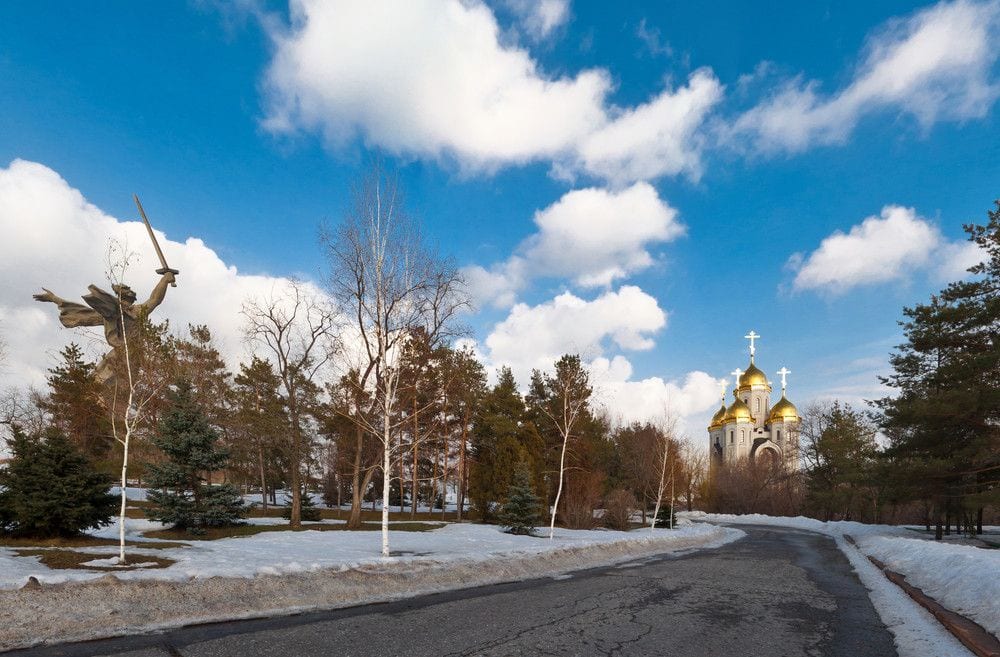
At 85 m279 ft, The Motherland Calls on Mamayev Kurgan in Volgograd is the tallest statue in Europe and the oldest entry on this list by a wide margin — it was unveiled in 1967, and when it went up it was the tallest statue in the world.
It commemorates the Battle of Stalingrad, and it is the only figure here that is neither a deity nor a person but an allegory: a woman striding forward mid-shout with a raised sword, which alone accounts for 33 m of the height.
The engineering is remarkable for its era — the figure is unanchored prestressed concrete, held in place largely by its own weight, and it has needed repeated stabilisation work as the hill beneath it shifts. It remains the centrepiece of a Soviet-era memorial complex that draws millions.
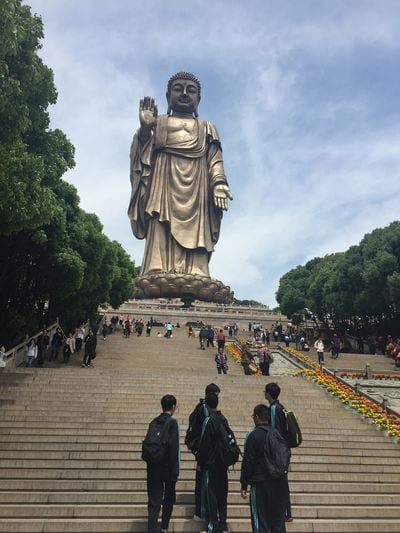
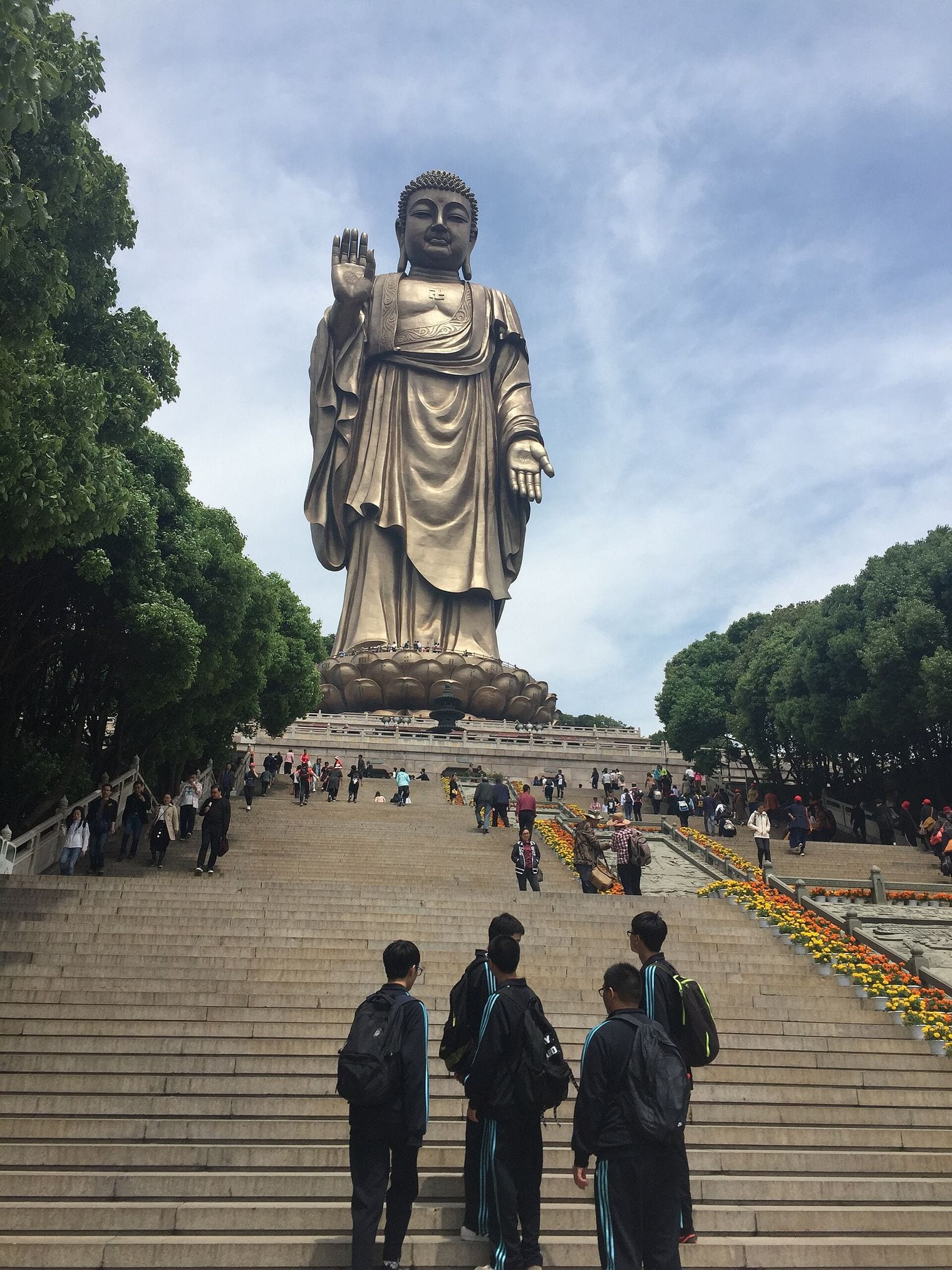
At 79 m259 ft, the Grand Buddha at Ling Shan near Wuxi in Jiangsu was, on its completion in 1996, the tallest bronze standing Buddha in the world. It depicts Shakyamuni Buddha with one hand raised, overlooking Lake Tai from the slopes of Mount Ling.
The figure is cast bronze, weighs some 700 tonnes, and forms the centrepiece of a large scenic and pilgrimage complex that also houses the Brahma Palace. Visitors climb a long flight of steps to reach the base and can then enter the statue itself. It is among the most visited of the Chinese entries on this list, helped by sitting within easy reach of both Shanghai and Nanjing.
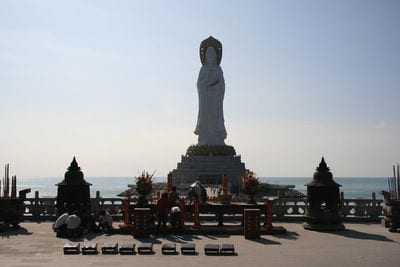
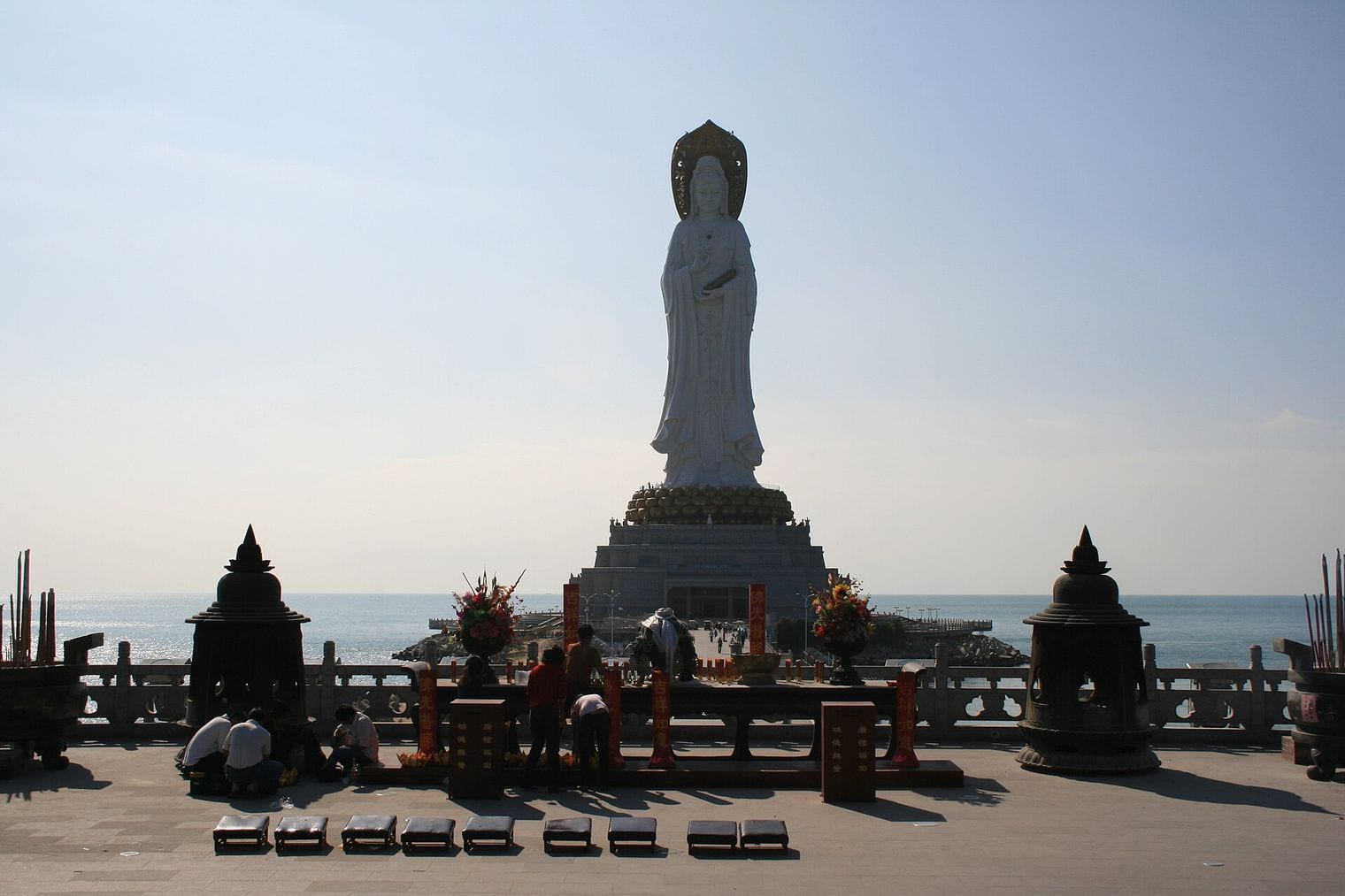
At 78 m256 ft, the Guanyin of Nanshan stands off the coast of Sanya on Hainan island, on its own platform out in the South China Sea and reached by a causeway from the Nanshan Temple grounds.
It is the most unusual design on this list: a single statue with three separate faces, each looking in a different direction — one inland across the island, two out to sea.
Completed in 2005 after six years of work, it is one of the few colossi here that is genuinely surrounded by water, which makes the approach along the causeway the defining view of it. Hainan's tropical climate and the exposed marine setting mean the surface needs far more maintenance than the inland entries.
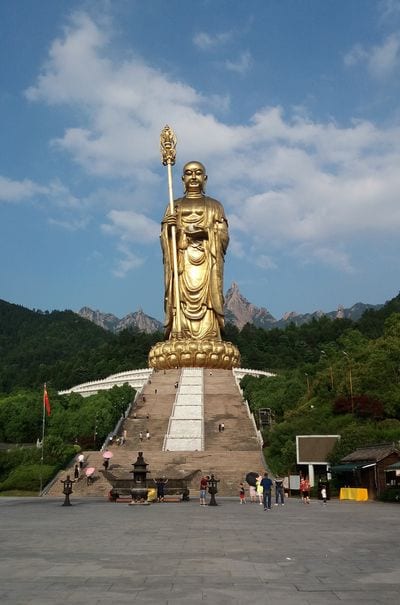
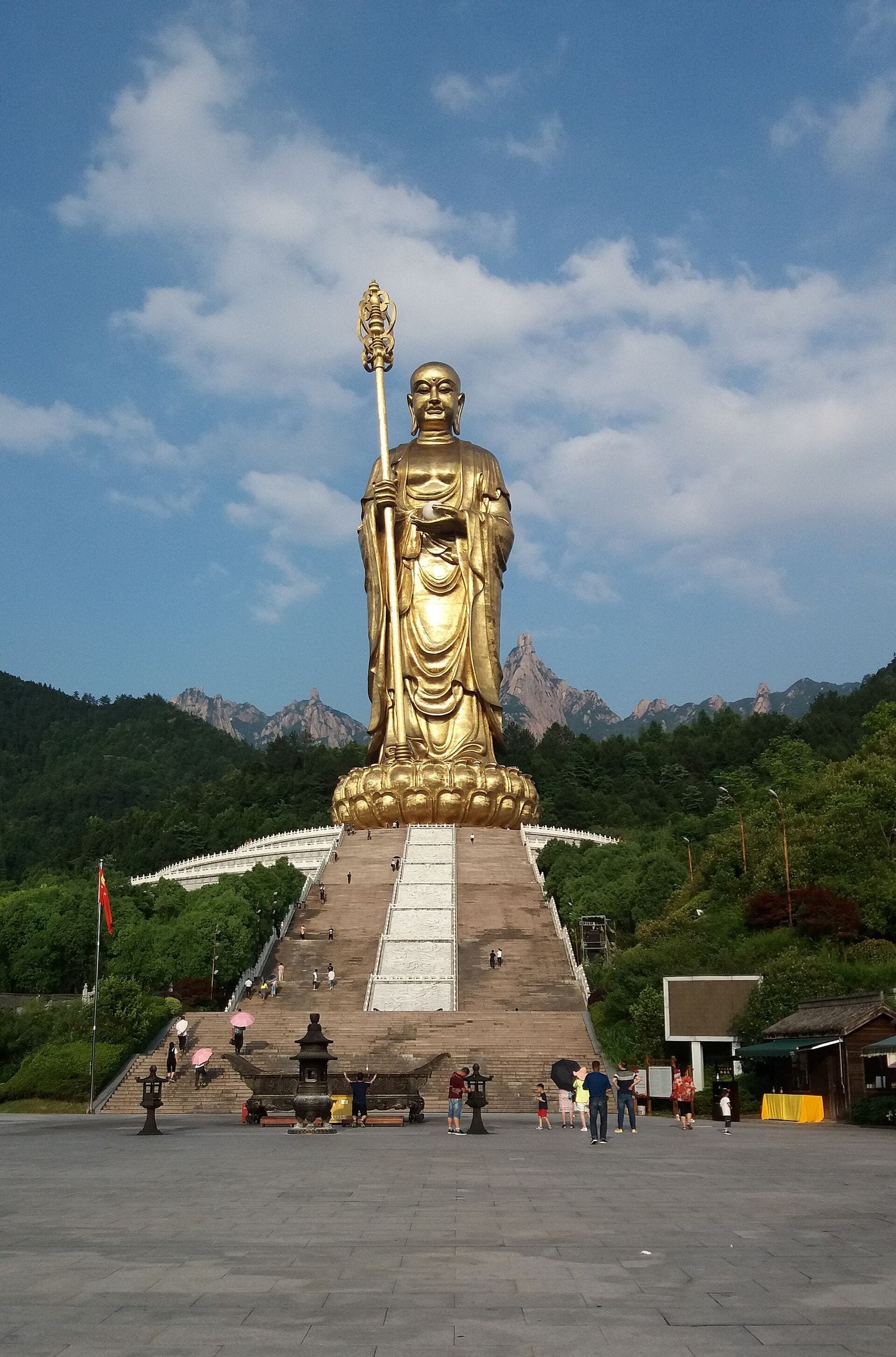
At 76 m249 ft, the Dizang of Mount Jiuhua in Anhui province depicts Kṣitigarbha, the bodhisattva who vowed not to attain buddhahood while any being remained in hell. Mount Jiuhua is one of the four sacred Buddhist mountains of China and Kṣitigarbha's traditional seat, so the statue sits at the doctrinal centre of the site rather than beside it.
It is finished in bronze over a steel frame and stands on a broad ceremonial plaza reached by a staircase from the valley floor. It shares the 76 m mark exactly with the Guanyin of Tsz Shan Monastery, and because both were completed in 2012 the two are effectively co-ranked at the foot of this list — there is no separating them on either height or date.
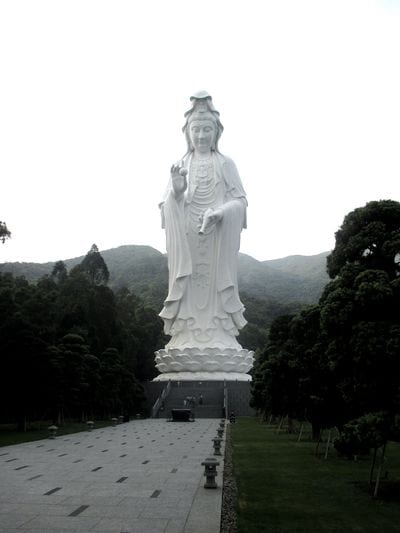
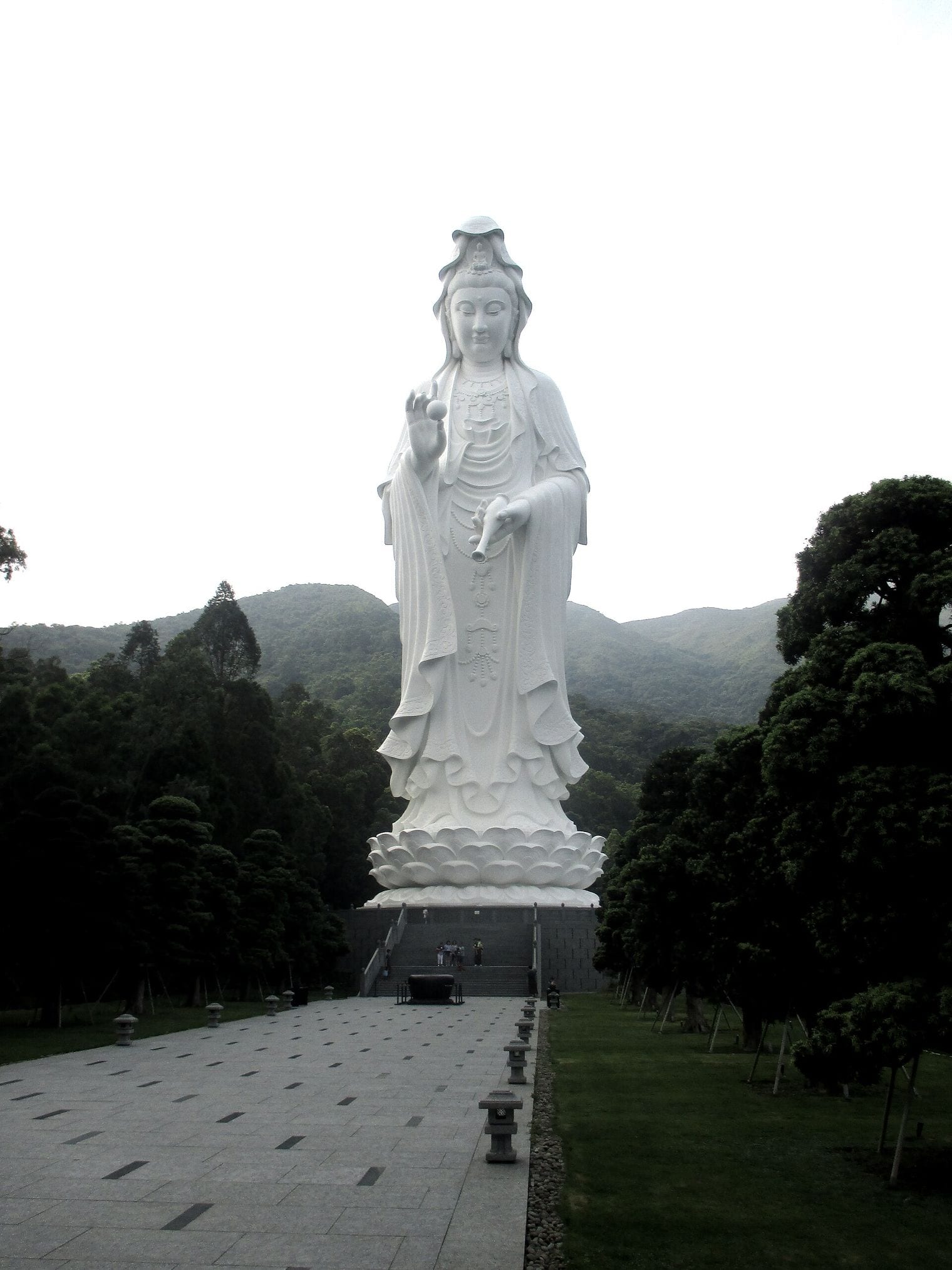
At 76 m249 ft, the Guanyin of Tsz Shan Monastery in Tai Po is the tallest statue in Hong Kong and the second-tallest Guanyin statue in the world. It is finished in white bronze and stands above the monastery's courtyard looking out over Plover Cove.
The monastery was funded privately by Li Ka-shing and opened to the public in 2015, and it runs on a booking system that caps daily numbers — which makes this by some way the quietest and most controlled site on the list.
The statue holds a vial from which water flows, and the grounds are deliberately austere: raked gravel, dark timber and very little ornament, so the white figure carries the whole composition. It ties on height with Dizang of Mount Jiuhua, and the two share the final place.
FAQ: The World's Tallest Statues
What is the tallest statue in the world?
The Statue of Unity in Gujarat, India, at 182 m597 ft, a title it has held since it was unveiled in October 2018. It is 54 m taller than the second-placed Spring Temple Buddha in China, which is the largest margin anywhere on this list — no other pair of neighbouring entries is separated by more than 12 m.
How is the height of a statue measured?
Standard practice, and the rule used throughout this ranking, is to measure the figure alone: from the soles of the feet (or the base of the sculpted form) to the highest point of the figure, excluding any pedestal, plinth, lotus throne or building underneath it.
The difference is not small. The Spring Temple Buddha is 128 m of Buddha, but is very often quoted at 208 m, because that number adds a 20 m lotus throne and a 25 m pedestal. Comparing one statue's figure height against another's total height is the single most common error in lists of this kind.
Is the Statue of Liberty one of the tallest statues in the world?
No — and it is not particularly close. The figure itself is about 46 m from heel to torch, which is well short of the 76 m needed to reach this list at all. The familiar 93 m figure for the Statue of Liberty includes its pedestal and foundation.
Christ the Redeemer, at roughly 30 m, is smaller still. Both are far more famous than most of the statues ranked here, which says more about how records are set than about how monuments are remembered.
Where are most of the world's tallest statues?
Asia, overwhelmingly. Thirteen of the fifteen tallest statues standing today are in Asia, with China holding five, Japan three, India two, and Myanmar, Thailand and Hong Kong one each. The only entries outside the region are The Motherland Calls in Volgograd, Russia, and Birth of the New World in Arecibo, Puerto Rico. Most of the list is also recent: all but one entry was completed after 1980.
What was the tallest statue before the Statue of Unity?
The Spring Temple Buddha, which held the record from September 2008 until 2018. Before that the title changed hands twice in a single year: Ushiku Daibutsu in Japan held it from 1993, then Laykyun Sekkya in Myanmar took it in February 2008, only for the Spring Temple Buddha to overtake it seven months later.
Will the Statue of Unity's record be beaten?
Almost certainly, and probably soon — several statues designed to exceed 200 m are in progress, most prominently a figure of Lord Rama planned for the banks of the Saryu at Ayodhya in India.
Records in this category change whenever a major project completes rather than on any predictable schedule, and an unfinished statue does not qualify here however tall it is designed to be. This list is re-checked against the current record tables, so it is the place to see where the order actually stands.