We build and rank every list first. Booking links come after, and only where
a partner sells a ticket, tour or stay for that exact place, so a place with
nothing to book is listed exactly as prominently as one you can book.
So how do we earn? Some links on this page go to booking
partners, and if you book tickets, tours or a stay through
one, we may earn a commission. It costs you nothing extra.
That commission never decides which places make the list, the order they
appear in, or what we write about them. No entry is sponsored or a paid
placement.
By the City Viking editorial teamPublished Ranked by crest width · 10 min read
Last verified Checked before launchOct 29, 202610 sourcesPublished · Oct 30, 2026Researched and checked before it went liveClick for every source and the full change log.
The record
10,783 m35,377 ft
Khone Phapheng Falls
Laos
The record
The widest waterfall in the world is Khone Phapheng Falls, in Laos — 10,783 m (35,377 ft), crest width.
Source: worldwaterfalldatabase.com. Verified .
Victoria Falls is the waterfall most people picture as the widest on Earth, and it ranks only seventh here. This countdown ranks the 10 widest waterfalls in the world by average crest width, from the 10,783 m of Khone Phapheng Falls on the Mekong in Laos down to the 914 m of Inga Falls on the Congo, across Asia, South America, Africa and North America.
Every figure comes from the World Waterfall Database's register of average widths. Braided systems are measured edge to edge across all their channels and islands, which is how Khone, Iguazu and Niagara reach their totals, and Moconá Falls, which runs along its river rather than across it, is measured along its crest.
Only natural waterfalls that still flow today count, so Guaíra Falls on the Paraná, drowned by the Itaipu reservoir, is missing, along with Celilo Falls on the Columbia and the dry Ice Age cliffs of Dry Falls in Washington.
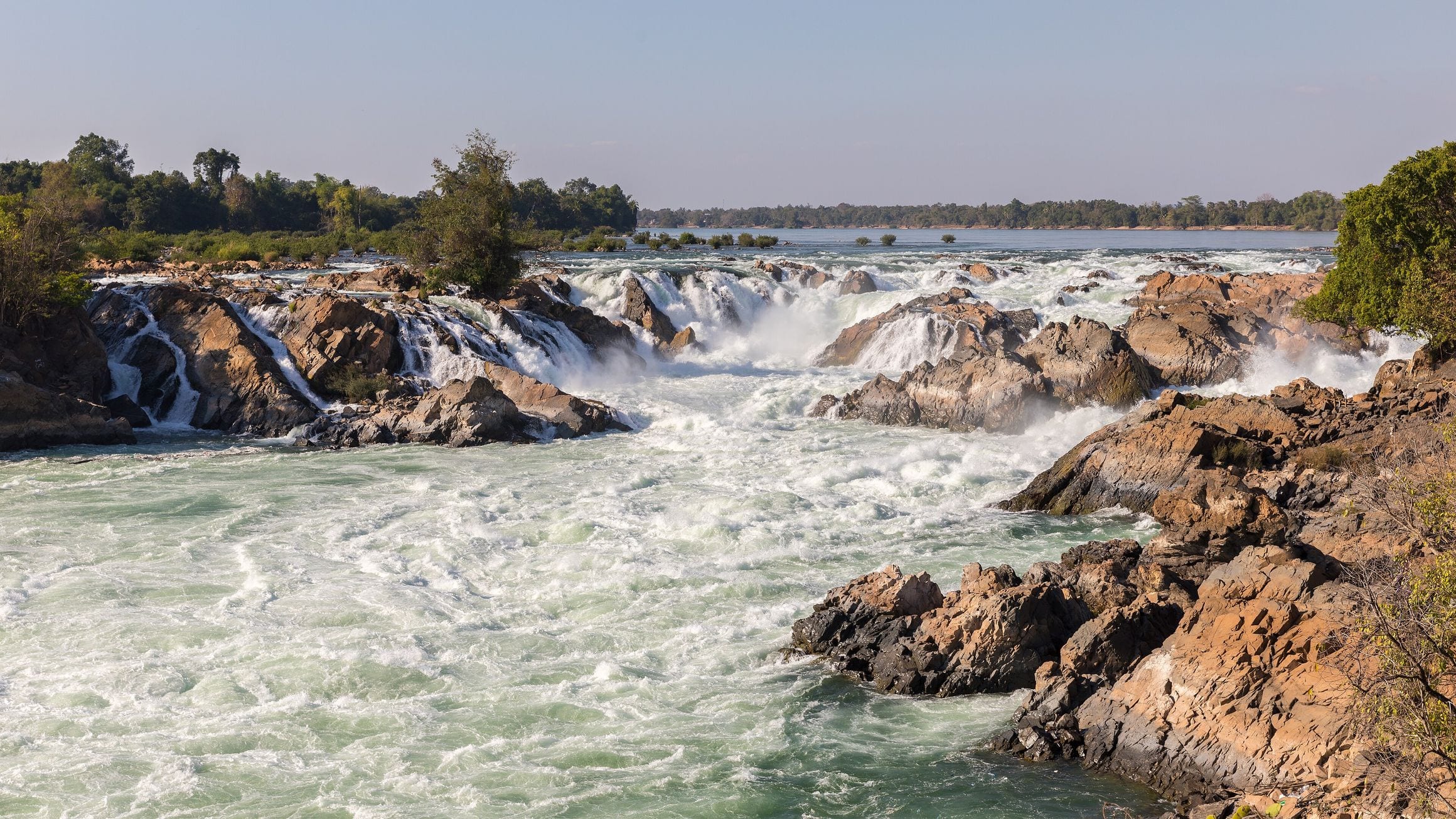
The widest waterfall is a whole archipelago.Khone Phapheng Falls spans 10,783 m because it is measured across the channels of Si Phan Don, the “4,000 islands” of the Mekong in southern Laos.
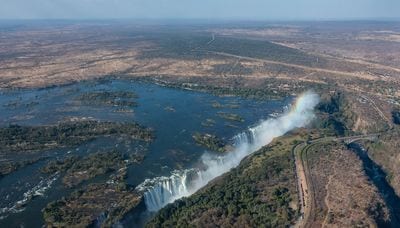
The most famous falls are not the widest.Victoria Falls ranks seventh on width, but its 1,707 m crest and 108 m drop together make the largest sheet of falling water in the world.
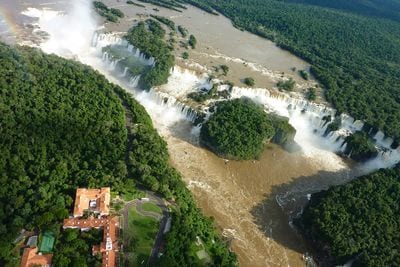
A border runs through the Devil’s Throat. About half the water of Iguazu Falls plunges into this narrow chasm, and the line between Argentina and Brazil runs straight through it.
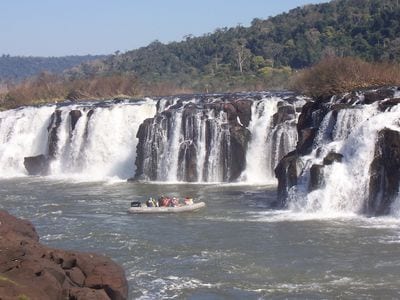
One waterfall runs along its river.Moconá Falls spills sideways into a trench in the bed of the Uruguay River, so its crest follows the river instead of crossing it, and in high water it can disappear.
The biggest flow comes over tiny drops. None of the seven cataracts of Boyoma Falls is more than 5 m high, yet together they form the largest waterfall in the world by volume of annual flow.
Some of the widest falls ever recorded are under water. Guaíra Falls on the Paraná vanished beneath the Itaipu reservoir, and Celilo Falls on the Columbia beneath the lake behind The Dalles Dam.
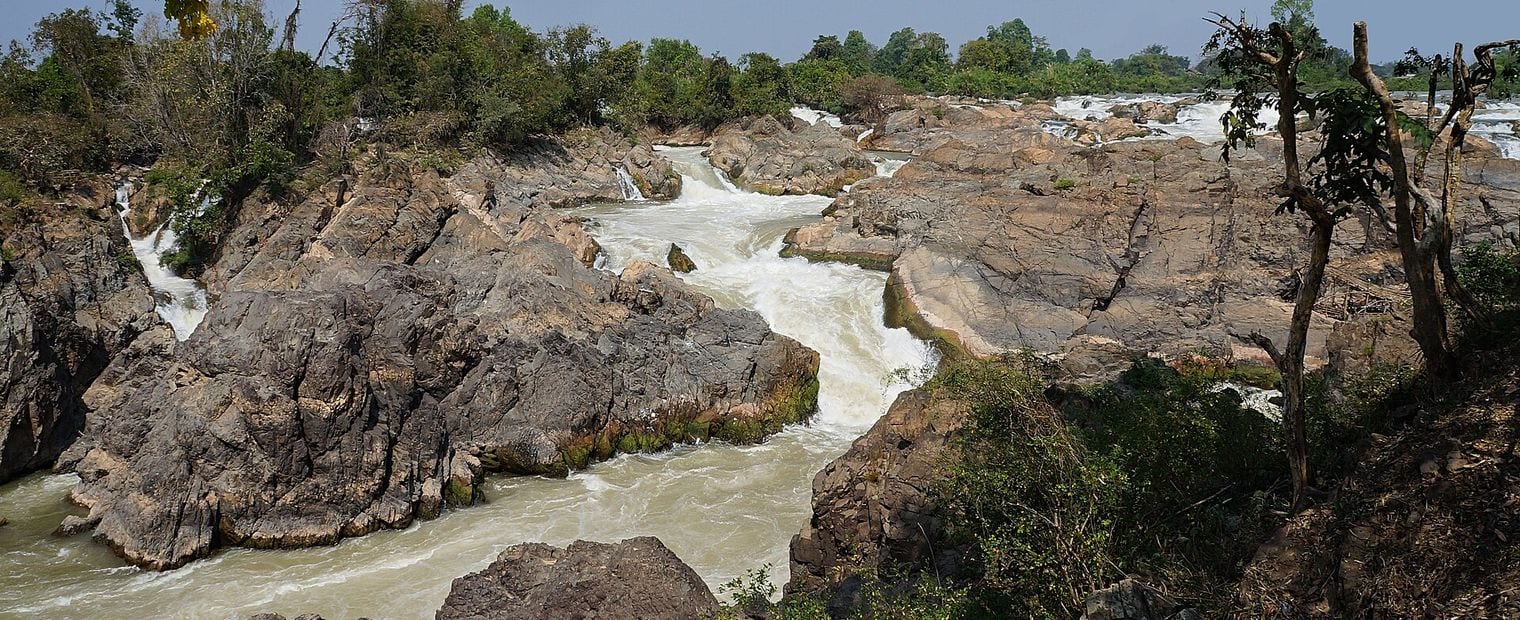
At 10,783 m35,376 ft, Khone Phapheng Falls on the Mekong in southern Laos is the widest waterfall in the world, a width measured from one edge of its many channels to the other rather than across a single curtain of water.
Near the Cambodian border the river breaks into the maze of islands and waterways known as Si Phan Don, the '4,000 islands', and pours through a long chain of falls and rapids, the highest of them about 21 m tall.
The falls are the main reason the Mekong cannot be navigated all the way into China, and from the bank the scene is less one waterfall than a whole river tumbling through rock and forest at once. One channel of the system, the Hou Sahong, carries the Don Sahong hydropower plant, and its environmental documents guarantee a minimum flow, equal to an extreme dry-season low, past Khone Phapheng and the neighbouring channels.
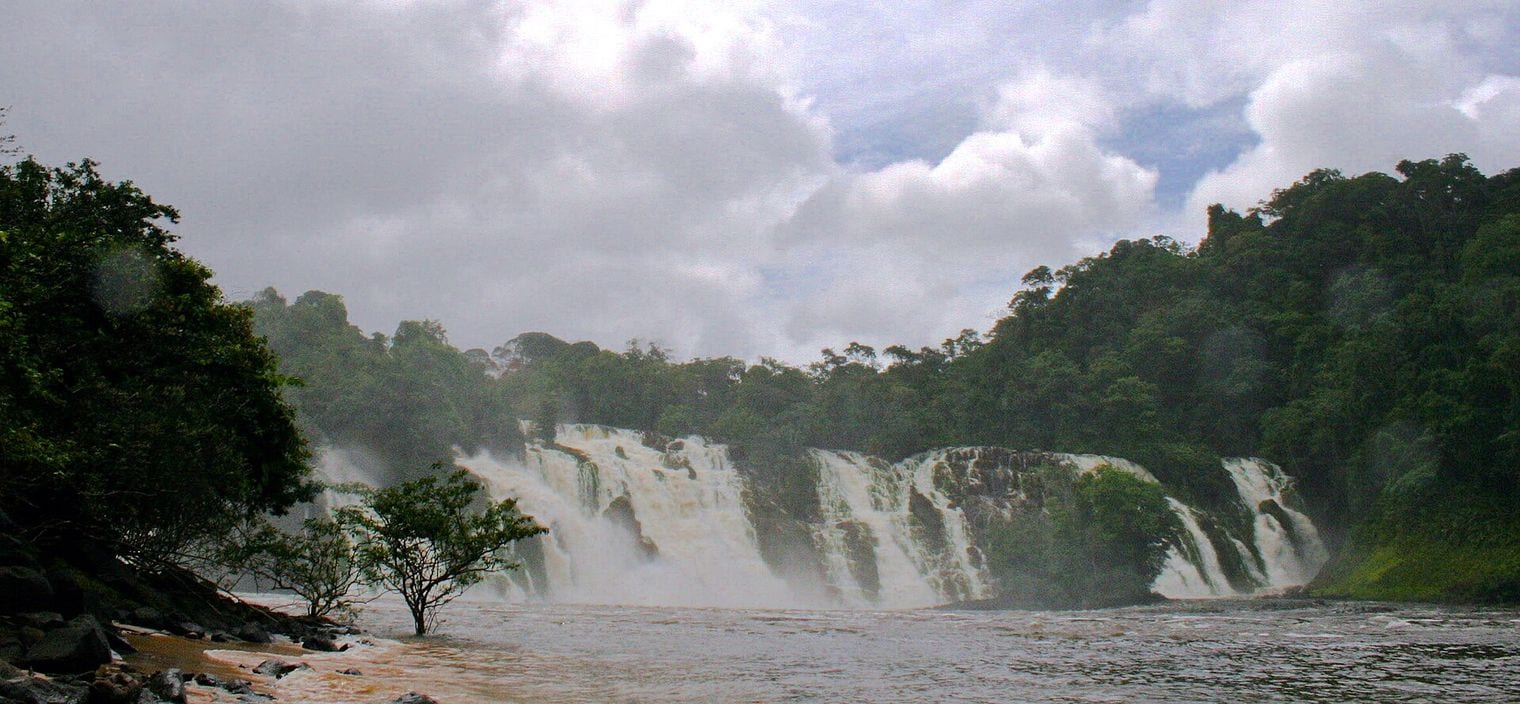
At 5,608 m18,400 ft, Pará Falls on Venezuela's Caura River is the second-widest waterfall on this list, though the World Waterfall Database marks the record as unconfirmed, so the figure may be an estimate rather than a survey. Just above the falls the river splits around a long island, and its two streams rush through gorges on either side in a succession of cataracts before they meet again at the island's foot.
The falls lie about 210 km upstream of the Caura's meeting with the Orinoco and mark the line between the river's upper and lower courses. They are so hard to portage around that they became a traditional boundary between the Ye'kuana and Kalina peoples, and the French naturalist Eugène André, the first European to describe Pará Falls, on his 1900 expedition up the Caura, called them a formidable barrier to navigation.
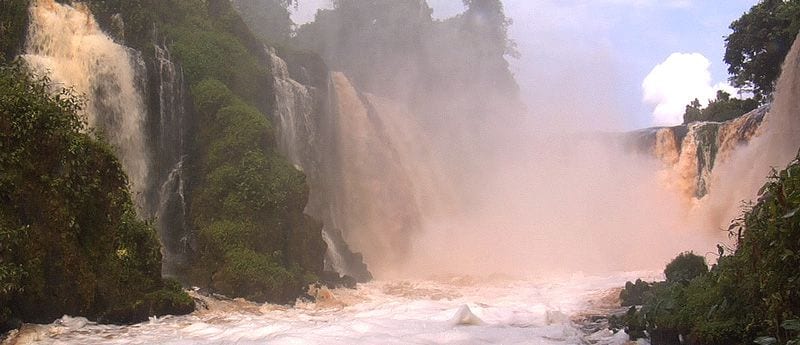
At 3,200 m10,500 ft, Kongou Falls on the Ivindo River in eastern Gabon is the widest African waterfall on this list, a massive cataract up to 56 m tall. Like Pará, its width is marked unconfirmed by the World Waterfall Database, so the figure may be an estimate, but with an average flow of about 900 m³/s it is one of the strongest-flowing waterfalls in the world.
Kongou Falls lies inside Ivindo National Park, created in 2002 to protect a rainforest stretch of river that is a major centre of fish diversity, and the park is a UNESCO World Heritage Site. In 2007 Gabon announced a dam at the falls to power an iron mine at Belinga, which would have flooded a large part of the park; fierce opposition followed, and the dam has not been built.
44. Iguazu Falls
Iguazu River, Misiones (Argentina) / Paraná (Brazil)
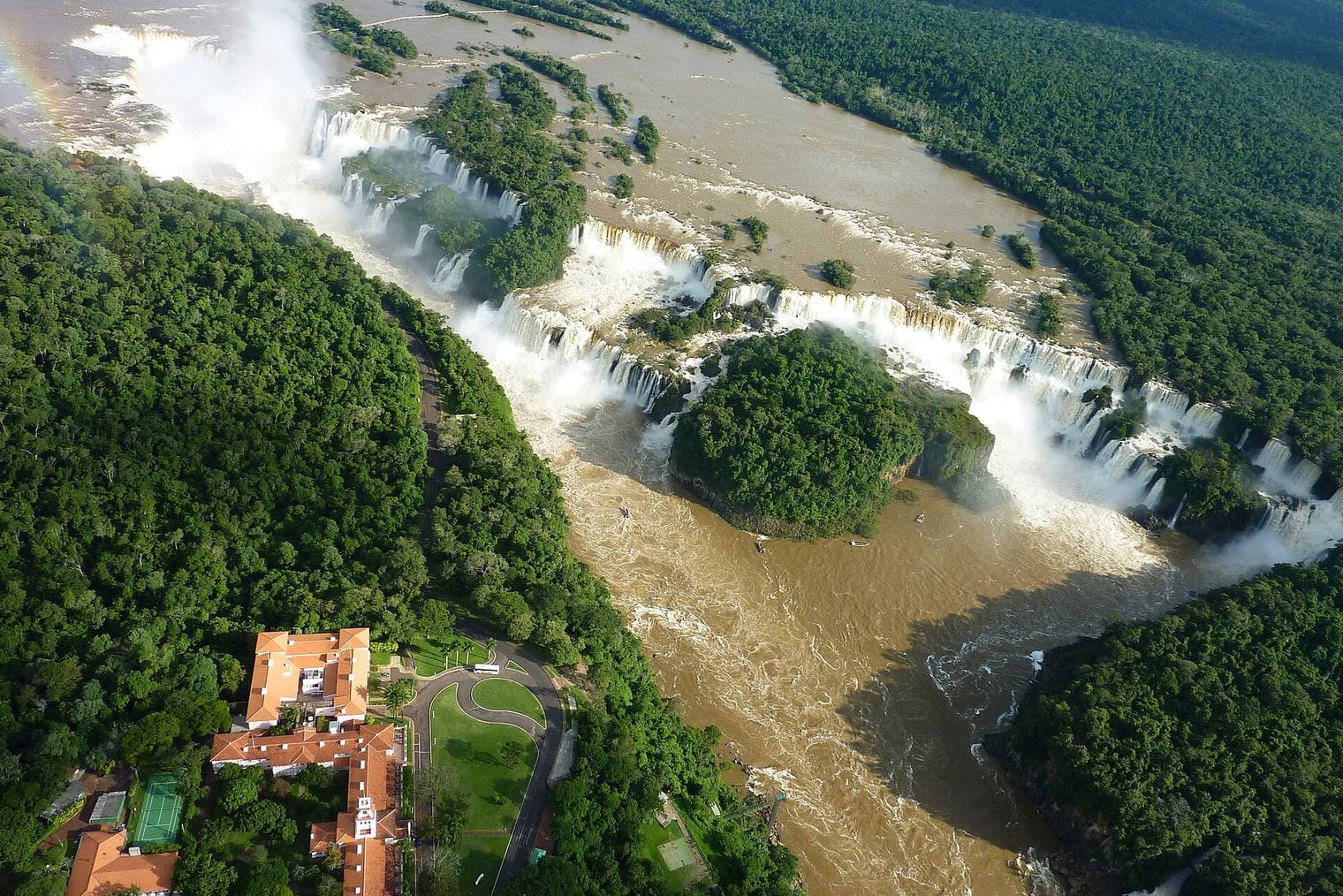
At 2,682 m8,800 ft, Iguazu Falls on the border between Argentina and Brazil is measured edge to edge across a front of roughly 275 distinct falls and the islands between them, the largest waterfall system in the world. About half of the river's flow plunges into the Devil's Throat, a long, narrow chasm that the Argentina–Brazil border runs straight through.
The falls are protected by Iguazú National Park in Argentina and Iguaçu National Park in Brazil, both on the UNESCO World Heritage List. Most of the falls are on the Argentine side, where you can get close to the water, while the Brazilian bank looks across at the full sweep of the curtain, so many visitors see both. The name comes from Guarani or Tupi words meaning 'big water'.
Get new guides like this by email
One email every Thursday with our newest guides for the places you tick.
55. Moconá Falls
Uruguay River, Misiones (Argentina) / Rio Grande do Sul (Brazil)
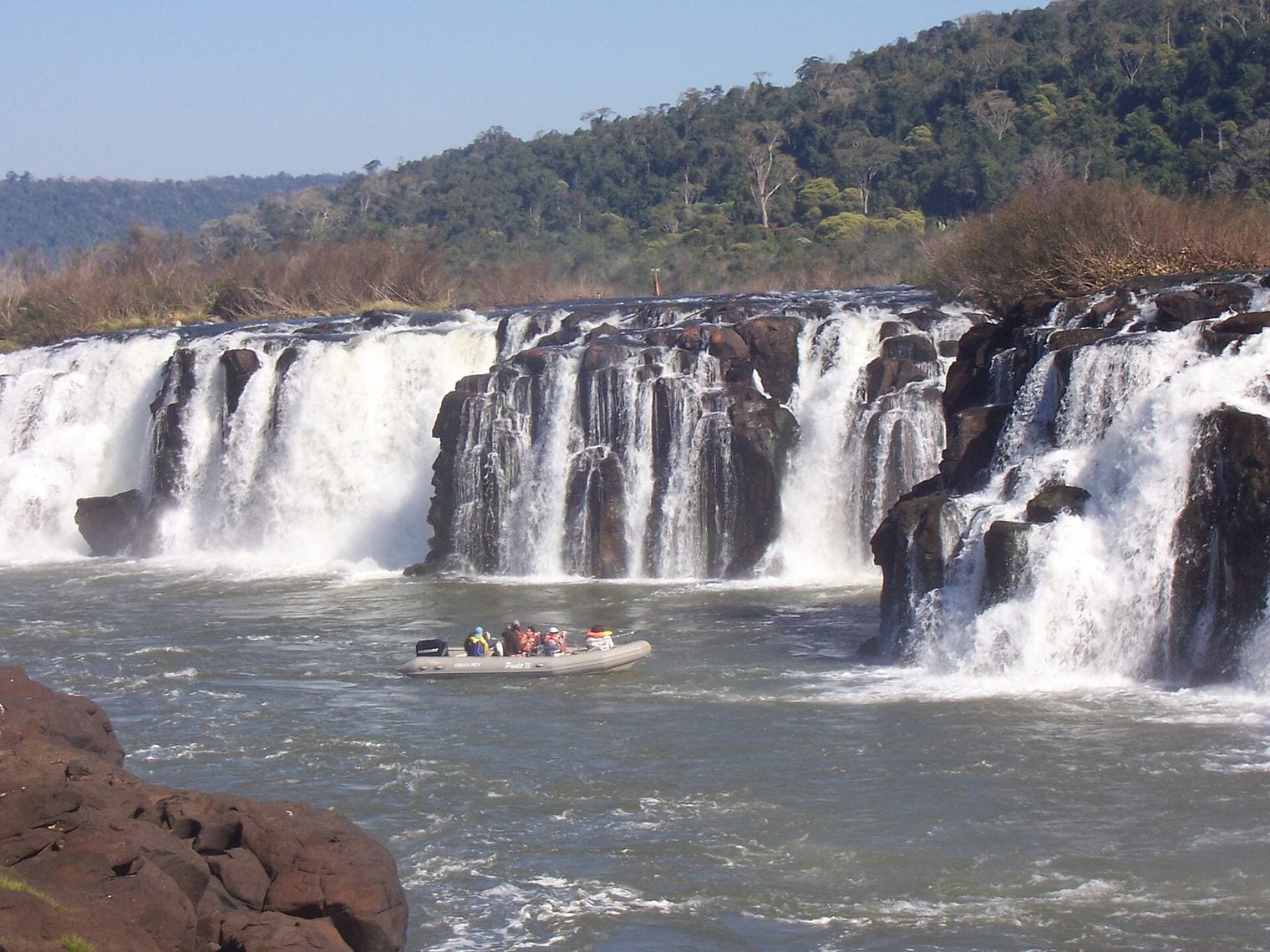
At 2,065 m6,775 ft on the World Waterfall Database's register, Moconá Falls on the Uruguay River is the oddest shape on this list: a longitudinal waterfall whose crest runs along the river rather than across it, as the river spills sideways into a deep trench in its own bed.
Brazil's Turvo State Park gives that trench a length of about 1,800 m, so depending on the source the falls measure roughly 1,800 to 2,065 m, a range that overlaps Vermilion Falls at 1,829 m; Moconá ranks fifth on the register's figure.
Argentines call it the Saltos del Moconá and Brazilians the Salto do Yucumã, and the falls run along the border, with the Argentine province of Misiones on one bank and Turvo State Park in Rio Grande do Sul on the other.
When the river runs high the trench fills and the falls can vanish from view for part of the year, so they show best when the water is lower. A planned hydroelectric scheme downstream, the Garabí-Panambi complex, could threaten them if a 2015 court ruling against it is overturned.
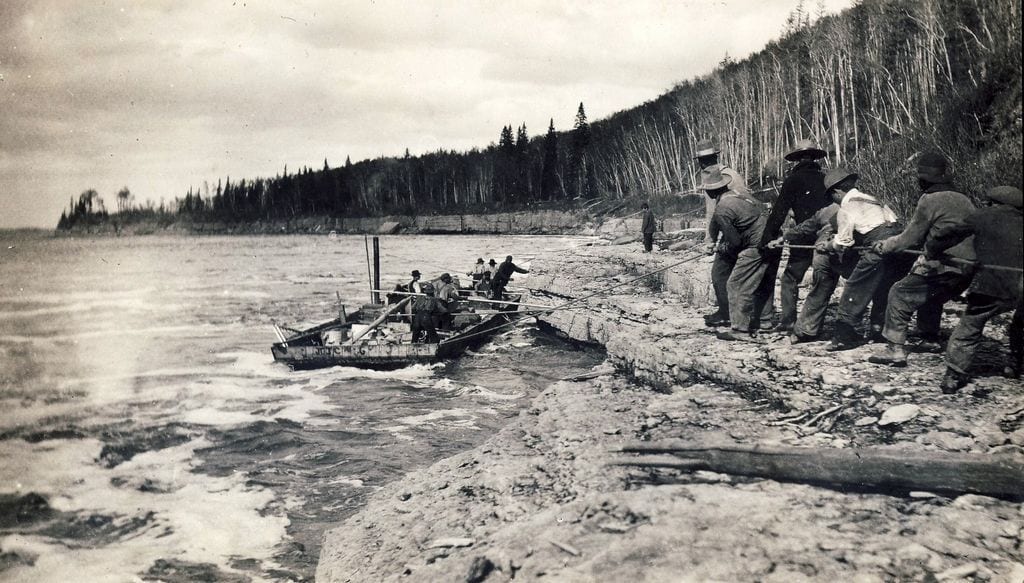
At 1,829 m6,000 ft, Vermilion Falls on the Peace River in northern Alberta is the widest Canadian waterfall on this list, a low, broad ledge only about 5 m high that stretches across the whole river. It is also the second-largest waterfall in Canada by average flow rate, after Niagara, and the largest that lies entirely within the country.
The falls block continuous navigation on the Peace River between Hudson's Hope and the river's confluence with the Athabasca, and their Cree name, nepegabeketik, means 'where the water falls'. Vermilion Falls sits in remote boreal country, far from the usual tourist circuit.
77. Victoria Falls
Zambezi River, Livingstone (Zambia) / Victoria Falls (Zimbabwe)
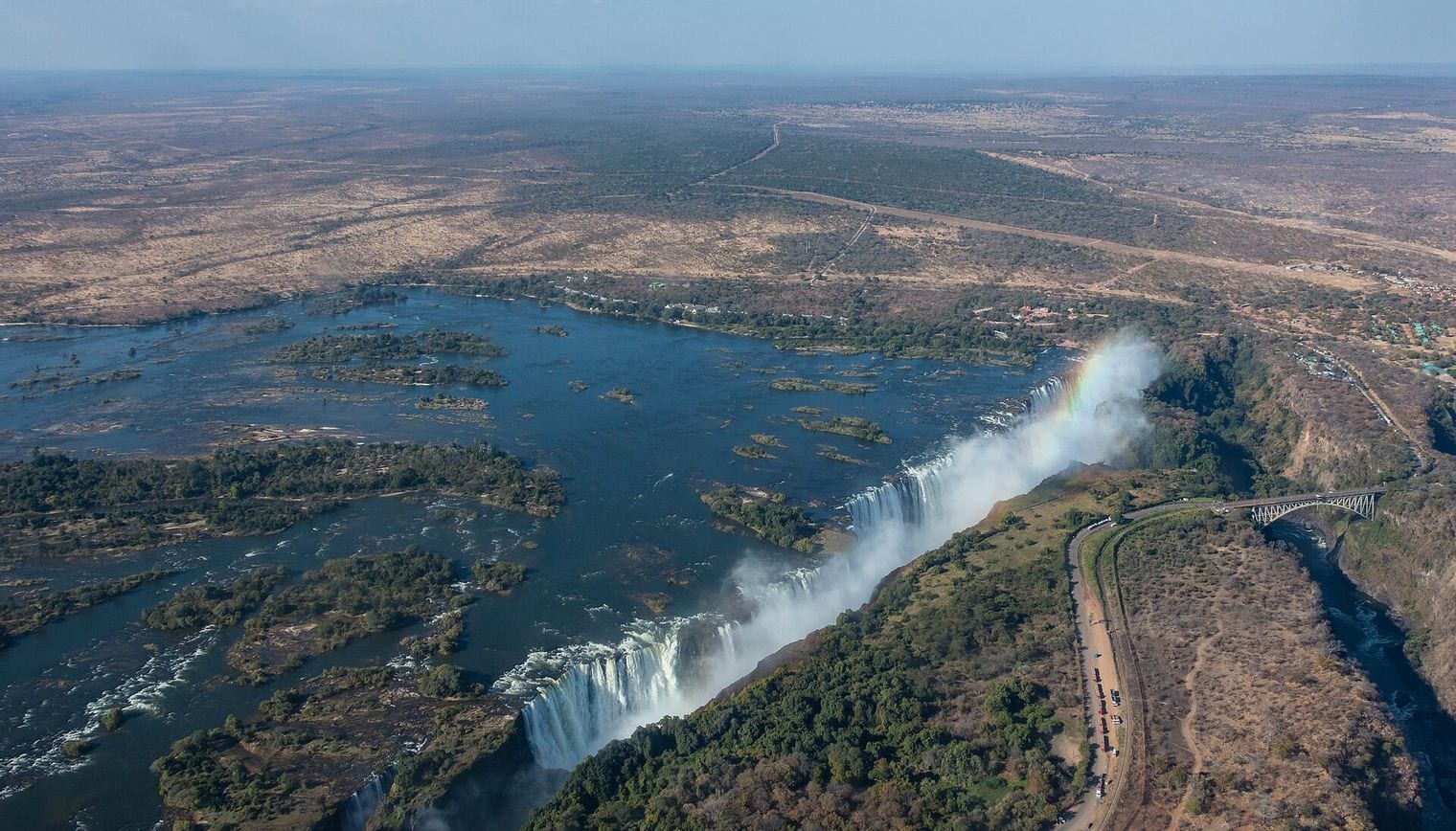
At 1,707 m5,600 ft, Victoria Falls on the Zambezi between Zambia and Zimbabwe is only seventh on this list, yet it is the one most people picture: combine that width with a drop of 108 m and it forms the largest sheet of falling water in the world. Islands split the curtain into separate falls at low water, and in high flow they merge into a single wall.
Its Lozi name, Mosi-oa-Tunya, means 'the smoke that thunders', after the spray that rises above the gorge. The Scottish missionary David Livingstone was the first European recorded to see Victoria Falls, in 1855, from what is now Livingstone Island, and named them after Queen Victoria. Zambia and Zimbabwe both have national parks at the site, so the falls can be seen from either country.
88. Boyoma Falls
Lualaba River, Kisangani, Democratic Republic of the Congo
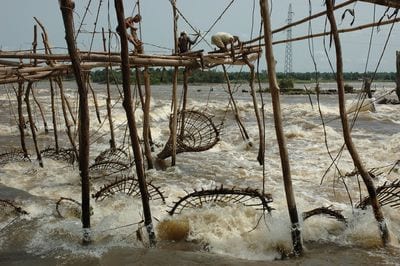
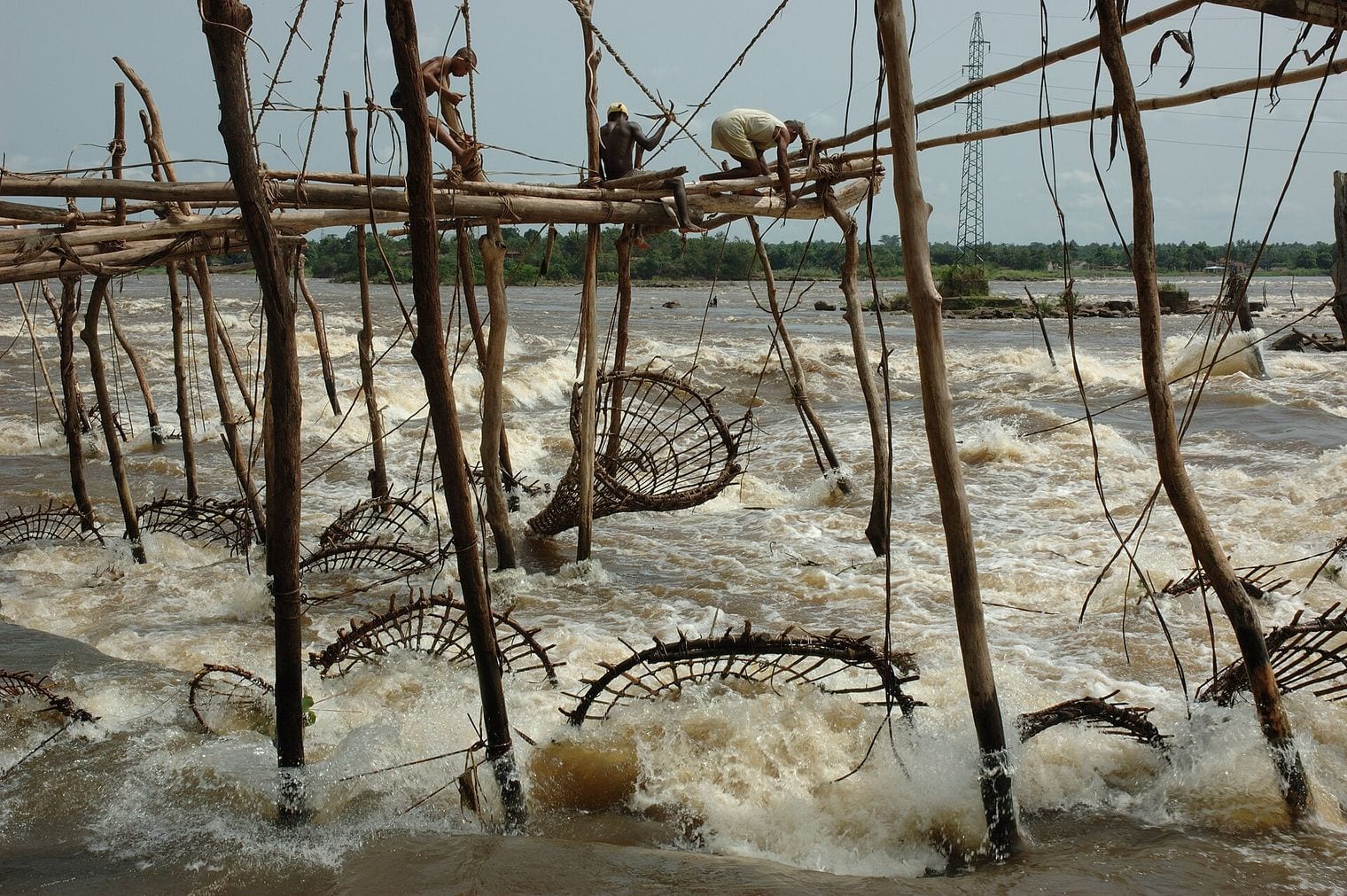
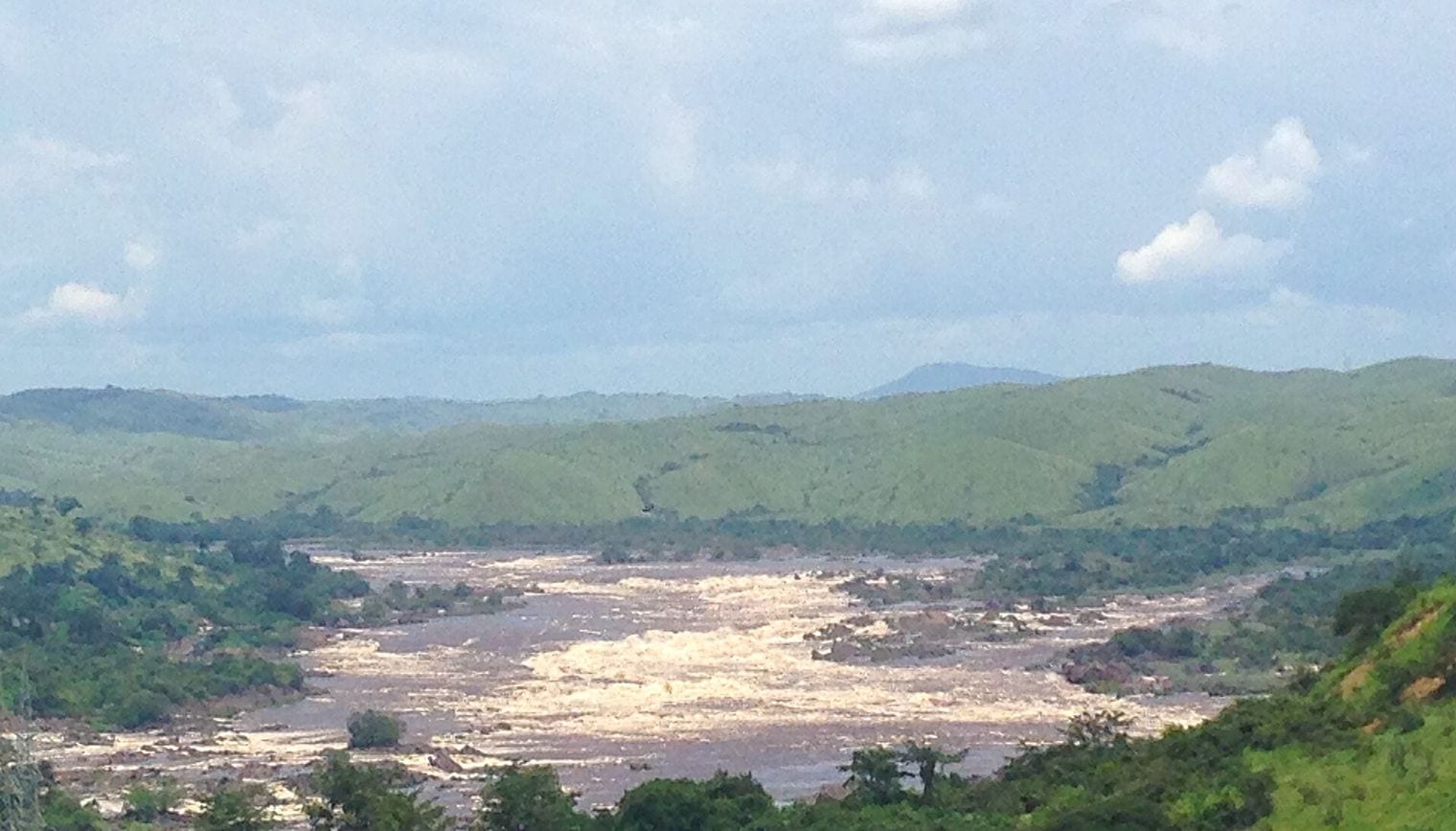
At 1,372 m4,500 ft, Boyoma Falls near Kisangani in the Democratic Republic of the Congo is recorded by the World Waterfall Database at the Wagenia cataract, the last of seven cataracts that carry the Lualaba River down over more than 100 km between Ubundu and Kisangani.
None of the seven drops is more than 5 m high, but together they fall 61 m and form the largest waterfall in the world by volume of annual flow, ahead of both Niagara and Iguazu.
Boyoma Falls was once called Stanley Falls, and the last cataract, the one you can see from Kisangani, is also known as the Wagenia Falls, after the Wagenya fishermen who have developed their own technique for fishing the rapids. Below the falls the Lualaba becomes the Congo River, and a metre-gauge portage railway bypasses the cataracts between Kisangani and Ubundu.
99. Niagara Falls
Niagara River, Ontario (Canada) / New York (United States)
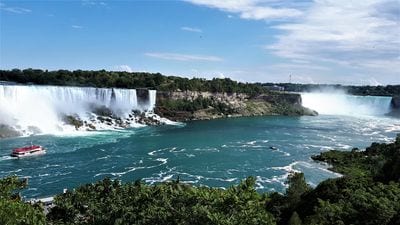
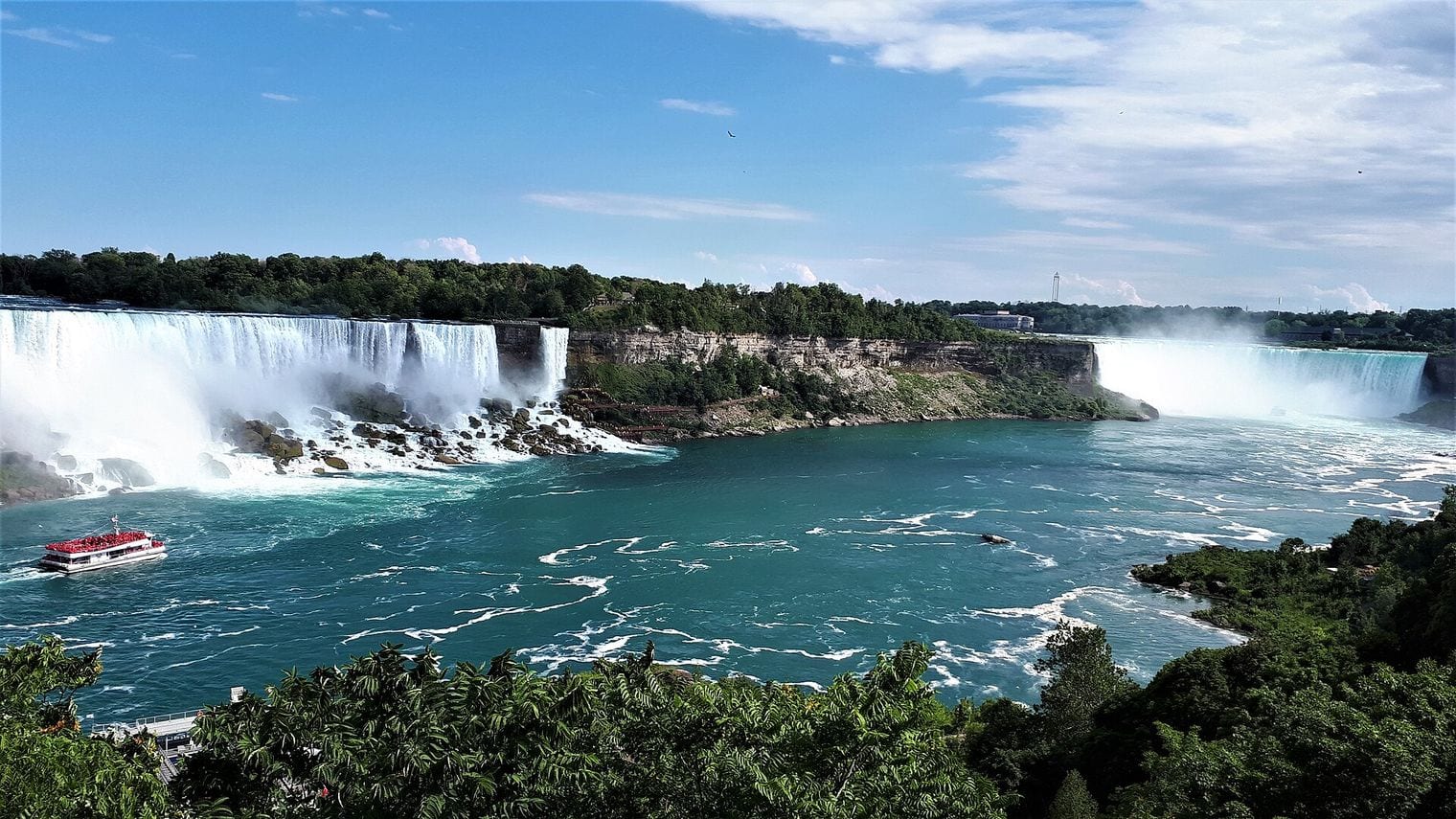
At 1,204 m3,950 ft, Niagara Falls on the border between Ontario and New York counts all three of its falls together: Horseshoe Falls, which straddles the international border, and the American Falls and Bridal Veil Falls, which lie in the United States. Goat Island separates the Horseshoe from Bridal Veil, Luna Island separates Bridal Veil from the American Falls, and the width runs edge to edge across them all.
Fed by the Niagara River as it drains Lake Erie into Lake Ontario, the combined falls have the highest flow rate of any waterfall in North America, and the Horseshoe alone is the continent's most powerful. Niagara Falls is also a valuable source of hydroelectric power, and it is an easy outing from Buffalo on the American side or from Toronto on the Canadian side.
1010. Inga Falls
Congo River, Kongo Central, Democratic Republic of the Congo
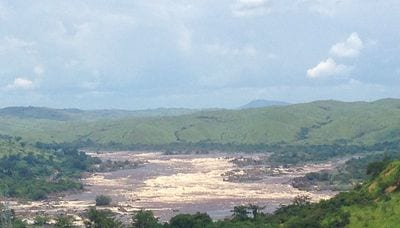
At 914 m3,000 ft, Inga Falls on the lower Congo River, about 40 km from Matadi in the Democratic Republic of the Congo, closes this list with a different sort of waterfall: a run of rapids where the Congo drops 96 m over about 15 km, in a sharp bend where the river narrows from more than 4 km wide to just 260 m.
With a median discharge of about 42,000 m³/s, Inga Falls could rival any waterfall on Earth by volume, though it is not widely considered a true waterfall. The site holds the Inga I and Inga II hydroelectric dams, which divert roughly 30% of the river's average discharge, according to the World Waterfall Database, and much larger dams have long been planned there.
FAQ: The World's Widest Waterfalls
What is the widest waterfall in the world?
Khone Phapheng Falls on the Mekong in southern Laos, at 10,783 m measured from one edge of its many channels to the other. Pará Falls in Venezuela is second at 5,608 m and Kongou Falls in Gabon third at 3,200 m, though the World Waterfall Database marks both of those records as unconfirmed.
Is Victoria Falls the widest waterfall in the world?
No. At 1,707 m, Victoria Falls ranks seventh on width, behind braided systems such as Khone Phapheng and Iguazu. Its claim is a different one: combining that width with a drop of 108 m, it forms the largest single sheet of falling water in the world, which is why it is so often called the biggest.
How is the width of a waterfall measured?
This list uses the average width at the crest, as the World Waterfall Database records it, measured edge to edge across every channel and island of one named waterfall. So Niagara's 1,204 m covers Horseshoe, American and Bridal Veil falls together, and Moconá Falls, whose crest runs along the Uruguay River, is measured along its length.
Why aren't Guaíra Falls and Celilo Falls on the list?
Both are under water. Guaíra Falls, or Sete Quedas, on the Paraná was submerged by the Itaipu reservoir in 1982, and Celilo Falls on the Columbia by The Dalles Dam in 1957. Urubupungá Falls and Marimbondo Falls in Brazil met the same fate, and this list counts only waterfalls that still flow today.
Could the order of the list change?
Yes, in places. Pará and Kongou are unconfirmed figures that a survey could revise, and Moconá measures from about 1,800 to 2,065 m depending on the source, which overlaps Vermilion Falls at 1,829 m. Below the cutoff, Kanawha Falls in West Virginia, at 716 m, would be next in line.
Sources & updates
How this ranking was checked
Checked before launch
Sources cited
10
Every figure in this ranking was checked against the record-keeper or official source behind it before publication, and the top of the ranking re-checked live so a newer record would not be missed.
One email every Thursday with our newest guides for the places you tick.
Newsletter
Stay updated with new World Record Breakers
One email every Thursday with our newest guides for the places you tick.
We use cookies to analyse site traffic and improve your experience.
You can accept or reject analytics cookies. See our
May we use analytics cookies? See ourCookie Policy.