Two peninsulas, four Great Lakes and the longest freshwater shoreline in the country — Michigan is a coastal road trip that happens to be landlocked.
Michigan is the Great Lakes state defined by water: two peninsulas ringed by four of the five inland seas, more freshwater coastline than any other state, and a sandy "west coast" of dune-backed beach towns that give way to the wild forests and waterfalls of the Upper Peninsula. Use this hub to plan your trip: browse our city and lakeshore guides below, or start with the regions and road trips that tie the Lower and Upper peninsulas together.
Known for
Great Lakes shoreline & dunes
Best for
Beaches, road trips & waterfalls
Capital
Lansing
Main gateway
Detroit Metro (DTW)
Time zone
Eastern (most); Central in the far western UP
Trip planner
Plan your trip to Michigan
Best time to visit — season by season
Spring
Mar–May
A slow, damp thaw that arrives later the further north you go — the lakeshore stays cool and the Upper Peninsula can hold snow into April, but May brings blossoming orchards and cherry country waking up around Traverse City.
Summer
Jun–Aug
Peak season and the reason to come: warm days in the 70s and 80s°F, the Lake Michigan beaches at Holland, Ludington and the Sleeping Bear Dunes at their best, and long light for the west-coast towns. Book ahead — the shoreline and Mackinac Island fill up.
Fall
Sep–Nov
Arguably the finest window: crisp air, thinning crowds and brilliant colour, with the sugar-maple forests of the north and the UP among the best leaf-peeping in the Midwest. Cider mills and harvest around the southern cities add to it.
Winter
Dec–Feb
Cold, grey and genuinely snowy, especially in the lake-effect belts off Lake Michigan and Superior. It's the quiet season on the coast, but the UP and northern Lower Peninsula turn into serious snowmobiling, skiing and frozen-waterfall country.
Regions of Michigan
The West Coast (Lake Michigan shoreline)
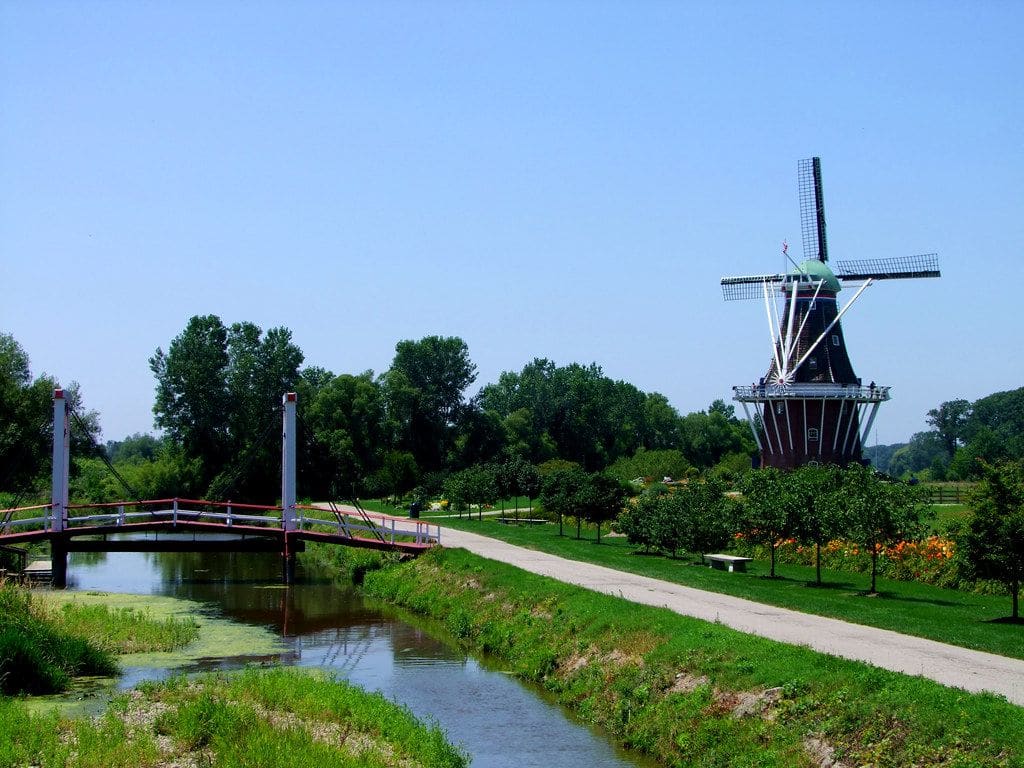
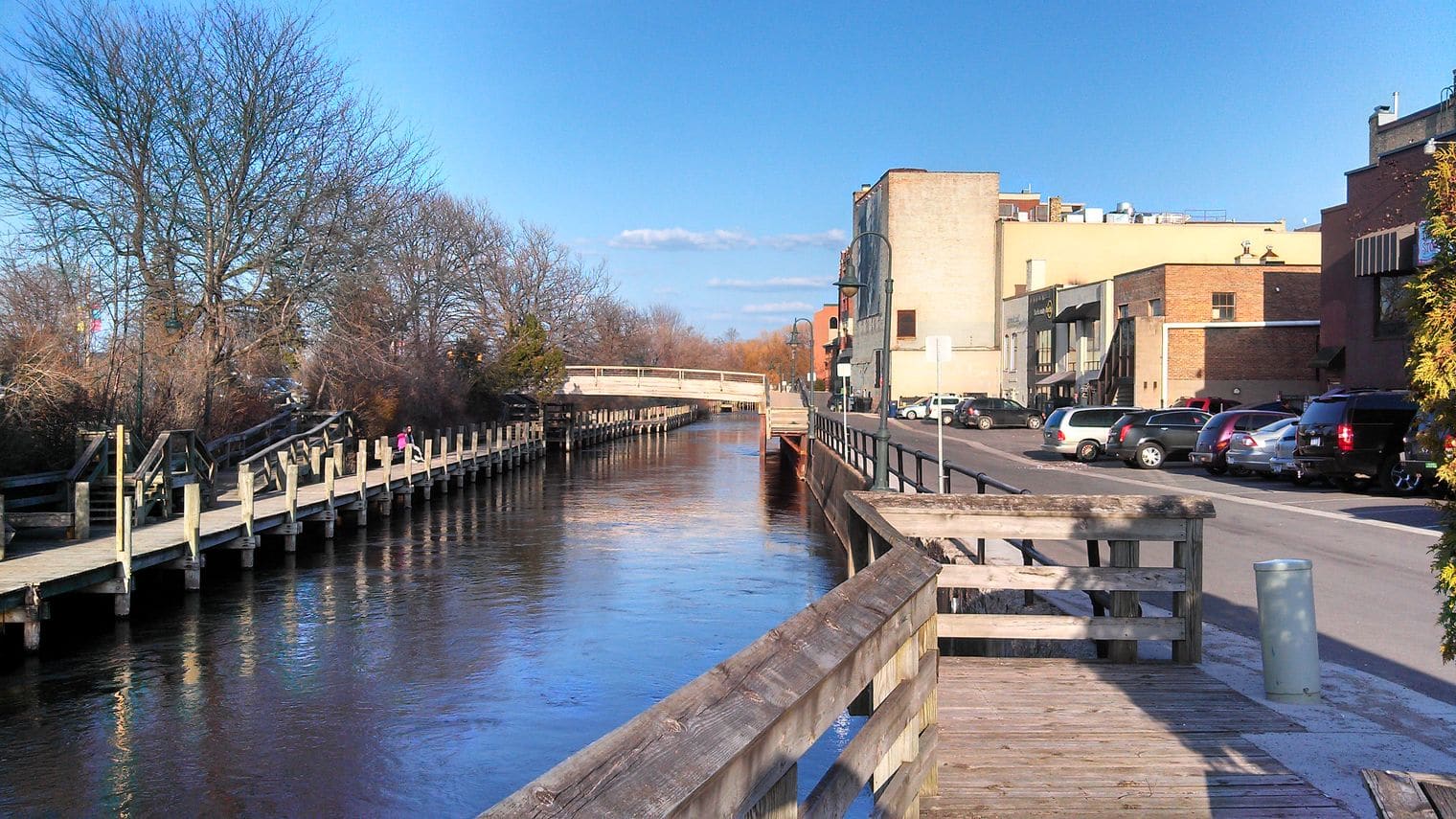
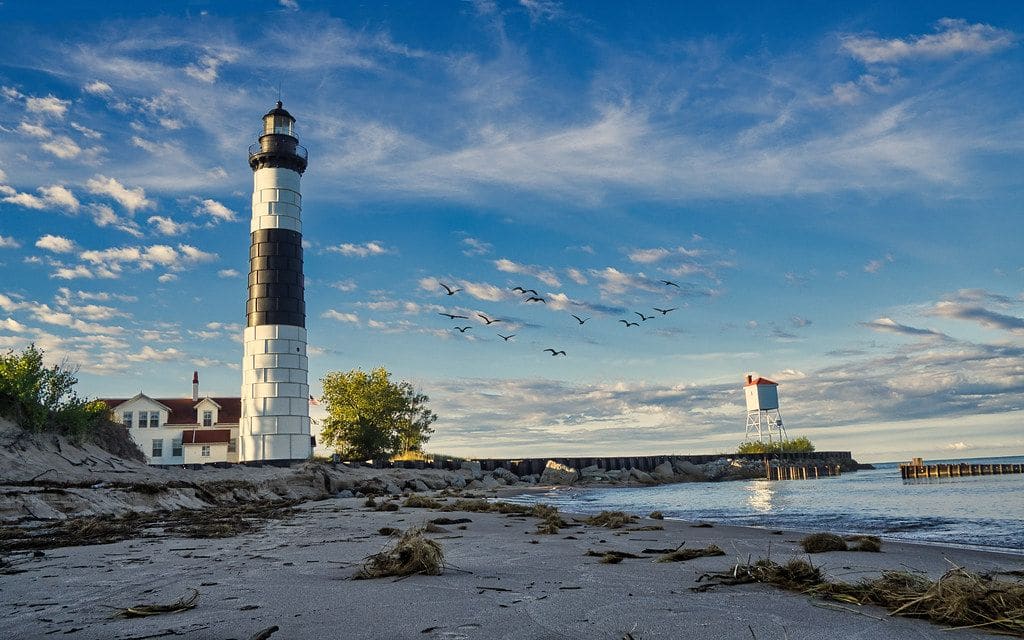
Michigan's beach belt and the heart of what we cover — the tulip-and-lighthouse town of Holland, the car-ferry port of Ludington, and the dunes, wineries and cherry orchards around Traverse City, all backed by Lake Michigan's freshwater surf.
Southeast Michigan (Detroit & Ann Arbor)
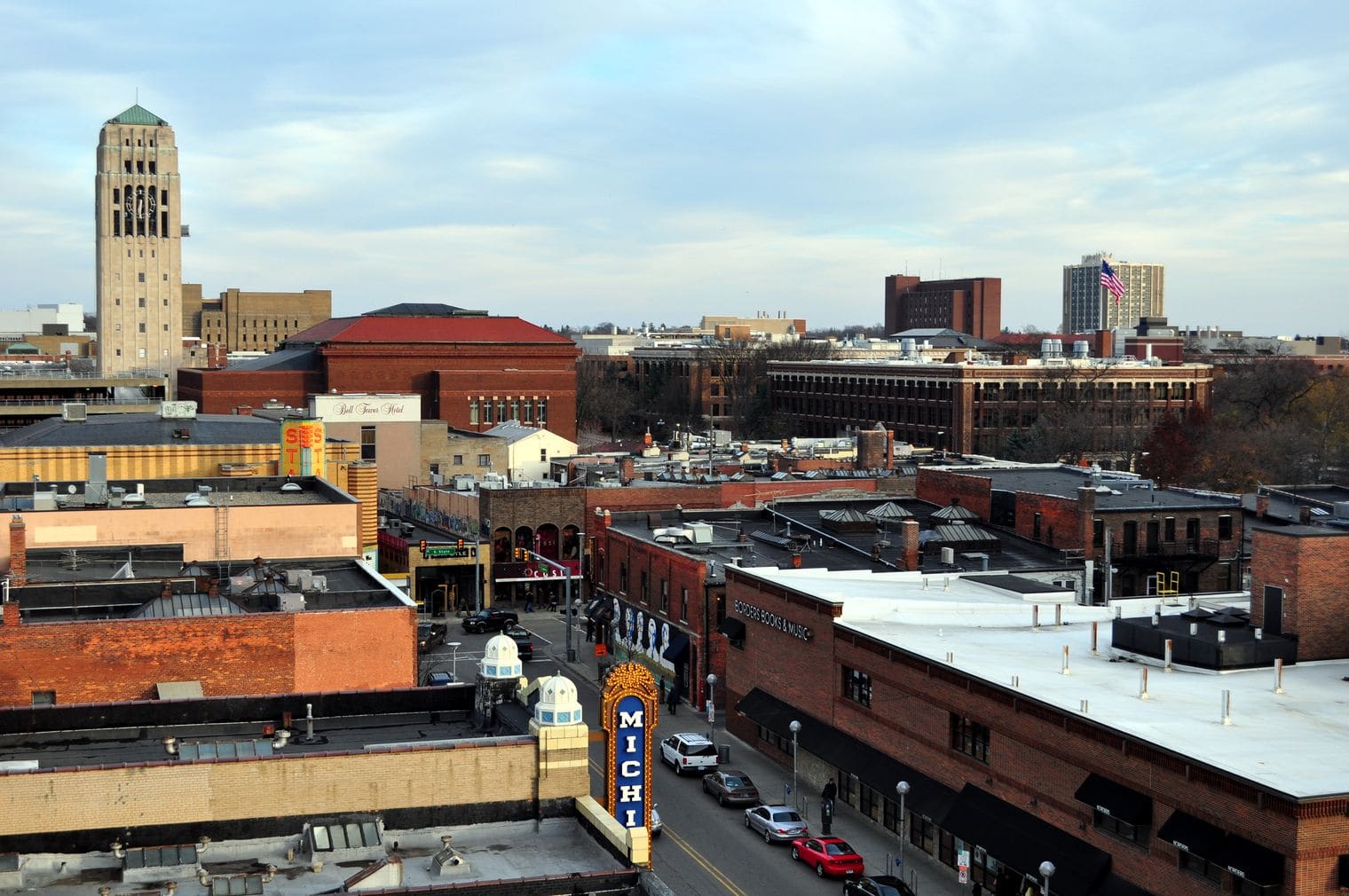
The populated corner and main gateway, where Detroit pairs Motown and the auto legacy with a revived downtown, and college-town Ann Arbor brings the University of Michigan, museums and a lively food and game-day scene an hour to the west.
West Michigan (Grand Rapids)
The state's fast-growing second metro, where Grand Rapids anchors a craft-beer and arts scene inland from the lakeshore, within easy reach of the Holland and Saugatuck beaches.
Northern Lower Peninsula & the Straits
Up-north cottage country, where Sleeping Bear Dunes towers over Lake Michigan, Petoskey and Charlevoix line Little Traverse Bay, and the Mackinac Bridge and car-free Mackinac Island crown the top of the mitten.
The Upper Peninsula
Michigan's wild north, a forested world of its own — Pictured Rocks' painted cliffs on Lake Superior, the roaring Tahquamenon Falls, the remote Keweenaw copper country, and Isle Royale National Park far out in the lake.
Getting around
A car is essential. Michigan's draws are strung along hundreds of miles of shoreline and split between two peninsulas, and outside Detroit and Ann Arbor public transit is thin. Most visitors fly into Detroit Metropolitan (DTW), the state's main hub, though smaller airports at Grand Rapids and Traverse City put you closer to the west coast. The two peninsulas are joined by the five-mile Mackinac Bridge at the top of the Lower Peninsula; distances up north are long and gas stations spread out, so fuel up before heading into the UP. Note the time change — the four westernmost UP counties run on Central time while the rest of the state is Eastern.
The highlights Michigan's signature sights & road trips
Michigan's classic shoreline road trip up the 'west coast', linking the beach towns and dunes from the Holland tulip country north to the cherry orchards and vineyards of Grand Traverse Bay. Add a day for the Sleeping Bear Dunes.
A focused northern loop from the Grand Traverse wine country up to the top of the mitten, crossing to the Upper Peninsula over the Mackinac Bridge with a ferry day on car-free Mackinac Island.
Charlevoix & Petoskey — Little Traverse Bay resort towns
Mackinaw City — jump-off for the island ferry
Mackinac Island — car-free day trip by ferry
St. Ignace — first stop across the bridge into the UP
Upper Peninsula & Lake Superior
4–5 days
A wilder trip across the UP along the Lake Superior shore, chaining the peninsula's headline natural draws from the Mackinac Bridge west toward the copper country. Long drives and small towns — plan fuel and time.
St. Ignace — gateway across the Mackinac Bridge
Tahquamenon Falls State Park — the amber falls
Pictured Rocks National Lakeshore — painted cliffs and Munising cruises
Marquette — the UP's largest town and Superior harbour
Summer, from June through August, is the classic season — it's when the Lake Michigan beaches, the dunes and Mackinac Island are at their best and the water is warm enough to swim. Autumn is a close second for crisp weather, thinner crowds and superb fall colour in the north and the Upper Peninsula. Spring is quiet and can stay cool, and winter is cold and snowy — great for skiing and snowmobiling up north, but sleepy on the coast.
How many days do you need in Michigan?
A focused trip to one region — the Lake Michigan beach towns, or the Traverse City wine and dune country — works well in three to four days. Driving the full west coast comfortably takes about a week, and adding the Straits, Mackinac Island and the Upper Peninsula pushes a proper loop to ten days or more, given how far apart things are.
Do you need a car in Michigan?
Yes. The state's beaches, dunes and small towns are spread across two peninsulas and hundreds of miles of shoreline, and outside Detroit and Ann Arbor public transit is limited. Most visitors fly into Detroit Metropolitan and drive; Grand Rapids and Traverse City are handy smaller airports for reaching the west coast more quickly. The one famous exception is Mackinac Island, which bans cars entirely and is explored on foot, by bike or by horse-drawn carriage.
What is Michigan best known for?
Michigan is the Great Lakes state — it touches four of the five and has more freshwater coastline than anywhere else in the country. It's known for its Lake Michigan beaches and sand dunes, the car-free Victorian charm of Mackinac Island, the waterfalls and painted cliffs of the Upper Peninsula, the cherry orchards and wineries around Traverse City, and Detroit's Motown and automobile heritage.
What are the two peninsulas, and how do you get between them?
Michigan is split into the mitten-shaped Lower Peninsula, where most of the population and the beach towns are, and the wilder, forested Upper Peninsula (the 'UP') to the north. The two are joined by the Mackinac Bridge, a five-mile suspension bridge over the Straits of Mackinac between Mackinaw City and St. Ignace — one of the longest in the country and the only road link between the peninsulas.
Can you swim in the Great Lakes in Michigan?
Yes — Lake Michigan's sandy west-coast beaches at towns like Holland, Ludington and around Sleeping Bear are a summer highlight, and by late summer the shallower water warms up nicely. Lake Superior in the Upper Peninsula is spectacular but stays cold year-round, so it's more for looking than for long swims. Always watch for rip currents and the coloured beach-flag warnings, which are common on the big lakes.
Which airport should you fly into for Michigan?
Detroit Metropolitan (DTW) is the main hub, with the most flights and the best connections, and it's the natural start for the southeast and a broad statewide loop. If you're heading straight for the west coast, Grand Rapids (GRR) is closer to the Holland and Saugatuck beaches, and Traverse City's Cherry Capital Airport (TVC) puts you right in the northern wine-and-dune country.
Is the Upper Peninsula worth the drive?
If you have the time, absolutely. The UP is a different, wilder Michigan — Pictured Rocks' painted Lake Superior cliffs, the amber cascades of Tahquamenon Falls, the remote Keweenaw copper country and, far offshore, the backcountry wilderness of Isle Royale National Park. It's a long way from the southern cities and best paired with the crossing at Mackinac, so give it several days rather than a rushed overnight.
We use cookies to analyse site traffic and improve your experience.
You can accept or reject analytics cookies. See our Cookie Policy.