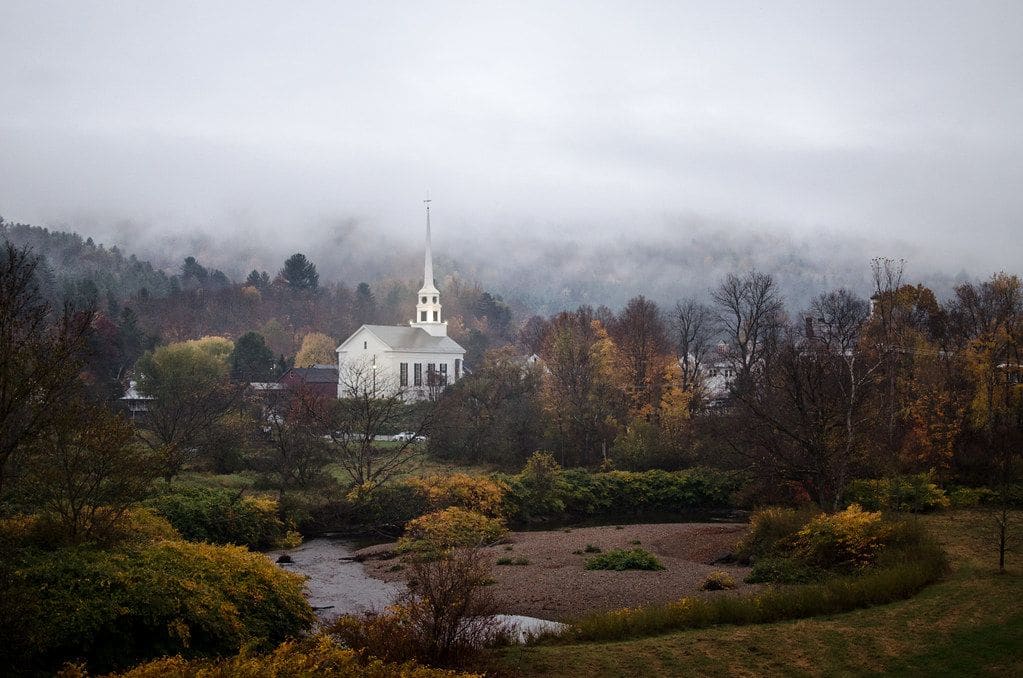
No state does the small things better — a covered bridge, a farm-stand maple creemee, a hillside ablaze in October colour.
Vermont is the Green Mountain State — a compact tumble of forested ridges, white-steepled villages and dairy farms, laced by scenic byways and crowned each autumn by the country's most famous foliage. Ski towns like Stowe give way to Lake Champlain in the west and the Connecticut River valley in the east, all within a couple of hours' drive. Use this hub to plan your trip: browse our city and adventure guides below to find the best of the state.
Known for
Fall foliage, skiing, maple & cheese
Best for
Leaf-peeping, skiing & village-hopping
Capital
Montpelier
Largest city
Burlington
Main gateway
Burlington Int'l (BTV)
Time zone
Eastern (ET)
Trip planner
Plan your trip to Vermont
Best time to visit — season by season
Spring
Mar–May
A muddy, in-between shoulder season — the snow melts into 'mud season' on the dirt roads, but it's also sugaring time, when the sugarhouses run and the first maple syrup of the year is boiled. Late May greens up fast.
Summer
Jun–Aug
Warm, green and lively, with comfortable days rarely climbing past the 80s°F. Lake Champlain and the swimming holes come into their own, the Long Trail is fully open, and farm stands and village greens hit their stride.
Fall
Sep–Oct
Vermont's headline season, and one of the best places on earth to watch the leaves turn. Peak colour rolls south down the Green Mountains from late September through mid-October; book well ahead, as foliage weekends fill fast.
Winter
Nov–Mar
Cold and snowy, and prime ski season — Stowe, Killington, Sugarbush and Mad River Glen draw skiers and riders all winter. Beyond the lifts there's cross-country skiing, snowshoeing and cosy, wood-smoke village nights.
Regions of Vermont
Champlain Valley & the northwest
Vermont's populated, lake-fronting corner, where Burlington pairs a walkable waterfront and Church Street Marketplace with ferries and sunsets over Lake Champlain, and Shelburne and the Champlain Islands sit just beyond.
Stowe & the northern Green Mountains
The classic ski-and-village country beneath Mount Mansfield, Vermont's highest peak, where Stowe anchors year-round mountain adventure and the Smugglers' Notch pass threads between the summits.
Central Vermont & the Mad River Valley
The green heart of the state, home to the capital Montpelier, the ski slopes of Sugarbush and Mad River Glen around Waitsfield and Warren, and a scatter of covered bridges and gap roads.
Southern Vermont
The gateway from the south, where Manchester, Bennington and the arts town of Brattleboro sit among the Green Mountain National Forest, Killington's big ski terrain and some of the state's oldest villages.
The Northeast Kingdom
Vermont's wild, remote and least-developed corner — a rolling landscape of working farms, forests and glacial lakes around St Johnsbury and Lake Willoughby, famed for spectacular, quiet autumn colour.
Getting around
A rental car is essential: Vermont is a rural state of small towns and winding valley roads, thinly served by public transit outside Burlington. Most visitors fly into Burlington International in the northwest, the state's main gateway, and drive from there — though Vermont is also within easy reach by car from Boston, Montreal and Albany. Distances are short by American standards but slow, as the two-lane roads wind over mountain gaps and through village centres; give yourself extra time in foliage season, and be ready for dirt roads and 'mud season' softness in spring.
The highlights Vermont's signature sights & road trips
Lake Champlain & Burlington The state's biggest city and a breezy waterfront on the sixth-largest lake in the country, with ferries, sunsets and the Church Street Marketplace.
Green Mountain National Forest The forested spine of the state, threaded by the Long Trail and Appalachian Trail and blazing with colour every autumn.
The Northeast Kingdom Vermont's wild, remote corner of farms, forests and glacial lakes like Willoughby — famed for quiet, spectacular fall foliage.
Southern villages & the arts towns Classic New England scenes around Manchester, Bennington and Brattleboro, with covered bridges, marble villages and mountain views.
Maple, cheese & farm country The edible Vermont — sugarhouses, farmstead cheddar, cider and creemees along the back roads and village greens.
Suggested routes
Route 100 through the Green Mountains
3–5 days
Vermont's signature scenic drive, running nearly the length of the state through the heart of the Green Mountains. It links ski towns, gaps and village greens, and is a foliage classic every autumn — run it south-to-north to finish near Stowe.
A northern loop pairing Vermont's lakefront city with its highest peak and the dramatic Smugglers' Notch pass — an easy long weekend from Burlington's airport.
It depends on what you're after. Late September through mid-October is the famous foliage season, when the Green Mountains blaze with colour — the single most popular time to visit. Summer is warm, green and quieter for hiking and lake days, and December through March is prime ski season in the mountains. Spring 'mud season' is the one window most visitors skip, though it's also maple-sugaring time.
How many days do you need in Vermont?
Vermont is compact, so a long weekend of three to four days is enough to base yourself in one area — say Burlington and the Champlain Valley, or Stowe and the northern mountains. A week lets you loop from the lake across the Green Mountains to the Northeast Kingdom or down to the southern villages at a relaxed, leaf-peeping pace.
Do you need a car in Vermont?
Yes. Outside Burlington, Vermont is a rural state of small towns thinly served by public transit, and the villages, ski resorts and scenic drives are spread across winding valley roads. A rental car is essential. Most visitors fly into Burlington International, though the state is also an easy drive from Boston, Montreal and Albany.
What is Vermont best known for?
Vermont is famous for its autumn foliage — arguably the best in the United States — along with its skiing, its maple syrup and artisan cheese, and its picture-book landscape of white-steepled villages, covered bridges and dairy farms. It's also known for Lake Champlain, the Long Trail hiking path, and a strong local-and-independent streak.
When is peak fall foliage in Vermont?
Peak colour typically arrives from late September through mid-October, sweeping from the higher elevations and the Northeast Kingdom in the north down to the southern valleys. Exact timing shifts a little year to year with the weather, so check a foliage tracker before you go — and book accommodation well ahead, as the best weekends sell out.
Is Vermont good for skiing?
Very much so. Vermont is one of the East Coast's leading ski destinations, with resorts including Stowe beneath Mount Mansfield, Killington (the largest in the East), Sugarbush and the famously old-school Mad River Glen. The season generally runs from around late November into April, snow depending, with plenty of cross-country and backcountry options too.
How do you get to Vermont?
Most visitors fly into Burlington International Airport (BTV) in the northwest, the state's main gateway. Vermont is also an easy road trip — roughly three to four hours from Boston, about two hours from Montreal, and around three from Albany — and Amtrak's Vermonter and Ethan Allen Express trains connect it to New York and the wider Northeast.
What should you eat and buy in Vermont?
Vermont is a food-lover's state: pure maple syrup straight from the sugarhouse, farmstead cheddar and other artisan cheeses, cider and craft beer, and a maple 'creemee' soft-serve from a summer farm stand. Farm stands, sugarhouses and village general stores are as much a part of the experience as the scenery.
We use cookies to analyse site traffic and improve your experience.
You can accept or reject analytics cookies. See our Cookie Policy.