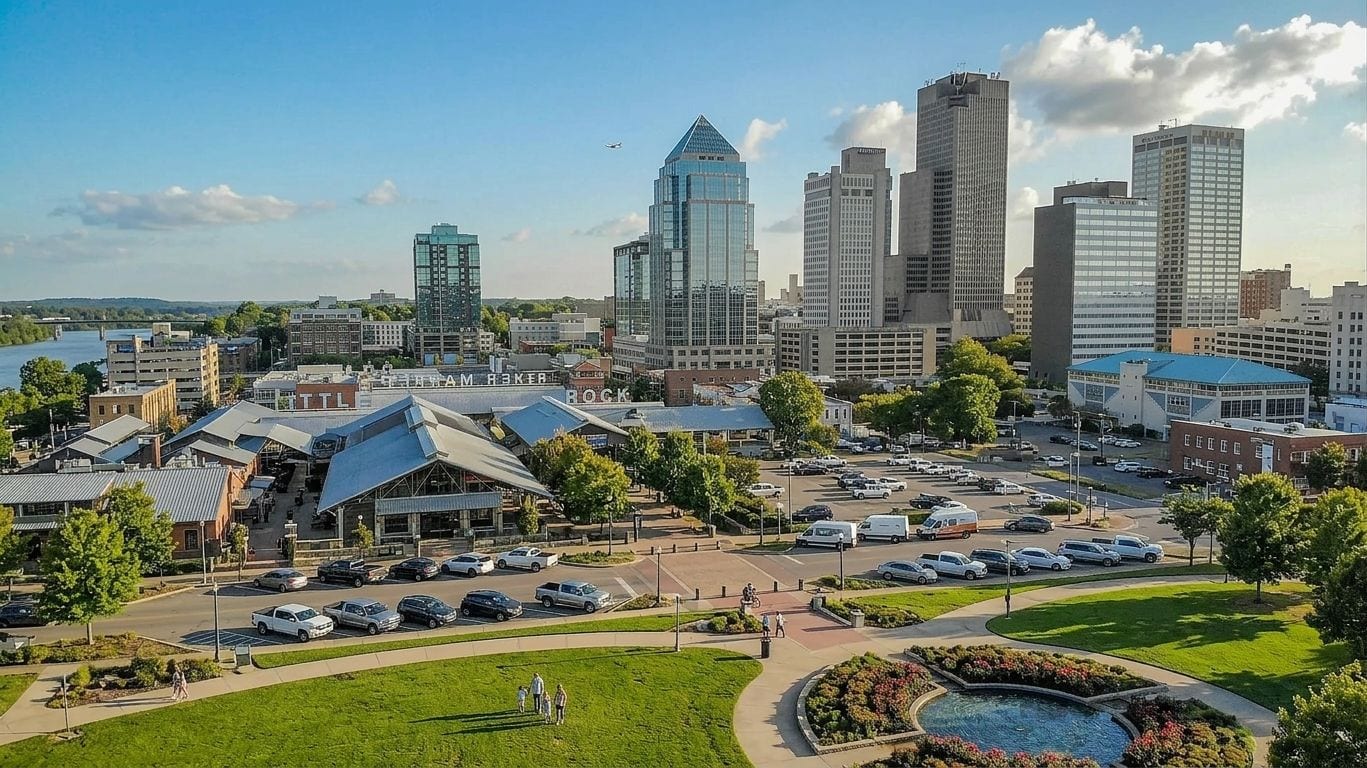
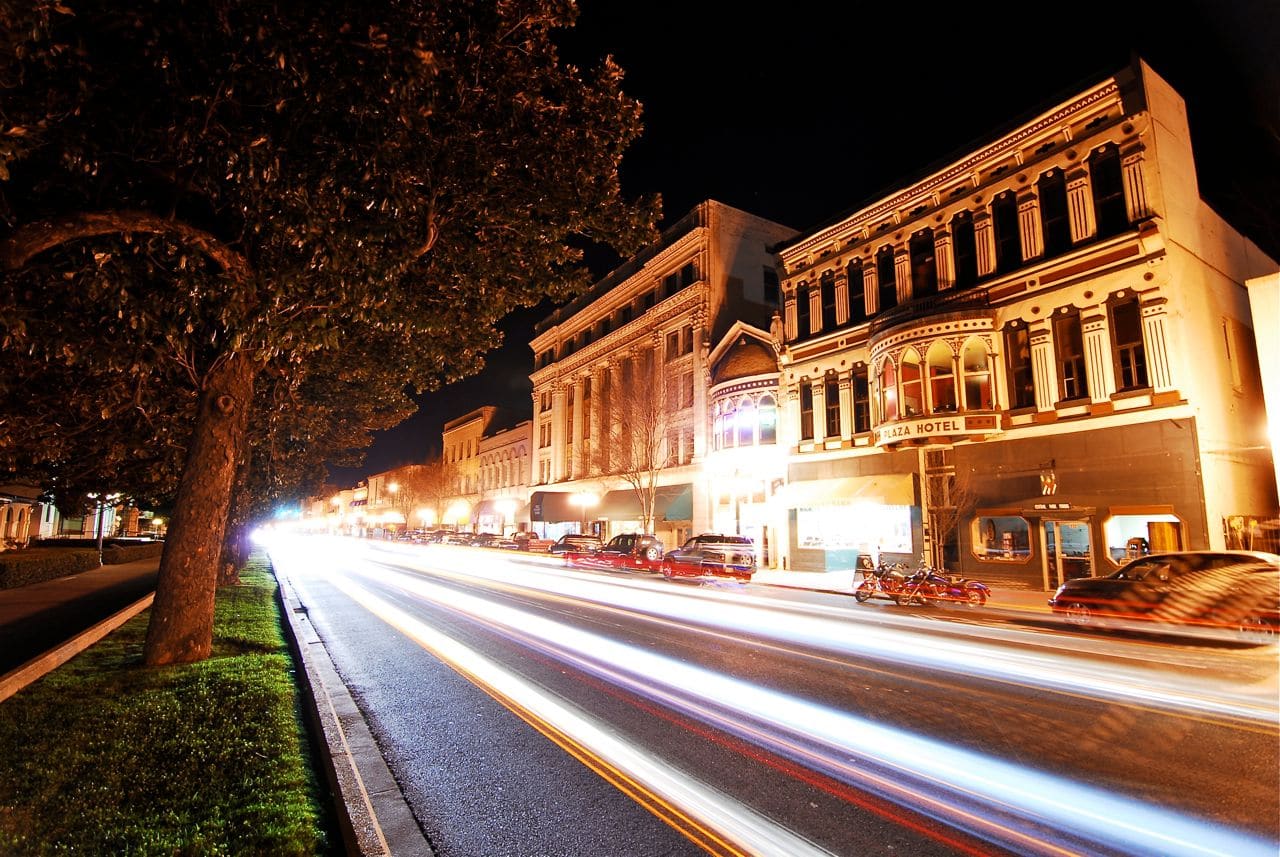
Thermal springs, diamond-bearing soil and a river you can canoe under 500-foot bluffs — Arkansas hides more than its neighbours let on.
Arkansas is 'the Natural State' — the Ozark and Ouachita mountains folding across the north and west, the free-flowing Buffalo National River, and the steaming springs that gave Hot Springs its name, all within a short drive of Little Rock. Use this hub to plan your trip: browse our city guides below for Little Rock's civil-rights landmarks and Hot Springs' bathhouse row, then range out to the mountains, rivers and the one place in America where you can dig for your own diamonds.
Known for
Hot springs, Ozark rivers & diamonds
Best for
Hiking, paddling, hot springs & history
Capital
Little Rock
Main gateway
Bill & Hillary Clinton National (LIT)
Time zone
Central (CT)
Trip planner
Plan your trip to Arkansas
Best time to visit — season by season
Spring
Mar–May
The finest window of the year: dogwoods and redbuds bloom across the Ozarks, the waterfalls run hard from spring rain, and the Buffalo River carries enough water for a proper float before summer levels drop.
Summer
Jun–Aug
Hot and humid statewide, often into the 90s°F with sticky nights. It's peak season for the lakes — Ouachita, Catherine, Greers Ferry — and swimming holes, though upper stretches of the Buffalo can run too low to paddle by August.
Fall
Sep–Nov
Rivalling spring for the top spot: crisp air, thinning crowds and hardwood colour sweeping the Ozark and Ouachita ridgelines through October and into November. Ideal for scenic drives and hiking, and Hot Springs' bathhouses feel just right as it cools.
Winter
Dec–Feb
Mild but changeable, with cold snaps and the odd ice storm rather than deep snow. Bare trees open up the bluff views, waterfalls flow well after rain, and a soak at a Hot Springs bathhouse is at its most welcome.
Regions of Arkansas
Ouachita Mountains & Hot Springs (west-central)
The spa-town heart of the state, where Hot Springs pairs its historic Bathhouse Row and national park with the pine-clad ridges of the Ouachita National Forest and the clear water of Lake Ouachita and Lake Catherine.
Central Arkansas & the River Valley
The populated middle, anchored by Little Rock and its civil-rights history, the Clinton Library and the Arkansas State Capitol, with Pinnacle Mountain, Petit Jean and Mount Magazine — the state's highest point — rising along the Arkansas River to the west.
The Ozarks (northwest & north-central)
Arkansas's mountain country: the Buffalo National River and its towering bluffs, artsy Eureka Springs, and the booming Bentonville–Fayetteville corridor, home to the Crystal Bridges Museum of American Art and the University of Arkansas.
The Delta (east)
The flat, fertile Mississippi River lowlands along the state's eastern edge, a landscape of blues heritage, wildlife refuges and river towns stretching from the north-east down toward the Arkansas River's mouth.
The Timberlands & Diamond country (south & southwest)
The pine forests and small towns of southern Arkansas, home to Crater of Diamonds State Park near Murfreesboro — the only public diamond mine in the world where you keep what you find — and quiet fishing lakes.
Getting around
A car is the way to see Arkansas — the mountains, rivers and parks are spread across the state and public transit between towns is limited. Little Rock sits in the middle with the state's main airport (Bill & Hillary Clinton National), and Hot Springs is an easy hour to the south-west, so many trips pair the two before heading for the hills. Northwest Arkansas (Fayetteville, Bentonville) has its own airport, XNA, if you're focused on the Ozarks. Mountain roads are winding and scenic but slow, so build in more time than the mileage suggests, and fuel up before long stretches through the national forests.
The highlights Arkansas's signature sights & road trips
Buffalo National River The first national river in the country, running free beneath towering limestone bluffs — prime canoeing, floating and elk-watching.
Crater of Diamonds State Park The only diamond-bearing site in the world open to the public where you keep what you dig up, on an eroded volcanic pipe near Murfreesboro.
Crystal Bridges Museum of American Art A world-class free museum in Bentonville, its glass-and-wood pavilions set over spring-fed ponds in an Ozark ravine.
Mount Magazine Arkansas's highest point at 2,753 feet, a flat-topped mountain of big valley views, hang-gliding launches and a state-park lodge above the River Valley.
Suggested routes
Little Rock & Hot Springs weekend
3–4 days
The easiest introduction to the state, pairing the capital's history and museums with a soak-and-hike escape in the Ouachitas an hour south — both reached from the main airport at Little Rock.
Little Rock — capital, museums & civil-rights history
Pinnacle Mountain State Park — quick hike west of the city
A grand arc from the capital up into the Ozarks and back down through the mountains, taking in the state's headline nature, art and springs. Run it in either direction.
Spring and autumn are the sweet spots. March through May brings blooming dogwoods, full waterfalls and enough water to float the Buffalo River, while September through November delivers crisp air and hardwood colour across the Ozark and Ouachita mountains. Summers are hot and humid but ideal for the lakes, and winters are mild if changeable — a fine time to soak in the Hot Springs bathhouses.
How many days do you need in Arkansas?
A long weekend of three to four days is enough to pair Little Rock with Hot Springs, the state's two most-visited destinations. To add the Ozarks — the Buffalo River, Eureka Springs and Bentonville's Crystal Bridges museum — plan on about a week, since the mountain driving is slow and scenic.
Do you need a car in Arkansas?
Yes. The mountains, rivers and parks are spread across the state and public transit between towns is limited, so a rental car is essential. Most visitors fly into Bill & Hillary Clinton National Airport in Little Rock and drive from there; northwest Arkansas has its own airport, XNA, if you're focused on the Ozarks.
What is Arkansas best known for?
Arkansas is 'the Natural State', famous for the thermal springs and historic bathhouses of Hot Springs, the free-flowing Buffalo National River and the Ozark and Ouachita mountains. It's also the only place in the country where you can dig for — and keep — your own diamonds, at Crater of Diamonds State Park.
Can you really find diamonds at Crater of Diamonds State Park?
Yes. Crater of Diamonds, near Murfreesboro in southwest Arkansas, sits on an eroded volcanic pipe, and it's the only diamond-bearing site in the world open to the public on a finders-keepers basis. Visitors turn up real diamonds every year — most are small, but sizeable stones are found from time to time. You search a ploughed field, and whatever you find is yours to keep.
Are the Hot Springs bathhouses still open?
Yes. Two of the historic bathhouses on Bathhouse Row in Hot Springs National Park still offer thermal baths and spa services — Buckstaff, which has operated for over a century, and Quapaw — while the beautifully restored Fordyce serves as the park's visitor center and museum. It's the same mineral spring water that made the town famous.
Is the Buffalo National River good for beginners?
It can be, with the right timing and stretch. The Buffalo is a free-flowing river with no dams, so water levels swing with the seasons — spring and early summer usually offer the best flow for canoeing and kayaking, while late summer can leave the upper river too shallow to paddle. Lower stretches run more reliably, and local outfitters rent boats and run shuttles, so ask them which section suits your experience and the current level.
What is there to do in Arkansas besides the outdoors?
Plenty. Little Rock has the Central High School civil-rights site, the Clinton Presidential Library and the state capitol, Bentonville is home to the free, world-class Crystal Bridges Museum of American Art, and Hot Springs blends its national park with a historic downtown of galleries and a horse-racing track. Eureka Springs adds a whole Victorian spa town of quirky shops and steep, winding streets.
We use cookies to analyse site traffic and improve your experience.
You can accept or reject analytics cookies. See our Cookie Policy.