Ask which is the largest waterfall in the world and you will get three different answers, because "largest" can mean tallest, widest, or most powerful. This countdown settles on the measure hydrologists and record-keepers use when they say largest: flow rate, the sheer volume of water thundering over the edge every second. It is the yardstick behind the Guinness record for greatest waterfall flow, and it rewards rivers over cliffs, which is why the giants here are broad, low cataracts on the planet's biggest rivers rather than the slender ribbons that top the "tallest" lists. Our ranking follows the specialist World Waterfall Database, which lists the world's cataracts by average discharge.
Ranked this way, the leaderboard looks nothing like the postcard favourites. The two most powerful sit on the Congo in Central Africa, where an entire continent's rainfall funnels through a single gorge, and the household names most travellers picture, Niagara, Iguazú and Victoria, land in the middle of the pack. Every entry below is a natural, free-flowing waterfall as of 2026: we have left out the many record-holders that dams have since drowned, so each of these ten still roars under its own power. Every figure is the average annual discharge, given in both cubic metres per second (m³/s) and cubic feet per second (cfs), so a river in flood can run several times higher.
At an average of 25,768 m³/s (910,000 cfs), Inga Falls on the Congo River is the most powerful waterfall on Earth by flow rate, carrying more water than any other single cataract in the world. Rather than one clean drop, it is a churning staircase of rapids where the Congo, one of the largest rivers on the planet by discharge, plunges roughly 96 metres over a series of gorges in the Democratic Republic of the Congo. The volume is almost impossible to picture: in a single second it moves more water than Niagara does in ten.
Whether Inga counts as a "waterfall" or a stretch of colossal rapids is a genuine debate among geographers, but by raw discharge nothing else comes close, so it earns the top spot. The site sits about 40 kilometres upstream of the port of Matadi and already hosts two hydroelectric stations; a far larger Grand Inga scheme has been discussed for decades but remains unbuilt, so for now the full river still surges over the falls. It is remote, hard to reach, and utterly overshadowed in fame by cataracts a fraction of its size.
Boyoma Falls averages about 16,990 m³/s (600,000 cfs), making it the second most powerful waterfall in the world and, in the eyes of many who dismiss Inga as mere rapids, the largest true waterfall by volume of any on the planet. It is not a single sheet of water but a chain of seven cataracts stretched over more than 100 kilometres of the Lualaba River, the great headstream that becomes the Congo, as it curves toward the city of Kisangani in the Democratic Republic of the Congo.
Each of the seven steps is modest in height, none more than about five metres, yet together they drop the river some 60 metres while moving a staggering quantity of water. The falls were long known to the outside world as Stanley Falls, and the lowest cataract has for generations been the site of an elaborate fixed-basket fishing system built out over the rushing current by the Wagenia people. Like Inga, Boyoma is a lesson in how flow, not height, defines a waterfall's true scale.
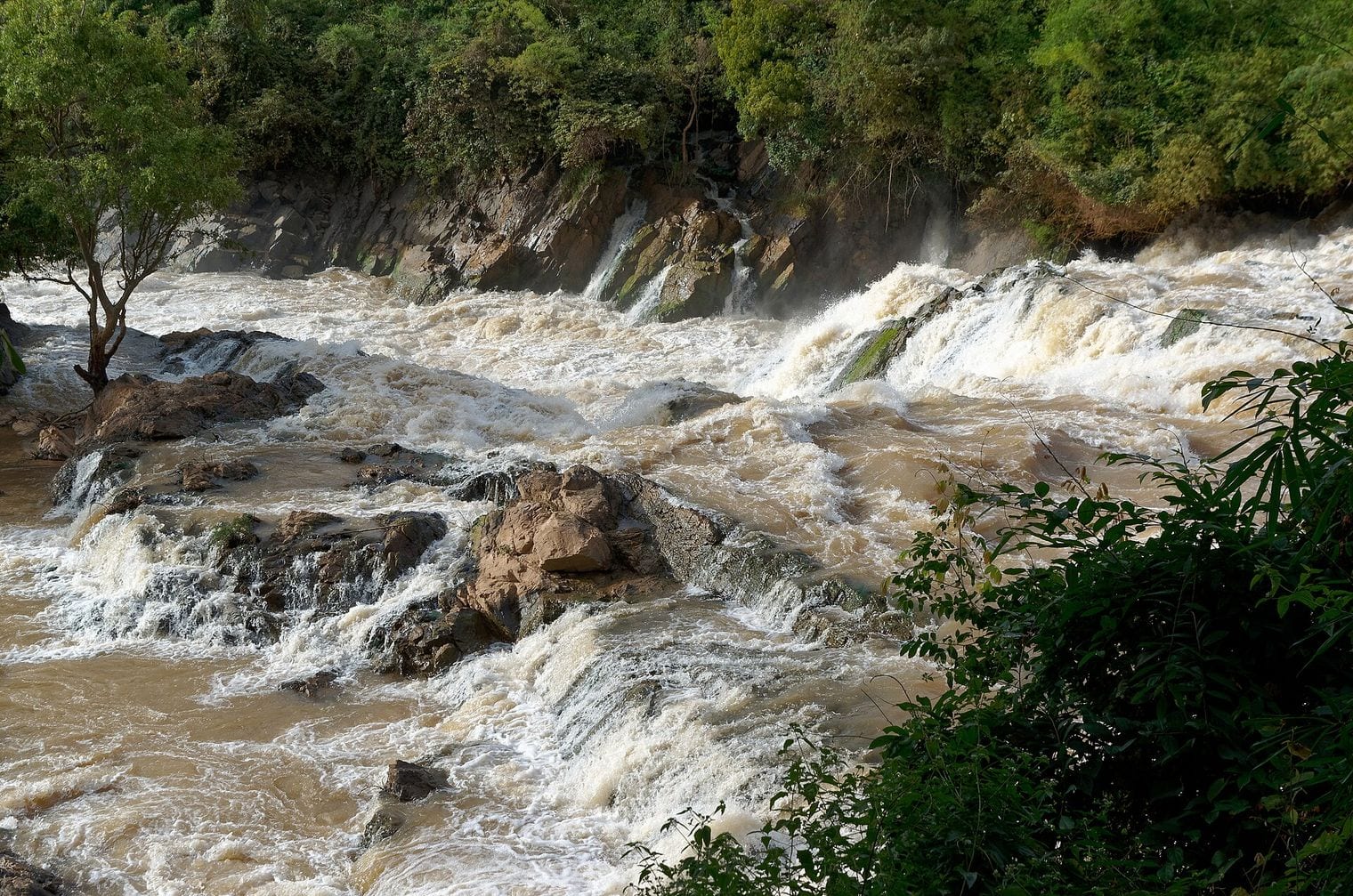
With an average discharge of around 11,610 m³/s (410,000 cfs), Khone Phapheng Falls is the most powerful waterfall in Asia and the third-largest in the world by flow. It spans the Mekong River in southern Laos, close to the Cambodian border, where the river fractures into a maze of channels around countless islands and rock ledges before crashing down in a broad, roaring front. In flood, its discharge can climb many times higher than its average, briefly rivalling the Congo giants.
Khone Phapheng is also, by the width of its full braided span, the widest waterfall in the world, a curtain of channels stretching more than ten kilometres across. The rapids here were the single obstacle that defeated 19th-century hopes of navigating the Mekong from the sea deep into the interior. Today it anchors the Si Phan Don, or "Four Thousand Islands" region, a laid-back tangle of river islets that has become one of Laos's most-loved stops.
Pará Falls, known locally as Salto Pará, averages roughly 3,540 m³/s (125,000 cfs) and is the most powerful waterfall in South America by flow rate, a fact that surprises visitors who assume that title belongs to Iguazú. It lies deep in the rainforest of Bolívar state in Venezuela, on the Caura River, a major tributary within the Orinoco basin, far from any road and reachable only by river.
What makes Pará remarkable is not just its volume but its shape: the Caura splits around a large forested island and pours over a wide, curving escarpment, forming one of the broadest waterfalls on the continent. Because it sits in one of the most intact rainforest watersheds in the Amazon–Orinoco region, it remains little visited and largely untouched, a giant hidden in plain sight. Its remoteness is exactly why so few people know that the most powerful falls in South America are Venezuelan, not at the famous three-country tripoint far to the south.
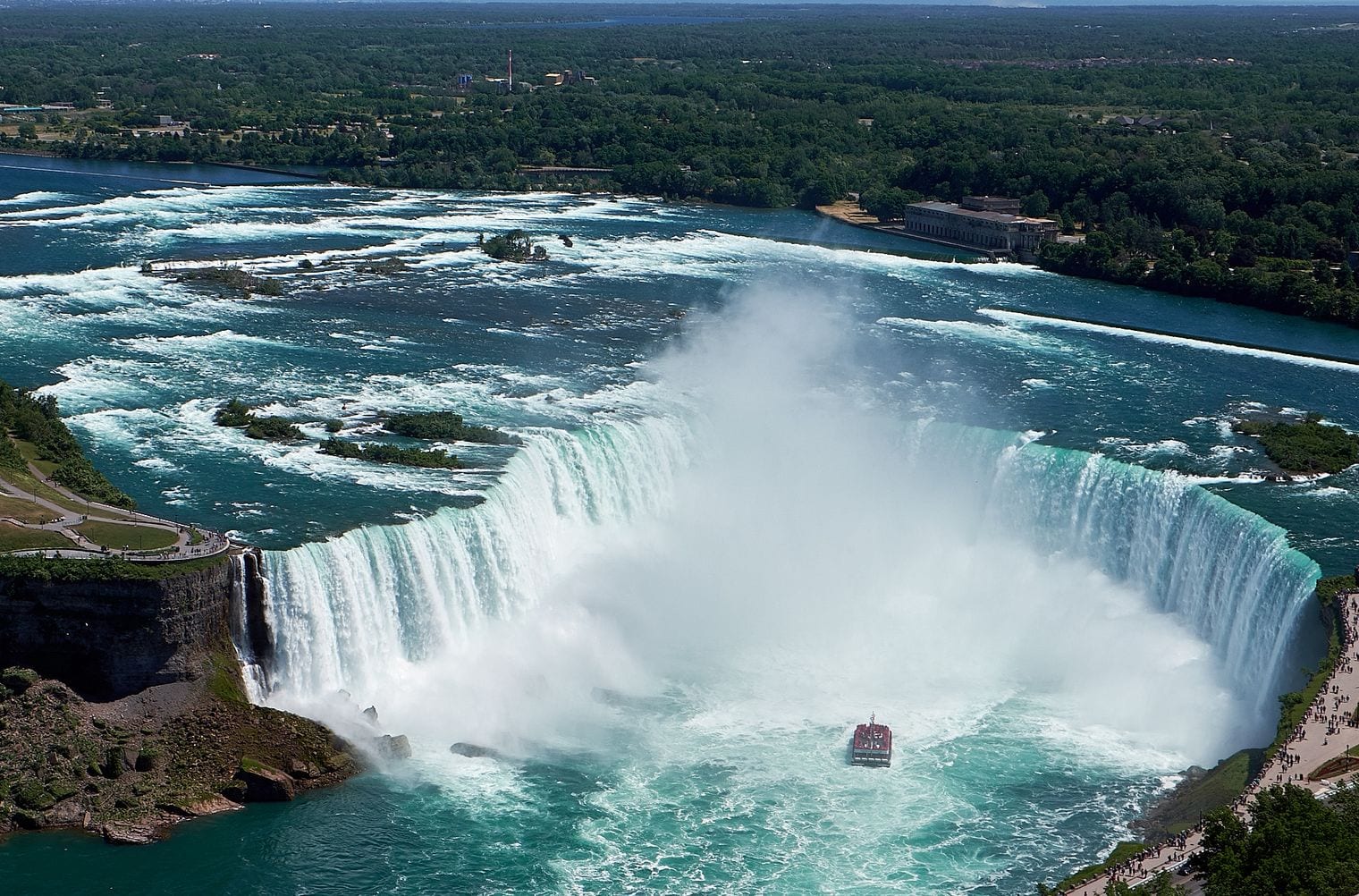
5. Niagara Falls
2,407 m³/s (85,000 cfs)
Source: Stephen Crane on Unsplash (illustrative image)
Niagara Falls carries an average of about 2,407 m³/s (85,000 cfs), and while that places it fifth on the world's flow-rate leaderboard, it is comfortably the most powerful waterfall in North America and by far the most visited of any on this list. Straddling the border between Ontario, Canada, and New York State in the United States, it is really three falls in one, dominated by the great curving sweep of the Horseshoe Falls, where most of the water goes over.
Niagara's fame rests less on its height, a modest 50-odd metres, than on the combination of high volume and easy access: millions of people a year can stand within metres of a genuine natural giant. Boats nose into the spray at its base, and the mist rises high enough to be seen from a distance. A share of the river is diverted for hydroelectric power, especially at night and in the off-season, but the falls themselves run year-round and remain the benchmark most people picture when they imagine a powerful waterfall.
Averaging around 1,812 m³/s (64,000 cfs), Vermilion Falls is a giant almost no one has heard of, ranking sixth in the world by flow rate yet drawing a tiny fraction of Niagara's crowds. It sits on the Peace River in a remote corner of northern Alberta, Canada, downstream of the small community of Fort Vermilion, where the wide northern river slides over a long, low ledge of limestone and shale.
Vermilion is the largest waterfall lying entirely within Canada by flow, and its character is the opposite of a plunging cataract: instead of a single drop it fans out in shallow, powerful steps across a crest well over a kilometre wide, moving an enormous volume through only a few metres of vertical fall. Its obscurity is a matter of geography, tucked into the boreal forest far from any major highway, it is a place you reach on purpose, not one you pass by, which is exactly why it stays wild.
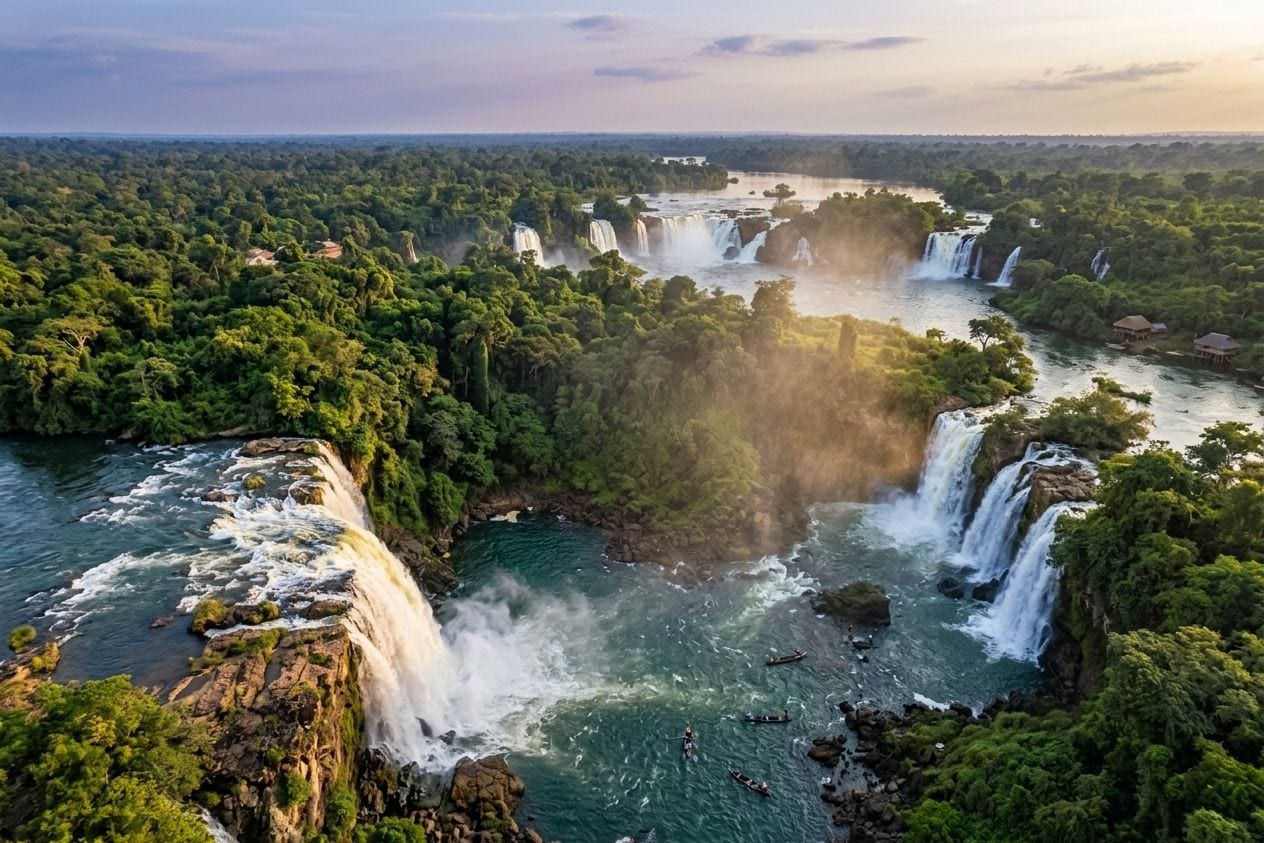
Iguazú Falls averages roughly 1,746 m³/s (61,660 cfs) and ranks seventh in the world by flow, but no bare number captures why it is so often called the most beautiful of the great waterfalls. Set on the Iguazu River at the border of Argentina and Brazil, it is not one waterfall but a vast arc of well over two hundred separate cascades spread across nearly three kilometres of jungle, crowned by the thundering horseshoe chasm known as the Devil's Throat.
Protected on both sides by national parks and inscribed as a UNESCO World Heritage Site, Iguazú immerses visitors as few falls can: walkways run right to the lip of the Devil's Throat, and boats push into the spray below. Rainbows hang almost permanently in the mist, and the surrounding subtropical rainforest teems with toucans, coatis and butterflies. It is the rare giant that is both enormously powerful and genuinely accessible, which is why it draws travellers from around the world.
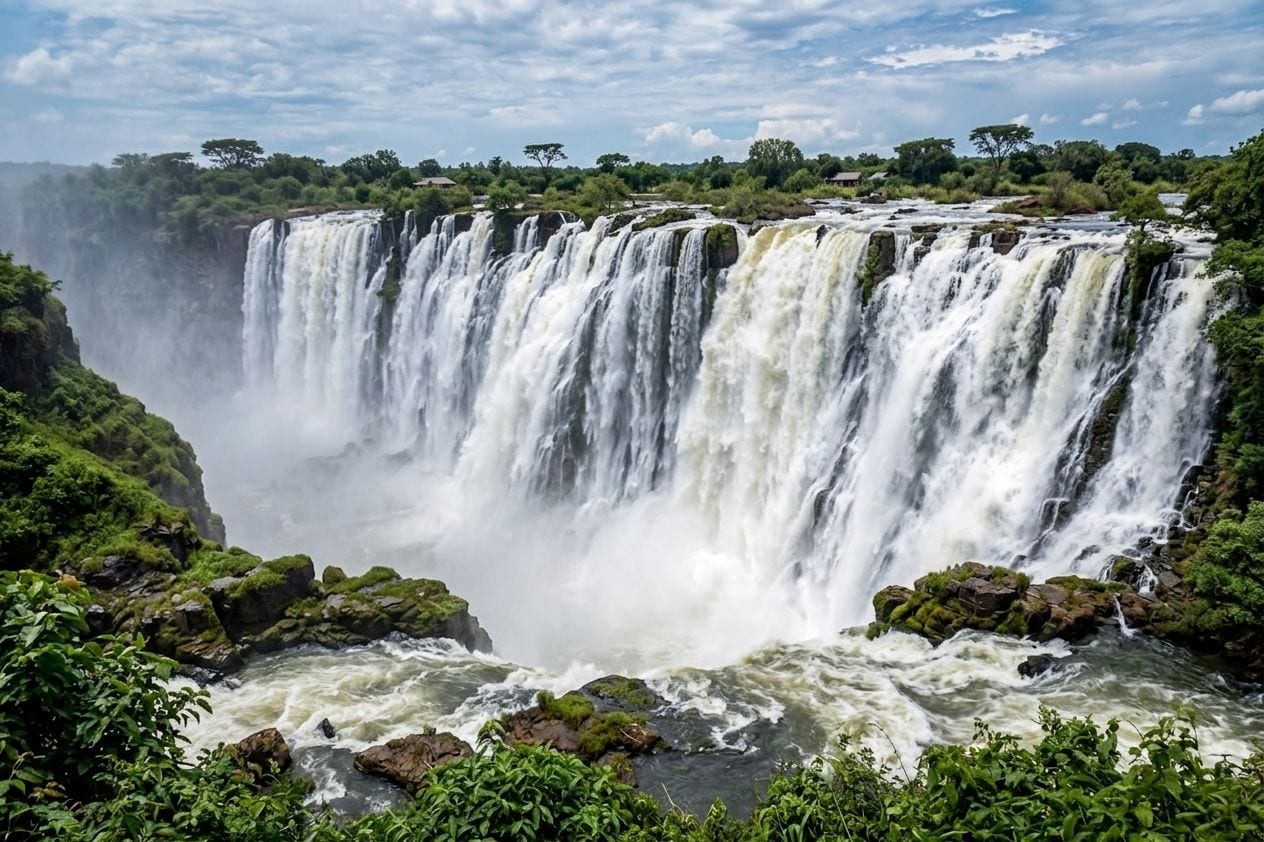
Victoria Falls averages about 1,088 m³/s (38,430 cfs), ranking eighth on this list by flow, yet by the combined measure of height and width it forms the largest single sheet of falling water on Earth. On the Zambezi River at the border of Zambia and Zimbabwe, the entire river drops as a solid curtain more than 100 metres into a narrow chasm, sending up a plume of spray so towering it can be seen from far away, which earned the falls their local name, Mosi-oa-Tunya, "the smoke that thunders."
A UNESCO World Heritage Site fringed by national parks in both countries, Victoria Falls is one of Africa's premier natural attractions. Its flow swings dramatically with the seasons: at the height of the wet season the spray can obscure the falls entirely, while in the dry months stretches of the lip run low enough that daring visitors wade to the edge. The Zambezi here remains undammed, so the full river still pours over the precipice as it has for millennia.
Virginia Falls carries an average of roughly 1,000 m³/s (35,300 cfs) and ranks ninth in the world by flow, a wilderness giant hidden in the far north of Canada's Northwest Territories. Known to the Dene people as Náįlįcho, it lies on the South Nahanni River deep within Nahanni National Park Reserve, a UNESCO World Heritage Site so remote it is reached almost entirely by floatplane or by paddling in on a multi-day river expedition.
The falls drop about 96 metres, roughly twice the height of Niagara, and are split down the middle by a dramatic rock spire, Mason's Rock, that stands defiantly in the middle of the plunge. For the small number of canoeists and rafters who run the South Nahanni each summer, portaging around Virginia Falls is the trip's centrepiece, a rare chance to stand beside a world-class waterfall with no railings, no crowds and no road for hundreds of kilometres in any direction.
Rounding out the top ten, Kongou Falls averages about 900 m³/s (31,783 cfs), the most powerful waterfall in Gabon and one of the least-seen great cataracts on the planet. It lies on the Ivindo River deep within Ivindo National Park, in the rainforest of central Africa, a broad, thundering complex of falls and channels roughly three kilometres wide that drops the river in a series of powerful steps.
What makes Kongou remarkable is not just its volume but its wildness: it sits in one of the most pristine tracts of the Congo Basin rainforest, ringed by forest elephants, gorillas and dense jungle, and reaching it means a river journey and a forest hike rather than a road trip. A hydroelectric dam was proposed here in the late 2000s, which would have drowned the falls, but sustained opposition saw the project shelved, so the Ivindo still runs free over Kongou today, a fitting close to a list of the planet's mightiest free-flowing waterfalls.
FAQ: The Largest Waterfalls in the World
What is the largest waterfall in the world?
By flow rate, the measure most experts mean by "largest," it is Inga Falls on the Congo River in the Democratic Republic of the Congo, which averages around 25,768 cubic metres of water per second, more than any other cataract on Earth. Because some regard Inga as giant rapids rather than a true waterfall, Boyoma Falls is often named the largest true waterfall by volume instead.
How is the "largest" waterfall measured?
There are three different ways to rank waterfalls: by height (the total vertical drop), by width (how far the crest stretches), and by flow rate (the volume of water passing over each second). This list uses flow rate, or average annual discharge, which is why broad, powerful cataracts on the world's biggest rivers rank far above the tall, slender falls that top the "tallest waterfall" lists.
Why isn't Niagara or Victoria Falls number one?
Fame does not equal flow. Niagara Falls and Victoria Falls are among the most visited waterfalls on Earth, but by average discharge they sit in the middle of this list, well behind the remote Congo and Mekong giants. Victoria does hold a different record, forming the largest single sheet of falling water in the world by the combined measure of its height and width.
Are the biggest waterfalls by flow rate worth visiting?
Some are far easier to reach than others. Niagara, Iguazú and Victoria Falls are world-class tourist destinations with viewpoints, walkways and boat trips. The most powerful of all, such as Inga, Boyoma and Pará Falls, are extremely remote and see few visitors, which is part of why their scale is so little known.
Do dams affect the world's largest waterfalls?
Yes, and it is why several famous names are absent from this list. Many high-flow waterfalls, including Paulo Afonso in Brazil, have been dammed for hydroelectric power, so the water no longer freely pours over them. Every waterfall in this ranking is still free-flowing as of 2026, though a proposed Grand Inga hydroelectric scheme could one day change the character of the number-one falls.

 1Inga Falls25,768 m³/sDemocratic Republic of the Congo
 2Boyoma Falls16,990 m³/sDemocratic Republic of the Congo
 3Khone Phapheng Falls11,610 m³/sLaos
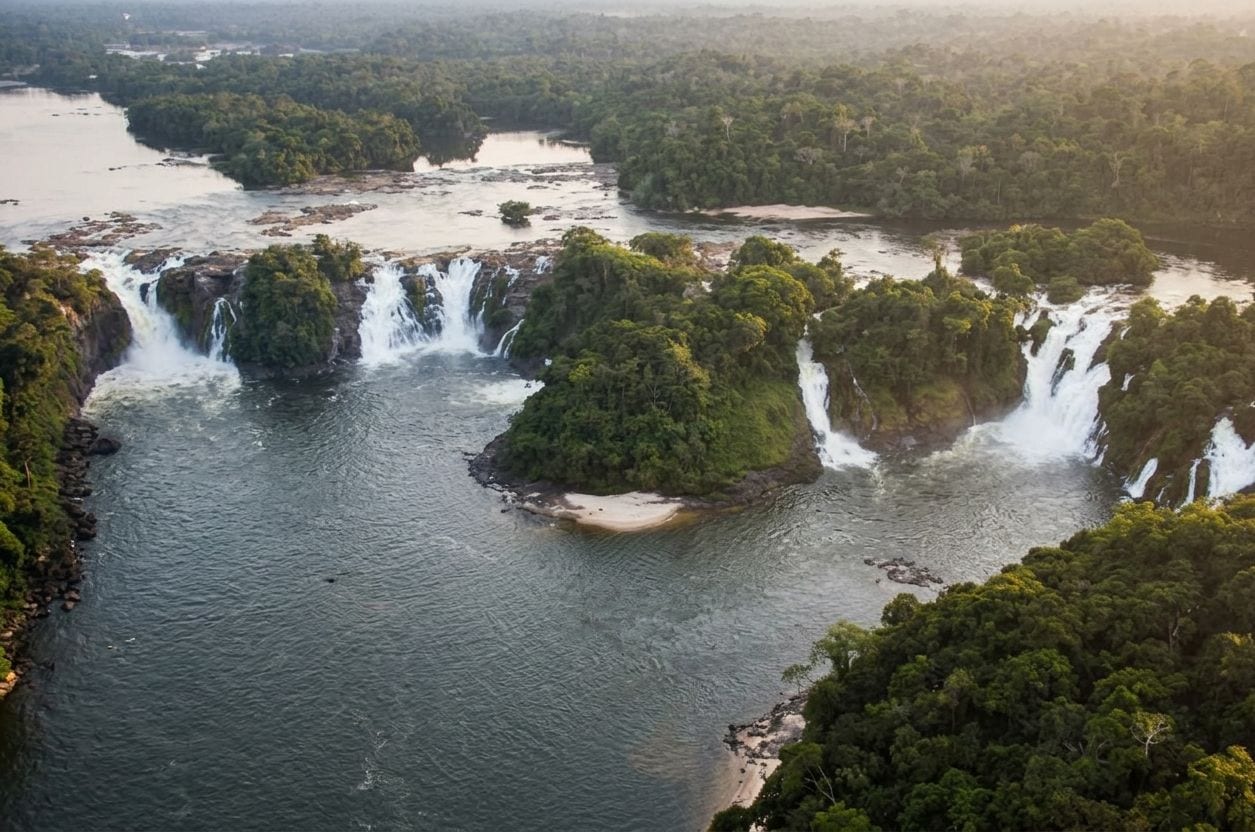 4Pará Falls3,540 m³/sVenezuela
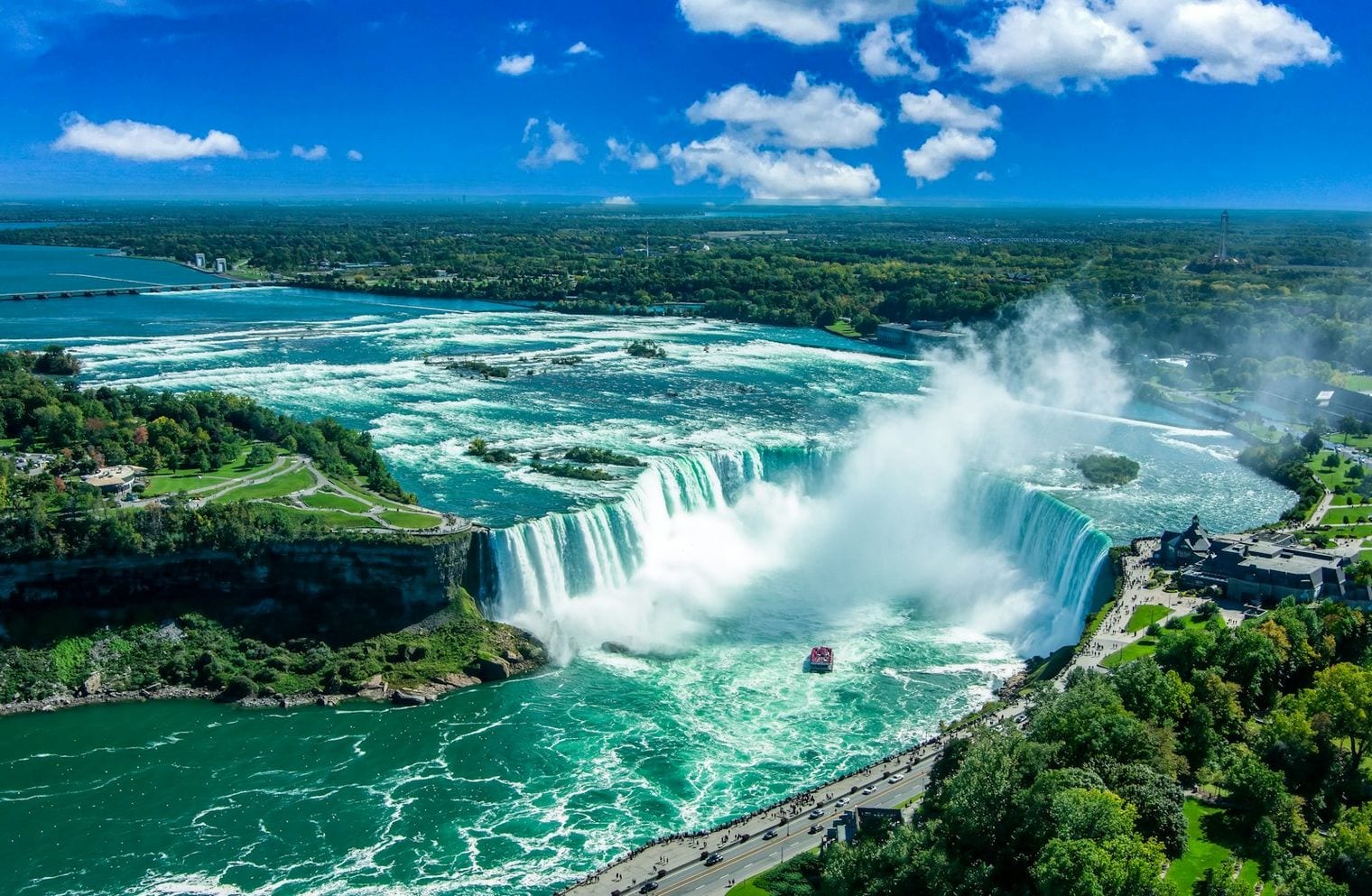 5Niagara Falls2,407 m³/sCanada / United States
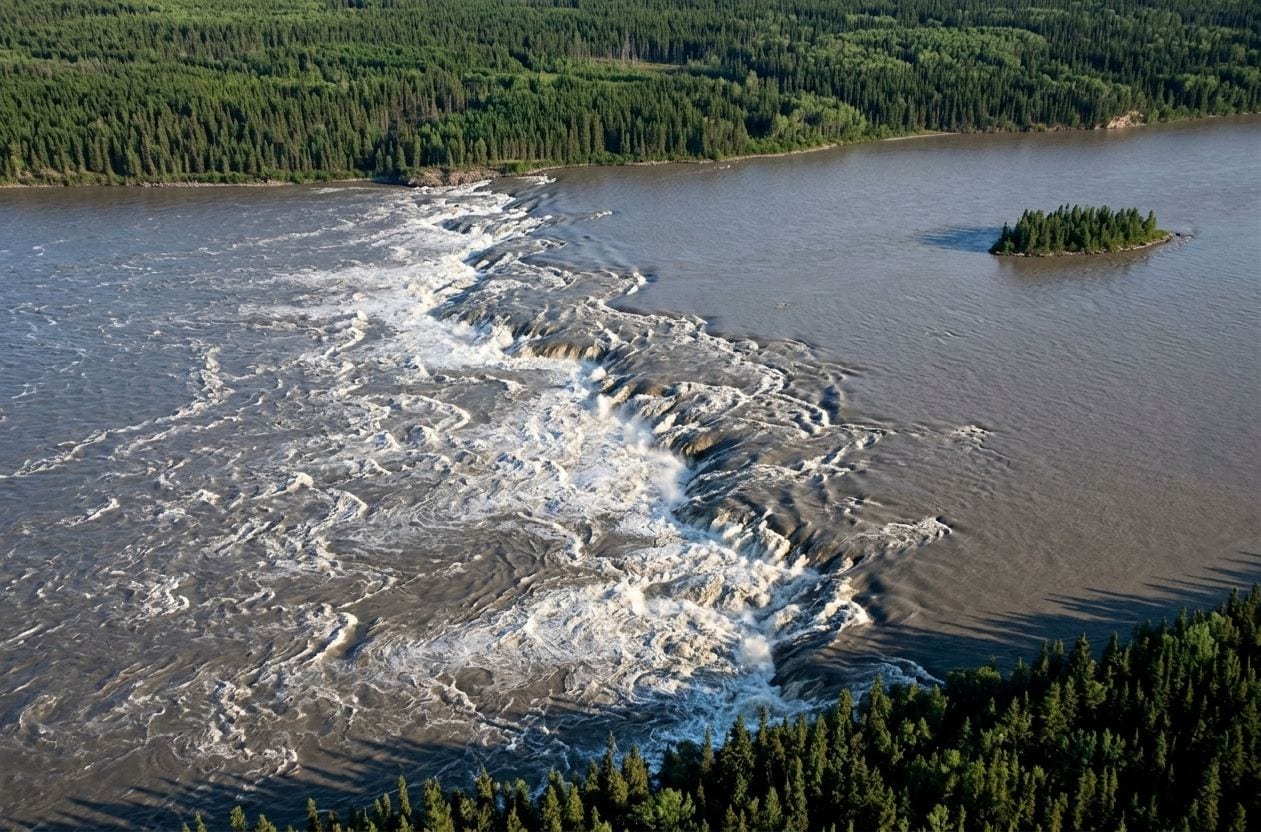 6Vermilion Falls1,812 m³/sCanada
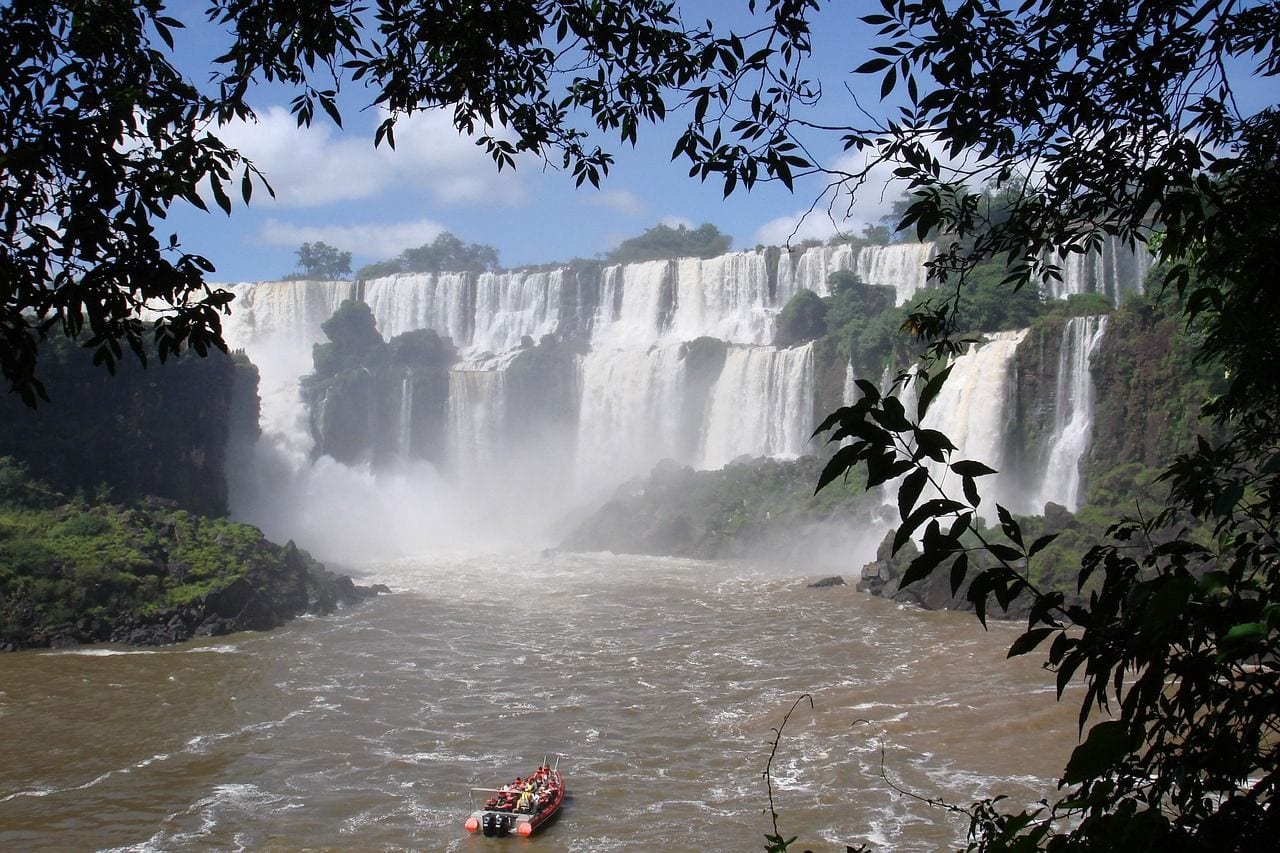 7Iguazú Falls1,746 m³/sArgentina / Brazil
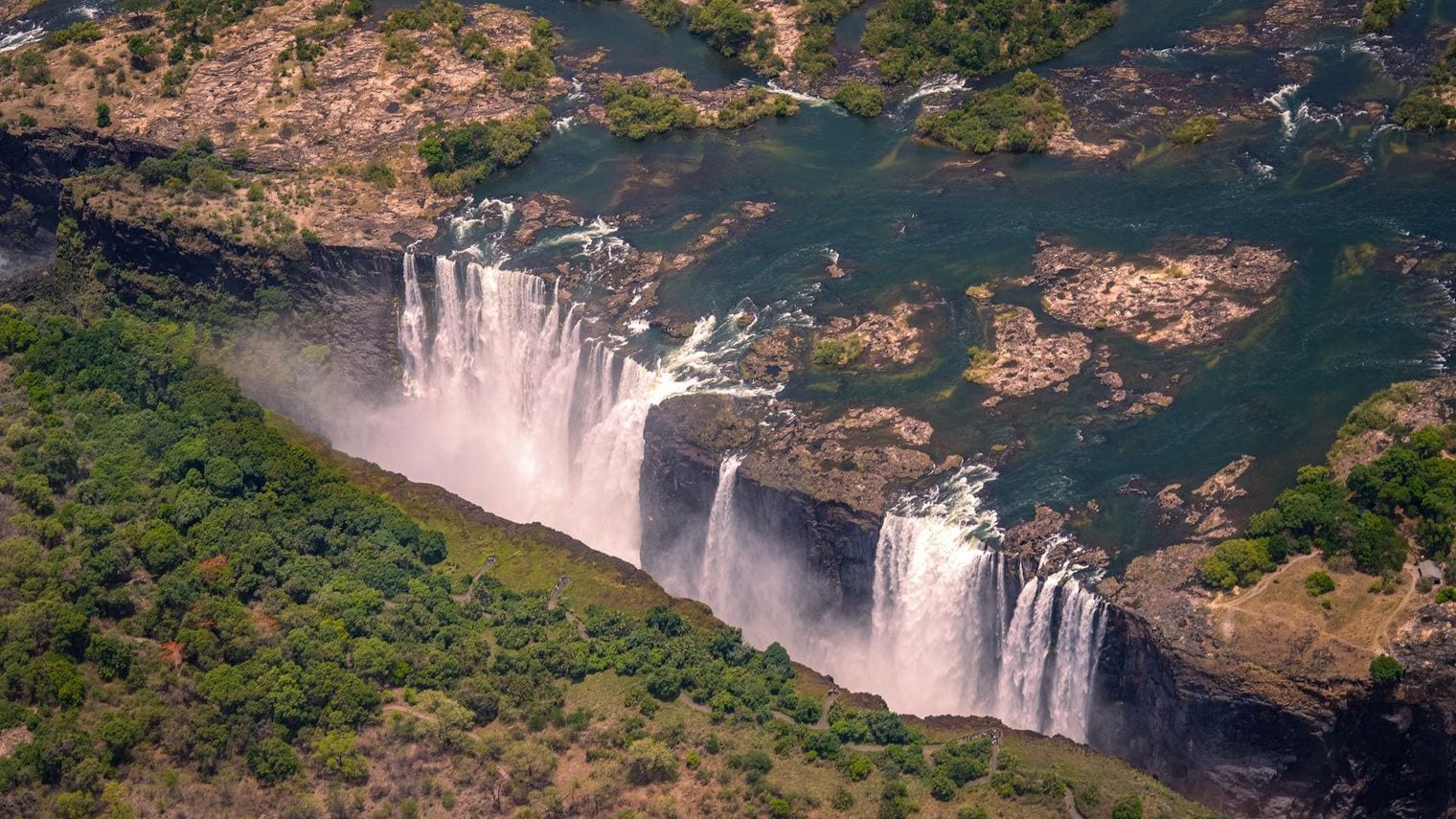 8Victoria Falls1,088 m³/sZambia / Zimbabwe
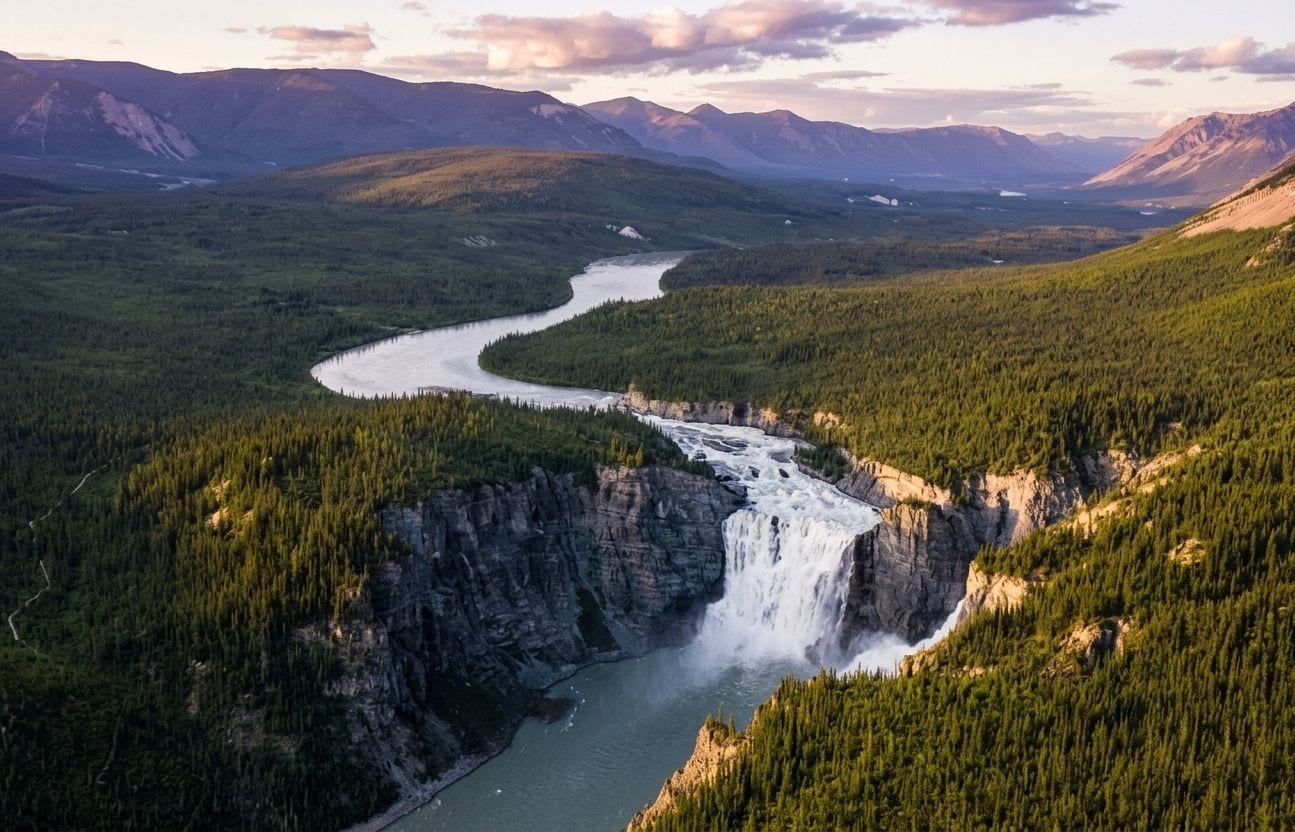 9Virginia Falls1,000 m³/sCanada
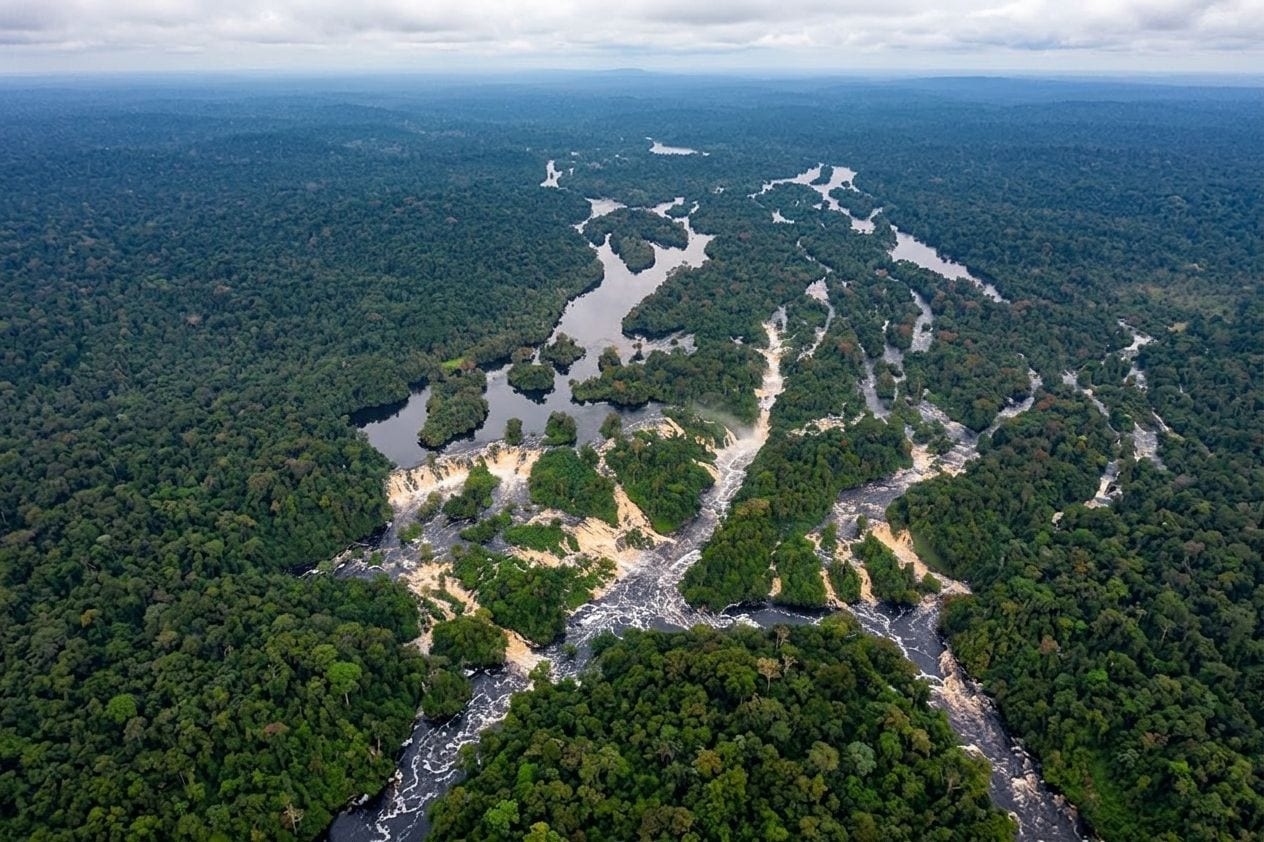 10Kongou Falls900 m³/sGabon