Nothing else in architecture invites a ranking quite like height. This countdown lists the 21 tallest completed buildings in the world, ordered strictly by height to architectural top — the measure the Council on Tall Buildings and Urban Habitat uses, running from the lowest significant open-air pedestrian entrance to the architectural top, counting spires and parapets but never antennas, flagpoles or signage. It is a deliberately narrow definition, and it is what keeps a table like this honest: a mast bolted on after the fact does not move a building up the list.
Two rules shape everything below. Every entry is a completed building you could walk into today, which is why Saudi Arabia's Jeddah Tower — under construction, planned to break the kilometre mark, and around 102 floors up as of 2026 — does not appear, and neither do the stalled giants that would otherwise rank high. And every entry is a building in the strict sense, meaning at least half its height is occupiable floor space; that test is why a structure like Tokyo Skytree, which at 634 m would slot into the top three, is not eligible at all. Heights verified as of July 2026.
Only four completed buildings on Earth stand taller than 600 m — the Burj Khalifa, Merdeka 118, Shanghai Tower and the Makkah Royal Clock Tower. Architects call this the megatall class.
Nine of the 21 tallest buildings are in mainland China, with a tenth in Hong Kong. The United States has just two, both in New York.
The tightest finish on the list is twenty centimetres — Changsha IFS Tower T1 outranks the Petronas Twin Towers by 0.2 m.
Tianjin's 597 m Goldin Finance 117 would rank sixth if it were ever finished. Instead Guinness World Records certifies it as the world's tallest unoccupied building: it topped out in 2015 and is now due to be completed in 2027.
Taipei 101 was the first building to pass 500 m, back in 2004. Two decades on, it ranks eleventh.
Map of Tallest Buildings in the World
Tallest Buildings in the World
1. Burj Khalifa
828 m
Source: Nick Fewings on Unsplash (illustrative image)
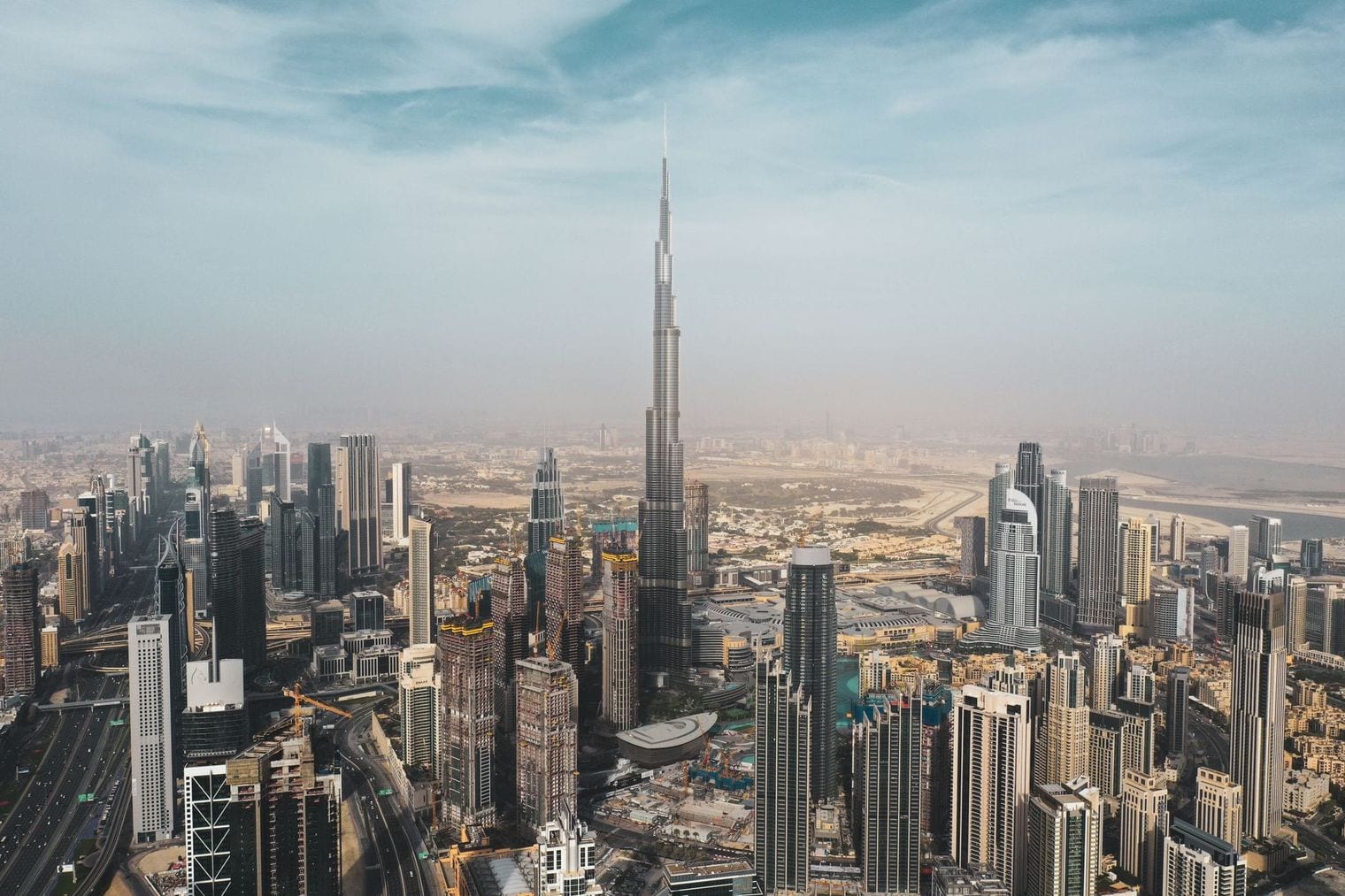
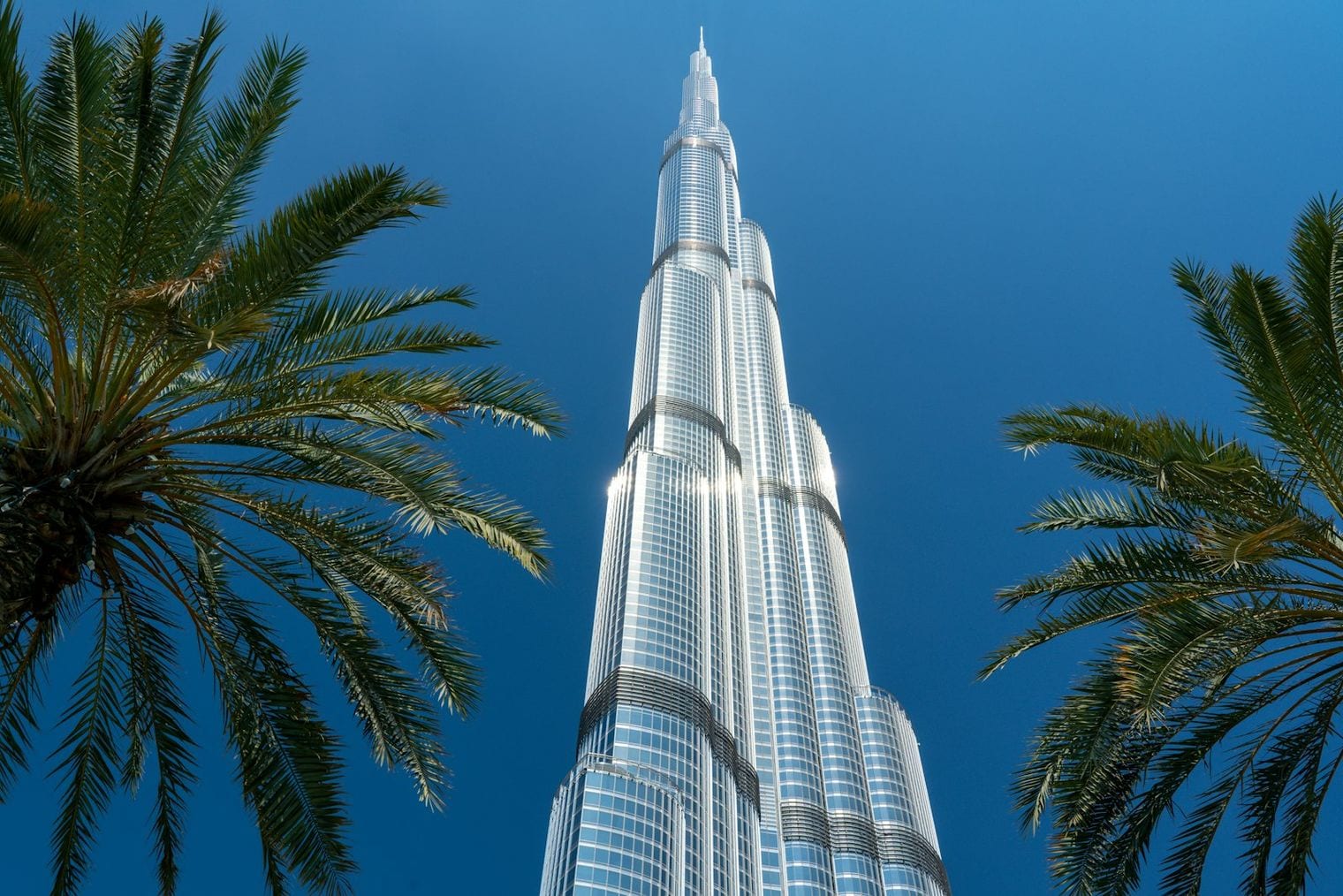
At 828 m (2,717 ft), the Burj Khalifa has stood unchallenged as the tallest building in the world since it opened in Dubai in 2010 — and the margin is the real story. It clears the runner-up by nearly 150 m, a gap wider than most skyscrapers are tall, and in more than fifteen years nothing has come close to threatening it. The tower tapers through a spiralling series of setbacks around a three-winged, Y-shaped plan, a form its architects at Skidmore, Owings & Merrill drew loosely from a desert lily and engineered to confuse the wind rather than fight it.
For visitors, the draw is At the Top, the observation levels on the 124th and 125th floors, with a higher deck on the 148th. Below, the Dubai Fountain fires on the lake at the tower's foot and the Dubai Mall spreads out beside it, which makes the Burj Khalifa less a standalone monument than the spike at the centre of a district built to look at it. Sunset slots on the observation decks go first, so book the timed entry well ahead.
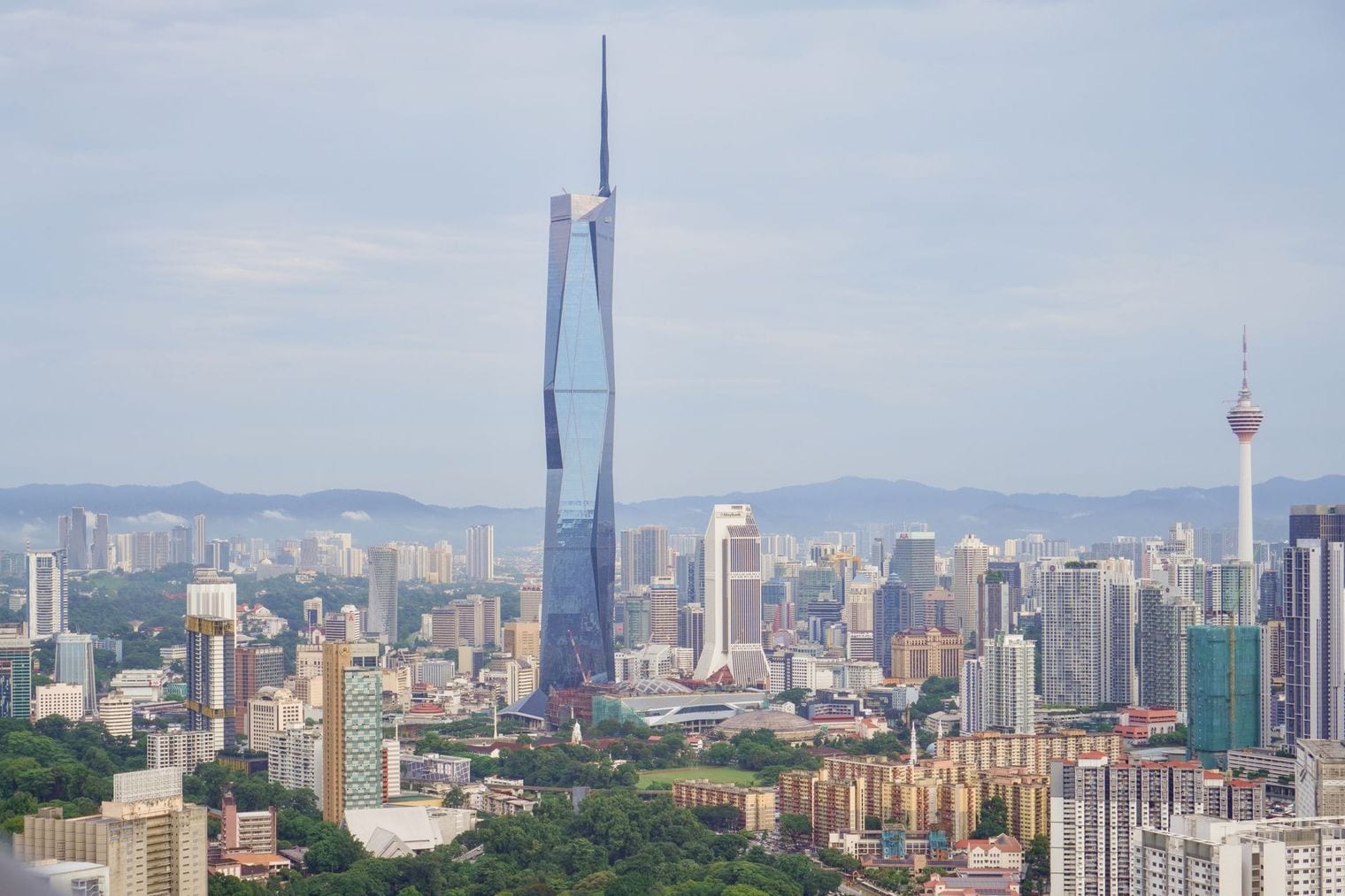
At 678.9 m (2,227 ft), Merdeka 118 is the second-tallest building in the world and the tallest in Southeast Asia, a rank it took on completion in 2023. Its 118 storeys rise as a faceted, angular shaft of glass modelled on the outstretched-hand gesture of Malaysia's independence proclamation, and a long tapering spire carries the final stretch of that height — which is why the tower reads as far slimmer than its bulk suggests.
It stands over Stadium Merdeka, the ground where independence — merdeka — was declared in 1957, and the siting is the whole point: the building is named for what it watches. The View at 118 occupies the upper floors and looks straight across the city to the Petronas Twin Towers, which is the best possible way to grasp what an extra 227 m actually looks like. Kuala Lumpur is the only city on Earth with three entries in this top 21.
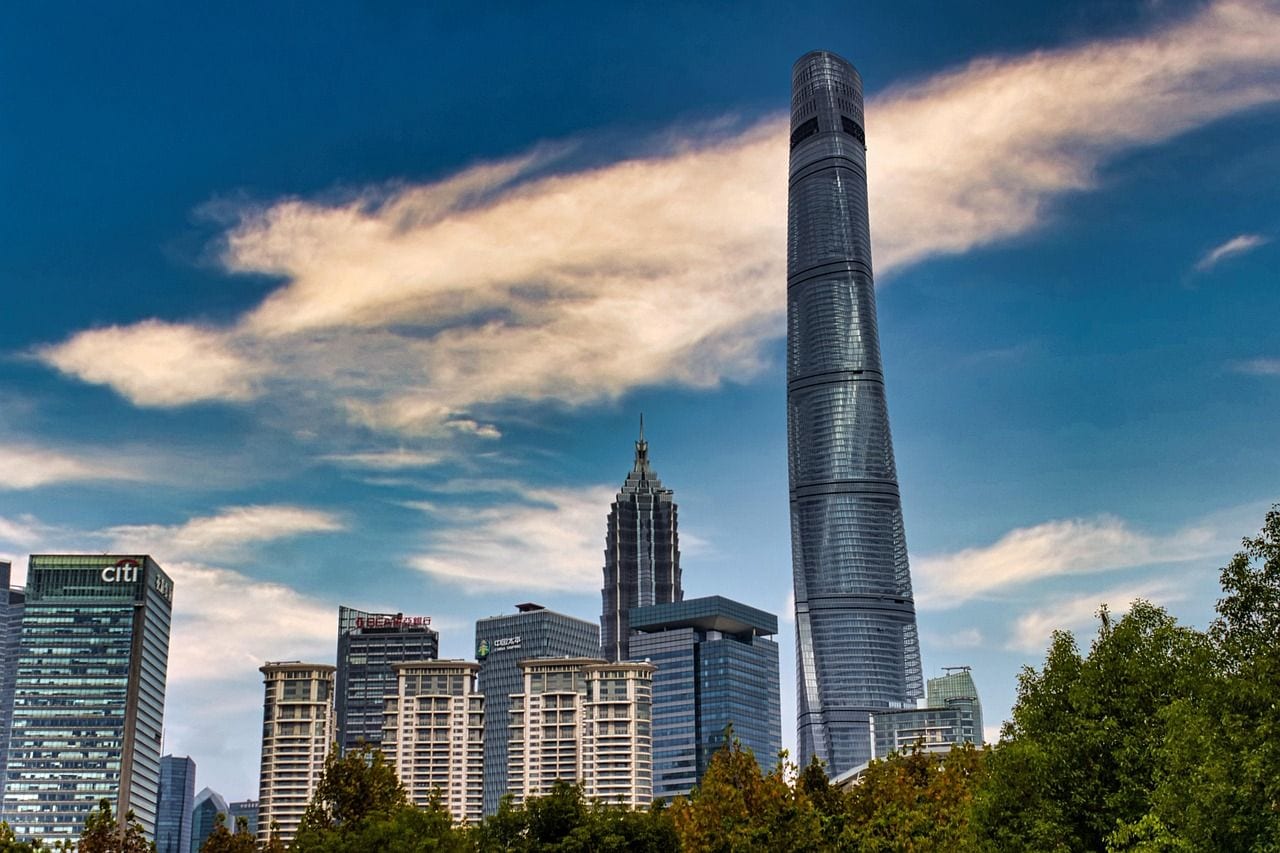
At 632 m (2,073 ft), Shanghai Tower is the tallest building in China and the third-tallest in the world — and the most quietly clever structure on this list. Its glass skin twists roughly 120 degrees as it climbs 128 storeys, a rotation that is engineering rather than styling: the asymmetric spiral breaks up the wind vortices that would otherwise shake a tower this slender, cutting the wind load enough to save thousands of tonnes of steel.
A second, outer facade wraps the whole building, creating nine stacked atrium gardens in the gap between the two skins — sky lobbies with trees in them, buffering the tower thermally. It shares the Lujiazui skyline in Pudong with the Shanghai World Financial Center and the Jin Mao Tower, so three generations of Chinese skyscraper stand within a block of one another. The 118th-floor observation deck is reached by lifts among the fastest ever installed.
At 601 m (1,972 ft), the Makkah Royal Clock Tower is the fourth-tallest building in the world and the tallest in Saudi Arabia, though height is almost the least remarkable thing about it. It is the central tower of the Abraj Al-Bait complex, a cluster of seven towers raised directly over the approach to the Masjid al-Haram, and it exists to house pilgrims — the complex holds one of the largest floor areas of any building on Earth.
The clock faces that give the tower its name are the largest in the world, each roughly 43 m across, mounted on all four sides more than 400 m up and readable from kilometres away across the valley. Lit at night above the Kaaba, they make this the rare supertall whose defining feature is legible from the ground. The tower is a hotel rather than a public observation deck, so most people meet it as the backdrop to the Hajj rather than as a building to visit.
At 599.1 m (1,966 ft), the Ping An Finance Center is the tallest building in Shenzhen and the fifth-tallest in the world — and it was meant to be taller still. The original design carried an antenna spire that would have pushed it past 660 m, but aviation authorities ruled it out and the tower topped out without it. Since architectural height excludes antennas anyway, the decision cost it less on this table than it did in ambition.
What remains is a hard, tapering shaft clad in stainless steel, its corners chamfered into the wind and its weight carried on eight vast megacolumns. The Free Sky observation deck sits on the 116th floor. Shenzhen grew from a scattering of fishing and market villages into a city of millions inside four decades, and this tower — headquarters of an insurance giant — is the most concentrated expression of that speed anywhere in the city.
At 554.5 m (1,819 ft), Lotte World Tower is the tallest building in South Korea and the sixth-tallest in the world, rising alone out of the Jamsil district in a city that had long kept its skyline low. It took years of wrangling to approve — the site sits near a military airfield — and the finished tower answers with a deliberately calm form: a slim cone tapering the whole way up, split by a seam of glass that runs its full height.
The profile is drawn from Korean ceramics and calligraphy, and it reads as a single gesture rather than a stack of floors. Seoul Sky occupies floors 117 to 123 and includes a glass floor set more than 470 m up, which is the detail that separates people who like heights from people who merely think they do. The lower floors hold a mall, a concert hall and an aquarium, so the tower works as a vertical district rather than an office block.
At 541.3 m (1,776 ft), One World Trade Center is the tallest building in the United States and in the Western Hemisphere, and its height is an argument rather than an accident: 1,776 feet, for the year of the Declaration of Independence. That figure only works because architectural height counts the spire, and the spire's status was debated hard before the Council on Tall Buildings and Urban Habitat ruled it a permanent architectural element rather than an antenna.
The tower rises from a windowless concrete base — a blast-resistant plinth, clad to catch the light — and its square footprint chamfers into eight tall triangles, so that halfway up the plan has become an octagon and near the top a square again, rotated 45 degrees. One World Observatory occupies floors 100 to 102. It stands beside the memorial pools set into the footprints of the towers that stood here, and the two are meant to be read together.
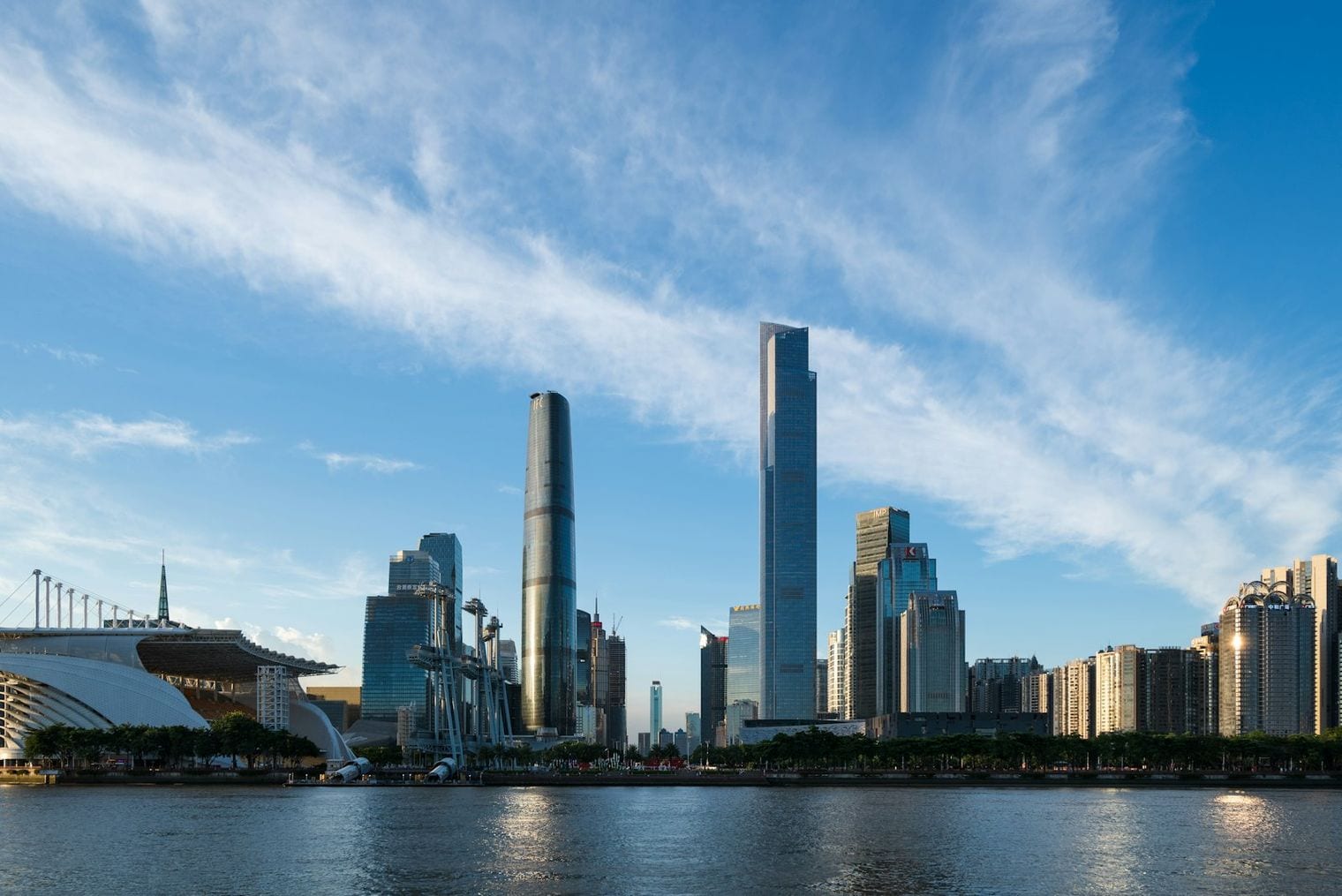
8. Guangzhou CTF Finance Centre
530 m
Source: Wally Yang on Unsplash (illustrative image)
At 530 m (1,740 ft), the Guangzhou CTF Finance Centre is joint-eighth in the world — dead level, to the metre, with the Tianjin CTF Finance Centre that follows it. The two share a developer, most of a name and an exact height, and this list breaks the tie the way the record books do, by completion date: Guangzhou finished first, in 2016, so it takes the higher rank.
The tower steps back four times as it climbs its 111 storeys, and each setback marks a change of use — offices below, then apartments, then a hotel at the top — so the massing is a diagram of what happens inside. It anchors Zhujiang New Town, Guangzhou's built-from-nothing central business district, across from the older Guangzhou International Finance Center. Its lifts are among the fastest anywhere, climbing at roughly 20 m per second.
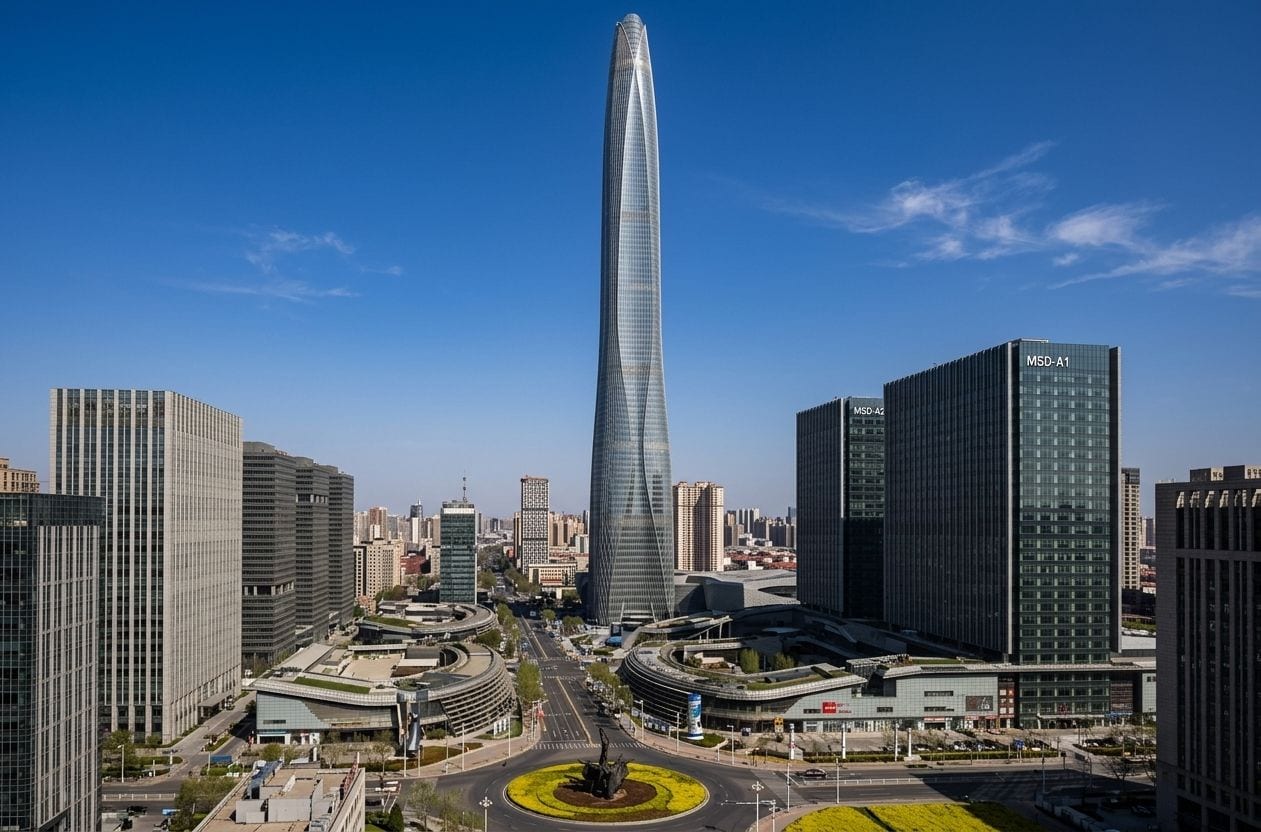
At 530 m (1,740 ft), the Tianjin CTF Finance Centre matches its Guangzhou sibling exactly, and only the three years between their completions separate them here — Tianjin opened in 2019, so it takes the lower rank of the pair. It is the tallest building in the world with fewer than 100 storeys, which sounds like trivia until you do the arithmetic: 97 floors, each with unusually generous ceilings, stacked into the same height that took Guangzhou 111.
The form is a soft, tapering curve rather than a series of steps, drawn taut over eight sloping megacolumns that lean inward as they rise and give the silhouette its slight swell. It stands in Binhai, the coastal district Tianjin built as a new financial centre. The rounded profile is not decoration — it sheds the typhoon winds that come off the Bohai Sea, and it is the reason the tower could be this slender.
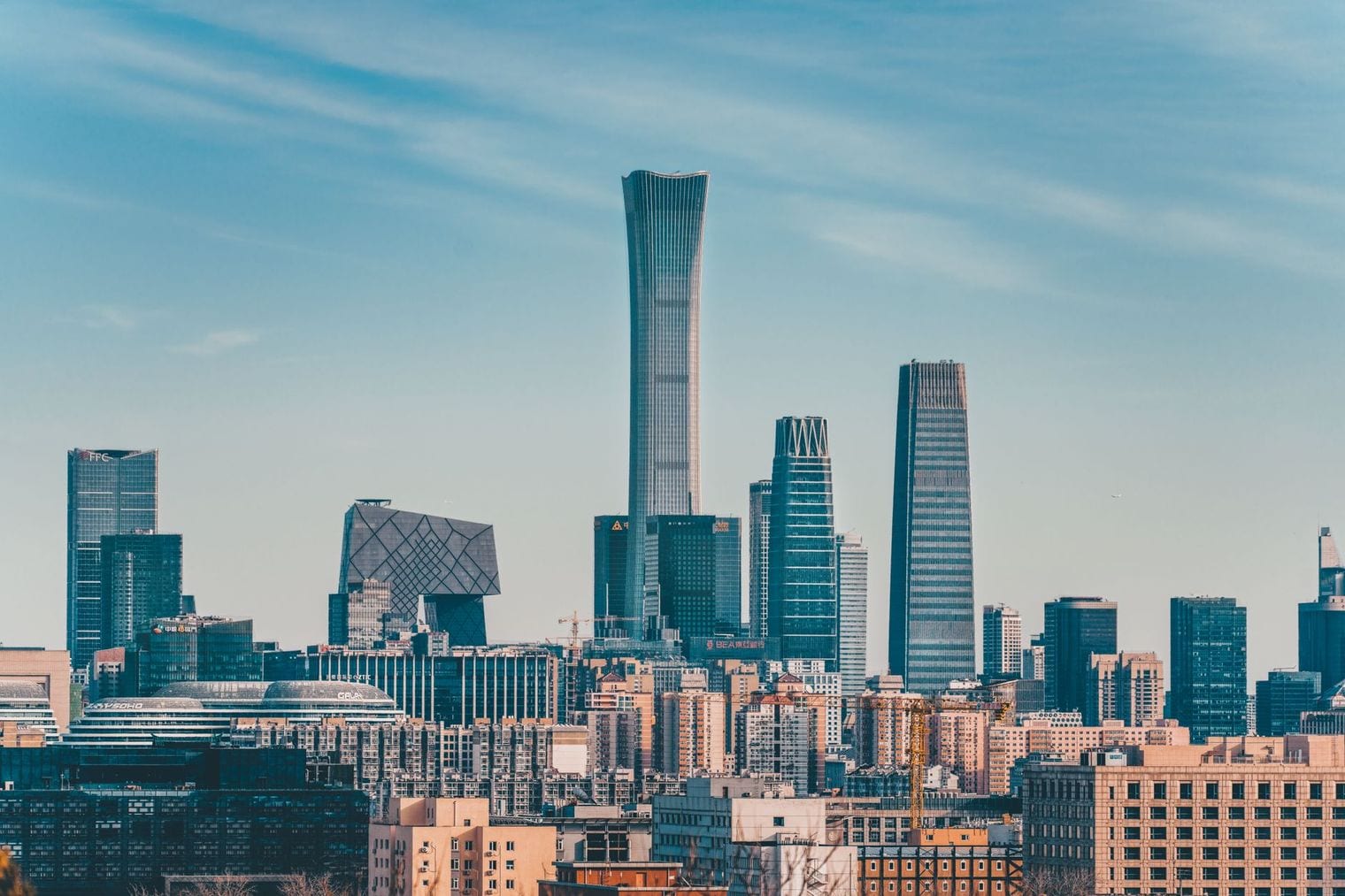
At 527.7 m (1,731 ft), CITIC Tower is the tallest building in Beijing and the tenth-tallest in the world — and the only entry here shaped like a wine vessel. Its profile swells at the base, narrows through the middle and flares open again at the top, tracing the outline of a zun, a bronze ritual vessel used in ancient China. The nickname stuck long before it topped out: nearly everyone calls it China Zun.
The shape is not merely quotation. Beijing sits in an active seismic zone, and the tower's flared base widens exactly where a supertall most needs to resist overturning — a rare case of a symbolic form and a structural one agreeing. It rises more or less alone in the Beijing CBD, at a height the city's planning rules have not let anything else approach, which gives it an isolation the Chinese towers further down this list never get.
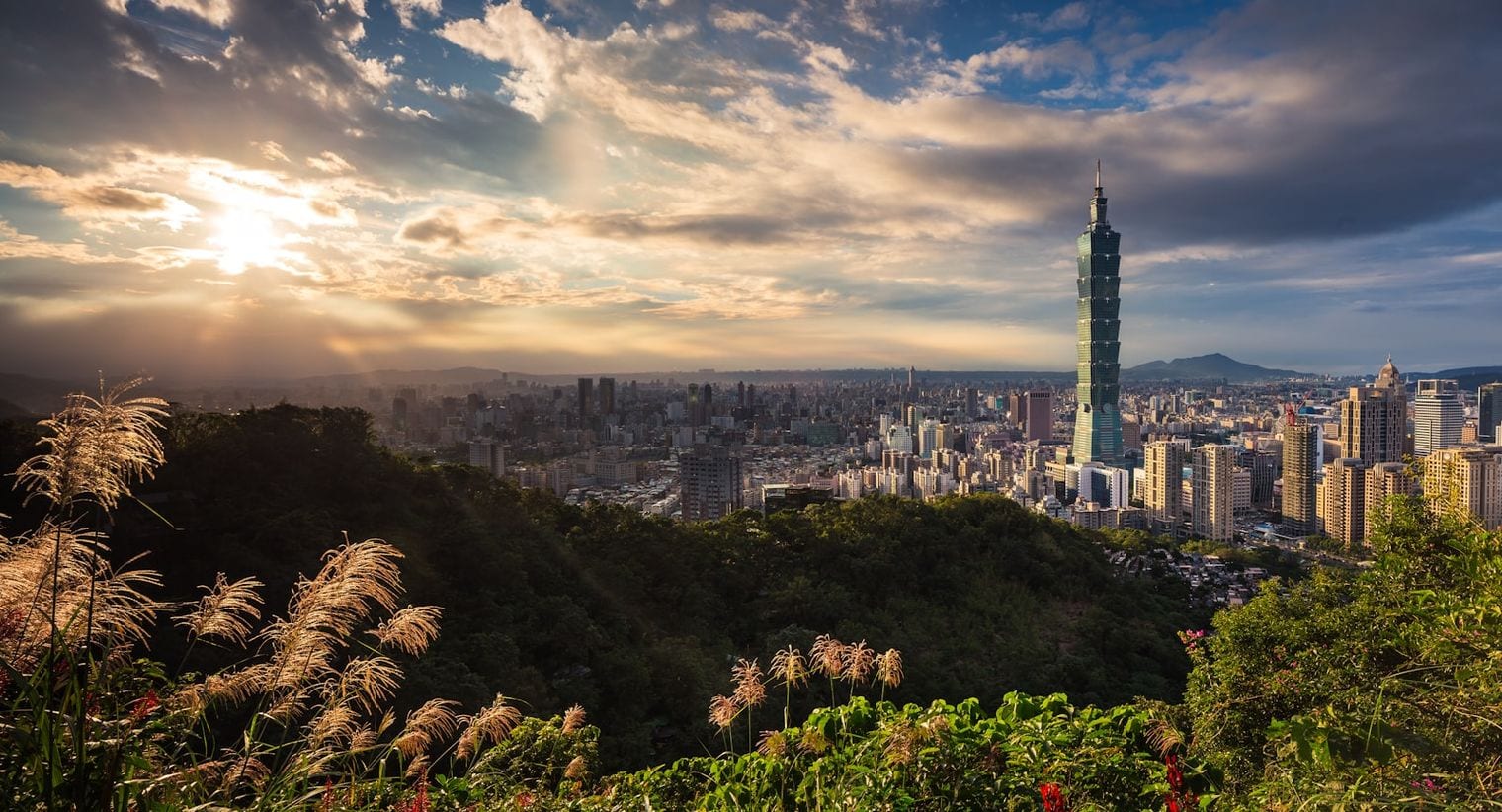
11. Taipei 101
508 m
Source: Thomas Tucker on Unsplash (illustrative image)
At 508 m (1,667 ft), Taipei 101 held the title of world's tallest building from 2004 until the Burj Khalifa took it in 2010, and it was the first building anywhere to pass the half-kilometre mark. Its 101 storeys are grouped into eight inverted-trapezoid segments of eight floors each — eight being the luckiest number in Chinese numerology — stacked so the tower reads as a length of bamboo, or a pile of takeout boxes, depending on your mood.
Taiwan sits on a fault line and in a typhoon corridor, which is why the building's best feature is on show: a 660-tonne steel sphere hangs between the 87th and 92nd floors as a tuned mass damper, swinging against the sway, and it is one of very few such dampers anywhere put on public display. The observatory occupies the 89th and 91st floors, and the New Year fireworks fired off the tower's flanks are the island's defining image of itself.
At 492 m (1,614 ft), the Shanghai World Financial Center is the twelfth-tallest building in the world and, to most of Shanghai, simply the bottle opener. The trapezoid aperture cut through its top exists to relieve wind pressure, and it was supposed to be a circle — a design changed after objections that a round opening over Shanghai echoed the rising sun of the Japanese flag a little too closely, the developer being Japanese.
The tower is a tapered wedge narrowing to a blade, with the aperture punched through the thin end. The 100th-floor Sky Walk crosses the top of that opening on a glass floor, leaving you looking straight down through the gap. It stands directly beside Shanghai Tower and the Jin Mao Tower in Lujiazui, and from across the Huangpu River the three of them read less as separate buildings than as one deliberate composition.
At 484 m (1,588 ft), the International Commerce Centre is the tallest building in Hong Kong, a city whose skyline is otherwise a competition of near-equals. It stands over Kowloon station on reclaimed land in West Kowloon, facing Hong Kong Island across Victoria Harbour, built as the vertical anchor of a district that stacks a railway station, a mall and a park on top of one another.
Sky100 sits on the 100th floor and looks straight back at the harbour, with the Ritz-Carlton occupying the floors above it among the highest hotel rooms in the world. The tower's flanks double as a screen: a nightly light show runs across the facade and syncs with the Symphony of Lights over the water. Its podium sits directly on the Airport Express line, making this the rare supertall you can reach from the airport without touching a road.
At 475.6 m (1,560 ft), the Wuhan Greenland Center is a monument to a decision taken mid-air. It was designed at 636 m — a height that would have placed it third on this list — and construction had already reached the 96th floor when airspace regulations capped the tower and forced a redesign, cutting roughly a quarter of its intended height and swapping the tapering point for a rounded dome.
What got built is still the tallest building in Wuhan and among the tallest in central China: a streamlined, three-lobed shaft with softly rounded corners, standing near the Yangtze in Wuchang. The aerodynamic form was worked out for the original, far taller scheme, which means the tower is more thoroughly wind-engineered than it now has any need to be. Few skyscrapers wear their own change of plan quite so visibly.
At 472.4 m (1,550 ft), Central Park Tower is the tallest residential building in the world — no offices, no hotel, just apartments stacked most of a kilometre into the Manhattan sky. It is the tallest of the pencil towers on Billionaires' Row, the run of ultra-slim condominiums along West 57th Street built to sell one thing: the view south over Central Park.
The tower cantilevers out over its neighbour partway up, widening its floor plates on the park side once it clears the buildings below — an unusually blunt piece of architecture-as-real-estate. Its height was assembled from air rights bought off the surrounding blocks, the mechanism that produced this whole cluster of needles. The Nordstrom flagship occupies the base, which is the only part of the building most New Yorkers will ever set foot in.
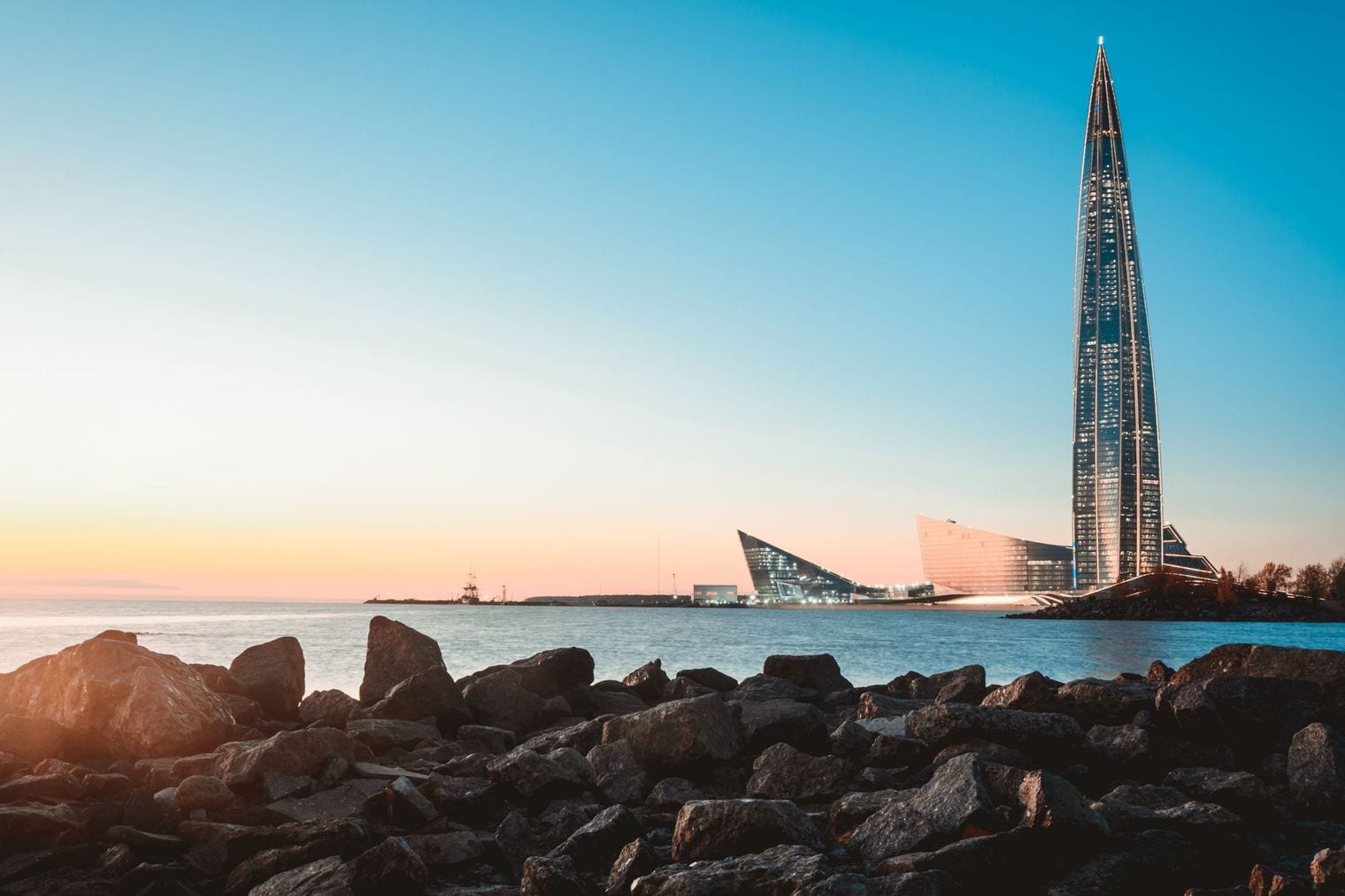
At 462 m (1,516 ft), Lakhta Center is the tallest building in Europe as well as in Russia, and it clears the next entry on this list by less than a single metre. It stands on the Gulf of Finland at the edge of Saint Petersburg, deliberately far from a historic centre whose skyline has been protected for three centuries — the classical core has a height limit, so the city's one supertall was effectively exiled to the water.
The form is five tapering blades that twist 90 degrees as they rise, wrapping a spire that sharpens to a needle, the whole thing glazed in cold faceted glass that takes the Baltic light. It houses the headquarters of Gazprom. Seen from the historic centre it appears as a distant silver splinter on the horizon, which is roughly the compromise its planners were reaching for.
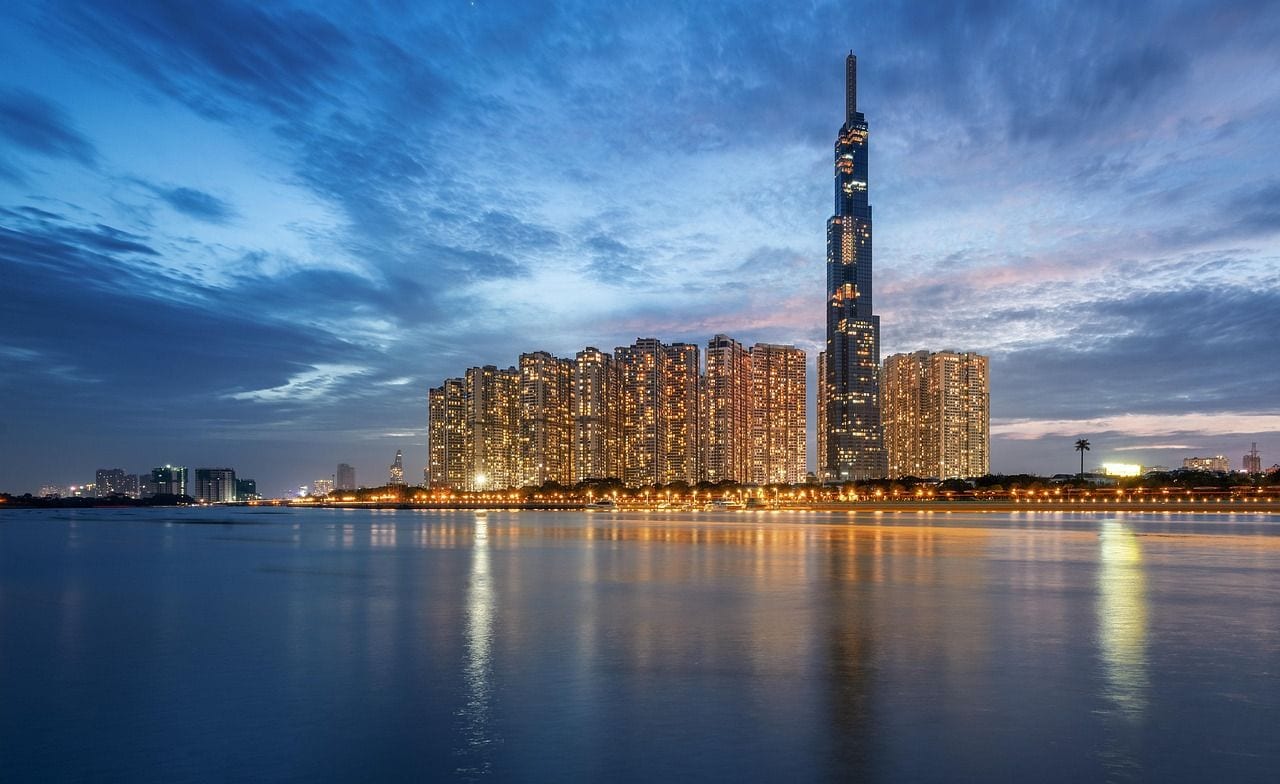
At 461.2 m (1,513 ft), Landmark 81 is the tallest building in Vietnam and sits just 0.8 m — less than the height of a person — behind Lakhta Center, one of the tightest gaps anywhere on this list. Its 81 storeys give it its name, and its silhouette is drawn from a bundle of bamboo: a cluster of shafts of slightly different heights, bound together and stepping up to a single peak.
It rises from Vinhomes Central Park on a bend of the Saigon River in Ho Chi Minh City, at the centre of a development built on ground the city has entirely remade. The observation floors sit at the top of the bundle and look out over a delta city that is almost completely flat — which means Landmark 81 has no competition for the view, and from most of Ho Chi Minh City, no competition for the skyline either.
18. Chongqing International Trade and Commerce Center
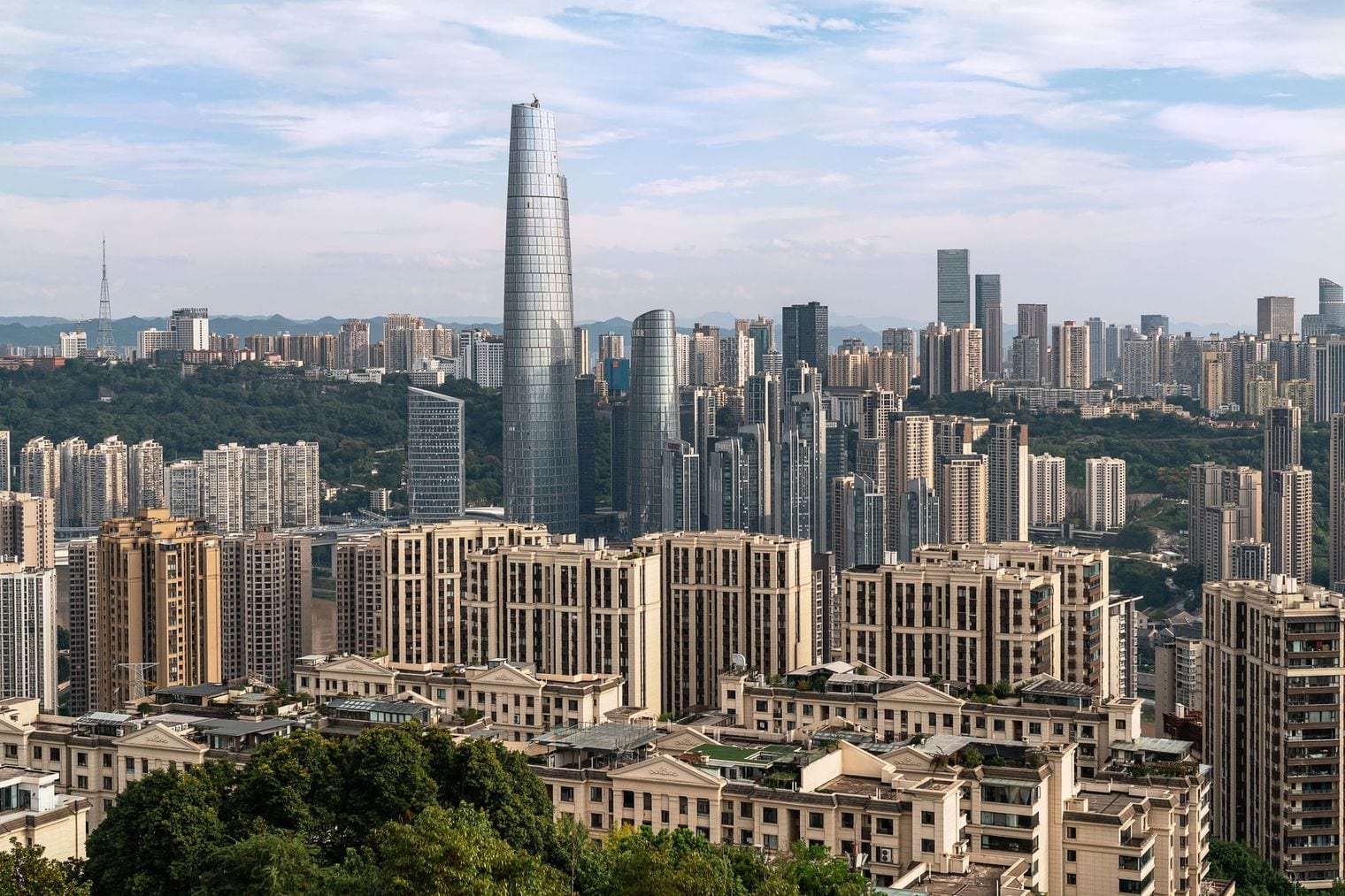
At 458.2 m (1,503 ft), the Chongqing International Trade and Commerce Center is the newest entry on this list and the tallest building in Chongqing, having opened at the end of September 2025 — seventeen years after its groundbreaking. Construction began in earnest in 2012, slowed in 2016, picked up again in late 2019 and topped out in 2022, a stop-start history that fairly summarises Chinese supertall building over the past decade.
The 98-storey tower holds offices, apartments, shops and entertainment space, and its form is drawn from the sailing ships that once crowded the confluence of the Yangtze and Jialing rivers below it. Chongqing is a city built on hills where two great rivers meet, stacked so steeply that its streets run at several levels at once, and its tallest building finally gives all that vertical sprawl a fixed point to be measured from.
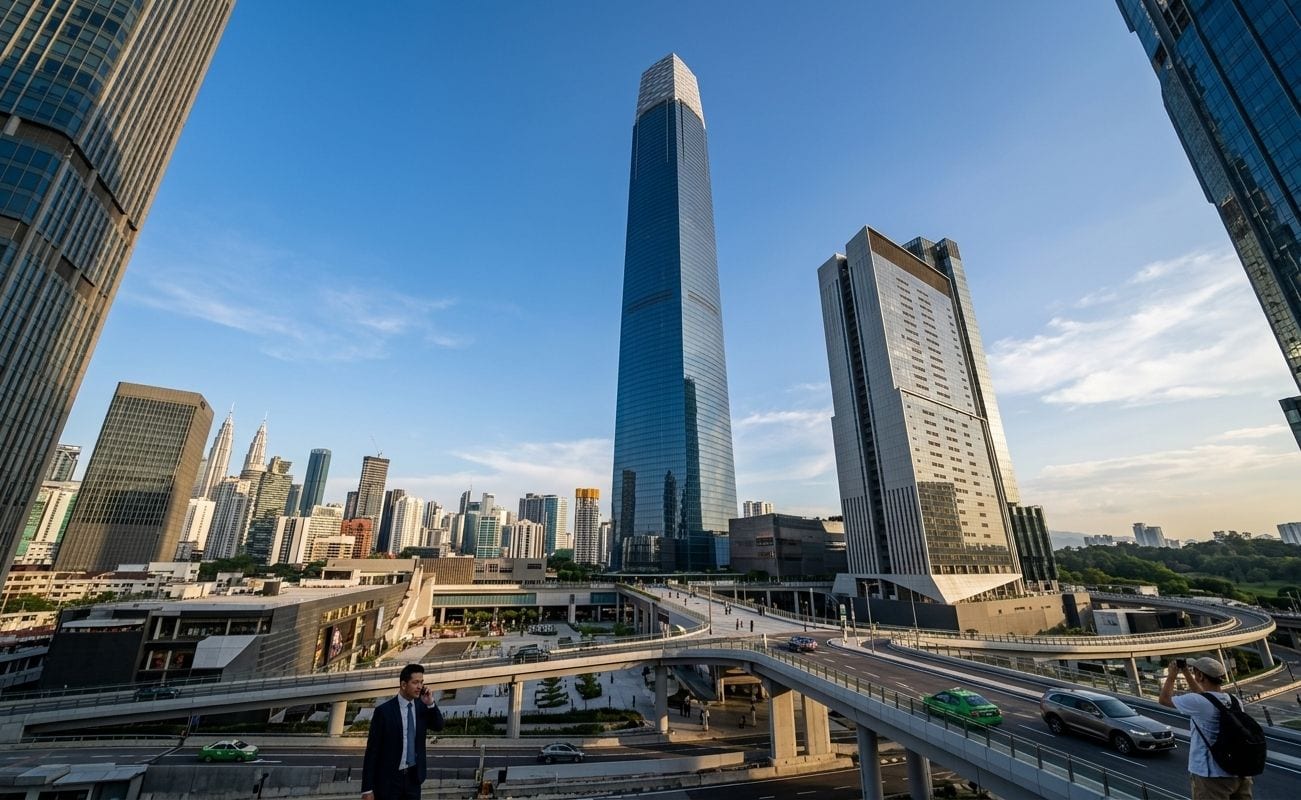
At 453.6 m (1,488 ft), The Exchange 106 is the second-tallest building in Malaysia and carries the most contested height on this list. Its developer first claimed 492.3 m — a figure measured from sea level rather than from the ground — then settled on 453.6 m, measured from an entrance sitting on a podium, which had the convenient effect of edging past the Petronas Twin Towers. The Council on Tall Buildings and Urban Habitat now recognises 453.6 m, and that is the figure this countdown ranks it on.
The dispute matters because the whole table depends on measuring the same thing the same way; move the start line up onto a podium and a tower gains several floors for free. What is not in dispute is the building: 106 storeys at the heart of Tun Razak Exchange, Kuala Lumpur's purpose-built financial district, topped by an illuminated crown roughly 64 m tall that reads as a lantern over the city at night.
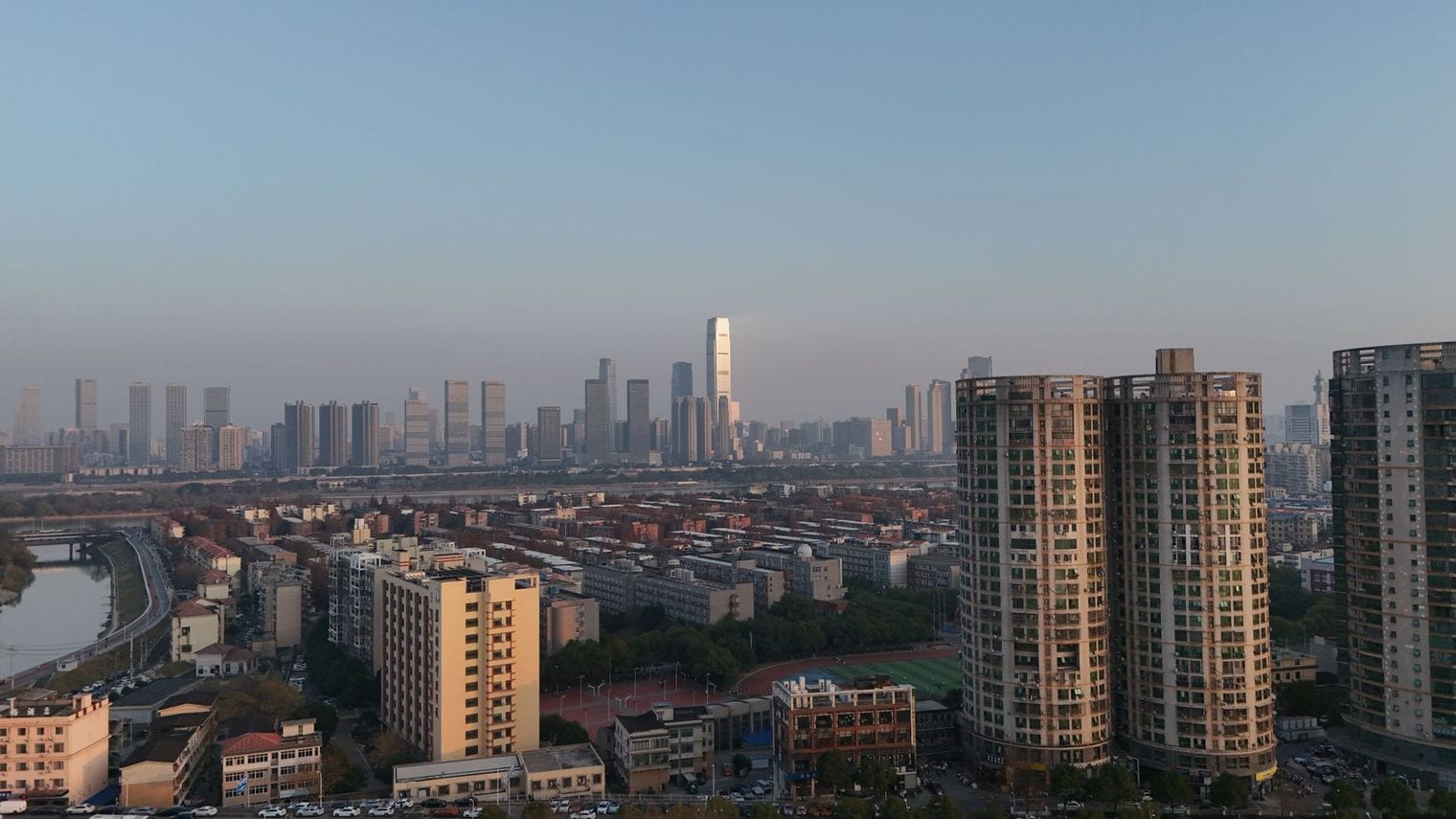
At 452.1 m (1,483 ft), Changsha IFS Tower T1 is the tallest building in Hunan and the twentieth-tallest in the world — a rank it holds by the narrowest margin on this entire list. It stands 0.2 m above the Petronas Twin Towers that follow it. Twenty centimetres, spread across roughly 452 m of building, is the whole of what separates the twentieth-tallest building in the world from the twenty-first.
The tower is the taller half of a two-tower complex sitting on a mall of some 230,000 square metres, with offices through the middle floors and a hotel occupying the narrower plates near the top, where the smaller floor area suits guest rooms better than open-plan desks. Changsha is not a city most people outside China could place on a map, which is the quiet point of this end of the table: the world's twentieth-tallest building stands in a provincial capital many have never heard of.
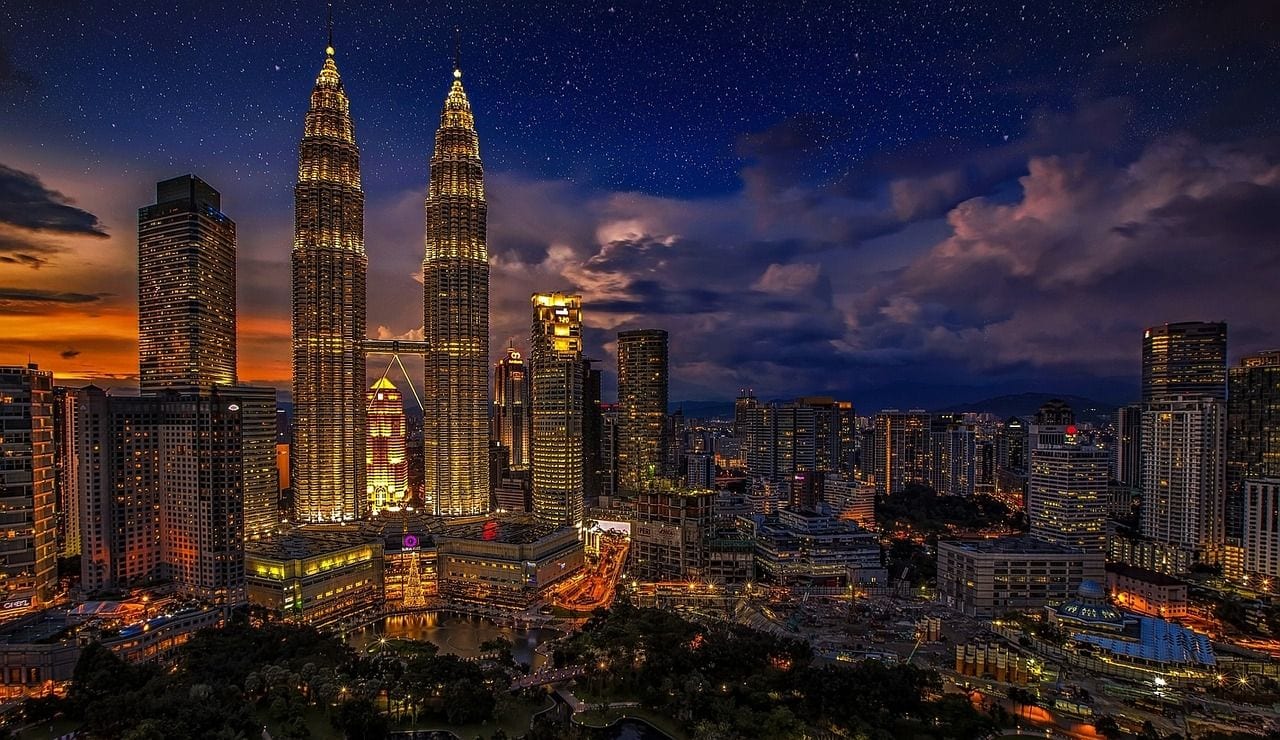
At 451.9 m (1,483 ft) apiece, the Petronas Twin Towers close this countdown twenty centimetres behind Changsha IFS Tower T1 — a margin that would be a rounding error anywhere else, and here is the difference between twentieth and twenty-first. They held the title of world's tallest building from 1998 until Taipei 101 passed them in 2004, and they remain, comfortably, the tallest twin towers ever built.
Both towers are identical, and both are ranked here as a single entry because they are one structure in every sense that matters: a double-decker skybridge links them at the 41st and 42nd floors, around 170 m up, and it is the highest two-storey bridge of its kind. César Pelli's floor plan is an eight-pointed star drawn from Islamic geometric patterns and infilled with arcs, and the steel-and-glass facade was detailed to catch tropical light. Nearly thirty years on, they are still the building the world pictures when it pictures Kuala Lumpur.
FAQ: The World's Tallest Buildings
What is the tallest building in the world?
The Burj Khalifa in Dubai is the tallest building in the world at 828 m (2,717 ft), a title it has held since it opened in 2010. Nothing has come close since. The second-placed Merdeka 118 in Kuala Lumpur reaches 678.9 m, which leaves the Burj Khalifa nearly 150 m clear of the entire rest of the world.
How is the height of a skyscraper measured?
Rankings use height to architectural top, the standard set by the Council on Tall Buildings and Urban Habitat. It runs from the lowest significant open-air pedestrian entrance up to the architectural top, counting spires and parapets but excluding antennas, flagpoles and signage. The distinction matters: an antenna can add tens of metres to a tower without earning it a single place.
Will the Burj Khalifa be beaten?
Almost certainly, by Jeddah Tower in Saudi Arabia, which is designed to pass 1,000 m and become the first kilometre-tall building. Construction stalled for years before restarting in 2025, and the tower had reached roughly 102 floors by 2026. Until it is finished it does not appear on this list, which counts completed buildings only.
Why isn't Tokyo Skytree on the list?
Because it is a tower, not a building. The Council on Tall Buildings and Urban Habitat counts a structure as a building only if at least half its height is occupiable floor space. Tokyo Skytree rises to 634 m, which would place it third here, but it is mostly a broadcast mast with observation decks near the top.
Which country has the most of the world's tallest buildings?
China, by a wide margin: nine of the 21 tallest buildings stand in mainland China — in Shanghai, Shenzhen, Beijing, Guangzhou, Tianjin, Wuhan, Chongqing and Changsha — and Hong Kong adds a tenth. Malaysia is next with three, all in Kuala Lumpur, and the United States has two, both in New York.

 1Burj Khalifa828 mUnited Arab Emirates
 2Merdeka 118678.9 mMalaysia
 3Shanghai Tower632 mChina
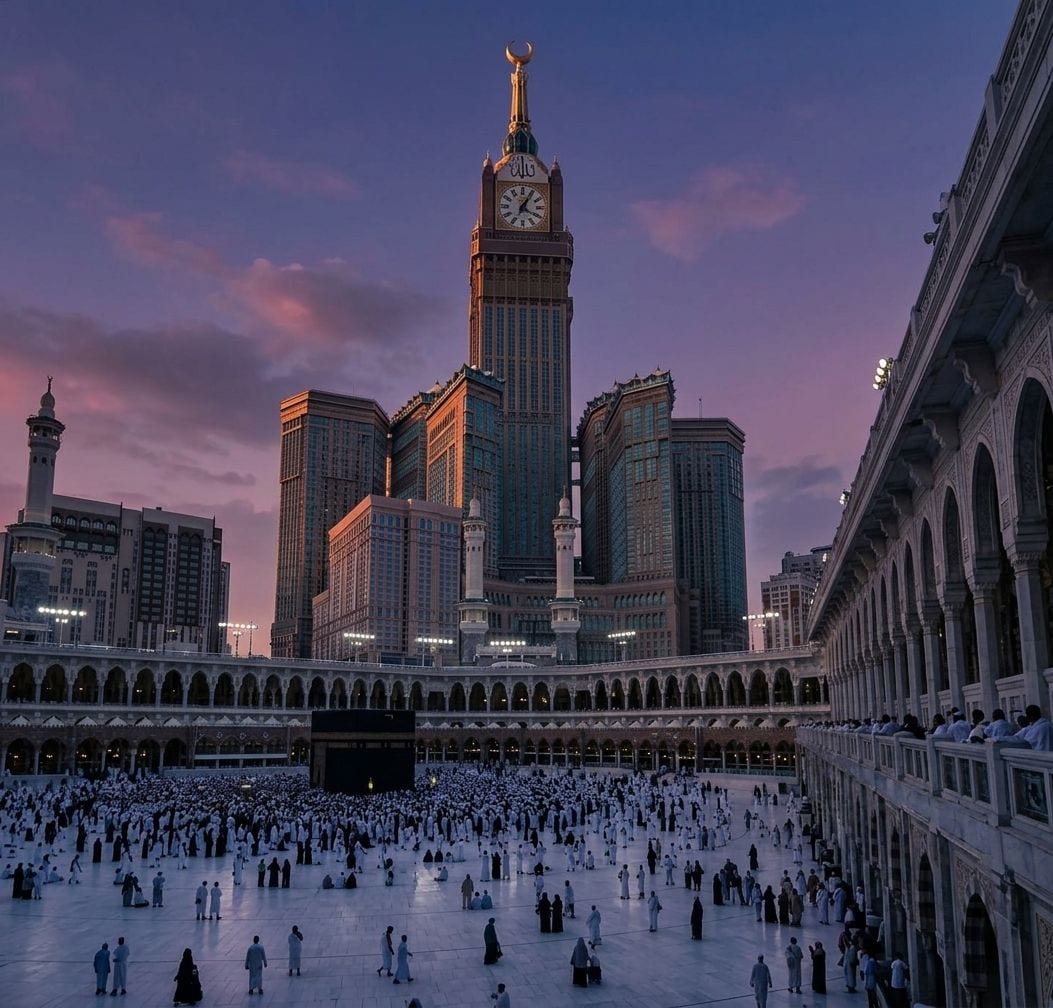 4Makkah Royal Clock Tower601 mSaudi Arabia
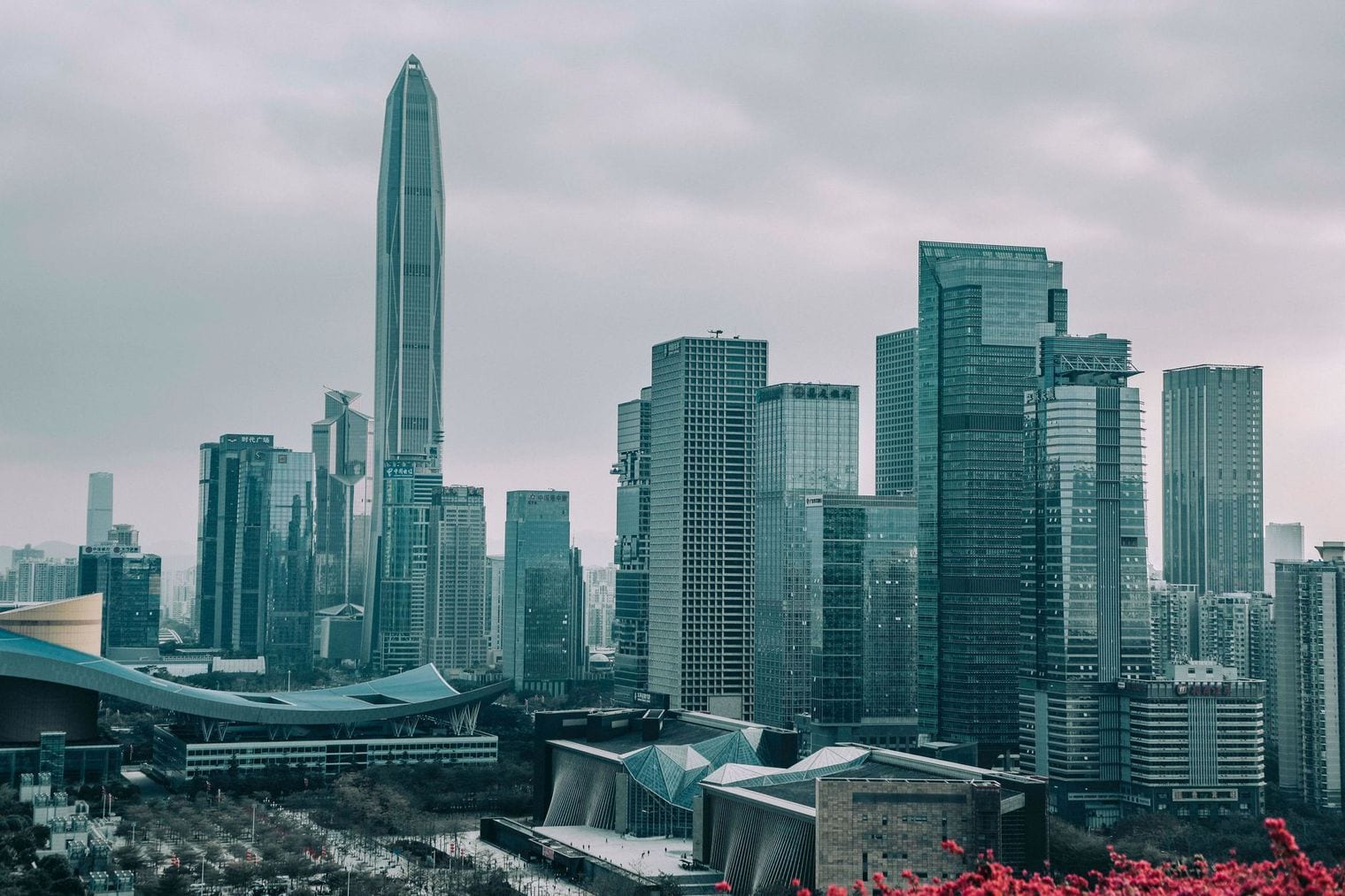 5Ping An Finance Center599.1 mChina
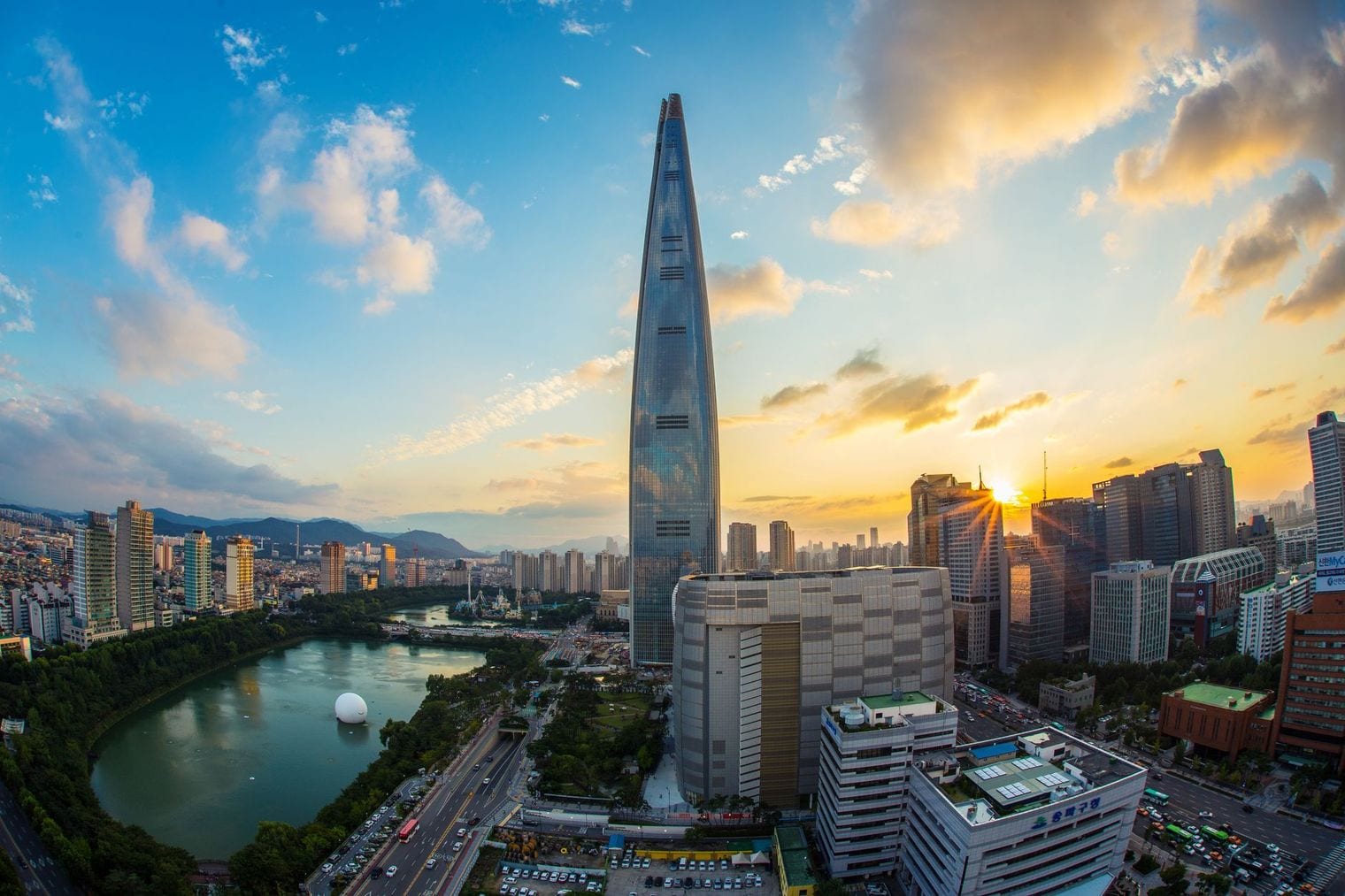 6Lotte World Tower554.5 mSouth Korea
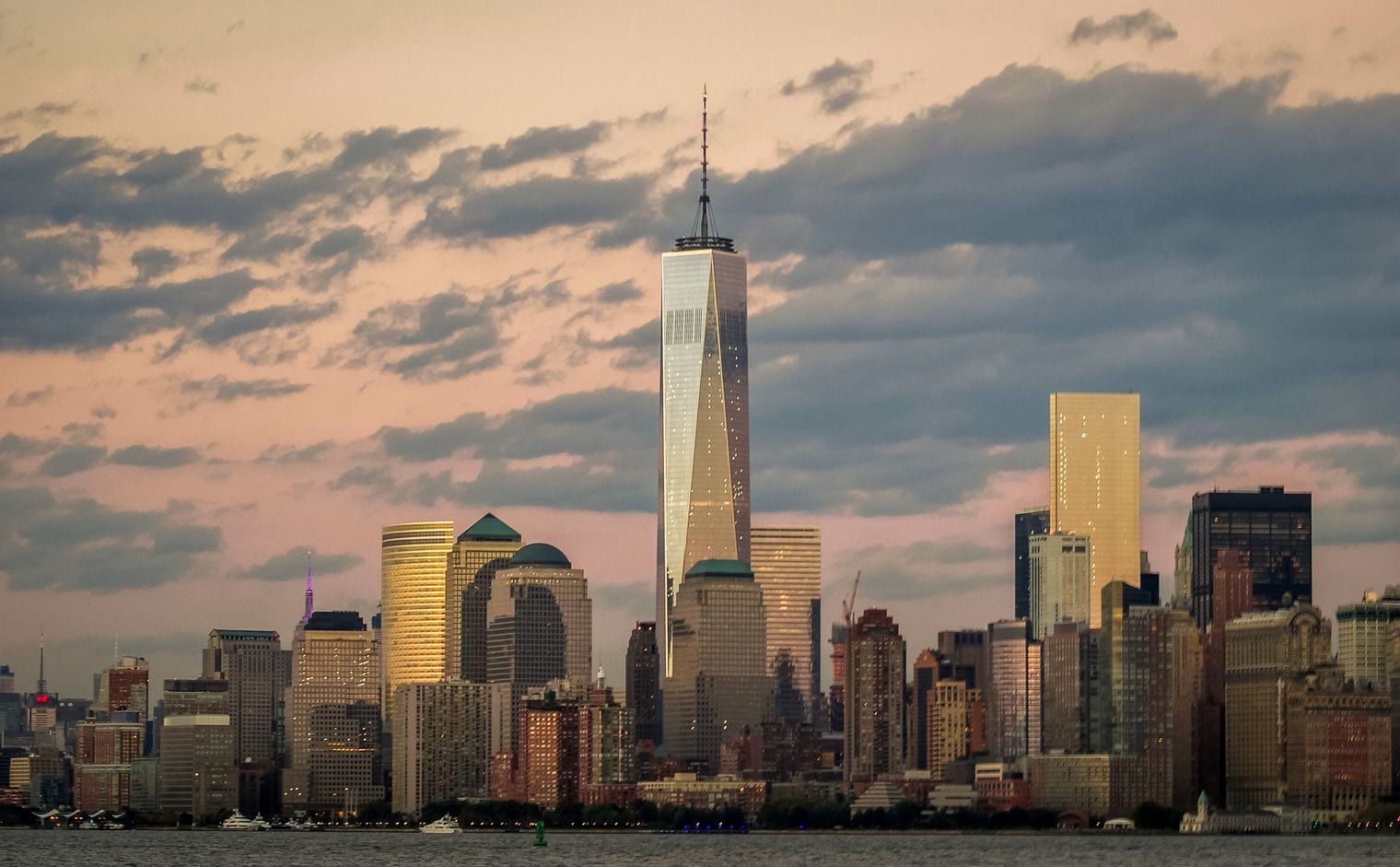 7One World Trade Center541.3 mUnited States
 8Guangzhou CTF Finance Centre530 mChina
 9Tianjin CTF Finance Centre530 mChina
 10CITIC Tower527.7 mChina
 11Taipei 101508 mTaiwan
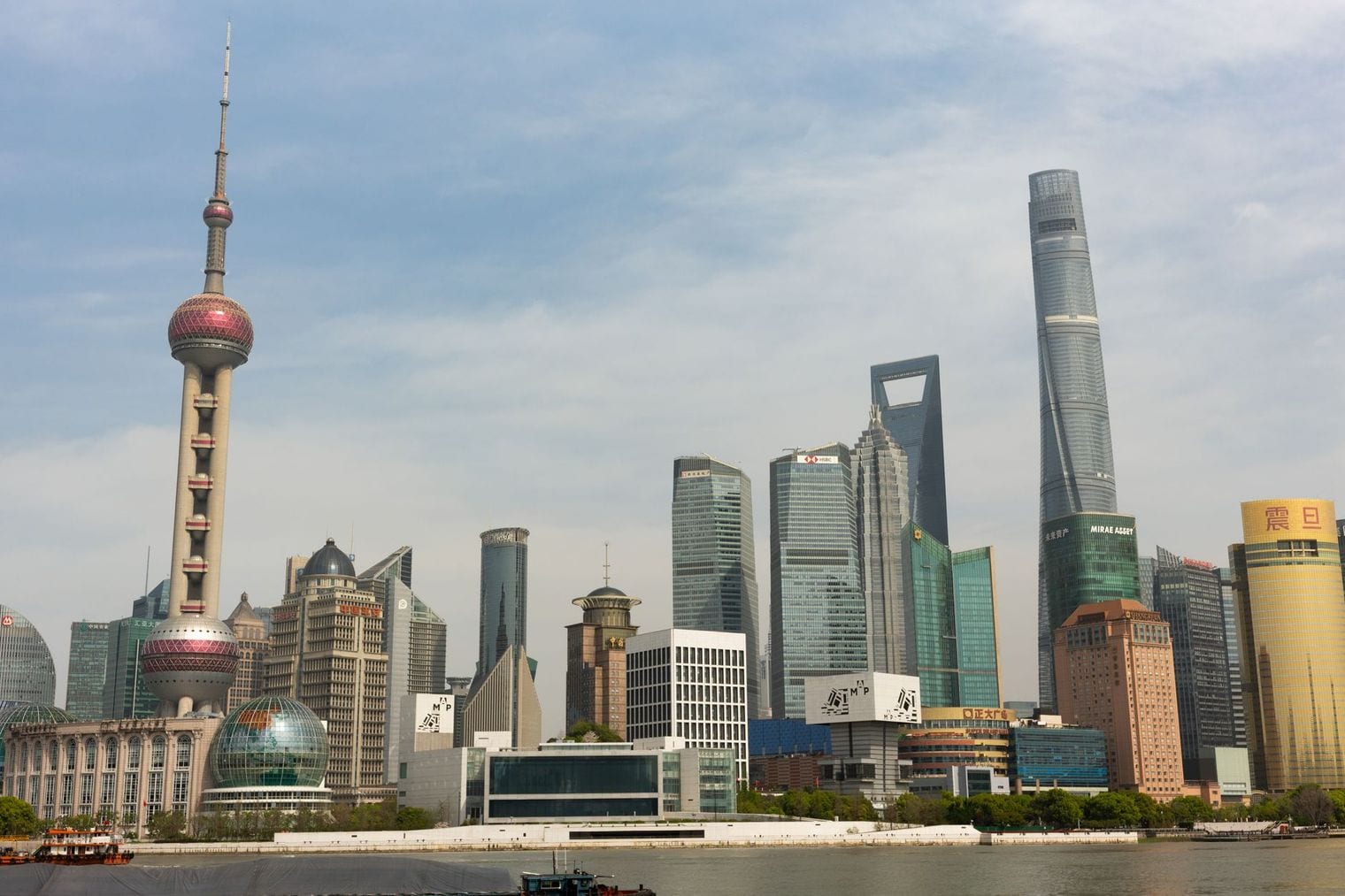 12Shanghai World Financial Center492 mChina
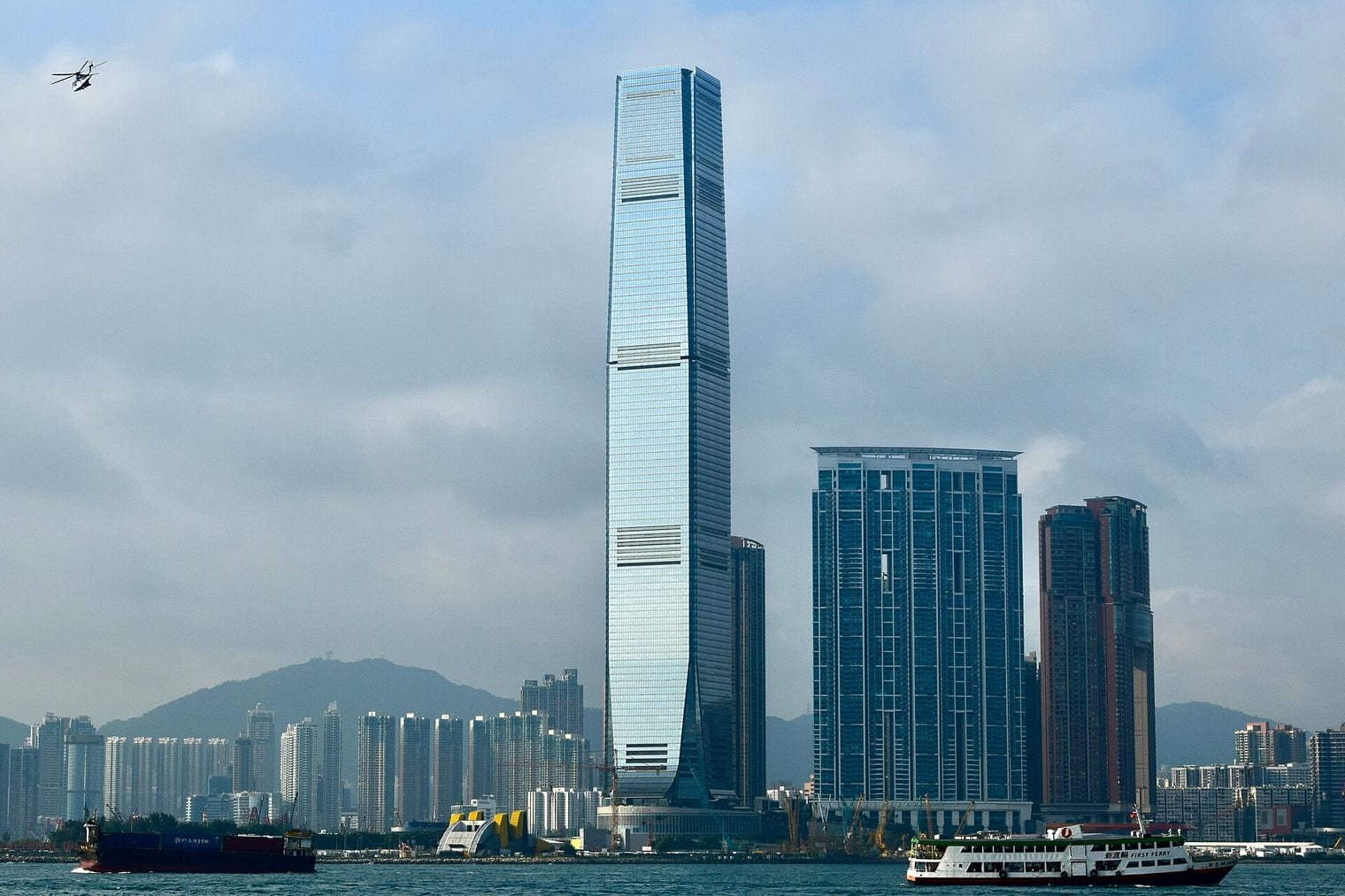 13International Commerce Centre484 mHong Kong
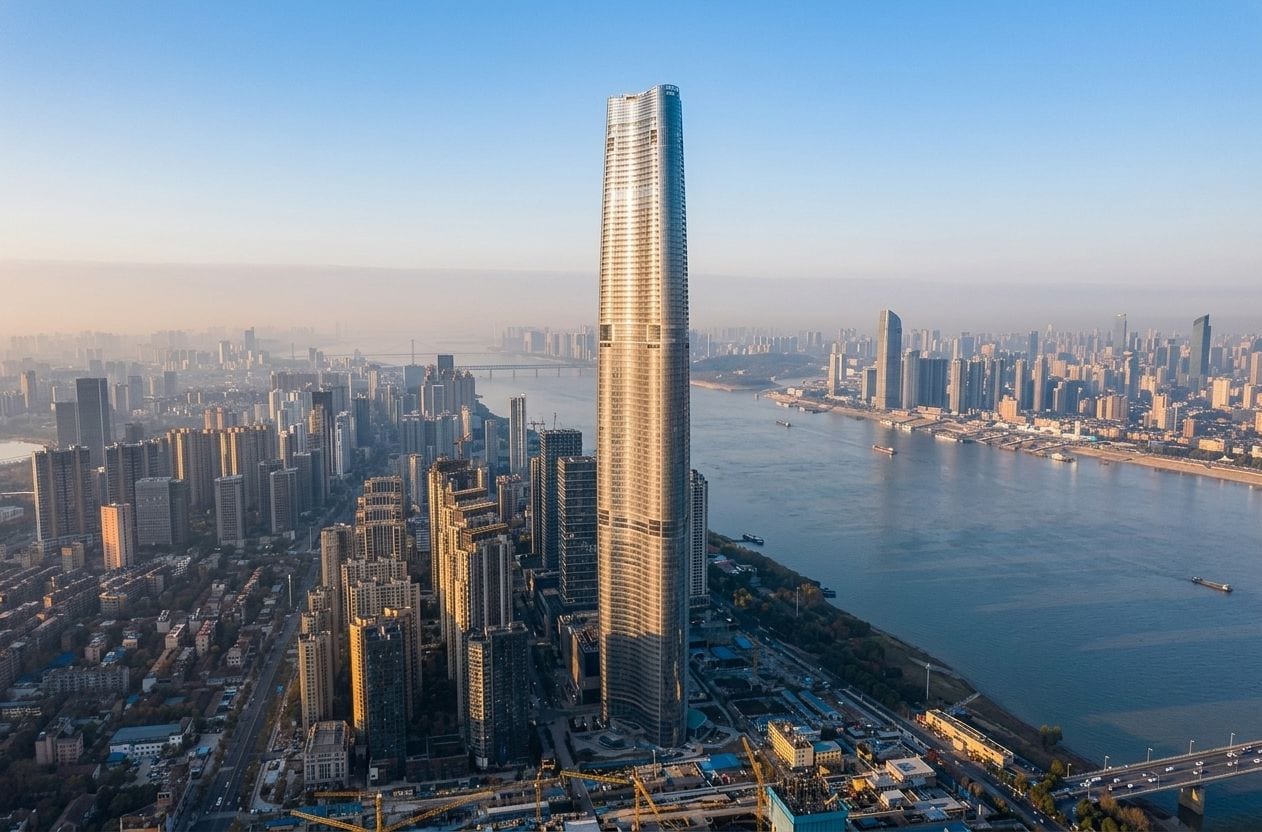 14Wuhan Greenland Center475.6 mChina
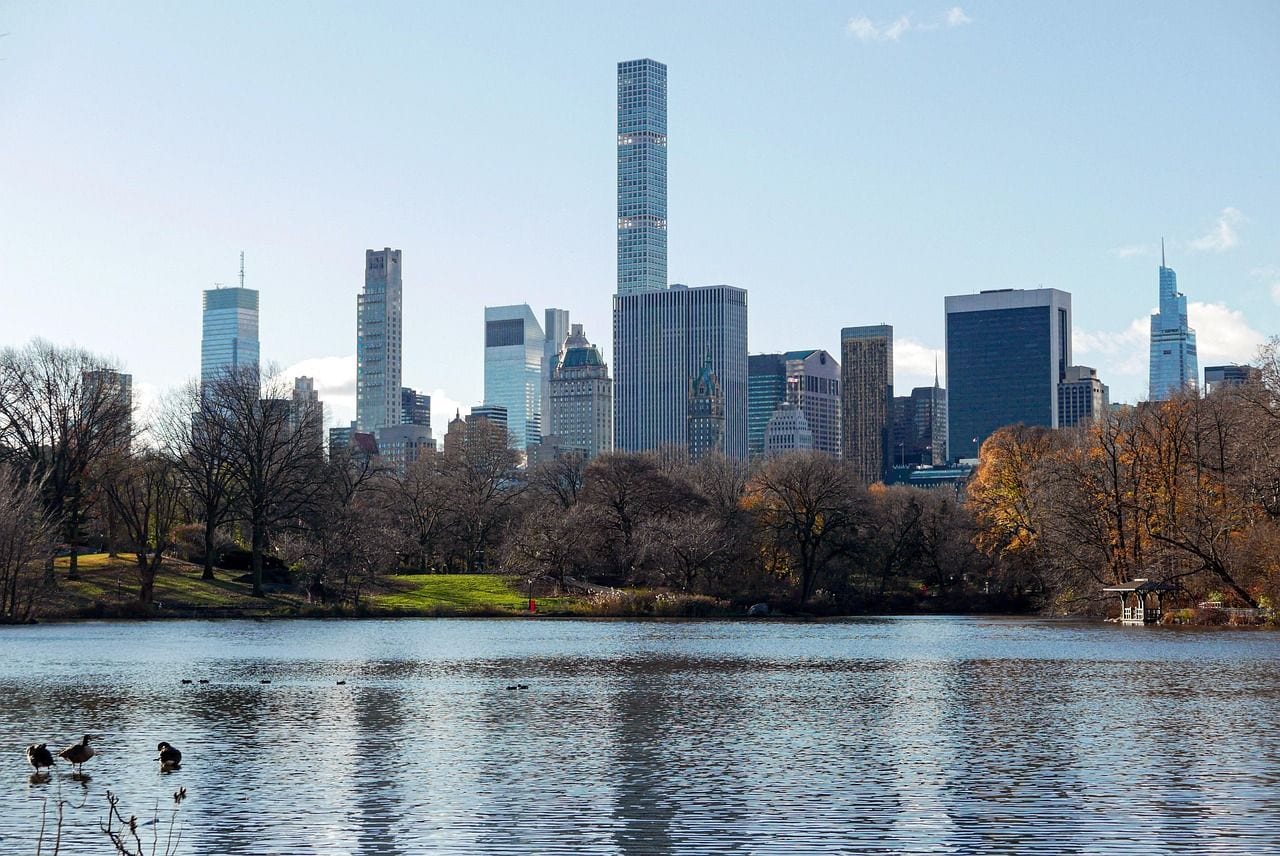 15Central Park Tower472.4 mUnited States
 16Lakhta Center462 mRussia
 17Landmark 81461.2 mVietnam
 18Chongqing International Trade and Commerce Center458.2 mChina
 19The Exchange 106453.6 mMalaysia
 20Changsha IFS Tower T1452.1 mChina
 21Petronas Twin Towers451.9 mMalaysia