Fewer people, more untracked wilderness — Idaho hides the deepest canyon in North America and a river called "No Return."
Idaho is a state of deep wilderness — jagged Sawtooth peaks, the country's deepest river gorge at Hells Canyon, and the lava fields of Craters of the Moon — stitched together by the Snake River as it carves across the south. From the lake resorts of the Panhandle to the Yellowstone-Teton gateway in the east, it rewards anyone happy to drive scenic distances. Use this hub to plan your trip: browse our city guides below, or read on for the regions, seasons and road trips that tie the state together.
Known for
Sawtooth peaks, whitewater & potatoes
Best for
Rafting, hiking, skiing & lakes
Capital
Boise
Main gateway
Boise Airport (BOI)
Time zone
Mountain (MT); Pacific (PT) in the Panhandle
Trip planner
Plan your trip to Idaho
Best time to visit — season by season
Spring
Mar–May
Snowmelt swells the Salmon and Snake for the start of rafting season, and the desert around Twin Falls greens up. Mountain passes and high trails often stay snowbound into June, so plan lower and drier.
Summer
Jun–Aug
Peak season across the state: warm, dry days open the Sawtooth trails, the whitewater rivers and the Panhandle lakes. Southern valleys and the Snake River Plain can push into the 90s°F, while the high country stays cool and the nights crisp.
Fall
Sep–Nov
A quiet, golden window — aspens and larches turn gold in the mountains, the crowds thin and Shoshone Falls settles to a gentler flow. First snows dust the peaks by late autumn, so mountain weather can turn quickly.
Winter
Dec–Feb
Ski season, with famous dry powder at Sun Valley, Schweitzer above Sandpoint and Bogus Basin near Boise. Southern valleys stay cold and often clear, while mountain highways demand winter tyres and a check on pass conditions.
Regions of Idaho
The Panhandle (the north)
Idaho's lake country on Pacific Time, where Coeur d'Alene and Sandpoint sit on glacial lakes beneath forested peaks, with Schweitzer's ski slopes and the college town of Moscow nearby.
Central mountains & the Sawtooths
The wild heart of the state, where the Sawtooth National Recreation Area rises above Stanley and Redfish Lake, the resort town of Sun Valley anchors Ketchum, and the Salmon 'River of No Return' cuts through vast roadless wilderness.
Southwest & the Boise area
The populated corner around the capital, where Boise pairs its greenbelt and foothills with day trips to the wine country of the Snake River Valley and the launch point for Hells Canyon to the west.
Magic Valley & the south-central plain
Snake River canyon country, where Twin Falls overlooks the plunging Shoshone Falls and the Perrine Bridge, with the lava landscape of Craters of the Moon and the granite towers of City of Rocks within reach.
Eastern Idaho & the Yellowstone-Teton gateway
The high plateau on the way to the parks, where Idaho Falls sits on the Snake River as the western basecamp for Yellowstone and the Tetons, with the Mesa Falls scenic byway close by.
Getting around
A rental car is essential: Idaho is large, thinly populated and threaded with mountains, so the towns and wild places we cover are spread far apart and barely served by transit. Boise Airport is the main gateway for the south and centre, while the Panhandle in the north is often reached more easily via Spokane in neighbouring Washington. Distances between fuel stops can be long in the mountains and along the Salmon River country, and some scenic passes close or require winter tyres in the cold months — fuel up and check road conditions before leaving the last town. Note the time-zone line, too: the northern Panhandle runs on Pacific Time while the rest of the state is on Mountain Time.
The highlights Idaho's signature sights & road trips
Idaho's signature draws
Sawtooth Mountains A wall of granite spires above Stanley and Redfish Lake, at the centre of the Sawtooth National Recreation Area.Basecamp: Stanley
Sun Valley & Ketchum Idaho's original resort town — dry-powder skiing in winter, trails and festivals in summer.Basecamp: Ketchum
Craters of the Moon A stark national monument of black lava flows, cinder cones and caves on the Snake River Plain.
Hells Canyon The deepest river gorge in North America, carved by the Snake River along the Oregon border.
Lake Coeur d'Alene The Panhandle's glacial resort lake, framed by forest and cruised from the town of the same name.
Suggested routes
Sawtooth Scenic Loop
3–4 days
The classic central-Idaho drive, climbing from the capital into the Sawtooth high country and back, with hot springs, alpine lakes and mountain towns along the way.
Boise — fly in, pick up the car
Ketchum / Sun Valley — resort-town basecamp
Galena Summit — the pass into the Sawtooth Valley
Stanley & Redfish Lake — under the Sawtooth peaks
Boise — loop back down the Payette River
Snake River South
3–4 days
A southern run along the Snake River Plain, linking the capital's foothills to the Magic Valley's canyon, waterfalls and otherworldly lava fields.
Summer, roughly late June through September, is the classic window — that's when the Sawtooth trails, the whitewater rivers and the Panhandle lakes are all fully open, and the high country stays cool. Spring brings the biggest whitewater as the snow melts, autumn is quieter and golden in the mountains, and winter is ski season at Sun Valley, Schweitzer and Bogus Basin.
How many days do you need in Idaho?
A focused trip to one region — the Sawtooths and Sun Valley, or the Panhandle lakes — works well in three to four days. Linking the south, the central mountains and the north into one drive comfortably takes a week or more, since the distances between them are long and worth taking slowly.
Do you need a car in Idaho?
Yes. Idaho is large, mountainous and thinly served by public transit, so the towns and wild places worth visiting are spread far apart and best reached by rental car. Most southern trips start from Boise Airport, while the northern Panhandle is often reached more easily by flying into Spokane, Washington, just over the border.
What is Idaho best known for?
Idaho is famous for its wilderness — the jagged Sawtooth Mountains, the whitewater of the Salmon 'River of No Return', and Hells Canyon, the deepest river gorge in North America — along with the resort town of Sun Valley, the lava fields of Craters of the Moon, Shoshone Falls near Twin Falls, and, of course, its potatoes.
Why is part of Idaho on a different time zone?
Idaho straddles the line between Mountain and Pacific time, with the boundary running roughly along the Salmon River. Most of the state, including Boise, Idaho Falls and Twin Falls, runs on Mountain Time, but the northern Panhandle — Coeur d'Alene, Sandpoint, Moscow and Lewiston — is on Pacific Time, one hour behind. It's worth double-checking your clock if you're driving between the north and south of the state.
Can you visit Yellowstone and the Tetons from Idaho?
Yes — eastern Idaho is a common and often cheaper basecamp for the parks. Idaho Falls and the towns near the Snake River sit within a couple of hours of Yellowstone's western approaches and the Teton range, making the east of the state a practical gateway if you'd rather not stay inside the parks themselves.
Is Shoshone Falls really taller than Niagara?
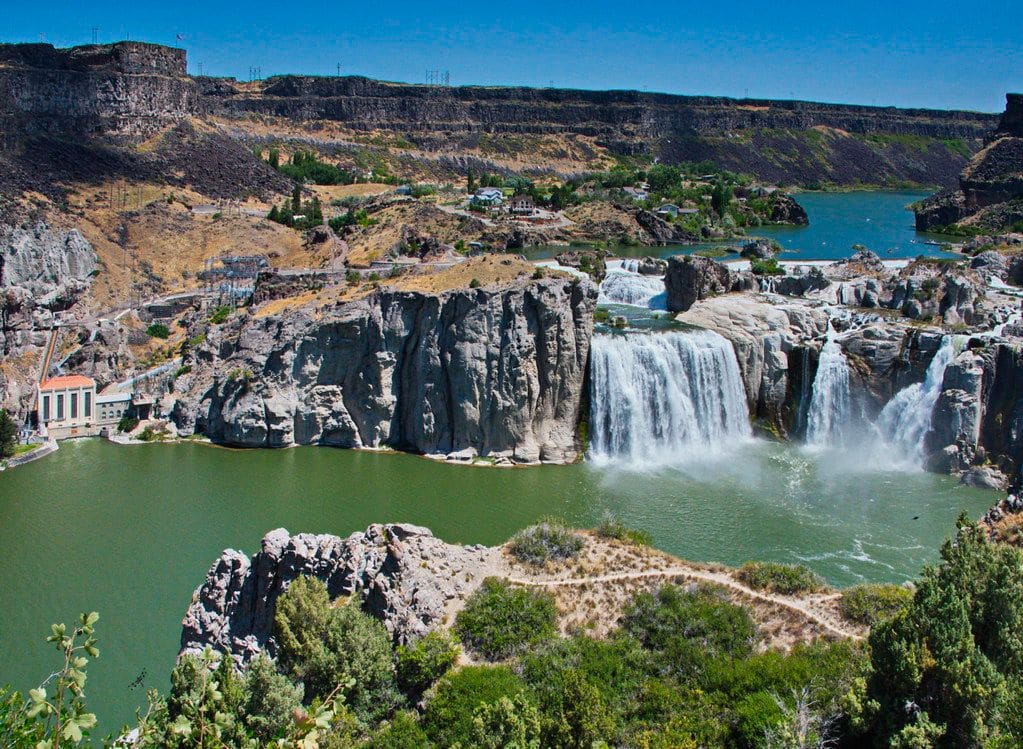
It is, by drop. Shoshone Falls on the Snake River near Twin Falls plunges further than Niagara, which earns it the nickname 'the Niagara of the West'. Its flow is seasonal, though: it's most dramatic in spring and early summer when snowmelt fills the river, and gentler by late summer once upstream irrigation draws the water down.
What outdoor activities is Idaho good for?
Idaho is a whitewater and mountain state above all. It offers some of the best rafting in the country on the Salmon and Snake rivers, hiking and backpacking in the Sawtooths and the vast Frank Church wilderness, world-class dry-powder skiing in winter, and boating and swimming on the deep glacial lakes of the Panhandle in summer.
We use cookies to analyse site traffic and improve your experience.
You can accept or reject analytics cookies. See our Cookie Policy.