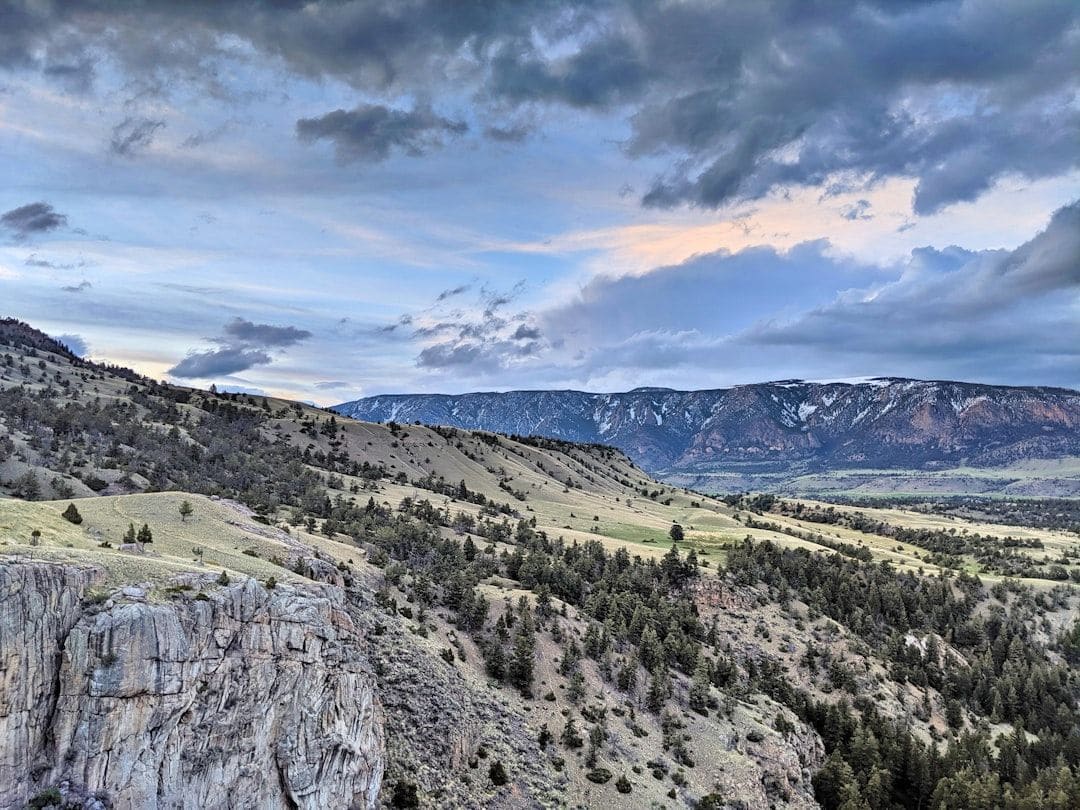
Two of America's greatest national parks sit shoulder to shoulder here, ringed by ranch country where the West still feels wide open.
Wyoming is the least-populous state and the one that feels most like the open West — geyser basins and wolf-country valleys in Yellowstone and Grand Teton, the granite spires of the Wind River Range, the lone monolith of Devils Tower and the ski slopes and cowboy bars of Jackson Hole. Use this hub to plan your trip: browse our Wyoming city guides below, from the Yellowstone gateway of Cody to the North Platte river town of Casper.
Known for
Yellowstone, Tetons & cowboy country
Best for
National parks, wildlife & skiing
Capital
Cheyenne
Main gateway
Jackson Hole (JAC) & Casper (CPR)
Time zone
Mountain (MT)
Trip planner
Plan your trip to Wyoming
Best time to visit — season by season
Spring
Apr–May
A shoulder season of muddy trails and lingering snow at altitude. Yellowstone's interior roads reopen to cars in stages through April and May, wildlife drops down to the greening valleys with their newborns, and the lower plains around Casper and Cheyenne warm first.
Summer
Jun–Aug
Peak season, and the only stretch when the high country is fully open — every Yellowstone and Teton road, the Beartooth Highway above Cody and the Wind River trails. Days are warm and dry, but afternoon thunderstorms build over the mountains and nights turn cold at elevation.
Fall
Sep–Oct
A superb window: thinning crowds, golden aspen and cottonwood, bugling elk in the Tetons and crisp, clear days. High passes like the Beartooth can close with early snow, so this is the time to move before winter shuts the mountains down.
Winter
Nov–Mar
Deep, cold and snowy. Jackson Hole becomes a world-class ski town while most of Yellowstone's roads close to cars, reachable only by snowcoach and snowmobile — the season to see bison steaming in the geyser basins. The plains get bitter wind and blowing snow.
Regions of Wyoming
Yellowstone & the northwest
Wyoming's headline corner, where Yellowstone's geysers and wildlife meet the granite peaks of Grand Teton. Cody guards the east entrance with its Buffalo Bill legacy and the Beartooth Highway, while Jackson anchors the Tetons to the south.
Jackson Hole & the Tetons
The valley below the Teton Range, where Jackson pairs a boardwalk cowboy town with ski resorts, the National Elk Refuge and quick access to Grand Teton and Yellowstone's south gate.
Wind River Country (central-west)
Wyoming's alpine backbone, where the Wind River Range holds the state's highest peaks and Gannett Peak, ringed by Lander, Pinedale, Dubois and the Wind River Indian Reservation.
Central plains & the North Platte
The wide middle of the state, where Casper sits on the North Platte River astride the old emigrant trails, with Independence Rock, Alcova and the Bighorn Mountains rising to the north.
The southeast & Cheyenne
The high plains gateway from Colorado, where the capital Cheyenne hosts Frontier Days and the Snowy Range and Vedauwoo rocks rise west toward Laramie.
The Black Hills & Devils Tower (northeast)
Wyoming's quiet corner of pine-covered hills and prairie, crowned by Devils Tower National Monument, the country's first national monument, near Sundance and the South Dakota line.
Getting around
A rental car is essential: Wyoming is vast, thinly populated and barely served by transit, and the marquee sights are hours apart on two-lane highways. Jackson Hole Airport, the only commercial airport inside a US national park, is the closest gateway to the Tetons and Yellowstone's south; Casper and Cheyenne serve the centre and southeast. Distances are long and towns sparse, so fuel up before crossing open country, watch for wildlife and snow on mountain passes, and note that high routes like the Beartooth Highway close through winter.
The highlights Wyoming's signature sights & road trips
Wyoming's headline sights
Yellowstone National Park The world's first national park — Old Faithful, the Grand Prismatic Spring, canyons and roaming bison, elk and wolves.Basecamp: Cody
Grand Teton National Park The abrupt granite wall of the Teton Range above Jackson Hole's lakes, moose and cottonwood flats.
Devils Tower National Monument America's first national monument, a lone 867-foot column of fluted rock rising from the northeastern plains.
Jackson Hole A boardwalk cowboy town, world-class ski resorts and the National Elk Refuge at the foot of the Tetons.
Wind River Range Wyoming's highest and wildest mountains, holding Gannett Peak and a wilderness of granite and alpine lakes.
The classic Wyoming trip, pairing the state's two national parks in a single northwestern circuit. This version enters from the east at Cody over the Buffalo Bill scenic byway and finishes in Jackson Hole.
Cody — Yellowstone's east-gate town, Buffalo Bill country
Yellowstone National Park — geysers, canyons and wildlife
Grand Teton National Park — the Teton Range and its lakes
Jackson Hole — cowboy town and ski-resort finish
Beartooth Highway loop from Cody
2–3 days
A high-country drive over one of America's most spectacular mountain roads, looping Cody to Yellowstone's Northeast Entrance and back. Summer only — the Beartooth passes above 10,000 feet and closes with snow.
Chief Joseph Scenic Byway — switchbacks over Dead Indian Pass
Beartooth Highway — the alpine crown of the drive
Yellowstone Northeast Entrance — the wildlife-rich Lamar Valley
Emigrant trails & central Wyoming
3–4 days
A history-minded route through the wide centre of the state, tracing the Oregon and Mormon trails along the North Platte from Casper. Quieter than the parks, and open year-round on the plains.
Summer, from June to August, is the only season when all the mountain roads and both national parks are fully open, so it's the classic time to visit. September brings thinning crowds, golden foliage and rutting elk — a favourite of many travellers — while winter is for skiing Jackson Hole and seeing a snowbound Yellowstone by snowcoach. Spring is muddy and unpredictable at altitude but good for early wildlife.
How many days do you need in Wyoming?
Yellowstone and Grand Teton alone deserve four to five days together, since they sit side by side in the northwest. A week lets you add Cody and the Beartooth Highway or Jackson Hole and the Wind Rivers, and ten days or more gives time to reach the emigrant trails around Casper or Devils Tower in the northeast.
Do you need a car in Wyoming?
Yes. Wyoming is one of the least-populated states, its sights are hours apart, and public transit is almost non-existent outside town centres, so a rental car is essential. Most park visitors fly into Jackson Hole; Casper and Cheyenne serve the centre and southeast. Fill up often, as gas stations are sparse across the open country.
What is Wyoming best known for?
Wyoming is famous for Yellowstone — the world's first national park, with Old Faithful and the Grand Prismatic Spring — and the neighbouring Grand Teton, along with Jackson Hole's skiing, the lone tower of Devils Tower, and a cowboy heritage kept alive at Cheyenne Frontier Days and Cody's nightly rodeo.
Which airport should you fly into for Yellowstone and the Tetons?
Jackson Hole Airport is the closest to Grand Teton and Yellowstone's south entrance, and it's the only commercial airport within a US national park. For the east side of Yellowstone around Cody, Cody's own Yellowstone Regional Airport is handy, while Casper and Cheyenne are better bases for central and southeastern Wyoming.
Can you visit Yellowstone in winter?
Yes, but access changes completely. Most interior roads close to regular cars from around November to April, and the park's geyser basins and Old Faithful are reached only by guided snowcoach or snowmobile — one of the most memorable ways to see bison and steaming geysers in the snow. The road between the North and Northeast entrances stays open to cars year-round.
Is Devils Tower worth the detour?
If you're crossing northeastern Wyoming, yes. Devils Tower was the country's first national monument, a striking 867-foot column of columnar rock rising from the plains near Sundance, famous from Close Encounters of the Third Kind. It's well out of the way of the main parks, so it suits a trip through the Black Hills rather than a detour from Yellowstone.
What is Cheyenne Frontier Days?
Cheyenne Frontier Days is one of the largest outdoor rodeos and Western celebrations in the world, held in the state capital each summer with rodeo, concerts, a parade and a pancake breakfast. Wyoming leans hard into its cowboy heritage year-round — Cody runs a rodeo nightly through the summer — but Frontier Days is the biggest event on the calendar. Check dates before planning around it.
We use cookies to analyse site traffic and improve your experience.
You can accept or reject analytics cookies. See our Cookie Policy.