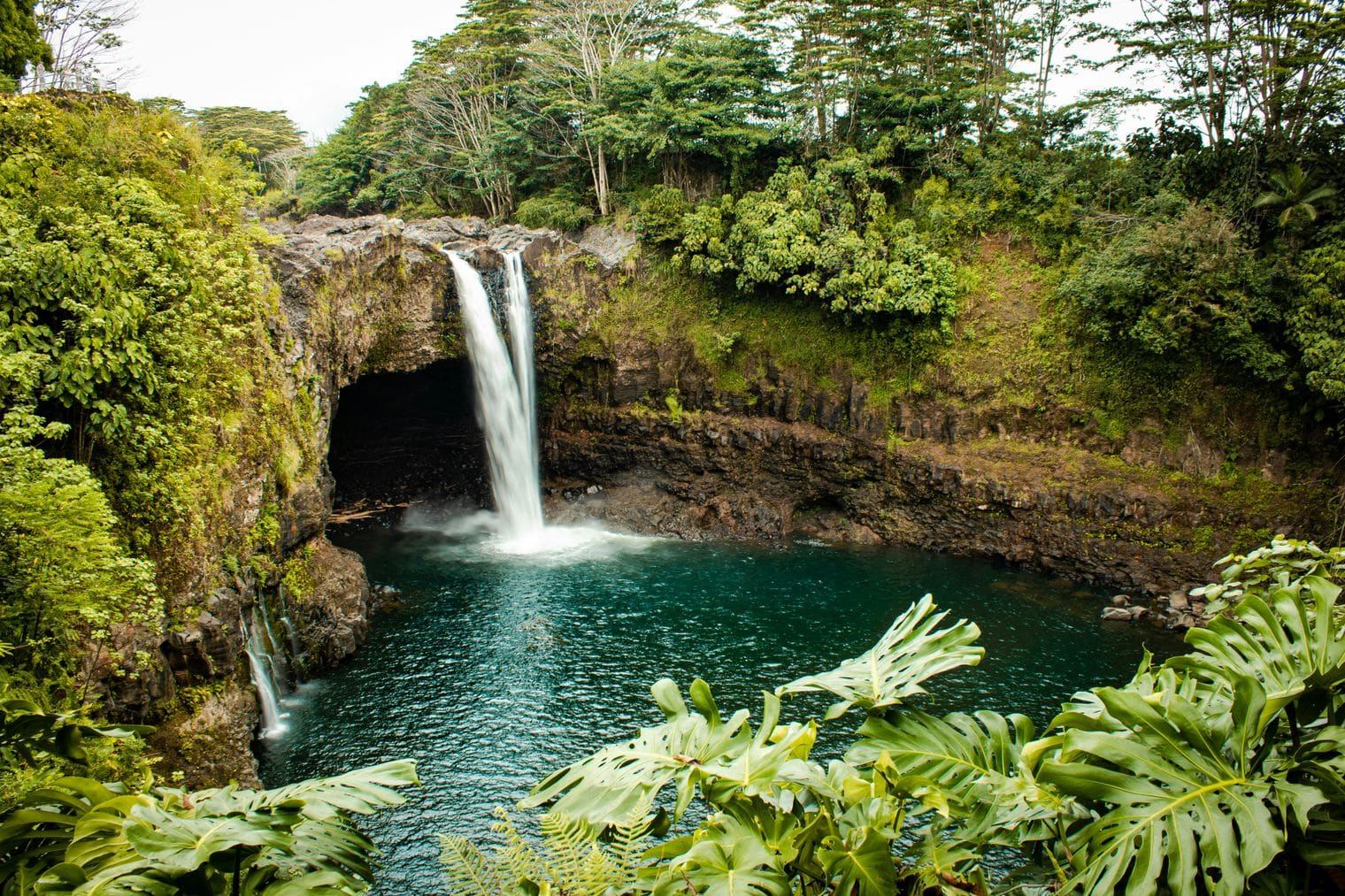
Six very different islands, one flight from the mainland — from live lava fields to rainforest waterfalls and the best surf breaks on earth.
Hawaii is a chain of volcanic islands strung across the central Pacific, each with its own character — from Oahu's surf and city buzz to the Big Island's active volcanoes, Maui's beaches and Kauai's emerald cliffs. This hub helps you plan an island-hopping trip: browse our Big Island guide below and use the notes here to pick your islands, time your visit and understand how to get between them.
Known for
Volcanoes, beaches & surf
Best for
Beaches, snorkelling & island-hopping
Capital
Honolulu (on Oahu)
Main gateway
Daniel K. Inouye Int'l, Honolulu (HNL)
Time zone
Hawaii-Aleutian (HST, no daylight saving)
Trip planner
Plan your trip to Hawaii
Best time to visit — season by season
Spring
Mar–May
A quieter shoulder season with warm, settling weather as the winter rains ease. Ocean conditions are calming down, whale season is winding up off Maui, and prices dip between the winter and summer peaks.
Summer
Jun–Aug
Dry, hot and reliably sunny across the leeward coasts, with the calmest, clearest water of the year for snorkelling and swimming. This is peak family season, so beaches and resorts are at their busiest.
Fall
Sep–Nov
Arguably the sweet spot — warm water, fewer crowds after the summer rush and generally dry weather before the winter swells arrive. Trade winds keep the leeward sides comfortable.
Winter
Dec–Feb
The wet season and the busy holiday season at once. Big north-shore surf draws the world's best surfers to Oahu, humpback whales gather off Maui and the Big Island, and windward and mountain areas see the most rain.
Regions of Hawaii
Oahu
The most-visited island and the gateway, home to Honolulu, Waikiki Beach and Pearl Harbor, the surf breaks of the North Shore, and the lush windward coast around Kailua and the Nuʻuanu Pali.
The Big Island (Hawaii Island)
The largest and most geologically dramatic island, where Hilo anchors the rainy, waterfall-laced windward coast and the gateway to Hawaii Volcanoes National Park, while Kona and the Kohala Coast hold the sunny beaches and snorkelling.
Maui
The classic beach-and-scenery island, from the Road to Hana and the sunrise atop Haleakala to the resorts and whale-watching of the west and south coasts around Lahaina and Wailea.
Kauai
The 'Garden Isle', the greenest and most rugged, ringed by the sea cliffs of the Na Pali Coast and cut by Waimea Canyon, with laid-back towns like Hanalei and Poipu.
Molokai & Lanai
The quiet, less-developed islands for travellers seeking old Hawaii — Molokai's towering sea cliffs and slow pace, and Lanai's remote resorts and off-road trails.
Getting around
Getting to and around Hawaii means flying, then driving. Most visitors arrive at Honolulu on Oahu (HNL), the main hub, and connect on short inter-island flights to Maui (OGG), Kona or Hilo on the Big Island (KOA/ITO), or Kauai (LIH); the islands are not connected by bridges or ferries, so island-hopping is done by plane. Once on an island, a rental car is essential for reaching beaches, trailheads and viewpoints — Oahu has usable buses around Honolulu and Waikiki, but the other islands are thinly served by transit. Book rentals early, as island fleets are limited and sell out in peak season.
The highlights Hawaii's signature sights & road trips
Waikiki & Pearl Harbor Oahu's iconic beach and Diamond Head, plus the USS Arizona Memorial and WWII history at Pearl Harbor.
Road to Hana & Haleakala Maui's cliff-hugging coastal drive past waterfalls, and the sunrise above the clouds from the summit of Haleakala.
Na Pali Coast & Waimea Canyon Kauai's soaring green sea cliffs, best seen by boat or trail, and the vast 'Grand Canyon of the Pacific'.
North Shore surf Oahu's legendary big-wave breaks — Waimea Bay, Sunset Beach and the Banzai Pipeline — at their thundering best in winter.
Suggested routes
Big Island loop
5–7 days
A full circle of Hawaii Island pairing the sunny Kona coast with the rainy, waterfall-rich Hilo side and the volcanoes in between — the most geologically varied road trip in the state.
Kona — fly in, beaches & snorkelling on the leeward coast
Kohala Coast — resort beaches heading north
Waimea & Hamakua Coast — upcountry ranch land and coastal waterfalls
Hawaii Volcanoes National Park — Kilauea, craters and lava fields
Punaluu Black Sand Beach — on the way back toward Kona
Oahu circle island
2–3 days
The classic loop of Hawaii's most-visited island, trading the city and beaches of the south for the surf and country feel of the North Shore and windward coast.
Honolulu & Waikiki — basecamp, Diamond Head and the beach
Pearl Harbor — USS Arizona Memorial and WWII history
North Shore — Haleiwa town and the big-wave surf beaches
Kailua & the windward coast — turquoise bays and the Nuʻuanu Pali lookout on the way back
Hawaii is a year-round destination, but the shoulder seasons of spring and autumn tend to offer the best balance of warm weather, calmer crowds and lower prices. Summer brings the sunniest, calmest water for swimming and snorkelling, while winter is wetter but delivers big north-shore surf and humpback whale season off Maui and the Big Island.
How many days do you need in Hawaii?
Plan on at least five to seven days to enjoy a single island without rushing. If you want to island-hop — say pairing Oahu with Maui or the Big Island — allow ten days to two weeks so you're not spending your trip in airports. Each island easily fills a week on its own.
Do you need a car in Hawaii?
On most islands, yes. Beaches, trailheads, waterfalls and viewpoints are spread out and thinly served by public transit, so a rental car is essential on Maui, Kauai and the Big Island. Oahu is the exception — Honolulu and Waikiki have decent buses and you can get by car-free if you stay central, though a car still helps for the North Shore and windward coast.
What is Hawaii best known for?
Hawaii is famous for its beaches and surf, its active volcanoes on the Big Island, and its Polynesian culture. Headline draws include Waikiki and Pearl Harbor on Oahu, Hawaii Volcanoes National Park and the Hilo waterfalls on the Big Island, the Road to Hana and Haleakala on Maui, and the Na Pali Coast and Waimea Canyon on Kauai.
How do you get between the Hawaiian islands?
By plane. The islands aren't linked by bridges, and there's no regular passenger ferry between the main islands, so island-hopping is done on short inter-island flights — typically 30 to 50 minutes — between Honolulu (HNL), Maui (OGG), the Big Island (Kona KOA or Hilo ITO) and Kauai (LIH). Honolulu is the main hub for connections.
Which Hawaiian island should you visit first?
Oahu is the easiest first-timer's island: it has the most flights, the most infrastructure, and a mix of city, beaches, surf and history in Honolulu, Waikiki, Pearl Harbor and the North Shore. Maui suits couples and beach lovers, the Big Island is best for volcanoes and dramatic landscapes, and Kauai is the choice for lush scenery and the outdoors.
Can you see active lava in Hawaii?
Sometimes. Hawaii Volcanoes National Park on the Big Island is home to Kilauea, one of the world's most active volcanoes, and when it's erupting you can occasionally see a glowing lava lake or flows from park overlooks. Eruptions come and go unpredictably, so always check the National Park Service and USGS updates before you go, and never expect a guaranteed lava view.
Do you need to worry about the ocean and safety in Hawaii?
Respect the ocean — conditions vary hugely by island, coast and season. Winter brings powerful surf and dangerous currents to north-facing shores, while summer is generally calmer. Always check posted warnings, swim at lifeguarded beaches, never turn your back on the waves, and heed local advice; the same beach can be a gentle swim in summer and deadly in winter.
We use cookies to analyse site traffic and improve your experience.
You can accept or reject analytics cookies. See our Cookie Policy.