One state, from rainforest coast to sagebrush desert, with the country's deepest lake and a mile-deep gorge in between.
Oregon runs from a fog-wrapped, dune-backed Pacific coast to the snow-capped Cascade volcanoes, then out to the high desert and canyon country of the arid east. In between lie the vineyards and waterfalls of the Willamette Valley, the deepest lake in the country at Crater Lake, and the mile-deep Columbia River Gorge. Use this hub to plan your trip: browse our coastal city guides below, or read on for the regions, seasons and road trips that tie the state together.
Known for
Rugged coast, Cascade volcanoes & Crater Lake
Best for
Coast road trips, waterfalls, wine & the outdoors
Capital
Salem
Main gateway
Portland Int'l (PDX)
Time zone
Pacific (PT); a sliver of the east is Mountain (MT)
Trip planner
Plan your trip to Oregon
Best time to visit — season by season
Spring
Mar–May
Green and wet, especially west of the Cascades — the Columbia River Gorge waterfalls run at full force and the valley turns lush. Pack rain layers; the high country and Crater Lake stay under deep snow well into the season.
Summer
Jun–Aug
The dry, sunny window and peak season: warm inland valleys, wildflower-filled Cascade meadows and the only reliable stretch for the mountain passes and Crater Lake's rim road. The coast stays cool and often foggy even in July, so bring a jacket for the beach.
Fall
Sep–Nov
A quiet, golden window — warm early-autumn days, Willamette Valley harvest and wine season, and thinning crowds on the coast before the rains return. Vine maples and larches colour the Cascades before winter closes the high passes.
Winter
Dec–Feb
Wet and grey in the lowlands but prime for storm-watching on the coast and powder skiing at Mt Hood, an hour from Portland. Snow closes Crater Lake's rim road and many high-desert and Cascade routes; carry chains for the mountain passes.
Regions of Oregon
The Oregon Coast
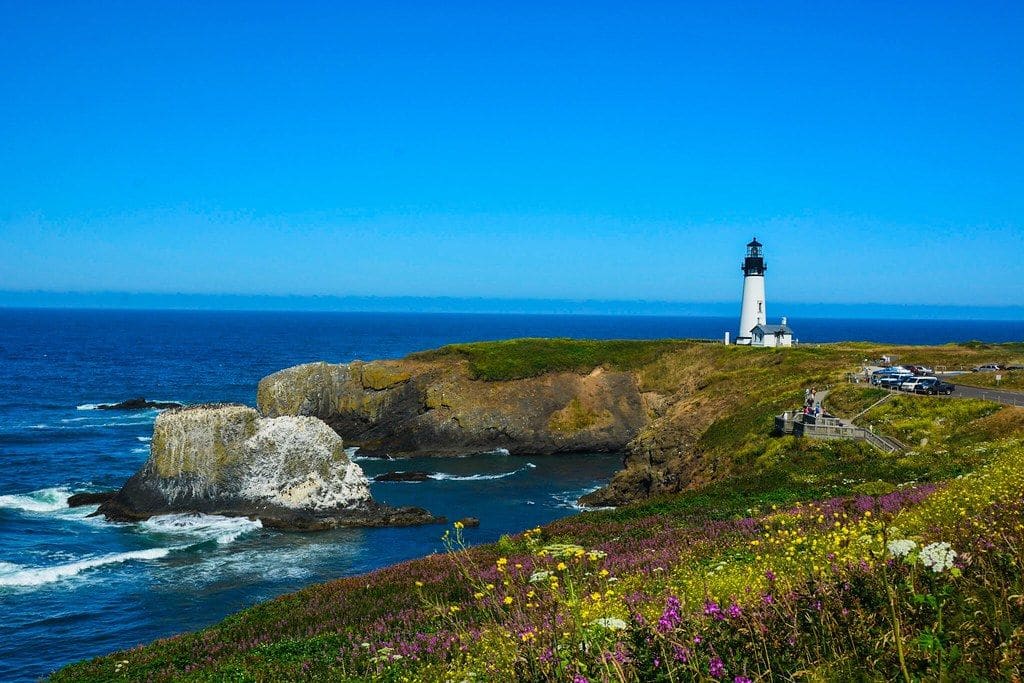
The full 360-mile Pacific edge on US-101, from the maritime town of Astoria and the monolith of Haystack Rock at Cannon Beach, down through Newport and the wave-battered central coast to the dunes and sea stacks of the south.
Portland & the Willamette Valley
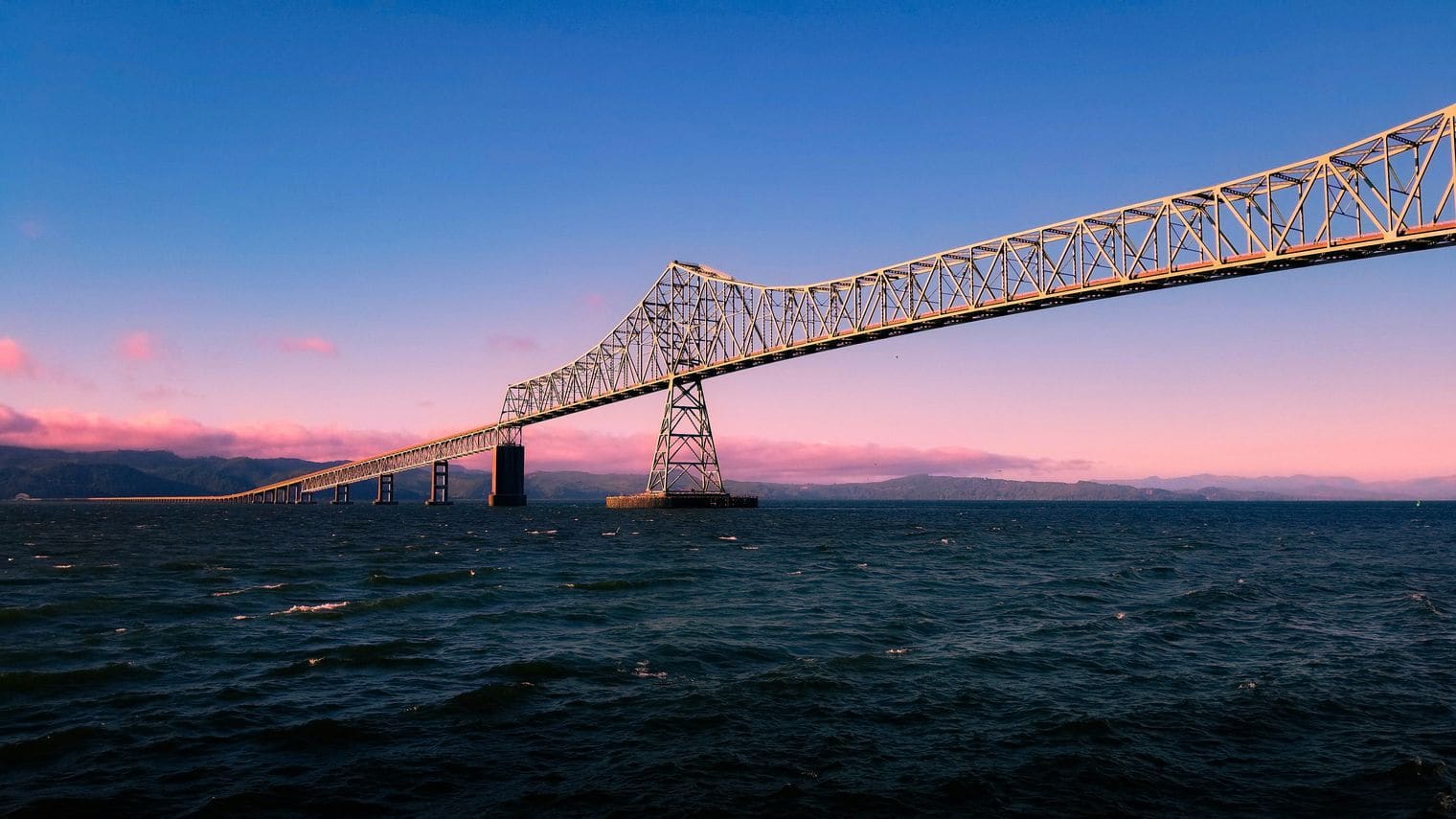
The populated northwest: Portland's food, gardens and bridges, with Oregon's Pinot Noir wine country, the college town of Eugene and the state capital, Salem, spread down the fertile valley to the south.
The Columbia River Gorge & Mt Hood
The dramatic river canyon east of Portland, lined with waterfalls like Multnomah Falls and windsurfing at Hood River, rising to the glaciers and ski slopes of Mt Hood, the state's highest peak.
Crater Lake & the Southern Cascades
Volcano country in the south — the impossibly blue caldera of Crater Lake National Park, the peaks and lakes around Bend and the Cascade Lakes, and the arts town of Ashland near the California line.
Central Oregon & the High Desert
The sunny, outdoorsy east side of the mountains around Bend and the Deschutes River, with the Smith Rock climbing crags, the Newberry volcanic country and the wide sagebrush expanses beyond.
Eastern Oregon & the Wallowas
The remote, mountainous far east: the alpine Wallowa Mountains around Joseph, the deep chasm of Hells Canyon on the Snake River, and the Painted Hills and fossil beds of the John Day country.
Getting around
A rental car is essential for all but a city break in Portland: the coast, the Cascades and the high desert are spread across a large state and thinly served by transit. Portland International is the main gateway, and the drive to the north coast, the Columbia River Gorge or Mt Hood is roughly an hour to ninety minutes. Coast trips run on the two-lane US-101; allow more time than the map suggests, as it winds slowly around every headland and bay. In winter the Cascade and high-desert passes need chains or snow tyres, and Crater Lake's rim road and many mountain routes close entirely under snow, so check conditions before heading east.
The highlights Oregon's signature sights & road trips
Oregon at a glance
Crater Lake National Park The country's deepest lake — an impossibly blue volcanic caldera ringed by a summer-only Rim Drive.Basecamp: Bend or Ashland
Columbia River Gorge A mile-deep river canyon lined with waterfalls, headlined by Multnomah Falls just east of Portland.Basecamp: Portland or Hood River
Cannon Beach & Haystack Rock The postcard of the Oregon coast — a 235-foot sea stack rising from a wide, walkable beach.Basecamp: Astoria
Mt Hood Oregon's highest peak, a glaciered stratovolcano with year-round skiing an hour from Portland.Basecamp: Portland
Smith Rock State Park Sheer tuff cliffs above the Crooked River — the birthplace of American sport climbing.Basecamp: Bend
Suggested routes
The Oregon Coast on US-101
4–6 days
The classic north-to-south coastal drive along US-101, from the mouth of the Columbia River down past the state's most photographed beaches and headlands. Run it slowly — the road winds around every bay — and pack a jacket for the cool, foggy summer coast.
Cannon Beach — Haystack Rock and the classic coast view
Newport — aquarium, lighthouses and the working bayfront
Florence & the Oregon Dunes — towering sand dunes along the central coast
Bandon — sea stacks and golf on the south coast
Portland, the Gorge & Crater Lake
~1 week
An inland loop pairing Oregon's headline city with its two natural showpieces — the waterfalls of the Columbia River Gorge and the deep-blue caldera of Crater Lake. Best in summer and early autumn, when the mountain roads and the rim drive are open.
Portland — fly in, pick up the car
Columbia River Gorge — Multnomah Falls and the historic highway
Mt Hood — loop past the glaciered peak and Timberline Lodge
Bend — high-desert basecamp for the southern Cascades
Crater Lake National Park — the deepest lake in the country
Willamette Valley wine & waterfalls
3–4 days
A focused long-weekend loop through Oregon's green heart, pairing the Pinot Noir vineyards south of Portland with the college-town buzz of Eugene and the roaring waterfalls of the western Cascades. Best in early autumn for the harvest.
Portland — start in the city
Willamette Valley wine country — Pinot Noir tasting rooms around Dundee and Newberg
Salem — the state capital, mid-valley
Eugene — college town and gateway to the McKenzie River waterfalls
Summer, from roughly late June through September, is the driest and most reliable window statewide — it's the only season when the Cascade passes and Crater Lake's rim road are fully open, and inland valleys are warm and sunny. Early autumn is a quieter alternative, ideal for the Willamette Valley wine harvest and coast trips. Spring and winter are wet west of the mountains but bring roaring gorge waterfalls, dramatic coast storm-watching and Mt Hood ski season.
How many days do you need in Oregon?
A focused trip works well in three to four days — the north coast and Portland, or Bend and Crater Lake. To combine the coast, Portland, the Columbia River Gorge and Crater Lake into one loop, plan on about a week to ten days, and add a few more if you want to reach the remote eastern Wallowas or the Painted Hills.
Do you need a car in Oregon?
For anything beyond a Portland city break, yes. The coast, the Cascades and the high desert are spread across a large state and thinly served by public transit, so a rental car is essential. Most visitors fly into Portland International and drive from there; the north coast, the gorge and Mt Hood are each within about an hour to ninety minutes.
What is Oregon best known for?
Oregon is famous for its rugged Pacific coastline and the scenic US-101 that runs its full length, the deep-blue caldera of Crater Lake — the deepest lake in the United States — the waterfalls of the Columbia River Gorge, the volcanoes of the Cascade Range including Mt Hood, and Willamette Valley Pinot Noir. Portland is known for its food, coffee and greenery.
How do you drive the Oregon Coast?
The whole coast is strung along US-101, a slow, scenic two-lane highway that winds around every headland and bay. Most road trips run north to south, starting near Astoria at the mouth of the Columbia River, passing Cannon Beach and Newport, and continuing to the dunes and sea stacks of the south coast. Allow more time than the mileage suggests — the driving is deliberately slow — and expect cool, often foggy conditions even in summer.
Is Crater Lake open year-round?
The park is open all year, but access changes dramatically with the seasons. The scenic Rim Drive that circles the caldera and most facilities are only open in summer and early autumn once the deep snow clears, typically from around July into October. In winter the rim road closes and the area sees some of the heaviest snowfall in the country, though the south entrance and a rim viewpoint usually stay accessible for snowshoeing. Always check the National Park Service site before you go.
Does it always rain in Oregon?
It's a myth that all of Oregon is rainy. The western third — Portland, the coast and the Willamette Valley — is genuinely wet and grey from autumn through spring, but summers there are dry and sunny. East of the Cascade crest the climate flips entirely to high desert: Bend and the eastern half of the state are sunny and arid, with far less rain than the coast.
Which time zone is Oregon in?
Almost all of Oregon is on Pacific Time, the same as Portland and the coast. The exception is a small slice of the far east, around the Snake River near the Idaho border, which sits in the Mountain Time zone — worth noting if you're travelling out to Hells Canyon or the Wallowas.
We use cookies to analyse site traffic and improve your experience.
You can accept or reject analytics cookies. See our Cookie Policy.