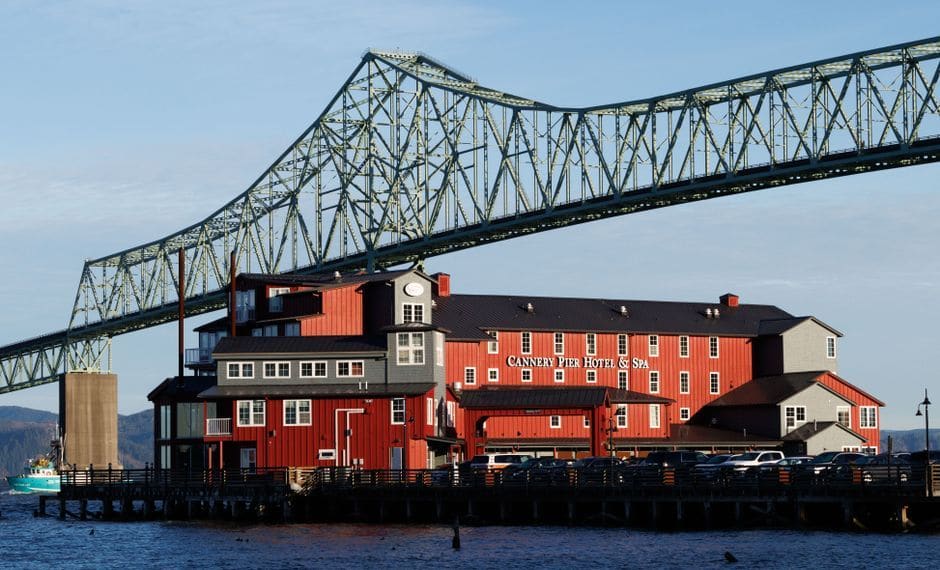
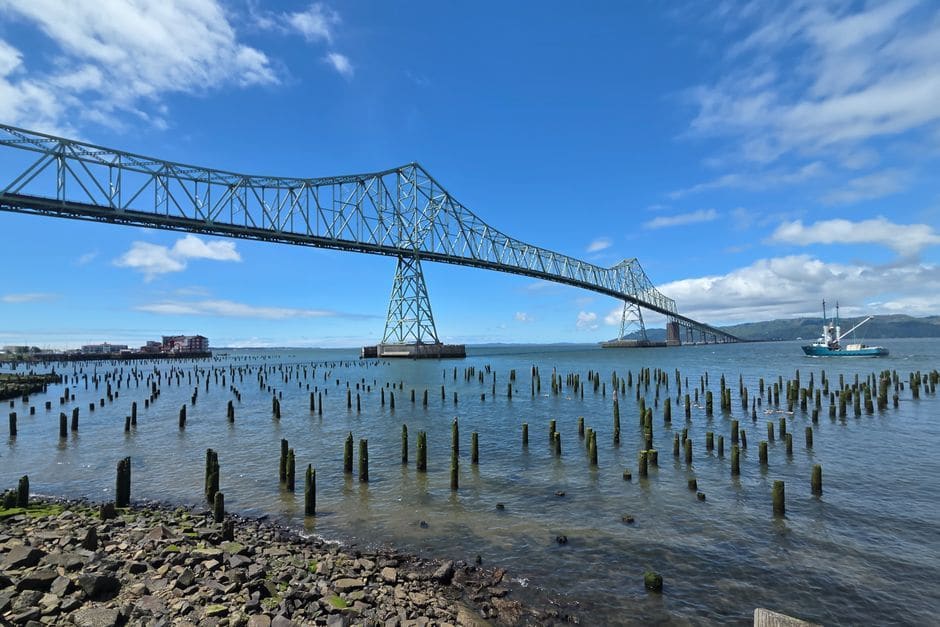
Astoria clings to a steep hillside where the Columbia River meets the Pacific, and it wears its past on its sleeve — the first permanent American settlement west of the Rockies, founded in 1811 as a fur-trading post. Salmon canneries, a working port and the four-mile Astoria-Megler Bridge still shape the skyline today.
From the 125-foot Astoria Column on Coxcomb Hill to the shipwrecks scattered along the Clatsop shore, the things to do in Astoria run heavy on maritime history, Lewis and Clark heritage and Goonies-era film lore, and its spot where U.S. Route 101 meets the Columbia makes it a natural northern base for exploring the wider Oregon coast, with the coast highway running south past the beach towns toward Newport. Here are 25 of the best.
Fun Facts About Astoria, Oregon
Astoria was founded in 1811 as the first permanent American settlement west of the Rocky Mountains, which also makes it the oldest city in Oregon.
It is named for John Jacob Astor, the New York fur magnate whose Pacific Fur Company built Fort Astoria at the site.
The town’s hillside streets and canneries starred in “The Goonies,” filmed here in 1984, along with “Kindergarten Cop,” “Short Circuit,” and “Free Willy.”
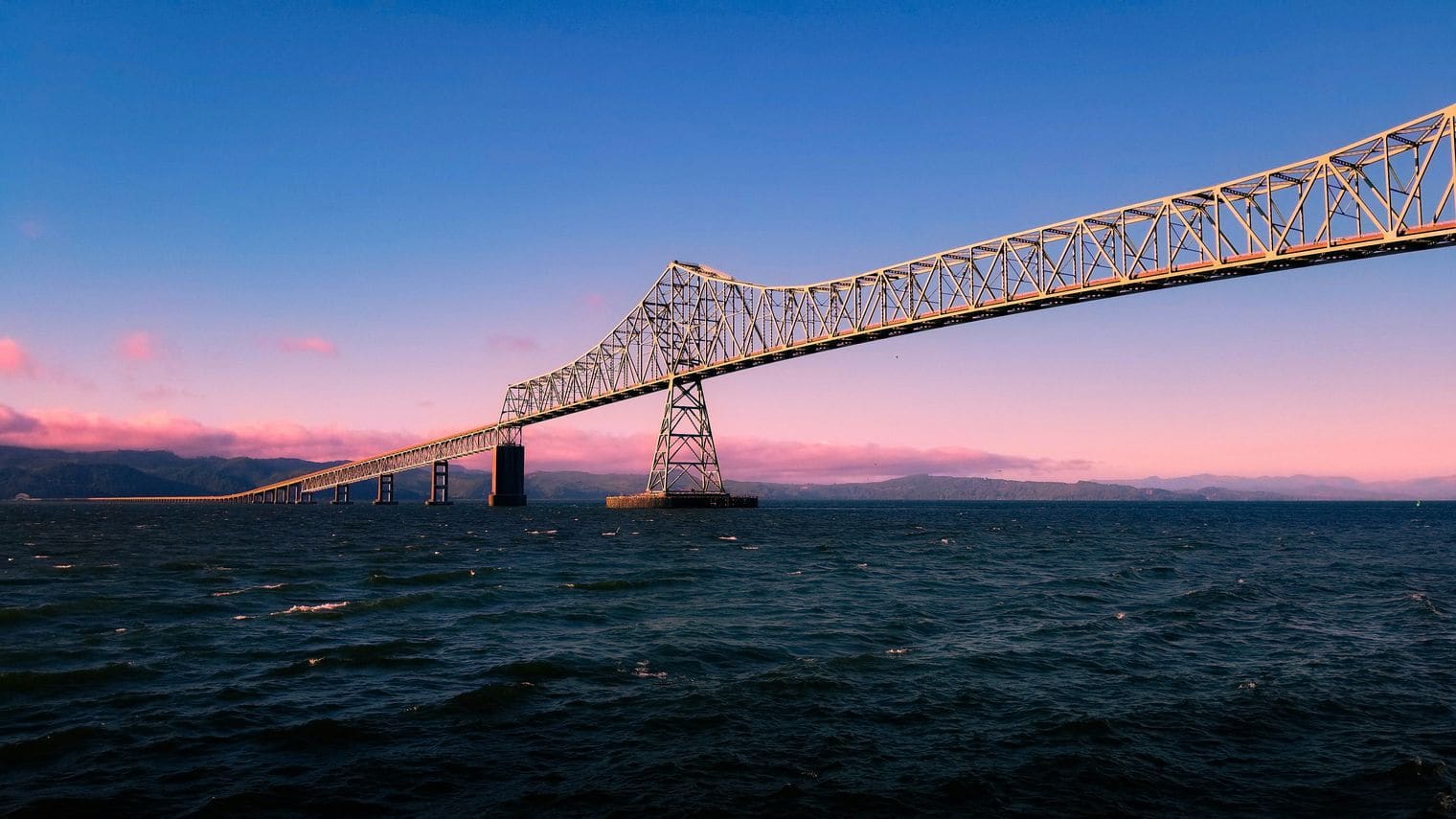
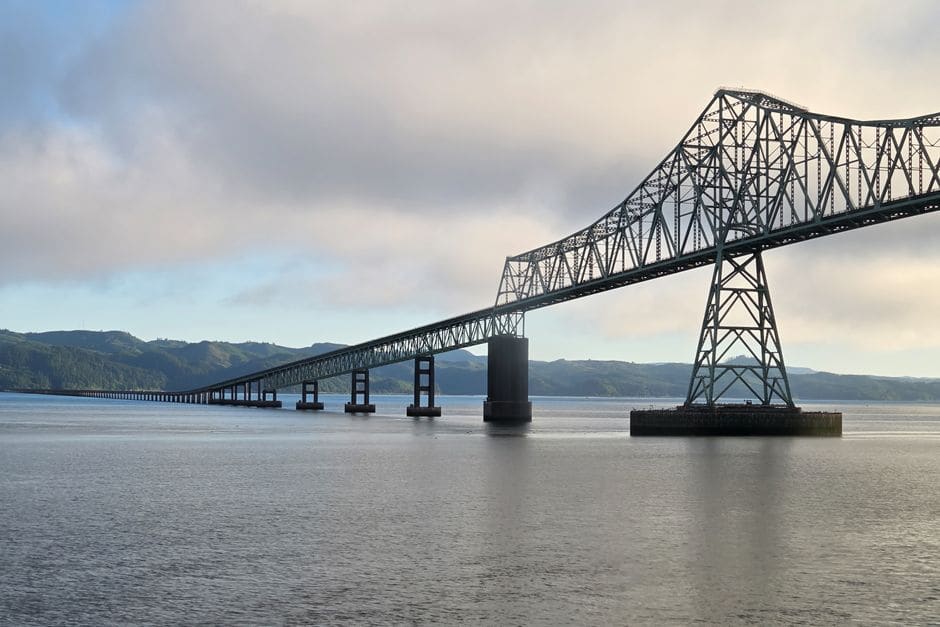
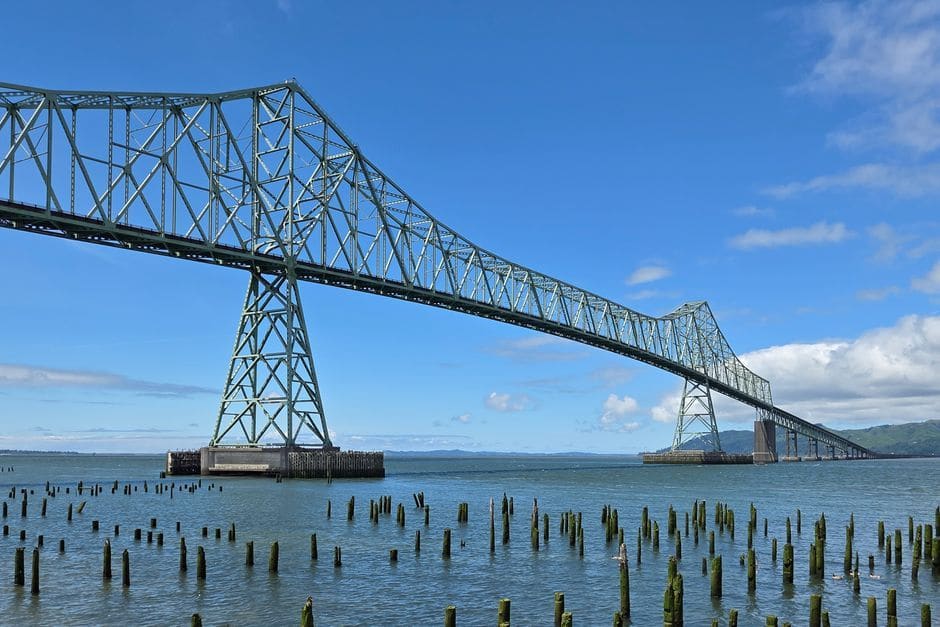
The Astoria-Megler Bridge is the longest continuous-truss bridge in North America, carrying U.S. Route 101 more than four miles across the mouth of the Columbia.
The treacherous river mouth just offshore is nicknamed the “Graveyard of the Pacific” for the hundreds of ships wrecked crossing the Columbia Bar.
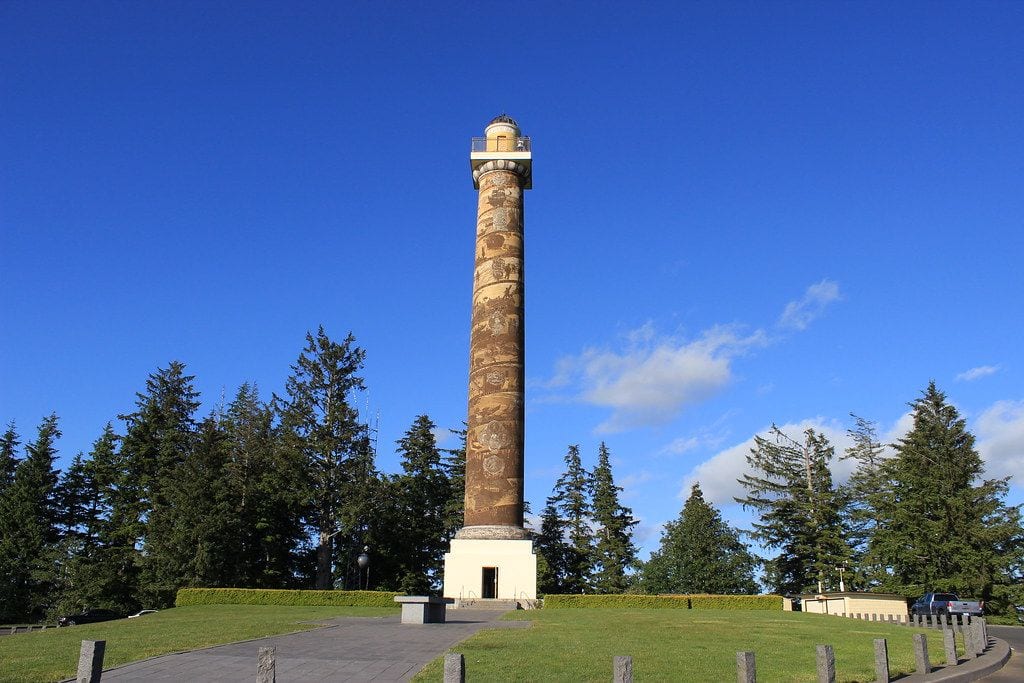
The 150-foot Astoria Column crowns Coxcomb Hill, its exterior wrapped in a hand-painted sgraffito frieze of the region’s history.
The Astoria Column rises 125 feet from the top of Coxcomb Hill, itself some 600 feet above the river, so the climb up its 164 interior steps lands you on a viewing platform that takes in the Columbia, the Pacific and, on clear days, the peaks of the Cascade Range.
Dedicated in 1926, the tower honours the region's early settlers with a spiralling sgraffito frieze designed by Italian artist Attilio Pusterla, who modelled it on Rome's Trajan's Column. Visitors keep up the long-running tradition of launching balsa-wood gliders from the top.
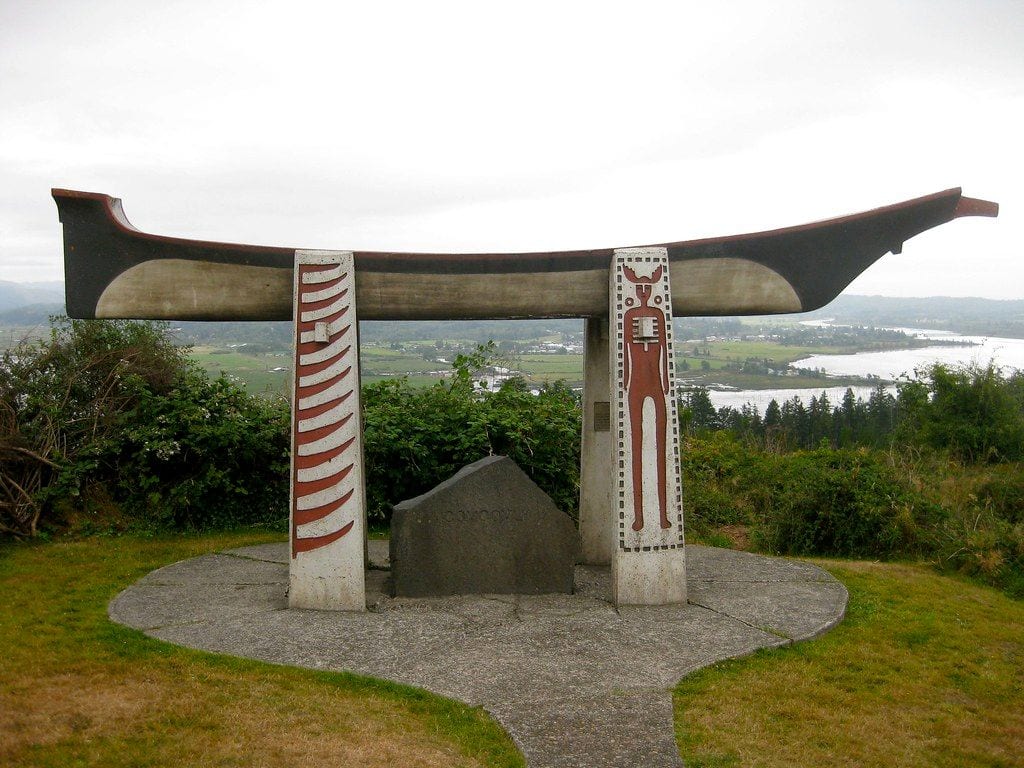
Comcomly's Memorial sits in Coxcomb Hill's hilltop park beside the Astoria Column, raised in 1961 by descendants of the chief to mark the city's 150th anniversary. It takes the form of a Chinook burial canoe held aloft on four concrete pillars and carved with Chinook motifs.
Comcomly led the Chinook people around the mouth of the Columbia in the early 1800s and traded with both American and British fur companies. He gave shelter and provisions to the Lewis and Clark expedition, and the memorial nods to that role in the earliest chapter of Astoria's story.
The Astoria-Megler Bridge runs 4.1 miles across the mouth of the Columbia, linking the Oregon shore to Point Ellice in Washington. When it opened in 1966 it closed the last gap in U.S. Route 101, the highway that hugs the Pacific coast from Washington to California.
Its continuous-truss main span is the longest of its kind in North America, engineered to shrug off river currents and gale-force coastal winds. For the classic view from below, follow the Astoria Riverwalk to the point where the tracks pass beneath the green steel frame.
The Astoria Riverwalk threads just over a mile of boardwalk and paved path along the working waterfront, shadowing the route of the historic riverfront trolley. It strings together the Port of Astoria, weathered old canneries and the Maritime Memorial honouring locals lost at sea.
Ocean-going ships from around the world tie up along the way, and you pass the scars of Astoria's fishing heyday — cannery pilings, some abandoned, some lost to the great fire of 1922. Each August the Riverwalk fills for the Astoria Regatta, a four-day festival of parades and boat shows dating back to 1894.
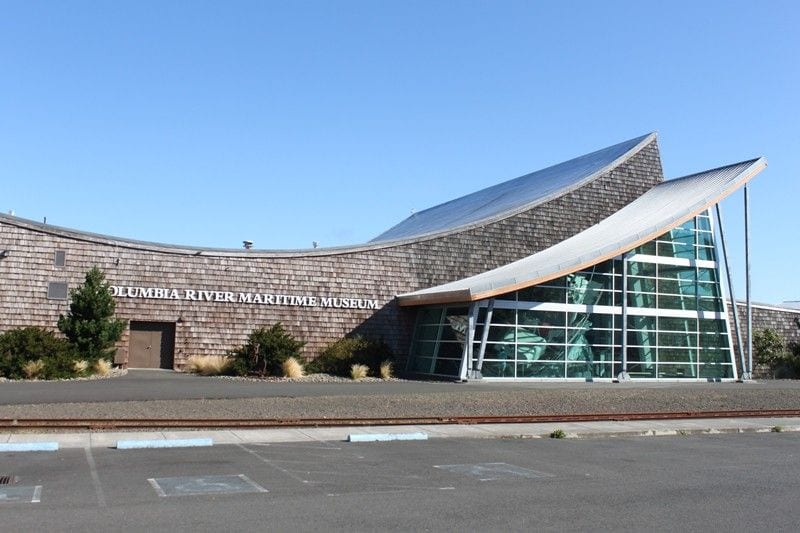
The Columbia River Maritime Museum holds more than 30,000 objects, the largest maritime collection in the Pacific Northwest, all built around the treacherous river mouth known as the Graveyard of the Pacific.
Interactive galleries chart the hundreds of shipwrecks scattered across the bar, a simulator recreates a storm on the water, and Coast Guard footage shows crews battling 40-foot waves. The admission also covers the lightship Columbia moored outside, which guided vessels across the bar until a navigational buoy replaced it in 1979.
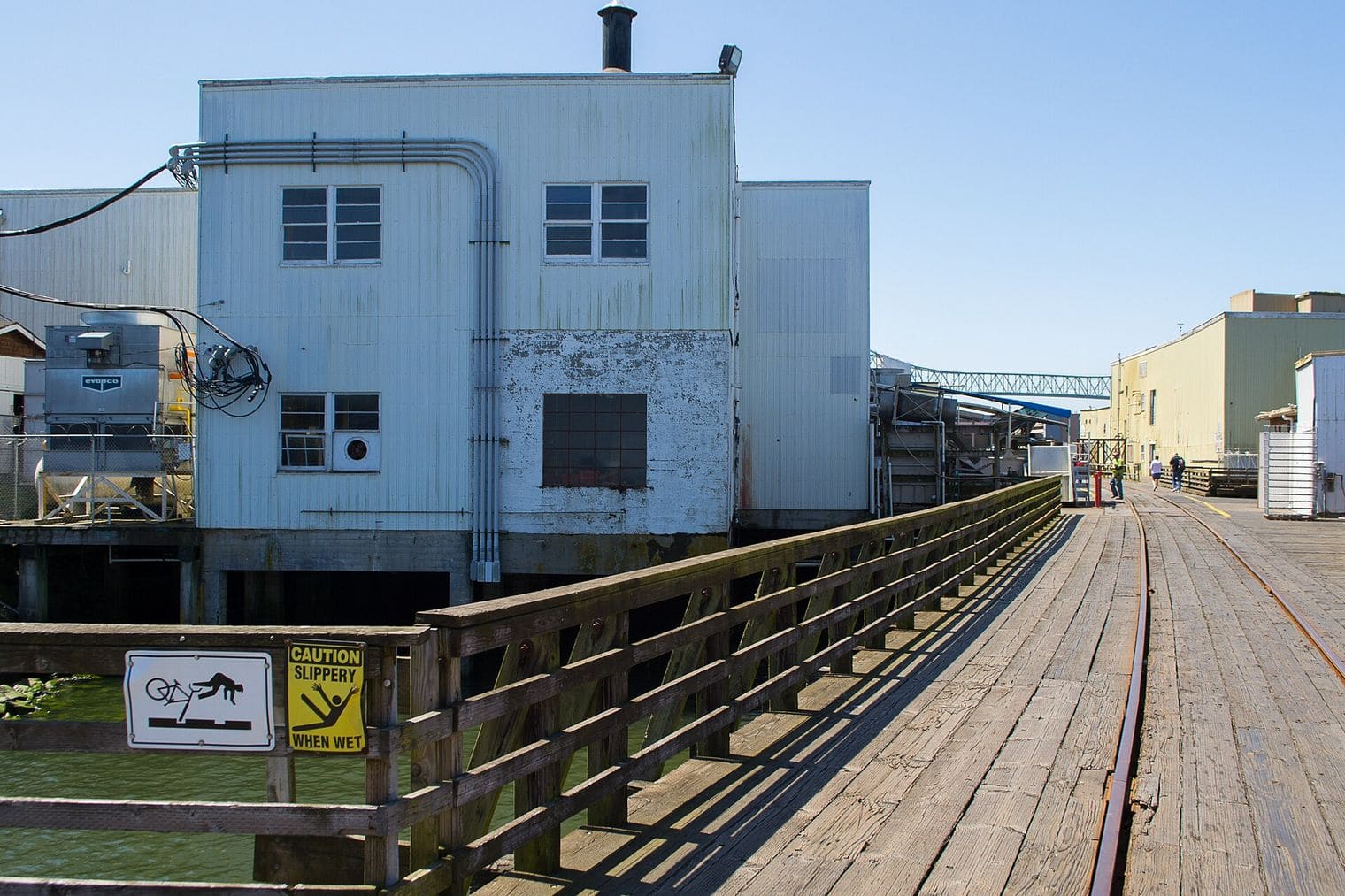
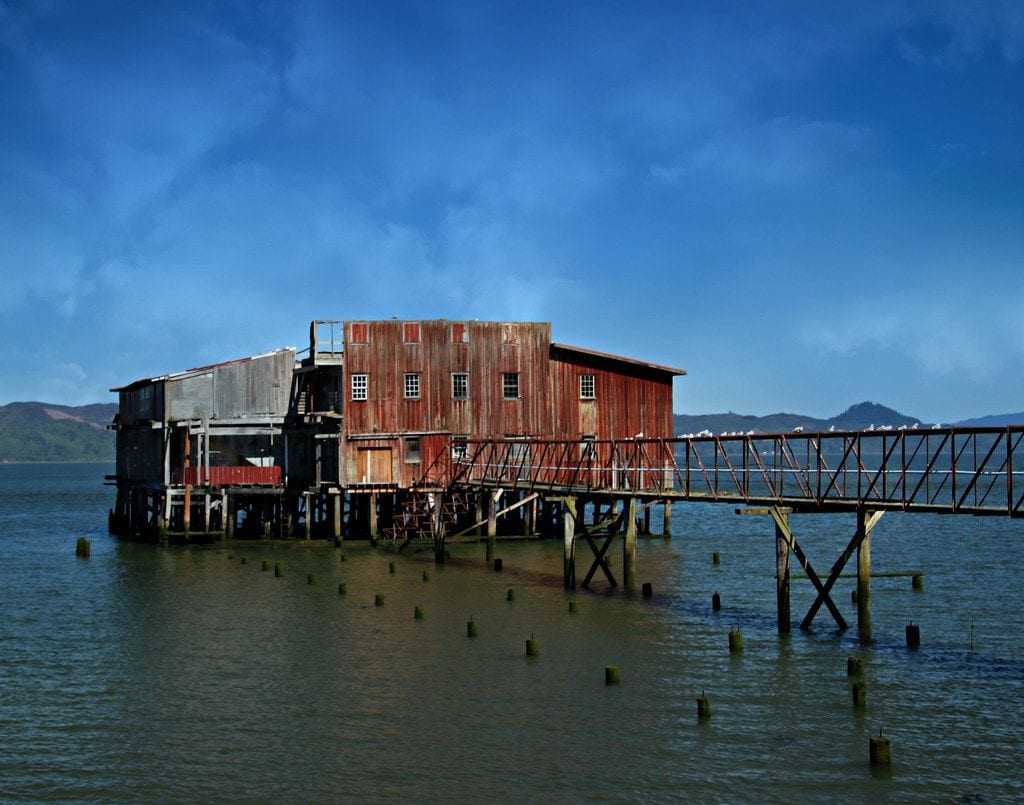
Explore the docks and you reach the part of Astoria where the city's fishing past is still most tangible. Head out along the boardwalk to Pier 39, home to the oldest and largest building on the waterfront — roughly 85,000 square feet that once housed a Bumble Bee cannery and now shelters the Hanthorn Cannery Museum, a coffee roaster and the Rogue alehouse.
A few piers east, Pier 36 — known locally as the East Mooring Basin — draws the barking crowds of California sea lions that haul out on the floating docks, sometimes by the hundreds. The noise and smell are unmistakable long before you reach the railing.
The Hanthorn Cannery Museum occupies the oldest surviving cannery building on the lower Columbia, founded in 1875 out on Pier 39. By the turn of the century the plant was turning out tens of thousands of cases of canned salmon a year.
Founder J.O. Hanthorn's operation became part of Bumble Bee Seafoods in 1899, and the free museum traces that industry through original canning machinery, ledgers and photographs. Three wooden gillnet fishing boats sit on the floor alongside a walk-in industrial freezer you can step inside.
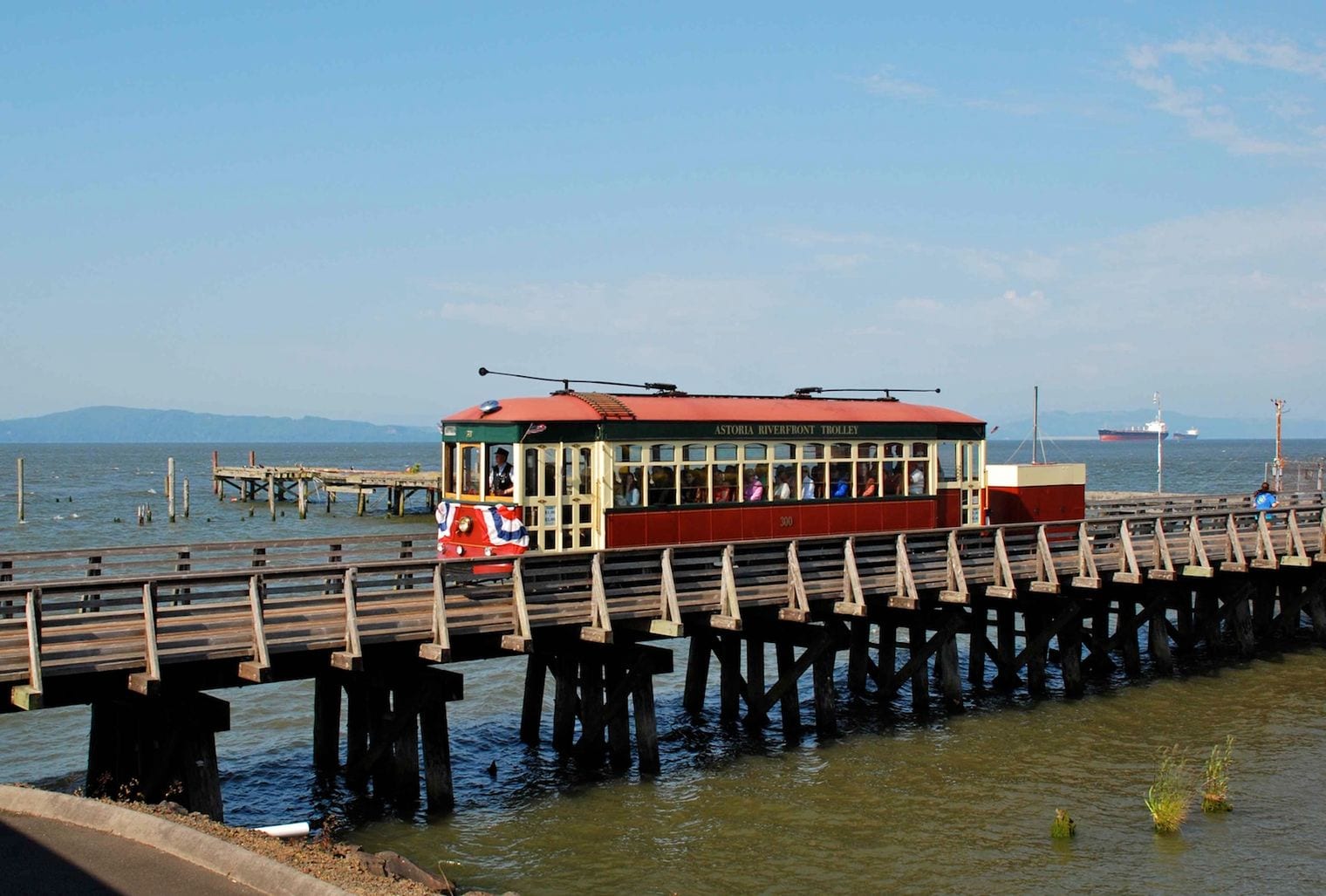
The Astoria Riverfront Trolley trundles three miles along the old railroad grade beside the Columbia, tracing tracks first laid in the 1880s to carry residents down to the beaches. The line reopened as a heritage tram in 1999.
The car itself, the maroon-and-cream "Old 300", was built in 1913 and once ran in San Antonio, Texas, before volunteers restored it for Astoria. It rolls between Portway Street and 39th Street, with the Maritime Museum the busiest stop along the way, carrying tens of thousands of riders a year.
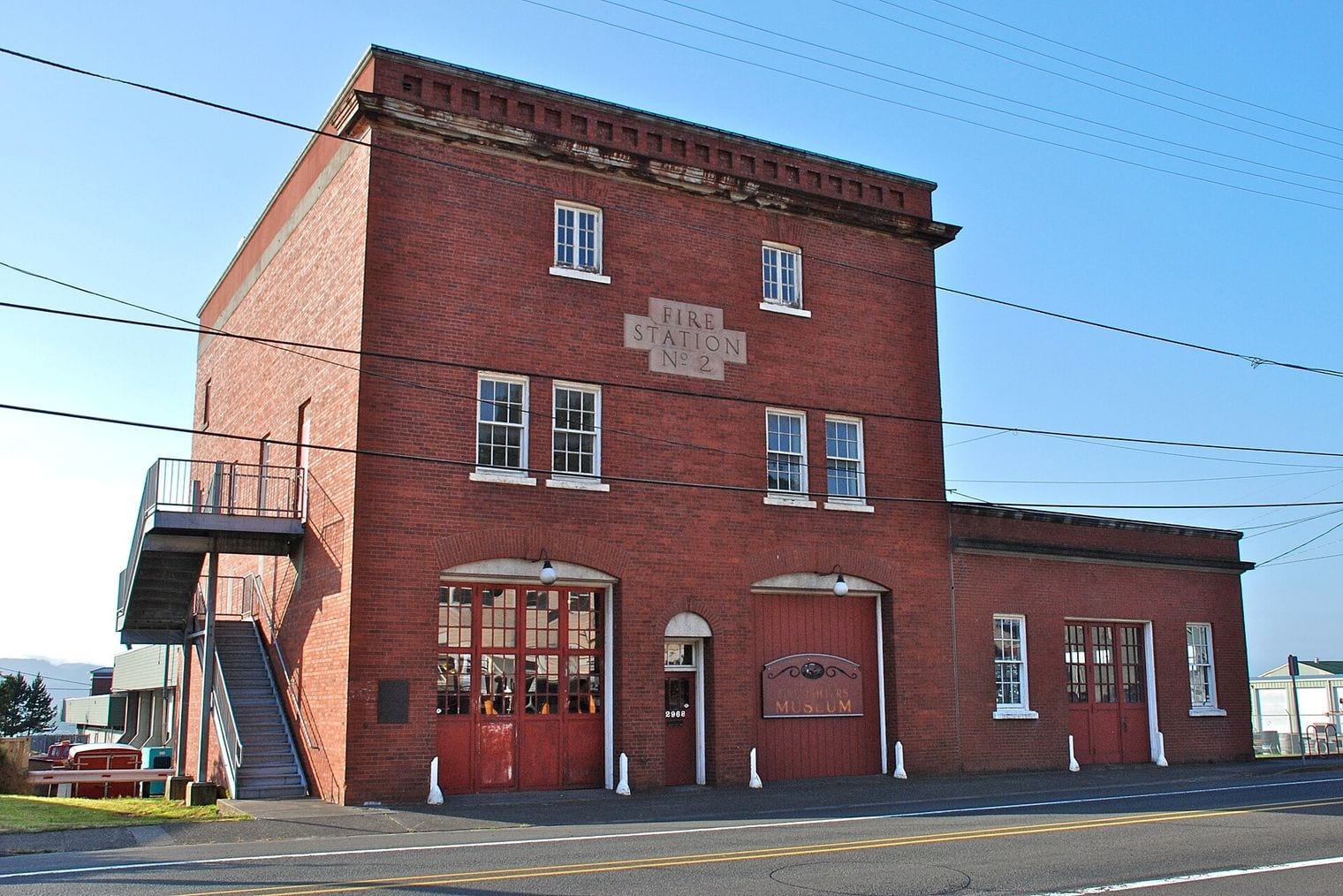
The Uppertown Firefighters Museum fills a building from 1896 that started life as the bottling works of the North Pacific Brewing Company. Shuttered under Prohibition, it was pressed into service as a fire station in 1928.
Inside, the collection runs from a horse-drawn hand pumper up to a 1946 Mack pumper, tracing how firefighting gear evolved across roughly a century. Photographs and hand tools, some dating to the 1870s, round out the story of protecting a timber-and-cannery town that repeatedly burned.
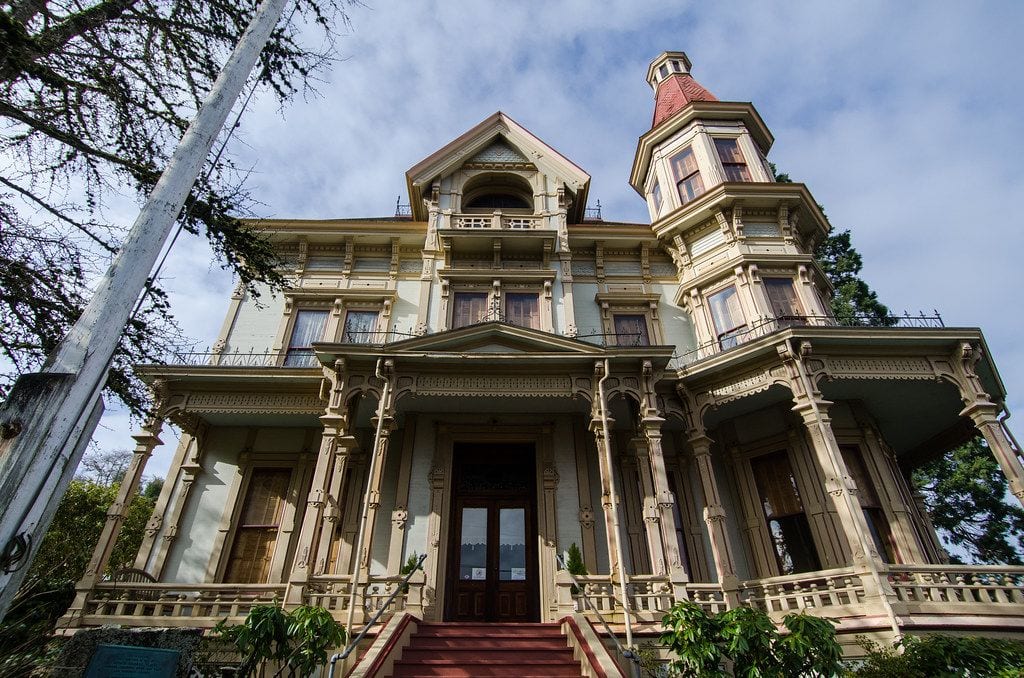
The Flavel House is Astoria's grandest Queen Anne mansion, completed in 1886 as the retirement home of Captain George Flavel — the first Columbia River bar pilot and the town's first millionaire.
The 11,600-square-foot house keeps much of its original furnishing, from crystal chandeliers to hand-carved fireplace mantels imported from around the world. A four-storey octagonal tower let the captain watch ship traffic on the river below; the kitchen, music room, bedrooms and the surrounding grounds and carriage house are all open to visitors.
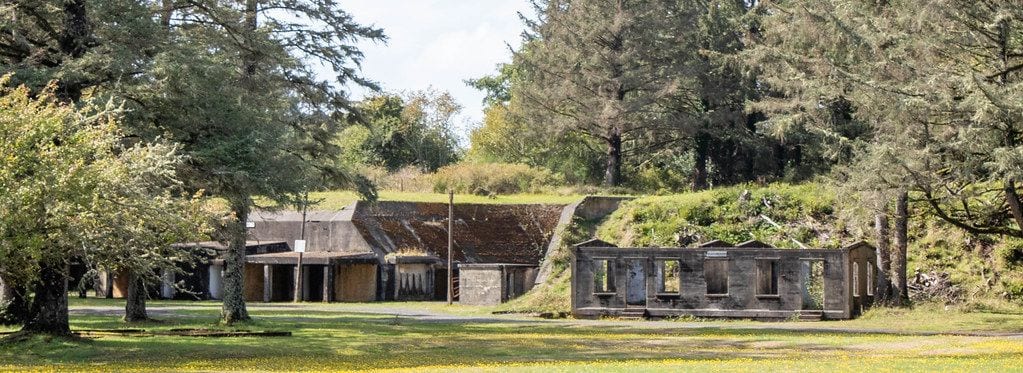
Fort Stevens State Park sprawls across roughly 4,300 acres of forest, beach and wetland at the very tip of Oregon, laced with about nine miles of trails for hiking, cycling and one of the state's largest campgrounds.
At its core stands the old military fort, now a self-guided historic area with batteries, an underground gun emplacement and a reconstructed Civil War-era earthwork. Built in 1863, Fort Stevens guarded the mouth of the Columbia for 84 years and was famously shelled by a Japanese submarine in 1942 — the only mainland U.S. military post fired on during the Second World War.
Clatsop Spit is the low, wind-scoured tongue of sand at the northwest corner of Fort Stevens State Park, where the Columbia finally spills into the Pacific. Built up over thousands of years by river sediment reworked by wind and surf, it ends at the South Jetty overlook.
The waters off the spit form part of the Graveyard of the Pacific, and the shifting bar has claimed hundreds of vessels since the early 1800s. Elevated viewing platforms make it a prime spot for watching Pacific storms roll in and, in season, migrating gray whales offshore.
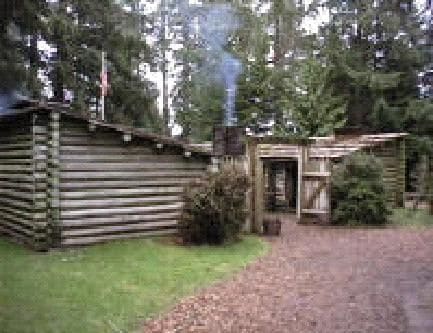
Fort Clatsop is a full-scale replica of the log stockade where the Corps of Discovery hunkered down through the wet winter of 1805–06 before starting the long journey home. It anchors the Lewis and Clark National Historical Park.
The current fort was rebuilt by volunteers in 2006 after fire destroyed an earlier reconstruction, following the dimensions Clark sketched in his journal. In summer, rangers in period dress demonstrate flintlock firing and candle-making along the wooded trails and recount the expedition's damp, elk-hunting months on the Oregon coast.
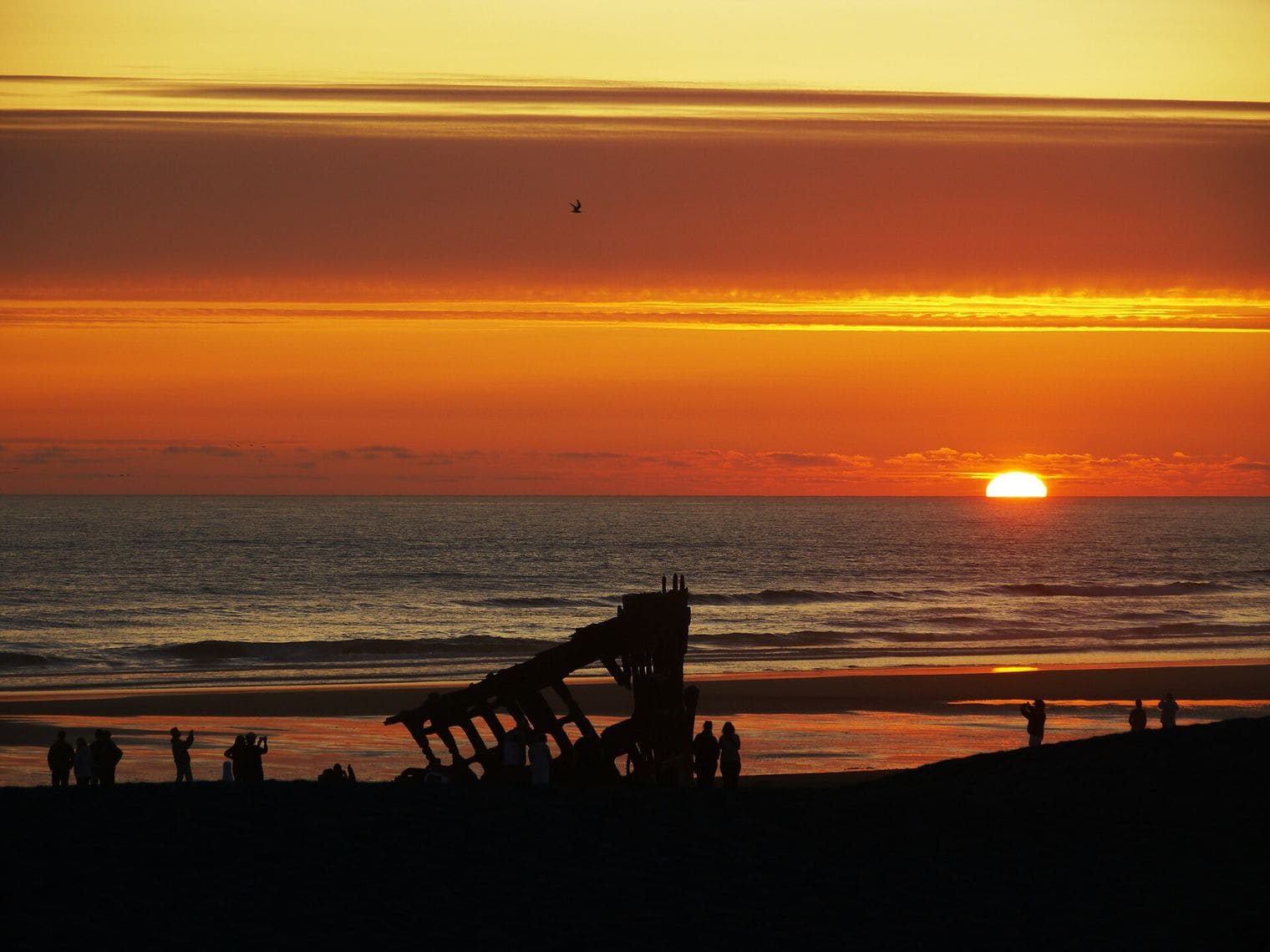
The Peter Iredale wreck rusts on the beach inside Fort Stevens State Park and ranks among the most-photographed shipwrecks anywhere. At low tide you can walk right up to the skeletal iron bow.
The four-masted sailing barque was built in England in 1890 and ran aground here in October 1906, driven onto the sand by heavy surf and a sudden shift of wind as it made for the Columbia. All 27 crew survived, but the ship was left where she lay; more than a century of tides has stripped her to a few ribs and the curved bow that catches every sunset.
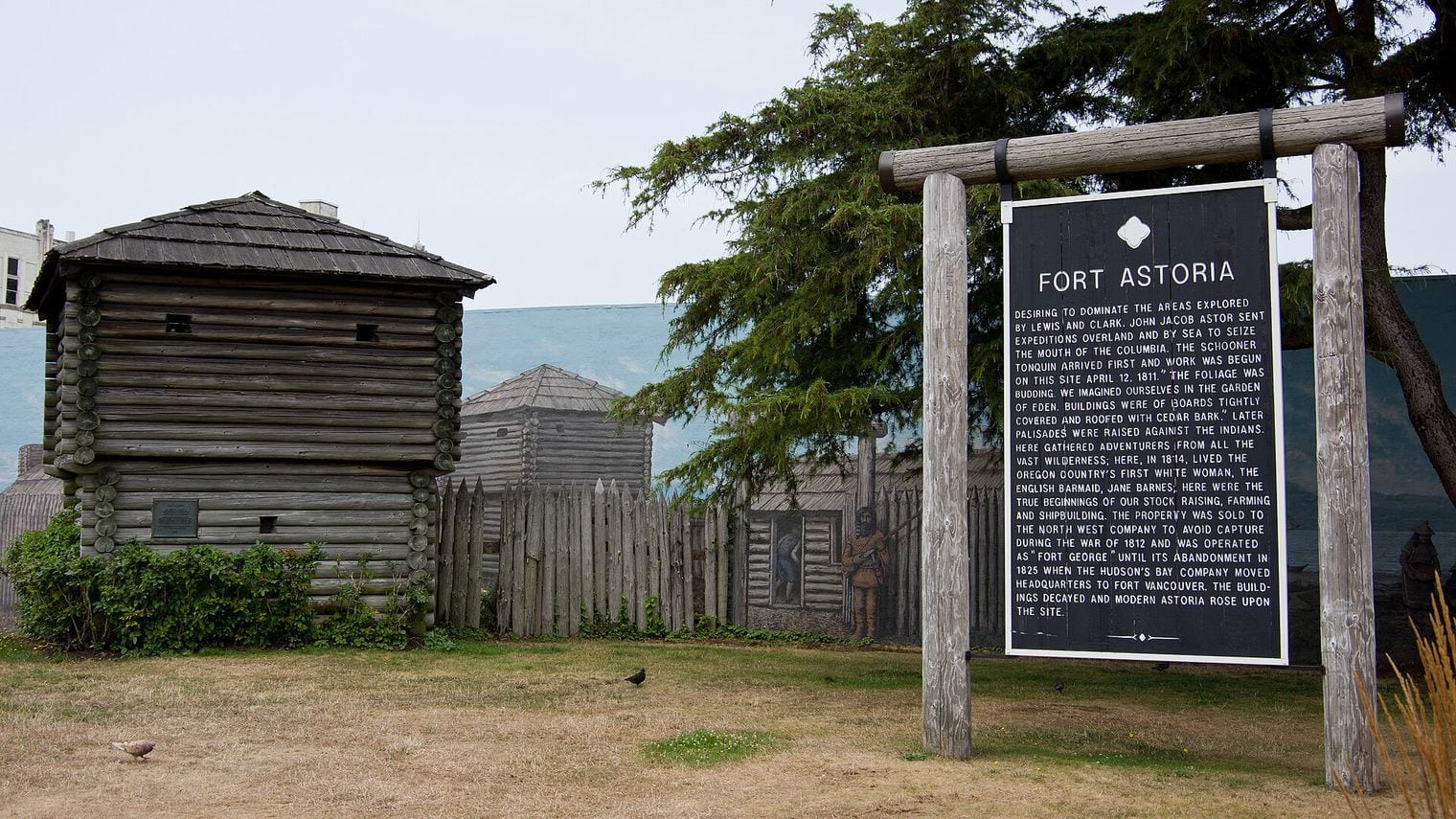
Fort Astoria marks the spot where the city began — a fur-trading post founded in 1811 by John Jacob Astor's Pacific Fur Company, the first permanent American settlement on the Pacific coast. It gave the town both its name and its reason for being.
The British seized the post during the War of 1812 and renamed it Fort George, before it passed back to American hands and stayed in use until 1848. Today a small downtown commemorative park traces the fort's footprint on the pavement, with a partial blockhouse replica and a plaque marking the roots of Astoria.
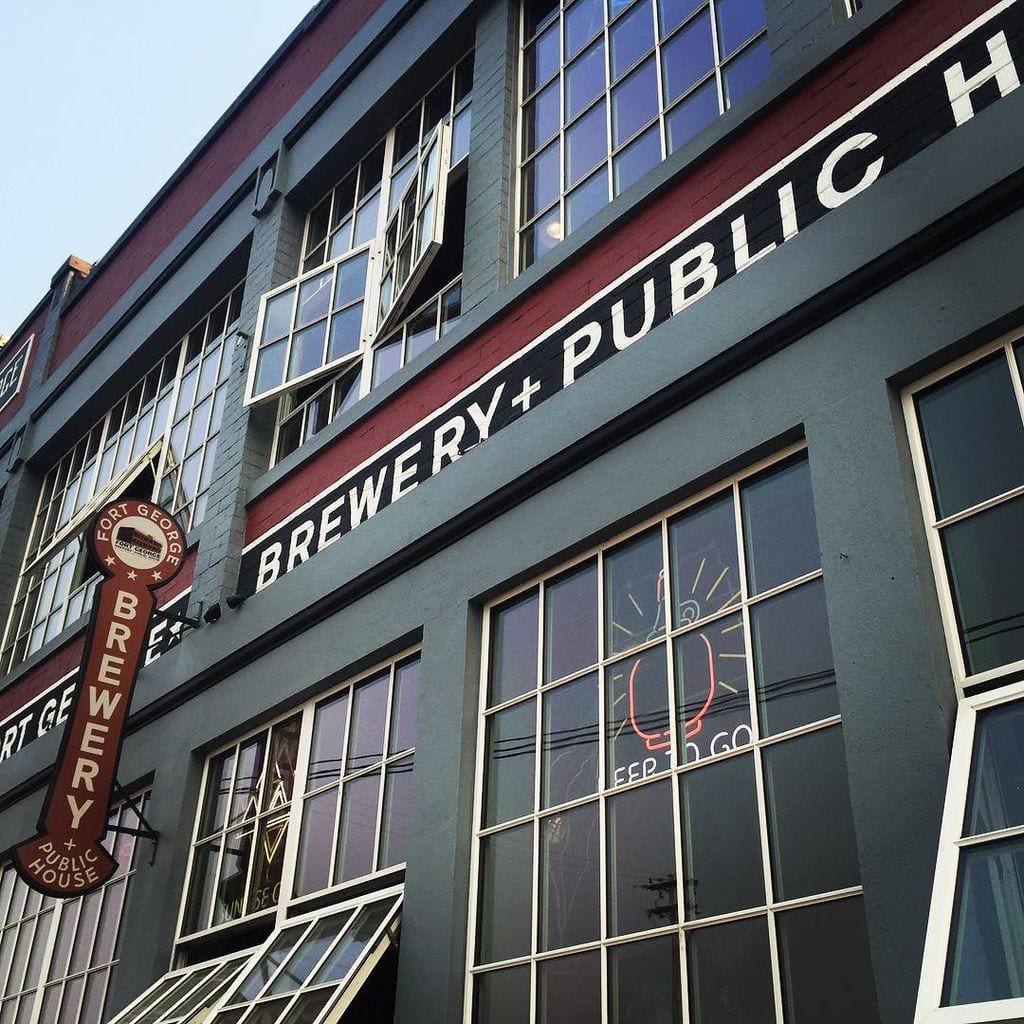
Fort George Brewery pours its beer on the very block where the original 1811 fort once stood — the "Fort George" name borrows the British-era title given to the post during the War of 1812. The brewery grew out of a former downtown car dealership.
What began as a small brewpub in 2007 has expanded into a 30-barrel brewhouse spread across a taproom, restaurants and a canning line. You can work through its rotating line-up of ales and lagers with the Columbia and the Washington hills in view, and weekend tours walk you through the brewing floor.
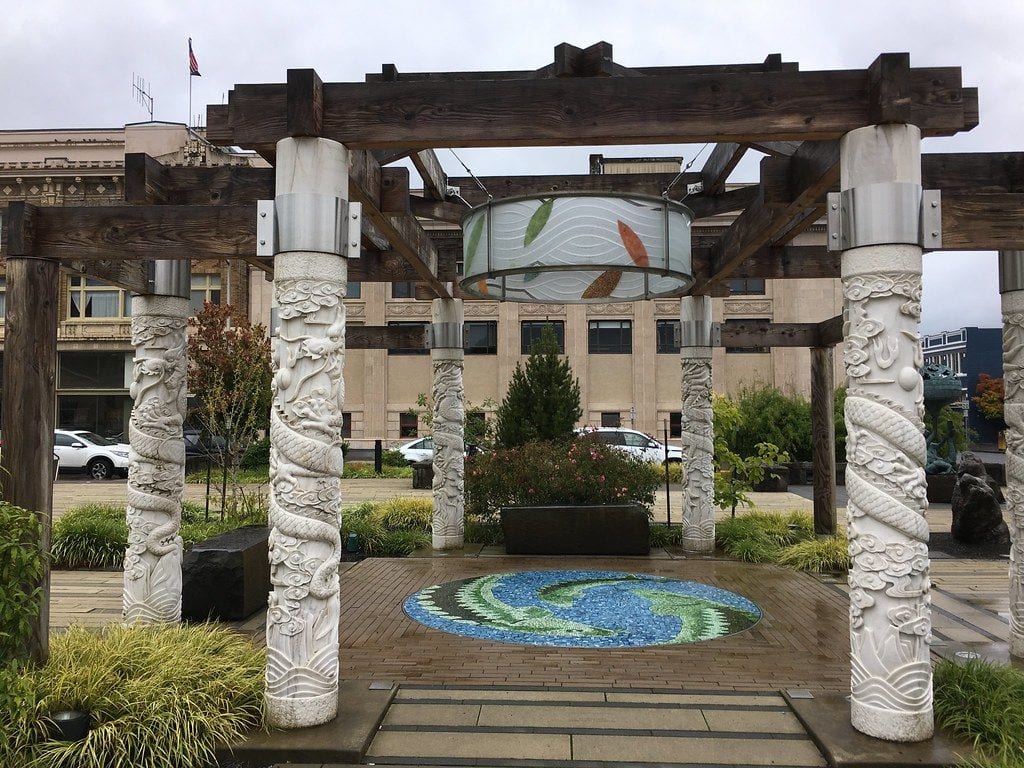
The Garden of Surging Waves is a downtown pocket park that honours the Chinese immigrants who worked Astoria's canneries and built its early economy. It opened in 2014 to mark the city's bicentennial.
Bronze and stone sculpture, a moon gate and an open-air amphitheatre fill the small plaza. A mosaic of nine salmon and three sturgeon salutes the cannery workers, another panel honours the railroad crews, and among eight carved dragon columns one is left deliberately broken — a quiet emblem of the families the Chinese pioneers left behind.
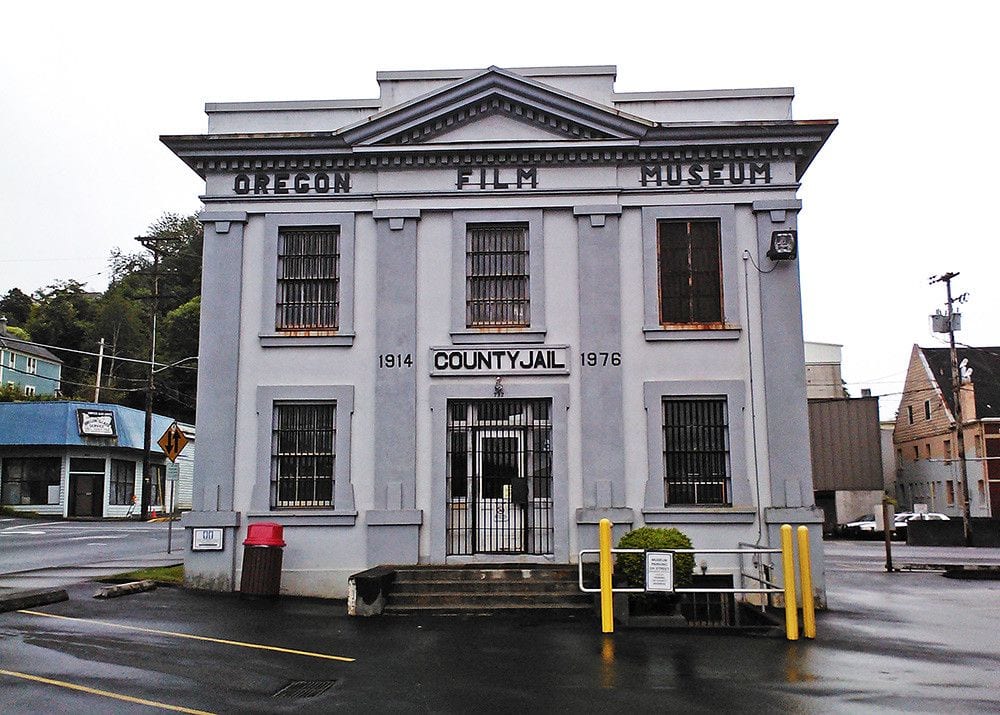
Oregon's varied landscapes have doubled for countless films, and the Oregon Film Museum tells that story from inside the old Clatsop County Jail — the same 1914 jailhouse that opens The Goonies. The building alone is a draw for fans of the 1985 film.
Galleries celebrate movies shot around the state, from The Goonies and Kindergarten Cop to One Flew Over the Cuckoo's Nest, filmed at the state hospital in Salem. Visitors can shoot their own scene on a green-screen set, edit it in a post-production booth and add a mugshot to the museum's wall of "prisoners".
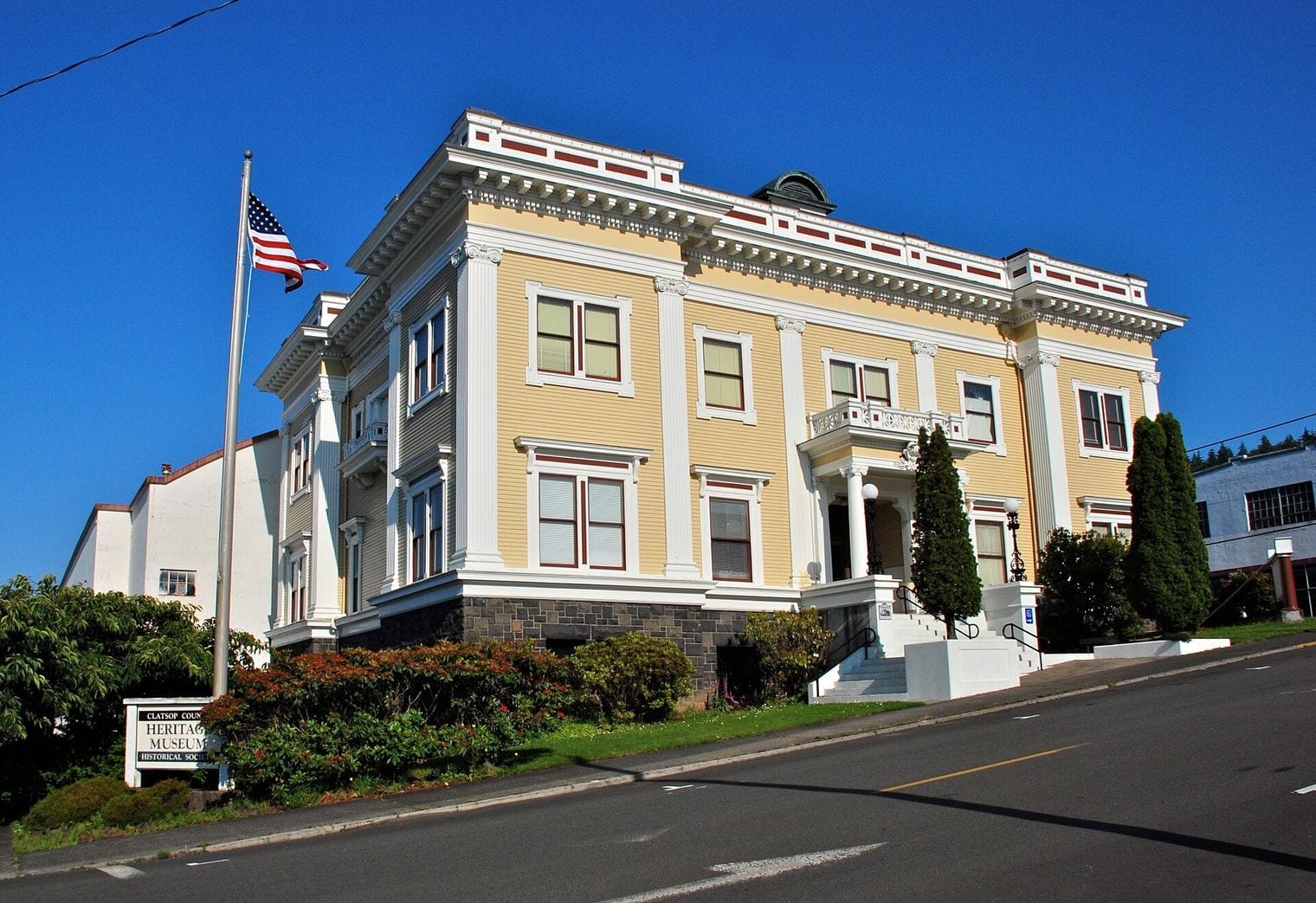
The Heritage Museum occupies Astoria's neoclassical former City Hall, designed by Portland architect Emil Schacht and completed in 1904. Its galleries carry the everyday history of Clatsop County.
The collection ranges from thousand-year-old Native hunting tools and Clatsop basketry to logging saws and fishing gear that trace the town's twin timber and salmon economies. A standout is the fully reconstructed Prohibition-era saloon, alongside an Emigrants gallery telling the stories of the Finnish, Chinese and Scandinavian communities who settled Astoria.
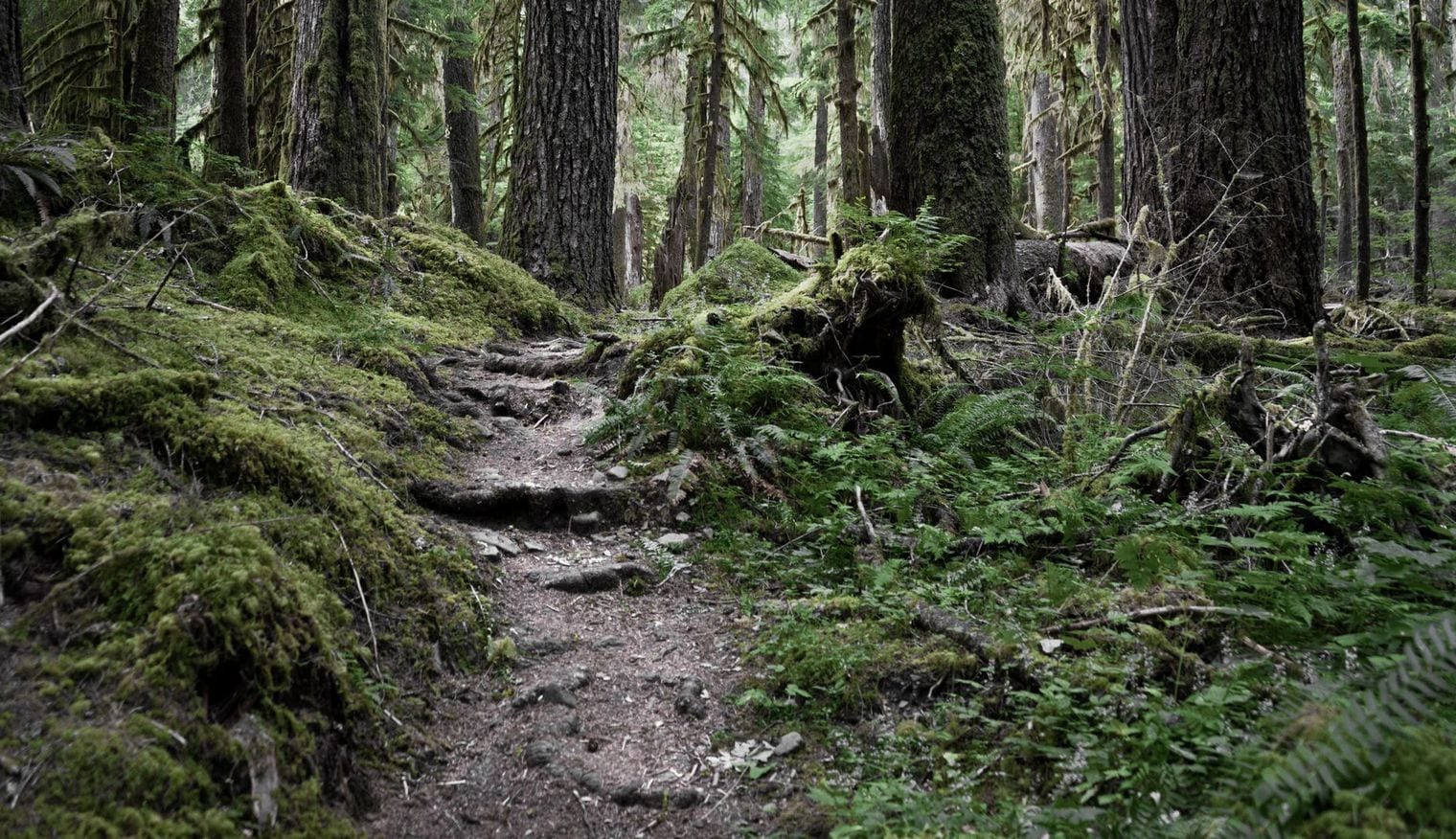
The Cathedral Tree Trail is a free, roughly one-mile footpath that climbs the forested flank of Coxcomb Hill through old-growth Sitka spruce, western hemlock and thick moss. It offers a wilder, quieter alternative to driving up to the Astoria Column.
Its namesake is the Cathedral Tree, a Sitka spruce more than 300 years old that sprouted from a fallen nurse log and now stands around 200 feet tall and some eight feet across, with a hollow arch at its base you can step through. From the tree, the trail carries on uphill to connect with the Astoria Column at the top of the ridge.
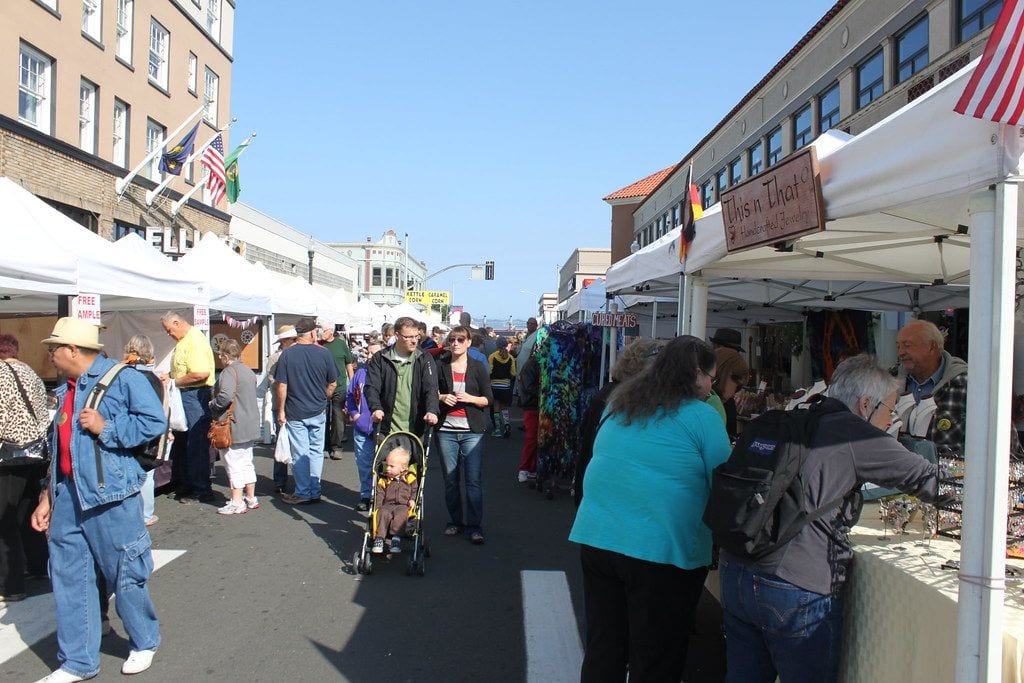
The Astoria Sunday Market spreads across four blocks of downtown from May through October, one of the largest open-air markets in Oregon since it started in 2000. Locals and day-trippers pack the streets every Sunday of the season.
Roughly 200 vendors line the pavement with regional produce, handmade crafts, jewellery, preserves and fine art, backed by a food court and live music through the day. It is the easiest place in town to sample the surrounding farms and pick up something made on the north Oregon coast.
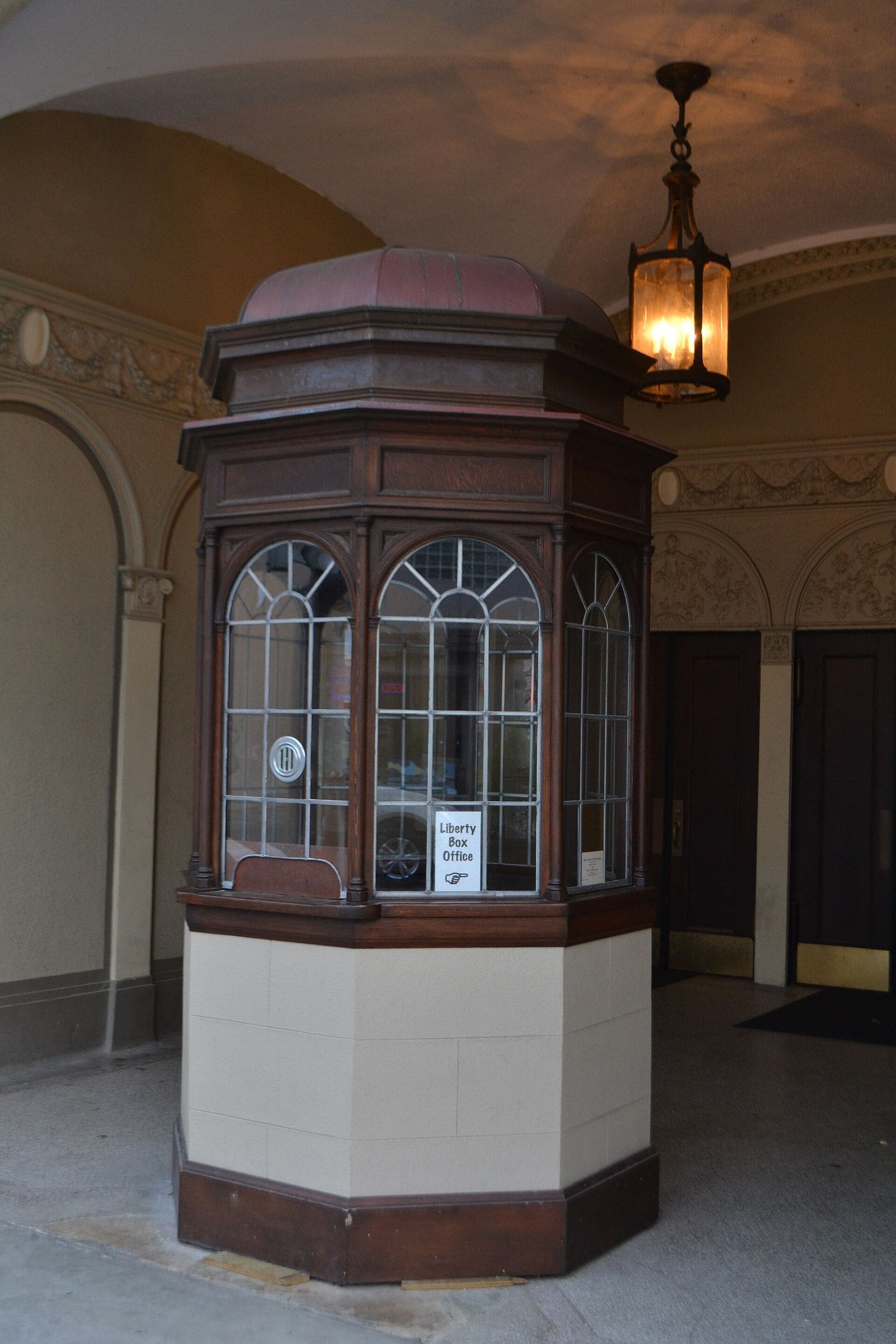
The Liberty Theatre is downtown Astoria's restored performing-arts hall and a centrepiece of its cultural calendar, hosting touring artists, the Astoria Music Festival and the North Coast Symphonic Band.
It opened in 1925 as a vaudeville and movie palace — the first theatre to rise after the fire that levelled much of downtown in 1922, and so a symbol of the city's recovery. Careful restorations have preserved its Italianate interior, right down to the twelve murals of Venetian scenes ringing the auditorium.
Josephson's Smokehouse has smoked Columbia River seafood at 106 Marine Drive since 1920, when Finnish immigrant and salmon fisherman Anton Josephson opened it. Four generations of the family have run it, making it one of the oldest continuously operating smokehouses on the West Coast.
The shop still cures its fish the old way, over alder in on-site smokers, and sells it fresh from the racks — smoked salmon and sturgeon, salmon jerky, canned tuna and smoked scallops among them. The smell of alder smoke greets you on the sidewalk, a working link to the cannery trade that built Astoria.
Beneath downtown Astoria runs a network of tunnels and shanghai passages dating to the early 1900s, first dug to move goods from the ships up into the shops and later used for rather less lawful ends, from opium dens to the crimping of sailors onto outbound vessels.
On the Underground Tour, guides who played in these tunnels as local kids lead you through the history and the darker legends, using lighting and effects along the way. The route takes in a below-ground room, still scattered with objects recovered from the passages, where transient men once slept.
The Columbia River Eco Tour is one of the finest ways to grasp the scale of the river and read the working waterfront from the water itself, gliding past the docks, the old canneries and out beneath the Astoria-Megler Bridge.
The skipper narrates old and new Astoria as you pass anchored freighters, floating homes and busy wharves. Nearer the Lewis and Clark National Wildlife Refuge, keep watch for bald eagles and osprey overhead and harbour seals in the channels of the lower Columbia.
Best Time to Visit Astoria
Late spring through early fall is the sweet spot. From June to September the coastal weather is at its driest and mildest, ideal for climbing the Astoria Column, walking the Riverwalk, and taking a river tour, and the calendar fills with events like the Scandinavian Midsummer Festival and the August Astoria Regatta. Fall holds onto the good weather while the summer crowds thin out.
Astoria sits in a cool, damp marine climate, so pack layers and rain gear in any season. Winter is the wettest and greyest stretch, but it has its own draw — dramatic storm-watching at the mouth of the Columbia, cozy brewpubs, and the offbeat FisherPoets Gathering in late February. The indoor museums and the Flavel House stay open year round, making the quiet off-season a fine time for a history-focused visit.
Getting to Astoria
Astoria sits at the far northwest corner of Oregon, where the Columbia River meets the Pacific, and two federal highways carry almost all road traffic into town. The coastal highway runs north–south along the shore, arriving from the beach towns to the south and then climbing onto the long Astoria–Megler Bridge to cross the river into Washington. The other highway runs east–west, beginning at the edge of Astoria and tracing the southern bank of the Columbia inland toward the metro area upriver; there is no Interstate directly into the city, so the last stretch is a two-lane river road either way you approach.
The nearest full-service commercial airport is the region’s main hub, roughly a two-hour drive inland to the east, and most visitors fly there and rent a car for the coastal leg. There is no passenger rail service into Astoria itself, but intercity and connecting bus coaches link the town to that inland hub, where you can pick up long-distance trains and additional bus routes. If you are not driving your own vehicle, plan on the bus-plus-rental or shuttle combination rather than arriving by train.
Getting Around Astoria
Astoria’s compact downtown and the waterfront along the Riverwalk are genuinely walkable, and once you are parked you can cover the historic core, the piers, and the maritime and museum district on foot. The town is famously hilly, though, so the residential neighbourhoods that climb toward the Astoria Column reward a car or a willing pair of legs, and the trolley and riverside path make the flat waterfront stretch easy to travel end to end. To reach the beaches, the state park, and the spit on the peninsula west of town, a car is effectively required.
Public transit is limited and geared to locals rather than sightseeing, so most visitors keep a car for anything beyond the centre; rideshare and taxis exist but can be sparse, especially in the evenings and shoulder seasons. Cycling suits the flat riverfront and the paved trail, less so the steep uphill blocks. Parking is generally the easy part of a visit here: there is street parking throughout downtown and larger lots near the waterfront attractions, and outside peak summer weekends you can usually find a spot close to wherever you are headed.
Where to Stay in Astoria
For a first visit, base yourself downtown or along the riverfront: this central district puts you within walking distance of the Riverwalk, the maritime museum, the shops and restaurants, and the trolley line, and it is the most atmospheric place to wake up with the working river out the window. The blocks that climb the hillside toward the Astoria Column trade walkability for quiet residential streets and view-over-the-river outlooks, a good fit if you want calm evenings and don’t mind a short drive or a steep stroll down to the action.
If you are passing through on the coastal or river highway rather than lingering, the outer edges of town near the highway corridor and the bridge approach are the most convenient for an easy in-and-out and quick access toward the state park and the beaches west of the city. Families and beachgoers often prefer basing on the peninsula side toward the dunes and shoreline, while anyone who wants to be in the thick of the historic core should stick to the central downtown and waterfront neighbourhoods.
Where to Eat in Astoria
Astoria’s dining clusters in the downtown core and along the riverfront, where the Riverwalk district lines up brewpubs, cafés, and seafood houses within a few walkable blocks. This is a fishing port at heart, so the signature eating is straight off the boats: fresh Dungeness crab, wild salmon, oysters, razor clams, and albacore tuna, most simply cooked and most local. Look for the Pacific Northwest classics too, like a bowl of clam chowder, fish and chips, and cedar-planked or smoked salmon, alongside a strong craft-beer scene that has become part of the town’s identity.
Beyond the seafood, the downtown streets carry the usual walkable range of coffee roasters, bakeries, farm-to-table spots leaning on Oregon produce and berries, and a scattering of casual international kitchens. Market stalls and the working waterfront are the place to buy crab and fish to cook yourself, and the brewery-and-taproom culture pairs naturally with the fried-oyster and chowder end of the menu.
One Day in Astoria
Astoria packs a river town’s worth of history into a walkable few blocks, so the trick to a single day is to earn your bearings up high, then work the waterfront downhill from museum to brewery.
Morning: Start before the crowds by driving up Coxcomb Hill to the Astoria Column, where the spiral climb and the view over the Columbia’s mouth put the whole layout of town, bridge, and estuary in front of you at once. Come back down to the river and give the morning to the Columbia River Maritime Museum, the finest thing of its kind on the West Coast, then walk it off along the Astoria Riverwalk, where sea lions bark from the pilings and the Riverfront Trolley rattles past on the old rail line. Look upriver and the green span of the Astoria-Megler Bridge reaches clear across to Washington.
Afternoon: Head into the historic core, starting with the Flavel House, a Queen Anne mansion built by the region’s first millionaire and preserved down to its parlor woodwork. A block away, the Oregon Film Museum sits in the old county jail where The Goonies opened, and the nearby Garden of Surging Waves honors the Chinese cannery workers who built much of the town’s early fortune.
Evening: Wind down with a pint at Fort George Brewery, poured in a rehabbed building on the site of Astoria’s founding fur-trade fort, then catch whatever is on the marquee at the beautifully restored Liberty Theatre. If you can spare a second day, drive west to Fort Stevens State Park for the skeletal Peter Iredale Wreck half-buried in the sand — a full open-air morning of its own.
Astoria makes a natural base for the northern Oregon Coast and the lower Columbia. Head south down the coastal highway and you string together the classic beach towns before reaching Newport, about three hours south, with its headlands and bayfront along the way. Just across the Astoria–Megler Bridge, the Washington side of the river mouth is barely half an hour away, where Cape Disappointment State Park guards the treacherous Columbia Bar with its lighthouses and cliff-top trails.
Cross the bridge and turn north on the Interstate and the Puget Sound cities open up: Olympia, the Washington state capital, is roughly two hours north, and Tacoma with its museums and waterfront is about two and a half hours north. Any of these works as a full-day outing, though the coastal drives reward an early start, and the beaches and river-mouth parks closer to town are easy half-day escapes if you would rather not stray far.
FAQ: Visiting Astoria
What is Astoria best known for?
Astoria is best known as the oldest American settlement west of the Rockies and for its maritime heritage. Landmarks like the 1926 Astoria Column, the Columbia River Maritime Museum, the Peter Iredale shipwreck at Fort Stevens, and the Goonies-famous Oregon Film Museum draw most visitors to this hilltop town at the mouth of the Columbia.
Is Astoria worth visiting?
Yes. Few small towns pack in this much history and coastline. You can climb the Astoria Column for sweeping river views, tour the Columbia River Maritime Museum, walk the waterfront Riverwalk, and reach the beaches and shipwreck of Fort Stevens State Park within minutes, making Astoria an easy and rewarding stop on the Oregon coast.
How many days do you need in Astoria?
Two days suits most visitors. One day covers the compact downtown, the Astoria Column, Flavel House and the Maritime Museum. A second day gives you time for Fort Stevens State Park, the Peter Iredale wreck, Fort Clatsop and a Columbia River Eco Tour on the water. History enthusiasts could easily fill a third.
What can you do for free in Astoria?
Plenty. The Astoria Riverwalk, Fort Astoria's commemorative park, the Garden of Surging Waves plaza and Comcomly's Memorial on Coxcomb Hill all cost nothing. The Cathedral Tree Trail is a free old-growth hike, and watching the barking sea lions haul out on the East Mooring Basin docks is a no-cost Astoria highlight.
When is the best time to visit Astoria?
Summer, from June through September, brings the driest weather and the fullest calendar, including the Astoria Sunday Market from May to October and the four-day Astoria Regatta each August. Winter is wetter but rewards storm-watchers at Clatsop Spit and the South Jetty, where Pacific gales pile surf against the Columbia bar.