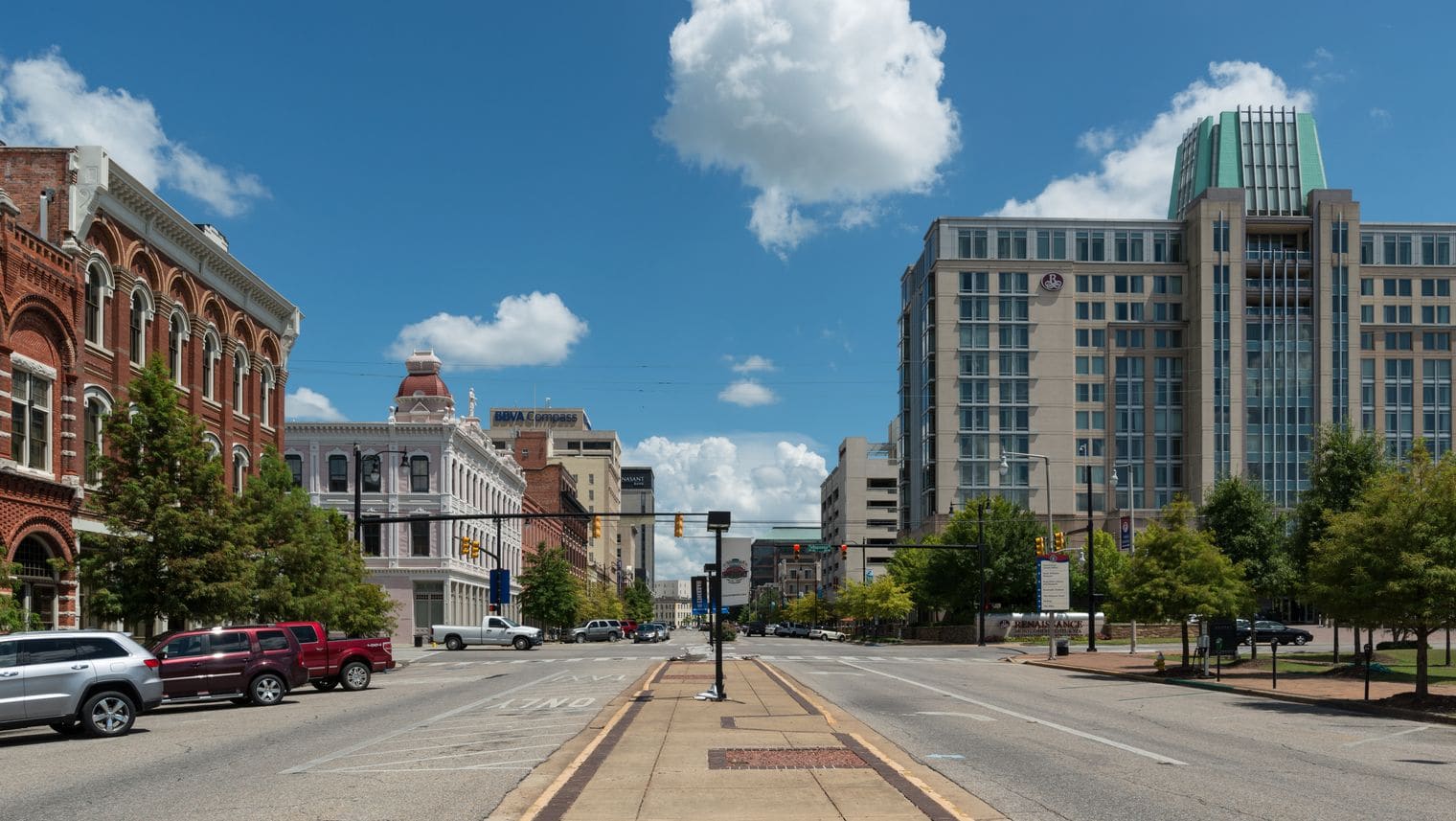
Rocket science in the north, civil-rights history in the heart, and sugar-white beaches on the Gulf — Alabama covers more ground than its size suggests.
Alabama runs from the Appalachian foothills and river valleys of the north down to the white-sand Gulf shore, threading through the civil-rights landmarks of Montgomery, Selma and Birmingham along the way. Use this hub to plan your trip: browse our city guides below for Huntsville's Rocket City science scene, Montgomery's history and Auburn's college-town energy, then work outward to the beaches and the mountains.
Known for
Civil-rights history, space & Gulf beaches
Best for
History, science museums & the coast
Capital
Montgomery
Main gateway
Birmingham-Shuttlesworth Int'l (BHM)
Time zone
Central (CT)
Trip planner
Plan your trip to Alabama
Best time to visit — season by season
Spring
Mar–May
Arguably the finest season statewide — azaleas and dogwoods bloom, temperatures sit in the comfortable 70s°F, and the humidity has yet to build. Ideal for touring Montgomery and Birmingham's civil-rights sites on foot.
Summer
Jun–Aug
Hot and humid, with highs in the 90s°F and near-daily afternoon thunderstorms. This is beach season on the Gulf at Gulf Shores and Orange Beach, though it's also peak hurricane-watch time along the coast.
Fall
Sep–Nov
Warm, drier and less crowded, with college football filling every Saturday in Auburn and Tuscaloosa. The Gulf water stays swimmable well into October, and the northern hills take on autumn colour.
Winter
Dec–Feb
Mild by national standards — days often reach the 50s and 60s°F, with hard freezes rare and snow rarer still. A quiet, budget-friendly window for indoor attractions like Huntsville's rocket centre and the state's museums.
Regions of Alabama
The Tennessee Valley & north Alabama
The state's northern tier, where Huntsville pairs the U.S. Space & Rocket Center with a booming tech scene, and the Appalachian foothills roll toward Little River Canyon, Lookout Mountain and the caves and waterfalls of DeSoto State Park.
Birmingham & the central heartland
The old iron-and-steel capital, where Birmingham anchors the Civil Rights District, Vulcan Park and Red Mountain, with Tuscaloosa and the University of Alabama a short drive to the southwest.
Montgomery & the River Region
The capital and a cradle of the civil-rights movement, where Montgomery holds the Rosa Parks Museum, the Dexter Avenue church and the Legacy sites, on the Alabama River between Selma and the Black Belt.
The Plains & east Alabama
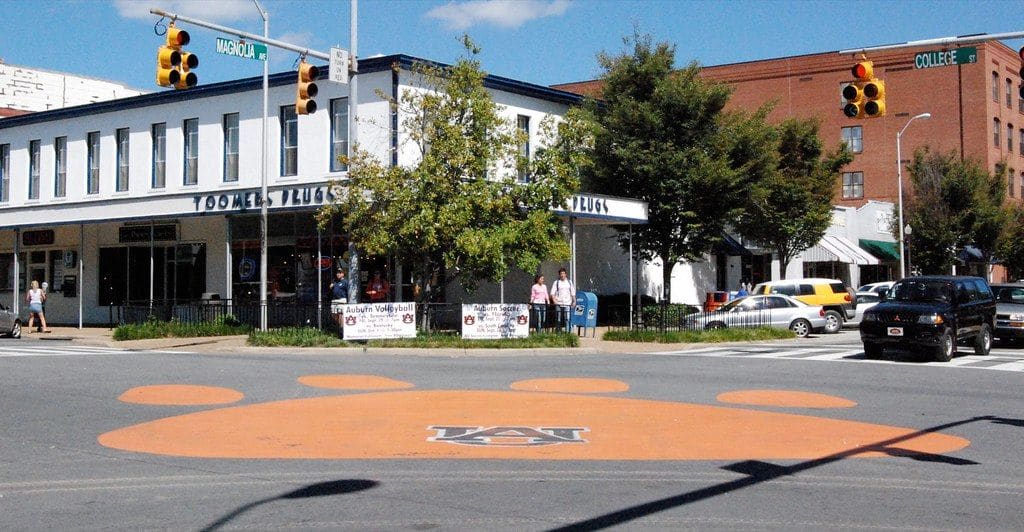
College-town country, where Auburn brings the energy of Auburn University and Jordan-Hare Stadium, close to the Chattahoochee River and the pine woods along the Georgia line.
The Gulf coast & Mobile
Alabama's beach corner, where the sugar-white sand of Gulf Shores and Orange Beach meets the historic port city of Mobile — birthplace of American Mardi Gras — and the marshes of the Mobile-Tensaw Delta.
Getting around
A rental car is essential: Alabama's draws are spread from the Tennessee Valley in the north to the Gulf coast some 350 miles south, and public transit between cities is minimal. Birmingham-Shuttlesworth International is the largest airport and the most central gateway, with Huntsville and Montgomery offering smaller regional airports and the beach crowd often flying into Pensacola just over the Florida line. Interstates 65, 20 and 59 link the major cities, and the whole state sits in the Central time zone, so there are no clock changes to track as you drive.
The highlights Alabama's signature sights & road trips
Little River Canyon & Lookout Mountain Waterfalls, sandstone gorges and Appalachian scenery in the state's northeastern corner.
Suggested routes
The civil-rights heartland loop
3–4 days
A focused trip through the landmarks of the movement, easy to string together in central Alabama. Base yourself in Birmingham or Montgomery; the sites sit within a couple of hours of one another.
Birmingham — Civil Rights District & Sixteenth Street Baptist Church
The full length of the state, from the space attractions and mountains of the north down to the white sand of the coast — a big Central-time drive with a stop in the capital along the way.
Huntsville — U.S. Space & Rocket Center & the north Alabama hills
Birmingham — Vulcan Park & the Civil Rights District
Spring and autumn are the sweet spots. March through May brings blooming azaleas, comfortable temperatures and low humidity, ideal for touring the cities and civil-rights sites. Autumn is warm and drier with college football in full swing, and the Gulf stays swimmable into October. Summers are hot and humid but are peak beach season on the coast.
How many days do you need in Alabama?
A focused trip to one area — Huntsville's space attractions, the Montgomery and Birmingham civil-rights corridor, or the Gulf beaches — works well in three to four days. Linking the north, the heartland and the coast into one loop comfortably takes a week or more, given the roughly 350 miles between the Tennessee Valley and the shore.
Do you need a car in Alabama?
Yes. The state's attractions are spread from the northern hills to the Gulf coast and are thinly served by public transit, so a rental car is essential. Most visitors fly into Birmingham-Shuttlesworth International, the largest and most central airport, or into the smaller Huntsville and Montgomery airports depending on their route.
What is Alabama best known for?
Alabama is famous for its central role in the civil-rights movement — Montgomery, Selma and Birmingham are landmarks of that history — along with Huntsville's 'Rocket City' space heritage at the U.S. Space & Rocket Center, passionate college football at Auburn and Alabama, and the white-sand Gulf beaches at Gulf Shores and Orange Beach.
Which Alabama cities are best for civil-rights history?
Montgomery is the essential stop, with the Rosa Parks Museum, the Dexter Avenue King Memorial Baptist Church and the Legacy Museum and National Memorial for Peace and Justice. Pair it with Birmingham for the Civil Rights District and Sixteenth Street Baptist Church, and with the Edmund Pettus Bridge in nearby Selma, all within an easy drive of one another.
Are Alabama's Gulf beaches worth visiting?
Very much so. Gulf Shores and Orange Beach on the Alabama coast have some of the whitest sand and warmest water on the Gulf, with a laid-back, family-friendly feel and Gulf State Park backing the shore. The water is warm enough to swim from late spring well into autumn.
What is there to do in Huntsville, Alabama?
Huntsville is 'Rocket City', home to the U.S. Space & Rocket Center — one of the largest space museums in the world and the home of Space Camp — alongside the legacy of NASA's Marshall Space Flight Center. Beyond the rockets, it has a fast-growing food and brewery scene, the Huntsville Botanical Garden and easy access to the north Alabama mountains.
Does it snow in Alabama?
Rarely. Alabama winters are mild, with daytime highs often in the 50s and 60s°F and hard freezes uncommon. Measurable snow is unusual anywhere in the state and mostly confined to a rare dusting in the northern hills, so winter is a comfortable, quiet time for indoor attractions and museum-going.
We use cookies to analyse site traffic and improve your experience.
You can accept or reject analytics cookies. See our Cookie Policy.