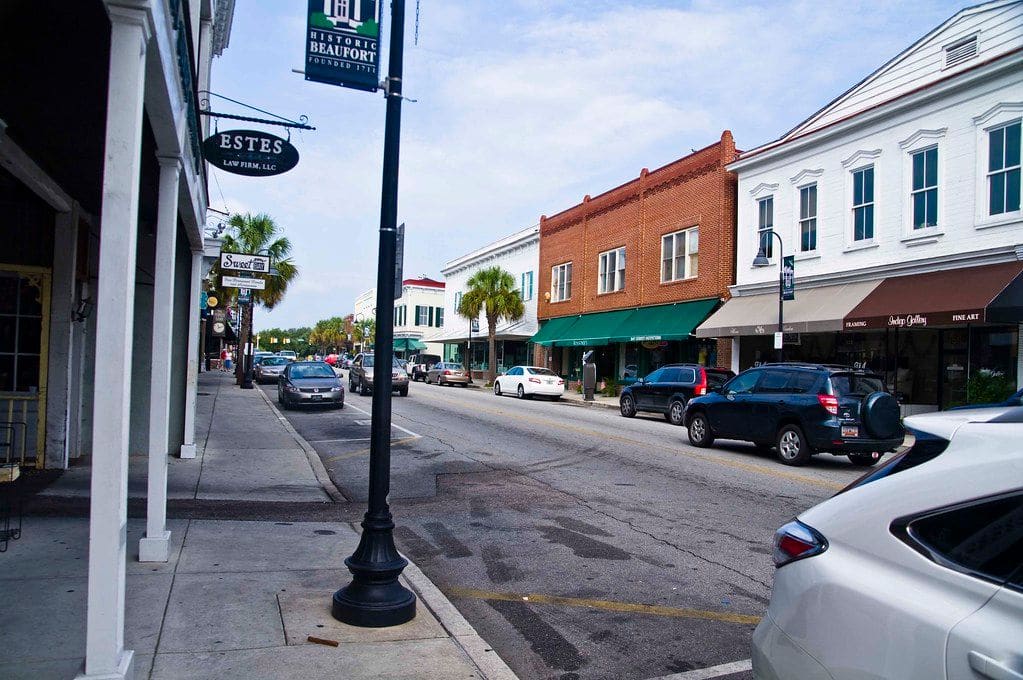
From Blue Ridge waterfalls to the sea-island marshes of the Lowcountry, few states pack this much history and coastline into one easy drive.
South Carolina runs from the Blue Ridge foothills of the Upstate down through the capital, Columbia, to a long Atlantic coast of historic port cities, sea islands and wide beaches. It's the state of antebellum Charleston, the Grand Strand at Myrtle Beach, the salt-marsh Lowcountry around Beaufort and Hilton Head, and old-growth swamp forest at Congaree. Use this hub to plan your trip: browse our city guides below, or read on for the best regions, seasons and road-trip routes.
Known for
Historic coast & Lowcountry
Best for
Beaches, history & Southern food
Capital
Columbia
Main gateway
Charleston Int'l (CHS)
Time zone
Eastern (ET)
Trip planner
Plan your trip to South Carolina
Best time to visit — season by season
Spring
Mar–May
The best all-round window on the coast: mild days in the 70s°F, azaleas and dogwoods blooming in Charleston and Beaufort, and the ocean warming before the summer humidity settles in.
Summer
Jun–Aug
Beach high season along the Grand Strand and the sea islands, hot and humid statewide with frequent afternoon thunderstorms. This is peak Atlantic hurricane season, so watch coastal forecasts from late summer into autumn.
Fall
Sep–Nov
Warm surf and thinner crowds linger on the coast into October, while the Upstate's Blue Ridge foothills turn colour around Table Rock and Caesars Head. Comfortable, drier days make it prime touring weather.
Winter
Dec–Feb
Mild and quiet compared with the north — Charleston and the Lowcountry rarely freeze and stay pleasant for walking, while the mountains near the North Carolina line can see frost and the occasional dusting of snow.
Regions of South Carolina
The Lowcountry & sea islands
South Carolina's marshy southern coast, where Charleston's historic peninsula, the sea-island town of Beaufort and the resort island of Hilton Head sit among tidal creeks, Gullah heritage and Spanish-moss oaks.
The Grand Strand
The 60-mile beach arc of the state's northeastern coast, anchored by Myrtle Beach with its boardwalk, golf and family attractions, running north to Little River and south to the quieter shores of Pawleys Island and Georgetown.
The Midlands
The centre of the state around the capital, Columbia, home to the University of South Carolina and the old-growth floodplain forest of Congaree National Park just to the southeast.
The Upstate
The rolling foothills of the northwest, where Greenville anchors a revived downtown and the Blue Ridge Escarpment rises at Table Rock, Caesars Head and Jones Gap, with waterfalls and the state's highest point at Sassafras Mountain near the North Carolina line.
Getting around
A rental car is the practical way to see South Carolina: the coast, the capital and the mountains are spread across the state and thinly linked by transit. Charleston International is the main gateway for the historic coast and the Lowcountry, while Myrtle Beach International serves the Grand Strand and Greenville–Spartanburg covers the Upstate. Interstate 95 runs the length of the state inland, and coastal US 17 threads the sea islands and beach towns; historic Charleston and Beaufort are best explored on foot once you've parked.
The highlights South Carolina's signature sights & road trips
South Carolina highlights at a glance
Charleston's historic peninsula Cobbled streets, antebellum mansions, the Battery and a celebrated restaurant scene on a walkable harbour peninsula.
Fort Sumter The harbour island fort where the Civil War's first shots were fired, reached by boat from Charleston.Basecamp: Charleston
The Grand Strand A 60-mile arc of Atlantic beach centred on Myrtle Beach, with a boardwalk, golf and family attractions.
Congaree National Park One of the last great old-growth floodplain forests, laced with boardwalks and blackwater paddling near Columbia.Basecamp: Columbia
The Blue Ridge Escarpment Waterfalls, cliffs and Upstate escarpment landmarks like Table Rock, Caesars Head and Jones Gap, near the state's highest point at Sassafras Mountain.
Suggested routes
The historic coast run
~1 week
South Carolina's signature road trip, tracing the Atlantic coast from the lively Grand Strand down through historic Charleston to the sea-island Lowcountry near the Georgia line. Run it in either direction; this is the southbound version.
Hilton Head Island — beach finish near the Georgia line
Lowcountry & Savannah short trip
3–4 days
A focused long-weekend loop pairing historic Charleston with the quieter sea islands to its south, from a relaxed Lowcountry base that's within easy reach of Savannah, Georgia.
Hilton Head Island — resort beaches on the way south
Upstate mountains & waterfalls
2–3 days
A short escape into the Blue Ridge foothills of the northwest, linking Greenville's revived downtown with the escarpment's cliffs and waterfalls along the Cherokee Foothills Scenic Highway.
Greenville — downtown and Falls Park
Table Rock State Park — classic peak hike
Caesars Head State Park — cliff views and Raven Cliff Falls
Jones Gap State Park — waterfall trails in the gorge
Spring, roughly March through May, is the sweet spot on the coast — mild, blooming and less humid, with warming water. Autumn is nearly as good, holding warm surf into October while the Upstate mountains turn colour. Summer is peak beach season but hot, humid and the height of hurricane watch; winters are mild in the Lowcountry and quietest for touring Charleston.
How many days do you need in South Carolina?
Three to four days is enough to focus on one area, such as Charleston and the Lowcountry, or a Grand Strand beach break at Myrtle Beach. Linking the coast with Columbia and the Upstate mountains makes a fuller week-long road trip, and a full loop of coast, capital and Blue Ridge foothills is comfortable in about ten days.
Do you need a car in South Carolina?
Yes, for most trips. The coast, the capital and the mountains are spread across the state and thinly served by transit, so a rental car is the practical choice. The exceptions are the walkable historic cores of Charleston and Beaufort, which are best explored on foot once you've parked.
What is South Carolina best known for?
South Carolina is famous for historic Charleston and its harbour fort at Fort Sumter, the wide beaches of the Grand Strand around Myrtle Beach, the Gullah culture and salt marshes of the Lowcountry sea islands, and Lowcountry cooking — shrimp and grits, she-crab soup and boiled seafood. Inland, it's known for Congaree's old-growth swamp forest and the Blue Ridge foothills of the Upstate.
What is the Lowcountry in South Carolina?
The Lowcountry is the low-lying southern coast of the state, a landscape of tidal salt marshes, barrier sea islands and Spanish-moss live oaks. It takes in Charleston, Beaufort and Hilton Head, and is the heartland of Gullah Geechee culture and Lowcountry cuisine. Beaufort, roughly midway between Charleston and Savannah, makes a relaxed base for exploring it.
Where are the best beaches in South Carolina?
The Grand Strand around Myrtle Beach has the longest, liveliest stretch of sand and the most family attractions. For quieter shores, try Pawleys Island and Litchfield just to the south, the resort beaches of Hilton Head and Kiawah in the Lowcountry, or Folly Beach and the Isle of Palms near Charleston.
Is Charleston or Myrtle Beach better to visit?
They suit different trips. Charleston is the historic, culinary and cultural draw — cobbled streets, antebellum architecture, Fort Sumter and celebrated restaurants — and pairs naturally with the Lowcountry sea islands. Myrtle Beach on the Grand Strand is the beach-holiday hub, built for golf, boardwalk amusements and family days on wide Atlantic sand. Many road trips take in both.
Does South Carolina get hurricanes?
Yes. The Atlantic coast is exposed during hurricane season, which runs from June through November and peaks from late August into October. Direct hits are relatively infrequent but coastal storms, heavy rain and rough surf are possible, so it's worth watching forecasts if you're visiting the beaches or the Lowcountry in late summer or early autumn.
We use cookies to analyse site traffic and improve your experience.
You can accept or reject analytics cookies. See our Cookie Policy.