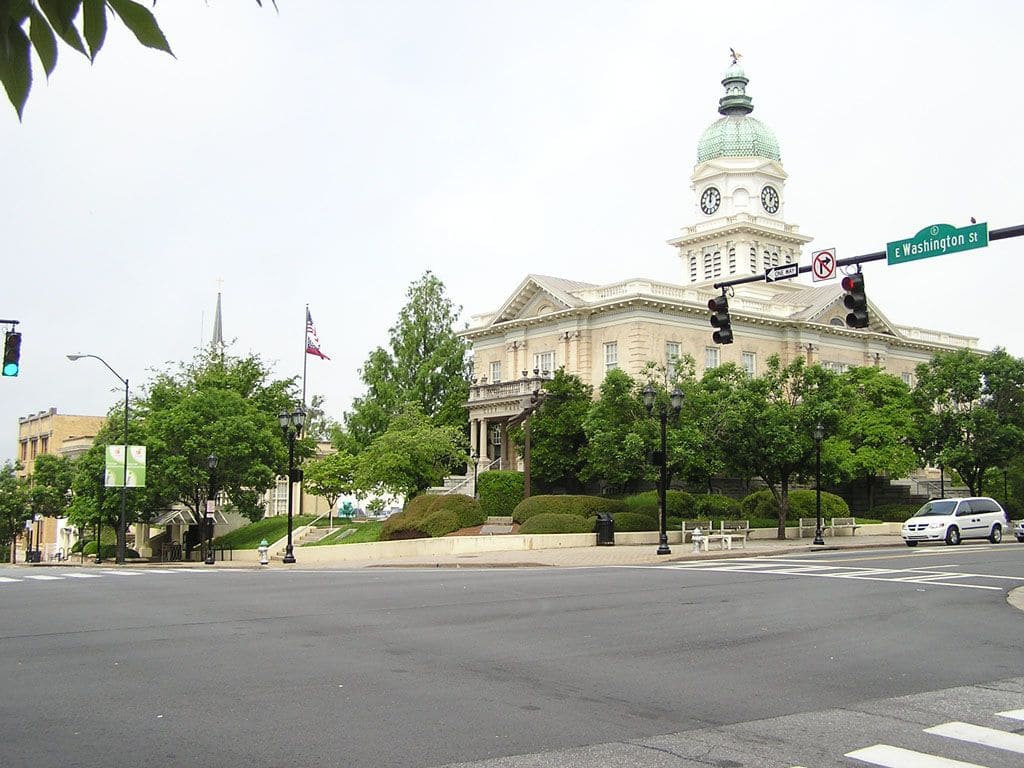
From mountain waterfalls to moss-draped squares and wild-horse beaches, Georgia stretches across three landscapes in a single drive.
Georgia runs from the Blue Ridge foothills in the north down to the salt marshes and barrier islands of the Atlantic coast, with Atlanta's big-city energy in the middle and antebellum Savannah, the Okefenokee Swamp and the Golden Isles filling out the map. Use this hub to plan your trip: browse our city guides below, or start with the highlights and road-trip routes for the headline sights across the Peach State.
Known for
Southern charm, coast & mountains
Best for
Historic cities, beaches & hiking
Capital
Atlanta
Main gateway
Hartsfield-Jackson Atlanta Int'l (ATL)
Time zone
Eastern (ET)
Trip planner
Plan your trip to Georgia
Best time to visit — season by season
Spring
Mar–May
Georgia's finest season: dogwoods and azaleas bloom across Atlanta and Savannah, the coast warms up and days sit comfortably in the 70s°F before the humidity builds. Ideal for the historic cities and the mountains alike.
Summer
Jun–Aug
Hot and humid statewide, with temperatures often topping 90°F and afternoon thunderstorms common. The coast and the barrier islands draw beach crowds, while the cooler north Georgia mountains offer waterfalls and shade.
Fall
Sep–Nov
A second sweet spot: humidity drops, the Blue Ridge puts on strong autumn colour in October, and the cities are pleasant again. Hurricane season lingers into autumn, so keep an eye on the coast early on.
Winter
Dec–Feb
Mild by national standards — Savannah and the south stay walkable and rarely freeze, while the north Georgia mountains turn cold and can see occasional snow. A quiet, low-crowd time for the coast and cities.
Regions of Georgia
Atlanta & the metro
The state's capital and cultural hub, where Atlanta pairs the Georgia Aquarium, the World of Coca-Cola and Martin Luther King Jr.'s birthplace with leafy neighbourhoods, the BeltLine trail and Stone Mountain just to the east.
North Georgia mountains
The Blue Ridge and Appalachian foothills, where towns like Blue Ridge, Helen and Dahlonega sit among waterfalls, wineries and the southern end of the Appalachian Trail at Amicalola Falls and Springer Mountain.
Savannah & the coast
Georgia's antebellum showpiece, where Savannah's oak-shaded squares and River Street lead to Tybee Island's beaches, with the Golden Isles and wild Cumberland Island stretching south down the shore.
The Golden Isles & the deep south
The barrier-island coast around Brunswick — St Simons, Jekyll and Sea Island — plus the vast Okefenokee Swamp inland, North America's largest blackwater wetland and a haven for alligators and wading birds.
Central & south Georgia
The agricultural heartland and college-town belt, where Athens brings live music and the University of Georgia, Macon carries deep music history, and Valdosta anchors the far south near the Florida line.
Getting around
A rental car is the practical choice for exploring Georgia: the mountains, the coast and the southern swamp country are spread far apart and thinly served by transit between cities. Hartsfield-Jackson Atlanta International is the main gateway — the busiest airport in the world — and puts most of the state within a half-day's drive, while Savannah has its own smaller airport for a coast-first trip. Atlanta itself has the MARTA rail system and Savannah's historic district is very walkable, but you'll want a car to link the regions and reach the islands, waterfalls and parks.
The highlights Georgia's signature sights & road trips
Georgia's signature draws
Savannah Historic District Twenty-plus oak-shaded squares, antebellum mansions and River Street along the water — one of America's most walkable historic cities.Basecamp: Savannah
Okefenokee Swamp North America's largest blackwater swamp, explored by boat or boardwalk among cypress, Spanish moss and thousands of alligators.
Cumberland Island National Seashore A wild, ferry-only barrier island of empty beaches, maritime forest and free-roaming wild horses, with the ruins of the Carnegies' Dungeness estate.
Blue Ridge & the north Georgia mountains Appalachian foothills with waterfalls, wineries and the southern start of the Appalachian Trail — Amicalola Falls is the tallest cascading waterfall in Georgia.
Atlanta's attractions The Georgia Aquarium, the World of Coca-Cola, the Martin Luther King Jr. National Historical Park and the BeltLine, all in the walkable city core.
The Golden Isles The barrier-island coast around Brunswick — St Simons, Jekyll Island and Sea Island — with beaches, salt marsh and historic resort grandeur.
Suggested routes
Atlanta to the coast
~1 week
The classic Georgia crossing, linking the state's two great cities with college-town and music stops in between, finishing on the beach. Run it in either direction; this is the southbound version, ending on the coast.
A cool-weather escape into the Blue Ridge, pairing waterfalls, wineries and Appalachian Trail country on an easy loop out of Atlanta — best in spring or for autumn colour.
Atlanta — start point
Dahlonega — gold-rush town & wineries
Amicalola Falls — tallest cascading waterfall in Georgia
Helen — Alpine-themed village on the Chattahoochee
Blue Ridge — mountain-town base & scenic railway
Golden Isles & Okefenokee
3–4 days
A focused southern-coast trip pairing Georgia's barrier islands with the vast swamp inland — easy to reach from Jacksonville or the I-95 corridor.
Brunswick — gateway to the Golden Isles
Jekyll Island — beaches & historic district
St Simons Island — lighthouse & village
Cumberland Island — ferry from St Marys, wild horses
Spring (March to May) and autumn (September to November) are the most comfortable, with warm-but-not-humid days ideal for Savannah, Atlanta and the mountains, and strong autumn colour in the north Georgia hills in October. Summers are hot and humid statewide but perfect for the coast and barrier-island beaches, while winters stay mild in the south and only turn properly cold in the mountains.
How many days do you need in Georgia?
A focused trip to one region — Atlanta and its day-trips, or Savannah and the coast — works well in three to four days. To combine the historic cities with the mountains or the Golden Isles, plan on a week, and a full loop taking in Atlanta, the Blue Ridge, Athens and the coast comfortably fills ten days or more.
Do you need a car in Georgia?
For most trips, yes. Atlanta has the MARTA rail system and Savannah's historic core is walkable, but the mountains, the coast and the southern swamp country are spread far apart and thinly linked by transit, so a rental car is the practical way to connect the regions and reach the islands, waterfalls and parks. Most visitors fly into Atlanta and drive from there.
What is Georgia best known for?
Georgia is famous for the Southern charm of historic Savannah, the big-city culture of Atlanta — home to the world's busiest airport, the Georgia Aquarium and the civil-rights legacy of Martin Luther King Jr. — and its varied landscapes, from the Blue Ridge Mountains in the north to the Golden Isles beaches and the Okefenokee Swamp on the coast. It's also the Peach State, known for peaches, peanuts and Vidalia onions.
Is Atlanta or Savannah a better base?
It depends on your trip. Atlanta is the best base for city sights, sports, dining and day-trips into the north Georgia mountains, and it's the main flight gateway. Savannah is the better base for the coast, the beaches of Tybee Island and the Golden Isles, and for soaking up the state's historic, Spanish-moss atmosphere. Many visitors with a week split their time between the two.
What are the best beaches in Georgia?
Georgia's coast is short but scenic. Tybee Island near Savannah is the easiest beach day, while the Golden Isles around Brunswick — St Simons, Jekyll Island and exclusive Sea Island — offer wide sands and marsh views. For wild, undeveloped shoreline, Cumberland Island National Seashore is reachable only by ferry and known for its free-roaming wild horses and empty beaches.
Can you see the mountains and the coast in one trip?
Yes, though they sit at opposite ends of the state and it's a long drive between them — roughly five to six hours from the north Georgia mountains to the coast. Most travellers use Atlanta as a hub for the mountains and Savannah as a hub for the coast, linking the two with a stop in Athens, Macon or the central-Georgia towns along the way. Allow at least a week to do both comfortably.
What is there to do in south Georgia?
South Georgia rewards travellers who venture beyond the coast. The Okefenokee Swamp is the headline draw — you explore North America's largest blackwater swamp by boat, canoe or boardwalk among cypress forests and alligators — while Valdosta anchors the far south with parks and a lively college-town scene near the Florida border. It's also the heart of Georgia's peach, peanut and pecan country.
We use cookies to analyse site traffic and improve your experience.
You can accept or reject analytics cookies. See our Cookie Policy.