Where America meets the Pacific — a single island stitching white-sand reefs to latte stones, Spanish forts and the ghosts of a wartime landing.
Guam is the westernmost point of the United States, a tropical island in the Western Pacific where turquoise Tumon Bay and coral reefs meet living Chamorro culture and layered Spanish-colonial and Second World War history. Use this hub to plan your trip: browse our Guam guide below for the headline beaches, historic villages and battlefield parks, and get oriented on when to go, how to get around and what the island is known for.
The tail of the dry season and a fine time to come — warm, sunny days in the mid-80s°F, calm reefs off Tumon and the lowest humidity of the year before the wet season builds.
Summer
Jun–Aug
The wet season and the start of the typhoon window: hot, sticky and prone to heavy afternoon downpours. Storms mostly pass quickly, and the sea stays bath-warm, but keep an eye on tropical-system forecasts.
Fall
Sep–Nov
The peak of the rainy season and the most active stretch for typhoons through October, easing toward drier, clearer weather by late November. Diving visibility can dip after big rains.
Winter
Dec–Feb
The heart of the dry season and the most comfortable time to visit — steady trade winds, sunny skies, warm days and cooler nights, ideal for the beaches, snorkelling and southern-village drives.
Regions of Guam
Tumon & the resort strip
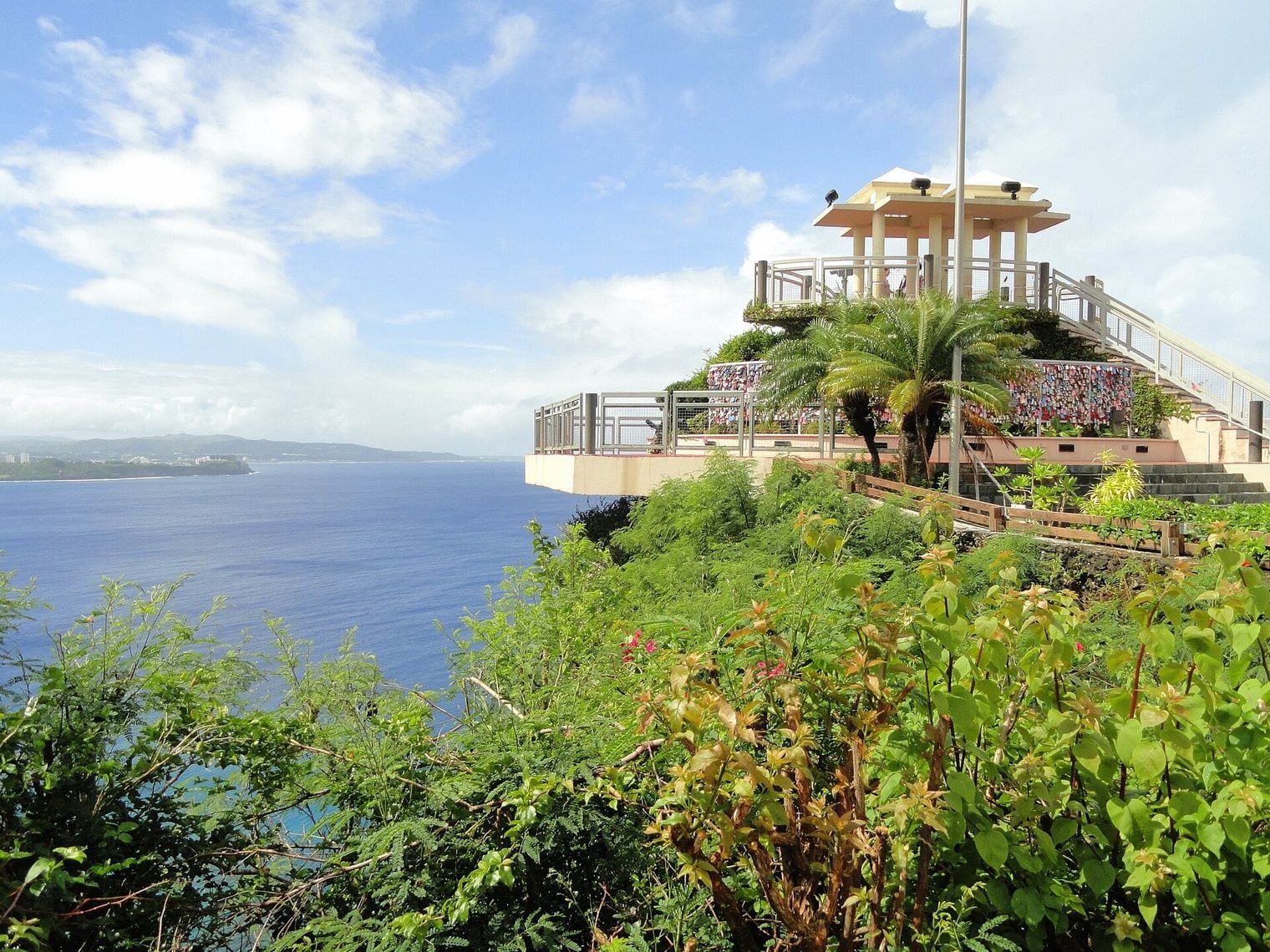
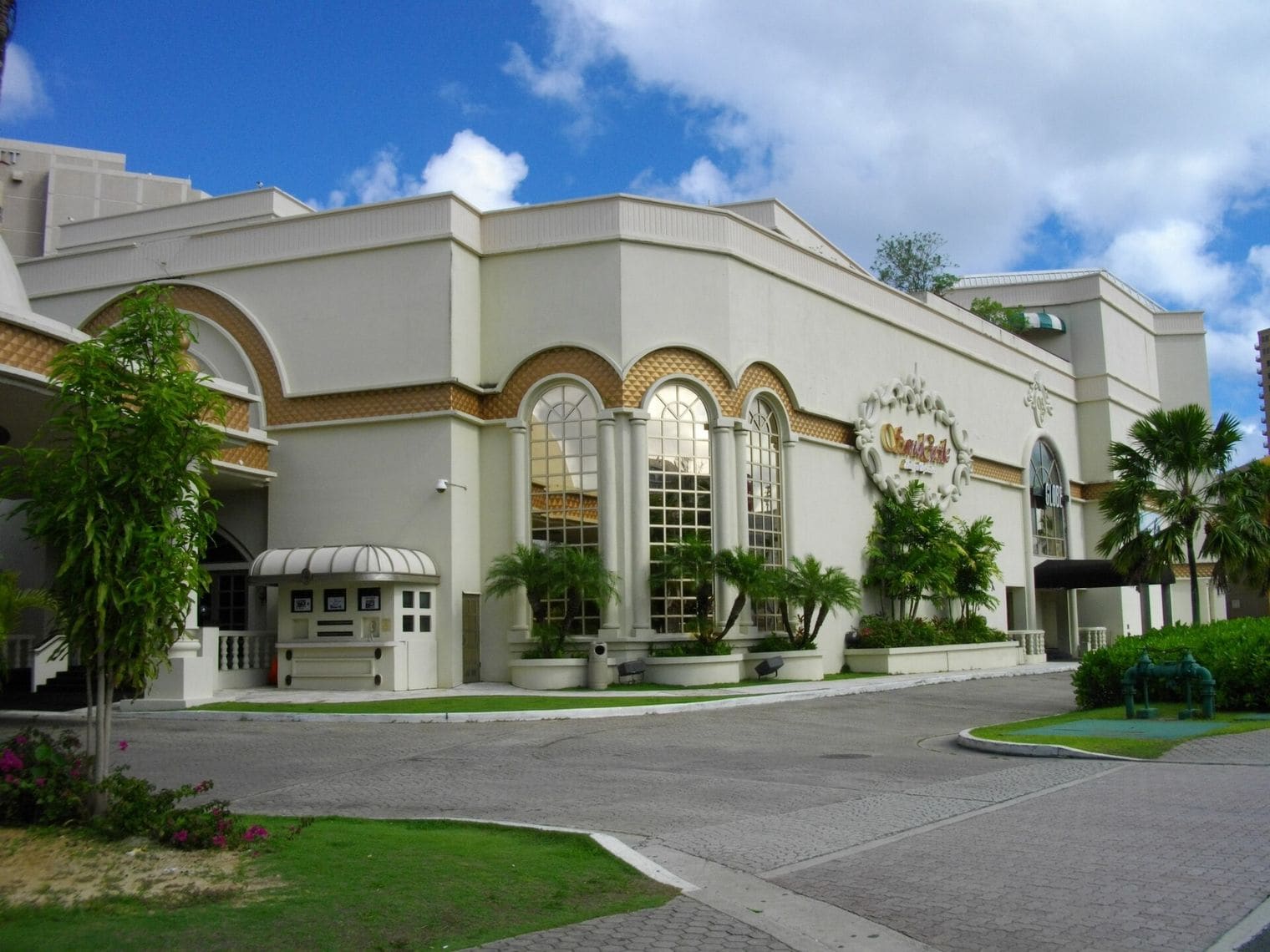
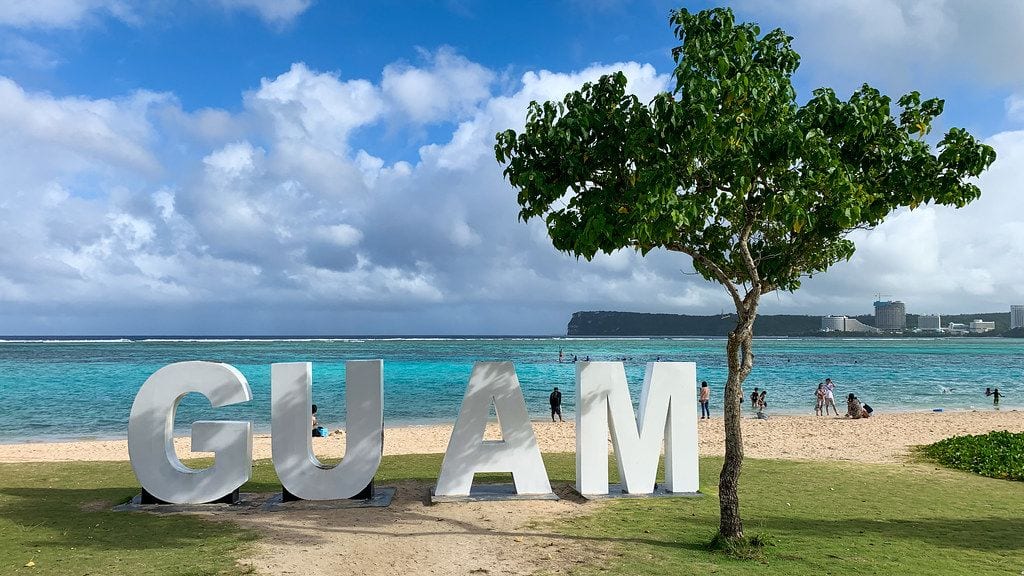
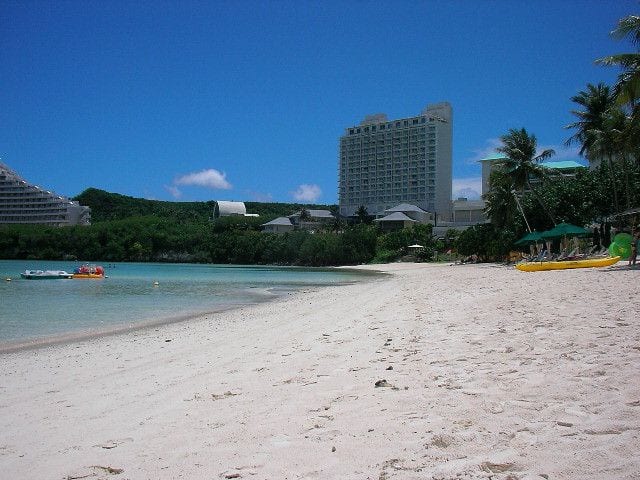
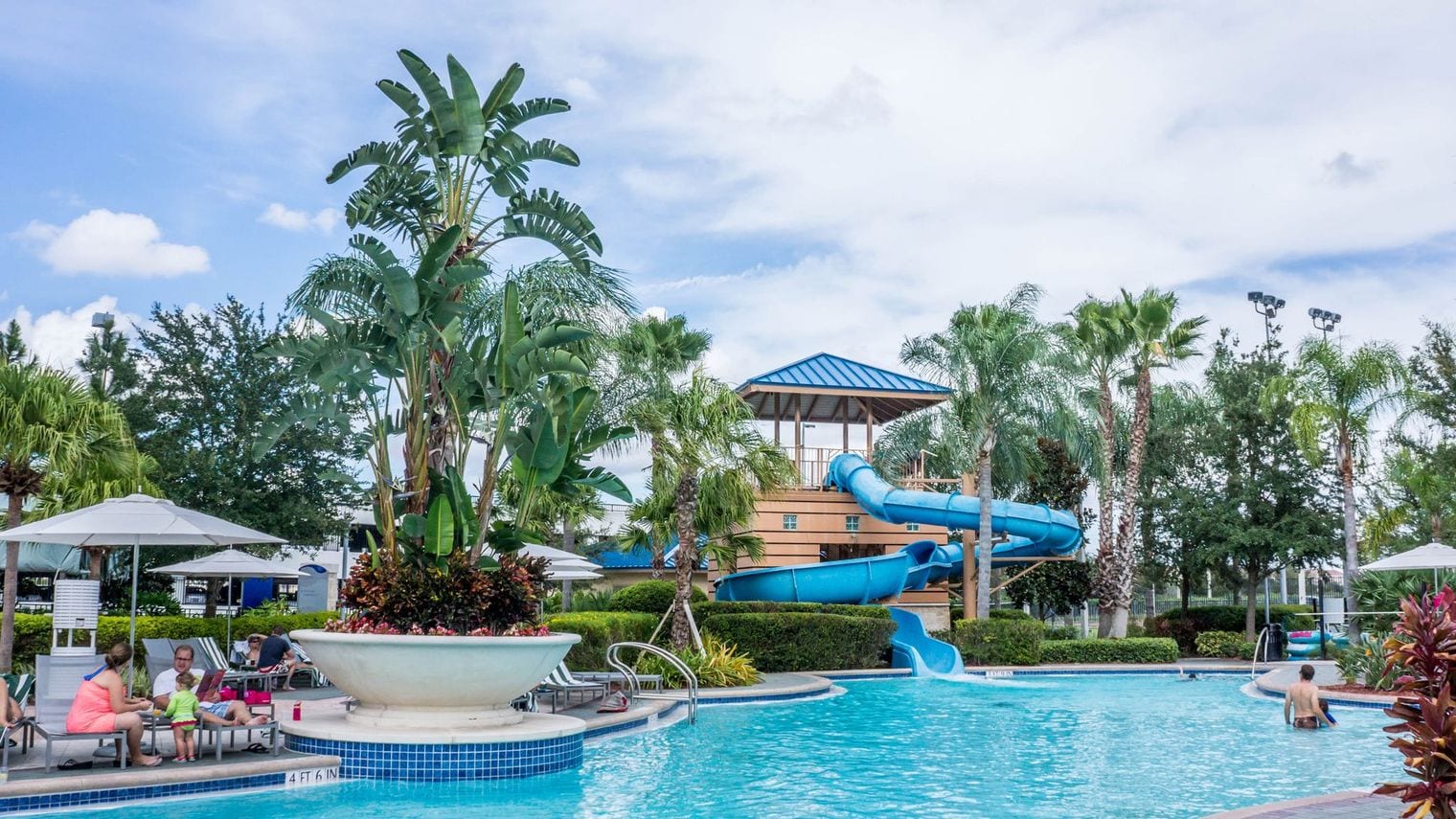
The visitor heart of the island, where Tumon Bay's protected reef, white sand and the big beach hotels sit beside Two Lovers Point above the bay and the shops and malls of the Tumon–Tamuning–Dededo corridor just inland.
Hagåtña & the central capital
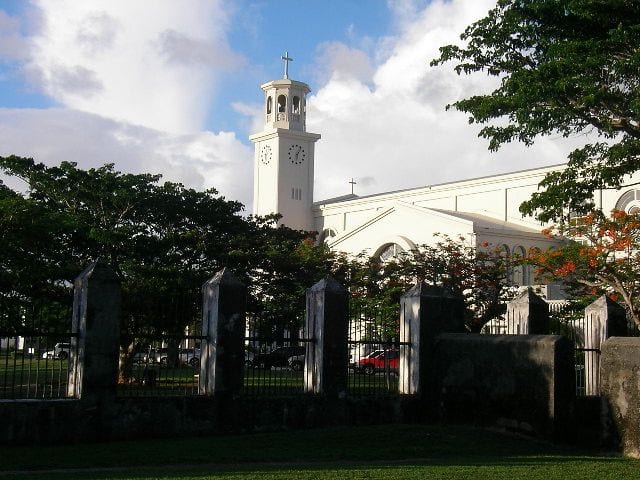
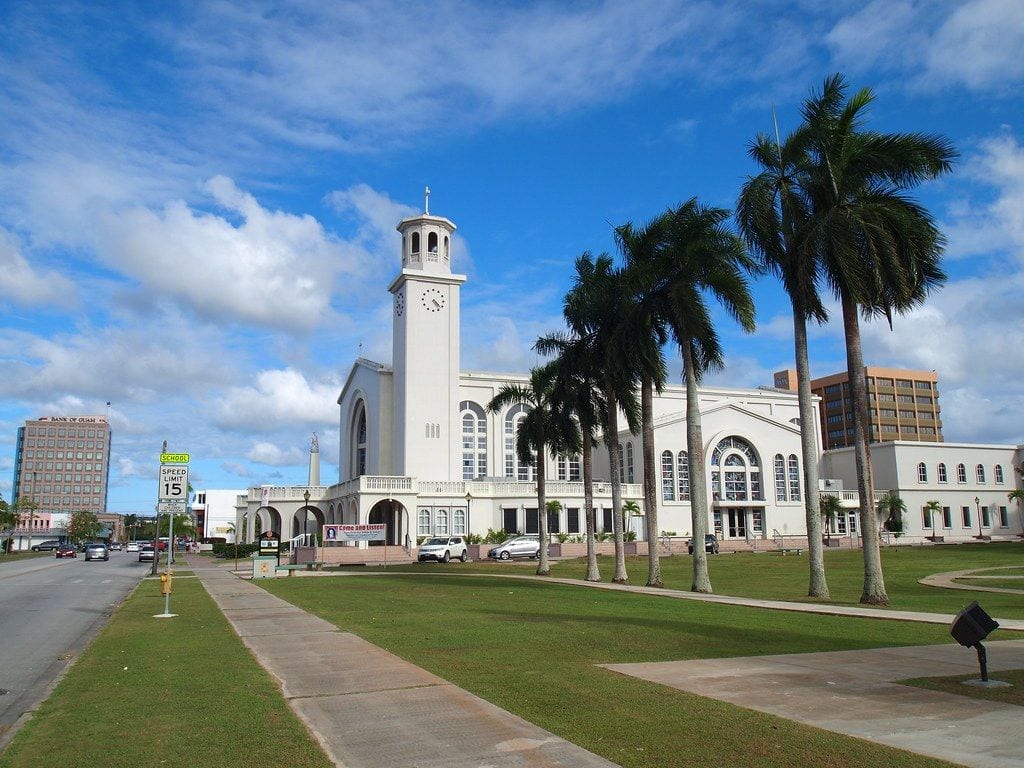
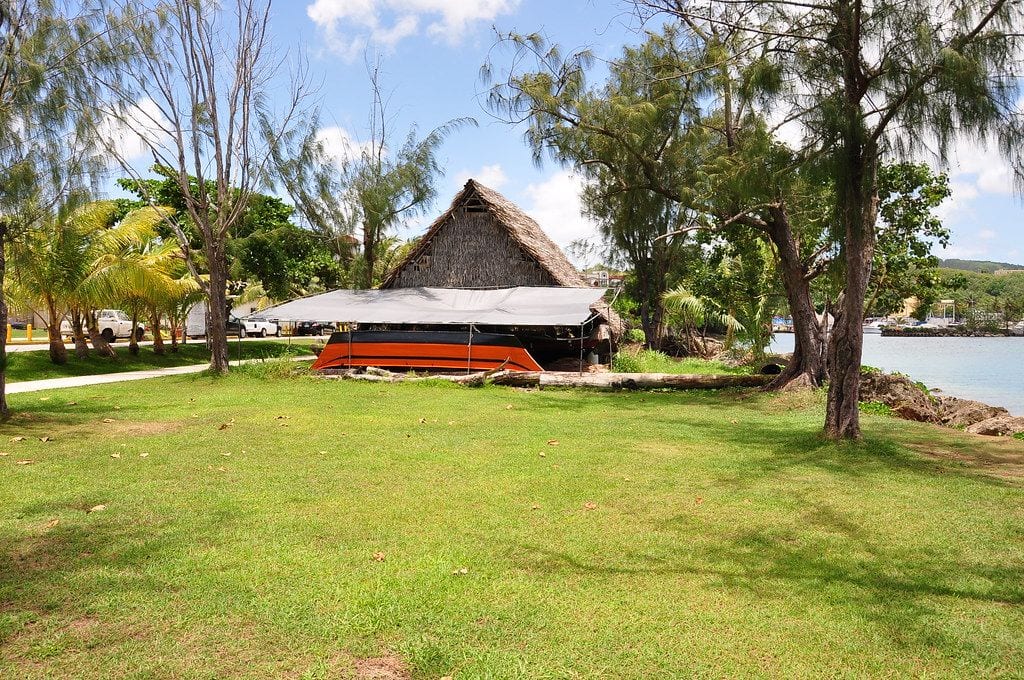
Guam's small, walkable capital, where the Spanish-era Plaza de España, the Dulce Nombre de Maria Cathedral-Basilica, Latte Stone Park and the Chamorro Village night market tell the island's colonial and cultural story.
The historic south
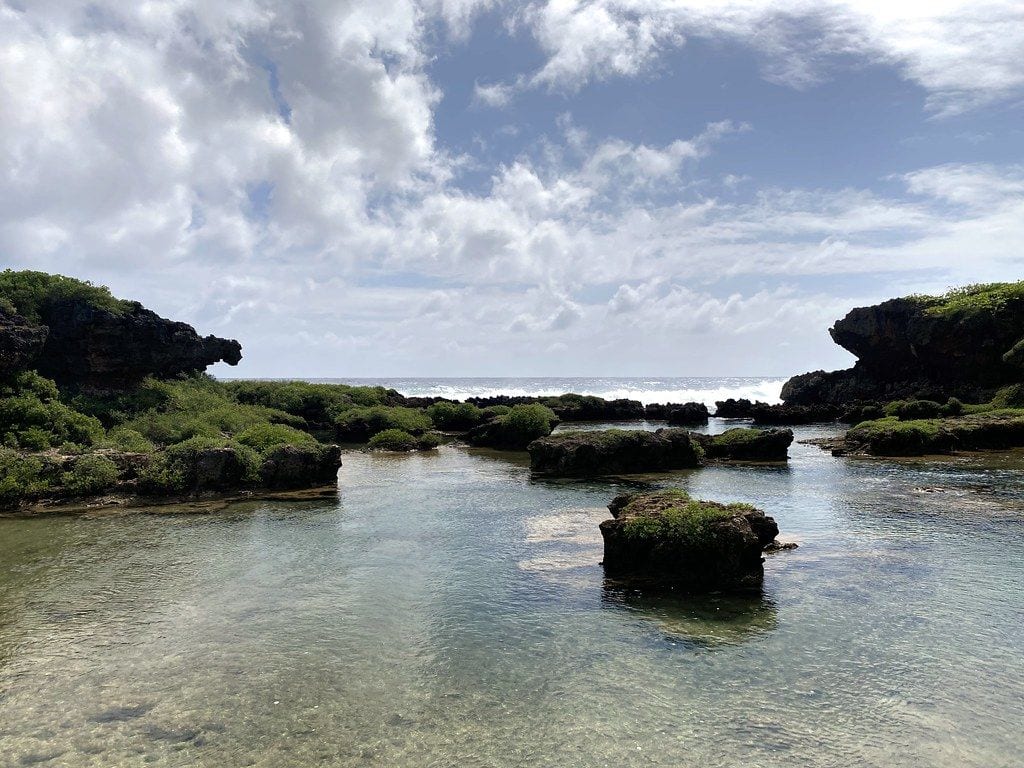
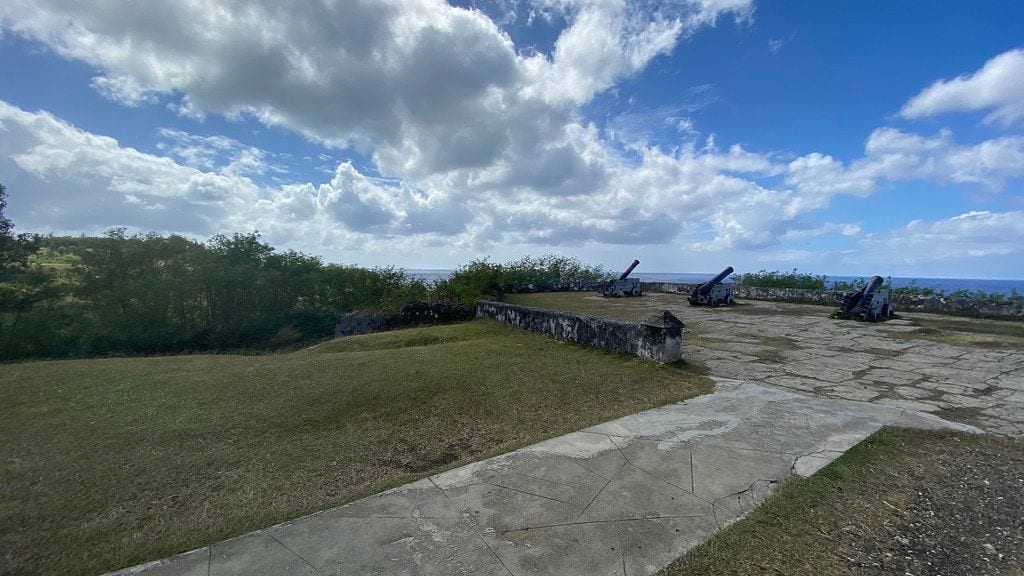
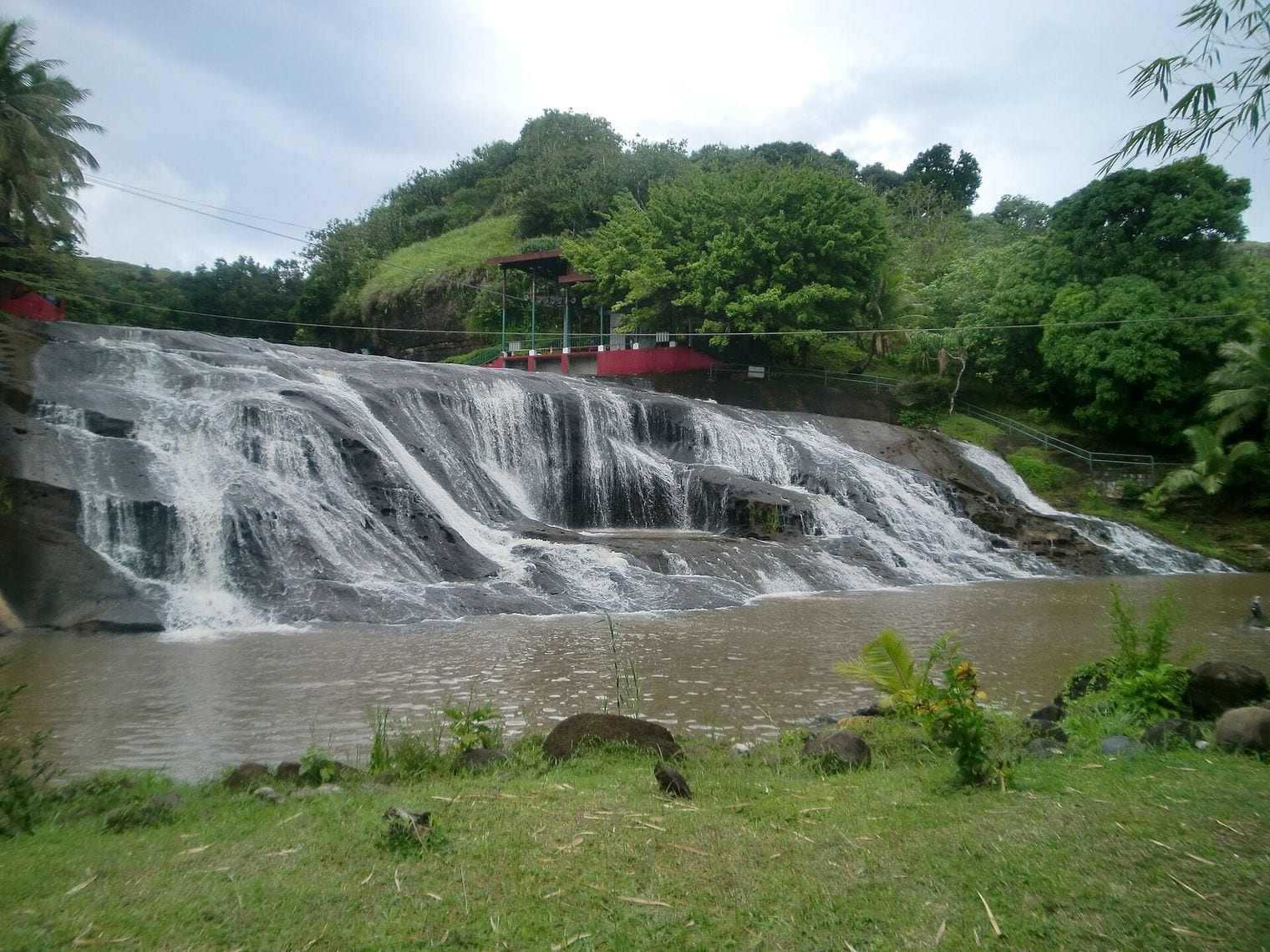
The oldest, most scenic corner: the loop road past Umatac's Fort Nuestra Señora de la Soledad, the preserved Spanish-colonial village of Inarajan with its Gef Pa'go cultural centre, and inland Talofofo Falls.
The wild north
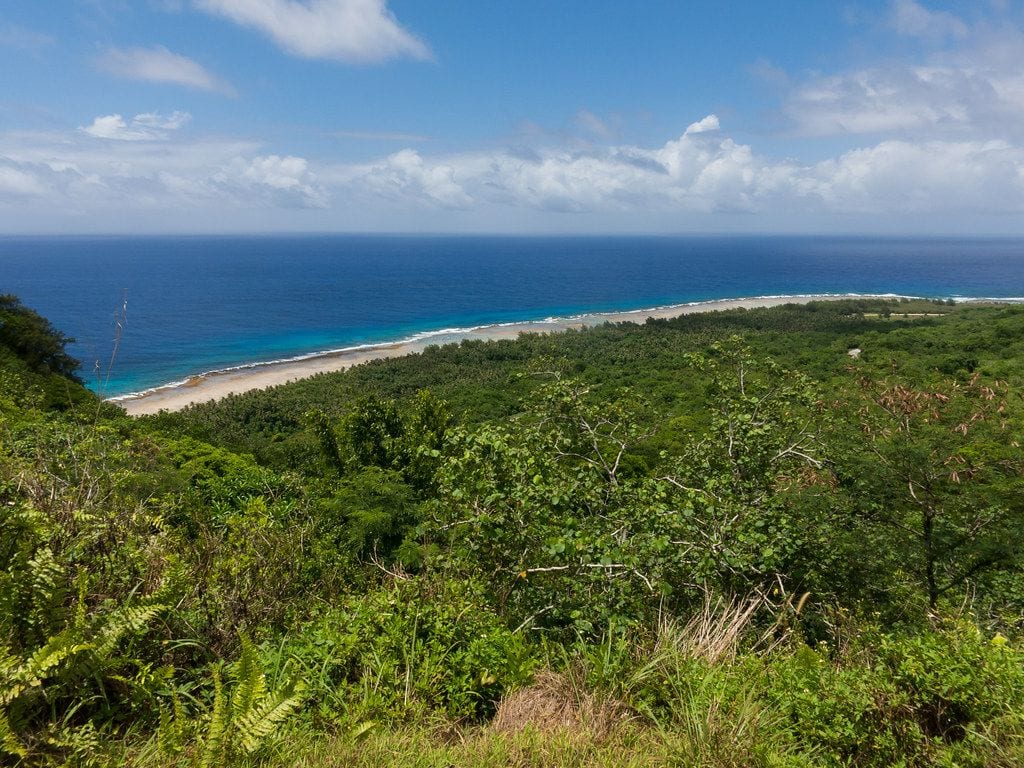
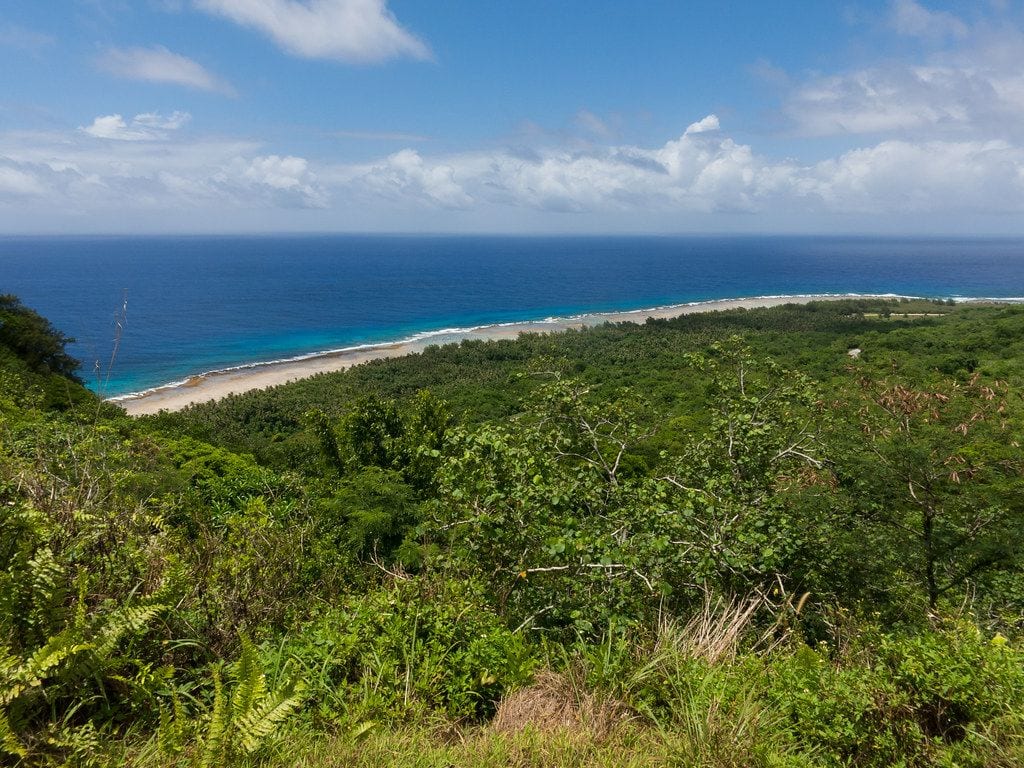
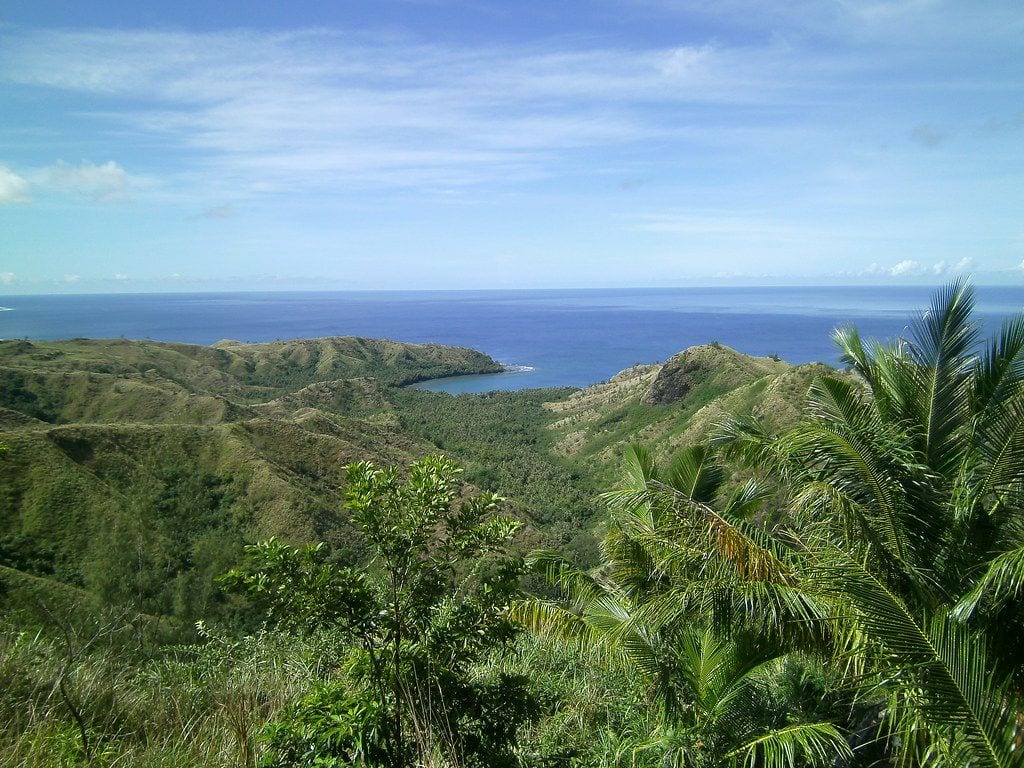
Beyond the villages lies limestone jungle and remote coast — Ritidian Point and the Guam National Wildlife Refuge at the island's northern tip hold some of the most pristine, undeveloped beach on Guam.
The war-history west
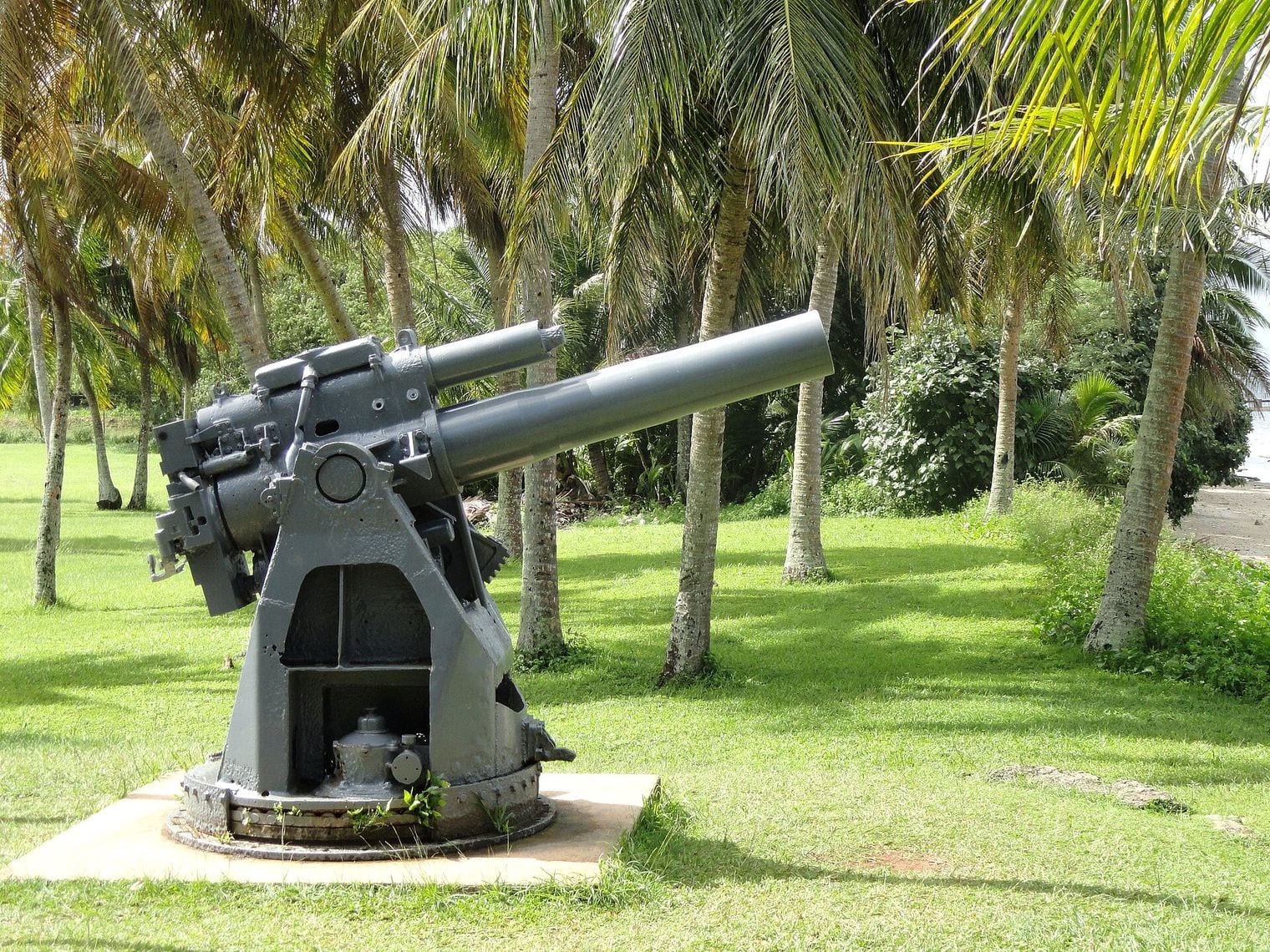
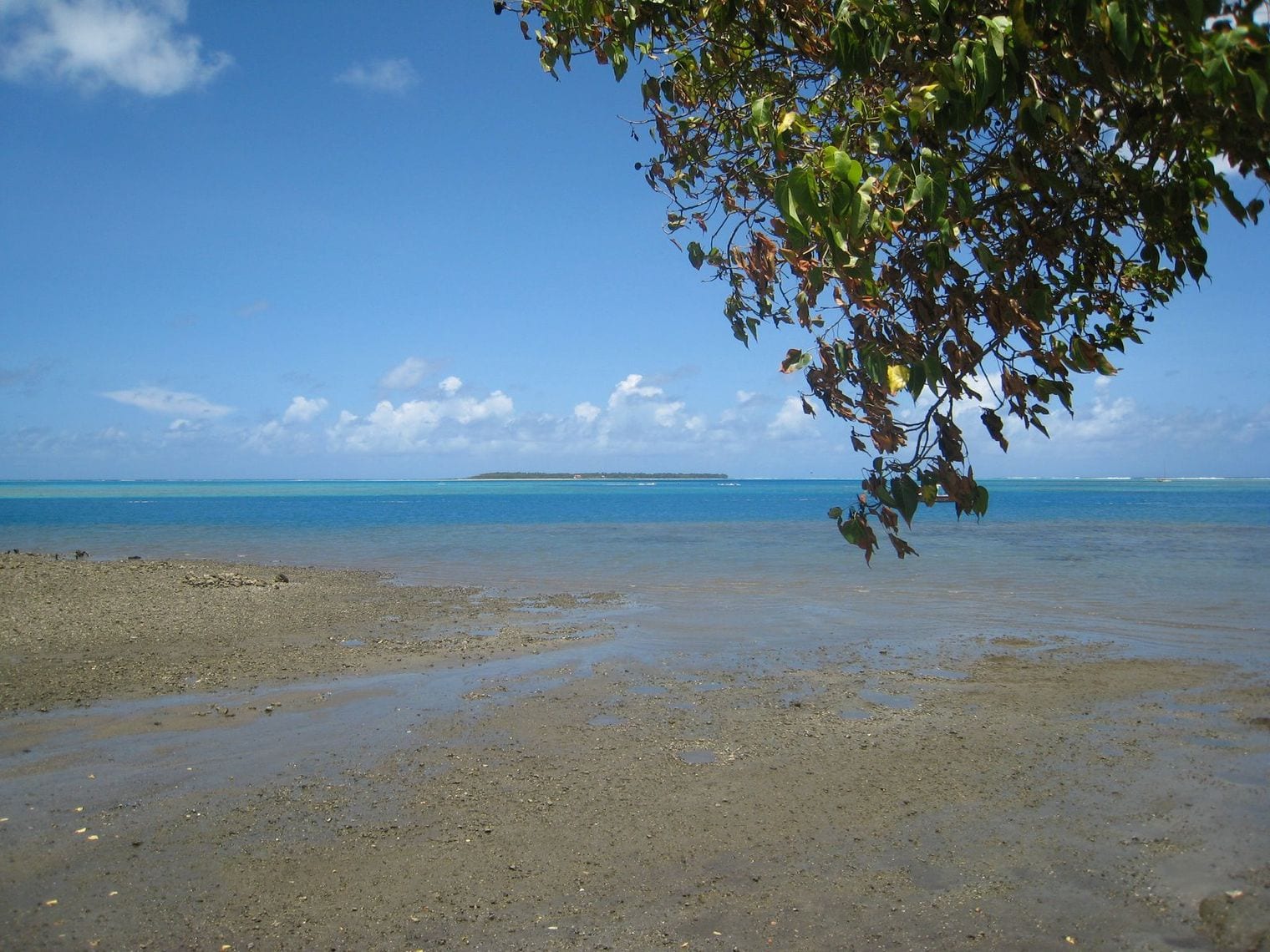
The coastline around Asan and Agat, where the War in the Pacific National Historical Park preserves invasion beaches, gun emplacements and memorials from the 1944 battle, with Cocos Island off the south-western reef.
Getting around
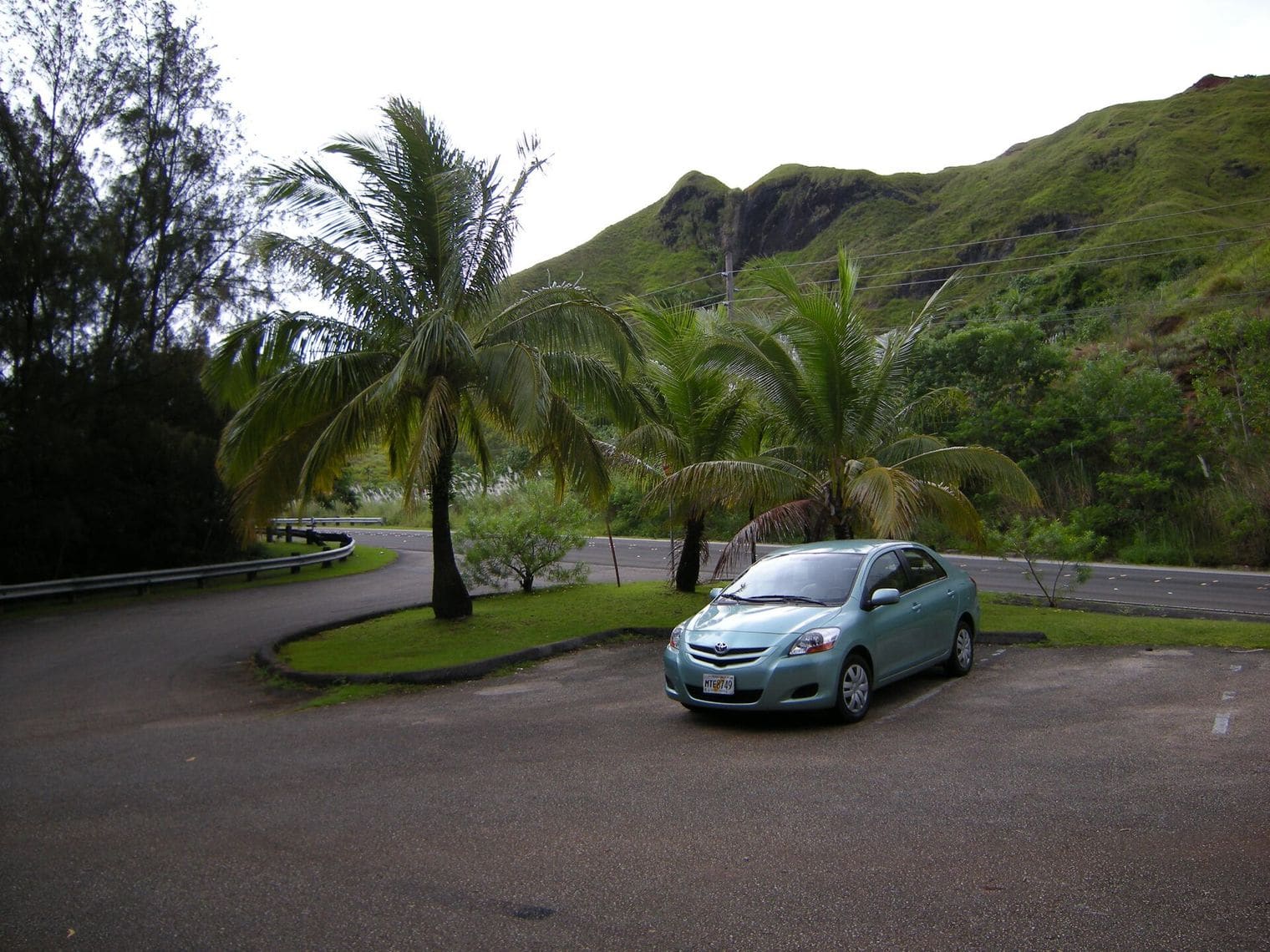
A rental car is essential for seeing Guam beyond your hotel: the resort strip in Tumon has hotels, beaches and dining within walking distance, but the historic southern villages, the battlefield parks and the wild northern points are spread around the island and thinly served by public transit. Marine Corps Drive (Route 1) is the main artery linking Tumon, Hagåtña and the naval bases in the west, while a scenic loop road threads the south past Umatac, Inarajan and Talofofo. Distances are short — you can circle the whole island in a day — and driving is on the right, US-style, with US dollars and a valid mainland or international licence.
The highlights Guam's signature sights & road trips
Guam is small enough to circle in a day. This clockwise loop pairs the Tumon-Hagåtña sights with the scenic southern villages before returning up the west coast — the single best way to see the whole island fast.
A relaxed base in Tumon for travellers here to swim, snorkel and dive, mixing beach days with a couple of the island's marquee cultural and historic sights.
The dry season, roughly December through May, is the most comfortable stretch — sunny days, steady trade winds, lower humidity and the calmest reefs for snorkelling and diving. The wet season from June to November brings heavy afternoon rain and the risk of typhoons, especially from August to October, though the sea stays warm year-round.
How many days do you need in Guam?
Three to four days is enough to enjoy Tumon Bay, tour Hagåtña's historic sites and drive the scenic southern loop past Umatac and Inarajan. Five to seven days lets you add serious diving or snorkelling, a boat trip to Cocos Island and unhurried time on the remote northern beaches around Ritidian.
Do you need a car in Guam?
For anything beyond the Tumon resort strip, yes. The historic southern villages, the war-history parks in the west and the wild northern points are spread across the island and thinly served by transit, so a rental car is the practical way to explore. Happily the island is small — you can loop the whole coast in a single day — and you drive on the right with a standard licence.
Do you need a passport to visit Guam?
Guam is a US territory, so US citizens travel there on a domestic basis and do not need a passport, though bringing one is wise for identification and any onward Pacific travel. Visitors from many other countries can enter under the Guam-CNMI visa-waiver programme; check the current requirements for your nationality before you fly.
What is Guam best known for?
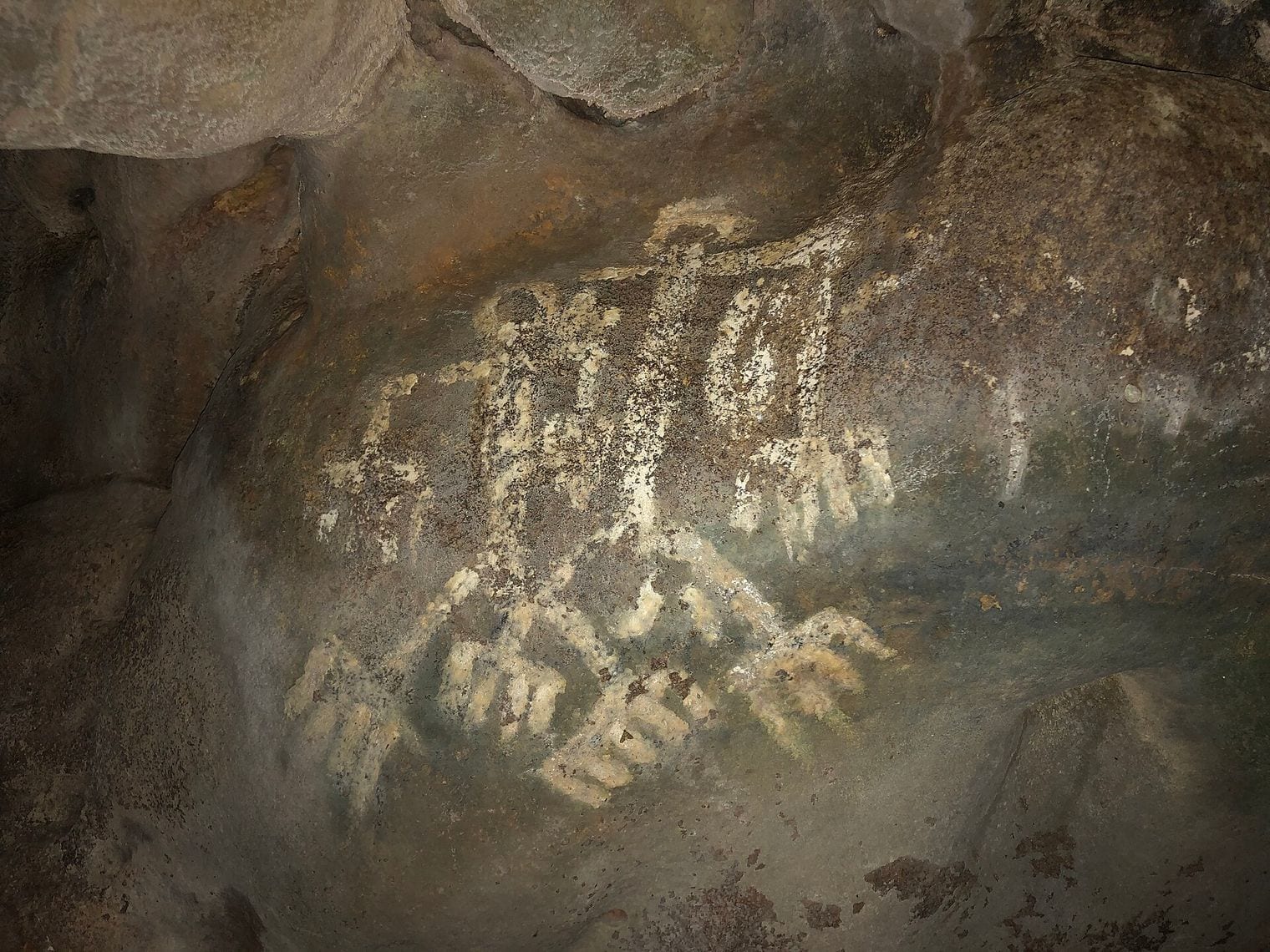
Guam is famous for the white-sand beaches and clear reefs of Tumon Bay, its living Chamorro culture — from ancient latte stones to village fiestas — and its layered history, from Spanish forts like Fort Nuestra Señora de la Soledad at Umatac to the Second World War battlefields preserved in the War in the Pacific National Historical Park.
What language is spoken in Guam?
English and Chamorro are the two official languages. English is used everywhere for daily life, business and signage, while Chamorro — the indigenous language of the island — survives in place names, cultural events and among older residents, and you'll see it in words like 'Håfa Adai', the local greeting.
What is the local culture like in Guam?
Guam's culture is Chamorro at its core — an indigenous Pacific-Islander heritage shaped by centuries of Spanish rule and decades as an American territory. Expect warm hospitality, big family fiestas, a food scene of red rice, kelaguen and barbecue, Catholic village festivals, and reminders of the past in the latte-stone pillars and Spanish-era churches. The Chamorro Village night market in Hagåtña is the easiest way to sample it all.
Is Guam a good place for diving and snorkelling?
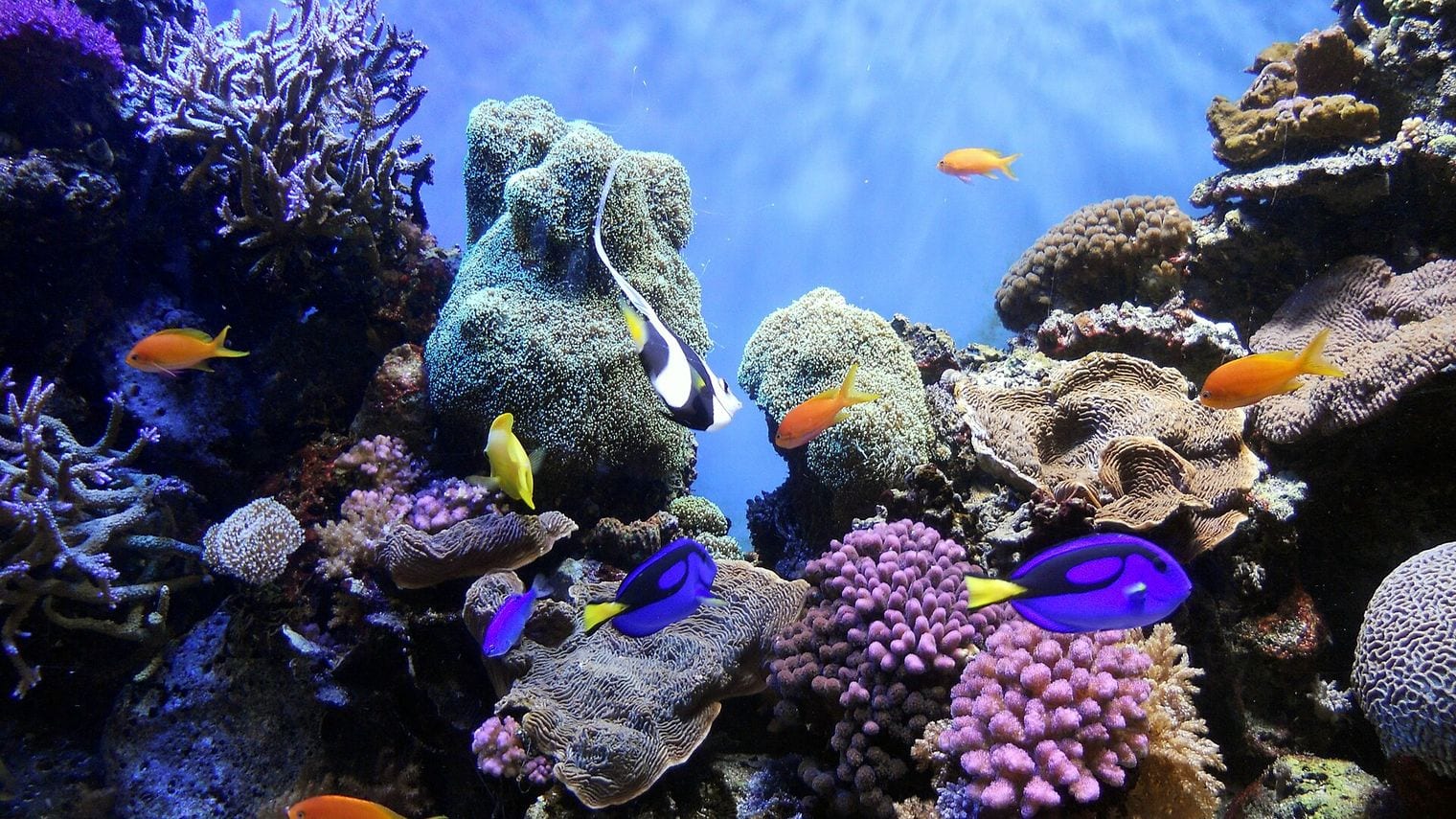
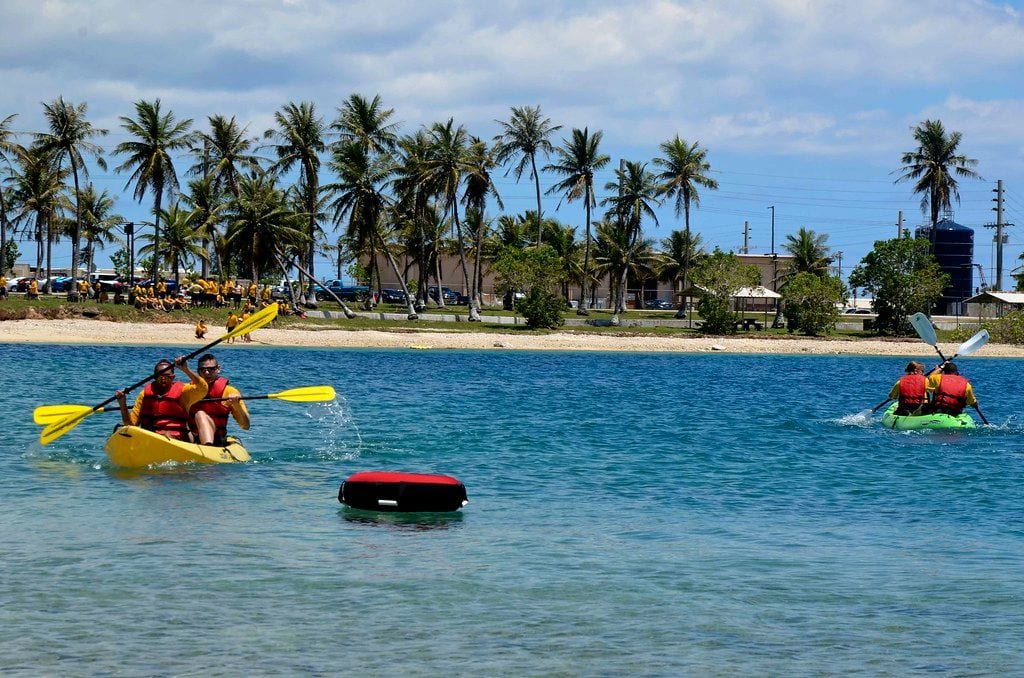
Yes — it's one of the island's biggest draws. Tumon Bay is a marine preserve with easy, protected snorkelling straight off the beach, Fish Eye Marine Park near Piti has an underwater observatory, and boat trips reach the reefs off Cocos Island. Divers come for warm, clear water, coral walls and a scatter of wrecks from both the Spanish and Second World War eras.
We use cookies to analyse site traffic and improve your experience.
You can accept or reject analytics cookies. See our Cookie Policy.