Empty two-lane highways, a national park named for a president who fell in love with it, and badlands that glow at sunset — North Dakota rewards the traveller who keeps driving west.
North Dakota is wide-open prairie in the east giving way to the rugged, striped badlands of the west, where Theodore Roosevelt National Park and the frontier town of Medora anchor the state's biggest draw. Between them lie the Missouri River, the vast reservoir of Lake Sakakawea and a chain of small, friendly cities. Use this hub to plan your trip: browse our Bismarck and Minot guides below, then map a badlands road trip across the wide-open west.
Known for
Badlands, Theodore Roosevelt NP & the Missouri River
Best for
Road trips, wildlife & wide-open scenery
Capital
Bismarck
Main gateway
Fargo (FAR) & Bismarck (BIS)
Time zone
Central (CT), Mountain (MT) in the far southwest
Trip planner
Plan your trip to North Dakota
Best time to visit — season by season
Spring
Apr–May
A short, welcome thaw after a long winter — the prairie greens up, rivers run high with snowmelt and the badlands trails dry out. Days can swing from warm sun to a cold prairie wind, and lingering mud is common on unpaved park roads.
Summer
Jun–Aug
Peak season and the time to visit: long daylight, warm days often in the 80s Fahrenheit and the full run of Medora's summer programme. Afternoon thunderstorms roll across the plains, and the badlands can bake, so start hikes early and carry water.
Fall
Sep–Oct
Arguably the finest window — cottonwoods turn gold along the Little Missouri, the bison rut brings the herds into view and the summer crowds thin. Crisp, clear days make this ideal for the Theodore Roosevelt scenic loops and the Enchanted Highway.
Winter
Nov–Mar
Genuinely cold and often below 0°F, with wind chill, blowing snow and the real chance of a ground blizzard closing highways. It is quiet and starkly beautiful, but plan around the weather, check road conditions and keep winter gear in the car.
Regions of North Dakota
The badlands & the west
North Dakota's scenic heart, where the South Unit of Theodore Roosevelt National Park and the frontier town of Medora anchor a landscape of striped buttes, the North Unit sits an hour north near Watford City, and the Maah Daah Hey Trail links them across the Little Missouri National Grassland.
Bismarck-Mandan & the Missouri River
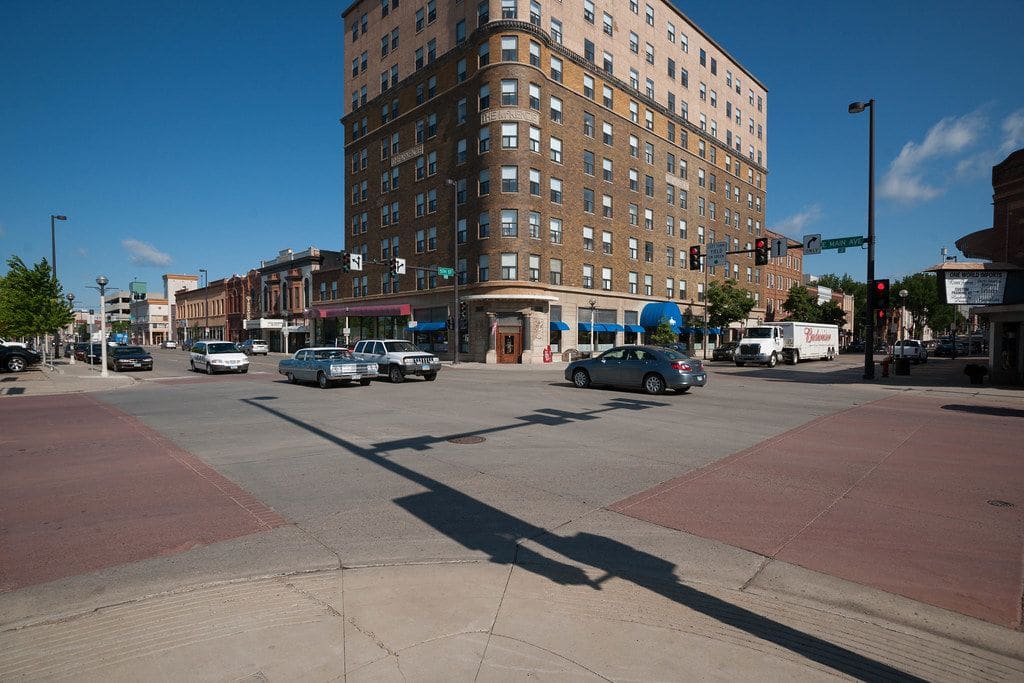
The capital region, where Bismarck and Mandan face each other across the Missouri, with the State Capitol, the North Dakota Heritage Center and the reconstructed On-A-Slant Village and infantry post at Fort Abraham Lincoln State Park just to the south.
Minot & the north
The 'Magic City' and gateway to the northern prairie, where Minot pairs the Scandinavian Heritage Park and the state fair with a drive north to the International Peace Garden on the Canadian border near Dunseith.
Fargo & the Red River Valley
The flat, fertile east along the Minnesota line, where Fargo and neighbouring West Fargo form the state's largest metro, home to the Fargo Air Museum, the historic Fargo Theatre and the Bonanzaville pioneer village.
Lake Sakakawea & the central lakes
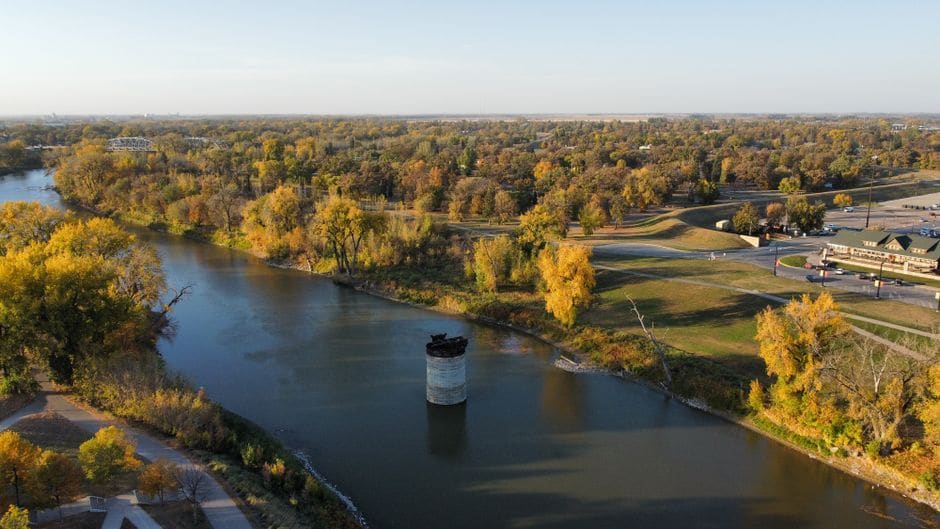
The great reservoir behind Garrison Dam, a boating and fishing playground ringed by state parks, with the Knife River Indian Villages and the Lewis & Clark trail nearby to the south.
Getting around
A rental car is essential: North Dakota's sights are spread across a big, thinly populated state and there is virtually no intercity transit beyond a long-distance Amtrak line and a few buses. Most visitors fly into Fargo (Hector International) in the east or Bismarck in the centre, then drive west on Interstate 94 toward Medora and the badlands. Distances are long and towns far apart on the western prairie, so fuel up before leaving the last one, watch for wildlife and ice on rural roads, and note that the far south-western corner around Medora runs on Mountain Time while the rest of the state is on Central.
The highlights North Dakota's signature sights & road trips
Badlands & prairie highlights
Theodore Roosevelt National Park — South Unit North Dakota's only national park: a scenic loop drive through the badlands with bison, wild horses and prairie-dog towns.Basecamp: Medora
Theodore Roosevelt National Park — North Unit The quieter, more rugged half of the park, with dramatic canyon overlooks above the Little Missouri.Basecamp: Watford City
Medora & the Enchanted Highway A restored Old West town at the park gate, plus a 30-mile detour lined with giant scrap-metal sculptures.
Fort Abraham Lincoln State Park Custer's reconstructed cavalry post and the Mandan On-A-Slant Village on the Missouri, just south of Bismarck.Basecamp: Bismarck
International Peace Garden A vast formal garden straddling the US–Canada border, north of Minot near Dunseith.Basecamp: Minot
Lake Sakakawea North Dakota's great reservoir behind Garrison Dam — boating, walleye fishing and state parks along the shore.
Suggested routes
The badlands road trip
3–4 days
The classic North Dakota drive, heading west on Interstate 94 from the capital to the badlands and back. Break it with the Enchanted Highway detour and both units of Theodore Roosevelt National Park.
Bismarck — start at the capital; State Capitol & Heritage Center
Fort Abraham Lincoln State Park — just south of Mandan
Enchanted Highway — giant sculptures south of Gladstone
Medora — frontier basecamp at the park gate
Theodore Roosevelt NP — South Unit — the scenic loop drive
Theodore Roosevelt NP — North Unit — quieter, an hour north near Watford City
Northern prairie & Peace Garden loop
2–3 days
A northern-tier trip anchored on Minot, pairing the 'Magic City' with the border gardens and the central lakes on the way back toward the capital.
Summer, roughly June through August, is the main season — the days are long and warm, the badlands trails are open and Medora's summer programme is in full swing. September and early October are arguably even better, with golden cottonwoods, the bison rut and thinner crowds. Winters are genuinely cold and best planned around carefully.
How many days do you need in North Dakota?
A focused badlands trip around Theodore Roosevelt National Park and Medora works well in two or three days. Adding the Bismarck-Mandan area and the Enchanted Highway makes a comfortable four-to-five-day loop, and reaching Minot, the International Peace Garden or Fargo in the same trip pushes it toward a week.
Do you need a car in North Dakota?
Yes. The state's sights are spread across a big, sparsely populated area with almost no intercity transit, so a rental car is essential. Most visitors fly into Fargo or Bismarck and drive west on Interstate 94 toward the badlands; keep the tank topped up, as towns and gas stops are far apart out west.
What is North Dakota best known for?
North Dakota is best known for Theodore Roosevelt National Park and the surrounding badlands, the frontier town of Medora, the Missouri River and Lake Sakakawea, and its role in the Lewis & Clark and Northern Plains story. Quirkier draws include the Enchanted Highway's giant scrap-metal sculptures and the International Peace Garden on the Canadian border.
Does North Dakota span two time zones?
Yes. Most of the state, including Fargo, Bismarck and Minot, is on Central Time, but the far south-western corner around Medora and the South Unit of Theodore Roosevelt National Park is on Mountain Time. If you're driving west on Interstate 94 toward the badlands, you'll gain an hour near the Montana line, so double-check park programme and tour times.
What is the Enchanted Highway?
The Enchanted Highway is a roughly 30-mile stretch of two-lane road running south from Gladstone, off Interstate 94 between Bismarck and Medora, lined with a series of giant scrap-metal sculptures — geese in flight, deer, grasshoppers and more — built by a local artist. It's a free, offbeat detour that pairs naturally with a badlands road trip.
Is Theodore Roosevelt National Park worth visiting?
Very much so. It's North Dakota's only national park and its scenic highlight, with two main sections: the more-visited South Unit at Medora, with a scenic loop drive, bison, wild horses and prairie-dog towns, and the quieter, more rugged North Unit near Watford City about an hour north. Wildlife is abundant and the badlands scenery is at its best at sunrise and sunset.
How cold does North Dakota get in winter?
Very cold. Winter temperatures regularly drop below 0°F, and wind across the open prairie can drive the wind chill far lower, with blowing snow and occasional ground blizzards that close highways. Winter travel is doable and starkly beautiful, but plan around the weather, watch road-condition reports and pack proper cold-weather gear.
We use cookies to analyse site traffic and improve your experience.
You can accept or reject analytics cookies. See our Cookie Policy.