Four presidents carved into a granite cliff, a national park of striped Badlands and free-roaming bison on an open-range loop — the Black Hills pack a lifetime list into one week of driving.
South Dakota is a state of two halves split by the Missouri River: the flat, farm-and-prairie east around Sioux Falls, and the pine-clad Black Hills and eroded Badlands of the west, home to Mount Rushmore, Crazy Horse, Custer State Park and the gold-rush town of Deadwood. Use this hub to plan your trip: browse our city guides to Sioux Falls and Deadwood below, or read on for the regions, road trips and seasons that shape a visit.
Known for
Mount Rushmore & the Black Hills
Best for
National monuments, Badlands & wildlife
Capital
Pierre
Main gateway
Rapid City Regional (RAP)
Time zone
Central & Mountain (CT/MT)
Trip planner
Plan your trip to South Dakota
Best time to visit — season by season
Spring
Apr–May
An unpredictable shoulder season as the snow clears and the prairie greens. Days warm quickly but late snowstorms can still hit the Black Hills, and the Badlands turn to slick clay after rain. Trails, cave tours and wildlife loops reopen through May, ahead of the summer crowds.
Summer
Jun–Aug
The high season and the time most visitors come. Long daylight and warm days in the 80s°F open every scenic drive, cave tour and hiking trail, and the Custer State Park bison graze the open range. Afternoon thunderstorms build over the Hills, and the eastern prairie can turn hot and humid.
Fall
Sep–Oct
A quiet, golden window with crisp air, thinning crowds and the aspens and cottonwoods turning yellow through the Black Hills. Late September brings the Custer State Park Buffalo Roundup, when cowboys drive the park's bison herd across the plains — one of the state's signature spectacles.
Winter
Nov–Mar
Long, cold and snowy, with sub-zero snaps and biting wind sweeping the open prairie. Some scenic drives and park facilities close, but the northern Black Hills around Lead and Deadwood become a snowmobiling and skiing hub, and the Badlands under snow are starkly beautiful for hardy visitors.
Regions of South Dakota
The Black Hills & the southwest
South Dakota's scenic heart, where the pine-forested hills hold Mount Rushmore, the Crazy Horse Memorial, Custer State Park's wildlife loop and the caves of Wind Cave and Jewel Cave, with Rapid City as the regional base.
The northern Hills & Deadwood
The gold-rush corner above the main hills, where the historic mining town of Deadwood pairs its casinos and Wild West legend with nearby Lead, Spearfish Canyon and the winter snow country.
The Badlands & Wall country
The eroded moonscape east of the Hills, where Badlands National Park's striped spires and prairie-dog towns sit off Interstate 90 near the roadside institution of Wall Drug and the Buffalo Gap National Grassland.
The Missouri River & central plains
The wide middle of the state along the dammed Missouri, where the capital at Pierre, the Lewis and Clark heritage and the big reservoirs of Lake Oahe and Lake Francis Case draw anglers and boaters to the grassland horizons.
The eastern prairie & Sioux Falls
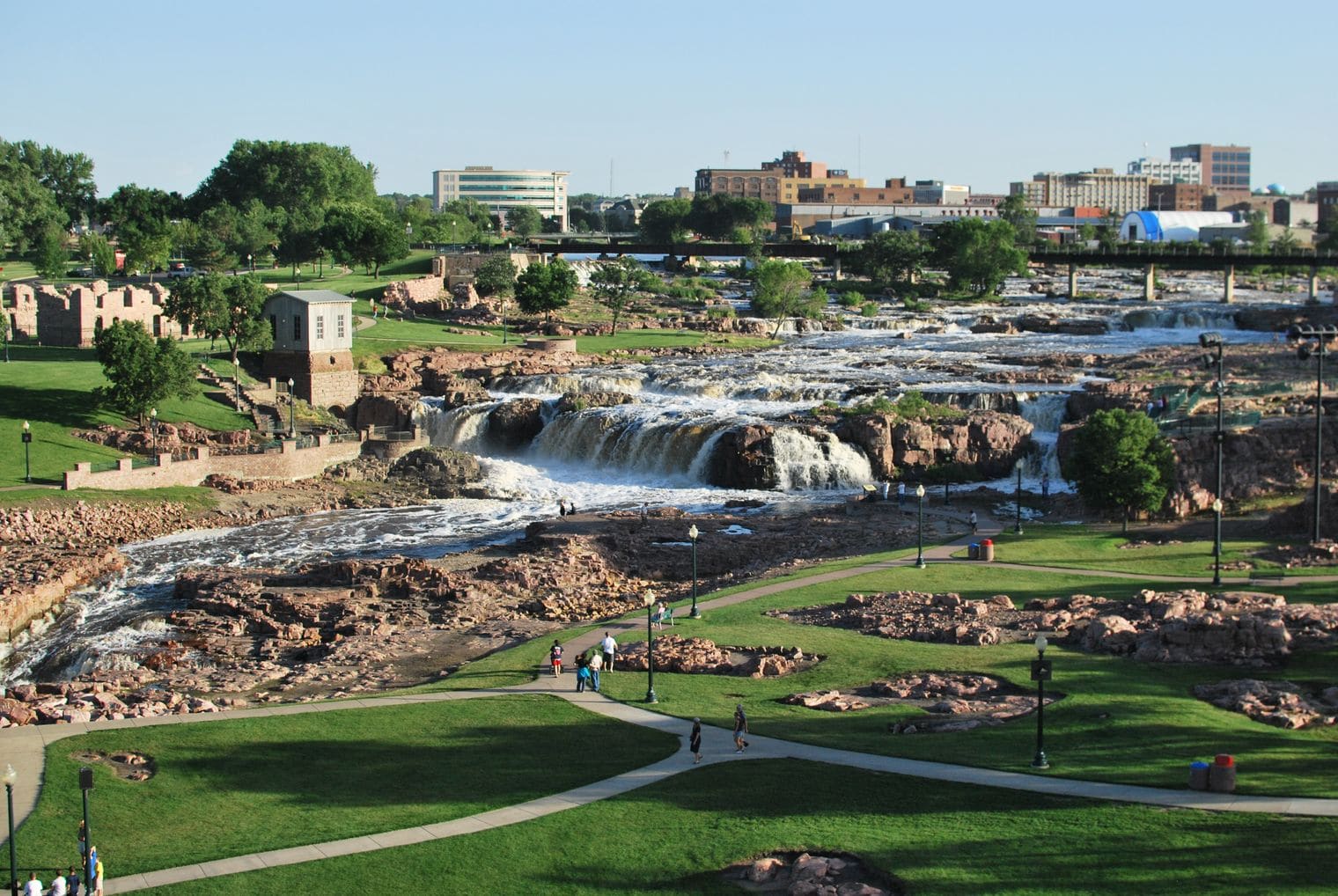
The flat, fertile farm country along the Minnesota and Iowa lines, where Sioux Falls brings the state's largest city, its cascading Falls Park and downtown scene, near the glacial lakes and prairie potholes of the border country.
Getting around
A rental car is essential: South Dakota is a big, thinly populated state where the signature sights are spread across long prairie distances and public transit between towns is minimal. Interstate 90 is the east–west spine, running from Sioux Falls past Wall and the Badlands to Rapid City and the Black Hills, while Interstate 29 carries the north–south route up the eastern edge. Most Black Hills visitors fly into Rapid City Regional, the handiest gateway for Mount Rushmore, the Badlands and Deadwood, while Sioux Falls Regional serves the east. Note that the state straddles two time zones: the western counties, including the Black Hills and the Badlands, run on Mountain Time, while Sioux Falls, Pierre and the east observe Central Time. Distances are long and services thin out on the plains, so fuel up before leaving the last town.
The highlights South Dakota's signature sights & road trips
South Dakota at a glance
Mount Rushmore National Memorial The state's icon — the 60-foot faces of four US presidents carved into a Black Hills granite cliff.Basecamp: Rapid City
Badlands National Park A surreal landscape of banded spires and buttes, prairie-dog towns and free-roaming bison off Interstate 90.
Crazy Horse Memorial The colossal, still-in-progress mountain carving of the Lakota leader, with a museum and cultural centre at its base.
Custer State Park The Wildlife Loop's free-roaming bison herd, the granite Needles Highway and the scenic Sylvan Lake.Basecamp: Custer
Wall Drug & the caves The sprawling roadside institution at Wall, gateway to the Badlands, near the tours of Wind Cave and Jewel Cave national parks.
Suggested routes
The Interstate 90 crossing
~1 week
The classic east–west drive across the whole state along Interstate 90, tracing the prairie from Sioux Falls to the Black Hills. Run it in either direction; this is the westbound version, finishing near Rapid City and Mount Rushmore.
Badlands National Park — the Loop Road spires & bison
Rapid City — Black Hills basecamp
Mount Rushmore National Memorial — the presidents' faces
The Black Hills loop
3–4 days
A focused circuit of the western hills for a long weekend, linking the marquee monuments, the Custer State Park wildlife loop and the gold-rush north — easy to run as a loop from Rapid City or Deadwood.
Rapid City — basecamp & airport
Mount Rushmore National Memorial
Crazy Horse Memorial
Custer State Park — Wildlife Loop & Needles Highway
Summer, from June through August, is the prime window — long daylight, warm days and every scenic drive, cave tour and trail fully open. September and early October are a quieter, golden alternative with crisp air and the famous Custer State Park Buffalo Roundup. Winters are long, snowy and bitterly cold, so most visitors come in the warmer half of the year.
How many days do you need in South Dakota?
A focused trip to the Black Hills — Mount Rushmore, Crazy Horse and Custer State Park — works well in three to four days based near Rapid City or Custer. Adding the Badlands and Wall pushes it to about five days, and crossing the whole state to include Sioux Falls and the Missouri River makes a comfortable week-long road trip along Interstate 90.
Do you need a car in South Dakota?
Yes. It's a large, thinly populated state where the sights are far apart and public transit between towns is minimal, so a rental car is essential. Most Black Hills visitors fly into Rapid City Regional and drive from there, while Sioux Falls Regional serves the eastern side of the state.
What is South Dakota best known for?
South Dakota is best known for Mount Rushmore, the four presidents carved into a Black Hills granite cliff, along with the nearby Crazy Horse Memorial, Badlands National Park, the bison and burros of Custer State Park, the gold-rush town of Deadwood and the roadside legend of Wall Drug.
Is South Dakota in one time zone?
No — the state is split roughly along the Missouri River. The western counties, including the Black Hills and the Badlands, run on Mountain Time, while Sioux Falls, Pierre and the eastern half observe Central Time. If you're driving west toward Rapid City and Mount Rushmore, expect to gain an hour.
What are the must-see sights in the Black Hills?
Mount Rushmore tops most lists, along with the in-progress Crazy Horse Memorial and the wildlife loop and Needles Highway of Custer State Park. Wind Cave and Jewel Cave national parks offer underground tours, Deadwood brings Wild West history, and the scenic Spearfish Canyon and Iron Mountain roads tie the region together.
Can you see bison and wildlife in South Dakota?
Yes. Custer State Park's Wildlife Loop Road is one of the best places in the country to see a free-roaming bison herd, along with pronghorn, elk and the park's famous 'begging burros'. Badlands National Park and the Buffalo Gap Grassland add bison, bighorn sheep and prairie-dog towns. Each autumn the Custer State Park Buffalo Roundup drives the herd across the plains.
Is South Dakota a good road-trip destination?
Very much so. Interstate 90 crosses the whole state, linking Sioux Falls, the Badlands, Wall Drug and the Black Hills in one easy east–west line, while the scenic Needles Highway, Iron Mountain Road and Spearfish Canyon add memorable detours. The open, uncrowded roads and the density of landmarks in the west make it a classic American drive.
We use cookies to analyse site traffic and improve your experience.
You can accept or reject analytics cookies. See our Cookie Policy.