Three cities, three sounds, and the most-visited national park in America — all on one long drive between the mountains and the Mississippi.
Tennessee runs 440 miles from the Great Smoky Mountains in the east to the Mississippi River in the west, stitching together three musical capitals — the country of Nashville, the blues and soul of Memphis, and the old-time and bluegrass of the Appalachian foothills. Between them sit the most-visited national park in the country, mist-wrapped mountains and rolling whiskey-and-horse country. Use this hub to plan your trip: browse our city and gateway-town guides below to build a route across the state's three distinct regions.
Known for
Music, mountains & whiskey
Best for
Live music, the Smokies & road trips
Capital
Nashville
Largest city
Nashville
Main gateway
Nashville Int'l (BNA) & Memphis Int'l (MEM)
Time zone
Central (CT) west, Eastern (ET) in the east
Trip planner
Plan your trip to Tennessee
Best time to visit — season by season
Spring
Mar–May
A gorgeous window statewide: dogwoods and wildflowers bloom across Middle Tennessee, and the Smokies' famous spring wildflowers peak before the summer haze. Warm days, cool nights and thinner crowds than summer.
Summer
Jun–Aug
Hot and humid across the lowlands, with Nashville and Memphis regularly pushing into the 90s°F. The high Smokies stay noticeably cooler, so the eastern mountains and their rivers and swimming holes are the summer refuge.
Fall
Sep–Nov
Arguably the best all-round season. Crisp, clear days settle in and the Smoky Mountains blaze with colour through October, drawing peak crowds to Gatlinburg and the parkway — book the mountain towns well ahead.
Winter
Dec–Feb
Mild and quiet in the cities, where Nashville and Memphis rarely see much snow, though cold snaps happen. The high Smokies can ice over and close roads, but the honky-tonks and museums make the cities a comfortable cold-weather trip.
Regions of Tennessee
East Tennessee & the Smokies
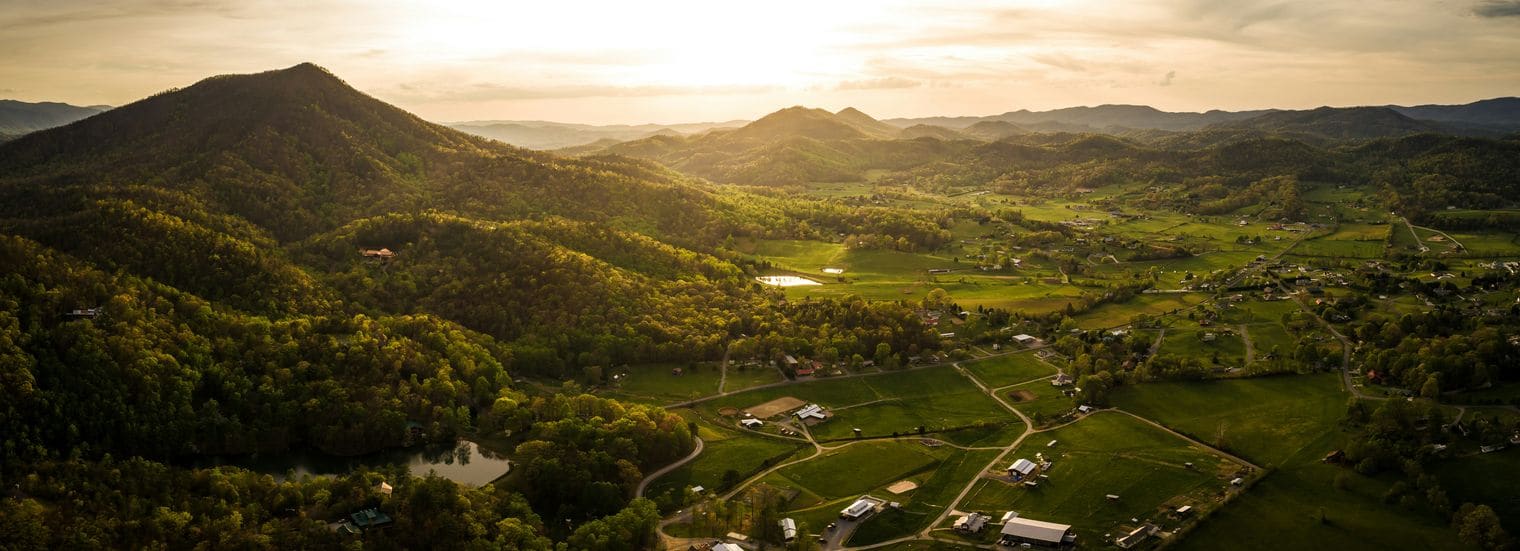
The mountain end of the state, where Great Smoky Mountains National Park meets its gateway towns — Gatlinburg at the park entrance and Sevierville just down the parkway — with Knoxville, the Blue Ridge foothills and Johnson City's old-time music country to the north-east.
Middle Tennessee & Nashville
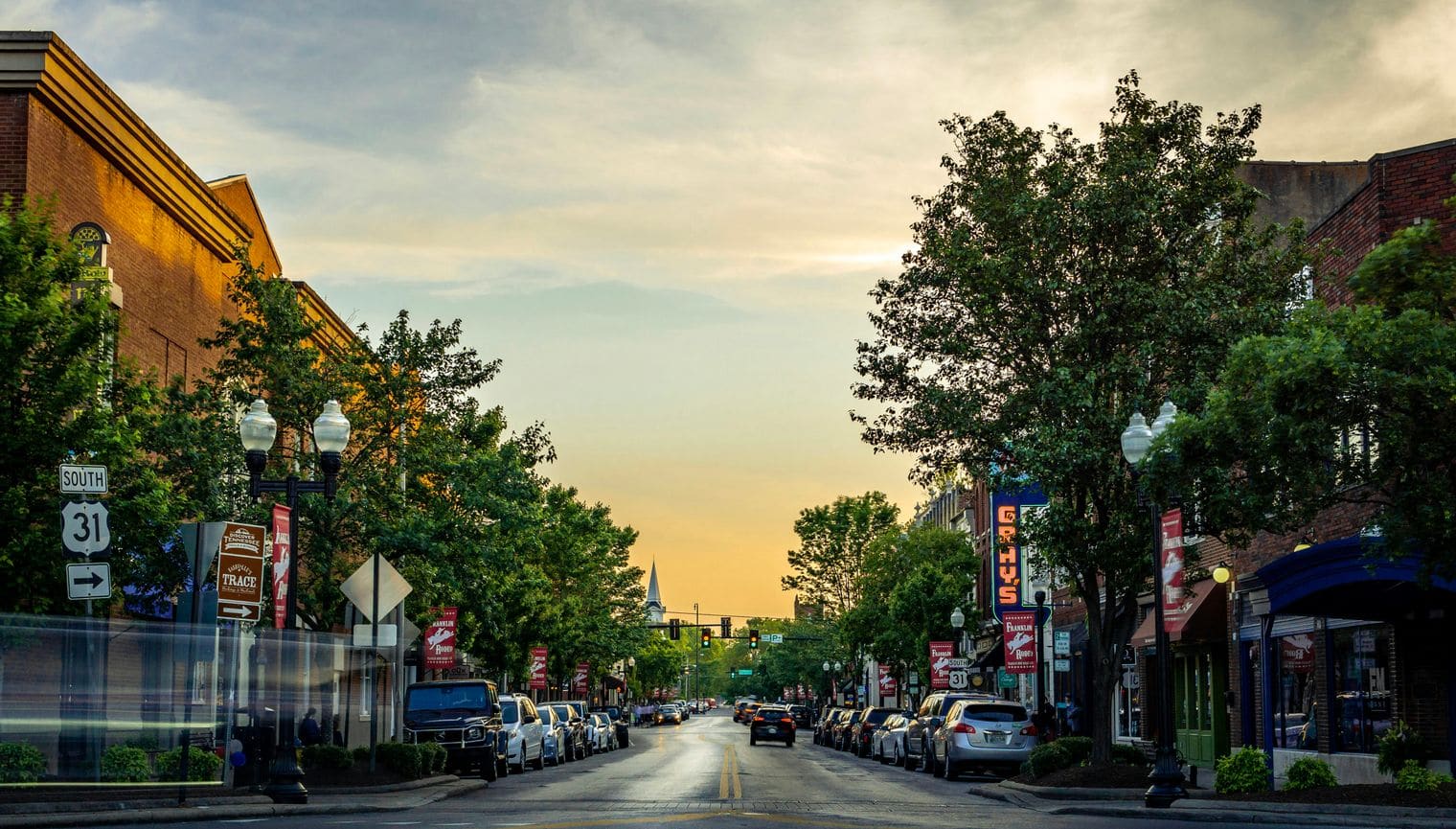
The rolling heart of the state, anchored by Nashville's honky-tonks and Grand Ole Opry, with genteel Franklin and its Civil War battlefields to the south, plus the whiskey distilleries and walking-horse country of Lynchburg and the surrounding hills.
West Tennessee & Memphis
The Mississippi Delta corner, where Memphis pairs Beale Street, Graceland and Sun Studio with barbecue and river views, opening onto the flat cotton-and-blues country that runs down toward the Gulf south.
The Cumberland Plateau
The forested tableland dividing Middle from East Tennessee, laced with gorges, waterfalls and state parks — Fall Creek Falls, the Obed and Big South Fork — and the point where the state crosses from Central into Eastern time.
Getting around
A rental car is essential for seeing the state: the three regions are hours apart — it's roughly a three-hour drive from Nashville to Memphis and about four from Nashville to the Smokies — and thinly linked by transit. Nashville International (BNA) is the central gateway for Music City and the Smokies loop, while Memphis International (MEM) is the natural entry for the west. Nashville and Memphis are walkable in their cores, but everything between the cities, and the mountain towns of Gatlinburg and Sevierville, needs a car. Remember the state straddles two time zones — most of the east runs on Eastern time, the rest on Central — so watch the clock as you cross the Cumberland Plateau.
The highlights Tennessee's signature sights & road trips
Nashville's Broadway & the Opry Music City's neon honky-tonk strip, the Grand Ole Opry and the Country Music Hall of Fame — the beating heart of country music.
Memphis: Beale Street & Graceland The birthplace of the blues and rock 'n' roll, home to Beale Street, Sun Studio and Elvis Presley's Graceland.
The classic Tennessee crossing, linking the state's three musical capitals in one long east-to-west (or west-to-east) drive, with a whiskey and battlefield detour through Middle Tennessee. This is the eastbound-to-westbound version, starting in the Smokies and finishing on the Mississippi.
Memphis — Beale Street, Sun Studio & Graceland finish
Smoky Mountains gateway loop
3–4 days
A focused long-weekend base in the eastern mountains, pairing the national park with its Tennessee foothill towns — easy to reach from Knoxville's airport.
Spring and autumn are the sweet spots. April and May bring wildflowers and mild weather statewide, while late September through October is prime for the Smoky Mountains' fall colour. Summers are hot and humid in Nashville and Memphis, though the high mountains stay cooler, and winters are mild in the cities but can ice over the mountain roads.
How many days do you need in Tennessee?
A focused trip to one region — Nashville and Franklin, or the Smokies around Gatlinburg — works well in three to four days. To pair two of the state's three regions, such as Nashville and Memphis or Nashville and the Smokies, plan on five to seven days. Driving the full width of the state and taking in all three musical cities comfortably fills a week to ten days.
Do you need a car in Tennessee?
For a road trip across the state, yes — the three regions are hours apart and thinly served by transit, so a rental car is essential. Nashville and Memphis are walkable in their downtown cores and have some transit, but reaching Franklin, the distilleries, or the mountain towns of Gatlinburg and Sevierville requires driving. Most visitors fly into Nashville (BNA) or Memphis (MEM) and drive from there.
What is Tennessee best known for?
Music, mountains and whiskey. Tennessee is the home of country music in Nashville, the blues and soul of Memphis with Beale Street and Graceland, and old-time and bluegrass in the Appalachian east. It also holds the American side of Great Smoky Mountains National Park — the most-visited national park in the United States — and Tennessee whiskey from distilleries like Jack Daniel's in Lynchburg.
Which airport should you fly into for Tennessee?
It depends on your route. Nashville International (BNA) is the best all-round gateway — central to Music City, Franklin and the drive east toward the Smokies. Memphis International (MEM) is the natural choice if you're focused on the west and the Delta blues country. For the Smokies specifically, some travellers use Knoxville's McGhee Tyson (TYS), about an hour from Gatlinburg.
Why does Tennessee have two time zones?
Tennessee straddles the boundary between Central and Eastern time, which runs roughly along the Cumberland Plateau. Most of Middle and West Tennessee — including Nashville and Memphis — is on Central time, while most of East Tennessee, including Knoxville, Gatlinburg and Johnson City, is on Eastern time. If you're driving between Nashville and the Smokies, you'll lose or gain an hour on the way.
What's the best way to see the Great Smoky Mountains from Tennessee?
The Tennessee gateway towns are Gatlinburg, right at the park entrance, and Sevierville and Pigeon Forge just down the parkway, all of which make good bases. From there the Newfound Gap Road crosses the park into North Carolina, and Cades Cove offers a famous loop drive through valley meadows and historic cabins. Entry to the park itself is free, though a parking tag is required.
Can you do a Nashville-to-Memphis music road trip?
Yes — it's one of the classic American music routes. It's roughly a three-hour drive down Interstate 40 between the two cities, and the trip pairs Nashville's honky-tonks, the Grand Ole Opry and the Country Music Hall of Fame with Memphis's Beale Street, Sun Studio and Graceland. Many travellers add a whiskey stop in Lynchburg or a battlefield detour to Franklin along the way.
We use cookies to analyse site traffic and improve your experience.
You can accept or reject analytics cookies. See our Cookie Policy.