A single flat highway carries you from Art Deco Miami to alligator country to the last island before Cuba.
Florida is a low, sun-warmed peninsula between the Atlantic and the Gulf of Mexico, where white-sand beaches, theme-park empires and the sawgrass wilderness of the Everglades sit within a few hours of one another. Use this hub to plan your trip: browse our city guides below, from the capital at Tallahassee to the Palm Beaches, and match the coast, the season and the pace to the holiday you're after.
Known for
Beaches, theme parks & the Everglades
Best for
Beaches, wildlife & family holidays
Capital
Tallahassee
Main gateway
Miami Int'l (MIA) & Orlando Int'l (MCO)
Time zone
Eastern (ET); western Panhandle is Central (CT)
Trip planner
Plan your trip to Florida
Best time to visit — season by season
Spring
Mar–May
Arguably the best all-round window: warm, dry and comfortable statewide before the summer heat and humidity build. March brings spring-break crowds to the beaches, but April and May are quieter and still reliably sunny.
Summer
Jun–Aug
Hot, humid and stormy, with near-daily afternoon thunderstorms and highs in the 90s°F across the peninsula. This is also hurricane season, which runs June through November and peaks in late summer, so watch the forecast and keep plans flexible.
Fall
Sep–Nov
September and October remain warm and can still see tropical storms, but by November the humidity breaks and the state settles into gorgeous, mild weather with thinning crowds — one of the best times to visit.
Winter
Dec–Feb
Peak season in South Florida and the Keys, when snowbirds arrive for dry, sunny days in the 70s°F while the north cools noticeably and the Gulf water turns brisk. The Everglades are at their best now, in the dry season with low water and easy wildlife spotting.
Regions of Florida
South Florida & Miami
The tropical, cosmopolitan corner: Miami's Art Deco South Beach and Cuban Little Havana, glossy Fort Lauderdale, and the sawgrass expanse of Everglades National Park just inland.
The Florida Keys
A 100-mile island chain trailing off the tip of the peninsula on the Overseas Highway, from the reefs and diving of Key Largo down through Islamorada and Marathon to the end-of-the-road bars of Key West.
The Palm Beaches & Treasure Coast
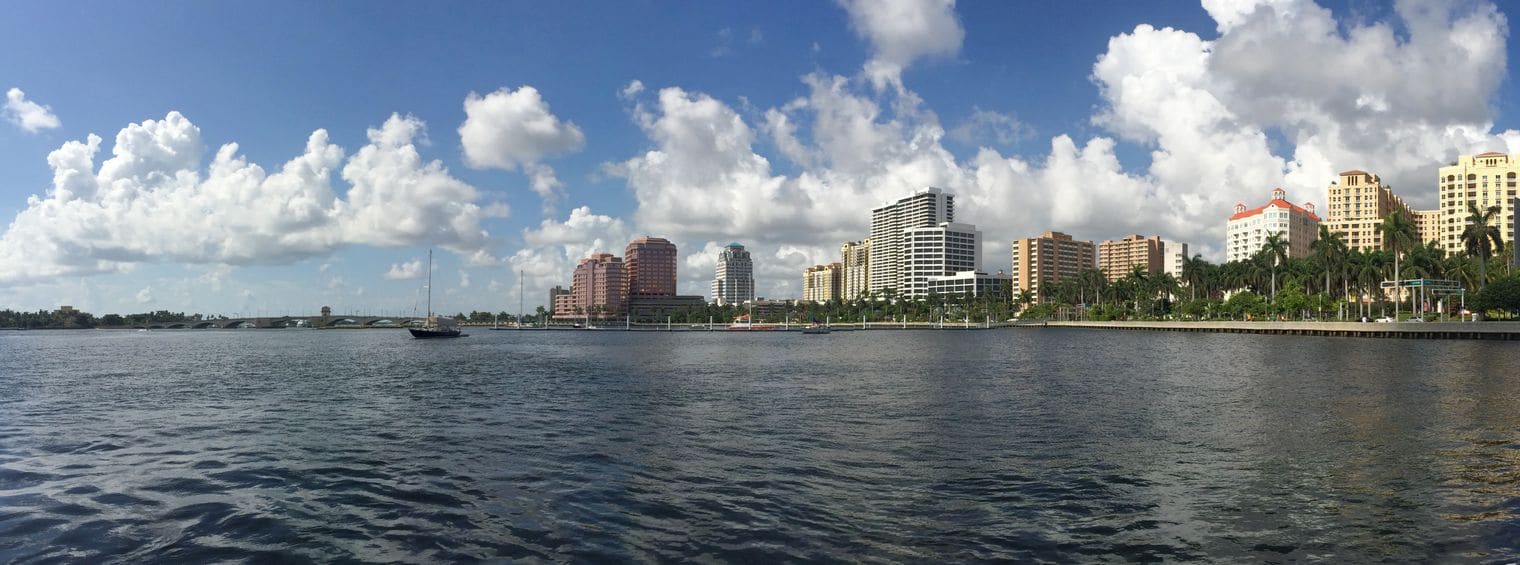
The Atlantic coast north of Miami, where West Palm Beach and the island of Palm Beach anchor a run of resort towns, marinas and quieter barrier-island beaches up the Treasure Coast.
Central Florida & Orlando
The theme-park heartland inland, where Walt Disney World, Universal Orlando and SeaWorld draw families, with the springs, lakes and small towns of the interior all around.
The Gulf Coast
The calmer, warmer-water side: Tampa and St Petersburg's museums and beaches, the powder sand of Sarasota and Naples, and the shell-strewn barrier islands of the southwest.
North Florida & the Panhandle
The state's more Southern edge, where the capital Tallahassee and historic St Augustine give way west to the sugar-white 'Emerald Coast' beaches around Destin and Pensacola.
Getting around
A rental car is the practical way to see Florida: the beaches, parks and cities are spread the length of a long peninsula and thinly linked by transit outside the biggest metros. Miami and Orlando have the busiest airports and make the most common gateways, with Tampa, Fort Lauderdale and Jacksonville as regional alternatives. Interstate 95 runs the Atlantic side, I-75 and the Turnpike serve the Gulf and the interior, and US-1 carries you out through the Keys to Key West. Distances feel deceptively long — Pensacola to Key West is a two-day drive — so pick a region rather than trying to see the whole state in one trip.
The highlights Florida's signature sights & road trips
Florida's signature draws
Everglades National Park A vast 'river of grass' wilderness of sawgrass marsh, mangroves and alligators — best explored by boardwalk, tram or airboat in the winter dry season.
The Florida Keys & Key West A 100-mile island drive over the Overseas Highway to the reefs, sportfishing and end-of-the-road bars of Key West, the southernmost point in the continental US.
Orlando theme parks The world's theme-park capital — Walt Disney World, Universal Orlando and SeaWorld draw families from across the globe to central Florida.
Miami & South Beach Pastel Art Deco hotels along Ocean Drive, the Cuban culture of Little Havana and one of the liveliest beach-and-nightlife scenes in the country.
The Emerald Coast The Panhandle's sugar-white quartz sand and clear green Gulf water around Destin, Pensacola and the Beaches of South Walton.
St Augustine The oldest continuously occupied European settlement in the US, with a Spanish colonial old town and the coquina-stone Castillo de San Marcos fort.
Suggested routes
Miami, the Everglades & the Keys
~1 week
The classic South Florida loop, pairing the city and Art Deco beaches of Miami with a swing through Everglades gator country and the island drive down to Key West. Easy to run from Miami International.
Miami — fly in; South Beach and Little Havana
Everglades National Park — airboats and boardwalks on the way south
Key Largo — reef diving and snorkelling
Islamorada — sportfishing and sandbars
Marathon — midway on the Overseas Highway
Key West — end of the road
The Atlantic coast run
4–6 days
A drive up Florida's east coast, trading the crowds of the south for the resort towns and quieter barrier-island beaches of the Treasure Coast, then the historic old town of St Augustine.
Cape Canaveral — the Space Coast and Kennedy Space Center
St Augustine — Spanish colonial old town and Castillo de San Marcos
The Panhandle & Emerald Coast
3–5 days
A northern-Florida trip along the Gulf, pairing the sugar-white beaches of the 'Emerald Coast' with the capital city and old-Florida charm of Tallahassee inland.
Pensacola — historic downtown and white-sand beaches
For most of the state, spring and late autumn are ideal — warm, dry and less crowded than the peak. Winter (December to February) is high season in South Florida and the Keys, when the weather is at its most reliable, while summer is hot, humid and stormy. Bear in mind that hurricane season runs from June through November.
How many days do you need in Florida?
It depends on your focus. A theme-park trip to Orlando, or a beach break on one coast, works well in four to five days. Pairing regions — say Miami with the Keys, or the Gulf Coast beaches with the Everglades — is comfortable in a week to ten days. Trying to see both coasts and the Panhandle in one trip means a lot of driving.
Do you need a car in Florida?
For most trips, yes. The beaches, parks and towns are spread across a long peninsula and thinly served by transit, so a rental car gives you the freedom to move between them. The exceptions are a self-contained Orlando theme-park holiday, where resorts run shuttles, and a stay confined to Miami Beach or Key West, which are walkable once you arrive.
What is Florida best known for?
Florida is famous for its beaches on both the Atlantic and Gulf coasts, the theme-park capitals of Orlando — Walt Disney World and Universal — the tropical, Latin-flavoured energy of Miami, and unique natural areas like the Everglades and the Florida Keys. It's also the year-round warmth that gives it the 'Sunshine State' name.
Which coast of Florida is better, the Atlantic or the Gulf?
They offer different experiences. The Atlantic side has bigger surf, cooler water and the buzz of Miami, Fort Lauderdale and the Palm Beaches. The Gulf Coast tends to have calmer, warmer water and softer white sand — Sarasota, Naples and the Panhandle's 'Emerald Coast' are known for their beaches. Many visitors pick one coast per trip rather than crossing the state.
Is it worth driving to the Florida Keys?
For many people the drive is the highlight. The Overseas Highway runs about 113 miles from the mainland to Key West on a chain of bridges over turquoise water, passing the diving and snorkelling of Key Largo, the sportfishing of Islamorada and the beaches of Bahia Honda. Allow at least an overnight rather than a rushed day trip from Miami.
When can you visit the Everglades, and can you avoid the mosquitoes?
The dry season, roughly December through April, is far the best time — water levels drop, wildlife concentrates around the remaining pools and the mosquitoes are manageable. In the wet summer months the insects can be relentless. Everglades National Park is open year-round, but plan your visit for the cooler dry season if you can.
Does it ever get cold in Florida?
South Florida and the Keys stay warm all year, but the northern half of the state genuinely cools in winter. Tallahassee and the Panhandle can see frosty mornings and the occasional freeze, and even Orlando gets chilly nights. The Gulf and Atlantic water also turns brisk in winter north of the Palm Beaches, so pack a layer if you're travelling in the cooler months.
We use cookies to analyse site traffic and improve your experience.
You can accept or reject analytics cookies. See our Cookie Policy.